






Tighter project schedules and evolving vessel demands are changing how cable handling equipment is designed and deployed. The cables being laid, particularly those linking offshore wind farms, are more complex, longer, and operate at deeper installation depths with more demanding schedules, which require more precise handling with much stricter cable handling requirements than a decade ago.
As offshore wind enters its most capital-intensive decade, it’s estimated that 117,640 kilometers of subsea cable will be needed globally between 2026 and 2040, along with 60,700 kilometers of new subsea interconnector cable over the same period [1].
Yet the vessels laying those cables aren’t keeping pace everywhere. While vessel supply remains broadly manageable across Europe, longer-term, bottlenecks are emerging in other key regions, particularly Asia-Pacific, which is experiencing rapid growth in the offshore wind sector [2].
Vessels take years to build and hundreds of millions to commission, so any shortfall is difficult to correct once demand accelerates. To ease this pressure, operators are increasingly turning to specialist integrated cable engineering companies who can deliver more agile, flexible, and modular solutions.

Beyond moving cable from A to B
With projects becoming larger and more complex, cable handling is no longer just about transporting cables from A to B. It’s about how that cable is stored, deployed, and protected without adding risk offshore. Engineering, logistics, equipment, cable handling, and execution all need to work together to safeguard the cable and avoid costly downtime. Projects require more sophisticated, heavy-duty installation spreads, including larger carousels, loading towers, and track tensioners to maintain the structural integrity during transit and laying.
Instead of coordinating multiple suppliers, operators are increasingly seeking integrated, cable-handling specialists who can manage the entire project under a single engineering, procurement, installation and commissioning model (EPIC). Through an integrated approach, a single contractor takes responsibility for the entire cable handling lifecycle from onshore spooling through to offshore deployment.
Integration at the equipment level
Mission equipment such as carousels, loading towers, tensioners, quadrant deployment systems, winches, and chutes have historically been treated as a standalone kit, specified and delivered independently on a project. Bringing them together under one team streamlines the campaign.
By doing this, both interfaces, the mechanical and the software, are accounted for before a single piece of kit is on the water. This means any problems are caught at the design stage, not once equipment is on site, keeping the lay on schedule. In practice, the track height of the tensioner sets the downstream height of the entire cable path, from the roller tables through to the chute bed entry point, and the chute bed itself interfaces directly with the quadrant handler. The chute, the structure that guides the cable off the back of the vessel and safely down into the water, can then line up with all of it.
On the software side, as well as sitting under a single governing safety and emergency stop system, every piece of equipment moves in sync with the others. A control workshop with the client’s operational team walks through each cable-lay step in turn, testing it for safety, efficiency, and simplicity. This ensures the crew can pick up the system quickly, and cable integrity isn’t put at risk.

With both interfaces addressed, the benefits show up across the whole campaign. There are fewer handovers between equipment, less risk of a mismatch between what the carousel feeds and what the tensioner can hold, and the system is built around cable spec from the start, rather than pieced together ad hoc. Execution becomes simpler, and projects are delivered safely, on time, and within budget.
There are benefits at the fleet level, too. Deck equipment fitted to a cable-laying vessel, including carousels, tensioners, and chutes, has traditionally been specified around one task such as laying the cable and installing it onto the seabed. Other jobs such as loading the cable onto the vessel in the first place, infield installations, export, or later repairing a section of cable, have often sat as separate scopes, sometimes needing a different, specially equipped vessel brought in months or years later.
As these scopes move into overlapping project executions, a vessel with versatile deck equipment can handle more of that itself, acting as a Swiss army knife, rather than being demobilized in order for a second, differently equipped vessel can take over.
This means one vessel can support more of the lifecycle rather than a relay of specialist vessels each doing one job, which is a faster way to ease the cable laying vessel (CLV) shortage than waiting on newbuilds.
Inside the Altera deck spread
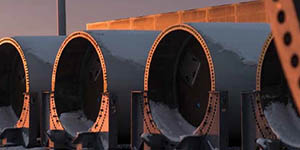
Subsea Cable Assets (SCA), a Netherlands-headquartered specialist in cable handling equipment, designs carousel- and cable-handling systems that are completely modular and can be shipped in standard 40-feet containers. Mobilization can take place on the project site or on board the vessel itself, with below-deck carousels installed through the cargo hatch, minimizing vessel engagement.
This offers flexibility and cuts the cost and time typically lost to mobilization, allowing a vessel to move between project phases without returning to port to reconfigure equipment.
This full-lifecycle approach extends how projects are contracted, not just how equipment is built. Turnkey contractors increasingly manage the whole project lifecycle rather than a single campaign. SCA took on exactly this kind of scope when it was appointed to manage the complete cable installation deck spread for the Altera, a new-built next-generation DP2 cable installation vessel contracted through N-Sea Group.
With more than 15 years’ offshore subsea experience and more than 50 cable carousel systems delivered globally, SCA brought proven capability to an unusually complex scope. N-Sea needed a complete cable installation deck spread, engineered from scratch, to match Altera’s precise dimensions, layout, and operational requirements, all against a live shipyard construction schedule.
With no room for delay, SCA acted as an integrating contractor, coordinating specialist partners simultaneously and running all workstreams in parallel rather than in sequence.
This meant managing nine distinct, interdependent components, including the carousel, tensioning equipment, quadrant handling system, and chute system, each custom-manufactured by specialist suppliers and delivered from SCA’s Dubai base in line with the vessel’s own build program. Without the deck spread, the Altera would not have been able to perform its intended cable installation scope.
Rather than being handed over once complete, the mechanical and control aspects were reviewed and refined continuously with N-Sea’s operational team, ensuring a joint development rather than a standard delivery. The control system went through multiple workshops with the operators and end users who would actually run it, with the focus on ease of operation, consistency and reliability, particularly important given regular crew changeovers.

Built to be tested, not just installed
All equipment within SCA’s scope was manufactured in line with Altera’s construction timeline without disruption, supported by the company’s manufacturing capacity and supply chain network. Because one contractor held the entire scope, the deck spread was ready for installation and commissioning to meet the shipyard schedule, rather than waiting on components from separate suppliers.
This approach isn’t unique to this project. SCA has taken the same full lifecycle approach on other international energy projects. Rather than equipment being assembled piecemeal, the integrated design ensures both ends of the cable are accessible for testing, even on a tight deck. This isn’t a minor design detail. A fault caught on the deck is a delay. The same fault offshore is a much costlier one and ties up a CLV that is already in short supply.
Closing the gap without new CLVs
As the offshore wind and subsea cable markets continue to grow, the pressure on cable laying vessel capacity will only build. Vessels take years to design and commission, so newbuilds alone can’t close this gap.
More capability in the vessels already in service, through equipment that does more per lift and needs fewer separate mobilizations, addresses the CLV capacity shortage.
This is the case for treating cable handling as an integrated system from the outset of a project, rather than a collection of parts assembled once the vessel’s already been chartered.
As projects become more complex and vessel availability remains constrained, operators are increasingly recognizing the value of a more integrated approach to cable handling.
References
- TGS 4 C’s Q1 Supply & Demand Offshore Wind Vessels and Transmissions & Cables Outlook report
- Business Research Insights: Wind Turbine Installation Vessel Market Size Trends.