Home August 2026

August 2026

Flender presents REVO to German state secretary

Flender recently welcomed Stefan Rouenhoff, Parliamentary State Secretary to the Federal Minister for Economic Affairs and Energy, to its site in Voerde. The visit focused on the strength of the German wind-energy industry and the importance of industrial collaborative research (IGF) for the German economy. Flender CEO Andreas Evertz gave State Secretary Rouenhoff a tour of the gearbox assembly area and presented the new REVO drive concept.

The new REVO drive concept is the first gearbox concept to reach the threshold of 300 Newton-meters per kilogram (Nm/kg) of torque density — a quantum leap for the industry. For the same output, the outer diameter of the gearbox can be reduced by up to 25 percent. The result: more compact, lighter nacelles, lower material, transport, and installation costs, as well as the development of new sites that were previously logistically inaccessible.

“Flender is now one of the global market leaders in the field of wind power drivetrains. That is a great success,” said State Secretary Rouenhoff (fourth from left). (Courtesy: Flender Group)

“With REVO, we are demonstrating that groundbreaking innovations for the energy transition are emerging here in Germany,” said Andreas Evertz, CEO of the Flender Group. “One in three wind turbines worldwide runs on Winergy drive technology. At our site in Voerde, around 1,300 people are working to make wind energy increasingly efficient and cost-effective. The industry creates thousands of highly skilled jobs and is a growth engine for Germany as an industrial location.”

“This is a great success for the employees at the Voerde site in the Lower Rhine region, in particular, but also the industrial collaborative research program of the Federal Ministry of Economics, which have made an important contribution to this,” Rouenhoff said.

Industrial Collaborative Research (IGF), the Federal Ministry of Economics’ central funding program for pre-competitive research, is also regarded by Flender as a key instrument for research funding; 100 percent of the public funding goes directly to research at universities and research institutions.

“The Voerde site is an excellent example of how successful joint industrial research can be,” Evertz said.

“Technologies developed in collaboration with universities as part of IGF projects are now incorporated into REVO — our most powerful drive concept. This program is a unique tool for small- and medium-sized industrial companies.”

More info www.flender.com

Eologix-Ping to add 300 wind turbines to monitoring fleet

Eologix-Ping, provider of continuous wind turbine blade monitoring solutions, has won its largest U.S. deal to date, adding nearly 300 wind turbines in the United States to its blade monitoring fleet, a milestone that cements the company’s position as the partner U.S. operators turn to when blade health is on the line.

“We didn’t arrive in the U.S. with a big fleet on Day 1; we earned it, one turbine, one site, one proof point at a time,” said Thomas Schlegl, CEO and co-founder of Eologix-Ping. “This deal is the result of years of operators seeing our technology work, telling their peers, and coming back for more. Winning almost 300 turbines in a single deal shows that the trust we built early on has turned into real scale.”

Eologix-Ping, the wind-turbine blade monitoring company, closed a new agreement to add almost 300 turbines to its continuous blade monitoring fleet. (Courtesy: Eologix-Ping)

The deal reflects a broader shift in how American wind operators think about blade health. Blade damage, lightning strikes, and icing remain among the leading causes of unplanned downtime across the U.S. wind fleet, and operators are increasingly looking for a reliable source of continuous blade data rather than reacting only after major issues have occurred.

“If an operator is dealing with blade damage, a lightning strike, or ice they cannot fully explain, that is exactly the kind of problem we exist to solve,” Schlegl said. “We want to be the first call any wind-farm operator makes when something on the blade does not look or sound right.”

“For us, growth is the outcome of disciplined, continuous product improvement,” said Matthew Stead, CPO and co-founder of Eologix-Ping. “Every deployment generates insight into operating conditions, the decisions operators need to make, and where our detection algorithms can be refined. That learning is fed directly back into product development. This agreement is validation of that engineering philosophy.”

The rollout across the nearly 300 newly won turbines will take place over the coming weeks, with Eologix-Ping providing the sensor systems and ongoing monitoring and analysis.

More info www.eologix-ping.com

FairWind acquires Rope Partner

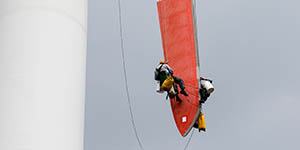
FairWind, a leader in wind-turbine installation and service, recently acquired U.S.-based rope access specialist Rope Partner in a deal that will accelerate the company’s growth strategy in the Americas.

Colorado-based Rope Partner is a provider of at-height maintenance, inspection, and performance enhancement services. The company specializes in blade repair, turbine cleaning, and inspection and warranty verification services that support asset life extension and operational safety. Rope Partner’s WindCorps technicians are the driving force behind the company’s relationships with more than 40 blue chip wind energy asset owners and OEMs.

Eric Stanfield, Rope Partner CEO, left, and Stewart Mitchell, FairWind CEO. (Courtesy: FairWind)

“The U.S. wind sector has seen rapid growth in recent years, and Rope Partner brings highly specialized expertise in blade repair and at-height services that directly complement our core capabilities,” said Stewart Mitchell, FairWind CEO. “By combining our global experience in turbine installation and service with Rope Partner’s technical strengths, we are in a strong position to scale our presence and further support customers with high-quality solutions across the full lifecycle of assets.”

“Joining FairWind not only strengthens our position in the North American renewables market but opens up exciting opportunities for growth as part of a world-leading wind-energy company,” said Eric Stanfield, Rope Partner CEO. “We are looking forward to reaching new markets, bringing greater capability to our clients, and playing a bigger role in the global transition to sustainable energy, all while upholding the excellent safety and quality reputation that both companies have built over the years.”

With more than 20 years’ experience, Rope Partner also delivers rope access technician training at its purpose-built facility in Denver, Colorado. All courses are certified by the Society of Professional Rope Access Technicians. The company employs 135 people. The acquisition expands FairWind’s service offering in the Americas, enabling the delivery of integrated installation and maintenance solutions while leveraging Rope Partner’s established local client base, regional expertise, training capabilities, and its specialized technicians.

FairWind has a workforce of more than 2,000 people in more than 40 countries across Europe, North America, South America, Asia, and Oceania. The business provides lifecycle solutions for the installation and maintenance of onshore and offshore wind turbines.

More info www.fairwind.com/en

Södra, Viking sign agreement for vibration analytics

Södra and Viking recently scaled Viking Analytics’ AI platform, MultiViz, across the entire group. The framework agreement covers 3,650 sensors deployed across the assets in Värö, Mörrum, and Mönsterås, marking the next step in Södra’s commitment to data-driven, proactive maintenance.

Södra Värö has worked closely with Viking Analytics to develop a more effective approach to vibration monitoring and condition-based maintenance. By implementing Viking Analytics’ behavior-based AI platform, MultiViz, the number of alarms was reduced from about 500 to just 20 per week. At the same time, the efficiency of vibration data engineers and the maintenance organization increased, spare parts costs decreased, and plant uptime improved. Today, the total annual savings at the Värö mill exceed multiple millions.

For Södra, this initiative is not simply about collecting more machine and sensor data. The real challenge is turning data into the right decisions at the right time.

Södra has decided to scale Viking Analytics’ MultiViz, across its entire group. (Courtesy: Viking Analytics)

“Vibration data has been available at our facilities for many years, but we have lacked tools to handle the large volumes of data generated by modern monitoring systems,” said Thomas Håkansson, Head of Technology, Södra Cell. “For us, the value is not only in detecting faults earlier; it is in creating impact across the entire organization — increased plant uptime, lower spare parts costs, and more efficient analysis and maintenance operations. We see Viking’s technology enabling exactly that, allowing us to work more proactively and achieve significant annual savings.”

Unlike traditional threshold-based systems, MultiViz analyzes how each machine normally behaves across varying operating conditions. The system identifies deviations from that normal behavior and can therefore detect fault symptoms long before they become costly failures. At the same time, normal process variations are automatically filtered out, dramatically reducing false positives.

For Viking Analytics, the agreement represents validation that behavior-based AI can deliver measurable results in one of Sweden’s most advanced process industries.

“What makes Södra Värö particularly interesting is that these results come not from a pilot project or an isolated deployment, but from day-to-day operations in one of Sweden’s most advanced industrial facilities,” said Stefan Lagerkvist, COO and co-Founder, Viking Analytics. “By reducing weekly alarms from 500 to 20, data engineers and maintenance teams have been able to focus on the right problems instead of managing noise. The results clearly demonstrate that when behavior-based AI is used to prioritize the right actions, the impact can be measured in increased uptime, lower costs, and greater organizational efficiency. Södra’s decision to scale the solution across the entire group is a strong validation of the technology’s robustness, stability, and business value.”

More info www.vikinganalytics.se

Norway’s DNK offers protection against jamming, spoofing

Norway’s Den Norske Krigsforsikring for Skib (DNK) has launched a program to provide members access to assured positioning, navigation, and timing (A-PNT) services to counter the growing risk of jamming and spoofing.

DNK’s industry-first program allows members to select among vendors that specialize in A-PNT services to lower premiums and provide secure, accurate and reliable positioning, navigation, and timing data. 

“Over the past five years, we have seen a sharp increase in GNSS interference, especially in the Black Sea, the Baltic Sea, and more recently, in the Persian Gulf and Red Sea,” said Svein Ringbakken, DNK CEO. “GNSS signal interference cannot only increase the risk of collision or grounding but also compromise critical safety systems. This program offers our members the opportunity to lower premiums by investing in cost-effective A-PNT solutions to maintain situational awareness, safety, and positioning integrity.”

Norway’s DNK has launched a program to counter jamming and spoofing. (Courtesy: DNK)

“GNSS jamming and spoofing not only compromise situational awareness, the intentional manipulation of positioning data can also lead vessels into sanctioned or restricted zones,” said Alan Belardinelli, DNK project manager. “After extensive research, DNK found that the Iridium signal, which is 1,000 times more powerful than GNSS signals, is significantly more difficult to disrupt, adding a significant layer of enhanced positioning resilience. Signal attacks can also play havoc with onboard digital systems that rely on GNSS to provide a source of timing, necessary for safe navigation and efficient operations.” 

“PNT Iridium stands as a powerful and effective complement to GNSS, ensuring continuity for vessels when traditional signals are degraded or denied,” said Rohit Braggs, vice president of PNT, Iridium. “More importantly, it acts as a resilient ‘source of truth’ by providing assured timing and positioning that maritime systems can depend on, whether in open waters or bustling ports. With proven performance against jamming and spoofing, Iridium PNT empowers crews and operators to navigate confidently, knowing they have a secure foundation for their most critical operations.”

“By continuing to explore technologies and digital solutions like the new A-PNT program, DNK can offer members effective, reliable, and affordable solutions to manage emerging threats,” Ringbakken said.

More info www.warrisk.no

DNV updates seismic design guidance

DNV, the independent energy expert and assurance provider, recently published an updated edition of its recommended practice, DNV-RP-0585: Seismic design of wind power plants, providing enhanced guidance for the design of onshore and offshore wind assets exposed to earthquake loading.

As wind-power deployment expands into seismically active markets, particularly across Asia-Pacific, earthquake loading is increasingly becoming a key design consideration.

Seismic events can affect wind turbines, foundations, offshore substations, power cables, and installation vessels, creating engineering challenges beyond those addressed by conventional wind and wave design approaches.

DNV’s updated recommended practice provides harmonized guidance for assessing and managing seismic risks throughout the design process. (Courtesy: DNV)

“Wind-power projects are increasingly being developed in regions where earthquake loading is a primary design driver rather than a secondary consideration,” said Mette Redanz, vice president for Renewables Certification at DNV. “The updated recommended practice provides the industry with consistent and transparent methodologies for seismic design, enabling safer and more reliable wind-power projects in some of the world’s most demanding environments.”

The updated recommended practice provides harmonized guidance for assessing and managing seismic risks throughout the design process. It complements existing DNV standards for wind turbines, support structures, and offshore substations, while supporting projects designed in accordance with the IEC 61400 series.

The 2026 edition incorporates lessons learned from recent projects and from the ACE 2-Evolution joint industry project, which brings together more than 20 companies from across the offshore wind value chain.

Key updates in the new edition include enhanced guidance on seismic analysis methodologies and modeling requirements; updated recommendations for soil-structure interaction and foundation damping; clarifications on seismic loading, ground motion selection, and post-processing requirements; guidance for identifying critical design positions within large wind power plants; new recommendations for installation vessels operating in seismic regions; and an appendix summarizing local seismic design requirements in Japan.

“Effective seismic design requires close alignment between turbine, foundation, and geotechnical disciplines,” said Marcus Klose, project manager for the ACE joint industry project and Head of Section Offshore Technology and Innovation at DNV. “This update reflects insights gained through international collaboration and practical project experience, providing engineers with clearer guidance while supporting consistency and confidence across the industry.”

Applicable to both onshore and offshore projects, DNV-RP-0585 provides guidance on seismic hazard assessment, design load cases, geotechnical considerations, analysis methods, and post-earthquake actions.

The recommended practice supports designers, developers, suppliers, purchasers, regulators, and certification bodies involved in wind projects in seismically active regions worldwide.

More info www.dnv.com

Spiral launches AR-powered inspection platform

Spiral Science and Technology Inc. has released Roboscope, an augmented reality inspection platform that anchors digital defect markers directly on the surfaces of large composite structures. Built for wind-turbine blade quality control and expanding into aerospace, marine, and construction, Roboscope eliminates manual measurement and paper-based defect logging by capturing type, location, dimensions, and photographic evidence in a single AR session.

Roboscope is an augmented reality inspection platform. (Courtesy: Spiral Science and Technology)

Using iPhone Lidar, inspectors place AR markers at the exact physical location of each defect with approximately 5 centimeter placement accuracy. Every marker records the defect type, spatial coordinates, dimensional data, inspector ID, and timestamp. Sessions are auto-registered via a work task router scan, and completed records integrate directly with ERP and QC systems — eliminating manual data reentry.

Roboscope’s Layup Registration Table maps each AR-anchored defect to the exact composite plies affected at that point on the part. The system resolves AR anchor coordinates against the part’s layup geometry, returns the ordered ply stack (material, fiber orientation, and nominal thickness per layer), and cross-references defect depth against the stack to determine which plies are involved. Structural plies trigger automatic escalation, and the full layer-annotated defect record exports directly to ERP or repair work orders with ply-level detail.

Purpose-trained ML vision models handle defect classification, severity grading, structural anomaly detection, delamination identification, and surface condition scoring. Models are trained on domain-specific composite inspection data and updated continuously from session evidence. Edge cases route automatically to human experts. Roboscope runs as a native iOS application optimized for handheld use.

It is commercially deployed for wind-turbine blade manufacturing inspection and available for composite structure applications in aerospace, marine, and construction sectors.

More info spiral.technology/products/roboscope

ECITB Global rolls out courses to help industry work safely

ECITB Global recently rolled out a suite of new courses designed to help workers operating in confined spaces within the engineering construction industry.

The international skills body introduced the four new confined space courses in Qatar earlier this year to replace the confined space low and medium-risk courses.

These now form part of the ECITB training courses mandated in the Middle East country by Ashghal, the government regulatory authority for all public works in Qatar.

ECITB Global has rolled out a suite of new courses designed to help workers operating in confined spaces within the engineering construction industry. (Courtesy: ECITB)

More than 5,000 learners in Qatar have completed one of the four new courses since then, prompting ECITB Global to make the full suite available to its wider network of international licensed training providers in other countries.

Three of the new confined space courses can each be delivered in a day, lasting between four and six hours. The longer rescue training is a comprehensive, hands-on course for teams responsible for extracting casualties from confined spaces.

The new courses include:

  • Confined Space Attendant/Hole Watcher (4 hours).
  • Confined Space Entrant (4 hours).
  • Confined Space Supervisor (6 hours).
  • Confined Space Rescue (16-18 hours).
  • “Confined space training is vitally important in the ECI given the high-hazard environments many workers operate in across sectors like oil & gas, renewables, and process industries,” said Tristan Kemp, ECITB head of commercial.

The four confined space courses are developed with ECITB training standards, which are created working with subject matter experts from across engineering construction employers, professional organizations, and training providers.

Key topics covered in the four new CS courses include knowledge of hazards, control, and safety measures; permit requirements; precautions when working in a confined space; PPE and confined space entry equipment; and responsibilities.

More info www.ecitb.org.uk

Collett completes first dual blade lifter operation in U.K.

Collett recently completed the first dual blade lifter convoy operation in the U.K., successfully transporting wind-turbine blades for the Sanquhar II Wind Farm using two blade lifter trailers operating simultaneously.

The operation also marks the first project to use Collett’s new Goldhofer blade lifter, purchased as part of the company’s ongoing investment in specialist transport equipment. Working alongside Collett’s existing Scheuerle blade lifter, both trailers are now being deployed in convoy to support deliveries to one of the U.K.’s largest onshore wind farm developments now under construction.

Once complete, Collett will have delivered a total of 480 wind-turbine components for the 44-turbine project, comprising 42 Vestas V162 turbines with 80-meter blades and two V136 turbines with 68-meter blades, as well as other components including tower sections, nacelles, hubs, and power trains. Deliveries are scheduled to continue in line with the construction program, with completion expected in 2027.

Collett has completed the first dual blade lifter convoy operation in the U.K. (Courtesy: Collett)

The turbine blades were loaded at King George V Dock in Glasgow before being transported using Collett’s quadruple extendable blade trailers to a designated transition point approximately 10 miles from the wind farm site.

At this location, the blades were offloaded using Collett-owned Kalmar reach stackers fitted with specialist lifting hooks before being transferred onto the blade lifter trailers for onward transport. The use of the Kalmars removed the requirement for a mobile crane during the transfer process, improving both operational efficiency and site logistics.

The blade lifters were then deployed for the onward delivery phase to site. This stage of the operation required transport through constrained and narrow villages, tight bends, and restricted roadways where conventional blade trailers would be unable to complete the route. Capable of lifting blades to angles of up to 60 degrees, the blade lifters enable components up to 80 meters in length to be safely maneuvered through these constraints while maintaining control and clearance throughout the journey.

Each blade lifter operation was supported by a dedicated six-person crew, with both trailers operating in convoy requiring a total of 12 specialist operators.

Prior to mobilization, Collett’s consulting division carried out detailed route surveys and swept path analysis to confirm route feasibility and identify any infrastructure modifications or mitigation measures required to facilitate delivery.

The introduction of Collett’s second blade lifter and the first deployment of both units in convoy represents a key operational milestone on the project, enabling improved delivery efficiency and supporting program requirements for Sanquhar II Wind Farm, the largest onshore wind farm being delivered in the U.K. in 2026. “The introduction of a second blade lifter has enabled us to increase blade delivery capacity during this phase of the project while maintaining the established transport methodology,” said Paul Worth, Collett senior project manager. “Every movement still follows the same detailed planning process.”

More info www.collett.co.uk

Palfinger marine crane equips Korea’s first locally built CTV

The recent delivery of KWinds1, Korea’s first locally built Crew Transfer Vessel (CTV), marks a milestone in the development of the country’s offshore wind industry. Constructed by Eunsung Heavy Industries, the vessel is equipped with a Palfinger marine crane PK 25.001 M, a foldable knuckle boom crane engineered for offshore environments. Reflecting the growing demand for high-performance solutions that support safe and efficient offshore wind operations, vessel operators continue to prioritize equipment that delivers dependable performance in demanding offshore conditions.

The PK 23.500 M, the PK 25.001 M has become one of the most widely adopted crane solutions for CTV applications worldwide.

Trusted by leading vessel operators such as Farra Marine and Northern Offshore Services (NOS), the crane is engineered to support efficient cargo handling while delivering the reliability and performance required for offshore wind operations.

Palfinger is expanding its presence in the Asia-Pacific offshore wind market with the delivery of Korea’s first locally built Crew Transfer Vessel (CTV). (Courtesy: Palfinger)

“The installation of the PK 25.001 M on Kwinds1 marks an important milestone as the first deployment of this enhanced crane model in the Asia-Pacific region,” said May Lee, Marine Sales Manager APAC at Palfinger. “This crane combines optimized boom geometry and the innovative Power Link system to deliver higher lifting performance while maintaining a compact design, helping operators maximize efficiency in demanding offshore environments.”

A key differentiator of the crane is Palfinger’s proprietary PAL40 overload protection system, developed to address the dynamic challenges of offshore lifting operations.

Unlike conventional overload protection systems that may halt all crane movements during sudden load fluctuations, PAL40 selectively restricts only those functions that increase the load moment while allowing corrective movements to remain active.

This enables operators to safely recover lifts, maintain operational continuity, and support efficient operations in challenging sea conditions.

“As offshore wind projects continue to expand across Asia, vessel operators are increasingly focused on maximizing uptime, safety, and operational efficiency,” said Alexander Lee, Regional Sales Director APAC for Marine at Palfinger.

“Technologies such as PAL40 reflect our commitment to supporting safe and efficient offshore operations. Delivering reliable lifting solutions that help operators maintain productivity is essential to supporting the long-term growth and success of the offshore wind industry.”

With more than 20 years of experience supporting offshore wind projects worldwide, Palfinger provides lifting solutions across the renewable energy value chain, from CTVs and wind turbine nacelles to offshore substations and platforms.

The KWinds1 project highlights the integration of Korea’s shipbuilding expertise with Palfinger’s global offshore wind experience, supporting the continued growth of the country’s offshore wind sector.

More info www.palfinger.com

Renewables still fighting the good fight

0

It was the best of times. It was the worst of times.

With a quote from Charles Dickens’ A Tale of Two Cities, American Clean Power CEO Jason Grumet solemnly set up the current state of renewables in the U.S.

He didn’t use this classic literary comparison lightly. Dickens’ framing of the years that led to the French Revolution serves as an apt prophecy to today’s energy landscape.

While addressing this year’s CLEANPOWER tradeshow in Houston, Texas, in June, Grumet quickly ran down a list of the good, the bad, and the ugly that has plagued and powered the renewables sector over the past year.

American Clean Power CEO Jason Grumet addresses the opening ceremonies of CLEANPOWER 2026. (Courtesy: ACP)

For example, Bloomberg reported that billions have been lost in clean-energy jobs and investments, even as renewables hit new records despite Trump pushback.

Another report said Trump had cratered the clean-energy manufacturing boom, while the New York Times said: Don’t look now. The clean transition is still happening.

But the ultimate good news is that, even with President Trump’s attempts to crush clean-energy progress, the U.S. has generated more power from renewables than gas for the first time, according to Grumet.

“We are witnessing a historic collision between the best market fundamentals and the worst politics one could imagine,” he said. “Now, in America, market fundamentals will always prevail. The question is: How much needless harm is done to our economy and consumers while we allow polarization to trump pragmatism? So, I want to reflect a little bit on the state of our industry as we transition away from the current tax credits. I want to talk about the shockingly irrational policy environment we are operating in and then share what ACP and our industry are doing to fight back.”

Renewables equals resilience

Renewable energy is a resilient industry, according to Grumet, and that’s not because it’s charming.

“Clean-power technologies are low cost and fast to deploy in a high growth and high demand environment,” he said. “We have grown continuously over the past decade, regardless of who’s in the White House. Since the beginning of President Trump’s second term, clean power delivered over 90 percent of all new power to the grid.”

In 2025, 70 new factories were opened and there are currently 140 under construction, according to Grumet.

“Right here in Texas, wind and solar generate 37 percent of all electricity while relying on the country’s largest battery storage fleet to keep the grid operating reliably and affordably,” he said. “And despite the phase-out of tax credits, clean energy is on track to capture 80 percent of the market between now and 2030.”

CLEANPOWER 2026 boasted 500 exhibitors, according to ACP. (Courtesy: ACP)

Despite the positive growth, one of the more frustrating elements of the current climate is the attack the industry faces from political myopia, according to Grumet.

“Far from energy dominance, this administration is creating energy scarcity that’s accelerating energy bills and handicapping the U.S. in our race for digital dominance,” he said. “Today, over 130 utility-scale wind projects are being obstructed by the Department of Defense. With global energy disruption at an all-time high, it’s a pretty remarkable moment to be blockading 30 GW of critically needed power on private land that would create tens of thousands of high-paying jobs in manufacturing, construction, and plant operation. It is time for state leaders like Governors Abbott and Reynolds and Stitt and Armstrong to stand up and protect their workers and consumers and land donors from these irrational federal bully politics.”

ACP’s involvement

ACP is not sitting still during this constant attack on rational business growth, according to Grumet.

“In trade policy, it seems like we’re confronting an irrational proposal just about every day,” he said. “But we’re making progress.”

Grumet pointed out that, with an aggressive information effort, the industry has secured the termination of two industry trade actions that could have crippled the upstream supply chain. In addition, ACP is fighting regulatory battles by leading an industry advocacy to manage the phase-out of tax credits and navigate the complex regulatory risks addressing foreign entities of concern. In Congress, ACP is at the center of the permitting reform debate and has established technology neutrality, permit certainty, and the equal application of law as table stakes for any legislative outcome. As a result, Senate leaders have made clear there will be no permitting deal until the administration instructs the Department of Defense to follow the law and allow the wind industry to move forward. Now, in contrast to the federal government, many states are unleashing their energy potential.

“ACP is proud to be working with our regional partners to have passed legislation in Virginia and Illinois and Oklahoma and California,” he said. “We’re streamlining renewable energy permitting, accelerating the deployment of storage, and creating market opportunities across the industry. And finally, with leadership from regional partners, our industry has gone to court, and we have overturned half a dozen executive orders designed to impede clean-power deployment.”

There were 8,000 attendees at this year’s CLEANPOWER show, more than 70 percent of whom were involved in final purchasing decisions, according to ACP. (Courtesy: ACP)

Dealing with a new normal

Grumet fully admits this adversarial position ACP finds itself in is not ideal nor was it expected, but that doesn’t mean the organization is going to throw in the proverbial towel.

“We are ready at a moment’s notice to work with the administration to address any legitimate concerns,” he said. “But absent a spirit of partnership and substantive engagement, we’re just not going to shrink from this fight.”

Even though there are glimmers of good news, Grumet said the polling suggests a return to divided government.

“Having experienced unprecedented partisan policy whiplash over the last few years, we should welcome the return of some bipartisan ballast,” he said. “And we must respond with a policy agenda that reflects the center and not the edges of our political system.”

As a result, ACP is already working with partner trade associations, energy advocates, and members of Congress to define a more durable policy platform like that enjoyed by other mature energy technologies, according to Grumet.

“We’re also focused on policy opportunities to strengthen domestic manufacturing, to incentivize long-distance transmission, and establish some guardrails to restrain the imposition of these ill-conceived tariffs,” he said. “Be on the lookout for a suite of new policy conversations and proposals as we approach the midterm elections.”

Repairing partisan opinion

Over the past decade, renewables have caused a divide among Americans mainly due to the industry being cast in an unjust partisan light, according to Grumet.

“That’s why we are working with a host of administration allies who believe that energy dominance must include clean energy,” he said. “Under a campaign titled American Energy First, our industry is working with national security experts who understand that the current global energy insecurity requires that we exploit the full range of our nation’s domestic resources.

All 50 states and more than 35 countries were represented, according to ACP. (Courtesy: ACP)

We’re also connecting with MAHA leaders who want their kids to grow up in communities with modern clean-energy facilities and not 60-year-old coal plants forced to run while exempt from basic public health requirements. And we’re painfully aware that the American people, that all of us, are being overwhelmed with a barrage of bad information online.”

As part of that initiative, ACP is building digital tools and influencer relationships designed to break through the echo chamber of digital misinformation, according to Grumet.

“And finally, Americans are benefiting from clean energy far more than most realize,” he said. “For the first time, our industry is launching a major campaign to speak directly to consumers.”

Sometimes the political chaos can seem overwhelming, but Grumet ended his address to CLEANPOWER with some words of reassurance.

“We are grappling together with a lot, and we all make sense of chaos and contradiction in our own different ways,” he said. “Together, we will persevere in this chaotic environment, and we’ll do it with character and humor, and with big, beautiful machines that make and store and distribute clean power to the people.”

Conversation with Giovanni Corbetta

What is Unique Group’s role in subsea technologies and engineering, particularly when it comes to offshore wind?

For more than 30 years, Unique Group has built a strong reputation for delivering integrated engineering, technology, and specialist equipment solutions that support complex marine and offshore operations worldwide. As offshore wind continues to expand, we are helping customers address increasingly complex challenges through a combination of subsea engineering expertise, innovative technologies, and global operational support. Our capabilities span hydrographic survey equipment, autonomous uncrewed surface vessels (USVs), bespoke subsea engineering, diving and life support systems, lifting and handling equipment, and buoyancy solutions that support offshore wind projects throughout their lifecycle.

We have contributed to a wide range of applications, including seabed surveys, subsea asset inspection, repair and maintenance, cable installation and protection, custom-engineered J-tube seals, buoyancy systems, and specialist back deck equipment. As projects move into deeper waters and larger developments, the industry increasingly requires integrated partners that can deliver safe, reliable, and efficient solutions across multiple disciplines. By combining specialist technologies with engineering expertise and a collaborative approach, Unique Group is well positioned to support the continued growth of the offshore wind sector while helping customers improve project performance and operational reliability.

You were recently appointed CEO of Unique Group. What does your past experience bring to the table in this new position?

I’ve spent my career leading international engineering and technology businesses across offshore energy, renewables, defense, and marine services. Throughout that journey, my focus has been on driving sustainable growth, strengthening operational performance, and building organizations that are both customer-focused and innovation-led.

At Unique Group, my priority is to build on an already strong foundation. We have exceptional people, proven engineering capability, and a respected global brand. My role is to create the environment where those strengths can continue to grow, ensuring we deliver even greater value to our customers while positioning the business for long-term success.

What about Unique Group attracted you to become a part of the company?

The people, the culture, and the opportunity. Unique Group has an outstanding global reputation, an impressive technology portfolio, and an entrepreneurial spirit that is increasingly rare. What excited me most was the opportunity to build on that strong foundation, helping the business grow while continuing to innovate and deliver real value for customers around the world.

Why are offshore and subsea operations important?

Offshore and subsea infrastructure underpin much of the world’s energy supply and is becoming equally critical to the energy transition.

As projects move into deeper waters and more demanding environments, the engineering challenges become increasingly complex.

Delivering safe, reliable, and efficient subsea operations is essential to maintaining asset integrity, reducing operational risk, and ensuring long-term performance. That’s where experienced engineering partners can make a significant difference.

How will Unique Group tackle these challenges with you as CEO?

Our direction is centered on three key priorities: staying close to our customers, continuing to invest in innovation, and empowering our global teams to deliver consistently high-quality solutions safely.

Unique Group already has an extensive portfolio of technology solutions, bespoke engineering capabilities, and talented teams around the world. My role is to help bring those strengths together even more effectively so we can respond faster, innovate with greater impact, and continue delivering outstanding solutions.

In addition to those challenges, what values have shaped Unique Group, and how does your experience align with those values?

Safety, curiosity, innovation, commitment, collaboration, and consciousness about the environment and the communities we work in have always been central to Unique Group’s success. Those values closely reflect the way I have approached leadership throughout my career. I believe the strongest organizations combine technical excellence with empowered people, clear accountability, and a culture of continuous improvement. When those elements come together, they create lasting value for customers, employees, and the business alike.

What do you see as Unique Group’s next phase of development?

The next phase is about building on our strong global presence while increasing the value we create for customers. We’ll continue investing in research and development of solutions that simplify industry challenges, strengthening our engineering offerings, and working even more closely with customers to develop integrated solutions that address increasingly complex offshore challenges.

At the same time, we’ll continue building strategic partnerships and expanding our presence in growth markets, particularly across offshore wind and the broader energy transition, while maintaining our strong position in traditional offshore sectors.

Where do you see the industry as a whole in the next 10 years, and Unique Group’s place in that future?

The offshore industry will become increasingly digital, connected, and technology driven. Automation, remote operations, data analytics, and AI will play a much greater role in improving safety, efficiency, and sustainability. At the same time, demand will continue to grow across both traditional offshore energy and renewable sectors, particularly offshore wind. I see Unique Group playing an important role in that future by continuing to combine innovative technologies with practical engineering expertise and a global delivery capability. Our objective is to help customers navigate an evolving industry with solutions that are reliable, efficient, and designed to meet the challenges of tomorrow.

About Giovanni Corbetta

Giovanni Corbetta brings more than three decades of leadership experience across the offshore energy, subsea, marine services, engineering, and defense sectors. Throughout his career, he has successfully led businesses across Europe, the Middle East, Asia, and the Americas, building a strong track record in operational excellence, business transformation, acquisition integration, and sustainable growth.

Prior to Unique Group, he held several senior leadership roles within James Fisher & Sons plc, including strategic adviser to the CEO, head of business excellence, managing director of the Marine Contracting Division and managing director of JFD. In these positions, he was responsible for offshore and subsea operations, production and manufacturing, engineering services, project delivery, and international business performance.

Previously, Corbetta held senior leadership positions within DOF Subsea, Hallin Marine, and Saipem where he gained extensive experience managing complex global operations and delivering critical engineering projects in demanding marine environments.

His technical and operational expertise spans subsea technologies, marine services, diving operations, offshore engineering, manufacturing, project execution, and international operations management.

About Unique Group

As a turnkey solution provider with more than 30 years of industry experience, Unique Group delivers subsea technology and engineering solutions to the energy, renewables, naval, research, offshore, and medical sectors. Independently owned with a strong global network, the company operates across six divisions, offering integrated solutions in Unmanned Surface Vessels (USVs), Survey Equipment, Diving + Life Support Equipment, Lifting + Mooring, Buoyancy + Water Weights®, and Bespoke Engineering Solutions. With a presence in 11 countries across the Middle East, Asia Pacific, Africa, the Americas, and Europe, Unique Group ensures local expertise with global capabilities. 

More info www.uniquegroup.com
Laying the foundation for wind turbines now and in the future

0

In 2000, the average land-based wind turbine had a hub height of 190 feet, a rotor diameter of 173 feet, and produced 900 kW of electricity. Today, those numbers have skyrocketed, with the average land-based wind turbine now standing 55 percent higher at 295 feet, using a rotor diameter more than two times as large at 410 feet and producing 3,000 kW of electricity — more than three times the amount produced 20 years ago [1]. As the height of wind turbines has grown, so has foundation size, with the average foundation volume doubling in the last 20 years.

As we continue to discover more efficient ways to harness wind’s energy, it’s imperative we continue to develop new solutions to address today’s wind-turbine challenges. One such challenge revolves around wind-turbine foundations. Foundations are critical to wind-energy facility design. Common challenges wind-energy developers face when it comes to wind-turbine foundations include wind-turbine size, site location limitations, and CO2 emissions from the cement used in concrete foundations. Here, we uncover a variety of solutions to mitigate these issues.

Wind-turbine foundations are critical to wind-energy facility design. (Courtesy: Barr Engineering Co.)

Implement an alternative foundation design

The majority of wind turbines in the U.S. today stand on a spread footing foundation consisting of cast-in-place reinforced concrete. This type of foundation relies on the strength of the concrete, the weight of the turbine, and soil backfill to provide stability and adequately transfer loads to the underlying soil and rock. An example of this can be found in Photo 1.

These foundations are already massive structures. As rotor diameters continue to increase and hub heights continue to rise, foundations keep getting larger to support even greater loads. But when will a wind turbine become too large for a traditional gravity-based spread footing foundation? The answer to that question will depend on a number of site-specific factors, including how much concrete can reasonably be supplied to a site at once. (See Figure 1)

When the traditional cast-in-place reinforced-concrete foundation is not an option due to limited concrete supply, alternatives are available. These alternative foundations are based on the principle that concrete volume can be swapped out with higher strength materials and/or by using more efficient geometry.

For example, the floor of a high-rise building could be a flat, cast-in-place reinforced concrete slab. However, today, it is more common for these structures to use concrete waffle slabs or precast post-tensioned concrete due to the shortened installation time, lighter overall structure weight, and the broad industry experience with these methods.

Photo 1: –When constructing a typical wind turbine foundation, concrete is poured over steel reinforcement before being cured and backfilled. (Courtesy: Barr Engineering Co.)

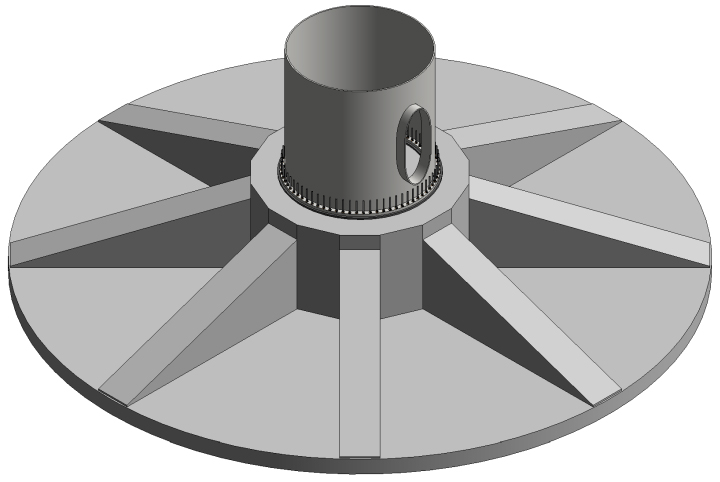
The same concepts can be applied to a wind-turbine foundation. For instance, similar to how waffle slabs are constructed, a ribbed-style foundation (Figure 2) could be used in lieu of a typical foundation with a pedestal and spread footing; it would transfer loads from the wind-turbine tower to a central core, and then through a series of vertical ribs onto a flat bottom slab. This approach is similar to a traditional foundation but requires less concrete.

Using the precast post-tensioned concrete approach, a wind-turbine foundation also can be built using concrete segments that have already been precast off-site, transported to the site, and then post-tensioned. An award-winning example of this approach can be found at the Palmers Creek Wind Farm (shown in Photo 2) in Granite Falls, Minnesota. The Palmers Creek Wind Farm was the first to implement RUTE Foundation Systems’ precast spread footing foundation for one of its wind turbines. The technology consists of either a cast-in-place or precast reinforced concrete hub connected to multiple precast concrete box girder sections.

Figure 1: In the past two decades, the rotor diameter and hub height of wind turbines has greatly increased, requiring an even larger foundation. In this example, a 1.5-MW wind turbine designed in 2004 requires a 50-foot foundation with a 6-foot spread footing and pedestal. In contrast, a larger 6.1-MW wind turbine designed in 2023 requires a foundation 18.5 feet larger with a spread footing and pedestal nearly double the height. In the coming decades, larger turbines will demand even larger foundations. (Courtesy: Barr Engineering Co.)

These sections form a spread footing similar to a typical cast-in-place footing but effectively decrease the amount of concrete needed with the use of post-tensioning steel strands. RUTE received the 2019 Merit Award from the Post-Tensioning Institute (PTI) for the successful installation of the technology.

Another related question is: When will wind turbines become so large that the concentrated loads at the base of the tower become too significant for the materials that connect the tower to the foundation? An innovative approach that supports the greater demand of taller wind-turbine towers is Barr Engineering Co.’s recently U.S.-patented “clamper plate,” as shown in Figure 3. Today’s transportation constraints currently limit the diameter of wind towers, and practical limitations also exist on the diameter and strength of anchor bolts that connect the tower to the foundation. The result is larger turbines are beginning to push the practical limits on the strength of anchor bolts. As wind turbines increase in size, it is essential to improve the method of mounting the wind tower to its foundation without increasing the tower’s diameter, while making sure the diameter and grade of anchor bolts remain practical. The clamper plate attaches to the tower’s flange and allows additional anchor bolts to be installed, supporting the greater demand of taller wind-turbine towers by spreading the load to more anchor bolts.

Figure 2: A ribbed-style foundation is similar to a traditional spread footing foundation, but with less concrete that can be placed in different phases. (Courtesy: Barr Engineering Co.)

Repower an existing site or creatively develop a new site

Reliability of wind resources varies across the U.S. Most locations with high-quality wind resources, reasonably economical geotechnical conditions, and close proximity to transmission lines have already been developed. Considering this, what are the best approaches for continued wind facility development?

One approach is to repower older facilities. This can take the form of decommissioning the existing turbines and constructing new wind turbines and foundations in the same general vicinity. This can also take the form of evaluating the existing foundations to assess their ability to support the newer and larger wind turbines.

These evaluations typically include two phases: desktop studies and field assessments. In the desktop study, a strength evaluation is completed in accordance with the American Concrete Institute (ACI) 318 Standard, a calculation-based assessment of the as-built characteristics of the foundation. The field assessment validates the desktop study findings through a variety of activities, including visual observations, performance tests, selective coring of the concrete, and structural health monitoring to collect data on the foundation’s stiffness during turbine operation.

Photo 2: Pre-cast concrete sections are lifted into position at the Palmers Creek Wind Farm in Granite Falls, Minnesota. The sections will be post-tensioned and then backfilled before tower erection begins. (Courtesy: Barr Engineering Co.)

Depending on the results of these evaluations, foundations can, at times, be reused without the need for modifications. However, if this is not possible, constructed modifications (e.g., collars, extensions and/or overlays) can be made to strengthen the existing foundations to support larger turbines.

A second approach seeks out sites with high-quality wind resources that have not yet been developed due to geotechnical conditions that make foundation design more challenging. An example of this can be found at the Casselman Wind Power Project in Somerset County, Pennsylvania. Out of 23 wind turbines on the site, eight are on top of a rehabilitated surface mine. Sites that exist on top of mine spoils are highly susceptible to damaging amounts of settlement, making foundation design more complex. The solution was the design of a micropile-supported reinforced concrete foundation that extended through the mine spoils to the underlying bedrock, as deep as 100 feet below grade, as shown in Figure 4. This innovative foundation design was recognized with the Seven Wonders of Engineering award from the Minnesota Society of Professional Engineers (MSPE).

Figure 3: Barr Engineering Co.’s U.S.-patented clamper plate attaches to the tower’s flange and allows additional anchor bolts to be installed, supporting the greater demand of taller wind turbine towers. (Courtesy: Barr Engineering Co.)

Reduce concrete use and C02 emissions

The Environmental Protection Agency reported in 2019 that cement plants produced emissions of 67 million metric tons of carbon dioxide equivalents, comprising roughly 10 percent of the industrial sector’s total reported emissions [2]. Cement has been a critical part of the U.S. construction industry for one-and-a-half centuries, but its production results in a significant amount of CO2 emissions. What can be done to reduce concrete consumption?

One direct option is to use an alternative foundation approach that, by design, uses less concrete, as described earlier. This includes ribbed-style foundations and precast post-tensioned concrete segment foundations.

A second option is to use supplementary cementitious materials (SCMs) to reduce or replace the amount of cement used within concrete. A variety of SCMs exist, including fly ash, slag, and silica fume (See Figure 5). A third potential option — alkali-activated cements (AACs) — were recently investigated by the ACI Committee 242. These materials rely on a reaction of alkali activation to form a cement-paste solid. As the 2022 ACI AACs Report summarizes, “AACs constitute a class of materials that is suitable to use as part of a toolkit of various concrete technologies.

Figure 4: A micropile-supported wind-turbine foundation mitigates the detrimental settlement effects of mine spoils. (Courtesy: Barr Engineering Co.)

Thus, while AACs may not be considered a direct replacement to cement or blended hydraulic cementitious materials for every application, AACs may meet or exceed economic and technical performance requirements in some applications.”

More research is needed before AACs are considered for use in wind-turbine foundations. However, a parallel technology has already been demonstrated in the wind-turbine foundation industry in years past; 20 years ago, when foundations were typically designed for 1.5-MW wind turbines, cement-based grouts were commonly used to transfer loads from the bottom of the tower to the top of the foundation.

However, today, nearly every wind-turbine foundation project uses the stronger, more efficient epoxy-based grouts for the same application.

Conclusion

The development of wind-energy facilities will continue to play a critical role in meeting legislative and societal goals for renewable energy.

However, a wind turbine is only as strong as its base. As wind-turbine technology advances, innovative foundation approaches will be necessary. The good news is a variety of solutions are available for today’s common wind-turbine foundation challenges, with more solutions on the horizon.  

References

  1. “Wind Turbines: the Bigger, the Better,” Office of Energy Efficiency & Renewable Energy, August 16, 2022, www.energy.gov/eere/articles/wind-turbines-bigger-better.
  2. “U.S. Cement Industry Carbon Intensities (2019),” United States Environmental Protection Agency, October 2021, www.epa.gov/system/files/documents/2021-10/cement-carbon-intensities-fact-sheet.pdf.

Mechanical reliability is essential to renewable-energy performance

0

Global renewable power capacity is expected to double by 2030, adding about 4,600 GW of new generation according to the International Energy Agency’s (IEA) 2025 renewables report. That’s roughly equivalent to the combined power capacity of China, the European Union, and Japan.

In many countries, growth between 2025 and 2030 is expected to outpace the previous five-year period, although this rapid expansion is also intensifying challenges around grid integration, supply chains, and project financing.

Supporting integration isn’t just about balancing supply and demand across the grid. It’s also about making sure thousands of individual systems keep running as intended, often in tough conditions like strong winds. Every installation — whether it’s a solar array, wind turbine, or supporting system — depends on mechanical components that need to perform reliably for long periods with very little intervention.

In wind turbines, compact control systems adjust blade pitch and orientation in response to changing conditions. (Courtesy: Shutterstock)

When that reliability fails, it shows. In November 2025, a blade detached from a 300-foot-tall wind turbine in Plymouth. While the exact cause hasn’t been confirmed, incidents like this are often linked to a combination of extreme weather and mechanical stress.

These incidents highlight a wider reality. Renewable systems are under constant pressure from their environment and day-to-day operation, and even small mechanical issues can grow into bigger problems over time.

Compact assemblies matter more than ever

This is where compact, precision assemblies become critical. Renewable technologies increasingly depend on smaller subsystems responsible for positioning, control, and monitoring. These include drive units, actuator linkages, and sensor mechanisms, many of which operate within confined housings where space is limited and tolerances are tight.

Solar tracking systems provide a clear example. They may look like large mechanical structures, but their performance depends on precise, repeatable movement from compact internal assemblies. Motors, gears, and control systems all need to work together to keep panels tracking the sun throughout the day, directly affecting how much energy they capture.

According to Earth.org, the amount of solar energy reaching the Earth’s surface in just 90 minutes would have enough power to meet global annual energy consumption. This means that even small improvements in capture efficiency can quickly add up when applied across large installations.

Bearings are a big part of what keeps these assemblies working. They support rotating components in motors, gears and sensors, allowing for smooth, controlled movement in tight conditions. It’s a small role on the surface, but it affects the whole system.

In confined spaces, small variations in bearing performance can have a big impact. A slight increase in friction can put more strain on the motor, increasing energy consumption and accelerating wear. Small misalignments can affect positioning, making solar tracking less effective. Over time, these issues can build up across a system, reducing efficiency and increasing maintenance.

In miniature bearings, lubrication is more sensitive, particularly when temperatures fluctuate, so choosing the right approach is key to keeping things running smoothly over longer periods. (Courtesy: SMB Bearings)

Choosing the right materials

Selecting the right miniature bearing for these assemblies depends on balancing environmental resistance with consistent mechanical performance. Stainless steel bearings, particularly in grades such as 440C or 316, are often well suited to outdoor solar applications due to their corrosion resistance in exposed conditions. Where lower friction and longer service intervals are required, hybrid or full ceramic bearings can offer advantages, reducing wear and maintaining smooth operation under variable temperatures.

In compact motor and sensor assemblies, low-noise deep groove ball bearings are commonly used for their ability to deliver precise, reliable rotation within limited space. Careful consideration of sealing and lubrication is equally important, ensuring contaminants are kept out while maintaining stable performance over extended operating cycles.

Contaminated lubricants can cause premature wear and tear on bearings as the lubrication becomes less effective over time and leads to more downtime due to maintenance and replacement.

If businesses don’t proactively manage lubricants by making machine adjustments, monitoring parts and cleaning them, they will not be able to assess when re-lubrication, and therefore planned downtime, is needed.   

The time taken to carry out regular assessments of lubrication quality also adds to overall costs of lubricant expenditure. Labor costs associated with checking systems can be overlooked by manufacturers and can escalate further if systems are not running efficiently or if problems remain unchecked and escalate.

Training employees on how to avoid lubricant contamination allows businesses to maintain lubricant efficiency for longer and reduce the wear on parts. Employees need to know which signs to look out for to proactively re-lubricate bearings, forward plan maintenance, and reduce unplanned downtime.

Expert support

If businesses don’t have the expertise in-house, they can invest in support with removing and integrating lubricants. Contacting an external provider gives businesses the peace of mind that the work is being carried out to the highest standards and will last the longest amount of time.

External specialists can also spot any issues that may be costly in the future, such as damaged bearings from inadequate lubrication. They can work with the business to reduce damage in the short-term and create a longer-term maintenance plan to solve the issue. This process allows them to prepare for future costs, and proactively reduce any damage that may already be occurring.

The lubrication must suit the application whether it be high speeds, temperature extremes, chemical exposure, or contact with other liquids. Failure to ensure that the lubrication fits the application can lead to increased operating and maintenance costs for businesses.

That’s why being aware of hidden costs throughout the system’s lifespan, and proactively solving these issues, is key to a company’s bottom line.

External specialists can also spot any issues that may be costly in the future, such as damaged bearings from inadequate lubrication. (Courtesy: SMB Bearings)

Other technologies to keep in mind

The same principle applies across other renewable technologies. In wind turbines, compact control systems adjust blade pitch and orientation in response to changing conditions. These systems rely on rotating components operating under continuous load.

In energy storage, cooling and circulation systems depend on compact assemblies that must function reliably within tight spaces. Hydrogen and grid-support technologies similarly incorporate pumps and compressors where precision components are essential to stable operation.

As systems get smaller, there’s less room for things to go wrong. When everything is tightly packed, even small changes in friction, alignment, or how loads are distributed can start to affect performance. What wouldn’t matter much in a larger setup can quickly become a real issue in a compact, high-precision system.

Material choice becomes especially important here. Renewable installations are out in the elements, exposed to moisture, dust, and constant temperature changes, so components need to hold up over time.

Temperature changes add another layer to think about. Components are constantly heating up and cooling down, causing expansion and contraction. In a compact system, even tiny shifts like this can affect alignment and how loads are shared across a bearing, which in turn affects reliability over time.

In many renewable systems, especially distributed ones, access for regular maintenance isn’t easy. In miniature bearings, lubrication is more sensitive, particularly when temperatures fluctuate, so choosing the right approach is key to keeping things running smoothly over longer periods.

As renewable capacity grows, all of this scales up. A single solar farm might have hundreds of tracking units, each with multiple compact assemblies. Across a wider network, that quickly becomes thousands of bearings all operating at once. Keeping performance consistent at that level comes down to careful design and smart component choices.

As the energy transition moves forward, most of the attention stays on big-picture topics such as capacity, storage, and grid flexibility. But there’s another side to it. These systems need to work reliably, day-in and day-out, in real-world conditions.

That ultimately comes down to the smallest parts, because when it comes to building a resilient and efficient energy future, those details matter.

MET Group appoints new leaders

0

Swiss-based energy company MET Group recently appointed Gergely Szabó as CEO of MET Sales and Trading Segment and Tom Van de Cruys as CEO of MET Retail Segment.

The appointment of Szabó strengthens MET Group’s integrated business model, and enables the company to capture new opportunities across gas, LNG, power, and renewable energy markets.

Gergely Szabó is the new CEO of MET Sales and Trading Segment. (Courtesy: MET Group)

Having held several senior leadership positions within MET Group, most recently serving as the CEO of MET Central Europe, Szabó brings nearly two decades of experience in energy markets, commercial operations, and regional growth across Europe.

MET Group has established a new Retail Segment to expand its customer base and further enhance the customer experience.

Retail Segment CEO Tom Van de Cruys brings more than 25 years of leadership experience in European energy markets.

Tom Van de Cruys is the new CEO of MET Retail Segment. (Courtesy: MET Group)

He held senior management roles across Germany, the U.K., Belgium, France, the Netherlands, Spain, and Switzerland.

Van de Cruys will focus on increasing MET’s retail footprint and brand presence across Europe while delivering innovative energy solutions.

“I am very pleased with the appointments of Gergely and Tom,” said Huibert Vigeveno, Group CEO.

“A strong and agile sales and Ttading business and the creation of our retail segment are important steps towards achieving our ambition of becoming a European Energy Champion.”

More info www.metgroup.com

DWT expands training center in Texas

0

DWT recently completed a comprehensive transformation of its U.S. Training Center in Humble, Texas, expanding its ability to deliver hands-on technical and safety training for renewable energy technicians.

The project, which spanned about 18 months from planning through completion, reflects DWT’s commitment to developing the industry’s safest and most technically proficient workforces. The facility supports more than 200 trainees annually and serves as a cornerstone of DWT’s technician development program.

The renovated facility now features a Siemens 2.3-93 nacelle complete with hub and downtower assembly, an MHI 1000A simulator, basic electrical and hydraulic training, intermediate troubleshooting rooms, and a 5-MW solar inverter, providing technicians with training opportunities across multiple renewable energy technologies. DWT also expanded its fundamental electrical and hydraulic training areas, and its intermediate and advanced technical training classrooms.

DWT has completed expanding its Humble, Texas, training center. (Courtesy: DWT)

A new training tower further enhances the facility’s capabilities, allowing up to six trainees to participate simultaneously and enabling instructors to conduct multiple rescue scenarios at once.

“In 28 years of working in wind energy, I have not seen nor been involved with the buildout of an independent service provider training facility such as DWT’s,” said Russ Leach, vice president of Enterprise Systems, Processes & Quality.

“The commitment to training by DWT, both globally and in the United States, is unique and helps set us apart from anybody else in the industry. I couldn’t be more proud of the training team and everyone who supported this effort. We were able to continue all of our climb training, safety training, and technical training programs even while the remodeling and installation of the nacelle and other equipment were ongoing.”

DWT’s Training Center is part of a development system that combines classroom instruction, online learning, hands-on technical training, and structured on-the-job experience.

Together, these elements ensure technicians demonstrate competency before performing work in the field, supporting DWT’s commitment to safety, quality, and operational excellence across the renewable energy industry.

More info www.dwtglobal.com

Meridian’s Waiinu Energy Park on fast track

0

Meridian Energy’s application for Waiinu Energy Park has been referred by the Minister for Infrastructure for consideration under the fast-track consenting process.

Waiinu Energy Park is a proposed wind farm, solar energy, and battery development northwest of Whanganui. If approved, it will be one of New Zealand’s largest renewable energy developments, generating enough renewable energy to power up to 253,000 homes.

Meridian Energy’s Waiinu Energy Park is a proposed wind farm, solar energy, and battery development. (Courtesy: Meridian Energy)

“We know that New Zealanders want a strong, resilient and affordable electricity system, and projects like Waiinu will help deliver those outcomes,” said Meridian Chief Executive Mike Roan. “Fast-track requires a lot of work to be done up front, so we’ve taken time to ensure the application is as detailed and well thought-out as possible, and that it picks up on feedback from iwi and hapū, and the local community.”

If the Waiinu substantive consent is approved and committed to, it will provide a boost for the local and regional economy by prioritizing local employment before and during construction, through spending throughout the construction period, and it would create permanent roles at the completion of the project.

Roan said projects of this scale would be far less likely without strong, vertically integrated electricity companies. 

“Innovative, ambitious and large-scale developments like Waiinu are possible because of Meridian’s strong balance sheet,” he said. “It’s through these sorts of investments that we’re delivering the new generation New Zealand needs to make power affordable. We are already seeing forward prices decline as new renewables replace the industry’s reliance on the country’s declining gas production, and that’s good news for consumers.”

More info www.meridianenergy.co.nz