


Home November 2025

November 2025

Conversation with Ricardo Wigman

0

You were recently named chief delivery officer at Power Factors, what are your duties going to be?

Power Factors has gone through incredible growth in the past few years, and we have achieved a leading position in both asset management and SCADA, EMS and PPC. As we look at our future growth projections and the investments we’re making, it is clear we need to be prepared to scale with our customers at an increasingly rigorous pace. That is essentially the core of my responsibilities.

I’m responsible for ensuring Power Factors customers realize the full value of our platforms, with a particular focus on our SCADA, EMS and PPC business, and that we deliver operational excellence.

My focus is on scaling our delivery model globally, building a high-performance organization, and continuously improving how we execute projects and how we support our customers globally in the space that we’re in.

How has your experience prepared you for this role?

I have spent my career at the intersection of technology and energy. I have 25 years in the energy industry, starting with a degree in electrical engineering. Since then, I’ve been focused on leading organizations that bring mission-critical digital platforms into complex environments. I’ve supported customers in multiple industries across the energy spectrum, including generation, transmission, and distribution portfolios.

My work has been primarily in big corporate organizations, overseeing very similar expansions and solving the scale issues that we’ve all experienced in this industry. These expansions have gone through multiple growth and reduction cycles – and that experience helped me prepare for what Power Factors needs to scale.

Another motivator for me to join the company was the opportunity to support the next phase of Power Factors’ growth. I’m proud to add to the great story that has been built, and to help the company prepare for the next steps as we expand and follow our customers in their own growth journeys.

What is the importance of SCADA and EMS in the wind-energy sector?

SCADA and EMS are foundational for operating wind assets. They provide the real-time insights that operators need to optimize performance, manage grid integration interactions, and, at the end of the day, ensure safety.

The real opportunity that we’re seeing in the market comes when you integrate these systems into a unified platform that enables smarter decisions across the entire renewables portfolio, which is exactly where Power Factors excels with its Unity platform.

The growth of battery storage (BESS) and hybrid sites raises the importance of SCADA and EMS too. BESS is an increasingly attractive proposition for investors looking into other ways of optimizing revenues and returns for their investments. We have seen curtailment of wind energy and, consequently, lost revenue become a growing problem for the global wind sector, underlining the need to have purpose-built, future-proofed SCADA and EMS that can integrate smartly to complement how operators manage assets.

Managing the real-time data from SCADA and EMS hardware is the key to improving operational performance. That’s the value proposition that we bring to the market and also why SCADA and EMS are so important to the wind energy sector: they allow renewable energy operators to make the most of opportunities and investments into collocated/hybrid battery storage and wind asset portfolios.

Why is there a need for IPPs to simplify their portfolios as they scale more rapidly?

As independent power producers (IPPs) grow, they naturally inherit a patchwork of systems and processes, data models, and vendors. If not managed correctly, this can lead into siloed knowledge and practice across different geographies and disconnected data integration across different assets.

To manage a utility-scale renewables portfolio effectively, having more visibility is crucial. Simplifying this patchwork into a single portfolio, using a unified platform, is critical to scaling without losing that visibility or control. The aim is to make the complexity more manageable, to standardize operations, and unlock portfolio-wide optimization.

What can be done to strengthen the power grid and make it more resilient?

I’ve spent the last 11 years managing SCADA, EMS, and real-time systems for transmission and distribution operators, and building grid resilience has been a key objective throughout.

It is a fact that there are bottlenecks in the grid. If we look from a global scale, the investment cycle in physical and digital grid assets are late – certainly behind the curve of renewable innovation. This directly affects our ability as an industry to connect new renewable assets into the grid. This is an issue we see across countries and regions, and it tends to push investors away. Ultimately, it impacts the stability of the market and the wider energy transition it supports.

Investment in technology is a must, but that is no longer the challenge. I see it more as a system issue. We need more coordinated policy and regulations alongside the investments in both the physical and digital layers of our power systems.

Germany is a good example. German policymakers are actively discussing ways to improve regulation to strengthen the power grid and make it more resilient. At the same time, they are looking at the storage projects in the interconnection queue. 

Right now, investors are waiting in the queue without guidance or guarantee of project feasibility or priority. In a standard queue, everyone waits in line, based on when they applied for interconnection. But there has been so much progress in the past few years that many of the newer projects stuck at the bottom of the queue would have greater benefits to the grid, end customers, and society.

We need to find ways to prioritize the most impactful projects first. The current state is a clear example of the lack of policy not helping them move forward at the pace we need.

How are you going to approach these challenges?

As chief delivery officer, my goal and my focus are centered on three pillars: operational excellence; customer partnership and customer centricity; and scalable delivery.

IPPs expect companies like ours to operate at global scale and support them irrespective of geographies. I want to ensure every customer engagement strengthens our ability to deliver a constant, consistent value.

Equally, this is a fast-moving market that requires a fast reaction. This is a key focus for me as I approach these challenges: how are we scaling our business to support the growth of our customers? How can we support the consolidation of our customers’ existing assets?

Can you discuss Power Factors’ REM platform and how it may factor into plans to increase your customer confidence and compliance and profitability?

Unity, our integrated renewables energy management platform, unifies data from across technologies — wind, solar, storage — with functions, operations, performance, compliance, and commercial insight.

It’s a decision intelligence platform that blends hardware and software to enable better performance and reduce operational risk. With Unity, we empower renewable energy asset owners and operators to bring together all the data and workflows they need to operate renewable assets – from site-level performance analytics to portfolio-wide views, compliance and financial tracking.

Combining hardware and software, both on-site (at the plant level) and off-site (in the cloud), is essential for today’s renewable energy operators.

This view is closely linked to how we scale with IPPs as they grow and streamline what they’re looking for. The aim is to deliver peak performance and reliability across our customers’ portfolios, ultimately driving increased confidence, compliance, and profitability. 

More info: www.powerfactors.com

Keeping an eye on the complete turbine

0

Predictive maintenance for wind turbines has become a cornerstone of what keeps those massive assets spinning efficiently and safely. A big part of the predictive maintenance toolbox is the condition monitoring system; however, until recently, there hasn’t been a reliable condition monitoring system that could keep an eye on a turbine’s blades and provide early detection of any potential threats.

Predictive maintenance specialist ONYX Insight recently acquired ELEVEN-I to help solve this industry challenge.

“ONYX focuses on providing holistic solutions to our customers, primarily owner-operators and OEMs, to equipment with the right hardware and software and analytics to reduce the downtime and reduce their OpEx throughout the lifecycle of their wind projects,” said Dr. Zhiwei Zhang, Chief Commercial Officer at ONYX Insight.

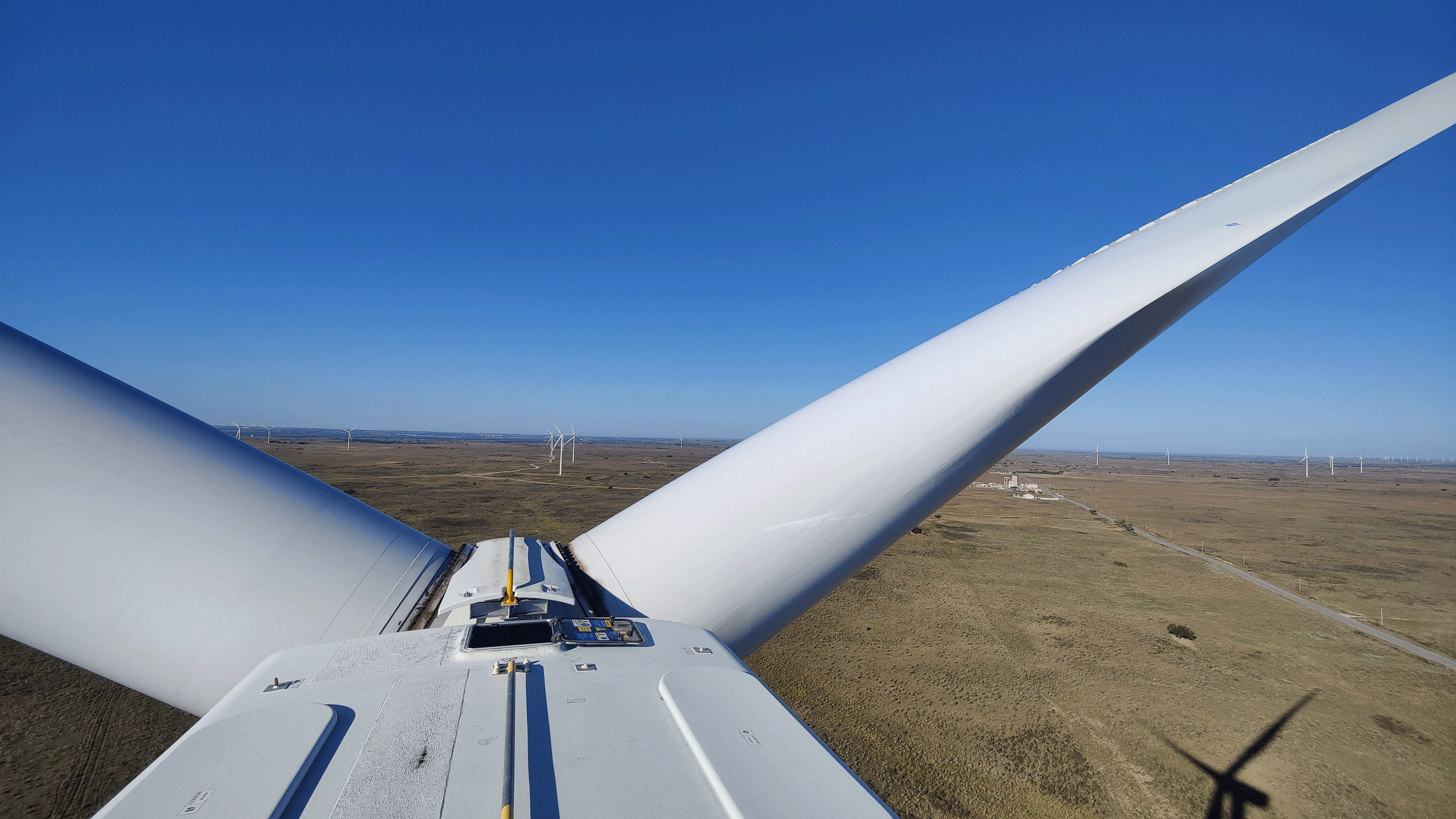
ONYX’s acquisition of ELEVEN-I means the company can more closely and accurately monitor the health of the wind blades. (Courtesy: ONYX Insight)

Monitoring the blades

ONYX’s acquisition of ELEVEN-I means the company can more closely and accurately monitor the health of the wind blades, arguably one of the most important components of a turbine, according to Zhang.

“Over the years, ELEVEN-I has developed a technology that has its own sensor, hardware, and analytics to monitor the blade health and blade dynamic behavior in the field and compare it with the design and the intention,” he said. “They use a mixture of physical-based models and advanced analytics based on field data, and they provide insight to the blade structural changes, damage accumulation, and any abnormal behavior from the field, helping the owner-operators to detect blade issues earlier and make better informed decisions during their maintenance.”

Zhang emphasized that ELEVEN-I’s mission meshed very well with ONYX’s, which focuses on providing a whole holistic solution for the entire turbine for owner-operators.

“It has always been our vision to cover all turbine systems to provide predictive maintenance to our customers where needed,” he said.

“We focused on drivetrains to start with about 15 years ago, and then on gearboxes and generators. Lately, we have been able to expand to other components of the wind-turbine systems like towers and foundations and the pitch bearing systems, the blade root interface.”

With a large portion of an O&M’s budget earmarked for blade and other major components of the turbine, being able to develop and offer early detection systems of potential threats makes sense. (Courtesy: ONYX Insight)

Adding to its portfolio

But with blade failure issues being a huge challenge in the industry today, ONYX was researching ways to add that crucial component to its portfolio, according to Zhang.

“They’re costing our customers a lot of money, and blade CMS — the blade condition monitoring system — is a relatively new emerging technology that is only starting to gain traction in the industry,” he said. “The timing was just perfect for ONYX to expand into blade monitoring. With the ELEVEN-I acquisition, we will be able to accelerate into this new area more quickly and capitalize on this once-in-a-lifetime opportunity.”

ELEVEN-I’s blade CMS system has had a proven track record after six-plus years of development and with research projects with major OEMs, according to Zhang, as well as acquiring an offshore research grant in the U.K. and elsewhere.

“We have seen some pretty convincing and successful field data from their installed base,” he said. “In the meantime, we have actually collaborated with ELEVEN-I in the past year or so on multiple customer projects, using them as a subcontractor. Our due diligence included ONYX-led installation with their systems for our customers and back-to-back blind tests of their analytics on a damaged blade in the U.K. And we had the opportunity in the past few months to demonstrate the system’s effectiveness in the field, and we’re convinced that this is a great fit to our product portfolio.”

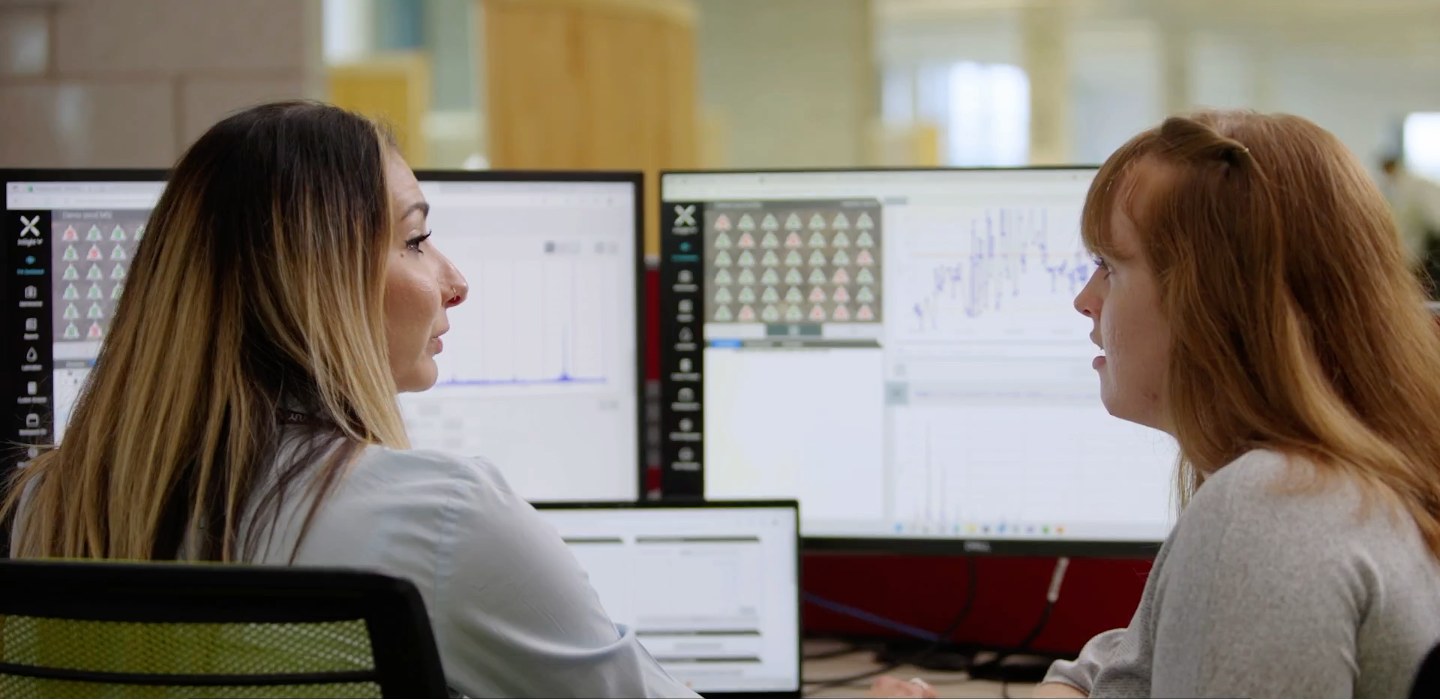
With ELEVEN-I’s condition monitoring system on the blade operators, customers will be able to get early detections on those issues, especially for those issues that happen in between the drone inspections. (Courtesy: ONYX Insight)

Affecting the bottom line

Being able to monitor blades effectively can solve a lot of challenges for owner-operators that, until now, could severely affect a company’s bottom line.

As turbines grow in size and complexity, blades face higher loads and increasing challenges in manufacturing and transportation.

Early detection could convert blade replacements to blade repairs — a far less costly option. It would also supplement the need to rely on annual drone inspections.

Blade issues can escalate into catastrophic events, which could be anything from blade detachment to full turbine collapse.

Eliminating severe events can help minimize reputational damage and increased scrutiny from safety, insurance, and investment committees.

Those factors are just a few examples of what made ONYX take notice of ELEVEN-I’s growing expertise with blades, according to Zhang.

“We’re able to expand our PDM area from gearbox to drivetrain, and then blade gap, pitch bearing, and tower and foundation system; we’ve done a lot of research work and engineering work that went into the plate structure, which has been supported by some government funds in the past a few years, but it wasn’t going at the speed we wanted or needed it to,” he said.

“With Eleven-I’s specialty and what they have proven they could do in the blade health monitoring area, it just matches with what we do today really well.

It’s accelerated what we want to do on the blade health monitoring area perfectly.”

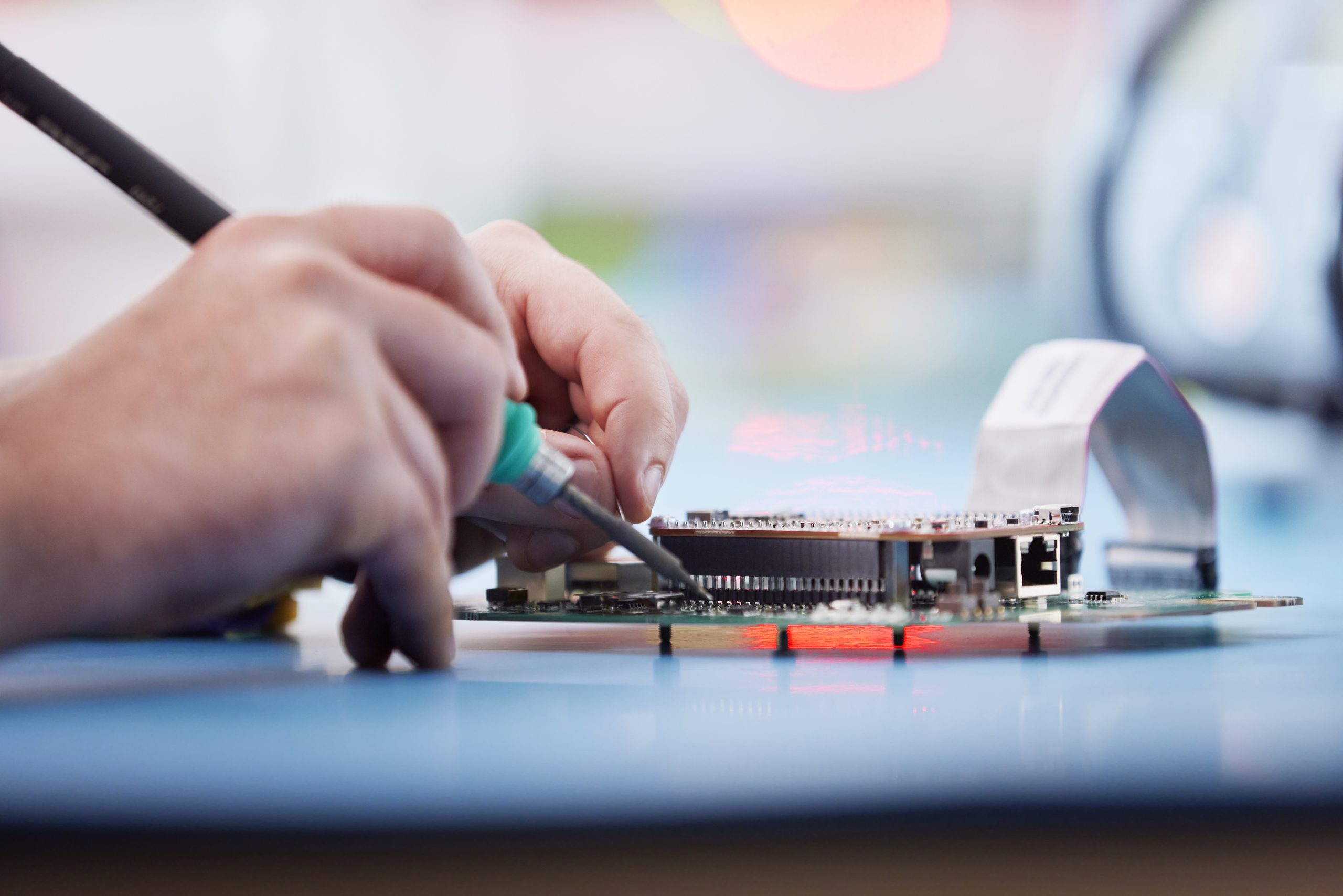
The more systems a company has to incorporate, the higher the cost, as well as the added complexity of learning multiple systems. (Courtesy: ONYX Insight)

Making sense

And with a large portion of the O&M’s budget earmarked for blade and other major components of the turbine, being able to develop and offer early detection systems of potential threats made sense, according to Zhang.

“With ELEVEN-I’s condition monitoring system on the blade operators, customers will be able to get early detections on those issues, especially for those issues that happen in between the drone inspections that customers are probably doing, sometimes annually, and sometimes more often than that,” he said. “Basically, there’s a gap of visibility for our customers in between those inspections. With ELEVEN-I’s system, they will be able to get much better visibility and be better informed of any issues happening and make their plans either to do a one-off inspection with drones or to prepare for repair or replacement, to catch the issues earlier and plan more proactively.”

One-stop shop

Also, by adding blade condition monitoring systems to its arsenal, ONYX can even better be a one-stop shop for its customers, according to Zhang.

“In the whole turbine, there are a lot of subsystems, and not all of them need monitoring,” he said. “But, from all these years working in the wind industry and what we have learned from our customers is there are only some critical major components that need monitoring — for example, the drivetrain, the blades, and a few others. When the customer needs monitoring on all these major critical components, our understanding is the customer won’t want a few siloed condition monitoring systems that they need to keep adding — let’s add another CMS for the tower, let’s add another CMS for drivetrain, and then the blades.”

The more systems a company has to incorporate, the higher the cost, as well as the added complexity of learning multiple systems, according to Zhang.

“Our understanding is the customer would want one consolidated system that covers all the components that need monitoring, and then they can have a centralized dashboard and centralized database as well to keep learning from all these issues and repairs from their system and, later on, build a central repository of all this health data and issues from their major components,” he said. “That’s our vision.”

Expanding more quickly

ONYX has been doing research and trials on blade condition monitoring over the years with some of its customers, but by bringing ELEVEN-I under the ONYX predictive maintenance umbrella, it has allowed the company to broaden its expertise much more quickly, according to Zhang.

“With the ELEVEN-I acquisition, they have brought in a more mature and technical ready product to us, and we’ll be able to open this market segment more quickly, meaning that we’ll be able to resolve some of the problems for our customers more rapidly,” he said. “For example, I have got requests from customers to monitor certain blade platforms from certain turbine technologies, and they have known blade issues they want to monitor in addition to the joint inspection they’re already doing. With this acquisition, we will be able to provide a solution to market much more quickly than before.”

As the industry challenges grow, Zhang is confident that blade CMS is a significant step for ONYX to expand. “We have been a drivetrain expert for a long time, and we have our drivetrain monitoring solution that’s been established in the market from aftermarket, from owner-operators to OEMs, in the past 15 years or so,” he said. “For blades, this acquisition will be marked as a breakthrough for us in this area.”

And Zhang sees a natural evolution for blade CMS as well, where it becomes part of the initial blade construction process.

“I hope this marks a new phase for ONYX to enter not only blade CMS for aftermarket for retrofitting in the field, but also gets us into a factory-fitted solution for OEMs,” he said. “That means that this product can become so scalable, that not only wind farms will retrofit a post-warranty, but the OEMs will consider fitting this blade CMS solution into their factories and into their assembly lines, so that, eventually, every blade, every turbine, will come with a blade CMS in the future.” 

More info onyxinsight.com