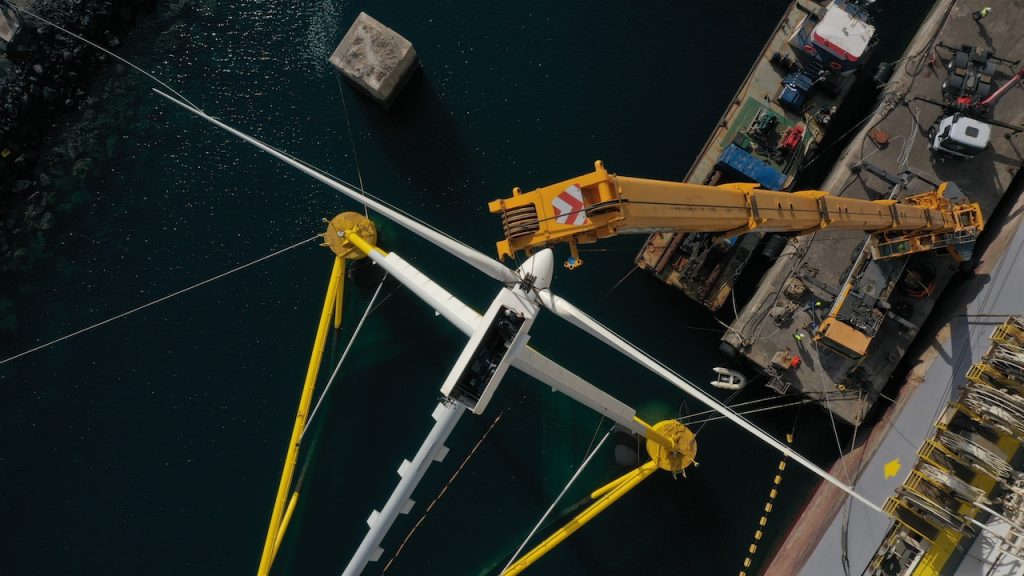
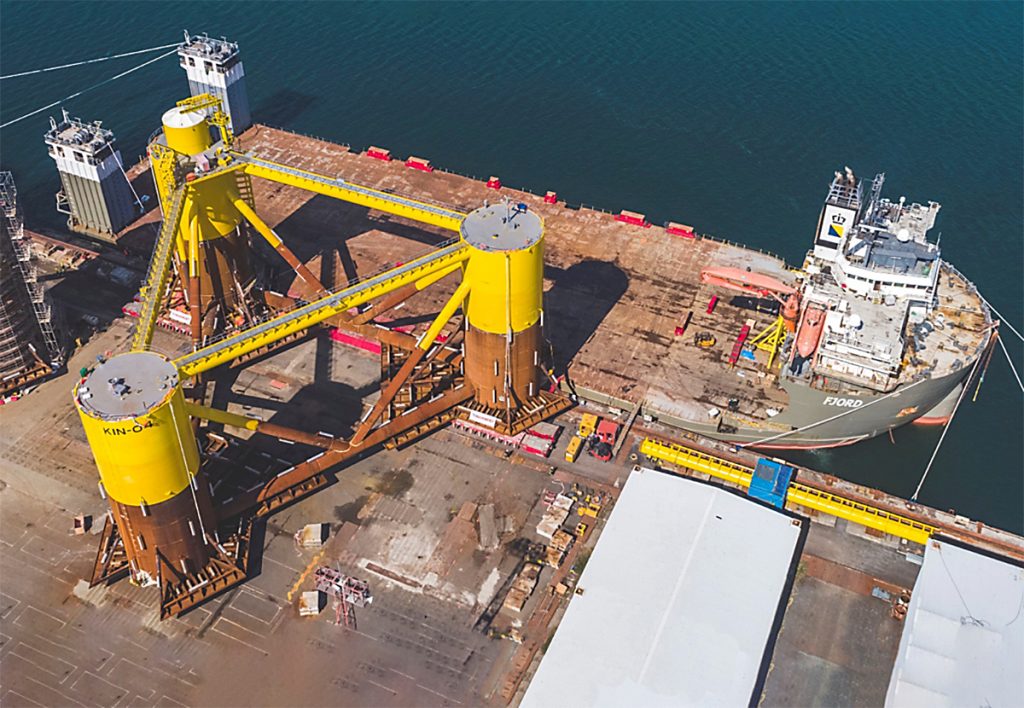
Load-out at Kincardine Offshore Wind Farm. (Courtesy: Mammoet)
Mammoet has completed the load-outs of five floating wind platforms at the Navantia Fene Shipyard in Spain. The platforms will form part of the largest floating offshore wind farm in the world, Kincardine Offshore Wind Farm.
“Having worked at this quay before doing similar complex operations, it was the key factor to deliver the floating wind platforms successfully on time,” said Javier De Pablo Arenzana, Mammoet Spain sales manager. “In addition to our pool of resources and equipment, this meant we were able to offer our client a high degree of flexibility in terms of the project schedule. We believe these capabilities make us well-suited to supporting the growth of the offshore floating sector.”
Considering platform weights, the surface conditions on the quay were of paramount importance. To minimize operational risk, Mammoet prepared the quay by installing hundreds of steel plates to level the surface in places where it had previously been uneven.
Coordinating with various stakeholder groups flexibly was also required to execute each operation on schedule. This included organizing each operation to meet the appropriate tide levels and weather conditions and marrying these with the availability of the specialist seagoing vessel contractor and Navantia Fene Shipyard.
Once the quay was prepared and the specialist seagoing vessel docked, Mammoet had only a short window in which it could execute each operation. Mobilizing 100 axle lines of SPMTs split between the three columns of the triangular footprint, the floating foundation was loaded onto the three sets of SPMTs, transferred 100 meters across the quay, and transversely loaded onto the vessel using 54 meters of RoRo ramps. Mammoet completed this operation five times over several months.
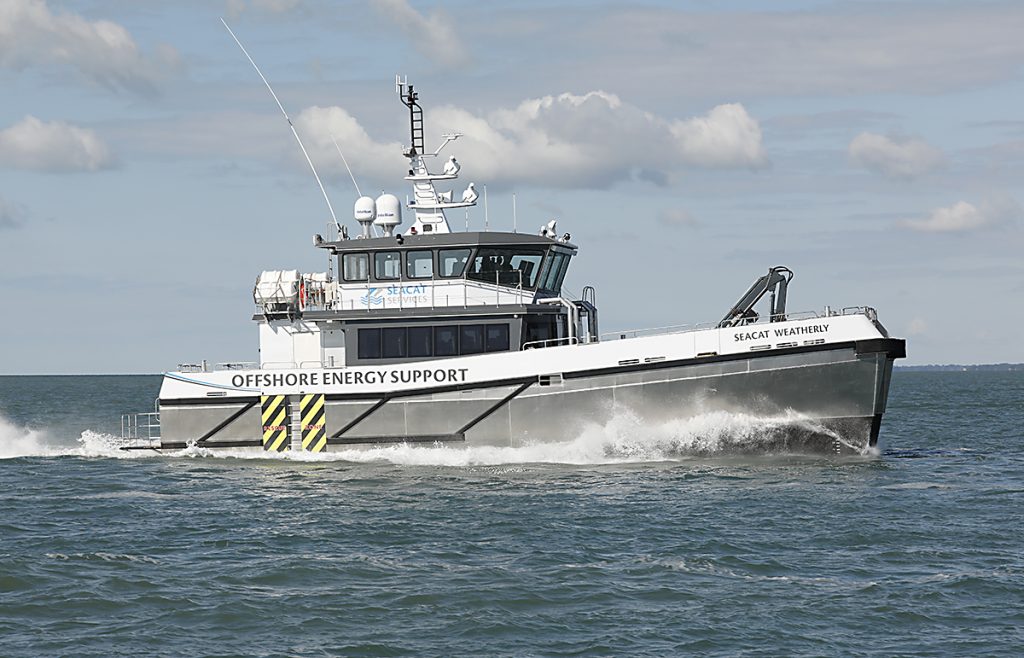
Seacat Weatherly accommodates 24 passengers and a total of 11 tons of cargo at a service speed of 26 knots. (Courtesy: Seacat Weatherly)
Offshore energy support vessel operator Seacat Services has signed a long-term charter for catamaran Seacat Weatherly to support operations and maintenance activity for the Moray Offshore Windfarm (East) Limited.
The 100-turbine, 950-MW capacity wind farm is off the coast of Fraserburgh, Scotland.
“The North Sea is a key location for the U.K.’s offshore wind industry; capitalizing on the region’s strong wind speeds is vital as the government pursues its target for all electricity to be green by 2035,” said Mark Drew, Seacat Services managing director. “At Seacat, we’ve tailored our fleet to support the build out of key offshore wind markets and are proud to be offering our best-in-class support to such important clean energy projects as those in development in Scottish waters.”
“We secured Seacat for this charter due to the reputation of its fleet for safety, reliability, and maneuverability,” said Paul Cavanaugh, Moray Offshore Windfarm (East) Limited asset director. “Seacat’s fleet of Chartwell 24s routinely proves its salt across offshore sites in Scotland and the U.K.; to have a domestic provider with such a track record for delivering high quality performance in the North Sea brings clear advantages to the Moray East project. We look forward to working with them throughout the development and maintenance of the wind farm.”
Building wind farms in deeper waters farther from shore enables operators to harness greater wind speeds with fewer obstructions than on land, but trades its increased power production potential for more complex logistics. Conducting offshore technicians safely and comfortably to sites such as Moray East is critical for the continuous provision of renewable power to Scotland and the United Kingdom.
Seacat Weatherly accommodates 24 passengers and a total of 11 tons of cargo at a service speed of 26 knots.
Seacat Services operates internationally out of Cowes, U.K., with a fleet of 14 IACS classified multi-purpose offshore energy support vessels. Each vessel is purpose designed and constructed to conduct safe, fast, comfortable transport and transfer of peronnel and equipment in the toughest of marine environments.
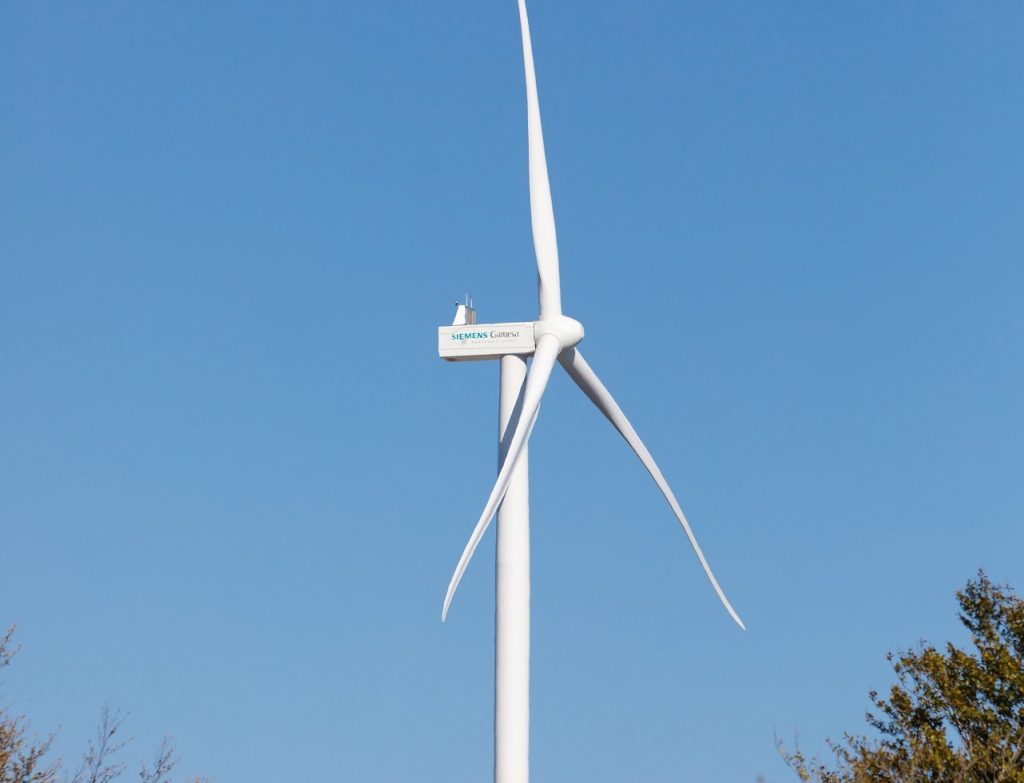
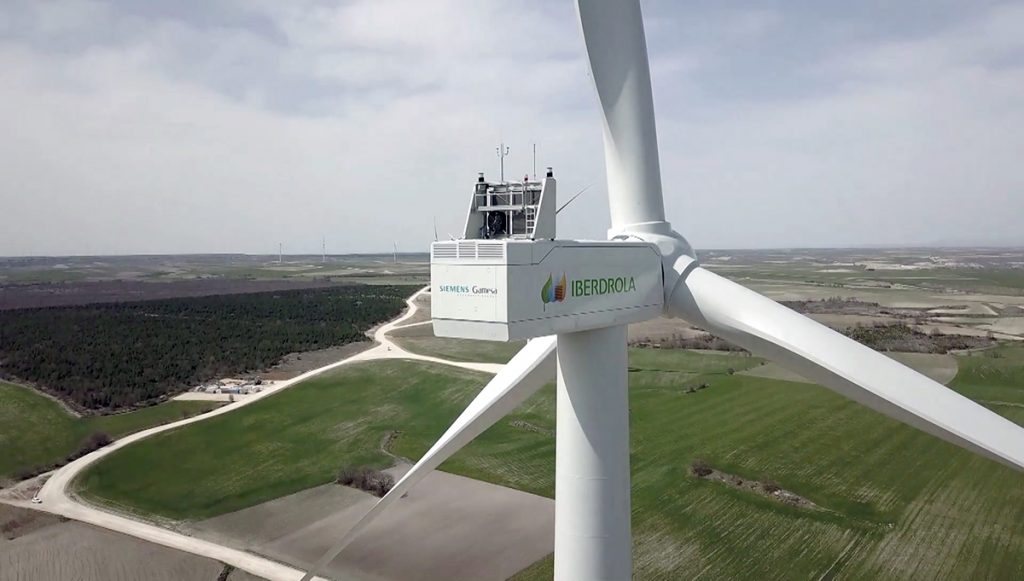
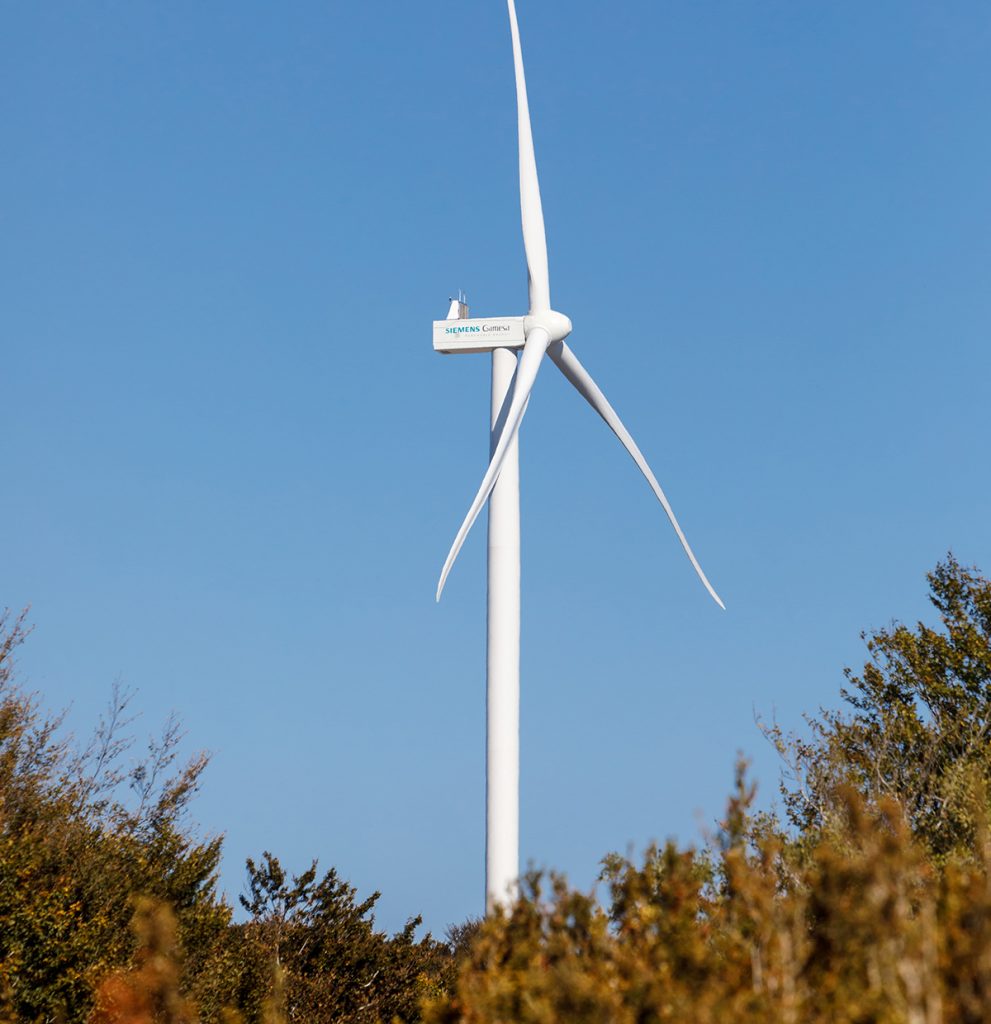
The contracts cover the service of 1,963 wind turbines with outputs of between 660 kW and 3.465 MW of unit power. (Courtesy: Siemens Gamesa)
Siemens Gamesa and Iberdrola have signed maintenance contracts totaling 1,928 MW at 69 of the energy group’s wind farms in Spain and Portugal for a period of between three and five years.
The contracts cover the service of 1,963 wind turbines with outputs of between 660 kW and 3.465 MW of unit power. With these new contracts, Siemens Gamesa consolidates its position as the main provider of operation and maintenance services for Iberdrola in the region. The agreements include new and renewed contracts.
The contracts account for about 160 employees to maintain the wind farms. Technicians are primarily based in the rural areas where the wind farms are located, so the maintenance activity helps support economic activity and employment there.
The maintenance services for these types of turbines, the oldest in Iberdrola’s fleet, are expected to significantly maximize their level of efficiency, as well as extend their useful life in the mid to long term.
“It’s a real pleasure to have reached such an important agreement with Iberdrola, not only because of the size of the deal, but also because it allows us to strengthen our partnership with one of our main customers,” said John Paul Larrañeta, CEO of Siemens Gamesa Service for Southern Europe and Africa. “With these agreements, we will go beyond the usual maintenance tasks and offer solutions that the market is increasingly demanding, such as upgrading existing turbines to increase energy production while optimizing the cost of operations and maintenance.”
Siemens Gamesa, in addition to offering operation and maintenance services, provides programs to maximize energy production, improve availability, and optimize operation and maintenance (O&M) costs over the turbine lifetime. In this regard, the agreement reached between Siemens Gamesa and Iberdrola also includes design modifications and improvements to the installed fleet during the term of the maintenance contracts, with the aim of modernizing the fleet and safely improving the energy production of the wind turbines.
After this deal, Siemens Gamesa will have 14 GW under maintenance for more than 340 customers in 12 countries in southern Europe and Africa.
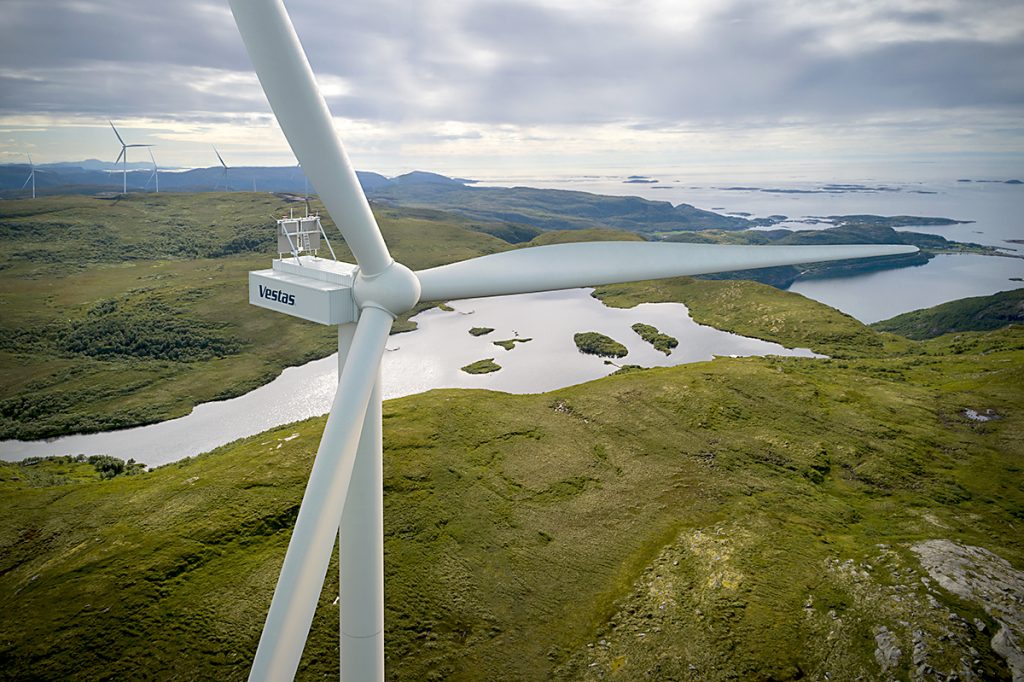
The V162-6.8 MW combines an increased power rating and operational flexibility to deliver up to 7 percent annual energy production (AEP) depending on project-specific conditions. (Courtesy: Vestas)
Vestas has introduced the V162-6.8 MW, expanding the EnVentus platform’s power output and market applicability.
Renewables are already a critical part in energy systems across the globe with continued scaling and technology development playing a key role in making renewables a dominant energy source.
“We take another step forward with the introduction of the V162-6.8 MW, reaching the next level in applicability and scalability. The V162-6.8 MW demonstrates how our modular product development enhances our ability to continuously innovate and lead the industry in developing customizable and sustainable energy solutions that meet our customers’ needs,” said Anders Nielsen, Vestas’ chief technology officer.
“Today, we are proud to introduce a wind turbine that underlines Vestas’ continued leadership within high-quality sustainable energy solutions, optimized for all project-specific conditions,” Nielsen said.
The V162-6.8 MW is globally applicable and combines an increased power rating and operational flexibility to deliver up to 7 percent annual energy production (AEP) depending on project-specific conditions. The V162-6.8 MW features flexible power ratings of 6.5 MW, 6.8 MW and 7.2 MW and expanded site applicability through an optional larger CoolerTop. The performance improvements are achieved through enhanced EnVentus powertrain and power conversion systems.
The V162-6.8 MW will benefit from enhanced transportability, as it will be based on Vestas’ new modular nacelle concept, where the nacelle structure is divided into the main nacelle house containing the powertrain and the side compartment with the power system including converter and transformer. Both nacelle compartments are dimensionally designed to correspond to general industry logistics standards for road, rail, and ocean transportation with less need for special handling.
The EnVentus platform is the next generation of Vestas technology, building on proven technology from the 2 MW, 4 MW and 9 MW platforms to meet customization needs more efficiently. Since the launch of the EnVentus platform in 2019, Vestas has secured orders for more than 5 GW across 13 different markets on four continents.
CrewSmart PMS employs estimated operational data to recommend maintenance schedules for assets and components. (Courtesy: CrewSmart)
The CrewSmart maritime operations management system has gained type approval for its Planned Maintenance System, part of its 2.0 software update.
CrewSmart PMS streamlines asset maintenance processes for offshore wind fleet managers to improve equipment efficiency, reduce costs, and prevent risks of breakdown or defects in assets during operation.
Safety and compliance are paramount concerns in offshore wind fleet management, critical to enable the fleet and its crew to operate at full capacity and provide vital operations and maintenance support to wind farms. Planning appropriate maintenance schedules is essential to maintaining these conditions.
“We use CrewSmart PMS to map out our service timelines based on time and engine hours, we look forward to it tracking inventory of all our supplies. The data has enabled us to make our service and maintenance processes much smoother and quicker, and gives us clear maintenance records to use as evidence in our audits. We’re also able to use the system for monitoring all other maintenance checks like fire, electronics, hydraulics, deck, and to measure engine hours and fuel consumption, meaning we can also monitor our carbon footprint, and as the interface can be used by crews on- and off-shore via the tablet app, our crews are empowered to take ownership of upholding safety and compliance cross the business,” said Max Perry, HSEQ Manager and DPA for offshore wind CTV operator, Dalby Offshore.
CrewSmart PMS employs estimated operational data to recommend appropriate maintenance schedules for assets and components, ensuring continued safe and compliant operation across the fleet. The platform also uses historical maintenance data to estimate costs for future maintenance and repair schedules, and giving more control to the asset manager in organizing and forecasting future maintenance.
The DNV approval benefits CrewSmart’s customers, said CrewSmart’s founder and technical director, Christian Adams.
“CrewSmart develops its solutions specifically to help its customers maintain full operational capacity and compliance, enabling them to manage and deploy their resources to best effect and keep assets healthier for longer. Securing DNV type approval for CrewSmart PMS is a real feather in our cap, confirming to all our customers that our systems comply with the highest standards of quality across the industry,” Adams said.
“Effective maintenance planning and execution can be an essential factor in maintaining safe and efficient operations and reliable PMS software is the foundation that enables this. Having DNV class type approval builds confidence and demonstrates that the system has been assessed to industry leading standards,” said Thomas Knödlseder, Principal Engineer, DNV Maritime.
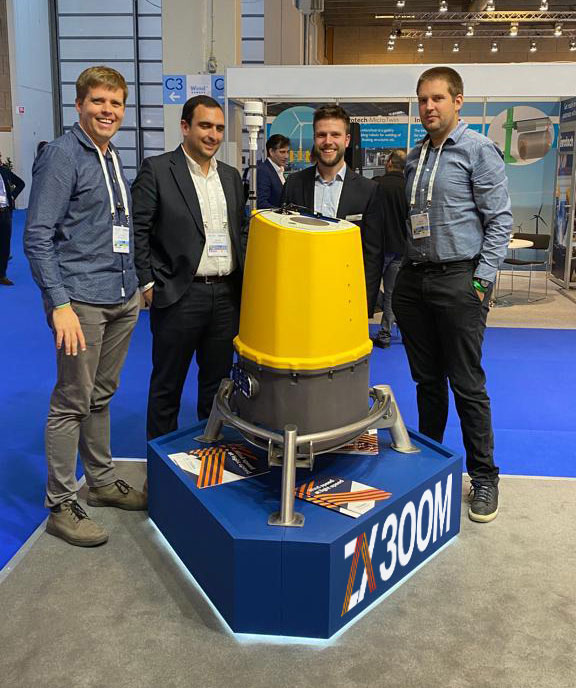
Megajoule and ZX Lidars sign Lidar contract for Adriatic at WindEurope Electric City 2021. (Courtesy: ZX Lidars)
A confidential owner of oil and gas platforms in the North Adriatic Concession area has contracted renewable energy consultancy Megajoule to install multiple wind Lidars as part of the company’s low carbon development strategy.
ZX Lidar’s Lidar ZX 300M, the offshore industry standard, will be deployed to begin taking measurements up to 300m from their installed position on the gas platforms to support the assessment of potential wind energy in the area.
“For decades we installed tall met masts at sea – it was the way offshore wind resource assessment was done. Today’s modern approach is with Lidar, specifically ZX 300M which in a relatively short period of time has probably already gathered more offshore wind data than ever previously existed from masts. It is the new standard for offshore wind resource assessment and Megajoule are proud to sign contracts with our confidential client, and with ZX Lidars to unlock the future of offshore wind in the Adriatic,” a Megajoule spokesperson said.
ZX 300M has been responsible for more than 95% of offshore wind measurements from floating platforms and the use of the technology has attracted more than £150bn in clean energy investment in the last five years. It is expected that Megajoule’s deployment of these Lidars shall also be used to finance future offshore wind farm development in the Adriatic.
ZX Lidars provides wind Lidar products, ZX 300, ZX 300M, and ZX TM for wind-energy and meteorological applications. These Lidars deliver wind measurements in both onshore and offshore applications at measurement heights and ranges across the full swept area of the blades of modern wind turbines. ZX Lidars has achieved world firsts with customers, including upwind measurements from a turbine nacelle, turbine wake studies, offshore deployments of both fixed and floating wind lidar, an industry-accepted validation process, re-financing and re-powering of a wind farm, successful demonstration of measurement accuracy in a wind tunnel and total wind project financing from a lidar without need for a met mast.
The 71-meter blade on the SG 4.X platform integrates aerodynamics and noise reduction features (Courtesy: Siemens Gamesa)
Siemens Gamesa Renewable Energy signed its first project with Renewable Energy Systems in Canada to supply wind turbines for RES’ 100-MW Hilda wind power project in Alberta.
Siemens will supply 20 SG 5.0-145 turbines, which will provide power for around 50,000 homes.
The project ramps up the company’s partnership with RES in North America, while helping Alberta, as well as Canada, reach its 30% goal of renewable energy generation by 2030.
“In partnership with RES and through the Hilda wind power project, we are two global corporations truly working to generate positive impact within our local communities and this project is proof of that,” said Shannon Sturgil, CEO, Onshore North America, Siemens Gamesa Renewable Energy. “RES continues to be a key partner in providing clean energy solutions, as well as a strong global citizen in the communities we serve, and we are proud to expand our partnership with them into Canada,” Sturgil added.
The 71-meter blade on the SG 4.X platform integrates aerodynamics and noise reduction features — including Siemens Gamesa DinoTails® Next Generation technology. This reduction in noise will improve the performance at the Hilda wind power project while remaining within mandated noise emission levels.
Siemens Gamesa has orders for more than 1.2 GW of power in western Canada with the SG 4.X platform for installation through 2023.
With wind turbine installations of almost 3,000 MW installed across Canada from Alberta to Quebec, and with signed contracts that will increase to more than 4,000 MW by the end of 2023, Siemens Gamesa Renewable Energy is a market leader by cumulative installed capacity.
Gina McCarthy, the Biden administration’s national climate adviser, and deputy adviser Ali Zaidi have joined the speaker lineup at CLEANPOWER 2021 for a live virtual discussion.
The American Clean Power Association event takes place December 7 and 8 in Salt Lake City. McCarthy and Zaidi will join ACP CEO Heather Zichal in the discussion. Former Treasury secretary Larry Summers and energy industry expert Dan Yergin will also be part of virtual programming.
Gina McCarthy
CLEANPOWER brings together clean-energy industry professionals to create a collaborative platform for discussing issues important to the renewable energy industry.
President Biden established the Climate Policy Office in January 2021. The Office convenes the National Climate Task Force, which assembles Cabinet-level leaders from across 21 federal agencies and departments, as well as interagency working groups to assist with federal actions to reduce climate pollution in every sector of the economy; increase resilience to the impacts of climate change; protect public health; conserve lands, waters, oceans, and biodiversity; deliver environmental justice; and spur union jobs and economic growth.
Ali Zaidi
“President Biden has set forth a bold agenda to tackle the climate crisis while stimulating economic growth. We are thrilled to have two of his closest climate advisers as part of CLEANPOWER 2021, which will bring together industry experts, policy leaders and other stakeholders that will be critical to making President Biden’s renewable goals a reality,” Zichal said.
CLEANPOWER’s mission is to not only bring together the different technologies that make up the renewables mix – onshore wind, offshore wind, solar, storage, and transmission – but also the different segments within the industries: manufacturers, construction firms, owner operators, utilities, financial firms, corporate buyers, and more.
ACP also announced its CLEANPOWER 2021 executive speakers. The list includes ACP chairman Jim Murphy, AES Clean Energy President Leo Moreno, Vestas North America President Laura Beane, Clearway Energy Group CEO Craig Cornelius, Leeward Renewable Energy CEO Jason Allen, Siemens Gamesa Renewable Energy Service CEO for the Americas region David Hickey, and Cypress Creek Renewables CEO Sarah Slusser.
The 71-meter blade on the SG 4.X platform integrates aerodynamics and noise reduction features — including Siemens Gamesa DinoTails® Next Generation technology — to guarantee a high production of energy and reduced noise emission levels. (Courtesy: Siemens Gamesa)
Siemens Gamesa Renewable Energy has signed its first project with Renewable Energy Systems (RES) in Canada to supply the 100-MW Hilda wind project in Alberta.
The deal strengthens the company’s global partnership with RES in North America while taking a step forward to help Alberta, and Canada as a whole, meet its 30-percent goal of renewable energy generation by 2030. Siemens Gamesa will supply 20 SG 5.0-145 turbines, providing clean affordable power for about 50,000 homes.
“In partnership with RES and through the Hilda wind power project, we are two global corporations truly working to generate positive impact within our local communities and this project is proof of that,” said Shannon Sturgil, CEO, Onshore North America, Siemens Gamesa Renewable Energy. “RES continues to be a key partner in providing clean-energy solutions, as well as a strong global citizen in the communities we serve, and we are proud to expand our partnership with them into Canada.”
The 71-meter blade on the SG 4.X platform integrates aerodynamics and noise reduction features — including Siemens Gamesa DinoTails® Next Generation technology — to guarantee a high production of energy and reduced noise emission levels. This reduction in noise will improve the performance at the Hilda wind-power project while remaining within the mandated noise emission levels. Siemens Gamesa has orders for more than 1.2 GW of power in western Canada with the SG 4.X platform for installation through 2023.
“We are pleased to announce Siemens Gamesa Renewable Energy as the turbine supplier for our 100-MW Hilda wind project in Alberta,” said Peter Clibbon, RES senior VP of Development. “Siemens Gamesa is a global leader in wind technology, and we look forward to delivering clean, renewable energy and helping Alberta meet its 30 percent renewable energy goal by 2030.”
With wind-turbine installations of almost 3,000 MW installed across Canada from Alberta to Quebec, and with signed contracts that will increase to more than 4,000 MW by the end of 2023, Siemens Gamesa Renewable Energy is a market leader by cumulative installed capacity.
James Fisher Renewables has appointed Wayne Mulhall, managing director of EDS HV Group, as Fisher Renewables’ managing director.
“I am delighted to accept the role of managing director at JF Renewables. This is highly complementary to my role as EDS managing director and overseeing both businesses means that we will be able to more effectively view and implement the offering that JF Renewables can bring to the market across the whole James Fisher and Sons group. JF Renewables at its core is about leveraging the group’s experience and expertise together with the niche capabilities offered by its operating companies. For this reason, it is particularly relevant that we are bringing the expertise from within these operating companies to enable JF Renewables to help offshore developers accelerate the energy transition.”
Appointed managing director of EDS HV Group (EDS), part of James Fisher Renewables (JF Renewables), in August of this year, Mulhall will now also oversee the running of JF Renewables. All renewable activities across the James Fisher and Sons group are now consolidated under the one brand.
Mulhall brings to the business significant experience in the offshore wind industry, having held a senior role at MHI Vestas Offshore Wind and prior to this, senior positions at Siemens Gamesa and Rolls Royce.
Ryan Calvert, EDS Strategy, sales and commercial director has also joined the leadership team as James Fisher Renewables’ head of sales (Europe). Calvert stood in as interim managing director for EDS before Mulhall’s appointment.
“Since 2010 I’ve been fully embedded in the renewables journey from hands on work on offshore wind farms to joining the EDS management team in 2014 as operations director. During my time at EDS I’ve led the strategy and innovation of the business and I’m thrilled to be able to bring this experience into my additional role as head of sales (Europe) for JF Renewables. With our combined capabilities, JF Renewables is ideally placed to help offshore wind developers and contractors meet their nation states’ global net zero goals and energy independence.”
Launched in March 2020, JF Renewables aligns the specialist capabilities from existing James Fisher and Sons group companies. Since the launch, the business has had a number of high-profile contract wins including undertaking work for customers such as RWE and Iberdrola. The business supports pure-play renewables developers, marine civil constructors and oil and gas majors alike in pushing the boundaries of what is possible to accelerate the energy transition, while maintaining existing energy infrastructure.
Prysmian Group North America operations include 27 manufacturing facilities, 14 distribution centers, four R&D centers, and more than 5,400 employees with net sales of near $4 billion.
Prysmian Group, a leader in the energy and telecommunications cable systems industry, is taking steps toward decarbonization with Renewables+, a program that is a sustainable solution to help reduce CO2 emissions in wind and solar projects. The program will also ensure design optimization and prevention in renewable electrical systems.
“Prysmian Group is fully committed to supporting our renewable energy customers and partners in building the U.S. clean energy infrastructure and facilitating the region’s energy transition and diversification to reduce greenhouse gas emissions,” said Joe Debolt, VP of sales PD renewables at Prysmian Group North America. “Our world-class products and solutions go beyond the cable and enable our customers and communities to meet today’s great challenges and aim to bring the world one step closer to a carbon-free future.”
The new Renewables+ program includes:
• CL AdvantageTMMV Cable: Medium voltage power distribution cable designed with a compact aluminum conductor, flat strap neutral and crosslinked jacket with smaller diameter and lower weight.
• ALESEA: Inventory management & tracking system that features a smart device installed on the cable drum, allowing for more efficient geo-localization and tracking.
• PRY-CAM: Technology for monitoring, condition assessment and asset management of electrical systems, helping monitor and prevent failures.
• Prysmian Accessories & Splice Kits: Accessories for glanding, jointing, connecting and terminating.
For a limited time, all power distribution orders for medium voltage, renewable cables will include ALESEA tracking services, incentive credits towards the purchase of PRY-CAM testing and medium voltage splice kits, and a three-year extended warranty.
The rotor assembly is a “symbolic moment,” said X1 Wind CEO Alex Ravenos. (Courtesy: X1 Wind.)
X1 Wind has completed the full rotor assembly of the firm’s X30 prototype. Fitted with a specially adapted V29 Vestas turbine, the unique “downwind” system is able to “weathervane” and orient passively with the wind to maximize energy yields.
The tripod-like platform also features greater structural efficiency, with a lighter and more scalable design, while keeping environmental impact on the ocean to a minimum.
“We are thrilled to complete this latest milestone as we move towards deployment,” said X1 Wind CEO Alex Raventos. “The rotor assembly represents a symbolic moment in this project, fitting the blades which will ultimately harness the wind and demonstrate our downwind design. Strong summer trade winds in Gran Canaria brought minor delays after the initial load-out, but this exciting period brings the assembly process to fruition. In the coming weeks, we will engage in cable and anchor installations before the platform is stationed at a 50m water depth for final commissioning. From the outset, X1 Wind has been committed to find a more efficient structural approach for floating wind compared to more traditional systems. We believe we have now developed the technology to take full advantage of the marine environment, while respecting the future sustainability of the ocean. Our system will drive greater structural efficiency, reducing loads, especially the bending moments at the base of the tower, allowing for a lighter design.”
Co-founder Carlos Casanovas said the industry-wide approach for land-based turbines has traditionally focused on upwind rotors to avoid the so-called “tower shadow” effect. However, upwind configurations require specific measures to prevent tower strikes, with the challenge increasing as turbine blades get longer.
“With 100m plus blades becoming more prevalent in offshore environments, significant measures are needed to avoid tower strikes,” said Casanovas. “This typically involves increasing the distance between the blades and tower applying a tilt and cone angle, and designing more costly pre-bent and stiffer blades, which also makes them heavier. However, these measures come with increased manufacturing complexity, cost and potential loss of power generation. Using a downwind configuration reduces the risk of tower strikes, opening up the possibility of using lighter, more flexible and therefore cheaper large-scale wind turbine designs. These are key characteristics which will enable the development of future ‘extreme-scale’ downwind structures with research already being conducted on 200m blades and 50MW power ratings.”
X1 Wind is a floating wind technology developer based in Spain. The firm’s mission is to provide scalable solutions that deliver clean, affordable energy while reducing carbon emissions.
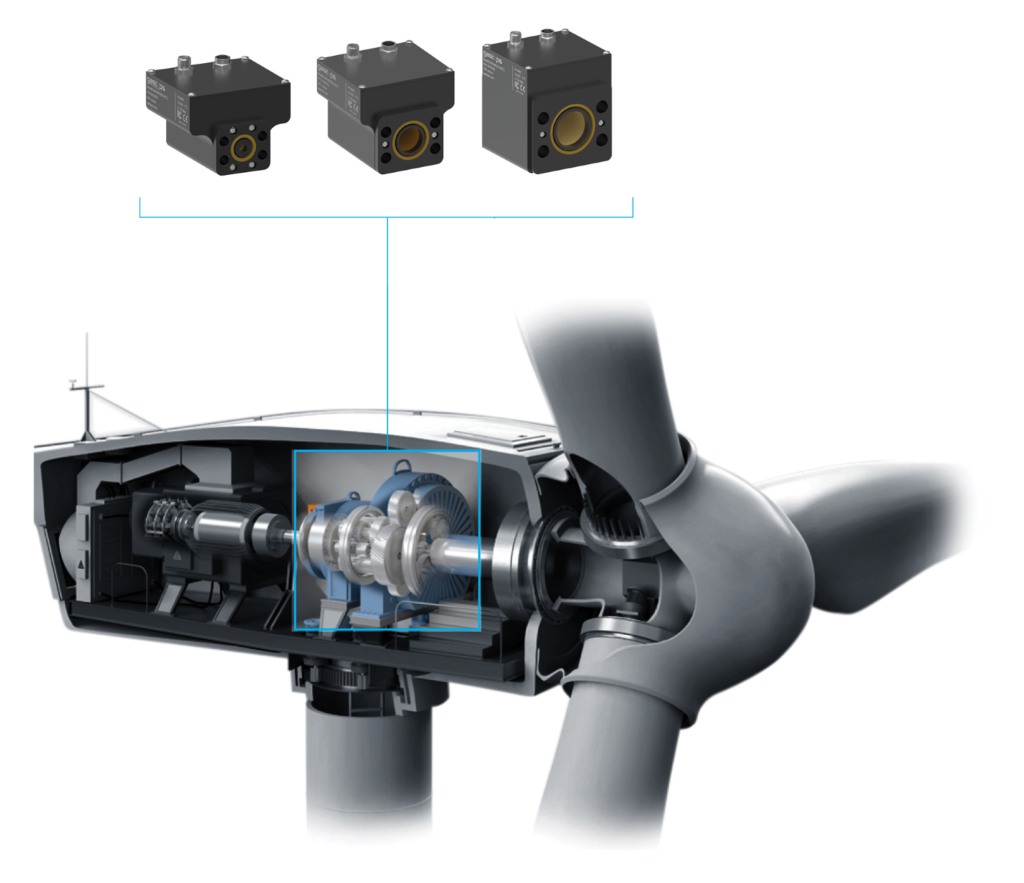
Designed specifically for wind turbine platforms, the MetalSCAN M3500 oil debris monitoring system provides continuous monitoring of the gearbox. (Courtesy: Gastops.)
Gastops, a leader in critical component condition intelligence, announced the first volume shipments of the MetalSCAN MS3500 online condition monitoring sensors to a major wind turbine manufacturer for their next generation platform, the fourth manufacturer to adopt MetalSCAN technology as standard equipment.
The MS3500 series provides the wind energy industry with online access to real-time condition monitoring data which enables the earliest reliable detection of component damage available on the market today.
“MetalSCAN MS3500 replaces the MS3000 series to further enhance the value proposition for the world’s leading wind turbine manufacturers by helping wind energy operators reduce costs and risk. With the MS3500 series, we have introduced key new functionality and connectivity capabilities to support Industrial Internet of Things (IIOT) implementations at a lower price point, all while maintaining the performance and reliability for which Gastops is recognized,” said Cedric Ouellet, director of energy and industrial at Gastops.
The MetalSCAN MS3500 series delivers real-time detection of 100% of ferrous and non-ferrous metal particles generated during component damage. The sensors generate continuous component condition data to provide advance warning of abnormal component wear or debris accumulation exceeding defined limits. This intelligence gives wind energy operators the power to plan maintenance in advance, predict the remaining useful life of critical equipment, and avoid secondary damage that leads to costly component replacements.
“Our MetalSCAN technology was developed to meet the demanding standards of the aviation and defense markets. As with our previous generation of sensors, the MS3500 series packages that advanced technology into a market leading solution that is now more valuable than ever to both wind turbine manufacturers and operators,” said Shaun Horning, President and CEO of Gastops. “We are very excited to be bringing our latest innovations to the renewable energy industry,” Horning added.
Gastops provides intelligent condition monitoring solutions used in aerospace, defense, energy, and industrial applications to optimize the availability, performance, and safety of critical assets, offering online monitoring sensors, at-line analysis, complex modeling and simulation, laboratory testing, engineering, design, and MRO services that predict performance to enable proactive operating decisions. Gastops has been providing insights into the condition of critical equipment since 1979.
Vestas will provide 138 V236-15.0 MW turbines for Empire Wind 1 and 2 (Courtesy: Vestas Wind Systems A/S.)
Empire Offshore Wind, a joint venture between Equinor and BP, has named Vestas as the preferred turbine supplier for the 2.1 GW Empire Wind 1 and Empire Wind 2 offshore wind projects in New York.
Vestas will provide 138 V236-15.0 MW turbines for Empire Wind 1 and 2, located 15 to 30 miles off the coast of Long Island. With this project, New York, Equinor, BP, and Vestas are together taking a leading role in the U.S. offshore industry development and bringing the USA closer to achieving President Biden’s goal of 30 GW of offshore wind capacity installed by 2030 as well as New York state’s goal of installing 9 GW of offshore wind capacity by 2035.
“We are honored to partner with Equinor and BP as preferred supplier for the Empire wind projects and provide our V236-15.0 MW turbine to help New York achieve its ambitious offshore wind energy goals. To be part of a landmark project like Empire Wind 1 and 2 is a testament to the hard work of Vestas colleagues across the world dedicated to developing offshore technology capable of delivering reliable, resilient, and sustainable wind energy to communities around the world,” said Laura Beane, president of Vestas North America.
The tower sections for Empire Wind 1 and 2 are planned to be sourced from the Marmen/ Welcon plant, which is being developed in Port of Albany. For staging of turbine components, Vestas will use the South Brooklyn Marine Terminal’s upgraded port, developing a local New York-based, supply chain to provide services in the staging, pre-assembly and installation activities.
Vestas has established local partnerships and supply chains to serve regional markets, including more than 1,000 suppliers in USA that support onshore business. In addition, Vestas will deliver a comprehensive multi-year solution to service the wind farm when operational, with the goal to establish a New York-based service organization that provides local employment opportunities.
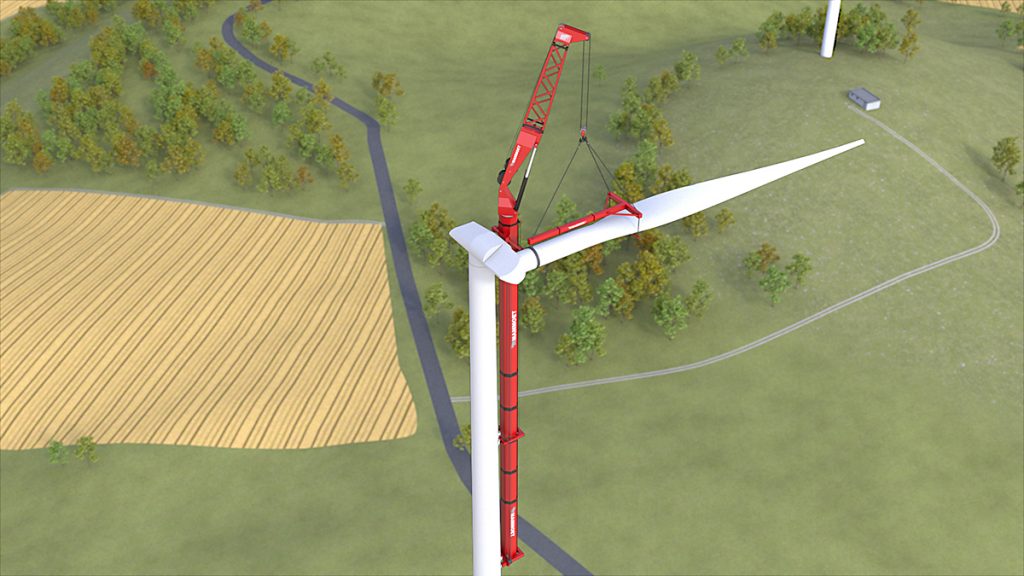
With the WTA, relocation time is reduced by approximately 50 percent. (Courtesy: Mammoet)
As developers chase stronger flows, onshore wind hub heights are growing beyond the reach of conventional crawler cranes. Mammoet’s new WTA lifting system allows theoretically infinite hub heights and paves the way towards emissions-free turbine erection.
The WTA assembles wind-turbine generators by attaching directly to the tower itself, using a series of clamps to self-assemble and then climb to each lift location. It assembles tower sections, hubs, and nacelles, and has a capacity of 150 tons.
Its innovative concept means the WTA can keep working when conventional crawler cranes can’t. It operates in wind speeds up to 20m/s, reducing downtime during construction and extending the build season.
As the WTA has a significantly reduced footprint and is much smaller and lighter than any type of crawler crane, it actively lowers the need for groundwork on site. Pads can be smaller, and ground pressure requirements are lessened — maxing out at the 15 tons/square meter typically needed for assist cranes.
The system’s small size means quicker and more cost-effective mobilization. While a conventional crawler crane can require up to 50 truck loads to reach site, the WTA gets there with just nine.
With no boom laydown requirement, much fewer components, and a lower total weight, the WTA is also faster from pad to pad. In fact, relocation time is reduced by approximately 50 percent, compared to using crawler cranes. It therefore shaves weeks off wind-farm construction schedules.
Powered entirely by electricity, it also opens the door for a 100-percent emissions-free journey from factory to first megawatt — with transport to site via electric or hydrogen-powered truck, on site maneuvers via ePPU-enhanced SPMT, and carbon-free WTA lifting.
The WTA system is now design-ready and can be ready to enter the market during the second quarter of 2023.
Launched in 2019, Canada’s Top Growing Companies aims to recognize and celebrate entrepreneurial achievement by identifying and amplifying the success of growth-minded, independent businesses.
Clir Renewables, a company dedicated to maximizing project returns from renewable energy assets, recently announced it was recognized as one of Canada’s top growing companies of 2021 by the Globe and Mail’s Report on Business.
Launched in 2019, Canada’s Top Growing Companies aims to recognize and celebrate entrepreneurial achievement by identifying and amplifying the success of growth-minded, independent businesses. The program ranks public and private companies based on three-year revenue growth. Clir achieved the 95th spot on the list. This year’s list of 448 companies is especially significant due to the unprecedented year caused by the ongoing pandemic. As renewable energy capacity worldwide sees significant growth, increasing 45 percent in 2020, Clir has experienced unprecedented demand for its analytics and reporting software.
“It’s an exciting time to be a technology start-up in Canada,” said Gareth Brown, CEO, Clir Renewables. “At Clir, we’re reducing humankind’s impact on the planet by turning renewable energy data into actionable insights. With the highest-fidelity wind and solar data models, our clients are able to maximize the performance and output of their assets. We’re proud of the impact that our technology has made, excited for our future growth, and delighted to be listed among these incredible Canadian companies.”
Founded in 2017, Clir combines intuitive software, advanced data science, and machine learning to analyze data and provide actionable insights to solar and wind-farm owners and operators. With more than 300 GW of renewable energy project experience, they’ve successfully optimized and maximized the financial returns of more than 10 GW of wind and solar projects.
“Any business leader seeking inspiration should look no further than the 448 businesses on this year’s Report on Business ranking of Canada’s Top Growing Companies,” said Phillip Crawley, publisher and CEO of The Globe and Mail. “Their growth helps to make Canada a better place, and we are proud to bring their stories to our readers.”
To drive the global energy transition and expand the deployment of wind energy across the globe, Vestas continues to strengthen its product portfolio, and with this order, Vestas introduces the V150-4.5 MW and V136-4.5 MW — two new variants of the 4-MW platform.
Vestas has secured a 207-MW order from Duke Energy Sustainable Solutions to power the Ledyard Windpower project in Iowa, featuring 46 V150-4.5 MW wind turbines.
The order includes supply and commissioning of the turbines, as well as a 10-year Active Output Management 5000 (AOM 5000) service agreement, designed to ensure optimized performance of the asset. To drive the global energy transition and expand the deployment of wind energy across the globe, Vestas continues to strengthen its product portfolio, and with this order, Vestas introduces the V150-4.5 MW and V136-4.5 MW — two new variants of the 4-MW platform.
The new variants offer an increase in annual energy production of more than 3 percent compared with the existing variants of V136-4.2 MW and V150-4.2 MW and leverages the proven 4-MW technology with a combined global order intake of more than 21 GW. The increased power output is achieved while maintaining the same climate application space and noise level. This enables expanded applicability in some European, North American, and South East Asian markets.
“We have seen strong demand for the V150-4.2 MW turbine, particularly in the U.S., and the new V150-4.5 MW variant will continue to cement Vestas leadership in this segment,” said John Eggers, chief technology officer of Vestas North America. “Vestas will continue to develop a modular product approach to meet market demands ensuring that Vestas’ products fulfill the expectations of our customers.”
Turbine delivery for the Ledyard Windpower project begins in the second quarter of 2022 with commissioning scheduled for the fourth quarter of 2022.
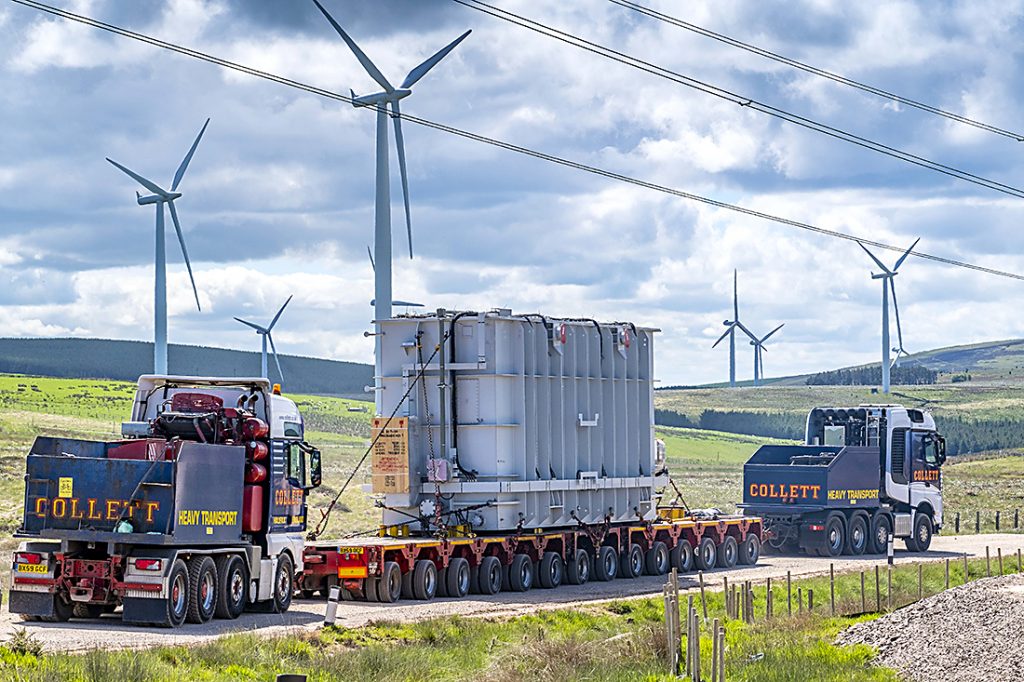
The shunt reactors were transported in three stages before arriving at the substation site. (Courtesy: Collett & Sons Ltd)
Collett & Sons has transported two 160Te shunt reactors more than 5,000 miles to the onshore substation site for the Neart na Gaoithe offshore wind-farm project, jointly owned by EDF Renewables and ESB.
Collett was contracted with the full scope of work providing a door-to-door service, including the project management, engineering, and the transport of the two 160Te shunt reactors.
A year before deliveries began, Collett’s Consulting Department was contracted to undertake multiple surveys to find the most feasible route. This included all route surveys, swept path analysis reports, topographical surveys, bridge height surveys, and wire cable height surveys. This resulted in Collett working with local authorities to temporarily remove street furniture and employing tree surgeons to remove obstructing foliage.
The shunt reactors were transported in three stages before arriving at the substation site. First, Collett worked in partnership with a trusted European partner to transport the shunt reactors ahead of their arrival in the U.K. The Collett Projects Department was then responsible for all port operations including the loading of the vessel, also chartered by Collett, for the 4,800 miles to the Port of Leith in Scotland.
Working closely with the port, Collett carefully planned the cargo’s discharge, including providing crane lifting plans and an agreed program of works for all loading and discharge operations.
Once at the port, using an 800Te crane, the shunt reactors were discharged onto a dedicated 14-axle line modular flat top trailer. Both shunt reactors were offloaded at the port onto stools for temporary storage. Collett also transported and stored multiple ancillary components at their port side depot in Grangemouth.
Using its 550Te capacity girder bridge with 20-axle lines, Collett transported the shunt reactors from Leith Docks to Innerwick. Due to narrow access along the remainder of the route, Collett shipped each of the two shunt reactors from the 20-axle girder bridge on to a 14-axle flat top modular trailer in a dedicated road closure area, complete with all traffic management, in order to complete delivery. All movements were facilitated under police escort, as well as Collett’s in-house fleet of pilot vehicles.
At the NnG onshore substation site in the Lammermuir Hills, Collett’s Heavy Lift Team offloaded and positioned the shunt reactors into their final position using a hydraulic jacking and skidding system.
Part two of the project is expected to take place in the coming weeks, when two 180Te supergrid transformers are due to be delivered to the wind-farm site.
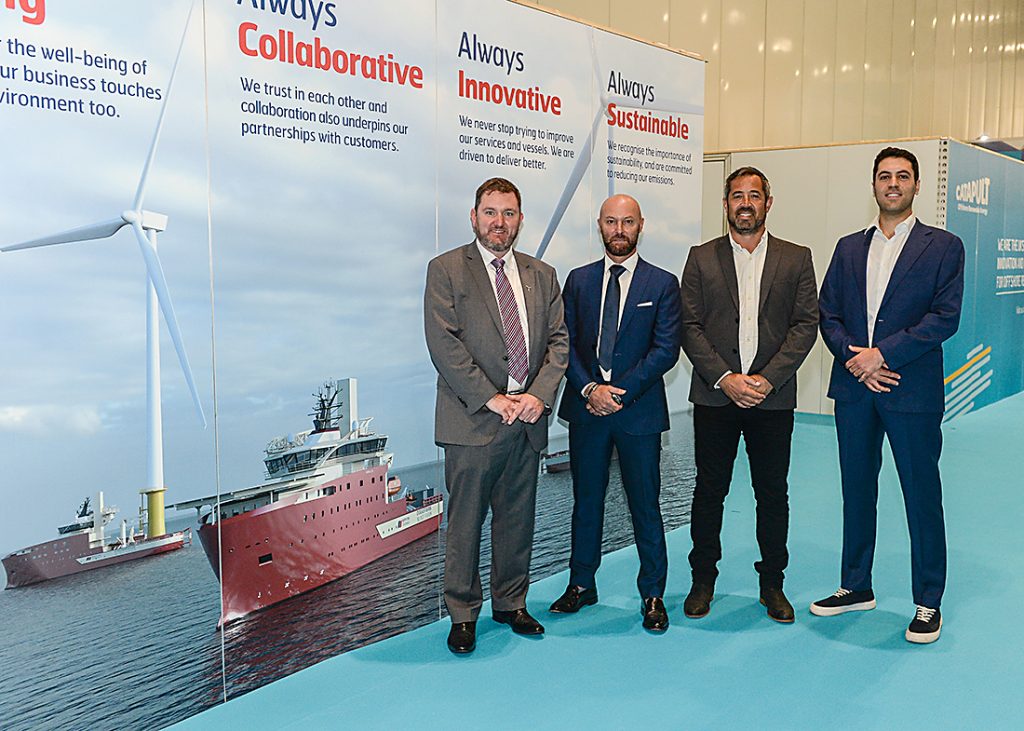
North Star Renewables’ Matthew Gordon, Equinor’s Luca Daniele, Simon Coote from Alicat and Guido De Mola from Chartwell Marine. (Courtesy: North Star Renewables)
Great Yarmouth based marine and engineering specialist Alicat has won a multi-million-pound contract with North Star Renewables, beating off stiff competition to secure the build work for its first hybrid powered daughter craft fleet.
Once completed, the vessels with low carbon emission potential are destined for the Dogger Bank Wind Farm, 130 kilometers off England’s North East coast.
Following a competitive tender involving multiple U.K. shipyards, Alicat has been awarded North Star’s initial contract to bring its first two daughter craft to the renewables market. They will use the game-changing combination of diesel and electric outboards, a world first for this form of workboat.
Designed by Southampton-based naval architects Chartwell Marine in collaboration with North Star, the daughter craft will be used to safely transfer technicians from their accommodation onboard North Star’s service offshore vessels (SOVs), to work on the offshore wind turbines at Dogger Bank A and B. Dogger Bank A and B are a joint venture between SSE Renewables (40%), Equinor (40%) and Eni (20%). Dogger Bank C is a joint venture between SSE Renewables (50%) and Equinor (50%). SSE renewables is leading on the construction of the wind farm, and Equinor will operate the wind farm for its lifetime of up to 35 years.
Once the third phase is completed and operational, it will become the biggest offshore wind farm ever built and able to generate about 5 percent of the U.K.’s electricity.
With bases in Aberdeen, Newcastle, and Lowestoft, North Star has the world’s largest daughter rescue fleet and has been servicing the North Sea’s oil and gas sector for more than 40 years. It has 63 daughter craft within the existing fleet, managed and maintained by the two Rescue Boat divisions in Aberdeen and Lowestoft. North Star group includes 1,400 employees servicing more than 60 locations and mobile installations in the U.K. Continental Shelf.
The new hybrid propulsion daughter crafts include stabilizer technology ensuring the vessels will not only deliver reduced carbon emissions, but provide class-leading comfort for the technicians on board while setting a new standard for safe operations. It has an increased sea state operability and safe transfer, tank tested at wave heights of up to 1.7m Hs – significantly higher than any alternative wind-farm daughter craft.
The first daughter craft is being delivered 12 months ahead of schedule, under the build supervision locally of North Star Group’s Boston Putford division in Lowestoft. This will allow time for performance analysis and improvements, crew training and additional development ahead of the first of three SOVs arriving from summer 2023.
“We are very excited to announce Alicat as the chosen shipbuilder for our first next generation and new breed of sustainable, reliable, comfortable daughter craft fleet, configured specifically for the renewables sector,” said North Star chief operating officer and Boston Putford MD Robert Catchpole. “Alicat is a leader in its field and demonstrated the comprehensive technical knowledge as well as great craftsmanship and the project management skills required to deliver the first of our new fleet. We also have great confidence in their capabilities after they satisfied all the financial, commercial and QHSE criteria set out in the contract.
“We are very fortunate to have talented companies like Alicat on our doorstep in East Anglia and working with them aligns to our strategy of utilizing U.K. businesses whenever possible to strengthen our services in our ambitions as the market leader in marine offshore wind infrastructure support in the U.K., and abroad.”
“This multi-million-pound contract is a significant win for our business as it further establishes us on the renewables map as the first company in the world to build hybrid powered daughter craft, which is also the first offshore wind-daughter craft to be built in the U.K.,” said Alicat director Simon Coote. “Our involvement in testing and knowledge of the new breed of outboard propulsion packages has a significant role to play in the build of these innovative vessels.”
North Star will start a recruitment program for new seafarers in the next six months. The firm is looking to hire about 130 onshore and offshore personnel from across the U.K. to support the Dogger Bank project.
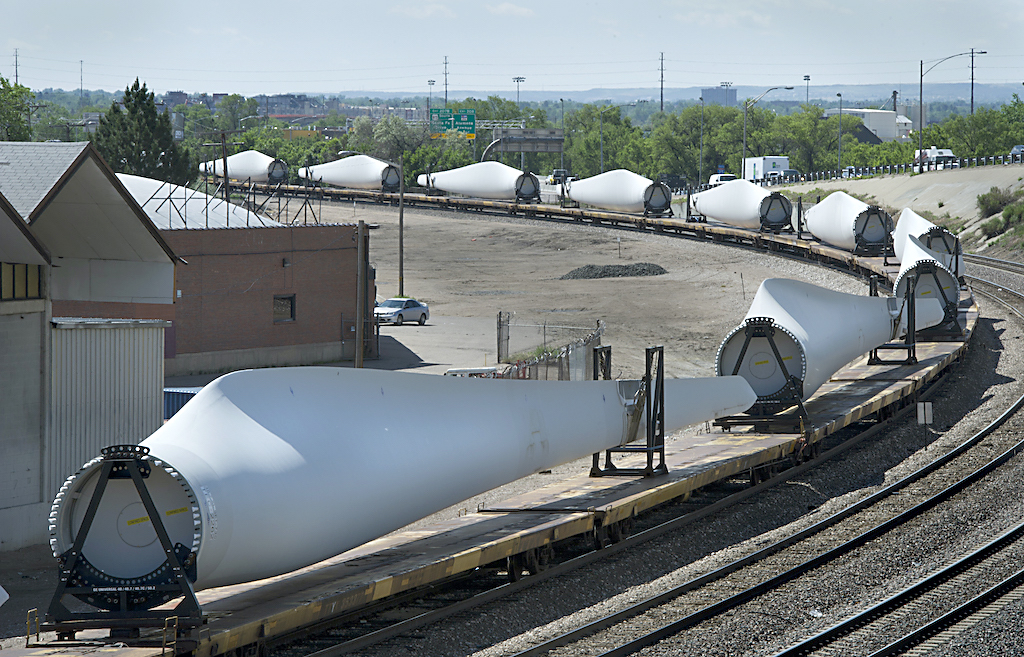
Wind turbine blades wind their way by train through Denver. (Courtesy NREL)
Researchers at the U.S. Department of Energy’s (DOE’s) National Renewable Energy Laboratory (NREL) have determined how to transport massive wind-turbine blades to parts of the country at a lower cost than segmented blades, but the solution will require some flexibility on the part of industry.
Manufacturing blades that can bend with “controlled flexing” will allow railroads to ship longer blades around the United States. Because of bends, twists, and turns in railroad lines, the upper limit for transporting single-piece land-based blades by rail is 75 meters. The conceptual design envisioned by researchers would stretch that limit to 100 meters or beyond for land-based turbines. Blades of this length are already being proposed for offshore wind turbines and can be transported via barge, but they have not been installed inland due to the transportation constraints.
For land-based turbines, the longer blades could be shipped attached across the length of four railcars.
Longer blades and taller wind turbines allow for the greater production of energy, even in areas where wind speeds are low. Seeking an economical solution to installing wind turbines has kept wind farms from regions where the resource could potentially be harvested, including the southeast United States. The flexible blade technology may enable more deployment in these areas in the future due to the lower cost. Lowering the cost of transportation and enabling rotors with a higher capacity factor could make these deployments more economically feasible.
“This research can aid in massive deployment of wind energy in different regions of the country — even parts of the country that typically haven’t seen as much deployment,” said Nick Johnson, a mechanical engineer at NREL’s National Wind Technology Center and co-lead of the U.S. Department of Energy’s Big Adaptive Rotor Project (BAR). He is also co-author of a new paper, “Land-based wind turbine with flexible rail-transportable blades,” which appears in the journal Wind Energy Science.
BAR emerged from a 2018 workshop on supersized land-based wind-turbine blades. In addition to NREL, other BAR partners are Sandia National Laboratories, Oak Ridge National Laboratory, and Lawrence Berkeley National Laboratory. Engineers at the international organization DNV GL, which has a working relationship with NREL, in 2019 proposed on a conceptual level the controlled flexing of the blades during rail transport. The new paper provides an in-depth investigation into the idea.
Co-authors on the paper are Pietro Bortolotti and Nikhar Abbas from NREL, and Evan Anderson, Ernesto Camarena, and Joshua Paquette from Sandia.
The paper considers a 5-MW wind turbine installed on a 140-meter-tall tower.
The scientists examined the potential for five designs that represent the next generation of land-based turbines. They modeled the designs using NREL’s Wind Plant Integrated System Design and Engineering Model (WISDEM) software to determine the best option. One idea, that of cutting a blade in two for transport, was among those considered as a baseline that considers existing technology. The analysis showed that, while this is a feasible solution, it does not have the same cost benefits as shipping the single-piece rail-transportable blade.
Blades already possess some flexibility. Traditional blades can have deflections of about 10 percent of the blade length from the root where they are attached to the turbine to the tip. For the blades envisioned by the BAR research, this increases to 20 percent to allow for the flexibility required for rail transportation.
Johnson said he sees industry adopting the flexible blades about five years out.
“We’re still in the process of fleshing out some of the details, some of the trade-offs associated with the technology,” he said. “We have an industry advisory panel and have had great input and feedback from the members. They’ve kind of steered us in this direction. They think it’s a promising idea, and certainly worthwhile as the impact could be significant.”
The paper points out areas for further research, including the potential for blades even longer than 100 meters.
The research was funded by DOE’s Wind Energy Technologies Office.
NREL is the U.S. Department of Energy’s primary national laboratory for renewable energy and energy efficiency research and development. NREL is operated for the Energy Department by the Alliance for Sustainable Energy, LLC.











 Gina McCarthy, the Biden administration’s national climate adviser, and deputy adviser Ali Zaidi have joined the speaker lineup at CLEANPOWER 2021 for a live virtual discussion.