


Home 2020

Rope Partner secures new investors to meet demand for turbine services

0

Rope Partner, Inc., an international leader in wind-turbine blade repair, maintenance, and performance-enhancing services, has been acquired by funds advised by Magnesium Capital LLP (Magnesium).

In the last decade, the global wind market has rapidly expanded, with the majority of operating capacity installed since 2009. Providing the required operations and maintenance (O&M) services for these existing turbines as they enter the second half of their design life creates an evolving need for high-quality wind technicians to efficiently and safely service this sector.

With the global wind industry forecast to more than double by 2027 (adding 65 GW annually), the global O&M market is projected to be a $21 billion market by 2025. The offshore market alone is expected to grow by 17 percent annually, to more than $12 billion by 2028. This investment will support Rope Partner’s continued work to provide the expanding market with the high-quality services critical to supporting and accelerating the transition to a clean energy economy. This includes strategic growth plans in North America and abroad, with Europe and Latin America already identified as key growth markets.

“Since our beginnings in 2001, we have become the leader in the space and have a global reputation, with our services relied on by many of the world’s largest wind-energy owners and manufacturers,” said Eric Stanfield, Rope Partner CEO. “This next phase of growth is a very exciting time for us. We see many opportunities in the North American market, both onshore and offshore, and also in Europe and Latin America, where our customers already have wind turbines operating.”
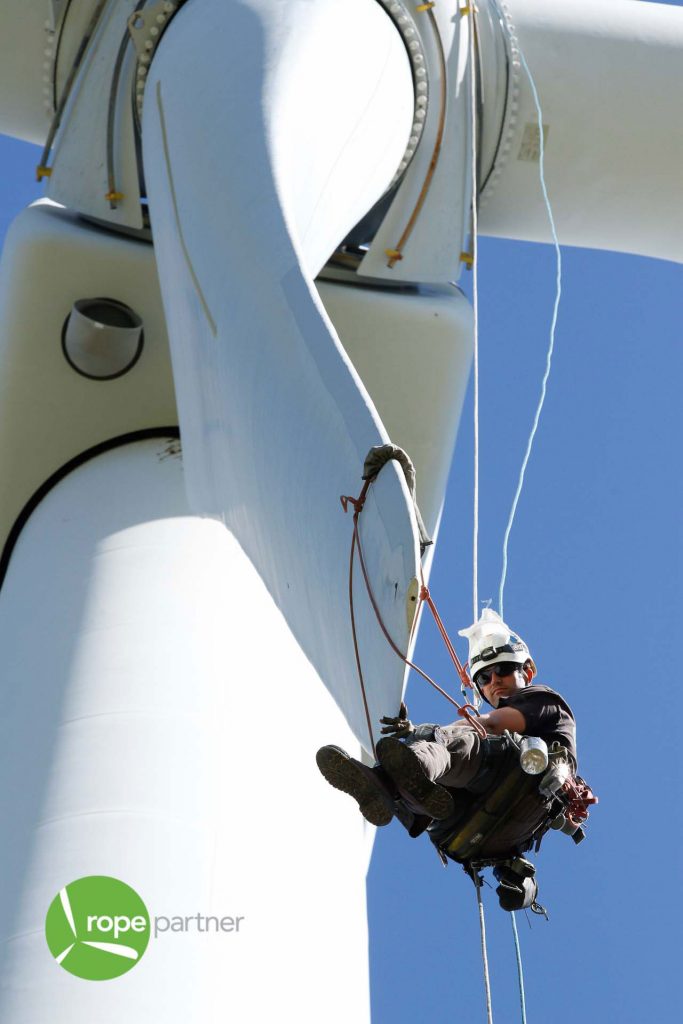
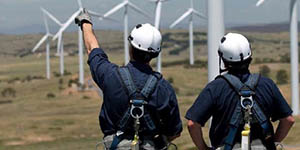
Rope Partner, headquartered in Santa Cruz, California, is recognized internationally as the premier at height service provider of repair, maintenance, and performance-enhancing services for wind-turbine blades. With more than 100 highly qualified technicians, the company counts among its clients more than 40 blue chip wind-energy asset owners and OEMs in North America and abroad, and, over two decades, has developed an unparalleled quality and safety record. In the last 18 years, the company’s technicians have completed several thousand projects for every major manufacturer and a majority of the wind-farm owners in North America.

“The industry has evolved significantly over the last several years,” Stanfield said. “As the wind farms mature along with the market, customers are placing additional focus on the condition of their blades. As such, it is important for us to keep innovating to safely deliver value to our customers. In Magnesium, we have found a partner with a deep understanding of our core market, an established network in Europe, and the financial backing to respond to our customers’ requests. With this infusion of capital, we can develop new services and expand internationally, including through potential acquisitions to consolidate what today remains a fragmented sector.”

“Eric and his team have developed a great company over the years with a strong culture of safety, quality, and environmental sustainability that is committed to maximizing uptime and ROI for its customers,” said Magnesium’s managing partner Ian Jones, who joins the board of Rope Partner. “The focus on optimizing wind-turbine performance will help accelerate the energy transition by supporting the decarbonization of the electricity system. We look forward to working with Eric and his team through its next phase of growth.”

“We are delighted to partner with Magnesium and Rope Partner to support the team’s continued growth plans,” said Andrew Carnwath, director of Private Equity at BMO Global Asset Management. “The company has established an unrivaled reputation within the industry, and it is now well placed to benefit from growth in the wind sector and increasing focus on blade maintenance. We are therefore confident that our investment will provide our investors with a market leading return and have a wider positive impact through growth in sustainable and affordable renewable energy and high skilled job creation.”

More info www.ropepartner.com
Onyx Insight and Castrol partner to deliver independent oil sensor study

0

ONYX InSight, a leading provider of predictive maintenance to the wind industry, together with Castrol, one of the leading experts in industrial lubricants, have embarked on a multi-phase study designed to uncover the potential of combining oil and vibration data on the accuracy of wind turbine health monitoring.

With the objective to bring the most innovative and advanced predictive maintenance solution to the wind industry market, ONYX InSight and Castrol have completed laboratory testing to measure the effectiveness of sensors to the changing conditions of oil in a simulated wind-turbine environment. The tests were carried out using a range of oil-sensor technologies, with each sensor type tested in multiple oils from three separate vendors to ensure comprehensive results.

The second phase is now in progress and has seen a rigorous program of oil-sensor installations in a commercial wind farm. Data from the field shows excellent correlation between oil sensor and vibration condition monitoring system (CMS) outputs relating to a developing gearbox bearing failure — giving operators even more confidence in the detection algorithm. The trials are helping ONYX InSight and Castrol refine new approaches for an advanced, integrated CMS by combining data from oil condition, vibration sensors and supervisory control and data acquisition (SCADA) systems.

The pioneering study comes in response to the industry’s need to increase efficiencies to help lower levelized cost of energy. The businesses believe that combining oil data with vibration data offers significant diagnostic advantages that improve maintenance planning across a turbine or fleet when deployed together with machine learning and engineering expertise.
“Current predictive maintenance solutions can already offer significant O&M cost-savings,” said Bruce Hall, CEO, ONYX InSight. “By adding an additional data stream through combining oil and vibration data, accuracy increases. This allows our customers to generate even higher cost savings.”

“As wind farms find their profits increasingly squeezed in the post-subsidy market, it is vital to enable O&M teams to drive maximum operational efficiencies using the latest technology,” he said. “To continue to innovate and improve predictive maintenance best practice, we need to understand how oil and vibration data can be combined to provide the most accurate insights to enable us to best support our customers’ O&M teams.”

“As we work toward a more sustainable future, an important part of our strategy is to ensure that renewable energy sources, such as wind power, can achieve maximum efficiency and performance,” said Phil Booker, international application engineer, Castrol. “We have been at the forefront of supplying best-in-class carbon neutral lubricants to extend wind-turbine lifecycles. Now we are working with ONYX InSight to ensure that O&M teams have the knowledge they need to help propel growth in wind energy.”

The study comes as ONYX InSight prepares to launch the first in a series of digitalization reports, which incorporate key findings from the combined oil sensor study along with additional research, to help companies rationalize the volume of data in the wind industry to help unlock the benefits of digitalization.

More info: onyxinsight.com

Americas wind installations rise 12% in 2019 to 13.4 GW

0

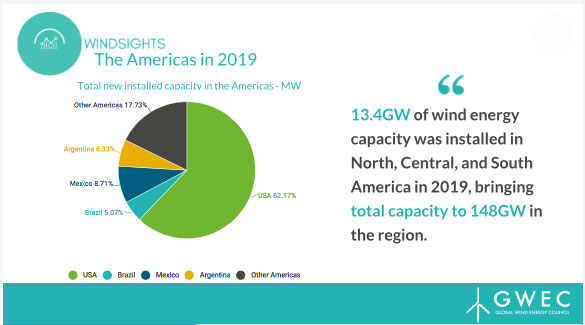
The latest data released by the Global Wind Energy Council (GWEC) shows North, Central and South America, and the Caribbean installed 13,427 MW capacity of onshore wind power in 2019, an increase of 12 percent on the previous year, which saw 11,892 MW installed.

In North America (Canada and the U.S.), new capacity additions grew by nearly 18 percent compared to 2018. In Central and South America and the Caribbean, new capacity additions decreased by 5

percent compared to 2018. Overall, this means that the region has tripled its wind-power installations since 2010, showing the immense progress made by wind energy as a leading power source in the Americas.

In North America, the U.S. saw an installation rush last year with nearly 10 GW installed. This was driven primarily by the Production Tax Credit (PTC) phase out and is expected to continue driving installations in 2020, while the recently approved one-year PTC extension is likely to create a new installation rush in 2024. In Central and South America and the Caribbean, strong growth has occurred in key markets such as Mexico, Argentina, and Brazil. However, the outlook for wind power in the next two to three years in some of these markets — namely Argentina and Brazil — is threatened by regulatory and political challenges.


Key insights from the data include:

  • Leading countries in the region for 2019 include: U.S. (9,143 MW), Mexico (1,284 MW), Argentina (931 MW), and Brazil (745 MW)
  • The U.S. installed its third largest volume of onshore wind in 2019 at 9 GW, just behind its previous records of 10 GW in 2009 and 13 GW in 2012, reaching a total of more than 105 GW.
  • The offshore market in the U.S. is progressing, with first large-scale installations expected in 2022-2023 and more than 10 GW expected to be built by 2026. Brazil is also looking to tap into the offshore market and has the potential to deploy as much as 700 GW of offshore wind, according to a roadmap for offshore wind released by the country’s Energy Research Office (EPE) in January 2020.

“It is encouraging to see that installation levels for wind energy in the Americas are continuing to rise,” said Ben Backwell, CEO of GWEC. “However, policymakers need to be doing more to accelerate these volumes and take advantage of the full potential wind power has to offer. Meanwhile, the ongoing trade war between the U.S. and China continues to constitute a threat for the industry, as tariffs on steel and aluminum, which make up about 90 percent of wind turbines, put price pressure on the U.S. supply chain and risk increasing wind-power projects by as much as 10 percent.”

“Latin America has massive potential for wind energy, and we have seen many countries in the region emerge in recent years as renewable energy leaders through auctions, which have delivered wind energy at some of the most competitive prices globally,” said Ramón Fiestas, chairman of GWEC’s Latin America Committee. “New markets such as Colombia, which successfully executed its first renewable energy auction in 2019, and existing ones like Chile, which saw a record year installing 526 MW, show that there is still great untapped potential in the region. Yet, with the cancelling of planned auctions and changes to the clean-energy credits scheme in Mexico in 2019 as well as political and economic shifts in Argentina leading to uncertainty for future auctions, these key markets risk losing the momentum which they have worked so hard to create and missing out on a massive opportunity to transform their energy systems to cleaner and cheaper wind power.”

These latest figures released by GWEC form the statistical release of the Global Wind Report. The Global Wind Report is GWEC’s flagship publication and the industry’s most widely used source of data. The complete report provides a comprehensive snapshot of the global wind industry and an overview of trends such as the growth of offshore wind, corporate sourcing and changing business models. The full report will be released in March.

GWEC is a member-based organization that represents the entire wind-energy sector. The members of GWEC represent more than 1,500 companies, organizations, and institutions in more than 80 countries, including manufacturers, developers, component suppliers, research institutes, national wind and renewables associations, electricity providers, finance, and insurance companies.

More info: gwec.net

Bachmann expands its wind retrofit capabilities with team acquisition

0
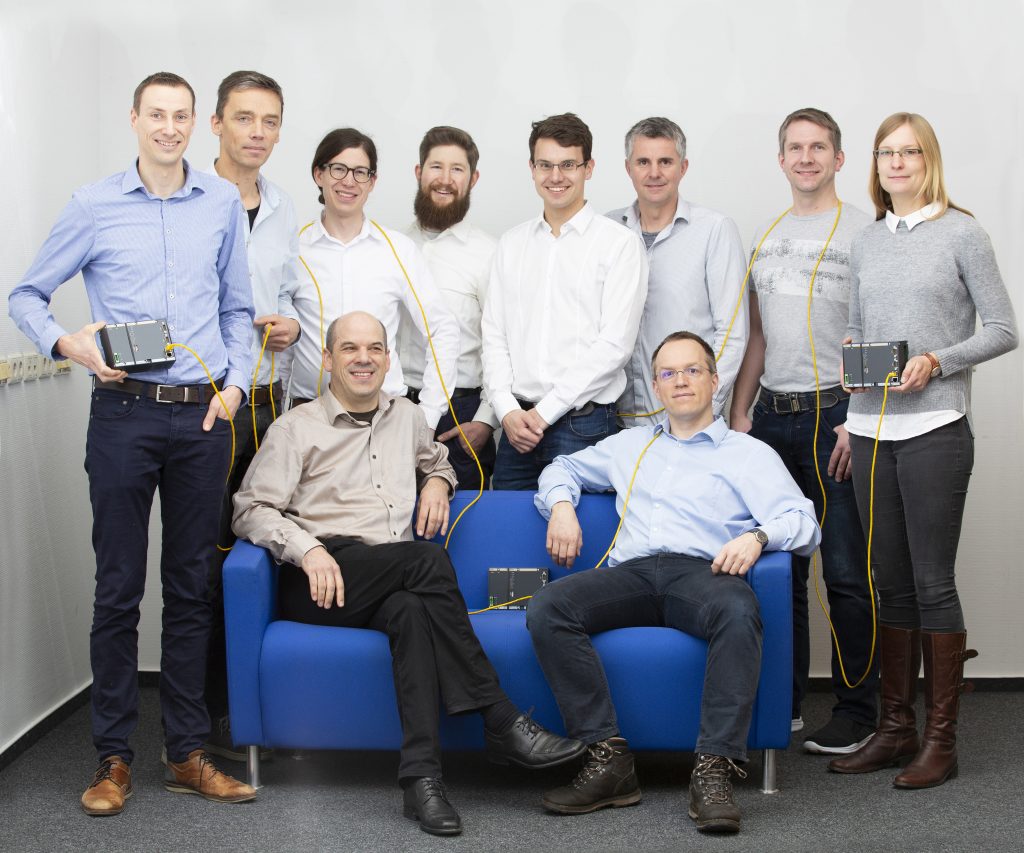
The Bachmann team in Rendsburg, Germany, will aid in retrofits to extend turbine lifetimes. (Courtesy: Bachmann)

Bachmann electronic, an industry leader in wind automation solutions, recently strengthened its significant expertise by acquiring a team of 10 wind-energy experts.

With more than 20 years’ experience in turbine control technology, the new team in Rendsburg/Büdelsdorf, Germany, will concentrate on the global turbine retrofit market. Their target is to provide turbine Life Time Extention (LTE), optimized efficiency, and support wind farms in delivering affordable energy.

Bachmann retrofitted turbines are now compliant with advancing technical requirements with increased cyber security and optimized operator safety. The Bachmann M1 automation system offers a wide variety of software components to older turbines. Components such as WTT (Wind Turbine Template), WPS (Wind Power SCADA), SPPC (Smart Power Plant Controller), Condition Monitoring Systems (CMS), and Structural Health Monitoring (SHM) update and standardize technology to meet international standards. Bachmann wind-energy customers increase their farm’s efficiency, lower costs, and maximize performance.

“We are very excited to be joining Bachmann,” said Martin von Mutius, head of the new retrofit team. “We want to grant independence to our customers, giving them the most from their turbines. This means durable, long-lasting automation solutions ensuring continuous productivity throughout turbine lifetimes; exactly what Bachmann provides.”

Bachmann electronic, a global automation company with headquarters based in Feldkirch, Austria, has been optimizing customer productivity and profit for 50 years. With more than 20 years’ experience in the wind market and as the leader in wind-energy automation, Bachmann provides the highest quality, durability, and reliability to one in three turbines worldwide.

Open and flexible communication standards, integrated machine health monitoring and web-based visualization are just part of the total solution Bachmann offers its customers. Continuous innovation and accumulated engineering know-how safeguard success and build trusted partnerships between Bachmann and its customers for generations to come.

MORE INFO  www.bachmann.info/en/industries/wind-power

Acciona puts its ninth U.S. wind farm into service in Texas

0
Acciona’s Palmas Altas Wind Farm farm features 46 Nordex technology wind turbines totaling 145 MW capacity.

Acciona recently put the Palmas Altas Wind Farm into service. Its second Texas project and ninth U.S. wind farm, the project represents a total investment of about $200 million and increases Acciona’s generating capacity in ERCOT to 238 MW.

The wind farm features 46 Nordex technology wind turbines totaling 145 MW capacity.

Palmas Altas is in Cameron County, about 20 miles north of the San Roman wind farm that Acciona started up in December 2016. The new facility will produce about 524 GWh of clean energy per year, equivalent to the consumption of 43,000 U.S. households. It will offset the emission of 503,000 metric tons of CO2 — the equivalent of taking more than 100,000 cars and trucks off the road.

The Palmas Altas project employed about 170 people at the peak of construction. Now completed, a 10-person operations team will staff the wind farm over its 25-year lifespan.

The wind turbines installed in Palmas Altas are Nordex’s AW125/3150 model with a rotor diameter of 125 meters, mounted on an 87.5-meter steel tower (hub height). The energy produced by the wind farm will be sold in the ERCOT-South Texas wholesale market.

Acciona has 1,047 MW of wind power capacity in the U.S. and Canada.

MORE INFO  www.acciona.com

Greenbyte Energy Cloud supports Skyline Renewables

0
Skyline Renewables, backed by Ardian Infrastructure Partners and Transatlantic Power Holdings, is bringing together significant expertise in renewables project acquisition, development, and operation. Since its inception in 2018, Skyline has rapidly expanded its portfolio of assets under management from zero to more than 800 MW.

U.S. independent renewable energy company Skyline Renewables has selected Greenbyte’s Energy Cloud to monitor and maximize the performance of its growing portfolio.

With its ability to pull data from technologically and geographically diverse sources, the cloud-based asset management and monitoring platform will effectively support Skyline’s growth ambitions as the business targets 3 GW of wind and solar assets across North America.

The North American renewable energy market offers attractive investment opportunities for Independent Power Producers (IPPs) that are able to take a sophisticated approach to improving asset management of large wind and solar portfolios.

Skyline Renewables, backed by Ardian Infrastructure Partners and Transatlantic Power Holdings, is bringing together significant expertise in renewables project acquisition, development, and operation. Since its inception in 2018, Skyline has rapidly expanded its portfolio of assets under management from zero to more than 800 MW.

Greenbyte’s innovative asset management software will enable Skyline to ensure productivity across this growing portfolio, adding value for its investors. Greenbyte Energy Cloud’s user-friendly dashboards will give Skyline full visibility of asset performance, enabling swift identification of emerging issues and boosting transparency and trust with third-party operations and maintenance (O&M) teams.

With Skyline’s current portfolio containing technologies from three different wind-turbine manufacturers, the company is seeking to further diversify its asset base by expanding into the solar market. Greenbyte Energy Cloud’s ability to gather data from multiple technology sources will offer Skyline flexibility when acquiring, developing, and optimizing future renewable energy assets.

Furthermore, the platform will continue to evolve over time to incorporate the latest asset management and monitoring technology, keeping Skyline ahead of the curve and giving the company the freedom to maintain best practices as they continue to expand.

“Greenbyte’s Energy Cloud not only enables Skyline to work more openly and effectively with the third-party asset operators currently looking after the portfolio, but also to continue building its own understanding of operational performance trends across its asset base,” said Patrick Strom, senior sales manager at Greenbyte. “After opening our Chicago office earlier this year, Greenbyte is well-equipped to support Skyline and other sophisticated IPPs as they continue to develop their renewable energy portfolios in North America, while delivering consistent returns to their stakeholders and enabling continuous growth.”

“Greenbyte’s Energy Cloud is the platform that best aligns with our need to centrally view, analyze, and report on data from a variety of renewable assets with a user-friendly interface that is both intuitive and powerful,” said Brad Kallenberger, vice president at Skyline Renewables. “We’ve been able to quickly familiarize ourselves with many of the capabilities and immediately identify opportunities to optimize the performance of our fleet.”

Greenbyte Energy Cloud is used as a renewable energy datahub by asset owners and IPPs in North America and worldwide, covering more than 20 GW of wind, solar, and hydro assets globally. As owner-operators continue to expand their portfolios and become more data-driven, by 2022, Greenbyte expects to have more than 100 GW of assets monitored in Greenbyte Energy Cloud.

MORE INFO  www.greenbyte.com

Vestas to become carbon-neutral by 2030

0
In more than 40 years of pioneering and leading the wind energy industry, Vestas has worked with customers to reduce greenhouse gas emissions by driving the transition to replace carbon-based energy generation with renewable energy.

Vestas is excited to announce it will be a carbon-neutral company by no later than 2030 — the first of many initiatives to increase our sustainability performance.

For Vestas, the reality of the climate crisis is at the center of our business. In more than 40 years of pioneering and leading the wind energy industry, Vestas has worked with customers to reduce greenhouse gas emissions by driving the transition to replace carbon-based energy generation with renewable energy.

To become carbon-neutral Vestas will reduce its global carbon footprint through a 55 percent CO2 reduction by 2025, reaching 100 percent by 2030. As Vestas is committed to leading the transition to a world entirely powered by sustainable energy, it will not use carbon offsets but only deliver CO2 reductions through its own actions. Taking the first steps this year, the company will be transitioning to electric vehicles for its company cars, will start replacing its global service vehicle fleet with renewable fueled vehicles, and will be exploring further steps to reduce heating- and transport-related CO2 emissions from its operations. The factories and offices have been powered by 100 percent renewable electricity since 2013.

After installing more than 108 GW of clean energy – enough wind energy to displace 167 million metric tons of CO2 every year, equivalent to burning 70 million metric tons of coal every year – Vestas’ 25,000 employees are committed to developing competitive sustainable energy solutions to meet the world’s growing electricity demand. However, Vestas’ aspiration to be the global leader in sustainable energy solutions means going beyond delivering sustainable solutions — it means making sustainability part of everything we do and taking full responsibility for the company’s environmental footprint.

Therefore, Vestas does not believe reducing CO2 emissions in its operations is enough. Vestas is also committing to reduce the CO2 emissions from its supply chain by 45 percent per MWh generated by 2030. The measurement has been chosen because it incentivizes sustainability partnerships with suppliers that both reduce CO2 emissions and allows for the continued growth of the global renewable energy sector. Vestas will therefore actively seek sustainability partnerships with its suppliers.

“At Vestas, we are proud of our shared purpose and passion to make the planet a better place and to make our work as sustainable as possible,” said Vestas CEO Henrik Andersen. “To remain at the forefront of the energy transition, we must do even more than today to meet the growing sustainability expectations of our customers, partners, investors, and employees. Our commitment to become carbon-neutral is the right thing to do for all of us. Together, we will not just make products that build a more sustainable planet, but we will do so in the most sustainable way possible.”

“Becoming carbon-neutral in our own operations and reducing CO2 emissions in our supply chain is the next phase of our journey to ensure a more sustainable planet for future generations — which is our purpose as a company and as individuals,” said Lisa Malmquist Ekstrand, Vestas’ head of Sustainability. “Going beyond our promise to continue developing energy solutions that reduce CO2 emissions, we are now making sustainability part of everything we do.”

These commitments are shaped based on recommendations from the Science Based Target initiative (SBTi), an initiative led by the Carbon Disclosure Project, the United Nations Global Compact, the World Resources Institute, and the WWF. It advises and assists companies in defining a pathway to future-proof growth and driving the transition to a carbon-free future. Vestas joins at least 730 other leading companies who have already committed to reduce their greenhouse gas emissions under the umbrella of the SBTi.

MORE INFO  www.vestas.com

Production Tax Credit gets extension through 2020

0
Under the extension, wind projects that began construction in 2019 are eligible for the 40-percent credit, and those that start construction in 2020 will be eligible for a 60-percent credit.

President Donald Trump recently signed into law a spending and tax bill that includes an extension of the wind energy Production Tax Credit (PTC) for one year.

The bill also raises the value of the PTC to 1.5 cents/kilowatt hour.

“This bipartisan bill is a major win for American consumers,” said AWEA CEO Tom Kiernan. “It means more business for over 500 U.S. factories building wind-turbine components, and it means more opportunities for job creation and economic development in the rural communities hosting wind farms. We appreciate that Congress has recognized wind and other renewable’s role in building a strong economy while also reducing carbon emissions.”

Previously, wind facilities were eligible for a reduced PTC of 40 percent through the end of 2019, when the credit was set to expire. Under the extension, wind projects that began construction in 2019 are eligible for the 40-percent credit, and those that start construction in 2020 will be eligible for a 60-percent credit, according to Daily Energy Insider.

MORE INFO  awea.org

Pattern Energy starts construction on repowering of Gulf Wind Facility in Texas

0
Repowering the Gulf Wind facility will consist of removing the current wind turbines and replacing them with 118 new Siemens Gamesa SWT-2.3-108 turbines, which will generate 271 MW of capacity, the equivalent to the annual energy usage of approximately 80,000 Texas homes.

Pattern Energy Group Inc. recently announced it has closed financing and started construction on the repowering of its Gulf Wind facility in Kenedy County, Texas.

Repowering the Gulf Wind facility will consist of removing the current wind turbines and replacing them with 118 new Siemens Gamesa SWT-2.3-108 turbines, which will generate 271 MW of capacity, the equivalent to the annual energy usage of approximately 80,000 Texas homes. Construction began on December 3, 2019.

“Repowering Gulf Wind with brand new turbines made strong economic sense due to its unique location on the Gulf Coast, where the winds blow strongest at the times of Texas’ peak energy demand and pricing,” said Mike Garland, president and CEO of Pattern Energy. “Gulf Wind was our first wind-power facility, and technology has improved rapidly since it first began operating over a decade ago. By installing the latest technology turbines, we expect the repowered facility to have more efficient production, lower operating costs, renewed production tax credits (PTCs), and longer life, which combine to increase the long-term value of our fleet.”

“Repowering provides an opportunity to increase the efficiency, reliability, and longevity of existing wind farms,” said José Antonio Miranda, Siemens Gamesa Renewable Energy, CEO Onshore Americas. “We have a long-standing partnership with Pattern Energy and are excited to bring new life to the Gulf Wind facility.”

The repowering consists of replacing nacelles, towers, and blades for the 118 turbines at Gulf Wind with new Siemens Gamesa 2.3 MW turbines, each with 108-meter blades on 80-meter towers.

The Gulf Wind facility has entered into a new 20-year power purchase agreement with Austin Energy for the majority of the facility’s energy production. The remaining output will be sold at merchant power prices. Gulf Wind is strategically located on the Gulf Coast in Kenedy County, Texas, where favorable wind conditions allow the facility to maximize energy production during times of peak demand and peak pricing.

For more than 25 years, Gulf Wind is expected to contribute approximately $90 million to the local economy through tax and landowner payments. The Gulf Wind facility sits on 9,600 acres leased from the Kenedy Memorial Foundation. All money received by the Foundation supports its charitable causes to fight poverty, boost education, and build stronger communities.

Gulf Wind began operation in 2009. In late August 2017, the facility withstood Hurricane Harvey, one of the strongest hurricanes to hit the area in recent history. Following the storm, when the facility was deemed undamaged and safe to resume operations, Gulf Wind returned to supplying much-needed energy to the Texas grid.

MORE INFO  www.patternenergy.com

Leosphere enhances offshore offerings with Windcube suitable for buoys 

0
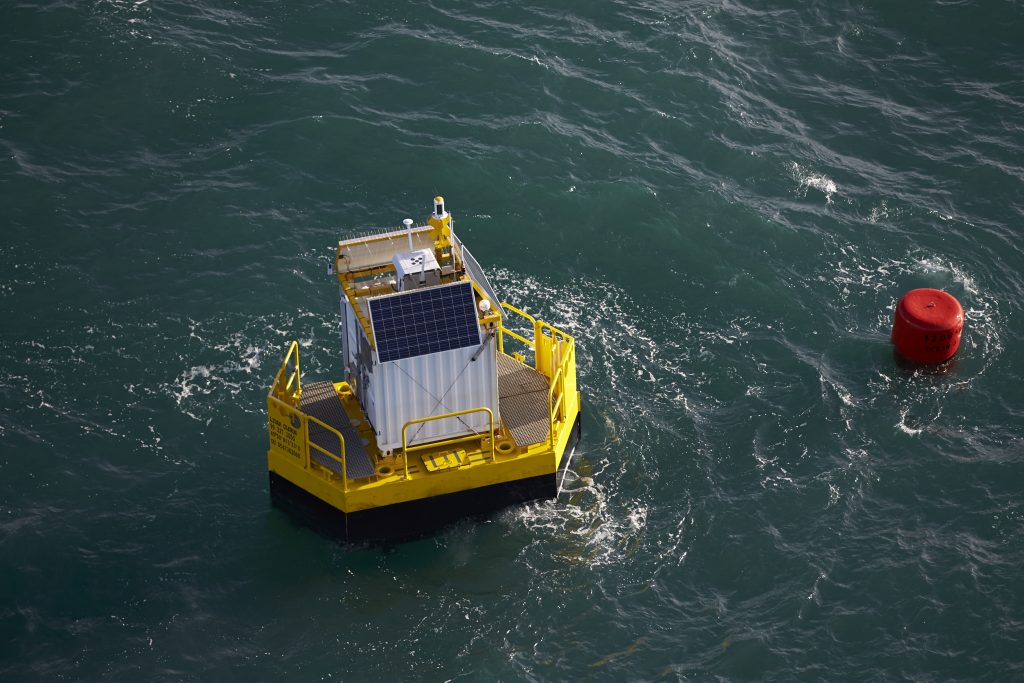
The buoy-ready Windcube’s new design will provide all of the innovation embodied in the Windcube but features a more robust casing in order to withstand difficult marine conditions in a moving platform at sea. (Courtesy: Vaisala/©Jacques Vapillon-AKROCEAN GEPS Techno)

Leosphere, a Vaisala company that specializes in developing, manufacturing, and servicing turnkey wind Lidar (light detection and ranging) instruments for wind energy, aviation, meteorology, and air quality, recently announced the fortification of its suite of offshore solutions to include the incorporation of a buoy-ready Windcube system to enable enhanced offshore wind resource assessment, even in harsh offshore environments.

“The Windcube is the reference Lidar for all phases of wind development and operations internationally,” said Alexandre Sauvage, CEO of Leosphere, a Vaisala company. “Already widely deployed across applications onshore, near-offshore and on platforms in the ocean, our new design enables customers to quickly leverage Windcube in an offshore floating environment.”

This buoy-ready offshore-environment solution retains all of the sought-after capabilities of the industry-leading Windcube system, which is used today onshore and offshore on fixed platforms. It provides bankable data by producing constant accuracy up to 200-plus meters over 12 simultaneous heights and is accepted onshore and offshore by all international standards and guidelines.

The new design will provide all of the innovation embodied in the Windcube but features a more robust casing in order to withstand difficult marine conditions in a moving platform at sea. It is also designed to be easily integrated into commercial floating buoys. Compared to traditional meteorological masts, floating Lidar systems offer many benefits, including quicker deployment and cheaper installation in which savings up to 90 percent are possible.

With the global demand for energy constantly growing, accelerating at its fastest pace in more than a decade, offshore wind and other carbon-free solutions are becoming a more important part of the world energy demand equation. According to a recent study by Global Industry Analysis, offshore wind capacity is forecast to grow by more than 80 GW through 2024, achieving an impressive compound annual growth rate (CAGR) of more than 25 percent in that period.

“The ability to measure wind speeds and direction from a floating Lidar solution instead of a met mast has been essential to accelerating the pace of offshore development,” said PS Reilly, CEO of AXYS Technologies, a global provider of data monitoring solutions and turnkey offshore monitoring campaigns. “The Windcube and its ability to accurately read wind characteristics has been a part of this industry breakthrough from the beginning, and the enhancements with this new model will help us bring even more reliability and bankability to our clients.”

MORE INFO  www.leosphere.com

TÜV NORD completes prototype certification for one of world’s largest offshore turbine  

0
With a diameter of 193 meters and a capacity of 10 MW, the SG 10.0-193 DD is one of the world’s largest offshore wind turbines. (Courtesy Siemens Gamesa)

On behalf of Siemens Gamesa Renewable Energy (SGRE), TÜV NORD has certified the prototype of one of the world’s largest offshore wind turbines.

The first milestone in certification process was thus reached for the SG 10.0-193 DD. The new 10 MW turbines are expected to be ready for the market in 2022.

“We are very pleased to support our partner Siemens Gamesa Renewable Energy by completing this important step towards type certification of this new generation offshore wind turbine,” said Silvio Konrad, member of the Management Board of Industry Service at TÜV NORD and responsible for the strategic business area Energy.

TÜV NORD successfully evaluated the design of the prototype according to the IECRE scheme and corresponding Operational Documents (ODs). Furthermore, a prototype certificate was prepared according to the Danish “Executive Order on a technical certification scheme for wind turbines” (BEK73). The prototype is supposed to be installed at the Wind Test Center Østerild (Denmark) in the upcoming months.

Tests and measurements including load validation, safety and functional tests as well as power performance measurements will be carried out on the prototype. Based on the obtained results, TÜV NORD will verify characteristics of the wind turbine as assumed in the design evaluation.

Toward the final type certification, TÜV NORD also performs the manufacturing evaluation of the main components as well as the nacelle and hub assembly. Compliance with the design requirements and SGRE specifications at the production will be assured, confirming turbine’s readiness for high-quality series production.

With a diameter of 193 meters and a capacity of 10 MW, the SG 10.0-193 DD is one of the world’s largest offshore wind turbines. Thanks to the larger rotor blades, which almost correspond to the dimensions of a football field, the turbine produces 30 percent more energy annually than its 8-MW predecessor. The turbine can thus supply about 10,000 average European households with electricity per year.

MORE INFO  www.tuv-nord-group.com

Aquarius Marine Coatings launches anti-foul solution in offshore sector

0
The launch follows the completion of a five-year trial funded by EDF Energy and undertaken by Plymouth Marine Labs (PML) in the U.K., which concluded that Coppercoat-Commercial is the best protective anti-foul solution for underwater turbines. (Courtesy: Aspectus Group)

Aquarius Marine Coatings Ltd. (AMC) recently announced the launch of its award-winning anti-foul coating, Coppercoat-Commercial, in the offshore energy sector.

The coating, which contains exceptionally high levels of copper, a natural anti-microbial agent, protects sub-sea infrastructure from hosting layers of plant, animal, and microbe growth while meeting environmental and safety standards. It ensures that underwater infrastructure continues to meet expected performance levels, while lowering maintenance costs and reducing the potential for planned and unplanned outages.

The launch follows the completion of a five-year trial funded by EDF Energy and undertaken by Plymouth Marine Labs (PML) in the U.K., which concluded that Coppercoat-Commercial is the best protective anti-foul solution for underwater turbines. Although the trial was carried out with a view to support wave and hydropower facilities, the same coating can be applied equally to any static or dynamic sub-sea structure to enhance the longevity and efficiency of both fixed and floating wind farms, particularly in areas of significant marine flow.

Further research conducted by Dr. Tom Vance at PML looked at loss of paint thickness over time and showed that Coppercoat-Commercial was also the most effective anti-foul in terms of longevity, losing just 4.3 percent over the five-year trial period.

“We developed Coppercoat for the marine industry 30 years ago,” says Jayson Kenny of AMC. “Since then, we have perfected our products and gained plenty of first-hand experience of what happens to vessel’s hulls and sub-sea equipment when left unprotected. Bio-fouling on sub-sea structures can cause all manner of problems, from accelerated aging, increases in weight, drag and operating temperatures, through to the erosion of metalwork. Ever more commonly we are encountering reports of microbial induced corrosion (MIC), a problem to which Coppercoat-Commercial provides a reliable long-term solution.”

The launch of Coppercoat-Commercial for the offshore energy sector comes at a key moment in the development of renewable offshore energy, as operators look to exploit opportunities in deeper waters where lifting, cleaning, and replacing subsea assets becomes significantly more difficult. Equally important, Coppercoat-Commercial is seen as a key component in extending the lifespan of the infrastructure necessary to support wave or hydropower and so can contribute toward making it a viable part of the energy mix.

AMC’s experience in the marine sector has demonstrated that Coppercoat-Commercial can last for 20 to 30 years depending on usage and conditions. The hard-wearing, densely copper-filled resin is suitable for both cold and tropical waters and can be applied by roller or spray and can be used on all surfaces including steel, concrete, aluminum, GRP, and various polymers. As it is both water-based and free from volatile organic compounds (VOCs), Coppercoat-Commercial is also the most environmentally safe bio-active anti-foul product on the market.

MORE INFO  www.aspectusgroup.com

3M offers product course for wind-energy customers

0
The product training is aimed at all service companies involved in the maintenance and repair of wind turbines and rotor blades. (Courtesy: WindSourcing.com)

In January 2020, WINDSOURCING.COM GmbH will again offer free product training for customers from the service market of the wind industry together with its supply partner 3M Deutschland GmbH.

The product training is on January 24, 2020, at the 3M Fall Protection Training Center in Hamburg and is aimed at all service companies involved in the maintenance and repair of wind turbines and rotor blades.

The training consists of three different modules. After the successful application training in February 2019, customers again have the opportunity to get to know the new 3M™ Erosion Protection Tape 2.0 W8750/W8780. The participants will learn the correct application practically on a blade model and receive a certificate of participation as proof of training, which is partly also required by the OEM. In the second training module, 3M™ presents the Acrylic Foam Tape, which can be used for the attachment of aerodynamic parts such as vortex generators. In the last module, participants get to know the 3M™ Peltor communication headset and learn where it can be used in wind energy.

The organizers expect service companies from all over Europe to participate in the training and therefore point out that the training will be offered in German and English.

MORE INFO  www.windsourcing.com/en/trainings/3m-product-training-2020

Wind development in the high seas could unlock offshore potential

0
While offshore wind at high seas clearly has barriers to overcome, it could drastically increase capacity by adding almost 70 percent more construction space to consider.

The offshore wind industry is making great strides in developing technology. That means projects can be built further from shore, including technological innovations in floating foundations and hydrogen storage. However, a new report by Chatham Partners, a boutique law firm specializing in renewable energy, indicates that if such technology were to allow the construction of wind farms in the high seas, the current legal framework would not have the scope to cover such development.

The high seas are all regions of the sea that sit outside the control of a single nation. They make up 50 percent of the surface area of the planet and cover more than two thirds of the oceans. However, the lack of clear rules covering development in the high seas will be a challenge for using any of these areas for offshore wind. According to the report, “Offshore Wind in High Seas: Unlimited potential beyond national control?”, the industry should call for discussions to form a robust legal framework now or risk missing the opportunities the high seas could offer in decades to come.

Global efforts toward decarbonization have proven offshore wind to be a viable alternative power source to fossil fuels. However, the sector could still face challenges in developing close to shore due to countries’ desire to protect coastal ecosystems and conflicts with local industries and the military or simply inactivity. These would not be obstacles in most of the high seas.

While offshore wind at high seas clearly has barriers to overcome, it could drastically increase capacity by adding almost 70 percent more construction space to consider. However, if offshore wind were to look to the high seas for development, the lack of a legal framework will become a major obstacle.

In particular, uncertainty around right of use, ownership, and jurisdiction of the high seas presents a significant challenge. Building close to shore in an Exclusive Economic Zone means that the relevant state has the remit to govern and authorize installation and operations of a wind farm under their national laws; but no such jurisdiction or governing body exists for the high seas. As such, offshore wind on the high seas would be too great a risk for any company to invest in.

Chatham Partners notes that precedents for international cooperation in order to take advantage of valuable resources already exist in the scope of current legislation. For example, fishing is regulated in the high seas by Regional Fisheries Management Organizations. The International Seabed Authority (ISA) acts as a governing body to authorize public and private organizations to extract minerals from the deep seabed outside their states’ jurisdiction. In addition, a treaty for biodiversity beyond national jurisdiction is currently proposed that may introduce so-called “area-based management tools” as well as various forms of governance — concepts that could include or serve as an example for a framework concerning offshore wind.

However, these precedents provide an example for the offshore wind industry of how many years a legal framework can take to be built. The ISA took more than 20 years of negotiation between member states to formally establish. The treaty concerning biodiversity has been negotiated since 2004 and will likely stay a draft for several years to come.

“Currently, offshore wind developers are only able to consider a third of the available sea when planning new sites,” said Felix Fischer, partner at Chatham Partners. “The high seas could have the potential to further unlock the expansion of offshore wind beyond what can be developed along coastlines if the industry deems it feasible from an economic and technical perspective. However, the technology to allow development in these areas could outpace the legislation.”

“Without a legal framework, these sites will remain out of reach for developers for decades to come,” he said. “If the high seas should become part of the answer to expanding offshore wind development and contribute to global decarbonization, building a viable legal framework is critical.”

MORE INFO chatham.partners/en/downloads

Renewables growth may close green hydrogen cost gap by 2030

0
(Courtesy: Wood Mackenzie)

Green hydrogen production can compete with fossil fuel-based hydrogen by 2030 in Australia, Germany, and Japan, should renewable power prices reach $30 per megawatt hour (MWh), new research from global natural resources consultancy Wood Mackenzie indicates.

Today, wind and solar power purchase agreement (PPA) prices range from $53 to $153/MWh in those markets.

The production of hydrogen, used in industries as diverse as oil refining, steel manufacturing, and ammonia and methanol production, is carbon-intensive. In 2017, hydrogen production resulted in 830 metric tons of carbon emissions, greater than the annual emissions pumped out by the entire nation of Germany (797 metric tons) or the 677 metric tons attributed annually by the global shipping sector.

Wood Mackenzie’s research shows that less than 1 percent of all hydrogen produced today comes from renewable electricity, relying instead on natural gas and coal.

Switching to hydrogen produced by wind and solar via electrolysis, which splits water molecules into hydrogen and oxygen atoms, offers a significant opportunity to decarbonize its production and reach emissions targets.

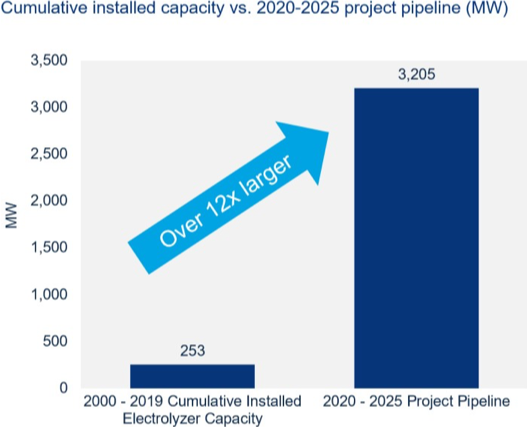
According to Wood Mackenzie, from 2000 to the end of 2019, 252 MW of green hydrogen projects will have been deployed worldwide. By 2025, this will increase by 1,272 percent, with the deployment of a further 3,205 MW of electrolyzers dedicated to green hydrogen production.

“The large increase in the 2019-2025 period is partially due to the nascency of the market,” said Ben Gallagher, a senior analyst at Wood Mackenzie. “But aggressive targets in East Asia and increased interest from major international stakeholders will drive deployment in the near term.

“While cost-competitiveness might be out of reach in most scenarios by 2025, national targets and pilot projects will produce enough volume to realize substantial capex declines beyond 2025,” he said.

Gallagher said that as renewable energy deployment grows, so too will the green hydrogen market.

But there are challenges. While green hydrogen has made gains in a number of key markets, including Japan, Germany, and Australia, at present it cannot compete with the low costs of locally produced coal and natural gas-produced hydrogen in China and the U.S., for example.

On top of this, it remains unclear if renewable PPA prices worldwide will fall fast enough to make green hydrogen production competitive.

However, Gallagher is optimistic about the green hydrogen sector’s future.

“We are just embarking on the energy transition,” he said. “There are several unknowns that would further spur adoption of green hydrogen: changing policy dynamics, new carbon regimes, new ways to monetize grid flexibility, and lower-than-expected costs of renewables.”

MORE INFO  www.woodmac.com

XL Specialized Trailers introduces new Gooseneck Trailer

0
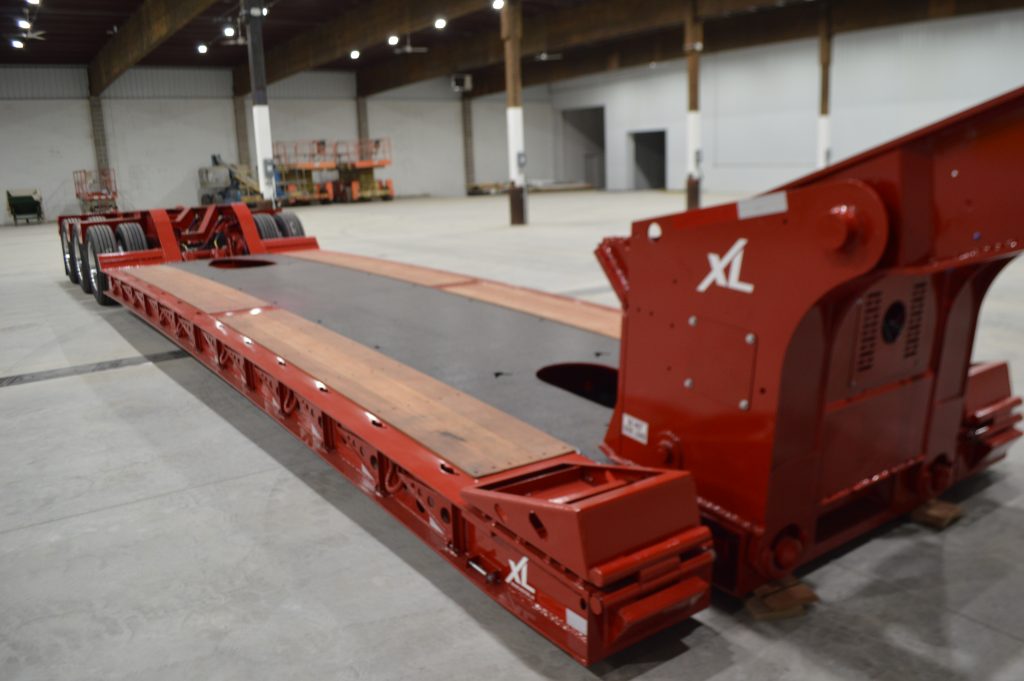
With a capacity of 110,000 pounds in 12 feet and many operator-friendly features, the Low-Profile Hydraulic Detachable Gooseneck (HDG) trailer is ideal for adaptable hauling in commercial and construction applications. (Courtesy: XL Specialized Trailers)

XL Specialized Trailers is releasing a newly designed Low-Profile Hydraulic Detachable Gooseneck (HDG) trailer to its lineup. The trailer offers a loaded deck height of only 15 inches.

With a capacity of 110,000 pounds in 12 feet and many operator-friendly features, the unit is ideal for adaptable hauling in commercial and construction applications. The 13-foot gooseneck has a swing clearance of 110 inches, and the relief cut out in the gooseneck provides additional space between the truck and trailer.

The hydraulic neck detaches and re-attaches quickly using a power unit or a wet kit. The redesigned sloped nose of the gooseneck protects the air and electric connections from damage.

Additionally, a new front access panel in the base of the gooseneck allows for easy engine maintenance. The neck also offers a five-position ride height. Based on neck position and load, the deck can be leveled as needed with the adjustable wheel area ride height. A work light in the upper deck increases visibility when monitoring the load at night.

With the 15-inch deck height and 4.5-inch ground clearance, this flat deck lowboy can accommodate loads that may otherwise require a dropside trailer. The new three-beam deck design offers an improved strength-to-weight ratio, keeping drivers’ payload possibilities high.

The Low-Profile HDG offers enhanced main deck features. The bucket well in the rear provides an area for an excavator bucket to ride safely and a toolbox at the front serves as a storage space. The main deck offers many tie-down points with seven pairs of bent d-rings along the outer beams, 12 chain drops per side on the outer rails, four chain drops around the toolbox, and swing out outriggers on 24-inch centers.

The wheel area’s drop bolster height of 37 inches allows for machinery to be loaded on the rear.  To decrease wear on the tires, the third axle airlift can lift up when it is not needed. The notched-out tail channel allows easy access to controls at the rear, and the air control valve is conveniently located in the bolster. Additionally, the frame of the XL Low-Profile HDG is prepped for a flip axle, allowing drivers to add a fourth axle when necessary. Bolt-on wheel covers are available for driving or parking on.

MORE INFO  www.xlspecializedtrailer.com

Transverse load-out supports semi-submersible floating wind farm

0
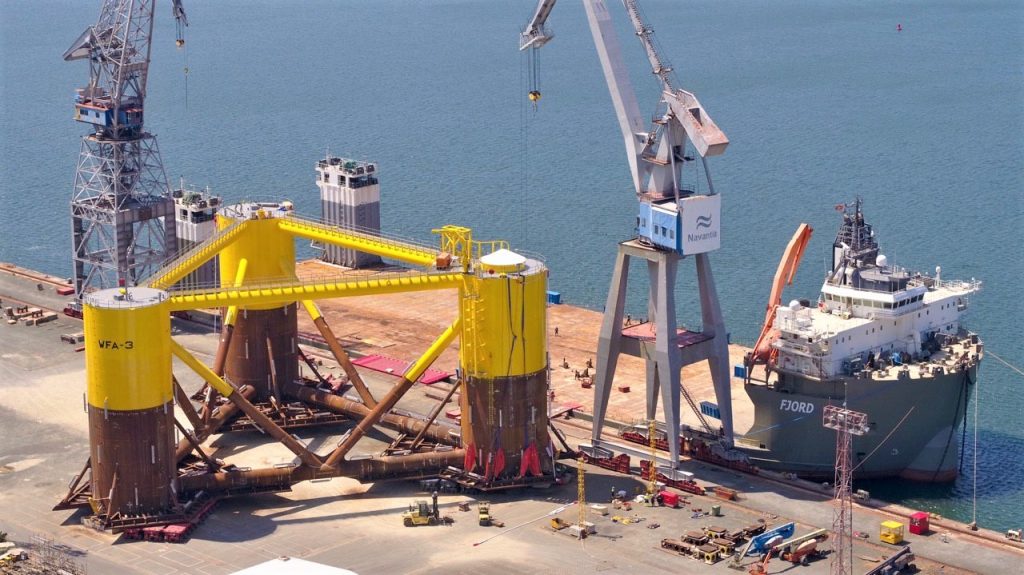
Construction and assembly of the more than 2,000-metric-ton structure took place as planned at the Navantia-Fene shipyard. (Courtesy: ALE)

The WindFloat Atlantic project is constructing the first floating wind farm on continental Europe, and will generate a capacity of 25 MW; equivalent to the energy consumed by 60,000 homes in a year.

Being a floating wind farm, it is secured to the sea bed with chains, and so avoids complex and disruptive offshore operations that might be damaging to the environment and costly.

ALE was chosen by its client Coordinatora to undertake the project, due to its expertise in performing complex load-outs on tight deadlines, as was the case here. Other projects elsewhere in the business had seen ALE perform transverse load-outs of large structures, experience that would be vital.

Construction and assembly of the more than 2,000-metric-ton structure took place as planned at the Navantia-Fene shipyard. Transportation was then required over a distance of several hundred meters to the quayside, and ultimately onto the Heavylift vessel Fjord.

Several factors made this project particularly challenging. The load-out operation was defined as Class 1, meaning strict time limits were in place; the operation was performed transversally, bringing obvious space limitations; the sheer size of the structure was also a factor, at 30-meters tall and with a distance of 50 meters between its columns.

To perform the load-out, ALE installed 236 axle lines of SPMT underneath the three corners of the structure, taking care to synchronize their movements to a high degree of accuracy. Three groups of 54-meter ramps also were installed between the quay and the deck of the Fjord, allowing the ro-ro operation to take place.

The structure was then towed to a position approximately 20 kilometers off the coast of Viana de Castelo, where it was installed. It will be joined by three similar structures in the near future.

This is a landmark project, involving the raising of the largest floating wind turbine on the planet. It is also allowing wind farms to move into deeper waters farther from the coast, where winds are stronger and more reliable than closer to shore.

MORE INFO  www.ale-heavylift.com

Siemens Gamesa project to power oil and gas offshore platforms

0
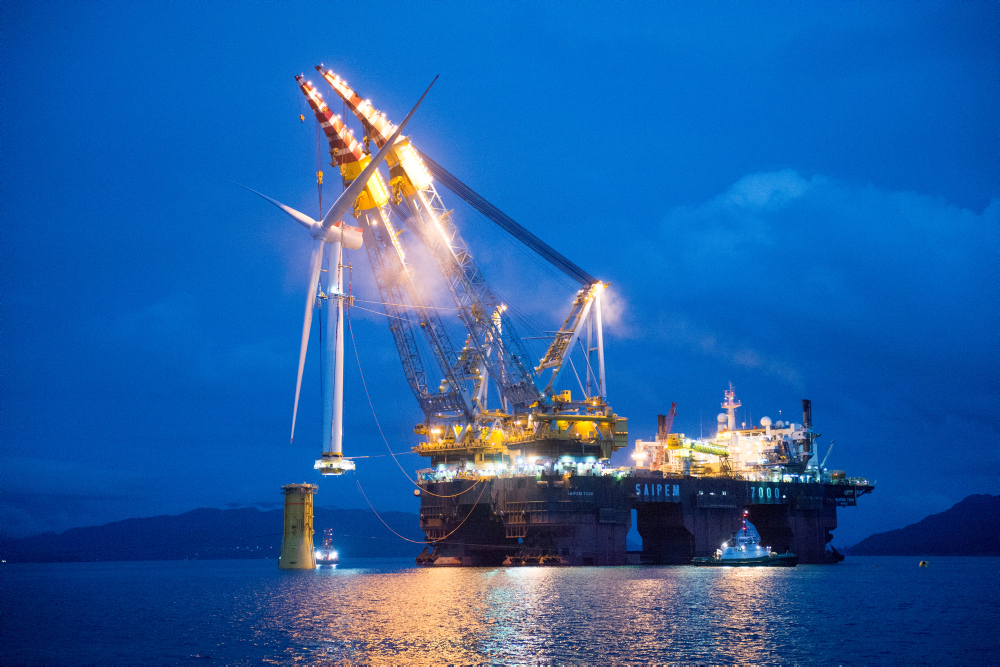
The Hywind Scotland floating wind power plant was installed at water depths between 90 and 120 meters. (Courtesy: Siemens Gamesa)

The world’s largest floating wind power plant will be installed in Norway, equipped with 11 Siemens Gamesa SG 8.0-167 DD turbines. Scheduled to be commissioned in late 2022, Hywind Tampen will be the first ever floating wind power plant to power offshore oil and gas platforms.

“We are pleased to have received the firm order from Equinor to be the supplier of this ground-breaking project,” said Andreas Nauen, CEO of the Siemens Gamesa Offshore Business Unit. “Thanks to our strong collaboration and joint focus on innovation, we are now at the forefront of developing this exciting technology and unlocking the vast potential for floating offshore wind power,”

Hywind Tampen will have a total capacity of 88 MW and be about 140 kilometers from shore in an area with water depths of 260 to 300 meters between the Snorre and Gullfaks oil and gas platforms. Specifically, this wind-power plant will be capable of meeting about 35 percent of the annual power demand of the Snorre and Gullfaks platforms.
By reducing the use of gas turbines on the fields, the project helps cut CO2 emissions by more than 200,000 metric tons per year, equivalent to the annual emissions from 100,000 passenger cars.

The floating foundations in the Hywind Tampen project are ballast-stabilized and anchored to the seabed with mooring lines. With their lightweight nacelles, Siemens Gamesa large direct drive wind turbines are particularly suited for floating foundations.

The innovative partnership between Siemens Gamesa and Equinor dates back to 2009, when the world’s first full-scale floating wind turbine project, Hywind Demo, was successfully installed in Norway. This initiative was followed in 2017 by the 30-MW Hywind Scotland floating wind power plant, currently the world’s largest, installed at water depths between 90 and 120 meters. Hywind Scotland is a hugely successful project that has world-class safety performance and the highest capacity factor of any offshore wind farm in the UK. The Hywind Tampen project continues this partnership, bringing industrial-scale floating wind a giant leap forward.

Offshore wind already has a strong foothold in Europe with close to 18.5 GW installed capacity and a global potential to reach more than 100 GW by 2030. Of this, floating offshore wind is estimated to constitute 10 percent of the market, potentially powering 12 million homes in 2030.

MORE INFO  www.siemensgamesa.com

NextEra Energy donates borescopes to Northeastern’s wind program

0
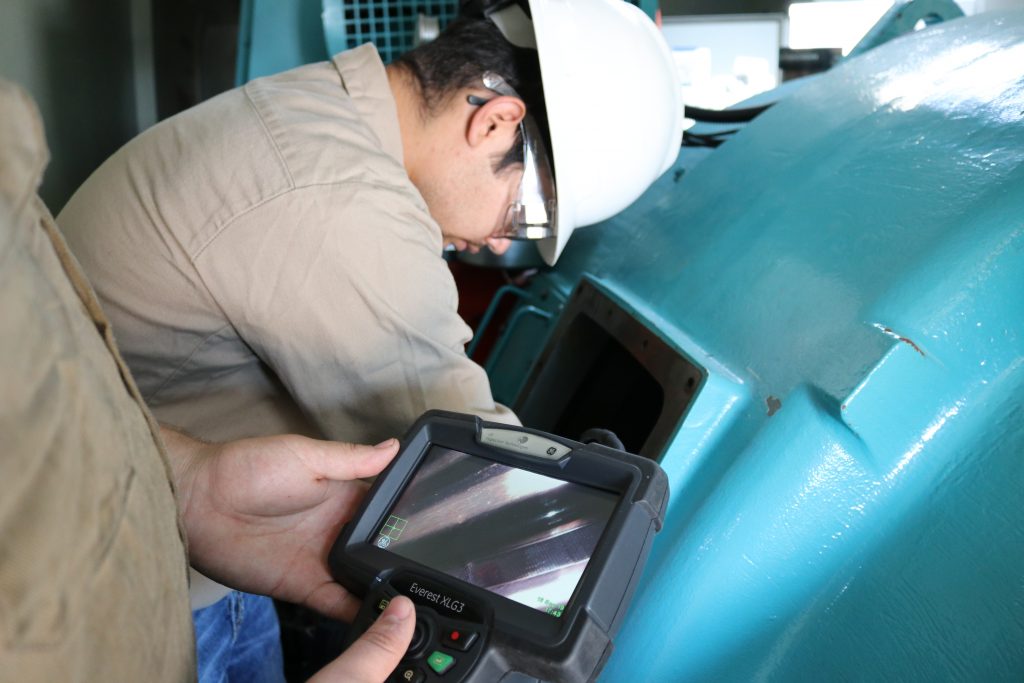
The borescopes allow students to use modern remote visual inspection techniques to learn how wind-generation equipment works. (Courtesy: NextEra)

Northeastern Junior College’s Wind Technology program has received a pair of borescopes donated by NextEra Energy Resources, one of the largest energy generation companies in the United States.

The borescopes, each valued in the thousands of dollars, allow Northeastern students to use modern remote visual inspection techniques to learn how wind-generation equipment works, said Jim Lenzen, assistant director of Renewable Energy at Northeastern.

“This generous donation by NextEra not only enables us to improve our students’ learning experience, it will make it much safer to learn how to perform wind equipment diagnostics,” Lenzen said. “We won’t have to tear down and reassemble defective components each semester, which allows us more time to focus on other hands-on learning experiences.”

A typical borescope is a device with a tiny camera and light source at the end of a long flexible thin probe. It is designed to gain visibility into otherwise hard-to-access spaces. Operators can manipulate the camera remotely via manual or electronic controls. Just as a physician uses an endoscope to peer into areas of the body for signs of injury or infection without major surgery, a borescope is used by wind-generation maintenance technicians to inspect the insides of gearboxes for defects or extensive wear, such as cracks in gear teeth, breaks and wear patterns, and pits in bearings. Borescopes capture pictures and information during inspections that can be logged and sent to a team of engineers for further analysis in a process known as preventative maintenance. The borescopes donated to Northeastern by NextEra are equipped with the same types of cameras used in real-world wind industry applications.

NextEra operates a large wind farm near Peetz, Colorado, where a number of Northeastern alumni work as maintenance technicians.

“This is a win-win for us to have NextEra as an industry partner,” Lenzen said. “The folks we work with appreciate the dedicated, hands-on program we offer students here and see the benefit of hiring technicians experienced at using the donated equipment NextEra also uses in its day-to-day operations.”

NextEra spokesperson Roxanne Reyes said the company is proud to be part of the Logan County, Colorado, community.

“Since 2007 we’ve operated the Logan Wind Energy Center, a 201-MW wind site that brings clean and reliable energy to the Centennial State,” she said. “Our partnership with Northeastern Junior College is mutually beneficial, and the program has our continued support for its efforts to teach the next generation of wind technicians in this rapidly-growing field of renewable energy.”

MORE INFO  www.NextEraEnergyResources.com

Southern Power Acquires Skookumchuck Wind Facility

0

Southern Power, a leading U.S. wholesale energy provider and subsidiary of Southern Company, recently announced the acquisition of its 12th wind project — the 136-MW Skookumchuck Wind Facility — from RES (Renewable Energy Systems).

“This project is a great addition to our renewable portfolio,” said Southern Power President Bill Grantham. “We continue to strive to develop clean, safe, reliable, and affordable wholesale energy resources for the benefit of our customers.”

The project, located in Lewis and Thurston counties, Washington, is Southern Power’s first wind facility in that state and contributes to the company’s growing renewable fleet of clean generating assets from California to Maine. Skookumchuck was developed by RES and is expected to use 38 wind turbines manufactured by Vestas.

Construction is underway, and the project is expected to achieve commercial operation in the first quarter 2020. Once operational, the electricity and associated renewable energy credits generated by the facility will be sold under a 20-year power purchase agreement with Puget Sound Energy, which will use the resource to meet the electricity demand of their Green Direct product customers.


Southern Power is the majority owner and has signed an agreement to sell a minority stake in the facility to TransAlta Corporation upon commercial operation.

With the addition of Skookumchuck, Southern Power’s wind portfolio consists of more than 1,960 MW of wind generation. Southern Power’s wind facilities are a part of the company’s 3,190-MW renewable fleet, which consists of 40 solar and wind facilities operating or under construction.

This project aligns with Southern Power’s overall business strategy of strengthening its wholesale business by acquiring and developing generating assets that are covered by long-term contracts with counterparties with strong credit support.