


Home 2018

Poll shows strong support for Saskatchewan wind

0

The Canadian Wind Energy Association (CanWEA) recently released the results of polling conducted by Saskatoon-based Insightrix Research at an industry event held in Regina.

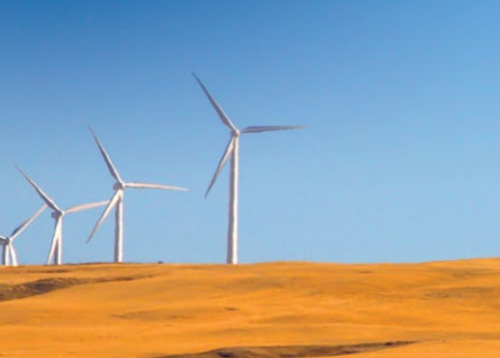
The province-wide representative poll showed overwhelming support for the development of wind energy with 84 percent of respondents supporting policies that encourage the development of wind energy in Saskatchewan and 78 percent supporting the development of wind farms near their communities.

The polling follows recent announcements that the province will be adding two wind-energy projects that together will add nearly 400 MW of wind-energy capacity to its grid in the near-term. In September, the Ministry of Environment approved the 177-MW Blue Hill Wind Energy Project, and in October, SaskPower announced that it had signed a power purchase agreement with Potentia Renewables for its 200-MW Golden South Wind Energy Facility. Both facilities are expected to be operational in 2021 and will more than double Saskatchewan’s installed wind energy capacity.
“We’re pleased to see the exceptional level of support for wind energy in Saskatchewan,” said Robert Hornung, president, CanWEA. “The wind-energy industry is continuously looking to improve and strengthen the ways it consults and engages with residents, local businesses, municipalities, and indigenous communities. Additionally, the province has put in place wind-energy-specific and results-based standards to ensure developments are located and operated with low environmental impacts. This combination ensures the groundwork is in place for the best possible projects as the government moves forward with its ambitious plans for renewable power.”

“As part of our Prairie Resilience Climate Change Strategy, our government has committed to reduce our emissions from electrical generation by 40 percent by 2030,” said the Honorable Dustin Duncan, Saskatchewan Minister of Environment, Minister Responsible for the Saskatchewan Water Security Agency, and Minister Responsible for SaskPower. “Increasing wind energy is an integral part of achieving this goal, and I am pleased to see the public support for this commitment. We look forward to realizing the environmental and community benefits of increasing Saskatchewan’s wind energy as new projects come online.”

More info: www.canwea.ca
Wind companies announce Wind Wildlife Research Fund

0

More than two dozen companies in the U.S. wind power industry have signed up so far to back a new fund facilitating research that will speed development and deployment of innovative solutions related to wind and wildlife.

The news was announced at the Intercontinental St. Paul Riverfront Hotel in Saint Paul, Minn., before an audience of 400 wind and wildlife researchers, regulators, conservationists, and industry leaders gathered for the national Wind Wildlife Research Meeting held every two years.

The new Wind Wildlife Research Fund will be housed within the American Wind Wildlife Institute (AWWI), an independent, nonprofit organization created by leaders in the wind industry and conservation and science communities to better understand wind energy’s risks to wildlife and create solutions. The Wind Wildlife Research Fund has 28 companies participating, and organizers hope to reach 35 corporate participants in 2019.

“I’m excited. This really is unprecedented,” said Kyle Boudreaux of NextEra Energy Resources and chairman of the Fund’s leadership group. “The only thing that would limit this is participation, and it’s off to a great start.”

The Wind Wildlife Research Fund continues the wind industry’s proud legacy of care for wildlife. Increased reliance on wind power results in cleaner air, water, and other environmental benefits. Even with relatively low impacts, the wind industry continues its commitment to work with conservation partners to avoid, minimize, and mitigate impacts to wildlife and their habitats.

Industry leaders were briefed on progress in creating the Fund during the American Wind Energy Association’s Clean Energy Executive Summit in Colorado Springs. There Tristan Grimbert, CEO of EDF Renewables, and Greg Wolf, CEO Leeward Renewable Energy, celebrated AWWI’s 10th anniversary and described the new effort.
“The Fund is a tremendous step forward, and further evidence of the wind industry’s commitment to responsible wind development,” Grimbert said. “A significant amount of important research about how to make wind energy safer for wildlife has been done since AWWI was founded in 2008, but collectively, we recognize that there is more to know, and we are pleased to support this initiative.”

The Fund will be used to directly support research projects that will advance understanding of technologies and strategies that can help reduce or avoid those interactions. Investments in the Fund will come from wind energy companies, supplemented by public funding and with support from other conservation-minded entities.

“This first-of-its-kind fund will make it possible to continue to expand wind-energy development while also protecting and conserving wildlife populations,” Wolf said. “It speaks volumes about the wind industry’s values that so many companies have stepped up to invest in the Fund. I encourage everyone to participate, because doing so will help position wind energy to prosper and thrive in the years to come.”

Participating in the Fund include: American Wind Energy Association, Apex Clean Energy, Avangrid Renewables, Berkshire Hathaway Energy Company, Clearway Energy Group, ConnectGen, DTE Energy, Duke Energy Renewables, EDF Renewables, EDP Renewables, Enel Green Power, Engie, Identiflight, Invenergy, Innogy Renewables, Leeward Energy, MAP Energy LLC, NextEra Energy Resources, NRG Systems, Pattern Energy Group, Portland General Electric, Puget Sound Energy, RES Americas, Siemens Gamesa, Southern Power, sPower, Tradewind Energy, and Tri Global Energy.

More info: awwi.org

Cherbourg blade factory reaches 2018 hiring target

0

Cherbourg blade factory recently completed its 2018 recruitment plan at its offshore wind turbine blade manufacturing site in Cherbourg, France.

The site counts more than 100 employees, 34 percent of whom are women.

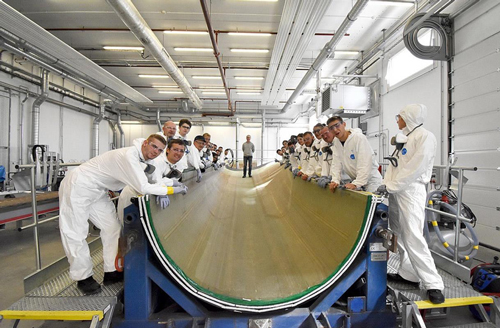
The first group of 30 newly-hired employees, from all functions, participated in the launch of the factory’s Center of Excellence training center September 30. These new employees joined a one-week theoretical class, followed by a week of practicing on an actual piece of a wind turbine blade mold.

After completing the Center of Excellence course, each trainee left Cherbourg to spend a month abroad at other LM Wind Power sites — from Spain, to Denmark, Poland and even Canada depending on the job scope. Employees from sites around the globe will also travel to Cherbourg to support the ramp-up of the factory. The second group started their training program on October 22.

“The Cherbourg site is a great location to support the development of the offshore wind industry in Europe and beyond, with a positive impact on the jobs and the ecosystem in the surrounding region,” said Alexis Crama, LM Wind Power Offshore Wind vice president. “We are investing in building a strong and sustainable value chain and are happy to welcome the first hundred recruits.”
The construction of the factory is on track to start the prototyping phase in January 2019. The first blade produced will be shipped to ORE Catapult Research & Development Center in Blyth, U.K., for indoor testing. The next three blades produced will be installed on GE’s Haliade-X 12-MW prototype at the end of the second quarter of 2019 at a yet to-be-determined site.

“This project entails new challenges and creates enthusiasm as we are starting up a new factory, installing new equipment inside, and welcoming new people with diverse backgrounds,” said Lukasz Cejrowski, LM 107.0 P project director. “At the same time, we are developing a new product: a new blade of a size we have never achieved before.  We can witness a significant combination of efforts as we use the expertise from our facilities worldwide to train the people in Cherbourg. This enthusiasm from all our teams will bring us to the successful ramp-up of the factory.”

In parallel to the development of the LM 107.0 P blades in Cherbourg, GE’s Offshore Wind teams is focused on the assembly of the first two Haliade-X nacelles at the Saint-Nazaire manufacturing site in France.

More info: www.lmwindpower.com

Boskalis wins contract for Ostwind 2 grid connections

0

Royal Boskalis Westminster N.V. (Boskalis) has been awarded a sizable export cable installation contract for the Ostwind 2 offshore grid connection.

The contract was awarded by 50Hertz and carries a value for Boskalis in excess of 250 million euros, making this the largest cable installation contract acquired by Boskalis ever.

The contract scope comprises design and installation of approximately 270 kilometers of export cable that will connect the planned Arcadis Ost 1 and Baltic Eagle offshore wind farms to the onshore substation in Lubmin, Germany. The project is expected to begin in 2019 with a planned completion late 2022.

Boskalis will execute this contract in consortium with its partner NKT that will supply the high-voltage cable system. For this project, Boskalis will deliver an integrated solution of in-house services including supporting UXO survey, geotechnical, and geophysical surveys (through Boskalis subsidiary Gardline), seabed preparation works, pre-lay run, transport, and installation of the 220kV export cables and seabed reinstatement.
Boskalis will deploy a wide variety of its in-house assets including trailing suction hopper and backhoe dredgers, geophysical and geotechnical survey vessels, cable-laying vessels, and a wide range of trenching tools.

“We are very proud to have been selected for this contract, the largest cable installation contract ever for Boskalis,” said Peter Berdowski, CEO of Boskalis. “The fact that we are able to combine our dredging services, recently acquired survey capabilities together with our cable installation competencies demonstrates Boskalis’ ability to offer a unique breadth of services. We look forward to further expanding this position for our clients as the leading subsea cable installation contractor.”

Boskalis’ strategy is aimed at benefiting from key macro-economic factors that drive worldwide demand in our markets: expansion of the global economy, increase in energy consumption, global population growth, and the challenges that go hand-in-hand with climate change. This project is related to the development of generating renewable energy due to climate change and increasing energy consumption.

More info: boskalis.com

BOEM seeks comments from the public

0

In support of the president’s America-First Offshore Energy Strategy, the Bureau of Ocean Energy Management (BOEM) recently announced its intention to issue a Notice of Availability (NOA) for the Draft Environmental Impact Statement (DEIS) for the Construction and Operations Plan (COP) submitted by Vineyard Wind LLC.

This would allow it to construct and operate an 800-MW wind energy facility offshore Massachusetts. The NOA will be published in the Federal Register on December 7.

The DEIS analyzes the potential environmental impacts of the proposed action described in the Vineyard Wind COP and reasonable alternatives to the proposed action. The publication of the NOA opens a 45-day public comment period. During this time, BOEM will conduct five public meetings and accept comments. The input received via this process will inform preparation of the Final Environmental Impact Statement. Comments on the DEIS should be submitted or postmarked no later than January 21, 2019.
Public meetings will be held during the comment period at the following locations: Hyannis, Narragansett, Martha’s Vineyard, Nantucket, and New Bedford.

“The Vineyard Wind Draft Environmental Impact Statement is another important opportunity for us to hear from our stakeholders,” said BOEM Acting Director Walter Cruickshank. “Public feedback is a vital part of our process and we would like to hear from everyone before preparing the Final Environmental Impact Statement.”

More info: https://www.boem.gov/Vineyard-Wind/

Another ADIPEC success for HTL Group

0

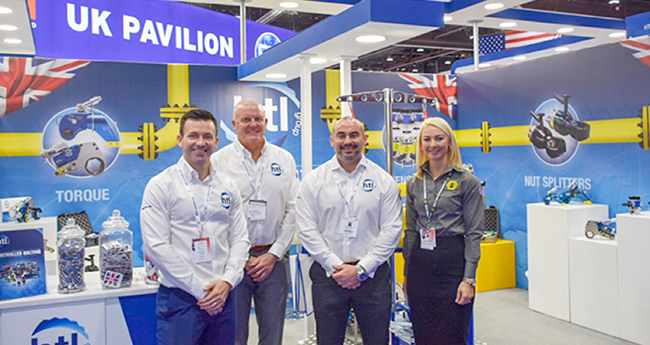
HTL Group recently returned to ADIPEC to showcase their U.K. designed and manufactured controlled bolting equipment on the EIC U.K. Pavilion.

With more than 110,000 delegates in attendance each year, ADIPEC was always on the agenda for HTL Group to demonstrate bolting solutions to industry professionals in attendance at the show.

Whilst meeting and networking with clients and overseas Distribution Partners, HTL’s on-stand team presented their full range of tools designed for controlled bolting applications on a fully equipped demonstration rig, allowing delegates to view the equipment on application including many unique safety features.
In keeping with the digital and innovative culture of the show, HTL brought their latest product innovations to the stand including i-Calibrate. Throughout ADIPEC, the team undertook demonstrations of i-calibrate; HTL’s asset management software platform for complete control and access to calibration and test certificates, anytime, anywhere via QR codes. Likewise, the HTL DSX Dedicated Square Drive Torque Wrench was showcased, which through industry first patented features improves both operator and job site safety.

“ADIPEC yet again was a great success for HTL Group,” said Paul Storey, HTL Group managing director. “We all thoroughly enjoyed a very busy week, meeting and networking with our existing and new clients in addition to overseas distribution partners. I look forward to building relationships with all of those we met and returning to ADIPEC next year.”

More info: www.htl-worldwide.com

N.C. governor signs Executive Order NO. 80

0

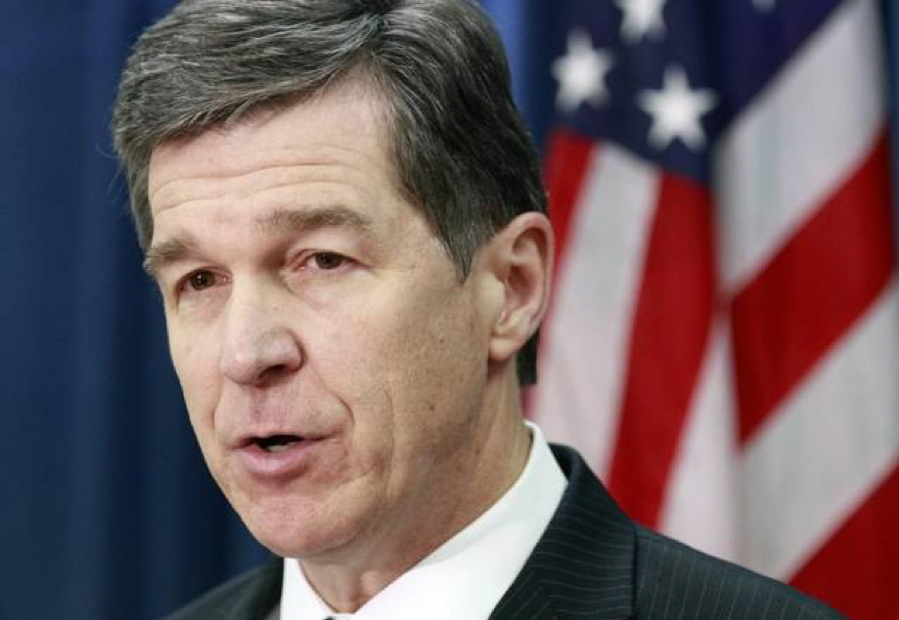
North Carolina Gov. Roy Cooper signed Executive Order NO. 80: North Carolina’s Commitment to Address Climate Change and Transition to a Clean Energy Economy.

The order directs state agencies in North Carolina to take several steps to address and mitigate the impacts from climate change. This Executive Order creates an environment that will expand the opportunity for both land-based and offshore wind in North Carolina by moving the state further towards a clean energy economy, according to the Southeastern Wind Coalition (SEWC).

In addition to significantly expanding the opportunity for wind energy in the state, EO 80 also addresses the growing opportunity for workforce development. As the offshore wind industry moves to the U.S., states must take early and intentional action in order to capture some of the 40,000 jobs this industry is expected to bring. The workforce study outlined in Executive Order 80 is exactly the kind of forward-looking step that signals to the industry that North Carolina is serious about its desire and intentions to be a meaningful participant in the offshore wind industry.
The SEWC expressed its gratitude to Gov. Cooper for his forward-looking vision and recognition of the benefits wind energy can provide both to North Carolina’s generation portfolio, and the state’s economy.

More info: www.sewc.org

DNV GL certifies Ingeteam’s 2MW DFIG converter

0

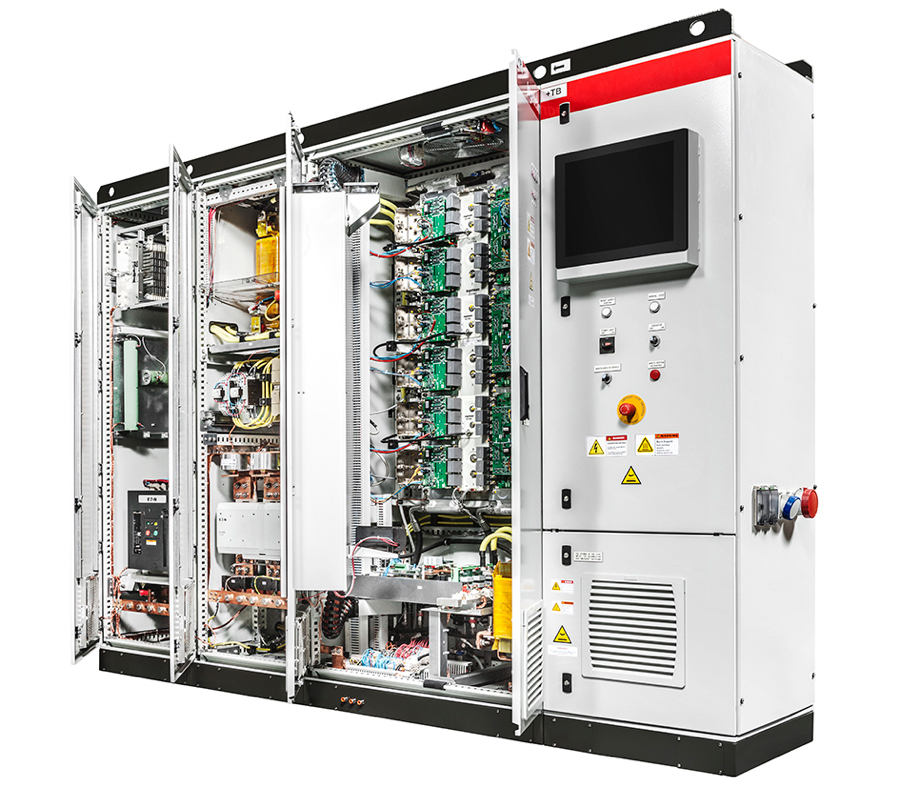
Ingeteam, the world-leading supplier of electrical conversion equipment, recently announced it received DNV GL’s certification for its Ingecon®Wind stator-equipped 2MW DFIG converter.

With this latest achievement, Ingeteam completes the range of its products covered under DNV GL certification, such as the medium voltage full power converters and the statorless DFIG converters; and demonstrates its ability to consistently meet DNV GL’s quality and safety requirements across multiple drive-train topologies.

Ingeteam’s low voltage DFIG power converters have been developed with a modular FRT solution to optimize cost-effectiveness and fulfil the strictest international grid codes. It is a mature technology used by many of the main turbine manufacturers, offering key advantages with regards to costs and sizes savings.

The DNV GL Component Certificate confirms that Ingeteam’s converter is designed, documented and manufactured in accordance to design assumptions, specific standards and technical requirements, globally. It also makes the process of new turbine development easier, speeding up the integration of components to wind turbine platforms.
“To this day, DFIG converters remain the most proven, efficient and cost competitive drive train topology,” said Ion Etxarri Sangüesa, R&D Quality Team Leader of Ingeteam Wind Energy. “Our DFIG converter series offer cost-optimized products for each market and application. Those converters present a very grid-friendly behavior, including FRT, SCR and SSR, which explains why they are used all over the world, and, in particular, why they do very well in emerging markets such as India or Brazil. Our 2MW DFIG converters can be modulated to bring customized solutions that will effectively minimize wind turbine LCOE.”

“We are very pleased to continue our partnership with Ingeteam and support the company in their efforts to demonstrate the quality standards of their products,” said Kim Mørk, executive vice president of Renewables Certification at DNV GL. “This new certification is another step forward in the excellent working relationship we have developed with Ingeteam over the years. The certificate emphasizes the quality requirements of Ingeteam in safety and reliability of their products.”

More info: www.ingeteam.com

South Africa wind will need to invest in blade repair capacity

0

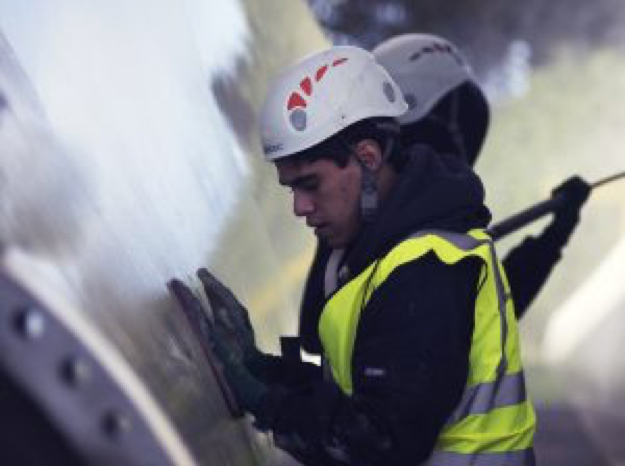
Altitec, a leading turbine rotor blade inspection and repair specialist, recently highlighted the need for South Africa to expand its pool of blade repair technicians to support operations and maintenance in the sector.

As shown by Altitec’s 2018 Blade Repair Atlas, published in October, newer wind farms, those under five years old, typically require more active monitoring and maintenance. Nearly all of South Africa’s installed wind energy capacity is under five years old.

The development of wind energy in South Africa has gathered momentum in 2018 since Energy Minister Jeff Radebe signed 27 agreements with independent power producers on behalf of Eskom in April, which included 12 wind energy projects with a capacity of more than 1.3 GW. Looking to the future, the government expects South Africa’s total installed capacity to reach 11.5 GW by 2030.

New wind energy capacity will drive employment in the country, not only during construction, but also over the longer term throughout the operational life of the assets. Altitec’s Blade Atlas, which breaks down the activity of their rotor blade technicians on wind farms worldwide, younger wind farms require an average seven repairs per turbine, compared with only 2.2 repairs per turbine for farms older than five years.
Three-quarters of Altitec’s inspections and repairs around the world were carried out on wind farms younger than five years old, while 15 percent of operations were undertaken on wind farms in South Africa. Altitec segments its repairs in to three distinct types. The report shows that internal works made up 12 percent of all repairs by type in 2018, external repairs were 31 percent, with replacement of aerodynamic add-ons making up the 47 percent of all repairs Altitec carried out in the year.

“With the planned growth in wind farms over the next decade, South Africa will need a local cohort of highly-skilled rotor blade repair technicians to ensure the wind turbine fleet remains in optimal operation,” said Riccardo Buehler, director of Altitec South Africa. “The Altitec Academy in Cape Town provides local training built on global experience to guarantee technicians have the skills to inspect and record damage to blades, and identify and conduct the necessary repairs.”

More info: www.altitec.co.za

China keeps grip on global top 25

0

Chinese operators remain the leaders of the global wind asset market, according to new research from Wood Mackenzie Power & Renewables.

The report, Global Wind Power Asset Ownership 2018, notes Chinese asset owners continue to dominate the global wind power sector following the merger of former top-ranked power producer Guodian Group and seventh-ranked mining and energy company Shenhua into industrial titan CHN Energy.

“Despite the conglomerate’s heavy focus on coal extraction and coal power generation, its wind fleet is more than twice as large as second-ranked utility Iberdrola’s,” said lead author Anthony Logan, research analyst, North America Wind.

“Many turbines installed during recent years of breakneck growth in China’s wind sector, are reaching the end of their turbine OEM (manufacturer) warranty period,” said Xiaoyang Li, an analyst with Wood Mackenzie Power & Renewables’ Asia Pacific team. “This coming transition, coupled with the low prices seen at new wind energy tenders, is forcing large asset owners to prioritize availability and annual energy production, driving a significant focus on operations and maintenance.”

“Chinese asset owners, long confined to their domestic market, are now looking to build and buy wind assets abroad,” she said. “Australia has been a particularly attractive overseas market, thanks to its open market and high project profits.”

In offshore wind, four large utilities dominate the capital-intensive market, typically developing and selling off about 50 percent of their projects to a more fragmented pool of institutional investors. The growth of the offshore wind sector will affect asset ownership in Asia Pacific from 2022 onwards, boosting the utility market share in Japan and South Korea.

 “In the U.S., 2017 saw domestic owners NextEra, BHE, Invenergy, and Duke complete just 20 percent of their collective average 2015-2016 installation volume as they and several other domestic asset owners used the year to allow their development arms to rebuild exhausted project pipelines,” Logan said. “Canadian and European firms, on the other hand, developed significant new capacity in the country. So far this year, the U.S. has seen institutional investors move to buy portfolios as independent power producers (IPPs) scramble for capital in time to use the Renewable Electricity Production Tax Credit (PTC) before it runs out in 2020.”
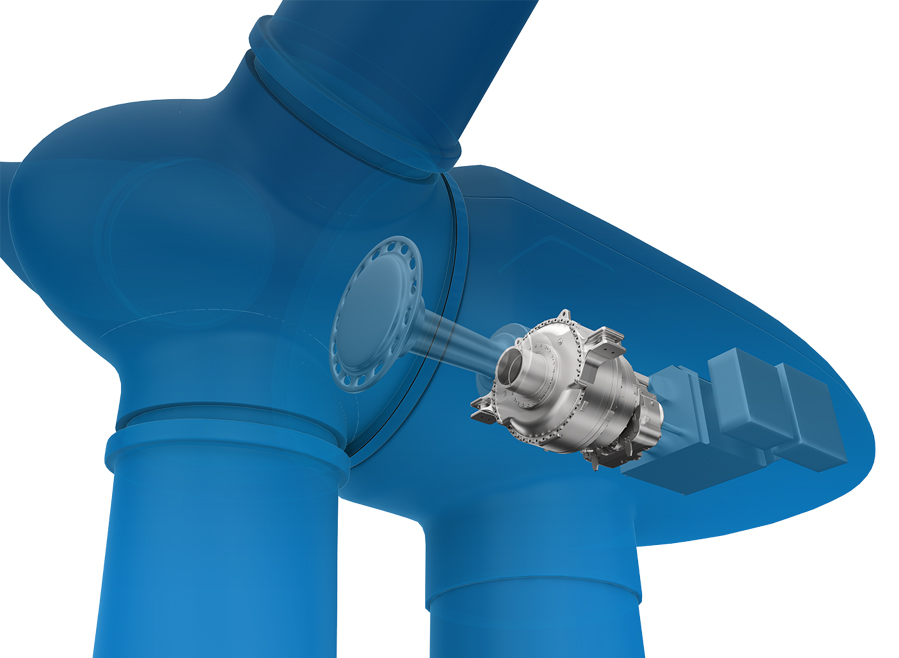
In Latin America, competitive auction dynamics in 2017 and 2018 indicate that global IPPs with utility subsidiaries will increasingly build ownership share in the region. Enel divested a majority stake in most of its Mexican renewable power assets to CDPQ and CKD IM via a newly deployed “build, sell, operate” strategy which improves its ability to bid competitively at long-term auctions.

The expiry of subsidies in Northern and Western Europe drove a record year in the region and affected asset owner segmentation; utilities dominated asset ownership in the U.K., while community ownership in Germany peaked. Across Europe in the first half of 2018, utilities and large IPPs drove consolidation to secure a project pipeline that will ensure their positioning in an increasingly competitive market.

In Asia Pacific excluding China, wind asset owners remain tied to their domestic markets with no activity in other key markets of the region, with the exception of Eurus Energy. Siemens Gamesa Renewable Energy consolidated its market-leading position in India, supplying turbines to asset owners around Asia Pacific as well. Due to increasing competition, leading asset owners in Australia did not add new capacity in 2017.

Looking ahead, the phasing out of subsidies in the U.S. and Canada will force a market decline in the early 2020s, which will significantly destabilize the traditional model of independent power producers. Utilities with ambitious rate-basing plans and institutional investors will gain market share in their place. In Europe and the Middle East, competitive auctions will see large IPPs and utilities own more capacity, as they are better able to leverage cost over smaller players.

China will see an increase in ownership share by the turbine OEM segment due to the gradual erosion of the IPP segment. Most Tier I and II turbine OEMs have already reserved wind sites to develop internal wind projects and are looking for development opportunities in the distributed wind power market.

More info: www.woodmac.com

AMSOIL selected as main supplier for ZF Wind Power

0

Following years of committed partnership, field testing, and data-backed results with worldwide customers, AMSOIL has been selected by ZF Wind Power for gearbox lubrication during end-of-line testing at all of its manufacturing locations.

Those locations include Lommel, Belgium; Witten, Germany; Tianjin, China; Coimbatore, India; and its service facility in Vernon Hills, U.S.

The agreement solidifies AMSOIL as the global leader in wind gearbox oil reliability and performance. The company’s global presence and unparalleled customer service have not gone unnoticed by original equipment manufacturers (OEMs).

“We are proud to partner with ZF Wind Power, a company known for its strong technological leadership, strategic partnerships, and strong focus on R&D,” said Dave Meyer, AMSOIL VP, Wind & Industrial. “That reputation makes the decision to partner with AMSOIL a significant validation of our products and service. The agreement is consistent with ZF’s vision to provide the highest quality products on the market.”
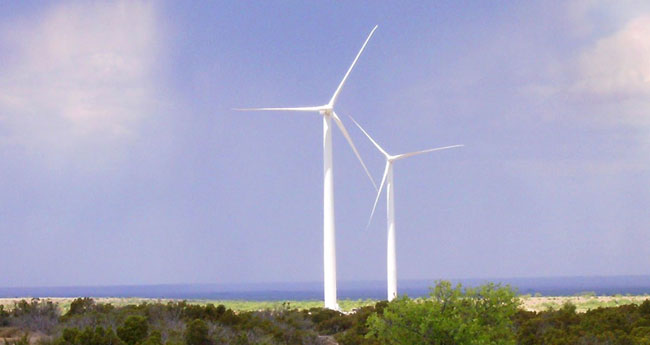
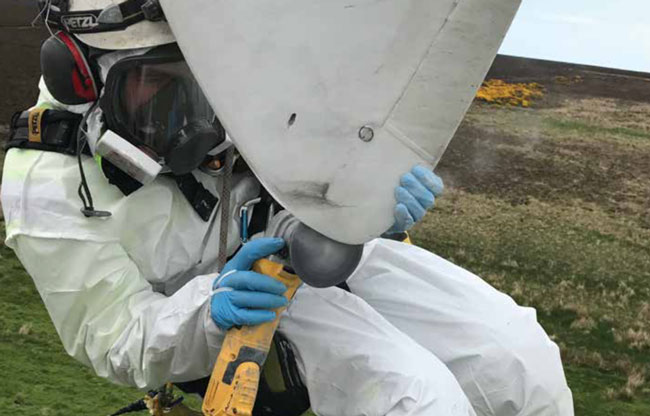
AMSOIL PTN 320 Synthetic Gear Oil offers advanced gear protection in the crucial run-in period and is engineered to last. After more than nine years in use, it still passes rigorous OEM test requirements designed for new oil, proving its durability. The premium industrial lubricant’s superior performance and long drain interval saves money and protects the environment.

ZF Wind Power is a globally established designer, manufacturer, and supplier of advanced gearbox solutions for wind turbines, currently operating four state-of-the-art manufacturing plants with an annual output capacity of approximately 18,000 MW. In addition to its manufacturing presence in Europe, India, China, and the U.S., ZF maintains worldwide sales and service operations.

More info: amsoilwind.com

E.ON and GE partner for Texas repowering project

0

E.ON recently announced it is partnering with GE to repower its Panther Creek I and Panther Creek II wind farms in West Texas.

“We’re excited to embark on our first repowering project in the U.S.,” said Silvia Ortin, chief operating officer, North America and E.ON Climate & Renewables Board Member. “The repowering of our Panther Creek wind farms provides us with the opportunity to increase lifetime earnings from the sites. In addition, it allows us to capture up-to-date turbine efficiency improvements and a resulting increase in power generation.”

The repowering includes the replacement of a significant portion of the components, effectively increasing the annual production for all 172 wind turbine generators (WTGs) totaling 258 MW on the sites.

“This is the largest repowering project we’ve undertaken at E.ON, and we expect this trend to continue as we see our turbine fleet mature,” said Anja-Isabel Dotzenrath, CEO, E.ON Climate & Renewables. “While our Panther Creek wind farms have been excellent performers for us in the past, this project allows us to improve reliability while gaining valuable lessons learned for any future repowering activities.”

The erection and commissioning of the project will be conducted by GE as part of the equipment delivery contract and is expected to be complete in the third quarter of 2019.

“GE and E.ON worked collaboratively to develop a repower strategy for Panther Creek that will extend the life of the wind farms, and materially increase the AEP of the existing turbines,” said Vikas Anand, general manager of GE’s Onshore Wind business in the Americas. “The twofold benefit of repower will ensure that renewable energy is available to E.ON’s customers for years to come.”

Panther Creek I came online in September 2008 and consists of 95 GE 1.5 MW SLE turbines for a total of 142.5 MW. It is the first of a three-phase project in West Texas and is in Howard and Glasscock counties.

Panther Creek II came online in December 2008 and consists of 77 GE 1.5 MW SLE turbines for a total of 115.5 MW. Its footprint spans parts of Glasscock and Sterling counties.

More information: www.ge.com/renewableenergy

E.ON and GE partner for Texas repowering project

0

E.ON recently announced it is partnering with GE to repower its Panther Creek I and Panther Creek II wind farms in West Texas.

“We’re excited to embark on our first repowering project in the U.S.,” said Silvia Ortin, chief operating officer, North America and E.ON Climate & Renewables Board Member. “The repowering of our Panther Creek wind farms provides us with the opportunity to increase lifetime earnings from the sites. In addition, it allows us to capture up-to-date turbine efficiency improvements and a resulting increase in power generation.”

The repowering includes the replacement of a significant portion of the components, effectively increasing the annual production for all 172 wind turbine generators (WTGs) totaling 258 MW on the sites.

“This is the largest repowering project we’ve undertaken at E.ON, and we expect this trend to continue as we see our turbine fleet mature,” said Anja-Isabel Dotzenrath, CEO, E.ON Climate & Renewables. “While our Panther Creek wind farms have been excellent performers for us in the past, this project allows us to improve reliability while gaining valuable lessons learned for any future repowering activities.”

The erection and commissioning of the project will be conducted by GE as part of the equipment delivery contract and is expected to be complete in the third quarter of 2019.

“GE and E.ON worked collaboratively to develop a repower strategy for Panther Creek that will extend the life of the wind farms, and materially increase the AEP of the existing turbines,” said Vikas Anand, general manager of GE’s Onshore Wind business in the Americas. “The twofold benefit of repower will ensure that renewable energy is available to E.ON’s customers for years to come.”

Panther Creek I came online in September 2008 and consists of 95 GE 1.5 MW SLE turbines for a total of 142.5 MW. It is the first of a three-phase project in West Texas and is in Howard and Glasscock counties.

Panther Creek II came online in December 2008 and consists of 77 GE 1.5 MW SLE turbines for a total of 115.5 MW. Its footprint spans parts of Glasscock and Sterling counties.

More information: www.ge.com/renewableenergy

Royal Caribbean Cruises partners with Southern Power

0

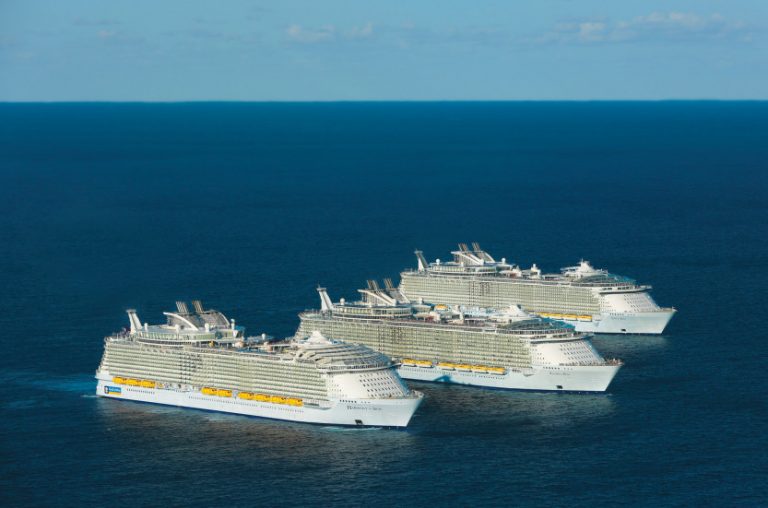
Royal Caribbean Cruises Ltd. announced it has signed an agreement with Southern Power, a leading U.S. wholesale energy provider and subsidiary of Southern Company, for Southern Power’s 200-MW Reading Wind Facility. This initiative, which will offset up to 12 percent of Royal Caribbean’s emissions beginning in 2020, is the latest addition to the company’s extensive sustainability efforts, which include programs to reduce greenhouse gas emissions through innovations at sea and in port.

This project, Southern Power’s 11th wind facility, is in Osage and Lyon counties, Kansas, and is Southern Power’s first to be validated as a carbon offset project under the Verified Carbon Standard. The agreement with Royal Caribbean provides Southern Power with the economic basis to construct the project. Royal Caribbean was advised on the execution of this agreement by Schneider Electric Energy & Sustainability Services.

“This agreement complements our longstanding strategic initiatives to reduce the company’s emissions and become a more sustainable operator,” said Richard D. Fain, chairman and CEO of Royal Caribbean Cruises Ltd. “We are constantly looking for new ways to reduce our environmental footprint, both in the short and long term, and thanks to our partnership with Southern Power this is the latest step in our journey.”

The facility is expected to generate roughly 760,000 MW/h per year over the duration of the 12-year agreement, which translates to enough clean energy to offset 10-12 percent of Royal Caribbean’s annual carbon emissions starting in 2020. With this innovative program, Royal Caribbean is able to apply a new approach while continuing its primary initiatives to advance sustainability efforts across the company’s fleet.

“Southern Power is thrilled to partner with Royal Caribbean to provide the company with a carbon offset project that will further complement Royal Caribbean’s expansive sustainability initiatives,” said Southern Power President and CEO Mark Lantrip. “Reading Wind celebrates the first project in our joint development agreement with RES America Developments Inc. (RES), qualifying for 100 percent production tax credits and is an important addition to Southern Power’s portfolio. We’re proud to support Royal Caribbean’s innovative approach toward advancing its sustainability through this project.”

The 200-MW project was originally developed by RES who will lead the construction of the project alongside Southern Power. Reading Wind is expected to consist of 62 wind turbines manufactured by Siemens Gamesa. The project is expected to break ground in the second quarter of 2019 and is expected to be complete by the second quarter of 2020. Southern Power will operate and maintain the facility upon completion.

Royal Caribbean’s Commitment to Sustainability

Royal Caribbean has a longstanding commitment to environmental stewardship, which the company expanded in 2016 to set ambitious and measurable goals to reduce the company’s environmental footprint. In addition to the agreement with Southern Power, Royal Caribbean is also employing several technologies and innovations to reduce greenhouse gas emissions and create more efficient vessels, including:

  • Advanced Emission Purification systems, which remove approximately 98 percent of sulfur dioxide emissions.
  • Air lubrication systems to reduce drag and increase fuel efficiency.
  • Energy management software, an industry first, to achieve top fuel efficiency.
  • The introduction of new fuels such as liquefied natural gas, in the near future.
  • Onboard the ship: the use of energy-efficient equipment in galleys and the replacement of incandescent bulbs with fluorescent and LED lighting, as well as the introduction of fuel cells.

Royal Caribbean also encourages guests to make a positive impact on the environment through Save the Waves, its onboard stewardship program focused on reducing waste; reusing and recycling; and properly disposing of remaining waste.

More information: www.rclcorporate.com.


Newer wind farms require more active monitoring and maintenance

0

O&M managers need to more actively and closely monitor the health of turbine blades at newer wind farms under five years of age, with the average of seven repairs required per turbine significantly exceeding that of the 2.2 repairs for older wind farms.

This is according to leading blade repair and inspection specialist Altitec, which has recently launched its 2018 Blade Repair Atlas, which provides a detailed breakdown of its operations across the UK, Europe and further afield.

The global growth of the wind industry has seen continued innovation in turbine technologies, with ever larger capacity models coming online. This has also resulted in increased blade spans, leading to new O&M challenges and a need to ensure blades are serviced regularly and to a high standard.

Altitec’s Blade Repair Atlas indicates newer projects are likely to require more active monitoring and maintenance of the condition of turbine blades, even though owners and operators may expect to prioritise the needs of older wind farms.

“We recommend that all wind farms undergo regular blade inspections, no matter their age, to ensure they continue to perform at their optimal levels and that energy production remains as high as possible. But our records indicate that, during the first five years of a wind farm’s operational lifetime, O&M managers may be more prone to overlooking the need for blade maintenance,” said Tom Dyffort, managing director of Altitec Group. “Ultimately, this will only result in more serious faults developing, more repairs being required and longer periods of turbine downtime.”

The Atlas also provides in-depth analyses of the most frequently required internal and external blade repairs. Repairs to the internal blade structure, in particular, require close attention and intensive repair work by technicians.

In Altitec’s experience, retrofit lamination makes up some 60 percent of all internal damage repairs, requiring extensive preparation of and cleaning of the blade before the inner laminate can be treated. Additional leading causes of internal damage includes that to the bulkhead brackets (23 percent) and bulkhead sealing (17 percent) at the root end of the blade.

External repairs, however, constitute the vast majority of repairs to turbine rotor blades, and typically involve patching and replacement of areas of the blade’s surface layers. These can often become damaged and distorted due to the mechanical stresses placed upon them as the blades flex and twist under loading, as well as general wear from the effects of weather.

The Atlas records the leading causes of damage requiring external repairs as being a blade’s gelcoat (58 percent), top coat (20 percent) and leading edge (14 percent).

More information: www.altitec.co.uk

Wind growth: Texas, Oklahoma, and Iowa lead the nation

0

The U.S. Department of Energy (DOE) recently released three wind energy market reports demonstrating that as wind installations continue across the country and offshore wind projects move beyond the planning process, technology costs and wind energy prices continue to fall.

The reports cover three market sectors: land-based utility scale, distributed, and offshore wind.

Highlights from this past year include larger, more powerful wind turbines and lower technology costs and wind power prices for on land and offshore applications, as well as U.S. distributed wind capacity crossing the 1 GW threshold.

The 2017 Wind Technologies Market Report, prepared by DOE’s Lawrence Berkeley National Laboratory, found the following:

  • The U.S. wind industry installed 7,017 MW of capacity last year, bringing total utility-scale wind capacity to nearly 89 GW.
  • In total,41 states operated utility-scale wind projects. Texas leads the nation with more than 22 GW of wind capacity, while Oklahoma, Iowa, California, and Kansas have more than 5,000 MW.
  • Another 13 states have more than 1,000 MW.
  • In 2017, wind energy contributed 6.3 percent of the nation’s electricity supply, more than 10 percent of total generation in14 states, and more than 30 percent in four of those states: Iowa, Kansas, Oklahoma, and South Dakota.
  • Bigger turbines with longer blades are enhancing wind-plant performance. Wind projects built in the past few years have seencapacity factors increase by 79 percent compared to projects installed from 1998 to 2001.
  • The average installed cost of wind projects in 2017 was $1,611 per kW, down 33 percent from the peak in 2009-2010.
  • The U.S. wind industry supported more than 105,000 jobs and saw $11 billion invested in new wind plants in 2017.

The 2017 Distributed Wind Market Report, prepared by DOE’s Pacific Northwest National Laboratory, highlights the following:

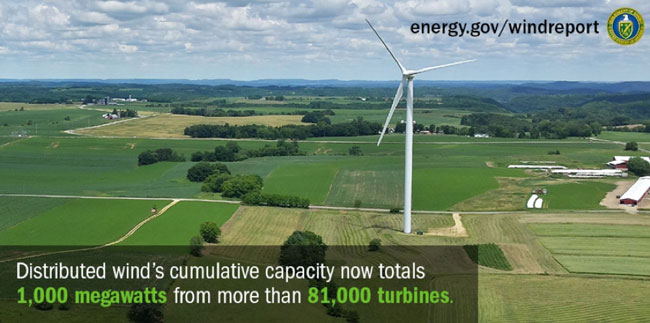
  • In total,S. wind turbines in distributed applications reached a cumulative installed capacity of 1,076 MW. This capacity comes from roughly 81,000 turbines installed across all 50 states, Puerto Rico, the U.S. Virgin Islands, and Guam.
  • In 2017, Iowa, Ohio, and California led the nation in new distributed wind capacity installed as a result of large-scale turbines installed by commercial and industrial facilities and electricity distribution utilities.
  • Thirty-five percent of distributed wind projects installed in 2017 were at homes, and 25 percent were agricultural installations.
  • S. manufacturers of small wind turbines and their supply chain vendors are located in 27 states.
  • Between 2015 and 2017, U.S.-based small wind turbine manufacturers accounted for more than $226 million in export sales.

The 2017 Offshore Wind Technologies Market Update, prepared by DOE’s National Renewable Energy Laboratory, found the following:

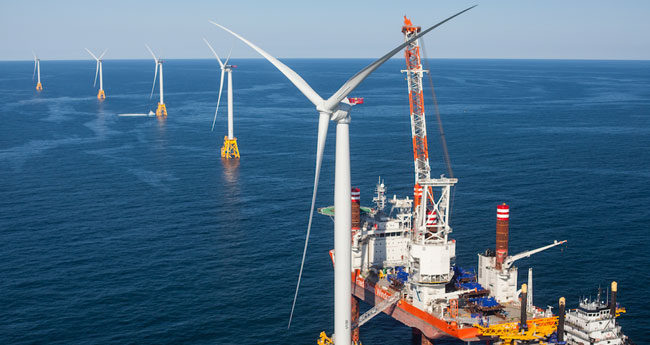
  • The U.S. offshore wind industry recently took a leap forward as commercial-scale projects were competitively selected in Massachusetts (800 MW), Rhode Island (400 MW), and Connecticut (200 MW).
  • New York, New Jersey, and Maryland also have offshore wind projects in the development pipeline.
  • The U.S. offshore wind project pipeline has reached a total of 25,464 MW of capacity across 13 states, including the 30 MW Block Island Wind Farm commissioned in 2016.
  • In Europe — where most offshore wind development has occurred to date — recent offshore wind project auctions have continued the trend of developers committing to lower electricity prices for projects that will be operating in the 2020s.
  • New offshore wind turbinesare being developed with 10 to 12 MW of capacity (compared to an average capacity of 2.3 MW for land-based turbines and 5.3 MW for offshore wind turbines installed in 2017). As a result, demand is increasing for specialized ships that will be able to install these very large turbines in U.S. waters.
  • About 60 percent of the U.S. offshore wind resource lies in deep waters. Developing a project in deep waters requires wind turbines onfloating foundations.
  • In the U.S., floating offshore wind projects have been proposed off the coasts of Maine, California, and Hawaii.

More information: https://www.energy.gov/eere/wind/2017-wind-market-reports

Chartwell Marine launches new CTV design

0

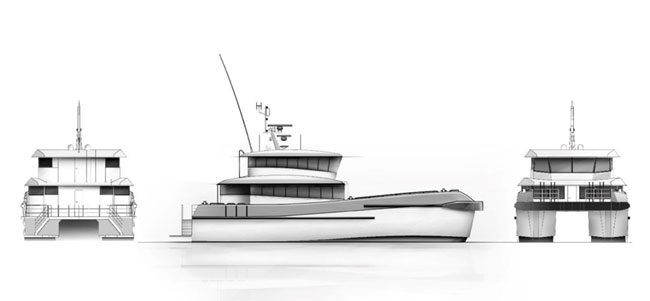
Chartwell Marine, a pioneer in next generation vessel design, has announced the launch of the Chartwell 24, a brand-new crew transfer vessel (CTV) design for the international offshore wind markets.

The catamaran design has been developed in conjunction with CTV operators, wind-farm owners, and turbine manufacturers, responding directly to lessons learned in the construction and long-term operations & maintenance (O&M) phases of European projects.

While the optimum composition of an offshore wind fleet remains a topic of debate, CTVs continue to play a critical role throughout development and operations. This role has evolved in line with the increasing demands of supporting large-scale deep-water wind farms, encompassing not only the safe, comfortable and expedient transfer of technicians to and from the turbines, but also a wide range of essential logistical support activities that keep a project running on schedule.

In this context, CTVs and their operators must offer considerable versatility, while maintaining the highest possible standards of safety and technical availability. As the industry looks to balance these objectives, vessel designs are becoming increasingly standardized — but there is still room to refine this formula. In turn, operators in new markets such as the U.S. and Taiwan have the opportunity to start on the front foot by taking advantage of the most advanced vessel technology available.

The Chartwell 24, developed off the back of 10 years of data and experience in offshore wind vessel design, aims to hit a ‘sweet spot’ in vessel size and capability that has been achieved by the most effective vessels currently operating in the European market. It aims to build on those proven capabilities, while responding to new requirements emerging as the offshore wind industry expands worldwide.

Specifically, the vessel, which is capable of carrying 24 industrial personnel alongside 3-6 crew, also boasts the largest CTV foredeck in the market, enhancing its cargo capacity. With four engines — and options for hybrid propulsion — the Chartwell 24 enables power sharing, enhancing efficiency and adding redundancy that maximizes vessel reliability and availability. As scrutiny grows on vessel emissions worldwide, this also means the vessel is well placed to meet international requirements, such as EPA Tier 4 and IMO Tier 3.

Crucially, the Chartwell 24 introduces a number of safety related innovations, including a step-free deck that almost entirely eliminates trip hazards, and purpose designed walkways with handrails and sliding safety rails positioned for safe, effective and repeatable crew transfer. From an operational perspective, skippers benefit from full all-round visibility, uncompromised by deck cargo.

“With the Chartwell 24, we’re responding directly to tried and tested vessel support approaches adopted throughout Europe, taking and building upon the best of proven designs and equipping international operators and wind farm owners with a boat that is built for purpose, and meets their needs from day one,” said Andy Page, managing director pf Chartwell Marine. “For crews and wind-farm technicians, that will translate into a high degree of safety, comfort, and operational familiarity. For CTV operators and project owners, that will result in incremental gains in efficiency, availability and reliability that ultimately improve the way offshore wind farms are constructed and operated.”

More information: www.chartwellmarine.com

Shell selects E.ON to operate Texas Wind Farm

0

Brazos Wind Ventures, LLC, a subsidiary of Shell Wind Energy, has signed an operations and maintenance contract with E.ON Energy Services LLC (EES) for its site near Fluvanna, Texas.

E.ON will perform scheduled maintenance services on the 160-MW site.

Shell owns and operates the Brazos Wind Farm, which uses Mitsubishi 1000A turbines. E.ON will perform scheduled maintenance and trouble-shooting for the site in daily coordination with Brazos.

“Shell is a responsible and experienced owner of wind farms with which E.ON is excited to forge a collaborative working relationship,” said John Franklin, senior vice president for E.ON’s North America Operations. “There is a new trend emerging with owners looking to actively manage their wind farms and still engage qualified contractors to help them meet their goals. This is a new approach where the owner and contractor work collaboratively regarding site maintenance.”

“We expect to see other owners follow Shell’s lead in exploring this approach,” he said. “As an owner ourselves, we understand how important it is to control costs and maintain production. We are confident this partnership will help Brazos accomplish both.”

E.ON operates more than 400 of its own Mitsubishi turbines and brings a wealth of experience to the site.

More information: www.eon.com

U.S. Secretary of the Interior Ryan Zinke to Speak at Offshore Conference

0

AWEA is excited to announce that U.S. Interior Secretary Ryan Zinke will speak at this year’s AWEA Offshore WINDPOWER Conference & Exhibition.

The Secretary is a vocal advocate for an energy-secure future and believes offshore wind will play a big role in that future. He joins other notable keynote speakers for the event including: the Norwegian Minister of Petroleum Kjell Børge Freiberg, Massachusetts Sen. Ed Markey, and Virginia Gov. Ralph Northam.

By investing in a sponsorship for this established event now, your business will be seen as a market leader in the future of the U.S. offshore segment. Secure a sponsorship opportunity while they’re still available.

Click here to register.

Spanish startup developing bladeless turbine

0

Vortex Bladeless, a Spanish R&D startup under a H2020 program of the European Commission is developing a new kind of wind turbine without blades nor gears that does not rotate but oscillates.

This new technology brings exciting advantages: harmless to birds, no mobile parts in contact, silent movement, low maintenance, no oil needed, no wastes produced, always oriented to wind direction with a quick response to changes, low manufacturing costs, etc. Vorticity wind turbines are a solution specially designed for residential usage and on-site generation, offering a perfect combination with solar energy installations.

Thanks to the funding from EU’s Horizon 2020 SME-Instrument, Vortex Bladeless has been able to take a big leap in the development of this new technology. On this journey, it has worked alongside many universities and top research centers such as Altair Hyperworks USA and Barcelona SuperComputing Center.

After the last optimization steps, Vortex has started to work in the certification of first products. Meanwhile, the company wants to launch a beta testing campaign in October. The goal with this campaign is to get real feedback of future clients with different profiles and environmental conditions, in order to improve the design and minimize risks before the commercial launch.
Since the central European market is one of the most important parts of the company’s plans, Vortex is growing its influence in Germany as participants of international events such as the “EIC Innovators’ Summit” (Berlin, September 10-11) and “Wind Energy Hamburg” (Hamburg, September 25-28). Here the company hopes to find new partnership agreements with companies and public administrations to face the mass manufacturing and commercialization of its revolutionary bladeless turbines.

More info