


Home 2017

More Than 122,000 Acres Offshore Kitty Hawk, North Carolina, Auctioned for Wind-Energy Development

0

U.S. Secretary of the Interior Ryan Zinke and Bureau of Ocean Energy Management (BOEM) Acting Director Walter Cruickshank announced the completion of the nation’s seventh competitive lease sale for renewable wind energy in federal waters. A Wind Energy Area of 122,405 acres offshore Kitty Hawk, North Carolina, received the high bid of $9,066,650 from Avangrid Renewables, LLC, the provisional winner.

Also participating in the lease sale were Wind Future LLC, Statoil Wind US LLC, and wpd offshore Alpha LLC. 

"The success of this lease sale reflects the continued interest of coastal communities to develop their offshore energy resources," Zinke said. "Renewable energy, like offshore wind, is one tool in the all-of-the-above energy toolbox that will help power America with domestic energy, securing energy independence, and bolstering the economy. This is a big win for collaborative efforts with state, local, and private-sector partners."

Before Thursday, BOEM had held six competitive lease sales, which generated $58 million in high bids for more than 1 million acres in federal waters, including a lease sale for 79,000 acres offshore New York that generated a winning bid of $42.5 million. BOEM also recently marked the operational launch of the nation’s first commercial offshore wind farm — the five-turbine, 30-MW Block Island Wind Facility developed by Deepwater Wind for $290 million.

BOEM has been working with the North Carolina Renewable Energy Task Force since 2010 to identify an area of sufficient size for offshore wind development, while avoiding ecologically sensitive areas and multiple-use conflicts. The North Carolina lease area, designated OCS-A 0508, begins about 24 nautical miles from shore and extends 25.7 nautical miles in a general southeast direction. Its seaward extent ranges from 13.5 nautical miles in the north to .6 of a nautical mile in the south. A map of the lease area can be found here.

 “Today’s auction is a historic moment for North Carolina and the Southeast,” said Katharine Kollins, president of the Southeastern Wind Coalition. “This auction saw several bidders late into the auction’s rounds, demonstrating the industry’s intense interest in this area. Not only does this lease demonstrate the financial commitment from the industry to developing an offshore wind farm off North Carolina’s coast, it also insures North Carolina’s economy will benefit from the hundreds of millions of dollars in private investment the wind farm will ultimately generate.”

Using the National Renewable Energy Laboratory’s estimates of 3 MW per square kilometer, the lease area has a potential generating capacity of 1,486 MW, enough energy to power more than 500,000 homes. The actual size of the wind-energy project will be determined by the developer.

Before the lease is executed, the Department of Justice and Federal Trade Commission will conduct a review of the auction, and the provisional winner will be required to pay the winning bid and provide financial assurance to BOEM. The lease will have a preliminary term of one year, during which the lessee may submit a Site Assessment Plan (SAP) to BOEM for approval. The SAP will describe the facilities (e.g., meteorological towers or buoys) the lessee plans to install or deploy for the assessment of the wind resources and ocean conditions of its commercial lease area.

Following approval of the SAP, the lessee will then have four and a half years to submit a Construction and Operations Plan (COP) to BOEM for approval. This plan will provide a detailed proposal for the construction and operation of a wind-energy project within the lease area.

Once BOEM receives a COP, it will conduct an environmental review of the proposed project and reasonable alternatives. Public input will be an important part of BOEM’s review process. If BOEM approves the COP, the lessee will then have a term of 25 years to construct and operate the project.

Source: U.S. Department of the Interior, Southeastern Wind Coalition

For more information, go to www.boem.gov/north-carolina/

Energy and Manufacturing Coalition: America Can Do Better with Its Essential Transmission Infrastructure

0

A coalition of groups representing a broad spectrum of U.S. manufacturing, construction, energy, and environmental workers, are calling for Congress to include electric transmission provisions in any proposed infrastructure legislation and streamline expansion of U.S. electrical infrastructure.

A co-signed letter by the American Wind Energy Association (AWEA), the National Electrical Manufacturers Association (NEMA), the Solar Energy Industries Association (SEIA), WIRES, and other groups, was sent to Senate Majority Leader Mitch McConnell of Kentucky, Senate Minority Leader Chuck Schumer of New York, Speaker of the House Paul Ryan of Wisconsin and House Minority Leader Nancy Pelosi of California. In the letter, coalition members urged Congress to promote grid investments that lessen the economic impact of electrical outages and ensure the country’s high-voltage transmission system is productive and secure.

“Just like highways and bridges, transmission is infrastructure that keeps the U.S. economy moving — and growing,” said Tom Kiernan, CEO of AWEA. “Investment in new transmission lines will modernize the U.S. grid and deliver more clean energy to population centers. This investment also will help to keep the lights on and costs low for American homeowners and businesses. Recognizing transmission as essential infrastructure is another way Congress and the administration can keep promises of advancing all forms of energy while growing U.S. energy independence.”

“Modernizing, expanding, and protecting the electric grid is a national priority,” said NEMA President and CEO Kevin Cosgriff. “Upgrading and extending the more than 200,000 miles of high-voltage transmission lines in the United States is necessary in its own right to ensure that low-cost and reliable electricity continues to flow to the nation’s businesses, hospitals, schools, and homes. But importantly, it also supports high-quality construction and manufacturing jobs. Unlike other infrastructure projects, the primary obstacle facing electrical infrastructure tends not to be a lack of federal funding. Rather, labyrinthine transmission siting and permitting processes are major barriers slowing grid investments.”

 “Modern electricity infrastructure is the missing piece of the puzzle that will allow the greater use of clean, abundant sources of energy in communities across America,” said SEIA’s President and CEO Abigail Ross Hopper. “We’ve seen lower cost clean energy expand dramatically in parts of the country with modern infrastructure, and that is a trend that will only continue with supportive and sensible policy.”

 “A robust and highly integrated transmission grid is the gateway to the intensely electrified North American economy of the 21st Century,” said Jim Hoecker, counsel to WIRES and former chairman of FERC. “Along the way, it will yield over 150,000 jobs each year and save consumer nearly $50 billion annually. However, all that depends on rationalizing a regulation regime that typically holds projects hostage for a decade and penalizes innovation.”

Transmission infrastructure consists of the steel poles and wires that deliver electricity across large distances to areas where it’s needed, like cities and heavy manufacturing facilities. A strong grid is essential for a free market in electricity as new power lines help diversify the grid. New transmission also creates jobs and rural economic development at one end of the line while delivering lower electricity prices at the other.

Source: AWEA

For more information, go to www.awea.org

U.S. Wind Generation Reached 5.5 Percent of the Grid in 2016

0

Iowa, South Dakota, Kansas, Oklahoma, and North Dakota all sourced more than 20 percent of their electricity generation from wind power during 2016, according to new data from the U.S. Energy Information Administration (EIA). It shows wind supplied more than 5.5 percent of electricity nationwide, up from 4.7 percent in 2015.

With 99 percent of wind turbines in rural areas, wind power’s steady growth as a share of the nation’s electricity supply has been accompanied by a surge of investment in rural America. The industry invested more than $13.8 billion in new turbines last year, according to the American Wind Energy Association (AWEA), in addition to operating a fleet now over 52,000 turbines.

“Wind is now cheaply and reliably supplying more than 20 percent of the electricity in five states and is a testament to American leadership and innovation,” said Tom Kiernan, AWEA CEO. “For these states, and across America, wind is welcome because it means jobs, investment, and a better tomorrow for rural communities.”

EIA’s new data show wind turbines operating in 40 states generated a record total of 226 million MWh during 2016, approximately four times the amount of solar electricity production and approaching what hydroelectric dams generate in America.

In Oklahoma, wind’s share of total electricity generation grew from 18.4 percent in 2015 to 25.1 percent in 2016. In Iowa, wind grew from 31.5 percent to 36.6 percent — the highest in the nation — and in Kansas, wind’s share increased from 24.1 percent to 29.6 percent. The Dakotas also saw significant gains, with South Dakota becoming the second state in the country to generate more than 30 percent of its electricity from wind energy, and North Dakota rising to 21.5 percent wind.

Other states are close behind, according to EIA. In total, 14 states produced more than 10 percent of their electricity from wind in 2016. Twenty states generated more than 5 percent. New Mexico in particular posted impressive generation gains, with the state’s total annual wind generation growing by nearly 73 percent from 2015 levels, bringing the state to a 10.9 percent wind share in 2016.

Investment in wind projects results in new revenues for rural communities, which pay for roads, teacher salaries, and emergency services. Wind is a new cash crop for farmers and ranchers who lease small portions of their land for wind-project development, while retaining the rest for agriculture. These land lease payments added up to $245 million last year — steady income helping families make ends meet and keep farms in the family.

“Wind power is cheap, clean, and infinite, and it saves Oklahomans hundreds of dollars annually on their utility bills,” said Brad Raven, District One commissioner for Beaver County Oklahoma. “When you consider that landowners receive millions in annual royalties from wind projects, you have an energy sector that is literally saving rural Oklahoma.”

As wind power grows beyond 25 percent of Oklahoma’s electricity supply, the state’s residents will reap even greater economic benefits. The same is true across the nation.

Looking ahead, America’s grid operators have expressed confidence that they are ready for further expansion of wind power. The Southwest Power Pool, which operates the electricity grid from Montana to the northern tip of Texas, recently exceeded 50 percent wind penetration for a period of time in early February.

“Ten years ago we thought hitting even a 25 percent wind-penetration level would be extremely challenging, and any more than that would pose serious threats to reliability,” said Bruce Rew, Southwest Power Pool’s vice president of operations. “Now we have the ability to reliably manage greater than 50 percent. It’s not even our ceiling.”

 A 2016 study from the National Renewable Energy Lab found that the Eastern Interconnection, which is the electricity grid comprising most of the Eastern U.S., could reliably and affordably obtain 30 percent of its electricity from wind and solar within the next 10 years using today’s technology and tools.

Source: AWEA

For more information, go to www.awea.org

NRDC: Replacing Coal with Renewables and Energy Efficiency Can Lead U.S. to Cleaner Energy Future

0

It’s cheaper and cleaner to replace retiring coal-fired power plants with wind and solar power and energy efficiency upgrades rather than to saddle the nation with more costly and climate-polluting natural gas plants, according to a report released Thursday, March 2, by the Natural Resources Defense Council.

Adopting cleaner energy and efficiency in buildings, homes and consumer appliances also will provide more stability to the nation’s electric grid. And it will shield Americans from electricity bill spikes from potential natural gas price increases, said the NRDC’s report, Clean Energy and Efficiency Can Replace Coal for Reliable Modern Electricity Grid.

The report comes as President Donald J. Trump is expected to try to rein in the Clean Power Plan, which is designed to cut dangerous carbon pollution emitted by power plants. That action could come as early as next week.

Trump and the coal industry and their allies have blamed the Obama Administration’s efforts to combat climate change for the coal industry’s downturn.

Industry on the Ropes

But in fact, a variety of forces have put the industry on the ropes. They include a combination of competitive natural gas prices, plunging renewable technology costs, lower demand growth, and environmental standards. Together they have prompted power companies to retire dozens of aging high-polluting coal plants, and that trend is expected to continue, the report said.

“The shift away from coal, and the ongoing retirement of aging coal plants, presents our country with an historic opportunity,” said Starla Yeh, the report’s co-author and a senior policy analyst in NRDC’s Climate and Clean Air Program. “The U.S. is perfectly positioned to lead a global transition to clean energy, modernize its electricity grid, enlist tens of thousands of Americans in new efficiency and clean energy jobs — and help protect the planet from climate devastation.”

Even Robert Murray, CEO of the largest U.S. private coal mine, said earlier this year that coal employment "can't be brought back to where it was before the election of Barack Obama.”

And Brian Corbett, spokesman for DTE Energy, which provides electricity to several million customers in Michigan, has said: "Many of our coal plants are aging and need to be replaced with cleaner, modern generating technologies, which is what our customers are asking of us, and we plan to continue working to achieve these goals.”  

Already, the clean energy sector is one of the fastest growing job-creators in the U.S. economy — 3 million jobs and counting, according to recent U.S. Department of Energy data. These jobs include more than 2 million Americans working in energy efficiency, nearly a half million in clean power generation, and 400,000 in advanced electric grid and clean transportation.

Much more can be done to save even more energy and money, simply by promoting more efficient appliances, buildings, lighting and the like, which will continue delivering reliable energy at a lower cost. 

In addition, in the past seven years alone, the costs of generating electricity from wind and solar — including capital outlay, operation and maintenance costs, and financing — have dropped 66 percent and 85 percent, respectively, the report said.

These plummeting technology costs, along with growing demand for renewables to meet state renewable energy standards, have driven a major gain in wind and solar generation that is expected to continue, according to the report.

States Ramp Up Renewable Energy

As a result, many states are ramping up clean-energy generation.

Iowa, for example, is on track to become the first state to generate 40 percent of its power from wind. And five states — California, New York, Hawaii, Oregon, and Vermont as well as the District of Columbia — have set a goal of getting at least 50 percent of their electricity from renewable sources. Those areas are home to one-fifth of the country’s population.

With smart planning, renewable power can be more reliable, more able to meet peak energy demands, and less subject to cost fluctuations than building new natural gas plants.

Taken together, the report shows replacing retiring coal plants with increased efficiency, renewable energy, and improved grid management — instead of building costly new natural gas pipelines and power plants — can help the U.S. avoid locking into a fossil fuel-dependent future. This clean energy expansion also will deliver social, environmental, and economic benefits, while minimizing the downside impacts from natural gas on public health and the environment.

The environmental risks to get natural gas from hydraulic fracturing, or fracking, are significant. But so, too, are the carbon dioxide emissions from natural gas plants.

The extraction and transporting of natural gas also results in dangerously large emissions of methane, a potent greenhouse gas that contributes to climate change. Expanding natural gas power plants would set back efforts to reduce all greenhouse gas emissions in order to avoid the worst impacts of climate change scientists predict will occur with inaction, the report notes.

NRDC urges states to strengthen energy efficiency and renewable energy investments and engage in smart planning to help boost investments in making the nation’s electricity grid more flexible and accommodating to electricity generated from clean energy. This will move America forward to a brighter more affordable and reliable clean-energy future.

Click here to read the NRDC’s report.

Source: NRDC

U.S. Offshore Wind 2017 Conference To Highlight Promising Offshore Future

0

The first offshore turbines arrived off the coast of New England last year in the form of a $300 million utility-scale scheme called Block Island. Now, new projects are starting to follow suit and the U.S. Offshore Wind Industry is starting to gather pace.

There is every reason to believe the U.S. will follow the same course as Europe and embrace offshore wind as part of a wider drive to decarbonize electricity generation. For example, the Commonwealth of Massachusetts has enacted a law that requires its utilities to buy 1.6 GW of their energy from offshore sources by 2027.

Now key stakeholders (governments, developers, banks, private financiers) are trying to decide how much and when to invest, the best partners to pick for a project’s specific requirements, and which suppliers are needed to deliver these projects on time and within budget.

Key barriers to entry include how the energy policy under the Trump administration will evolve in the next four years, the existing rules in individual states and how they may develop, the relative competitiveness of offshore against fossil, nuclear, and alternative forms of renewables, and what development is expected on the engineering and technology side of things. 

The leading players in the North American Offshore Wind sector will gather in New York in May to chart a course for a sector that is fast becoming part of the United States’ future energy mix.

The U.S. Offshore Wind 2017 conference and exhibition, at the Long Island Hyatt Regency May 8-9, aims to pool the industry’s experience and expertise to enable boards to make informed choices when drawing up their business strategies. The speakers will include senior executives from many of the European and U.S. companies that have created the modern offshore industry, such as Dong Energy, which has built more offshore wind farms than any other developer; giants such as E.ON and Iberdrola; integrated energy companies such as Statoil; and US developers, such as U.S. Wind, Vineyard Wind, and LEEDCo.

The conference provides a guide to everything needed to run a winning project, each session led by one of the industries’ main players.

“The second annual U.S. Offshore Wind Conference brings together the top leadership of the offshore wind industry in a unique format and with an exciting agenda, which hits the sweet spot of the challenges facing the sector: permitting, market development, reducing cost of energy, and financing projects in the U.S.,” said Paul M Rich, director of project development for U.S. Wind. “Come meet the champions of the offshore wind industry, roll up your sleeves and engage in an action-packed event.”

Questions expected to be addressed include:

  • How big will the market become, and how quickly will it happen?
  • Where are the best places to site a project with an eye on the existing infrastructure and supply base, not to mention the political and regulatory environment (focus on New York State, Massachusetts, and California)?
  • What are the ways to overcome the many regulatory hurdles a developer faces, including the best way to obtain permits and grid connections
  • What is the best way to minimize costs and maximize margins, and how was lower LCOE accomplished in Europe?
  • How to build a wind farm in the U.S.; everything from setting up a logistics hub and designing foundations to choosing the right turbine and navigating the Jones Act.
  • What will operations and maintenance strategies look like for developments in the Atlantic, Gulf, Pacific, Great Lakes, and Hawaii?
  • What lessons can be learned from European wind companies, and how can this knowledge be transferred to the U.S.?


Source: Adam Minkley, Wind Energy Update

For more information, go to www.windenergyupdate.com/offshore-usa or contact Minkley at adam@WindEnergyUpdate.com

Near-Record Growth Propels Wind Power into First Place as America’s Largest Renewable Resource

0

American wind power just achieved its second strongest quarter ever for newly installed energy generating capacity according to a new report released by the American Wind Energy Association (AWEA). Wind surpassed hydropower dams to become the largest source of renewable electric capacity in the U.S. and the fourth largest overall. 

Business leaders from General Motors and the U.S. wind energy industry met February 9 to mark this historic milestone and release AWEA’s “Fourth Quarter 2016 U.S. Wind Industry Market Report” at General Motor’s Arlington Assembly Plant, soon to be 100 percent wind-powered.

“American wind power is now the No. 1 source of renewable capacity, thanks to more than 100,000 wind workers across all 50 states,” said Tom Kiernan, AWEA CEO. “Growing this made-in-the-U.S.A. clean-energy resource helps rural communities pay for new roads, bridges, and schools, while bringing back manufacturing jobs to the Rust Belt. With our two-thirds cost reduction over the last seven years, household brands like General Motors, Walmart, and more are buying low-cost wind energy to cut costs and power their businesses. American wind power is on track to double our output over the next five years and supply 10 percent of U.S. electricity by 2020.”

Texas Leads the Way

“With more wind-energy production and more wind workers than any other state, if you want to know how wind works for America, just ask a Texan,” Kiernan said.

At the close of 2016, the American wind fleet totaled 82,183 MW, enough to power 24 million average American homes. And with the addition of North Carolina’s first utility-scale wind farm announced recently, there are now more than 52,000 individual wind turbines in 41 states plus Guam and Puerto Rico.

GM’s Arlington Assembly Plant produces more than 1,000 SUVs a day and is 50 percent powered by wind energy. Starting in 2018, Arlington Assembly will be GM’s first plant to have all of its electricity needs met with wind energy.

The company purchases energy from two Texas wind farms, RES’s Cactus Flats in Concho County and EDPR’s Los Mirasoles Wind Farm in Edinburg. Non-utility purchasers, such as GM, Microsoft, and the Department of Defense, represent 39 percent of wind purchased through long-term contracts in 2016, totaling 1,574 MW. More than half of that capacity is in Texas.

“At GM, we’re committed to efforts in our facilities that create business value and strengthen communities where we live and work,” said Rob Threlkeld, GM global manager of renewable energy. “Using wind power delivers on this by securing more stable energy costs while reducing our impact on the environment.”

Building Turbines

While buying low-cost wind energy helps make other industries more competitive, building wind turbines is also big business in the U.S. The wind industry employs 25,000 Americans at more than 500 factories in 43 states. This includes 40 wind-manufacturing facilities across Texas. In 2016, at least seven companies across the U.S. expanded existing manufacturing facilities to meet growing orders, and GRI Renewable Industries opened a new tower facility in Amarillo, Texas.

More than 100,000 American workers now manufacture, construct, and maintain the U.S. wind turbine fleet, according to the U.S. Department of Energy. In total, wind supports more American jobs than nuclear, natural gas, coal, or hydroelectric power plants.

New growth in the fourth quarter of 2016 includes 6,478 MW, the second strongest quarter for U.S. wind power installations on record. For the year, wind developers added 8,203 MW of wind power capacity representing more than $13.8 billion in new investment. With 99 percent of wind projects located in rural areas, much of this investment is flowing to communities that need it most.

Rural Areas See Benefits

Rural and Rust Belt America are among the greatest beneficiaries of wind-power development. Wind projects in these areas often become the largest contributors to the property tax base, helping to improve schools, roads, and other public services. Of the $13.8 billion invested by the U.S. wind industry last year, $10.5 billion was invested in low-income counties.

Wind is a new drought-resistant cash crop for farmers and ranchers who host wind turbines on their land. Nationwide, wind projects provide private landowners with more than $245 million in land lease payments annually. Texas landowners receive more than $60 million of that, in many cases helping to keep farms and ranches in their families.

Wind power is in high demand from utilities and other buyers because it often provides the least expensive energy available. Wind power can bring costs down further and create American jobs thanks to policy stability that passed in 2015 with bipartisan support in Congress.

“Wind power isn’t a red or blue industry, it’s red, white, and blue,” Kiernan said. “Low-cost, homegrown wind energy is something we can all agree on. States like Texas and Iowa are leading the way in terms of wind turbines and wind jobs.”

Texas is the undisputed leader in wind energy, with approximately three times more wind generating capacity than any other state and nearly a quarter of American wind jobs. The state continues to expand wind power, becoming the first state to pass 20,000 MW of wind capacity last year, which is roughly one-fourth of national capacity. More wind is on the way in Texas. Even with the 1,790 MW installed in the fourth quarter of 2016, there is still 5,401 MW under construction and another 1,288 MW in advanced development.

The Texas model for energy development stems from genuine commitment to an “all of the above” energy mix.  Free markets allowed wind to prosper in Texas, creating a low-cost, balanced energy portfolio for the state. Texas has captured $38 billion in wind investment to date and supports up to 25,000 wind jobs today. The state has also benefited from investment by corporate energy buyers who want to build data centers and factories close to the wind farms that power their facilities.

Texas Infrastructure

A key part of the success story in Texas has been a strong backbone of transmission infrastructure — the power lines that deliver all forms of energy to homes and businesses. Texas’ CREZ (Competitive Renewable Energy Zone) transmission lines and the state’s long-standing recognition that a strong grid is essential for a free market in electricity have become the national model for transmission investments that more than pay for themselves. Looking ahead, transmission projects like Pattern Development’s proposed Southern Cross Transmission Project will allow Texas to benefit by exporting its abundant wind energy to customers in the Southeast.

Wind power growth is now spreading up from Texas into the Plains states and across the Midwest. In fact, 89 percent of newly completed capacity in 2016 is in these states.

The U.S. offshore wind industry also launched in the fourth quarter of 2016 with the commissioning of the 30 MW Block Island Wind Farm off the coast of Rhode Island. Gulf Island Fabrication in Louisiana manufactured the foundations for the Block Island project, reflecting a broader opportunity for oil and gas suppliers to earn additional business in offshore wind. 

As a result of the generating capacity of wind turbines in the U.S. standing at more than 82,000 MW, greater than the 80,000 MW of hydropower generating capacity, wind power is now the fourth largest source of generating capacity, behind gas, coal, and nuclear.

Source: American Wind Energy Association

For more information, go to www.awea.org

Women of Wind Energy Adds a Member to Its Board

0

Women of Wind Energy (WoWE) announced Elizabeth Kaiga has joined its board of directors.

“As we transition our program work at Women of Wind Energy to include all renewables, we are thrilled to add Elizabeth to our board,” said WoWE Executive Director Kristen Graf. “Her valuable experience and expertise across the renewable energy sector will help guide WoWE on its mission to promote the education, professional development, and advancement of women to achieve a strong diversified workforce and support a robust renewable energy economy.”

Kaiga is a director within the Renewable Energy Practice at CohnReznick LLP, where she leads business development initiatives. She has more than 15 years of energy industry experience that includes power utilities, oil and gas, and renewable energy. Kaiga has developed and implemented innovative energy industry and client development growth strategies for national and global professional service firms. Prior to joining CohnReznick LLP, Kaiga held similar positions within the Energy & Utilities Practice at ICF Consulting, Arthur Andersen LLP, and Marsh & McLennan.

Kaiga is an advisory board member of the Maryland Clean Energy Center (MCEC) and also a leadership council member of the American Council on Renewable Energy (ACORE). She is on the Solar Power International Education Committee that drives content for the largest solar power conference in the United States. As a strong supporter of diversity and inclusion initiatives, Kaiga has been actively involved with WoWE in various capacities and leads WoWE’s Houston Chapter.

“I am honored to join the board of Women of Wind Energy,” Kaiga said. “I have been an avid supporter, and welcome the opportunity to contribute further toward WoWE’s mission and goals. I look forward to working with the rest of the board and membership network in this endeavor.”

“Elizabeth joins our board at a pivotal time for the energy sector and WoWE as an organization as we transition our program to work more broadly across renewable energy,” said Jennifer Martin, WoWE president and co-chair of the Stoel Rives LLP energy practice. “I’m very happy to welcome her and her extensive renewable industry experience to the WoWE board.”

Source: Women of Wind Energy

For more information, go to www.womenofwindenergy.org


Wind O&M Dallas Program Launched for 2017

0

The program for Wind O&M Dallas 2017, the world’s foremost conference for global wind energy stakeholders, recently was announced by Wind Energy Update.

The conference is scheduled for April 10-12, and it marks a turning point in the wind-energy industry by helping executives achieve genuine wind park ROI and learn to maximize value from every single turbine collectively.

“In order to truly succeed in this industry, issues such as major power purchase investments from industrial giants, the explosion of independent service companies, advanced energy storage technology, the utility of data driven software, and more, demand a complete re-think,” said Kerr Jeferies, project director at Wind Energy Update. “And, it’s for this reason that we’re proud to invite 600-plus of the world’s top wind stakeholders, from right across the value chain, back to Dallas next spring for our most value-added, business-driven program ever.”

All-new case studies, workshops, seminars, keynote panels and networking will ensure attendees will leave with all the critical tools, insights, and connections they need to protect the integrity and transform the productivity of their portfolio well into the future.

Powerful C-Level keynote addresses include Patrick Woodson, chairman, E.ON Climate & Renewables; Chris Brown, president, Vestas; Mark Albenze, CEO of Siemens Wind Power & Renewables; Andy Holt, CEO of Renewables, GE Renewable Energy; Tom Kiernan, CEO of AWEA. They will break new ground by raising the bar for the O&M industry’s imminent $3 billion growth spurt.

While a good O&M strategy for wind energy will make or break the business case for a single turbine park, an innovative yet considered and well-executed asset management approach will unlock expansive long-term economic opportunities for entire wind portfolios.

“We’re excited to be presenting a brand new ‘Asset & Risk Management Track’ to go alongside our premier ‘Rethink Reliability – The Core O&M Topics Track’ to ensure that asset value can be protected, nurtured, and grown by asset managers chasing risk, revenue and reward as well as field technicians and engineering specialists can,” Jeferies said.

Importantly, this annual gathering — which has enjoyed a 30 percent growth in attendee quality year-after-year since 2012 — provides the platform leaders need to establish thought leadership, dominate market thinking, and harness the collective strength of this global market.

Major stakeholders from E.ON, Duke Energy, Pattern Energy, EDF Renewable Energy, SunEdison, Siemens, Goldwind, GE Renewable Energy, and Vestas already have confirmed their attendance at this — the most important wind stakeholder meeting to hit Texas in years. NGC Transmission & Equipment, EDF Renewable Services, and Tech Safety Lines have joined as Diamond, Silver and Bronze sponsors respectively.

“This annual gathering, above all others, continues to tap into the progressive business models that’ll secure the industry’s future, making it the can’t-miss event for all top energy decision makers,” said Victoria Auckland, project director at Wind Energy Update.

Click here for more information

Siemens To Supply Wind Turbines, Grid Connection for Beatrice Offshore Project

0

Siemens has received a further order for an offshore wind power plant from Scotland. The company is to supply, install and commission 84 wind turbines, each with a 154-meter rotor diameter designed to generate 7 MW of power, for the “Beatrice” project. Furthermore, the scope of supply comprises the offshore grid connection to the mainland in consortium with Nexans, which will supply the connecting export cables. Siemens will deliver the onshore and offshore substations consisting of two offshore transformer modules (OTM) that are smaller in weight and size and, thus, saving costs. The customer, Beatrice Offshore Windfarm Ltd. (BOWL), is a partnership formed between SSE (40 percent), Copenhagen Infrastructure Partners (35 percent), and SDIC Power (25 percent). The offshore wind power plant's capacity of 588 MW will be sufficient to supply more than 400,000 U.K. households with ecofriendly electricity. Siemens will additionally be responsible for servicing the wind farm over a period of 15 years.

“This is a significant order for our new 7-MW-class wind turbine,” said Michael Hannibal, CEO of the offshore market unit of the Siemens Wind Power and Renewables Division. “We are looking forward to working with our customer on this large offshore wind power project off the Scottish coast.”

The Beatrice offshore wind farm will be located approximately 14 kilometers off the Scottish coast. The SWT-7.0-154 wind turbines will be erected on jacket foundations in ocean depths between 35 and 56 meters. Siemens plans to produce the corresponding wind turbine blades for Beatrice at its Hull facility. Installation of the wind turbines is scheduled to begin in the summer of 2018. Following commissioning of the plant in 2019, Siemens will also be responsible for service and maintenance for the wind turbines within the framework of a long-term service contract extending over a period of 15 years. The contract also covers remote monitoring and diagnostics for the wind turbines so as to ensure their long-term availability and performance. The logistics concept for this plant also includes the use of a helicopter.

“We are pleased to be working side-by-side with the BOWL partnership over the next 15 years to provide clean safe reliable power to the citizens of the U.K.,” said Mark Albenze, CEO of the power generation services wind power and renewables business unit at Siemens. “We are excited about this project and are looking forward to providing our advanced offshore logistics.”

For the grid access solution, Siemens will deliver two offshore transformer modules, which are one third smaller in size and weight compared to a conventional alternating-current (AC) platform. Siemens’ partner in delivering the offshore grid connection, Nexans, will be responsible for design, supply and installation of the export cable, both offshore and onshore. The OTM’s will be linked together to provide the required transmission capacity. Focusing on the core electrical equipment and removing a number of optional ancillary systems made this space and weight reduction possible, which also results in a reduced maintenance regime. The grid access solution will be project managed and engineered from the Siemens Energy Management Renewable Energy Engineering Centre in Manchester, U.K.

With its nearly 2,100 installed wind turbines offshore and their total capacity of more than seven GW, Siemens is the leading provider of offshore wind turbines worldwide. The company also has long-term service contracts for a total capacity of 6.7 GW in the offshore wind power business. Furthermore Siemens has commissioned offshore grid connections with a total capacity of more than 6 GW, making it the leading provider of offshore grid access for both AC and DC technology.

“We are proud to announce the first reference for our newly developed offshore transformer module together with our customer,” said Mirko Düsel, CEO of the transmission solutions business unit at Siemens. “The application of light weight distributed substations is an important lever for reaching Siemens’ goal of reducing the costs of wind power generated offshore to below 10 euro cts/kWh by 2020.”

For more information, go to www.siemens.com/wind.

EdgeData Launches BladeEdge Software Portal

0

EdgeData, LLC, a Grand Forks, North Dakota-based software firm, recently announced the launch of BladeEdge, an innovative software analytics portal that is customized for the wind energy industry, at the American Wind Energy Association’s (AWEA) Windpower Conference & Exhibition in New Orleans, Louisiana. BladeEdge software transforms raw data from aerial inspection into actionable intelligence for wind turbine manufacturers, inspection and repair providers and operations and maintenance companies.

“It is an exciting time in the wind energy industry,” said Lonnie Bloomquist, CEO and chairman of EdgeData. “Technology is advancing rapidly, allowing companies the ability to gather and have access to volumes of data. The challenge is turning the data into business value.” BladeEdge not only offers the ability to manage inspection and maintenance records in a single portal, the software also includes a streamlined interface providing access to the data intelligence in an effort to better manage wind farm assets.

BladeEdge is the first automated analytical software tool in the industry. Data is captured using Unmanned Aircraft Systems (UAS, or drones) and uploaded into a sophisticated software portal. The portal includes tools, such as revenue loss calculators, that can be leveraged to help make more informed business decisions regarding maintenance and repair.

EdgeData has been working in conjunction with several wind farm operators and LM Wind Power, the worlds’ leading independent blade manufacturer, to develop the portal. In addition to offering automated condition assessments, the process increases worksite safety, minimizes annual energy production (AEP) losses due to poor blade conditions, identifies necessary repairs prior to costly service, and extends the lifespan of the turbines.

“The BladeEdge portal brings maturity to the wind industry by presenting big-data in an easily consumable manner,” Bloomquist said.

BladeEdge was previewed during the AWEA Windpower Conference &Exhibition May 23-26 in New Orleans and became commercially available after the show.

For more information, go to www.bladeedge.net.

Vestas Wins 224-MW Turbine Order in Québec

0

With reference to Vestas Wind Systems A/S’ company announcement No. 20/2016 on May 31, 2016, Parc éolien Nicolas-Riou S.E.C., a limited partnership owner at 50 percent by EDF EN Canada Inc, a subsidiary of EDF Energies Nouvelles, and at 50 percent by the community partners Énergie Éolienne Bas-Saint-Laurent (ÉÉBSL) and the Régie intermunicipale de l’énergie Gaspésie-Îles-de-la-Madeleine (RIEGÎM), has placed a firm and unconditional order for 65 V117-3.45-MW turbines, to be deployed at the Nicolas Riou wind project in Québec, Canada. When complete, this order will take the installed capacity of V117-3.3/3.45 MW turbines globally across the 800-MW mark.

The order comprises supply and commissioning of the wind turbines as well as a 10-year active output management (AOM) 5000 service agreement, which is a full-scope service package to maximize uptime, performance and energy production.

Turbine delivery is expected to begin in Q2 2017 with final commissioning scheduled for Q4 2017.

“We are pleased to build on our long-standing global relationship and to add to our over 2 GW of Vestas turbine orders throughout North America,”said Tristan Grimbert, president and CEO of EDF EN North America.  “Our first implementation in the country with Vestas — the 2014 Blackspring Ridge project in Alberta — was marked by an exemplary team applying stringent safety standards as well as flexibility to meet the project’s construction demands.  We look forward to another successful experience bringing Nicolas-Riou to completion.”

Vestas has deployed approximately 2,800 MW of turbines across all 10 Canadian provinces.

“We are very proud to build on our footprint in Canada and introduce our 3 MW platform to the Canadian market,” said Chris Brown, president of Vestas’ sales and service division in the United States and Canada. “This project will be the first V117-3.45-MW turbines in Canada, where the combination of a robust design and a large rotor make this turbine an outstanding choice to minimize the cost of energy throughout the life of the project.  We’re happy to add this latest agreement to our strong strategic relationship with EDF EN Canada.”

Vestas most recently partnered with EDF EN Canada on the 300 MW Blackspring Ridge Wind Project in Alberta, comprising 166 V100-1.8-MW turbines. The Nicolas-Riou wind farm project is the largest 50/50 community project in Canada.

For more information, go to www.vestas.com.

Moventas Invests in U.K. Wind Service Market To Offer Full-Load Testing

0

Moventas is investing in the U.K. wind service market and offers a multi-brand gearbox service portfolio for the U.K. and Ireland’s most popular fleets. In July, Moventas’ OEM quality facility in Huddersfield, West Yorkshire, will complete a substantial upgrade with a full-load test rig for after sales service use.

Moventas Gears U.K., formerly DB Wind U.K., is in the final stages of refurbishing and upgrading its Huddersfield workshop in West Yorkshire. The gearbox specialist has made a capital investment in a 3.6-MW load test rig, flexibly designed to accommodate Moventas’ multi-brand service approach. Supported by the U.K. government, the Huddersfield upgrade is part of a regional growth initiative. The test field will be operational this July and ready to support customers in the second half of 2016.

Moventas is the first gearbox service partner in the U.K. to provide multi-megawatt full load testing, which is an essential part of most gearbox service operations. From now on, serviced gearboxes no longer need to be sent to mainland Europe for testing, which minimizes logistics costs and carbon footprint.

“With 35 years of wind turbine gearbox experience, industry leading technology and state of the art manufacturing facilities, Moventas is ideally placed to support the servicing of the U.K. installed base of wind turbines from its modern, well -quipped service facility in the center of the country,” said Jim McColl of ClydeBlowers, who is also the chairman of the Moventas board.  “I am proud to say that the U.K. wind industry can really benefit from our highly qualified service team, experienced in the service and repair of gearboxes for all makes of multi-megawatt wind turbines.”

Moventas is able to service as many as 20 different turbine brands’ gearboxes, which add up to 60 models. Focusing on the most popular fleets, Moventas U.K. covers a large aspect of the market in the area — Vestas V80 and V90, Senvion MM82 and MM92, and Nordex N80 and N90, as well as the Siemens 2.3.

Moventas U.K.’s field service team can perform a number of up-tower jobs for Vestas and Siemens fleets and offers local condition management expertise. Moventas’ objective is to extend gearbox life on existing fleets, contributing to cost-savings of wind O&M and, therefore, lowering the cost of wind energy.

For more information, go to www.moventas.com.


PRODUCT SHOWCASE: IronClad™ Grout Sleeves

0

NTC Wind Energy is pleased to offer its patent-pending IronClad Grout Sleeves. This product will save time and produce a better foundation for wind turbine generators.

The IronClad Grout Sleeve is a tapered polypropylene sleeve that is 3 1/2 inches tall with a slightly funneled flange at the base. The sleeves are tapped down over the bolts in the grout trough in place of foam rings. Once installed, they will protect the bolt from contact with grout and prevent grout from going down into the bolt sleeve. They grip tightly to the bolt and will not float in the grout.

For example, a foam ring that is 1 5/8 inches in diameter and 1/2 inch thick will displace 2.55 square inches of grout. At 144 bolts, the foam is displacing 367 square inches of grout in the foundation. If the grout has a compressive strength of 12,500 pounds per square inch, 4,594,590 pounds of compressive strength would be lost in that foundation. That amounts to nearly 2,300 tons of lost strength due to the voids created using foam rings. Grout sleeves displace almost no grout, resulting in a considerably stronger foundation.

IronClad Grout Sleeves project approximately 1 inch into the base flange when the base is set. The top leading edge provides the added benefit of sealing the area immediately below the flange. This prevents any potential for the grout to interfere with proper tensioning.

There’s no need to cut foam rings and tape them around each bolt any longer. IronClad Grout Sleeves are quick and easy to install and are priced at approximately the same cost as foam. They are also approved for use by all major engineering firms in the industry.

— Source: NTC Wind Energy

For more information,
go to www.NTCWind.com.

PRODUCT SHOWCASE: Revolutionizing Bolted Joints with New Wireless Load-Monitoring SPC4

0

Valley Forge & Bolt Mfg. Co. uses innovative bolting technology to revolutionize bolted joints with its new wireless load-monitoring capabilities. Starting from its patented load-indicating technology, Valley Forge is now taking it a step further in allowing the user to monitor the load on a critically bolted joint from a remote location.

The company’s well-known load-indicating technology started with the Maxbolt™ load-indicating fastener that continuously measures and displays the amount of tension in a bolt or stud. The fastener offers a simple method for accurate joint assembly and is the only product available for most applications that will continually monitor clamping force while the fastener is in service. Then the company introduced the SPC4™ load-indicating system, which allows the user to constantly monitor the clamp load of any SPC4 bolted joint by easily attaching a probe to the datum disc located on the end of the fastener. The user is able to read the value on a handheld battery-powered digital monitor with optional data gathering and storage of the bolted joint available.

Valley Forge’s newest technology has taken the patented SPC4 technology and made remote reading a reality. With the new wireless load-monitoring device, SPC4 fasteners are assembled with a small probe attached to the datum disc. This probe then remains with the fastener assembly while in service. The probe allows the load of the fastener to be relayed to a receiving station that can be located anywhere the user chooses. The receiving station displays the load as a percentage of the fastener’s total capacity, as designed for the specific application.

The Wireless SPC4 load monitor is now in the beta testing stages and is being applied on a large rotating piece of machinery. One system consists of four probes or channels with a wireless remote reader for fixed applications. No positional information is included in this system, but it has a long range of up to 2,000 feet in ideal conditions. It can be designed to use another wireless technology, but generally, the longer the range is, the shorter the battery life will be. Another system monitors and logs 20 probes or channels for rotating applications that can be attached to an optional wireless transmitter. The system can be equipped with an optional programmable 5-megapixel video camera to send alerts in unattended installations or automate some tasks. The range would be shorter than the previous system.

The configuration of this technology can be tailored to specific customer needs, including the number of channels, frequency of reading, battery life, auxiliary outputs, and data logging. Other capabilities include sensors relaying positional information of each fastener and real-time clock circuit, if time records are desired.

For more information,
go to www.vfbolts.com, email sales@vfbolts.com, or call (800) 832-6587.

PRODUCT SHOWCASE: WindTalker Cold Weather Turbine Control Anemometer

0

Nor-Cal Controls is releasing a new product which will increase efficiency and reduce costs to wind project owners and operators. The WindTalker-1000 is an innovative smart relay device designed to allow any existing sensor to integrate seamlessly into an existing wind turbine control platform, no matter the age, type or communication characteristics of the Programmable Logic Controller (PLC). Nor-Cal Controls partnered with Lufft, manufacturer of the VENTUS ultrasonic wind sensor, to provide a state of the art, turnkey wind sensor replacement solution resistant to the elements as well as time.

The need for a device like this arose from discussions with countless wind turbine operators and owners. Wind sensors are required for each wind turbine installed in order to correctly point the turbine into the wind. The turbines wind sensor only affects optimal performance of the turbine, but is a safety measure as well. As the sensors age, they often need replacing. Not only are mechanical wind sensors prone to repair and replacement, but they also require regular calibrations, costing time and money. Often, owners are not able to choose a sensor appropriate to their installation because of the limitations of communication with the PLC. The WindTalker-1000 removes these barriers.

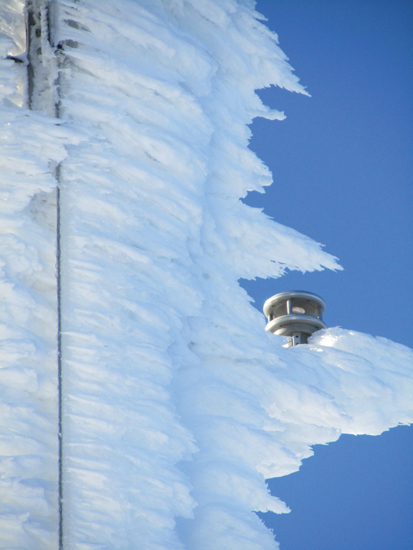
Traditional wind sensors can be liable to mechanical break down and require periodic repair and/or replacement. This is due to moving mechanicals parts such in traditional cups and vanes. Mechanical parts sometimes accumulate rust, scale or other substances that can impede movement. In cold climates ice or rime is likely to build up on a sensor causing breakdown or highly inaccurate readings.

The WindTalker-1000 solution combines the intelligence of a smart relay device with the robustness of the VENTUS wind sensor. The result is a wind sensing system that is a direct replacement to older, end-of-life sensors, providing the end user with a highly accurate, maintenance free system that will far exceed previous operable lifetimes of older technology sensors.

Nor-Cal Controls, located in Diamond Springs, CA, is a fast growing company founded in 2005 by Robert Lopez that offers complete automation solutions for the power generation industry.

— Source: Lufft USA

GE Invests $25 Million In TerraForm Global

0

GE’s renewable energy business recently announced a $25 million investment in TerraForm Global, LLC. TerraForm Global is a dividend growth-oriented company, or “yieldco,” formed by SunEdison to own and operate contracted renewable power generation assets in attractive, high-growth emerging markets.

“This investment is about driving continued global growth for renewable power,” said Anne McEntee, president & CEO of GE’s renewable energy business. “Together with SunEdison, we will significantly increase wind developments in key growth regions like Latin America, Europe, India, and China.”

The agreement is expected to help support new wind pipeline opportunities for TerraForm Global. GE also will provide life cycle operations and maintenance support for TerraForm’s international wind fleet. The two companies have agreed to continue exploring additional opportunities for growth-
oriented collaboration.

Cloud County Community College Holds Drone Class

0

The Wind Energy Department of Cloud County Community College (CCCC) recently held a two-day, 12-hour “Introduction to Unmanned Aerial Vehicle (UAV) Community Enrichment” class June 15-16 in Concordia, Kansas.

The class gave anyone in the community interested in enrolling for the course the opportunity to get hands-on experience flying, configuring, and taking photos with the UAVs, as well as experience on current status with FAA rules. Monte Poersch, CCCC Wind Energy instructor, taught the class.

The Wind Energy Department at CCCC has acquired, through a grant, four new UAVs. The program is integrating UAVs for blade inspections and for substation and transmission line inspections. UAVs can be used to inspect wind turbine blades much more efficiently and safely than the process currently used for those inspections. Students are being trained to fly the UAVs and are learning more advanced techniques of video and photography as well as programming completely autonomous flights.

Those attending the two-day training said, “This was exactly what I wanted to learn.” And, “I plan to purchase a small drone and learn to fly it and begin a small business with a friend.”
Additional comments were, “It was only 2 days,” and “It was too short.”

 — Cloud County Community College
 

Chevron Donates Gearbox To Casper College Program

0

The Casper College Renewable Energy Technology Program has received a substantial equipment donation from Chevron Power and Energy Management Company: a Winergy gearbox from one of the company’s turbines located near Casper, Wyoming.

“This gearbox will provide Casper College students an opportunity to learn about maintenance technology on a life-size gearbox,” said Lesley Travers, dean for the Casper College School of Business and Industry. “They will also learn about bore scoping, gearbox inspection, troubleshooting, torque specifications, and oils and greases.”

The 55,000-pound gearbox came from a 1.5MW GE wind turbine.

“This particular piece of equipment is generally located over 200 feet high in the nacelle of a turbine, so students without proper climb training do not generally have the opportunity to see close up or train on this critical piece of the turbines,” said Chevron’s Policy, Government and Public Affairs Senior Advisor Denise Reed.

Chevron has partnered with Casper College since 2009 with a variety of monetary contributions to the program — most recently, a donation of $5,000 to support the college’s renewable energy technology program. In addition, Chevron also provides tours, guest speakers, and training equipment to the program.

 —  Casper College

PRODUCT SHOWCASE: SymphoniePRO Data Logger Boasts Advanced Features And A User-Friendly Design

0

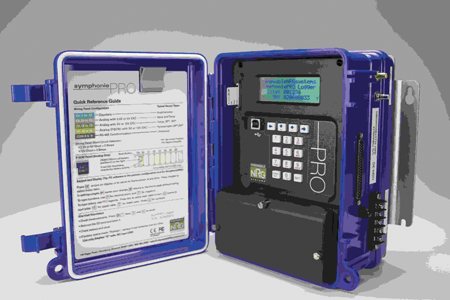
Renewable NRG Systems, a designer and manufacturer of decision support tools for the global renewable energy industry, has launched today a new data logger that is specifically engineered to improve the performance of wind and solar measurement campaigns.

Building on RNRG’s well-known Symphonie series of user-friendly loggers, the SymphoniePRO logger brings significant upgrades in terms of capability and flexibility.

“This is the data logger our wind and solar energy customers have been asking for,” said Michael Fisher, product manager. “It’s powerful, versatile, and, as always, it comes with the great support and ease-of-use expected from a Symphonie logger.”

SymphoniePRO is a low-power, industrial-grade data logging system that is specifically designed for conducting resource assessments for the renewable energy industry. Each of the 26 channels’ statistical values are calculated from continuous 1-second data samples and averaged over a user-selectable interval (10-minute default). Collected data are stored efficiently as binary .RLD files on internal Flash memory with a redundant copy on an external SD card, if installed.

Data are communicated and the system is powered via Symphonie iPackGPS communications devices, which only require a firmware upgrade for compatibility with the new data logger. In addition to SMTP email data delivery, SymphoniePRO allows remote, real-time connection capability over RNRG’s MetLink protocol for tasks like automated or manual data download, firmware upgrades, live data viewing, or configuration changes.

Also included is the SymphoniePRO Desktop Application, a new PC software package used to process raw data files as well as configure and communicate with the SymphoniePRO logger and iPack. SymphoniePRO Desktop Application keeps track of site data and produces versatile tab-delimited text files (ASCII) compatible with industry-leading software. Additionally, the software allows the user to view “live” data, apply firmware updates to loggers and iPacks, and preview data files in time series format.

SymphoniePRO is backed by RNRG’s two-year warranty and lifetime technical support.

For more information about SymphoniePRO, visit www.renewablenrgsystems.com/symphoniepro.

PRODUCT SHOWCASE: LAPP Introduces Dual Voltage-Rated, Flexible VFD Cables

0

The Lapp Group’s new ÖLFLEX® VFD 2XL, UL TC-ER rated motor cable is a robust, oil-resistant shielded design for use with variable frequency drives.
Also available with a pair for brake or temperature, the ÖLFLEX VFD 2XL comes with XLPE (plus) insulation and a phthalate-free TPE outer jacket that gives the cable maximum flexibility, low capacitance and flame-retardant properties. ÖLFLEX® VFD 2XL is dual rated for applications ranging from 600 to 2000 volts, which allows a single cable to serve in a wide range of applications.

The ÖLFLEX VFD 2XL features a specially-formulated thermoplastic elastomer jacket and conductors made from finely stranded tinned copper. Its cross-linked polyethylene insulation provides superior electrical properties and allows the cable to withstand heat generated by overcurrent conditions common with VFD’s. Shielding for the ÖLFLEX VFD 2XL series includes barrier tape, triple layer foil tape and tinned copper braid.

The motor cable has a test voltage of 6000 volts and minimum bend radius of 7.5 times the cable diameter. Ideal applications include VFD drive and motor connections for pumps, compressors, conveyors, elevators, extruders, pressers and HVAC especially in industrial environments.

A brochure with detailed, technical information on ÖLFLEX® VFD 2XL is available at www.lappusa.com/pdf/vfdbrochure.pdf.