



Reaching a key milestone in the development process, Pattern Energy Group LP announced it has received an Environmental Assessment Certificate for its Meikle Wind project, a 185 MW wind power project located in British Columbia.
“This is Pattern Development’s first project in British Columbia, expanding the Company’s presence to a third province in Canada,” said Mike Garland, CEO of Pattern Development. “We have now received the major environmental approval for this project, which was the last big milestone before arranging construction financing.”
The Meikle Wind project, which has a 25-year power purchase agreement with BC Hydro, is expected to commence commercial operation in late 2016.
Meikle Wind is one of the seven projects on which Pattern Energy holds the right of first offer rights to purchase.
Pattern Receives EAC For British Columbia Project
PRODUCT SHOWCASE: Rigging Handbook Now With Metric References

PRODUCT SHOWCASE: Des-Case Launches Extended Series Desiccant Filters
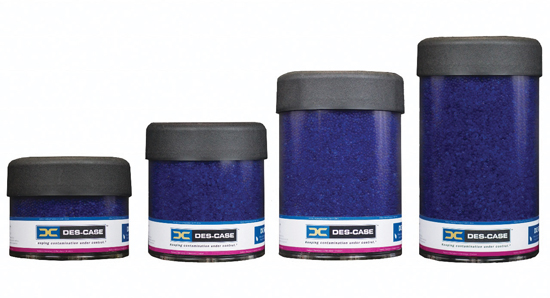
Des-Case Corporation has launched a new line of desiccant breathers called Extended Series — aptly named, as the breathers will help companies extend the life of their lubricants, the life of their equipment, the amount of time between maintenance intervals and, most importantly, maintenance budgets.
The series of four variously-sized breathers addresses a number of industrial needs, bringing greater protection and productivity to tank farms, wind turbines, large gearboxes, as well as applications in both high humidity environments and remote locations. The line features higher airflow, more moisture adsorbing desiccant, check-valve technology, and longer life.
Though simplistic in appearance, Des-Case desiccant breathers are highly sophisticated filters for industrial lubricants, removing dirt and water from the headspace of equipment.
“These breathers, as well as our other contamination control products and services have for years helped companies around the world detect, prevent and remove contamination from their equipment and plants,” said Brian Gleason, CEO of Des-Case. “This new development continues our drive to help customers improve lubricant quality, maximize equipment reliability and achieve an entirely new level of performance.”
Contaminants such as dirt and water in industrial lubricants can lead to equipment breakdown if not filtered out, bringing plants to a grinding halt and costing companies both time and money.
As wet, contaminated air is drawn through the breather, multiple 3-micron polyester filter elements remove solid particulate and the color-indicating silica gel extracts moisture. When air is expelled from the container, the top foam pad prevents oil mist from contacting silica gel or entering the atmosphere.
The breather is also outfitted with a nylon standpipe and polypropylene oil mist reducer to allow oil mist to coalesce and drain back into the reservoir, rather than compromising the desiccant. Six umbrella check-valves are located underneath the unit to isolate equipment from ambient conditions — prolonging breather life and protecting system integrity.
Additionally, more desiccant in the Extended Series breathers provides more adsorption capacity and elongates breather life. The larger capacity accommodates higher airflow and female threaded mountings offer users greater durability, stability, and versatility with a number of adapters.
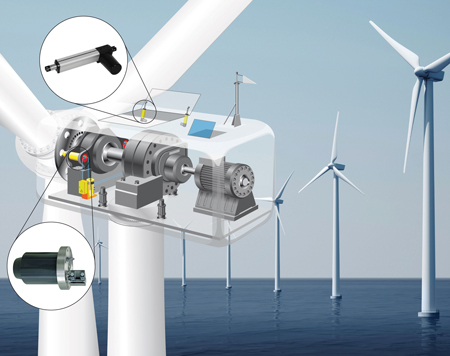
PRODUCT SHOWCASE: ROEMHELD Launches Maintenance-Free Rotor Locks
PRODUCT SHOWCASE: Klüber Introduces Multi-Purpose Lubricant For Extreme High-Temperature Applications
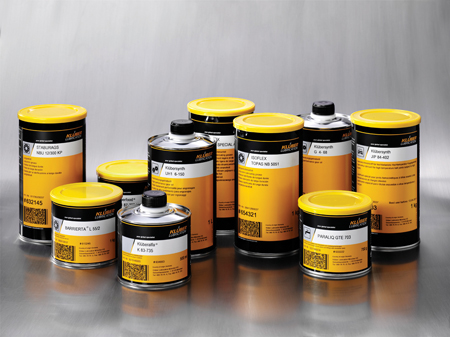
Klüber Lubrication, a worldwide manufacturer of specialty lubricants, has introduced Klübertemp GR AR 555, a multi-purpose lubricant offering exceptional corrosion protection and high evaporation stability.
Developed for high-temperature applications (up to 250°C) and applications exposed to aggressive media, Klübertemp GR AR 555 is a white, homogeneous long-term grease based on a perfluorinated polyether oil (PFPE) and polytetrafluoroethylene (PTFE). The product is NSF H1 registered. Common applications include pillow blocks/bearings, seals, rotary joints and ball bearing chains, as well as circulating fan bearings in various textile machinery.
Lubricants based on PFPE and PTFE are inert and generally regarded as neutral towards most elastomers and plastics.
For more information, visit www.klueber.com.
PRODUCT SHOWCASE: Morgan Slip Rings Aim To Reduce Down Time, Maintenance, And Costs By Employing The Latest Resin Technologies

Morgan Advanced Materials Electrical Carbon business announces that its quality engineered slip rings, can reduce down time and improve the life of equipment whilst reducing maintenance time and costs. Made with the latest innovations in resin compounds Morgan’s molded slip rings encapsulate all current carrying components, inhibit harmful dust intrusion and contamination, and increase the dielectric strength. They can also be specially engineered to improve airflow, which reduces the amount of thermal build up.
These key benefits make them ideal for use in wind turbines as well as numerous other industrial, traction power and signal transmission applications. Slip rings are offered in a wide range of both standard and customized sizes and designs and can be manufactured in either molded or fabricated versions.
High quality slip ring transmitter systems are available in 1 to 8 rings from Morgan, with outside diameters ranging from 24 to 500 mm and feature high mechanical, thermal resistance and excellent dielectric properties.
U.S. Wind Energy Adds 835 MW In First Half Of 2014; 14 GW In Development
Affordable, homegrown wind power is helping to save consumers money in many regions of the country, encouraging new wind power growth and the start of construction of over 14,000 megawatts (MW) in America so far this year.
“Today’s great values on clean, low-cost wind power are encouraging utilities and major companies to sign more and more contracts for it,” said Tom Kiernan, CEO of the American Wind Energy Association (AWEA). “They show how successful the renewable energy tax credits have been in getting the private investment needed to build these new projects,” said Kiernan, in releasing the AWEA U.S. Wind Industry Second Quarter 2014 Market Report.
According to AWEA’s Second Quarter Market report, 15 wind energy projects have been completed and gone online since the start of the year, adding 217 MW in the first quarter and 619 MW in the second quarter. Installed U.S. wind generating capacity as of June 30 stood at 61,946 MW.
Another 109 projects were underway at mid-year, representing up to 14,600 MW of additional capacity.
Just since April, Kiernan noted, leading brands like Google, IKEA, MARS, and Microsoft have announced new contracts or investments for additional wind energy. A variety of industries are also investing in their own on-site wind turbines: at the end of the second quarter, there were utility-scale turbines under construction at a brewery, a produce processing plant, and a tribal casino.
“The economic benefits of all these projects are significant,” said Emily Williams, AWEA’s Manager of Industry Data and Analysis. “They include U.S. manufacturing jobs, with many factories hiring new workers to meet demand, and all the local benefits from the capital investment of billions of dollars in rural America.”
Texas has by far the most wind energy under construction in the nation, with approximately 8,300 MW of the total.
Another 6,200 MW are under construction in 20 other states, focused in the Midwest and Plains. New activity began this quarter in Oklahoma, Texas, New Mexico, Colorado, Illinois, Kansas, North Dakota, Michigan, Maryland, California, and Indiana.
The leading states for installed wind generation capacity as of June 30 were Texas, now at 12,753 MW, California, with 5,829, and Iowa with 5,177 MW. They are followed by Illinois at 3,568 MW, Oregon at 3,153 MW, and Oklahoma at 3,134 MW.
AWEA’s most recent quarterly Market Report comes as the industry continues to adjust to new rules signed into law at the start of 2013 for the federal renewable energy Production Tax Credit (PTC). The rules now allow any wind energy project that started construction or invested 5 percent of its capital by the end of 2013 to qualify for the PTC once the project starts generating energy for the grid. (As before, projects can also opt for an alternative Investment Tax Credit.)
Further guidance is expected soon from the IRS on the PTC. That may help increase the percentage of projects with long-term power sale agreements. Even among the roughly 9,400 MW of projects for which utilities signed contracts during 2013-14, over 3,800 MW have yet to start construction. All told in 2013, the U.S. industry completed just 1,084 MW, mostly in the fourth quarter.
“In addition to negotiating Power Purchase Agreements, developers have had to place orders for long-lead-time items like wind turbines and step-up transformers, secure construction services, and secure financing. All this had to start fresh from the PTC extension in 2013,” Williams explained.
Kiernan said action by Congress to continue the incentive for private investment in new wind farms is once again urgent, to avoid a downturn in development such as the one that occurred last year because of uncertainty up until the last-minute extension on Jan. 2, 2013.
A further extension of the PTC through the end of 2015 is provided for in the EXPIRE Act, now pending in the U.S. Senate, which includes extensions of 62 different tax policies important to business and individual taxpayers. The Senate Finance Committee kept the PTC in the package on a bipartisan vote of 18-6 in April.
“We can double American wind power by 2020, and double again by 2030,” Kiernan said, “if Congress gets the rules straight by extending these critical tax policies as soon as possible, and continues to work on long-term policies that would provide a more predictable business environment.
“Wind is a very good deal right now for American consumers, and with consistent policies we can build a lot more of it.”
— The American Wind Energy Association
GE Submits Revised Bid For Alstom
GE announced it has revised its bid for the acquisition of French energy and transportation powerhouse Alstom. Under the revision, GE proposes “alliances” between the two companies, while maintaining a degree of autonomy.
Among the partnerships GE proposes is a 50/50 joint venture involving Alstom’s wind and hydroelectric renenewable energy assets. In a similar joint venture, the two companies would combine their electrical grid assets.
Additional aspects of the proposal included a global nuclear and French steam alliance, strengthening Alstom’s transportation segment, and an emphasis on job creation in France.
The bid revision was announced three days after Siemens and Mitsubishi Heavy Industries submitted a similar joint counter-bid. GE’s original bid was rejected by French government officials concerned with French jobs.
ScottishPower and Vattenfall Receive Planning Consent For 1.2 GW UK Offshore Project
East Anglia One Offshore Wind , a joint venture between ScottishPower Renewables and Vattenfall, has received consent from the Department for Energy & Climate Change for a 1200 MW offshore wind farm off the coast of East Anglia, the largest renewable energy project ever to receive planning consent in England and Wales.
The East Anglia ONE project is also the first in England and Wales to be approved from the Crown Estateâs Round Three Process.
The planned development is for up to 240 wind turbines to be installed across an area of 300km2 in the southern North Sea. The project could power the annual electricity demands of around 820,000 homes.
Apex Clean Energy Acquires Development Assets
Apex Clean Energy has acquired six wind energy development projects from BP Wind Energy, North America, Inc. These projects have the potential to support approximately 710 MW of wind energy capacity in Illinois, Michigan, Ohio, Virginia, and Tennessee.
“We are pleased to be building our portfolio in the Midwest and the Mid-Atlantic with these high-quality projects,” said Mark Goodwin, President of Apex Clean Energy. “We are committed to bringing electricity from clean, renewable projects like these to market, and we look forward to continuing to drive them toward construction.”
Michels Ranked Among Top U.S. Contractors
Michels Corporation’s continued growth has earned a spot among the top two dozen contractors in the United States.
Michels was ranked No. 24 by Engineering News-Record (ENR) on its 2014 Top 400 Contractors list. ENR is a leading publication for the engineering and construction industry.
Michels is based in Brownsville, WI, and has 26 permanent facilities from coast to coast, including in Canada.
Michels’ ranking on the list, based on 2013 contracts, is up 12 places from the utility contractor’s previous ranking. The ranking marks the ninth consecutive year that Michels has been in the top 100, beginning at No. 95 in 2006.
PRODUCT SHOWCASE: Black Oxide Coated Bearings By SKF Promote Turbine Reliability And Performance

SKF black oxide bearings add a surface layer of protection to promote higher reliability and performance for wind turbines. The coating can be specified for all types of critical bearings in wind turbine systems to help promote higher reliability against widely varying temperatures, speeds, and loads and to resist contaminants, moisture, and chemicals that otherwise could limit bearing lifecycles and increase costs of turbine operation and maintenance. The coated bearings can be introduced into new installations or serve as replacement upgrades.
Black oxide bearings ultimately can increase turbine uptime by enhancing resistance to corrosion and smearing; improving performance in low-lubrication conditions; limiting risk of fretting, micropitting, and cracking; reducing potential damage from aggressive oil additives; and reducing the effects of friction and wear.
The black oxidation surface treatment is applied to a bearing’s rings and/or rollers. The process — involving a chemical reaction at the surface layer of the bearing steel — is performed in an alkaline aqueous salt solution at defined temperatures. Up to 15 different immersion steps create a thin, dark black surface layer delivering a significant performance upgrade for the broad range of bearing types and sizes in wind turbines (up to 2.2m in diameter and up to 1,000 kg per individual bearing component).
Suitable bearing types for the coating include tapered roller bearings, cylindrical roller bearings, spherical roller bearings, and CARB toroidal roller bearings, among others playing vital roles in wind turbine systems.
EDF EN Canada And Enbridge Dedicate Blackspring Ridge Wind Project
EDF EN Canada Inc., and Enbridge Inc., recently dedicated the 300 MW Blackspring Ridge Wind Project. Located in Vulcan County, Alberta, the project is the largest investment in wind energy in Western Canada.
EDF EN Canada and Enbridge officials joined Alberta Energy Minister Diana McQueen, Derrick Annable, Reeve of Vulcan County, Kym Nichols, Mayor of Carmangay, and more than 100 other invited guests to mark the occasion.
Construction of the 166 turbine project commenced in May 2013 and reached commercial operation twelve months later in May 2014. Mortenson Canada served as the construction contractor.
DOI Opens Mass. Wind Energy Area, Doubling Available U.S. Offshore Wind Acreage
As part of the Obama administration’s Climate Action Plan, Secretary of the Interior Sally Jewell and Bureau of Ocean Energy Management (BOEM) Acting Director Walter Cruickshank today joined Massachusetts Governor Deval Patrick to announce more than 742,000 acres offshore Massachusetts will be available for commercial wind energy leasing. The proposed area is the largest in federal waters and will nearly double the federal offshore acreage available for commercial-scale wind energy projects.
The Massachusetts Wind Energy Area is located approximately 12 miles offshore Massachusetts – from its northern boundary, the area extends 33 nautical miles southward and has an east/west extent of approximately 47 nautical miles. BOEM proposes to auction the Wind Energy Area as four leases.
“Massachusetts is leading the way toward building a clean and sustainable energy future that creates jobs, cuts carbon pollution and develops domestic clean energy resources,” Jewell said. “Thanks to Governor Patrick’s vision and leadership, the competitive lease sale in Massachusetts will reflect the extensive and productive input from a number of important stakeholders. This includes interests such as commercial fishing, shipping, cultural, historical, environmental, and local communities to minimize conflicts and bring clarity and certainty to potential wind energy developers."
“Today’s announcement is a momentous occasion and the culmination of years of cooperation and hard work between the Commonwealth and federal officials,” Patrick said. “Through our investments and proactive planning, Massachusetts is poised to lead the charge in offshore wind energy development, with the economic and environmental benefits that come with it.”
The announcement builds on Interior’s work to stand up a sustainable offshore wind program through its wind energy initiative for the Atlantic Coast. To date, BOEM has awarded five commercial wind energy leases off the Atlantic coast: two non-competitive leases (Cape Wind in Nantucket Sound off Massachusetts and an area off Delaware) and three competitive leases (two offshore Massachusetts-Rhode Island and another offshore Virginia). To date, competitive lease sales have generated about $5.4 million in high bids for about 277,550 acres in federal waters. BOEM is expected to hold additional competitive auctions for Wind Energy Areas offshore Maryland and New Jersey later this year.
“The Commonwealth of Massachusetts has been working hand in hand with BOEM to foster responsible commercial wind development in federal waters off Massachusetts,” said BOEM Acting Director Cruickshank. “Members of the Massachusetts Renewable Energy Task Force have been great partners in our planning process for the Wind Energy Area and the Proposed Sale Notice.”
To help inform BOEM’s decision-making, the Commonwealth established two working groups, a Fisheries Working Group on Offshore Renewable Energy to discuss issues and compatibility between commercial fishing activities and offshore commercial wind energy development, and a Habitat Working Group on Offshore Renewable Energy to discuss available ecosystem data and information within the area under consideration in order to identify any gaps.
The Commonwealth has additionally collected and presented spatial information and data for the Wind Energy Area regarding marine mammals, birds, ocean floor, geology, commercial ship traffic, and recreational boating to inform BOEM’s offshore wind planning process. In addition to BOEM’s stakeholder outreach, the Commonwealth has conducted dozens of public meetings and stakeholder sessions to discuss the Federal offshore wind leasing process.
Since taking office in 2007, Governor Patrick’s Administration has worked to position Massachusetts as a hub for the emerging U.S. offshore wind industry. These efforts also include the construction of the Marine Commerce Terminal in New Bedford, the first facility in the nation designed to support the construction, assembly, and deployment of offshore wind projects.
The Proposed Sale Notice announced today triggers a 60-day public comment period ending on August 18, 2014. Comments received or postmarked by that date will be made available to the public and considered before the publication of the Final Sale Notice, which will announce the time and date of the lease sale.
The end of the comment period also serves as the deadline for any participating companies to submit their qualification packages. To be eligible to participate in the lease sale, each bidder must have been notified by BOEM that it is legally, technically and financially qualified by the time the Final Sale Notice is published. For more information on qualification requirements, please see The Proposed Sale Notice. Companies planning to submit a qualification package are strongly encouraged to submit as early as possible during the comment period to ensure adequate time for processing.
BOEM will host a public seminar during the comment period to describe the auction format, explain the auction rules, and demonstrate the auction process through meaningful examples. The time and place of the seminar will be announced by BOEM and related information will be published on BOEM’s website.
In addition to the Proposed Sale Notice, BOEM is publishing in the Federal Register a Notice of the Availability (NOA) of a Revised Environmental Assessment and a Finding of No Significant Impact (FONSI). The FONSI states that BOEM has determined that no reasonably foreseeable significant impacts are expected to occur as a result of issuing wind energy leases and the approval of Site Assessment Plans in the Massachusetts Wind Energy Area. Before a decision regarding the construction of any proposed wind power facility, BOEM will conduct a comprehensive site-specific National Environmental Policy Act review, which will include additional opportunities for public comment.
DNV GL FORCE Approach Aims To Reduce Cost Of Offshore Wind
DNV GL’s project FORCE (For Reduced Cost of Energy) has identified potential savings of at least 10 percent of the cost of offshore wind energy, if an integrated approach to four market-ready technologies is adopted. The cost savings identified by the FORCE team could be exploited by industry right now if industry shifts to collaborative design, engineering and procurement processes.
Project FORCE was set up to explore how the idea of “integrated design” could reduce offshore wind costs when applied to the wind turbine and its supporting structure for a typical project. Twenty-five DNV GL expert engineers from disciplines including cost modeling, offshore load calculations, blade design, controller design and structural design were brought together to work on the problem. This multi-disciplinary project has revealed the magnitude of the potential savings that a “joined-up” approach to the design of large offshore wind turbines and their support structures could achieve. Through the combination of four technologies (integrated design, relaxation of frequency constraints, enhanced control systems and slender, faster blades) aggregate cost savings of over 1 billion euros ($1.35 billion) in NPV terms could be achieved over the next decade.
However, these benefits can only be unlocked if the industry’s approach to engineering, design and procurement changes. DNV GL advocates a shift towards collaborative practices in order to address the misalignment of design-risk and cost-saving reward, which is currently blocking the cost-cutting power of near-market innovation.
Executive Vice President for Renewables Advisory at DNV GL – Energy, Dr. RV Ahilan commented: “The cost savings identified by the FORCE team could be exploited by industry right now. The problem is the misalignment between the design-risk of the changes needed and the cost-reduction reward delivered by those changes. Whilst the former mostly lies with the wind turbine manufacturer, the latter benefits the complete offshore wind asset. The technology is there – we now need to smash down the commercial barriers to make it happen.”
In order to remove these barriers, DNV GL believes a rapid maturation of industry practice is needed via an integrated and collaborative approach to design, engineering and procurement. DNV GL invites expressions of interest in a potential Joint Industry Project (JIP) to accelerate such a transition.
It is DNV GL’s hope that if the collaborative approach to engineering, design and procurement championed in this report can be applied in a broader sense, there will be a change of mind-set toward building and operating offshore wind “power stations” rather than collections of individual wind turbines — offering cost reduction benefits well beyond the minimum 10 percent identified in the work of project FORCE.
Dr. Tim Camp, Head of Turbine Engineering at DNV GL – Energy comments: “Ultimately healthy levels of collaboration are as important as healthy levels of competition. Whilst we have made significant progress on improving supply chain competition over the last few years, it is now time that we start acting like a mature industry — embracing both collaboration and integration.”
Vestas Releases 1Q 2014 Financials
In the first quarter of 2014, Vestas generated revenue of EUR 1,283 million—an increase of 17 percent over the year-earlier period. EBIT before special items increased by EUR 148 million to EUR 40 million due to improved project margins, higher revenue, lower fixed capacity costs and lower depreciation. The EBIT margin before special items was 3.1 percent and the free cash flow increased by EUR 36 million to EUR (24) million compared to the first quarter of 2013. During the last 12 months, Vestas has generated a free cash flow of EUR 1,045 million.
The intake of firm and unconditional wind turbine orders was 1,188 MW in the first quarter of 2014. The value of the combined backlog of wind turbine orders and service agreements stood at EUR 13.8 billion—an improvement of EUR 1.4 billion compared to the year-earlier period.
Group president & CEO Anders Runevad said: ”As we expected, first quarter showed improvements in all major areas. This is a result of a lot of hard work from my colleagues and we remain focused on executing on our strategy—profitable growth for Vestas.”
Xcel Energy Achieves Wind Energy Milestone
Xcel Energy achieved a milestone recently, when wind power met 46 percent of customers’ electricity needs in the company’s Upper Midwest service territory.
At the time the company’s Upper Midwest record was set, wind resources provided 1,622 megawatts of the 3,512 megawatts Xcel Energy’s customers were using in Minnesota and neighboring states. The previous record was set in April 2013, when wind generation met 42 percent of customer demand.
Xcel Energy is currently adding 750 megawatts of wind resources in its Upper Midwest territory. Four wind projects have been approved by Minnesota regulators, representing a 42 percent increase in the company’s wind power capacity in the Upper Midwest. All four projects—two in Minnesota and two in North Dakota—are scheduled to be in service by the end of 2015.
Wind generation produces 12 percent of the energy used by Xcel Energy’s Upper Midwest customers.
CanWEA To Ontario PC Party: Reconsider Wind
The Canadian Wind Energy Association (CanWEA) recently urged the Ontario PC Party to reassess its energy policy platform, and to acknowledge that affordable energy for Ontario should include wind energy—a clean, renewable and cost-competitive source of electricity supply.
“Independent analyses by the energy consulting firm Power Advisory LLC show that wind energy was responsible for only 5 percent of the increase in electricity bills between 2009 and 2012. The bulk of rising electricity prices comes from expensive upgrades to decades-old power plants and transmission systems,” said CanWEA President Robert Hornung. “The PC Party is mistaken when claiming renewable sources like wind energy are the key driver of rising electricity bills.”
Hornung added that the PC Party is confusing facts and logic by declaring wind energy is subsidized. “Wind energy can provide electricity more cheaply than new nuclear power and is cost-competitive with new hydro developments,” he says. “Wind energy developers absorb almost all of the upfront costs in developing their projects, which means no front-end or long-term risks to taxpayers and ratepayers. New wind-driven electricity is being secured through long-term, pre-set contracts that contribute to price certainty and to keeping Ontario electricity rates stable and competitive across North America.”
Wind energy projects continue to see falling costs as new turbine technology boosts output, and economies of scale reduce production and supply costs. Requiring no fuel costs to maintain the flow of electricity, wind energy is not subject to variable market pricing for fuel supplies bought outside Ontario.
Wind energy companies have spent over $5 billion since 2009 to develop Ontario’s wind energy industry. Every megawatt of new wind energy represents an investment of approximately $2 million; a large portion of which is spent in the local community. Largely through these efforts, wind energy today has supported new manufacturing facilities and new jobs for graduates—and now meets over 3 percent of the province’s electricity demand, doubling over the past four years to 5.2 terawatt hours, about what 550,000 average homes use each year.
Any energy platform should be more in step with how modern electricity systems are evolving around the world, Mr. Hornung adds. “Progressive governments are seeing how wind energy reduces carbon emissions, improve grid reliability, and leads to more predictable and stable electricity prices.”
Nordex Targets Further Growth And Improvement In Earnings In 2014
On the basis of its audited consolidated financial statements, Nordex confirms the preliminary figures for 2013 which it had reported in February. Thus, consolidated sales rose by around 33 percent to EUR 1,429.3 million (previous year: EUR 1,075.3 million), with return on sales widening to 3.1 percent. Consolidated profit after interest and taxes amounted to EUR 10.3 million, compared with a loss of EUR 94.4 million in the previous year, which arose mainly as a result of exceptional expenses in connection with the strategic realignment of the Group.
The gross margin expanded from 21.4 percent to the planned level of 22.6 percent in 2013.
This substantial improvement reflects operating measures such as cuts in the cost of materials of an average of around EUR 100,000 per turbine, more profitable contracts with new products and more professional execution of projects.
This development was particularly encouraging as Nordex’s production and installation output simultaneously reached a new record. Thus, turbine assembly output rose by 48 percent to 1,342 MW, while installations of new wind turbines increased by 36 percent to 1,254 MW.
In this way, Nordex was able to outperform industry trends and double its market share to almost eleven percent in its core EMEA region. In addition, Nordex installed wind power systems in South Africa and Uruguay for the first time. Consequently, Nordex is once again amongst the world’s ten largest producers of onshore wind turbines.
Nordex Receives Research Loan From EIB
The European Investment Bank (EIB) will support the research and development activities of wind turbine manufacturer Nordex SE. The bank will provide the company with a loan of EUR 100 million for its multi-year R&D program.
Within the framework of the R&D program, which is due to run until 2017, Nordex will work together with suppliers and research institutes in the European Union. With this research, Nordex plans to step up the development of increasingly efficient technical solutions in order to improve its competitiveness. At the same time the company aims to achieve grid parity for wind energy in all standard locations.
Among the focus areas for funding activities of the EU bank are projects designed to protect the climate and the environment. In 2013, financing in this area accounted for a total share of EUR 19 billion with the expansion of renewable energies playing a key role. In 2013, the EIB provided loans amounting to EUR 6.4 billion for this purpose.