Home 2014

EWEA Event To Focus On Long-Term Strategy, Education, and Networking

0

Wind energy personnel from across the globe will descend on Barcelona next month for Europe’s premier wind energy event. Organized and hosted annually by the European Wind Energy Association, the event provides a periodic opportunity for the wind energy sector to meet with decision-makers and define the strategic direction for wind energy activities in Europe.

During the four-day event—to be held March 10-13 at Fira de Barcelona Gran Via, in Barcelona, Spain—participants will have numerous opportunities to learn about and discuss the current state of wind power in the European Union; to view and gather information about the industry’s most advanced products and services; and to share and expand their own knowledge about the industry—on both regional and global scales. On a vocational level, the Annual Event fosters unity and collaboration through vast business networking opportunities.

The event’s comprehensive conference program not only delivers cutting-edge technological knowledge, but also lively debates on European policy, markets, and financial issues.

Although the event is geographically aligned with the European region, event organizers are determined not to ignore the global nature of the wind energy industry. The global marketplace is becoming increasingly crowded with new players. To that end, each year EWEA brings together over 60 nationalities from across the world, making the event truly international and a great place to find new suppliers, check out new developments, and build partnerships.

While the majority of business networking is likely to occur in the context of the conference and exhibition themselves, the Association purposefully selects a different host city for each year’s event, with the intent of providing a relaxed environment conducive to building business relationships. With a long-standing reputation for producing fruitful networking events in amazing surroundings, Barcelona will not disappoint.

The conference segment of the Annual Event will open with plenary sessions in which decision makers—from national governments as well as from European and international institutions—will describe how they see the present situation of the energy sector and the solutions they are putting in place to ensure that targets are met.

The conference program is subdivided into four academic tracks: “Business and Policy in Europe and Beyond,” “Hardware Technology,” “Resource Assessment,” and “Science & Research.” Each track consists of six to eight narrowly focused sessions which cover a specific topic related to the track discipline.

More details about the EWEA 2014 Annual Event, including online registration, exhibition floor plan, full conference program, exhibition guidelines, sponsorship opportunities, and much more can be found online at the EWEA 2014 Annual Event website at www.ewea.org/annual2014.

American Announces Board And Executive Personnel Changes

0

American Council On Renewable Energy (ACORE) has announced that Michael R. Brower has been appointed the new President and CEO of the organization. Brower served as the Interim President and CEO since July 29th, 2013.

Brower has been an ACORE member since 2002, a member of the Board of Directors, and is a long time Leadership Council member. Most recently, he served as Senior Federal Policy Director at Mosaic Federal Affairs, a wholly owned subsidiary of Hiscock and Barclay LLP, a New York law firm. Brower is a retired career Naval Officer and Aviator.

Throughout his career, Brower has been directly engaged in a wide-variety of renewable energy projects, including work in development, funding and finance, and operational deployments.

Additionally, ACORE recently announced four new Board of Directors members as a result of the annual election of Director. Dan Adler, (managing director, California Clean Energy Fund); Matt Cheney (CEO, CleanPath Ventures LLC); Michael Ware (founder, Advance Capital Markets, Inc.); and Kathleen Weiss (vice president of federal government affairs with First Solar) now fill the vacancies.

Shermco Renews Top-Tier AWEA Sponsorship

0

Shermco Industries, an industry leader in electrical power system maintenance, repair, testing and training, announced it will provide a 2014 Megawatt-Sponsorship of AWEA.

“Shermco has been a committed AWEA sponsor for many years, and views its sponsorship as a commitment to the advancement of the wind energy industry especially as the water supply crisis worsens in the heartland of America,” said Kevin Alewine, director of renewable energy services for Shermco Industries.

As a Megawatt Sponsor, Shermco supports AWEA workshops, conferences and exhibitions across North America that educate corporations and professionals associated with wind energy generation about significant operational, economic and energy issues.

“We support AWEA because it is the premier organization for the expansion of wind energy, a crucial lynchpin to economical, independent and sustainable energy in North America and around the world,” said Alewine. “We are proud to support this fine organization again this year.”

EDF RE Acquires 300 MW Roosevelt Wind Project

0

EDF Renewable Energy has acquired Roosevelt Wind Project, LLC from Infinity Wind Power. The up to 300 MW project is expected to achieve commercial operation in December 2015.

The project encompasses approximately 62,000 acres of farmland within Roosevelt County, New Mexico—roughly 18 miles southwest of Portales. Southwestern Public Service Company (SPS), a subsidiary of Xcel Energy, will purchase the electricity generated by the 250 MW first phase of the project, pursuant to a 20-year, fixed-price power purchase agreement.

Marubeni Corporation, EDF RE Partner For California Project

0

EDF Renewable Energy and Marubeni Corporation recently announced that a subsidiary of Marubeni acquired a 90 percent economic interest in the 102.5 MW Shiloh IV Wind Project.

The Shiloh IV Wind Project, located in Solano County California, commenced operations in December 2012 and supplies carbon-free electricity into the CAISO transmission system under a 25-year power purchase agreement with Pacific Gas and Electric. Consisting of 50 REpower MM92 turbines, Shiloh IV generates clean electricity sufficient to supply approximately 40,000 average homes.

EDF Renewable Energy will retain a 10 percent stake in the project. Its affiliate EDF Renewable Services will continue to provide operations and maintenance services. Marubeni will participate in asset management roles working with EDF Renewable Energy in the administration of the project.
EDF RE acquires two Texas projects totaling 394 MW EDF Renewable Energy has announced the acquisition of the 194 MW Spinning Spur 3 Wind Project from Cielo Wind Power LP (Cielo).

Spinning Spur 3 is located on approximately 18,000 acres in Oldham County, Texas, roughly 50 miles west of Amarillo. The project expects commercial operation by the end of 2015.

Electricity generated from the Spinning Spur 3 Wind Project will be provided to two municipal utilities, Georgetown Utility Systems and Garland Power & Light, under long-term power purchase agreements.

Additionally, EDF RE has acquired the Longhorn North Wind Project, located in Floyd and Briscoe counties, 60 miles northeast of Lubbock, Texas, from RES Americas. RES Americas will construct Longhorn, its 18th renewable energy project in Texas, under a Balance of Plant (BOP) agreement. Construction on the 200 MW project commenced in time to qualify it for the production tax credit, with an expected completion date at the end of 2015.

Both projects will utilize the CREZ (Competitive Renewable Energy Zone) transmission lines to connect the wind generating capacity of the Texas Panhandle to high electricity demand areas in the state.

BayWa r.e. Acquires Its Second New Mexico Wind Project

0

BayWa r.e. Wind, LLC has announced that it has signed a purchase and sale agreement with Compass Energies to acquire the Anderson Wind Project located in Chaves County, New Mexico. The Anderson Wind Project is BayWa r.e.’s second New Mexico wind acquisition in 2013. The 15 MW project is located approximately 100 miles southwest of BayWa r.e.’s 19.8 MW Brahms Wind Project in Curry County, acquired in July 2013.

Construction of the Brahms Wind Project began at the end of September, with commercial operation expected early this year. The Anderson project is expected to begin construction in Spring 2014 with a targeted late summer completion date.

EDF RE acquires two Texas projects totaling 394 MW

0

EDF Renewable Energy has announced the acquisition of the 194 MW Spinning Spur 3 Wind Project from Cielo Wind Power LP (Cielo).

Spinning Spur 3 is located on approximately 18,000 acres in Oldham County, Texas, roughly 50 miles west of Amarillo. The project expects commercial operation by the end of 2015.

Electricity generated from the Spinning Spur 3 Wind Project will be provided to two municipal utilities, Georgetown Utility Systems and Garland Power & Light, under long-term power purchase agreements.

Additionally, EDF RE has acquired the Longhorn North Wind Project, located in Floyd and Briscoe counties, 60 miles northeast of Lubbock, Texas, from RES Americas. RES Americas will construct Longhorn, its 18th renewable energy project in Texas, under a Balance of Plant (BOP) agreement. Construction on the 200 MW project commenced in time to qualify it for the production tax credit, with an expected completion date at the end of 2015.

Both projects will utilize the CREZ (Competitive Renewable Energy Zone) transmission lines to connect the wind generating capacity of the Texas Panhandle to high electricity demand areas in the state.

Element Power To Sell 200 MW To KCP&L Greater Missouri Operations

0

Element Power US, LLC, owner and developer of the Mill Creek Wind Farm, and KCP&L Greater Missouri Operations have entered into a power purchase agreement for a 200 MW wind energy facility to be built in Holt County, Missouri. The 200 MW project, once operational, will be the largest in the state of Missouri. 

Element Power continues to work with local, state, and federal entities on regulatory and environmental reviews.  The project currently has approximately 25,000 acres under lease with over 100 landowner partners. Element Power anticipates commencement of construction in Q3 2014, with expected commercial operation achieved by the end of December 2015.

Invenergy Completes Project Financing For Texas Project

0

Invenergy Wind LLC has announced that it has arranged project debt and tax equity financing for its 288.6 MW Miami Wind Energy Center—currently under construction in northern Texas.

Morgan Stanley & Co. arranged the project debt, including a construction loan and a term loan commitment. Tax equity commitments also were secured from several financial institutions. Financial details were not disclosed.

Miami is located in the Texas Panhandle, approximately eighty miles northeast of Amarillo in Roberts, Hemphill, Gray, and Wheeler Counties. Commercial operations are scheduled to begin in the third quarter of this year.

Additionally, Invenergy announced the successful refinancing of its 100.5 MW Beech Ridge Energy wind project in Greenbrier County, West Virginia. CoBank, ACB acted as the Mandated Lead Arranger and Administrative Agent for the transaction.

Beech Ridge, which began commercial operations in 2010, is located approximately sixty miles southeast of the City of Charleston. The facility features 67 GE 1.5 MW SLE wind turbines, and is operated and maintained by Invenergy Services LLC, an affiliate of Invenergy. The project’s output is sold to Appalachian Power Co., a subsidiary of American Electric Power, under a long-term power purchase agreement.

Iberdrola Expands Capacity At Wind Farm In Mexico

0

Iberdrola has extended by 22 MW the capacity of its La Ventosa wind power complex, one of its most emblematic renewable facilities in the Americas, taking it up to 102 MW.

To this end, it has installed on the site 11 state-of-the-art Gamesa G80 wind turbines, each with 2 MW unit capacity and standing 78 meters tall.

This extension means that La Ventosa can now supply electricity to over 190,000 Mexican households each year. The project, executed by Iberdrola’s engineering and construction subsidiary, has also entailed the upgrade of the wind farm’s grid connection and the 230 kV transmission line owned by the Federal Commission for Electricity (CFE).

An average of 250 construction jobs was created by the extension works. La Ventosa also provides a steady income for over 150 local families and land owners.

Gamesa Sells A 25.5 MW Wind Farm In Greece To Eren

0

Gamesa has closed the sale of its 86 percent stake of a 25.5 MW wind farm in Greece to EMV, a Greek subsidiary of Eren. The Kithaironas wind farm- developed and promoted by Gamesa- is located in Thivas, in the region of Viotia, and comprises 30 Gamesa G52-850 kW wind turbines. Through this operation, Eren is further developing its presence in Greece where it owns 35 MW of solar and wind farms, as well as several hundred megawatts of wind projects currently under development.

ACCIONA Sells 150 MW German Wind Portfolio To Swisspower Renewables

0

Acciona Energía has signed a sale agreement with Swisspower Renewables AG over the totality of 18 operating wind farms located in Lower Saxony and Brandenburg in Germany, with a total attributable capacity of 150.3 MW.

The transaction´s consideration amounts to 157 million euros with a net financial debt of 85 million euros. The terms of the transaction imply a valuation of 1.04 million euros per MW, an EBITDA 2013E multiple of 10.2 times and an energy index of 0.67. The 18 wind farms located in Germany, 100 percent property of Acciona, have been grid connected progressively since 2002 until 2009 and they have a weighted average life of 8 years. Out of the total, 19.8 MW are located in Lower Saxony and the other 130.5 MW in Brandenburg. The portfolio consists of 85 installed wind turbines.

This transaction constitutes the second divestment of the Energía division this year since the Acciona group announced last March an action plan rotating its non-core assets, together with other corrective actions aimed to obtain cost reduction and efficiency improvements.

Harvard Scientists Develop Organic Renewable Energy Storage

0

Metal-free flow battery could prove to be an economical solution to intermittent generation in renewable energy plants

A team of Harvard scientists and engineers has demonstrated a new type of battery that could fundamentally transform the way electricity is stored on the grid, making power from renewable energy sources such as wind and solar far more economical and reliable.

The novel battery technology was reported in a paper published in Nature on January 9. Under the OPEN 2012 program, the Harvard team received funding from the U.S. Department of Energy’s Advanced Research Projects Agency–Energy (ARPA-E) to develop the innovative grid-scale battery, and plans to work with ARPA-E to catalyze further technological and market breakthroughs over the next several years. 

The paper reports a metal-free flow battery that relies on the electrochemistry of naturally abundant, inexpensive, small organic (carbon-based) molecules called quinones, which are similar to molecules that store energy in plants and animals.

The mismatch between the availability of intermittent wind or sunshine and the variability of demand is the biggest obstacle to getting a large fraction of our electricity from renewable sources. A cost-effective means of storing large amounts of electrical energy could solve this problem.

The battery was designed, built, and tested in the laboratory of Michael J. Aziz, Gene and Tracy Sykes Professor of Materials and Energy Technologies at the Harvard School of Engineering and Applied Sciences (SEAS). Roy G. Gordon, Thomas Dudley Cabot Professor of Chemistry and Professor of Materials Science, led the work on the synthesis and chemical screening of molecules. Alán Aspuru-Guzik, Professor of Chemistry and Chemical Biology, used his pioneering high-throughput molecular screening methods to calculate the properties of more than 10,000 quinone molecules in search of the best candidates for the battery.

Flow batteries store energy in chemical fluids contained in external tanks—as with fuel cells—instead of within the battery container itself. The two main components—the electrochemical conversion hardware through which the fluids are flowed (which sets the peak power capacity), and the chemical storage tanks (which set the energy capacity)—may be independently sized. Thus the amount of energy that can be stored is limited only by the size of the tanks. The design permits larger amounts of energy to be stored at lower cost than with traditional batteries.

By contrast, in solid-electrode batteries, such as those commonly found in cars and mobile devices, the power conversion hardware and energy capacity are packaged together in one unit and cannot be decoupled. Consequently they can maintain peak discharge power for less than an hour before being drained, and are therefore ill-suited to store intermittent renewables.

“Our studies indicate that one to two days’ worth of storage is required for making solar and wind dispatchable through the electrical grid,” said Aziz.

To store 50 hours of energy from a 1 MW wind turbine (50 MWh), for example, a possible solution would be to buy traditional batteries with 50 MWh of energy storage, but they’d come with 50 MW of power capacity. Paying for 50 MW of power capacity when only 1 MW is necessary makes little economic sense.

For this reason, a growing number of engineers have focused their attention on flow battery technology. But until now, flow batteries have relied on chemicals that are expensive or difficult to maintain, driving up the energy storage costs.

The active components of electrolytes in most flow batteries have been metals. Vanadium is used in the most commercially advanced flow battery technology now in development, but its cost sets a rather high floor on the cost per kWh at any scale. Other flow batteries contain precious metal electrocatalysts such as the platinum used in fuel cells.

The new flow battery developed by the Harvard team already performs as well as vanadium flow batteries, with chemicals that are significantly less expensive, and with no precious metal electrocatalyst.

“The whole world of electricity storage has been using metal ions in various charge states but there is a limited number that you can put into solution and use to store energy, and none of them can economically store massive amounts of renewable energy,” Gordon said. “With organic molecules, we introduce a vast new set of possibilities. Some of them will be terrible and some will be really good. With these quinones we have the first ones that look really good.”

Aspuru-Guzik noted that the project is very well aligned with the White House Materials Genome Initiative. “This project illustrates what the synergy of high-throughput quantum chemistry and experimental insight can do,” he said. “In a very quick time period, our team honed in to the right molecule. Computational screening, together with experimentation, can lead to discovery of new materials in many application domains.”

Quinones are abundant in crude oil as well as in green plants. The molecule that the Harvard team used in its first quinone-based flow battery is almost identical to one found in rhubarb. The quinones are dissolved in water, which prevents them from catching fire.

To back up a commercial wind turbine, a large storage tank would be needed, possibly located in a below-grade basement, said co-lead author Michael Marshak, a postdoctoral fellow at SEAS and in the Department of Chemistry and Chemical Biology. Or if you had a whole field of turbines or large solar farm, you could imagine a few very large storage tanks.

The same technology could also have applications at the consumer level, Marshak said. “Imagine a device the size of a home heating oil tank sitting in your basement. It would store a day’s worth of sunshine from the solar panels on the roof of your house, potentially providing enough to power your household from late afternoon, through the night, into the next morning, without burning any fossil fuels.”

“The Harvard team’s results published in Nature demonstrate an early, yet important technical achievement that could be critical in furthering the development of grid-scale batteries,” said ARPA-E program director John Lemmon. “The project team’s result is an excellent example of how a small amount of catalytic funding from ARPA-E can help build the foundation to hopefully turn scientific discoveries into low-cost, early-stage energy technologies.”

Team leader Aziz said the next steps in the project will be to further test and optimize the system that has been demonstrated on the bench top and bring it toward a commercial scale. “So far, we’ve seen no sign of degradation after more than 100 cycles, but commercial applications require thousands of cycles,” he said. He also expects to achieve significant improvements in the underlying chemistry of the battery system. “I think the chemistry we have right now might be the best that’s out there for stationary storage and quite possibly cheap enough to make it in the marketplace,” he said. “But we have ideas that could lead to huge improvements.”

By the end of the three-year development period, Connecticut-based Sustainable Innovations, LLC, a collaborator on the project, expects to deploy demonstration versions of the organic flow battery contained in a unit the size of a horse trailer. The portable, scaled-up storage system could be hooked up to solar panels on the roof of a commercial building, and electricity from the solar panels could either directly supply the needs of the building or go into storage and come out of storage when there’s a need. Sustainable Innovations anticipates playing a key role in the product’s commercialization by leveraging its ultra-low cost electrochemical cell design and system architecture already under development for energy storage applications.

“You could theoretically put this on any node on the grid,” Aziz said. “If the market price fluctuates enough, you could put a storage device there and buy electricity to store it when the price is low and then sell it back when the price is high. In addition, you might be able to avoid the permitting and gas supply problems of having to build a gas-fired power plant just to meet the occasional needs of a growing peak demand.”

This technology could also provide very useful backup for off-grid rooftop solar panels—an important advantage considering some 20 percent of the world’s population does not have access to a power distribution network.

William Hogan, Raymond Plank Professor of Global Energy Policy at Harvard Kennedy School, and one of the world’s foremost experts on electricity markets, is helping the team explore the economic drivers for the technology.

Trent M. Molter, President and CEO of Sustainable Innovations, LLC, provides expertise on implementing the Harvard team’s technology into commercial electrochemical systems.
“The intermittent renewables storage problem is the biggest barrier to getting most of our power from the sun and the wind,” Aziz said. “A safe and economical flow battery could play a huge role in our transition off fossil fuels to renewable electricity. I’m excited that we have a good shot at it.”

In addition to Aziz, Marshak, Aspuru-Guzik, and Gordon, the co-lead author of the Nature paper was Brian Huskinson, a graduate student with Aziz; coauthors included research associate Changwon Suh and postdoctoral researcher Süleyman Er in Aspuru-Guzik’s group; Michael Gerhardt, a graduate student with Aziz; Cooper Galvin, a Pomona College undergraduate; and Xudong Chen, a postdoctoral fellow in Gordon’s group.

This work was supported in part by the U.S. Department of Energy’s Advanced Research Project Agency–Energy (ARPA-E), the Harvard School of Engineering and Applied Sciences, the National Science Foundation (NSF) Extreme Science and Engineering Discovery Environment (OCI-1053575), an NSF Graduate Research Fellowship, and the Fellowships for Young Energy Scientists program of the Foundation for Fundamental Research on Matter, which is part of the Netherlands Organization for Scientific Research (NWO).  

—Source: Harvard School of
 Engineering and Applied Sciences

Gamesa Launches Center To Support O&M Services In India And Sri Lanka

0

Gamesa recently inaugurated a services center in Chennai, India that will accommodate the performance of all wind farm operations and maintenance-related services for its customers in India and Sri Lanka.

The facility will also serve as a logistics center, enabling part storage and repair work as well as the provision of training to Gamesa employees and customer staff. It is also equipped with a remote control center from which turbine operations can be monitored in real time, facilitating rapid response times with a view to maximizing availability.

The addition of the services center allows Gamesa to efficiently respond to the growing turbine availability demands of its customer base—increasingly consisting of independent power producers—in the region. Gamesa has already installed more than 830 turbines in India and Sri Lanka.

Vestas Secures Service Contract Extension In Scotland

0

Vestas has secured a two-year service agreement from ScottishPower Renewables for five Vestas installed wind power plants in Scotland with a total capacity of 120 MW, which includes 162 units of V47-660 kW and V52-850 kW wind turbines.

The service contract extension includes Vestas’ Active Output Management (AOM) 3000 service option. The service contract extension is a two-year agreement, with an option for one additional year.


“We look forward to continuing our relationship with Vestas, who we have worked closely with for a number of years,” said Lee Callaghan, head of site operations at ScottishPower Renewables. “This contract extension is testament to the quality of service and performance we have received from Vestas, and we are pleased to have reached this agreement which will provide a foundation for us to continue working closely with Vestas to drive further operational performance improvements going forward.”

Vestas applies its proactive maintenance approach to more than 25,000 wind turbines worldwide.

AeroTorque And Frontier Pro Services Form Sales Partnership

0

AeroTorque Corp., a U.S. manufacturing and engineering firm for torsional control products and torque monitoring for wind turbines, is pleased to announce a new partnership with Frontier Pro Services.

The sales partnership serves to further introduce AeroTorque’s innovative WindTC, asymmetric torsional control, and their WindTM, torque monitoring services, to a broader audience in the U.S. wind market.

 “It was a natural fit, to bring the market’s top experts in drive train inspection and analysis, and our unique offering together. Their experience with gearbox fleets and contacts in the industry are a win-win for us and for our customers.” said Doug Herr, General Manager of AeroTorque Corporation.

“The Frontier Pro group continues to focus on delivering long-term reliability centered solutions,” said Paul Baker, VP business development of Frontier Pro Services. “This is the first solution I’ve seen come to market, that eliminates a cause of failures, rather than mitigating them.”

Together, the two companies expect to see good synergies between Frontier Pro’s service offerings and AeroTorque’s products. AeroTorque’s WindTC is designed to retrofit on turbines from 600 KW to 1.5 MW and reduces the effects of torsional reversals to 40% of nominal torque. It further reduces both the magnitude of the impact loads in the gearboxes and the strain rate and speed of the impact. They have field experience on turbines up to 2 MW and can monitor the torque on any size turbine above 600 KW.

Enbridge Selects RES Americas To Build $200M Texas Wind Farm

0

Microsoft Signs 20-Year Purchase Agreement For Power Generated From 110 MW Keechi Wind Project

Enbridge Inc. has announced that it has entered into an agreement with RES Americas for construction of the 110 MW Keechi Wind Project, located in Jack County, Texas, at a cost of approximately $200 million.

Construction for Keechi Wind commenced in December 2013 and the project is expected to reach commissioning in the first quarter of 2015. Upon attaining commercial operation, MetLife, Inc. will provide tax equity financing for the project. %%0214_NB_Vestas%%

The project will deliver electricity into the Electric Reliability Council of Texas, Inc. (ERCOT) market, under a 20-year Power Purchase Agreement (PPA) with Microsoft Corporation.

“As the nation’s leader in wind energy—both in installed capacity and number of turbines—Texas represents a natural extension for Enbridge’s growing U.S. renewable energy portfolio,” said Don Thompson, vice president of Green Power & Transmission for Enbridge. “We’re also pleased to continue building our relationship with RES Americas which has developed three other wind facilities for Enbridge.”

“RES Americas looks forward to continuing our partnership with Enbridge Inc. Texas has shown its commitment to remain a leader in the renewable energy industry, and Keechi Wind, the 19th project we’ve constructed in the state, will help reduce carbon emissions, create jobs, and deliver economic benefits to the local community,” said Brian Evans, executive vice president, RES Americas.

The Keechi Wind project comprises 55 Vestas V100-2.0 MW turbines and will be constructed by RES Americas under a fixed-price, engineering, procurement and construction agreement. A 12-mile generation tie-line will connect the project to Brazos Electric’s Joplin substation.

Vestas will provide turbine operations and maintenance services for the first five years of the project after commercial operation date.

Keechi Wind brings the total generating capacity of the green power projects in which Enbridge has interests to more than 1,800 MW—enough to meet the energy needs of more than 590,000 homes. The project also contributes to Enbridge’s “Neutral Footprint” commitment to generate a kilowatt of renewable energy for every additional kilowatt of conventional electricity that the company’s liquids pipelines operations consume.

CONEXPO-CON/AGG, IFPE Off To Record-Breaking Start

0

Attendees, exhibitors expected to flock to Las Vegas Convention Center for triennial events highlighting product innovations and expert industry educational programs
Individuals and organizations from all around the globe will descend on Las Vegas next month to connect with leading U.S. and global manufacturers and service provider, take advantage of expert learning opportunities, and network with industry peers from around the world

The co-located CONEXPO-CON/AGG and IFPE expositions will be held March 4-8, at the Las Vegas Convention Center. The expositions are the global gathering place every three years for the construction, building materials, and fluid power/motion control industries.

More than 95 allied associations and groups are official show-supporting organizations; hundreds of industry meetings and conventions will be held at the shows; and key countries for industry business are hosting international exhibit pavilions.

The official 2014 show-supporting organizations come from the U.S., Canada, and 16 other countries worldwide. These organizations promote the value of the shows, draw qualified buyer groups to the events, and help develop direction and content of the shows’ education programs.

Besides the U.S. and Canada, these groups represent Africa, Australia, Brazil, Chile, China, Colombia, Germany, India, Korea, Mexico, Philippines, Spain, Taiwan, Turkey, United Kingdom, and Venezuela.

Exhibitor Reservations Break Records
CONEXPO-CON/AGG 2014 covers a record-breaking 2.3 million net square feet of indoor and outdoor exhibits; IFPE 2014 has also achieved record status with 165,000 net square feet of exhibit space.

Show management stresses that quality, not size, is the goal. A strategic alignment with needs of the industry has led to programs and events geared toward helping attendees and exhibitors achieve the most value out of their time at the shows.

“Attendees will find the newest products and technologies and technical experts ready to discuss product features and applications. In the space of a few days, in one place, visitors can examine and compare the best of what our industries have to offer,” stated Megan Tanel, CONEXPO-CON/AGG show director and AEM vice president exhibitions and events.

“Attendees will also find the focused industry education, with the latest techniques and information, they need to run their businesses most efficiently. The opportunity to share experiences and ideas with industry peers adds another dimension to the show experience,” stated Melissa Magestro, IFPE show director and AEM senior director exhibitions.

Exhibit Pavilions
On the show floor, a new Demolition & Recycling exhibit pavilion will showcase exhibits and products specific to C&D recyclers and demolition contractors.

AGC, the Associated General Contractors of America, brings back its Technology & Construction Solutions pavilion for contractor software providers, finance and leasing companies, insurance providers, and related suppliers of contractor business solutions.
IFPE 2014 features exhibit pavilions from PTDA, the Power Transmission Distributors Association, and for sensors manufacturers and product suppliers.

International exhibit pavilions at both shows reinforce the global scope of the events and offer attendees access to a wider range of companies and product options. To date, the shows have eight official country pavilions: IFPE with China, Italy, and Taiwan; CONEXPO-CON/AGG with China, Germany, Ireland, Korea and United Kingdom.

Education Programs Expand Knowledge
Comprehensive education programs at CONEXPO-CON/AGG and IFPE 2014 will help attendees conveniently sharpen their professional skills and improve their businesses’ efficiency and productivity, all vital to stay competitive in the marketplace.

The shows’ education program offers 120 sessions across 10 tracks to target the full range of attendee interests, including equipment management and maintenance, safety and regulations, recycling and preservation, earthmoving & site development, business management best practices, and workforce development, plus aggregates, asphalt, concrete, and cranes & rigging.

A new education ticket plan allows more flexibility for attendees to choose sessions onsite.
Allied industry groups will also offer training and certification programs in conjunction with the shows.

IFPE 2014 education provides both application-based and research-driven sessions, targeted to several levels of expertise and interest, with the latest information crucial for engineers and others involved in the design and manufacturing processes. Check the education section of the show website for more details.

The IFPE Technical Conference features the latest research developments in the fluid power industry. The emphasis is new technologies and methods related to improved analysis, design, manufacture, and performance of fluid power components and systems for mobile and industrial markets.

IFPE “College-Level Courses” are half-day sessions focused on hands-on technical knowledge on fluid power and hydraulics, with four to be offered: overview of fluid power systems, sizing a hydrostatic transmission using calculations, condition monitoring of hydraulic fluids, and design of hybrid systems.

Mobile App & Planner Make it Easier to Navigate Shows
The show planner—and mobile app—help attendees more easily get around the shows. Attendees can search show maps and exhibitor lists by hall/lot location, booth number, company name, and type of product. They can assemble their personalized daily schedule of booth visits and education, and edit it pre-show and onsite. The mobile app will be continually updated with exhibitor and event information and an up-to-the-minute Twitter feed.

Getting Around at the Shows: It’s Easier in 2014!
It will be easier than ever to get around at the shows, so attendees spend less time searching and more time connecting with the companies and products they want to see.

A new show footprint consolidates outdoor exhibit space into three large areas (a new Platinum lot joins Gold and Silver) to create better attendee flow between outdoor and indoor (including IFPE) exhibits. Wayfinding upgrades include an enhanced internal shuttle system, better-defined product concentration areas, and knowledgeable onsite guides to answer questions and help attendees navigate the show floor.

“The goal, as with all our planning, is to create the most ROI for attendees and exhibitors, and these moves will definitely make a positive difference for 2014,” Tanel noted.

Visit the show websites for the complete information: www.conexpoconagg.com and www.ifpe.com.    

PRODUCT SHOWCASE: Capital Safety introduces Nano-Lok edge SRL

0

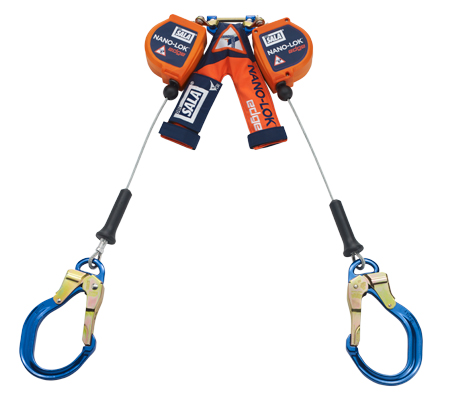
Capital Safety, home of the DBI-SALA® and PROTECTA® brands of fall protection equipment, recently has introduced the Nano-Lok™edge—the first personal self-retracting lifeline (SRL) engineered for both foot level tie-off and sharp edge applications. While traditional general purpose products anchored at foot level and used in sharp edge environments may increase the risk of injury and create a false sense of security at height, the Nano-Lok edge is designed specifically for use in sharp edge applications and retracts its unused lifeline so workers can anchor at their feet and move freely and with confidence at height . The Nano-Lok edge includes an 8 foot (2.4 meter) working length, ergonomic design, and is available in single or twin 100 percent tie-off units.

The Nano-Lok edge is the only personal SRL on the market to pass the most stringent leading edge standard set by ANSI Z359.14. Its tough lifeline material, patent pending energy absorber, and durable harness connector work together to absorb and limit the arresting forces in the event of a fall, and to mitigate the effect of a sharp edge on the lifeline even under harsh conditions.

“When workers anchor at their feet with traditional equipment that’s not specifically designed for foot level tie-off, they’re putting themselves at risk,” said Jeff Martin, hard goods senior product manager at Capital Safety. “The Nano-Lok edge is specifically designed for leading edge work and foot level tie-off situations, so workers at height can do their job safely and with confidence.”

The Nano-Lok edge personal SRL includes an integrated backpack style energy absorber, tough and flexible galvanized cable lifeline, various hook options, and an easy-to-install connector, The SRL can be safely used in fall clearance environments as low as 16 feet (4.9 meters).


(651) 388-8282 (651) 388-5065 www.capitalsafety.com
www.nanolokedge.com capitalsafety @Capital_Safety
capital-safety DBISALA

CG Opens Smart Grid Device Plant In India

0

Bangalore facility to house manufacturing, sales, and service operations of transmission and distribution-related smart grid devices

Avantha Group Company CG launched its state-of-the-art smart grid facility at the Global Village in Bangalore, India on January 11 for full-fledged manufacturing of smart grid devices. Besides manufacturing smart grid devices, the facility will support economic development, foster job creation, and boost an understanding of smart grid solutions in the energy field.

The smart grid devices manufactured in this facility will offer numerical solutions to Indian utilities and the transmission and distribution (T&D) segment, and provide improvement in the electric grid to make it more efficient and reliable. CG has invested $1.3 million in this facility—which can employ more than 100 people. The smart grid facility will manufacture substation automation products, distribution automation devices, protection and control systems, advanced metering infrastructure (AMI), and telecommunication solutions. It will also offer global engineering services such as systems integration, installation, and commissioning. The facility is fully equipped with modern equipment to ensure an annual production capacity of 10,000 units of power line carrier communication terminals (PLCC) and intelligent electronic devices (IED).

CG has a comprehensive portfolio that provides specific solutions and products for each application, including systems that can evolve as the network evolves. CG’s solutions give timely and necessary information needed to implement automatic functions and allow maximum use of the grid at minimum cost. The real value-add of the smart grid concept over the conventional automation system is that smart grids are able to convert the data provided by installed devices into actions and decisions that are taken in real time to operate the network. 

With more than 2 million CG smart meter complete solutions installed worldwide, CG is a well-established manufacturer in this field.  CG’s smart grid devices are running successfully in the world’s first major smart grid deployment at the Iberdrola STAR Project, Bilbao, Spain, where over 227,000 smart meters monitor the electricity services provided to the area’s 410,000 inhabitants. In the past year, CG has participated in no less than ten Advanced Metering Infrastructure (AMI) Pilot Projects in Europe, Asia, and America. 

CG is already participating with many of these smart grid devices and services in India’s first smart grid pilot project—the Pudhucherry smart city project—which requires approximately 87,000 smart meters and a street light automation solution that will prove substantial savings to the electricity department of the government of Pudhucherry (PED). CG’s utility distribution franchise that operates in Jalgaon efficiently manages the multiple data obtained from the intelligent devices installed at all voltage levels, enhancing the quality of service provided to the utility’s end users and drastically reduces technical and non-technical losses.

CG’s cost-effective smart grid solutions will help utilities identify and eliminate power thefts and system losses caused by aging or faulty equipment. For the utility’s customers, CG’s smart grid solutions will offer more control over their power consumption and energy costs and spread awareness of consumption patterns.

As a part of its transmission network expansion plan, Power Grid Corporation of India (PGCIL) has proposed an investment outlay of $2.76 billion for implementation of various projects during the current financial year. CG aims to participate in PGCIL’s smart grid related energy improvement projects.

Commenting on the inauguration,  Avantha Group Company CG’s CEO & managing director Laurent Demortier said, “The opening of CG’s smart grid manufacturing facility in Bangalore is a result of intense planning with the Indian stakeholders—customers, regulators, and employees. I thank all of them for what they have ac hieved so far. Expansion in smart grid markets is a key strategy of CG.  After America and Europe the Bangalore facility will spearhead smart grid operations in Asia.”