



Home 2012

RWE Innogy to Build Fourth Wind Farm in Poland

0

In Nowy Staw, near the city of Gdansk, the first construction vehicles will soon arrive on site, marking the start of construction for Innogy’s fourth wind farm in Poland. Nineteen wind turbines manufactured by REpower Systems SE with an overall installed capacity of 39 megawatts (MW) will be built over an area of 15 square kilometers. If everything goes according to schedule, the wind farm will be commissioned as early as the beginning of 2013 and will supply an equivalent of more than 50,000 homes with green electricity every year. The investment volume amounts to more than 60 million Euros.

“With Nowy Staw we are expanding our wind portfolio in Poland by almost 40 MW. This will bring us a great step closer to our goal of adding 50 MW of wind capacity in Poland every year until 2015. Our Polish wind pipeline is well filled. All in all, Innogy plans to have around 300 MW in operation in Poland by 2015”, said Prof. Fritz Vahrenholt, CEO of RWE Innogy.

Andreas Nauen, CEO of REpower Systems SE, commented: “With Nowy Staw we are implementing our largest project in Poland so far. The site in the north of the country with its average wind velocities is optimally suited to accommodate the REpower MM92 turbines. To date, we have installed more than 2,000 plants of the MM series all over the world. We are delighted that RWE Innogy has put its trust in our proven technology and has once again chosen REpower as supplier.”

RWE Innogy is already operating three wind farms with a total capacity of approx. 108 MW in Poland: Suwalki, Tychowo and Piecki. Apart from the actual construction work on site, the company will also develop the local infrastructure around Nowy Staw. This includes repair and modernization work as well as the building of three kilometers of new roads, which becomes necessary due to the wind farm construction. The next development stage for the onshore wind farm Nowy Staw has already been planned for 2013.

Electricity generation from renewable sources is currently supported via a system of “green certificates“ in Poland. Electricity suppliers are obliged to offer a certain percentage of the energy fed into the grid from renewables. They can comply with this obligation by acquiring additional “green certificates.” For more information visit www.repower.de.

EIP Files FOIA Suit to Obtain Details on 65 Clean Air Act Meetings

0

The Environmental Integrity Project (EIP) filed suit late Tuesday under the Freedom of Information Act (FOIA) to obtain records of 65 meetings that the White House Office of Information and Regulatory Affairs (OIRA) held with interest groups to discuss four major Clean Air Act rules under consideration by the Environmental Protection Agency (EPA).

The scope of the EIP lawsuit includes 51 meetings with representatives of utilities and other industries, and 14 with public interest organizations.

The EPA rules in question are: the Mercury Air Toxics Rule; the Ozone Rule; the Boiler Rule; and the Cross-State Air Pollution Rule. OIRA’s website maintains a list of meetings and attendees for each pending rulemaking at http://www.whitehouse.gov/omb/oira_meetings.

EIP Attorney Alayne Gobeille said, “We are filing the suit because we have received no response from OIRA to our original FOIA request of January 24 2012, although the law requires to agency to respond within than 30 days.”  Executive Orders put in place by President Clinton and reaffirmed by President Obama require the records of any meetings that have a significant impact on regulations to be made publicly available as part of the rulemaking record.

OMB’s website identifies attendees and posts written materials presented at these meetings, but provides no information about the substance of the discussion.  No materials were provided at 16 of the meetings in question, including four attended by OIRA Administrator Cass Sunstein, leaving the public no clue about the content of those conversations.  “Industry lobbyists have every right to meet with the White House about EPA rules,” said Gobeille.  “But the public ought to know what was said at these meetings and whether it influenced decisions that are supposed to protect our health and the environment.”

Gobeille adds, “OIRA has clearly emerged as a major chokepoint when it comes to regulations that affect the public health, hosting no fewer than 123 meetings related to EPA regulations alone in 2011, including those pertaining to solid waste and the Clean Water Act.  Most of these regulations are required by statute and subject to court order requiring their completion.  Reasonable people may disagree about the role that OIRA should play in these reviews, but all parties should agree that meeting records that include a summary of discussion should be part of the public record to inform debate about proposals and final decisions.” For more information, visit www.environmentalintegrity.org

Energy Efficiency Design, Transportation and Human Systems Experts Featured at The 22nd Annual INCOSE International Symposium

0

Questions: How can top secret information be protected from hackers?

Questions: How does a nation prepare for a high-speed rail?

Questions: What does it take to manage and operate an eco-town?

These issues and more will be discussed at the International Council on Systems Engineering’s (INCOSE) 22nd Annual INCOSE International Symp osium in Rome, Italy from July 9 to 12, 2012 at the Rome Marriott Park Hotel.

Since 1990, the INCOSE symposium has been the largest annual gathering of the world’s leading systems engineering professionals, educators and researchers. Nearly
1,000 participants will attend the four-day event and have the opportunity to network, to share ideas, knowledge and practices and to learn more about recent innovations, trends and issues in systems engineering.

“This year’s event will feature a wealth of new information and help spark discussions to advance systems engineering,” said John Thomas, INCOSE president- elect and senior vice president/lead systems engineer at Booz Allen Hamilton. “We’re particularly excited about the issues represented, including transportation, high-speed rail systems, national security, cyber security and efficient energy design.”

Keynote topics and speakers scheduled this year include:

• Systems Engineering High Speed Rail

Andrew McNaughton FREng, High Speed Two Ltd. (United Kingdom)

• Human Systems

Terence Cooke-Davies, Ph.D., Human Systems International Ltd. (United
Kingdom)

• European Transport Systems

Giovanni Bertolone, Finmeccanica (Italy)

Additional topics covered by featured authors and panelists include: Energy Space and Satellite Systems; Biomedical Systems; Defense/Anti-Terrorism Systems; Systems Engineering’s Impact on the Workforce; Risk Management; and Systems Engineering Education and Certification. The international symposium also hosts a “Tool Vendor Challenge,” where vendors demonstrate how their software solutions
can help solve a real-world benchmark problem.

Symposium sponsors include Boeing, BAE Systems, Booz Allen Hamilton, Lockheed Martin, Aster Technology & Engineering, Cognition Corporation, Syntell and Project Performance International.

For the most up-to-date information on the 22nd Annual INCOSE International

Symposium, visit: http://incose.org/symp2012/.

About the International Council on Systems Engineering (INCOSE)

The International Council on Systems Engineering (INCOSE) is a not-for-profit membership organization that promotes international collaboration in systems engineering practice, education and research. INCOSE’s mission is to “share, promote and advance the best of systems engineering from across the globe for the benefit of humanity and the planet.” Founded in 1990, INCOSE now has 58 chapters and more than 7,000 members worldwide.

From getting a rocket ship to the moon and developing high-speed train systems, to establishing anti-terrorism measures and warding off cyber threats, systems engineers make, manage, operate and maintain the systems that impact the public’s everyday lives.

INCOSE acts as a source for systems engineering knowledge, helps establish professional standards, works to improve the professional status of systems engineers and offers a certification program to formally recognize the knowledge and experience of industry professionals. The organization also produces a range of products, publications and educational events, including the International Workshop and International Symposium.

For additional information on INCOSE or to contact one of its members, please call 1-858-541-1752 or visit http ://www.incose.org.

New MEGAFLEX for Wind Hub Production from MAG

0

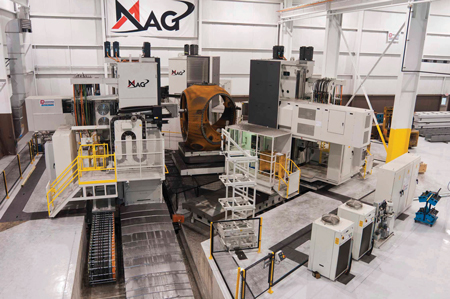
Astraeus Wind Energy’s MAG MEGAFLEX machining system has passed its initial supplier qualification by completing “Operation 20” metal cutting processes in record time on a Clipper Windpower C96 turbine hub, one of the industry’s largest. The unique system simultaneously machines all three blade faces, which enabled it to complete the qualification hub in less than one shift, a first in the industry. “Completing hundreds of features on this hub in such a short time, and meeting the extreme tolerances required, is a world first for U.S. manufacturing technology,” according to Astraeus President Jeff Metts. “We should be able to do the industry’s simpler hubs in even less time. This is, without a doubt, world-leading technology that no one else can compete with. The system is operational now and we are taking orders, forecasting a capacity of about 1800 hubs per year.”

The 18,144-kg (40,000-lb) spherical hub was approximately 3.6 x 3.6 m (12 ft x 12 ft) in size, with a blade bolt circle of about 2.5 m (8.2 ft). Operation 20 for this part included milling the blade faces, drilling and tapping or counter-boring more than 60 39-mm (1.5 in) holes per face, boring and drilling the blade-pitch gear mounting surfaces, and cutting various other features. Tolerances on the part, which was laser inspected after machining, include 0.05 mm (0.002 inch) true position on holes and ±1 degree on angles.

Conceived by MAG in 2009, the MEGAFLEX system’s development was funded in part with grants from the Michigan Economic Development Corporation (MEDC), which audited and approved the progress of Astraeus in meeting its performance requirements. MAG developed the entire system on a turnkey basis, including the process concept, programming, machine systems, and tooling package. The patent-pending MEGAFLEX design, which is based on three MAG FTR 5000 floor-type boring mills surrounding a B-axis rotary table, simultaneously machines all three blade faces on a wind turbine hub in one setup, a concept widely used in mass-production of automotive components and small parts. “This is automotive machining technology scaled up an order of magnitude,” says Pete Beyer, MAG director of product development. “We are using multiple spindles, specialized tools, and clever process technology to finish a part in one setup in the shortest time possible while maintaining the flexibility to process a family of different hubs.”

Concepts borrowed from the automotive industry include offline setup and quick part loading, using a fixture interface plate and a lifting bracket for the workpiece. The interface plate is bolted offline to a locating feature on one side of the casting; the plate then mates with a locating feature on the worktable for fast part setup. The lifting bracket attaches to the top of the part to allow a single crane to transfer the part in and out of the workzone safely and quickly. “These are classic part handling techniques on a gantry-type automotive line that we have adapted for very large parts,” Beyer says. “We can setup the next part offline on an interface plate, and quickly exchange a completed part to maximize utilization of the spindles.”

As part of the MEGAFLEX design, each machine has a latch-plate interface to accept attachments from a head changing rack. However, for cost economy, the system currently has only one attachment rack, which can be moved for use by any of the machines. Rotation of the worktable allows the machine using the attachments to access all three faces of the part. Synchronous/asynchronous processing is then used to balance out the cutting times and cutting forces of the three spindles when doing similar and dissimilar operations. For more information go to www.mag-ias.com.

New Regional Sales Manager at Wind Systems Magazine

0

Mike Barker has joined Wind Systems magazine as regional sales manager, responsible for covering states including North and South Dakota, Nebraska, Kansas, Oklahoma, Texas, Missouri, Arkansas, Louisiana, Mississippi, Tennessee, Kentucky, and Indiana.

A native of Tuscaloosa, Alabama, Barker began his career at Randall Publishing Company in 1988. On moving to Birmingham he joined Vulcan Publications in 1996, where he excelled quickly in management to become publisher of U.S. Sites & Development magazine. He has been instrumental in helping to launch industry-leading publications such as Top Bid, Expansion Solutions, and Sports Destination Management. He is conscientious about providing excellent customer service and takes great pride in developing close relationships with his clients.

“I look forward to getting to know the professionals in the wind energy market,” Barker says, “and it is my goal to always offer the very best in customer service to each and every advertiser we feature in the magazine and on our website. As a current or potential advertiser in Wind Systems magazine, rest assured that my client’s best interests will always be my top priority.”

Barker can be reached at (800) 366-2185 x203 or mike@windsystemsmag.com. Also go online to www.windsystemsmag.com.

GICON Successfully Tests Floating Foundation for Offshore Wind

0

Floating foundations for the offshore wind industry are increasingly gaining attention and interest within the industry, as well as among government and permitting institutions and also investors. This interest is driven by the conditions found in the U.S. and Japan where the vast majority of offshore wind resources is found in water depths of more than 100 meters. There are also areas in Europe where conventional foundations such as monopiles, tripods, gravity foundations, and jackets are not applicable, especially for planned installations further offshore.

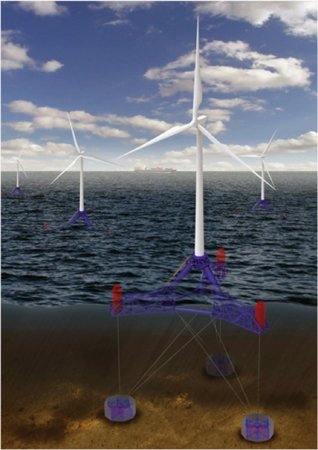
A consortium led by GICON Grossmann Ingenieur Consult GmbH has developed a floating platform solution that addresses the global offshore wind industry’s need for floating foundation technology. Unlike other technologies currently under development, the GICON Floating Offshore Foundation (FOF) is not only applicable in deep water but can also be deployed in shallow water depths of 25 meters and deeper. “This versatility addresses a number of key challenges,” according to Prof. Jochen Grossmann, owner and CEO of GICON GmbH. “The existing foundation technologies require suitable weather conditions as well as availability of installation vessels. Our FOF can be assembled at shore, including the turbine and then towed with standard tug boats to the deployment site. In addition, floating foundations have less impact on marine life due to reduced construction related noise such as pile driving.”

In February 2012 GICON tested the latest design at the Hamburg Ship Model Basin HSVA. A 1:25 scale model was exposed to various wind and wave conditions as well as tow trials to confirm functionality, usability and load capacity during operation as well as transport. The data acquired during the tank tests validated the various simulations. These tests included the equivalent of a 20-meter “rogue wave” which the structure weathered without any problems. The successful tests are another milestone towards the deployment of a full scale pilot in the German Baltic Sea in 2013.

The GICON FOF is based on the Tension Leg Platform (TLP) principle, which was originally developed for the oil and gas industry. GICON’s modular steel structure is equipped with buoyancy elements and moored utilizing vertical as well as diagonal bracing. Since ocean floor conditions vary, a number of different anchoring solutions have been developed as well.

The consortium under GICON’s leadership includes the Technical University and Mining Academy Freiberg (Prof. Frank Dahlhaus), Rostock University (Prof. Kaeding), Jaehnig GmbH, Fugro GmbH, Vermessungsbuero Weigt, GLC Gluecksburg Consulting, Institute for Applied Ecology, WPC Wind Power Construction, and wpd Offshore. The consortium’s work is also supported by various German Federal as well as German State  funding initiatives. Especially the modular construction of the FOF is going to have a very wide economic impact as the supply chain can be optimized for mass production and include medium size companies. A video showing impressions of the recent tank tests is available at www.gicon.de/en/home/sof-video.html.

GICON is an independent consulting and engineering firm with headquarters in Dresden, Germany and 10 regional offices throughout Germany. The company’s interdisciplinary, experienced engineers provide state of the art consulting and planning services for various industrial sectors such as wind power, bio energy and remediation. GICON also have representative and partner offices in Europe and Asia as well as North and South America. Learn more at www.gicon.com.

Leosphere and NRG Systems Introduce Lidar for Complex Terrain

0

Leosphere and NRG Systems recently introduced FCR™ (Flow Complexity Recognition), an add-on solution for the WINDCUBE® v2 Lidar Remote Sensor. Supported by WINDCUBE’s vertical fifth beam, FCR enables the Lidar to provide precise, bankable data in all terrain types, including complex terrain, with no post-processing or post-correction.

“In complex terrain, all mechanical and remote sensors are prone to higher measurement uncertainty and may introduce measurement bias due to lack of flow homogeneity across the measured volume,” says Matthieu Boquet, scientific developments supervisor at Leosphere. “The use of FCR minimizes or even eliminates this bias, allowing WINDCUBE to measure with extreme accuracy and provide bankable data across all terrain types. For the first time, wind energy developers can use the same remote sensor with ease and confidence at all sites, onshore or offshore.”

In 2009 Leosphere and NRG Systems formed a global joint venture to expand the use of remote sensing with Lidar in the wind energy industry. Used in wind resource assessment and performance optimization, WINDCUBE v2 is now operating in 20 countries around the world. The joint venture serves customers on all seven continents with sales, service, technical expertise, and support. For more information visit www.lidarwindtechnologies.com.

Leosphere is a leading specialist in the development of lidar technology for atmospheric observations. The company offers turn-key remote sensors that provide real-time tracking and measurement of particles, clouds, and wind. Leosphere’s products are used in various applications including, wind energy, climatology, meteorology, and air quality. Learn more at www.leosphere.com.

NRG Systems is an independently owned company that has served the global wind energy industry for 30 years. Its measurement systems and turbine control sensors can be found on every continent in 150 countries, serving electric utilities, renewable energy developers, turbine manufacturers, research institutes, government agencies, and universities. For more information go online to www.nrgsystems.com.

COMPAXX 900 Foam Core System from Dow

0

Dow Epoxy, a business unit of The Dow Chemical Company, has introduced the new DOW COMPAXX™ 900 foam core system, which is designed to enable the fabrication of wind blades exceeding 40 meters in length. Dow continues to offer the COMPAXX 700 foam core system for use in wind blades of less than 40 meters.

This latest addition to the COMPAXX line of foam core systems is a structural foam that can help minimize composite weight, which is critical in the production of longer wind blades. The weight savings are made possible by low resin pick-up during fabrication. The foam’s small cell size—up to 100 times smaller than cells in chemical blown foams such as PVC—limits the amount of resin that can fill cut cells at the surface. In addition, the closed cell structure of the material prevents penetration of the resin deeper into the foam. Although resin pickup is low, the inherent ductile properties of COMPAXX 900 produce excellent skin-to-core bonds, and composites made with system exhibit excellent fatigue resistance.

The new foam core system exhibits higher static performance than PVC foam due to the continuous extrusion process used to produce DOW COMPAXX™ 900. The process allows very accurate control of cell expansion and produces cells that are homogeneous in size. The result is a material with optimum mass distribution, uniform cell structure, and consistent wall thickness, factors that enable the new foam to outperform core materials with the same density, such as PVC.

Dow says that DOW COMPAXX™ 900 can be used in the shear web, shell, and in all other parts of wind turbine blades where high performance structural foam is required. It is recyclable, and waste material created during the kitting process or panel manufacturing can be recovered. The foam and final composite material can be recycled by grinding and used as filler in other products. Refer to the Material Safety Data sheet for further details on disposal considerations.

According to Gino Francato, business development manager for Dow’s wind group, “DOW COMPAXX 900 is the product of Dow chemistry and materials science expertise. DOW COMPAXX foam core systems are advanced materials, engineered specifically for wind blade applications. They can reduce fabrication costs and improve wind blade mechanical performance, which makes them excellent replacements for PVC, SAN, and PET, as well as balsa.” Learn more at www.dow.com.

LM Wind Power Blades on World’s Largest Offshore Turbine

0

LM Wind Power’s 73.5-meter blades became the first 70+ meter blades to be installed when Alstom inaugurated the largest offshore wind turbine in the world on March 19 at Carnet in the Loire-Atlantique region of France. The impressive composite structures have been developed specifically for Alstom’s Haliade 150-6MW wind turbine in a close collaboration between the two companies to boost energy capture while keeping loads down. The innovative blade design has already been through several rounds of testing before being installed on the turbine in France.

“It was great to see LM blades mounted on the newest and biggest turbine in the world as well as see the excitement this technological leap has made in the offshore world,” according to Ian Telford, LM Wind Power vice president of sales and marketing. “Our technology enables us to design and manufacture relatively lighter glass fiber and polyester blades for the length, but above all LM Wind Power has proven ability to handle the industrialization of these blades, which is not easy.”

Alstom’s Haliade 150-6MW turbine has been EDF-EN/Dong Energy’s choice developed in response to a call for tenders launched by the French government that aims to install 3GW of wind turbine power off French shores by 2015. Depending on the results of the tenders to be announced in April, Alstom and LM Wind Power plan to establish a blade manufacturing facility in Cherbourg with the capacity to produce up to 100 sets of 73.5 meter blades a year. Production is planned to start in 2016.
LM Wind Power is the world’s leading component supplier to the wind industry, with operations from 13 manufacturing facilities worldwide and more than 140,000 blades produced since 1978. More information is available at www.lmwindpower.com.

Parker to Launch Stand-Alone Two-Phase Cooling System at AWEA

0

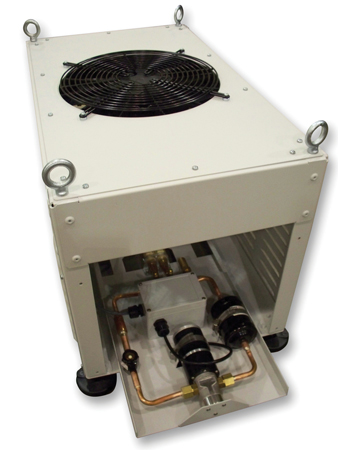
As a follow-on to last year’s announcement by Parker Hannifin of a “rack-ready” two-phase evaporative cooling system for wind turbine systems, the company has developed a stand-alone configuration of the system as a drop-in replacement to easily retrofit existing wind turbine cooling systems (traditionally air- or water-based). Parker’s stand-alone cooling system is fully scalable and available in three configurations with capacity to handle from 25kW-50kW-100 kW and is 50 percent lighter and more compact than legacy air and water cooling systems.

Using the same patented two-phase evaporative precision cooling system as Parker’s rack-integrated configuration, the stand-alone system provides a convenient way to “upgrade” the system and greatly improve wind turbine systems’ efficiency and reliability. The Parker cooling system delivers up to 40 percent increase in power throughput and can more than double electronics density in the same space, which is a major benefit in a nacelle or wind tower where space is at a premium. Due to the non-conductive, non-corrosive nature of the coolant, the system is also inherently safer and highly reliable.

The system features Parker’s two-phase evaporative precision cooling patented technology, which uses a non-conductive refrigerant in conjunction with a modular cold-plate IGBT design, to circulate in a closed loop. The system includes a small pump to deliver a just enough coolant to the evaporator (usually cold plates) to optimize the heat from the particular device. The vaporized content is then pumped to the system’s heat exchanger, where it rejects the heat to the ambient and then condenses back into a liquid, completing and repeating the cycle.

Parker’s precision cooling systems are 50 percent lighter and smaller than traditional air and water cooled systems, and fit easily into the nacelle, while enabling up to 40 percent higher throughput from system electronics, and up to twice the density in the same space. All this translates to the overall lower system cost, with inherent safety and simplified maintenance, due to their modular and scalable design. All critical wind turbine systems can benefit from these integrated cooling systems, including the inverter, reactor, and generator as well as other electronics either in the nacelle or in-field containers. Parker’s two-phase evaporative precision cooling system is now available in two convenient configurations: the new stand-alone cooling unit, servicing multiple systems with localized cold plate kits (see photo); and the rack-ready integrated design for each wind turbine system (introduced at AWEA Windpower 2011). For more information visit www.parker.com/pc.

New Head of Business Development and Sales at GL Garrad Hassan

0

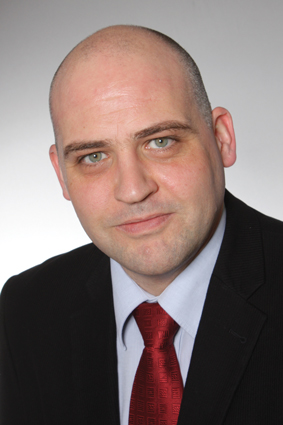
GL Garrad Hassan has appointed Christoph Thiel as its new head of business development and sales. He will be responsible for managing global sales and business development for GL Garrad Hassan worldwide, working from the head office in Hamburg. He started in his new position on March 1, 2012. “I am really looking forward to speaking with our clients around the world about what GL Garrad Hassan has to offer and how they can benefit from the synergies that are being created through the combined business segments of the GL Group,” he says.

“We are very pleased to have Christoph back at GL Garrad Hassan,” says Andrew Garrad, president. “His breadth of experience and deep understanding of the market will be extremely valuable in helping us to strengthen GL Garrad Hassan’s global presence.”

After studying electrical engineering Thiel joined WINDTEST Kaiser-Wilhelm-Koog—now a part of GL Garrad Hassan—in 1998, where he carried out load and power performance measurements on wind turbines. He set up WINDTEST’s Spanish subsidiary in Madrid and was based in Spain for almost three years before returning to Germany to build the business development department for measurements and inspections at Kaiser-Wilhelm-Koog. After a short period elsewhere in the wind industry, Thiel has now returned to GL Garrad Hassan.

GL Garrad Hassan is one of the world’s largest dedicated renewable energy consultancies and a recognized technical authority on the subject. It offers independent technical and engineering services, products, and training courses to the onshore and offshore wind, wave, tidal, and solar sectors. Although the GL Garrad Hassan name is new, the company has a rich heritage. It is borne of the integration of specialist companies that, united, form the renewable energy consulting division of the GL Group. GL Garrad Hassan is a consulting company; it has no equity stake in any device or project. This rule of operation is central to its philosophy, something which sets it apart from many of its competitors. For further information visit www.gl-garradhassan.com.

New Technologies at DMG/Mori Seiki Open House

0

DMG/MORI SEIKI welcomed around 5,000 visitors in February to the Open House at DECKEL MAHO Pfronten, Germany. On top of the exhibition program with its 60 high-tech machines in operation, among them five world premieres, an attractive series of seminars and lectures was on offer. Russ Willcutt, editor of Wind Systems and Gear Solutions magazines, was numbered among the guests. “I was particularly impressed by the WindCarrier turbine developed by GILDEMEISTER that was featured prominently at the facility’s entrance,” he says (above).

As the largest supplier of the GILDEMEISTER group, DECKEL MAHO Pfronten GmbH provided the perfect setting for presenting the innovative machine program. Combining innovative technologies and the worldwide as well as highly qualified sales and service network, DMG/MORI SEIKI offers customers a unique range of services in the field of chip-producing manufacturing technologies. This is also demonstrated by the company exhibition at DECKEL MAHO Pfronten. Among the 60 machine tools, which will be presented live in operation by the manufacturer team, the trade visitors will come across numerous technological innovations.

Users in the machining industry are faced with the challenge of increasing efficiency and productivity. For this reason, machine tools must be powerful as well as versatile and flexible. The highlight in the field of horizontal centers is the new DMC 60 H linear, which is characterized by high precision and is furthermore extremely fast and dynamic. Another interesting feature of this new development is the option to also perform give-axis machining with a swivel rotary table.

The impressive exhibition also features the new NHX 4000 in the field of horizontal centers from the cooperation partner Mori Seiki. The horizontal machining center can in future be optionally equipped with the Siemens 840D solutionline or the MAPPS IV control, whereby DECKEL MAHO Pfronten GmbH has in the meantime started production for the European market within the scope of DMG and Mori Seiki’s cooperation. Mori Seiki itself will emphasise the impressive range of new possibilities in the field of horizontal machining centres with its larger horizontal centres NHX5000, NHX5500, and NHX6300.

An impressive example for the milling-turning competence of DECKEL MAHO is the DMU 85 FD monoBLOCK®, which attracted a lot of interest from the trade visitors. Furthermore, the universal machining center DMC 65 monoBLOCK® with pallet changer is another example for the fascinating possibilities of the up to five-axis simultaneous machining in production.

The fourth new development in the league of world premieres is the DMU 80 eVo with pallet changer from DECKEL MAHO Seebach. To the usual excellent milling performance of this machine generation more impressive features are added such as the fast changeover cycles for short idle times and extremely compact construction for minimal space requirements.

The quintet of world premieres is completed by the new CTX beta 800 4A from GILDEMEISTER Drehmaschinen GmbH. Decisive features are the usage of two turrets in combination with the integrated cross stroke of the counter spindle tailstock combination. Innovative details like the “TRIFIX” precision interface for minimum tool setup times or the DirectDrive (to be integrated optionally) round off the positive overall picture.

The cooperation partner Mori Seiki impressed its visitors above all with the performance of its turning and milling machines from the new X-class, which already caused a stir at the EMO in Hanover. The NLX2500SY/700 targets the field of classic universal turning, which is however complemented by the possibilities of complex milling with powered tools based on BMT® technology. Furthermore, turning without limits and milling with B-axis in one setup is the domain of the NTX series. Within this context, the NTX1000 focuses on highly accurate complete machining of smaller components for example in the field of medical engineering, while the NTX2000/1500SZ with counter spindle and bottom turret as second tool mount sets new standards in flexible machining of complex precision components.

However, the professional competence of DMG/MORI SEIKI is not just reflected in the machine tools presented at the open house. In 10 technology seminars, customers and trade visitors were introduced to future-oriented topics in more detail, amongst others from the fields of five-axis machining, aerospace, automotive HBZ, or LASERTEC.

The topic of energy efficiency additionally ran like a thread throughout the open house. More fuel-efficient machine technologies, energy-saving manufacturing processes, and automatic shutdown routines are just as popular as new software tools and service products for a sustainable increase of energy efficiency in developing, manufacturing, and using machine tools. DMG/MORI SEIKI regards itself as directly responsible to support and promote the trend toward environmentally oriented usage of resources together with their customers. Learn more at www.dmgmoriseiki.com.

Avanti Achieves U.S. Certification for Turbine Elevators

0

Avanti Wind Systems USA has announced the issuance of an AECO Certificate for its Shark Work Cage/Elevator for use in wind turbine towers by Underwriters Laboratories (UL). An AECO certification in North America represents completion of a complete review by a third party certification body whose authority stems from ISO Guide 65. UL is one of three recognized third party test labs for AECO (Accredited Elevator/Escalator Certifying Organization). It has tested the Shark Work Cage and sub components and reviewed the assessment for the product and the installation.
 

“After a thorough review, Underwriters Laboratories has issued the certificate validating the model and certifying the design complies with the Global Essential Safety Requirements of A17.7/B44.7,” says Kent Pedersen, general manager of U.S. operations.

The certification allows the jurisdictions where A17.7 is adopted an easier route for permitting of Work Cages in wind turbine towers. They do not have to develop their own state-specific code requirements.

Avanti Wind Systems will still have to go through the state (United States) or province (Canada) permitting process for each wind power project where an Avanti Shark Work Cage/Elevator is to be installed in a wind turbine. But with the AECO Certificate it is easier and faster to get the permit from the State/Province authorities. “The next step is to get the new ASME A17.1/CSA B44, requirement 5.11 implemented so that each state can adopt them as soon as possible when new wind turbine projects are constructed in their jurisdiction,” Pedersen says.

Avanti Wind System is a leading world market producer of service lifts and other personal safety systems to wind turbine towers. It was founded in Denmark in 1885 and was originally a ladder factory. The company still produces ladders but is now focusing on developing and producing safety equipment for the service technicians working in wind turbine towers. Avanti has developed a complete range of safety products for moving up and down in wind turbine towers. Products such as service lifts, ladders with built-in fall safety rails, and climbing assistance have been approved in accordance with official standards in the European Union, Australia, and the United States. Avanti Wind Systems has installed more than 16,000 service lifts in wind turbine towers throughout the world. That is more than half of all those installed. Avanti Wind Systems’ headquarters is in Denmark and it has offices, training centers, and factories in the United States, China, United Kingdom, Spain, China, Germany, India, and Australia. Later this year Avanti will open an office in Brazil. To learn more contact Pedersen at (262) 641-9101, kp@avanti-online.com, or www.avanti-online.com.

Vestas Appoints Country Manager for Canada

0

In response to the growing market for wind energy in Canada and its strong position in all 10 provinces, Vestas has appointed Doug Macdonald as senior vice president and country manager for Canada. “Designating a lead for our Canadian activities will add focus and resources to a market that is growing and holds much promise,” says Martha Wyrsch, president of Vestas’ sales and service operations in the U.S. and Canada. “This is a critical role to ensure our current customers are well-served and highly satisfied, and that future opportunities in Canada are maximized.”

A graduate of McMaster University and a Hamilton native, Macdonald brings a diverse background in sales, service construction, maintenance, government relations, and finance to the newly created position. He will be based out of Vestas’ Canadian headquarters in Toronto’s financial district. Since joining Vestas in 2005 he has combined his strategic vision with tactical planning to generate exceptional results in bottom line growth. Vestas supplied its first wind turbine to Canada in 1997 and has since installed more than 1,100 in all 10 Canadian provinces combined. “I am excited about the Canadian market and what it has to offer,” Macdonald says. “With Vestas wind turbines operating in every province, we have a tremendous base upon which to build.”

Vestas is the world leader in providing high-tech wind power systems. Since 1979 it has an industry-leading installed base of more than 46,000 wind turbines in 69 countries. Vestas sold its first wind turbine in North America in 1981 and has since supplied nearly 13,000 turbines to the United States and Canada. The company’s North American headquarters is located in Portland, Oregon, and global headquarters are in Aarhus, Denmark. Learn more at www.vestas.com.

EWEA 2012 to be Held in Denmark

0

The European Wind Energy Association (EWEA) is the largest and one of the most powerful wind energy networks in the world. It is the voice of the wind industry in Europe and is ideally situated in the heart of the EU quarter in Brussels in close proximity to European decision makers. EWEA has over 700 members from almost 60 countries, including manufacturers with a leading share of the world wind energy market, plus component suppliers, research institutes, national wind and renewables associations, developers, electricity providers, finance and insurance companies, and consultants. This combined strength makes EWEA the world’s largest and most powerful wind energy network.

The association’s main activities center on coordinating international policy and formulating policy positions for the wind industry on key issues, communications, research, and analysis both independent and in cooperation with industry and research institutions, and providing support to members. EWEA organizes high profile industry events including the EWEA annual event, the biennial offshore conference, and numerous workshops in the EU and beyond. EWEA’s Annual Event will take place April 16-19 in Copenhagen, Denmark, and offers a conference and exhibition under one roof.

The exhibition will serve as the centre point for the whole event. The EWEA 2012 Annual Event is set to be bigger and better than ever before, with more than 10,000 professionals from around the world expected to attend. With over 450 exhibitors showcasing their latest innovations, the event provides an ideal platform to meet Europe’s leading wind energy professionals and do business face-to-face.

On the first day of the event, EWEA will launch a major new study on the impact of the wind industry on Europe’s economy, growth, and employment. The study will tackle tough questions such as: how much difference does wind energy make to the economy? Does it have a real impact on Europe’s GDP? How many jobs does it create? This much-anticipated study will show how wind energy can be a recession-busting industry, and which other sectors benefit most from the wind energy industry.

“Wind power is a pivotal element in the necessary transition to a green growth economy. EWEA 2012 will focus on the innovation and green solutions that we need in order to promote green and sustainable growth and reach our target of a low-carbon Europe by 2050,” says Martin Lidegaard, minister for climate, energy and building, Denmark.

EWEA 2012 aims to drive innovation in the industry forward, but it is also aiming at innovating the conference and exhibition itself to better meet attendee needs and provide scintillating content. Sessions have been designed with an emphasis on learning, discussion and interaction—as such, many will now include panel debates and extended question time. Led by well-respected industry experts, the conference features a broad range of hot topics like project development and finance, resource assessment, technology innovation, policies, politics, markets, and more for both onshore and offshore wind power.

In addition to the main event, EWEA also organizes focused events on issues of strategic importance. Workshops are open to all EWEA 2012 conference delegates, exhibition visitors, and exhibitors. And on the eve of the event, EWEA will host a one-day pre-event seminar for those new to the industry. The “Wind Energy – The Facts” publication is widely considered to be the most reliable reference published to date. The seminar is tailored to anyone new to wind as well as people working in a particular sub-sector or function who want to understand their industry as a whole. Armed with this global view of wind energy, participants will get even more out of the main conference and exhibition.

“Denmark is the cradle of modern wind power and a leading wind nation. Wind power supplies the highest share of energy of any country, and Denmark is home to the highest density of companies excelling globally in wind energy. We really look forward to hosting EWEA 2012 in Copenhagen. There are so many things we would like to show you,” says Jan Hylleberg, CEO, Danish Wind Industry Association (DWIA).

In the days leading up to EWEA 2012, DWIA is set to launch a new initiative called “Mindblowing Denmark” that offers visits and networking opportunities for professionals to experience the whole wind energy supply chain in Denmark, as well as to gain insight into Danish policy and planning up to 2020. To find out more visit www.ewea.org/annual2012.

New High Performance Fibreglass for Blades from 3B

0

Pursuing its strategy to lead the innovation of glass fibre solutions for the wind energy sector, 3B-the fibreglass company is launching HiPer-tex™ W2020 high performance roving to satisfy OEM needs for longer and lighter rotor blades to meet the challenging offshore and bigger onshore multi-megawatt wind turbines. Building upon the recently developed sizing technology applied to Advantex® SE2020, the new HiPer-tex W2020 is also specifically engineered for epoxy polymer systems used in resin infusion or prepreg processes.

3B’s technological expertise and manufacturing know-how delivers a high modulus glass with outstanding mechanical properties providing significantly greater strength and strain-to-failure than traditional E-glass. The new HiPer-tex W2020 roving offers the following exceptional properties in a typical unidirectional laminate (average glass volume fraction 60 percent): 54-56 GPa  E-modulus; 55-60 MPa transverse tensile strength ; and 10 times longer lifetime in fatigue resistance versus traditional E-glass.

“HiPer-tex W2020 provides the answer to the evolving market requirements for stiffer and better performing materials. Its optimized glass composition, combined with proprietary sizing technology for epoxy systems, allow turbine manufacturers to increase blade lengths while keeping blade weight under control. These longer blades generate higher turbine efficiency leading to a lower cost per kWh,” says Luc Peters, 3B wind energy technical product manager.

When comparing blades manufactured with traditional E-glass, HiPer-tex W2020 achieves up to 10 percent weight saving for the same blade design and length. Alternatively, the blade length can be extended by up to 6 percent while maintaining the same weight but offering up to 12 percent more energy output.

3B-the fibreglass company is a leading developer and supplier of fibreglass products and technologies for the reinforcement of thermoplastic and thermoset polymers. This dynamic and entrepreneurial company has two state of the art fibreglass manufacturing facilities in Battice, Belgium and Birkeland, Norway as well as a dedicated R&D Centre located in the heart of Europe. More information is available at www.3b-fibreglass.com.

Energy Department Announces Initiative to Deploy U.S. Offshore Wind Projects

0

As part of President Obama’s all out, all of the above approach to developing every domestic energy resource, Energy Secretary Steven Chu has announced the start of an ambitious initiative to capture the potential of wind energy off American coasts. As part of a planned six-year $180 million initiative, an initial $20 million will be available this year as the first step in supporting up to four innovative offshore wind energy installations across the United States. These offshore wind projects will accelerate the deployment of breakthrough wind power technologies that will help diversify our nation’s energy portfolio, promote economic development, and launch a new industry here in America.

“Developing all of our nation’s vast energy resources is an important part of President Obama’s blueprint for an American economy that uses all of America’s energy resources,” says Secretary Chu. “The new offshore wind energy initiative will help to catalyze the development of offshore wind in America, supporting U.S. innovators as they seek to design and demonstrate next generation wind energy technologies. These investments are critical to ensuring that America remains competitive in this growing global industry that can drive new manufacturing, construction, installation, and operation jobs across the country.”

Offshore wind is an enormous potential resource for the United States, with strong, consistent winds located in the Atlantic, Pacific, the Great Lakes, and the Gulf of Mexico. America’s vast offshore wind resources, estimated at more than 4,000 gigawatts, will help the United States meet its critical energy, environmental, and economic challenges, and provide energy to coastal cities where much of the nation’s population and electricity demand lies.

To support these new demonstration projects, the Energy Department will make available up to $180 million over six years, subject to congressional appropriations, including an initial commitment of $20 million in fiscal year 2012. The department will focus this latest research and demonstration initiative on highly innovative technologies that will achieve large cost reductions over existing offshore wind technologies. The demonstrations will help address key challenges associated with installing utility-scale offshore wind turbines, connecting offshore turbines to the power grid, and navigating new permitting and approval processes.

In addition to the new funding, the department is continuing to work with partners across the federal government to implement a comprehensive offshore wind energy strategy, conduct resource assessments, and streamline siting and permitting. By investing in this emerging industry, this support will help lower the cost and speed the deployment of American-made offshore wind energy technologies designed for U.S. coastal conditions and provide valuable opportunities to test these innovations in real offshore environments.

Applicants to the competitive solicitation are expected to form world-class consortia of energy project developers, equipment suppliers, research institutions, and marine installation specialists. Energy Department funds may be used to cover up to 80 percent of a project’s design costs and 50 percent of the hardware and installation costs.

For more information and application requirements for this funding opportunity, please visit eere-exchange.energy.gov

Heavy-Duty HMC for Mega-Size Parts from MAG

0

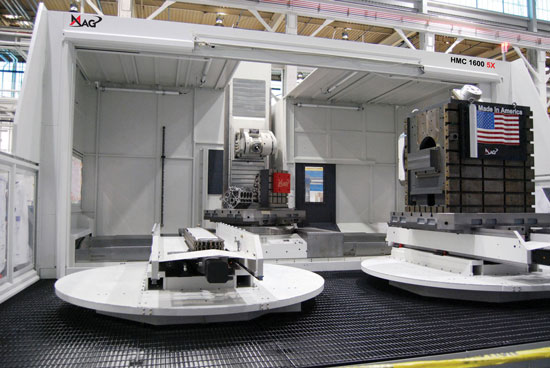
MAG’s modular HMC 1250/1600 Series is engineered for high-precision, high-productivity machining of large aerospace, power generation, pump, valve, and off-road equipment parts. It now includes eight spindle options to suit special-purpose or general machining requirements. The new 6000 and 8000 rpm/46-kW (61.6-hp) tilt-spindles—with +90/-120 degree A-axis travel—joins an all-around 10,000 rpm/ 46-kW (62-hp) spindle, high-speed 24,000 rpm spindle, high-torque 2600 Nm/80-kW (1918 ft lb) spindle and two live spindles (110 or 130 mm diameter). The high-torque spindle is especially suited for hard-metal cutting, while the live spindles extend W-axis reach by up to 800 mm (31.5 in), enabling deep cavity milling to high precision with shorter, more rigid tools. Standard on the live spindle, MAG’s exclusive Z-axis thermal compensation software dynamically offsets spindle growth to maintain tight tolerances.

Designed for extreme application flexibility, the HMC 1250/1600 offers maximum 3000 mm (118 in) work-zone swing, and 15,000 kg (33,000 lb) pallet load capacity. Major machine components, including the X-bed, Z-bed and column, are cast ductile iron, with pallets up to 1600 x 2000 mm, headstock and rotary table housings of gray cast iron. Modular design provides a range of machine travels, 60- to 300-tool magazines and two control choices.

Powerful and agile, the new five-axis HMC offers 56 to 100 kW (75 to 133 hp) spindle power, 35 kN (7870 lb) Z-axis thrust, and super-rigid, full-contouring hydrostatic rotary table. The 360,000-position contouring table provides a rigid work platform, while a rugged worm gear drive with clamp securely holds axis position. Rotary table positioning accuracy is 10 arc seconds, repeatable to 5 arc seconds. Positioning accuracy of the tilt-spindle is 4 arc seconds, repeatable to 2 arc seconds.

Meeting industry needs for tighter part tolerances and greater machining accuracies, the HMC Series comes standard with linear scale feedback in X, Y, and Z axes, providing 8 micron (0.0003 in) positioning accuracy and 5 micron (0.0002 in) repeatability. Heavy-duty hardened and ground roller guide ways enable a rapid traverse rate of up to 40 m/min (1575 ipm) with high acc/dec rates, double the load capacity and nearly 10 times the wear life of ball-type ways. The full work zone enclosure is pre-engineered to provide a clean machining environment and includes a doorway for operator access with walkway/platform inside. Learn more by visiting MAG at WESTEC booth #1612 March 27-29 at the Las Angeles Convention Center or going online to www.mag-ias.com.

New Online Shipping Tools from BNSF

0

BNSF Railway has released two new online tools that offer an easier, more effective way for existing and potential customers to compare carload shipping options. The new tools—Carload Shipping Advisor and Serving Carrier Reciprocal Switch Inquiry—allow customers to compare shipping options by price, equipment, and route for multiple origins and destinations.

“All of the features in the Carload Shipping Advisor tool are based on direct customer feedback and designed to meet customer needs,” says John Lanigan, BNSF executive vice president and chief marketing officer. “We are confident that providing this upfront visibility to all routing options will save our carload customers time and allow them to more easily plan their shipments.”

“Whether planning or pricing their shipment moves, our customers told us that determining if a destination is rail-served is their first step,” according to Jo-ann Olsovsky, vice president technology services and CIO. “The new Carload Shipping Advisor and Reciprocal Switch Inquiry allow customers to quickly take that first step by easily verifying whether a shipping origination or destination has rail or transload service.”

The new Carload Shipping Advisor tool offers search filters by equipment type or route, and guides to equipment information, including pictures and schematics, to help customers understand the loading requirements and better plan their moves. It also includes features such as the ability to view recent searches, see estimated fuel surcharge, use a type-ahead input form, print/export/email search results, contact a sales representative, and view links to pricing documents.

When planning a shipment, the Reciprocal Switch Inquiry tool now allows customers to validate origins or destinations when not pricing the move. Using a railroad industry-wide file through Railinc, the new tool will now contain all rail-served customer locations in North America. This provides customers with comprehensive visibility to their options. Both of these tools can be accessed under “Customer Tools” on the bnsf.com Customer page at www.bnsf.com/customers. A demo of the tools capabilities can be viewed at www.bnsf.com/customers/demos/carloadshipping-scrsinquiry.html.

BNSF Railway is one of North America’s leading freight transportation companies operating on 32,000 route miles of track in 28 states and two Canadian provinces. BNSF and its employees have developed one of the most technologically advanced and efficient railroads in the industry. Learn more at www.bnsf.com.

Wind Farm Support Vessels From Austal A Success

0

Building on its initial success in the renewable energy market, Austal has confirmed a contract for a fourth wind farm support vessel for Turbine Transfers Limited. The order is the first for a new Austal design that will enable safer and more efficient offshore wind turbine service. Welcoming the follow-up order from the UK-based company, Austal Chief Executive Officer Andrew Bellamy says the shipbuilder had continued to refine and enhance its Wind Express vessel range following its launch in mid 2010 as part of a strategy to pursue new commercial vessel markets. “There is clearly an increasing desire in the industry for vessels with enhanced capability, particularly in terms of performance in rough conditions. This is a challenge that we have already successfully addressed in the ferry and naval markets with our unique trimaran technology. We have now applied that expertise to develop and prove a new hullform that provides a step change in capability for the offshore industry.”

The new design combines the seakeeping and fuel efficiency benefits of Austal’s trimaran hull configuration with a small waterplane area at rest, to deliver low vessel motions both in transit and when alongside turbines. This enables wind farm personnel to be successfully transferred in considerably higher sea states than is practical with catamarans of similar size. “For offshore wind farm industry operators seeking to maximise productivity and safety in rough seas, this new hullform provides the highest possible levels of seakeeping, passenger comfort and fuel efficiency,” Bellamy says.

Managing Director of Turbine Transfers, Captain Mark Meade, said his company was using Austal technology to support the next phase of wind farm development which would see a much larger number of turbines installed farther offshore and in other areas with rougher sea conditions. “To do that we need to be able to transfer further, and in larger waves, while still providing the technicians we carry with comfortable transits and safe turbine step-offs. The extensive analysis and tank testing that Austal has done makes me very confident that this new boat will enable us to do that, and provide us with a competitive advantage.”

Bellamy says the new design would improve the viability of offshore wind farms by overcoming the seakeeping limitations of the support vessels currently used in the industry. “To date most wind farms have been relatively close to the coast, and serviceable with fairly basic boats. Now as they move further offshore there is a need for a second generation of vessels that can address the significant challenges this brings. Being able to transport wind turbine technicians comfortably in the rougher sea conditions over longer distances is the key requirement, and we have produced the solution to that need.” Learn more at www.austal.com.