







Home 2010

GL Garrad Hassan Helps U.S. Wind Energy Project Net Billions

0

The Alta Wind Energy Center (AWEC) is located in the heart of one of the most proven wind resources in the United States—the Tehachapi-Mojave Wind Resource Area, in Kern County, California. To provide technical due diligence in support for the $1.2 billion financing of four wind energy projects, Terra-Gen Power, LLC turns to local experts from GL Garrad Hassan. GL Garrad Hassan will also provide inspection and monitoring services throughout project construction, and technical support to underpin the leveraged lease, to be provided by Citibank, N.A, when commercial operations commence.

The independent technical due diligence review conducted by GL Garrad Hassan includes an assessment of the energy production at the site, a review of the site suitability, and a technical assessment of the plant, the equipment, and all of the material procurement, construction, and operation contracts. In addition, the experts analyzed project costs and carried out a full financial model review. GL Garrad Hassan’s final independent engineering and wind resource assessment reports served as a foundation to inform the 10 financial institutions involved in the project financing. Stuart Murray, director of infrastructure and energy finance for Citigroup, says “We are very pleased with the quality of the technical due-diligence performed for us and the rest of the stakeholders on this project by the GL Garrad Hassan team. Their continued support will be instrumental in assuring construction quality and helping us to achieve a successful financial closing at commercial operation.”

The Alta Wind Energy Center is a 3,000 MW wind power development initiative. Construction commenced on the initial 150 MW Alta I project in March of this year and construction of the Alta II through V projects reviewed by GL Garrad Hassan (570 MW) started in July following financial closing. Commercial operation of the four phases is scheduled to occur in the first half of 2011. The term financing of Alta II-V is supported by a 144a bond issuance and structured as a leveraged lease whereby Citibank, N.A., will become the lessor to Terra-Gen at the start of commercial operations. Terra-Gen will manage and operate the wind projects under long-term agreements.

Phil Dutton, vice president of independent engineering at GL Garrad Hassan for the North American region, says “We are thrilled to be part of this groundbreaking project. Not only is its size significant both locally and nationally, it is also innovative in its use of the 144a bond issuance and leveraged lease type transaction, paving the way for similar financings for future renewable energy projects.”

GL Garrad Hassan is one of the world’s largest dedicated renewable energy consultancies and a recognized technical authority on the subject (see profile in September 2010 issue of Wind Systems). It offers independent technical and engineering services, products, and training courses to the onshore and offshore wind, wave, tidal, and solar sectors. Although the GL Garrad Hassan name is new, the company has a rich heritage. It is born of the integration of specialist companies that, united, form the renewable energy consulting division of the GL Group. GL Garrad Hassan is a consulting company; it has no equity stake in any device or project. This rule of operation is central to its philosophy, something which sets it apart from many of its competitors. For more information go to www.gl-garradhassan.com.

IBM Collaborates on New Wind Energy Technologies

0

IBM announces that energy system supplier Alstom and Ikerlan-IK4, an energy technology research and development organization, are using IBM software to develop wind turbine control systems that significantly improve the performance of sustainable power systems based on wind-generated energy. The new wind turbines leverage a sophisticated system of electronic sensors combined with software from IBM to gather input regarding wind direction, speed, temperature, and other factors to optimize performance and increase efficiency. A central control system collects and analyzes data from each turbine to remotely control individual turbine subsystems, perform diagnostics and manage wind farm power generation. Alstom and Ikerlan-IK4 are using IBM software to help develop and automate the “system of systems” that controls the turbines and their interconnected communications systems.

“Leveraging IBM software helps us apply an automated process to the design and development of Alstom Wind control systems,” says Alfonso Faubel, vice president of Alstom Wind. “This advantage definitely allows us to deliver tailored solutions that are fully adapted to new emerging standards, markets, and client needs.”

Alstom and Ikerlan-IK4 are also using the Gears Software Product Line Lifecycle Framework™, from IBM business Partner, BigLever Software™, to customize their designs to accommodate the varying climates and geographies where the wind turbines will operate.  Alstom and Ikerlan-IK4 estimate that their use of IBM and Big Lever Software reduces development costs by as much as 25 percent and decreases development time by a factor of 10 for each product variation.

“The fact that the wind turbines can be customized to accommodate geographic differences and also adjust to ambient environmental changes adds a layer of complexity to an already a complex software development process,” according to Dr. Salvador Trujillo, chief product line engineer at Ikerlan-IK4. “By using IBM Rational Software for model-driven development combined with BigLever Gears for product line engineering, we can reuse software assets and manage these variations at a pace that allows us to keep up with market requirements.” To learn more visit www.ibm.com.

Drexel University Commits to 100 Percent Wind Energy

0

In a new agreement between Drexel University and Community Energy, Inc., Drexel will purchase Renewable Energy Certificates equal to 100 percent of its energy use, making Drexel one of the top 50 purchasers of wind energy in the nation. This Renewable Energy Certificate purchase will ensure that 84,268 megawatt hours of electricity will be matched annually with wind energy entering the electricity grid. The Renewable Energy Credits will be supplied by renewable energy marketer and developer Community Energy. This purchase will place Drexel among the top five university purchasers in the nation, according to the current Environmental Protection Agency’s Green Power Partnership rankings.

“We are proud to be a leader among colleges and universities, and to do our part for the environment,” says James Tucker, Drexel senior vice president for Student Life and Administrative Services. “Having our electricity matched with clean, renewable energy is one piece of our larger commitment to sustainability. We hope other institutions will follow our lead and make the choice as well.”

Compared to the average generation mix in the national electric grid, the environmental benefit from this purchase is equal to offsetting approximately 60,518 metric tons of carbon dioxide per year, the annual impact of which is equivalent to the carbon sequestered by 12,904 acres of trees or removing 11,571 passenger vehicles from the road, according to the Environmental Protection Agency’s greenhouse gas equivalencies calculator.

“Drexel University realized the importance of renewable energy early on and Community Energy is proud of our long partnership,” according to Jay Carlis, Community Energy’s vice president. “The decision to substantially increase the university’s wind energy purchase to 100 percent of electricity usage establishes Drexel as a national leader in supporting environmental sustainability.”

Drexel was recently honored by PennFuture, a leading Pennsylvania environmental advocacy organization, with a Green Power Award for leadership in energy efficiency, including deploying an energy monitoring system at the main campus. Additional sustainability efforts include using biodiesel fuel for shuttle buses, purchasing hybrid and battery-powered vehicles, free bike share program, implementing a multitude of energy-saving controls and lighting efficiency measures, use of ice thermal energy for cooling, and wide-ranging recycling efforts. Learn more at www.drexel.edu.

WES Consolidates Operations in Texas

0

Wind Energy Services Company (WES) announces that the company’s base of operations has been relocated to Gainesville, Texas. Staff and equipment from the satellite operations in Sweetwater, Texas; Independence, Kansas; and Worthington, Minnesota moved to the new location.

WES is taking these necessary steps to position the company for long-term profitability in the current challenging economic environment. WES is a wholly owned entity of the Molded Fiber Glass Companies (MFG), a diversified manufacturer of composite components for wind energy equipment as well as products for the automotive, trucking, construction, and defense industries. Going forward, WES service centers will be strategically co-located with existing MFG manufacturing operations, resulting in cost reductions for facility maintenance and human resource administration.

The MFG facility in Gainesville, Texas, currently produces wind energy blades and a mix of other large composite products. The state of Texas has the highest concentration of wind energy farms in the U.S., and the proximity to this dense customer base will support the company’s mission to provide industry leading, rapid response, onsite repair and maintenance services for wind blades, nacelles, and spinners.

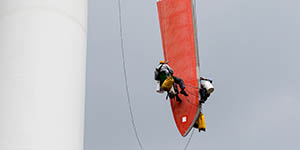
Molded Fiber Glass Companies is a leader in the field of reinforced plastics and composites, serving diverse markets with a variety of composite material systems. The company has 16 operating entities in the United States and Mexico, strategically focused to supply high value, high quality products and manufacturing services for applications such as wind energy, automotive, heavy truck, defense, construction, material handling, and water treatment. An entity of the Molded Fiber Glass Companies, WES provides fast response, onsite FRP composite repairs and maintenance for wind energy equipment including new sites, retrofits, and inspections. The company’s mobile response service teams are trained and equipped to quickly assess and make repairs from lightning strikes, shipping and installation damage, structural cracking, leading edge erosion and coating failure, blade balancing, and cosmetic/general warranty needs. Repairs can be handled prior to erection (shipping and handling damage), uptower, onsite with the blade removed, and offsite for more extensive factory repairs when necessary. WES employs 50-plus certified composite wind repair technicians who conduct approximately 90 percent of repairs onsite. Learn more at www.windenergyservicesusa.com.

Motion Solutions for Clean Energy Applications from Thomson

0

Thomson introduces the 2010 Guide to Motion Solutions for Clean Energy Applications. The guide reviews some of the most significant considerations that design engineers should take into account to maximize the reliability, accuracy and efficiency of their solar panel and wind energy machines, with specific information on the benefits that linear actuators, precision linear actuators, and screw jacks can bring to these challenging applications.

Robust linear actuators from Thomson are an easy to apply ‘green’ alternative to hydraulic or manual actuation,” according to Rob Gallagher, marketing communications manager, global. “Design engineers will benefit from a wide range of actuator platforms with flexible design and envelope possibilities to meet the diverse requirements for solar tracking systems and the key operating components of wind power, and this guide is designed to help them quickly and easily start to navigate the options.”

Thomson industrial linear actuators are engineered to deliver robust, reliable operation in the wide ranging outdoor conditions a clean energy facility is likely experience. Their industrial linear actuator products feature proven weather protection (ranging from IP56-67) to provide maintenance free 20-year life based on one complete cycle per day. Thomson’s proven power drive units can hold static loads of up to 4000lbs and provide superior resistance to back driving in high wind conditions. Temperature ratings cover significantly varied conditions, ranging from -40F to +185 F. The Thomson screw jack product line provides reliability and versatility in a variety of clean energy applications. Technically mature and with an easy-to-mount rectangular housing, they are easily extended to form wide-area jack systems with the aid of a wide range of accessories. Call (540) 633-3549, e-mail thomson@thomsonlinear.com, or go online to www.thomsonlinear.com.

Shaft Grounding Ring from Electro Static Technology

0

By safely channeling harmful shaft currents away from bearings to ground, Electro Static Technology’s new AEGIS™ WTG wind turbine grounding ring prevents bearing damage that could otherwise cause generator failure, unplanned downtime, costly repairs, and lost revenues. Maintenance-free, effective at any RPM, and available for any size wind turbine generator, the ring is designed for OEM installation or easy up-tower retrofit.

High-frequency currents induced on the shafts of wind turbine generators can reach levels of 60 amps and 1200 volts or greater. If not diverted these currents will discharge through the generator’s bearings, causing severe electrical damage that results in bearing failure and catastrophic turbine failure, sometimes in as little as six months or less.  The AEGIS WTG’s patented conductive microfiber technology effectively steers these currents away from the bearings and safely to ground.

The WTG is engineered to safely divert up to 120 amps of continuous shaft current at frequencies as high as 13.5 MHz and discharge up to 3000 volts (peak). Ideal for use as part of a preventive maintenance program to protect against premature bearing failures, it can be installed whenever bearings are replaced. For more information contact Adam Willwerth, sales and marketing manager, at (866) 738-1857 or sales@est-aegis.com. Go online to www.est-aegis.com.

Vestas to Move North American Headquarters

0

Vestas will move its North American sales and service headquarters into the historic Meier & Frank Depot Building in Portland’s Pearl District. Gerding Edlen Development, Inc., will transform the sturdy structure, vacant since Companies wishing to submit materials for inclusion in this section should contact Russ Willcutt at russ@windsystemsmag.com.

Releases accompanied by color images will be given first consideration. 2001, into one of Portland’s newest and most distinctive buildings. Construction is expected to begin in October 2010. Vestas plans to occupy the space in early 2012. The building will be designed with the intent to achieve LEED (Leadership in Energy and Environmental Design) Platinum certification. There are only 15 buildings in Portland designated as LEED Platinum, the highest rating given by the U.S. Green Building Council. Gerding Edlen, headquartered in Portland, is one of the nation’s largest developers of LEED-certified properties having developed more than 40 LEED projects since the inception of the U.S. Green Building Council. Built in 1928, the Meier & Frank Depot Building will undergo a complete historic renovation. When redeveloped the building will be 172,000 square feet that will include a 22,000 squarefoot addition on the fifth floor complete with an ecoroof terrace and gardens. Additionally, the building will have what is believed to be the largest roofmounted solar energy array in Portland’s central business district. The total project cost for the developer is estimated at $66 million. “We are making a long-term commitment to Portland,” says Martha Wyrsch, president of Vestas-American Wind Technology, Inc. “As a company devoted to wind power, it makes sense for us to be part of a community that so strongly supports clean energy.” “I am so pleased that Vestas is making a long-term commitment to grow their business here in Portland,” says Mayor Sam Adams. “This announcement shows the success of working strategically to grow quality jobs by building on our competitive advantage as a leader in clean technology and sustainable industries.

Moreover, our joint efforts mean that local architects, construction workers and engineers will get to work now converting a Portland landmark into one of the most energyefficient buildings in the United States.” Vestas’ Portland employees work in such fields as engineering, sales, project management, training, technology, accounting, human resources, legal services, and marketing, among others. Vestas, which employs about 2,400 people in the United States and Canada, also has 30 fulltime employees in central and eastern Oregon who maintain and service wind turbines. “This is a great day for Vestas, for the City of Portland, and for the state,” Oregon Gov. Ted Kulongoski says. “This building represents the very best in public and private partnerships. Our collective investments in this project will pay off now and in the future in the form of more green jobs in Portland. It also will establish a stronger renewable energy foundation for Oregon as a whole.”

Vestas, the world leader in producing high-tech wind power systems, has supplied more than 40,500 turbines globally since 1979. Vestas sold its first wind turbine in North America in 1981 and since has supplied more than 11,000 turbines to the United States and Canada. Learn more at www.vestas.com.

Finavera Renewables Signs Agreement for British Columbia Projects

0

Finavera Renewables, Inc., has signed a participation agreement with the McLeod Lake Indian Band for the Tumbler Ridge, Wildmare, Meikle, and Bullmoose Wind Energy Projects. The agreement was completed at a signing ceremony at the McLeod Lake Indian Band Annual General Assembly. The agreement sets out the guidelines for engagement between Finavera and the McLeod Lake Indian Band and represents a commitment by the parties to enter into discussions to develop further agreements.

“We support Finavera Renewables and others in the wind energy business as they represent the future for electric power generation. When done in a responsible way wind energy, unlike hydro dams, gives us power without destroying the land around us,” says Chief Derek Orr. “We are looking forward to being actively involved with Finavera Renewables.”

“I would like to thank Chief Derek Orr and the McLeod Lake Indian Band for their hospitality during their community’s Annual General Assembly,” says Finavera Renewables CEO Jason Bak. “The signing of this participation agreement illustrates our commitment to building a long term, mutually beneficial relationship with the McLeod Lake Indian Band.”

Under the terms of the agreement Finavera and the McLeod Lake Indian Band will address several key areas: training and employment opportunities, assessment of potential project impacts, and economic development opportunities. The agreement also sets out key principles that will guide future discussions between Finavera and the McLeod Lake Indian Band: respecting each other’s distinct identities, interests, and priorities while exploring common interests and opportunities, engagement, and consultation that are meaningful and results oriented, and a commitment to honest and open sharing of information and ideas and to joint problem solving.

McLeod Lake Indian Band has a membership of some 475 people and is part of the Tse’khene tribal group. The band owns several companies that are actively engaged in road and site construction, logging, and pipeline construction. The administrative center of the band is at McLeod Lake with a sub-office in Chetwynd, BC. For more information on Finavera Renewables contact Myke Clark, SVP Business Development, at (604) 288-9051 or mclark@finavera.com. Go online to www.finavera.com.

3M and Rope Partner Launch Study on Blade Edge Erosion

0

3M is partnering with Rope Partner to conduct an in-field study on the effects of leading edge wind turbine blade damage. The purpose of the yearlong study is to quantify the reduction in overall wind turbine output due to leading edge erosion. This data-driven study will be the first published work to put verifiable numbers behind this widespread issue for wind turbine blades.

As wind turbine blades rotate, reaching speeds of 180 miles per hour at the blade tips, they are constantly exposed to the elements and harsh outdoor conditions. Any airborne object such as sand, rain, and hail can lead to damage on the leading edge of the blade. This erosion negatively affects aerodynamics by causing turbulence that may reduce the overall turbine output.

“3M has been addressing the needs of the wind industry for more than 10 years. Our deep expertise and history with polyurethane tape technology has proven effective in tough environments. Similar polyurethane tape technology from 3M is also used in the aerospace industry to protect the leading edge of helicopter blades and aircraft radomes against erosion,” says Pam Kellenberger, global business manager for the 3M Wind Energy business. “Our best-in-class wind blade protection tapes can mitigate the output losses from leading edge erosion, and we are pleased to be on the forefront of quantifying and addressing such a widespread challenge for wind turbines.”

“Over the last decade at sites all across the globe we’ve seen firsthand the damage caused by leading edge erosion when conducting our inspections for wind turbine maintenance and repairs,” according to Chris Bley, director of business development at Rope Partner. “We’ve seen sites where significant erosion occurs in a little as two years after installation. Our customers are concerned about the effects this erosion will have on the performance of their turbines, and we are committed to finding answers for them through this important study.”

A recognized leader in research and development, 3M produces thousands of innovative products for dozens of diverse markets. 3M’s core strength is applying its more than 40 distinct technology platforms, often in combination, to a wide array of customer needs. Visit www.3m.com. Rope Partner is the premier provider of turbine maintenance, repair, and inspection services requiring specialized access approaches. Since 2001 in the U.S. and 1998 in Europe its rapid-response WindCorps™ technicians have partnered with clients to deliver cost effective, environmentally appropriate solutions, resulting in increased turbine availability and operational longevity. Go online to www.ropepartner.com.

Pressure Transmitters and Temperature Sensors from Danfoss

0

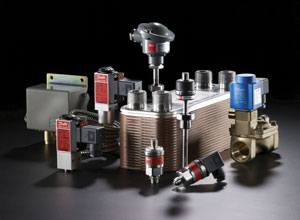
Located on top of towers that can extend 80 to 110 meters into the air, wind turbines are subjected to powerful operating forces. And because wind turbines are difficult to access for maintenance and repair, reliable monitoring and control components such as pressure and temperature sensors are vital for trouble-free operation.

Because they’re a critical link between control system fluids and components, choosing accurate, long-lasting pressure transmitters and temperature sensors is a must. Based on decades of experience with wind farms globally, Danfoss’ range of pressure transmitters and temperature sensors are ideal for demanding wind turbine applications. Monitoring and controlling hydraulic pressure and temperature in wind turbine equipment and subsystems is a complex process; at startup pressure rises and it’s released at shutdown, and for lubrication and rotation functions maintaining a minimum pressure level is crucial. To ensure smooth and safe operation the temperatures of the hydraulic unit, generator, drive shaft, gearbox, oil braking, and cooling systems have to be accurately monitored and controlled. That’s where Danfoss comes in.

Pressure and temperature signals are used by controllers to adjust valves, pumps, and other equipment to maintain stable operation and, increasingly, to control safety functions. Designed to handle over-pressure and pressure spikes, liquid cavitations, dirt contamination, intense operating cycles, and extreme temperatures, Danfoss pressure transmitters and temperature sensors have been keeping wind turbines rotating, and safe, for decades.

Two industry favorites are the MBS 3000 pressure transmitter and the MBT 5310 temperature sensor. Fitted with a pulse snubber, the MBS 3000 can withstand water hammer, liquid cavitation, and pressure peaks. Designed to handle the heavy vibrations in wind turbines, the MBT 5310 features a spring-loaded sensor to ensure close and reliable contact, and it can withstand temperatures up to 200°C. For more information please visit www.danfoss.us/ia.

Lincoln Electric Open Intermountain Training Center

0

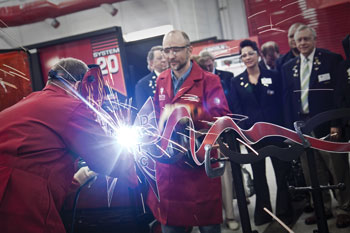
Lincoln Electric has partnered with Davis Applied Technology College (DATC) to open its new Intermountain Training Center in Kaysville, Utah. The 5,000 square-foot, world-class welding demonstration and training facility will serve a dual role. For Lincoln the center provides a venue for the manufacturer to conduct customer seminars and training for new products, cost reduction, productivity/process improvements, automation, and engineering design, as well as for continuing education for existing customers and distributors. For DATC this public/private partnership supports and enhances the college’s existing welding program and provides graduates with the welding skills for today’s job market requirements. Officially known as the Lincoln Electric Intermountain Training Center at Davis Applied Technology College, the center was completely revamped and outfitted with the latest Lincoln Electric welding equipment and technology.

“Partnering with DATC improves our operational efficiency, as well as enabling us to more effectively provide Lincoln Electric’s advanced welding technology knowledge through distributor training and customer seminars in a facility unmatched in the Intermountain area,” says Richard Peterson, district manager. “DATC is an industry-driven organization, which has several successful industry partnerships. Its close relationships with welding-related industries in the area will help improve opportunities for Lincoln.”

DATC welding instructor Nick Price is excited about this new partnership after taking over the instructor responsibility at the beginning of the year. “I don’t think we could have a stronger partner for the college,” he says. “Lincoln Electric is going to do really big things for us. Besides keeping up with the latest equipment, they will always make sure we have the newest, state of the art equipment available to students, who will benefit greatly from this partnership.

Michael Bouwhuis, DATC campus president, anticipates this partnership will provide a strong level of quality and value to the historically strong welding program. “The marriage created by this partnership links state-of-the-art equipment to newly renovated facilities, forming one of the finest welding facilities in Utah,” he says. “This will also enhance the quality of technicians in the manufacturing sector of the economy to new levels of performance.”

The Lincoln Electric Company is the world leader in the design, development, and manufacture of arc welding products, robotic arc welding systems, weld fume control equipment, and plasma and oxyfuel cutting equipment. The company holds a leading global position in the brazing and soldering alloys market. For more information go to www.lincolnelectric.com. Davis Applied Technology Center (DATC) is one of eight campuses of Utah College Applied Technology and is located just north of Salt Lake City. DATC provides training in an open-entry, open-exit environment that annually prepares more than 7,400 high school and adult students with career and technical skills. Learn more at www.datc.edu.

Trelleborg Supports World’s First Floating Wind Turbine

0

Statoil’s innovative new offshore floating Hywind wind turbine, now successfully moored in the North Sea off the Norwegian coast, is demonstrating how Trelleborg Offshore’s syntactic foam buoyancy technology is contributing to the future of offshore power generation. “It is subsea technology that has already been extensively proven,” says Gary Howland, renewables sales manager for Trelleborg Offshore. “Trelleborg Distributed Buoyancy Modules (DBMs) developed for deepwater support of umbilicals and risers in the oil and gas industry are ideal for this application, helping reduce project risk by using proven technology.

“People see the tower and turbine but forget that the expertise in designing the subsea portion is also critical,” he says, “as ultimately it keeps the whole turbine afloat. The dynamic floating structure weighs 5,300 tons and is 165 metres tall; with a total of 65 metres above sea surface. The 13km of power offtake and communications cabling attached to the structure further adds to its weight. It’s like the proverbial iceberg; the mass floating below the surface ensures stability. Unless the weight is supported by properly designed buoyancy the whole structure would be much less able to resist the extremes of the offshore environment and the cable could suffer premature damage.”

For Hywind, Trelleborg Offshore designed and supplied 45 off polymer-coated syntactic foam DBMs which supply buoyancy support for a 3 ton, 100 meter section of cable as it exits the turbine spar and descends to the sea bed at -220 meters. The buoyancy modules include an internal clamp for secure fastening and precise positioning on the cable. The cable is supported mid-water in what is known as a ‘Lazy Wave’ configuration, featuring gentle long radius curves that minimise stress on the cable while accommodating natural movement created by wind and waves.

“For optimum buoyancy under different sea conditions, the precise position of the buoyancy modules on the cable is pre-calculated,” Howland explains. “The positions must be maintained, despite stresses during launch and in operation. The clamp is crucial; the design, material selection and manufacturing technique are critical in ensuring the finished clamp maintains the buoyancy module position, during cable contraction and expansion, over the 20 year lifetime of the project.”

Using advanced polymer material technology, Trelleborg Offshore provides high integrity solutions for the harshest and most demanding offshore environments. As part of the Trelleborg Engineered Systems Business Area of Trelleborg Group, it specializes in the development and production of polymer and syntactic foam based seismic, marine, buoyancy, cable protection, and thermal insulation products, as well as rubber-based passive and active fire protection solutions for the offshore industry. Go online to www.trelleborg.com/offshore.

Portable Mechanics’ Service Sets From Snap-on Industrial

0

You can’t always bring the big job to the tool crib, so Snap-on Industrial is bringing the tool crib to the job. Portable mechanics’ service sets put large and small hand tools—including screw drivers, wrenches, and pliers, along with multimeters and other specialty equipment—at easy reach for professionals looking for maximum protection of their tools and equipment combined with great accessibility. A hard-sided Pelican™ 0450 case houses a choice of two comprehensive tool offerings. Everything starts with the mobile tool case that features rugged trolley wheels and handle for easy and secure mobility.  Each configuration comes with seven custom foam-equipped removable drawers, and an integrated top tray includes custom foam tool storage as well. Two automatic pressure equalization values keep water molecules out and ensure easy opening, whether you’re at 1,000 feet below the ocean’s surface or at 50,000 feet in the air. Cases are also water, temperature, drop, and impact resistant. Each unit meets DOD (Air Force) operation guidelines and complements existing safety programs. Tool coding etched into each tool with corresponding number laser printed into the tool’s individual storage space simplifies inventory control and maximizes overall accountability.

Snap-on Industrial is a division of Snap-on Incorporated, a leading global innovator, manufacturer, and marketer of tools, diagnostics, equipment, software, and service solutions for professional users. Products and services include hand and power tools, tool storage, diagnostics software, information and management systems, shop equipment and other solutions for vehicle dealerships and repair centers, as well as customers in industry, government, agriculture, aviation and natural resources. For more information call (877) 740-1900 or visit www.snapon.com/industrial.

AMSC Acquires Stake in Blade Dynamics Ltd.

0

American Superconductor Corporation has acquired a 25 percent ownership position in Blade Dynamics Ltd., a designer and manufacturer of advanced wind turbine blades based on proprietary materials and structural technologies. Founded in the United Kingdom in 2007, Blade Dynamics has developed wind turbine blade technologies designed to increase the efficiency and performance of very high power (multi-megawatt) wind turbines while also reducing costs. The Dow Chemical Company, through its Venture Capital group, also made a minority equity investment in Blade Dynamics.

“Blade Dynamics has developed unique and proprietary structural designs and manufacturing methods aimed at overcoming critical barriers that are facing today’s wind industry,” says Blade Dynamics founder and CEO Paul Rudling. “Utilizing advanced manufacturing processes, innovative structural designs, proven composite materials, and our advanced Bladeskyn surface coatings, our wind turbine blades provide compelling performance and efficiency advantages for wind turbine manufacturers. We see tremendous potential for this technology and are delighted to work with AMSC and Dow. Blade Dynamics will now be able to utilize AMSC’s unique wind turbine design capabilities and business model as well as Dow’s global reach and composite materials to capitalize on the tremendous opportunities we see in front of us.”

Today’s 2 megawatt (MW) wind turbines require rotors that are more than 70 meters (230 feet) in diameter, and 5 MW wind turbines require rotors that are at least 120 meters (360 feet) in diameter. Rotor diameter is the diameter of the swept area of a wind turbine’s blades. Ideally, these wind turbines would be equipped with even larger-diameter rotors to maximize power output. Yet cost, weight, and transportation factors have historically limited the size of rotors, outweighing performance and efficiency benefits.

“The design and manufacturing processes for wind turbine blades have remained fundamentally unchanged for 20 years,” says AMSC founder and CEO Greg Yurek. “Today, however, the market is migrating to higher wind turbine power ratings. Onshore wind turbines now exceed 2 MW in many locations, and offshore wind farm developers are increasingly seeking wind turbines with power ratings exceeding 5 MW. Blade Dynamics presents us—and the entire wind industry—with a game-changing wind turbine blade technology that enhances performance and reduces weight and cost for high power wind turbines. We view this as a compelling investment and expect many wind turbine manufacturers, including our own AMSC Windtec™ licensees, to quickly migrate to the Blade Dynamics solution to avail themselves of these competitive advantages. In fact, AMSC Windtec and Blade Dynamics engineers have already been working in close collaboration to optimize blades for AMSC Windtec turbine designs.”

AMSC has acquired its 25 percent stake in Blade Dynamics for $8 million in cash and will have one seat on the Blade Dynamics Board of Directors. In addition to providing AMSC Windtec licensees with a differentiated blade offering, AMSC expects that its investment could expand the company’s sales opportunities with other wind turbine manufacturers around the world. AMSC also expects that Blade Dynamics technology will provide a compelling blade platform for the company’s 10 MW SeaTitan™ superconductor wind turbines. For more information go to www.amsc.com, www.bladedynamics.com, or www.dow.com.

Deere Reaches Agreement for Sale of Wind Energy Business

0

Deere & Company has announced that it has signed a definitive agreement to sell John Deere Renewables, LLC, its wind energy business, to Exelon Generation Company, LLC, a wholly-owned subsidiary of Exelon Corporation. “As Deere sharpens its own strategic focus, we have concluded that the company’s resources are best invested in growing our core equipment businesses around the world,” says Samuel R. Allen, Deere & Company chairman and chief executive officer. “We have chosen to place the wind portfolio with Exelon in part due to its demonstrated leadership in the energy industry.”

Deere said the $900 million sale, including earn-out provisions, will result in an after-tax charge of approximately $25 million in its fourth quarter results. The charge was not reflected in Deere’s fourth quarter earnings forecast of approximately $375 million that was announced August 18th.

John Deere Renewables includes 36 completed projects in eight states with an operational capacity of 735 megawatts. The definitive agreement includes the completed projects plus numerous others in development. Subject to regulatory approvals, Deere anticipates the transaction to close within the 2010 calendar year. For more information contact Ken Golden, director of strategic public relations at Deere & Company, at (309) 765-5678. Go online to www.deere.com.

Siemens and Samsung Enter Into Major Supply Agreement for Canada

0

Siemens Energy and Samsung C&T Corporation have signed an agreement for the supply of wind turbines with a total capacity of up to 600 megawatts (MW). The wind turbines to be delivered under this supply agreement will be deployed at selected wind projects in southern Ontario and will provide clean power to approximately 240,000 Canadian homes. Furthermore, Siemens will establish a blade manufacturing site in Canada that is set to create up to 300 jobs in the province.

“With this supply agreement we are strengthening our position in the rapidly growing wind power market in Canada,” says Jens-Peter Saul, CEO of the Siemens Wind Power Business Unit. “Furthermore, by investing in a new blade production facility in Canada, Siemens is pushing further ahead with the regionalization of its wind manufacturing network in important markets.”

Siemens also recently invested in a U.S. nacelle production facility in Hutchinson, Kansas, which will start producing nacelles in December 2010. Siemens has been working with Samsung C&T and its development partner Pattern Energy on this first phase of development under Ontario’s Feed-in Tariff (FIT) program where Samsung has committed to develop 2,000 MW of wind power over the next six years. The new wind turbine supply agreement is a significant step on the road to realizing this commitment.

The installed capacity of wind power in Canada is expected to increase from 3,400 MW today to more than 15,000 MW in 2020. Siemens already has a strong presence in Canada, so far the company has installed a total of 130 2.3-MW rated wind turbines at Kruger Energy’s 101.2-MW Port Alma wind farm and TransAlta’s 197.8-MW Wolfe Island wind farm in Ontario, and is supplying an additional 152 units of its 2.3-MW wind turbines to four recently announced projects, which will bring Siemens installed capacity to a total of 550 MW by the end of 2011.

Wind energy is part of Siemens’ Environmental Portfolio. In fiscal 2009 revenue from the portfolio totaled about EUR23 billion, making Siemens the world’s largest supplier of ecofriendly technologies. In the same period the company’s products and solutions enabled customers to reduce their CO2 emissions by 210 million tons. This amount equals the combined annual CO2 emissions of New York, Tokyo, London, and Berlin. Further information is available at www.siemens.com/energy.

AFC-Holcroft Supplies Gearbox Equipment to Brevini Wind

0

AFC-Holcroft is pleased to announce the receipt of a new furnace order for a sealed quench furnace line that will be used to process specialized components utilized in the wind energy market. The furnace line is based on AFC-Holcroft’s standard, modular UBQ (Universal Batch Quench) family of products, but was modified to optimize its efficiency for the mix of products required by this customer.

Brevini Wind, headquartered in Italy, is expanding their facility in Indiana, where the equipment will be installed. AFC-Holcroft is pleased to be part of the premium Brevini supplier base as they expand their business units around the world. AFC-Holcroft’s European branch office spearheaded this project, although equipment for the project will be built in North America. “We believe the time is right to invest in additional capacity, in North America specifically,” says Jacopo Tozzi, president and CEO of Brevini Wind. “The UBQ furnace fit our needs for today and allows the flexibility of future expansion as the wind energy sector continues to grow.”

“We are thrilled to add Brevini to the list of global manufacturing suppliers who have chosen AFC-Holcroft and our UBQ furnaces for their operations,” says Marc Ruetsch, director of european operations at AFC-Holcroft. “Our UBQ furnaces have gained global acceptance by several multinational companies, due not only to their adaptability to changes in capacity, part loads and temperature requirement but also to their modularity, which allows easier reconfiguration options within existing floorspace for future capacity.”

AFC-Holcroft is one of the world’s largest manufacturers of heat treating furnaces. The company has a global reach, with organizations in the United States, Argentina, Australia, Brazil, China, India, Korea, Mexico, Poland, Russia, Spain, and Turkey, including manufacturing means in many of these countries. For more information contact Ruetsch at europe@afcholcroft.com. Go online to www.afc-holcroft.com.

Natural Power to Establish North American Hub

0

Leading renewable energy consultancy Natural Power is to merge their U.S. and Canadian operations to provide seamless service offerings to clients active across North America’s national boundaries. Natural Power’s new North American hub will be a center of excellence for consultancy services and product support across the company’s range of offerings. CurrentPresident of U.S. Operations Jim Adams will take the helm as president of North American operations. Erin Harlos, currently the director at Natural Power’s Vancouver office, will support as vice president. Between them, Adams and Harlos have over 14 years of experience spanning the wind and marine renewable sector.

“There is huge potential for the North American renewables industry, particularly in onshore and offshore wind,” Adams says. “Natural Power has been active in North America for over five years and provides industry leading product innovations such as complex flow modeling to ensure new projects perform to expectations, due diligence to support project investment, and ZephIR lidar to efficiently validating models and provide bankable wind energy assessments. Additionally, drawing upon our extensive experience in providing full life-cycle services to Europe’s offshore wind, wave, and tidal industries, we have the unique ability to bring very applied and seasoned products and services to North America’s blossoming offshore renewables industry, leveraging many of the lessons learned in this rapidly growing market sector. With a dedicated North American hub we will better service both our consultancy customers but also our product customers who require local engineering, construction and operational support which we will now build at pace.”

This fall Natural Power will be presenting and exhibiting at the AWEA Wind Resource & Project Energy Assessment Workshop in Oklahoma and AWEA’s Offshore Wind Conference in Atlantic City), New Jersey, as well as at CanWEA’s annual conference in Montreal. The team will also be hosting several educational Complex Terrain Workshops in the U.S. and Canada. Details on upcoming workshops can be requested by e-mailing training@naturalpower.com or visiting www.naturalpower.com.

Smart Grid Cyber Security Guidelines From NIST

0

The National Institute of Standards and Technology (NIST) has finalized its initial set of Smart Grid cyber security guidelines. Guidelines for Smart Grid Cyber Security (NISTIR7628) include high-level security requirements, a framework for assessing risks, an evaluation of privacy issues in personal residences, and other information for organizations to use as they craft strategies to protect the modernizing power grid from attacks, malicious code, cascading errors, and other threats.

The product of two formal public reviews and the focus of numerous workshops and teleconferences over the past 17 months, the three-volume set of guidelines is intended to facilitate organization-specific smart grid cyber security strategies focused on prevention, detection, response, and recovery. “As we modernize the nation’s electric infrastructure to make it smarter, more efficient, and more capable, we need to we need to make it more secure from end to end,” according to U.S. Commerce Secretary Gary Locke. “These new cyber security guidelines will help government and industry meet this important responsibility.”

“The development of common smart grid standards is a national priority, and these cyber security guidelines are an important step toward that goal,” says U.S Energy Secretary Steven Chu. “If we are to truly modernize our electrical grid, we must have electricity producers, distributors and consumers all speaking the same language and all working together to make our grid more secure. Cyber security is an integral part of the grid.”

The new report was prepared by the Cyber Security Working Group (CSWG) of the Smart Grid Interoperability Panel, a public-private partnership launched by NIST with American Recovery and Reinvestment Act funding from the Department of Energy. To access Guidelines for Smart Grid Cyber Security (NISTIR 7628) go to www.csrc.nist.gov/publications/PubsNISTIRs.html#NIST-IR-7628. Also visit www.nist.gov.

Mortenson Construction Builds Its Fourth Wind Facility In Illinois

0

Mortenson Construction has started construction of White Oak Energy Center near Bloomington, Illinois, adding 150 megawatts to Illinois’ approximate 2,000-megawatt wind generating capacity. Located in agricultural terrain in central Illinois along the McLean and Woodford County lines, the wind power facility, developed by Chicago-based developer Invenergy Wind LLC, will consist of 100-1.5 megawatt GE turbines. Mortenson is responsible for the design and construction of access roads, foundations, and the erection of the turbines. Invenergy is the sixth largest owner of wind generation assets in the United States, according to the American Wind Energy Association.

According to the Illinois Wind Energy Association, an average 100-megawatt wind farm in Illinois creates 150 temporary construction jobs and 10 permanent maintenance jobs. “We are excited to be building another wind energy project in Illinois and look forward to partnering with the local community to safely deliver this project to our customer, Invenergy,” says Tim Maag, vice president and general manager of Mortenson’s Renewable Energy Groups. “The White Oak project will be our fourth wind project we have built in Illinois, which represents approximately 40 percent of the state’s total generating capacity.”

Since entering the renewable energy market in 1995, Mortenson Construction has become a leading building of wind power facilities in North America and has erected 5,000 wind turbines across the United States and Canada. With 100 percent of Mortenson’s business in the power sector coming from renewable energy, Engineering News-Record ranked Mortenson the 11th largest power contractor in the U.S. for 2009.  In addition to wind power, Mortenson’s Renewable Energy Groups also construct facilities that generate solar power, biofuels, and hydro-electric power.

The White Oak facility has been in the planning process for several years. With Illinois’ robust wind resources, evolved transmission system, and progressive public policy, the project marks another significant step for a state leading the way in renewable energy. Learn more by visiting www.mortenson.com/wind.