







Home 2010

Intertek Opens Test Center for Small Wind Turbines

0

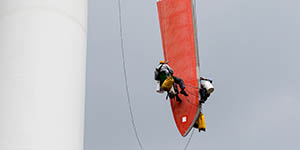
Intertek—a global leader in testing, inspection and certification services—has announced the opening of an open-air test site for small wind turbines. The test site in Otisco, New York, together with the company’s nearby Cortland lab, is the only wind testing facility in North America that is operated by an OSHA-acknowledged NRTL (Nationally Recognized Testing Laboratory) capable of providing small wind turbine system and electrical component certifications. Third party certification—including Intertek’s ETL Mark for the U.S., Canada, and Europe—demonstrates the compliance to national and international safety standards.

Government incentive programs for clean and renewable energy are a key driver in the rapidly growing international wind power market. Intertek tests wind turbines and provides data for program managers to determine product eligibility for incentive programs. As a recognized third party testing company Intertek increases sales opportunities for manufacturers by providing verification of compliance with national and international wind turbine efficiency, performance, and safety requirements.

“Intertek’s new small wind test center is significant to both buyers and sellers of small wind turbines,” says Brian Kramak, director of energy services. “Buyers of wind turbines have reliable third-party verification of important safety, acoustic, and performance data. Sellers of wind turbines are able to demonstrate compliance to regulatory requirements and incentive program requirements.”

Intertek will test and certify small wind turbines for durability and performance according to the new AWEA 9.1 Small Wind Turbine Safety and Performance standard, and also the newly released Canadian standards such as CAN/CSA C61400-2, creating a one-stop shop for complete U.S. and Canadian wind turbine testing and certification requirements. Intertek will also test for manufacturers that wish to use other certification bodies, such as the Small Wind Certification Council (SWCC).

The facility will support testing of several small wind turbines at the same time, from the smaller micro-turbines of a few hundred watts up to the “largest” small wind turbine of 200m2 swept blade area—about 50-60kw. Using remote access monitoring, Intertek will generate 24/7 data to evaluate a range of real world environmental conditions, as required by the AWEA, Canadian, and international wind turbine standards. The test center complements Intertek’s existing market-leading capabilities for testing and certification of electrical components and systems including generators, inverters and controls among others. Learn more at www.intertek.com/wind.
North America’s First Freshwater Offshore Wind Farm Announced

0

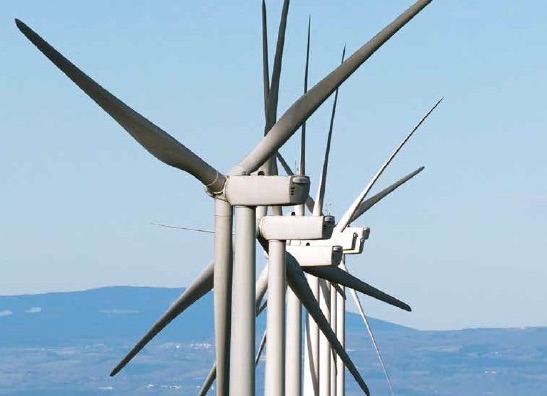
Ohio Governor Ted Strickland announced a partnership between GE and the Lake Erie Energy Development Corporation to harness the wind power of Lake Erie and develop the first freshwater offshore wind farm in North America. Strickland made the announcement at the American Wind Energy Association’s annual WINDPOWER Conference in Dallas.

“Ohio’s greatest potential for creating wind energy is offshore in Lake Erie, and this partnership marks a significant step forward,” Strickland said. “In Ohio we have all the right assets to make offshore wind energy successful, including an innovative workforce and the manufacturing strengths that would allow us to build all the component parts for wind turbines. This partnership will not only advance offshore wind technologies, it will also advance Ohio’s economy. We are eager to continue the state’s strong collaboration with GE and LEEDCo as we pursue this exciting, first of its kind initiative for Lake Erie.”

The partnership and project is a significant step towards accelerating the deployment of offshore wind in the Great Lakes. GE has committed to providing offshore wind turbines and maintenance services for an initial 20-megawatt wind farm. Upon its completion, targeted for late 2012, this project would be located off the shores of Lake Erie near Cleveland. This would be followed by subsequent projects with a long-term goal of 1,000 megawatts in the Ohio waters of Lake Erie by 2020. These activities will support a shared vision of making the Great Lakes a major economic engine for Northern Ohio, capitalizing on the region’s skilled workforce and expertise in advanced manufacturing. The LEEDCo-GE partnership builds on the momentum of a four-year effort by The Great Lakes Energy Development Task Force and other Ohio partners to establish an offshore wind industry on Lake Erie, leveraging the region’s strong manufacturing base.

In addition to collaborating on the initial 20-megawatt project, GE and LEEDCo will create a strategic plan to identify opportunities to make offshore wind energy in the Great Lakes economically viable, and also work jointly on advocacy and public policy issues to increase support for offshore wind energy. For more information go to www.ge.com/energy or www.leedco.org.

Romax Opens Wind Energy Technical Center in Colorado

0

Romax Technology is opening a new technical center in Colorado in response to the growing demand for their technical consultancy services from the U.S. wind energy industry. Located in Boulder—a nationally recognized hub for wind energy technical excellence and innovation—the facility will provide a center for Romax’s wind engineering excellence, enabling the delivery of key projects with local wind energy clients and partners. Adding to the company’s 10 worldwide offices, and complimenting an established technical and sales team in Troy, Michigan, the facility will focus solely on the delivery of products and services for wind energy.

Recent growth in the U.S. wind industry has created strong demand for Romax’s wind energy products and services, which include component and system level drivetrain design and simulation as well as manufacturing, testing, and certification support. “Over the past four years, the U.S. wind energy market has earned its position as one of the largest in the world,” according to Dr. Ashley Crowther, U.S. engineering director for wind energy at Romax, “with domestic and foreign manufacturers all aspiring to meet the needs of this fast growing market.”

The technical center will initially provide support to important American wind initiatives such as NREL’s Gearbox Reliability Collaborative as well as assisting wind turbine and component manufacturers to supply exceptional products to the U.S. market. The first long-term technical partner to be supported by the new center is Boulder Wind Power (BWP). Identifying Romax as a key technical partner, BWP intend to design, develop, and eventually manufacture large multi-megawatt, direct drive wind turbines. Romax will lend their expertise to achieve a reduction in development time, providing BWP with design, analysis, dynamics, and instrumentation experience for the whole direct drive turbine drivetrain.

“This new facility strengthens Romax’s ability to deliver local development programs and provide mission-critical technical support on drivetrain issues to the wider U.S. wind industry,” says Andy Poon, director of wind energy at Romax. “In addition it will enable Romax to work more closely with research partners to advance wind turbine technology, ensuring we play a dedicated and active role within the U.S. wind industry.” Visit www.romaxtech.com for more information.

Second-Generation Lidar from NRG Systems and Leosphere

0

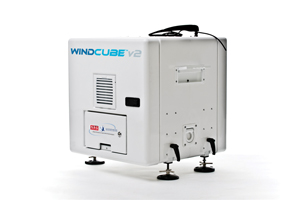
NRG Systems, manufacturer of wind measurement equipment, and Leosphere, a specialist in lidar for atmospheric observations, announces the introduction of the WINDCUBE® v2, the lightest, most compact lidar remote sensor available. Used in site assessment and wind farm performance monitoring, it collects actual measurements at heights up to 200 meters, mapping the vertical wind component, wind speed, and direction, turbulence, and wind shear.

“Lidar has quickly become the must-have tool in resource assessment,” says Alex Sauvage, president and CEO of Leosphere. “Over the past year our two companies have worked tirelessly to enhance the portability and durability of our lidar remote sensor, making it ideal for complex terrain, remote locations, and offshore.”

Weighing 45 kg and measuring approximately 55 cm square, the WINDCUBE v2 features no internal moving parts, multiple communications options (including satellite), low power requirements (45 watts), and an all-weather enclosure. The quiet, ultra portable 200m wind profiler includes 10 programmable measurement heights, providing ready to use data.

“By collecting actual measurements of the entire swept area of the wind turbine, the WINDCUBE v2 improves data accuracy and reduces overall uncertainty of the wind farm design,” says John Norton, COO for NRG Systems. “Improved certainty can make the difference between project success or failure.”

The WINDCUBE v2 is an active remote sensor that operates by emitting a laser pulse through the atmosphere. Along its path the laser light is backscattered by aerosols in the air and received by an optical sensor in the lidar unit. These signals capture the shift in atmospheric particles, or the absolute wind speed in the lidar line of sight. For more information visit www.lidarwindtechnologies.com. Also go to www.leosphere.com or www.nrgsystems.com.

Second Wind Sails Toward Wind Data Collection Landmark

0

Confirming that wind power companies are using its Triton Wind Profiler systems widely and relying on them heavily, Second Wind announces that Triton has amassed more than 900,000 hours of global wind data and will hit the one-million-hour mark soon. “At the rate Triton units all over the world are now collecting data, we easily surpassed the one million hour mark in June,” says CEO Larry Letteney. “Seeing such a large data set accumulate after just two years in the field tells us that customers are using their Tritons aggressively to gather diverse data sets to make the best decisions for locating wind turbines.”

Triton is a ground-based profiling unit that employs SODAR—SOund Detection and Ranging, a variation on radar but with sound instead of radio waves—to measure wind speed, direction, and other data. Reports issued by the U.S. National Renewable Energy Laboratory and ECN Wind Energy Research Center of the Netherlands in 2010 and 2009, respectively, credit Triton with accuracy comparable to that of meteorological towers, which are the current standard for wind data collection.

Triton remote sensing systems give wind power companies a mobile, ground-based complement to tower-based data collection. It broadens the range of data wind companies have for siting turbines in the most productive locations possible, profiling winds as high as 200 meters off the ground. There are 125 Triton units deployed in 15 countries across the globe.

“I think there is a great future for remote sensing,” according to Andrew Garrad, president of GL Garrad Hassan, one of the world’s top renewable energy consultancies. “The combination of SODAR devices and traditional anemometry is a very good one, and GL Garrad Hassan is already using remote sensing data in combination with conventional methods and data.”

Triton’s data collection landmark is among several important milestones Second Wind has passed recently. The company is celebrating its 30th anniversary this year. It recently sold its 10,000th Nomad wind resource data logger, which is destined for a prospective wind farm site in Texas, the nation’s largest wind power producer. Nomad units are deployed on seven continents, from the Arctic to Antarctica, with each unit compiling data from as many as 20 weather sensors. Second Wind ranked on the Inc. 500 list of fastest-growing privately held companies for the past three years, and was named a finalist in the “Excellence in Renewable Energy Awards” competition for Triton, which was commercially introduced in 2008.

“The real satisfaction in being around a long time, as we have, is getting to see what you’ve worked for pay off in a big way,” says Chief Technical Officer and Co-founder Walter Sass. “The company has learned a lot and done a lot over the last 30 years as wind power technology has developed. Now that wind power is a serious item on the national agenda, we’re in a great position to take those 30 years of experience and turn them into 30 more years of success.” Learn more at www.secondwind.com.

Yaw Position Sensor for Wind Turbines from Micronor

0

MR200W series yaw position transducers monitor yaw position, direction, speed, and cable twist while providing proper feedback to the wind turbine’s yaw directional motor drive and brake control systems. A unit can be multifunctional and integrate any combination of electromechanical limit switches, rotary encoder, resolver, or potentiometer. Anti-backlash POM (polymer) pinion gear optimizes coupling to the turbine’s large yaw bull gear for long term reliability, accuracy, and repeatability.

Specially engineered for wind turbine applications, MR200W series yaw position transducers monitor position, direction, speed, and cable twist while providing the necessary feedback to the yaw directional motor drive and brake control system. These products are based on Micronor’s proven modular sensor and control technology developed and refined over 40-plus years of industrial product experience. An MR200W series position transducer can be multifunctional and integrate any combination of geared limit switches, rotary encoders, resolvers, or potentiometers. For increased accuracy and repeatability the unit can be supplied with an external anti-backlash POM (polymer) pinion gear that optimizes coupling to the wind turbine’s large yaw bull gear.

Micronor is a leading supplier of rugged and reliable components for industrial automation and process control industries.  Motion control products include encoders, resolvers, fiber optic position sensors, rotary limit switches, geared feedback transducers, cam timers, motorized potentiometers, manual pulse generators and handheld teach pendants. Micronor was founded in 1968 and has regional headquarters in both the United States and Europe. Contact Dennis Horwitz, VP of sales and marketing, at (805) 499-0114, sales@micronor.com, or www.micronor.com.

Mainstream Chooses ZephIR Lidar from Natural Power

0

One of the leading developers of renewable energy, Mainstream Renewable Power, has completed the first extensive wind assessment campaign in Latin America using Natural Power’s ZephIR lidar which, based at ground level, provides remote wind measurements from 10-200 meters to aid in the development of new wind farm sites.

The deployment was in the challenging terrain of the Atacama Desert, II Region, a virtually rainless plateau covering a 600 mile strip of land on the Pacific Coast of South America. Temperatures can rise to an extreme of over 40 °C during the day and drop to -10 °C after sunset. It is these thermal effects that are of interest to Mainstream due to the effect on wind shear in the area, provoked through Katabatic winds at night, while the hot desert ground during the day leads to convectional forced vertical wind components and turbulence. Traditional anemometry such as tall masts and cup anemometers, providing wind data up to 80m above ground, were not appropriate as the sole measurements in this case due to their limited height. Mainstream looked at a range of remote sensing technologies before selecting Natural Power’s ZephIR lidar.

“We were very interested in exploring the impact of these thermal effects on wind shear but were unable to use tall met masts to see the effects above hub height,” according to Shane Martin, senior wind analyst at Mainstream. “Natural Power’s team in Valparaiso were able to assist us in providing a ZephIR lidar for the campaign and the system was on site within a matter of days, measuring wind characteristics from ground level through to turbine tip height, and above. The campaign was completed successfully and the ZephIR lidar allowed Mainstream to gather all quantitative data necessary for the evaluation of the project.”

Natural Power established its Chile office based in Valparaíso during 2009, serving the South American market. Projects to date have ranged from advanced resource analysis to construction services for a range of international clients, including this latest lidar campaign for Mainstream. “It was a very positive experience to work closely with the Mainstream team on this project,” says Alexander von Pescatore, head of development in Chile. “Our ZephIR lidar system operated with 100-percent system availability and 100-percent data availability in some challenging terrain and environmental conditions. There are many more sites in South America which will benefit from the use of ZephIR over more traditional anemometry due to site conditions and thermal effects.”

Natural Power is a leading renewable energy consultancy that specializes in progressing sites onshore and offshore for clients, from proof of concept through project development, construction, asset management, and onward to repowering or decommissioning. Natural Power have worked on more than 15,000 MW of wind, wave, and tidal sites across Europe, the U.S., and Canada, while also providing 360° due diligence on a range of portfolios and projects. The company delivers both technical and management services, as well as industry-leading products from offices across the UK, France, Chile, Canada, and the U.S. Send e-mail to sayhello@naturalpower.com or visit online at www.naturalpower.com/zephir.

Klüber Introduces Specialty Lubricants for Wind

0

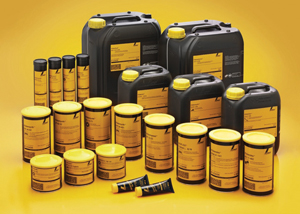
Klüber Lubrication, a worldwide manufacturer of specialty lubricants, recently showcased two specialty lubricants for the wind power industry at WINDPOWER 2010 in Dallas. The lubricants are Klüberplex® BEM 41-141 and Klüberplex® AG 11-462.

Klüberplex BEM 41-141 is high-performance grease with a special blend of base oil and additives to cover the different lubrication requirements of the individual bearing applications within wind power stations. The beige grease is ideal for pitch and yaw bearings (high stresses, oscillations, vibrations), main bearings (low rpm, high stresses, vibrations), and generator bearings (high rpm and temperatures). A simple switch to one lubricant for all bearings will reduce maintenance costs and simplify lubrication routines.

The second outstanding product is a priming and operational lubricant for open gears. Klüberplex AG 11-462 is white gear grease that provides excellent adhesion as well as superior protection against high loads and corrosion. The adhesive grease effectively lubricates the control gears for pitch and yaw systems while reducing the risk of migration inside the nacelle and onto the tower.

Klüber Lubrication, a worldwide manufacturer of specialty lubricants, has long been on the cutting edge of lubricant technology. For more than 75 years it has been committed to providing tribological solutions for its customers by manufacturing and supplying specialty lubricants for extreme applications. Its lubricants succeed where conventional lubricants fail. With representation around the globe, and a product portfolio of more than 2,000 standard lubricants, Klüber’s products and services are available wherever and whenever they are needed. Learn more at www.klubersolutions.com/wind.

New Renewable Energy Business Unit at MAG

0

MAG Industrial Automation Systems is powering up on green energy, announcing the formation of a new Renewable Energy Business unit to design/build automated manufacturing systems for solar panels and wind turbine components. The new business’s operations are based in Schaffhausen, Switzerland, and Hebron, Kentucky, and are headed by Dr. Siegfried Schmalzried in Europe/Asia and Joe Jones in the Americas. According to Jones, the renewable energy business is off to a strong start. “In recent months we have secured $30 million in contracts,” he says, “representing an approximate 30 percent share of our targeted market, putting us on track for our goal to produce 10 percent of MAG’s annual revenue,” he says.

MAG is currently sharing in a $7 million grant from the state of Michigan to develop a revolutionary wind hub machining cell for high-volume manufacturing and pursue development of carbon-fiber turbine blades. MAG is also focused on expansion to serve customers in emerging sectors in key markets. “We opened a new Composites Technical Center in Göppingen, Germany, in 2009, and a new plant in Changchun, China, earlier this year,” Jones says, “so now have 24 worldwide facilities, 15 of them in Europe and Asia.” To learn more call Mark Logan at (859) 534-4600, e-mail info-us@mag-ias.com, or go to www.mag-ias.com.

Dakota Wind Energy Awarded Backfill Status

0

Dakota Wind Energy, along with its managing member, National Wind, announces the acceptance by the Midwest ISO (MISO) of its 300 MW interconnection request into the Big Stone II Transmission backfill study group. Regional electrical transmission operator MISO identified wind projects that can utilize, or “backfill,” the electrical capacity once reserved for the Big Stone II coal plant. As a result, Dakota Wind Energy’s interconnection request will move into a more advanced MISO study phase, in which additional required system upgrades will be identified. Once all of the upgrades are studied and established Dakota Wind Energy can enter into a generator interconnection agreement, allowing us to interconnect the initial 300 MW portion of the Dakota Wind Energy project to the transmission grid.

Dakota Wind Energy was formed by National Wind in partnership with local landowners in January 2008. The project’s goal is to develop up to 750 megawatts of community-owned wind energy in Day, Roberts, and Marshall counties in northeastern South Dakota. Currently, Dakota Wind Energy has leased approximately 60,000 acres and recorded over two years of on-site meteorological tower data, which has indicated an excellent wind regime. The project has also completed its initial environmental assessments and filed a draft site permit with the South Dakota Public Utilities Commission. For more information go to www.dakotawindenergy.com or www.nationalwind.com.

New Group CEO at Kenersys

0

Kenersys, a Kalyani Group Company and wind turbine manufacturer, has appointed Paulo Fernando Soares as the Group CEO. Prior to joining Kenersys he worked as the CEO of Suzlon China in Beijing for a period of five years. Under his leadership Suzlon has successfully negotiated significant amount of contracts in the Chinese market, which have allowed the company to secure a place as one of the leaders among the international players in the industry in China. As the CEO of Suzlon China he was responsible for developing its business from a start-up phase to a completely established plant with a capacity to manufacture 600 MW per year.

Fernando has over 15 years of experience in the hydropower business in Brazil and China. He has worked with Siemens Hydro in Brazil, followed by Voith Siemens Hydro joint venture in Shanghai, China. During his tenure with Siemens he acquired in-depth knowledge across functions such as market development, manufacturing, project management, engineering, and controlling. His last position was vice president of project management at Voith Siemens Shanghai in China from 2000 to 2005. He has a bachelor’s degree in mechanical engineering and an executive MBA in general management.

Kenersys presently has two operating entities in Germany and India (Kenersys Europe GmbH and Kenersys India Private Limited respectively) for manufacturing, assembling, marketing, and servicing wind turbines. Kenersys is co-funded by First Reserve Corporation, a leading U.S.-based private equity firm.

“We are happy to have Paulo as a part of our team and the new Kenersys Group CEO,” says Baba Kalyani, chairman of the Kalyani Group. “Paulo brings with him rich and unique experience in the area of renewable energy. This will help us create opportunities and take Kenersys to the next stage, both in Europe as well as in India.”

“I’m delighted to have been given this opportunity,” Fernando says. “Together with the team at Kenersys it will be my endeavour to take this company to greater heights in the wind energy business.” For more information visit www.kenersys.com.

AMSC Receives Large Grid Interconnection Order

0

American Superconductor Corporation, a global power technologies company, announces that Vestas Australian Wind Technology Pty Ltd has placed an order for a large D-VAR-based grid interconnection system. Utilizing 24 D-VAR modules integrated with external smart-switched capacitor banks and proprietary controls that are optimized for wind farm applications, this is AMSC’s largest order for a grid interconnection system to date. The solution will be utilized to meet local grid interconnection requirements for the 206 MW Collgar Wind Farm under construction in Western Australia. AMSC expects to deliver the D-VAR equipment to Vestas within approximately 12 months. AMSC’s grid interconnection solutions are already connecting more than one-third of Australia’s wind power to the power grid.

Based in the city of Melbourne, Vestas Australian Wind Technology Pty is a wholly owned subsidiary of Denmark’s Vestas Wind Systems A/S. With more than 40,000 wind turbines operating worldwide, Vestas is the world’s leading supplier of wind power solutions. The company has more than 20,000 employees worldwide and annual revenues of approximately $9 billion.

“Australia was among the first countries to adopt dynamic voltage control requirements for wind farms connecting to the utility grid,” says Timothy Poor, senior vice president of global sales and business development at AMSC. “We expect that additional countries around the world will adopt similar strict dynamic voltage control requirements to more effectively control power flows stemming from the utility-scale wind farms and solar power plants that are being installed around the world. This, in turn, will help expand our addressable market.”

Customers utilize AMSC’s D-VAR solutions to provide dynamic voltage control, power factor correction, and post-contingency reactive compensation to stabilize the power grid and prevent undesirable events such as voltage collapse. These solutions also augment the overall performance of wind farms and enable developers to meet grid interconnection requirements adopted in countries such as Australia. D-VAR reactive compensation systems are classified as Static Compensators, or “STATCOMs,” a member of the FACTS (Flexible AC-Transmission System) family of power electronic solutions for alternating current (AC) power grids. These smart grid solutions are able to detect and instantaneously compensate for voltage disturbances by dynamically injecting leading or lagging reactive power into the power grid. Learn more by calling (978) 842-3000 or going to www.amsc.com.

Enhanced Rail Capabilities at Port Corpus Christi

0

Class-I rail services from the three major rail companies can now be offered at the port to move wind turbine components. Last year BNSF Railway and Union Pacific Rail Road (UP) began offering rail services to major manufacturers of wind energy components through Port Corpus Christi. Kansas City Southern Railway Company (KCSR) recently moved their first wind tower train from Port Corpus Christi. With this move all three Class-I carriers are now competing for wind component business in the region.

KCSR worked with Port Corpus Christi to coordinate the move, and Kansas City Southern de México S.A. de C.V. helped coordinate transportation and car distribution. Last week the movement of the first two 50-car unit trains by KCSR was its first wind energy component movement from Port Corpus Christi. “We are very pleased to be able to work with KCSR,” says John LaRue, executive director (see Q&A in this issue). “Having one more Class-I rail option to move the wind components from our port, along with our deep, uncongested channel and strategic location in the Gulf of Mexico, gives the port a better opportunity to serve the growth of wind energy components and other project cargoes.”

The primary economic engine of the Coastal Bend, Port Corpus Christi is one of the 10 largest ports in the United States in total tonnage. The port’s mission statement is to serve as a regional economic development catalyst while protecting and enhancing its existing industrial base and simultaneously working to diversify its international maritime cargo business. Strategically located on the western Gulf of Mexico, with a straight 45 foot-deep channel, the port provides quick access to the Gulf and the entire United States inland waterway system. The port delivers outstanding access to overland transportation with onsite and direct connections to three Class-1 railroads and uncongested interstate and state highways. The port is protected by a state of the-art security department and an award-winning environmental management system. With outstanding management and operations staff, Port Corpus Christi is clearly “More Than You Can Sea.” To learn more call (800) 580-7110 or go online to www.portofcorpuschristi.com.

MNI40 Magnetic Encoders from Pepperl+Fuchs

0

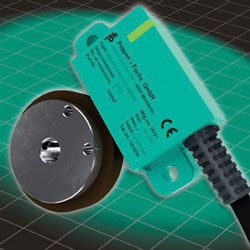
Pepperl+Fuchs introduces MNI40 incremental rotary encoders, a robust magnetic, non-contact encoder with intelligent diagnostics suitable for a wide range of applications. The MNI40 delivers resolution up to 3,600 pulses per revolution at speeds up to 30,000 rev/min and operating temperatures from -40°C…+100 °C. Robust, compact, and simple installation of the MNI40 make it an ideal choice for a wide range of applications including machine construction, wind power, mobile equipment, material handling lifts, and conveying technology. Primary features include clear indication via LED display (two-color), easy installation and setup, quality assurance through complete self-diagnosis, and long service life.

“The LED indications are particularly useful during installation and setup because they provide information on proper assembly,” says David Rubinski, product manager. “The integration of the LED also reduces installation time and test equipment requirements, and offers greater potential for reducing overall costs of machine and/or system construction.”

The MNI40 utilizes a zero-contact (magnetic) connection between the encoder sensor and magnetic wheel, enabling the MNI40N encoder to measure speed without ball bearings. This eliminates bearing wear due to mechanical forces and ensures long operating life. The sensor includes sensing electronics housed in a compact IP67 rated enclosure and an elastomer coated magnetic wheel, so contact with water and oil will not damage the encoder system. Call (330) 486-0001, e-mail fa-info@us.pepperl-fuchs.com, or visit www.pepperl-fuchs.us.

AWS Truewind Announces New Direction and Name

0

AWS Truewind LLC—an international leader in renewable energy consulting and information services—announces the official relaunch of the company as AWS Truepower, reflecting an expanded strategic focus on delivering a broader set of renewable energy development and operational solutions to its global customer base. In conjunction with the renaming of the company, AWS Truepower announced a suite of services aimed at helping solar project developers assess, streamline, and maximize the deployment and operations of solar energy systems.

“For nearly 25 years AWS Truewind has been a market leader in science and technology-based solutions that support the complete project lifecycle for renewable energy developers and industry stakeholders,” says Bruce Bailey, President and CEO. “This focus, including consulting on some of the Unites States’ earliest large-scale photovoltaic projects, has resulted in AWS Truewind becoming a well-known brand across markets and a 40 percent annual average growth rate. Our historical market emphasis on the wind energy industry was reflective of the maturity of wind technology from a utility-scale generation perspective. However, recently we have seen a rising demand from existing and potential customers for an expanded solar solutions set from AWS Truepower. We feel that the new brand, combined with key additions to our team in solar consulting, better reflects the strategic direction of AWS Truepower as we expand our renewable energy customer and solutions portfolio.”

AWS Truepower builds on more than two decades of providing renewable resource and energy assessment, engineering, and operational services to wind and solar project developers. Within its wide-ranging solution set to support the complete project lifecycle, AWS Truepower provides comprehensive assessments to help its customers meet the rigorous requirements of solar photovoltaic (PV) project financiers in a timely manner to prevent developers from missing out on beneficial market conditions such as advantageous pricing or policy environments. Furthermore, AWS Truepower delivers ongoing forecasting and operations services that help maximize system performance and better plan energy delivery. For more information visit www.awstruepower.com.

3TIER Powers Small Wind Decisions

0

Southwest Windpower and Better Generation will use 3TIER’s renewable energy information services platform to better educate customers on their on-site small wind energy potential. The platform enables both companies to integrate the most accurate, scientifically derived global wind resource data from 3TIER directly into tools that will help residential and small business customers more easily evaluate a potential investment in small wind.

“Easy access to accurate and unbiased wind resource information is going to help propel continued growth in the small wind industry,” says Kenneth Westrick, founder and CEO of 3TIER. “A small wind turbine is a significant investment, so it’s critically important to empower homeowners and small businesses with the information they need to make decisions with confidence. Only 3TIER can offer that anywhere in the world.”

Southwest Windpower, the world’s largest producer of small wind turbines, turned to 3TIER to help its dealer network better educate customers on their on-site wind energy potential. Dealers will have access to various online tools that tap into 3TIER’s global wind resource dataset to instantly forecast location-specific energy production of Southwest Windpower’s top-selling Skystream 3.7 small wind turbine. The integrated offering is made possible by 3TIER’s renewable energy information services platform, using both a Web interface and an application programming interface (API) to access its global wind dataset at different hub heights recommended for the Skystream turbine.

“Southwest Windpower is committed to utilizing the best technology available to help our prospective customers develop the most robust assessments of their wind energy opportunities worldwide,” says R. Dixon Thayer, CEO of Southwest Windpower. “Integrating 3TIER wind resource data into our assessment process ensures customers get the most accurate and reliable picture of the potential power they will receive from our turbines.”

UK-based Better Generation, a pioneer in inexpensive wind and solar measurement and energy prediction devices for the distributed market, will directly integrate 3TIER resource data into its Power Predictor product. Power Predictor is a device that enables residential and small business customers to collect on-site wind and solar data, and along with software, helps them select the best technology and products based on observed readings. To learn more go to www.3tier.com.

New Gleason OPTI-GRIND Process for Large Gears

0

Gleason’s latest generation of profile grinding machines can now be equipped to perform a revolutionary new process called OPTI-GRIND, which significantly improves productivity and quality levels for fine finishing cylindrical gears as large as 6 meters in diameter, and up to module 16. The new process enables end users to achieve optimum productivity and surface finishes by simultaneously using multiple dressable grinding wheels for profile grinding rather than just the single grinding wheel that is typically used. The process offers end users a number of variations to choose from to meet their specific applications. For example, when optimum productivity is required, OPTI-GRIND is up to 40-percent faster because it uses three grinding wheels to rough grind four tooth flanks simultaneously, as compared to the typical process of a single wheel roughing only two tooth flanks at once. OPT-GRIND is then used to finish grind conventionally with a single wheel that has been dressed to produce the desired surface finishes and flank modifications.

OPTI-GRIND’s multiple-wheel configuration offers significant advantages for gear producers serving the wind power and other industries requiring optimum surface finishes. Where a single dressable wheel must be designed for compromise in order to perform both roughing and finishing, the multiple wheel configuration of OPTI-GRIND makes it possible to utilize wheels designed for maximum roughing productivity. Then a finishing wheel is designed to produce the desired tooth modifications including grinding of the root without burning, and to deliver surface finishes up to four times finer than what would be possible conventionally.

In addition to the new multiple wheel design, the OPTI-GRIND process relies on the use of the latest Siemens 840D CNC and Gleason Windows-based Intelligent Dialogue software to greatly simplify setup and operation. For example, a grinding technology database recommends and optimizes the production methodology for any of the process variations before machining starts, enabling even less experienced operators to produce high quality parts more productively. The OPTI-GRIND process is one of many unique technologies offered in Gleason profile grinding machines for workpiece diameters up to 6 meters. Learn more at www.gleason.com.

SPX Acquires Torque Tension Systems

0

SPX Corporation announces that its SPX Hydraulic Technologies business unit, part of the company’s Industrial Products and Services segment, acquired UK-based Torque Tension Systems Ltd. (TTS), a leading global supplier of hydraulic torque wrench and tensioner tool products. The terms of the transaction were not disclosed. The addition of TTS’s line of high-performance industrial bolting tools will expand SPX Hydraulic Technologies’ product portfolio offering to the global energy infrastructure markets, particularly the oil and gas and wind sectors.

“SPX is continually seeking opportunities to enhance its product offerings to better serve its customers and provide them with best-in-class industrial solutions,” says Lee Powell, SPX segment president. “Torque Tension Systems’ line of high quality, high performance tools utilized across multiple industries represents a powerful addition to our growing portfolio of industrial tools.”


Based in Northumberland, UK, the company’s hydraulic bolting product lines include Dura-Lite hydraulic torque wrenches, LDF torque wrenches, subsea bolt tensioners, hydraulic nut splitters, flange pullers, and flange spreaders. All of TTS’s products are engineered using computer-aided technology to deliver first-rate performance and durability in even the most demanding operating environments. In addition to serving the power and energy market, TTS’s tools are utilized in the petrochemical, automotive, chemical, railways, and shipbuilding industries. The company has additional offices in Australia and Malaysia.

“TTS has built a strong reputation as an innovator by developing products and software packages for the energy infrastructure market,” says Thom Farrell, president of SPX Hydraulic Technologies. “By combining our premium Predator series hydraulic pump product line with TTS’s leading bolting tool offering, customers utilizing hydraulic bolting systems will be able to get the best of both aspects of a bolting system. The combination results in an extremely fast and durable system.”

SPX’s Hydraulic Technologies is a global manufacturer of high-force hydraulic pumps, cylinders, jacks, pullers, and tools, serving customers around the world. More information is available at www.spx.com.

Aero Bolt Tensioning Tools from Tentec

0

Tentec, a leading UK designer and manufacturer of bolt tightening equipment for wind turbines, recently exhibited its Aero range of bolt tensioning tools for wind turbines at AWEA’s WINDPOWER 2010. The complete series was on display, with Tentec being the only company in the world to offer a full load, positive stop safety feature on the entire range of wind equipment. The new elliptical tool, designed for foundation tooling where there are space restrictions and accessibility problems, is the latest tool to be launched with this feature.

Overstroke protection is one of the most important factors to consider when assessing bolt tensioning tools. Without this feature engineers are prone to keep stretching, and this can result in the failure of seals and other parts. More importantly, any failure could create a critical safety hazard. Once this occurs the operation has to be stopped as, at a minimum, the seals have to be replaced, along with other work that needs to be carried out to rectify any further damage. This results in costly downtime that could be crucial for completing profitable job on time and within budget. Tentec’s in-house engineers have designed this unique full load, positive mechanical stop system so that just fractions of an inch over the required extension and engineers will hit a mechanical stop and stretching will cease.

As well as the range bolt tensioning tools for wind turbines, Tentec offers a choice of electric driven high pressure pump units that can generate pressures of up to 2000 bar. For more information call + 44 (0) 121 524 1990, e-mail sales@tentec.net, or go to www.tentec.net.

SME Appoints New Director of Membership

0

The Society of Manufacturing Engineers (SME) has named Joe LaRussa, P.E., as its director of membership. He will be responsible for increasing awareness of the value the society has to offer manufacturing professionals. Debbie Holton, who was previously responsible for SME’s membership activities, will be assuming a leadership role as director of industry strategy and product development, focusing on both existing and new event strategies which engage SME members and outside organizations.

“Joe will be a tremendous asset to the SME management team,” says Mark C. Tomlinson, executive director and general manager of SME. “His work as a volunteer and his understanding of manufacturing at a practical level will assist in the nurturing and development of existing and future members.”

Before joining SME LaRussa was project manager, customer quality office for Chrysler Group LLC. Prior to that, he held various positions in product development, project management, and manufacturing engineering at Visteon Corp., culminating with his position as a mobile electronics project manager. During his tenure at Visteon he was responsible for generating profitable revenue and achieving production cost savings for the organization. He holds a bachelor’s degree in electrical engineering a master’s degrees in automotive systems engineering and engineering management. He has been an SME member since 1994, previously serving as an SME membership consultant, and he was appointed to the SME member council in 2009. In 2008, he received the SAE Foundation’s Young Manufacturing Leadership Award.

Founded in 1932, the Society of Manufacturing Engineers is the premier source for manufacturing knowledge, education, and networking. Through its many programs, events, and activities SME connects manufacturing practitioners to each other, to the latest technology and the most up-to-date processes spanning all manufacturing industries and disciplines, plus the key areas of aerospace and defense, medical device, and motor vehicles, including motorsports, oil and gas, and alternative energy. More information is available at www.sme.org.