







Home 2010

New Report from Lawrence Berkeley National Laboratory

0

A new report from Lawrence Berkeley National Laboratory has been released titled “Revealing the Hidden Value that the Federal Investment Tax Credit and Treasury Cash Grant Provide to Community Wind Projects.”

The global financial crisis of 2008/2009 has, in several respects, been a blessing in disguise for community wind project development in the United States. In addition to creating much-needed slack in the supply chain, the financial crisis spawned two major stimulus packages in the U.S. that, in combination, have fundamentally reshaped the federal policy landscape for wind power in general, and for community wind projects in particular. Most notably, qualifying wind projects can now, for a limited time only, choose either a 30-percent investment tax credit (ITC) or a 30-percent cash grant in lieu of the production tax credit (PTC) that wind has historically received.

It stands to reason that community wind, which has had more difficulty using the PTC than has commercial wind, may benefit disproportionately from this newfound ability to choose among these federal incentives. This report confirms this hypothesis. On the basis of face value alone, the 30-percent ITC or cash grant—both of which depend on the size of the investment rather than on the quantity of power produced—will be worth more than the PTC to many community wind projects, which on average may cost more or generate less than their commercial counterparts.

Just as importantly, however, and not to be overlooked, are a handful of ancillary benefits that accompany the 30-percent ITC and/or cash grant, but not the PTC. Many of these ancillary benefits—including relief from the alternative minimum tax, passive credit limitations, and certain PTC “haircuts”—circumvent barriers that have plagued community wind projects in the United States for years. This report demonstrates that these ancillary benefits could, in aggregate, be worth even more to a typical community wind project than the greater face value provided by the 30-percent ITC or cash grant relative to the PTC.

Quantitative analysis of these ancillary benefits also informs the development of a policy agenda for community wind, by revealing which of these benefits are most valuable to the sector. For example, the analysis highlights the importance of the 30-percent cash grant—and particularly the relief that it provides from passive credit limitations—for passive investors in community wind projects. In this light, seeking to extend the very limited window of opportunity for the 30-percent cash grant may be a logical top policy priority for the community wind sector. The full report can be downloaded from eetd.lbl.gov/EA/EMP/re-pubs.html.

AMSC Signs Contract to Develop 5MW Turbines

0

American Superconductor Corporation, a global power technologies company, announces that its wholly-owned AMSC Windtec™ subsidiary has signed a follow-on contract with Dongfang Turbine Co. Ltd. to design and jointly develop 5MW full conversion wind turbines for the offshore wind power market.

Dongfang is one of China’s top machinery companies. The company entered the wind power market in 2004 and shipped more than 800 wind turbines with a 1.5 MW power rating in 2008, making it the country’s third largest wind turbine manufacturer. Dongfang will soon commission its first prototype 2.5 MW wind turbine designed under a prior agreement with AMSC Windtec and will enter volume production of these wind turbines in the second half of 2010.

“Dongfang has firmly established itself as a top manufacturer of wind turbines for the Chinese market and has aggressive plans to enter the global market with cutting-edge technologies,” says Wang Wei Min, vice general manager and chief engineer of Dongfang. “We are happy to expand our relationship with AMSC and add this higher-power, full conversion wind turbine to our portfolio to help meet the growing demand for clean, wind-generated electricity.”

Dongfang has exclusive rights to the 5MW full conversion wind turbine designs in China and plans to begin supplying the wind turbines for the worldwide offshore market in 2012. AMSC has the right of first refusal to supply the core electrical components for Dongfang’s 5 MW wind turbines.

“Dongfang already has established itself as one of China’s largest wind turbine manufacturers and is poised for strong growth in 2010 and beyond as it introduces its new 2.5 MW in the second half of this year and its 5 MW wind turbines in the next two years,” says Greg Yurek, founder and chief executive officer of AMSC. “We are particularly pleased to see more and more of our customers become repeat customers for new wind turbine designs. It is a validation of our advanced wind turbine technologies and signals more growth for our customers and AMSC going forward.”

At the end of calendar year 2008 the global wind energy market had a total installed capacity of 120GW. Industry research firm Emerging Energy Research projects the global installed base to grow to over 600 GW by 2020. It predicts that China’s total installed wind power capacity will increase from 12 GW at the end of 2008 to more than 200 GW by 2020, estimating that the global offshore wind power market will grow from its current total installed capacity of 1.5 GW to 41.5 GW in 2020. To learn more visit www.amsc.com.

Multimeter Certification from Snap-on Industrial

0

Snap-on Industrial announces the introduction of a multimeter certification program designed to meet the electrical monitoring requirements of technicians working in a variety of industries, from automotive to wind power. Snap-on Industrial, a division of Snap-on Inc., is a global leader in the design, manufacture, and distribution of hand and power tools, specialty tools, storage solutions, and training to meet the needs of industry.

The program focuses exclusively on the multimeter, the standard device used to determine the level of electrical current, usually AC and DC voltage, amps and resistance (ohms), present in a given application. Typical industries where multimeters are used include aerospace, automotive, energy, and engineered products.

“The multimeter is a standard device used by every electrician every day, but many other professions require people to monitor electrical current,” according to Frederick Brookhouse, business development manager. “They need to know exactly how to read and use a multimeter to its full capability. This is not an intuitive device. You need to know where to best apply the multimeter and what the readings really mean.”

The certification is designed to give employers a widely recognized qualification that shows a graduate has both a base knowledge of electricity characteristics and demonstrated expertise in using a multimeter. The Snap-on Industrial program is turnkey, meaning the company will train and certify instructors as part of the certification process.

The program is designed to give students familiarity with the same technology they will use in industry. It includes advanced lab exercises, as well as hands-on practice in an observed, supervised environment.

The four-hour certification course is designed to augment existing curriculum used in technical schools and junior colleges across the United States and North America. The multimeter training program joins torque certification, diesel diagnostics, general diagnostics, undercar maintenance, and vehicle management in the company’s overall certification portfolio.

The Snap-on Industrial torque certification program is included in technician courses currently available at Lakeshore Technical College in Cleveland, Wisconsin; Gateway Technical College in Kenosha, Wisconsin; Wichita Area Technical College in Kansas; and the multi-campus Frances Tuttle Technology Center in Oklahoma.


To learn more contact Dale Alberts at (262) 656-6559 or dale.l.alberts@snapon.com. Visit online at www.snapon.com.

Ice Sensor from New Avionics

0

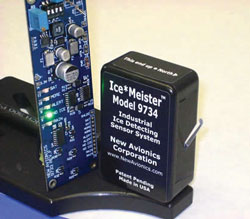
The new Ice*Meister™ model 9734 industrial ice detecting sensor system offers many benefits to wind turbine owners and operators. Once “tuned” for the application at hand, the device operates as a digital ice/no-ice indicator. At maximum sensitivity it detects the incipient formation of any kind of ice, even the condensation from human breath, and also determines ice thickness. It detects and “stretches” raindrops for efficient control of irrigation sprinklers, and it detects the point at which rain has turned to ice. It is ideal for use in hazardous, remote, and/or unattended locations, also offering an optional de-ice heater for system reset.

The model 9734 precipitation sensor system runs on about a watt from virtually any available power source of any polarity—primary batteries, solar panels, six-volt motorcycle batteries, and even cell phone chargers, AC and DC alike. The three components of the Ice*Meister are the sensor head, the cable, and the interface board. Users provide raw input power and receive data output via indicator LEDs and isolating relay contacts, which helps to avoid system ground loops. The user interface board tunes the sensor head to specific applications, and various options are available for the sensor head and cable assembly. To learn more contact Richard Hackmeister at (954) 568-1991, rlh@newavionics.com, or www.newavionics.com.

Roller Bed from ESAB

0

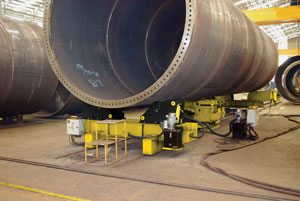
ESAB Welding & Cutting Products introduces the FUB 30 roller bed for fit-up of sections. This roller bed features a robust design to withstand the rugged environment in the welding industry. Designed to assemble 1+1 sections, the system is fast and easy to assemble. Each set consists of one power and one idler rollorgia, palatino;”>er bed with four independently adjusted rollers to align the two sections with each other. The roller bed and the rollers are mounted on one main frame. The FUB 30 is ideal for use in fabricating large vessels, wind towers, and pipemills. The FUB 30 offers a maximum load of 30 tons with roller speeds of 130-1295 mm/min. Other features include steel rollers with polyurethane tires, an inverter-style drive control, and a remote pendant with push buttons.

With more than 100 years of experience, ESAB Welding & Cutting Products is one of the world’s largest and most knowledgeable manufacturers of welding and cutting equipment and welding filler metals. Recognized as the technological leader in the industry, ESAB is committed to providing customized solutions for its customers. For more information call (800) ESAB-123 or go to www.esabna.com.

John Deere Renewables Announces Wind Farm Groundbreaking

0

John Deere Renewables, a national leader in wind energy development, has announced the groundbreaking of a new wind farm development project in Idaho. Located in Twin Falls County, the Tuana Springs Wind Farm will consist of eight 2.1MW turbines and have the capacity to produce enough electricity to power more than 5,000 Idaho homes. Christi Ritchie, from Hagerman, Idaho, is the developer on the project. Idaho Power Company is purchasing energy from the project under a long-term power purchase agreement. Groundbreaking began in fall 2009, and commercial operation of the wind farm may occur as early as spring 2010.

John Deere Renewables funded the Tuana Springs Wind Farm and will also serve as owner and operator of the project, which is the company’s fifth mid-sized wind farm development in Idaho. Other projects include the Cassia Wind Farm, Cassia Gulch Wind Farm, Bennett Creek Wind Farm, and Hot Springs Wind Farm. “John Deere Renewables is committed to sustainable rural development and concentrating its efforts on developing mid-sized wind projects like the Tuana Springs Wind Farm,” says David Drescher, vice president of John Deere Wind Energy. “Community collaboration is an important part of our development process, as this project may have huge impact on the local economy, from jobs to tourism to tax dollars.”

The Tuana Springs project creates new economic opportunities in Idaho. “From our Project 60 economic growth initiative to creating the Office of Energy Resources, making Idaho more energy independent by realizing the potential of alternative and renewable energy production in Idaho has been a cornerstone of my administration’s efforts,” according to Governor C.L. “Butch” Otter. “The John Deere name brings with it a lot of public recognition and trust. I’m happy to have this exciting new business venture here in Idaho.”

“I’m pleased to see John Deere Renewables expanding their footprint in Idaho,” says Don Dietrich, director of the Idaho Department of Commerce. “We are pleased that John Deere recognizes Idaho’s opportunities in the renewable energy arena. We’re happy they’re here.”

John Deere Renewables offers a variety of flexible ownership structures, including equity participation or ultimate ownership opportunities for the energy customer. The company uses a combination of capabilities and experience to structure projects, which can utilize government programs. For more information please visit www.johndeere.com/windenergy.

Nordex Receives First U.S. N100/2500 Turbine Order

0

Nordex USA, Inc., announces an order for eight N100 wind turbines to be installed at a 20-megawatt wind farm in Glenmore, Wisconsin. Developed by Emerging Energies of Wisconsin, the project will generate nearly 64 million kilowatt hours of electricity annually, which is enough to power about 8,000 homes and displace an estimated 55,000 metric tons of CO2 emissions. The CH Energy Group, owner of the New York utility Central Hudson Gas & Electric Corporation, holds a controlling interest in the project via its unregulated subsidiary Central Hudson Enterprises.

“The project debuts some of the most advanced turbines in the U.S.,” says Ralf Sigrist, president and CEO of Nordex, USA. “It’s been a pleasure partnering with Emerging Energies to provide the best technology for the site, designed to make the absolute most of Glenmore’s wind resources.”
The N100s are the latest generation in the Nordex family of 2.5-megawatt N80/N90 turbines. Designed specifically for low to moderate wind speeds, the N100s are ideal for numerous sites across the country, holding great potential in the U.S. The N100s have a hub height and rotor diameter of 100 meters, with a rotor sweep of 7,823 square meters. That translates into an increase in power yield by up to 20 percent at average wind speeds of around 7.5 meters per second, compared to the N90.

For the project, called the Shirley Wind Farm, Nordex will supply cold climate models of the N100s, upgraded to operate in temperatures as low as minus 20° Fahrenheit. “We looked very carefully at the N80/N90/N100 Nordex turbines and were convinced by their great track record, along with the quality and experience Nordex brings to the market,” says Bill Rakocy, a founder of Emerging Energies. “We selected the N100s because they accomplish critical project goals, maximizing available land and wind resources by using the largest, tallest turbines available. We’re excited to introduce them in the U.S. and in Wisconsin.”

The project also represents a shift in the U.S. market toward larger turbines with higher efficiencies and yields. In 2008, the average installed turbine was 1.67 megawatts. Nordex built the first 2.5-megawatt turbine in 2000 and has the longest track record for reliability in the multi-megawatt class, with over 1,000 installed worldwide. Nordex will deliver and install the turbines in the third quarter of 2010, with project completion slated for the fourth quarter. The order also includes maintenance and technical operation under a 10-year service contract. The project carries a 20-year power purchase agreement contract with Wisconsin Public Service Corporation.

“We believe the Shirley wind investment will provide the stability and predictability in earnings and cash flow that our shareholders value,” says Steven Lant, chairman of the board, president, and CEO of CH Energy Group. “It strengthens our portfolio of unregulated ventures, complimenting our utility Central Hudson Gas & Electric Corporation.”

Nordex USA is currently building a manufacturing plant in Jonesboro, Arkansas, which will produce N90/N100 turbines for the U.S. market beginning in September 2010. For more information go to www.nordex-online.com.

Low-Profile Socket/Ratchet Sets from Snap-on

0

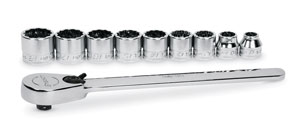
There’s nothing more frustrating than facing a tough fastener job in close quarters and not having the right tool. It’s a real world, everyday problem. Low-profile socket/ratchet sets from Snap-on Industrial—a leader in tooling solutions for mechanical, hydraulic, and industrial applications—answer the need for sockets and ratchets that fit cramped quarters. Sizes include 1/4” drive metric and fractional and 3/8” drive metric and fractional, all up to 33 percent shorter than competitive options. Applications run the gamut, from wind-power turbines in the renewable energy market to aircraft and aerospace segments.

The 1/4” drive metric set features a low-profile ratchet and 10 six-point, low-profile sockets. A mini-ratchet with a 72-tooth gear means maximum torque with minimal movement in tight spaces. A thin handle design and easy-action reverse lever allows greater access in small areas. Socket sizes range from 5mm to 13mm. Also, a 10-piece, 12-point, low-profile socket/ratchet set is available in fractional sizes ranging from 3/16” to 9/16”. This set is applicable in a variety of markets, particularly aerospace.

The 3/8” drive sets feature an 80-tooth, low-profile ratchet and either nine six-point or nine 12-point low-profile sockets; metric socket sizes range from 8mm to 18mm, with fractional sizes ranging from 1/4” to 3/4”. The 3/8” square drive also works with standard sockets. Thanks to Dual 80™ technology and a tighter torque ratio, the 3/8” ratchets require only a 4 ½-degree arc to engage the next gear tooth. The dual pawl ratchet mechanism engages seven teeth to provide strength and durability.

All Snap-on Industrial low-profile sockets and ratchets are manufactured from a special alloy steel that’s forged to exacting tolerances and heat treated for optimum strength and durability. Nickel-chrome plating protects against corrosion and makes each piece easy to wipe clean.

The low-profile socket/ratchet offering from Snap-on Industrial recently won a Top 20 Tools award from Motor Magazine. Snap-on won a U.S. Technicians’ Choice Award for best overall hand tools from Frost and Sullivan in 2008. For more information call (877) 740-1900 or visit www.snapon.com/industrial.

Port Corpus Christi Multipurpose Facility Project

0

Taking the next step in the development of the La Quinta Trade Gateway project, the port commission has approved a Professional Services Agreement for engineering designs with Goldston Engineering, a CH2M HILL company. The multipurpose facility will be designed to handle a wide variety of general cargo including containers, military, wind turbines, steel pipe, and more. Completion of preliminary engineering for full buildout and final design for the initial 800’ to 1000’ dock will provide the necessary information to define costs and determine completion schedules. The goal is to complete the design and be ready to solicit bids for construction of the first dock by the end of 2010. “This is one more step towards realizing one of the most important port diversification projects,” according to John LaRue, executive director. “Goldston Engineering is no stranger to the port. They have worked on many projects with us over the years, and we look forward to working with them again.”

GE/CH2M HILL will design the waterside portion of the La Quinta project, which includes the dock and the slip in the channel. The agreement provides for preliminary engineering for the projected full buildout of the docking facilities (three berths) and the final design of the first dock (one berth) and slip. For 59 years, Goldston Engineering was a Corpus Christi based multi-disciplined engineering firm specializing in ports engineering providing planning, design, construction documents, cost estimating, environmental compliance, and construction management services for marine terminals, municipal utilities, transportation, and coastal projects, regionally and abroad. The company has successfully completed many projects for the Port Corpus Christi and has been involved in various studies for the La Quinta project. The company was acquired by CH2M HILL in 2008. The primary economic engine of the Coastal Bend, Port Corpus Christi is one of the 10 largest ports in the United States in total tonnage.

NREL, Second Wind Partner on Sodar Research

0

As part of continuing scientific research on understanding wind resources, the U.S. Department of Energy’s National Renewable Energy Laboratory (NREL) and Second Wind, Inc., have announced a partnership to characterize the performance of Second Wind’s Triton™ sonic wind profiler. Under a Cooperative Research and Development Agreement (CRADA), NREL and Second Wind will conduct research correlating the Triton measurements with measurements gathered from a meteorological tower and will later include Triton measurements in the development of a new Wind Instrument Characterization System (WICS) at the National Wind Technology Center (NWTC) near Boulder, Colorado.

Second Wind develops resource assessment technology for the global wind industry (see related article in this issue). Triton is an advanced, portable sodar (sonic detection and ranging) system that bounces sound waves off the atmosphere and analyzes characteristics of the return signal to calculate wind speed and direction up to 200 meters high. Replacing a 60- or 80-meter meteorological tower and providing much more data, the Triton is changing the way the wind industry does site assessments.

NREL and Second Wind will analyze data gathered from a Triton sonic wind profiler and a nearby meteorological tower during a six-month correlation study completed in 2008-2009. The analysis, expected to be completed in the near term, will characterize the measurement performance of Triton. Next, a Triton will be deployed at the NWTC to collect long-term measurements and compare them to wind resource data being collected from NWTC tall towers.

As part of the CRADA, measurements from the Triton will also be included in the development of a new Wind Instrument Characterization System (WICS) at NWTC. This research will lead to improvements in wind resource assessment and more accurate project energy estimates. “This CRADA will give NREL additional experience with the latest tools being used by the industry for wind measurement,” says Dennis Elliott, principal scientist in wind resource assessment at NREL. “This research is vital as the industry moves towards requiring hub height and higher data to reduce uncertainty in the wind resource and turbine performance.”

“We are excited to be collaborating with NREL on this project, as it is a great opportunity to work with internationally respected wind experts,” says Walter Sass, CEO of Second Wind. “We are looking forward to working with NREL on an in-depth review of the Triton technology performance, and to making a contribution to NREL’s scientific research on wind instrument characterization.”
For more information go to www.secondwind.com and www.nrel.gov.

GE Receives Contract to Supply Turbines for Largest U.S. Wind Farm

0

GE has received a $1.4 billion contract from independent power producer Caithness Energy to supply wind turbines and provide services for an 845MW wind farm project to be located in Oregon. The wind farm, called Shepherds Flat, has received the majority of the necessary government permits to operate and is ready to be built. When completed it will be larger than any wind farm currently in operation around the globe.

“This project underscores our commitment to harness the power of wind to meet present and future energy needs while reducing greenhouse emissions,” says Les Gelber, a partner at Caithness Energy. “The Shepherds Flat project will add more renewable energy to the west coast’s energy mix and help the region meet its demand for clean energy.”

Stretching across 30 square miles of Gilliam and Morrow Counties in north-central Oregon, near the town of Arlington, the Shepherds Flat project marks the U.S. debut and largest single global order of GE’s 2.5xl wind turbines. A total of 338 turbines will be installed in 2011 and 2012. “GE wind turbines have a strong track record of performance that has been proven in nearly every form of climate worldwide,” Gelber adds. “Their ability to continually advance wind turbine technology will help us to provide our customer, Southern California Edison, with the reliability they expect.”

“The Caithness project highlights our ability to deliver integrated solutions in the clean energy space, and it supports our overarching focus to provide first in class technology to our customers,” says Steve Bolze, president and CEO of GE Power & Water.

GE’s 2.5xl wind turbine has been proven in Europe and Asia. “The 2.5-MW wind turbine is the latest evolution of GE’s wind turbine technology and provides customers with greater efficiency, reliability, and grid connection capabilities,” Bolze explains. “The 2.5-MW builds upon the success of GE’s 1.5-MW wind turbine, the world’s most widely deployed wind turbine with more than 12,000 installed.”

In addition to supplying the wind turbines, GE will provide 10 years of operational and maintenance services to the project. The 2.5xl wind turbines for the Shepherds Flat wind farm will be assembled at GE’s site in Pensacola, Florida. Under three 20-year power purchase agreements, the Shepherds Flat wind farm will supply renewable energy to Southern California Edison, an Edison International company. The project will provide enough clean energy to power approximately 235,000 average California households, according to U.S. Environmental Protection Agency methodology, and will avoid more than 1.5 million tons a year in greenhouse gas emissions compared to equivalent fossil fuel generation. For more information contact Howard Masto at (518) 385 2381 or howard.masto@ge.com. Go online to www.ge.com.

Easy Shaft Alignment from Ludeca

0

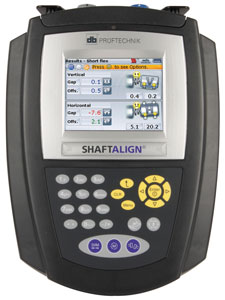
SHAFTALIGN is a high-precision, easy to use shaft alignment tool incorporating human error-proof functions. With its TFT backlit color display it combines simplicity of operation with precise measurement and state of the art technology. Intuitive auto-flow capability guides the user to obtain the desired machinery alignment condition. The innovative “active clock” measurement mode automatically collects the laser coordinates for the corresponding shaft position. Only three readings over a rotation angle of less than 70º are required to achieve a precision alignment. All relevant alignment results are displayed in one screen, including the alignment status evaluation. A built-in light sensor optimizes screen image quality and power management. Rechargeable batteries save operating cost and contribute toward a greener environment.


SHAFTALIGN is upgradable to more-powerful features as alignment requirements increase. The tool offers a variety of options to generate and archive alignment measurement reports through its freeware, Alignment Reporter PC software, or through the direct reports as PDF to a memory stick. Precision alignment contributes to savings in the consumption of electricity and extends the life of bearings, seals, and couplings. For more information go online to www.ludeca.com.

3TIER on DOE Team for Smart Grid Demo

0

The Department of Energy (DOE) has selected a Pacific Northwest team including 3TIER—a global leader in renewable energy information services—to conduct a regional smart grid demonstration project. The project will test new smart grid technologies including devices, software, and advanced analytical and forecasting tools that enhance the power grid’s reliability and performance. The Northwest study will involve more than 60,000 metered customers in Idaho, Montana, Oregon, Washington, and Wyoming.

“The inclusion of 3TIER in this project acknowledges that optimizing the energy supply side of the smart grid equation, and renewable energy in particular, is absolutely critical to the long-term success of an efficient and smart national grid,” says Kenneth Westrick, founder and CEO.

3TIER will provide wind and solar power forecasting for individual sites and for the region as a whole for the duration of the project. The company’s hour-, day-, and week-ahead forecasts will be processed centrally as part of an integrated smart grid system. 3TIER is one of the largest forecasters of wind energy in the world, forecasting production for more than 16.5 GW of regional and 11.6 GW of project-specific installed capacity, including more than 30 percent of the installed capacity in North America.

“A key objective of a national smart grid infrastructure is to make the best possible use of renewable energy resources,” Westrick says. “Accurately forecasting weather-driven renewable energy provides the signals the system needs to optimally integrate that energy into the grid, and dispatch other assets when production decreases. It is an essential component of an efficient and reliable smart grid system.”

The Pacific Northwest Smart Grid Demonstration Project team combines energy providers, utilities, technology companies, and other research organizations. Total estimated cost for the project is $178 million. The DOE will provide half the funding through the American Recovery and Reinvestment Act. The project’s participants, primarily utilities, and industry team members—including 3TIER—will provide the remaining funds.

At its peak the project could create about 1,500 total jobs in manufacturing, installation, and operating smart grid equipment, telecommunications networks, software, and controls in the five states. The DOE press release is available at www.energy.gov/news2009/8305.htm.

Founded in 1999, Seattle-based 3TIER is one of the largest independent providers of wind, solar, and hydro energy assessment and power forecasting worldwide. For more information see the Q&A in this issue, and visit www.3tier.com.

Turbine Generators from WindGen America

0

In spite of an expanding wind power industry, the North American market has steadily relied on imported wind generators. That is about to change. WindGen America, LLC, is in the process of building the first wind turbine generator manufacturing facility in the Untied States. The company’s principals have extensive wind power experience and will be using it to develop and manufacture wind turbine generators for the North American market.

The generators under development at WindGen America will be 660 KW and 2.5 MW permanent magnet design. With prototypes up and running, these designs address the weaknesses in conventional wind generators. The past and current wind generators have been fraught with high maintenance costs. Designed and built for wind power applications, these generators will offer the industry a choice. Not just American-built, but built to exceed the demands placed on conventional wind turbine generators.

A convergence of wind power growth and incentives to provide U.S. manufacturing jobs have created the right climate for this enterprise. In addition to developing superior generator designs, WindGen America has focused its attention on a facility whose efficiency will match its turbines. Locating in an eastern industrial hub, WindGen America will be able to take advantage of existing road, rail, and ocean port facilities. Starting from scratch, all aspects of the operation will utilize the latest technology maintaining high quality while keeping manufacturing costs in line. Simplifying logistics, the company will be able to supply the nation with the latest in turbine generator design at a very competitive price. The 100,000 sq. ft. facility will have a labor force comprised of 120 skilled technicians onsite. The initial production target is 1,500 generators per year. For more information go to www.windgenamerica.com.

SeaRoc joins Natural Power

0

SeaRoc—the marine, engineering, and offshore experts—are joining Natural Power to form the first renewable energy consultancy truly capable of providing end-to-end services globally for the industry both onshore and offshore. The announcement follows almost 18 months successful operation under a framework agreement and an existing minority stake acquired earlier this year. Natural Power has already consented over 1,300 MW of client projects offshore. SeaRoc, which sits on two BWEA steering committee groups, provide marine, engineering, health and safety, and environmental services to some of the UK’s biggest renewable energy projects. Sister company SeaPlanner provides world class GIS expertise and extensive data management knowledge to the offshore market.

Natural Power and SeaRoc will form a group of over 220 highly skilled resource engineers, development specialists, construction engineers, marine managers, GIS experts, and asset managers based across 11 offices worldwide. The Natural Power group will be a world-class wind, wave, and tidal service provider in the areas of due diligence, engineering, development, construction, operations, and health and safety both onshore and offshore. The group creates a single source for complete lifecycle services for the industry.

Stuart Hall, director and founder of Natural Power, says that “Having provided lifecycle services onshore for the past 15 years, and consented over a gigawatt of client projects offshore, it is a natural step forward to complete the loop by welcoming SeaRoc to the family. They are the experts offshore. The announcement reflects the needs of our clients for a single provider of both onshore and offshore services, which we are delighted to now offer.”

Peter Hodgetts, CEO and founder of SeaRoc, adds that “We are looking forward to joining the Natural Power family. There are many existing synergies between us and we wholeheartedly share the concept of ‘practical consulting’ for the benefit of our clients. The industry is changing and it is vital that companies evolve in order to meet the needs of developers, owners, insurers, investors, regulators and financial institutions.”

To learn more contact Alex Woodward at alexw@naturalpower.com. Go online to www.naturalpower.com.

Romax Supporting Taiwanese Wind Energy Industry

0

Technical consultancy Romax Technology is providing vital knowledge and services to Taiwan’s growing wind energy industry. Through a series of wind energy seminars and partnerships with leading wind energy organizations in Taiwan, Romax is helping leading players in the wind energy industry to realise Taiwan’s wind energy potential.

Taiwan has recently identified a need in the reduction of carbon and in the country’s reliance on imported fossil fuels for its energy production. The Bureau of Energy under the Ministry of Economic Affairs has set a target of renewable energy contributing to 10 percent of Taiwan’s overall electricity generation by 2010, and wind power is expected to make up to 80 percent of that renewable energy contribution. It is anticipated that, due to this commitment and the country’s wind resources and manufacturing capabilities, Taiwan’s wind power generation will grow to 3000MW by 2020 and create a strong wind energy industry.

However, supplying this quantity of wind turbines from a relatively young domestic manufacturing position requires a rapid development in expertise and capabilities. The Taiwan Wind Energy Association (TwnWEA) has identified this need and in service to its members invited Romax to present a specialist wind energy seminar.

Covering a range of current technical issues including design theory and practice, bearing selection, lubrication considerations, and gearbox testing and certification, Romax provided the audience with their experience and expertise in the design and manufacture of wind turbine drivetrains. Romax is in an ideal position to be discussing these issues, having helped some of the worlds leading wind energy companies to overcome their technical challenges.

In addition, Romax has announced a new partnership with the leading Taiwanese technical research group ITRI (Industrial Technology Research Institute).  Romax will develop a wind turbine gearbox testing platform utilizing their testing team and in-house simulation platform, RomaxWIND. To learn more go to www.romaxtech.com.

REpower Signs Contract for Wind Farm Projects in Canada

0

REpower Systems AG has signed a framework contract with EDF Energies Nouvelles and RES Canada that comprises the delivery of up to 954 megawatts for five projects in the Canadian province of Québec, currently developed by the consortium Saint-Laurent Énergies, a Montreal based wind energy company jointly owned by EEN Canada, Inc., RES Canada, Inc., and Hydroméga Services, Inc. The contract guarantees a minimum purchase capacity of 748 MW.

In May 2008, Saint-Laurent Énergies with REpower as turbine supplier was awarded the contract tendered by Hydro-Québec Distribution for five wind farm projects across Québec, comprising of up to 477 REpower MM82/92 wind turbines to be installed between 2011 and 2015. REpower is also responsible for commissioning the turbines.

At least 60 percent of the total investment will be made in Québec, 30 percent will be for the local manufacturing of components such as rotor blades, towers, and electrical converters. Therefore, REpower has concluded contracts with local component suppliers in the Gaspésie-Îles-de-la-Madeleine region and the Matane regional county municipality. REpower CEO Per Hornung Pedersen says “We are delighted that we can today announce the largest onshore contract in our company’s history. The contract confirms our strategic partnership with our customers EDF, EN, and RES. This is a giant leap forward for REpower toward our establishment in Canada, and bolsters our intention of further growth in the whole of North America—Canada and the United States.”

Repower’s Chief Supply Chain Officer Lars Rytter Kristensen adds that “The signing of this contract shows the trust that our customers and Hydro-Québec place in the reliable technology of our turbines. Thanks to the settlement of local suppliers in the region, we can rapidly expand our supply chain and thus our competence on the North American wind energy market.”

REpower Systems AG is one of the leading manufacturers of onshore and offshore wind turbines. This internationally operating mechanical engineering company develops, manufactures, and markets wind turbines with rated outputs ranging from 2 to 6.15 megawatts and rotor diameters ranging from 82 to 126 meters for virtually every location. The company also offers a comprehensive portfolio of service and maintenance packages. The profitable and reliable turbines are designed in the REpower development center in Rendsburg and manufactured in the plants in Husum (Northern Friesland), Trampe (Brandenburg) and Bremerhaven. With over 1,900 employees worldwide, the company listed since March 2002 and headquartered in Hamburg can make use of the experiences acquired from the manufacture and installation of more than 2,000 wind turbines around the world. REpower is represented by distribution partners, subsidiaries, and participations in European markets such as France, Belgium, Great Britain, Italy, Portugal, and Spain as well as on a global level in the United States, Japan, China, Australia, and Canada. For more information go to www.repower.de

Vestas Spare Parts & Repair for Wind Turbine Owners

0

Vestas Spare Parts & Repair currently operates offices worldwide to service the world’s largest installed fleet of wind turbines. Since January 2009, Vestas has had a dedicated organization for servicing its customers. A brand-new office center next to the Vestas Headquarters in Randers, Denmark, has been constructed. Furthermore, locations for the leadership team are also being set up in Bristol, UK, together with sections of engineering, customer service, and platform management. In Q4 2009 a gearbox service center was scheduled to open in Spain, and in Q1 2010, a second one is planned to follow in Colorado.

“We are making these radical changes and large investments so that we can further improve the customer experience,” says Phil Jones, president of Vestas Spare Parts & Repair. “These developments mark the continued focus on bringing service to world-class standards.”

The entire warehouse and distribution network will service the seven Vestas sales business units, and the objectives are to be consolidated into one global, world-class network in 2010. Today, Vestas Spare Parts & Repair has a staff of 230, with the vast majority located in Randers, Denmark. By the end of 2010 an additional 150 people will have joined. To learn more go to www.vestas.com.

Mitsubishi to Locate Wind Manufacturing Plant in Arkansas

0

Mitsubishi Power Systems Americas, Inc., (MPSA), has announced its intention to build a wind turbine manufacturing facility in Fort Smith, Arkansas. MPSA plans to invest approximately $100 million in the project, which could employ as many as 400 people.

“We are very excited to announce the future MPSA Wind Turbine manufacturing site in Fort Smith, Arkansas,” says Koji Hasegawa, president and CEO of MPSA, based in Lake Mary, Florida. “After an intensive site selection process conducted during the last 15 months we concluded that Fort Smith offers the most attractive site and community support for building and operating our wind turbine plant. We are very thankful for the excellent support provided to us by Governor Mike Beebe, Senators Blanche Lincoln and Mark Pryor, Congressman John Boozman, Maria Haley and her economic development staff, and the entire Arkansas delegation. Additionally, we are also very impressed with Arkansas’s commitment to the renewable energy industry. With the establishment of this wind turbine manufacturing plant, we are also planning to expand our component sourcing in the U.S. so as to shorten our supply chain.”

MPSA intends to locate its wind turbine manufacturing plant in a new 200,000 sq. ft. facility at Fort Chaffee, near Fort Smith, occupying 90 acres. “The arrival of Mitsubishi in Arkansas is exciting news for our economy and for our renewable-energy manufacturing sector,” Governor Mike Beebe says. “Mitsubishi is a brand recognized and respected worldwide, and the substantial investment they will make in Fort Smith is evidence of Arkansas’s momentum in the global economy.”

The company plans on beginning construction by early 2011. “Arkansas and Mitsubishi are a winning combination for renewable energy and economic development,” U.S. Senator Mark Pryor says. “I know that Mitsubishi will benefit from the area’s strong community support, work ethic and ingenuity. This partnership will bring America one step closer to realizing the full potential of wind energy.”

MPSA currently has more than 4,500 wind turbines in operation worldwide, and over 3,000 wind turbines in the U.S. “Fort Chaffee has a tremendous amount of potential and I am pleased that Mitsubishi Power Systems Americas, Inc. has recognized what Fort Smith and the region has to offer,” says U.S. Representative John Boozman. “We are fortunate to have had cooperation at all levels of government and within the community to make Fort Smith standout and MPSA select it for this investment. We welcome MPSA to the Third District, and I look forward to working with the company in the future.”

MPSA was established in 2001 with key operations in Orlando, Florida, Newport Beach, California, Houston, Texas, and Juarez, Mexico. MPSA provides a wide variety of products and services for the electric power generation industry including gas, steam, wind, geothermal and hydroelectric turbines, boilers, selective catalytic reduction systems, and solar energy. The company is a subsidiary of Mitsubishi Heavy Industries, Ltd. (MHI), a diversified Fortune “Global 150” company with more than $30 billion in annual revenues and 40,000 employees worldwide. MHI is an international leader in the design and supply of energy, aerospace, machinery, transportation, and environmental systems and equipment. For more information contact Jonathan Wang at (949) 856-8473 or jwang@mpshq.com. Go online to www.mpshq.com.

Wind Seminars by Lincoln Electric

0

The alternative energy industry continues to focus on wind power as a viable addition to address the ever-expanding global energy demand. With this in mind, Lincoln Electric has recently hosted more than 120 industry professionals interested in learning more about wind tower fabrication for several daylong seminars.

Seminar attendees traveled from across the United States and as far away as Brazil and Portugal to Lincoln’s Cleveland, Ohio, headquarters to learn more about wind tower fabrication. Each seminar featured an industry overview, technology sessions, and live welding demonstrations for companies already fabricating wind towers and those currently considering it.

“Governments in every corner of the globe, including the United States, continue to focus on alternative energy, especially wind,” says Patrick Wahlen, global segment business director, power generation. “Many of our customers want to add wind tower fabrication to their portfolio, and this seminar shares insight into the industry, guidance on capitalizing on this market and an overview of Lincoln’s product portfolio.”

Whalen added that the company has long offered a comprehensive welding solution for wind tower fabrication. “In 2008, there were 38 new wind tower manufacturing facilities constructed globally, and 33 of those facilities used Lincoln products,” he says.

Due to its Waveform Control Technology®, Lincoln Electric’s Power Wave® AC/DC 1000® SD is the leading power source for wind tower fabrication. When combined with Lincoln’s process knowledge, it can increase productivity by 30 percent or more. Lincoln also has a complete offering of consumables designed specifically for wind tower welding applications, including tacking, longitudinal can seam, circumferential can seam, circumferential ring and flange, base flange, entry hatch, and rotor shaft.

Steve Knapple, welding engineer for tower fabricator Katana-Summit, attended the May Lincoln seminar and says that “Lincoln did its homework when it got into this industry. They shared insight into areas of opportunity and demonstrated different levels of solutions, which was very helpful as the attendees represented established wind tower manufacturers as well as startups. I also had the opportunity to meet others who do what we do and share best practices. It was a valuable experience.”
For more information e-mail windtower@lincolnelectric.com or visit www.lincolnelectric.com.