





Home 2024

BOEM approves construction and operations plan for offshore wind projects

0

The Bureau of Ocean Energy Management (BOEM) announced its approval of the New England Wind Construction and Operations Plan (COP), which authorizes construction and operation of two wind energy projects. This is the final approval of these two projects from BOEM, following the agency’s April 2024 Record of Decision.

“The Biden-Harris administration is committed to advancing offshore wind energy projects like New England Wind to create jobs, drive economic growth, and cut harmful climate pollution,” said BOEM Director Elizabeth Klein. “We are proud to announce BOEM’s final approval of the New England Wind projects. They represent a major milestone in our efforts to expand clean energy production and combat climate change.”  
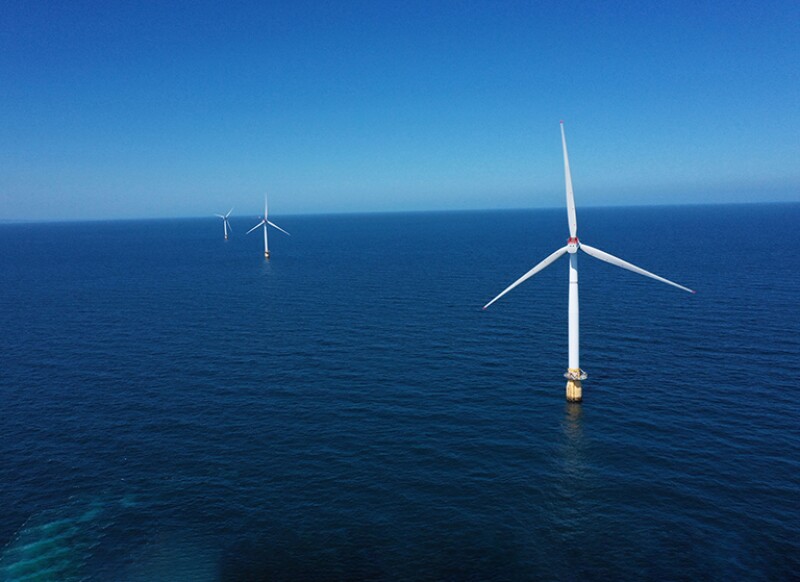
The two projects are about 20 nautical miles south of Martha’s Vineyard. (Courtesy: BOEM)

The approval will permit the construction and operation of two offshore wind energy facilities, known as New England Wind 1 and New England Wind 2, which together will have a total capacity of up to 2,600 megawatts of renewable energy that could power more than 900,000 homes each year.  

The two projects are situated about 20 nautical miles south of Martha’s Vineyard,
Massachusetts, and about 24 nm southwest of Nantucket, Massachusetts. The COP for the two projects includes up to 129 wind turbine generators, up to five electric service platforms, and up to five offshore export cables transmitting electricity to onshore transmission systems in the Town of Barnstable and Bristol County, Massachusetts.  

BOEM considered feedback from Tribes, other government agencies, ocean users, and others prior to the decision. The feedback resulted in required measures to avoid, minimize, or mitigate any potential impacts from the project on marine life and other important ocean uses, such as fishing.  

Since the start of the Biden administration, the Department of the Interior has approved eight commercial-scale offshore wind energy projects in federal waters, and BOEM has held four offshore wind lease sales, including offshore New York, New Jersey, the Carolinas, and the first-ever sales offshore the Pacific and Gulf of Mexico coasts.

More info: www.boem.gov

Modulift helping to build world’s first offshore energy island

0

Modulift, a lifting equipment manufacturer, is facilitating the construction of a complex offshore energy project in the North Sea. Deemed to be the world’s first artificial energy island, “Princess Elisabeth” marks a milestone in renewable energy infrastructure development.

Situated 30 miles off the coast of Belgium, in the 3.5-GW Princess Elisabeth offshore wind zone, the island will act as an international energy hub to centralize all electricity produced by wind farms in the zone.

Construction on the island will run until end of 2026. (Courtesy: Modulift)

TM Edison, a joint venture between marine companies Jan De Nul and DEME Group NV, isresponsible for the construction and installation of the energy island, which will contribute to the EU’s goal of 300GW offshore wind capacity by 2050.  

Assembling the infrastructure of the energy island requires lifting and maneuvering of large structural elements and equipment. The outer perimeter of the island will be made up of a series of concrete structures known as caissons. These are built onshore before being transported to their offshore location.  Construction of the Princess Elisabeth Island is expected to last until the end of 2026.

Modulift’s spreader beams have been integral to the construction of the concrete sections, with one formwork section weighing around 17 tons and 10m in length. We are using a 1-over-1 configuration, utilizing a MOD 34 spreader beam at the top and a MOD 24 on the bottom. Modulift spreader beams have been instrumental in safely hoisting the formwork into position,” said Ruben Verschueren, TM Edison’s site superintendent, civil works.

 “Modulift is known for its iconic yellow spreader beams across the renewable and offshore energy sectors, and has set the precedent for safety, efficiency, and fast delivery in the global lifting industry,” said Sarah Spivey, managing director.

More info: www.modulift.com

Nearthlab expands into contactless lightning protection system inspection

0
Nearthlab has been redefining drone solutions since 2015, pushing practical boundaries beyond industry norms. (Courtesy: Nearthlab)

Nearthlab, a leading provider of autonomous drone solutions, now offers inspection services for lightning protection systems (LPS).

This breakthrough was made by integrating Enertrag’s patented LPS measurement system into Nearthlab’s cutting-edge payload technology.

Traditional LPS inspections often involve repetitive drilling to check cables beneath turbine blades, relying on rough estimates of where damage might be. Nearthlab’s non-contact inspections, however, use advanced sensors to detect changes in electromagnetic fields and pinpoint the precise location of damage. Doing so eliminates unnecessary drilling, making the process more efficient and cost-effective.

“Our roots are in wind operations and maintenance, and this expansion underscores our commitment to enhancing turbine maintenance with cutting-edge drone technology,” said Jay Choi, co-founder and CEO. “We’re thrilled to offer equipment manufacturers and asset owners a smarter, more efficient maintenance solution.”

LPS inspections have been successfully conducted at offshore sites across Europe and Japan and are set to expand farther.

Nearthlab has been redefining drone solutions since 2015, pushing practical boundaries beyond industry norms. It seamlessly blends top-notch software and hardware to address diverse needs, from reconnaissance and surveillance to public safety and infrastructure inspection.

Nearthlab’s solutions prioritize simplicity. No learning curve — just adaptable, user-friendly designs tailored to the unique needs of various industries. Its solutions find the sweet spot in balancing hardware, software, size, and cost without having to make compromises.

Precision in data collection and a commitment to safety define Nearthlab. In high-risk scenarios such as post-disaster search and rescue missions, the company’s solutions step up to enhance operational efficiency.

MORE INFO  www.nearthlab.com

ArcVera Renewables establishes European offices

0
Wind industry veteran Dr. Joerg Winterfeldt has joined the ArcVera Renewables team as European Continent Manager and Senior Atmospheric Scientist. (Courtesy: ArcVera Renewables)

ArcVera Renewables, a leading global renewable energy technical consultancy, is expanding its consulting services reach by establishing European offices. Wind industry veteran Dr. Joerg Winterfeldt has joined the ArcVera Renewables team as European Continent Manager and Senior Atmospheric Scientist.

Winterfeldt will commercially develop ArcVera Renewables’ expertise in wind and solar energy, adjacent energy storage, and green power-to-X services.

“ArcVera continues to expand globally. In addition to the United States, we now have offices in Brazil, India, South Africa, and Europe,” said Greg Poulos, CEO and Principal Atmospheric Scientist, “With renewables growth in solar, wind, battery storage, green hydrogen, and green Power-to-X in Europe itself, and many European renewable energy companies actively ramping up expert support in the United States and other markets we already serve globally, the timing was right to move forward.”

“I am excited to join the ArcVera expert team at this midpoint time in my career, and I am looking forward to leveraging my experience to expand ArcVera’s European footprint,” said Winterfeldt.

“Working for years with a developer, in atmospheric science, and with two top-tier wind turbine manufacturers, has given me a depth of knowledge where I can see not only how accurate energy estimation impacts project energy performance, but also how the machines are optimized to maximize the resource potential. ArcVera is a leading global technical expert in energy resources and the machines that translate the wind resource into energy. ArcVera is a great opportunity to lend my knowledge, helping clients succeed and playing a role in the global energy transition,” said Winterfeldt.

Based in the Kiel area of Germany, Dr. Winterfeldt has engaged his expertise in renewable energy since beginning in 2000 with German-based developer Projekt GmbH and wind energy consultant Overspeed as Micrositing expert and researched wind and cyclones in the North Atlantic in the GKSS research center. In 2009 he teamed with General Electric as the Technical Lead – Micrositing Optimization/Wind Resource Assessment. At GE, his most recent role was Senior Product Manager – Wind Farm Energy Guarantees.  In 2022, Winterfeldt worked for Nordex as a Senior Expert – Project Optimization.

MORE INFO  www.arcvera.com

Vestas unites tech, manufacturing organizations

0
SAF-powered helicopters at the Baltic Eagle offshore wind farm in Germany. (Courtesy: Vestas)

Vestas has united the Technology organization (CTO) and Manufacturing & Global Procurement organization (COO) into one Technology and Operations organization (CTOO). The united CTOO organization will become the foundation for one enterprise-wide industrial system within Vestas and will be headed by Anders Nielsen, Vestas’ chief technology officer.

“Vestas has built a strong backlog across onshore, offshore, and service towards the end of this decade, and we are today announcing the next step in our organizational evolution to deliver on our customer commitments. The united CTOO-organization will help accelerate ramp-up and industrialization across Vestas and the industry by simplifying interfaces, collaboration and strengthening our end-to-end approach,” said Henrik Andersen, Vestas group president and CEO.

The united CTOO-organization is a natural next step in Vestas’ evolution of technology and product introductions, as well as manufacturing ramp-up by simplifying interfaces within Vestas and across the value chain.

The united CTOO uses building blocks from Vestas’ global and regional operating model to minimize impact on operations and safeguard deliveries and project execution in 2024. The CTOO organization is expected to be fully implemented during the third quarter of 2024. With Nielsen becoming CTOO, current COO Tommy Rahbek Nielsen has decided to pursue opportunities outside of Vestas after more than 25 years.

“I’m very pleased Anders Nielsen has accepted to continue leading Vestas’ industrialization forward, and I want to thank Tommy Rahbek Nielsen for his incredible contribution to Vestas for more than 25 years. In the role as COO, Tommy was pivotal in keeping Vestas running during the pandemic, and he has done an excellent job in maturing our COO-organization to a level that enables us to take the next step for the benefit of Vestas,” said Andersen.

Creating the CTOO organization is only expected to impact senior management roles and not entail any restructuring at an operational level.

MORE INFO  www.vestas.com

DNV project leads to blade standard revision

0
: Independent energy expert and assurance provider DNV has led an initiative resulting in the revision of the DNV-ST-0376 rotor blade standard. (Courtesy: DNV)

Independent energy expert and assurance provider DNV has led an initiative that has resulted in the revision of the DNV-ST-0376 rotor blade standard, in response to the dynamic landscape of wind turbine development. This update, a product of joint industry collaboration, marks a milestone in enhancing reliability and safety in the wind energy sector.

Heightened reliability standards are crucial to keep pace with advancements in wind turbine technology. The project, tailored to meet the evolving needs of wind turbine developers, owners, and operators, aims to ensure reliability and performance.

Focusing on addressing the unique requirements of large, flexible blades for multi-megawatt turbines, the revised standard introduces comprehensive measures that previously were not addressed in industry norms.

“The pace of modern wind turbine development demands that industry standards keep pace with changing trends and technologies. Through the development of industry service documents such as service specifications, standards, and recommended practices, DNV is actively engaged in driving the renewable energy sector forward. This update underscores our commitment to driving innovation and quality within the wind energy sector,” said Kim Sandgaard-Mørk, Executive Vice President for Renewables Certification at DNV. “By prioritizing reliability and safety, we aim to bolster industry confidence and propel the global transition towards sustainable energy solutions.”

“Not all wind turbine blades are created equal,” said Christopher Harrison, Principal Engineer and Service Line Leader for Component Certification, Energy Systems at DNV. “Different design assumptions and methods, along with varying performance during validation tests, can result in differing blade performance over their lifespan. As stakeholders in the wind energy sector, it’s crucial to understand and mitigate these risks.”

During the project, 26 companies across the wind turbine sector, including manufacturers, operators, and certifiers, contributed to refining and reviewing the standard.

“Our goal was to provide wind turbine stakeholders with the tools and knowledge necessary to navigate the complexities of blade development,” said Harrison.


MORE INFO  www.dnv.com

Wood Mackenzie appoints Xizhou Zhou EVP of power, renewables

0
Xizhou Zhou has been appointed EVP and Head of Power and Renewables. (Courtesy: Wood Mackenzie)

Wood Mackenzie, a portfolio company of Veritas Capital, has appointed Xizhou Zhou EVP and Head of Power and Renewables.

“Xizhou is a recognized leader in our industry and brings a wealth of experience and expertise to Wood Mackenzie. His leadership acumen, combined with his strategic foresight and ability to navigate complex energy landscapes, will undoubtedly propel our power and renewables team to new heights,” said Jason Liu, Wood Mackenzie CEO.

“We will build on his outstanding record of managing global teams, and our clients will benefit from his considerable success in creating cutting-edge data and analytics solutions related to the energy transition and renewable technologies.”

Zhou joins Wood Mackenzie from S&P Global, where he led the Global Power and Renewables division of its Commodity Insights business since the merger of IHS Markit and S&P Global. Prior to that, he spent 15 years with IHS Markit, IHS Energy, and Cambridge Energy Research Associates in Boston, Beijing, and Washington, DC, most recently leading the firm’s Global Power & Renewables practice and Asia Pacific gas, power and renewables business. Based in Washington D.C., Zhou holds Bachelor of Art and Master of Environmental Management degrees, both from Yale University.

“I am thrilled to take on this leadership role at Wood Mackenzie at such a critical time in our industry. The world of power and renewables is changing rapidly with the energy transition accelerating, and Wood Mackenzie has the leading data, analytical tools and thought leaders to help shape the future of our industry and address increasingly complex questions. I look forward to this challenge and collaborating with my colleagues at Wood Mackenzie to ensure Lens Power and the rest of our product portfolio inspire confident business decisions in a clean and sustainable energy future,” said Zhou.

MORE INFO  www.woodmac.com

BOEM finalizes Gulf of Maine wind research lease review

0
The Bureau of Ocean Energy Management announced the availability of its Final Environmental Assessment (Final EA) of an offshore wind research lease in the Gulf of Maine. Maine. (Courtesy: BOEM)

The Bureau of Ocean Energy Management (BOEM) announced the availability of its Final Environmental Assessment (Final EA) of an offshore wind research lease in the Gulf of Maine.

“Floating wind technology can make offshore wind a reality in the Gulf of Maine,” said Elizabeth Klein, BOEM director. “BOEM will continue to work in partnership with the state of Maine as we move forward to facilitate the responsible development of offshore wind in this region, as well as the deployment of floating offshore wind technology nationwide.”

In October 2021, the state of Maine requested a research lease for the purpose of researching floating offshore wind energy technology and its deployment. The research site lies 28 nautical miles off the coast of Maine, roughly southeast of Portland, and if developed would comprise up to 12 floating offshore wind turbines capable of generating up to 144 megawatts of renewable energy.

After considering alternatives described and analyzed in the Final EA, as well as comments from the public and cooperating and consulting agencies on the Draft EA, BOEM finds that the issuance of a wind energy research lease within the proposed lease area offshore Maine, and related site characterization and site assessment activities, would have no significant impact on the environment. As a result, under the National Environmental Policy Act, BOEM is not required to prepare an Environmental Impact Statement in order to issue a wind energy research lease offshore Maine.

Upon completion of the Final EA and finding of no significant impacts, BOEM offered the research lease to the State of Maine on May 24.

BOEM is exploring additional opportunities for offshore wind energy development in the U.S., including in the Gulf of Maine and the U.S. Central Atlantic coast. The Department also continues to take steps to evolve its approach to offshore wind to drive towards union-built projects and a domestic-based supply chain.

MORE INFO  www.boem.gov

Vestas to test sustainable aviation fuel at wind farm

0
The Baltic Eagle Wind Farm in the Baltic Sea. (Courtesy: Iberdrola)

Vestas will pilot sustainable aviation fuel (SAF) at the Baltic Eagle Wind Farm in the Baltic Sea during 2024. The pilot project entails Vestas technicians and jack-up vessel crew using helicopters partly powered by SAF to transport themselves to and from the Baltic Eagle wind farm during the construction phase of 50 offshore wind turbines.

SAF is a fuel produced from bio-waste materials such as used cooking oil or tallow. Because SAF can help reduce lifecycle greenhouse gas emissions associated with air travel, it is generally considered a more sustainable alternative to conventional jet fuel.

The pilot project is scheduled to take place until September 2024. Helicopter service provider HeliService, will use helicopters from Leonardo S.p.a. flying on about 40 percent SAF provided by DCC & Shell Aviation Denmark A/S. A blend rate of 40 percent SAF is close to the highest possible blend rate permitted today, and it is the first time that SAF-fueled helicopters with such a high-blend rate are used for an entire part during the construction phase of an offshore wind farm operation.

CO2 savings of about 32 percent per flight are expected compared to using a standard helicopter powered by conventional jet fuel. Vestas will assess the impact of the SAF following the end of the pilot project.

The initiative is in line with Vestas’ sustainability strategy, which includes becoming carbon neutral in its own operations by 2030 and reducing emissions in its supply chain by 45 percent per MWh generated. In relative terms, offshore wind projects experience higher CO2-emissions from construction and service operations than onshore wind projects due to the need of vessels and helicopters, and new solutions for offshore wind to become carbon neutral need to be developed.

“This is yet another initiative through which Vestas continues to implement its sustainability strategy,” said Kieran Walsh, senior vice president and head of construction at Vestas Northern & Central Europe. “There is a significant need for more sustainable solutions during these wind farms’ construction and operation phases. The potential for using SAF in offshore operations is high and we are pleased to further exploit this potential.”

“The delivery of SAF to Roskilde Airport, which will serve as a helicopter base during Vestas’ pilot project, marks another milestone in our efforts to support the growing demand for alternatives to conventional jet fuel,” said Sune Petersen, head of strategy and sustainability at DCC & Shell Aviation Denmark. “It also marks an initial step towards introducing SAF into the fuel mix for helicopter services — not only in Denmark but also on a European scale.”

“Vestas’ decision to use SAF for the crew change flights demonstrates our joint commitment to operate more sustainably in terms of CO2 reduction,” said Oliver Freiland, CEO HeliService. “HeliService’s Leonardo helicopters powered by engines from aerospace manufacturer Pratt & Whitney are designed to operate with SAF already today.”

MORE INFO  www.vestas.com

Acciona Energia uses Youwind development tech

0
Since 2023, Acciona Energía has been using Youwind’s web-based tools for the evaluation of offshore wind development opportunities. (Courtesy: Acciona Energía)

Youwind Renewables, a provider of web-based solutions for early-stage offshore wind development, has announced that Acciona Energía, a global leader in renewable energy, is using its technology to accelerate offshore wind site selection and evaluate its current pipeline of projects.

“We are thrilled to work with Acciona Energía. We know Youwind can enhance and help them accelerate their offshore wind development initiatives,” said Anna Rivera, CEO and co-founder of Youwind Renewables. “Together we have fostered a collaborative way of working, providing a great demonstration of how industry leaders like Acciona can boost their processing power to optimize project development and drive sustainable energy innovation forward.”

With nearly 30 years of experience in the development, construction, operation, and maintenance of wind farms, Acciona Energía has established itself as a frontrunner in the renewable energy sector. The company’s portfolio comprises more than 6,500 wind turbines and a total installed capacity of 13,500 MW, of which 9,387MW correspond to onshore wind. The business seeks to expand its presence in offshore wind, exploring development opportunities across several territories.

Since 2023, Acciona Energía has been using Youwind’s web-based tools for the evaluation of offshore wind development opportunities, including its Pixel area screening tool and Pixel Park layout optimization tool.

Pixel helps to identify the optimum locations for wind farm development based on technical and financial factors, producing a Levelized Cost of Energy (LCoE) heat map to support the rapid selection of promising sites.

Pixel Park is a web-based application designed to generate detailed wind farm layouts rapidly for any site worldwide, taking into account site-specific bathymetry and geography. This tool allows users to model the technical and financial performance of layouts, including all major wind farm components such as turbines, foundations, substations, and cable routes, for floating and fixed-bottom installations.Pixel Park can simulate and evaluate layouts that incorporate crucial redundancy and resiliency measures, such as multiple offshore substations connected by an interlink.

MORE INFO  www.youwindrenewables.com

Morrison announces contract for floating wind platform fabrication

0
Morrison Fabrication in Louisiana will fabricate the unit. (Courtesy: Chet Morrison Contractors LLC)

Energy service company Chet Morrison Contractors, LLC announced a contract award by Aikido Technologies, Inc. (Aikido), a floating wind technology provider, for its Aikido One project, which will demonstrate how the Aikido Platform can enable offshore wind project developers to increase the speed of deployment and reduce costs. Morrison will be responsible for the fabrication of a 1:4 scale 100kW floating wind platform.

“The Aikido One Demonstrator will be a transformational project for the U.S. offshore wind industry for two reasons: first, it represents the largest floating wind platform constructed in the U.S. to date; second, it is the world’s first upending semi-submersible platform,” said Sam Kanner, Aikido CEO.

“Proving this concept in realistic conditions will show how the Aikido Platform can solve challenges facing the floating wind industry in the US and around the world, relating to serial production and limited port space. We are thrilled to be working with such an experienced and well-respected firm as Morrison,” Kanner said.

“Aikido is an innovative company that is bringing something unique to the market. We are excited to work with Sam and the entire Aikido team on their concept,” said Chet Morrison, Morrison CEO.

Morrison Fabrication in Harvey, Louisiana, will be used for fabrication of the unit, which is planned to occur over Q2 and Q3 of this year, culminating with a test program upon completion. or

MORE INFO  www.morrisonenergy.com
www.aikidotechnologies.com

James Fisher receives voltage contract at Taiwan offshore wind farm 

0
James Fisher and Sons announced a high voltage commissioning contract at Taiwan’s Zhong Neng offshore wind farm. (Courtesy: James Fisher Renewables)

James Fisher has been awarded a contract for the provision of high voltage (HV) specialist personnel and HV safety management services

Developed in collaboration with the China Steel Corporation and Copenhagen Infrastructure Partners, the Zhong Neng offshore wind farm will comprise of 31 turbines that are set to generate 300MW of renewable electricity, enough to power around 300,000 households.

James Fisher’s renewables team will securely manage the high voltage network and electrical safety throughout the construction and commissioning phases of the onshore substation and wind turbine generators, spanning about 10 months.

“Taiwan has ambitious plans to achieve 20 percent renewable energy generation by 2025, and the growth in its offshore wind industry will play a significant role in this. As with any ambitious growth plan, the journey won’t be without its challenges – but with collaboration across the entire supply chain and experienced industry players, Taiwan will soon enjoy a thriving renewables sector,” said Maida Zahirovic, head of renewables at James Fisher.

“We’re delighted to be working with Zhong Neng as we continue to champion the expansion of renewables across Taiwan and Asia Pacific more broadly,” Zahirovic said.

“This project is another string to our bow within Asia Pacific, and a further signal of our commitment to the growth of renewables in the region. We are dedicated to helping build the foundations to advance Taiwan’s renewable energy landscape, both by bringing our own expertise, and crucially, developing the local workforce and supply chain,” said Emma Su, APAC operations specialist at James Fisher.

James Fisher Renewables has supported twenty-eight projects in the Asia Pacific region to date, including works at The Changfang and Xidao Offshore Wind Project (CFXD), phase II of the Taiwan Power Company (TPCII), Greater Changhua, Formosa 1 and 2 and the Yunlin project.

MORE INFO  www.james-fisher.com

Report: Offshore wind can benefit Louisiana

0
Louisiana businesses and workers stand to benefit from expansion of offshore wind nationally and in the Gulf of Mexico, according to a report. (Courtesy: Xodus Group)

Louisiana businesses and workers stand to benefit from expansion of offshore wind nationally and in the Gulf of Mexico, according to the Louisiana Offshore Wind Supply Chain Assessment, released by the Southeastern Wind Coalition, GNO Inc., Center for Planning Excellence, and The Pew Charitable Trusts, with research partner and global energy consultancy Xodus Group.

The report identifies recommendations to tap into more Louisiana know-how to help build offshore wind in U.S. waters.

“This state is already a national leader for offshore construction. Harnessing that expertise and infrastructure for offshore wind is a logical next step,” said Hillary Bright, VP of Renewables for Xodus Group. “The opportunity for Louisiana is real, and it’s here right now for Louisiana’s suppliers.”

“The report is clear: Louisiana can be a leader in supplying the goods and services for the build out of offshore wind along both coasts,” said Courtney Durham Shane, a senior officer on Pew’s energy modernization project. “This industry is expected to bring over $100 billion in private investment and nearly 50,000 jobs across the U.S, much of which can be realized by Louisiana businesses and workers.”

The findings come on the heels of the recent federal government announcement of new offshore lease opportunities in the Gulf of Mexico, which have the potential to power up to 1.2 million homes and create jobs and economic development across Louisiana. The report also offers five steps the state should take to build its offshore wind opportunities and broaden its reputation as an energy leader. The recommendations include:

Maximize export opportunities to strengthen business networks to position Louisiana for large contracts.

Invest in offshore workforce and job sites.

Upgrade ports and support shipbuilding to support the maritime industry and leverage Louisiana’s shipbuilding reputation.

Capitalize on economic benefits of offshore wind by codifying a state procurement target, establishing a government agency to provide market certainty, ensure enforceable state goals, and drive additional private investments.

Lean into Louisiana leadership by coordinating state government, higher education, economic development organizations, and grant-funded innovation clusters to maximize Louisiana’s offshore wind industrial and employment power.

“Louisiana is an energy leader and this report shows how the state can add wind to an already thriving offshore economy,” said Southeastern Wind Coalition’s Senior Program Manager, Jenny Netherton. “With over 450 businesses that are offshore-ready, Louisiana’s workforce is poised to serve as the foundation of the offshore wind industry in the United States.”

Also, there are over 100 fabrication and manufacturing assets with strong potential to support offshore wind development when coupled with investments to reskill, retool, or expand their current operations.

“Louisiana can lead in wind power the same way it has led in oil and gas production,” said Lacy McManus, Executive Director of Future Energy at Greater New Orleans, Inc. “Today, our state plays a vital role in bolstering the country’s offshore wind supply chain through manufacturing, engineering, design, and other services that leverage decades of expertise – setting the stage for Louisiana to be a global leader in wind energy production.”

MORE INFO  https://www.xodusgroup.com/this-is-what-we-do/louisiana-offshore-wind-supply-chain-assessment/


American Clean Power teams with Crux for tax credit transfers

0
The partnership with Crux provides American Clean Power Association members with discounts on transferable tax credits transaction fees. (Courtesy: American Clean Power Association)

American Clean Power Association has announced a partnership with sustainable finance technology company Crux to make clean energy tax credit transfers more accessible to the clean energy industry. American Clean Power’s 800-plus member companies will be able to access discounted transaction fees on Crux’s platform.

“Our partnership with Crux will help catalyze accessible funding alternatives for clean energy,” said Jason Grumet, ACP CEO. “By simplifying the ability to monetize tax credits, the industry can invest more effectively and flexibly, bringing more projects, jobs, and investment to communities across the U.S. This collaboration underscores ACP’s commitment to leading innovative solutions that drive the industry forward.”

Crux is changing the way clean energy projects are financed in the United States, starting with transactions for the new transferable clean energy tax credits created by the Inflation Reduction Act. The new transferable tax equity market allows, for the first time, clean energy developers and manufacturers to sell their tax credits to third parties for cash, creating a market mechanism to expand access to capital for clean energy infrastructure, innovative technologies, and advanced manufacturing.

This partnership provides ACP members with discounts on transferable tax credits transaction fees as well as access to programming and insights developed by Crux—such as PowerCasts, white papers, reports, and more.

“Capitalizing on the tremendous growth opportunity for our clean energy sector and maximizing the tax incentives provided by the IRA requires expanding the tax equity investor base,” said Susan Nickey, ACP Board Chair and Chief Client Officer at HASI. “Partnering with Crux provides the industry with critical tools, data, and pricing transparency to build a robust and efficient market for tax credit transfer transactions. I am thrilled to see ACP members gain access to key resources to help accelerate the deployment of clean energy solutions.”

ACP launched the partnership in Minneapolis at CLEANPOWER 2024.

“Crux is thrilled to partner with the American Clean Power Association to offer its organization of the most prominent clean energy policy leaders, industry experts, and companies access to our powerful technology and large network of tax credit buyers,” said Johnson. “We’re looking forward to helping ACP members efficiently finance their clean energy projects in the future.”

Crux’s partnership with ACP aims to boost the emerging transferable tax equity market. To date, Crux has facilitated diverse technology transactions across solar, standalone storage, microgrids, bioenergy and renewable natural gas, and advanced manufacturing, and has more than $8 billion in credits available on its platform.

MORE INFO  www.cleanpower.org/crux

Offshore wind’s 1Q marked by transitions

0
(Courtesy: Vineyard Wind)

The U.S. offshore wind market transitioned from planning to commercialization in the first quarter of 2024. In total, the amount approved for construction in the U.S. surpassed 10 GW during the first quarter of 2024. These and other key industry findings are detailed in Oceantic Network’s U.S. Offshore Wind Quarterly Market Report, which highlights announced investments, advancements of the review process for several projects, and notable policy developments that drove the U.S. market forward between January and March of 2024.

Notable milestones include Ørsted and Eversource’s completion of the South Fork Wind project in March. Next up is Vineyard Wind, to be completed later this year, which also began delivering power to the grid. Meanwhile, two new projects, collectively triple the size of South Fork and Vineyard, were announced to begin installation this summer.

“In the first quarter, our industry moved from concept to reality with projects now delivering power to the grid,” said Sam Salustro, vice president of strategic communications at Oceantic Network. “No longer will the question be whether the U.S. builds offshore wind projects, but how many and how fast. This summer we’ll see the market move into a new region with the start of Dominion Energy’s Coastal Virginia Offshore Wind in the mid-Atlantic, and a third project in the Northeast with Revolution Wind.”

Further market strength was showcased in the first quarter with the ninth CTV launch, and fourth this year, for the U.S. market and a new $700 million investment in a steel tower facility. These announcements along with new tax guidance will enable the Inflation Reduction Act to benefit even more projects.

“We will continue to hit speed bumps, like New York’s announcement (recently) regarding recently awarded projects, but we are still seeing the market build momentum,” Salustro said. “The wind is at our backs; now we must continue our work to build a supply chain for offshore wind.”

The first quarter of 2024 signaled a new era for the industry with American homes being powered by offshore wind energy. The report identified several further advancements, including:

  • The Bureau of Ocean Energy Management (BOEM) increased the total capacity approved for construction by more than 30 percent as the U.S. more than quintupled its installed offshore wind capacity — from 42 MW to 242 MW.
  • S. Forged Rings announced a new $700 million tower and forge facility on the East Coast, an investment based purely on the strength of the U.S. market.
  • Another 4,000 MW of projects are expected to begin installation activities this summer.
  • New IRS tax guidance will drive down costs for a range of offshore wind activities across the East Coast.
  • Four new crew transfer vessels, the workhorse of the offshore wind industry, have launched in just the past three months.
  • New offtake awards contain provisions supporting supply chain investments throughout the East Coast.

MORE INFO  oceantic.org/us-offshore-wind-quarterly-market-report

Timken expands roller bearing line

0
The expanded offering includes tapered, spherical and mounted roller bearings commonly used in industrial applications. (Courtesy: Timken Company)

The Timken Company, a leader in engineered bearings and industrial motion products, has expanded its offering of energy-efficient roller bearings to provide more sustainable solutions for a wider range of applications across industries. The offering includes tapered, spherical and mounted roller bearings commonly used in industrial applications, such as drives, pumps and compressors.

“We continuously collaborate with our customers to solve the world’s most challenging problems and applications, while innovating product and process technologies focused on changing market needs and emerging trends,” said Andreas Roellgen, executive vice president and president, Engineered Bearings. “Our expanded line of bearings is a direct result of our work with customers to further reduce friction, increase efficiency and drive greater sustainability in their products.”

Timken’s list of sustainable product attributes creates value over the life of its solutions, from design to recycling. The company designed its bearing line with enhanced geometries and finishes, which help reduce torque, improve mechanical efficiencies and consume less energy. These newest bearings add to the extensive catalog of sustainable and energy-efficient products Timken has developed with, and for, customers across a diverse mix of industrial markets.

MORE INFO  www.timken.com

Renewable Lubricants introduces Bio-Fleet hydraulic fluids

0
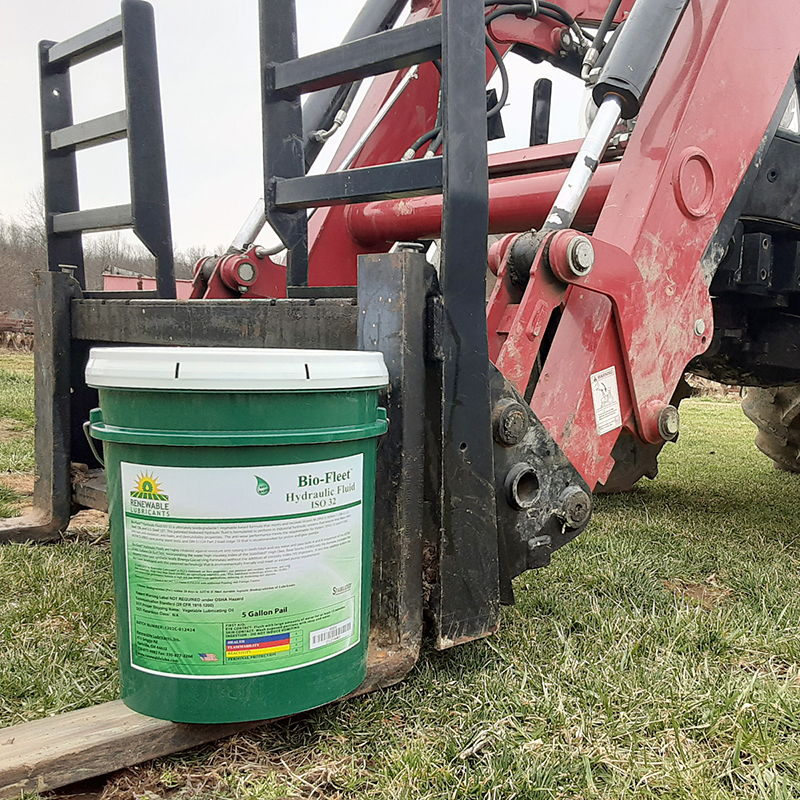
Bio-Fleet fluids are among the safest hydraulic fluids for the environment. (Courtesy: Renewable Lubricants)

Renewable Lubricants introduces biodegradable Bio-Fleet™ Hydraulic Fluids that perform like synthetics but are economical enough for frequent oil change environments due to contaminants. These patented formulations meet or exceed common performance protocols including Vickers M-2950-S, Vickers 1-286-5, U.S. Steel 126, and U.S. Steel 127.

Highly inhibited against moisture and rusting in both fresh and sea water, the fluids are ideal for hydraulic equipment operating outside where high moisture and dusty environments are prominent. Formulated to perform in hydraulic systems that require Anti-Wear (AW), anti-rust, anti-oxidation, anti-foam, and demulsibility properties.  These proven hydraulic fluids are available in ISO 22, ISO 32, ISO 46, and ISO 68 weights to suit fleet, marine, and industrial applications such as vane, piston, and gear pumps.

Bio-Fleet Hydraulic Fluids meet EPA 21013 Vessel General Permit guidelines for Environmentally Acceptable Lubricants and should be used in hydraulic systems where low toxicity, biodegradability, and non-bioaccumulation properties are required.

Anti-wear performance meets requirements for Vickers 35VQ-25 and V-104C (ASTM D-2882) vane pumps stand tests and exceeds DIN 51524 Part 2 and 3 (HLP/HVLP) load stage 10 that is recommended for vane, piston, and gear pumps.

With a higher viscosity index than synthetics (Energy Conserving Formulas), Bio-Fleet Hydraulic Fluids have improved thermal shear stability and increased load capacity.  Their extremely low volatility increases the flash and fire safety features, making them safer to use.  A direct replacement for mineral oil based hydraulic fluids, they are ideal for hydraulic systems where low toxicity, biodegradability, and non-bioaccumulation properties are required.

With oxidation performance comparable to full synthetics, Bio-Fleet fluids are among the safest hydraulic fluids for the environment.  Ideal for stationary or mobile environments, like balers, compactors, or collection vehicles, these high Viscosity Index (VI) fluids are proven in systems up to 10,000 psi and in systems with ultra-fine filtration.

In addition to enhancing performance, Renewable Lubricants (RL) helps companies achieve their sustainability goals.  They are ideal for use in all types of hydraulic systems including trash compactors, collection vehicles, balers, compactors, shredders, pumps, and other OEM equipment.

MORE INFO  www.renewablelube.com

BOEM initiates wind project review near Nantucket

0
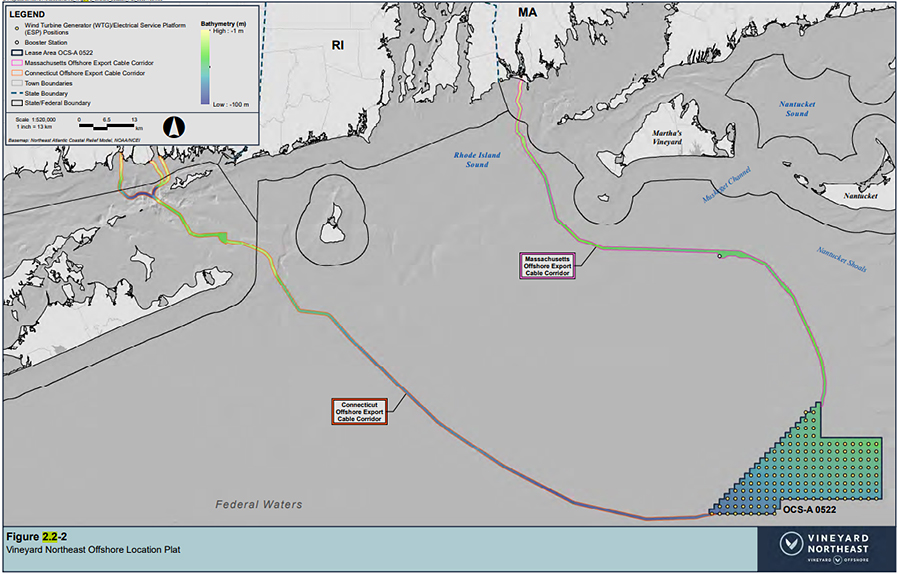
The proposed project could provide power to Massachusetts and Connecticut communities. (Courtesy: BOEM)

In support of the Biden-Harris administration’s goal of deploying 30 gigawatts of offshore wind energy capacity by 2030, the Bureau of Ocean Energy Management (BOEM) will initiate an environmental review of Vineyard Northeast’s proposed offshore wind energy project, located 29 miles offshore Nantucket, Massachusetts at its closest point.

BOEM estimates the proposed project would generate up to 2,600 megawatts (MW) of electricity, enough to power more than 900,000 homes with clean renewable energy.

BOEM published a Notice of Intent (NOI) to prepare an Environmental Impact Statement (EIS) for the Construction and Operations Plan (COP) submitted by Vineyard Northeast, LLC. This is the 13th COP review initiated under the Biden-Harris administration.

“The Biden-Harris administration is steadfast in our dedication to collaborating with Tribal nations, government agencies, environmental groups, local communities, and ocean stakeholders,” said BOEM Director Elizabeth Klein. “Through collective effort, we can establish a robust, sustainable offshore wind sector that guarantees communities nationwide reap the rewards of domestically sourced clean, reliable renewable energy.”

The Lease Area, consisting of about 132,370 acres, is located some 29 miles from Nantucket and approximately 39 miles offshore Martha’s Vineyard, Mass.

Highlights from Vineyard Northeast’s proposal include the following:

  • Installation of up to 160 wind turbine generators, up to 3 electrical service platforms (ESPs), and one booster station in an adjacent lease area.
  • Two offshore export cable corridors, one to Connecticut and one to Massachusetts, and associated onshore transmission systems.

Since the start of the Biden-Harris administration, the Department of the Interior has approved the nation’s first six commercial scale offshore wind projects, held four offshore wind lease auctions – including a record-breaking sale offshore New York and the first-ever sale offshore the Pacific and Gulf Coasts, initiated environmental review of 13 offshore wind projects, and advanced the process to explore additional Wind Energy Areas in Oregon, Gulf of Maine and Central Atlantic. The Department has also taken steps to evolve its approach to offshore wind to drive towards union-built projects and a domestic based supply chain.

MORE INFO  www.boem.gov

Study: Global wind power production predictable within 3%

0
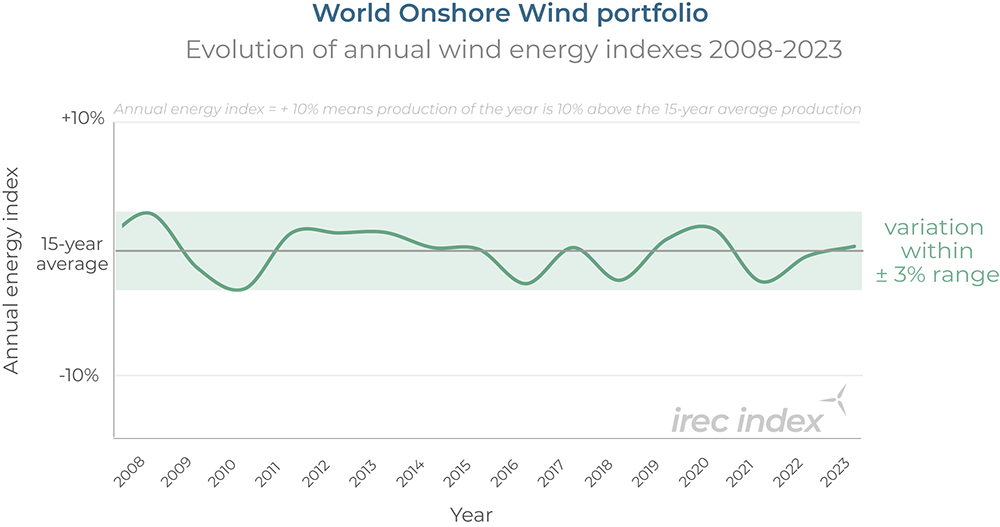
The Global Index covers geographical areas that host about 80% of the world’s operating onshore wind farms as of 2023. (Courtesy: Eoltech)

A study by Eoltech, a leading wind and solar resource assessment consultancy, shows that worldwide wind production is very predictable.

The study was aimed at assessing the variations of the global wind resource over the last 15 years. The data show that worldwide wind power production’s annual variations remain within a ± 3% range. These results are based on irec index, the wind energy index covering 80% of the world’s onshore wind farms installed as of 2023.

The study combines the irec wind energy indexes that Eoltech releases each month for the 300 geographical areas worldwide with the highest number of farms. By aggregating and weighting this data, Eoltech was able to generate a “Global” as well as a “European” wind energy index and provide an overview of global wind resource trends over the past 15 years.

The Global Index covers geographical areas that host about 80% of the world’s operating onshore wind farms as of 2023, while the European Index covers 97% of the continent’s operating wind farms. The European Index shows that wind resource annual variations are within a ± 7% range in Europe, compared to ± 3% worldwide.

“Operating wind farms experience a large diversity of wind regimes, which cause on a local scale significant resource variability from one year to another. Locally, the production of a wind farm can differ significantly from one year to another, up to 25%, due to the variation of the wind resource. But on a larger scale (Europe, World), cumulated production is much more stable. It should also be noted that our analysis does not show any downward trend over the last 15 years in the global wind resource,” said Habib Leseney, Eoltech CEO.

“Yes, the wind does always blow somewhere on the planet, and it is good news for wind power going forward,” said Leseney.

Irec design includes ERA5 data, one of the latest climate reanalysis data sets produced by the European Centre for Medium-Range Weather Forecasts (ECMWF). This indicator is mainly used by asset managers and wind farm owners to compare their production variation from one period to another. Such tools are crucial to assess the production capacity of their portfolio regardless of the wind speed variation level and enable to identify drift affecting the portfolio value over time.

MORE INFO  https://www.eoltech.fr/

Motus wins contract for Empire Wind 1 crane

0
: Motus Technology’s crane is developed to lift five tons at 30 meters. (Courtesy: Motus Technology)

Motus Technology has been awarded a contract by Seatrium Limited to deliver engineering, design, and construction of the platform main crane to Empire Wind 1 Offshore Substation.

The main platform crane from Motus will be delivered to Seatrium’s Singapore yard, before the offshore substation platform will be installed about 20 miles south of Long Island.

Motus Technology has delivered lifting and handling solutions for the offshore wind market with the state-of-the-art 3D motion compensated and solid technology for Commissioning Service Operational Vessels (CSOV).

“We take genuine pride in bringing the benefit of our technological expertise to the offshore wind sector and to be chosen by Seatrium Limited for the design and delivery of the main pedestal crane for installation on the Empire Wind Offshore Platform,” said Magnus Lerheim, sales manager at Motus Technology.

Following completion, the Empire Wind 1 OSS Platform will be operated by Equinor. The project, located about 15 to 30 miles from Long Island, will power several hundred thousand homes in New York and is expected to be a significant contributor in supporting the United States’ (U.S.) energy transition goals for a low-carbon future.

The delivery from Motus Technology consists of a self-contained electric-hydraulic offshore crane with a focus on safety, reliability, and quality. The crane is developed to lift five tons at 30 meters and is designed in accordance with the API 2C Eight Edition. It will comply with U.S. statutory laws and regulations for inspection, installation, and operation in offshore U.S. federal areas.

As the crane will be left unattended for long periods, special considerations are given to protect the crane components from the harsh offshore conditions and to reduce the required maintenance and start-up time for mobilizing and demobilizing on the platform.

“This contract award supports our strategy to increase our supply of high-end cranes to the renewable industry. Through its operations in the U.S., the Empire Wind platform will contribute to decarbonization offering non-fossil power from offshore wind. Empire Wind 1 is one of the most mature offshore wind projects on the east coast of the U.S., and we are excited to be part of this development,” said Kjell Hollen, CEO of Motus Technology.

MORE INFO  www.motustech.no