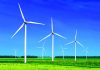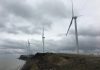




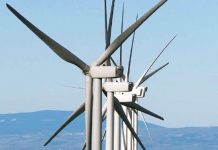


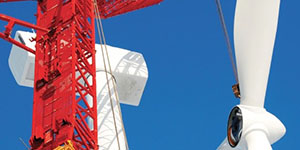
Türkiye is stepping into its first major offshore wind chapter with the launch of its inaugural offshore YEKA tender, an event that could reshape its power-generation mix, unlock vast investments, and accelerate its clean-energy trajectory. Offshore wind could be a key cornerstone for the country’s renewable energy development if it is developed with sound policy, robust incentives, and strong execution, according to Globaldata, a leading intelligence and productivity platform.
GlobalData’s latest report, “Turkiye Power Market Trends and Analysis by Capacity Generation Transmission, Distribution, Regulations, Key Players, and Forecast to 2035,” reveals Türkiye’s broader renewable energy strategy targets 120 GW of combined solar and wind capacity by 2035 and explicitly includes offshore wind. However, offshore wind capacity is expected to enter the capacity mix only in 2032, and 1.3 GW of offshore wind capacity is likely to be operational by 2035, producing roughly 2.7 TW/h well below the aim of 5 GW.

The Turkish government has identified four candidate offshore wind zones — Saros Bay, Gökçeada, Bozcaada, and Edremit — and aims to reach 5 GW of offshore wind capacity by 2035. A draft specification has been released for a 1-GW offshore wind YEKA tender that includes long-term licensing, construction deadlines following approvals, and a price range of $0.07 to $0.11 per kW/h.
“Türkiye’s launch of its first offshore wind YEKA tender is a watershed moment. It signals a shift beyond onshore renewables,” said Attaurrahman Ojindaram Saibasan, Power Analyst at GlobalData. “If planned well, with clear rules and timely permitting, it could mobilize investment, deliver clean, firm power, and help the country reduce its dependence on thermal generation.”
The gap between the government’s 5-GW ambition and the likely 1.3-GW outcome arises from multiple obstacles. First, permitting and regulatory processes are complex and time-consuming: environmental reviews, seabed licensing, and marine regulations all require many steps and coordination among agencies. Second, key infrastructure, including grid connections, subsea cables, landing stations, and reinforcement of the onshore network, needs early planning and substantial investment, or projects may face bottlenecks. Third, financial challenges such as inflation, fluctuations in currency, and supply chain disruptions increase the cost and risk of projects. Fourth, technical and environmental issues such as variable seabed quality, harsh marine conditions, ecological sensitivities, and stakeholder concerns can slow progress or limit development.
More info www.globaldata.com