









Shoreline Wind, a leading provider of AI-powered simulation and optimization software for the renewable energy sector, announced the launch of its latest industry report: “Data Drive: Opportunities for Wind in AI Boom.”
The report reveals how repowering legacy wind assets will play a vital role in the race for AI supremacy in the United States. By doubling, if not tripling, the output of legacy wind farms and circumventing lengthy grid connection queues, wind operators are in a unique position to boost grid capacity and demand from power-hungry data centers.
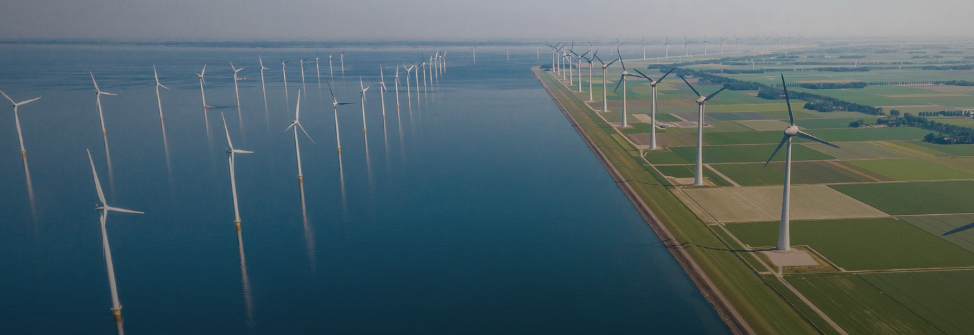
The report delivers a comprehensive analysis of the shifting landscape of U.S. wind operations. It highlights how wind farm owners can implement advanced operations and maintenance (O&M) and end-of-life strategies to meet the surge in electricity demand triggered by artificial intelligence (AI) and cloud computing data centers to double, or potentially triple wind energy capacity.
With traditional greenfield power projects facing lengthy transmission and interconnection delays, Shoreline Wind’s report identifies repowered legacy wind farms as the fastest, most economically viable path to bringing massive volumes of clean energy online.
Research featured in the report estimates that repowering aging assets could more than double U.S. onshore wind capacity, adding 161GW of capacity to existing fields to reach a total of 314GW. This shift comes at a critical time: while only 9GW of the U.S. wind fleet has reached the traditional 20-year operational milestone, that number will quadruple to 40GW by 2030. Furthermore, a wave of assets built during the 2016 production tax credit (PTC) boom are now hitting their 10-year mark, making them prime candidates for partial or full repowering.
The report outlines how operators can use AI to solve many challenges the AI boom has created. By utilizing advanced AI-powered simulation technology, such as Shoreline’s proprietary simulation and planning tools, operators can transition from reactive maintenance to intelligent, predictive asset modeling.
While the financial incentives for continuous power generation have never been higher, wind operators are navigating severe headwinds, including transmission congestion and an acute labor shortage. The Global Wind Energy Council projects that the onshore wind workforce must scale dramatically, with the demand for technicians jumping from 46,000 in 2026 to 69,000 in 2027.
“Availability has always mattered for project economics, but now more than ever, operators need to squeeze every single bit of power they can out of their projects,” said Ole-Erik Endrerud, co-founder and Chief Product Officer (CPO) at Shoreline Wind. “We see very little curtailment in high-demand regions now because the grid and data centers will take every little bit of power they can get. AI simulations empower owners to accurately predict weather windows, optimize scarce technician schedules, and seamlessly manage the immense logistics of complex repowering projects.”
More info: shorelinewind.com/downloads/data-drive-opportunities-for-wind