











Recyclamine is often cited as a disruptive innovation in epoxy chemistry. From a technical standpoint, what makes it fundamentally different from conventional wind-blade epoxies?
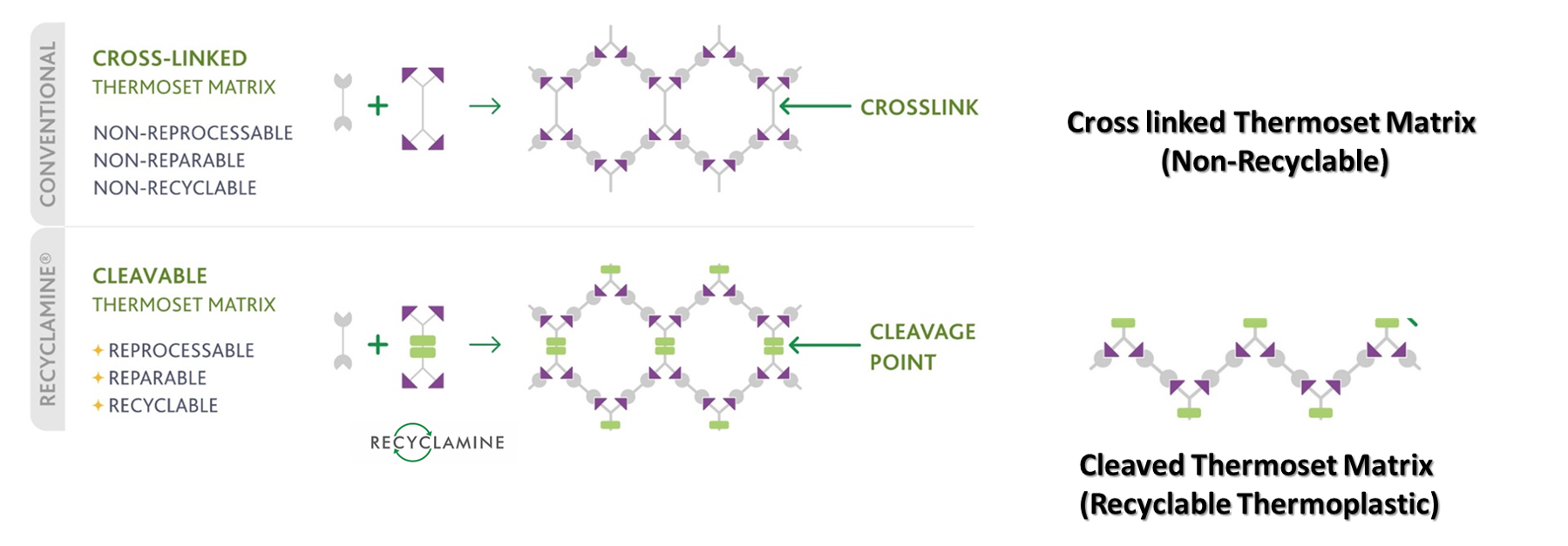
Traditional wind-blade epoxies rely on permanent cross-linked networks formed using amine or anhydride hardeners. These networks deliver excellent fatigue and durability but are inherently irreversible. Recyclamine features an innovative curing agent design that incorporates specially engineered cleavable chemical linkages directly into the crosslinked network of the epoxy thermoset. Throughout the wind-turbine blade’s operational lifespan (typically 20 to 25 years), these linkages remain fully stable, delivering the same high performance, durability, and structural integrity as traditional non-recyclable thermoset resins. At the blade’s end-of-life, under controlled chemical conditions, the network can be selectively deconstructed. This enables true thermoset recyclability without sacrificing the exceptional mechanical properties required for demanding wind turbine blade applications. (See Figure 1)
Wind blades operate for 20 to 25 years under extreme cyclic loading. How does Recyclamine perform in terms of fatigue and long-term durability?
Fatigue resistance is non-negotiable in wind energy. Our Recyclamine-based epoxy systems have been extensively tested under representative tensile-tensile and flexural fatigue regimes used for blade qualification. Results consistently show stiffness retention above 90 percent after millions of cycles, matching or exceeding incumbent blade epoxy systems. Glass transition temperatures typically exceed 80 to 100°C, depending on formulation, ensuring thermal stability across diverse climatic conditions. Importantly, moisture uptake and hydrothermal aging behavior are comparable to conventional epoxies, which is critical for offshore and high-humidity environments.
How compatible is Recyclamine with existing wind-blade manufacturing processes, such as resin infusion?
Process compatibility was a key development objective. Recyclamine systems can be engineered to deliver low initial viscosity, long infusion windows, and controlled cure kinetics compatible with vacuum-assisted resin infusion and RTM (Resin Transfer Molding).
This allows blade manufacturers to integrate recyclable epoxies without capital investment or process redesign. Furthermore, the cure cycles and post-cure requirements closely mirror those of conventional non-recyclable epoxy systems currently used in high-volume blade production, which significantly lowers the barrier to adoption for large-scale blade production.
Can you elaborate on the recycling process itself and the quality of recovered materials?
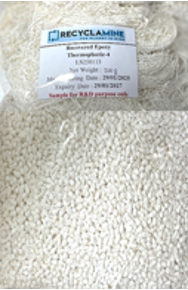
At end-of-life, blades manufactured with Recyclamine-based epoxies can be treated using a proprietary chemical recycling process. The resin matrix is converted into a reusable thermoplastic-like material, while the reinforcing fibers are cleanly separated. Mechanical testing shows that recovered glass or carbon fibers retain up to 90 to 95 percent of their original tensile properties. This is a critical distinction from mechanical recycling, where fibers are typically downgraded.
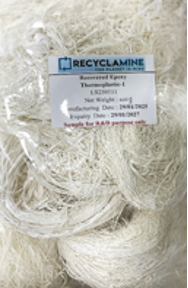
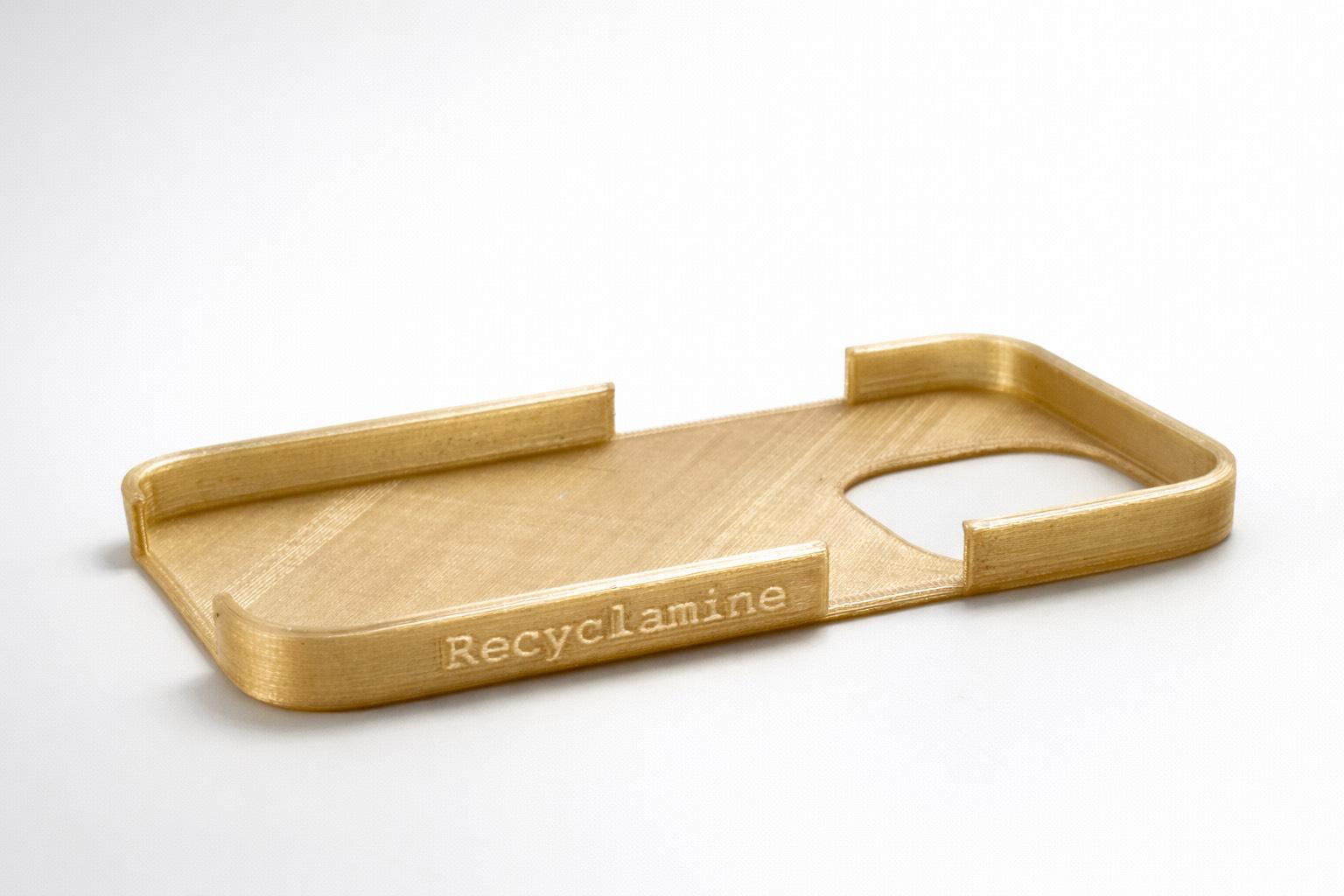
The recovered resin from the Recyclamine recycling process emerges as a high-quality thermoplastic epoxy (no longer a crosslinked thermoset), which can be easily isolated, dried, and processed into versatile forms such as long polymer strands, pellets, or powder/fine granules. Such forms enable the resin to be repurposed in diverse downstream applications, e.g. an iPhone case — fully closing the loop in a genuine circular economy for epoxy-based composites. (See Figures 2, 3, and 4)
What impact can Recyclamine have on the environmental footprint of wind energy?
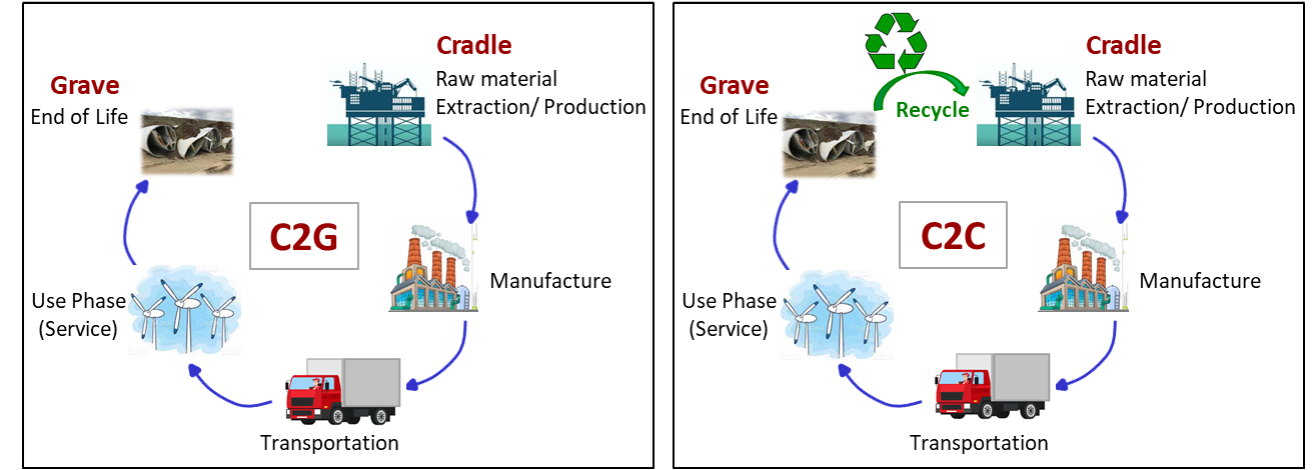
Lifecycle assessments indicate that epoxy resins account for a significant portion of a blade’s embodied carbon. By enabling high-value recycling and reducing landfill or incineration, Recyclamine can lower the overall lifecycle CO₂ footprint of wind blades by approximately 37 percent. Additionally, the ability to recover fibers reduces demand for energy-intensive virgin glass or carbon fiber production. As sustainability metrics increasingly influence turbine procurement decisions, this becomes a tangible competitive advantage. (See Figure 5)
How do you see OEMs and regulators responding to recyclable epoxy technologies in the coming decade?
We are already seeing strong interest from OEMs as landfill bans and extended producer responsibility regulations gain momentum, particularly in Europe. Over the next 10 to 15 years, recyclable thermosets are likely to move from pilot programs to qualification standards. Recyclamine provides a practical pathway for OEMs to meet future regulatory requirements without compromising blade performance, reliability, or cost competitiveness.
Finally, what is your long-term vision for Recyclamine in wind energy?
Our vision is for recyclable epoxies to become the default material choice for wind blades. As turbine fleets age and decommissioning volumes rise, circularity will be essential for maintaining the sustainability credentials of wind energy.
Recyclamine marks a fundamental paradigm shift in the wind-energy sector, moving away from managing composite end-of-life waste toward designing waste out entirely, enabling wind power to remain one of the most sustainable energy sources over its full lifecycle. Recyclamine Technology is truly the world’s first solution to end-of-life management for epoxy composites – a technology innovation of the Advanced Materials Business of Aditya Birla Chemicals, Aditya Birla Group.
More info www.abg-am.com