









Seafaring is one of the world’s oldest occupations. With a history that dates back as far as the Egyptians and the Vikings, life at sea has long been crucial for exploration and trade.
But after hundreds of thousands of years, the appeal of a life at sea is dwindling, particularly in the U.K., with industry recruiters sharing that the number of applicants entering maritime training programs has significantly declined, especially since the COVID-19 pandemic.
The U.K.’s maritime sector is now turning more to foreign labor to crew its vessels, drawing offshore teams from countries such as Poland, Latvia, and Romania.
Aware of the challenge at hand, offshore infrastructure vessel and support services company, North Star, has taken proactive measures to retain and develop its workforce as well as attract additional talent.
Having already transitioned from the fishing industry to oil and gas, and now in its latest evolution — renewables — the 138-year-old business is striving to remain competitive in the marketplace.
The firm, which boasts the U.K.’s largest wholly owned fleet, looks after all its ship management in-house. Its combined shoreside crewing department of 19 oversees all placement, travel, and development for its seafarers, building a strong and supportive inclusive culture.

Evolving approach
As North Star accelerates its shift into the offshore wind sector, its approach to crewing up is evolving to match the pace of change. The company’s new generation of Service Operations Vessels (SOVs) marks a major milestone, not only in fleet capability but also in how crews are selected, trained, and supported.
Recognizing that skilled, experienced seafarers are essential to safe and efficient operations in offshore wind, North Star is strategically redeploying talent from its emergency response and rescue vessels (ERRVs), many of whom possess transferrable skills well-suited to SOV roles.
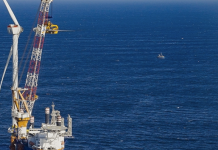
Resources that include providing industry-leading crew welfare initiatives, such as onboard gym equipment and improved communication systems, help to ensure job satisfaction and long-term retention amongst its 1,300 seafarers, who are all employees rather than contracted personnel, operating in the North Sea. With bases in Aberdeen, Lowestoft, Newcastle, and Hamburg, North Star’s fleet boasts 44 assets. The company provides safety-critical, continuous, around-the-clock support services to more than 50 North Sea installations with its ERRVs. It has four SOVs — the Grampian Tyne, Grampian Derwent, Grampian Tees, and Grampian Tweed — delivered to the Dogger Bank Wind Farm partners, for 10-year minimum charters. In addition to this, the business has four newbuilds underway, which will support offshore wind projects in the U.K. and across Europe.

Providing opportunities
At the heart of its recruit-and-retain strategy is providing opportunities for its talent to grow. But with less people applying for jobs at sea and an aging workforce working on vessels today, there is a real urgency to cultivate a new generation of crew. Putting succession plans in place with a focus on transferring knowledge and skills is crucial for maintaining the industry workforce.
North Star has developed a strategic approach to crewing its vessels. It has found, over the years, that to help preserve the company’s culture and high operational standards, it is vitally important to retain crew that external and incoming talent can learn from and then apply this to the burgeoning offshore wind market. At North Star, about 50 to 60 percent of new positions on the recently built SOVs have been filled by personnel already within the company. This allows the company to not only give current employees an opportunity to develop in their own careers, and experience this next generation of seafaring as we transition into offshore wind, but also nurture the fresh talent coming through the doors and working alongside them.
Much of this transfer has come from the many crew members who have previously worked on North Star’s fleet of ERRVs, and who therefore possess the skills that are transferable to SOV operations.

Training programs
With some additional training and certification required for coxswains, progressing ERRV crew members from OPITO to Royal Yachting Association (RYA) qualifications, North Star has invested in training programs to facilitate this type of smooth transition. This has included working with training providers such as RYA Sail and Powerboat in Lowestoft and You and Sea in Helensburgh.
North Star is also collaborating with training providers and nautical colleges across the U.K. and Europe, to enhance skills for dynamic positioning, crane operators, and walk-to-work gangway operators, areas where there is currently a skills shortage.
An important but often overlooked route into seafaring careers is through ratings. Performing essential tasks in both the deck and engine departments, ratings gain hands-on experience under the supervision of senior officers. By offering structured career progression and skill development, vessel operators can enhance the appeal of this role, making them a more attractive entry point into the maritime industry.
This type of training initiative not only helps recruit aspiring seafarers but also ensures a steady supply of skilled personnel ready to move up the ranks. North Star had a really positive experience with this, partnering with North East Scotland College (NESCol) in Peterhead to recruit from their Efficient Deckhand (EDH) courses to backfill positions on ERRV of those who have transitioned to SOV roles. This program introduces individuals to the industry, allowing them to start as trainee ratings before progressing to deckhand and ultimately coxswain positions, ensuring a structured career development path.

Finding and retaining new talent
Attracting new talent is the final challenge to building crews. As the industry continues to scale up to meet global climate goals, a new generation of skilled, motivated professionals is needed to drive innovation, maintain high safety standards, and support the rapid deployment of renewable energy infrastructure.
With an aging maritime workforce and fewer young people pursuing seafaring careers, bridging this talent gap is more urgent than ever.
However, certain perceptions and lack of visibility of the sector can affect this. Low diversity, poor conditions in certain occupations, and the lack of career progression are slowing the talent pipeline. Even those in traditional maritime towns are beginning to seek other careers.
A Maritime U.K. poll [1] found nearly half of 18- to 24-year-olds near the coast planned to move away due to job scarcity, but 70 percent would stay if the right opportunities existed.
This is why maritime educational opportunities should be created for young people — engaging with them early and providing hands-on experiences, to spark interest and enthusiasm for marine careers. Additionally, many young people are unaware of the opportunities that exist across the maritime sector. Seafaring can lend itself to a whole host of careers at sea including offshore support vessels, ferries, cruise ships, and yachts.
The introduction of SOVs at North Star has sparked renewed interest, seeing a reverse in decline in cadet applications. With offshore wind projects on people’s doorsteps, like Dogger Bank, enthusiasm is growing, and North Star must step up and showcase the breadth of work that the sector offers. From engineering and vessel operations to data analysis and environmental monitoring, the sector offers dynamic career paths with real-world impact.
North Star aims to expand its outreach, with new cadet intakes planned for September 2025 at multiple U.K. maritime colleges including Glasgow and South Shields. As the country’s largest employer of offshore cadets, over the last two decades it has trained hundreds of future deck and engineering trainees, investing 1 million pounds annually on average to develop the next generation.
Its investment in training, welfare, and career development not only support the company’s expansion into renewables but also help future-proof the industry as it adapts to emerging challenges and opportunities.
References
- Maritime U.K. poll “State of the Maritime Nation 2022: https://www.maritimelondon.com/wp-content/uploads/2022/06/CEBR-report-2022pdf.pdf.