Home January 2016

January 2016

Enbridge Acquires 103-MW West Virginia Wind Project

0

Enbridge Inc. recently announced the acquisition of a 100-percent interest in the 103-MW New Creek Wind Project from EverPower Wind Holdings, LLC, an independent U.S. renewable energy developer. Enbridge’s total investment is approximately $0.2 billion.

Located in Grant County, West Virginia, New Creek Wind will comprise 49 Gamesa G97/G90 turbines and is targeted to be in service in December 2016. The project was developed by EverPower Wind Holdings.

“With strong fundamentals and commercial underpinnings, the New Creek Wind Project is a strong fit within our low-risk value proposition and advances a key corporate priority of growing our renewable generation platform,” said Vern Yu, senior vice president, corporate planning and chief development officer at Enbridge Inc. “We welcome the relationship with EverPower, a safe and community-focused developer, owner, and operator of U.S. wind projects.”

The project is backed by renewable energy credit (REC) sales and off-take agreements with fixed pricing through mid- and long-term contracts.

New Creek will be constructed under a fixed-price engineering, procurement, and construction (EPC) agreement with White Construction Inc. Gamesa will provide turbine O&M services under a five-year fixed price contract, following which Enbridge will operate.

Including this acquisition, Enbridge has invested approximately $5 billion in renewable power generation and transmission since 2002. Enterprise-wide, the company now has interests in nearly 2,000 MW of net renewable generating capacity operating, secured, or under construction. 

— Source: Enbridge

For more information,
go to www.enbridge.com.


Wind Energy To Power GM’s Texas Assembly Plant

0

General Motors’ Arlington Assembly plant will soon be able to build up to 125,000 trucks a year using wind power from turbines whose blades span the length of a football field in diameter.

Arlington Assembly produces more than 1,200 vehicles daily, including the Chevrolet Suburban and Tahoe; GMC Yukon and Yukon XL; and Cadillac Escalade and Escalade ESV. The 115-million kwh of renewable energy will be enough to manufacture more than half of the plant’s annual vehicle output.

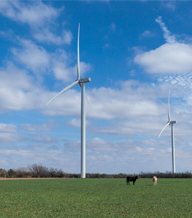
GM recently signed a power purchase agreement with EDP Renewables North America, a fully owned subsidiary of EDP Renováveis, for 30 MW of renewable energy from the planned 250 MW Hidalgo Wind Farm in Edinburg, Texas. Fifteen of the wind farm’s 261-foot-tall turbines will generate the energy GM will use.

Arlington Assembly expects to start using the clean power during the fourth quarter of 2016, avoiding approximately $2.8 million in energy costs annually. Over the course of the 14-year deal, GM will avoid more than 1 million metric tons of carbon dioxide emissions, which is equivalent to the emissions of 112-million gallons of gasoline consumed.

“Our investment is helping accelerate the proliferation of clean energy in Texas and the use of wind as a reliable, renewable source of energy,” said Jim DeLuca, GM executive vice president of global manufacturing. “Our sustainable manufacturing mindset benefits the communities in which we operate across the globe.”

“We are pleased to enter into this agreement with General Motors and look forward to providing clean and more economical energy for GM’s Arlington Assembly plant in the coming years,” said EDP Renewables North America CEO Gabriel Alonso.

Renewable energy complements a robust energy efficiency program at the plant. Arlington Assembly recently met the U.S. Environmental Protection Agency’s Energy Star® Challenge for Industry by reducing the energy intensity of its operations by 10 percent in five years, marking the second time it has met the challenge. Arlington Assembly is also investing in a new paint shop that will use half the energy of the system it will replace.

Beginning in the first quarter of 2016, wind energy will help power three GM Mexico facilities. Once online, the company will exceed its commitment to use 125 MW of renewable energy by 2020. GM’s investments in renewable energy to date have yielded nearly $80 million in savings. 

— Source: GM

For more information,
go to www.gm.com.

Block Island Wind Farm Caps Off Successful First Offshore Construction Season

0

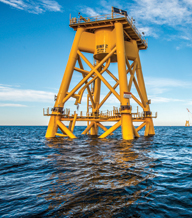
The first offshore construction season is now complete in the U.S. for the nation’s first offshore wind farm with all five steel jacket foundations fully installed at the Block Island Wind Farm site.

Construction crews installed the last deck platform on November 21, 2015. All of the construction and crew vessels associated with the operation have now demobilized from the site.

“From the first ‘steel in the water’ in July to the last deck lift in November, we’ve completed a season of firsts — not only for the Block Island Wind Farm but also for the launch of a new American offshore wind industry,” said Deepwater Wind CEO Jeffrey Grybowski. “We are proud of the work we’ve accomplished so far, but we’ve only just begun, and 2016 will be a year to remember.”

“Rhode Island is proud to be home to the nation’s first offshore wind farm, and we’re quickly becoming a center of innovation in this growing industry,” said Rhode Island Governor Gina M. Raimondo. “With this project, we’re putting hundreds of our local workers to work at-sea and at our world-class ports to build a project that will help diversify Rhode Island’s energy mix and protect our environment. I applaud Deepwater Wind for their successful first offshore construction season, and I look forward to seeing the project fully operational and generating renewable energy in 2016.”

Over the course of the busy 18-week construction period, approximately 200 workers (100 of them local) and a dozen construction and transport barges, tugboats, crew ships, and monitoring vessels were active at the project’s port facilities and the wind farm site roughly 3 miles off the coast of Block Island.

More than 300 local workers will be involved with building the Block Island Wind Farm. Deepwater Wind is utilizing four Rhode Island ports — Block Island, Galilee, Quonset Point, and the Port of Providence — to complete construction and staging.

All construction activities were completed in accordance with strict environmental rules set by state and federal government agencies. In 2013, Deepwater Wind voluntarily agreed to a series of protective measures to minimize potential underwater noise impacts on North Atlantic right whales during wind farm construction.
“We are especially proud that our work was done while upholding very high environmental standards,” Grybowski said.

The focus this winter and spring now turns to turbine assembly and submarine cable installation work.

Deepwater Wind and GE are establishing a new temporary manufacturing facility at the Port of Providence for the assembly of turbine components. GE, which recently completed its acquisition of Alstom’s offshore wind unit, is supplying the 6-MW Haliade 150 offshore wind turbines for the Block Island Wind Farm. Approximately 60 local workers will be involved in this aspect of the project.

Over the next six months, GE will install the critical electrical, mechanical, and safety equipment within the bottom tower sections now at the Port of Providence with the remaining tower sections arriving in Rhode Island next year. (Each turbine tower consists of three sections with a total height of approximately 270 feet and a total weight of approximately 440 tons once assembled.)

The assembly activities at the Port of Providence will complement construction and staging work completed at Quonset Point in North Kingstown, Rhode Island. Fabrication of some of the foundation components was completed by local welders at Quonset’s Specialty Diving Services in early 2015, and the port continues to host construction work and vessel staging for the wind farm. Quonset will also host the project’s long-term operations and maintenance facility.

Submarine cable installation is scheduled to begin in the spring of 2016 with the erection of the five offshore wind turbines set for the summer of 2016. The project is scheduled to be in service and generating power in the fourth quarter of 2016. 

— Source: Deepwater Wind

For more information,
go to www.dwwind.com.


Duke Energy Renewables Blows into Oklahoma with 200-MW Wind Project

0

Duke Energy Renewables recently announced that it is planning to build a large-scale wind power project in Oklahoma, the company’s first renewables project in the state.

When built, it will increase Duke Energy Renewables’ U.S. wind capacity to more than 2,000 MW.

Duke Energy Renewables will build, own, and operate the Frontier Windpower Project sited in Kay County, which is east of Blackwell, Oklahoma. The 200-MW wind farm will produce enough emissions-free electricity to power approximately 60,000 homes.

“We’re investing heavily in renewable energy, and surpassing 2,000 MW of wind power is a significant accomplishment for our company,” said Greg Wolf, president of Duke Energy’s Commercial Portfolio. “We are excited to be working with the community and local landowners as we get our first project in this wind-rich state underway. The facility will help City Utilities meet its renewable energy goals while creating economic development opportunities for Kay County.”

The power will be sold to City Utilities of Springfield, Missouri, under a 22-year agreement.

“City Utilities is pleased to partner with Duke Energy on the Frontier Windpower Project,” said Scott Miller, general manager of City Utilities. “Providing a long-term renewable source of power generation in this changing market is critical to the future of utilities. We look forward to bringing this source online for our customers in the coming months.”

Construction is scheduled to accelerate in the first quarter of 2016, and the Frontier Windpower Project is expected to be operational by the end of the year. It will consist of 61 Vestas V126-3.3 MW wind turbines. Duke Energy Renewables has successfully partnered with Vestas on many of its Texas wind projects.

“We’re very pleased to continue building our excellent partnership with Duke Energy Renewables, one of the top wind players in the competitive U.S. market,” said Chris Brown, president of Vestas’ sales and service division in the U.S. and Canada. “By choosing the V126-3.3 MW turbine for the Frontier wind site, the order also showcases our product portfolio’s great flexibility across all wind sites, as the model provides highly competitive cost of energy in a traditional 2-MW turbine market.”

Amshore US Wind provided development support for the project, which will be built by Wanzek Construction. 

— Source: Duke Energy Renewables

For more information,
go to www.duke-energy.com/renewables.

Wind Energy in Australia

0

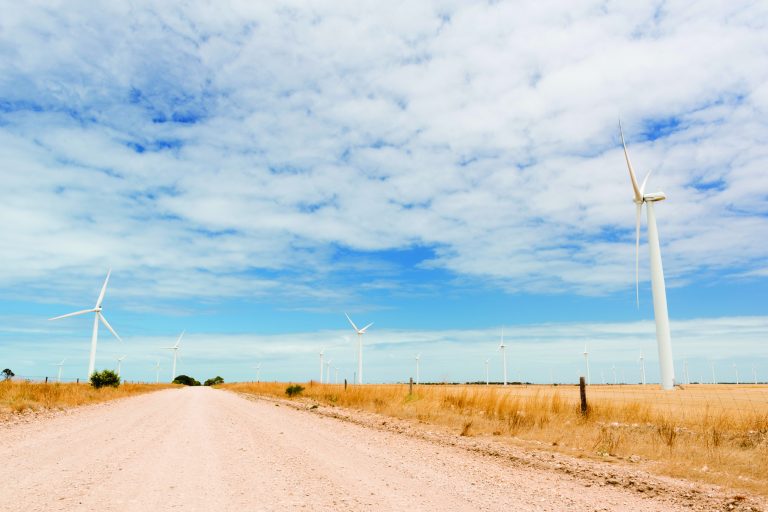
Low operating costs and extensive availability make wind one of the most advantageous and effective renewable energy sources. To harness wind energy, large wind turbines rotate available wind energy within the area swept by the blade and produce a power output that is proportional to the air density and the wind speed cubed. These spinning blades are connected to electric generators that produce electricity for export to the grid. In 2014, 30 percent of total renewable energy produced in Australia was from wind. Wind power also supplied 4.2 percent of Australia’s overall electricity during that year. By the end of 2014, Australia had 1,886 wind turbines spread across 71 wind farms. Australia began installing eight wind farms between 2014 and 2015 with a total power generation capacity of 566.7 MW. Three of the eight wind farms were completed by the end of 2014, and five more were completed in 2015.

Why Australia Should Move Toward Renewable Energy Production

Australia has one of the highest per-capita greenhouse gas emission levels in the developed world. This is due in part to its large domestic reserves of coal that has kept electricity prices low and attracted energy-intensive industry. Currently, more than 75 percent of total domestic electricity generation relies on coal-fired power. However, in recent years, concerns over climate change have prompted Australian policymakers to revive their energy policy and create a mandatory target for energy production using renewable energy including wind. Australia needs to meet future energy requirements in an increasingly carbon-constrained, multilateral policy environment that is challenging and in need of active mobilization of all available assets.

What Australia Is Doing To Promote Renewable Energy

Federal policy has changed since the publication of the Garnaut Climate Change Review study and several policies, targets, and initiatives have been announced to improve the renewable energy sector in Australia. Some of these initiatives include a Carbon Pollution Reduction Scheme white paper, an announcement in 2010 of an Emissions Trading Scheme, and an announcement of a national mandatory renewable energy target of a 20-percent share of electricity supply in Australia by 2020.

The national Mandatory Renewable Energy Target was announced to achieve the following:
• Encourage the additional generation of electricity from renewable sources
• Reduction of greenhouse emission
• Ensure that renewable energy sources are ecologically sustainable

Is Wind Energy an Option for Australia?

Wind energy is a proven and mature technology with low operating costs. Wind turbines require low maintenance costs, which reduce the economic barriers related to work force and management. For wind-rich sites, wind energy holds great possibilities and can compete with other renewable sources of energy such as solar and biomass. Currently, wind cannot compete with the cost of electricity produced using a traditional or existing coal-based power plant that has already been depreciated and paid for by taxpayers and electricity consumers. However, wind energy is one of the cheapest of all the available renewable energy sources. It is competitive with new clean coal-fired power stations and cheaper than new nuclear power.

Australia vs. the United States in Wind Energy Policy

Table 1: Installed wind energy in Australia by the end of 2014

By 2013, at least 144 countries have announced different renewable energy targets and policies to support renewable energy development at the national level compared with only 55 countries in 2005. There are also a large number of state/provincial level and local level policies in different countries such as Australia and the U.S. Similar to the national mandatory target in Australia, the Renewable Portfolio Standard (RPS) uses market mechanisms to ensure that a growing percentage of electricity is produced from renewable sources such as wind power. The Renewable Electricity Standards (RES), also called RPS, provides a competitive and predictable market in which renewable energy generators compete with each other to lower the prices. Currently, RES policies exist in 29 U.S. states as well as the District of Columbia and Puerto Rico, but not at the national level. Additionally, the U.S. Department of Energy has also targeted to increase the contribution of wind energy to 20 percent of total electrical energy by the end of 2030. In collaboration with the American Wind Energy Association (AWEA), the DOE’s “Wind Vision Report” provides valuable insight into the cost, major impacts, and associated challenges in achieving the 20-percent wind by 2030, as well as wind energy supplying the U.2. with 10 percent of the country’s electricity by 2020, 35 percent by 2050, and road maps on how to get there. Wind Vision updates and expands on the DOE’s 2008 report, “20% Wind Energy by 2030: Increasing wind energy’s contribution to the U.S. electricity supply,” which galvanized the rapid growth of wind so that it now generates 4.5 percent of America’s electricity.

Conclusion and Advice for Further Improvement in Successful Utilization of Wind Energy

Utilization of software and sensors to constantly monitor forces exerted on the blades would help to significantly increase the amount of electricity generated and lower the cost of wind power. Grid constraints such as a lack of capacity or availability may limit the growth of wind energy in some areas that have good wind resources. In such areas, the upgrade and extension of the wind grid to the current grid may be needed to accommodate further wind energy development. With new developments in wind energy technology, Australia is expected to reach a high level of wind energy generation over the next few decades. Deployment of wind energy in Australia may be further accelerated by improvements in wind forecasting technology and more accurate estimates of the likely output from wind farms.

Both Australia and the U.S. have set renewable energy targets to increase the scale of renewable energy applications, introduced legislation and regulations at national and state/provincial level, implemented different governmental programs, and provided incentives and funding to ensure that the targets can be met in required time.

References

1. “The Australian Renewable Energy Race: Which States Are Winning or Losing?” 2014, Climate Council of Australia Ltd , Australia.
2. “Clean Energy Australia Report 2014”, 2015, Clean Energy Council, Australia.
3. IRENA (2015), “Renewable Energy Prospects: United States of America”, REmap 2030 analysis. IRENA, Abu Dhabi. www.irena.org/remap.
4. Saidur, R., Islam, M. R., Rahim, N. A., & Solangi, K. H. (2010), “A review on global wind energy policy.” Renewable and Sustainable Energy Reviews, 14(7), 1744–1762. http://doi.org/10.1016/j.rser.2010.03.007.

Acciona Windpower To Supply Turbines for Building Energy’s First U.S. Wind Project

0

Acciona Windpower, an Acciona group subsidiary dedicated to the design, manufacture, and sale of wind turbines, has completed a turbine supply agreement with Building Energy, a multinational company operating as global integrated IPP in the renewable energy industry, for a 30-MW wind power project located in central Iowa. Under the agreement, Acciona Windpower will deliver 10 AW125-3000 turbines and provide operations and maintenance services to the project for 10 years.

Each of the turbines will have a rotor diameter of 125 meters and a 3-MW generator mounted on an 87.5-meter steel tower, a configuration designed for maximum production at the lowest cost of energy. This project will expand Acciona Windpower’s footprint in the U.S. to over 1,400 MW. Acciona Windpower will support the project from its North American headquarters in West Branch, Iowa.

“Acciona Windpower is proud to partner with Building Energy to further the growth of clean energy here in Iowa and around the globe,” said Enrique Teruel, CEO of Acciona Windpower North America. “We are confident that Acciona Windpower’s turbine technology will help make this project a success.”  

Building Energy is a global renewable energy company with experience in 24 countries worldwide. The Iowa project will be Building Energy’s first wind farm in the U.S. It is expected to be online by November 2016 and will supply electricity to Alliant Energy.

“Building Energy is delighted to collaborate with Acciona Windpower, a major player in the wind power sector,” said Andrea Braccialarghe, Building Energy managing director, USA. “We have chosen this company for their expertise and the performance of their turbines, which is a crucial factor for the project outcome.” 

— Source: Acciona Windpower

For more information,
go to www.acciona.us.

Bloomberg and EDP Renewables Announce New York’s Largest Corporate Renewable Energy Purchase

0

EDP Renewables, a global leader in the renewable energy sector and the world’s fourth-largest wind energy producer, recently announced that it has signed a 20-year power purchase agreement with Bloomberg, the global business and financial information and news leader, for 20 MW of clean energy that will be used to offset the energy use of their New York offices.

Bloomberg has agreed to buy more than 25 percent of the energy generated by the Arkwright Summit Wind Project in Chautauqua County, New York, totaling 79 MW. The project is expected to avoid the emissions of more than 340,500 metric tons over 20 years, which is the equivalent of taking more than 71,000 cars off the road.

“We are extremely satisfied with this agreement,” said João Manso Neto, CEO of EDP Renewables. “The fact that companies like Bloomberg are playing such an active part in renewable energy projects is a very clear indicator that the future lies in the generation of this type of energy. To be chosen as their partners confirms the confidence of the market and companies in our delivery capacity, experience, and know-how.”

The project is located less than 30 miles from the retired BPU Jamestown Coal Plant, one of more than 205 U.S. coal-fired power plants that have been retired in the last five years as part of the Sierra Club’s Beyond Coal campaign, in partnership with Bloomberg Philanthropies. Thanks to local, grassroots efforts, coal-fired power plants in the U.S. have been replaced with cleaner energy, driving down power sector emissions to its lowest level since 1994.

“This agreement will benefit our company financially, but it also reflects our commitment to sustainable business practices,” said Michael R. Bloomberg, founder of Bloomberg LP. “This new wind farm that is just a short drive from a coal plant that Bloomberg Philanthropies helped phase out will bring more clean energy onto the grid and power about half of our New York operations, helping to make our company one of the greenest in the state.”

The project is the largest corporate renewable energy purchase on record in New York state, and, coupled with previously announced renewable energy projects, Bloomberg will power 51 percent of its New York state energy needs from clean energy sources once the project is complete.

“Bloomberg is aggressively looking for clean energy projects that make good business sense and reduce costs, diversify energy supply, and have a positive environmental impact,” said Curtis Ravenel, Bloomberg’s global head of sustainable business and finance. “With this project, we’re projecting to save more than $10 million over the life of the 20-year agreement versus traditional utility prices and demonstrating how businesses can contribute to the climate challenge while improving the bottom line.”

“Governor Andrew M. Cuomo has championed efforts to reduce greenhouse gas emissions and combat climate change by increasing the use of renewable energy in New York,” said John B. Rhodes, president and CEO of New York State’s Energy Research and Development Authority. “With our support, the development of the Arkwright Summit Wind Farm will help ensure New York achieves its 50 percent by 2030 renewable energy goals. We commend Bloomberg LP and EDP Renewables North America for their commitment to securing a stable energy supply with long-term economic and environmental benefits to benefit all New Yorkers.”
Bloomberg aims to source 35 percent of its energy from clean power sources and reduce absolute emissions 20 percent from its 2007 baseline by 2020.

“Bloomberg has become a leading corporate buyer of renewable energy,” said Charles Esdaile, managing partner of Altenex, the firm that served as Bloomberg’s exclusive adviser on this transaction. “This is the largest corporate purchase of wind energy on record in New York. By completing this transaction, Bloomberg and EDP have helped to pioneer the New York market for large-scale renewable energy purchases by corporate buyers.”

Bloomberg is a founding member of the Business Renewables Center, a collaborative platform launched by the Rocky Mountain Institute. It aims to accelerate corporate renewable energy procurement and double U.S. capacity of wind and solar energy by 2025. Bloomberg is also a signatory of the Renewable Energy Buyers Principles, a set of six principles that articulate the needs of corporate renewable energy buyers.

Construction of the wind farm is targeted for completion in 2017. 

— Source: EDP Renewables

For more information,
go to www.edpr.com.

Conversation with Nick Rasper

Tell us about ITH Bolting Technology’s history and how it made a name for itself in the wind energy industry.

ITH Bolting Technology was founded in 1979 by engineer Hans Hohmann in Meschede, Germany. The first product designed and manufactured by ITH was the hydraulic bolt tensioning cylinder. From there, ITH went on to develop a complete range of tension and torque tooling intended for larger industrial bolting applications. Today, ITH also offers fasteners and services that range from technical design of bolted joints to on-site bolting.

Involvement with the wind turbine industry began in the early 1980s. Bolts of large-sized slewing bearings, which are an integral part of wind turbines, require precise and even tightening to avoid galling between the single ring units. For this type of application, tensioning is the best bolting method because, overall, it is significantly more accurate, precise, and faster than alternative methods. ITH promoted this and became directly involved with wind turbine OEMs as they began realizing the benefits of tensioning. The wind industry has become huge over the years, and ITH has continued working with the growing number of turbine OEMs, contractors, and service companies.

ITH is family-owned and operated, and it has maintained consistent core values. We have a worldwide reach, yet we emphasize customer focus with the flexibility and speed to meet their needs. ITH has more than 50 representations and 10 subsidiaries. We work together as a global network to provide international support.

What makes ITH one of the world’s leading system suppliers in bolting technology?

Being a system supplier goes far beyond delivering a set of tools. We can offer support from the design phase through the life of a bolted connection. Engineering, tools, fasteners, and service — this is our complete system that comes from extensive experience and knowledge in bolting. The extra step that sets us further ahead as a leader is our drive for innovation through continuously applying the knowledge and experience gained over the years.

What types of products and services does ITH provide to the wind energy industry, and how do these help it stand apart from its competitors?

We provide products and services from every level of our complete system of engineering, tools, fasteners, and service. ITH designs and manufactures all of its own tooling and pumps, including hydraulic bolt tensioning systems, hydraulic torque wrench systems, and nut runners, which are more commonly known as torque multipliers. Some of the services we provide include technical design of bolted joints, training, and on-site bolting. Fasteners provided include a wide range from standard to specialized.

ITH stands apart from competitors by using its full range of products and services combined with experience and knowledge to push the advancement of bolting in the wind industry. One example is the introduction of maintenance-free bolting on wind turbine tower segments with the ITH Stretch System. This is a bolting package brought together by ITH to offer the best possible technical solution.

ITH tools are used on applications throughout different wind turbines, from foundation and tower section bolts to the hub and blade slewing bearings, as well as various other applications. We supply to OEMs, construction contractors, and service companies for maintenance so our tooling has been widely used across the U.S. from the largest site, Alta Wind, down to single turbine projects.

How has ITH set new quality standards in the market, and what effect has that had on its role in the industry?

Better bolting solutions for slewing bearings, foundation and tower connections, and other bolted joints throughout wind turbines have positive impacts on their design, construction, and maintenance. While we continue to push adoption of these improved solutions across the wind industry, we also use feedback from customers at each level to improve our products down to minor convenience features.

In 1995, ITH was the first market actor to be certified according to the strict requirements of DIN ISO 9001. Our strong commitment to quality persists. We were recently certified according to the updated quality management guideline DIN ISO 9001:2015.

How can wind farm owners and operators benefit from working with ITH?

From the start, we can help customers identify their tooling needs, and, from there, we follow up with fast and reliable support. We have a large inventory of new tools and spare parts, and our service department has quick turn-around times.

What is your outlook on the wind energy industry in the U.S. going into 2016?

It’s hard to predict how 2016 will go, especially with the uncertainty of the PTC extension. My general outlook is that the industry advances every year, aside from market fluctuations. The reports I’ve seen show that 2015 had some growth over 2014, and I think this will continue with 2016.

(815) 363-4900 www.ith.com ITH Bolting Technology