


Home July/August 2020

July/August 2020

Ardian signs 20-year financing agreement for Åndberg wind farm

0

Ardian, a world-leading private investment house, has signed a 20-year financing for its 286 MW “Åndberg” wind farm in Sweden. The financing is provided by KfW IPEX-Bank, which is the part of KfW Group responsible for project and export finance.

The long-term financing was secured on the back of a 10-year green power purchase agreement (PPA) with Skellefteå Kraft, one of Sweden’s largest energy producers, agreed in October 2019. The financing allows Ardian and eNordic to further optimize and secure more revenue streams for the wind farm.

Ardian Infrastructure acquired the Åndberg wind farm from OX2 in February 2019 as part of its Nordic sustainable energy investment platform, eNordic. The wind farm is relying on the latest technology, having upgraded its Nordex turbines to the 5MW class earlier this year. Following its completion in 2021, Åndberg will each year provide clean electricity in excess of 800 GWh, making it one of the largest wind farms in Sweden.
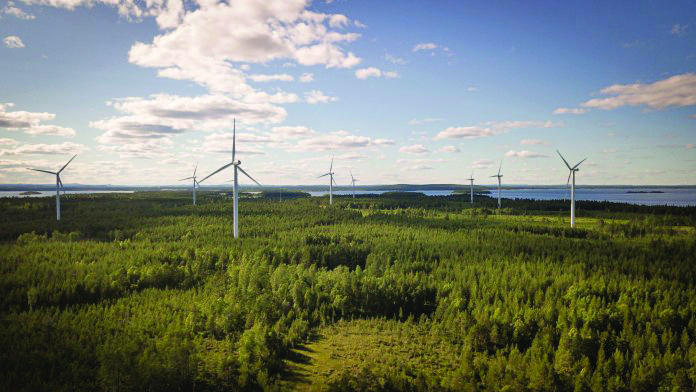
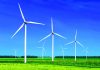
The Åndberg wind farm is one of four current wind power investments managed by Ardian’s new sustainable energy investment platform, eNordic. (Courtesy: KfW IPEX-Bank)

The Åndberg wind farm is one of four current wind power investments managed by Ardian’s new sustainable energy investment platform, eNordic. Earlier this year, Ardian made its first investment in Finland with the acquisition of the Lakiakangas 1 wind farm from German-based wind-power company, CPC Finland Oy.

“This agreement is the latest step in our strategy to build a leading independent sustainable energy group in the Nordic region,” said Thomas Linnard, managing director, eNordic. “The long-term financing was secured at very attractive terms despite current market conditions and high level of complexity involved, highlighting the strength of the project and our approach.”

“This project is a great example of our asset management capabilities and ability to improve our investments’ performance including financing, hedging, build-ups, and technical optimization,” said Simo Santavirta, head of asset management, Ardian Infrastructure.

“This operation highlights our continued commitment to sustainability and relentless activity as we continue to look for investment opportunities to support the sustainable energy transition in the Nordic region,” said Amir Sharifi, managing director, Ardian Infrastructure.

“KfW IPEX-Bank is firmly committed to finance innovative energy and environmental projects, and we’re pleased to support Ardian and eNordic’s Åndberg wind farm as they continue to support the sustainable energy transition in the Nordics,” said Markus Scheer, member of the management board of KfW IPEX-Bank. “It has been a real pleasure to work with their highly competent teams, and we look forward to a long-term partnership.”

More infowww.ardian.com

MARKET OUTLOOK: ‘An exciting milestone’ for North Carolina

0

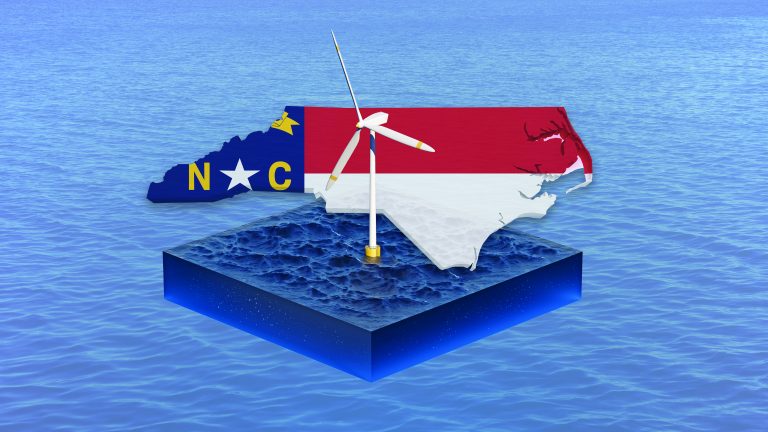
North Carolina has taken the first step toward what observers say is a crucial study of offshore wind — issuing a request for proposals to analyze the state’s ports and manufacturing supply chain.

Other states that have conducted similar analyses have created a virtuous cycle of more local jobs, lower costs, and more activity in an offshore wind sector still in its nascent stages in the United States. Advocates say the request for proposals issued recently sets that same cycle in motion for North Carolina.

“Not only will this provide key insights to the state’s unique industry qualifications and opportunity areas, but it sends an important signal to the offshore wind industry that North Carolina is open for business,” said Katharine Kollins, president of the Southeastern Wind Coalition.

Massive potential

The Tar Heel State has some of the nation’s best potential for ocean-based wind turbines, with the technical potential to meet the state’s electricity needs many times over.

In the near term, federal officials have identified two patches of sea near Wilmington that could host wind farms, and an area just beyond the Kitty Hawk horizon is already in the early stages of development. Turbines in the three sites combined could create enough electricity to power more than 1.5 million homes.

But most of the U.S. activity on offshore wind so far has been concentrated in the Northeast, where states are upgrading ports — to enable shipment of tremendous blades, towers, and other specialized components — and creating a network of local manufacturers and installers. Virginia has also begun similar steps.

Officials want North Carolina to follow suit, seeking not only to boost clean-energy production within the state, but to maximize job creation in a supply chain servicing the entire region.

The request for proposals “marks an exciting milestone in North Carolina’s efforts to seize on the economic development potential of the offshore wind industry,” said Chris Chung, executive director of the Economic Development Partnership of North Carolina.

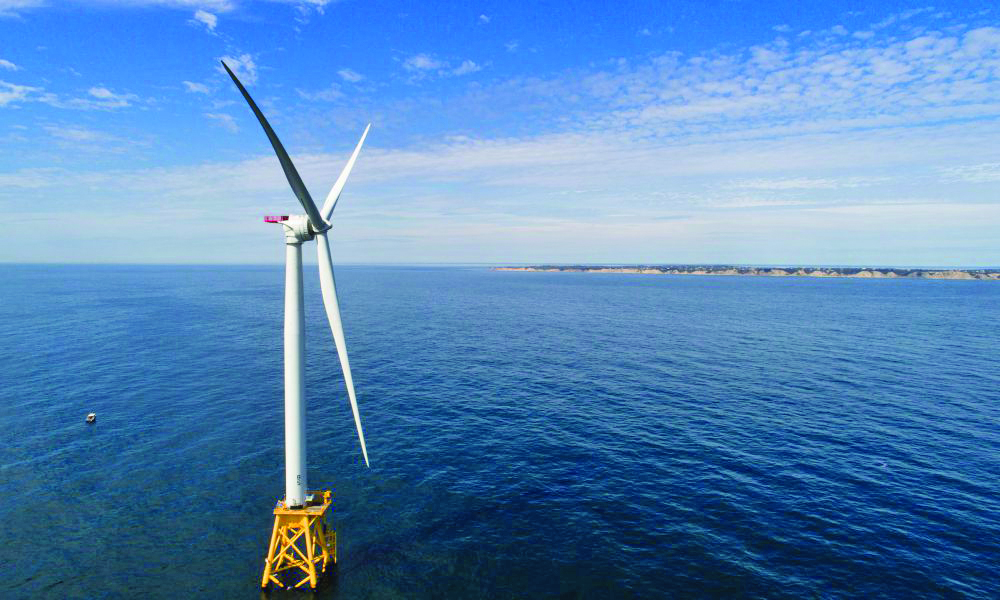
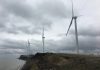
Block Island wind farm off the coast of Rhode Island was the first U.S. offshore wind facility constructed. Most of the U.S. activity on offshore wind so far has been concentrated in the Northeast, where states are upgrading ports. (Courtesy: AWEA)

Identifying upgrades

The study is to identify what upgrades are necessary at ports in Wilmington and Morehead City and pinpoint job needs within the state, already home to a robust energy-related manufacturing sector, including 28 wind-related manufacturing facilities that employ more than 1,000 people.

The request for proposals came after Gov. Roy Cooper, a Democrat, promised in November the study would move forward despite an impasse with the Republican-led Legislature over the 2019-20 budget. Cooper had originally proposed $300,000 for the research, an idea that won bipartisan support.

How much the state will end up spending on this analysis, housed under the Department of Commerce, isn’t clear.

“Our procurement method is a competitive process, and we believe many organizations will seek to help us conduct this study,” said department communications director David Rhoades. “The quality, depth, and efficiency of those proposals will determine the ultimate scale of the engagement.”

Asked where the department would find the money for the study, Rhoades said the department reallocated funds from elsewhere in its operating budget.

“We’re confident we have the resources on hand to develop and publish a useful report that will help the state further develop the wind-energy industry in North Carolina,” he said.

Planned completion at year’s end

Proposals were due June 15, and the state hopes the work can be completed by the end of the year. The study is a piece the state’s Clean Energy Plan issued last year, part of Cooper’s executive order on climate calling for greenhouse gas reductions of 40 percent by 2025 compared to 2005 levels.

Action items under the 144-page plan have proceeded full steam ahead even as the state grapples with the coronavirus pandemic, with a web of stakeholder groups meeting virtually for hours and even days on end.

The plan, spearheaded by the Department of Environmental Quality, notes that other states have conducted port and supply chain studies, set procurement goals and requirements, and enacted other incentives that send friendly market signals to the industry.

“Capital flows toward certainty,” according to the plan.

The plan assigns DEQ the task of recommending what policy incentives North Carolina should enact to attract the industry, but spokesperson Sharon Martin didn’t say when to expect those recommendations. She said an offshore wind goal and other measures were being considered as part of a “larger stakeholder process” over how to reduce emissions and modernize the state’s utility regime.

Cassie Gavin, the chief lobbyist for the North Carolina Sierra Club, said her group wants an offshore wind target to be one of those recommendations. She was thrilled to see the study move forward on its own terms, but also wished it would set the stage for more aggressive policy action.

“Hopefully,” she said, “the study will help us get to a goal.”