Vestas recently received a 274-MW order from EDF Power Solutions North America to supply 25 EnVentus V162-6.0 MW wind turbines and 20 EnVentus V162-6.2 MW wind turbines for the Madawaska wind project in Quebec, Canada, including a 10-year Active Output Management (AOM) 5000 service agreement. Once operational, Madawaska will provide clean and secure energy to tens of thousands of Quebec homes while supporting local job creation and industrial development.
The 274-MW Madawaska order follows the recently announced 124-MW EnVentus order with EDF Power Solutions for the Haute-Chaudière wind project, also in Quebec.
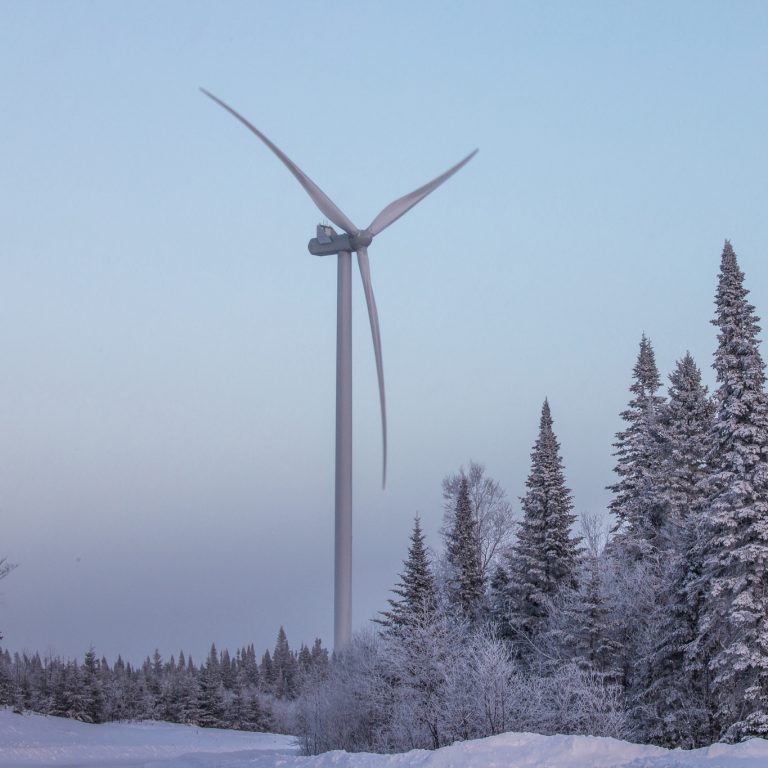
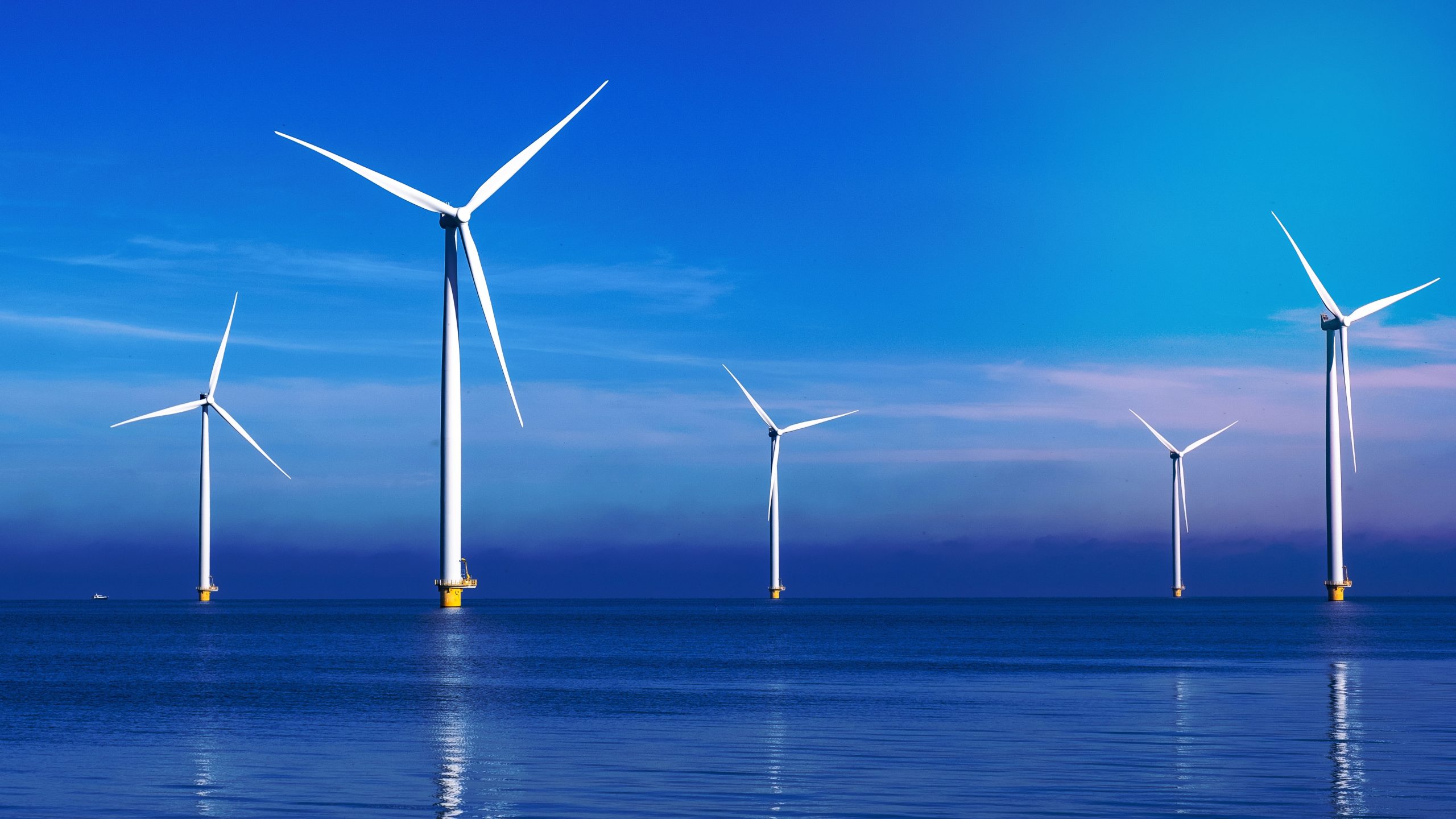
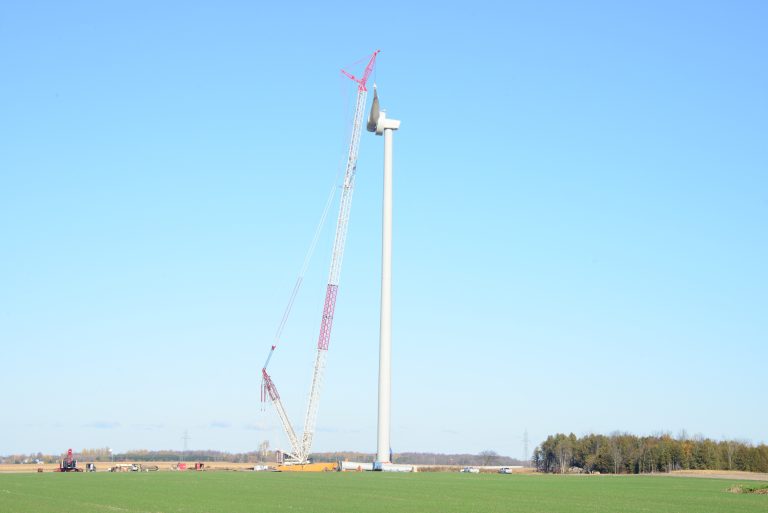
The Madawaska wind project is part of Quebec’s energy transition. (Courtesy: EDF Power Solutions North America)
“We’re excited to continue our growing partnership with EDF Power Solutions North America and the Madawaska project once again highlights the power of collaboration, where proven supply chain expertise meets world-class technology,” said Laura Beane, president, Vestas North America. “Through continued investment in Quebec’s energy future, collectively we are helping pave the way for large-scale renewable development. With Hydro-Quebec targeting 10 GW of wind capacity by 2035, momentum is building, and it’s through partnerships like this one that we are preparing to make the province’s bold vision a reality.”
“Madawaska Wind, the second of three projects awarded by Hydro-Quebec through its call for tenders, serves as a testament to the strength of our collaboration with Vestas,” said Tristan Grimbert, president and CEO of EDF Power Solutions North America. “As the Madawaska project moves forward, we are committed to leveraging these strong partnerships to continue to make a meaningful impact on Quebec’s energy future.”
Vestas has an installed base of more than 5 GW spanning all 10 provinces and a supply chain supported by more than 300 local suppliers. In Quebec, Vestas services 428 MW of operating turbines and last year, announced a further 347 MW order that is under construction.
“Quebec presents unique logistical and execution challenges, but our long-standing, and growing, experience in the region means we’re well positioned to navigate them,” said Josh Irwin, senior vice president, Canada Onshore Sales, Vestas North America. “By bringing together local know-how and strong partnerships with regional stakeholders, we’re prepared to help bring this project to life while creating new economic opportunities for the province.”
As part of a shared commitment to strengthen local manufacturing and job creation, EDF Power Solutions and Vestas have partnered with Quebec-based Marmen as the tower supplier, supporting 150 direct jobs in Matane.
“Marmen is proud to work with two industry leaders to highlight the importance of a Canadian-based supply chain amid strong market signals,” said Patrick Pellerin, President, Marmen. “We are ready to help mature this market alongside Vestas and EDF Power Solutions.”
Delivery of the turbines is expected to begin in the third quarter of 2026, with commissioning scheduled for the fourth quarter of 2027.
First Look Solutions S.R.L., a subsidiary of Rezolv Energy, has placed a 269-MW order with Vestas to complete the second phase of Vifor wind farm in Buzău Country, Romania. Once both phases are fully operational, the Vifor project will become the largest wind farm in Romania and one of the largest onshore wind farms in Europe, with a total capacity of 461 MW.
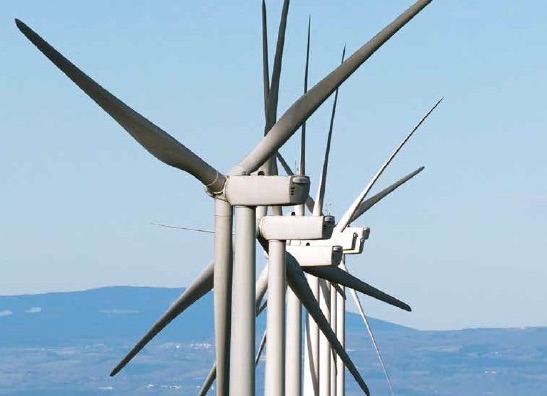
Delivery of phase II of the Vifor wind farm in Romania is set for the second half of 2026. (Courtesy: Vestas)
The phase II order includes 42 V162-6.4 MW turbines of the EnVentus platform. Vestas will also provide long-term service for the project through a 15-year Active Output Management 5000 (AOM 5000) agreement. “We are delighted to contribute to Romania’s energy transition through the realization of the country’s largest wind farm,” said Srdan Cenic, Vestas Mediterranean East General Manager. “Vestas continues to lead the market thanks to our strong local infrastructure, including five service hubs and a regional training center.”
“Rezolv’s Vifor wind farm is an iconic project which is helping to position Romania at the forefront of Europe’s clean energy transition,” said Alastair Hammond, Rezolv Energy CEO. “From the start, the project has been designed to ensure the maximum possible reduction in emissions, and the 6.4-MW turbines from Vestas — the most powerful ever installed in Romania — will be crucial in delivering this impact,”
Turbine delivery for phase II is planned for the second half of 2026, with commissioning scheduled for the second half of 2027. Vifor phase I is now under construction, with Vestas providing full engineering, procurement, and construction (EPC) solutions, along with 30 V162-6.4 MW turbines.
Vestas has played a key role in advancing wind energy in Romania since entering the market in 2009. With nearly 2 GW of capacity either installed or under construction, Vestas is the leading wind OEM in the country. The company’s Eastern European regional headquarters is in Bucharest and employs more than 550 people across Romania, including a highly skilled team of service technicians supporting ongoing projects.
FairWind, a leader in wind-turbine installation and service solutions, has appointed Alexandra Hof as Regional Head of Service for Northern Central Europe (NCE).
In this newly created role, established to reflect a sharpened focus on local market growth, Hof will lead the firm’s service activities across key territories in the region with emphasis on operational excellence, customer satisfaction, and regional business growth.
Alexandra Hof will oversee all aspects of the NCE service business unit. (Courtesy: FairWind)
Hof, who holds an executive MBA from Mannheim Business School in Germany, has had a career spanning product management, operations, and strategic development. She brings more than 18 years’ experience in services at renewable energy, power generation, and cross-functional leadership. Most recently, Hof was senior product management leader for Offshore Wind Services at GE Vernova.
At FairWind, she will oversee all aspects of the NCE service business unit. This includes accountability for the region’s service financial performance, as well as the full portfolio of service and maintenance projects, ensuring quality and timely execution, and driving strategic KPIs.
“Alexandra’s appointment marks a significant step in the evolution of our regional strategy,” said Gustavo Valbuena, NCE regional director at Fairwind. “Known for her leadership and technical acumen, her deep industry experience and customer-centric mindset make her an ideal fit to drive excellence across our NCE service operations. As we continue to scale globally, her track record of championing innovation and helping businesses advance clean-energy technologies will be instrumental in reinforcing FairWind’s position as a trusted partner in renewable energy services,”
“I’m honored to join FairWind at such a defining moment for the industry,” Hof said. “This role brings together everything I care about: people, purpose, and the chance to make a real impact on the energy transition. The NCE region is vital to Europe’s green energy vision, and I look forward to working with our talented teams and trusted partners to deliver outstanding service excellence and lasting value for our customers.”
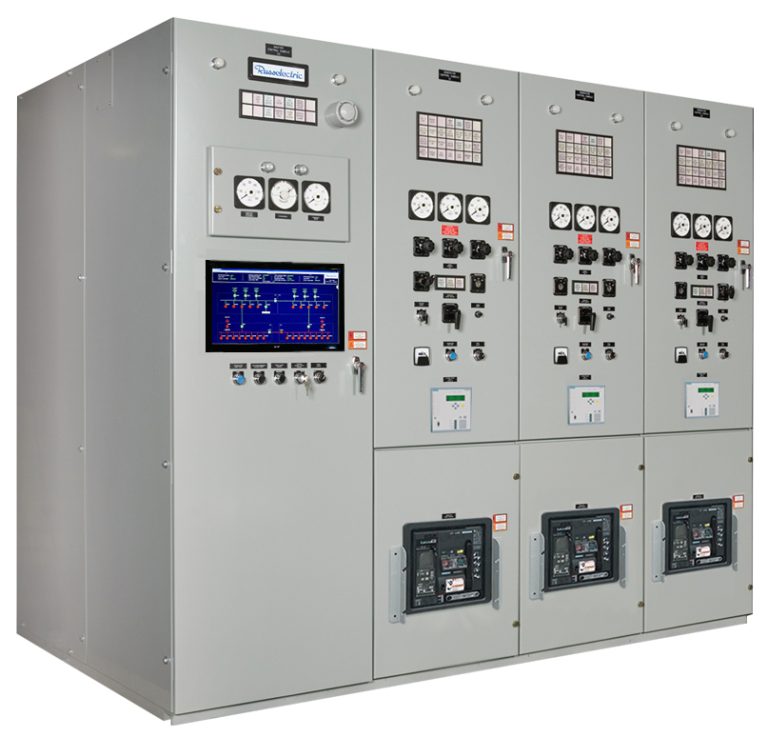
Russelectric, a Siemens business, a manufacturer of power control systems and automatic transfer switches, offers its Prime Power Systems, which are used for automatic operation of on-site power generators to serve a renewable energy facility’s entire load.
Russelectric’s Prime Power Systems are used as the primary source of power for renewable energy facilities. (Courtesy: Russelectric)
The Prime Power Systems are used as the primary source of power for renewable energy facilities. Generator paralleling controls provide active synchronization and soft loading control of the engine generators based on load demand.
All Russelectric Prime Power systems are UL listed, offer programmable logic controller (PLC) system controls, and are supervisory control and data acquisition (SCADA)-capable.
In prime power applications, engine generators are run in response to the connected load. If load increases to a predetermined level, the Russelectric Prime Power System automatically starts additional generators, synchronizes them to the generator bus, and shares the load with the running generators. If load decreases to a predetermined level, excess generators are automatically removed from the bus and shut down, returning them to automatic standby status.
Russelectric provides power control solutions for mission critical applications in the healthcare, information technology, telecommunication, water treatment, and renewable energy markets.
Boulder Imaging is teaming up with Oikon Ltd., a Croatian environmental consultancy, to bring AI-powered bird protection technology to wind farms across southeast Europe. Through the deployment of Boulder Imaging’s IdentiFlight system, the partnership supports the growing demand for sustainable wind development while also protecting biodiversity.
As Croatia ramps up renewable energy under the European Green Deal, permitting requirements now mandate detailed environmental impact assessments, particularly for wind farms near Natura 2000 sites. IdentiFlight’s real-time bird detection and automated turbine curtailment capabilities help developers meet these standards, reducing permitting risk while protecting high-concern species such as Eurasian griffons, honey buzzards, short-toed snake eagles, golden eagles, and kestrels.
“IdentiFlight is a proven solution that aligns with our mission to harmonize development with nature conservation,” said Dalibor Hatić, general manager of Oikon Ltd. “We’re excited to bring this cutting-edge technology to Croatia and the broader Southeast European region where wind energy is expanding and biodiversity protection is critical. Our goal is to ensure that wind development can thrive without compromising our common natural heritage.”
“Partnering with Oikon Ltd. enhances our ability to deliver conservation-driven technology where it’s most needed,” said Don Mills, president and chief operating officer of Boulder Imaging. “Together, we’re advancing the role of AI in biodiversity protection and accelerating responsible wind energy growth in Croatia and beyond.” With more than 520 systems deployed across five continents, IdentiFlight has reduced bird fatalities by more than 85 percent while maintaining a power generation loss of less than 1 percent in wind farms. The first systems in Croatia are planned for 2026, with an initial focus on sensitive migratory corridors and ecologically valuable terrain.
Following the U.K. government’s approval of the 4.8-billion-pound Mona Offshore Wind Farm in the Irish Sea, Aggreko is highlighting how bubble curtain technology can help protect marine ecosystems from harmful underwater noise during construction.
With up to 96 turbines and four offshore substations set to be installed, the project marks a milestone in the U.K.’s clean-energy transition. Aggreko is highlighting the critical role of bubble-curtain technology in absorbing and dispersing soundwaves from underwater construction activities such as pile driving, to help safeguard marine ecosystems.
Aggreko advises organizations to consider the environmental performance of their equipment. (Courtesy: Aggreko)
“The approval of the Mona Offshore Wind Farm is a major step forward for U.K. energy security and decarbonization that should be welcomed,” said Sam Hutson, Renewable Energy Specialist at Aggreko. “But as we accelerate offshore wind deployment, we must not lose sight of the environmental responsibilities that come with it. One area that must be addressed is the impact of underwater noise during construction.
Technologies such as bubble curtains are increasingly being used to reduce that impact, but for these systems to work properly, they rely on a steady supply of clean, oil-free air. If the air supply is inconsistent or contaminated, the effectiveness of the curtain can be compromised, putting marine life at risk.” Aggreko is also advising organizations involved in offshore construction to consider the environmental performance of their equipment as well as operational reliability and the monitoring capabilities required to ensure they remain operational in such a demanding environment.
Oil-free air compressors, when paired with remote monitoring systems, can help ensure bubble-curtain systems remain consistent and effective throughout the construction phase, minimizing the risk of environmental non-compliance or unplanned downtime. “With environmental regulations tightening across the Irish Sea and beyond, developers face increasing pressure to deliver projects that are both efficient and environmentally responsible,” Hutson said. “The supply chain can play a key role in supporting this effort, by providing access to compliant, well-maintained equipment and the technical expertise needed to deploy it effectively in complex marine environments.”
Green Volt, a joint venture project from developers Flotation Energy and Vårgrønn, has awarded a front-end engineering and design (FEED) contract for its onshore substation to Worley. Worley, a professional services company of energy, chemicals, and resources experts, will develop a design plan for Green Volt’s onshore substation, covering electrical, construction, commissioning, operations and maintenance, and decommissioning engineering scopes.
A team from Worley’s Aberdeen office will lead the FEED, overseeing an anticipated 12 months of engineering work, in preparation for the next stage in the substation’s build. Green Volt, headquartered in Aberdeen, says Worley’s plans to deliver the project from the Scottish energy hub were a key aspect to its successful tender.
“Green Volt is proving floating wind technology can scale,” said Matthew Green, Green Volt project director. “There is huge opportunity to build a U.K. supply chain ready to act on the global opportunities ahead. We’re delighted to welcome the support of Worley as it leads the delivery of the onshore substation FEED from Aberdeen, our home city. Green Volt is a highly ambitious project, designed for rapid deployment and today’s announcement takes us one step closer.”
Green Volt’s onshore substation will be North of Peterhead connecting a 560-MW floating windfarm 80 kilometers off the east coast of Scotland.
The ORE Catapult estimates Green Volt will contribute 2.5 billion pounds in gross value added, with more than 750 million pounds retained in Scotland. It will also create thousands of jobs, with many of these in Scotland.
“This is a key project that will provide a sustainable energy supply to the U.K.’s market, and we’re excited to be part of it,” said Marino Barbi, Senior Vice President U.K., Worley. “This work aligns perfectly with Worley’s own ambitions and I’m proud that our people are supporting Green Volt’s efforts to meet energy demands efficiently, cost effectively and sustainably.”
Venterra Group company Partrac, a leader in metocean survey and monitoring solutions, recently marked two years of successful deployment supporting RWE, one of the world’s leading offshore wind companies, on the Sofia Offshore Wind Farm.
Located 195 kilometers northeast of the U.K.’s coast, on Dogger Bank, the Sofia Offshore Wind Farm is a flagship project in the country’s transition to renewable energy. It will feature 100 Siemens Gamesa turbines, each standing 252 meters tall, and will cover a total area of 593 square kilometers. Once completed, Sofia is set to become one of the largest and most remote offshore wind farms ever constructed.
Venterra’s Partrac has been instrumental in the wind farm construction phase. (Courtesy: Venterra)
Since May 2023, Partrac has been instrumental in the construction phase, deploying a network of metocean measurement and demarcation buoys. This includes the installation of Cardinal Mark and Special Mark buoys to define the site’s perimeter, as well as wave buoys that provide real-time environmental data essential for safe and efficient construction planning and management. Partrac’s advanced online client portal provides real-time wave and current data to RWE and project stakeholders, facilitating informed decision-making and supporting the safe, efficient, and timely execution of this complex infrastructure project.
Partrac’s successful delivery on the Sofia Offshore Wind Farm (OWF) project demonstrates its market-leading capabilities in supporting large-scale and technically complex offshore projects for major energy clients.
“Supporting the construction of the Sofia Offshore Wind Farm over a period of several years showcases Partrac’s technical expertise and operational reliability,” said Sam Athey, managing director of Partrac. “Whilst our success in this market has traditionally been based on our services around early-stage metocean surveys and monitoring, we are now seeing an increasing number of clients worldwide engaging us to support the construction phases of their development projects including the development of offshore substations and the installation of submarine infrastructure for energy and communication projects. We are proud to work with RWE on this and other offshore wind projects.”
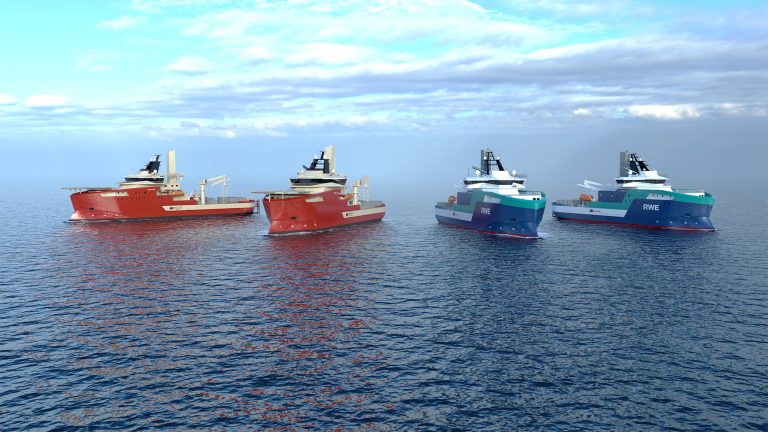
North Star recently secured agreements to support RWE’s growing offshore wind farm portfolio with four hybrid-powered commissioning/service operation vessels (C/SOVs).
The deal comprises two firm long-term charter agreements and two reservation agreements for new-build vessels, together representing the first and largest commitment in the sector to date.
RWE is one of the world’s leading companies in offshore wind. The company operates 19 offshore wind farms (RWE’s share amounts to 3.3 GW) and has four offshore wind projects under construction in the U.K., Denmark, Germany, and The Netherlands (RWE’s share amounts to 3.1 GW).
North Star’s deal with RWE represents a major expansion of North Star’s operational footprint across U.K. and Europe. (Courtesy: North Star)
This major four-vessel agreement for North Star is also set to secure employment for up to 200 personnel working across the fleet, including up to 100 new roles onshore and offshore over the next decade. The company’s continued investment in its people, fleet, and systems will provide new opportunities for its existing talent and the next generation of offshore wind employees.
“This landmark deal is the beginning of a strategic partnership between two industry leaders, built on early engagement, mutual trust, and shared ambitions,” said Gard Talmo, North Star CEO. “We are proud to secure agreements for four state-of-the-art vessels and grateful for the trust put in us by RWE. Our focus is delivering world class operational performance, utilizing all of North Star’s expertise and capabilities in SOV services. With these agreements, we’re putting our scale and track record where it matters the most. This is all made possible thanks to the unwavering dedication, ambition, and drive of our entire team, delivering day-in, day-out, powering our continued growth.”
The new partnership includes the charter of two next-generation hybrid commissioning SOVs to support RWE’s North Sea operations and maintenance schedule. The Grampian Eagle and the Grampian Kestrel were delivered into operations this year, both vessels are futureproofed and ready for alternative low-emission fuels.
The Grampian Eagle will support operations at the Triton Knoll wind farm off the British coast for a minimum of 12 years.
The Grampian Kestrel will be servicing RWE’s German wind farms north of Heligoland for a minimum of 10 years.
For Germany, the charter contract starts this winter and for the UK in summer 2026. Both contracts include options for further extensions in charter’s favor of up to three years.
North Star is headquartered in Aberdeen. Its workforce is made up of about 1,400 offshore and onshore personnel and carries out all its ship maintenance in-house.
Offshore wind developers Flotation Energy and Cobra’s Celtic Sea floating offshore wind project, White Cross, was recently granted full onshore and offshore planning approval.
The White Cross Offshore Windfarm project applied to North Devon Council and the Marine Management Organization (MMO) in 2023 to construct and operate a 100-MW floating offshore wind farm and for works to connect the wind farm to the grid.
Offshore wind developers Flotation Energy and Cobra have received full consent for the White Cross offshore wind farm. (Courtesy: Flotation Energy)
The proposed wind farm, 52 kilometers off the Devon coast, will consist of six to eight state-of-the-art floating wind turbines and, when operational, will generate enough clean electricity to power about 135,000 households.
North Devon Council’s Planning Committee granted consent in May for the onshore elements of the project. The Marine Management Organization issued a Marine License under the Marine and Coastal Access Act 2009 to enable the offshore elements of the project in accordance with the South West Marine Plan.
“This is an important moment for the White Cross offshore wind farm, and for floating offshore wind in the Celtic Sea. We are grateful to the North Devon Council and the Marine Management Organization, and to everyone who has engaged with the project. In response to feedback, we have adapted our plans to minimize environmental and social impacts,” said Sam Park, White Cross senior project manager. “The U.K. is already a leader in floating offshore wind technology, but until now this has only been via projects in Scottish waters. This decision gives us a valuable opportunity to harness this pioneering technology to help deliver the energy transition in the southwest of England. By doing so, we will seek to spark the development of a specialized local supply chain, creating jobs whilst providing 135,000 homes with renewable energy.”
White Cross is a stepping stone project that is pivotal to the Crown estate’s ambitions to scale up and commercialize floating energy technologies in the Celtic Sea.
The project supports the U.K. government’s target for offshore wind, alongside wider decarbonization and energy security targets.
The Q1 U.S. wind market exceeded 2024’s pace, more than doubling activity with 2.1 GW of installations — but regulatory uncertainty led to a significant pullback in wind-turbine orders, according to the U.S. Wind Energy Monitor report released by Wood Mackenzie and the American Clean Power Association (ACP).
The report shows that all installations in Q1 came from new build onshore activity. Wood Mackenzie projects that a total of 8.1 GW of installed capacity will come online this year, including onshore, offshore, and repowers.
However, tariffs and policy uncertainty have placed significant challenges on the market, driving a 50 percent decrease in H1 turbine orders compared to the same period last year, taking them to their lowest level since 2020.
“The surge in first quarter wind installations, combined with a strong development pipeline, underscores the wind industry’s resilience and its capacity to rapidly deliver the clean, affordable, and reliable energy America needs,” said John Hensley, ACP Senior Vice President of Markets and Policy Analysis. “But this momentum is threatened by the changing policy landscape. Regulatory obstructions will drive up costs, putting at risk the nation’s ability to meet its energy demands with homegrown clean power.”
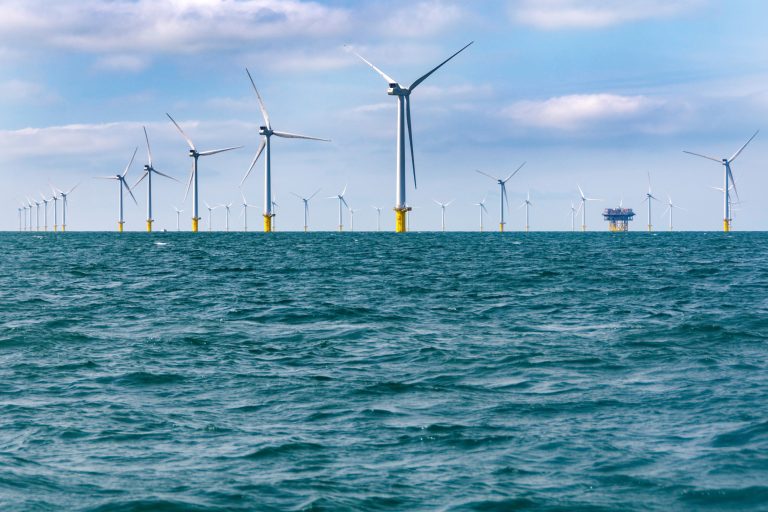
As almost all offshore projects in Wood Mackenzie’s five-year outlook are already under construction, the outlook remains largely unchanged. (Courtesy: Shutterstock)
Onshore Activity
Turbine orders have slowed in 2025, but demand — especially for safe harbor orders — is projected to rebound in the second half following the One Big Beautiful Bill Act’s (OBBBA) final passage.
“Market volatility will prompt a short-term decrease in onshore additions,” said Leila Garcia da Fonseca, director of research at Wood Mackenzie. “A quarter-over-quarter net reduction of roughly 430 MW in the U.S. onshore wind outlook from 2025-2029 reflects growing uncertainty for currently under-development projects, mainly driven by ongoing permitting challenges, tariff risk, and now a sunset of tax credits.”
A late-cycle spike is anticipated in 2029-2030 with developers looking to capitalize ahead of the tax credit expiration.
Western states, which will add 9.4 GW of installations through 2029, will see more activity than other regions.
Offshore Activity
As almost all offshore projects in Wood Mackenzie’s five-year outlook are already under construction, the outlook remains largely unchanged. Wood Mackenzie is projecting a total of 5.9 GW of offshore wind capacity to come online by 2029.
“While we assume projects currently under construction or heading to construction will come online, we don’t expect to see any additional projects take a final investment decision during President Trump’s second term in office,” said Garcia da Fonseca. “This could have a significant impact on the number of offshore projects constructed in the 2030s.”
Despite near-term volatility, Wood Mackenzie forecasts average annual installations of 8.9 GW over the next five years across onshore, offshore, and repowering segments. (Courtesy: Shutterstock)
OBBBA to spur safe harbor activity ahead of pending IRS guidance
Despite near-term volatility, Wood Mackenzie forecasts average annual installations of 8.9 GW over the next five years across onshore, offshore, and repowering segments. By the end of 2029, approximately 44 GW of wind-power capacity is expected to be installed, comprising nearly 33 GW from new onshore greenfield projects, 6 GW from offshore development, and 5.4 GW from repowering. Cumulative capacity should reach 197 GW.
Following the passage of the OBBBA on July 4, 2025, and a subsequent executive order on July 7 challenging IRS guidance on start of construction definition, the wind industry faces regulatory uncertainty as the Treasury prepares revised rules.
The final version of the OBBBA shifts tax credit eligibility from “placed in service” to “start of construction,” creating a 12-month window for developers to begin projects and qualify for the four-year safe harbor, pending IRS confirmation.
This change is expected to drive increased safe harbor equipment activity for projects targeting 2029-2030 CODs, as permitting delays and supply chain constraints continue to limit earlier timelines.
“Wood Mackenzie’s modeling shows tax credit expiration would increase unsubsidized Levelized Cost of Energy (LCOE) by 25 percent on average, a more substantial impact than tariff scenarios, which can add up to 10 percent to LCOE,” said Garcia da Fonseca. “This underscores the critical role of policy support for continued wind deployment.”
(Note: Forecasts in this report were developed after the passage of the OBBBA, but do not incorporate potential effects resulting from the Department of Interior’s July 15 directive requiring the Secretary to review wind and solar projects.)
Wood Mackenzie projects that a total of 8.1 GW of installed capacity will come online this year, including onshore, offshore, and repowers. (Courtesy: Shutterstock)
Offshore Wind Power
Offshore wind needs to play an essential role in the nation’s energy future. This year’s Offshore Wind Power show is built around the work offshore wind stimulates — across ports, transmission, shipbuilding, manufacturing, steel production, and workforce training.
This year’s event — in Boston, Massachusetts, October 7-8 — has made significant changes to the format as compared to previous years.
The number of days has been reduced to help minimize the cost, while each day will be filled with important issue-related discussions.
To that end, instead of a traditional trade show floor, this year’s format will create more room for curated networking, private meetings, and in-depth conversations.
The sessions will be broken into two program tracks:
Delivering Now: Explore the latest offshore wind projects under construction and in operation. Sessions will spotlight real-world progress, operational best practices, and safety innovations driving today’s success.
Planning for the Future: Dive into the next wave of offshore wind development — from strategic port and transmission investments to the promise of floating wind in Maine and along the West Coast. Sessions will also examine long-term pathways for bipartisan support.
A standardized approach for quantifying the mechanical limits of subsea cables was recently published, that addresses uncertainty in the offshore industry on the performance limits of subsea cables. What do these guidelines propose?
It introduces the standardized performance-based methodology for defining the mechanical limits of subsea cables. It focuses on actual performance capacity, safety margin, and enhancements to existing procedures and testing methodologies.
But what does that mean? Traditionally, cable manufacturers define mechanical limits, and when I say mechanical limits, I mean things like minimum bend radius, tension, compression, things like that.
Traditionally, those limits are based on internal rules of thumb. And they’re confirmed through the various kinds of performance tests that manufacturers will do before selling an asset.
Through that test, the manufacturer will then verify that the cable can withstand that specified rule-of-thumb load, but it doesn’t necessarily quantify how close that load is to the actual failure point.
Even though you have that test, which says the cable will withstand this bend radius to this degree, it doesn’t provide a safety margin, so that limit may actually be overly conservative and be quite limiting.
What these guidelines proposed is the shift from conformance testing to performance testing, where a cable is tested to the point of mechanical limit. This will allow you to identify the actual pain of your threshold, and then define a safety factor to derive more accurate and also consistent limits.
offshore windmill park with clouds and a blue sky, windmill park in the ocean aerial view with wind turbine Flevoland Netherlands Ijsselmeer. Green Energy in the Netherlands
How did this project develop?
This is a good opportunity to talk about our programs in general. This program is a project under the Offshore Wind Accelerator, and it’s a collaborative research and development program led by the Carbon Trust. All of our programs are basically collaborative R&D programs. That means we have a group of partner developers, and those partner developers will recommend their experts to join certain groups. Within the Offshore Wind Accelerator, one of the groups is cables, another one is electrical, logistics, yield, etc. The developers will send one or two experts, as the representative to join meetings and suggest challenges and to review on the global board as well.
Together annually, we go through a process of identifying the topics to study. Those same developer partners, they put money into a shared pot, and from that shared pot is what we innovate. The projects come straight from the developers who are designing, bidding for, and building offshore wind farms.
The first phase of this Mechanical Limitations project goes back to 2021 where we, together with the developers, decided we wanted to run this project. They decided at the time to address inconsistencies in how mechanical elements are defined. Following that, the first project was really looking a lot more at the technical things that you can sort out, for example, doing literature reviews into testing methodologies and into other standards that are present and doing desktop modeling as well. The second part of the project focused on building consensus across the industry. That’s where we got various stakeholders involved, mainly cable manufacturers, considering they’re the ones who are testing these cables.
What did the project base its findings on?
First, we had a discussion with developers to understand what their requirements were for this testing. What are they asking for from the manufacturers? We wanted to get an understanding of the base case — the minimum that the developers want. But we also did a literature review and looked at all sorts of technical standards for CIGRE, DNV, API, IEC, etc. Some of those were about performance testing methodologies, and others were about safety factors, and what sort of forces different components would withstand. There’s a lot of separate technical knowledge already published, so we looked at that. We did some numerical modeling as well.
Under this collaborative program, we would run quite a few projects at the same time, and, quite often, we will contract an engineering consultancy to deliver this work. In this report, that delivery partner was Wood. They did a lot of the engineering background work. In the second stage, there was six workshops that spanned the whole year with the supply chain as well. They could basically review the guidelines chapter by chapter and make comments and suggestions so we could reach a consensus.
Why were these guidelines needed in the first place? You talk about the load, and figuring out what the load is, but could you go into more detail about that?
The main reason, especially at the beginning of the project, was that there were no unified standards for performance testing. You had all these different tests that manufacturers would run. One manufacturer would do one thing, and another would do something else, so it was difficult to compare products in the market. That meant that all these developers, when buying products, would have all these different requirements, which meant the developers felt like they couldn’t compare the products, and the manufacturers felt like they had to do all these different testing, because one developer wants one thing, and another developer wants something else. So how do you meet all of those expectations?
So, there was a wide variation of assumptions and in the different approaches taken. There was a lot of uncertainty and risk as a result of that. We wanted to create something a bit more standard, so that it becomes easier to make informed decisions across the start of a project. Because I should say, the factors performance testing we’re suggesting is partially for the manufacturer.
For example, during manufacturing, for storage and transport, static cables are wrapped around a spool. You’re wrapping, winding, unwinding, winding, unwinding. And the cable might have a different kind of load bearing capacity 10 years into operation, as well as a different load bearing capacity during a fault. We looked at how that might change over time as well in this project.
In what way can the guidelines help the offshore wind industry?
If you’re a supplier, this is very relevant to you. If you’re an insurer, this is very relevant to you, just to understand the limits that a cable can meet, and also how those cables should be tested. The other thing is having something as the current best practice summarized in one document. It definitely adds clarity to the sector, but it also really adds a basis that you could innovate on top of. Now that we know this is where we’re at, and this is our best practice, what can we do next? Standardizing something does not mean that we’re stopping innovation. The whole point of the programs is innovation. We generally find that having a good basis helps with that.
Then the other thing is, if you have better standards, then you have a better industry understanding that, in theory, leads to less failures and optimized installation practices and optimized transport and logistics. All of those things save money, and obviously that will translate to a lower energy cost as well for the consumer, as well as, of course, increasing reliability, because energy security and resilience is really important.
A lone wind turbine gracefully spins in the middle of a vast body of water, harnessing the winds energy in a picturesque setting in the Netherlands in Spring. windmill turbines in ocean
How does defining the mechanical limits of cable performance capacity offer potential benefits in general and for offshore wind?
Cables, especially in offshore wind, a lot of them based on their design will have different limits that they can actually reach, but there’s a lot of operational flexibility that they’re maybe not taking advantage of.
If we have a better understanding of the kind of things that can happen to a cable and the loads that it can withstand, then we have a better understanding of the risks themselves. We’re less likely to underestimate them and actually deal with them appropriately. This can allow better integration of cables into the general wind-farm design, especially if you’re talking about getting appropriate cable protection systems, or monitoring systems, or whatever it might be.
What was it like working with the industry on the guidelines?
Obviously, the whole idea came from the developers and the buyers and the operators, etc. They wanted to do it. They had their own reasons and they paid for it as well. The supply chain has been involved in the past year on the project as well. We wanted to make sure that we brought them along. The response has been very positive in that we did have the consortium of 16 members in total.
There’s a lot of interest in it. In terms of how it’s going to be used, I think that remains to be seen. A lot of it will be between the developers and the suppliers themselves in understanding those cable limits. But it’d be also interesting to see if the standards progress. Hopefully, this is a guideline that will be referenced in future standard work. It’s a good place to start to understand where we’re at now, and then, if we want to go further, then this is what we should be referring to.
So, you see the guidelines more as a springboard to more innovation that’s specific to wind and other types of cable work?
I think all guidelines are. I think there’s obviously use in it, not even just as a springboard, but they’re using it practically in terms of the general benefit to the industry at large — we’re talking about certification bodies, as well as insurers and R&D specialists. There’s definitely a lot more we can do as we build on this.
These guidelines allow a focus on the next steps, as opposed to just starting all over the place?
Exactly. Rather than somebody else now having to go and read the technical brochure themselves and all this other documentation — which there’s a lot of — you can just refer back to this. You can obviously go and read the technical brochures as well, but at least there’s a reference point where you can see what is relevant and a general summary of those things.
Is there anything else you’d like to mention that we didn’t talk about?
I think maybe something that would be interesting, just because I know you’re based in the U.S., while many of the Carbon Trust programs have been a bit more Europe-focused due to the support in the technology, we do have a program based in America. It’s the NOWRDC program (National Offshore Wind R&D Consortium). Developers collaborate alongside many states, wider industry partners and historically the federal government. Despite the challenges with federal support withdrawing from offshore wind, other partners including states are still interested. There is definitely an understanding now that there’s an opportunity for those parties, for the U.S. supply chain to become useful to not just the U.S., but externally as well, because their experience is applicable to the industry.
The internal workings of a wind turbine must be protected from the often-harsh environments a turbine is subjected to in its lifetime. Manufacturing that cover needs to be made of the best materials, as well as manufactured to meet the number of covers required for a wind site.
Startup wind company BlueWind Technology has been manufacturing these covers for six years while creating innovative ways for even greener production — an important, but sometimes overlooked, step in producing clean energy.
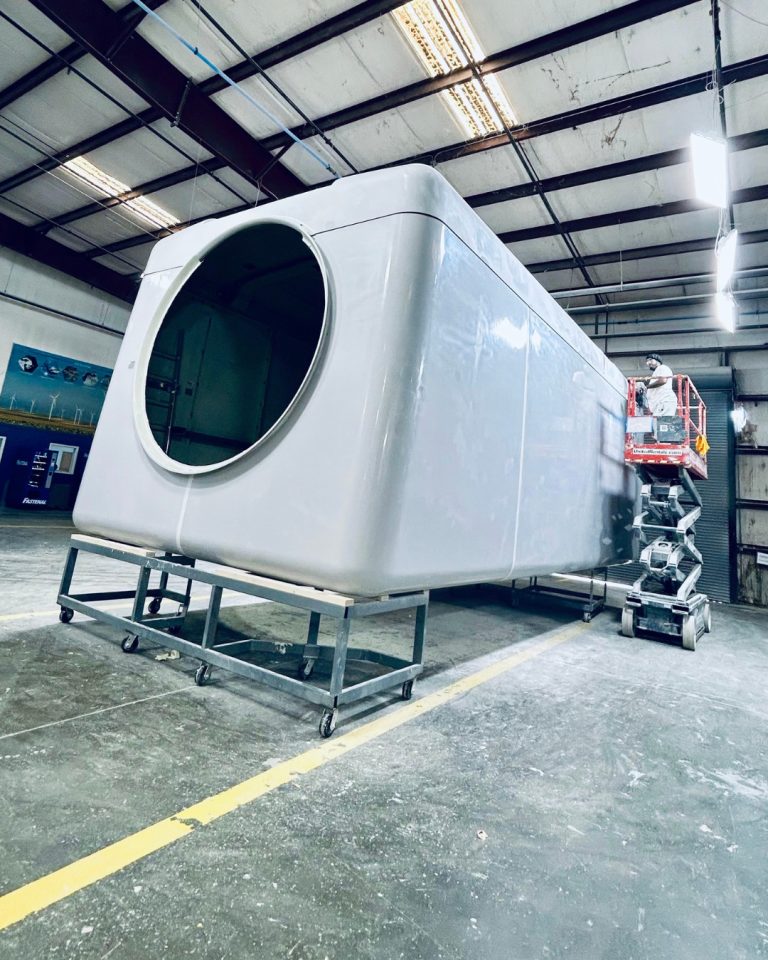
“We produce nacelle covers — the cover that goes on wind turbines and houses all the electrical components,” said Carlos Sinhori, director of operations with BlueWind Technology. “It’s a part made with composite fiberglass and resin. We assemble it here in our factory, and we install some electrical hardware in it internally as well. We prepare this cover, and when it’s ready, we ship it to the GE Vernova factory, which is here in Pensacola as well. Right now, we are producing five nacelles per day for them.”
BlueWind Technology has been manufacturing nacelle covers for six years while creating innovative ways for even greener production. (Courtesy: BlueWind Technology)
How the Covers are Made
The nacelle covers are made of composites using the infusion process. These covers house critical wind system components such as the wind-turbine generator, gearbox, brake and controller, and more.
Composite is a material made from two or more different materials that, when combined, are stronger than those individual materials by themselves. They are known for their high levels of mechanical and chemical resistance and are associated with freedom of design.
And although BlueWind is using its composite technology for the wind industry, the process can be used in other industries as well, including the marine and automotive sectors, according to Sinhori.
“We are specialists in composite manufacturing,” he said. “The nacelle is just one part made with composites.”
Working in the renewables sector is a big part of BlueWind’s core philosophy, according to Sinhori.
“Our philosophy is to do something better down the road by working with clean energy,” he said. “We are really proud that in August, we completed our nacelle number 3,000. That means we are electrifying 5 million homes in the U.S. right now. What we do helped to electrify 5 million homes with clean energy and to make a better future for our kids. We try to spread that philosophy for our employees and to our community here. That is part what we can do.”
Vacuum Infusion vs. Silicone Skin
The nacelle covers produced by BlueWind are made with a process called vacuum infusion, but Sinhori said the company is developing a new process called Smart Skin System that will continue to align with the company’s greener future philosophy.
“It’s a new process where we generate less waste to produce a nacelle cover,” he said. “We are reducing the consumption and the purchasing of materials and producing the same thing with a new process we developed internally.”
With vacuum infusion, vacuum pressure is used to drive resin into a laminate. The mold may be gel-coated and dry materials are laid into the mold and a perforated release film is placed over the dry reinforcement. This process produces a lot of excess waste material that can’t be re-used and is discarded.
Silicone skin adopts a flexible counter-mold made from silicone instead of a rigid one. This flexible counter-mold costs less in terms of tooling and in the parts. It also allows a higher fiber content in the part.
But the most noteworthy aspect of silicone skin is that the process does not require the use of consumable materials, making it an even greener process before 1 watt of energy is produced by the turbine the nacelle cover will be a part of.
The nacelle covers produced by BlueWind Technology are made with processes called vacuum infusion silicone skin system. (Courtesy: BlueWind Technology)
Always Learning
The development of this new process is a result of how hands-on Sinhori and his team at BlueWind have been in the company’s short lifespan.
“We’re always trying to learn more,” he said. “We go to trade shows around the world to be as on top of technology as possible in our own market and on what we do here. We are pretty much trying to do the best possible.”
As a result, the company’s silicone skin process was responsible for making BlueWind a finalist for the CAMX award, according to Sinhori.
“The silicone skin itself is something which we had already known, but we developed it together with the lifting system for big parts,” he said. “It’s been really good for us, so we are getting more projects to produce covers. We are finalists for the CAMX award. CAMX is the largest composite trade show in the U.S.”
Currently, GE is BlueWind’s main customer of which the company has three. What BlueWind does is very technical engineering, so it’s important that the company’s team can deliver quick solutions for any challenges that may arise, according to Sinhori.
Staying Close with the Customer
“Our approach is we want to be close to them,” he said. “We always tell our team here that it’s important to deliver a solution. We want to be different, be fast, and always be able to give a solution. The silicone skin project came from a need from GE to be greener and asked us to try to be cleaner, to reduce CO2 emissions, and then we developed it.”
In GE’s case, that closeness is quite literal, as the BlueWind headquarters is only five miles from GE’s factory in Pensacola, Florida, according to Sinhori. But internally, that closeness is universal no matter the location.
“If a customer calls us or sends an email, we have 30 minutes to reply,” he said. “Even if the answer is: ‘Hey, look, I don’t have an answer, but I’m working on it.’ We need to be proactive; we need to be different, and that’s what we try to do.
And from a technical aspect, we want to give the correct and appropriate information as well as being fast — that’s our mentality. One of our values here is client satisfaction. We are results oriented, and so we align ourselves with our customers.”
Doubling Production
Because of that dedication, BlueWind has gone from producing 12 nacelle covers a week at beginning of 2024 to 21 to 25 a week now — doubling its input.
“One of the reasons GE invited us to come to the U.S. is because of the technology we have,” Sinhori said.
Sinhori and his team of engineers were based in Brazil, but GE encouraged them to open a facility in the U.S. The first conversations began in 2018, and after many meetings, a deal was closed and a U.S factory was opened — 90 days later, the first parts were delivered.
“We had the challenge, of course, to come to the U.S. and learn about how to open a company here and look for people and then train those people,” he said. “And of course, we had that deadline to deliver parts, and this was well done.”
BlueWind employs 204 people to support this production level, 44 percent of whom are second-chance hires. The company is now the fifth-largest employer in its region.
A lot of that was only made possible by the shareholders and engineers (especially Sinhori) with a lot of expertise, who came to the U.S. to start up the operation.
The nacelle covers are made with composite fiberglass and resin and assembled in the BlueWind factory. (Courtesy: BlueWind Technology)
Looking to the Future
In the company’s six years — particularly near the beginning — BlueWind had to deal with the COVID pandemic, but came through it strong and with a zest for growing with the wind industry as well as other sectors, according to Sinhori.
“The industry of composites itself is just growing,” he said. “Of course, there are different markets, with wind being our biggest market now, so that’s why we want to diversify. But composites are just growing. And when talking about wind, even though things are not very good for wind right now because of the political atmosphere and so on, there is a big need for power and a big need for energy with data centers. That demand is going to be necessary. We are going to need wind, coal, gas … everything. In the next few years, we’re just going to grow. Not just with wind, but with the composites process itself.”
Just as mining and new expansion drew calls for people to “go west” in America in the 19th century, the demand for clean energy is driving interest to a new western frontier — the Irish coast.
Ireland’s maritime area is more than seven times the size of its landmass, making it among the largest marine areas in the EU. And with an endless supply of strong Atlantic winds blowing into Ireland’s western coast, this area could prove pivotal to meeting the EU’s goal of generating 300 GW of offshore wind energy by 2050.
At the national level, Ireland aims to have 5 GW of offshore wind energy in development and be generating up to 80 percent of its electricity from renewable sources by 2030. And while more work and investments are needed, both the Irish government and industry are making strides toward realizing these goals to make the Emerald Isle a leader in green energy.
At the national level, Ireland aims to have 5 GW of offshore wind energy in development and be generating up to 80 percent of its electricity from renewable sources by 2030. (Courtesy: Shutterstock)
A Nimble all-of-government Approach
Any country attempting to incorporate offshore wind into its national energy strategy knows this is a complex, multi-decade endeavor.
Government bodies must be aligned. The energy grid must be updated and expanded. New skills must be identified and developed through education and upskilling. And industry must be involved at every step to drive market interest and innovation.
In this regard, Ireland’s smaller size may be an advantage.
In larger nations, slow-moving bureaucracies and divided political fractions can make finding agreement and achieving progress on large efforts like an offshore wind strategy a slog. But Ireland has embraced an all-of-government approach, with views aligned across departments.
The importance of collaboration across government departments and with investors and industry is stressed in Ireland’s offshore industrial wind strategy “Powering Prosperity.” “Powering Prosperity” outlines Ireland’s strategic vision to harness its vast offshore wind potential to drive economic growth, energy security, and climate action. The strategy sets ambitious targets scaling to 37 GW of green energy from offshore wind by 2050 — enough to exceed domestic electricity demand, support green energy production and exports, and decarbonize Ireland’s economy today, but also serve to attract the new industries of the future that require an abundant supply of affordable green electricity.
Ireland has understood from the start that private-sector involvement would be essential to realizing its offshore wind energy ambitions. (Courtesy: IDA Ireland)
The strategy focuses on four core pillars:
Offshore wind supply chains: It aims to build a world class domestic supply chain by supporting SMEs and start-ups and attracting foreign direct investment (FDI). Key actions include establishing an Offshore Wind Centre of Excellence (OWCE), expanding access to finance, and enhancing public procurement training.
Research, development, and innovation (RD&I): Ireland will accelerate a cutting-edge RD&I ecosystem through collaboration between industry, academia, and government that has worked so well across Ireland’s other global leading sectors such as life sciences, international finance, and technology. Initiatives include developing a floating offshore wind demonstrator site, promoting regulatory sandboxes, and increasing investment in innovation through national and EU funding programs.
Future demand and end uses: The strategy promotes the development of green-energy industrial parks and alternative energy uses such as hydrogen and sustainable aviation fuels. It supports co-locating renewable generation with large energy users such as data centers to maximize efficiency, and reduce curtailment and costs.
Balanced regional economic development: It is intended for offshore wind to be a driver of regional growth, particularly in coastal areas. The strategy leverages regional enterprise plans and the Shannon Estuary Economic Taskforce to ensure widespread benefits, including job creation and infrastructure development.
Implementation of the strategy will be coordinated through the Offshore Wind Delivery Taskforce (OWDT), with oversight from multiple government departments, agencies, and industry stakeholders. Ultimately, “Powering Prosperity” envisions Ireland as a hub for offshore wind innovation, manufacturing, and services — contributing to EU climate goals, enhancing energy independence, and creating high-value jobs across the country.
In addition, key Irish state agencies also recently signed a memorandum of understanding that aims to align their efforts on the strategy and activities like attracting outside investments to build a robust offshore wind energy industrial base in Ireland.
Bringing offshore wind energy online isn’t a new effort for Ireland. Rather, it’s a continuation of the country’s existing renewable energy efforts.
Ireland is already home to 300 wind farms that generate more than 5 GW of energy, which provided about one-third of the country’s electricity last year. The developers of these projects bring valuable experience and skills to Ireland’s offshore wind energy strategy.
Offshore wind energy will be a major contributor to Europe’s transition to a cleaner energy model. (Courtesy: IDA Ireland)
Opportunities for Industry
Ireland has understood from the start that private-sector involvement would be essential to realizing its offshore wind energy ambitions.
A domestic offshore wind energy industrial sector comprised of both multinational and home-grown companies, ranging from engineering companies to turbine manufacturers, will enable Ireland to create a resilient supply chain for its offshore wind energy needs and a pipeline of innovation for the still-emerging green energy sector. The build-out of this sector creates significant opportunities for industry in Ireland and beyond.
Northwestern Europe is home to some of the continent’s strongest offshore winds, which will help power the EU on its way to meeting its 300 GW wind-energy goal. By establishing operations in Ireland, industry can have a central hub to serve this larger need. Ireland is particularly well suited to the needs of U.S.-based multinational companies seeking to stake a claim in Europe’s green economy. It’s the only English-speaking country in the EU, and it has historical and cultural ties to the U.S. Ireland also has a business-friendly environment and number of inducements/incentives to spur and sustain the growth of its offshore wind energy sector.
For example, the Irish government offers research and feasibility grants, as well as tax incentives for R&D activity. And IDA Ireland, the government’s foreign direct investment arm, has facilitated the establishment of more than 50 green investments to date.
Ireland continues to increase its talent pipeline for the country’s growing offshore wind energy sector and the larger green economy. Higher level technology institutes in Ireland already provide training and skills development for the green-energy industry. And organizations like Skillnet Ireland are engaging industry to create talent frameworks and upskilling programs that address the need for green skills.
Powering an Energy Revolution
Offshore wind energy will be a major contributor to Europe’s transition to a cleaner energy model. It will also provide a new way to power industry — from energy-intensive data centers driven by the insatiable demand for electricity driven by the growth in AI to the many businesses with net-zero goals, to completely new industrial sectors establishing in Ireland to benefit from the potential vast quantities of affordable green energy — in Ireland and beyond.
Ireland isn’t content to merely participate in this energy transition — the country is eager to help lead it. And for investors and industry players in the green economy, this leadership isn’t just creating a new market, it’s creating a strategic opportunity.
As a country, Canada has prospered for more than 150 years, with one of the most diverse geographies and economies in the world. But now, with a population of more than 41 million, it is a nation that will need electricity — and lots of it — to help keep that prosperity going.
Adding to that energy challenge is Canada’s robust declaration to become carbon net-zero by 2050. It sounds like plenty of time, until you do the math — 25 years to go, and the clock is ticking.
“The federal government and many provinces have electrification goals,” said Fernando Melo, Senior Director, Federal Policy and Government Affairs with the Canadian Renewable Energy Association (CanREA). “And we have net-zero economy legislation: We are required to become net zero by 2050 — no ifs, ands, or buts. We also have a clean electricity regulation that, while very contested and undergoing some review, also requires serious investments in renewables.”
Wind is one of the big things Canadian provinces are looking at for their power needs, because it is affordable, reliable, and quickly scalable. (Courtesy: Nation Rise Construction Photos/Michael Houston)
This is good news overall as the country — for the most part — is shifting into high gear to create renewable energy opportunities across Canada, according to Melo.
“CanREA is currently tracking more than 17 GW of wind energy, solar energy, and energy storage procurements across the country [1],” he said. “There are some solar-and storage-dedicated procurements, but a lot of it is wind. Wind is one of the big things provinces are looking at for their power needs, because it is affordable, reliable, and quickly scalable — all the things that energy-system operators look for. So, there’s a ton of growth coming for Canadian wind energy.”
Growing Energy Needs
And that growth is essential because the country’s energy needs will only continue to increase in the coming decades, according to Melo.
“Look at the top three population centers in Canada — Ontario, Quebec, and British Columbia — they know they need more power, and they are committing to generating it,” he said.
Whether a province’s population is big or small doesn’t seem to matter in the long run, according to Melo.
“Every other province is looking for more power as well,” he said. “The province of Manitoba, with just over a million and a half people, is committing to long-term investments. Currently, it’s only procuring 600 MW, but it’s committing to a regular cadence for more procurements. Canada’s Atlantic provinces are also committing to regular cadences and looking for those investments. Even in our smallest province, Prince Edward Island, I wouldn’t say there is going to be a massive boom, but they’re still looking for more renewable energy. Really, the entire country is open for the development of new renewable energy projects to some degree, but if a developer is looking for the hottest, most competitive markets with the highest demand right now, they are looking at Quebec, Ontario, and British Columbia.”
Political Challenges
Canada’s path to a clean-energy future has not been smooth sailing, with some regulatory, legislative and political barriers in recent years.
The federal Clean Economy Investment Tax Credits (ITCs) are a good example. Intended to accelerate investment in the low-carbon technologies Canada needs to build a net-zero economy, the concept of ITCs was introduced in 2023 by the Trudeau Liberal government, and the first few — including the Clean Technology ITC, which is aimed at private sector investment in renewable energy — were passed into law in 2024. But then, the second tranche of ITCs had their enabling legislation stalled in parliament. The Conservative Party of Canada ran a filibuster for the entire fall legislative session last year, then Prime Minister Justin Trudeau resigned, prompting a Liberal leadership race which saw Prime Minister Mark Carney selected, and he called a federal election in the spring. As a result, few advancements in the ITCs have happened within the last year, according to Melo.
“We now have some — not all — of the investment tax credits in place, and we’re already seeing a massive effect as clean energy investment-drivers,” he said. “We’re seeing the ITCs come through for private sector investments, because projects in Canada are suddenly more affordable, and investors can actually benefit from better returns. The Canadian ITCs offer a straightforward path to revenue for developers because, unlike in the United States, our investment tax credits are immediately cashable — without needing to monetize them.”
The silver lining to last year’s political disruptions has been that the new Prime Minister Carney’s Liberal government has brought a more business-focused and practical approach to governing, according to Melo.
“The Liberal Party of Canada still shares the same base, with the same commitment to the environment and to Indigenous reconciliation as before,” he said. “But Prime Minister Carney has run Fortune 500 companies. He wants to get things done, and he’s moved quickly with a lot of things and used some parliamentary maneuvers to do just that. There’s a drive to get important things done quickly, because the new government sees Canada as needing a shot in the arm to seize on its competitive advantage and ensure a prosperous economy for the future.”
Supply Chain Diversity
The unfortunate truth is that there are going to be some obstacles in the pathway of every positive change, and Melo sees supply chain issues and the recent tariff battles as definite challenges to renewables progress.
“As an organization, CanREA represents the wind, solar, and energy storage industries,” he said. “Two of those industries have a more concentrated supply chain, with many components mostly coming from China. In the wind sector, we have a more diversified supply chain, but even in the wind industry, we have a lot of componentry coming from China. And if I’m being honest, we were hoping to have the U.S. ramp up their production capacity, to be counted on for a diverse, stable, reliable, and secure supply chain, but these things are currently in question.”
CanREA is tracking more than 17 GW of wind energy, solar energy, and energy storage procurements across the country. (Courtesy: CanREA)
Indigenous Reconciliation Commitment
One of the more fascinating aspects of how Canada is guiding renewable projects through the pipeline is in its relationship with Indigenous communities, according to Melo.
“Canada’s federal government now has a firm commitment to reconciliation with Indigenous peoples — that is, the First Nations, Métis, and Inuit peoples who have traditional rights and are title holders of the land,” he said.
Canada has made many positive strides to rectify policies that have harmed Indigenous communities in the past. New policies advancing reconciliation are now firmly entrenched in the planning of renewable projects across the country.
Indigenous communities have been forming partnerships with the Canadian renewable energy industry since the 1990s, where it became an industry norm that was codified and required as a means of economic reconciliation, according to Melo.
“Practices have been put in place to ensure that Indigenous communities benefit from and have a say in what’s being done on their land,” he said. “Different provinces have different takes on it, and different approaches. The federal government has mandated similar approaches. As CanREA, we are strong proponents of that: We think it is not just the right thing to do, but it is now just the way you do business in this country. If you’re developing projects in Canada, you need to work respectfully with Indigenous rights and title holders.”
Electricity Transformation Canada
How can the renewable energy and energy-storage industry best work with Canada’s Indigenous communities? This is just one of many subjects that will be addressed and discussed at the Electricity Transformation Canada tradeshow in Toronto, Ontario, October 6-8.
“We will have a couple of panels on Indigenous issues, with some great Indigenous leaders who are making changes within the renewable energy space,” Melo said. “Earlier this year, CanREA co-hosted a renewable energy 101 with Manitoba’s First Nations and Métis communities to help them meet developers and get to understand the industry.One of the really great things to come out of that event is that First Nations development corporations, Métis corporations, and Inuit community groups are actually coming down to Toronto for ETC and to participate in the Indigenous Pavillion. It’s something we, as an organization, really strive to create the space for.”
Another key subject for ETC attendees to discover is Canada’s investment tax credits, according to Melo.
“We’ll be talking about my favorite policies, the investment tax credits: There’s going to be a lot of discussion on that in our panels at ETC,” he said. “We’re working to get ministers from federal and provincial governments here to talk about their plans for our industry and all that entails. We will have conversations on everything from wildlife management to Canada’s vision for renewable energy, and we will hear from political actors to spell it all out clearly.”
The solar and energy-storage industries have a more concentrated supply chain, with many components mostly coming from China. (Courtesy: CanREA)
For those reasons and many more, Melo said, it’s important for anyone wanting to know how renewables are planned, built, and run in Canada to attend Electricity Transformation Canada. “If you want to understand what’s happening in the industry and what’s going on across Canada, ETC is it,” he said. “There will be CanREA policy directors from coast-to-coast presenting and wandering around, ready to chat with anyone who wants to talk public policy with those in the know. And there will be hundreds more experts on site, representing every aspect of Canada’s clean-energy industry. If you want to talk to your competition, if you want to meet vendors, and if you want to understand the issues, whether you’re looking to invest in Canada for the first time or wanting to get involved in a more serious way, ETC is where you can get a clear snapshot of what’s going on.”
What lies ahead
Canada’s continuing path to a zero-carbon future is a challenging one to be sure, but it’s also an exciting one with a massive potential. Melo said as long as the industry can successfully work with a government that sees all the benefits renewable energy can offer, then that’s half the battle.
“We need to address the fact that we need Canada to have prosperity, and we need electricity to reach that prosperity,” he said. “Canada’s prosperity isn’t just measured in dollars and cents but also in how we protect our communities and environments from climate change — and guess what? Renewables are a great way to get there.”
Ramboll, a full-services wind consultancy, recently appointed Tommy Flindt as the new Global Director for Offshore Substations within the Wind Division. “Tommy Flindt brings more than 13 years of extensive experience in the offshore wind industry,” said Tim Fischer, Global Executive Director for Ramboll’s Wind Division.
Tommy Flindt will lead Ramboll’s global offshore substations business. (Courtesy: Ramboll)
“His expertise spans engineering, technology, project management, business development, and senior leadership. He brings the whole package.” In his new role, Flindt is responsible for leading Ramboll’s global offshore substations business, supported by a skilled team of close to 200 experts. Ramboll offers support within optimization, development and design of both topside facilities, and substructures.
Ramboll’s services are multidisciplinary and span both detailed technical expertise and the necessary environmental impact assessments and permitting. The substations team is part of Ramboll’s Wind Division, which comprises more than 900 specialists offering comprehensive services throughout the entire life cycle of wind energy projects.
Flindt joined Ramboll from Copenhagen Offshore Partners, where he was a senior director. He has also contributed to leading industry players such as Ørsted, Maersk, and Semco Maritime. His experience in global, multicultural settings, coupled with his focus on people, empowerment, communication, delivery professionalism, and development, perfectly aligns with Ramboll’s values and mission.
“I had the pleasure to work with Tommy on the client side, and I am now lucky to welcome him as a colleague to my leadership team,” Fischer said. “His capabilities as a thought-leader and particular focus on leading and developing people makes him the perfect fit for this role.”
Apex Clean Energy recently announced four utility-scale wind and storage projects totaling more than 625 MW have reached commercial operations across Illinois, Maine, and Texas — bringing Apex’s total operating and construction portfolio to above 3 GW. These facilities — all came online in the first half of 2025 — underscore the company’s ability to deliver energy solutions across diverse markets and technologies. With a combined local economic impact of nearly $150 million and significant investments in conservation efforts for the regions surrounding these four projects through the Apex Conservation Grant Program, the operational facilities highlight clean power’s role in supporting local economic and ecological resilience.
Apex’s total operation and construction portfolio is above 3 GW. (Courtesy: Apex Clean Energy)
“From Maine to Texas, these sites reflect the strength of the Apex team and our ability to execute at scale — delivering the infrastructure our country needs at the moment it’s needed most,” said Ken Young, CEO of Apex Clean Energy. “As we continue to expand our operating portfolio, we’re focused not only on supplying the grid with reliable, low-cost energy, but on maximizing the long-term value our projects create for the communities where we work.”
More about the newly operational facilities:
Piatt County, Illinois: Prosperity Wind (300 MW) is Apex’s fifth wind farm in the Prairie State and will generate about $93 million in tax revenue for the surrounding area, including $58 million for neighboring school districts. The facility is also providing $200,000 to support rewilding and restoration initiatives in Rockford and along the Illinois River.
Washington County, Maine: Downeast Wind (126 MW) marks Apex’s first operational facility in the ISO New England market. In addition to creating close to $20 million in new revenue for the county and nearby town of Columbia, the project has already driven $156 million of direct, indirect, and induced economic activity statewide and has committed $126,000 to rebuild habitat for the federally endangered Atlantic salmon.
Hidalgo County, Texas: Great Kiskadee Storage (100 MW/200 MWh) is the first operational asset of SA Grid Solutions. The facility will enhance the reliability of the Texas grid and is expected to generate more than $23 million in tax revenue over its lifetime, in addition to contributing $100,000 to conserve 200 acres of wetland habitat.
Tom Green County, Texas: Angelo Storage (100 MW/200 MWh) is Apex’s third storage facility to reach operations, as well as its latest wholly owned grid asset. The project is projected to create more than $13.6 million in local tax revenue over its lifetime.
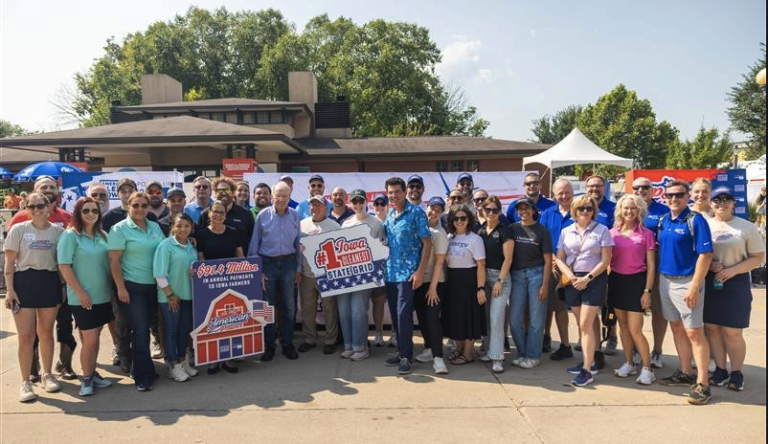
Iowa Gov. Kim Reynolds proclaimed August 8 as American Clean Power Day. To celebrate, Power Up Iowa and the American Clean Power Association hosted a day at the Iowa State Fair to spotlight Iowa’s homegrown energy and educate fairgoers about the positive impacts clean energy has on communities and its role in building a better future.
Iowa Gov. Kim Reynolds was among the leaders that received awards on Clean Power Day. (Courtesy: Power Up Iowa)
In recognition of their military service and clean energy leadership, the associations presented Sen. Joni Ernst, Rep. Mariannette Miller-Meeks, and U.S. Rep. Zach Nunn with the Power Patriot Award.
“I’m honored to receive the Power Patriot Award from Power Up Iowa and the American Clean Power Association,” Miller-Meeks said. “For decades, Iowa has led by example, proving that clean, reliable, homegrown energy can power our economy, strengthen our national security, and create good-paying jobs. I’ll continue fighting for an energy strategy that puts America first, reduces our reliance on foreign adversaries, and builds a stronger future through innovation, not regulation. Iowa’s leadership in American-made energy is something we should celebrate and expand.”
“Energy security is national security, and Iowa’s all-of-the-above approach puts us at the forefront of American energy independence,” Nunn said.“I’ll continue working across the aisle to empower our energy producers, strengthen rural communities, and lower costs for Iowa families. Being named a Power Patriot is an honor, but the real privilege is fighting every day for Iowa’s future.”
Europe’s onshore wind sector is facing rising pressure from supply chain delays, equipment reliability issues, and regulatory complexity, but there is growing consensus that AI-driven planning tools and smarter coordination offer a clear way forward. That’s the key message of a new report from Shoreline Wind, “Chain Reaction: Onshore supply chain must adapt for global growth.” The report draws on insights from leading developers, insurers, and investors from across the onshore wind market.
According to the report, long lead times for key components — including transformer delivery delays of up to 15 months — have become a leading bottleneck for wind projects across Europe. These delays often exceed the typical 12-month indemnity period for insured projects, which has increased the exposure to unplanned downtime and financial risk.
A Shoreline Wind report says that, in Europe’s onshore wind sector, there is growing consensus that AI-driven planning tools offer a clear way forward. (Courtesy: Shoreline Wind)
“That’s a significant risk preventing the whole site becoming operational if [delays happen] in the construction phase,” said Rosa Van Reyk, senior underwriter at GCube Insurance Services, who contributed to the report.
The report also flags new regulatory demands, such as the Corporate Sustainability Due Diligence Directive (CSDDD) in Europe, which are increasing compliance burdens across the global value chain. This has created fresh operational drag, but also a push toward more integrated decision-making.
“All the directives are putting additional work for the supply chain to comply, so that’s also definitely something that has the potential to slow down the manufacturing,” said Krystyna Aneta Puchalka, head of Supply Chain for Renewables Onshore & Offshore, Ignitis Renewables.
Digital technologies, particularly AI and simulation-based planning, are increasingly put forward as key enablers for improving resilience, cutting delays, and keeping onshore wind projects on track. Having recently expanded into the onshore wind market, Shoreline Wind is now applying its AI-powered platform, proven in the offshore market, to tackle risks across the full project lifecycle of onshore projects.
“We’re working closely with developers, service providers, and asset owners, and we’re seeing a shift from reactive to proactive planning,” said Ole-Erik Endrerud, CEO of Shoreline Wind. “With digital twins and AI, stakeholders can spot bottlenecks early, optimize schedules across portfolios, and avoid mistakes that cost time and money. We’re moving beyond the era of fast growth at any cost. The next phase of onshore wind will be defined by intelligent planning, agile execution, and digital tools that help teams work better together. That’s how we build resilience and stay on track for net zero.”