







Home 2022

CEO Heather Zichal to leave ACP

0
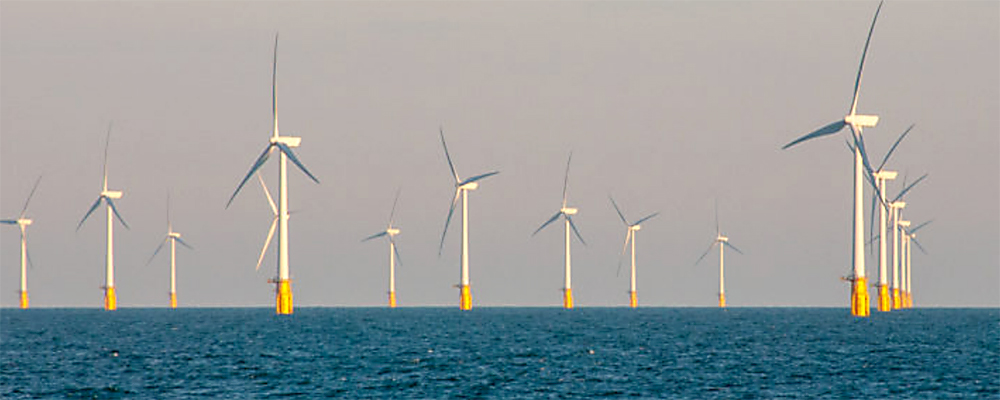
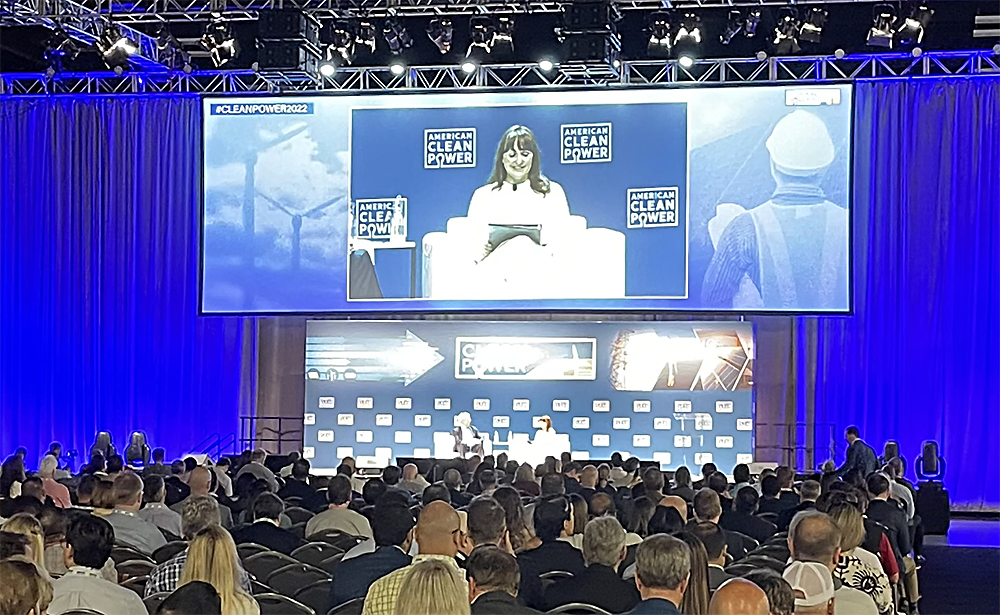
ACP CEO Heather Zichal speaks during a presentation at CLEANPOWER 2022. (Courtesy: Wind Systems)

Heather Zichal, CEO of the American Clean Power Association (ACP), recently announced she is moving on from the helm of the organization after two years to take on a new role as the new Global Head of Sustainability at JPMorgan Chase.

Craig Cornelius, the CEO of Clearway Energy and Chair of ACP’s Board of Directors and Leo Moreno, the President of AES Clean Energy and incoming Chair of the Board, will engage more directly with the senior team until a successor is selected.

“In her two years at the helm of ACP, Heather has positioned us as the single voice of the clean energy industry,” Cornelius said. “Thanks to her leadership, the organization is the strongest it’s ever been. While we are sorry to lose her and wish her continued success, we are confident that the next CEO will build on the momentum she and her team have created.”

In a short time, ACP has been instrumental in securing a series of major advocacy victories on behalf of its members, including the bipartisan infrastructure law and the historic passage of the Inflation Reduction Act (IRA), which has brought predictability and certainty to the clean-energy sector for the next 10 years. Under her leadership, membership has grown to more than 750 companies, and the organization has more than doubled revenue in just its first 18 months.

“Heather has built a large team of talented, experienced and purpose-driven professionals while completing a successful merger of two organizations,” Moreno said. “On behalf of the Board, Craig and I will work closely with the executive team as they lead the staff through the next few months until a permanent successor is named.”

As the search gets underway, the Board has appointed J.C. Sandberg, chief advocacy officer, as interim CEO. Sandberg will continue to lead the organization’s ambitious advocacy agenda building on the momentum of significant victories he and his team achieved with the passage of the IRA. In addition, Jason Clark, chief strategy officer, has been named interim president, responsible for the day-to-day execution of the association’s operations, while assuming management responsibility for the executive team. Rosanna Maietta, chief communications officer and senior counselor, will continue in this capacity supporting Sandberg, Cornelius, and Moreno, in addition to elevating the organization’s visibility in and outside Washington.

“Leaving ACP is the toughest professional decision I’ve ever had to make, especially after the historic progress we’ve made together,” Zichal said. “We’ve grown as a trade association, with nearly double the resources and an entire, diverse team of experts paving the way for a clean-energy future at the state, regional, and federal level. In my remaining time here, I am going to work tirelessly to set ACP up for a smooth transition and have tremendous faith in J.C., Jason, Rosanna, and the entire executive team who will be a steady hand on the wheel in the coming days and months ahead.”

The Board has appointed a nominating committee made up of select members and engaged Russell Reynolds to lead the process to select the next ACP CEO.

Zichal’s last day at ACP is October 20.
New Snap-on mini drills aim for precision

0
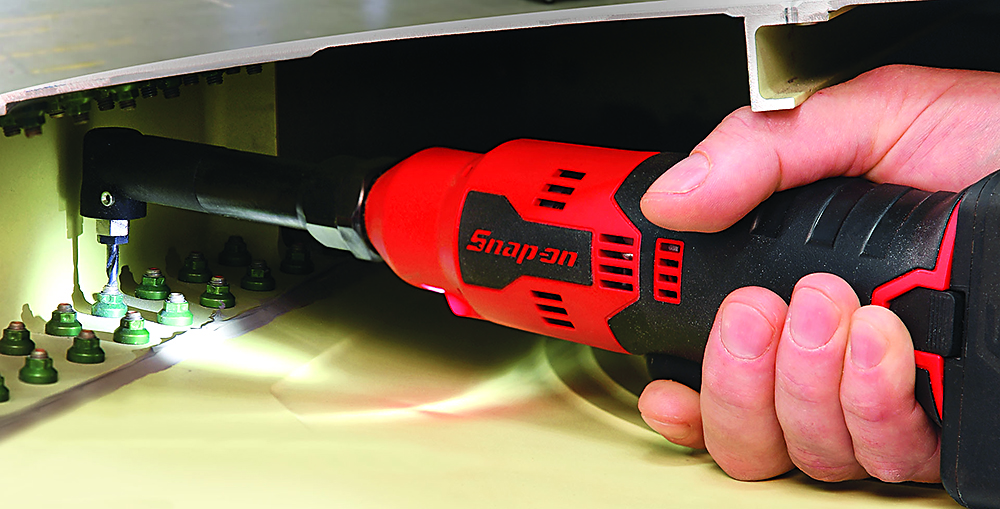
The 14.4 V MicroLithium Mini Drills are ideal for applications within public transportation manufacturing, fleet maintenance, repair and overhaul, and more. (Courtesy: Snap-on Industrial)

The new angled-head 14.4 V MicroLithium Mini Drills from Snap-on Industrial provide precise drilling without the need for tethering to an air source.

The 14.4 V MicroLithium Mini Drills are ideal for applications within public transportation manufacturing, fleet maintenance, repair and overhaul, public safety vehicles, electronic component manufacturing and installation, HVAC and others where small holes are needed, often in hard-to-reach locations. Using a cordless drill with small compact recessed heads gives technicians unhindered access, while also removing tripping hazards caused by air hoses in the shop or plant floor.

For added flexibility, the 14.4 V MicroLithium Mini Drills come in three different models: 45° angle head (CDRR200545DB), 90° angle head (CDRR2005DB), and 360° fully rotating head (CDRR2005360DB).

Features and benefits of the new 14.4 V MicroLithium Mini Drills include a compact head for great access, a variable speed trigger, low runout for precise drilling, quarter-inch threaded bits and accessories accepted, ability to run items such as reams and sealant removal cutters. More features include a double ball bearing-supported spindle shaft for durability, spiral beveled gears for durability and smooth operations, multiple configurations, LED light to illuminate the work area, soft grip handle for positive tool control, and a battery life gauge.

MORE INFO  https://b2b.snapon.com/microlithium-cordless-mini-drills

Clir retained for Okanagan Wind portfolio

0
Clir Renewables, the market intelligence platform for wind and solar, has been retained as the data analysis and optimization service for the Okanagan Wind portfolio. (Courtesy: Okanagan Wind)

Clir Renewables, the market intelligence platform for wind and solar, has been retained as the data analysis and optimization service for the Okanagan Wind portfolio following Canadian Power’s purchase of the sites from Toronto-based InstarAGF Asset Management.

Comprised of Pennask Wind Farm and Shinish Creek Wind Farm, Okanagan Wind represents the only wind power facilities in the Okanagan region, with a combined capacity of 30 MW – enough to power roughly 9,000 Canadian homes.

Prior to the 2021 sale to Canadian Power, the sites became operational in 2017. Making up two of only seven grid-scale wind farms in the province, the farms were developed in partnership with a local indigenous group who continue to benefit today through community funding and access to jobs.

Clir Renewables developed its data management, software-as-a-service platform alongside the original owner as a foundational client. Work to date on the Okanagan Wind portfolio includes upgrade validations, met mast configuration and icing studies, accounting for challenging meteorological conditions attributable to the sites’ mountainous geography.

Following the sale in 2021, Clir was retained by the new owner, Canadian Power, to provide continued support with analytics, reporting, and upgrade validation. Clir software empowers owners and asset managers to analyze and optimize their assets using a suite of tools based on proprietary AI and machine learning algorithms.

These tools have been trained using the company’s extensive dataset from over 200 GW of assets from different OEMs, technologies, regions, and ages. This allows users to quickly detect site-specific issues and understand performance in relation to the wider industry.

“Collaborating with Canadian Power from the start of their tenure at Okanagan Wind has been brilliant. After inheriting our services in the sale, we worked to help them understand the power of our offering and its benefit to the business,” said Oscar Radevsky, Clir project engineer.

“It has been satisfying to see a client get increasing value from the tools we offer here at Clir. I am confident that this momentum will continue and we look forward to continuing this mutually beneficial relationship.”

“I have been consistently impressed by the value Clir Portfolio is able to add to our projects. It gives us a crystal-clear picture of all our data in one place, allows us to dig into performance issues, and makes it easy to do monthly and quarterly reporting. We look forward to working with Clir as Canadian Power continues to expand its presence in the renewable energy sector,” said Steven Gwatkin, Okanagan wind operations manager.

MORE INFO  www.clir.eco  

BAR Technologies launches offshore wind crew transfer vessel

0
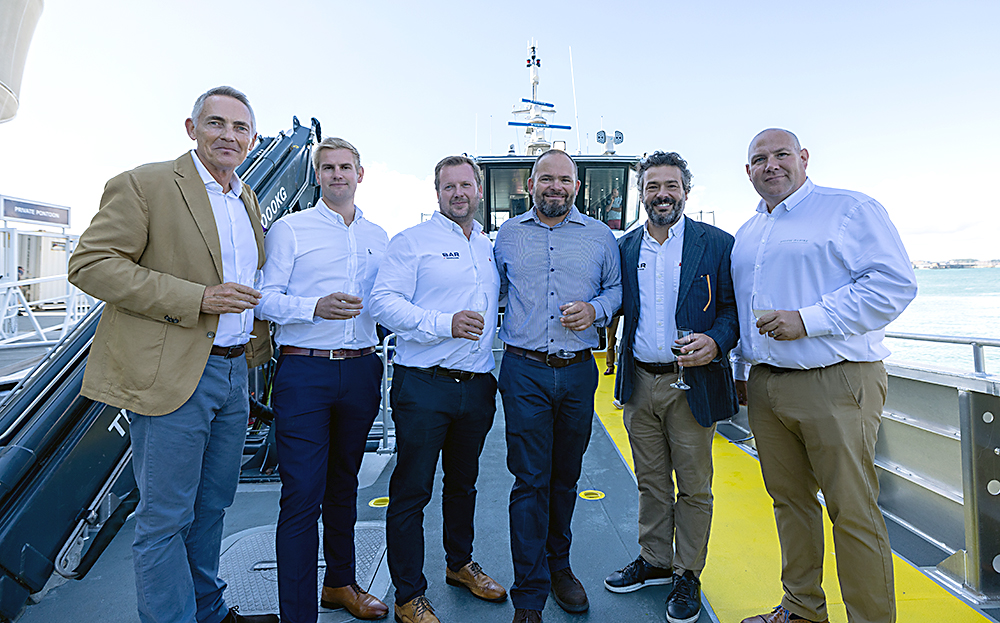
As part of the launch, the vessel was named Seacat Columbia by Ian Baylis, founder of Seacat Services, and Martin Whitmarsh. (Courtesy: BAR Technologies UK)

BAR Technologies, a simulation-driven marine engineering consultancy, held the official launch of its first BARTech 30-crew transfer vessel (CTV) from its premises on The Camber, Portsmouth. BAR Technologies Chair Martin Whitmarsh, also chair of the Offshore Wind Growth Partnership, led his BAR Technologies colleagues to hand over the first vessel of its type to class leading OESV operator, Seacat Services.

As part of the launch, the vessel was named Seacat Columbia by Ian Baylis, founder of Seacat Services, and Martin Whitmarsh. Guests attending the ceremony were given an in-depth tour of the vessel and shown some of the key features that provide the new craft’s efficiency and handling.

The BARTech 30 was designed to address the two most pressing challenges of the offshore wind industry: vessel efficiency, and therefore emissions reduction, and the comfort in transfer, and subsequent effectiveness, of offshore wind engineers.

In the first instance, many of the major offshore wind developers and owners are beginning to look in earnest at the rates of fossil fuel consumption in wind farm service vessels. Secondly, any offshore engineering personnel beset by sea-sickness in travel to a project must be returned to port, meaning that a vessel transporting up to 24 engineers must cease its transit to a project site, resulting in expensive downtime for the project owner.

With its 30m ProA design, and active foiling systems to correct for pitch and roll, the BARTech 30 is able to minimize vessel motion and fuel burn, leading to an average increase in stability across all sea states of up to 70% and a reduction in total emissions of 30% over a typical operational profile, making the vessel one of the first Low Emission Vehicles (LEVs) serving the UK’s growing fleet of offshore wind farms.

Additionally, with the vessel able to operate in more challenging conditions than the current catamaran designs, offshore wind turbines may be serviced over a greater number of sea states, ensuring wind farm owners have more opportunities to better and more cost effectively provide turbine maintenance.

“BAR Technologies was established to leverage the highest level of engineering expertise and understanding of hydrodynamics from the fields of Formula 1 racing and the Americas Cup respectively, to take on some of the biggest challenges in vessel efficiency and maritime decarbonization,” said Martin Whitmarsh, BAR Technologies chair.

“Alongside our pioneering wind propulsion technology for the shipping industry, our latest developments in crew transfer vessel design, demonstrated by the BARTech 30, are helping to significantly mitigate the ‘last mile’ of carbon emissions in offshore wind development and construction.”

“We know that the offshore wind industry has led several innovations in cost reduction since its inception. We’re now able to take this efficiency drive one step further with a vessel design not only able to operate in wider offshore parameters  and presenting new savings in servicing and maintenance, but, also combined with a significant reduction in fuel consumption.”

“Following our preview of the vessel at the Seawork maritime event in June, we’re thrilled to officially launch the BARTech 30 here at our home in The Camber in Portsmouth,” said BAR Technologies CEO John Cooper.

“Having our first customer delivery is a key milestone in our development of the BARTech 30 program, and we look forward to seeing further customer orders for the vessel fulfilled in the near future.”

“In taking this pioneering design to market, we’ve been able to bring in elements of collaboration from other South Coast marine designers and consultancies, and the Isle of Wight based vessel manufacturer, helping to secure a domestic supply chain for a key part of the UK offshore wind industry,” Cooper said.

MORE INFO  https://www.bartechnologies.uk/

Atlantic Wind Transfers orders Chartwell transfer vessels

0
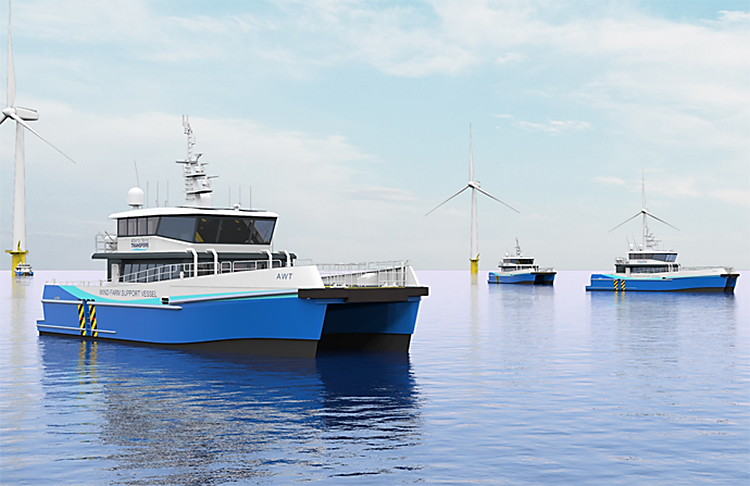
The first two vessels are expected to be delivered in summer 2023 and January 2024, respectively. (Courtesy: Atlantic Wind Transfers)

Atlantic Wind Transfers (AWT), the first US offshore wind farm support company, has ordered six Chartwell Ambitious-class Crew Transfer Vessels (CTV) designed by UK-based pioneers of vessel design, Chartwell Marine.

AWT’s order comprises six CTVs, and will be constructed by St. John’s Ship Building Inc. at its shipyard in Palatka, Florida. The first two vessels are expected to be delivered in Summer 2023 and January 2024 respectively, with four further builds in the pipeline. The vessels will be the first US-built CTVs to be compliant with the US Environmental Protection Agency’s Tier 4 regulations, which rank among the most stringent emissions rules for marine engines in the world.

Through its continued partnership with Chartwell Marine, AWT demonstrates its commitment to the growth of the US offshore wind market. Building US Jones-Act Compliant vessels certified under US Coast Guard Subchapter L, these CTVs will be able to operate on any wind farm in the United States up to 150 miles offshore, under the Safety and Inspection standards of the US Coast Guard. AWT operates the only two crew transfer vessels in the US under long-term contracts, servicing the Block Island Wind Farm and Coastal Virginia Offshore Wind Farm.  AWT’s seven years of operating experience in US offshore wind brings an impeccable safety track record while logging over 6,600 TP connections and 25,000 personnel transfers.

“We’re pleased to strengthen our pioneering status in delivering another first for the US offshore wind sector with these new Tier IV vessel orders. Our goal is to build the most reliable, multi-purpose Jones-Act CTV fleet in the US, and provide our clients with cutting edge technology while lowering our carbon footprint and meeting all Jones Act and USCG Regulations. This investment will enable us to have crew transfer vessels available for charter to support the demand over the next several years,” said Charles A. Donadio Jr., founder of Atlantic Wind Transfers.

“Our experience has proven our vessel model works for both the shipyard construction phase with on-time deliveries, and in-service uptime reliability for installation support and long-term O&M. Chartwell is our go-to when it comes to CTV designs which are operating in multiple international markets. We see our partnership with both Chartwell and St. John’s Ship Building as a key cornerstone in our strategy to build the capability and capacity of AWT to support the future growth of the offshore wind industry.”

The Ambitious is Chartwell’s flagship CTV design; a 25.2m aluminum catamaran with capacity to transport 24 personnel to and from turbines with speed, safety, and stability.

“The US offshore wind market is expanding rapidly, and AWT’s pioneering vision to support this growth aligns well with our own ambition to bring versatile, high-performance crew transfer vessels to the markets that need them most. With its performance and versatility, the Ambitious delivers on the needs of the growing US market,” said Andy Page, director and navel architect at Chartwell.

“St. Johns Ship Building is excited to be working with Charlie Donadio and to be part of Atlantic Wind Transfers’ successful CTV operation and their extensive planned new vessel construction program. This effort further solidifies our position as a leading supplier of Jones Act compliant CTVs for the offshore wind industry and working with highly experienced European naval architects such as Chartwell Marine. We know that our skilled workers also appreciate the additional opportunity to showcase their high quality craftmanship and will allow continued growth and opportunity,” said Jeff Bukoski, president of the shipyard.


MORE INFO  atlanticwindtransfers.com

Lanfine Wind to generate energy for more than 25,000 Alberta homes

0
The new Lanfine Wind Project, located in Oyen’s Special Area 3 in Alberta, has now entered its final construction phase. (Courtesy: Pattern Energy)

The Lanfine Wind Project, located in Oyen’s Special Area 3 in Alberta, has entered its final construction phase, with the wind turbines being lifted and installed in their final locations, as well as the blades being attached to the rotors. This new facility is expected to be operational by the end of this year, after an investment of close to C$350 million.

Borea, the company in charge of the construction and installation of the 35 Vestas V150-4.2 MW wind turbines that will make up the wind farm, has required the collaboration of Sarens, a  specialist in heavy lifting, engineered transport and crane rental, for the lifting of each of the structures, as well as the lifting of the blades for their installation.

For these tasks, Sarens has used a Liebherr LR1600 Crawler Crane, part of its fleet of cranes in Canada, thanks to its maximum lifting capacity of 660 US tons with a main boom maximum length of 420 feet, and its great capacity to move over uneven and soft terrain, always guaranteeing the safety and viability of the operation.

The new Lanfine Wind Project, which will be operated by Pattern Energy, is considered strategic for the Alberta region’s energy grid, to which it will be able to provide 150 MW, enough to supply renewable energy to more than 25,000 homes in the region. In addition, since the project began at the end of 2020, this wind farm has created 200 construction jobs, to which must be added those corresponding to maintenance and operation work that will be created once it is operational.

This new park will also provide a boost to the local economy in the region, as it will generate landowner revenue and provide tax revenue to the local community, which will directly contribute to education, community services, roads and first responders. As a part of this project, a community benefits program that will support local initiatives and community-based organizations, has also been created.

Sarens has a long history of developing wind projects in Canada. These include the Whitlaw Wind project, the Golden South Wind Project in Asinibola, and the Blue Hill Project in Saskatchewan, where Sarens contributed to the transport and erection of 50 wind turbines at their final destination. This facility will be responsible for generating up to 200MW of renewable energy, enough to power up to 100,000 homes, and will bring an economic impact of over $45M to its community.

MORE INFO  https://patternenergy.com/projects/lanfine-wind/

Powertrain system to improve wind, water turbine efficiency

0
Purdue University engineers Jun Chen and Lizhi Shang have designed a powertrain system to improve turbines that generate wind energy and marine hydrokinetic energy. The design transmits power from the low-speed high-torque turbine to the high-speed, low-torque generator. It also uses water as the hydraulic fluid. (Courtesy: XtockImages)

Purdue University engineers have designed a low-speed, high-torque powertrain system to reduce the operation costs, maintenance costs, and environmental contamination of turbines that generate wind energy and marine hydrokinetic energy. A prototype is scheduled to be tested and analyzed at the university.

Jun Chen, a professor in the School of Mechanical Engineering, and Lizhi Shang, an assistant professor in the Department of Agricultural and Biological Engineering and School of Mechanical Engineering, said using a turbine is the most effective approach to harvest wind energy and marine hydrokinetic energy. It requires a powertrain system to transmit energy from the turbine to an electric generator.

“A turbine usually features high-torque, low-speed operation, but an electric generator prefers high, constant speed,” Chen said. “The speed ratio between the generator and the turbine can be higher than 100:1 and requires at least a three-stage gearbox.”

A conventional multistage gearbox has a fixed gear ratio, so an electric generator must run at variable speeds. Shang said the efficiency of a multistage transmission from turbine to generator is suboptimal. The fixed transmission ratio of a conventional turbine gearbox also limits generator efficiency.

“There have been some attempts to use hydrostatic transmissions in wind-turbine applications,” Shang said. “The main obstacles are maintenance and environmental concerns. They demonstrate low efficiency, frequently required maintenance and oil leakage.”

Chen and Shang’s powertrain design transmits the power from the low-speed, high-torque turbine to the high-speed, low-torque generator while maintaining constant generator speed.

Chen said the design allows for the detachment of the generator from the turbine.

“The generator can be placed at the ground level of wind turbines or the water surface level for marine hydrokinetic turbines,” he said. “This reduces the nacelle weight of the turbine and simplifies maintenance.”

Shang said the design also allows for smart, collective energy harvesting using an array of individual turbines and one or more centralized generators.

“Turbines can be connected fluidly to their neighbor turbines,” he said. “A common, high-pressure fluid network can be established to connect all the turbines and generators of a collective turbine array. The network allows for strategically selective operation of the generator to keep some of the generators running at their most efficient points and shut down the rest to reserve lift time.”

The technology includes the hydraulic unit design, system architecture, control and integration strategy, and supplemental systems for filtration, cooling, bearing, and sealing. It can be implemented in existing turbines with only moderate modifications. The design also uses water as the hydraulic fluid, which allows for generator speed regulation, Chen said.

“The energy losses for regulating electric power frequency can be eliminated,” he said. “Compared to an existing hydrostatic wind-turbine powertrain, our technology is more efficient, up to 90 percent. Water is a better working fluid for long-distance hydraulic power transmission, which enables collective energy harvesting. It is easy to refill, and leakage causes less environmental damage than conventional mineral-based hydraulic oil.”

The next step in developing the new powertrain is to test the prototype in a towing tank at Purdue. Data will be collected, measured, and analyzed, which will lead to further improvements on the design.

Chen and Shang disclosed the powertrain design to the Purdue Research Foundation Office of Technology Commercialization. OTC has applied for a patent to protect the intellectual property. Industrial partners seeking to further develop or license the technology should contact Dhananjay Sewak at dsewak@prf.org.

MORE INFO  www.prf.org/otc

GreenSpur, Niron develop Rare earth-free generation solution

0
GreenSpur Wind and Niron Magnetics collaborated on a rare-earth free generation solution for the offshore wind market. (Courtesy: GreenSpur Wind)

GreenSpur Wind and Niron Magnetics announced a new rare earth-free generation solution for the offshore wind market. The findings have been verified by ORE Catapult, a UK technology innovation and research center for offshore renewable energy.

“Existing turbines use radial-flux generators, and the current designs are reliant on rare earth magnets,” said Andrew Hine, commercial director at GreenSpur Wind. “However, we employ a unique and highly innovative axial-flux architecture that makes the use of rare-earth free magnets possible.”

Past iterations of the GreenSpur generator had attracted interest, but there were concerns about its mass. Keeping generator mass within the same range as existing machines is important, as adding weight requires more structural support, which increases cost. By designing with Niron’s Generation 1 Clean Earth Magnet, which offers stronger magnetic performance than the ferrites used in its earlier generator designs, GreenSpur developed a new 15MW generator. Based upon initial non-optimized results, the new generator delivers a significant 56% reduction in mass.

“Our Clean Earth Magnet technology helps eliminate reliance on expensive, supply constrained, rare earth-based magnets, without compromising on performance,” said Andy Blackburn, CEO of Niron Magnetics. “Device designers and manufacturers take our technology and realize its impact. By working with GreenSpur, we have been able to demonstrate what can be achieved with our Generation 1 technology in wind applications, with innovative materials and innovative device design coming together to enable a potentially transformative solution for the offshore market.”

Supported by an Innovate UK grant, the new 15MW generator design was reviewed by ORE Catapult, the UK’s leading technology innovation and research center for offshore renewable energy. The review confirmed that GreenSpur’s 15MW generator design is now able to meet the mass and efficiency targets required by the market.

“We have worked with GreenSpur in support of their hugely innovative and disruptive technology for several years. Although there was interest in a rare earth-free solution, there were concerns that their generator would be too heavy. However, with Niron’s novel rare earth-free magnet, GreenSpur is able to show attractive mass and efficiency targets and a credible solution for consideration within a next generation turbine. We are now helping GreenSpur and Niron to present this opportunity to OEMs, developers, and strategic investors. The aim is to create an industry consortium with the right combination of players to bring this offering to market,” said Tony Quinn, Director of Technology Development at ORE Catapult.

“The risk that the rare earth magnet supply chain poses to international offshore wind is existential. For the first time, we have a path that takes this risk out of the equation,” said Hine.

MORE INFO  greenspur.co.uk

X1 Wind ready to install PivotBuoy prototype

0
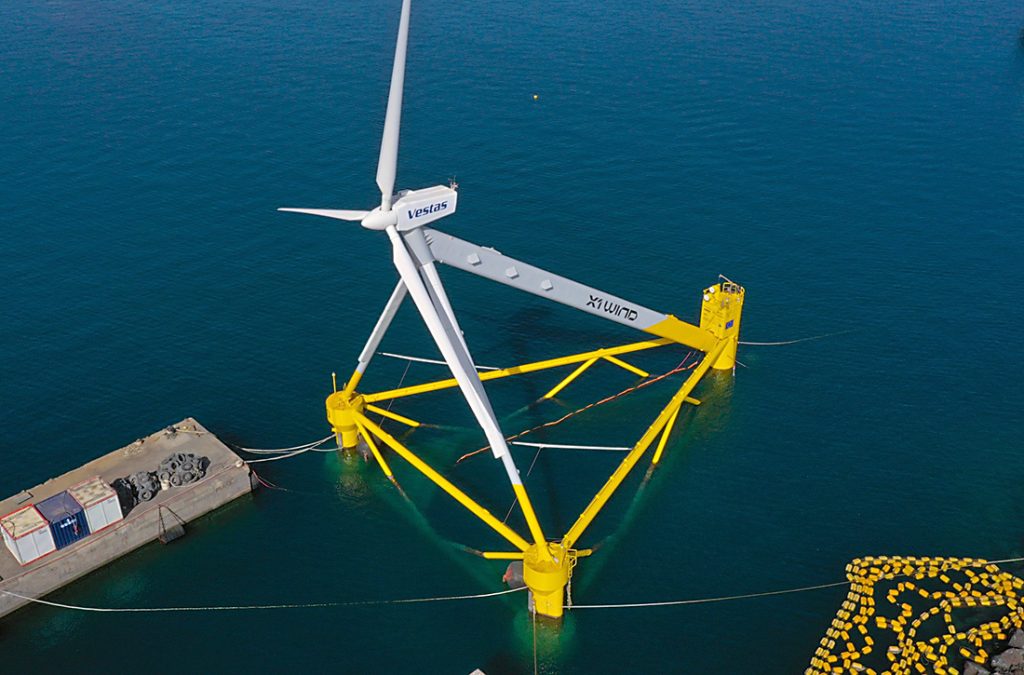
X1 Wind is ready for the PivotBuoy prototype installation after laying of its dynamic cable. (Courtesy: X1 Wind)

Technology developer X1 Wind has laid its dynamic cable and is now ready for final installation of its floating wind prototype at the PLOCAN Test Site, in the Canary Islands.

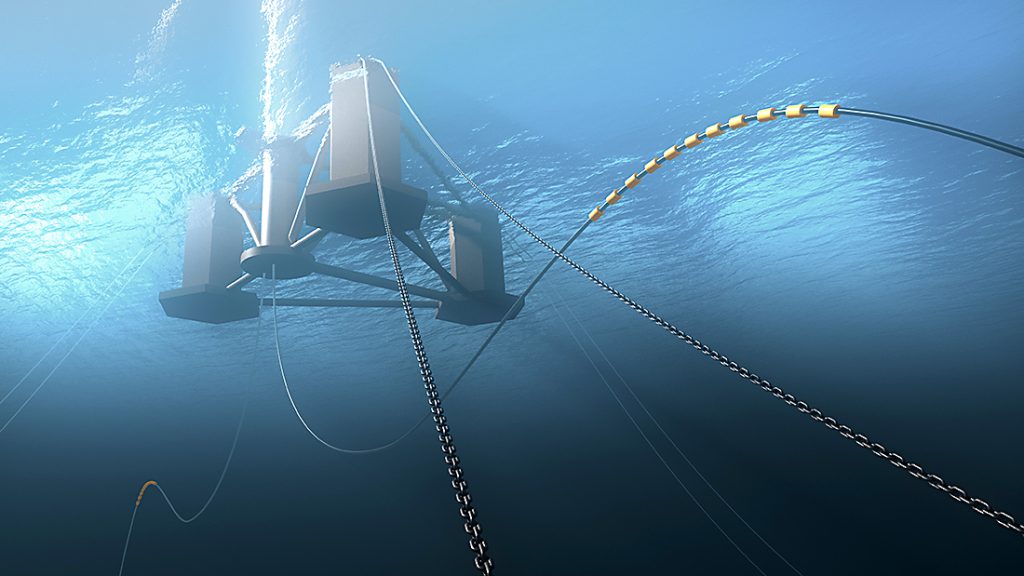
“The 20kV dynamic cable will allow us to fully validate the floater and wind turbine performance, feeding the electricity to PLOCAN’s smart grid, as well as transmitting data through its fiber optic connection. Also, we will be able to validate the cable’s dynamic behavior. Understanding how our TLP mooring system reduces motions and loads on the cable, compared to catenary systems, is crucial as it will reduce fatigue and potentially extend the lifetime of this critical component,” said Adrian Oliva, X1 Wind’s electrical engineering manager.

X1 Wind’s team will wait for a suitable weather window to complete the towing and hook-up of the prototype.

X1 Wind’s technology is fitted with a turbine in a downwind configuration, enabling the structure to “weathervane” and orientate passively to maximize energy yields. It drives greater structural efficiency with a light and flexible design, which further supports future mass production at lower cost. The platform uses a Tension Leg Platform (TLP) mooring system which reduces the platform and cable dynamic motions, minimizes the footprint on the seabed, as well as allows its installation in deep waters.

“With the launch and implementation of  X1 Wind X30 model, connected with our special dynamic cable, we finished another project for developing clean and sustainable energy. We are very pleased and proud to have participated in the realization of such a visionary project. Congratulations to the whole team and best wishes for success. We look forward to participating in more new energy projects with X1 Wind,” said Rui Batista, Hengtong central Europe region sales director.

MORE INFO  x1wind.com

Cerulean Winds to bid for 4 seabed lease sites

0
Each site would abate tens of millions of tons of CO2. (Courtesy: Cerulean Winds)

Green energy infrastructure developer Cerulean Winds will bid for four seabed lease sites to decarbonize the UK’s oil and gas sector as this scale will remove more emissions quickly, keep costs lower for platform operators, and provide the anchor for large scale North-South offshore transmission.

The floating offshore wind and green energy proposal for Crown Estate Scotland’s Innovation and Targeted Oil and Gas leasing round (INTOG) includes four 1.5 GW sites of floating wind power.

With more than £6 billion of investment proposed for each 100-turbine site, the scheme would abate tens of millions of tons of CO2 in line with North Sea Transition Deal targets.

Cerulean Winds, with its selected delivery partner NOV, has been engaging the supply chain for more than 18 months and has a live request for information (RFI) with UK yards for the fabrication and assembly of its tri-floater technology.

The development would create more than 10,000 jobs, many of which would be high value manufacturing jobs in Scotland.

“We have a big, bold bid, which is ready to go on scaling the green economy, creating thousands of jobs and making Scotland’s oil and gas production the cleanest in the world,” said Dan Jackson, Cerulean Winds founding director.

“We are absolutely committed to the local supply chain benefitting from this development and far surpassing local content targets. Our base structure design can be floated in very shallow water depths suitable for the UK, unlike alternative cement floating wind structures which require 90 metres so can’t be built here,” Jackson said.

“There is a lot of concern about rising energy prices and energy security. Wind and green energy at this scale are a big part of the solution. We are engaging with oil and gas operators and can see the appetite is there to get behind cleaning up production, and we can deliver in a way that minimises disruption. Whilst smaller piece meal wind developments are useful for testing concepts or innovations, it will take a UK wide solution to remove the emissions at the pace required to hit the net zero targets governments. Furthermore, our large scale scheme lowers the LCOE — cost of the power — which is highly attractive to the operators,” Jackson said.

 MORE INFO  ceruleanwinds.com

DNV names climate equity associate director

0
Cici Vu

DNV has named Cici Vu as an associate director of energy and climate equity.

Vu has more than a decade of experience across climate change, water and air quality, energy, natural resources, transportation, housing, homelessness, public health, and safety sectors. An experienced mediator and facilitator, she works with utilities, public agencies, and investors, who are benefactors and advocates of clean energy investments, to develop strategies, which consider and engage vulnerable and hardest-impacted communities. Vu helps stakeholders navigate politically complex environmental, social and racial conflict, and large-scale, collaborative programs involving government agencies, philanthropic entities, and underserved / environmental justice communities.

“We consume energy as pervasively as we do water, air and food for our basic health and well-being. Yet, egregiously, more than one-third of our communities in the U.S. face basic, yet wrenching trade-offs: heat or eat? To achieve an equitable energy transition, our frontline communities must be empowered to self-determine the solutions right for them,” Vu said.

MORE INFO  dnv.com

First recyclable wind turbine blades installed in Germany

0
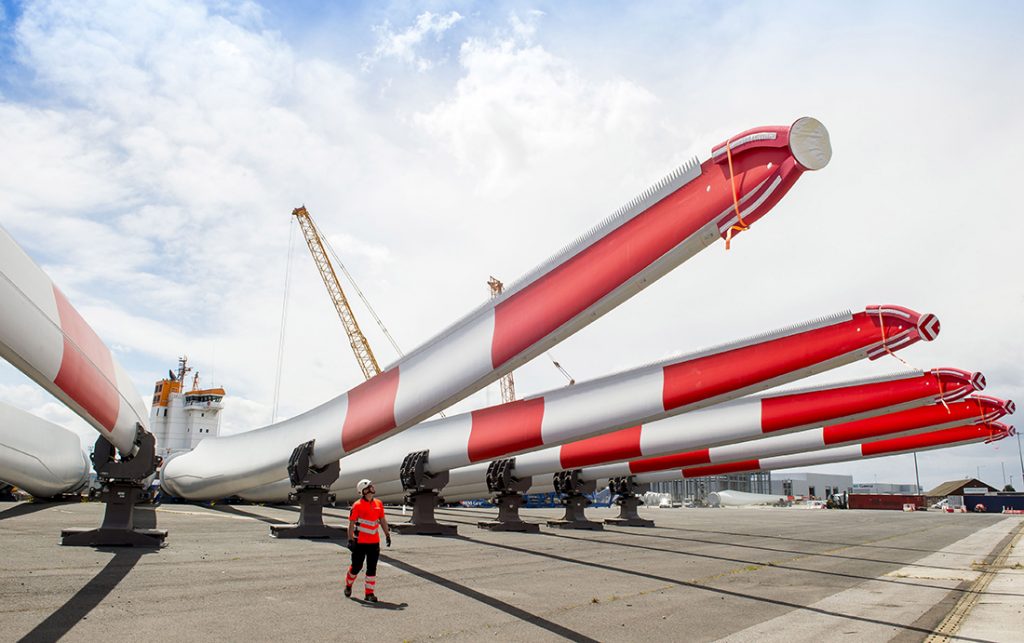
Siemens Gamesa RecyclableBlades leave Hull for the Kaskasi offshore development. (Courtesy: Siemens Gamesa)

Siemens Gamesa’s RecyclableBlades are generating electricity in the first commercial installation of fully recyclable wind turbine blades, at RWE’s Kaskasi offshore wind power project in Germany.

Siemens Gamesa’s RecyclableBlades are generating electricity in the first commercial installation of fully recyclable wind turbine blades, at RWE’s Kaskasi offshore wind power project in Germany.

“We are proving that as the leaders of the offshore revolution, we are committed to making disruptive technology innovation commercially viable with the pace that the climate emergency demands. We’ve brought the Siemens Gamesa RecyclableBlade technology to market in only 10 months: from launch in September 2021 to installation at RWE’s Kaskasi project in July 2022,” said Marc Becker, Siemens Gamesa offshore business unit CEO.
“This milestone marks a significant contribution to Siemens Gamesa’s target of having fully recyclable turbines by 2040. With RecyclableBlade available for our customers, we can create a virtuous circular economy,” Becker said.

Wind turbine blades are made up of a combination of materials embedded in resin to form a strong, stiff structure. Utilizing Siemens Gamesa’s RecyclableBlade technology enables full reclaim of the blade’s components at the end of the product’s lifespan. Separating the resin, fiberglass, and wood, among others, is achieved through using a mild acid solution. The materials can then go into the circular economy, creating new products such as suitcases or flat-screen casings without the need to call on more raw resources.
“That we are testing in our offshore wind farm Kaskasi the world’s first recyclable wind turbine blades under operational conditions is a significant step in advancing the sustainability of wind turbines to the next level,” said Sven Utermöhlen, RWE Renewables’ CEO Wind Offshore.

A number of turbines at RWE’s Kaskasi offshore wind farm will be equipped with handcrafted Siemens Gamesa B81 RecyclableBlades, each with a length of 81 meters. The project is located 35 km north of the island of Heligoland in the German North Sea. It will be comprised of 38 SG 8.0-167 DD wind turbines, generating 342 MW of clean, renewable energy for up to 400,000 German households.

“The first power being generated from the first turbine using RecyclableBlades also underscores the great value creation provided by Siemens Gamesa in several countries. The RecyclableBlade technology was developed in Aalborg, Denmark, the blades were manufactured in Hull, UK, and the nacelles were produced in and installed from Cuxhaven, Germany. RecyclableBlade technology will help reduce raw material extraction by creating the potential for secondary markets for the reclaimed material, with the job creation that this could provide as an additional benefit in local markets,” Becker said.

The RecyclableBlade technology is also available for the 108-meter long B108 blades used on the SG 14-222 DD offshore wind turbine and the 115-meter long B115 blades SG 14-222 DD turbines.

MORE INFO  siemensgamesa.com/en-int

ematec to present new blade lifting beam at WindEnergy

0

Ematec, a specialist supplier of lifting equipment for the wind industry, is using WindEnergy 2022 in Hamburg, September 17-30, for an extraordinary presentation (Hall A1, Stand 415). For the first time, ematec will show an offshore version of its innovative RBC-D rotor blade lifting beams and also will show visitors a world first with revolutionary potential: the new RBT-C50, an offshore lifting beam of a completely new dimension that can pitch rotor blades by 90 degrees before assembly.

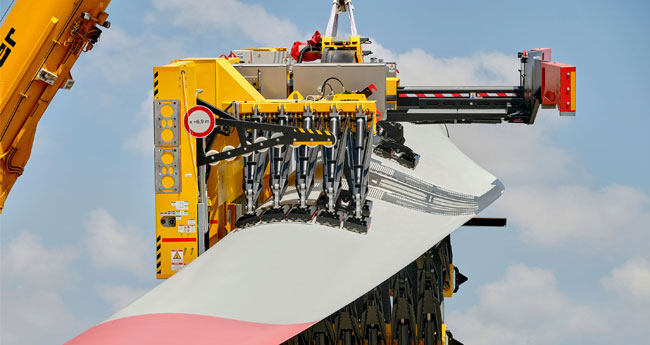
Patent-pending technology: the automatic adaptive blade support of the RBC series yokes is a patent-pending technology. (Courtesy: Ingo Jensen/ematec)

“I am very proud that we can offer the trade two new developments for rotor blade assembly in the offshore sector at WindEnergy Hamburg; this is another milestone for us,” said Manfred Eberhard, CEO of ematec AG. “Up to now, we have mainly asserted ourselves onshore and established our yokes as benchmarks. But we also want to make rotor blade assembly and maintenance at sea as efficient and safe as possible. So, we have been working diligently. And in short: we can now also do offshore.”

With the RBC-D generation of yokes, ematec has revolutionized the assembly of rotor blades. The highlight: The cross beam can accommodate all blade shapes on the market without changeover times. This is made possible by the automatic adaptive blade support, with which the crosshead automatically adapts to each rotor blade shape. That was previously only possible on land; now, it is available for rotor-blade assembly at sea. The RBC-D40 offshore can safely pick up and handle rotor blades of up to 40 metric tons — regardless of the blade shape. This makes the innovation predestined not only for initial assembly but also for the maintenance of offshore wind farms.

The second innovation for the offshore sector is still in the middle of development. The new yoke RBT-C50 combines the technological advantages from the RBC and RBT worlds and thus offers automatic adaptive blade support (RBC) on one hand and a pitch angle of 90 degrees (RBT) on the other.

“This means that our latest development definitely has the potential to revolutionize the assembly of offshore wind turbines,” Eberhard said.

Because on the vessels, rotor blades are usually transported standing up in their racks. On the other hand, a lying position of the blades is advantageous for single-blade assembly to keep the wind attack area and lost days due to wind as low as possible.

“Especially concerning cost efficiency, this is an issue when considering that a transport vessel can cost a six-figure sum per day,” Eberhard said.

To combine the advantages of an upright delivery of the blades with those of a horizontal assembly, the rotor blades have to be pitched 90 degrees before assembly.

“This is exactly what our latest development will be able to do,” Eberhard said.

At WindEnergy Hamburg, ematec will be presenting not only its innovations for the offshore sector but also, and above all, its successful RBC-D series for onshore assembly. The ematec technology is patent-pending, and wind-turbine manufacturer Enercon relies on yokes with automatic adaptive blade support. Enercon now has six RBC-D42 crossheads in use worldwide for rotor blades with blade weights of up to 42 metric tons. For heavier blades weighing up to 50 metric tons, Enercon had also ordered eight RBC-D50 yokes; ematec has already delivered three of these to Enercon. The second round of orders recently followed with a further six RBC-D50 yokes.

“Our RBC-D yokes are extremely well-received on the market, as the current orders show,” Eberhard said. “We manufacture at full speed at our production site in Memmingerberg. It confirms again that we have developed into a real specialist for lifting gear in the wind-power industry over the years.”

This year, the specialist supplier ematec is not only celebrating a host of innovations but also a double anniversary: 25 years of ematec and 10 years of expertise in the wind-power industry. In 2012, ematec AG entered the wind power industry with its first rotor blade traverse, the RBT 11.5.

“With our first development, we made a significant contribution to the international acceptance of single-blade assembly,” Eberhard said.

This was followed by the “bunny” version for safe bunny-ear mounting on gearless turbines. With the RBC series, ematec has set another benchmark in onshore single-blade mounting.

More info: www.ematec.com

ONYX Insight: Offshore wind Digitalization needs to ramp up

0
Only 20% of top global offshore asset owners are making full use of digitalization, according to ONYX Insight. (Courtesy: ONYX Insight)

Owners and operators of offshore wind projects need to accelerate adoption of digitalization in a bid to head off the impact of soaring costs and supply chain challenges, according to ONYX Insight, a provider of data analytics and engineering expertise to the global wind industry.

Despite the first offshore wind turbine being installed more than 30 years ago, and there being more than 55GW of offshore wind capacity worldwide, now just under 30% of UK offshore wind farms are implementing linked-up digital tools across their operation beyond relatively basic condition monitoring.

Turbine manufacturers face pressure to deliver against full order books while keeping prices low. They are responding to this challenge by developing newer, larger turbines with greater power density and more complicated designs.

The speed of turbine technology development means that banks and investors do not typically finance the same turbine model twice, resulting in a limited track record and potentially greater risk exposure for offshore asset owners. At the same time, asset owners are under increasing pressure to make projects profitable in a competitive auctions environment. Digitalization holds the key to de-risking new turbine technologies, keeping O&M costs low and unlocking new efficiencies in offshore wind.

For offshore in particular, there are savings to be made in optimizing marine logistics. Crew hire, offshore cranes, and jack-up vessels, for example, all come at high costs. By using digitalization, owners and operators can rationalize vessel trips and construct collaborative maintenance zones, where wind farms in close proximity synchronize O&M needs, sharing the cost burden.

Digitalization can enable the introduction of condition-based maintenance, targeting minor repairs – which are typically overlooked, but account for about half of scheduled O&M costs and have significant potential for optimization. Additionally, by implementing coherent digital strategies early, operators can support  life-extension strategies from day one, ensuring that the offshore turbines of today keep performing optimally well into 2050.

“This is an exciting but challenging time for the offshore wind industry,” said Evgenia Golysheva, Vice President of Strategy and Operations at ONYX Insight. “Huge demand for projects and a continual drive to lower the levelized cost of energy is squeezing turbine manufacturers, who are reporting enormous losses, limiting their ability to scale up and innovate,” Goysheva said.

“Given the precariousness of the macroeconomic situation, coupled with rocketing project demand all over the world, and the effect that this combination is having on supply chains, digitalization presents offshore wind operators and owners with a chance to empower their operations and increase efficiencies, independent of other industry stakeholders.

MORE INFO  onyxinsight.com

B & K Vibro names Volker Polonyi as new CEO

0
New B&K Vibro CEO Volker Polonyi has 35 years of experience in bearing and linear technology. (Courtesy: B & K Vibro)

Brüel & Kjær Vibro (B&K Vibro), an independent supplier of condition monitoring solutions for rotating machinery, has named Volker Polonyi as its new CEO and president.

Most recently at B&K Vibro’s parent company, NSK, Polonyi was director of the European Technology Centre, a regional research and development facility, that developed advanced bearing technologies to ensure that customers could respond effectively to challenges in their business environment.

Polonyi brings with him 35 years of experience in bearing and linear technology, having also served as NSK’s managing director for industrial bearing sales; sector manager for wind power technology; and head of application development.

“In his many years with NSK, Volker has successfully developed and executed commercial and digital strategies that create customer value through technology. The expertise that he brings from NSK, coupled with his industry knowledge and leadership skills, are exactly the right combination to drive the condition monitoring business of B&K Vibro to the next level. His appointment marks an exciting milestone for B&K Vibro,” said Dai Kodama, NSK’s chief integration officer.

“There are clear synergies between B&K Vibro and NSK, with a huge degree of shared talent and knowledge and we have been working together successfully to deliver exciting, innovative business and engineering solutions. As CEO and president of B&K Vibro, I am looking forward to working with our customers, colleagues and partners to expand our business, capture new markets and drive long-term growth,” Polonyi said.

MORE INFO  www.bkvibro.com

Vestas gets repower order from Sacramento 

0
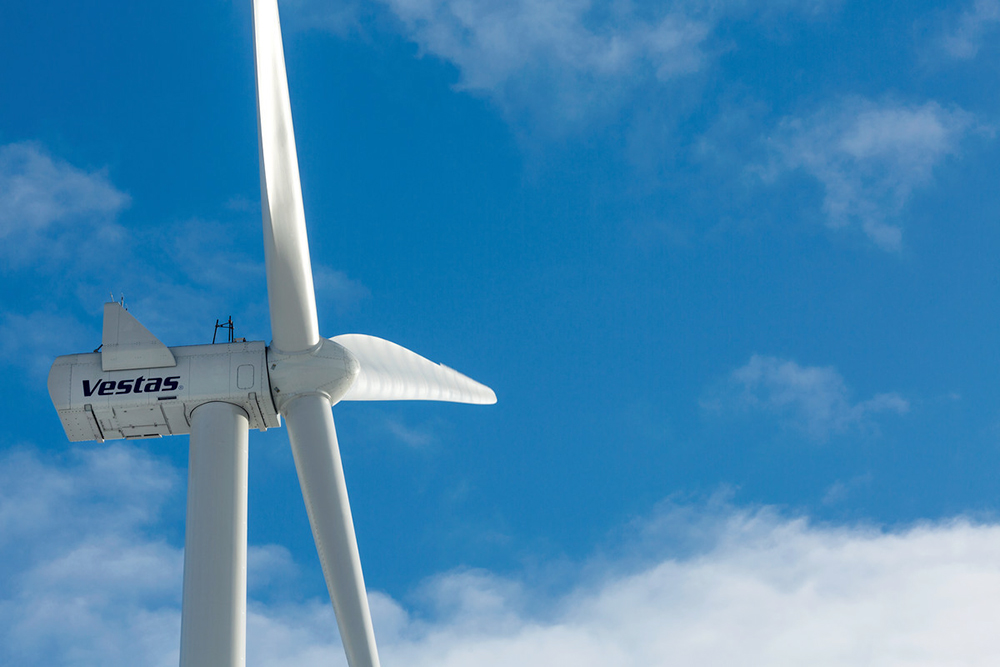
With this order, Sacramento’s collective Solano Wind Project will have a total capacity of about 300 MW. (Courtesy: Vestas)

Vestas has received an 86 MW order from Sacramento Municipal Utility District (SMUD) to repower the Solano Wind Project Phase 4 wind farm in California. The order consists of 19 V150-4.5 MW wind turbines, which will replace the site’s current legacy V47-660 kW wind turbines. With this order, the collective Solano Wind Project will have a total capacity of about 300 MW.

“Repowering wind turbines is an efficient solution to extend the life of a wind project, and we’re thrilled SMUD is partnering with Vestas once again on the Solano 4 project phase and utilizing our proven 4 MW platform technology to bring renewable energy to the greater Sacramento area,” said Laura Beane, President of Vestas North America.

“SMUD has long partnered with Vestas, a world leader in sustainable technologies, to produce wind power generation at the Solano Wind Farm,” said Chief Zero Carbon Officer Lora Anguay. “The retooling and expansion of the Solano Wind Farm will further boost SMUD’s clean energy mix with proven clean energy technologies and is a step forward in our vision of eliminating all carbon emissions from the region’s power supply by 2030.”

The order includes a full Engineering Procurement Construction (EPC) contract. Vestas will provide a full solution with delivery, installation, and commissioning of the turbines.

“Partnering with SMUD each step of the way on this project solidifies the trust and collaboration between Vestas and SMUD, and we look forward to showcasing our end-to-end capabilities as we repower the Solano 4 project,” said Ramit Bajaj, Senior Vice President of Construction & Operations for Vestas North America.

The order also includes a 10-year Active Output Management 5000 (AOM 5000) service agreement, designed to ensure optimized performance of the asset. To further strengthen the partnership with SMUD and ensure the successful operations of the collective Solano Wind Project, Vestas also extended its multi-year service agreements for the Solano 2 and Solano 3 project phases at the same site.

Turbine delivery for Solano 4 begins in the fourth quarter of 2023 with commissioning scheduled for the second quarter of 2024.

MORE INFO  www.vestas.com

Exus to manage 3 Pennsylvania wind farms

0
Vitol’s agreement with Exus brings the partnership to almost 500MW of combined wind assets in the U.S. (Courtesy: Exus Management Partners)

Exus Management Partners, an investment and asset management firm focused on the renewable energy sector, is partnering with commodities trader Vitol to manage three wind farms, totaling 244.4 MW, in Pennsylvania.

Exus will deliver full construction, energy, and asset management across the portfolio, applying latest wind technology to increase annual energy production and extend asset life. Exus has a detailed knowledge of the projects, having been involved in their original development and construction.

Vitol’s agreement with Exus brings the partnership to almost 500MW of combined wind assets in the U.S., following the 240MW Big Sky Wind farm repowering and management deal in Illinois, which began in 2021.

“Our ethos is to always deliver highest-grade work on or before deadline, and above expectation, and we are delighted to see our partnership with Vitol continue to mature within that framework. It’s an exciting time within the industry, and we look forward to continuing to offer our support to Vitol, a significant player in the ambitious and energetic drive towards a cleaner future,” said Dhaval Bhalodia, partner and head of Asset Management North America at Exus.

“Collaborating with Exus in the field of renewable asset management is a significant opportunity for both businesses. After successfully working together on our Big Sky project, we value the experience, expertise and added value they are able to deliver across our renewables portfolio,” said Andrew de Pass, Vitol Inc.’s head of renewables.


MORE INFO  https://www.exuspartners.com/

Rovco begins 3-year contract for Beatrice offshore wind farm

0
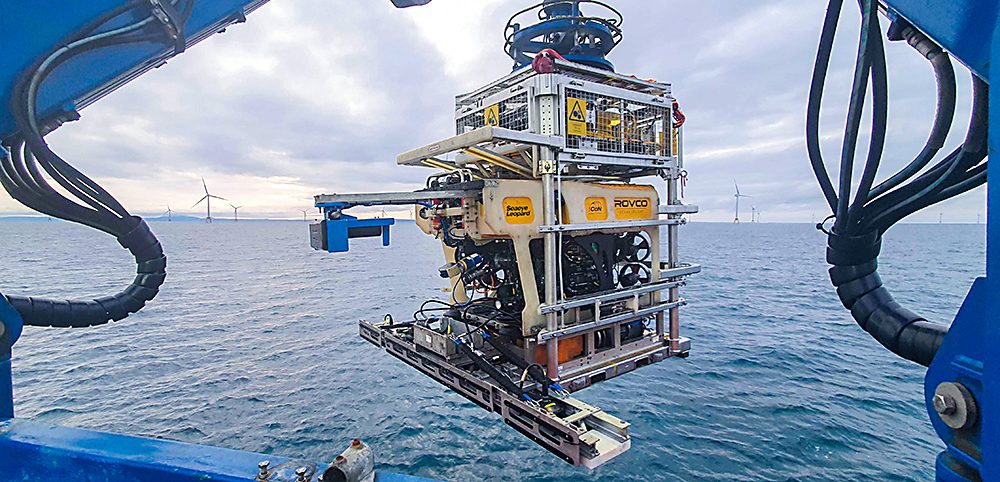
Operational since June 2019, the Beatrice Offshore Wind Farm is located about 13km from the Caithness coast, and has a rated capacity of 588 MW. (Courtesy: Rovco)

For a third year, Rovco, a provider of offshore subsea and survey solutions, has been awarded a contract to carry out work on the Beatrice offshore wind farm, Scotland’s second-largest operational offshore wind farm.

The project will be delivered by Rovco’s UK-based team, and will involve survey work on all inter-array cable and subsea jacket locations across Beatrice. The survey work provides a focused approach to the monitoring and reporting of asset and critical infrastructure conditions, delivering insights that enable the planning of potential preventative maintenance and remedial works.

The project will use the Glomar Worker DPII vessel, equipped as standard with a Work-class ROV, SubSLAM X2 and associated survey tooling suite, along with PanGeo Subsea’s 3D Sub-Bottom Imager™ to perform cable depth of burial assessments. The delivery of the project, managed from Rovco’s operational base in Scotland, will support further full-time employment opportunities across the local region.

Having worked on more than 50% of operational wind farms in UK waters, remaining incumbent at Beatrice strengthens Rovco’s continued expansion. The business’ growth is further supported by the recently announced completion of a £15.2m Series B funding round into the business.

“We are thrilled to have been awarded the year three scope of work for Beatrice Offshore Wind Farm Ltd, under this prestigious framework agreement. The team at Beatrice are early adopters of technology that helps drive efficiencies and smarter ways of collating and presenting valuable data. Delivering the highest quality insight available on the market, we ensure that the Beatrice team have the necessary information to fully inform their ongoing operations and maintenance planning and decision making,” said Simon Miller, Rovco managing director.

“Crucially, our offshore setup and technology selection enables us to operate whilst the wind farm is still operational and producing energy. In addition to our own team of experts, we are pleased to be leveraging local supply chain partners and talent, ensuring the successful, safe and timely completion of the work on Beatrice,” Miller said.

“We are delighted to have Rovco back on site again to continue their long-running relationship with the Beatrice Wind Farm. Rovco consistently provides high quality data which allows for our teams to gain a detailed insight into long term integrity management requirements, enabling us to optimise through-life operational costs. Alongside Rovco’s approach to innovation, their safety culture continues to align with our core values – with complex works completed efficiently and with a strong safety focus,” said Matthew Henderson, Beatrice Offshore Wind Farm’s subsea and structural engineering manager.

MORE INFO  www.rovco.com

Ventus Group gets DNV certification for inspection service

0
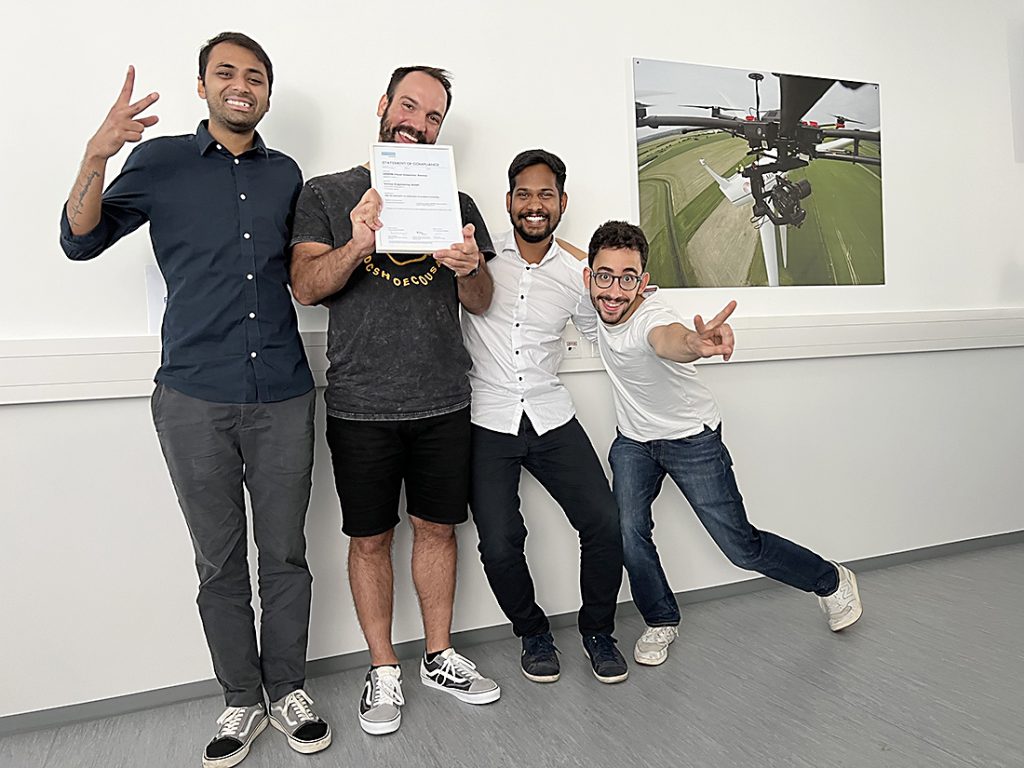
Ventus Group’s DNV certification comes as the company is experiencing a period of fast expansion on a global scale. (Courtesy: Ventus Group)

Ventus Engineering GmbH, supplier of end-to-end optimization solutions within the type approval envelope for excellence in wind-turbine performance, has been certified from DNV according to the standard DNV-SE-0439-2021-10 Certification of Condition Monitoring for Wind Turbines, for its Dynamic Relative Blade Pitch angle Misalignment (DRBPM) inspection service.

This innovative technology consists of a high-speed camera coupled with onsite image processing software that accurately and efficiently measures relative blade-pitch angle misalignment while the turbine is still in operation.

Just one degree of relative blade pitch angle misalignment between two blades could result in a 2 percent loss of power production and additional loads.

The cutting-edge Dynamic Blade Pitch Angle Measurement performed while the wind turbines are in operation enables Ventus to accurately see the relative blade pitch misalignment, and then, blade pitch angles can be adjusted to be within ±0.30 as required on the affected wind turbines.

Ventus offers this service on wind turbines located both onshore and offshore.

The DNV evaluation assessed and finally certified the overall method and procedure performed by Ventus for the accurate calculation of relative blade pitch angle misalignment between the wind-turbine blades with a review of the respective documentation material and field demonstration.

The DNV certification comes as Ventus Group experiences a period of fast expansion on a global scale. Headquartered in Austria, the company has a well-established presence in Europe and the U.K. In 2021, the company also entered the Indian market for the first time.

“The certification from DNV is a unique technological benchmark for the industry,” said Ventus Group CTO Poul-Anker Lübker. “It means our customers can put their trust in our top-level analysis methods and documented results.”

MORE INFO  www.ventus.group

Clean power CEOs, senior leaders sound alarm on legislation that could halt U.S. offshore wind growth

0

The American Clean Power Association (ACP) released a letter to Senate leadership from ACP CEO Heather Zichal and 24 of the leading CEOs and senior leaders in the offshore wind sector raising concerns with language in the House-passed Don Young Coast Guard Authorization Act of 2022. If enacted, the bill would change longstanding rules for manning vessels in U.S. waters and potentially stall offshore wind development, preventing the U.S. from achieving the target of deploying 30,000 MW of offshore wind by 2030.

The ACP letter notes that if this provision is enacted, the U.S. will not see offshore wind energy deployed at scale for many years, and some projects may even be canceled. This would threaten tens of thousands of potential new American jobs in the manufacturing and maritime sectors, affect U.S. energy security objectives, and severely curtail the emissions reduction targets that are dependent upon the industry’s continued development.

The letter was sent to Senate Majority Leader Charles Schumer (D-NY), Senate Minority Leader Mitch McConnell (R-KY), and Senate Commerce, Science, and Transportation Committee Chair Sen. Maria Cantwell (D-WA) and Ranking Member Sen. Roger Wicker (R-MS).

The letter states:

“As written, the House maritime crewing provision is an existential threat to the future of offshore wind in the United States and the immediate result would be the delay and potential cancellation of the 19 offshore wind projects with power offtake contracts or awards. The provision would require, within 120 days of passage, that crews on specialized offshore international construction vessels match the flag of the vessel or be American mariners as a condition of working on the U.S. Outer Continental Shelf … The crewing provision would thus serve to block the use of these international specialized offshore vessels when there are currently no U.S.-flagged specialized construction vessels to do the work needed.”

“A majority of the vessels used by the offshore wind industry will be made in America and crewed by U.S. mariners … In addition to the number of vessels, U.S.-flagged vessels such as crew transfer vessels and service operation vessels will have the greatest amount of vessel hours because they will perform all transportation activities between U.S. ports and offshore wind turbines during the approximately 35-year lifetime of the project,” the CEOs and company leaders said in the letter.

“Offshore wind represents a tremendous opportunity for the American economy, and we have already committed to at least $4 billion in U.S.-flagged vessels, workforce training, and supply chain development. The first step Congress should take to promote continued American offshore wind growth is to focus policy solutions on the root cause of the problem: a lack of U.S. mariners, a shortage of U.S.-flagged ships, and uncertain timing of approvals on offshore wind Construction and Operations Plans,” the letter said.

The letter urges Congress replace the provision with policy incentives to build more U.S.-flagged vessels.

The leaders concluded in the letter, “Ultimately, the offshore wind industry and Congress have the same goal: maximizing the number of Americans employed in offshore wind, including mariners. Building out the domestic offshore wind industry will pay enormous economic development benefits and aggressive deployment of offshore wind will make a material contribution to our domestic energy security. We need reasonable policies and predictable permitting timelines, not impossible mandates.”

The full ACP letter can be viewed here.

ACP’s offshore wind maritime crewing fact sheet can be downloaded here.

More info: www.cleanpower.org