







Home 2024

Vestas gets 285 MW order from CS Energy

0
https://www.windsystemsmag.com/news/vestas-gets-285-…r-from-cs-energy/

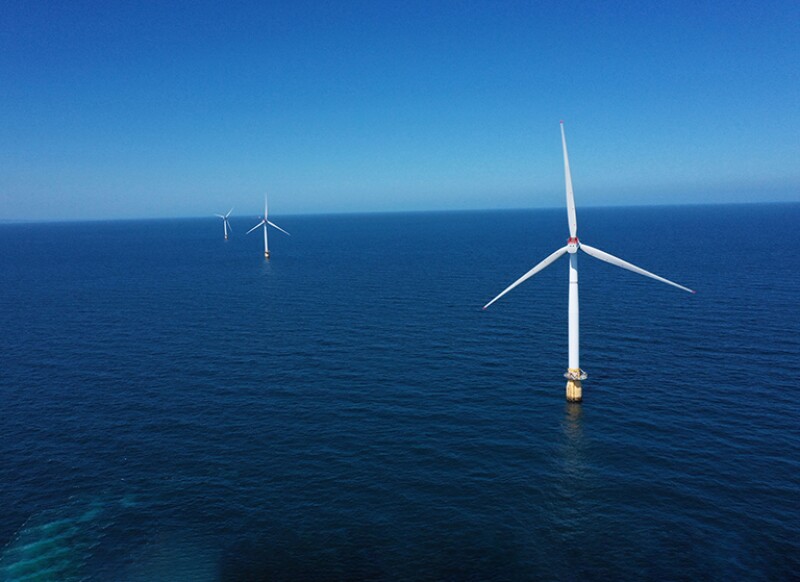
Vestas has received an order for the Supply and Installation of 46 V162-6.2 MW wind turbines from Vestas’ EnVentus platform for CS Energy’s Lotus Creek Wind Farm, located in Central Queensland. With a generation capacity of 285 MW, Vestas will also deliver a long-term Active Output Management 5000 (AOM 5000) service agreement, ensuring optimal energy production to the Australian grid.

Lotus Creek Wind Farm is the first project developed by Vestas Development in Australia to reach financial close and construction readiness.

“Together with CS Energy and Zenviron, Vestas is delighted to provide our best-in-class people, wind turbines and capabilities for this landmark project. As the world’s largest provider of wind energy, we have always been committed to Australia’s sustainable future and we thank the Lotus Creek project partners for joining us in this world-changing mission,” said Danny Nielsen, Country Head and Senior Vice President, Australia and New Zealand Vestas.

Vestas’ efforts to expand its presence in renewable energy development are highlighted through securing all key land access, planning and environmental approvals, grid connection, and delivering the overall wind farm design. Included in this was collaborating with Lotus Creek Wind Farm landholders and the traditional owners Barada Barna and Barada Kabalbara Yetimarala people. Vestas also worked closely with Ark Energy in the project’s early stage.

“Lotus Creek Wind Farm showcases Vestas Development Australia’s ability to bring greenfield projects to commercial and planning maturity, hence accelerating the uptake of essential clean energy projects across Australia. A key to this project’s success has been nurturing valuable relationships with the traditional owners, landholders, the local community and our dedicated team of consultants,” said Evan Carless, Vice President, Vestas Development Australia.

“The Lotus Creek Wind Farm will be CS Energy’s first 100 per cent owned wind asset and is a key part of our strategy to develop up to 700 MW of wind generation in Central Queensland. This project will support the growing demand for renewable energy from our large commercial and industrial customers and demonstrates our ongoing commitment to the region,” said Darren Busine, Chief Executive Officer CS Energy.

By developing new renewable energy projects, Vestas continues to advance the energy transition while bringing value and benefits to local communities. Delivery of Vestas’ wind turbines is expected to begin in the first quarter of 2026, with commissioning to commence in the fourth quarter of 2026.

During the peak of construction, Lotus Creek Wind Farm will involve an on-site workforce of up to 400 people and create 10 to 15 long-term regional service roles once operational. The 285 MW generated by this wind farm will power the equivalent of 150,000 average Queensland homes.

MORE INFO  www.vestas.com

Zelim launches remote-control water rescue vessel

0
Guardian, an 8.4m long, 2.5 wide aluminum-hulled Next Generation Fast Rescue Craft, was unveiled to the international maritime industry at the SMM Trade Fair. (Courtesy: Zelim)

Zelim, an Edinburgh-based sea survival innovator, has launched an unmanned / manned remote-control rescue vessel for persons who have fallen into water.

Guardian, an 8.4m long, 2.5m wide aluminum-hulled Next Generation Fast Rescue Craft, was unveiled to the maritime industry at the SMM Trade Fair in Hamburg, Germany.

Designed for rapid deployment to recover both conscious and unconscious man-overboard casualties, the Guardian can operate in conditions that conventional solutions might find challenging or too dangerous.

As it nears the person in the water, the vessel heads toward the casualty, who is then recovered from the water by the rescue conveyor, which is designed to grip and recover immersed casualties, while minimizing the risk to casualties from the loss of hydrostatic pressure. The conveyor can pull two survivors to safety at the same time.

“Sea survival is hugely dependent on the time it takes to retrieve individuals from the water, but inclement weather can prohibit the launch of manned rescue craft and lives are needlessly lost,” said Zelim founder and innovator Sam Mayall.

“Ship crews have little time to carry out an effective rescue before maritime conditions prevent the casualty from assisting in their own rescue. When rescue vessels approach, many survivors simply don’t have the strength to pull themselves to safety. This is even more difficult when they are unconscious or unresponsive. Guardian has been designed to ensure more people can be rescued in the harshest of weather conditions,” Mayall said.

MORE INFO  www.zelim.com

Mammoet teams with Samyang Marine Group

0
This collaboration is set to establish Offshore Service Port (OSP) facilities to serve projects across sectors in South Korea. (Courtesy: Mammoet)

In a strategic move to support South Korea’s growing offshore wind industry, Mammoet and Samyang Marine Group have entered into a partnership.

This collaboration is set to establish Offshore Service Port (OSP) facilities to serve projects across sectors in South Korea, with a focus on upcoming offshore wind projects. The partnership will integrate full-spectrum terminal management, including handling, staging, marshaling and stevedoring services, with heavy lifting and installation capabilities. The OSPs, located in the ports of Busan and Masan, will cater to projects in South Korea and the broader Asia-Pacific region.

“South Korea’s offshore wind sector holds immense potential, and our partnership with Mammoet brings together local and international expertise to provide comprehensive solutions for the industry. Together, we will deliver world-class services to support the construction and operation of offshore wind farms, driving the sector’s growth.” said S.C. Roe, Chairman of Samyang Marine Group.

South Korea’s expanding offshore wind market requires not just infrastructure, but also specialized logistics, handling, construction, and installation services that are critical to the offshore wind sector’s success. Recognizing this, the partnership aims to address these needs comprehensively. Serving high-profile projects in the sector for decades, such as Hywind Tampen, Seagreen, The Greater Changhua, Wind-float Atlantic, to name a few, Mammoet’s transferrable skillset will deliver significant value for the region.

The partnership responds to the urgent need for an enhanced offshore wind supply chain and services to meet the targets outlined in South Korea’s Renewable Energy 3020 implementation plan, which includes 14.3GW of offshore wind by 2030. Crucial to achieving this target is the readiness of the supply chain, responsible for delivering the components and services vital for the construction of offshore wind farms.

“We’re excited to collaborate with Samyang Marine Group to address the critical challenges in South Korea’s offshore wind market. With a strong track record of successful projects in Korea, this partnership is all about leveraging our combined strengths to create value and foster the growth of renewable energy in the region,” said Jack van den Brink, Mammoet Projects AMEA managing director.

Leveraging Mammoet’s expertise in heavy lifting and integrated logistics with Samyang Marine Group’s local knowledge and extensive terminal operations capabilities, this strategic partnership represents a significant step in enhancing South Korea’s offshore wind supply chain capabilities, supporting the country’s renewable energy objectives efficiently and effectively.

MORE INFO  www.mammoet.com

Volvo Penta powers Northern Offshore vessel

0
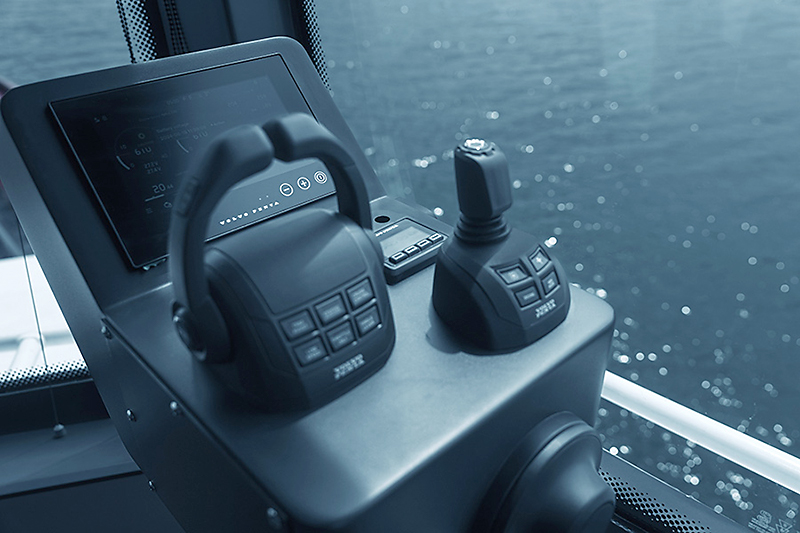
Northern Offshore Services has unveiled the new I-Class Crew Transfer Vessel powered by the first commercial application of Volvo Penta’s IPS Professional Platform. (Courtesy: Volvo Penta)

Northern Offshore Services has unveiled the new I-Class Crew Transfer Vessel powered by the first commercial application of Volvo Penta’s IPS Professional Platform. The vessel began operating in a UK wind farm on September 1, 2024. N-O-S and Volvo Penta collaborated for almost two decades on ongoing efforts to decarbonize the marine industry and reach zero emissions by 2050. To help achieve these goals, N-O-S designed the future-proof CTV that will adapt to and accommodate new technologies and energy solutions while it is in service over the next 25 years and more.

Volvo Penta’s IPS Professional Platform brings efficiency, maneuverability and versatility that will enable the I-Class vessel to transform over its life cycle. This is made possible through propulsion conversions that allow the vessel to adapt to hybrid, fully electric and renewable or future alternative fuel solutions without having to rebuild. The I-Class vessel is also equipped with a remote diagnostics package, which will capture more than 6,000 hours of data that will be incorporated into optimization and future Volvo Penta propulsion design.

“Northern Offshore Services and Volvo Penta share an innovative spirit that drives us both. Today that resulted in the first vessel powered by Volvo Penta’s IPS Professional Platform entering real-world commercial operations,” said Johan Inden, President of Volvo Penta Marine. “N-O-S’ deep experience in building vessels for some of the most demanding environments challenged us to develop new ways to improve our propulsion systems and adapt to emerging technologies. Together, we are showing the industry what the incredible maneuverability, ease of use and precision of the Volvo Penta IPS Professional Platform can accomplish in combination with the expertise of a partner like N-O-S.”

In addition to the Volvo Penta IPS Professional Platform’s flexibility to adapt to future technologies and energy solutions, it is designed for outstanding maneuverability. The enhanced maneuverability and thrust from the system make it ideal for the challenging conditions typically seen at offshore wind farms.

The I-Class vessel leverages four engines connected to two drives to meet specific needs at every stage of operation, providing dual power on demand. Eco Mode will automatically start or stop individual engines in each situation, optimizing fuel consumption and engine running hours.
Recognizing the challenging environment and long operations at sea, N-O-S designed the I-Class vessel with comfort in mind through high-quality interior outfitting and furnishing.
The Volvo Penta IPS Professional Platform unlocks efficiency gains with available Internal Combustion Engine solutions leveraging alternative or renewable fuel sources. Equipped I-Class vessel engines could potentially see up to 30 percent total fuel savings and emissions through the Eco Mode feature. These engines are approved to run Hydrotreated Vegetable Oil (HVO) and have the potential to reduce emissions by up to 90 percent.

MORE INFO  www.volvopenta.com/en-us/

Sarens aids in construction of U.K.’s Sofia Wind Farm

0
The Sarens project Asia team. (Courtesy: Sarens)

Sarens has been actively involved in the construction of the Sofia Offshore Wind plant by successfully carrying out the Sofia OCP Jacket and Topside Weighing and Loadout project.

The plant — owned by RWE and located on Dogger Bank in the North Sea, 195 kilometers off the coast of the U.K. — will have 100 turbines and a power generation capacity of 1.4 GW reaching the coast through an extensive inter-array cable network. It will provide green electricity to 1.2 million homes in the U.K. The turbines will be mounted on monopiles, reaching heights of 252 meters.

Sarens provided a complete package of services, including manpower, engineering, mooring winches, weighing equipment, and 524 axles with 18 PPU Self-Propelled Modular Transporters (SPMTs) for the weighing and loadout.

Sarens, a global leader and reference in crane rental services, heavy lifting and, engineered transport, has been actively involved in the construction of the plant, successfully completing the Sofia OCP Jacket and Topside Weighing and Loadout project. This work, carried out in collaboration with RWE & GE and managed by Seatrium, took place at Seatrium’s shipyard in Batam, Indonesia, from May 25, 2024 to June 15, 2024.

The project involved the offshore converter platform (OCP), a crucial element for the HVDC electrical system of the offshore wind farm. This tool is responsible for converting the energy into direct current (DC) and then transmitting it to land. Thanks to this system, the electricity generated by the rotation of the wind turbines is converted from 66kV alternating current to 320kV direct current. Two seven-kilometer-long cables carry the electricity to the Lazenby converter station.

The main part of the project consisted of transporting and loading the gigantic OCP topside, which weighs 14,000 tons and is 57 meters high, as well as the OCP Jacket, weighing 5,250 tons and 51 meters high. This complex job marks the heaviest topside move in Southeast Asia, and historically, one of the heaviest ever undertaken in the world.

Although the weight and size of the parts posed a major challenge, Sarens’ logistics team ensured punctual delivery and maintenance of the OCP units. To make this possible, Sarens provided a complete package of services, including manpower, engineering, mooring winches, weighing equipment, and 524 axles with 18 PPU Self-Propelled Modular Transporters (SPMTs) for the weighing and loadout. At the peak of the work, there were 28 Sarens members who had to deal with adverse conditions, including the impact of the rainy season on site preparation.

The Sofia offshore wind plant will be commissioned in 2026, at which time it will begin generating clean energy that will reach hundreds of thousands of homes in the United Kingdom by making use of a network of approximately 360 kilometers of inter-array cables from the turbines to the platform.

Sarens has extensive international experience in the assembly and maintenance of wind farms. It has participated in various installations around the world and particularly in Europe, as in France (Saint Nazaire and Saint Brieuc) and the U.K., where its last project is now successfully completed. Recently, Sarens worked in the marshaling of 62 of the monopiles, each weighing 2,000 metric tons, the largest and heaviest XXL monopiles ever to be handled in the U.K., and now the 882 MW Moray West offshore wind farm, is well on its way to contribute to the Scottish renewable energy network.

MORE INFO  www.sarens.com

Massachusetts Maritime Academy to honor Oceantic’s Burdock

0
Oceantic Wind CEO Liz Burdock is Massachusetts Maritime Academy’s Person of the Year. (Courtesy: Oceantic Network)

Massachusetts Maritime Academy, a public university with undergraduate degree programs focusing on science, engineering, technology, math, and business that blend academics and experiential learning, will honor Liz Burdock, founder and CEO of Oceantic Network, as Person of the Year during an October 26 event to be held on the academy’s campus.

“I am honored to receive the 2024 Maritime Person of the Year Award,” said Burdock. “I have dedicated my career to protecting the environment through the advancement of clean energy, and our maritime partners are already proving to be a key part of our nation’s clean energy future. Every offshore wind project requires a host of specialized vessels and dozens of skilled technicians. Each of these massive construction projects are bringing jobs, training and investment to maritime companies and communities across the East and Gulf Coasts. Thank you to Massachusetts Maritime Academy for recognizing the importance of offshore wind energy and its contributions to the domestic maritime industry.”

Burdock co-founded the Baltimore-based Oceantic Network – an organization dedicated to growing the offshore wind and other ocean renewable industries and their supply chains – in 2013. With a deep background in policy, she has led the Network,  launching the International Partnering Forum, the largest offshore wind conference in the Americas; delivered critical offshore industry products and services, including Supply Chain Connect, the Offshore Wind Market dashboard, and Foundation 2 Blade training and remains a thought leader advancing the development of the U.S. offshore wind industry and domestic supply chain.

With extensive experience in running public/private partnerships, Burdock has focused her career on convening and coordinating diverse stakeholders, including businesses, academics, government agencies, policy makers, community leaders, workforce organizations and strategic investors, to develop sound solutions that facilitate the implementation of clean energy in the U.S.

Burdock holds a degree in sociology from Frostburg State University and is a graduate of Leadership Maryland. She has been featured in energy-related publications including ReCharge, reNEWS, and RTO Insider, as well as the Baltimore Sun, Forbes, Reuters, and the Wall Street Journal.

The Emery Rice Medal has been awarded to a select group of maritime professionals. Past honorees of the Massachusetts Maritime Academy Person of the Year include admirals, captains, and CEOs.

“We are delighted to award the Emery Rice Medal to Liz Burdock, not only for her significant contributions to the maritime industry, but also for embodying the very principles we teach at the Academy – leadership, ethics, business sense, and respect for the ocean environment,” said Rear Admiral Francis X. McDonald, USMS, president of the Massachusetts Maritime Academy. “We look forward to honoring her during our October 26 ceremony.”

The Academy has a tradition of honoring a civilian or military leader with a distinguished career of excellence, innovation, and service to the maritime industries and other related industries with the Emery Rice Medal, named for an 1897 Academy graduate and WWI hero. Captain Rice was twice recognized by Pres. Theodore Roosevelt for his maritime skill and bravery.

MORE INFO  https://www.oceanticwind.ca

Vestas secures 795 MW order for offshore farm in the Netherlands

0
Vestas will be supplying 53 V236-15.0 MW wind turbines to OranjeWind in the Netherlands. (Courtesy: OranjeWind)

Vestas has received a firm wind turbine order for the OranjeWind offshore wind farm, formerly known as Hollandse Kust West VII, in the Netherlands.

Vestas will be supplying 53 V236-15.0 MW wind turbines and is responsible for the supply, delivery, and commissioning of the turbines. Upon completion, Vestas will service the assets under a comprehensive 5-year service agreement followed by a long-term operational support agreement.

“OranjeWind sets a high bar for technological innovations and sustainability, and we are delighted to deliver our solutions, including our offshore flagship wind turbine, for this project in the Netherlands. Our entire team is looking forward to working together with the OranjeWind project team on this exciting and ambitious wind farm in the North Sea,” said Nils de Baar, Vestas Northern and Central Europe president.

RWE and TotalEnergies are entering a 50/50 partnership to deliver the OranjeWind offshore wind project. The project has an installed capacity of 795 MW; a grid connection capacity of 760 MW and an excess capacity of 35 MW to use the connection capacity as efficiently as possible, even when production is lower.

The project site is located around 53 km off the Dutch coast in the North Sea. Wind turbine installation is expected to start in 2027.

MORE INFO  www.vestas.com

Moog replacing critical part on GE wind turbines

0
To improve reliability and reduce maintenance costs for wind farm managers, Moog has integrated its next-generation slip ring with a fiber optic rotary joint. (Courtesy: Moog)

To improve reliability and reduce maintenance costs for wind farm managers, Moog has integrated its next-generation slip ring with a fiber optic rotary joint, or FORJ, as a direct replacement for the carbon-brush slip rings that control the blade pitch on 2.5-MW GE turbines and above.

“Moog’s new offering for 2.5-MW and higher GE turbines leverages our success providing more than 10,000 high-reliability pitch slip rings for GE turbines as well as thousands of FORJs into the wind energy market,” said Larry Bryant, business development manager for wind energy solutions at Moog. “We have a long track record of supplying rotary interfaces, and this new slip ring-FORJ integration represents an enhanced iteration of our proven offering. Moog’s experts designed our FORJ based on years of testing and delivering similar systems for the global wind market.”

Carbon brushes need lubrication to maintain their contacts and signals; without it, they harden and require replacement. Moog has designed its new slip ring as a “set it and forget it” product from the outset due to its fiber brush technology.

Pitch systems, which include slip rings, control motion in wind turbine generator systems, ensure efficient use of wind energy, and protect the wind turbine by adjusting the blades’ angle of inclination.

Moog fiber brushes consist of a proprietary blend of high-end metals to ensure reliable transmission of power and data. According to Bryant, Moog’s maintenance-free technology can easily achieve 100 million revolutions. Customers testing Moog’s integrated slip ring and FORJ in the field have reported consistent, maintenance-free operation with no communication failures. Existing carbon-brush slip rings in many GE wind turbines create dust that disrupts power and communications, leading to downtime and unplanned maintenance.

For over a decade, the industry has recognized Moog’s wind energy slip rings for their high quality and performance. The latest integrated version, model WP7286-5N, incorporates a smaller footprint and weigh less than competing designs. Additionally, the integrated FORJ, model FO286, transfers data at higher rates via fiber optic output versus Ethernet. This addition to the WP7286 product family allows Moog to support a larger number of wind farm sites.

MORE INFO  www.moog.com

BGB introduces ‘One-Stop-Shop’ for wind power aftermarket

0

BGB, a UK-based global engineering firm, has announced the introduction of a one-stop shop offering following the launch of its aftermarket wind brushes.

The engineering enterprise, which develops, designs and manufactures engineering applications for service companies, distributors and OEMs, including Danish manufacturer Vestas, has extensive experience in the wind market.

BGB specializes in providing durable wind aftermarket parts. (Courtesy: BGB)

“We’ve been in the wind sector for over five decades – experience and customer intimacy has given us unique insight into the requirements and demands shaping our sector. One of those demands is the growing need for repairs and the recycling of consumables. On some platforms which previously used silver graphite brushes we have witnessed an increasing transition towards copper brushes as part of a broader move across the sector to more cost-effective alternatives,” said Tony Morgan, BGB’s applications engineering manager.

The unveiling of its own brand of carbon aftermarket brushes, supplied by European wind partners, aims to fulfill the market need for providing replacement systems within the OE sector and adds to BGB’s complete suite of in-house manufactured solutions which includes slip rings, brush holders and rotary unions.

The expanding range of carbon brush products offered covers many of the main patterns for Turbine OEMs and comprises generator phase brushes, ground brushes, lightning protection brushes, and those used on pitch control, yaw motors, anti-icer, deicer and signal applications.

Tapping into the growing wind power aftermarket, driven by the need for more sustainable solutions, as well as efficient maintenance and operation, BGB aims to use its expanding Spares and Repairs service, coupled with its on-site test facilities, to evaluate, test, replace or repair worn and damaged brushes as well as offer a range of brush products for the aftermarket.

“We’re proud to be playing a role in creating a more sustainable future,” Morgan said.

MORE INFO  www.bgbinnovation.com

Offshore wind construction up 28%

0
The U.S. reached 310 MW of installed offshore wind capacity, up 28% from last quarter. (Courtesy: Shutterstock)

The U.S. offshore wind market ramped up construction activities and saw several new vessels launched in the second quarter of 2024. In total, the U.S. reached 310 MW of installed offshore wind capacity, up 28% from last quarter. These and other key industry findings are detailed in Oceantic Network’s U.S. Offshore Wind Quarterly Market Report, which highlights new vessel launches, regulatory advancements for several projects, and state-level developments that drove the U.S. market forward between April and June of 2024.

The Coastal Virginia Offshore Wind Project, Revolution Wind, and Vineyard Wind 1 are undergoing installation activities on the East Coast, with South Fork Wind already complete and delivering power to the grid. Once installation on the three projects is complete, they will provide more than 4 GW of energy to the grid, powering around 1.4 million homes. Also in Q2, Equinor broke ground on its South Brooklyn Marine Terminal, projected to create over 1,000 jobs in the construction of staging, pre-assembly, and operations & maintenance facilities for offshore wind. The New Jersey Wind Port, an offshore wind marshalling port, is also nearing completion.

“The U.S. offshore wind industry entered its second summer construction season, even bigger than last year, drawing on dozens of vessels across ports from Virginia to Massachusetts,” said Sam Salustro, vice president of strategic communications at Oceantic Network. “These projects will multiply installed capacity more than thirteen-fold. The next wave of supply chain and infrastructure development is well underway with new ports breaking ground and shipyards churning out vessels. Americans are at work out on the water, inside U.S. ports, and in factories and shipyards far from project areas.”

Further market strength was showcased in the second quarter with the launch of the first U.S.-built service operations vessel (SOV) for offshore wind, along with the launch of two new crew transfer vessels that mark the fifth and sixth to be delivered in 2024.

We’re heading for a summer filled with monumental achievement brought by new vessels purpose-built to serve our industry,” said Salustro.

The report identified several further industry advancements, including:

  • The Department of Interior announced a 5-year plan for offshore wind leasing, which includes up to 12 potential lease area sales through 2028.
  • The domestic supply chain notched advancements with $300 million in new investments in shipbuilding and manufacturing across Louisiana, Maryland, New York, Ohio, and Texas.
  • Over 4 GW of projects are now undergoing installation activities.
  • New federal approvals increased ready to install capacity to over 13 GW.

MORE INFO  oceantic.org/2024-q2-u-s-offshore-wind-quarterly-market-report

Clearway to deliver wind energy to Puget Sound Energy

0
Construction of the Haymaker wind farm is scheduled to begin in 2026, with commercial operations expected by 2028.

Clearway Energy Group recently announced it signed a 25-year power purchase agreement with Puget Sound Energy for the Haymaker wind farm, a 315-MW facility under development in Wheatland and Meagher counties in Montana.

Once operational, Haymaker will generate enough electricity to power about 116,000 homes each year.

“We are proud to partner with Puget Sound Energy in delivering low-cost clean energy to their customers and supporting their ambitious renewable energy goals,” said Valerie Wooley, senior vice president of origination at Clearway. “Reinforced by the Inflation Reduction Act, Haymaker represents a major investment in central Montana’s economy, and we’re eager to work with the community through development, construction, and our long-term stewardship of the project.”

“This agreement with Clearway helps us meet some of the most ambitious laws in the nation while delivering on our customers’ expectations for energy that is clean as well as safe, reliable, and affordable,” said Ron Roberts, PSE’s senior vice president of Energy Resources. “We are proud to be a partner in developing Montana’s wind resources, and this is yet another milestone in our continued investment in the state’s energy economy.

Haymaker is expected to provide millions in landowner payments and more than $100 million in property tax revenue over the life of the project. Hundreds of well-paying union labor jobs will be created during construction, and a permanent local workforce will operate and maintain the site.

Construction of the Haymaker Wind is scheduled to begin in 2026, with commercial operations expected by 2028.

MORE INFO  clearwayenergygroup.com

Amsoil acquires Aerospace Lubricants

0

Amsoil Inc., a leader in synthetic lubricant technology, has acquired Columbus, Ohio-based Aerospace Lubricants. Founded in 1973, Aerospace designs and manufactures a specialized array of greases for industrial manufacturing operations and private-label customers in automotive, industrial, military, aerospace and consumer markets. Aerospace Lubricants will operate as an independent subsidiary of Amsoil.  

“By acquiring Aerospace Lubricants, we are acquiring a strong new partner for grease formulation and production,” said Amsoil Chairman & CEO Alan Amatuzio. “We are going to invest in Aerospace to enhance the capabilities and capacity of the operation. Our operational excellence combined with their grease expertise will result in significant value added for Aerospace and AMSOIL customers.” 

Aerospace Lubricants was founded in 1973. (Courtesy: Amsoil)

Aerospace will continue serving existing and new customers in its target markets and will now be led by Dave Meyer, former Amsoil Sr. VP, Industrial, who will assume the role of Aerospace Lubricants President. “Aerospace Lubricants will continue operating as Aerospace Lubricants, an independent subsidiary of Amsoil,” said Meyer. “It will not be rebranded as Amsoil, but it will have the backing of the Amsoil team and resources to drive operational improvements that will deliver significant benefits for Aerospace customers. I am looking forward to working with the Aerospace team to grow the business together.” 

Amsoil and Aerospace are both family-owned companies with long histories engineering innovative lubricant solutions. Both are known for advanced formulations and a focus on developing quality, specialized products that deliver the performance customers have been promised and the satisfaction they deserve.  

“This was a strategic choice on my part,” said outgoing Aerospace Lubricants owner Steve Gates. “Aerospace is a family-owned company with a great team and strong values. It was important to me to find new ownership that would uphold our core values and amplify the opportunities for the Aerospace team and our customers. Amsoil is the perfect choice. This is an exciting change for everyone involved.” 

More info: www.amsoilindustrial.com

North Star claims first mover on Midi-SOV design

0

North Star, specialist vessel operator for offshore infrastructure support services, has been announced as the first mover on the Midi-SOV – a new offshore wind ship design developed by Chartwell Marine, a pioneer of next-generation vessel design, and VARD, a leading designer and shipbuilder of specialized vessels.

The Midi-SOV is a 55-meter offshore wind craft ready for build in the European, Asian, and US markets. North Star has entered an agreement with Chartwell and VARD becoming the first to adopt and use the Midi-SOV on offshore wind projects, investing in upfront design fees to facilitate vessel construction for European operations.

Chartwell Marine developed the Midi-SOV. (Courtesy: North Star)

“We designed the Midi-SOV with a clear vision of its integration into future offshore wind fleets, filling the gap that had emerged between CTVs and SOVs and addressing key operational challenges as the wind industry evolves,” said Andy Page, Chartwell Marine managing director.

“Together with VARD, we have been very encouraged by the positive response we’ve received from offshore wind operators, underscoring the industry’s readiness for new solutions that enhance efficiency, safety, and overall project costs. And, of course, we are delighted to continue our collaborative relationship with North Star as they take a leading role in bringing this vessel from design to reality,” said Page.

Chartwell and VARD’s Midi-SOV solution addresses challenges in the offshore wind sector by bridging the gap between Crew Transfer Vessels (CTVs) and Service Operation Vessels (SOVs), providing comfort and workability while offering a cost-effective alternative to full scale SOVs. With a design based on operational data to meet the niche requirements of offshore wind developers and operators, the Midi-SOV is intended to complement existing fleets.

The operational efficiency of the Midi-SOV was identified as one of its key advantages, evidenced by lower technician attrition rates due to the comfortable and spacious working environments provided. Furthermore, discussion included the Midi-SOV’s robust safety performance, particularly in reducing risks during technician transfers and crane operations.

“We’re excited about the operational versatility the design can give us, as well as the high standards of safety, availability and cost efficiency it promises – and proud to play our part in bringing the first Midi-SOVs to market,” said Andrew Duncan, North Star’s renewables and innovations director.

More info: www.northstarshipping.co.uk/

Vestas secures 81 MW order for Scotland turbine project

0

Vestas has secured an 81MW order from Invenergy for the wind energy project Pencloe in Dumfries and Galloway in Scotland. Vestas will deliver 18 V136-4.5 MW wind turbines, and the order includes supply, delivery, installation, and commissioning of the turbines.

Upon completion, Vestas will service the turbines under a multi-year Active Output Management 5000 (AOM 5000) service agreement designed to ensure assets’ performance.

Vestas will deliver 18 wind turbines to the site in Scotland. (Courtesy: Vestas)

“We are delighted to achieve this key milestone in our collaboration with Invenergy,” said James Ian Robinson, Country Manager and Director Sales UK for Vestas Northern and Central Europe. “Vestas’ technology delivers a robust business case for the competitive UK electricity market. We look forward to the execution phase where we will continue our strong construction track record. We thank Invenergy for trusting Vestas with their largest wind park to date in the UK.”

“We are excited to be utilizing state-of-the-art Vestas turbines at the Pencloe Wind Energy Centre, which will be the largest Invenergy-developed project in the United Kingdom,” said Stuart Winter, Vice President and Country Manager at Invenergy. “This project not only represents our mission to accelerate cleaner, more reliable and affordable energy, but also underscores our dedication to fostering positive community relationships and ensuring local economies benefit from our projects.”

Turbine delivery is expected to begin in the second quarter of 2025 with the project expected to be fully operational in early 2026.

More info: www.vestas.com

BOEM approves construction and operations plan for offshore wind projects

0

The Bureau of Ocean Energy Management (BOEM) announced its approval of the New England Wind Construction and Operations Plan (COP), which authorizes construction and operation of two wind energy projects. This is the final approval of these two projects from BOEM, following the agency’s April 2024 Record of Decision.

“The Biden-Harris administration is committed to advancing offshore wind energy projects like New England Wind to create jobs, drive economic growth, and cut harmful climate pollution,” said BOEM Director Elizabeth Klein. “We are proud to announce BOEM’s final approval of the New England Wind projects. They represent a major milestone in our efforts to expand clean energy production and combat climate change.”  

The two projects are about 20 nautical miles south of Martha’s Vineyard. (Courtesy: BOEM)

The approval will permit the construction and operation of two offshore wind energy facilities, known as New England Wind 1 and New England Wind 2, which together will have a total capacity of up to 2,600 megawatts of renewable energy that could power more than 900,000 homes each year.  

The two projects are situated about 20 nautical miles south of Martha’s Vineyard,
Massachusetts, and about 24 nm southwest of Nantucket, Massachusetts. The COP for the two projects includes up to 129 wind turbine generators, up to five electric service platforms, and up to five offshore export cables transmitting electricity to onshore transmission systems in the Town of Barnstable and Bristol County, Massachusetts.  

BOEM considered feedback from Tribes, other government agencies, ocean users, and others prior to the decision. The feedback resulted in required measures to avoid, minimize, or mitigate any potential impacts from the project on marine life and other important ocean uses, such as fishing.  

Since the start of the Biden administration, the Department of the Interior has approved eight commercial-scale offshore wind energy projects in federal waters, and BOEM has held four offshore wind lease sales, including offshore New York, New Jersey, the Carolinas, and the first-ever sales offshore the Pacific and Gulf of Mexico coasts.

More info: www.boem.gov

Modulift helping to build world’s first offshore energy island

0

Modulift, a lifting equipment manufacturer, is facilitating the construction of a complex offshore energy project in the North Sea. Deemed to be the world’s first artificial energy island, “Princess Elisabeth” marks a milestone in renewable energy infrastructure development.

Situated 30 miles off the coast of Belgium, in the 3.5-GW Princess Elisabeth offshore wind zone, the island will act as an international energy hub to centralize all electricity produced by wind farms in the zone.

Construction on the island will run until end of 2026. (Courtesy: Modulift)

TM Edison, a joint venture between marine companies Jan De Nul and DEME Group NV, isresponsible for the construction and installation of the energy island, which will contribute to the EU’s goal of 300GW offshore wind capacity by 2050.  

Assembling the infrastructure of the energy island requires lifting and maneuvering of large structural elements and equipment. The outer perimeter of the island will be made up of a series of concrete structures known as caissons. These are built onshore before being transported to their offshore location.  Construction of the Princess Elisabeth Island is expected to last until the end of 2026.

Modulift’s spreader beams have been integral to the construction of the concrete sections, with one formwork section weighing around 17 tons and 10m in length. We are using a 1-over-1 configuration, utilizing a MOD 34 spreader beam at the top and a MOD 24 on the bottom. Modulift spreader beams have been instrumental in safely hoisting the formwork into position,” said Ruben Verschueren, TM Edison’s site superintendent, civil works.

 “Modulift is known for its iconic yellow spreader beams across the renewable and offshore energy sectors, and has set the precedent for safety, efficiency, and fast delivery in the global lifting industry,” said Sarah Spivey, managing director.

More info: www.modulift.com

Nearthlab expands into contactless lightning protection system inspection

0
Nearthlab has been redefining drone solutions since 2015, pushing practical boundaries beyond industry norms. (Courtesy: Nearthlab)

Nearthlab, a leading provider of autonomous drone solutions, now offers inspection services for lightning protection systems (LPS).

This breakthrough was made by integrating Enertrag’s patented LPS measurement system into Nearthlab’s cutting-edge payload technology.

Traditional LPS inspections often involve repetitive drilling to check cables beneath turbine blades, relying on rough estimates of where damage might be. Nearthlab’s non-contact inspections, however, use advanced sensors to detect changes in electromagnetic fields and pinpoint the precise location of damage. Doing so eliminates unnecessary drilling, making the process more efficient and cost-effective.

“Our roots are in wind operations and maintenance, and this expansion underscores our commitment to enhancing turbine maintenance with cutting-edge drone technology,” said Jay Choi, co-founder and CEO. “We’re thrilled to offer equipment manufacturers and asset owners a smarter, more efficient maintenance solution.”

LPS inspections have been successfully conducted at offshore sites across Europe and Japan and are set to expand farther.

Nearthlab has been redefining drone solutions since 2015, pushing practical boundaries beyond industry norms. It seamlessly blends top-notch software and hardware to address diverse needs, from reconnaissance and surveillance to public safety and infrastructure inspection.

Nearthlab’s solutions prioritize simplicity. No learning curve — just adaptable, user-friendly designs tailored to the unique needs of various industries. Its solutions find the sweet spot in balancing hardware, software, size, and cost without having to make compromises.

Precision in data collection and a commitment to safety define Nearthlab. In high-risk scenarios such as post-disaster search and rescue missions, the company’s solutions step up to enhance operational efficiency.

MORE INFO  www.nearthlab.com

ArcVera Renewables establishes European offices

0
Wind industry veteran Dr. Joerg Winterfeldt has joined the ArcVera Renewables team as European Continent Manager and Senior Atmospheric Scientist. (Courtesy: ArcVera Renewables)

ArcVera Renewables, a leading global renewable energy technical consultancy, is expanding its consulting services reach by establishing European offices. Wind industry veteran Dr. Joerg Winterfeldt has joined the ArcVera Renewables team as European Continent Manager and Senior Atmospheric Scientist.

Winterfeldt will commercially develop ArcVera Renewables’ expertise in wind and solar energy, adjacent energy storage, and green power-to-X services.

“ArcVera continues to expand globally. In addition to the United States, we now have offices in Brazil, India, South Africa, and Europe,” said Greg Poulos, CEO and Principal Atmospheric Scientist, “With renewables growth in solar, wind, battery storage, green hydrogen, and green Power-to-X in Europe itself, and many European renewable energy companies actively ramping up expert support in the United States and other markets we already serve globally, the timing was right to move forward.”

“I am excited to join the ArcVera expert team at this midpoint time in my career, and I am looking forward to leveraging my experience to expand ArcVera’s European footprint,” said Winterfeldt.

“Working for years with a developer, in atmospheric science, and with two top-tier wind turbine manufacturers, has given me a depth of knowledge where I can see not only how accurate energy estimation impacts project energy performance, but also how the machines are optimized to maximize the resource potential. ArcVera is a leading global technical expert in energy resources and the machines that translate the wind resource into energy. ArcVera is a great opportunity to lend my knowledge, helping clients succeed and playing a role in the global energy transition,” said Winterfeldt.

Based in the Kiel area of Germany, Dr. Winterfeldt has engaged his expertise in renewable energy since beginning in 2000 with German-based developer Projekt GmbH and wind energy consultant Overspeed as Micrositing expert and researched wind and cyclones in the North Atlantic in the GKSS research center. In 2009 he teamed with General Electric as the Technical Lead – Micrositing Optimization/Wind Resource Assessment. At GE, his most recent role was Senior Product Manager – Wind Farm Energy Guarantees.  In 2022, Winterfeldt worked for Nordex as a Senior Expert – Project Optimization.

MORE INFO  www.arcvera.com

Vestas unites tech, manufacturing organizations

0
SAF-powered helicopters at the Baltic Eagle offshore wind farm in Germany. (Courtesy: Vestas)

Vestas has united the Technology organization (CTO) and Manufacturing & Global Procurement organization (COO) into one Technology and Operations organization (CTOO). The united CTOO organization will become the foundation for one enterprise-wide industrial system within Vestas and will be headed by Anders Nielsen, Vestas’ chief technology officer.

“Vestas has built a strong backlog across onshore, offshore, and service towards the end of this decade, and we are today announcing the next step in our organizational evolution to deliver on our customer commitments. The united CTOO-organization will help accelerate ramp-up and industrialization across Vestas and the industry by simplifying interfaces, collaboration and strengthening our end-to-end approach,” said Henrik Andersen, Vestas group president and CEO.

The united CTOO-organization is a natural next step in Vestas’ evolution of technology and product introductions, as well as manufacturing ramp-up by simplifying interfaces within Vestas and across the value chain.

The united CTOO uses building blocks from Vestas’ global and regional operating model to minimize impact on operations and safeguard deliveries and project execution in 2024. The CTOO organization is expected to be fully implemented during the third quarter of 2024. With Nielsen becoming CTOO, current COO Tommy Rahbek Nielsen has decided to pursue opportunities outside of Vestas after more than 25 years.

“I’m very pleased Anders Nielsen has accepted to continue leading Vestas’ industrialization forward, and I want to thank Tommy Rahbek Nielsen for his incredible contribution to Vestas for more than 25 years. In the role as COO, Tommy was pivotal in keeping Vestas running during the pandemic, and he has done an excellent job in maturing our COO-organization to a level that enables us to take the next step for the benefit of Vestas,” said Andersen.

Creating the CTOO organization is only expected to impact senior management roles and not entail any restructuring at an operational level.

MORE INFO  www.vestas.com

DNV project leads to blade standard revision

0
: Independent energy expert and assurance provider DNV has led an initiative resulting in the revision of the DNV-ST-0376 rotor blade standard. (Courtesy: DNV)

Independent energy expert and assurance provider DNV has led an initiative that has resulted in the revision of the DNV-ST-0376 rotor blade standard, in response to the dynamic landscape of wind turbine development. This update, a product of joint industry collaboration, marks a milestone in enhancing reliability and safety in the wind energy sector.

Heightened reliability standards are crucial to keep pace with advancements in wind turbine technology. The project, tailored to meet the evolving needs of wind turbine developers, owners, and operators, aims to ensure reliability and performance.

Focusing on addressing the unique requirements of large, flexible blades for multi-megawatt turbines, the revised standard introduces comprehensive measures that previously were not addressed in industry norms.

“The pace of modern wind turbine development demands that industry standards keep pace with changing trends and technologies. Through the development of industry service documents such as service specifications, standards, and recommended practices, DNV is actively engaged in driving the renewable energy sector forward. This update underscores our commitment to driving innovation and quality within the wind energy sector,” said Kim Sandgaard-Mørk, Executive Vice President for Renewables Certification at DNV. “By prioritizing reliability and safety, we aim to bolster industry confidence and propel the global transition towards sustainable energy solutions.”

“Not all wind turbine blades are created equal,” said Christopher Harrison, Principal Engineer and Service Line Leader for Component Certification, Energy Systems at DNV. “Different design assumptions and methods, along with varying performance during validation tests, can result in differing blade performance over their lifespan. As stakeholders in the wind energy sector, it’s crucial to understand and mitigate these risks.”

During the project, 26 companies across the wind turbine sector, including manufacturers, operators, and certifiers, contributed to refining and reviewing the standard.

“Our goal was to provide wind turbine stakeholders with the tools and knowledge necessary to navigate the complexities of blade development,” said Harrison.


MORE INFO  www.dnv.com