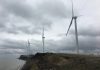








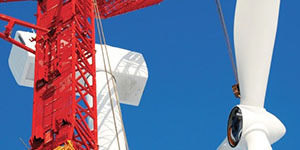

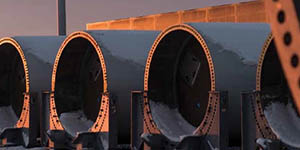

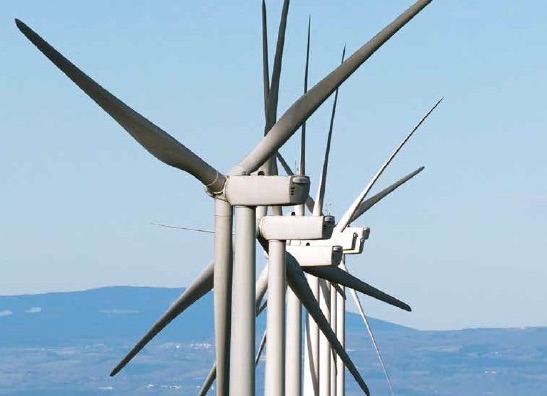
Late Friday afternoon, August 22, The Department of the Interior ordered work to stop on the Revolution Wind project off the New England Coast. The project, which is 80percent complete, was set to provide 704 MW of power generation to Connecticut and Rhode Island once completed early next year. The project sparked investments in Louisiana and New England shipyards, purchased export cables from a South Carolinafactory, and spurred a steel supply chain that crossed New York and created hundreds of unions jobs in Providence, Rhode Island.
Several renewable energy organizations expressed their immense disapproval of such a move, which is the second time the Trump administration has taken unlawful action against a fully permitted offshore wind project under active construction — this time one that is nearly 80 percent complete, according to Oceantic Network CEO Liz Burdock.
“This dramatic action further erodes investor confidence in the U.S. market across all industries and undermines progress on shared national priorities — shipyard revitalization, steel and port investments, and energy dominance,” she said. “In fact, halting work on Revolution Wind will drive up energy costs for consumers, idle Gulf Coast vessel operators that have invested hundreds of millions of dollars in new or retrofitted vessels, and jeopardize the livelihoods of union workers.”

Revolution Wind represents years of planning, billions in private investment, and significant progress for America’s offshore energy supply chain, according to National Ocean Industries Association (NOIA) President Erik Milito.
“Any pause or uncertainty at this stage could ripple across jobs, contracts, and communities already benefiting from the project,” he said.
Operational data from the nation’s first commercial-scale offshore wind project demonstrate energy production and reliability rates on par with traditional sources — performing even better during severe weather and winter months — saving ratepayers in the Northeast hundreds of millions of dollars, according to Burdock.
“Offshore wind is a shovel-ready, reliable and affordable energy source ready to power America’s leadership and independence,” she said. “Just (recently), the administration released documents showing it was unable to justify its previous stop-work order. (This)action is no different. The Oceantic Network and the hundreds of American suppliers that make up its membership urge the Department of the Interior to reverse course immediately and allow this project to move forward, protecting jobs, lowering costs, and securing America’s energy independence.”
This is not the first time extreme partisan politics has derailed sound energy policy, according to American Clean Power Association CEO Jason Grumet.
“Revolution Wind has been years in the making, planned, permitted, and financed under clear federal rules, said American Clean Power Association CEO Jason Grumet. “Stopping construction now, when it is 80 percent complete, is more than a bureaucratic delay — it’s a broken promise to the communities, workers, and consumers and businesses counting on this project. The unfortunate message to investors is clear: The U.S. is no longer a reliable place for long-term energy investments.”
More than 1,000 American workers have already logged in 2 million union work hours on the Revolution Wind project, according to Grumet.
“Rhode Island and Connecticut families and businesses deserve the power Revolution Wind will provide,” he said. “They deserve the jobs it will create. The nation deserves a governing system that keeps its promises.”
According to Grumet, the Trump administration is raising alarms about rising energy prices while blocking new supply from reaching the grid.
“Taking jobs away from American families while raising their energy bills is not leadership,” he said. “American workers and consumers deserve better.”
According to Milito, projects like Revolution Wind actually advance priorities of the administration by restoring American manufacturing, strengthening shipbuilding, modernizing ports, and building the reliable power needed to support data centers and AI innovation.
“These projects are not only about energy,” he said.
Today, the U.S. has only one fully operational large-scale offshore wind project producing power, according to Milito, which is not enough to meet America’s rising energy needs.
“We need more energy of all types, including oil and gas, wind, and new and emerging technologies,” he said. “Offshore projects take years of investment before delivering results, and stable, consistent policy is essential to keep that progress moving.”
Milito pointed out that the totality of America’s offshore energy industry, including oil and gas, wind, carbon capture and storage, and deep-sea mining, is driving more stability for consumers, more jobs nationwide, and a stronger future for America.