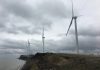



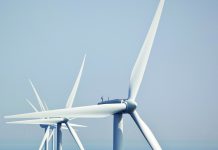



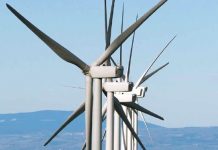

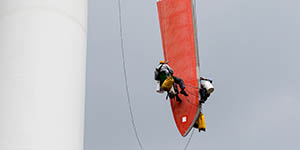
The landscape of renewable energy is constantly evolving, with wind power standing as a testament to human ingenuity in harnessing nature’s forces. For more than three decades, towering turbines have dotted our horizons, silently converting the invisible currents of the air into clean electricity. These pioneering wind farms, many established in the late 1980s and 1990s, were revolutionary in their time, laying the groundwork for the massive global industry we see today. However, time marches on, and even the most robust machinery has a lifespan. As these first-generation wind installations approach, or in some cases exceed, their initial 20-25 years operational design life, a critical question arises: what becomes of these aging giants?
The answer, increasingly embraced by energy developers, policymakers, and environmental advocates alike, is repowering. Far from merely performing routine maintenance or patching up old equipment, repowering is a transformative process. It involves the strategic decommissioning of older, less efficient wind turbines and their replacement with state-of-the-art, larger, and significantly more powerful machines. This isn’t just an upgrade; it’s a complete revitalization, breathing new life into established sites and unlocking their full potential.
The rationale behind repowering is multifaceted, rooted deeply in both robust economic principles and an unwavering commitment to environmental stewardship. It represents a mature and intelligent approach to renewable energy asset management, recognizing that the most sustainable energy is often that which leverages existing infrastructure and proven locations.

The Compelling ‘Why’: Economic and Environmental Imperatives
The decision to repower a wind farm is driven by a confluence of powerful factors:
- Exponential increase in energy production: Technological advancements have been staggering. It’s common for a repowered project to generate two to five times the annual energy production (AEP) of the original farm, often using a fewer number of turbines.
- Maximizing existing infrastructure: Repowering capitalizes on pre-existing infrastructure—land already zoned, environmental assessments conducted, and the crucial grid connection already in place. This dramatically reduces permitting risks and accelerates project timelines compared to “greenfield” development.
- Reduced visual and acoustic impact: Because modern turbines are so much more powerful, fewer units are required for higher output, simplifying the visual profile. Improved aerodynamics also led to significantly lower noise levels.
- Extending the lifespan: Repowering effectively grants a wind farm a second life, securing decades more of clean energy production from a proven location.

Technological Evolution and the Repowering Blueprint
The transition is made possible by massive advancements in engineering, aerodynamics, and materials science. Today’s machines are fundamentally different from their predecessors.
The Technological Leap: From Turbines to Super-Turbines
- Rated capacity vs. physical size: Older turbines might have been 0.5 MW to 1 MW; repowering involves 3 MW to 6 MW machines, with rotor diameters often surpassing 150 meters. The power output is proportional to the swept area, which is exponentially larger on new machines.
- Aerodynamic blades and materials: Modern turbine blades are complex aerodynamic designs, using lighter, stronger composite materials to maximize efficiency across various wind speeds.
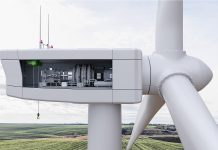
- Smart control systems: Sophisticated pitch and yaw control systems constantly adjust the blade angles and nacelle orientation based on Lidar and anemometer data. This ensures the turbine operates at its optimal efficiency curve, leading to a much higher capacity factor.
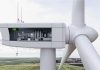
- Drivetrain efficiency: Advances include improved gearboxes for mid-speed geared and the increasing adoption of direct-drive systems, which eliminate the gearbox for better reliability and lower maintenance.

The Repowering Process: A Step-by-Step Blueprint
Repowering is a complex, multi-phase engineering project:
- Assessment and feasibility: Analyze historical wind data, conduct new micro-siting for larger turbines, and review the existing grid capacity to determine if a substation upgrade is required.
- Decommissioning and logistics: Old turbines are disassembled. Steel and copper are recycled. The large composite turbine blades are the most challenging component, requiring specialized waste management or novel recycling techniques. New, larger reinforced concrete foundations are poured to support the massive new loads.
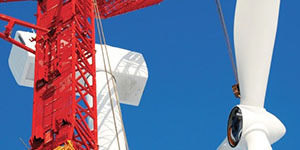
- Construction and installation: New access roads are upgraded. Specialized crawler cranes lift and install the new, heavier tower sections, nacelles, and rotor blades.
- Commissioning and testing: The turbines are synchronized with the grid and undergo rigorous performance testing before becoming fully operational.
Challenges, Sustainability, and the Role of GreenSpur
The repowering trend must overcome logistical and sustainability hurdles, a goal increasingly facilitated by technological innovators like GreenSpur Wind.
The Roadblocks: Logistical and regulatory challenges
- Logistical extremes: Transporting massive components — blades 80 meters long, heavy nacelles — requires complex planning, road upgrades, and specialized crane operations.
- Regulatory friction: Despite site pre-approval, the drastic change in turbine size can trigger new, lengthy planning reviews, especially concerning height and visual impact.
- Grid Constraint: The exponential power increase often mandates costly and time-consuming transmission line and substation upgrades.

The Sustainability imperative: The blade challenge
The disposal of composite turbine blades presents the biggest obstacle to a circular economy for wind energy. These fiberglass and carbon-fiber blades are incredibly durable, making them difficult to recycle efficiently. (See Table 1)
The GreenSpur Advantage in Repowering
GreenSpur Wind’s primary innovation lies in its permanent magnet agnostic generators (PMGs). This technology plays a key role in the long-term viability of repowering:
- Lighter generator construction: GreenSpur’s Axial-Flux PMG design is modular and lighter than traditional radial-flux machines. This weight reduction eases the structural demands on the new tower and foundation, potentially simplifying upgrades and lowering CapEx for installation.
- Supply chain de-risking: By using alternative materials such as Dysprosium-free Neodymium magnets, or gap magnets and aluminum instead of Dysprosium-rich rare earth elements (REEs) such as N48SH, N45UH, and copper, GreenSpur insulates repowered projects from the volatile pricing and geopolitical risks associated with REE supply chains, guaranteeing stability over the asset’s 25-year life.
- Enhanced reliability: The design eliminates complex, high-maintenance systems, such as the liquid cooling required for many conventional PMGs, opting for simpler, air-cooled architecture. This leads to lower Operational Expenditure (OpEx) and higher uptime.
Financial Case and Global Outlook
The decision to repower hinges on a single metric: the levelized cost of energy (LCoE). GreenSpur’s technological contributions translate directly into measurable cost savings, making the repowering investment far more attractive.
Quantifying the Savings: The GreenSpur LCoE Impact
GreenSpur’s rare earth-free technology is designed to deliver significant savings across both the capital expenditure (CapEx) and operating expenditure (OpEx) as seen in Table 2.

These substantial LCoE savings accelerate the financial payback period for repowering projects, securing investor confidence in replacing old assets with advanced turbines.
Global Outlook: A Crucial Driver for Net Zero
Repowering is now recognized as a critical global strategy, particularly in mature wind markets such as the United States and Germany, which have large fleets of aging turbines.
By maximizing the potential of existing sites, repowering serves as the most efficient way to achieve rapid, dense increases in renewable energy output without new land acquisition. It is an intelligent optimization of green assets that will:
- Accelerate decarbonization: Providing a fast track to integrating more clean power into existing grids.
- Ensure energy security: Guaranteeing reliable clean energy generation for another three decades.
- Drive innovation: Creating market demand for sustainable component technologies such as GreenSpur’s PMGs and novel blade recycling processes.
Repowering is more than just an industry trend; it is a foundational strategy for energy maturity. By combining strategic site renewal with sustainable technological innovation, the world ensures that its first generation of wind farms not only survives but thrives, providing the crucial second wind that will power the next phase of the Net Zero transition.