













North America’s energy sector is charting two paths: A historic surge in renewable energy projects is met with fossil fuel expansion that is threatening the continent’s climate commitments, according to a report by global energy trade association and data and analytics provider, the Energy Industries Council (EIC).
The region added 214 utility-scale energy facilities last year, with more than half being wind, solar, and storage installations.

Simultaneous record growth in LNG exports, oil drilling, and petrochemical production are an indication that, in the region, conventional and new energies will work together, at least over the next few years, even if at the expense of meeting climate pledges.
“This isn’t a transition; it’s a coexistence,” said Rebecca Groundwater, EIC’s head of external affairs. “Governments are scaling renewables to meet climate goals but doubling down on fossil fuels to hedge economic and geopolitical risks. The situation mirrors global struggles to balance decarbonization with energy security.”
Solar dominated renewable growth, with 100 GW of installed capacity across North America, 88 percent of it in the U.S. Nevada’s 690-MW Gemini Solar-Plus-Storage project, began operations in July 2024, pairing photovoltaic panels with a 380-MW battery system.
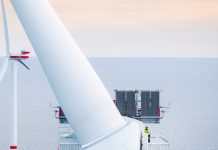
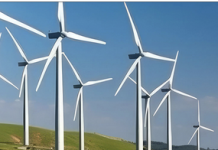
Wind remains the top renewable source at 214 GW, though new installations fell 35 percent year-over-year as developers opted to repower aging turbines.
The U.S. became the world’s top LNG exporter in 2024, shipping 11.9 billion cubic feet per day (Bcf/d) to Europe and Asia — that’s up 27 percent from 2023. Canada’s Trans Mountain Pipeline expansion, completed in May 2024, tripled oil sands crude capacity to 890,000 barrels per day, while Mexico’s state-owned PEMEX launched the 340,000 barrel per day Dos Bocas refinery — a $12 billion project.
“Fossil fuels aren’t retreating,” said report author Victória Marques. “Gas is now framed as a ‘bridge’ fuel and oil as ‘strategic,’ while carbon capture as the magic bullet that removes at least some of the carbon emitted by both.”
The report discusses how North America is leveraging resources to reshape global alliances. U.S. LNG exports have weakened Russia’s energy stranglehold on Europe, with projects like Venture Global’s 12 million-ton-per-annum (mtpa) Plaquemines terminal in Louisiana accelerating shipments.
Meanwhile, Canada is positioning itself as a critical minerals hub, supplying lithium and cobalt for EV batteries amid U.S.-China trade tensions. Nuclear power is also reviving.
The U.S. ban on Russian uranium imports, enacted in March 2024, has forced utilities to restart domestic nuclear fuel production after decades of reliance on Moscow.
Canada’s Ontario Power Generation plans to deploy a 300-MW small modular reactor (SMR) at its Darlington site by 2028, while Holtec International seeks to reopen Michigan’s Palisades plant — shuttered in 2022 — to power data centers.
“Nuclear is back not because it’s clean, but because it’s constant; it’s a perfect baseload clean-power solution,” Marques said. “We expect them to play a major role to feed the insatiable demand for energy by both AI and cryptos.”
The U.S. added its first new nuclear reactor in 30 years — Georgia’s 1.1-GW Vogtle Unit 4 — but aging infrastructure remains a liability.
More info www.the-eic.com