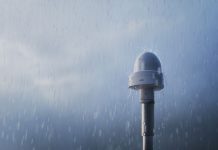


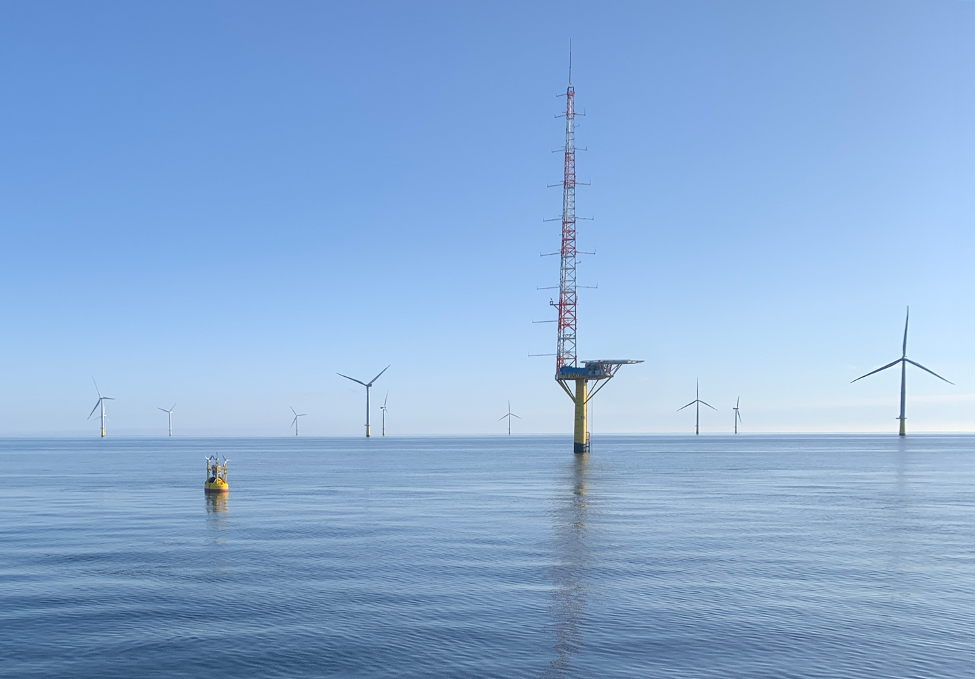
Following its certification as Stage 3 in 2024, the Floating Lidar System (FLS) developed, manufactured, and operated by the Fraunhofer Institute for Wind Energy Systems IWES, is the first FLS to achieve Stage 3+ under the third version of the OWA Roadmap (2025). This milestone demonstrates refined accuracy and the capacity to deliver viable Turbulence Intensity (TI) measurements.
By providing validated TI measurements, the Fraunhofer IWES Wind Lidar Buoy reduces uncertainty in offshore wind site assessment and strengthens the basis for site suitability assessments and bankable project decisions. Fraunhofer IWES commissioned Oldbaum Services Ltd. to independently assess an extended body of evidence. Stage 3+ designation is the highest level of commercial acceptance validation under the Carbon Trust OWA Roadmap for floating Lidar technology.
“We are proud to be able to demonstrate to the offshore wind industry that we can reach this latest pre-normative milestone, and that our research efforts translate into further methodological and accuracy advancement to the benefit of our clients.” said Loís Legendre, Project Manager Wind Measurement at Fraunhofer IWES.
Maximizing the quality of the field measurements is very important to provide the best possible estimate of the wind conditions and the expected energy yield of a wind farm derived therefrom.
Offshore verification trials prove that the TI measurements of the Fraunhofer IWES buoy fully satisfy all requirements defined in the Carbon Trust Roadmap. This was achieved by Fraunhofer IWES’s recent scientific advancements, published in peer-reviewed publications, which allow the derivation of high-accuracy TI data using a high-frequency, deterministic motion compensation method. This advanced approach for Floating Lidar System compensates for motion effects directly at the line-of-sight level by combining high-frequency motion data with time synchronized lidar measurements.
As a purely physics-based approach, the method offers full transparency and traceability, without dependence on black-box models or machine learning. It does not rely on training data and is not site dependent. The algorithm improves the precision and reliability of TI measurements, provides deeper insight into offshore atmospheric turbulence, and builds confidence in the data.
More info www.fraunhofer.de