






Remotely operated vehicles (ROVs) have long been associated with one industry above any other: oil and gas. This vital equipment was traditionally used to support subsea operations from pre-lay route surveys through to commissioning; however, there is now an ever-growing need for the technology to support the increasing number of offshore wind farms.
The U.K. maintains a world-leading position in offshore wind development, with more than 16 GW of capacity currently installed and a further 96 GW in the pipeline. Given this growth, the importance of ROVs in supporting the industry is only going in one direction, and recent technical innovations ensure operators are well equipped to match this progress.

Support at every stage
ROVs play a critical role throughout the offshore wind lifecycle. During early-stage surveys, they provide detailed seabed mapping, delivered using multibeam sonar and laser scanning systems, as well as HD cameras. This data paints a clear picture of seabed conditions, helping operators identify potential obstructions while optimizing turbine and cable layouts.
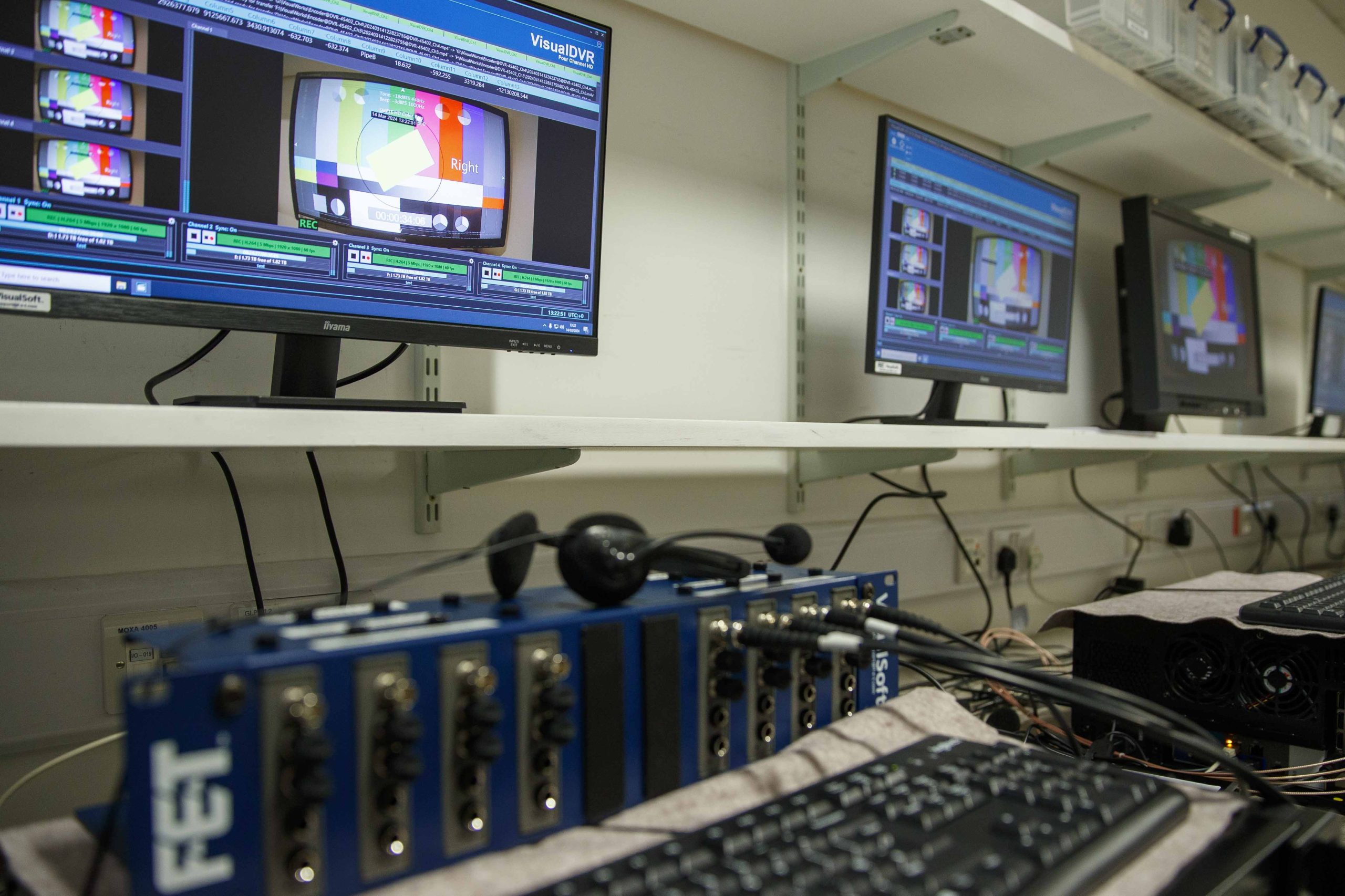
Next comes one of the most intensive phases in offshore wind development: installation. ROVs perform the pre-installation surveys as well as assisting with foundation placement, often working alongside specialist trenching systems to ensure cables are placed accurately and with a sufficient depth for protection. Real-time video and sensor feedback processing provided by software such as Forum Energy Technologies’ (FET) VisualSoft, enable installation teams to make informed decisions that ensure safety and provision.
Once turbines are operational, the role of the ROV transitions into inspection, maintenance, and repair (IMR) work scopes. Routine surveys, typically carried out using Inspection class ROVs, monitor the integrity of the turbine infrastructure and cables. These systems can be supported as required by work-class vehicles, such as FET’s XLX Evo III, should more power intensive tasks be required.
Systems can also be equipped to carry out heavy intervention work using manipulators, larger tooling skids, and specialist tooling. Potential risks and damage are detected with plenty of warning, so maintenance can be planned proactively and operational uptime is maximized.
Seamless integration between software and hardware ensures that ROV control is as precise as possible. With enhanced thruster systems and advanced navigation modes, work-class ROVs can maintain stability even in strong currents and low-visibility conditions. Features such as mid-water station keeping, auto-heading, and altitude control functions give pilots greater capacity to focus on inspection accuracy rather than maintaining control.
Data and integration
As the requirements of ROVs evolve to suit sector demands, the reliance on high-quality data has intensified. Modern ROVs act as mobile sensor platforms, collecting data holistically to build accurate digital records of subsea assets.
FET’s VisualSoft provides an integrated data capture and management system, ensuring video and sensor feeds are precisely correlated and easily traceable throughout a wind farm’s lifecycle. The benefits of reliable data are twofold: Inspection quality is enhanced, and predictive maintenance strategies can be developed to support reliable wind production throughout the asset lifecycle.
The next chapter in offshore operations
As offshore wind capacity continues to expand, even greater efficiency and flexibility will be demanded from ROV systems. Remote piloting and control centers are expected to become more common, enabling ROVs to be operated from onshore facilities or from motherships overseeing multiple wind farms. Advances in autonomy will see hybrid ROV/autonomous underwater vehicle (AUV) systems performing continuous monitoring and rapid-response intervention.
Electrification and modular design will further reduce maintenance demands and improve environmental performance. Resident ROV systems, capable of remaining subsea for extended periods, are already being trialed as part of floating wind developments, providing near-instant access for inspection and intervention tasks.
The offshore wind sector may be in its relative infancy compared to oil and gas, but its ambitions and importance are only growing. ROV technology, supported by the expertise of companies like FET, is central for the U.K. to continue holding its world-leader status in offshore wind.