Home January 2010

January 2010

Getting turbine components where they need to be

0

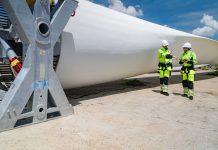
Although wind power is the fastest-growing energy source, in many instances the skills required to move components to the project site have not kept pace. Wind power components are not your typical shipments, after all. If you are responsible for the construction of a wind farm, you want delivery of all components to be made on time and on budget, as well as eliminating downtime due to equipment shortages. And as the manufacturer you want your product to arrive quickly, intact, and fully functional, with the shortest effective hold times on inventory in order to improve your cash flow.

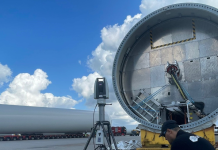
Transportation now accounts for at least 25 percent of the wind power supply chain. At the same time logistics is becoming more challenging as the size of the equipment grows, especially the blades, thereby increasing project expenses. Then there are supply chain constraints caused by general equipment availability and transport capacity, especially in the United States. In 2010 equipment shortage is expected to be one of the most critical challenges for the wind power industry. There will not be sufficient equipment dedicated to wind power to erect all the planned windmills—and not only in the United States, but worldwide.

Project moves vary both in terms of complexity as well as the challenges they present. The last leg, resulting in delivery to the job site, is often the most critical. When shipments enter congested ports they are exposed to double handling, poorly coordinated transportation to the job site, and infrastructure issues such as roads that are not completed, or even paved. This means that every step, from the manufacturing point to final delivery, can be a major logistical issue. That also means that the challenges facing logistics managers can be daunting. So what do you do?

Wind farm developers have had three options when sourcing the movement and erection of their wind farm equipment: work with the manufacturer, which may charge more for the move; outsource to an EPC contractor that generally sources from different places; or go to a number of resources and handle it piecemeal. When BDP Project Logistics analyzed the wind power market, we often observed a lack of coordination within the supply chain, especially concerning transportation. Frequently, there was not a single point for coordination or monitoring.

Looking at the wide range of specialized services required to move components and equipment, and the rising costs of project logistics, a practical option for many developers is to work with an outside, non-manufacturer resource. The benefits of working with a project logistics management company can be many. They include having a resource that can get the equipment you need when you need it; minimize shipping and inventory costs; and monitor performance to ensure that project milestones, budget, construction quality, and specific performance parameters are met. Ideally this company provides consultation, coordination, project and cost planning, and end-to-end accountability—one that focuses on solutions, in other words.

This resource should handle all interfaces involved in moving an entire wind farm from production plant to jobsite within a fixed schedule, managing the sea, air, and inland stages, avoiding detentions and double handling at ports and, if necessary, moving the shipments to an intermediate storage location. An independent, non asset-based resource is not interested in drawing out the process or providing equipment that is not needed, and the more global the project logistics company, the wider the capabilities and sourcing options. In-country staff or partners can neutralize local language barriers, take the guesswork out of meeting customs and other governmental regulations, and also cut any red tape that may be encountered. As some projects are in remote areas, unique technical skills are often required. In addition, the latest technology is required on some projects, as well as equipment that is tailor-made for a particular project.

While still somewhat unique, a limited number of project management companies have civil engineering experience. Such a resource can offer road surveys and consult on infrastructure issues, providing preliminary road infrastructure and building bridges, roads, and foundations if necessary. As the wind industry continues to expand, logistics professionals are evolving to match that growth.

Company Profile: DMI Industries, Inc.

0

It has been said that when one door closes, another one opens. For DMI Industries that door opened wide in 1999, when it was seeking to grow beyond its agricultural roots into new markets. “We had an opportunity to quote on fabricating and welding some large steel frames that were about the size of an automobile,” according to Belinda Forknell, who is in charge of marketing and public relations for the company. “We later discovered that these objects were the bed frames that are mounted on top of utility-scale wind towers. While we didn’t land the order, that experience set us on the path toward manufacturing towers for the wind industry, and I guess you could say that the rest is history.”

Founded as the Dakota Machine Tool Company in 1978, focusing on machine tools and reconditioned equipment for resale, it shifted to custom manufacturing in 1986, the next year beginning to produce sugar-beet pilers and then sugar diffusers. Although it had capitalized on the sugar-beet boom of the late eighties and nineties, once that market began to shrink it started searching for a new direction, resulting in its serendipitous entry into the wind-energy market. Over the past decade DMI has worked hard to earn its reputation as one of the most trusted wind-tower manufacturers in North America. “We have fabricated towers for nearly every major wind turbine OEM in the world, in fact,” Forknell says. “And that’s a lot of towers.”

They are constructed at three DMI facilities—West Fargo, North Dakota; Tulsa, Oklahoma; and Fort Erie, Ontario—representing 770,000 square feet of manufacturing space and employing approximately 500 individuals in total. Strategically located, these facilities are found within 500 miles of 75 percent of the nation’s wind farms, and the company’s acquisition by the Otter Tail Corporation in 1990 bolstered its entry into the wind-energy market at a time when it was building momentum throughout the United States and Canada.

As part of its due diligence company officials asked pertinent questions such as who are the potential customers, and where are they currently obtaining their towers? With most being built in Texas and the Southeastern U.S., they quickly realized that their location was much closer to where most farms were actually being built. Its experience in manufacturing large metal parts was also an asset, and after meeting with an OEM that required 14 towers for a project in Wisconsin on a tight schedule, DMI landed its first wind-tower order.

Since that time the company has continued researching the wind industry, staying abreast of developing requirements, technologies, and opportunities to help its customers reach their professional goals. “We are constantly working to gain insights and develop new processes that make it possible for us to deliver towers of the highest quality to our clients,” Forknell says, “and our annual production capacity currently supports about 3,000MW of wind-derived energy being delivered into the power grid.”

In securing its reputation as an industry leader, the company utilizes its manufacturing team in developing exclusive DMI-engineered technologies while following a rigorous system of quality controls to manufacture high-tech towers equal to the incredibly demanding specifications required by the wind industry. DMI relies on the highest-quality, cleanest steel plate for secure and dependable welds, form-fit flanges for the highest performance in the field, advanced coatings to withstand the toughest environments while providing smooth contours, and rigorous checks and balances to ensure that the highest standards are being met by all of its material suppliers. In addition, it provides logistical support so that deliveries are made on schedule, thereby contributing to a project’s overall efficiency and cost effectiveness.

Just as its home within the Otter Tail Corporation family has strengthened its activities in the wind industry, DMI provides reciprocal benefits to its parent company as well, sharing valuable insights with its sister entity—the Otter Tail Power Company—that will help it realize its goal of acquiring 18 percent of its total energy portfolio from wind in 2010. As is the case with any successful manufacturer, however, its focus remains on its customers.

“Our goal is to help them lower manufacturing costs, to provide them with stronger, more-reliable towers, and to eliminate extra work during assembly at the project site. We believe that by manufacturing and delivering quality towers that hold up over time and in demanding environments, we’re actually decreasing the long-term costs of wind-farm ownership,” Forknell says. “And that’s something that we take very seriously.”

For more information:
Call (800) 669-0988 or go to www.dmiindustries.com.

Densification of loose material prior to tower construction is often required at wind-farm sites

0

Planned sites for wind turbine towers are sometimes underlain by loose, granular soils such as sands, gravels, or mine spoils, which can produce static, dynamic, and seismic foundation challenges. These challenges include excessive settlement, low bearing capacity, and liquefaction or lateral spreading. Densification of loose, granular material prior to tower construction is often the most cost-effective solution to address these issues. Densification methods include vibro-densification, vibro-displacement, compaction grouting, and dynamic compaction, described in this installment.

Dynamic compaction (DC)—also referred to as dynamic deep compaction and impact densification—is likely the oldest soil improvement process, with documented examples of DC used during Roman times. Thousands of sites have been treated with DC worldwide, including wind farms. The process consists of repeatedly dropping a heavy weight on the ground surface to impart stress waves to compact soils at depth. Typically, a standard crane is used to drop 5- to 30-ton weights from heights of 20 to 100 feet. Weights typically consist of hardened steel plated or box-steel and concrete. The impact points are distributed on 5- to 20-foot centers in a regular pattern determined by the subsurface conditions and the foundation loading and geometry beneath the foundation footprint and a perimeter area. Depending on the subsurface conditions and energy imparted to the soil, densification can be achieved to depths of 30 feet or more.

Although the process appears simple, experience is required to understand the capabilities, limitations, and risk factors associated with the DC technique. The soils that are most improved by DC are those with high permeability and low plasticity, including sand, gravel, some non-plastic silt, and granular mine spoil. The technique is also effective at densifying collapsible soils, which are soils found in the western U.S. that undergo large volume reductions when they become wet. Clayey soil, which deforms slowly with loading, is not a good candidate. In addition, thin clay layers within a granular profile can absorb the DC energy, preventing the energy transfer to underlying loose soils. A thorough geotechnical investigation is critical in determining the design parameters.

The depth of densification depends on the soil type and the energy applied. Repeated drops only increase the degree of densification within the treatment zone, not the depth of influence. To increase the treatment depth, the energy level must be increased by increasing the drop weight and/or drop height. Dynamic compaction densifies loose deposits of windblown sand at a planned wind power farm. Prior to selecting DC for ground improvement, existing nearby structures must be evaluated for vibration sensitivity. The ground vibrations associated with this technique can result in foundation settlement, slope instability, and adverse affects on vibration sensitive equipment and structures. For this reason DC is generally restricted to remote sites, a common feature of wind farm sites. As with every ground improvement project, a quality control program is essential to confirm that the required improvement has been achieved.

During the DC process the height, location, and number of drops are recorded, and crater depth, adjacent ground surface heave, and pore pressure are observed. After DC the degree of densification can be measured with standard penetration testing (SPT), cone penetration testing (CPT), pressuremeter testing (PMT), dilatometer testing (DMT), or other in-situ testing methods. The densification is permanent and the foundation design on DC improved soil is the same as if the soil were naturally dense. Determining the required weight, drop height, impact grid dimension, and number of passes is often the responsibility of specialty contractors, who rely on years of experience to determine the most efficient configuration. In addition, there are many safety issues associated with this technique, which are also addressed by the use of an experienced specialty contractor. The large number of DC projects completed has resulted in its capabilities and limitations being well defined. A mat foundation bearing on soil densified by a properly designed and performed DC program is an efficient and economical alternative to full soil replacement or deep foundation systems.

Thinking Outside the Gearbox

0

The wind industry is currently moving at an incredible pace, despite restrictions mainly having to do with legislative issues. As with anything else, however, that rate of growth will ultimately be governed by technology. Those present at WINDPOWER 2009 in Chicago, hosted by the American Wind Energy Association, saw an incredible show featuring juggernauts such as GE all the way to individuals with new inventions or innovative ideas. Those with problems, and others with solutions, were in the same building, and therefore able to discuss their shared concerns. Among those attending for the first time was Windera Power Systems, Inc., which has developed innovative technologies of interest to the wind industry.

If you travel to Palm Springs, California, and take a drive through the Coachella Valley, you will notice thousands of wind turbines. Something else you may notice is that many of them are not operational. This is because the turbines are broken down, and the brakes are on in order to keep the blades from spinning out of control. If you were to ask the wind farm owners what the problem is, the answer would most likely involve gearboxes. That’s the reason they have extracted problematic gearboxes and set them on the ground in what resembles an automotive graveyard (see Fig. 1).

In fact, this is a problem with wind turbines worldwide. When we ponder wind turbines, we think of cutting-edge technology or future energy. Amazingly, what’s holding this technology back is a component based on technology that’s hundreds of years old: the mechanical gearbox. In other words, the technology of today that is responsible for powering tomorrow is being thwarted by a mechanism that was used by Leonardo Da Vinci. While current gearbox technology is much more sophisticated than those used in Da Vinci’s first machines in the 1400s, of course, it relies on the same fundamental principles of mechanics. Even more astounding is the fact that the problems that he encountered are the same ones we’re dealing with in the wind turbines being built today. There is simply no getting around the fact that a mechanical gearbox creates friction and, as a consequence, heat. In short, it wears down until it eventually fails. The more moving parts to a machine, the more problems one will encounter. These principles, while straightforward, are still the primary culprit that impedes the advancement of wind turbine technology.

Let’s get back to all those turbines standing erect and motionless, not generating any power, and simply wasting away. While wind farm owners can opt to repair the gearboxes and get those turbines up and running for another five or so years, it doesn’t make financial sense. They will have to continue this process, and they will lose money in the long run. That’s where Windera comes in.

Richard Burt, the company’s CEO, developed the technology to solve these problems while working in the solar industry. He saw these turbines in question and discovered the California re-power market. With so many turbines being repaired or overhauled, and countless others wasting away, there is immense potential in implementing this technology to get the wind farm owners back to producing power, and even more efficiently than before. After much work, Burt developed a drivetrain that makes sense for many reasons, one being that there is no gearbox. With this drivetrain design he developed Windera Power Systems, and he continues working to change the wind-energy landscape.

The Windera technology is based on a dynamically controlled, air-cooled, direct-drive, variable-speed hydraulic drive train. This enables the system to deliver ultra-stable AC frequency, voltage, and conditioned power at high efficiencies over a wide range of wind and grid conditions without the use of complex and expensive power inverters. The turbine’s rotor is connected directly to the hydraulic pump in a “direct drive” configuration, which eliminates the need for a gearbox (see Fig. 2).

The design also features a remote monitoring system. Throughout the entire assembly there are various controls and detection devices that monitor temperatures, pressures, and speeds. This information is processed by a CPU and can be remotely sent to headquarters. Windera can monitor this information and contact the owner with any issues that may come up. This means that developing problems are detected immediately, with preventative maintenance information sent to the owner long before costly damage can occur. Another important feature of this particular system is that the unit can be installed down-tower in an enclosure (see Fig. 3).

In other words, Windera can actually link the blades and rotor shaft to the hydraulic pump and, using hydraulic lines running through the tower, link the system with the generator and controls systems on the ground. It’s easy to imagine the cost and time savings this system generates with no more elevators, cranes, or technicians scaling towers to service a single turbine.

The number of kilowatt-hours a wind turbine generates is primarily determined by the average daily wind speed of where the wind turbine is located. An interesting fact about wind energy is that, for up to a third of the year, turbines produce very little usable electricity because the wind speed is near or below their start-up, or “cut-in” speeds, and considerably lower than the rated speed at which they operate most efficiently. As an example, many of the older classes of wind turbines don’t start producing usable electricity until wind speeds reach 10 mph. In many areas wind speeds remain below this level for as much as a third of the year, which means these turbines will only produce usable electricity for two thirds of that time period. In contrast, the Windera system will begin producing usable electricity as soon as the wind is capable of rotating the wind turbine blades, which is approximately three mph. Windera’s advanced design enables power generation at a greater range of wind speeds as compared to conventional wind turbine generators, and as a result can increase power production and wind farm revenues by up to 25 percent or more.

From the first day a turbine is operational there is stress on the assembly from wind. The stress put on the gearbox, driveshaft, and bearings has an obvious negative impact on the lifespan of the turbine. This stress is magnified when the turbine is not operating under “optimum conditions.”

Gearboxes are constantly under duress due to their mechanical nature and the fact that they are not variable-speed. As wind speeds change, stress is put on the gearboxes in the form of friction. As any mechanic knows, friction is the primary nemesis of mechanical machines, from car engines to wind turbines. The stress can also overload the generator and destroy the turbine over time. This is why most turbines last for about five years and usually have a one- or two-year warranty. However, with the Windera drivetrain, all of the excess forces generated by the turbine are converted into heat, although not through mechanical friction. The heat, which is in the hydraulic oil, is cooled with heat exchangers. This heat can be dissipated through the rear of the turbine via fans, or if someone has a use for the heat, it can be harnessed and re-used. Such is the case when the heat is utilized in refractive chillers to heat a building, or in any number of other applications. The fact that the excess heat can be dissipated allows for the amount of power going to the generators to be precisely controlled. This is conducive to the length of the life of the generator and to precise power output control, which not only enables the smooth startup of power delivery to the external electric system, but also allows the control system to prevent spurious power delivery in the case of shutdown due to blade failure, for example. Finally, the system allows for field upgrade opportunities. A machine may be built with the capability of producing more power, but limited to meet certain regulations (e.g. limits on net metering). If those regulations change to allow more power, the software can enable more output power. The drivetrain can be retrofitted into existing turbines such as those found in California, or it can be utilized in new ones. A wind farm owner can now have a turbine that’s more efficient, has lower maintenance costs, and provides a lifespan of 15 to 20 years.

While there are a number of direct-drive designs in the industry, Windera strives to offer the most efficient and logical choice. The company is in the business of eliminating technological barriers that impede progress in the wind energy industry, and to push the boundaries of efficiency and innovation in creating clean energy. Since less than one percent of the electricity consumed in the United States is currently produced by wind, there is a tremendous opportunity for growth, which will require constant innovation. For every challenge that arises in the field of renewable energy, Windera will continue seeking solutions that make both financial and technological sense.

Torque Certification Marks Maintenance Advances

0

When people think about windpower generation, the first thought usually extends to the blade cutting through the breeze, the aerodynamic turbine capsule, or the 300-foot tower. Torque and its precise measure of fastener tension is the last thing on anyone’s list. But when it comes to ensuring that those giant blades keep turning and the ubiquitous towers remain standing, torque really is the most important component in the mix. And that’s why Snap-on Industrial, in conjunction with education and industry partners, has spearheaded a torque certification training program as part of a technical school or junior college curriculum. As a result of conversations about training requirements with representatives from industry segments that range from auto repair to renewable energy, Snap-on Industrial representatives actively engaged wind-industry experts about specific skill requirements for the next generation of workers. And in many of those conversations, safety and torque were at the forefront of training issues marked as critical—whether that’s preparing young workers new to the workforce, or retraining workers from industries hard hit by the economy for jobs in windpower maintenance.

Defining Torque
Torque is the twisting motion used to tighten or secure a fastener. The amount of force used in a particular task is measured in Newton meters or foot pounds. The Snap-on Industrial torque certification program explores both torque theory and proper use and application of equipment. Testing for the certification focuses on equipment use. (see Fig. 1)

The understanding and proper application of torque is a mission-critical element of a viable and sustainable windpower industry in the United States. Industry leaders know that strong training programs are necessary to meet the burgeoning demand for manpower. Government and industry estimates put the manpower requirement for professional windpower technicians at more than 180,000 by 2030, when windpower is expected to provide 20 percent of the United States’ electric power (statistics from the U.S.

Department of Energy study, 20% Wind Energy by 2030, May 2008). Currently, there are about 30,000 windpower technicians working in the U.S. The curriculum is straightforward and understood by all those who work in industrial settings or industries such as wind. It’s a step-by-step program outlining what a bolt is, how threads impact the strength of the attachment, which materials work together, and which ones don’t.

The examples are simple: When you take a grade-eight bolt and put a grade-five nut on it, you can no longer torque the bolt to the same torque levels as when you use a grade-eight nut. There is a difference in heat treatment, and a difference in strength between the fastener grades.

Training explains the differences between various fasteners and shows participants how to determine fastener grades. And there are different kinds of torque equipment, as well, including mechanical torque, electronic torque, and what’s referenced as high torque; a pump that uses hydraulic fluid and air to accomplish the torque value required. For one-inch bolts and larger fasteners, that’s 5,000 psi and up.

The aim of the training program is to ensure that the worker knows that when he’s putting a flange together there’s a sequence for the bolts, there’s recognition about the type of bolt used, and there’s a specific torque value for that bolt. These workers need to know the proper torque sequence and how to apply the same amount of pressure on each fastener so that a strong attachment of the flange is achieved. Using the correct procedure for flange attachment, the piece is torqued two or three times before it gets to maximum torque. It’s not like a car, where the technician may torque a bolt on a wheel to maximum value only once. In an industrial setting or in the wind industry, tolerances are such that a given piece may require torquing up to five times for a single bolt. Workers need to know that if you don’t follow this process, you could create a gap on one side of the flange or another that allows a leak or oxidation. (see Fig. 2)

Torque certification is built around certifying that workers understand the technique of torque and the consequences of improper torque application. For example, they need to know when and when not to put oil on bolts or to use of a seizing material when working on a gasket. In applications that require a gasket, it may be necessary to pre-torque the bolt before a liquid additive is applied and final torque application is made. Many times auto technicians diagnose component problems; they may have to remove the part and replace it. It’s critical to apply manufacturers torque specifications to help ensure that the vehicle doesn’t return with the same problem because of an incorrect torque value.

Professionals in the windpower industry, and other industrial segments, learn on the job and may not have been taught properly from the start. It’s the job of technical education professionals working with industry leaders to show them the right way to torque a fastener.

Taking Shape
Working with partner schools that already have training programs for automotive technicians, Snap-on representatives talked about torque certification courses tied to the expressed needs of other industries, particularly the wind industry. This group of colleges provided technical instruction expertise and facilities, while Snap-on Industrial and its partners brought comprehensive theory, real-world application knowledge, technical experts, and equipment to the table. The result is a melding of academic culture, field knowledge, and world-class technologies focused on best-practices for fastener use. (see Fig. 3)

The group even looked outside the U.S. for guidance. In the province of Alberta, Canada, Lethbridge College is working with European partners to expand upon its popular and growing wind technician training program. Instructors there have stated that there are three core maintenance requirements in the turbine and on the tower that they preach: lubrication, cleaning, and torque. That’s it. Finally, there are monetary interests in all of this training. States have both a social and an economic incentive to support these training programs, which will retrain displaced workers and attract new investment to the state. To ensure that a healthy environment for retraining and reinvestment exists, the technical education system needs to be in place so that when companies come forward, the infrastructure is ready. Windpower is clearly a growth industry since the U.S. has reached only 5 percent of its goal objective for energy derived from wind to date.

The Program

The 16-hour torque certification course is designed as a component of an existing windpower technician training course, but the program is flexible enough to be applied as a standalone course. The curriculum includes modules on theory, technique, mechanical torque wrenches, electronic torque wrenches, hydraulic torque wrenches, torque multipliers, and safety. The program covers every aspect of torque, from the basics through master-level skills. Current standard windpower technician curriculum incorporates study of electrical and electronic components, electrical safety, working in confined spaces, and working at height. The Snap-on torque certification program is integrated into windpower technician courses currently available at Lakeshore Technical College in Cleveland, Wisconsin; Gateway Technical College in Kenosha, Wisconsin; and the multi-campus Frances Tuttle Technology Center in Oklahoma.

Completion of this course gives participants an advantage over others who do not opt for torque certification. These workers can go anywhere, into any industry, and immediately show that they have the skill set necessary to perform certain kinds of jobs. It’s like having a college degree and being considered for a job along with someone who has no college training. There’s no comparison.

Summary
Torque training in the windpower industry is part of an ongoing, sustained American effort to tap renewable energy sources in the years ahead. Site selection and building the mechanisms to harvest wind and solar energy is important. But it does not supersede—and in some ways is subordinate to—the requirements for ongoing maintenance and support. Maintaining necessary structures over a long period of time falls to the knowledge and skill of trained professionals, technical personnel who know how to use tools to prevent small issues before they become production stoppers. Torque certification plays an important role in developing those skilled technical professionals.

Laser Measurement for Tower Flanges

0

As any wind professional knows, the towers supporting massive turbines are far more complicated than they might appear from the ground, requiring incredibly precise manufacturing techniques and practices. Made of rolled steel segments attached by flanges, these increasingly tall tubular structures demand flanges that meet very tight flatness and parallelism tolerances.

Manufacturing the flanges is difficult enough, but many have also found difficulty in accurately measuring the flatness or quality of the flange. Achieving geometrical correctness is made difficult by the manufacturing methods used. During the welding of the flange segments and storage of the sections, tension and/or stress can be induced. This stress can change the dimensional characteristics of the flange/segment, making it out-of-spec and therefore rejected. This condition then requires additional labor and machining to correct the problem, driving up costs and delaying the schedules. The ability to detect and ultimately correct these geometric features ensures a faster production schedule, better quality, and a trouble-free assembly as it was designed, along with happy customers. Up to now 19th century tools were used to measure flatness on these flanges, utilizing a straight edge or tight-wire and feeler gauge. This is no longer acceptable, and proper instrumentation is required. Thus began the search for new measuring methods and techniques to be able to combat these problems.

Based in Germany, Status Pro® has developed a new and unique laser system enabling geometrical measurement as required by the wind energy industry. The ultimate goal was to develop an easy-to-use yet highly precise measuring system, enabling the user to obtain the information needed quickly, accurately, and with excellent documentation. The result is a universal system capable of measuring a wide variety of geometrical features on many different components.

The System
The T330 laser transmitter essentially consists of a rotating laser-prism unit integrated into a sturdy housing. The laser produces a 360-degree “plane of light” instead of a dot. The functions of the rotating laser unit can be remotely controlled via infrared communication that is built into both the laser and the R310 receiver. In other words, the setup of the laser plane is achieved automatically.

With its 80mm range, the R310 receiver is the largest sensor in the industry. The measured readings will display the height of the laser plane using an onboard LED display, and it will also send the results to the DU310 handheld display unit via Bluetooth. Measurements are recorded as fast as you can move the receiver and push the button. As already mentioned, the flow of information is completely wireless, making cables a thing of the past and reducing the resulting downtime by providing real-time results on the handheld PC.

All the system components (Fig. 1) use either disposable batteries, rechargeable batteries, or AC power. There are various accessories that can be added to the system allowing the measurement of almost any geometric application required: precision leveling, flatness, straightness, parallelism, bores, and so on.

Laser Flange Measurement

Flanges are essentially joints, so they must be machined properly in order to avoid tension during or after coupling, and also to ensure water tightness of the coupling faces. Achieving geometrical correctness is made difficult due to the manufacturing method. During the welding of the flange segments together or during storing of the sections, tension and/or stress can be induced. The ability to detect and ultimately react to these dangers ensures a trouble-free service life. Many people have had to rely on straight edges and feeler gauges to accurately measure flatness on their flanges. This method is fine as long as the objects are smaller than the straight edge, but with segmented, chained, or overlapping measurements the problem of surface waviness arises. This created the need for modern measurement tools, methods, and techniques to be able to combat these problems in a fast and easy way. Using a rotating laser, it became possible to measure the entire flange against a constant reference; an ultra-flat plane of laser light (Fig. 2).

First, mount the laser directly on the flange or beside it using a tripod, allowing the laser beam rotation to effectively produce a laser plane. With a R310 receiver you are able to measure the distance between the flange surface and the laser plane very accurately.

Traditionally, the laser plane has been manually adjusted to parallel at three points on the flange, and those points become “zero.” This method is very time consuming and relies on the skill of the two people during the setup process. Manual calculations are also involved to achieve parallelism.

A preferred method is to simply allow the laser to rotate 360 degrees, thus producing an ultra-flat plane of laser light. This method is much quicker with the use of a PC and the appropriate flange flatness software. With modern systems this can be achieved onsite very quickly and in real time. Older systems measure first, then you have to transfer the data to a separate PC for evaluation, and then a report has to be generated.

Measurement Layout/Results
Status Pro’s goal is to make the measuring equipment simple to handle yet as precise as possible, and to ensure speedy measurements (Fig. 3). Simply set up the laser as described, scan all the points to be measured in any order, and record the results. The measurement of a flange with 104 holes takes around 25 minutes to complete, which includes the time it takes to set up the system. In the case of a measurement error, a single point can be remeasured at any time without having to repeat all of the previous readings. The results are directly displayed in 3D (Fig. 4), 2D (Fig. 5), or as a chart format.

Another feature of the program is a well-arranged measurement report in PDF format, and the data can be transferred as a CSV file into other types of software for further analysis if desired. Consequently, evaluation of the raw data is possible with most programs and applications.

An additional highlight of this system is “expandability.” In other words, with the aid of a second sensor, the system can be used to measure the parallelism of two flanges (Fig. 6). Hence, the flanges at both ends can be measured for evenness and parallelism with the appropriate documentation.

In addition to measuring flanges, the system is also able to level surfaces such as foundations and base plates. Utilizing the integrated “self-levelling” feature, you are able to measure objects in much the same way as you do a flange. Just push a button and the T330 laser levels itself within 0.025mm/meter. Then use the R310 receiver to scan and record the points to be measured. Using the LED display on the receiver makes a PC unnecessary. Measurements with spirit levels, cumbersome straight-edges, and tight wire and feeler gauges are a thing of the past. Propeller hub and the blade flanges can be measured in the same way, enabling detection of problems that could arise during the machining or assembly process.

Even quite complex arrangements of more than one object can be measured and documented thanks to the innovative software. Fig. 7 shows the measurement of the tower head assembly.

The base frame is a vital part of the tower, and it is also subject to twisting during the welding process. Locating and supporting surfaces (gearbox-to-generator) can be measured and documented very quickly. If twist or tension is identified in time, actions can be taken to prevent damage or problems during assembly, ultimately prolonging service life.

Concrete Proof: The Majestic Wind Farm

0

As of January 2009 Texas is the nation’s number-one producer in megawatts of installed utility-scaled wind power, with a total of 7,116 megawatts. As a result of the growth in Texas wind farm development, Mortenson Construction and Brundage-Bone Concrete Pumping have seen an unbelievable boost in wind farm projects.

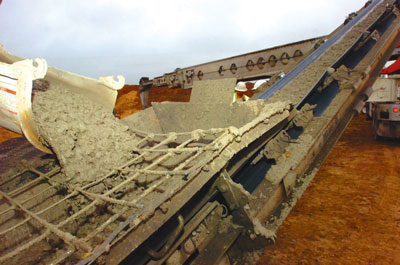
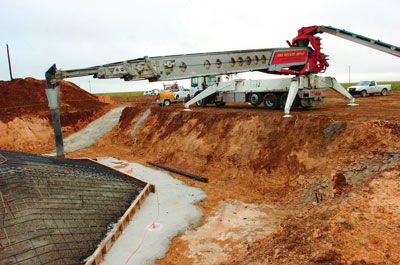
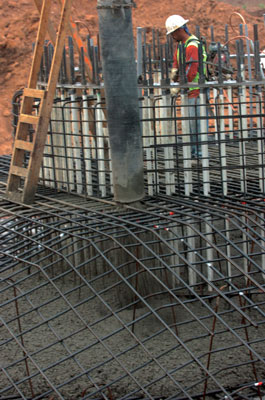
Mortenson and Brundage recently worked together on the Majestic Wind Farm project in Panhandle, Texas, where Brundage’s Putzmeister Telebelt® TB 110 telescopic belt conveyor delivered 18,000 cubic yards (13,762m3) of concrete for 53 wind turbine foundations and pedestals. (see Fig. 1)

Farm Forecast

The United States is the world leader in wind electricity generation. As of September 2008, wind provides 20,152 megawatts of its electrical capacity, which is enough electricity to serve 5.3 million U.S. homes. This is the electricity-generating equivalent of 28.7 million tons of coal, or 90 million barrels of oil.

According to the American Wind Energy Association (AWEA) the U.S. wind energy industry installed 5,429 megawatts of new wind capacity in 2007, crushing all of its previous records. In 2006 a record 2,454 megawatts of new capacity was installed, according to the U.S. Department of Energy in their Annual Report on U.S. Wind Power, Installation, Cost, and Performance Trends: 2006. This expanded America’s total wind power generating capacity by 45 percent in 12 months. This record also brought an investment of more than $9 billion into the economy.

Even though Germany has more generating capacity installed (about 23,000 megawatts), the United States is producing more electricity from wind because of its much stronger air currents. AWEA announced on its Web site in January 2009 that a record 8,358 megawatts of new wind capacity was added in 2008 in the United States, again crushing all of its previous records. 2008’s installation of new wind capacity expanded America’s wind energy fleet by 50 percent, bringing total U.S. capacity to about 25,170 megawatts. Texas takes the number-two spot next to first place North Dakota for wind energy potential.

A study by the U.S. Department of Energy showed that wind could provide 20 percent of U.S. electricity by 2030. This would in turn support 500,000 jobs and reduce greenhouse gas emissions equal to removing 140 million vehicles from the road.

Natural Growth

According to Mortenson, the general contractor for the project, the development of the 79.5-megawatt Majestic Wind Farm is part of an initiative by Xcel Energy to supplement its traditional power for the Amarillo, Texas, area with renewable energies.

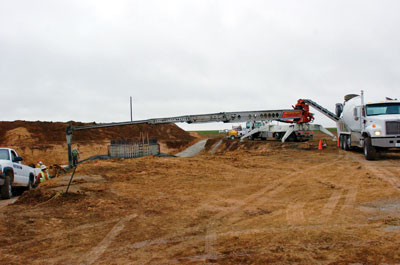
Xcel is a leading combination electricity and natural gas energy company that offers a comprehensive portfolio of energy-related products and services to 3.3 million electricity customers and 1.8 million natural gas customers. Mortenson had six other wind turbine projects going at the same time as the Majestic Wind Farm. (see Fig. 2)

“At Brundage we’ve had a steady amount of wind turbine projects in the Texas area,” according to Ross Finnestad, branch manager of the company’s Oklahoma City and West Texas branches, a subcontractor on the project, “and we don’t see it slowing down anytime soon.”

Project Pressures

The aggressive schedule was perhaps the most challenging part of this project, especially when Mortenson was coordinating with several different landowners, municipalities, and utility contractors at one time. The Oklahoma City-based Brundage team arrived on site in late July 2008 and was hired by Mortenson to convey 18,000 cubic yards (13,762m3) of concrete for 53 wind turbine foundations and pedestals by early fall 2008. Mortenson’s experience with both the Brundage team’s expertise and their line of Putzmeister Telebelts is what led them to working together again on the Majestic Wind Farm.

“A typical week on the job included early morning pours for the foundations and pedestals that started at two a.m., Monday through Saturday,” Finnestad says. “Usually it would be a 10-hour day. We conveyed concrete for two foundations and two pedestals six days a week, and the Telebelts made what could have been a grueling job more efficient. The purpose of the foundation for a wind turbine is to give the tower stability below the pedestal, which connects it to the tower. The tower rises skyward to support the turbine where the wind will turn its blades, generating as much electricity as possible.”

Larger turbines weigh more, requiring larger towers that demand larger foundations and pedestals for support. “There were about 300 cubic yards (229m3) of concrete conveyed by our TB 110 for each wind turbine foundation and pedestal combined,” he says, “with 270 cubic yards (206m3) of concrete conveyed for each foundation and 30 cubic yards (23m3) for each pedestal. (see Fig. 3)

“The TB 110 proved to be an invaluable asset on this job. Given the tight time constraints for this project as well as the budget, we needed a machine that could be easily operated by one individual to reduce the amount of workers we needed onsite. Production from the TB 110 was outstanding,” Finnestad says, “and it met every need we had for the project.”

Concrete placement for the Majestic Wind Farm occurred during the hot Texas summer, which made the use of the TB 110 even more beneficial. According to Mortenson, using the TB 110 to place the concrete eliminated the possible hose, pipe, or slickline problems that could have been encountered if they had used an alternative method to place the concrete. Because of the heat, the chances of clogs occurring in a boom pump end hose, for example, is much more likely. This not only causes a decrease in production, but also invites the potential of having cold joints occur in the foundation of the concrete. Mortenson’s use of Brundage’s TB 110 prevented these issues.

The TB 110 features a 106’ 1” (32.34m) horizontal reach. Finnestad also notes that the TB 110 conveyed the concrete smoothly, rising easily up the feed conveyor to the main belt from which it was delivered precisely where needed. “We had to move the Telebelt from one foundation and pedestal to the other for all 53 wind turbines so the quick, easy setup and teardown of our TB 110 made for a seamless process in moving to the next foundation,” Finnestad says. “We were able to set up the Telebelt in one location for each foundation and pedestal placement, and we were able to reach every spot where the concrete needed to be conveyed with the quick, telescoping action of the four-section boom.”

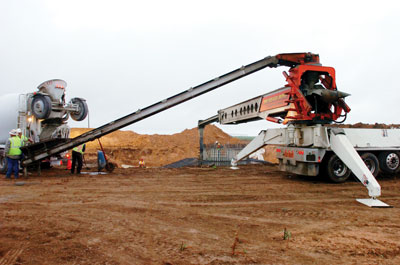
The standard folding hopper also contributes to making setup a breeze on any site, including the Majestic Wind Farm. “The side panels of the folding hopper fold into the feed conveyor and the end panels connect with linchpins,” he adds. “The belt can easily be fed by a ready mix truck from three different sides of the hopper, if necessary. The fast placement of the concrete at more than 100 cubic yards per hour (76m3/hr) and the minimal cleanup were added advantages that kept the project moving ahead.”

The Oklahoma City branch of Brundage has five TB 110s, one of which was used on the Majestic Wind Farm. Brundage has a total of 64 branches throughout the United States, with the corporate offices located in Denver, Colorado.

Maximum Mix

According to Craig Snell of Amarillo-based Golden Spread Redi-Mix, Inc., the concrete mix for both the foundation and the pedestals was a basic 5,000-psi (345 bar) mix. The only difference between the two mixes was the pedestal concrete mix included 4.5 percent air entrainment whereas the foundation mix did not. “The pedestal concrete mix included the air entrainment because the pedestals are exposed to freeze/thaw cycles, whereas the foundation is not,” he says. “The air entrainment creates tiny air pockets which allow for the expansion and contraction of moisture during cold periods, when water may have migrated into the concrete mass.” (see Fig. 4), (see Fig. 4a)

A division of one of the world’s most well-recognized and respected heavy equipment manufacturers, Putzmeister Concrete Pumps GmbH and Putzmeister America, Inc., manufactures a complete line of truck-mounted concrete boom pumps, separate placing booms, truck-mounted telescopic belt conveyors, and trailer-mounted concrete pumps as well as mortar, grout, shotcrete, plaster and fireproofing pumps and mixers, industrial pumps, and tunneling machinery (see Fig. 5). Some of the industry’s best-known brands—such as Allentown Shotcrete Technology, Thom-Katt®, Powercreter®, and Telebelt®—are part of the Putzmeister America family (see Fig. 6). The company’s workforce is dedicated to hands-on customer support and advancing the industry in design and technical innovation.

Optimizing Design to Maximize Profitability

Wind energy has the potential to make a major contribution toward solving the world’s energy problems, but it faces significant obstacles in improving its efficiency to the point that it can compete with fossil fuels. More mature industries, including the fossil fuel based electric power generation industry, have spent many decades evaluating different design alternatives and relentlessly focusing on those that provide the best economic performance. Being a relatively new industry, wind energy has not had the time to climb this far up the learning curve. Barring a major technological breakthrough, a key challenge is that the people in charge of the major aspects of wind turbine design—site, tower, blade, and generator design, etc.—move toward their own goals, but don’t usually have the information or tools to consider the impact of their choices on other important objectives.

This article will describe a new approach called Multidisciplinary Design and Optimization (MDAO), which links together the tools used in every aspect of wind farm and wind turbine design to explore all of the various interrelated alternatives and iterate toward a design that optimizes profitability. MDAO can be used to develop a high level view of the complete wind farm design by considering each of the major systems as a black box. It can also be used to address detailed design issues by incorporating high fidelity computer aided design (CAD) of the entire wind farm and turbine, or whatever parts that it makes sense to model. This approach can help the wind energy industry quickly make up for its relatively recent start by rapidly evaluating huge numbers of possible design alternatives to make rapid improvements in profitability.

Catching Up
The first wind turbine—developed in 1888 by Charles F. Brush in Cleveland, Ohio—had a full load capacity of 12 kW, and it was used to charge batteries. The technology was slow to gain serious commercial attention, however. In the United States there were limited applications for powering rural homesteads that were not connected to the electrical grid. These mostly ended with the growth of government sponsored rural electrification in the 1930s. During the 1950s there was research in Denmark leading to the three-bladed wind turbine, which is the predecessor to the modern Danish turbine. The modern wind turbine industry finally got off the ground in the 1970s as a result of the 1973 oil crisis, leading to a search for alternative means of energy. But the development of wind energy moved slowly for decades, with worldwide installed capacity reaching 10,000 Megawatts in 2005.

(see Fig. 1)

More recently the growth rate of the wind energy industry has increased substantially, reaching an installed capacity of nearly 30,000 Megawatts in 2008. The recent rapid growth of the wind turbine industry has not provided enough time for designs to be optimized by traditional engineering methods. What is needed is a new approach that will enable wind farm and turbine designers to rapidly consider huge numbers of possible alternatives to compress the period of time required for wind energy to quickly compete economically with carbon-based power generation.

Points to Ponder
The ideal wind farm design is dictated by a combination of technology and economics. The goals are usually to maximize energy production, minimize capital and operating costs, and comply with the constraints imposed by the site. There are many different, and often conflicting, disciplines involved in the site design process. The wind farm is typically laid out by considering various site sizes, site layouts, turbine types, and hub heights. Spacing of wind turbines on the site must be considered carefully to avoid unacceptably high wake losses. Of course, the optimum layout for the site is affected by the design of the turbines used on the site, and the optimum turbine design is also affected by the site layout.

(see Fig. 2 )

Likewise, wind turbine designers have the goal of delivering electricity at the lowest possible cost per kilowatt hour (kWh) of energy. Wind turbine blades have many similarities to helicopter rotorcraft blades and share many of their design characteristics. Taller towers increase wind turbine energy production but cost more to build, so this tradeoff must be optimized during the design process. The determination of the airfoil shape and number of blades involves questions of aerodynamic efficiency, component costs, system reliability, and aesthetics that in turn impact the site design. A small generator requires less force to turn, which makes it more efficient at low wind speeds, but it also is less efficient at high wind speeds.

One of the greatest challenges of wind turbine design is that these design decisions and many others interact in very complex ways on the overall profitability of the wind farm. Each of these decisions is typically in the hands of specialists that use a variety of rules of thumb and engineering software. Often, design variables overlap into multiple disciplines. In this case, each discipline typically provides a recommendation that is optimized based on its own analysis methods. The usually conflicting recommendations of different disciplines must be traded off against each other. There is usually no way to simultaneously evaluate the impact of the different design variables on the overall profitability of the wind farm, nor is there a practical method to search the entire design space for combinations of design variables that might provide better overall results.

Optimizing Tradeoffs

The new MDAO tools address this challenge by linking analysis tools used by all disciplines involved in wind turbine and wind farm design in automated processes that are suitable for analyzing large numbers of design alternatives. Once the model is created it can be automatically executed and data transferred from one application to the next, freeing engineers from the time-consuming and error-prone tasks of manual data conversion and data transfer. MDAO tools provide optimization routines that greatly reduce the number of analysis runs required to explore a design space and identify the best design alternative. Multidisciplinary optimization can simultaneously evaluate a large number of designs against a wide range of objectives such as revenues under various wind conditions, initial capital investment, and life-cycle costs. This makes it possible to provide an objective answer to the question of which design is best.

(see Fig. 3)

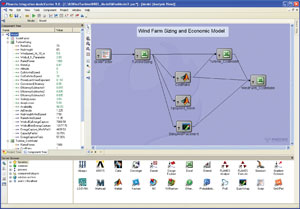
MDAO can easily be applied to the wind farm site design process. The inputs to the model are the wind profile of the site, the price received for power generated by the farm, the geometry of the available site, and the design of the tower, blade, and generator. In this case the tower, blade, and generators are represented by relatively simple black box models that yield their performance as a function of their cost. The question that we are trying to resolve is what number, siting, and type of wind turbines on the site will optimize the long-term profitability of the site while meeting noise and environmental constraints.

(see Fig. 4)

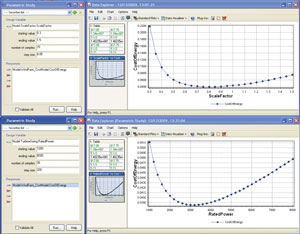
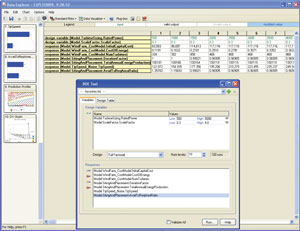
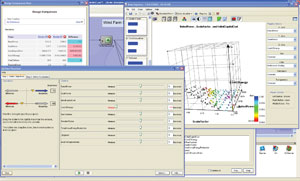
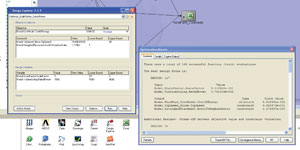
The software initially shows a graphic depiction of the model of the wind farm and lists the various design inputs. The MDAO tool can then be configured to optimize the design. The model is parameterized so that the design variables can be automatically controlled by the MDAO tool. Trade study tools can be used to run the integrated analysis models repeatedly by manipulating these design variables to generate vast data for alternative designs. The design space can then be explored using visualization tools to understand important design trends such as trade-offs between the capital costs and operating costs to produce a specified energy output. When promising designs are found, sensitivity analysis can be performed to identify potential risks and opportunities for improvement.

Fidelity in Design
In the MDAO approach, the major subsystems of the wind turbine were considered as black boxes. This type of analysis would typically be performed as part of the site feasibility study. Later, the fidelity of the optimization process could be increased to optimize the wind turbine design at a more detailed level. MDAO makes it possible to move fidelity forward in the design process, enabling site planners and wind turbine designers to make better choices between alternative design concepts at a point in the process when many critical and irreversible design decisions are made. Moving fidelity forward also reduces product development time and expense by enabling the concept design and detailed design phases to largely be conducted simultaneously.

(see Fig. 5)
(see Fig. 6)

MDAO can advance wind power systems technology by encompassing every aspect of wind farm and turbine design to integrate any or all of the applications used in the design process. MDAO can improve the profitability of wind farms by enabling trade studies that can be used at every stage of the design and engineering process to make better tradeoffs between the many conflicting objectives that are involved in wind farm and wind turbine design.

The Mobile Age of Service Technology

0

An attentive car owner knows his vehicle so intimately that he can easily sense when something isn’t quite right. Whether it’s a small noise under the hood, a drip beneath the engine, or a new squeak coming from the front passenger side door, the relationship with the car is a personal one.

The same can be said of a wind turbine technician. Experienced technicians can tell you with a great deal of accuracy which component is making noise and will soon require replacement simply by listening from the ground level. Just like the car owner, this sort of experience is gained through a close relationship with the equipment they visit every day.

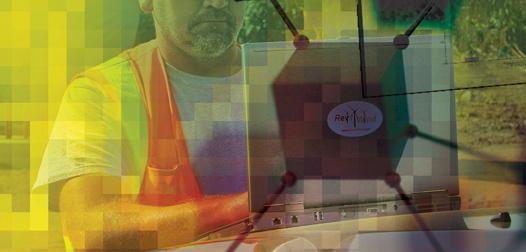
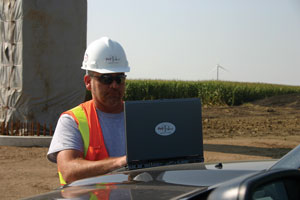
In this environment of rapid growth, how does a wind project owner or operator leverage the available experience and extract the greatest potential from their workforce? Rev1 Wind answers this with a solution that has been an integral part of the utility industry for years: digital information capture. Using subcompact computers, handheld devices, and built-in features such as cameras and video recording, service work results that were once recorded only on paper can now be captured electronically and reused by future technicians.

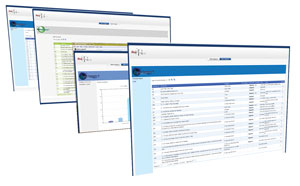
With open-source, Internet-based software, Rev1 has introduced the Tracker DB application to several utility and wind project owners with rapid and enthusiastic acceptance. Using today’s technology and incorporating continuous feedback from service technicians, Rev1 has built a knowledge management system designed to enable fast, accurate decisions by project management thereby maximizing revenue, minimizing downtime, and maintaining continuity of service work on wind assets. Other service companies have methods for recording service work, but the Rev1 Tracker offers something more to owners and operators. Its designers have implemented proven electronic methods to gather, query, and report inspection and service work all for wind project owners and operators to gain a significant competitive advantage. (Fig. 1)

Innovation and the Internet

Based on their experience in serving the architect/engineer and regulated utility industry, Rev1 quickly understood the need for the wind industry to evolve to utility standards for digital information capture and management. Originally developed in 2005 for utility American Electric Power to manage such things as turnover packages, drawings, punch lists, , and maintenance tracking, the Rev1 Tracker application has evolved into a much more comprehensive system. Those familiar with typical service documents—either having to complete them as a technician up tower or who may receive it in the project office—know all too well in what condition these can often arrive. “Grease-covered,” “torn,” and “illegible” are all descriptive of a service report, and it stands to reason since the work being accomplished is performed at a height of 50-80 meters and in a cramped working environment. By the time this information is placed in the hands of decision makers, its value has been reduced to markings on a piece of paper, ineligible for cross-reference to other sources of data, rapid fleet-level review, or a quick spare parts search to assure high availability of operating equipment. Handling such information becomes redundant now that several people must extract their relevant information from the same document. The Rev1 solution enables anyone who needs this service information to access it immediately online, to filter and query it according to the type of information required, and to maintain a running database of asset information available for every subsequent technician to review prior to conducting service or inspection work.

21st Century Technologies

Handheld devices such as the personal digital assistant, smart phones, and tablet or notebook PCs are no longer on the cutting edge of innovation. They are now commonplace tools of business and daily life. The use of handheld devices in business yields benefits by converting downtime to productive time and their increased application drives business success by allowing simplification of processes as well as standardization of data. With its newly implemented Tracker application, Rev1 is able to improve the quality and consistency of a service business process by documenting and automating the exact way the process should be completed in every instance. In a mobile software application on a handheld device, Rev1 ensures the appropriate processes are done in the appropriate order. This is accomplished through a variety of means including:

• Requiring specific information to be captured before moving to the next data field or page;
• Requiring a digital photo of the work performed (before and after);
• Automatically capturing time and date stamps for work;
• Automatically checking inventory levels before replacing a part (Inventory Module);
• Routing the technician to a different set of questions, based upon answers (e.g. if equipment is not operating automatically ask question number 4, or if equipment has been repaired, automatically proceed to question number 10);
• If inspection is completed, close inspection file. If steps are incomplete answer question number 120 about hydro station fluid level.

The Rev1 Tracker application can substantially improve the efficiency gain of reporting service work results. One of the most innovative and practical deployments of the Rev1 technology is the near real-time notification of a wind turbine project’s quality inspection. Because Rev1 deploys crews to service wind projects in compressed schedules, they often complete the inspection of an entire project in a matter of weeks as opposed to months. The inspection results are captured, prioritized, uploaded, queried, and reported as soon as the technicians have completed each inspection. Looking for common issues among the results might take an owner several hours of reading each paper report, documenting similar inspection results, and reviewing photos from each turbine. Instead, Tracker’s Internet-based system is immediately available once the inspection results are uploaded. Run a query of priority-one findings and a report is generated showing issues that require immediate attention due to a critical safety concern. Design a custom query to report all findings related to yaw brakes, gearbox borescope results, or tip cable conditions and the information is compiled, accessible, and has immediate enterprise value.

Intelligent Information

Co-designers Andrew Rachel and David Jones, who are long-time veterans of parent company Rev1 Power Services, Inc., have custom-built Tracker to offer full flexibility with a wide range of tools and reporting features. The designers reflected on the mounds of data collected on paper in years past and stored in a file drawer somewhere “for future reference.” Except in rare cases, the data was never reviewed and no “intelligence” or “predictive data” on turbine operation is ever developed. A huge opportunity in equipment betterment has been lost because the technology was not available to create information of value from collected data. Already deployed at multiple utility locations, the Tracker designers developed additional features to allow its use in the wind sector and continue to improve its functionality through feedback from the field. Now used for a variety of wind turbine inspection and service work scopes, the value of digital information available from the Tracker application has increased to a level unparalleled in the paper world.

Tracker is more than a computerized maintenance management system (CMMS) or an enterprise asset management (EAM) tool, although both of these functions are incorporated in the program. This application serves to track the asset from its construction and commissioning phase through the entire life cycle. Information captured during a mechanical completion inspection is available to any technician or business leader who seeks to learn the full history of a component, including problems that may have existed during commissioning. Because of its Web-based versatility, Tracker will provide a real-time view of an entire fleet of equipment, allowing purchasing managers to coordinate local parts inventories, performance managers to better understand fault and serial issues, and business leaders to appreciate the total cost of ownership for a growing turbine fleet. Rev1 has deployed a tool businesses need to drive asset performance and ensure the delivery of projected financial results.

Explaining the functional aspects of Tracker is quite similar to describing how one pays bills online. As an example, a technician who is assigned to conduct an End of Warranty inspection is equipped with a Netbook PC preloaded with the turbine manufacturer’s inspection check sheet. The inspection alone may cover as many as 600 inspection points at various locations on the turbine as well as requiring digital photos, pressure readings, and lubrication levels. Necessary information such as site location, turbine number, date and time is entered upfront. The technician then ascends the tower with the Netbook. At each location the technician will select a checklist sectionto enter task completion notes, data or values from the inspection, and to determine if a digital photo is required. All comments and attached photos become part of the final report. In addition, the technician will select a priority code from one to four indicating a safety concern, immediate attention required, reduced reliability, or operational restrictions. These priority codes are later used to create punch list reports for the customer to address findings from the inspection.

The Rev1 Tracker application is a modular design, meaning only features that are required or requested will be active to the user. The current wind turbine inspection and service database contains thousands of inspection points, yet because a technician might only wish to inspect a Gamesa G52 turbine, for example, only those inspection points will be displayed for his walkthrough. The same holds true from a report review perspective. If a fleet owner had multiple turbine technologies being serviced, they may only wish to query for the Gamesa G52 turbine model, looking for common serial issues that might have arisen from the quality inspections performed by Rev1 technicians.

Moreover, Tracker is designed for the entire lifecycle of an asset, not just construction, commissioning, post-warranty inspection, and service work. Turnover dates, burn-down curve generation/graphs (turnover time v. estimate), project staffing, test equipment calibration dates, model and serial numbers, commissioning test and status, component test forms, and safety checklists can all be integrated into the construction module. Following this construction stage, ongoing maintenance functionality is added to the project application and includes such activities as inventory monitoring, purchasing data, special work orders, tool and material requirements, average time to complete, mean time between replacement, and maintenance and safety procedures. The true value of this information is in the continuity and consistency of the component tracking, from the first time power was applied through all the times a service technician visited the turbine to perform an inspection.

Besides the data storage aspects of Tracker, customers are offered the ability to perform enhanced troubleshooting and monitoring of serial issues in a more technically savvy way. The custom query function allows an owner to drill down into subcategories and even component descriptions and part numbers. Knowing that you’ve prematurely replaced failed hydraulic system o-rings is a good example of a knowledge system that adds predictive value. Failure analysis tools enable the user to filter by model or component number, registered faults, cost of parts, or even by a particular site location.

Fidelity in Design

In the MDAO approach, the major subsystems of the wind turbine were considered as black boxes. This type of analysis would typically be performed as part of the site feasibility study. Later, the fidelity of the optimization process could be increased to optimize the wind turbine design at a more detailed level. MDAO makes it possible to move fidelity forward in the design process, enabling site planners and wind turbine designers to make better choices between alternative design concepts at a point in the process when many critical and irreversible design decisions are made. Moving fidelity forward also reduces product development time and expense by enabling the concept design and detailed design phases to largely be conducted simultaneously.

MDAO can advance wind power systems technology by encompassing every aspect of wind farm and turbine design to integrate any or all of the applications used in the design process. MDAO can improve the profitability of wind farms by enabling trade studies that can be used at every stage of the design and engineering process to make better tradeoffs between the many conflicting objectives that are involved in wind farm and wind turbine design.

Ease of Deployment

The Tracker scalability enables a rapid deployment to sites with identical equipment and maintenance requirements, making it even more useful for wind turbine projects. MS Access Runtime environment does not require unique software for offsite use and information can be accessed remotely as long as Internet service is available. If continued maintenance modules are preferred, Tracker is able to upload purchasing data directly to a client system or to integrate purchase order formats into each site’s inventory management module. Additionally, the functionality of Tracker makes it well-suited for failure analysis through a fleet-level interface, adding significant value to efforts in mitigating warranty costs and improving product reliability. Fig. 2

Mobile Service Tracking

Although there are an infinite number of ways a service or inspection process can be automated, Tracker was developed to ensure fieldwork would be completed in a systematic, quality manner. In effect, Rev1 endeavored to build best practices into its mobile application by continuously improving upon the database structure, input devices, wireless capability, and query features provided for the customer. For example, changes to the application design itself can literally be made to each mobile device over the Internet. With a long-term vision, Rev1 is adding features that will enable the application to serve as a training tool for its service technicians. Considering that much of the work completed in the wind field is done remotely, Rev1 sees additional value in having automated processes and instructions such as pop-up messages and training tips built into the mobile application.

As a final example, consider the following scenario: A new wind technician inspects a Vestas V90 wind turbine and identifies damage to the gearbox cooler radiator return hose. He correctly inputs this information into the Tracker application on his Netbook computer. Based on the identified damage to the hose, the inspection application brings up an additional set of questions:

• Location of damage on the hose;
• Type of damage (tear, scrape, puncture, etc.);
• Severity of damage;
• Type of hose (metal sheath, rubber, etc.);
• Serial markings on hose.

For each of these questions a button is available to select for more detailed instructions. This is a powerful inspection-training tool and will help to standardize all answers to ensure the most accurate service inspections possible.

Mobility is an inevitable technology solution for wind project owners. The rise in mobile and wireless technology capability is the catalyst that the wind industry needs in order to keep pace with owners’ eager demands for real-time turbine status, particularly when multi-MW turbines are at risk. Managing project and service data on a utility grade platform such as Tracker will allow wind farm operators to maximize the use of historical information to optimize reliability and equipment longevity, minimize downtime, and improve the analysis of more comprehensive information. Rev1 Wind has created a solid solution that serves to maximize project profitability.


Increasing reliability with condition monitoring

0

With the growth of wind farms, users are turning to condition monitoring and automatic lubrication systems for increased reliability. The following questions, and answers, may provide helpful insights:

What are some of the fundamental challenges associated with wind turbine maintenance? Given the operating conditions a wind turbine experiences throughout a 20-year service life, maintenance problems are not a question of “if,” but “when.” Nevertheless, for many wind farms the number of maintenance technicians trying to delay the inevitable is limited and their deployment for service may be sporadic. When maintenance problems ultimately occur, farms face the downside of exorbitant crane mobilization costs, lost energy production, escalating costs per kilowatt-hour, and limited supplies of spare parts due to intense industry demand for components.

What types of proactive maintenance activities can be applied to wind turbines for improved reliability? An integrated online condition monitoring system can serve as an effective tool for managing day-to-day maintenance routines for a wind turbine and consolidating risky, costly maintenance activities. By tracking component performance with condition monitoring technology, maintenance activities can be coordinated across the wind farm, service calls can be better planned and combined, and operators can take advantage of planned shutdowns to service several turbines at the same time, since machinery conditions are known from the monitoring.

What types of operating faults can be detected with condition monitoring? By regularly measuring physical parameters and their variances, a variety of operating conditions can be targeted for early detection, diagnosis, and remedial action. When implemented properly, condition monitoring can forecast trouble inside or outside the nacelle, including unbalanced turbine blades, misalignment, shaft deflections, mechanical looseness, foundation weakness, gear damage, blade or tower vibrations, inadequate lubrication, and others.

In general, how does a wind turbine condition monitoring system work? A system specially developed and dedicated for wind turbines allows for continuous monitoring of key turbine components by regularly measuring physical parameters such as vibration, temperature and lubrication particles. Mounted sensors and enabling software pinpoint the problems. Systems have become quite sophisticated and some can handle any number of turbines and multiple data points for analysis. They can provide a maintenance-forecasting service by continuously recalculating fault frequencies and delivering accurate values based on reliable trends. This ability can facilitate the assigning of alarms at various speeds and loads, including low main shaft speeds, and form the basis for trend-based root cause failure analysis. Wireless capabilities expand system potential by offering the capability to review data from any location with a computer or handheld device with Internet access. This can shorten lead-time from alarm to solution. One system installed in hundreds of wind farms worldwide can fit every turbine’s nacelle and includes an intelligent monitoring unit featuring 16 different channels that connects multiple measurement points. The typical wind turbine configuration incorporates the main bearing (one channel), gearbox (four channels), generator (two channels) and tachometer (one channel). In addition, other monitoring points may be added, including tower/structure vibration, blade vibration, oil temperature, oil pressure, oil quality and generator temperature.

What other technologies can help wind farms improve turbine reliability and reduce maintenance costs? Centralized automatic grease lubrication systems can aid sustained reliability. Systems engineered for bearings, pitch and yaw gears, and other locations in a wind turbine can efficiently and precisely deliver exact, clean quantities of the appropriate lubricant. The associated maintenance benefits from timely and effective lubrication include reduced wear, minimized lubricant consumption, maximized efficiency and less unscheduled downtime. The automatic delivery of lubrication can be credited with lifting a heavy burden from the shoulders of the maintenance staff.

DOE 1.5 turbine lets NWTC conduct research

0

The two largest wind turbines ever erected at the National Renewable Energy Laboratory’s (NREL) National Wind Technology Center (NWTC) towered into the sky this fall. A 1.5-MW turbine manufactured by General Electric was dedicated for research in November, and a 2.3-MW turbine manufactured by Siemens Power Generation was dedicated for research in October.

The U.S. Department of Energy (DOE) purchased the GE 1.5SLE turbine (referred to as the DOE 1.5) for long-term wind energy research and development activities. The DOE 1.5 allows NWTC and industry partners to conduct research to improve performance and reliability. The turbine, which is 119-m tall and has a 77-m rotor diameter, will be extensively instrumented to collect detailed data that will help researchers study the microclimate in which the turbine operates, the aerodynamics of its design, the effects of turbulence on its loads and performance, and how the combination of these factors may affect wind plant performance. The turbine will also be used to educate budding wind engineers and researchers from universities, laboratories, and companies nationwide.

The Siemens 2.3-MW turbine is part of a cooperative research and development agreement (CRADA) with Siemens Power Generation to conduct research and testing. At 131-m tall with a rotor diameter of 101-m, this turbine is among the largest land-based turbines deployed in the United States. Critical tests include structural, performance, modal, acoustics, power quality, and aerodynamics.

In addition to conducting research on the turbines, NREL is working with wind project developer RES Americas under a CRADA to study the non-turbine components of wind energy systems. Work to be conducted during the next three years includes study of the design and performance of turbine foundations and thermal performance of underground electrical cables to increase their reliability and reduce installation and maintenance costs. Because the turbines are so large, their custom-designed foundations contain between 400 and 800 tons of steel rebar and concrete. Data collected on the foundations of these turbines will result in some of the first-ever measurements of structural loads inside and under an operating wind turbine. In addition to its research on foundation and cables, RES will also install multiple brands of sensors, data loggers, and wireless communication systems at the NWTC for a “side-by-side” comparison of their performance.

Beyond these results, the commissioned turbines will generate clean electricity to meet the laboratory’s aggressive sustainability goals, including the reduction of greenhouse gas emissions, for its expanding research campus and support facilities. The new turbines are expected to generate twice as much energy as the NWTC consumes. Work toward an agreement to allow the export of surplus power to the local utility grid is underway.

NREL’s wind center, nestled at the base of the Rocky Mountains, is located just south of Boulder, Colorado. It is DOE’s premier wind energy research and development facility. At the NWTC, NREL researchers work side by side with industry partners to create the next generation of wind energy systems.

Conversation with Jeff Gribble

Give us a sense of how UVLM came into being.

My grandfather, Lowell Gribble, started an industrial maintenance service company called Ultrasonic Predictable Maintenance, Inc., or UPM, in 1968. My father, Doug, and my uncle Stuart joined the company soon after, and they spent the next two decades using infrared and ultrasound devices to inspect the bearing conditions in manufacturing equipment. In 1989 my father gave me a call — I was in the military at the time, living in Germany — and told me that he had an idea. He said that he’d come to realize over the years that the vast majority of the bearing problems he encountered involved lubrication, and that you could detect underlubricated bearings by the sound they made. It was a gritty, sandy noise instead of the smooth, continuous sound that you want to hear in bearings that are properly lubricated.

He wanted to develop a device that would allow a lubrication technician to actually listen to the internal workings of a machine, and after years of testing, development, and working to have a patent awarded we launched UVLM in 1991 and sold our first Ultra-Lube in 1994. My grandfather passed away a number of years ago, so I’m a partner in the company along with my dad and my uncle.

What are the device’s attributes?

The first is that my father made a conscious decision to utilize the sonic rather than the ultrasonic frequency range, mostly because he wanted it to be very easy to use with little or no training involved, as is the case with the ultrasonic instrumentation that’s already out there. Luckily dad’s best friend is a retired ear, nose, and throat (ENT) specialist, and his expertise was invaluable in the development of the Ultra-Lube. It was his opinion that to base your lubrication reading on ultrasonic frequencies alone was dangerous at best, because so much depends on the type of crystal in the transducer and what it’s been tuned to detect. You’re going to pick up different sounds if an ultrasonic device is set at 35 kilohertz or at 40, after all.

I sat on a panel once debating the attributes of the two detection methods, and when the representative of ultrasonic instruments said that everyone hears things differently, I agreed. But I also pointed out that if the two of us went to hear a piano concerto we’re both going to hear the same instrument, not a tuba and a saxophone, even if the tones we hear don’t match up perfectly. That’s how it is with the sonic frequency we utilize, while an ultrasonic reading can lead you to believe you’re hearing something else altogether.

Another benefit of the Ultra-Lube is that it allows users to tailor their lubrication schedules to the exact piece of equipment they’re monitoring. Most industrial machinery is lubricated according to a time/amount schedule, where every two weeks, or two months, a certain amount of oil or grease is applied. That can be a waste of time if it’s not necessary. Our customers have told us that once they’ve started using the Ultra-Lube, the vast majority of the time they’re able to adjust their lubrication schedule downward.

This device can also be used as an early warning diagnostic tool, because you can detect the noises that could indicate impending bearing failure. We always stress that in these instances the Ultra-Lube should only be used as a screening tool, with follow-up tests including vibration analysis, data collection, oil analysis, and thermography should anything seem amiss.

Is seems like an instrument of this nature would have a wide variety of applications.

It really does. I’ve even used it to detect a malfunction in my wife’s car. But we have managed to place our product in a long list of industries, including power generation, wood products, petrochemicals, OEM and parts manufacturing, mining, agriculture, hospitals, pharmaceuticals, and maintenance service companies, just to name a few. And I think a big part of its acceptance has to do with how easy it is to use. There are some things that just can’t be reduced to an automatic process, where it’s better for the sensory input and judgment of an actual human being to be involved, and that’s where the Ultra-Lube comes in. It’s like putting a stethoscope in the hands of a doctor.

For more information: Call (360) 736-2333, e-mail info@uvlm.com, or go online to www.uvlm.com.