

Home May 2025

May 2025

Meeting energy demand in the U.S.

America’s appetite for electricity is growing — fast. A recent study by S&P, commissioned by American Clean Power and other energy and business trade groups, shows that U.S. electricity demand is expected to increase up to 50 percent by 2040. This surge is fueled by near-term growth in manufacturing and data centers and long-term trends like the electrification of transportation and heating. To meet this rising demand, we need an “all of the above” energy strategy — one that embraces every available source of power. But few are as uniquely positioned as wind energy to deliver clean, reliable, homegrown electricity at the scale and speed we need.

Wind energy generates more than $2 billion in landowner lease payments and local tax revenue every year, strengthening rural and economically disadvantaged communities. (Courtesy: Adobe Stock)

Land-Based Wind: Resilience Amidst Headwinds

Land-based wind faced a challenging year in 2024, with just 3.9 GW of new capacity added — the lowest annual figure in a decade. But behind the slowdown lies a deeper story of resilience and potential. While installations dipped, the project pipeline continued to grow at a steady 3 percent average quarterly pace over the past two years. The industry’s momentum was stalled by uncertainty around tax credits in the early 2020s, supply chain disruptions, and broader economic turbulence — all of which contributed to higher capital and equipment costs.

Transmission remains one of the sector’s biggest barriers. Wind-rich regions are often hampered by congested transmission corridors, limiting the ability to build where the wind blows strongest. In 2024, just 821 miles of new transmission were built — a stark contrast to the 12,000 miles added since 2015, underscoring the need for a modernized, expanded grid. Meanwhile, wind-power purchase agreement (PPA) prices have risen 5 percent quarter-over-quarter on average over the past three years, as cost declines for wind components have lagged those of solar and storage. Still, the long-term economic case for wind remains strong.

Offshore Wind: Breaking New Ground

2024 marked a milestone year for offshore wind, highlighted by the commissioning of South Fork Wind — the country’s largest offshore wind farm to date at 132 MW. Now in 2025, five major projects — Coastal Virginia Offshore Wind, Revolution Wind, Vineyard Wind 1, Sunrise Wind and Empire Wind 1 — are in various stages of construction, all having secured necessary federal environmental and construction permitting. However, presidential actions taken in early 2025 targeting offshore wind — alongside a recent construction halt from Interior Secretary Doug Burgum against Empire Wind — have introduced new policy and permitting uncertainties.

With the first utility-scale project completed and a total of 11 projects having received Construction and Operations Plans (COPs) approval from BOEM — five of which are under construction — the offshore wind industry was well-positioned for continued growth. Additionally, eight more projects had already entered the federal permitting process. But the indefinite halt on permitting and leasing has brought that momentum into question, presenting significant challenges for the sector.

Despite these setbacks, the U.S. offshore wind pipeline remains robust, with nearly 73 GW of potential capacity based on current leased areas — enough to power up to 30 million homes. The long-term outlook now hinges on regulatory clarity and continued investment over the next 3.5 years.

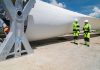
The wind industry supports more than 300,000 jobs across construction, manufacturing, logistics, and operations. (Courtesy: Cedar Creek owned by Clearway)

Clean Energy Boom

Federal energy tax credits are reshaping the U.S. energy landscape — driving not only a surge in wind development but also catalyzing a broader industrial revival. New capital is breathing life into American manufacturing, powering the infrastructure and supply chains needed to power the clean economy. The wave of clean-energy investment extends far beyond individual projects.

From new factories to upgraded infrastructure, the economic ripple effects are substantial. ICF estimates that recent federal policy could unlock $1.9 trillion in economic activity over the next decade, strengthening domestic supply chains and creating a more resilient clean-energy ecosystem. Wind developers and manufacturers are responding in kind, with investments flowing into turbine blade manufacturing, nacelle assembly, and steel fabrication across the country.

Local Impact and Job Creation

Wind energy delivers far beyond the grid. Every year, it generates more than $2 billion in landowner lease payments and local tax revenue, strengthening rural and economically disadvantaged communities. These funds support schools, emergency services, and roads — creating a ripple effect of opportunity.

The wind industry also supports more than 300,000 jobs across construction, manufacturing, logistics, and operations. Wind-turbine technician is now the second-fastest growing job in the country, with projected employment growth of 44 percent over the next decade.

Veterans are especially well-represented in the workforce, employed at rates 80 percent higher than the national average.

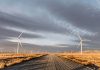
Land-based wind faced a challenging year in 2024, with just 3.9 GW of new capacity added. (Courtesy: Enel)

A Clear Path Forward

Despite the challenges facing the wind industry, its future is full of promise. With strong policy support, a skilled workforce, and a growing pipeline of projects, wind energy is positioned to meet our nation’s rising energy demands head-on.

It’s not just a source of clean power — it’s a driver of economic growth and a pillar of American energy security. The future of U.S. energy is blowing in the wind. Now is the time to harness its full potential. 
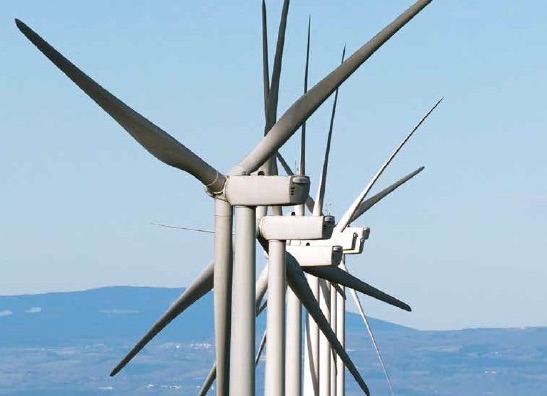
KK Wind Solutions expands U.S. presence

KK Wind Solutions, a 1-billion-euro company owned by A.P. Moller Holding, is expanding its presence in the U.S. The new U.S. regional division will be led by Kim Wichmann-Hansen, currently chief service officer of KK Wind Solutions. The company is targeting growth in the onshore wind market and the expansion will further enhance its ability to provide high-quality service and monitoring solutions in the US.

“Establishing a regional division led by Kim Wichmann-Hansen strengthens our presence in the U.S. market and deepens our commitment to the American wind industry,” said Mauricio Quintana, CEO of KK Wind Solutions. “Even as the sector is facing political uncertainty, the fundamental value offering of wind energy is strong as ever and we remain optimistic about continued growth in the coming years.”

By the end of 2023, the U.S. had an installed capacity of 157 GW, positioning it as the second-largest wind market in the world. The U.S. Department of Energy projected the installed wind capacity will grow to 224 GW by 2030.

However, by 2030 the number of onshore wind turbines in the U.S. 15 years or older will triple. For these assets, data-driven insights, monitoring solutions, and expert deployment are crucial for reducing unplanned maintenance and increasing predictable operations.

50 percent of all the wind turbines spinning in the country contain components manufactured by KK Wind Solutions.  “With our decade-long track record as a service provider to manufacturers and asset operators across the U.S., we can provide our customers a comprehensive suite of solutions from vibration sensing to control, cooling and converter systems for new installations,” said Kim Wichmann-Hansen, president of KK Wind Solutions U.S. “This includes spare parts, logistics, warehousing, and stocking models to optimize lead time for parts. At the same time, through advanced, data-driven monitoring solutions, we can support customers in making predictive maintenance to minimize downtime and maximize value generation of their existing assets.”

The new business division will be based at the company’s new U.S. headquarters in Houston, Texas. This office will supplement the company’s existing location in Lenexa, Kansas. The choice of Houston is strategic, given its status as a key energy hub in the state with the largest installed base of onshore wind in the U.S. The proximity to key customers and ability to attract top-tier talent are also factors in the decision to base the new division in Houston. 

More info www.kkwindsolutions.com

Salamander wind farm awarded permission to plan

Salamander Offshore Wind Farm, a project being developed by the Salamander Wind Project Company Limited, a joint venture between Ørsted, Simply Blue Group and Subsea7, was recently awarded Planning Permission in Principle for the onshore aspects of its proposed floating development, 35 kilometers off Peterhead on the east coast of Scotland.
Salamander Wind is a proposed floating development 35 kilometers off the east coast of Scotland. (Courtesy: Salamander)

A second application, to the Energy Consents Unit of the Scottish government for the wind farm’s energy balancing infrastructure, includes battery storage that will help to balance the electricity grid, has now been validated and is progressing through assessment.

Salamander is also awaiting a decision from the Scottish government’s Marine Directorate on its Section 36 award for the offshore array and associated licenses.
This is a key step in the project’s timeline as the focus turns to the onshore elements of the development, which will generate enough green energy to power 100,000 Scottish homes once operational.
“We are incredibly proud to have secured an almost-unheard-of unanimous approval in record time, only seven months after submission,” said Hugh Yendole, Salamander project director.
“We have achieved a number of significant firsts with this consent, the first combined onshore substation and battery consent and the first consent of any of the innovation projects awarded exclusivity agreements under INTOG.
It’s a testament to the dedicated professionals in the Salamander project team that plotted the path to consent and delivered one of, if not the best onshore consent applications that I have seen. The Planning Committee agreed.”
The Salamander Offshore Wind Farm was a successful Innovation bidder in Crown Estate Scotland’s Innovation and Targeted Oil and Gas leasing round, signing an exclusivity agreement for a seabed lease in May 2023.
The INTOG round awarded Exclusivity Agreements for seabed leases for two types of projects – small scale floating wind innovation projects of up to 100 MW, and larger projects aiming to decarbonize oil and gas infrastructure.

RENOVA teams with Shoreline Wind

RENOVA, a renewable energy developer and independent power producer in Japan, recently announced a strategic partnership with Shoreline Wind to implement its advanced construction simulations.
The partnership aims to enhance the developing and pre-development phases of RENOVA’s onshore wind projects. The Reihoku-Amakusa project in Japan is under construction, while the Mabini Wind Power Project in the Philippines is in pre-development phase.
The Mabini Wind Power Project, in the planning stage, aims to generate about 50 MW of capacity from six to eight turbines. (Courtesy: RENOVA)

The development of onshore wind farms is an inherently complex process, with significant costs and time tied to specialized equipment, storage, multimodal transportation, skilled labor, and equipment downtime. Even a 1 to 2 percent increase in efficiency during the developing and pre-development phases can save developers millions and accelerate construction, shortening the timeline to bring a site online.

The Reihoku-Amakusa project in Japan involves the construction of 13 wind turbines with a total capacity of 54.6 MW. The project faces major logistical challenges, including severe tidal restrictions at the arrival port, requiring components to be transferred via smaller vessels or barges before reaching land. Additionally, Japan’s mountainous terrain means there is limited available land for wind-turbine storage and construction staging.
The Mabini Wind Power Project, in the planning stage, aims to generate about 50 MW of capacity from six to eight turbines. The project highlights challenges unique to the Philippines and other emerging wind-energy markets where essential infrastructure is still being developed. One major challenge is the lack of an arrival port for secondary offshore transport.
While both projects highlight unique challenges, RENOVA looks to deploy precision logistics to overcome obstacles found in both. By integrating Shoreline’s AI-powered simulation platform, RENOVA aims to optimize resource allocation and delivery of major components, improve project efficiency, and reduce costs.
The platform helps analyze various data, including weather patterns and logistical constraints, to accurately schedule transportation and construction activities.
The partnership is expected to deliver substantial cost savings for RENOVA. “Shoreline Wind’s technology allows us to plan our projects more effectively by reducing operational costs and improving overall performance during the planning and construction phases,” said Takaaki Kurihara, RENOVA lead civil engineer. “Integrating Shoreline’s advanced simulation software is a crucial step in scaling our operations internationally while maintaining the highest standards of efficiency and sustainability.”
“We are excited to support RENOVA’s planning strategy globally,” said Ole-Erik Endredud, founder and chief product officer at Shoreline Wind. “By simulating the construction phase of an onshore wind project with the most comprehensive and reliable data sources, including expected weather patterns and resource availability, RENOVA will reduce downtime and maximize operational efficiency. This approach ensures that expensive resources are used more effectively, which is crucial in the challenging and often costly wind energy environment.”

Conversation with Pasquale Roselli

Why are power purchase agreements important?

Power purchase agreements are a major market driver of renewable energy growth. There are mutual benefits for owners and offtakers. Offtakers, typically corporations or utilities with large energy loads, make a long-term commitment that exclusively supports a portion of a specific clean-power plant. They can credibly claim the renewable attributes of the contracted output, usually to match a certain amount of their electricity load with clean energy. Generators, on the other hand, receive long-term revenue certainty for a plant, which helps them secure project financing. Market demand for PPAs helps incentivize developers to add new clean megawatts to the grid.

How many PPAs has Enel North America executed over the years?

What is involved in planning a PPA? Enel North America has executed over 115 PPAs with over 66 unique customers, including corporate and industrial (C&I) partners and utilities.

The PPA process begins when a renewable energy project is in development. Developers often plan for an expected amount of PPA revenue to ensure a plant’s financial viability. Contracted revenue is an important part of the financial model that developers present to project investors.

Enel’s origination team approaches the market with our available capacity, engaging directly with prospective buyers. Large energy users across sectors are active in the PPA market — while large technology companies are by far the largest clean-energy purchasers, Enel has also signed PPAs with major brands in food and beverage, apparel, retail, finance, science, and other sectors.

Enel and Meta’s recent PPA involves a 115-MW portion of the 140-MW Rockhaven wind farm in Oklahoma. (Courtesy: Enel)

And even companies with smaller energy needs can participate through aggregation deals, like the one that Enel announced in 2021 with four partners joining forces at the Azure Sky wind project. Negotiations involve financial, legal, sustainability, and operations professionals. It can take several months to several years to come to final terms on a PPA, depending on the complexity of the offtake structure and the preferences of the seller and buyer. Finally, a PPA is executed, and Enel’s energy and commodity management team serves as the point of contact with an offtaker throughout the term of the agreement.

Beyond execution, Enel maintains a relationship with PPA buyers, ensuring seamless integration of renewable energy into their operations. Our team offers expertise in managing risk, optimizing market participation, and providing tailored contract structures to enable businesses to meet their sustainability and financial goals. With over a decade of market development, PPAs are a tried-and-true instrument to help organizations navigate the evolving energy landscape while securing long-term price stability and emissions reductions. As energy demand continues to rise due to the expansion of data centers, AI, and electrification, clean-energy offtake solutions like PPAs empower businesses to transition to clean energy.

What is unique about Enel and Meta’s recent PPA?

Meta is one of Enel’s largest customers, and the Rockhaven PPA represents the companies’ third such agreement. Meta is one of the leading corporate buyers of clean energy worldwide, and Enel is excited to continue partnering with the technology leader. What are the details of the Meta PPA? This PPA involves a 115-MW portion of the 140-MW Rockhaven wind farm in Murray and Carter counties, Oklahoma.

How long have Enel and Meta collaborated on PPAs? What factors have made this such a successful partnership?

Enel and Meta announced their first PPA in 2017 — a 200-MW agreement at the Rattlesnake Creek wind farm in Nebraska supporting the Sarpy Data Center. That agreement was later expanded to include the plant’s full 320-MW output by 2029. In 2023, Enel announced a 125-MW PPA with Meta at the Alta Farms wind farm in Illinois, supporting the tech leader’s DeKalb Data Center.

Why is it important for data centers to have access to green energy?

In general, electricity demand is forecasted to rise across the United States due to industrial electrification, electric vehicles, data centers, and other economic development. To meet this rising demand while simultaneously spurring the economy, financial contractual tolls such as PPAs are important to enable new energy capacity on the grid. These agreements like the one with Meta can help an offtaker match a desired quantity of electricity with new clean energy.

More info www.enelnorthamerica.com

Deep foundation testing, analysis, and consulting services

0

It may be stating the obvious, but the construction of a wind turbine — sooner or later — will involve a big hole in the ground.

However, as simple as it may sound, the process of pile driving for the wind sector and other industries is far more complex with variables that need to be researched and calculated.

Since its inception, GRL Engineers, Inc., has been involved with driven pile testing and the quality assurance analysis results of pile driving for almost half a century.

An offshore platform with pipe pile installation. (Courtesy: GRL Engineers)

GRL Engineers’ sister company, Pile Dynamics, Inc., developed the first pile driving analyzer in 1972, which became the company’s mainstay, according to Glenn Santulli, project engineer with GRL Engineers. Pile Dynamics essentially sold the product to companies. But it soon became obvious that a special expertise would be needed to help companies with the equipment, which led to the development of GRL Engineers.

“They realized four years later — if you have these special products — you’ll need to have special consultants or engineers who know how to use these products and show everyone else how to use them as well,” he said.

Deep foundation consultants

With a focus mainly on driven piles and dynamic testing, GRL Engineers evolved to become deep foundation consultants and experts, according to Santulli.

“But it all started in the driven pile world,” he said. “And then, when you start talking about driven piles — probably back in the early ’80s — we began offshore driven pile testing.”

GRL Engineers’ offshore pile testing led to the company’s involvement in the offshore world, mostly in the oil and gas sectors, according to Santulli.

“We really got involved with offshore mostly in the Middle East, which was a main market of ours in the early ’90s and 2000s,” he said. “But at the end of the day, it’s all pile driving, even on land or offshore.”

From oil and gas to wind

GRL Engineers’ expertise with the oil and gas industry led to the company working with the wind industry, according to Santulli.

“We have tested several piles over the last 20 or 30 years for wind farms on land, basically the driven piles for wind farms on land,” he said. “In November and December of 2023, we did pile installation monitoring for one of the first offshore wind farms on federal waters.

That monitoring led to the largest offshore monopile ever monitored, according to Santulli.

“That was the biggest offshore wind endeavor we’ve done,” he said. “We did monitoring on that. But we’re also involved with some consulting where we’re looking at different drivabilities of monopiles and jacket piles for the offshore wind industry.”

In addition, GRL Engineers was also involved with a test program and research for the offshore wind industry in New Jersey where the company looked at different soil conditions — specifically glauconite — where the company hopes to learn on land how it will affect offshore turbines, according to Santulli.

A wireless transmitter attached to a pipe pile sends pile driving data to the engineer. (Courtesy: GRL Engineers)

Even with its current focus on wind energy, Santulli pointed out that GRL Engineers continues to be involved with all industries in need of deep foundation testing, analysis and consulting services including oil and gas.

“We definitely want to be involved with all deep foundations, whether it’s oil and gas or wind or anything,” he said. “We’re in the deep foundations industry and specifically specialize in driven pile testing and dynamic testing of all foundation types so we want to be involved in all aspects, all industries. I don’t think there’s one preference over the other. If it’s driven piles, if it’s offshore, we want to be there.”

With its wind involvement, Santulli said GRL Engineers has expanded their expertise in the way wind turbines are constructed compared to oil and gas structures, with expertise in all offshore pile driving including monopiles and jacket piles.

Expanding its expertise

Since the 1980s, GRL Engineers has focused on jacket piles and doing drivability and consulting work on the jacket piles used primarily in the oil and gas industry.

But in the last few years, GRL Engineers has expanded its focus to monopiles, according to Santulli.

To hold up a wind turbine, there are several options. A jacket-style pile would be the more traditional method, where a “jacket” made up a of a triangle of legs would be lowered to sit on the seafloor. Piles are driven into the legs, which have a much smaller diameter. The turbine would sit on this structure.

“It’s designed there; it’s wider on the bottom, and it’s pointier at the top,” he said. “You would use that, and you would create this structure that the actual turbine would sit on. Jackets have been used for probably 60 or 70 years or more. That’s more of the old-school technology. They usually are very quick — you place them in the water; you drive piles, and you’re done.”

The challenge with wind turbines in a wind farm, is that there will be a lot of structures that cover a lot of area, which would make traditional jacket piles cost prohibitive, according to Santulli. Because of this, monopiles are being used more commonly now.

“This means one pile is driven and it’s the foundation for the entire turbine, rather than a structure and six or eight piles,” he said. “It is more cost-effective, but there is more risk, because you can get pile refusal early. If you had six or eight piles, if you have an issue with one or two, that’s not the entire foundation. With monopiles, if you have an issue with one, that’s your entire foundation. Monopiles are more of a newer thing for the U.S., but Europe’s been using them for probably 20 or 30 years.”

Every job is unique

When working with customers, Santulli said that each case and every location is going to be different.

“Every site’s a little bit different, but you can use prior experience to evaluate the latest and greatest problem and figure out the most practical solution,” he said.

Part of the challenge is sometimes GRL Engineers isn’t consulted until problems in the initial construction arise, according to Santulli. “One downfall of the offshore industry is that we’re not really involved until things go bad,” he said.

When problems arise in a project, GRL Engineers are called in to solve them, which Santulli said pulls from the company’s expertise combined with its experience.

Sometimes different soil conditions, a different vessel, or different installation contractors make it so methods applied in one job won’t work for another. But a situation can be approached using previous methods successfully, according to Santulli.

“You always want to use previous successful experience to apply to something new, but at the same point, each project brings a new location and new soil conditions, so often times nothing is the same,” he said.

A platform for pile driving monitoring. (Courtesy: GRL Engineers)

Diversity and excellence

Building on its reputation for being involved with one of the first U.S. offshore wind farms in federal waters, Santulli said he is anxious for GRL Engineers to further emerge itself in offshore wind development in the U.S. in hopes that overseas companies wanting to develop offshore energy will see the advantages of domestic consultants.

“We would be happy to get involved, and we’d happy to be able to apply our experience and expertise to the industry,” he said. “Having the knowledge from oil and gas, where there’s more of a diverse background, we could bring that more diverse background to the wind industry rather than other consulting companies that only have known offshore wind for the last 20 years.”

In order to do that, overseas wind-farm construction companies coming to US to install offshore wind farms on US waters will need to pair with more U.S.-based companies rather than the previous consulting companies from Europe that typically only perform consulting for offshore wind, according to Santulli.

“One spot where the industry can really grow and improve is — on the engineering and consulting side — get more U.S.-based companies involved and make it a little more open and public for more companies. Rather than keep everything hidden including the installer, the vessels and the installation of the specific pile type hidden, allow for more U.S.-based companies looking to get involved become more aware of the ongoing construction and promote U.S.-based consulting companies to become more involved with the technical engineering decisions,” he said.

In order to accomplish this, Santulli emphasized it was important for wind companies to see the advantages GRL Engineers brings to a table being a diverse consulting company based in the U.S. with decades of experience. For example, GRL Engineers is in a better position to evaluate the suitability jacket piles without having any bias against them which many offshore wind consulting companies typically have (favoring monopiles).

“A European company may insist on monopiles because it’s always used them, but is that really the most cost-effective or best engineering solution or best option to mitigate pile refusal risk, or is that because that’s what you’re most familiar with?” he said. “GRL looks at: What’s the best solution? I think we’re less biased than maybe a company that’s only focused in offshore wind, where we want to get involved with all industries.” 

More info www.grlengineers.com

Maximizing offshore wind farm efficiency

0

In the race to achieve 30 GW of offshore wind capacity by 2030, the U.S. faces significant operational challenges that threaten the efficiency and profitability of its offshore wind projects. However, a game-changing solution is on the horizon: advanced monitoring systems and remote solutions. These technologies are not just operational tools; they are revolutionizing the way offshore wind farms operate, offering a pathway to minimize downtime, reduce operating expenditures (OPEX), and maximize energy yield.

By integrating real-time analytics and remote diagnostics, operators can gain unparalleled visibility into the condition of critical components, allowing them to act before minor issues escalate into catastrophic failures. This proactive approach is essential for overcoming the harsh environmental conditions and complex technical demands of offshore installations. This article delves into the pressing challenges faced by the offshore wind sector and how these innovative solutions can deliver transformative benefits.

Monitoring is the cornerstone of modern offshore wind-farm management. (Courtesy: Brand Portal MR)

The Complexity of Offshore Wind Farm Operations

Operating offshore wind farms involves navigating a web of technical and logistical challenges that are far more demanding than those encountered onshore. Each component — from turbines and transformers to high-voltage cables — must withstand the relentless pressures of an offshore environment while maintaining high reliability over decades of operation.

Critical Challenges Facing Operators

  • High Failure Rates of Key Components: Transformers, high-voltage cables, and load tap changers are particularly susceptible to failures, which can lead to costly disruptions. Studies show cable failures alone account for approximately 80 percent of insurance claims in offshore wind projects, often resulting in substantial production losses of up to $300,000 per day.
  • Access and Maintenance Constraints: The remote and inaccessible nature of offshore installations complicates maintenance efforts. Deploying crews to perform repairs is not only costly but also time-intensive, further exacerbating downtime and revenue loss.

These challenges underscore the importance of proactive strategies that mitigate risks and optimize operational workflows. Addressing these issues requires innovative approaches that combine technology, data, and robust engineering.

  • Harsh Environmental Conditions: Saltwater corrosion, extreme weather events, and mechanical vibrations accelerate wear and tear on components, reducing their operational lifespan. Offshore locations often experience conditions that exceed design tolerances, making durability a critical concern.

Cable faults: A central problem

High-voltage cable failures represent one of the most financially impactful challenges for offshore wind farm operators. These failures can interrupt power transmission, leading to significant revenue losses and costly repairs. The remote nature of offshore installations further complicates the issue, as identifying and resolving cable faults often requires specialized equipment and expert intervention.

Monitoring is the cornerstone of modern offshore wind-farm management. (Courtesy: www.reinhausen.com)

Economic impact

Every day of downtime due to cable faults can result in revenue losses of more than $300,000. For large wind farms, with an average downtime of 40 to 60 days for repairs to the turbine and export cables, the average total losses (repair and generation loss) add up to between $1.2 million and $12 million for turbine cables and between $10 million and $30 million for export cables.

Efficient Fault Detection with MR: This challenge can be addressed with advanced diagnostic tools for high-voltage cables. These include cutting-edge onshore and offshore cable testing systems developed in collaboration with HIGHVOLT, a subsidiary specializing in innovative testing solutions.

These systems enable operators to:

Pinpoint fault locations quickly: Advanced diagnostics reduce the time required to identify the exact location of a fault, minimizing downtime.

Plan repairs effectively: A data-based and detailed fault analysis enables operators to effectively plan maintenance measures, efficiently allocate resources and carry out repairs in periods of low wind.

Enhance operational resilience: Regular condition assessments reduce the likelihood of unexpected failures, ensuring consistent energy output.

Case studies, including research conducted by HIGHVOLT (2020), have demonstrated that integrating these solutions can reduce the average time to locate and repair cable faults by up to 50 percent, significantly lowering associated costs and minimizing energy production losses.

Proactive monitoring: A game changer for reliability

Monitoring is the cornerstone of modern offshore wind-farm management. By integrating real-time analytics and advanced sensor technologies, operators can gain unparalleled visibility into the condition of critical components, allowing them to act before minor issues escalate into catastrophic failures. Since 1970, Reinhausen has been delivering monitoring solutions to customers worldwide that impress with their operational reliability and durability.

Transformative Monitoring Technologies

Gas-in-oil analysis: This technique identifies dissolved gases within transformer oil, an early indicator of insulation degradation. Catching such issues early can prevent costly failures.

Vibroacoustic monitoring: Continuous vibration analysis of high-voltage equipment detects anomalies that could signal impending mechanical failures.

Temperature monitoring: Sensors track heat buildup in cables and transformers, identifying hotspots that may lead to overheating and subsequent breakdowns.

The integration of these technologies empowers operators to anticipate failures with precision, plan maintenance during low-wind periods, and reduce unscheduled downtime. For example, a North Sea wind farm implementing Reinhausen’s monitoring solutions reported a 30 percent reduction in unscheduled maintenance and an 8 percent improvement in overall availability, directly contributing to higher energy output and cost efficiency.

Remote solutions: Cutting costs and enhancing efficiency

Remote solutions represent a paradigm shift in how offshore wind farms are managed. By enabling real-time diagnostics and remote interventions, these technologies drastically reduce the need for costly and time-consuming on-site repairs.

By limiting the need for on-site personnel during adverse weather conditions, remote solutions improve the safety profile of offshore wind operations. (Courtesy: www.highvolt.com)

How remote solutions benefit operators

Lower costs: Remote monitoring reduces travel expenses and labor costs associated with on-site maintenance visits. These savings directly affect both CAPEX and OPEX, improving overall project economics.

Rapid response to anomalies: With 24/7 monitoring, operators can identify and respond to issues in real time, minimizing disruption and ensuring continuity in power generation.

Enhanced safety: By limiting the need for on-site personnel during adverse weather conditions, remote solutions improve the safety profile of offshore wind operations.

Enhancing reliability through component optimization

Long-term reliability is essential for maximizing the return on investment in offshore wind projects. This requires not only durable components but also a proactive approach to maintenance and asset management.

Solutions for enhanced reliability

  • Resilient components: Products such as advanced load tap changers and dehumidification systems are specifically engineered to withstand the challenges of offshore environments. Their automated monitoring systems provide continuous insights into asset health, enabling informed decision-making.
  • Cost and environmental benefits: Extending the lifespan of critical components reduces the need for replacements, directly lowering CAPEX. Furthermore, optimizing efficiency aligns with sustainability objectives, as maximizing energy output per installed capacity reduces the carbon footprint of operations.

For operators, these innovations translate into tangible financial gains. Reliable components can decrease unscheduled outages by 50 percent, yielding millions of dollars in annual savings for large-scale wind farms.

Future trends: Embracing digitalization and automation

The future of offshore wind lies in digitalization and automation. Emerging technologies are reshaping the sector, offering unprecedented opportunities to enhance operational efficiency and drive down costs.

Key innovations shaping the future

  • ETOS (embedded transformer operating system): This state-of-the-art automation platform, the result of decades of experience, integrates monitoring, control, and diagnostics into a single interface, optimizing processes and improving response times.
  • Digital twins: Virtual replicas of physical assets enable operators to simulate performance under various scenarios, predict issues, and plan interventions with accuracy.
  • AI-driven analytics: Artificial intelligence improves fault prediction, provides more accurate and actionable maintenance recommendations, and future trends for effective maintenance action.

Together, these technologies represent a paradigm shift for the wind-energy sector, providing operators with tools to enhance reliability, extend asset lifespans, and achieve significant cost savings. They align with broader industry goals, such as the U.S. Department of Energy’s commitment to achieving a decarbonized energy sector by 2050.

Conclusion

Offshore wind energy holds immense potential to revolutionize the energy landscape, especially in North America, but its success hinges on overcoming operational challenges. By adopting advanced monitoring systems and remote solutions, operators can address critical pain points such as component reliability, maintenance efficiency, and cost control, and identify and eliminate major weaknesses and potential hazards in the early stages. 

Meeting power demands using onsite wind energy

Wind energy is a sustainable, safe, and impactful way to combat climate change and protect the future of the planet. However, most of the wind-turbine market is either involved in selling small (less than 150 kW power) or very large (greater than 1.5 MW). The small turbines are used in distributed energy on farms or small companies. The larger wind turbines are used almost entirely in large wind-farm operations with more than 50 wind turbines. There is a rising need for midsized wind turbines in distributed energy applications with data centers being the most talked about now.

Rockwind refurbishes older decommissioned wind turbines and reuses them in distributed energy applications. (Courtesy: Rockwind)

What this article is focused on is encouraging and bringing awareness to the very small practice of installing midsized rebuilt wind turbines in these many potential distributed energy applications. The current U.S. federal tax code and the much lower cost of rebuilding and reusing midsized, decommissioned wind turbines provides for a very rapid return on investment using these tax incentives (there are even cash payment options to not-for-profits by the IRS in lieu of tax credits) and rebuilt midscale wind turbines. So, instead of buying power from a big utility company or an anonymous mega wind farm (and paying transmission and distribution charges), why not invest in rebuilt modernized wind turbines and enjoy both the economic and social marketing benefits of having an onsite refurbished wind turbine(s) producing much of the needed electricity with wind turbines that take very little space on the property?

Relying on a turbine’s strengths

The U.S. is reaching a critical juncture for increasing electricity, reducing fossil-fuel consumption, and doing so in a way that maximizes green energy production to reduce climate change and doing so economically — and do this with U.S. workers and small companies. Use of wind turbines in distributed energy application needs to be a big part of that due to the wind turbine’s ability to produce power locally — reducing reliance on grid delivery of power to users — on a year-round basis (which solar is not well suited for in the northern portion of the U.S.). The question becomes: where to acquire the mid-sized wind turbines that work well in behind-the-meter applications, yet produce between 500 kW and 1 MW of power, which is what most commercial and industrial users need, and it’s especially needed to support the huge projected increase in data-center construction and use. Recycling, modernizing, and reusing older wind turbines being decommissioned because of repowering has been used in Europe for years and needs to be done in the U.S. to satisfy this market need.

The Distributed Wind Energy Futures Study, released in May 2022 by NREL, determined substantial economic potential for distributed wind (defined as a project with a positive rate of return). The 2022 baseline scenario economic potential was 919 GW (equal to 919,000 1MW wind turbines) for behind-the-meter installations and 474 GW for front-of-the-meter installations (McCabe et al. 2022). So, there is a huge economically viable need for distributed wind energy.

The U.S. has 73,000 utility scale wind turbines, representing almost 3 trillion tons of steel and fiberglass that will be scrapped, without this recycling /reuse life extension technology. In the worst case of zero percent recycling and 100 percent landfill of fiberglass, greenhouse gas (“GHG”) emissions would increase by 2.8 trillion kg CO2, which would need to be removed by new turbines. Recycling even half of the 70,000 wind turbines in the U.S. would clearly lead to more than a 50 percent drop in steel and fiberglass scrapping and avoid the huge use of energy to create replacement wind turbines.

Additionally, gearboxes, generators, and other drivetrain parts are badly needed for spares, so that means almost another 50 percent of decommissioned turbine drivetrains can be rebuilt, which would further increase recycled rare-earth elements by reusing decommissioned drivetrains. In addition, as fiberglass blades of the size used in these decommissioned wind turbines are not being made anymore, even with the turbines not entirely being recycled, the salvaging of the blades to be available as spares would further reduce the scrap blade problems. Recycling and reuse of wind turbines has been shown by Rockwind to provide much better pricing (about 50 percent of the purchase cost of new turbines — if they can be found) for mid-sized wind turbines compared to new similar-sized turbines, and as technology develops, even the larger wind turbines will be available for reuse.

Figure 1: This rebuilt Micon 600kW wind turbine in Chicago has been running for 10 years. (Courtesy: Rockwind)

Refurbishing turbines

Rockwind has perfected this technology over the past 10 years by refurbishing older decommissioned wind turbines and reusing them in distributed energy applications. Rockwind has accomplished this for three mid-sized wind turbines in the Midwest (see Figures 1 and 2) using an existing supply chain of smaller Midwest manufacturing and construction related companies. In evaluating the major suppliers of on-site distributed wind installations in the U.S. in recent years, almost all of them have used new wind turbines imported from China or Europe. Unfortunately, many of those turbine suppliers have gone out of business or simply don’t make mid-sized wind turbines that are most readily used in onsite locations, as the current crop of turbines are way too big to get community approval due their size (with heights as tall as 30- to 60-story buildings) which can overwhelm the neighborhood landscape. The use of mid-sized rebuilt wind turbines solves three major problems in onsite distributed energy:

  1. It provides high quality turbines of a size that fits with community size scale.
  2. It allows them to be purchased at a price that provides rapid payback.
  3. Turbines can provide much more annual power than new small (less than 200 kW) wind turbines, which are inadequate to fulfill the typical daily power needs of businesses, data centers, truck stops, schools, etc. These small turbines, to their credit, are largely made in the U.S.

Following Europe’s example

For 20 years, Europe has encouraged the reuse of entire wind turbines (minus foundation) by taking the decommissioned turbines down carefully, and refurbishing and reselling them to developing countries. Europe has done this to keep wind turbines out of the waste stream. European rules forbid the disposal of used wind turbines in landfills and are implementing rules to forbid most of the nacelle components from being destructively disposed. This is not being done in the United States; as in current practice, wind turbines are now required by owners to be torn down and scrapped.

As to the stock of rebuildable wind turbines, the DOE distributed wind-turbine database shows that in the U.S., there are more than 2,000 turbines of less than the 1,000 kW size installed, which are likely to be scrapped in the next few years, with thousands more of the 1-plus MW size now beginning to be repowered and destroyed in the next 10 years. There is also a major cost savings in refurbishing U.S. wind turbines, as shipping European wind turbines to the U.S. adds $250,000-plus in shipping costs. Finally, U.S. electricity runs on 60 Hz service, as is true for most of the Western hemisphere. European electricity runs at 50 Hz, meaning there is a significant extra cost of converting 50 Hz wind turbines to 60 Hz operation. This means that rebuilt U.S. 60 Hz wind turbines have that extra value all over the Western Hemisphere.

Business benefit to the wind turbine purchaser

Under current IRS rules, these rebuilt wind turbines will qualify for investment tax credits (ITC) for the purchaser for as much as 60 percent of the purchase price, including installation, making these rebuilt wind turbines a very good value. These rules are set to last until at least 2032. So, as a reminder to owners of less than 1-MW wind turbines, that old turbine sitting there has a value to rebuilders of more than the cost of taking the wind turbine down (decommissioning ) and cleaning up the site — which then can be used to install bigger new or used rebuilt wind turbines to keep the income stream going for another 20 to 30 years, with minimal disruption or damage to property. Also, the reuse and careful documentation of that should allow a restart of a new batch of ITCs using fewer new replacement machines. The DOE database indicates that hundreds of these smaller older wind turbines are being used in small wind farms with less than 10 wind turbines, which are now likely to be 30 years old or more, but rebuilders can remove these smaller quantities of older wind turbines cost effectively, which means the small operators can repower at less net new costs. Larger turbines, of course, can also be decommissioned, rebuilt, and resold and even sold in small numbers to the small operators at excellent installed costs.

Figure 2: Rockwind rebuilt a bonus 600-kW wind turbine at a food distribution center. (Courtesy: Rockwind)

Positive results

Rockwind has demonstrated this recycling/reuse strategy by rebuilding and modernizing (using an extensive supply chain of existing U.S.-based wind turbine spare parts builders) midsized wind turbines used in distributed energy applications, with less than 10-year payback. Rockwind has rebuilt these midsize wind turbines (two 600 kW and one 250 kW machines) using the latest aerospace technology. One 600 kW turbine has been running for 11 years at the Method Soap factory in Pullman, Illinois; the other 600 kW unit has been running now for more than four years at an Aldi Distribution Center (producing over 2.2 GW/h of power to date). And the rebuilding and installation was done in the U.S. using well-paid U.S. labor.

This market requires very high-quality rebuilt wind turbines. It is much cheaper to rebuild wind-turbine components on the ground than in the air and by offering customers two-year warranties, it requires the turbines be perfect. Gearboxes are rebuilt in the U.S. using newer technologies such as “superfinishing” and the highest quality materials. Generators are similarly rebuilt by U.S. subcontractors who specialize in rebuilding wind-turbine generators, and these generators are thoroughly tested.

Turbine SCADA controls are updated to the latest solid state controller technology including condition monitoring systems, where possible. Turbines have for 30 years been capable of being run remotely, but using newer, smarter controls, which can manage a wider variety of operating conditions and events.

(As part of an experiment, a 600-kW wind turbine from the Falkland Islands was able to be controlled from more than 6,000 miles from the turbine location.) Communication is offered both via fiber optic cable into adjacent buildings and by 4G cellular service. Advanced technologies used in the rebuilding of these wind turbines are now commercially available (however, from only a few vendors in the supply chain) for parts rebuilding. These technologies were not used in older turbines, or in many cases, even in today’s new turbines, due to their higher first costs. 

Vestas wins order for Germany offshore wind project

Vestas has secured a firm order for 68 V236-15.0 MW wind turbines for Vattenfall’s Nordlicht 1 offshore wind project. The agreement is for the supply, installation, and commissioning of the turbines. The scope of the contract includes a comprehensive 5-year service and warranty agreement followed by a 25-year operational support agreement.
The construction of Nordlicht I is scheduled to start in 2026. (Courtesy: Vestas)

The order for Nordlicht 1 totals 1,020 MW, with a grid connection capacity of 980 MW and an excess capacity of 40 MW to use the connection capacity as efficiently as possible. “Germany’s energy transition is at a crossroads — balancing security, affordability, and sustainability,” said Nils de Baar, president of Vestas Northern & Central Europe.

“Together with Vattenfall, we are not just witnessing the change; we are driving the solutions that make it reliable, resilient, and accessible for all. We are delighted to deploy the V236-15.0 MW wind turbines to Nordlicht 1, and to additionally deliver low-emission steel for the project. I would like to thank Vattenfall for the excellent collaboration and partnership throughout the project stages.”
“With Nordlicht, we are staying on course toward fossil freedom – not just by delivering Germany’s largest offshore wind farm, but by making a significant investment that supports the decarbonization of industry and strengthens the foundation for a clean and reliable energy system,” said Catrin Jung, head of Business Unit Offshore Vattenfall. “We are especially happy to continue our trusted collaboration with Vestas, combining innovation and low-emission technologies to accelerate the energy transition in Germany and Europe.”
The companies are also underlining their ambitions to reduce their CO2e emissions along the entire value chain. Parts of the towers for Nordlicht will be made with low-emission steel, leading to a 16-percent reduction in the towers’ overall carbon footprint. The low-emission steel is fabricated using 100 percent steel scrap melted in an electric arc furnace powered by 100 percent wind energy, reducing the carbon footprint by 66 percent compared to heavy steel plates made with a conventional steelmaking route.
The Nordlicht wind farm area is 85 kilometers north off the island of Borkum in the German North Sea and consists of two separate locations: Nordlicht 1 and Nordlicht 2. Vestas and Vattenfall signed a conditional order agreement in June 2024 for both locations. The construction of Nordlicht I is scheduled to start in 2026. According to the current state of planning, the wind turbines for Nordlicht 1 are expected to be installed in 2027, and the wind farm is expected to be fully operational in 2028.
More info www.vestas.com

EDPR puts up 90 Vestas wind turbines for auction

EDPR has put up for auction 90 Vestas V162-5.6 MW wind turbines, in Puerto Brisa, La Guajira, and Cartagena, Colombia. This operation will be carried out through an online auction process, offering an opportunity for the global wind energy sector.
EDP Renewables is one of the world’s leading renewable energy companies, with a presence in the development, operation, and maintenance of wind and solar farms, with more than 19 GW of installed capacity worldwide. Present in strategic markets such as Europe, North America, South America, and Asia-Pacific, the company has consolidated its position as one of the main drivers of global clean energy growth.
The wind turbines available correspond to the Vestas V162-5.6 MW model, belonging to the EnVentus platform. These units were acquired for the aforementioned projects in La Guajira, one of the areas with the greatest wind potential in Colombia, but could not be implemented so far due to various regulatory obstacles.
The equipment, which is stored at the Puerto Brisa facilities and in Cartagena (Colombia), includes 90 nacelles, 90 hubs, 90 powertrains, 450 tower sections (90 towers divided into five sections each), 270 blades of 79 meters, and cooling units and other assembly components.
In Latin America, EDPR has participated in the development of renewable infrastructures, standing out in countries such as Brazil, Mexico, and Chile.
EDPR entered the Colombian market in 2019 with projects in La Guajira that sought to take advantage of the country’s enormous wind potential.
All wind turbines have been maintained by Vestas and are audited by an independent, certified company. Additionally, all auxiliary materials for the assembly of the wind farm will be sold through an online auction: WEG 500/34.5 kV – 72/96/120 MVA, 500/34.5 kV – 96/128/160 MV transformers, electrical equipment (cubicles, disconnectors, switches, cabinets, control units), cabling (medium and high voltage cable, bare copper, and fiber optic), splices and terminals, transporters and locators, electrical pipe, reinforced pipe, and conduit coils.

Vestas gets 495-MW order for Taiwan project

Vestas has secured a 495-MW order from Copenhagen Infrastructure Partners (CIP) for the Fengmiao I offshore wind project off the coast of Taichung, Taiwan. The order includes 33 V236-15.0 MW turbines as well as a long-term comprehensive service agreement designed to ensure performance of the assets. This order marks Vestas’ first firm order for its industry-leading V236-15.0 MW turbine in Taiwan.
Construction on the Fengmiao offshore wind project is set to be completed by the end of 2027. (Courtesy: Vestas)

“We are honored to deepen our partnership with CIP on the Fengmiao I project, our inaugural venture in Taiwan featuring the V236-15.0 MW turbine,” said Purvin Patel, president of Vestas Asia Pacific. “This project marks the start of construction for Taiwan’s first Round 3 offshore wind project and reinforces our commitment to delivering innovative clean-energy solutions and supporting Taiwan’s ambitious renewable energy goals. By leveraging our world-class technology and operational expertise, we aim to contribute significantly to the region’s sustainable energy infrastructure and drive the growth of offshore wind energy in Asia Pacific.”

“We are proud to collaborate with Vestas for the third time in Taiwan, and even more so to be the first to deploy their cutting-edge V236-15.0 MW turbine,” said Mark Wainwright, Fengmiao I Project CEO.
“This milestone reflects our ambition to lead with innovation and set new benchmarks in performance, reliability, and sustainability. We are confident that, together, we will deliver the Fengmiao I project on schedule, safely, and to the highest standards. We look forward to playing a key role in supporting Taiwan’s energy transition and long-term renewable energy goals.”
The construction of the Fengmiao I offshore wind farm is scheduled to be completed by the end of 2027. Vestas’ flagship offshore wind turbine, the V236-15.0 MW, is built on proven technology and received its type certification in 2023. Since its launch, Vestas has secured more than 7 GW of firm orders, proving the turbine variant’s competitiveness across offshore markets.
More info www.vestas.com

OEG secures 3-year contract for Ørsted’s six German wind farms

OEG Energy Group Limited, a leading energy solutions business, recently announced that Specialist Marine Consultants Ltd, one of the companies in its topside division, has been awarded a three-year contract by Ørsted to deliver crane and lift servicing, lifting inspection and maintenance support across its German offshore wind cluster, comprising six wind farms.
OEG will deliver crane and lift servicing, lifting inspection, and maintenance support across its German offshore wind cluster. (Courtesy: OEG)

The topside division has held the original framework agreement since 2020. This new award commenced in January 2025 and includes options for two additional one-year extensions.

Ørsted has invested billions in Germany’s energy transition, building and operating five offshore wind farms in the North Sea and adding one more by 2026. Together, these projects will generate enough green electricity to power about 2.5 million German households annually.
Under the agreement, OEG’s operations and maintenance (O&M) technicians will inspect a total of 337 turbines across the cluster, operating from a vessel provided by Ørsted and mobilized from the Port of Emden.
The scope of work covers comprehensive inspections of lifting equipment, cranes, service lifts, and associated electrical and mechanical components.
It also includes safety-critical checks on anchor points, ladders, fire extinguishers, first aid kits, and evacuation equipment. In addition, OEG will provide crane and lifting support for minor repairs and troubleshooting as needed.
“Winning this contract is a testament to the exceptional service and reliability our team has consistently delivered over the past four years,” said Dean Coates, OEG’s topside division operations director.
“We look forward to continuing our work in the German offshore wind sector, helping to support sustainable energy development with precision and care.”
“Over the last 15 years, Ørsted has built strong relationships with suppliers from across the U.K. who have helped us to deliver our offshore wind farms,” said Michaela Gregory, Ørsted’s O&M services procurement lead category manager.
 “In the past five years alone, 242 U.K. suppliers have secured major contracts with us, with many hundreds more supported indirectly to help build and maintain our offshore wind farms – including opportunities to export skills and services to support our projects around the globe.”
OEG is a leader in specialist subsea, topside, and marine services for offshore wind projects.
The firm leverages its global expertise and strong local teams to maximize value for regional stakeholders.
More info www.oeg.group

Midwestern corporations produce generator prototype

A strategic partnership has been formed between three Midwestern corporations to produce a prototype for a new vertical axis wind powered generator.
The corporations in this partnership are Mankind Designs LLC dba Airfoil Generators of Horicon, Wisconsin; Humtown Products Inc. of Columbiana, Ohio, an industry leader in manufacturing conventional and 3D printed sand cores and molds for the foundry industry; and Watry Industries LLC of Sheboygan, Wisconsin, a specialist in ready-to-assemble complex permanent and semi-permanent mold castings.
Three Midwestern corporations plan to produce a prototype for a revolutionary new vertical axis wind-powered generator. (Courtesy: Airfoil Generators)

To test its new wind generator, Airfoil Generators needs to build a working prototype of its patented design. One of the biggest challenges has been fabricating the rotor.

This part is 4.7 feet in diameter and has five helical vanes spanning the length of it. The rotor needs to have near-perfect concentricity and balance, be lightweight, and hold tight tolerances. These factors have made prototyping and manufacturing of that part difficult and costly.
Watry Industries and its 3D printed mold supplier, Humtown Products, have selected this project to demonstrate the rapid prototyping processes they have created together.
This collaboration will allow Humtown and Watry to create a service delivery model for their customers, showing the benefits of integration of their capabilities early in the development process.
“This is a win-win-win for all involved,” said Carl Fausett, CEO of Mankind Designs LLC, the parent company of Airfoil Generators. “Our manufacturing challenge has become a halo product for Watry and Humtown, an ideal vehicle for them to flex their muscles on a difficult-to-make piece;  showing the world  the latest techniques in casting.”

Coating system improves blades’ lightning protection

ALEXIT® BladeRep® Topcoat ALP 20 is a specially designed coating system that improves the performance of the existing lightning protection system on wind blades. The ALP 20 coating uses the innovative ArcGuide® technology, which enhances the electric field in the air adjacent to the coating, facilitating stronger and faster leader formation from the lightning receptor. This increases the likelihood of lightning strikes attaching to the receptor instead of damaging the blade.
What makes ALP20 stand out:
  • Effectively channels lightning to blade receptors, reducing the risk of structural damage.
  • Easy to apply with no special tools or training required.
  • Requires just a one-time application — no ongoing inspection, maintenance, or replacement needed.
  • Independent testing by a certified lightning lab shows a projected 73 percent reduction in blade punctures when applied as directed.
  • The positive effects have been tested on selected blade models in lab settings. In addition, its practical benefits and reliability have been proven on operational wind farms, too.
ALEXIT BladeRep Topcoat ALP 20 comes in an easy-to-use two-chamber can, allowing for a fast and direct application.

We4Ce designs first blades for TouchWind rotor turbine

We4Ce, a Dutch rotor blade designer, has designed 10 rotor blade sets for Dutch wind turbine startup TouchWind for testing on its floating TW6 turbine — a self-tilting, one-piece rotor design that breaks from conventional three-blade models. Engineered to withstand wind speeds of up to 250 km/h — the highest wind class in wind industry standards — the future commercial version is expected to cost less than traditional turbines while delivering higher energy yields.
Responsible for the blade design, We4Ce partnered with Dutch mold specialist Kleizen to produce both the molds and blades. TouchWind, backed by its main shareholder, Japan-based Mitsui O.S.K. Lines (MOL), contracted We4Ce as lead partner for the blades.
The delivery of the blades marks the next prototype phase of TouchWind’s tilting, one-piece rotor wind turbine. Featuring a six-meter-diameter rotor designed for efficient energy capture, the 12 kW turbines will be tested onshore and offshore.
The turbines will be placed close to one another to validate the high-energy density previously demonstrated in wind tunnel tests.
The wind turbine will start testing in the summer and is being assembled in Eindhoven.
More info www.we4ce.eu

StormGeo launches platform for offshore energy professionals

StormGeo, a leader in weather intelligence and decision-support services for the energy and shipping industries and part of Alfa Laval, recently launched its new e-learning platform designed to enhance the skills and knowledge of offshore energy industry professionals. This new online resource aims to make learning about weather forecasting and safety accessible, engaging, and interactive.
StormGeo has launched its new e-learning platform for industry professionals. (Courtesy: StormGeo)

“Weather is one of the biggest challenges for offshore operations, so we believe it’s crucial to equip professionals with the right tools and knowledge,” said Maria Pedrosa, head of Training Services at StormGeo. “Our new E-Learning platform aims to help individuals make better weather-related decisions, improving safety and operational efficiency.”

The platform offers weather safety courses tailored to offshore oil and gas and offshore wind operations. These CPD-approved courses will teach participants how to interpret marine weather forecasts accurately, recognize potential adverse weather conditions, and identify safe operational weather windows — crucial competencies for making informed decisions in real-world offshore environments.

EIC report warns of climate shortfall

North America’s energy sector is charting two paths: A historic surge in renewable energy projects is met with fossil fuel expansion that is threatening the continent’s climate commitments, according to a report by global energy trade association and data and analytics provider, the Energy Industries Council (EIC).

The region added 214 utility-scale energy facilities last year, with more than half being wind, solar, and storage installations.

The EIC’s latest report is focused on energy projects in North America. (Courtesy: Energy Industries Council)

Simultaneous record growth in LNG exports, oil drilling, and petrochemical production are an indication that, in the region, conventional and new energies will work together, at least over the next few years, even if at the expense of meeting climate pledges.

“This isn’t a transition; it’s a coexistence,” said Rebecca Groundwater, EIC’s head of external affairs. “Governments are scaling renewables to meet climate goals but doubling down on fossil fuels to hedge economic and geopolitical risks. The situation mirrors global struggles to balance decarbonization with energy security.”

Solar dominated renewable growth, with 100 GW of installed capacity across North America, 88 percent of it in the U.S. Nevada’s 690-MW Gemini Solar-Plus-Storage project, began operations in July 2024, pairing photovoltaic panels with a 380-MW battery system.

Wind remains the top renewable source at 214 GW, though new installations fell 35 percent year-over-year as developers opted to repower aging turbines.

The U.S. became the world’s top LNG exporter in 2024, shipping 11.9 billion cubic feet per day (Bcf/d) to Europe and Asia — that’s up 27 percent from 2023. Canada’s Trans Mountain Pipeline expansion, completed in May 2024, tripled oil sands crude capacity to 890,000 barrels per day, while Mexico’s state-owned PEMEX launched the 340,000 barrel per day Dos Bocas refinery — a $12 billion project.

“Fossil fuels aren’t retreating,” said report author Victória Marques. “Gas is now framed as a ‘bridge’ fuel and oil as ‘strategic,’ while carbon capture as the magic bullet that removes at least some of the carbon emitted by both.”

The report discusses how North America is leveraging resources to reshape global alliances. U.S. LNG exports have weakened Russia’s energy stranglehold on Europe, with projects like Venture Global’s 12 million-ton-per-annum (mtpa) Plaquemines terminal in Louisiana accelerating shipments.

Meanwhile, Canada is positioning itself as a critical minerals hub, supplying lithium and cobalt for EV batteries amid U.S.-China trade tensions. Nuclear power is also reviving.

The U.S. ban on Russian uranium imports, enacted in March 2024, has forced utilities to restart domestic nuclear fuel production after decades of reliance on Moscow.

Canada’s Ontario Power Generation plans to deploy a 300-MW small modular reactor (SMR) at its Darlington site by 2028, while Holtec International seeks to reopen Michigan’s Palisades plant — shuttered in 2022 — to power data centers.

“Nuclear is back not because it’s clean, but because it’s constant; it’s a perfect baseload clean-power solution,” Marques said. “We expect them to play a major role to feed the insatiable demand for energy by both AI and cryptos.”

The U.S. added its first new nuclear reactor in 30 years — Georgia’s 1.1-GW Vogtle Unit 4 — but aging infrastructure remains a liability.

More info www.the-eic.com

WindEurope elects Vestas president to chairman role

Henrik Andersen, Vestas’ CEO and group president, has been elected to chair WindEurope’s board of directors. (Courtesy: WindEurope)

WindEurope’s Board of Directors has elected Henrik Andersen, group president and CEO of Vestas, as the association’s new chair for an 18-month term. WindEurope is the industry association representing more than 600 companies and 300,000 jobs from across the whole value chain of wind energy in Europe.

Henrik Andersen’s term as chair for WindEurope comes at a time for the wind industry when Europe is accelerating its energy transformation and seeking to strengthen its industrial competitiveness. During the term, it is expected that several important regulatory packages will be finalized, passed, and implemented on a national level.

“We are in a defining moment for Europe’s future,” Andersen said. “We need an industry and an energy source that can deliver home-grown, secure, and affordable energy, while strengthening Europe’s competitiveness. Wind energy can contribute to all of this, and now is the time for Europe to bolster its wind industry. The European Commission and member states have set high targets, but this momentum must translate ambition into implementation.

I am honored to serve as chair of WindEurope in this crucial time for Europe and for wind energy. I extend my thanks to the WindEurope members for trusting in me as your chair for the coming 18 months.”

As chair, Andersen has three key priorities to ensure a strong and independent European wind industry:

Drive European competitiveness: Wind is central to achieving competitiveness in Europe and is the right tool to deliver energy independence, affordability, and security.

Accelerate electrification: The business case for electrification must improve, and directional policies (such as the Clean Industrial Deal) must be translated into implementation.

Strengthen wind’s market environment: Permitting efficiencies, economically viable wind projects, and improved grid infrastructure are critical.
The WindEurope board also elected Rasmus Errboe, Ørsted’s group president and CEO, as its new vice-chair.
More info www.vestas.com

EDP Renewables North America reaches 15 GW milestone

The EDP Group has reached a milestone of 15 GW of contracted power purchase agreements with some of the world’s largest corporations and utilities. EDP Renewables North America contributed to more than 11 GWs or 73 percent of the group’s achievement. This milestone signifies EDP’s commitment to the North American market, strong track record over the past two decades, and the partnerships that have been established over the years.

EDP Renewables has reached a milestone of 15 GW of contracted power purchase agreements. (Courtesy: EDPR North America)

As one of the top five owners and operators of renewable energy in the U.S., EDPR NA’s newest portfolio additions are spread across 21 projects delivering wind, solar, and battery storage powered capacity to its customer base. Offtakers include major utilities, big tech and data centers, industrial companies, and manufacturers, among others.

Notable projects recently launched by EDPR NA in tandem with these PPAs include:

  1. Scarlet I Solar Energy Park: EDPR NA unveiled its 200 MW Scarlet I Solar Energy Park in Fresno County, California.
  2. Ragsdale Solar Park: EDPR NA launched the 100 MW Ragsdale Solar Park in Canton, Mississippi, by executing a PPA with Amazon for 100 percent of the power produced by the project.
  3. Brittlebush Solar Park: EDPR NA completed the 200 MW Brittlebush Solar Park near Coolidge, Arizona, with PPAs for the Salt River Project and Meta. The project’s total capacity is dedicated to supporting Meta’s data center in Mesa, Arizona.
  4. Hickory, Wolf Run, and Cattlemen II Solar Projects: EDPR NA completed three utility-scale solar projects totaling 400 MW in Jacksonville and Jerseyville, Illinois, and near Austin, Texas. Microsoft agreed to purchase 389 MW of electricity from these three projects.
  5. Sandrini I & II Solar Parks: EDPR NA completed the Sandrini I & II Solar Parks in Kern County, California. Sandrini I has a 15-year PPA with Shell Energy North America while Sandrini II has a 15-year PPA with Redwood Coast Energy Authority.

EDPR NA developed 2 GW of utility scale projects in 2024 and is expected to go live with 1 GW of new projects in the coming months. Much of the power produced will serve big tech customers.

More info www.edpr.com/north-america