Home November 2010

November 2010

Construction Profile: Geopier Foundation Co.

0

Wind farm developers understand the critical nature of providing adequate foundation support in advance of erecting towers, since soft soils can lead to poor performance or a catastrophic collapse. And as land-based farms grow increasingly remote, reaching the erection site has become more challenging as well. Luckily Geopier Foundation Company (GFC) and the Tensar International Corporation (TIC)—sister companies within The Tensar Corporation’s umbrella—are in a position to offer solutions for both situations.

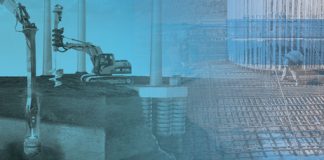
Founded in 1989 and based in Mooresville, North Carolina—it was acquired by The Tensar Corporation in 2002—GFC is a developer of the Rammed Aggregate Pier® (RAP) systems. These efficient and cost-effective Intermediate Foundation® solutions are used for the support of settlement-sensitive structures such as wind towers. “Our soil reinforcement systems are installed by our local representatives, often using locally-available aggregate materials found near the project site,” according to Brendan FitzPatrick, P.E., the company’s director of engineering and development for North America. “Construction basically consists of compacting successive thin lifts of high-quality crushed rock in a shallow cavity of varying depths using our patented ramming equipment, which increases the lateral stress and improves the soils surrounding the cavity. This results in foundation settlement control and greater bearing pressures to support large tower foundations, while substantially reducing construction schedules.”

Used to reinforce good to poor soils, RAP systems are in use around the world. GFC worked with wind farm development companies overseas prior to introducing the technology on wind farms in the United States. “Early on, we were able to share our European client’s testimonials with our customers throughout North America,” FitzPatrick explains, “which was really helpful in terms of gaining their confidence.”

Although Tensar Geogrid technology was originally developed in the United Kingdom, the company’s corporate headquarters are now based in Atlanta, Georgia. As with the Geopier System, Tensar Geogrids were first adopted on wind farm projects in Europe. “Our first project in this market was in 2005 at the Maple Ridge Wind Farm in upstate New York,” says Jim Penman, director of business development for TIC. “In total we have now been involved in more than 100 such projects around the world, with just under half of them here in the U.S.”

Penman explains that, although the trucks carrying wind tower sections might seem to represent the heaviest loads, it is actually the concrete trucks that are of most concern with respect to the performance of the access roads on wind farm sites. “The concrete trucks definitely do the most damage,” he says, “so we know that if our roads can support their weight they can handle everything else as well.”

The traditional method for creating an access road to carry the regular, heavy traffic required for wind farm construction weights and withstand the related churning of the massive tires involves placing a layer of aggregate base. This can be very time consuming and expensive, particularly on sites underlain by softer soils. By including a layer of Tensar Geogrid on top of the subgrade, the required aggregate thickness for the access roads can be reduced by as much as 60 percent. “Some contractors have indicated that on sites with weaker soils, construction of the access roads can represent as much as 20 percent of the overall development cost,” he says. “A Geogrid can also be used to strengthen the aggregate used to form the crane platforms at individual tower locations.”

Although each company focuses on different aspects of wind farm development, the combined teamwork and support offered under the Tensar Corporation is to the benefit of their clients in the wind industry. “There is a very close relationship between the two companies,” FitzPatrick says. “If you’ve got a site with challenging conditions that drive the need for foundation support using our RAP systems, then you’ll likely have the need for Tensar’s Geogrid as well. No matter the challenge, we are here to help wind farm project teams solve their challenging soil issues with timely and cost-effective solutions.” – R.W.  


To learn more:
Visit Geopier online at www.geopier.com, and Tensar International at www.tensarcorp.com.

Maintenance Profile: Eaton Corporation

0

Founded in 1911, Eaton Corporation has grown from a supplier of small truck parts based in Bloomfield, New Jersey, to a global diversified power management company. Now headquartered in Cleveland, Ohio, Eaton employs approximately 70,000 people worldwide and has customers in more than 150 countries. Having entered the renewable energies market nearly three decades ago, its wind capabilities have expanded to include electrical solutions such as maintenance services, substation construction, arc flash and power system studies, and retrofit upgrades. Hydraulic solutions include product and system design, pitch control devices, and training.

According to Steve Boccadoro, senior vice president of corporate sales and marketing, “Eaton has a long history of serving the wind energy market, and proof of our success is found in the caliber of the companies who use our products,” he says. “End users include Clipper Windpower, Suzlon, Vestas, Gamesa, GE Energy, and REpower Systems, just to name a few.”

 These big-wind giants rely on Eaton to provide products that improve reliability, increase efficiency, and enhance safety. Eaton’s products can be found in a number of nacelle subsystems such as electronic controls and distribution—turbine control panels, low- and medium-voltage drives and components, dry-type transformers, and uninterruptible power supply (UPS) systems—and pitch control systems for cylinders, valves, and proximity and speed sensors. The company also provides yaw control systems (motor drive and brake), accumulators, valve control and pressure sensors, power units, pump and filtration, electrical bus ducts, hoses, and hydraulic connectors.

Eaton is especially well known for its hydraulic pitch control solutions, which provide a number of advantages over electric systems. “They are faster and more responsive than electrical controls,” Boccadoro explains, “and you can activate emergency braking even if there’s no power. They are also less sensitive to lightning strikes, which are always a concern with utility-scale wind towers, and incorporating condition monitoring is a simple process.”

In addition, the company provides base-of-tower, turnkey collector substation construction, base-of-tower maintenance service, and aftermarket solutions. Its base-of-tower switchgear does not contain sulfur hexafluoride (SF6), which is an extremely harmful greenhouse gas—see Eaton’s related article in the February 2010 issue of Wind Systems magazine—and circuit breakers, such as the company’s new 38kV medium-voltage unit, are compact, reliable, easy to install, and require minimum maintenance.

For those utilizing its wind farm substation construction services, Eaton’s capabilities are extensive. On the design side, engineering and consulting services are available, as well as studies addressing topics such as power quality and reliability, energy management, arc flash and safety, and power-chain management. Build services include power management, safety and risk management, and power-chain equipment modernization. Turnkey project implementation is also available, offering single-point responsibility for the duration of the project, a centralized project management group with regional managers, standardized documentation control, nationwide subcontracting abilities, and multi-vendor equipment selection. Equipment startup and commissioning is available in the company’s support services portfolio, in addition to ongoing maintenance programs, operational and maintenance training, remote condition monitoring, and emergency assistance. 
 

With nearly a century of accumulated expertise, Eaton is also working to adapt many of its proven technologies for the benefit of the wind industry. Having designed large brake systems for mining, marine, and other demanding industries for more than 40 years, it is developing a brake system specifically for wind OEMs. It is also working to increase turbine reliability with new gearbox lubricants and state-of-the-art filtration systems. In addition, Eaton’s hydrostatic transmission reduces complexity and weight in the nacelle.

“As a longtime leader in the wind industry we’re known for providing the most reliable, efficient, and high-quality electrical, hydraulic, and mechanical power management technologies that are available,” Boccadoro says. “And that’s a reputation we work every day to live up to.”–  R.W.     


To learn more:
Call (800) 386-1911 or visit online at [www.eaton.com].

Manufacturing Profile: Lincoln Electric Co.

0

When John C. Lincoln founded The Lincoln Electric Company in 1895, he did so with a capital investment of $250 and with the sole purpose of manufacturing the electric motors that he’d designed. Before long its product line had grown to include battery chargers for electric cars, and it made its first welding set in 1907. Four years later, in 1911, the company introduced the world’s first variable voltage, single operator, portable welding machine. Today it leads in the design and manufacture of arc welding products, robotic welding systems, and plasma and oxyfuel cutting equipment. The company’s structure has drawn plenty of attention, as well, resulting in two case studies published by the Harvard Business School.

“John Lincoln was a true genius, and he wanted to spend his time conducting research and developing new products, so he handed the company’s reins over to his brother James in 1914,” according to Patrick Wahlen, global business segment director for the power generation industries. “James was the one responsible for introducing piecework pay and he also established our Employee Advisory Board, which is made up of elected representatives from every department. Soon after he provided group life insurance to all the company’s employees, which was very progressive for its time.”

This spirit of innovation has driven Lincoln Electric ever since, resulting in the development of additional policies that have drawn the attention of Harvard business students and others. Headquartered in Cleveland, Ohio, with 38 manufacturing facilities in 18 countries around the world—and sales offices covering more than 160 countries—its U.S. operations practice profit sharing among its employees, also guaranteeing job security to anyone who remains with the company for at least three years.

“This results in a ‘self-policing’ workforce, since your bonus depends on your coworkers doing a good job, too,” Wahlen explains, “and fewer managers are required to oversee their activities. It also leads to phenomenal employee retention, which allows us to retain the experience our workers have gained over the years.”

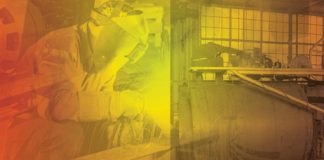
Lincoln Electric is able to provide similar efficiencies to its customers, particularly those involved in manufacturing towers for the wind industry. Harnessing its welding products with its knowledge of both processes and materials, the company has been able to increase productivity in its customers’ manufacturing facilities by 50 percent, and sometimes as much as 100 percent. “The price of our products must be competitive, of course,” he says, “but we would rather help our customers cut their production costs by 10 percent than discount the cost of a piece of equipment by the same amount. That’s where the real savings are found, and that’s not a one-time deal. These savings are ongoing.”

As a recognized expert in submerged arc welding, which is the process primarily utilized in the manufacture of wind tower sections, Lincoln Electric has been able to claim a 60-70 percent market share of new welding equipment sold into the global wind industry in recent years. Due to the quality of its products, this growth is also supported by the host of services it provides to its customers. The Lincoln Electric Welding School offers courses throughout the year on various arc welding methods, and its Welding Technology Center performs professional seminars on topics including the fundamentals of weldment design and advanced subjects such as fracture mechanics and fatigue. In addition, the company has more than 200 field technicians in the Unites States alone, helping clients to achieve maximum efficiency and gathering insights that will guide future product development.

“We are committed to engaging our customers in a very real way, using our products and expertise to deliver solutions to the challenges they face in meeting their manufacturing goals,” Wahlen says. “It’s a model that we’ve relied on for more than a century now, and it hasn’t failed us yet. More importantly, it hasn’t failed our customers.”–R. W.     


To learn more:
Go online to www.lincolnelectric.com.

Conversation with Curtis Smith

Could you give us an overview of the company?

Philip Seeger, our president and CEO, and Ben Petersen, the company’s COO, founded Medcor in 1984. They were both certified fire and rescue paramedics, as I was, and we ran an ambulance company together. A significant number of the calls we answered involved taking employees who were sick or injured at work to a clinic or hospital, and it soon became apparent that the vast majority of those visits really weren’t necessary. In fact, it was kind of a paradox in that you had to take the person to the doctor to see if they needed one in the first place, which resulted in an insurance claim being filed.

Many of these injuries could’ve been taken care of with simple first aid, and other complaints such as shortness of breath — sometimes signaling a heart attack — could have been detected much earlier. On one end of the spectrum serious things were being missed, and at the other end people were overreacting to fairly simple injuries. So we saw a niche that needed to be filled, and that’s what we’ve been doing for nearly three decades now.

Tell us about the services you provide on wind farm construction projects.

We view our clients as strategic partners, and they are everything from manufacturing facilities to government operations to entertainment venues. We operate clinics at Yellowstone National Park, for instance, and on pipeline projects. So we have a lot of experience providing occupational health services, and we immediately saw how well it would apply to wind farms under construction. Since the early days of the company, we have been developing and refining medical protocols with our physicians that are specifically focused on workplace injuries, no matter the setting. We have guidelines for how to address a cut, a concussion, or sudden pain in the chest or stomach. We know what to treat, how to treat it, and when it’s time to transport the employee to a hospital. We have also developed software to create electronic records documenting things like when someone was hurt, how, what the response was, and who the supervisor was at the time, which is great information for the company’s safety personnel.

Speaking specifically about wind farm projects, we work with the owner or construction company to determine exactly what their needs will be, taking the size of the farm, the terrain, the number of employees, and even the site’s proximity to full-scale hospitals into consideration. Then we can suggest different on-site trailer configurations to meet their requirements. We also discuss who will staff the clinic, and what they will do in addition to providing emergency medical services. A huge wind farm employing thousands of people that’s nowhere near a major city might call for a physician assistant to be on staff, while a registered nurse or paramedic would be adequate for most other operations.

All of our employees are OSHA certified for construction or general industry, depending on what’s called for, and they know when an incident is OSHA recordable. They can also conduct drug testing, audiometrics, and even respirator fit tests. So we’re not just sitting around waiting for an accident to happen, we’re an active member of the project doing our part to make it safe and productive, and to help our clients to avoid incurring workers’ comp claims.

How do you handle transportation, both on location and to hospitals when necessary?

We do a lot of advance work before the staff arrives at the clinic, as you can imagine. We familiarize ourselves with the available medical resources and reach out to ambulance and helicopter transport services to handle all the details in advance. As for how we access the workers who need our help, clinics are equipped with SUVs so that our staff can go to the site of the injury or complaint, which is especially important when a person has a broken limb or an open wound. Providing emergency medical assistance is a serious business, and we have the skills and experience we need to keep our partners’ employees safe and the project moving forward.

To learn more: Call (815) 363-9500 or go to www.medcor.com.