





Home 2022

Powertrain system to improve wind, water turbine efficiency

0
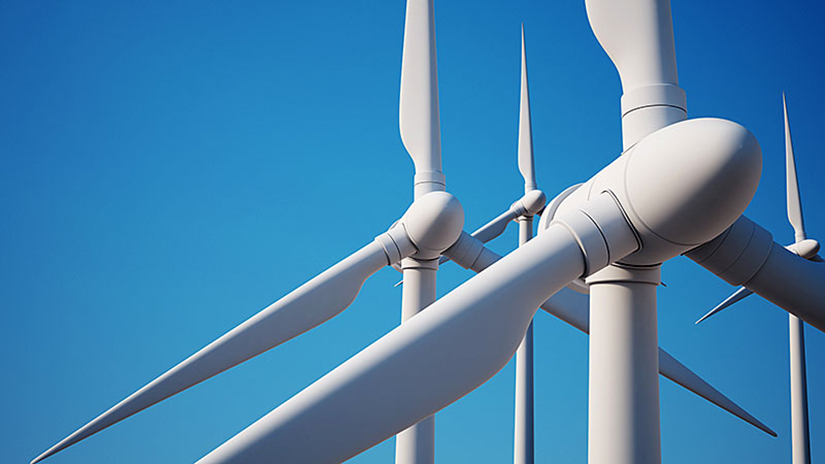
Purdue University engineers Jun Chen and Lizhi Shang have designed a powertrain system to improve turbines that generate wind energy and marine hydrokinetic energy. The design transmits power from the low-speed high-torque turbine to the high-speed, low-torque generator. It also uses water as the hydraulic fluid. (Courtesy: XtockImages)

Purdue University engineers have designed a low-speed, high-torque powertrain system to reduce the operation costs, maintenance costs, and environmental contamination of turbines that generate wind energy and marine hydrokinetic energy. A prototype is scheduled to be tested and analyzed at the university.

Jun Chen, a professor in the School of Mechanical Engineering, and Lizhi Shang, an assistant professor in the Department of Agricultural and Biological Engineering and School of Mechanical Engineering, said using a turbine is the most effective approach to harvest wind energy and marine hydrokinetic energy. It requires a powertrain system to transmit energy from the turbine to an electric generator.

“A turbine usually features high-torque, low-speed operation, but an electric generator prefers high, constant speed,” Chen said. “The speed ratio between the generator and the turbine can be higher than 100:1 and requires at least a three-stage gearbox.”

A conventional multistage gearbox has a fixed gear ratio, so an electric generator must run at variable speeds. Shang said the efficiency of a multistage transmission from turbine to generator is suboptimal. The fixed transmission ratio of a conventional turbine gearbox also limits generator efficiency.

“There have been some attempts to use hydrostatic transmissions in wind-turbine applications,” Shang said. “The main obstacles are maintenance and environmental concerns. They demonstrate low efficiency, frequently required maintenance and oil leakage.”

Chen and Shang’s powertrain design transmits the power from the low-speed, high-torque turbine to the high-speed, low-torque generator while maintaining constant generator speed.

Chen said the design allows for the detachment of the generator from the turbine.

“The generator can be placed at the ground level of wind turbines or the water surface level for marine hydrokinetic turbines,” he said. “This reduces the nacelle weight of the turbine and simplifies maintenance.”

Shang said the design also allows for smart, collective energy harvesting using an array of individual turbines and one or more centralized generators.

“Turbines can be connected fluidly to their neighbor turbines,” he said. “A common, high-pressure fluid network can be established to connect all the turbines and generators of a collective turbine array. The network allows for strategically selective operation of the generator to keep some of the generators running at their most efficient points and shut down the rest to reserve lift time.”

The technology includes the hydraulic unit design, system architecture, control and integration strategy, and supplemental systems for filtration, cooling, bearing, and sealing. It can be implemented in existing turbines with only moderate modifications. The design also uses water as the hydraulic fluid, which allows for generator speed regulation, Chen said.

“The energy losses for regulating electric power frequency can be eliminated,” he said. “Compared to an existing hydrostatic wind-turbine powertrain, our technology is more efficient, up to 90 percent. Water is a better working fluid for long-distance hydraulic power transmission, which enables collective energy harvesting. It is easy to refill, and leakage causes less environmental damage than conventional mineral-based hydraulic oil.”

The next step in developing the new powertrain is to test the prototype in a towing tank at Purdue. Data will be collected, measured, and analyzed, which will lead to further improvements on the design.

Chen and Shang disclosed the powertrain design to the Purdue Research Foundation Office of Technology Commercialization. OTC has applied for a patent to protect the intellectual property. Industrial partners seeking to further develop or license the technology should contact Dhananjay Sewak at dsewak@prf.org.

MORE INFO  www.prf.org/otc
GreenSpur, Niron develop Rare earth-free generation solution

0
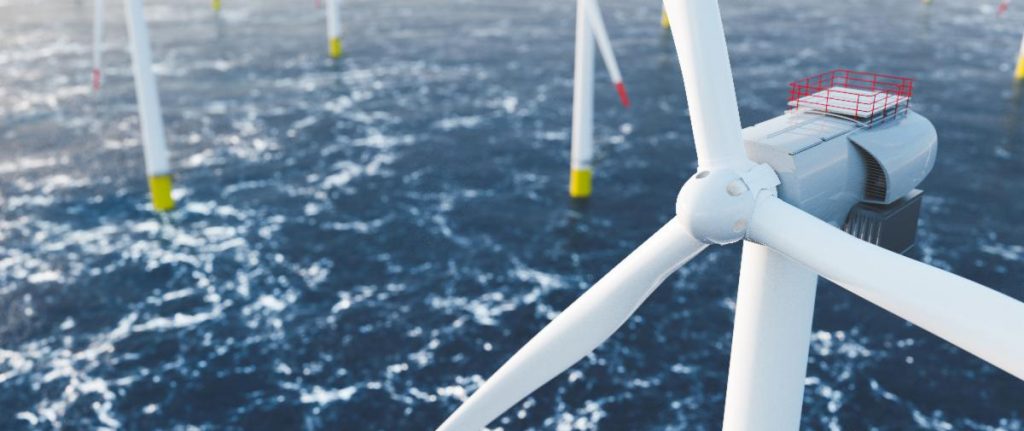
GreenSpur Wind and Niron Magnetics collaborated on a rare-earth free generation solution for the offshore wind market. (Courtesy: GreenSpur Wind)

GreenSpur Wind and Niron Magnetics announced a new rare earth-free generation solution for the offshore wind market. The findings have been verified by ORE Catapult, a UK technology innovation and research center for offshore renewable energy.

“Existing turbines use radial-flux generators, and the current designs are reliant on rare earth magnets,” said Andrew Hine, commercial director at GreenSpur Wind. “However, we employ a unique and highly innovative axial-flux architecture that makes the use of rare-earth free magnets possible.”

Past iterations of the GreenSpur generator had attracted interest, but there were concerns about its mass. Keeping generator mass within the same range as existing machines is important, as adding weight requires more structural support, which increases cost. By designing with Niron’s Generation 1 Clean Earth Magnet, which offers stronger magnetic performance than the ferrites used in its earlier generator designs, GreenSpur developed a new 15MW generator. Based upon initial non-optimized results, the new generator delivers a significant 56% reduction in mass.

“Our Clean Earth Magnet technology helps eliminate reliance on expensive, supply constrained, rare earth-based magnets, without compromising on performance,” said Andy Blackburn, CEO of Niron Magnetics. “Device designers and manufacturers take our technology and realize its impact. By working with GreenSpur, we have been able to demonstrate what can be achieved with our Generation 1 technology in wind applications, with innovative materials and innovative device design coming together to enable a potentially transformative solution for the offshore market.”

Supported by an Innovate UK grant, the new 15MW generator design was reviewed by ORE Catapult, the UK’s leading technology innovation and research center for offshore renewable energy. The review confirmed that GreenSpur’s 15MW generator design is now able to meet the mass and efficiency targets required by the market.

“We have worked with GreenSpur in support of their hugely innovative and disruptive technology for several years. Although there was interest in a rare earth-free solution, there were concerns that their generator would be too heavy. However, with Niron’s novel rare earth-free magnet, GreenSpur is able to show attractive mass and efficiency targets and a credible solution for consideration within a next generation turbine. We are now helping GreenSpur and Niron to present this opportunity to OEMs, developers, and strategic investors. The aim is to create an industry consortium with the right combination of players to bring this offering to market,” said Tony Quinn, Director of Technology Development at ORE Catapult.

“The risk that the rare earth magnet supply chain poses to international offshore wind is existential. For the first time, we have a path that takes this risk out of the equation,” said Hine.

MORE INFO  greenspur.co.uk

X1 Wind ready to install PivotBuoy prototype

0
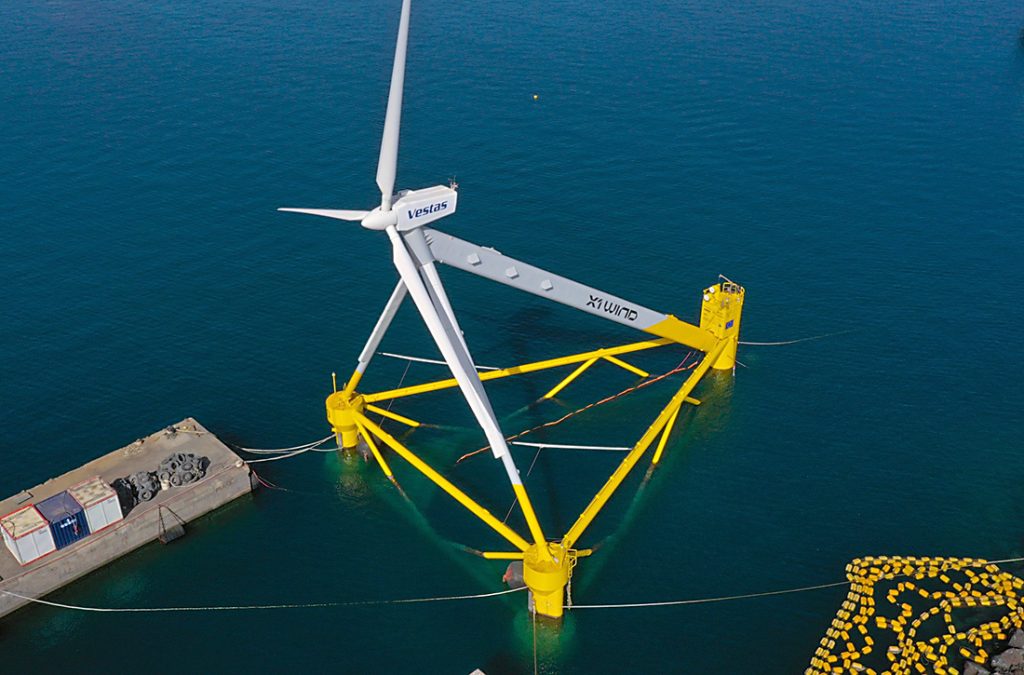
X1 Wind is ready for the PivotBuoy prototype installation after laying of its dynamic cable. (Courtesy: X1 Wind)

Technology developer X1 Wind has laid its dynamic cable and is now ready for final installation of its floating wind prototype at the PLOCAN Test Site, in the Canary Islands.

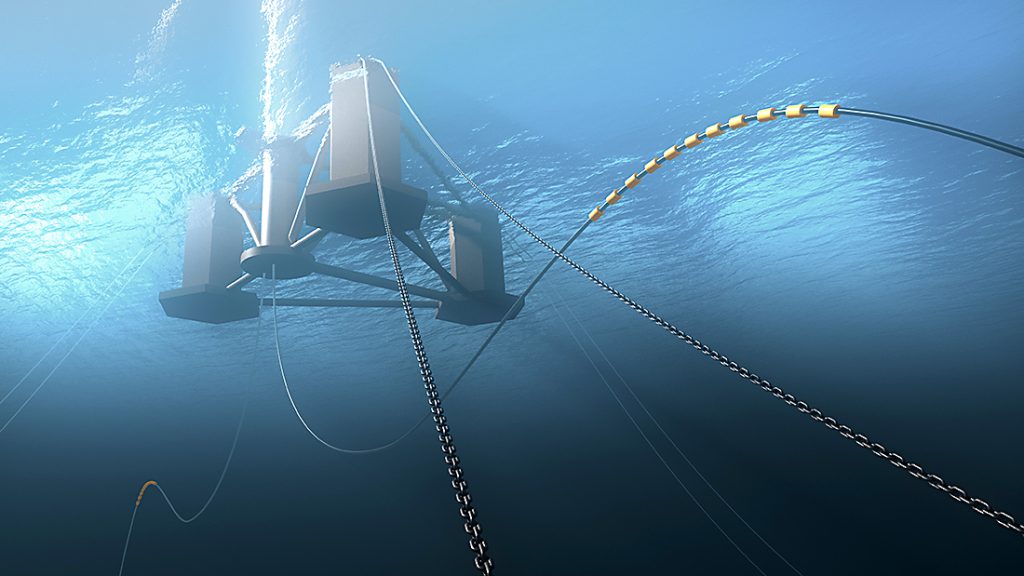
“The 20kV dynamic cable will allow us to fully validate the floater and wind turbine performance, feeding the electricity to PLOCAN’s smart grid, as well as transmitting data through its fiber optic connection. Also, we will be able to validate the cable’s dynamic behavior. Understanding how our TLP mooring system reduces motions and loads on the cable, compared to catenary systems, is crucial as it will reduce fatigue and potentially extend the lifetime of this critical component,” said Adrian Oliva, X1 Wind’s electrical engineering manager.

X1 Wind’s team will wait for a suitable weather window to complete the towing and hook-up of the prototype.

X1 Wind’s technology is fitted with a turbine in a downwind configuration, enabling the structure to “weathervane” and orientate passively to maximize energy yields. It drives greater structural efficiency with a light and flexible design, which further supports future mass production at lower cost. The platform uses a Tension Leg Platform (TLP) mooring system which reduces the platform and cable dynamic motions, minimizes the footprint on the seabed, as well as allows its installation in deep waters.

“With the launch and implementation of  X1 Wind X30 model, connected with our special dynamic cable, we finished another project for developing clean and sustainable energy. We are very pleased and proud to have participated in the realization of such a visionary project. Congratulations to the whole team and best wishes for success. We look forward to participating in more new energy projects with X1 Wind,” said Rui Batista, Hengtong central Europe region sales director.

MORE INFO  x1wind.com

Cerulean Winds to bid for 4 seabed lease sites

0
Each site would abate tens of millions of tons of CO2. (Courtesy: Cerulean Winds)

Green energy infrastructure developer Cerulean Winds will bid for four seabed lease sites to decarbonize the UK’s oil and gas sector as this scale will remove more emissions quickly, keep costs lower for platform operators, and provide the anchor for large scale North-South offshore transmission.

The floating offshore wind and green energy proposal for Crown Estate Scotland’s Innovation and Targeted Oil and Gas leasing round (INTOG) includes four 1.5 GW sites of floating wind power.

With more than £6 billion of investment proposed for each 100-turbine site, the scheme would abate tens of millions of tons of CO2 in line with North Sea Transition Deal targets.

Cerulean Winds, with its selected delivery partner NOV, has been engaging the supply chain for more than 18 months and has a live request for information (RFI) with UK yards for the fabrication and assembly of its tri-floater technology.

The development would create more than 10,000 jobs, many of which would be high value manufacturing jobs in Scotland.

“We have a big, bold bid, which is ready to go on scaling the green economy, creating thousands of jobs and making Scotland’s oil and gas production the cleanest in the world,” said Dan Jackson, Cerulean Winds founding director.

“We are absolutely committed to the local supply chain benefitting from this development and far surpassing local content targets. Our base structure design can be floated in very shallow water depths suitable for the UK, unlike alternative cement floating wind structures which require 90 metres so can’t be built here,” Jackson said.

“There is a lot of concern about rising energy prices and energy security. Wind and green energy at this scale are a big part of the solution. We are engaging with oil and gas operators and can see the appetite is there to get behind cleaning up production, and we can deliver in a way that minimises disruption. Whilst smaller piece meal wind developments are useful for testing concepts or innovations, it will take a UK wide solution to remove the emissions at the pace required to hit the net zero targets governments. Furthermore, our large scale scheme lowers the LCOE — cost of the power — which is highly attractive to the operators,” Jackson said.

 MORE INFO  ceruleanwinds.com

DNV names climate equity associate director

0
Cici Vu

DNV has named Cici Vu as an associate director of energy and climate equity.

Vu has more than a decade of experience across climate change, water and air quality, energy, natural resources, transportation, housing, homelessness, public health, and safety sectors. An experienced mediator and facilitator, she works with utilities, public agencies, and investors, who are benefactors and advocates of clean energy investments, to develop strategies, which consider and engage vulnerable and hardest-impacted communities. Vu helps stakeholders navigate politically complex environmental, social and racial conflict, and large-scale, collaborative programs involving government agencies, philanthropic entities, and underserved / environmental justice communities.

“We consume energy as pervasively as we do water, air and food for our basic health and well-being. Yet, egregiously, more than one-third of our communities in the U.S. face basic, yet wrenching trade-offs: heat or eat? To achieve an equitable energy transition, our frontline communities must be empowered to self-determine the solutions right for them,” Vu said.

MORE INFO  dnv.com

First recyclable wind turbine blades installed in Germany

0
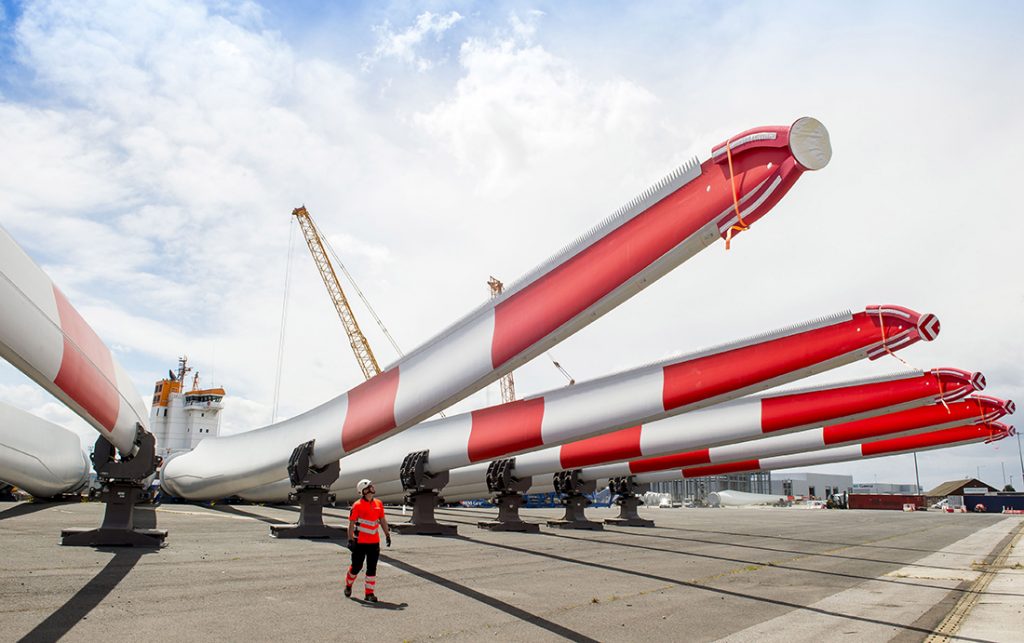
Siemens Gamesa RecyclableBlades leave Hull for the Kaskasi offshore development. (Courtesy: Siemens Gamesa)

Siemens Gamesa’s RecyclableBlades are generating electricity in the first commercial installation of fully recyclable wind turbine blades, at RWE’s Kaskasi offshore wind power project in Germany.

Siemens Gamesa’s RecyclableBlades are generating electricity in the first commercial installation of fully recyclable wind turbine blades, at RWE’s Kaskasi offshore wind power project in Germany.

“We are proving that as the leaders of the offshore revolution, we are committed to making disruptive technology innovation commercially viable with the pace that the climate emergency demands. We’ve brought the Siemens Gamesa RecyclableBlade technology to market in only 10 months: from launch in September 2021 to installation at RWE’s Kaskasi project in July 2022,” said Marc Becker, Siemens Gamesa offshore business unit CEO.
“This milestone marks a significant contribution to Siemens Gamesa’s target of having fully recyclable turbines by 2040. With RecyclableBlade available for our customers, we can create a virtuous circular economy,” Becker said.

Wind turbine blades are made up of a combination of materials embedded in resin to form a strong, stiff structure. Utilizing Siemens Gamesa’s RecyclableBlade technology enables full reclaim of the blade’s components at the end of the product’s lifespan. Separating the resin, fiberglass, and wood, among others, is achieved through using a mild acid solution. The materials can then go into the circular economy, creating new products such as suitcases or flat-screen casings without the need to call on more raw resources.
“That we are testing in our offshore wind farm Kaskasi the world’s first recyclable wind turbine blades under operational conditions is a significant step in advancing the sustainability of wind turbines to the next level,” said Sven Utermöhlen, RWE Renewables’ CEO Wind Offshore.

A number of turbines at RWE’s Kaskasi offshore wind farm will be equipped with handcrafted Siemens Gamesa B81 RecyclableBlades, each with a length of 81 meters. The project is located 35 km north of the island of Heligoland in the German North Sea. It will be comprised of 38 SG 8.0-167 DD wind turbines, generating 342 MW of clean, renewable energy for up to 400,000 German households.

“The first power being generated from the first turbine using RecyclableBlades also underscores the great value creation provided by Siemens Gamesa in several countries. The RecyclableBlade technology was developed in Aalborg, Denmark, the blades were manufactured in Hull, UK, and the nacelles were produced in and installed from Cuxhaven, Germany. RecyclableBlade technology will help reduce raw material extraction by creating the potential for secondary markets for the reclaimed material, with the job creation that this could provide as an additional benefit in local markets,” Becker said.

The RecyclableBlade technology is also available for the 108-meter long B108 blades used on the SG 14-222 DD offshore wind turbine and the 115-meter long B115 blades SG 14-222 DD turbines.

MORE INFO  siemensgamesa.com/en-int

ematec to present new blade lifting beam at WindEnergy

0

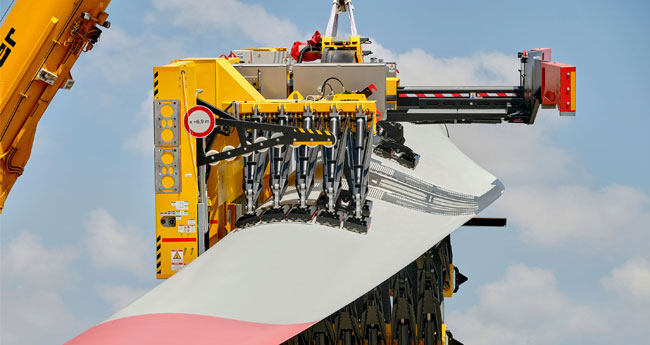
Ematec, a specialist supplier of lifting equipment for the wind industry, is using WindEnergy 2022 in Hamburg, September 17-30, for an extraordinary presentation (Hall A1, Stand 415). For the first time, ematec will show an offshore version of its innovative RBC-D rotor blade lifting beams and also will show visitors a world first with revolutionary potential: the new RBT-C50, an offshore lifting beam of a completely new dimension that can pitch rotor blades by 90 degrees before assembly.

Patent-pending technology: the automatic adaptive blade support of the RBC series yokes is a patent-pending technology. (Courtesy: Ingo Jensen/ematec)

“I am very proud that we can offer the trade two new developments for rotor blade assembly in the offshore sector at WindEnergy Hamburg; this is another milestone for us,” said Manfred Eberhard, CEO of ematec AG. “Up to now, we have mainly asserted ourselves onshore and established our yokes as benchmarks. But we also want to make rotor blade assembly and maintenance at sea as efficient and safe as possible. So, we have been working diligently. And in short: we can now also do offshore.”

With the RBC-D generation of yokes, ematec has revolutionized the assembly of rotor blades. The highlight: The cross beam can accommodate all blade shapes on the market without changeover times. This is made possible by the automatic adaptive blade support, with which the crosshead automatically adapts to each rotor blade shape. That was previously only possible on land; now, it is available for rotor-blade assembly at sea. The RBC-D40 offshore can safely pick up and handle rotor blades of up to 40 metric tons — regardless of the blade shape. This makes the innovation predestined not only for initial assembly but also for the maintenance of offshore wind farms.

The second innovation for the offshore sector is still in the middle of development. The new yoke RBT-C50 combines the technological advantages from the RBC and RBT worlds and thus offers automatic adaptive blade support (RBC) on one hand and a pitch angle of 90 degrees (RBT) on the other.

“This means that our latest development definitely has the potential to revolutionize the assembly of offshore wind turbines,” Eberhard said.

Because on the vessels, rotor blades are usually transported standing up in their racks. On the other hand, a lying position of the blades is advantageous for single-blade assembly to keep the wind attack area and lost days due to wind as low as possible.

“Especially concerning cost efficiency, this is an issue when considering that a transport vessel can cost a six-figure sum per day,” Eberhard said.

To combine the advantages of an upright delivery of the blades with those of a horizontal assembly, the rotor blades have to be pitched 90 degrees before assembly.

“This is exactly what our latest development will be able to do,” Eberhard said.

At WindEnergy Hamburg, ematec will be presenting not only its innovations for the offshore sector but also, and above all, its successful RBC-D series for onshore assembly. The ematec technology is patent-pending, and wind-turbine manufacturer Enercon relies on yokes with automatic adaptive blade support. Enercon now has six RBC-D42 crossheads in use worldwide for rotor blades with blade weights of up to 42 metric tons. For heavier blades weighing up to 50 metric tons, Enercon had also ordered eight RBC-D50 yokes; ematec has already delivered three of these to Enercon. The second round of orders recently followed with a further six RBC-D50 yokes.

“Our RBC-D yokes are extremely well-received on the market, as the current orders show,” Eberhard said. “We manufacture at full speed at our production site in Memmingerberg. It confirms again that we have developed into a real specialist for lifting gear in the wind-power industry over the years.”

This year, the specialist supplier ematec is not only celebrating a host of innovations but also a double anniversary: 25 years of ematec and 10 years of expertise in the wind-power industry. In 2012, ematec AG entered the wind power industry with its first rotor blade traverse, the RBT 11.5.

“With our first development, we made a significant contribution to the international acceptance of single-blade assembly,” Eberhard said.

This was followed by the “bunny” version for safe bunny-ear mounting on gearless turbines. With the RBC series, ematec has set another benchmark in onshore single-blade mounting.

More info: www.ematec.com

ONYX Insight: Offshore wind Digitalization needs to ramp up

0
Only 20% of top global offshore asset owners are making full use of digitalization, according to ONYX Insight. (Courtesy: ONYX Insight)

Owners and operators of offshore wind projects need to accelerate adoption of digitalization in a bid to head off the impact of soaring costs and supply chain challenges, according to ONYX Insight, a provider of data analytics and engineering expertise to the global wind industry.

Despite the first offshore wind turbine being installed more than 30 years ago, and there being more than 55GW of offshore wind capacity worldwide, now just under 30% of UK offshore wind farms are implementing linked-up digital tools across their operation beyond relatively basic condition monitoring.

Turbine manufacturers face pressure to deliver against full order books while keeping prices low. They are responding to this challenge by developing newer, larger turbines with greater power density and more complicated designs.

The speed of turbine technology development means that banks and investors do not typically finance the same turbine model twice, resulting in a limited track record and potentially greater risk exposure for offshore asset owners. At the same time, asset owners are under increasing pressure to make projects profitable in a competitive auctions environment. Digitalization holds the key to de-risking new turbine technologies, keeping O&M costs low and unlocking new efficiencies in offshore wind.

For offshore in particular, there are savings to be made in optimizing marine logistics. Crew hire, offshore cranes, and jack-up vessels, for example, all come at high costs. By using digitalization, owners and operators can rationalize vessel trips and construct collaborative maintenance zones, where wind farms in close proximity synchronize O&M needs, sharing the cost burden.

Digitalization can enable the introduction of condition-based maintenance, targeting minor repairs – which are typically overlooked, but account for about half of scheduled O&M costs and have significant potential for optimization. Additionally, by implementing coherent digital strategies early, operators can support  life-extension strategies from day one, ensuring that the offshore turbines of today keep performing optimally well into 2050.

“This is an exciting but challenging time for the offshore wind industry,” said Evgenia Golysheva, Vice President of Strategy and Operations at ONYX Insight. “Huge demand for projects and a continual drive to lower the levelized cost of energy is squeezing turbine manufacturers, who are reporting enormous losses, limiting their ability to scale up and innovate,” Goysheva said.

“Given the precariousness of the macroeconomic situation, coupled with rocketing project demand all over the world, and the effect that this combination is having on supply chains, digitalization presents offshore wind operators and owners with a chance to empower their operations and increase efficiencies, independent of other industry stakeholders.

MORE INFO  onyxinsight.com

B & K Vibro names Volker Polonyi as new CEO

0
New B&K Vibro CEO Volker Polonyi has 35 years of experience in bearing and linear technology. (Courtesy: B & K Vibro)

Brüel & Kjær Vibro (B&K Vibro), an independent supplier of condition monitoring solutions for rotating machinery, has named Volker Polonyi as its new CEO and president.

Most recently at B&K Vibro’s parent company, NSK, Polonyi was director of the European Technology Centre, a regional research and development facility, that developed advanced bearing technologies to ensure that customers could respond effectively to challenges in their business environment.

Polonyi brings with him 35 years of experience in bearing and linear technology, having also served as NSK’s managing director for industrial bearing sales; sector manager for wind power technology; and head of application development.

“In his many years with NSK, Volker has successfully developed and executed commercial and digital strategies that create customer value through technology. The expertise that he brings from NSK, coupled with his industry knowledge and leadership skills, are exactly the right combination to drive the condition monitoring business of B&K Vibro to the next level. His appointment marks an exciting milestone for B&K Vibro,” said Dai Kodama, NSK’s chief integration officer.

“There are clear synergies between B&K Vibro and NSK, with a huge degree of shared talent and knowledge and we have been working together successfully to deliver exciting, innovative business and engineering solutions. As CEO and president of B&K Vibro, I am looking forward to working with our customers, colleagues and partners to expand our business, capture new markets and drive long-term growth,” Polonyi said.

MORE INFO  www.bkvibro.com

Vestas gets repower order from Sacramento 

0
With this order, Sacramento’s collective Solano Wind Project will have a total capacity of about 300 MW. (Courtesy: Vestas)

Vestas has received an 86 MW order from Sacramento Municipal Utility District (SMUD) to repower the Solano Wind Project Phase 4 wind farm in California. The order consists of 19 V150-4.5 MW wind turbines, which will replace the site’s current legacy V47-660 kW wind turbines. With this order, the collective Solano Wind Project will have a total capacity of about 300 MW.

“Repowering wind turbines is an efficient solution to extend the life of a wind project, and we’re thrilled SMUD is partnering with Vestas once again on the Solano 4 project phase and utilizing our proven 4 MW platform technology to bring renewable energy to the greater Sacramento area,” said Laura Beane, President of Vestas North America.

“SMUD has long partnered with Vestas, a world leader in sustainable technologies, to produce wind power generation at the Solano Wind Farm,” said Chief Zero Carbon Officer Lora Anguay. “The retooling and expansion of the Solano Wind Farm will further boost SMUD’s clean energy mix with proven clean energy technologies and is a step forward in our vision of eliminating all carbon emissions from the region’s power supply by 2030.”

The order includes a full Engineering Procurement Construction (EPC) contract. Vestas will provide a full solution with delivery, installation, and commissioning of the turbines.

“Partnering with SMUD each step of the way on this project solidifies the trust and collaboration between Vestas and SMUD, and we look forward to showcasing our end-to-end capabilities as we repower the Solano 4 project,” said Ramit Bajaj, Senior Vice President of Construction & Operations for Vestas North America.

The order also includes a 10-year Active Output Management 5000 (AOM 5000) service agreement, designed to ensure optimized performance of the asset. To further strengthen the partnership with SMUD and ensure the successful operations of the collective Solano Wind Project, Vestas also extended its multi-year service agreements for the Solano 2 and Solano 3 project phases at the same site.

Turbine delivery for Solano 4 begins in the fourth quarter of 2023 with commissioning scheduled for the second quarter of 2024.

MORE INFO  www.vestas.com

Exus to manage 3 Pennsylvania wind farms

0
Vitol’s agreement with Exus brings the partnership to almost 500MW of combined wind assets in the U.S. (Courtesy: Exus Management Partners)

Exus Management Partners, an investment and asset management firm focused on the renewable energy sector, is partnering with commodities trader Vitol to manage three wind farms, totaling 244.4 MW, in Pennsylvania.

Exus will deliver full construction, energy, and asset management across the portfolio, applying latest wind technology to increase annual energy production and extend asset life. Exus has a detailed knowledge of the projects, having been involved in their original development and construction.

Vitol’s agreement with Exus brings the partnership to almost 500MW of combined wind assets in the U.S., following the 240MW Big Sky Wind farm repowering and management deal in Illinois, which began in 2021.

“Our ethos is to always deliver highest-grade work on or before deadline, and above expectation, and we are delighted to see our partnership with Vitol continue to mature within that framework. It’s an exciting time within the industry, and we look forward to continuing to offer our support to Vitol, a significant player in the ambitious and energetic drive towards a cleaner future,” said Dhaval Bhalodia, partner and head of Asset Management North America at Exus.

“Collaborating with Exus in the field of renewable asset management is a significant opportunity for both businesses. After successfully working together on our Big Sky project, we value the experience, expertise and added value they are able to deliver across our renewables portfolio,” said Andrew de Pass, Vitol Inc.’s head of renewables.


MORE INFO  https://www.exuspartners.com/

Rovco begins 3-year contract for Beatrice offshore wind farm

0
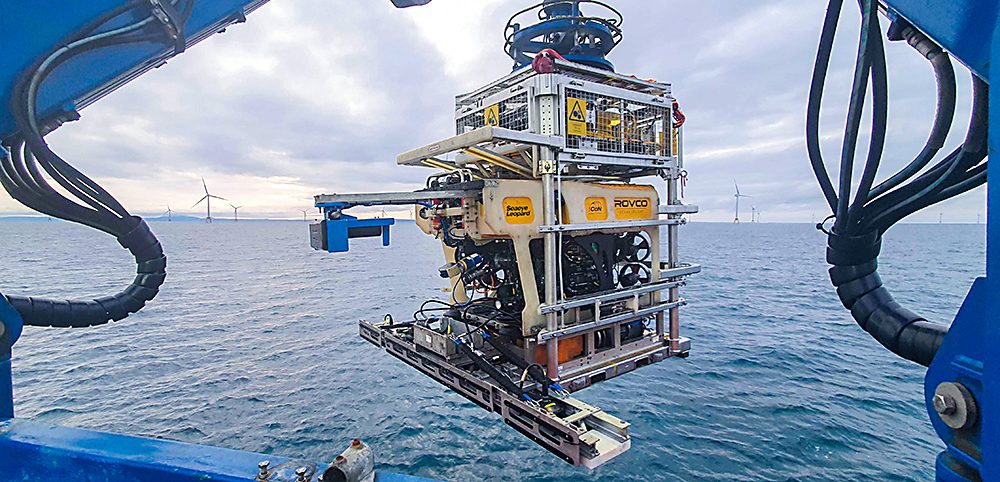
Operational since June 2019, the Beatrice Offshore Wind Farm is located about 13km from the Caithness coast, and has a rated capacity of 588 MW. (Courtesy: Rovco)

For a third year, Rovco, a provider of offshore subsea and survey solutions, has been awarded a contract to carry out work on the Beatrice offshore wind farm, Scotland’s second-largest operational offshore wind farm.

The project will be delivered by Rovco’s UK-based team, and will involve survey work on all inter-array cable and subsea jacket locations across Beatrice. The survey work provides a focused approach to the monitoring and reporting of asset and critical infrastructure conditions, delivering insights that enable the planning of potential preventative maintenance and remedial works.

The project will use the Glomar Worker DPII vessel, equipped as standard with a Work-class ROV, SubSLAM X2 and associated survey tooling suite, along with PanGeo Subsea’s 3D Sub-Bottom Imager™ to perform cable depth of burial assessments. The delivery of the project, managed from Rovco’s operational base in Scotland, will support further full-time employment opportunities across the local region.

Having worked on more than 50% of operational wind farms in UK waters, remaining incumbent at Beatrice strengthens Rovco’s continued expansion. The business’ growth is further supported by the recently announced completion of a £15.2m Series B funding round into the business.

“We are thrilled to have been awarded the year three scope of work for Beatrice Offshore Wind Farm Ltd, under this prestigious framework agreement. The team at Beatrice are early adopters of technology that helps drive efficiencies and smarter ways of collating and presenting valuable data. Delivering the highest quality insight available on the market, we ensure that the Beatrice team have the necessary information to fully inform their ongoing operations and maintenance planning and decision making,” said Simon Miller, Rovco managing director.

“Crucially, our offshore setup and technology selection enables us to operate whilst the wind farm is still operational and producing energy. In addition to our own team of experts, we are pleased to be leveraging local supply chain partners and talent, ensuring the successful, safe and timely completion of the work on Beatrice,” Miller said.

“We are delighted to have Rovco back on site again to continue their long-running relationship with the Beatrice Wind Farm. Rovco consistently provides high quality data which allows for our teams to gain a detailed insight into long term integrity management requirements, enabling us to optimise through-life operational costs. Alongside Rovco’s approach to innovation, their safety culture continues to align with our core values – with complex works completed efficiently and with a strong safety focus,” said Matthew Henderson, Beatrice Offshore Wind Farm’s subsea and structural engineering manager.

MORE INFO  www.rovco.com

Ventus Group gets DNV certification for inspection service

0
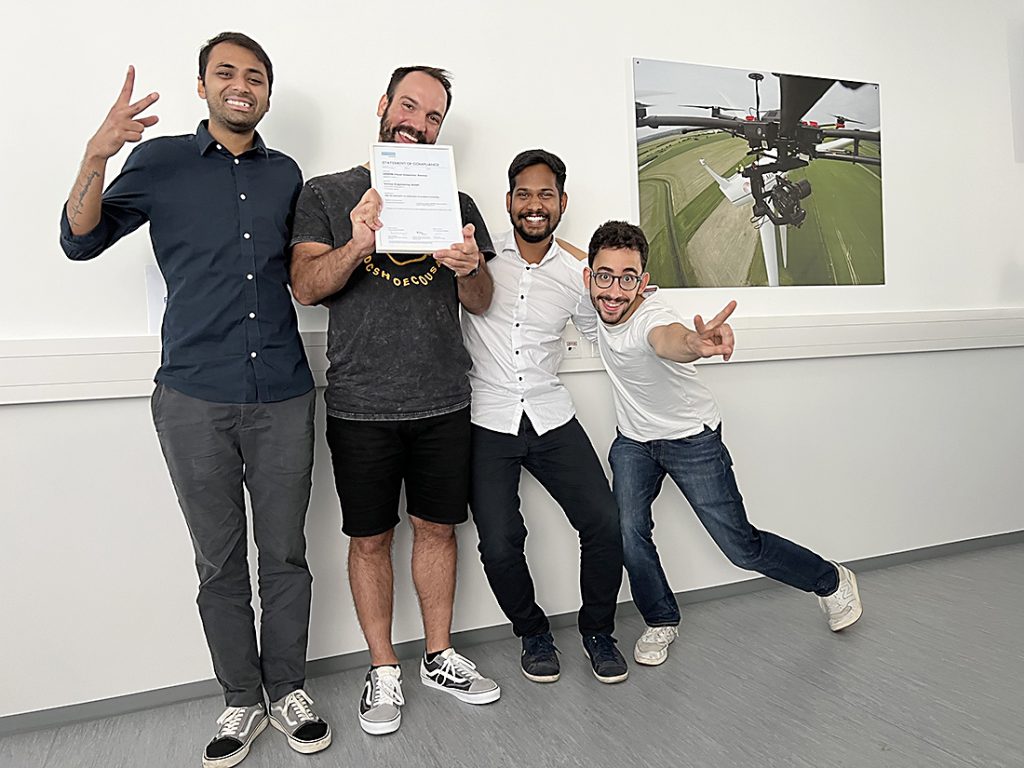
Ventus Group’s DNV certification comes as the company is experiencing a period of fast expansion on a global scale. (Courtesy: Ventus Group)

Ventus Engineering GmbH, supplier of end-to-end optimization solutions within the type approval envelope for excellence in wind-turbine performance, has been certified from DNV according to the standard DNV-SE-0439-2021-10 Certification of Condition Monitoring for Wind Turbines, for its Dynamic Relative Blade Pitch angle Misalignment (DRBPM) inspection service.

This innovative technology consists of a high-speed camera coupled with onsite image processing software that accurately and efficiently measures relative blade-pitch angle misalignment while the turbine is still in operation.

Just one degree of relative blade pitch angle misalignment between two blades could result in a 2 percent loss of power production and additional loads.

The cutting-edge Dynamic Blade Pitch Angle Measurement performed while the wind turbines are in operation enables Ventus to accurately see the relative blade pitch misalignment, and then, blade pitch angles can be adjusted to be within ±0.30 as required on the affected wind turbines.

Ventus offers this service on wind turbines located both onshore and offshore.

The DNV evaluation assessed and finally certified the overall method and procedure performed by Ventus for the accurate calculation of relative blade pitch angle misalignment between the wind-turbine blades with a review of the respective documentation material and field demonstration.

The DNV certification comes as Ventus Group experiences a period of fast expansion on a global scale. Headquartered in Austria, the company has a well-established presence in Europe and the U.K. In 2021, the company also entered the Indian market for the first time.

“The certification from DNV is a unique technological benchmark for the industry,” said Ventus Group CTO Poul-Anker Lübker. “It means our customers can put their trust in our top-level analysis methods and documented results.”

MORE INFO  www.ventus.group

Clean power CEOs, senior leaders sound alarm on legislation that could halt U.S. offshore wind growth

0

The American Clean Power Association (ACP) released a letter to Senate leadership from ACP CEO Heather Zichal and 24 of the leading CEOs and senior leaders in the offshore wind sector raising concerns with language in the House-passed Don Young Coast Guard Authorization Act of 2022. If enacted, the bill would change longstanding rules for manning vessels in U.S. waters and potentially stall offshore wind development, preventing the U.S. from achieving the target of deploying 30,000 MW of offshore wind by 2030.

The ACP letter notes that if this provision is enacted, the U.S. will not see offshore wind energy deployed at scale for many years, and some projects may even be canceled. This would threaten tens of thousands of potential new American jobs in the manufacturing and maritime sectors, affect U.S. energy security objectives, and severely curtail the emissions reduction targets that are dependent upon the industry’s continued development.

The letter was sent to Senate Majority Leader Charles Schumer (D-NY), Senate Minority Leader Mitch McConnell (R-KY), and Senate Commerce, Science, and Transportation Committee Chair Sen. Maria Cantwell (D-WA) and Ranking Member Sen. Roger Wicker (R-MS).

The letter states:

“As written, the House maritime crewing provision is an existential threat to the future of offshore wind in the United States and the immediate result would be the delay and potential cancellation of the 19 offshore wind projects with power offtake contracts or awards. The provision would require, within 120 days of passage, that crews on specialized offshore international construction vessels match the flag of the vessel or be American mariners as a condition of working on the U.S. Outer Continental Shelf … The crewing provision would thus serve to block the use of these international specialized offshore vessels when there are currently no U.S.-flagged specialized construction vessels to do the work needed.”

“A majority of the vessels used by the offshore wind industry will be made in America and crewed by U.S. mariners … In addition to the number of vessels, U.S.-flagged vessels such as crew transfer vessels and service operation vessels will have the greatest amount of vessel hours because they will perform all transportation activities between U.S. ports and offshore wind turbines during the approximately 35-year lifetime of the project,” the CEOs and company leaders said in the letter.

“Offshore wind represents a tremendous opportunity for the American economy, and we have already committed to at least $4 billion in U.S.-flagged vessels, workforce training, and supply chain development. The first step Congress should take to promote continued American offshore wind growth is to focus policy solutions on the root cause of the problem: a lack of U.S. mariners, a shortage of U.S.-flagged ships, and uncertain timing of approvals on offshore wind Construction and Operations Plans,” the letter said.

The letter urges Congress replace the provision with policy incentives to build more U.S.-flagged vessels.

The leaders concluded in the letter, “Ultimately, the offshore wind industry and Congress have the same goal: maximizing the number of Americans employed in offshore wind, including mariners. Building out the domestic offshore wind industry will pay enormous economic development benefits and aggressive deployment of offshore wind will make a material contribution to our domestic energy security. We need reasonable policies and predictable permitting timelines, not impossible mandates.”

The full ACP letter can be viewed here.

ACP’s offshore wind maritime crewing fact sheet can be downloaded here.

More info: www.cleanpower.org

VelociWrapper awarded patent for cable-wrapping machine

0
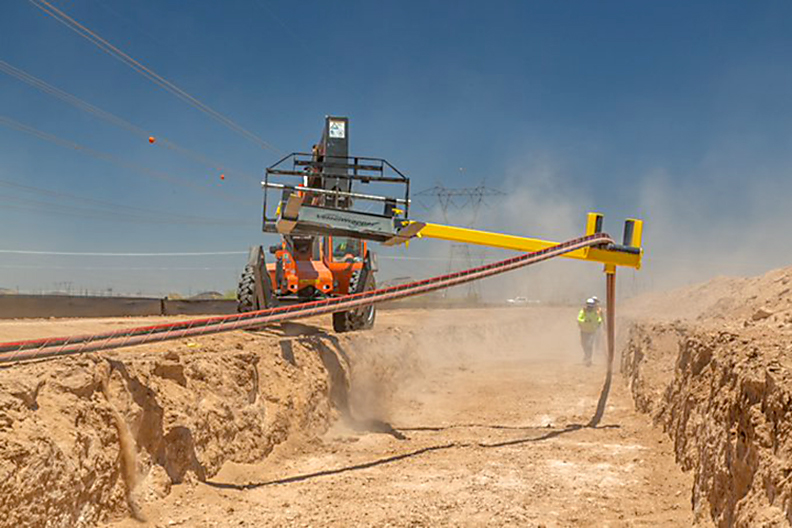
The VelociWrapper is a newly patented product that speeds up clean-energy installation. (Courtesy: VelociWrapper)

The VelociWrapperTM Company has been awarded a patent by the United States Patent and Trademark Office for its flagship product, the VelociWrapper, a cable-wrapping machine that increases speed and efficiency while reducing costs for wind and solar farm installations in the renewable energy construction sector.

The International Energy Agency (IEA) predicted in 2012 that global solar energy generation would reach 550 TW/h by 2030. That number was exceeded by 2018, illustrating that the growth of solar and wind energy has not been linear, but exponential.

“Due to the demand for our machine, we have already outgrown our first facility and are currently moving our manufacturing operations into a facility five times the size to accommodate the growth,” said Torrance Bistline, the founder and inventor of the VelociWrapper.. “We have more patents and innovations in the works as well, which we will be unveiling soon.”

The VelociWrapper requires no motorized power to run. Once the cables are laid in the ground using the system, it contributes 5 to 8 percent more efficiency in the transfer of energy through to its destination, which also reduces heat and extends the life of the cable.

The VelociWrapper Company is based in Hildale, Utah. Founded in 2021, its mission is to recognize and fulfill the need for high-quality custom equipment for the construction industry, focusing on the renewable energy sector. The name comes from its flagship product, the VelociWrapperTM, which is a patented triplexing machine that is the only machine of its kind that is 100 percent green, reduces installation time, and saves money for clean-energy installations.

MORE INFO  www.velociwrapper.com

Clean power industry celebrates diversity, inclusion with awards

0
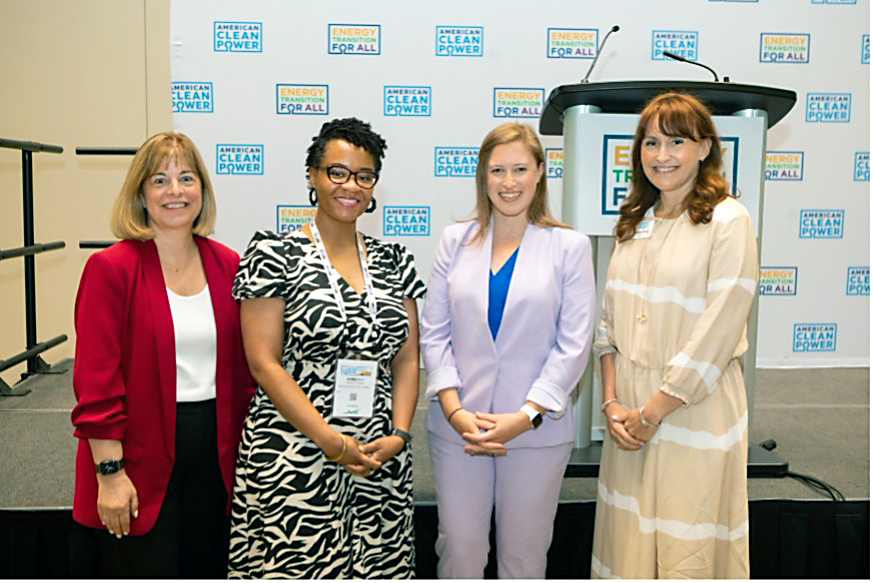
From left to right: Kathy Presperin (Blattner Company), Kim Hughes (American Electric Power), Rebecca Glazer (AES), Heather Zichal (ACP CEO). (Courtesy: ACP)

The American Clean Power Association (ACP) recently announced the winners of ACP’s new awards that recognize achievements in diversity, equity and inclusion during CLEANPOWER 2022.

The awards were announced as part of ACP’s Energy Transition for All initiative, an industry-wide program to ensure that workers, communities, and those historically left behind stand to benefit from the rapid growth of the clean-power sector in the United States.

The awards recognize companies and individuals that have committed to and have seen success in creating programs and cultures that support diversity and inclusion for all genders, ethnicities, sexual orientations, disability status, and veteran status.

The Breakout Woman+ of the Year award winners include:

• Rebecca Glazer, AES Clean Energy Senior Director of Growth Initiatives, who brought renewable energy projects online for Google, a leading AES customer. Those projects deliver greener, smarter energy, supplied by a fleet of renewables, including solar, wind, hydropower, and energy-storage assets. Based on the success of this project, Glazer now leads the evaluation of AES Clean Energy investments, supporting AES’ industry-changing clean energy solutions.

• Kathy Presperin, Blattner Company’s Chief Supply Chain Officer, is recognized for her leadership in supply chain planning, procurement, and strategy where it benefits not only the organization but also its customers, community, and suppliers. Presperin and her team have created a foundation that allowed Blattner to continue to build projects, even while the world experienced a supply-chain crisis.

American Electric Power (AEP) was awarded the Diversity, Equity, and Inclusion for its commitment to creating a diverse and inclusive environment that supports development and advancement for all.

“Coming together to celebrate these industry leaders who are the face of the energy transition was one of the highlights of CLEANPOWER 2022,” said Heather Zichal, ACP CEO. “Our Energy Transition for All initiative is more than just words in a report. These award winners demonstrate the commitment of the current leadership and of our industry toward the mission of creating an equitable transition for all.”

Today, utility-scale solar, wind, and battery storage represent roughly 13 percent of electricity generation in the U.S. By 2030, the clean-energy industry could account for as much as 50 percent of the electricity produced in the U.S. — creating 500,000 jobs, attracting $700 billion in new investment, and reimagining how power is generated and delivered across the United States.

American Clean Power’s Energy Transition for All initiative is a multi-year program designed to expand opportunities for workers and to help spur local economic development by promoting diversity, equity and inclusion across the clean power sector.

MORE INFO  cleanpower.org

Energy Department awards VinciVR $200,000 grant

0
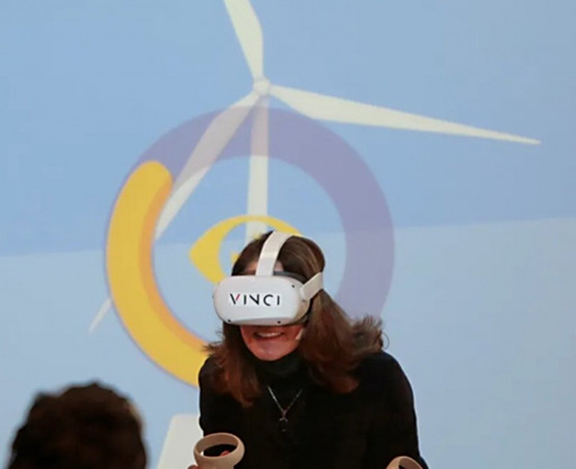
Massachusetts Lt. Gov. Karyn Polito experiences VinciVR’s offshore wind VR software. (Courtesy: VinciVR)

U.S. Energy Secretary Jennifer Granholm recently announced VinciVR Inc. will receive $200,000 as part of 259 Department of Energy grants totaling $53 million to 210 small businesses in 38 states.

“Supporting small businesses will ensure we are tapping into all of America’s talent to develop clean-energy technologies that will help us tackle the climate crisis,” said Steve Binkley, acting director of the DOE’s Office of Science. “DOE’s investments will enable these economic engines to optimize and commercialize their breakthroughs, while developing the next generation of science leaders and ensuring U.S. scientific and economic competitiveness that will benefit all Americans.”

Through the Small Business Innovation Research/Small Business Technology Transfer program across the federal government, small business powers the U.S. economy and generates thousands of jobs, both directly and indirectly. The awards aim at transforming DOE-supported science and technology breakthroughs into viable products and services.

VinciVR Inc. will receive $200,000 to work with offshore developers, disadvantaged communities, and training organizations to develop a portable virtual reality (VR) training tool for mariners that simulates offshore wind farms in various weather conditions. This will help mariners learn navigation/operations through a wind farm before construction begins.

“Offshore wind will create thousands of high paying jobs while fundamentally changing U.S. energy, but ensuring a prepared workforce will be a significant challenge,” says Eagle Wu, CEO of VinciVR. “We will make sure Americans are ready for this change through this DOE investment.”

“Promoting diversity within renewable energy is a core internal initiative,” said Dr. Cynthia Brown, Managing Partner of IWNL. “We are excited for this partnership in building a dynamic and operationally ready workforce to meet offshore wind energy industry’s needs,”

MORE INFO  www.vinci-vr.com

Oregon floating wind goals boosted by California gains

0
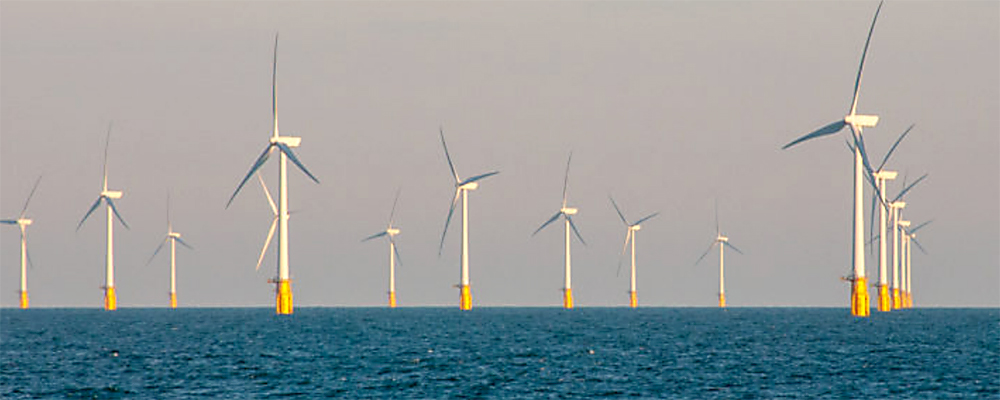
BOEM is at the early stages of offshore wind leasing in Oregon. (Courtesy: State of Oregon)

Oregon is assigning its first floating wind sites following progress in California, but power authorities must work with fishing groups and upgrade transmission to minimize costs.

In April, U.S. federal authorities launched a call for interest for two offshore wind areas off the coast of Oregon. The Bureau of Ocean Energy Management (BOEM) set out areas in the deep waters of Coos Bay and Brookings in southern Oregon, more than 12 nautical miles from the coast.

The calls form part of the Interior Department’s plan to hold up to seven offshore wind lease auctions by 2025 and follow similar calls in California that has led the state to announce the sale later this year of five offshore wind leases.

The Brookings area lies next to the California border while Coos Bay is situated 100 miles further north. Coos Bay offers some of the strongest offshore wind resources in Oregon and could supply power at $53/MWh, the U.S. National Renewable Energy Laboratory (NREL) said.

The Oregon state government is studying installing 3 GW of offshore wind by 2030, and this could reduce annual power generation costs by $86 million, according to NREL. Offshore wind developers in Oregon will be boosted by recent progress in California, but local opposition and a lack of grid and port infrastructure remain a risk.

“BOEM plans to lease the areas in late 2023. There will be calls to delay development, but the imperatives of addressing climate change and the obvious benefits of (shifting to) renewables will likely help keep us on track,” said Pacific Ocean Energy Trust executive director Jason Busch.

Earlier this year, developers bid a record $4.4 billion to secure six offshore wind leases in the New York Bight in the largest U.S. lease tender to date. The allocated leases require engagement with Tribes, fishermen, and other local stakeholders.

BOEM is at the early stages of offshore wind leasing in Oregon but is “committed to working with all ocean users, including the fishing community,” a BOEM spokesperson said.

Designated sites would undergo environmental review before leases are allocated under commercial tender.

Busch expects the environment assessments in Oregon to “read somewhat similarly.” Additional concerns in Oregon include migratory routes for whales and ocean birds and the preservation of the coast’s natural beauty.

The state of Oregon will support “responsible” offshore wind energy development that factors in the natural resources of the area and its existing uses, said Andy Lanier, Marine Affairs Coordinator at the Oregon Department of Land Conservation and Development.

Offshore wind deployment in Coos Bay and Brookings will require significant investment in grid transmission, including subsea cabling and shoreside structures. Now, the southern Oregon grid could absorb approximately 1 GW of new generation, according to Busch.

MORE INFO  www.reutersevents.com/renewables

Interior proposes first-ever California offshore wind sale set

0
The Department of the Interior announced the next steps for offshore wind lease sales in two regions on the Outer Continental Shelf offshore California. (Courtesy: U.S. Department of the Interior)

The Department of the Interior recently announced the next steps for and welcomed public comment on offshore wind lease sales in two regions on the Outer Continental Shelf offshore California. This is the first-ever offshore wind lease sale proposed on America’s West Coast.

“The demand and momentum around our work to build a clean-energy future is undeniable. The Biden-Harris administration is moving forward at the pace and scale required to help achieve the President’s goals to make offshore wind energy a reality for the United States,” said Secretary of the Interior Deb Haaland. “Today, we are taking another step toward unlocking the immense potential of offshore wind energy offshore our nation’s West Coast to help combat the effects of climate change while creating good-paying jobs.”

In May 2021, Haaland, White House National Climate Adviser Gina McCarthy, Under Secretary of Defense for Policy Dr. Colin Kahl, and California Gov. Gavin Newsom announced an agreement to advance areas for wind-energy development offshore the northern and central coasts of California. The proposed sale is part of the leasing path announced last year by Haaland to meet the Biden-Harris administration’s goal to deploy 30 GW of offshore wind energy by 2030.

The Proposed Sale Notice (PSN) includes three proposed lease areas in the Morro Bay Wind Energy Area off central California and two proposed lease areas in the Humboldt Wind Energy Area off northern California, totaling about 373,268 acres that have the potential to unlock more than 4.5 GW of offshore wind energy, power more than 1.5 million homes, and support thousands of new jobs.

“Today’s action represents tangible progress towards achieving the administration’s vision for a clean-energy future offshore California, while creating a domestic supply chain and good-paying union jobs,” said Bureau of Ocean Energy Management Director Amanda Lefton. “BOEM is committed to robust stakeholder engagement and ensuring any offshore wind leasing is done in a manner that avoids or minimizes potential impacts to the ocean and ocean users. The Proposed Sale Notice provides another opportunity for local communities, Tribes, ocean users, developers, and others to weigh in on potential wind energy activities offshore California.”

The PSN, which was published in the Federal Register May 31, 2022, opens a 60-day public comment period and provides detailed information about the proposed lease areas, proposed lease provisions and conditions, and auction details.

BOEM is seeking feedback on several lease stipulations that will reaffirm its commitment to create good-paying union jobs and engage with Tribal governments, underserved communities, ocean users, and other stakeholders.

Comments received by the end of the public comment period will be made available on the BOEM California website and considered before deciding whether to publish a final sale notice, which would then announce the time and date of the lease sale, as well as list the companies qualified to participate in it.

Prospective bidders not previously qualified for a California lease sale are required to submit mandatory qualification materials to BOEM. Qualification materials must be postmarked no later than August 1, 2022.

MORE INFO  www.doi.gov/pressreleases

Utility Scale Solar and Wind North America Conference and Exhibition to bring together major players in U.S. wind, solar on June 21-22

0

On June 21-22 in Dallas, Texas, Reuters Events will host the Utility Scale Solar and Wind North America Conference and Exhibition, connecting the whole value chain of leading asset managers, operators, developers, utilities, OEMs, and solution providers to optimize their commercial and technical portfolio management.

Solar and wind in North America are on an unstoppable trajectory, with more gigawatt-scale projects coming online this year than ever before.

However, new assets bring new challenges. To truly decarbonize the U.S. power grid, challenges in the supply chain, grid, battery storage, workforce shortages, aging existing assets, and tightening OPEX margins must be addressed now for solar and wind to continue transforming the energy landscape.

During the conference, 60-plus field-leading speakers representing the majority of the U.S.-installed solar and wind capacity and development pipeline will share their insights on how to address the challenges the wind and solar sectors face. These speakers include:

• Martin Mugica, President & CEO, Skyline Renewables.

• Mike Deggendorf, SVP, Regulated Infrastructure Development, American Electric Power.

• Valerie Barros, Director, Origination and Power Marketing, C&I, EDF Renewables North America.

• Scott Byer, Director, Business Development, Lightsource bp.

• Garrett Nilsen, Acting Director, Solar Energy Technologies Office at U.S. Department of Energy.

• Ron Grife, Director, Engineering, Leeward Renewable Energy.

• Yulia Lushnikova, Commercial Director, Operations & Maintenance/Asset Management, RES.

• Jared Kirk, VP, O&M Cypress Creek Renewables.

• Jacqueline DeRosa, VP, Energy Storage, Ameresco.

• Gabriel Yamal, Director of Development — Western Region (US) and Mexico, EDP Renewables.

• Dalen Copeland, VP, Strategic Initiatives, EDF Renewables.

• Elizabeth Laine, Head of DEI and Talent Development, Clearway Energy Group.

• Dana Herrera, General Manager, Asset Management, Renewables, Shell.

• Jorge Pedron, COO, Avangrid Renewables.

• Dan Summa, EVP, Asset Optimization, EDF Renewables.

• John Windsor, SVP, Renewable Generation, Liberty Power.

• Laura Caspari, VP, Head of Power Marketing and Commercial Strategy, ENGIE.

• Christopher Frantz, Managing Director — Operations, Excelsior Energy Capital.

• Meghan Semiao, Director, Asset Management, Longroad Energy.

• Anand Narayanan, VP, Asset Management, Arevon Energy.

• Leigh Zanone, Senior Director, Operation and Asset Management, 8minute Solar Energy.

• Shannon Streeter, Director of Supply Chain, Acciona Energy.

• Paul Zavesoff, Senior Director, Asset Management, Clearway Energy.

• Chris Frantz, Managing Director — Operations, Excelsior Energy Capital.

• Brad Purtell, VP, Services Business Development, Invenergy.

• Dylan Sontag, Director of Asset Operations and Performance Engineering, Silicon Ranch.

Key themes in the agenda to help streamline asset operation and management strategy and scale for success include:

• Optimize O&M Strategy for Maximum Performance and Minimum Costs: Understand the best practice in planning an O&M strategy with best O&M contracting and deployment to achieve long-term cost savings, extension of component life spans, and minimize asset downtime.

• Achieving Top Revenue from Assets: Learn how to plan for end-of-life asset management with repair, repower, and recycle. Get familiar with the latest financial requirements from dealing with PPA negotiation, merchant power, and storage-solution deployment to ensuring the maximum value is extracted from assets. Also, discover the latest in asset operation and management digitalization.

• Scale Portfolio with Success Despite Industry Bottlenecks: Thrive among the growing pains associated with scale. Adopt the best practices when dealing with interconnection challenges, meeting grid codes and triumph in portfolio expansion despite a bottlenecked supply chain and labor pool.

The plenary sessions will address cross-wind and solar challenges while two separate content streams for each sector will allow a deep dive into the technical aspects of solar and wind.

Join 400-plus senior solar and wind professionals to build the networks, collaborations, and learning that will scale your portfolio with success.

Sponsors and partners include Schneider Electric, Vinson & Elkins, ThoughtTrace, Solcast, Depcom Power, AlsoEnergy, WindESCo, SOLV Energy, Solis, Amerersco, Cypress Creek Renewables, Quadrical Ai, Cooke Power Services, Bazefield, Ardexa, Tech Wind Services, SenseHawk, UTD Wind, Raptor Maps, Skylark Control, BNSF Railway, Flender, DEHN, Renewable Parts, and Uptime Solar.

More info: https://events.reutersevents.com/renewable-energy/wind-solar-usa