








The ocean has long been a source of abundant energy, from offshore oil and gas platforms to utility-scale renewable energy projects. Today, a new wave of innovation is taking shape that could extend the offshore environment far beyond traditional energy production and into digital infrastructure, electrified maritime operations, and clean industrial systems. This combined effect, and if realized at scale, could reshape how nations power artificial intelligence, data centers, ports, and vessels over the coming decades: critical digital infrastructure moving offshore.
The American Bureau of Shipping (ABS) is helping to accelerate this shift, working with energy developers, maritime operators, and digital infrastructure stakeholders to bring offshore solutions to market. For industries grappling with rising electricity demand and physical land constraints, the offshore domain is becoming a strategic enabler rather than a niche deployment environment.
A New Demand Curve: Electrification Meets Digitalization
Electricity demand is rising sharply as economies electrify transport, ports, industry, and buildings while accelerating AI adoption and data processing workloads. After years of near-flat consumption in advanced economies, load profiles are now steepening. Grids and permitting systems are under strain, while land availability in high-demand data center regions is becoming a material constraint.
No single energy technology can solve this challenge alone. The global footprint is seeing energy expansion rather than energy substitution where multiple clean technologies are deployed in parallel to meet rising digital and electrified loads. In parallel with digitalization, shipping is decarbonizing its operational footprint. New builds and retrofits are incorporating battery-electric propulsion, hybrid systems, shore-power interfaces and charging solutions for coastal, inland, and short-sea trades. Ports and shipyards are likewise regreening operations, installing high-capacity electrical infrastructure to reduce auxiliary emissions and support vessel charging.
The new age of electricity is therefore an age of plurality: oil and gas, renewables, nuclear, enhanced geothermal, long-duration storage, and advanced grid architectures will all be needed in parallel. It is not an energy transition; it is an energy expansion.
The world is entering a structural step-change in both power demand and power density, and the offshore environment is uniquely positioned to help close that gap.
AI, Data & Power: The Digital Load
Artificial intelligence has become one of the fastest-growing sources of electricity consumption globally. The International Energy Agency estimates that data center electricity demand could more than double by 2030 to approximately 945 TWh, exceeding Japan’s annual consumption today [1]. Even conventional hyperscale data centers are now competing for scarce grid capacity, while AI clusters and high-density servers require even greater cooling and reliability.
These pressures are now intersecting with additional demand from shore-power installations, cold-ironing programs, vessel charging corridors, and electrified port operations. After decades of incremental change, the energy footprint of the maritime system is shifting rapidly.
Wind at the Fore: Fixed and Floating Solutions
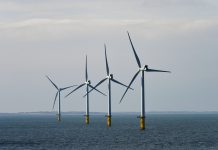
Renewables, and offshore wind in particular, are expected to play a central role in meeting this expanded electricity demand. Fixed-bottom offshore wind has matured into a core utility-scale technology, supplying large markets across Europe, the Northeast U.S., and East Asia. As wind farms grow in size and capacity factor, co-location with industrial and digital assets becomes increasingly viable.
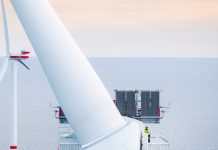
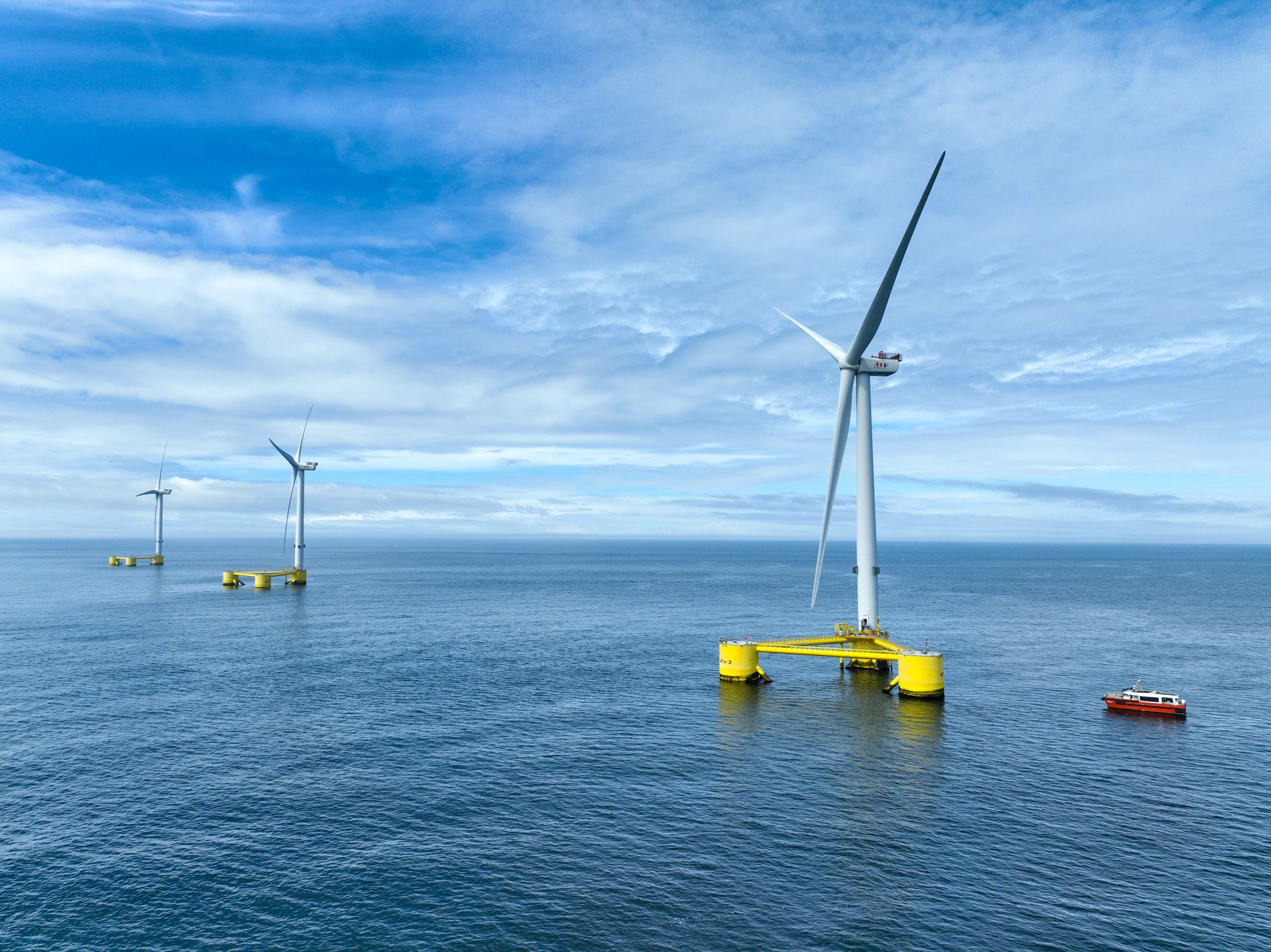
Floating wind extends this potential significantly. By deploying turbines in deeper waters with stronger and more consistent resource, floating platforms unlock wind zones that are inaccessible to fixed-bottom foundations. According to the Global Wind Energy Council, roughly 80 percent of global offshore wind resource lies in waters deeper than 60 meters [2].
ABS is supporting projects across both segments, including the Kincardine floating wind project off Scotland — the world’s largest grid-connected floating wind farm.
Floating and fixed wind are becoming critical for electricity supply. Their ability to scale quickly, deliver high-capacity factors and access new geographies makes them essential for the digital economy.
Electrifying Vessels, Ports and Shipyards
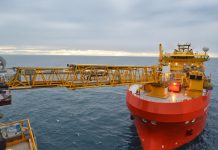
The maritime system is undergoing its own electrical transformation. Hybrid-electric and fully battery-electric vessels are already operating on shorter routes, with ferry and coastal trades viewed as early beneficiaries. Inland waterways, harbor craft, and pilot vessels are electrifying for both emissions and cost reasons.
This shift requires new infrastructure on the shore side. High-capacity charging stations, grid reinforcement, and energy-storage systems are being deployed at ports to enable rapid turnaround operations. Shore-power systems allow vessels to plug into the grid rather than burning fuel for auxiliary loads, reducing local air pollutants and CO₂ emissions.
Shipyards, historically heavy energy users, are also modernizing. Electrified lifts, cranes, fabrication lines, and test infrastructure reduce diesel dependence and support compliance with emerging emissions regulations. These upgrades increase demand for reliable and clean baseload power in coastal regions already targeted for data center deployment.
Cooling the Compute: Why Data is Going Offshore
One of the most compelling offshore migration trends involves data centers themselves. AI clusters and high-performance computing generate substantial heat, and cooling now represents a major share of operational expenditure. Seawater provides an abundant thermal sink, enabling energy savings and potentially reducing lifecycle emissions.
Offshore locations also help alleviate land scarcity and planning constraints. In established hyperscale regions — from Northern Virginia to Dublin to Singapore — the ability to add new data capacity is increasingly limited by grid availability and zoning restrictions. Offshore deployments circumvent these barriers while enabling modular and prefabricated construction using shipyard and offshore fabrication facilities.
ABS has already demonstrated that Information and Communication Technology (ICT) infrastructure can operate safely offshore, having supported cybersecurity assurance for an offshore substation in the Asia-Pacific region. This reflects an emerging pattern of industrial migration: Technologies move offshore when energy requirements increase, land constraints tighten, and regulatory environments mature. We are now seeing digital infrastructure follow that trajectory.
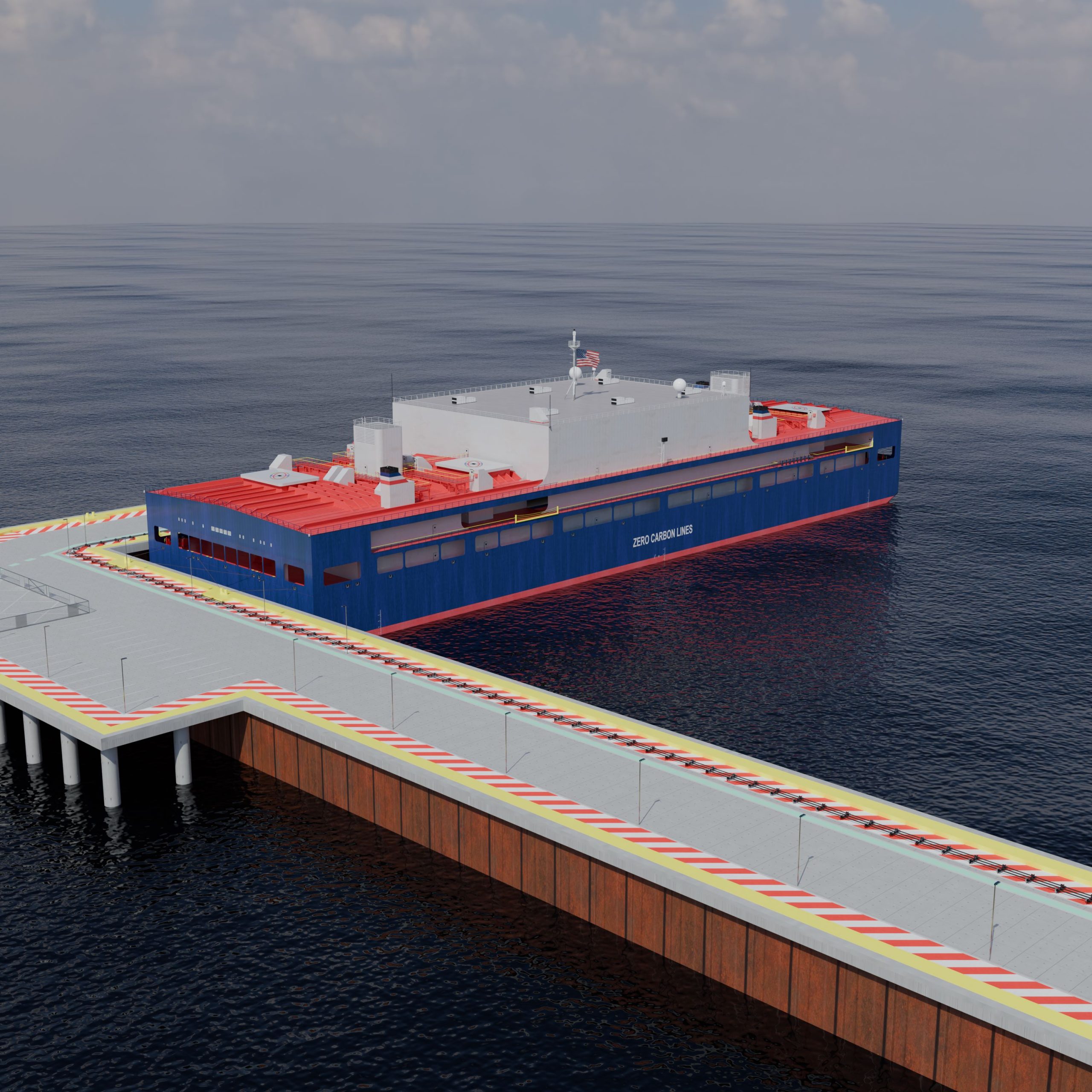
Future Options Without Overstatement
While there is interest in emerging technologies such as offshore small modular reactors (SMRs), their deployment is expected to be gradual and highly regulated. Rather than positioning SMRs as imminent, ABS views them as a longer-term option that could complement renewables in specific geographies.
Nuclear may play a supporting role at some point, particularly for baseload electricity in offshore industrial zones, but renewables, grid upgrades, and electrification are the immediate levers.
This framing preserves realism and credibility, reflecting both technical readiness and market sentiment.
A Convergence Taking Shape
The convergence of renewables, electrified maritime systems, and digital infrastructure represents one of the most consequential industrial shifts now underway. Hyperscalers and AI firms are seeking access to electricity and cooling; shipping is seeking access to clean electrons, and ports are becoming energy hubs rather than simple interfaces between sea and land.
From floating -wind-to-port electrification and seawater-cooled data platforms, the offshore environment is emerging as a strategic solution space for the 2030s and beyond. More energy, more computing, more grid flexibility, and more physical space will be required. The offshore environment can deliver all four with the support of class and certification providers that are working to ensure the migration of onshore technologies to offshore environments is safe, robust, and commercially viable.
Offshore industries solved seemingly impossible challenges once before. They may soon do so again, this time for electrification, digitalization, and artificial intelligence.
References