Venterra Group recently named Frank Koopman to the post of managing director of CAPE Holland. The hire was effective November 1. Koopman brings a distinguished track record in the renewable energy sector and is known for his expertise in leading technical organizations, driving growth, operational excellence, and innovation.
Venterra Group announced Frank Koopman as CAPE Holland’s new managing director. (Courtesy: Venterra Group)
His industry knowledge and leadership experience will be instrumental in supporting CAPE Holland’s growth as a leader in offshore wind installation solutions. “I am excited to join CAPE Holland, a company recognized for its innovative and pioneering solutions, like the CAPE Vibro Lifting Technology (VLT) that has delivered a step-change improvement in foundation installation methods for the offshore wind sector by reducing ecological damage from underwater sound and preventing uncontrolled pile-run incidents,” said Koopman.
This transition marks an exciting new chapter for CAPE Holland. With Koopman at the helm, CAPE Holland is well-positioned to advance further Venterra’s vision to deliver value and cutting-edge solutions to the global offshore wind market. Laurens de Neef stepped down after serving 11 years as the CEO of CAPE Holland; de Neef’s leadership guided CAPE Holland through milestones, including the development and commercialization of the VLT and the successful integration into Venterra Group since 2023, cementing the company’s position as a market leader.
What happens when the world’s fastest-growing renewable suddenly faces an 80 percent rise in costs? For offshore wind, the answer lies in smarter ships, not smaller ambitions. According to Bloomberg and Pareto Securities Equity Research, offshore wind project costs have climbed by roughly 80 percent since the 2021-2022 final-investment-decision window.
Forecasts for cumulative installed capacity by 2035 have been revised down by about 12 percent since 2022, with the steepest reductions in the United States and other new-entrant markets, and a 5 percent cut for Europe. These shifts are forcing developers, charterers, and vessel owners to revisit the assumptions that underpinned their business models only a few years ago. While the short-term environment looks challenging, investment in offshore energy remains resilient. Data from S&P Global and Clarksons show a large share of capital expenditure through 2027 is already committed across both the oil and gas sector and renewables. This demands flexibility.
Owners now need vessels capable of serving multiple roles, adapting to new technologies, and shifting between markets as conditions evolve.
For vessel operators, changing market conditions demand new thinking on design efficiency. (Courtesy: Wärtsilä)
The CSOV Glut
The offshore fleet today spans an exceptionally broad range of assets, from wind-turbine installation vessels (WTIVs) and heavy-lift cranes to commissioning-service and construction-support vessels, anchor-handling tug-supply ships, PSVs, FPSOs, jack-ups, semi-subs, drillships, and cable-layers. Each plays a distinct role, yet all are affected by the same investment trends. The most visible imbalance lies in the commissioning-service and service-operation vessel (CSOV/SOV) segment.
According to Pareto Securities Equity Research, about 28 SOV newbuilds were without employment when surveyed earlier this year. Some have since been contracted, but the wave of deliveries risks creating short-term overcapacity. This follows several years of intense ordering as wind developers raced to secure tonnage during the post-pandemic rebound. The subsea segment, by contrast, still shows buoyant order activity.
Pareto notes a high number of speculative projects in the orderbook, with investors betting on continued demand for cable-laying, maintenance, and installation capacity. For WTIVs, however, the story is quieter. Clarksons data confirm no new WTIV orders since 2023, though some analysts expect renewed activity as capacity pressures mount at Asian yards. Regional patterns are diverging. In Norway, the average build year of the PSV fleet is 2006, reflecting the aging of North Sea tonnage.
Brazil is emerging as the world’s largest offshore energy market, supported by Petrobras’ long-term contracting model. According to Clarksons, the company’s now active AHTS tender in Brazil and older fleet could stimulate a wave of new projects. The Middle East and Southeast Asia are also strong near-term drivers, with multiple projects moving in parallel. By contrast, U.S. offshore wind has stalled temporarily as developers re-price risk and adjust to inflationary conditions. The recent Maersk Offshore WTIV cancellation at Seatrium shows that the U.S. offshore wind development is in a really challenging period. These regional differences have practical design implications.
Operators active in Northern Europe or the North Atlantic must prioritize endurance, ice classification, and redundancy. In warmer, shallower regions such as the Middle East or Southeast Asia, efficiency, heat-tolerant equipment, and fast turnaround between projects become decisive. Flexibility in configuration, accommodation, and power systems now defines newbuild specifications.
Owners now need vessels capable of serving multiple roles, adapting to new technologies, and shifting between markets as conditions evolve. (Courtesy: Wärtsilä)
Three Engines, Not Four
For vessel operators, changing market conditions demand new thinking on design efficiency. Offshore projects are moving into deeper waters and harsher environments, requiring greater endurance, deck capacity, and dynamic-positioning performance.
Thruster configuration, redundancy, and power-system integration are critical design variables. Optimized thruster placement and integrated control systems can yield significant efficiency gains while improving redundancy. Predictive maintenance and remote monitoring further reduce downtime and maintenance costs. Efficiency and reliability are inseparable in practice. Battery hybridization has moved from concept to standard practice. Shifting or downsizing engine configurations is increasingly achievable as battery capacity and control systems improve.
Batteries handle load balancing, peak shaving, and spinning reserve, enabling smaller engine sets to operate closer to their optimal efficiency points. Brazilian subsea tenders are already specifying ethanol and hybrid readiness, and more than 70 percent of PSVs under contract include some form of methanol-ready notation. Across the wider offshore market, about 90 percent of offshore construction vessels ordered in the past year have been specified as methanol-capable or methanol-ready. Hybrid architectures and DC grid systems are also gaining ground, enabling greater battery penetration and variable-speed gensets. Comfort-class vessels increasingly specify silent tunnel thrusters for reduced vibration and higher energy efficiency. Each of these advances lowers lifecycle costs while improving charter appeal. Although it is critical to evaluate each project separately, its operational profile and focus region in order to define the system and configuration that is most suitable from a CAPEX and OPEX perspective.
At Wärtsilä, Integrated System and Solutions are helping make these evaluations on potential projects. Designers are also being asked to consider operational emissions intensity alongside technical performance. While hybridization can reduce fuel use by up to 20 percent in typical offshore-support cycles, further savings come from integrated automation, smarter power management, and AI-assisted control algorithms. These digital tools continuously optimize propulsion, hotel loads, and maintenance scheduling, delivering both carbon reduction and improved vessel availability.
Recent orders illustrate the shift. Several new CSOVs and subsea vessels are being specified with battery energy storage systems sized for peak shaving and dynamic-positioning support. Others are opting for variable-speed hybrid propulsion that can switch seamlessly between power sources during installation or maintenance campaigns. These configurations are already proving their worth in trials, cutting fuel use and improving station-keeping performance in challenging weather windows.
The offshore fleet today spans an exceptionally broad range of assets. (Courtesy: Wärtsilä)
Beyond the Fuel Debate
The energy transition has added another layer of complexity to offshore vessel design. Operators must balance immediate commercial viability with long-term fuel infrastructure uncertainty. The latest generation of offshore tenders reflects this push for flexibility. Newbuild specifications increasingly call for hybrid propulsion, biofuel compatibility and future fuel readiness, not tied to any single pathway.
In Brazil, ethanol is becoming standard, while European designs prioritize methanol readiness and battery integration to meet evolving regulatory and charter requirements. Hybridization delivers measurable savings even without a change in fuel type. Reducing engine running hours through battery support cuts maintenance intervals, improves reliability, and lowers emissions intensity. Combined with condition-based monitoring, this approach provides both environmental and economic resilience. Although much attention remains on newbuilds, retrofits are also gaining ground. Modular design and open architecture make it easier to integrate future-ready technologies without major structural modification.
By anticipating retrofit pathways early in the design process, owners can maintain competitiveness even as regulations and energy markets shift. This shift toward modularity also allows more incremental investment. Rather than committing to a full propulsion upgrade, owners can install battery systems, variable-speed gensets, or control upgrades in stages, spreading costs while capturing efficiency gains sooner.
Ready for Whatever Comes Next
Despite recent turbulence, offshore wind’s long-term outlook remains solid. According to BNEF, global installed capacity reached 75 GW in 2024, with 7.7 GW added that year alone. Even if the most ambitious targets are missed, capacity is still likely to more than double by 2035. Oil and gas continue to underpin global offshore investment, but production trends are uneven.
Output is expected to rise in most regions, while northwest Europe faces a gradual decline of about 1 million barrels of oil equivalent per day, according to GlobalData. This contrast underlines why vessel designs must serve both markets: oil and gas providing near-term utilization, with wind offering long-term growth. True resilience starts long before propulsion choices are made.
It is about developing platforms that can adapt across multiple cycles of market, technology, and policy change. Integration between thrusters, engines, batteries, and digital systems enables lifecycle optimization and smoother transitions to new fuel types. For most operators, that readiness will depend less on predicting the next regulatory step and more on embedding adaptability in every design decision today. The question for owners is no longer which fuel will dominate, but whether their ships will be ready when it does.
Stillstrom by Maersk, a marine technology leader delivering offshore power and charging solutions, recently strengthened its leadership team with key senior appointments in Copenhagen and Aberdeen, laying the foundations for growth in the U.K., Germany, and The Netherlands. Nikolaj Stald has joined as chief commercial officer (CCO) at the company’s HQ in Copenhagen.
Nikolaj brings more than 15 years’ offshore wind experience and will lead the commercial strategy to drive adoption of offshore charging as a cost-effective decarbonization pathway.
Top: Gordon Dickson, Stillstrom’s new Operations and Maintenance Lead. Bottom: Nikolaj Stald, the new Chief Commercial Officer. (Courtesy: Stillstrom)
Prior to Stillstrom, he was CCO at Føn Energy Services with previous roles including director, offshore sales (U.K. and Ireland) at Vestas and various roles at Siemens Wind Power. In Aberdeen, Gordon Dickson has been appointed operations and maintenance lead. Gordon, a chartered engineer with more than 20 years of operations and maintenance experience, joins after a year at Ithaca Energy, a three-year tenure at Neptune Energy and seven years at CNR Ltd, mainly as the operator’s Electrical Technical Authority/Team Leader – marking Stillstrom’s growing focus on Aberdeen as a hub for energy talent.
Spun out as an independent company in 2022 after three years, Stillstrom develops integrated offshore charging solutions that enable maritime electrification, providing reliable offshore power and supporting cleaner offshore operations. By cutting reliance on fossil fuels, the firm’s proprietary technologies are reducing greenhouse ga (GHG) emissions and lowering environmental impact across the maritime and offshore wind sectors.
“We are very proud to attract additional talent such as Nikolaj and Gordon to enhance our high-performing, world-class team. This brings us a further step closer to redefining marine operations and enabling fully electrified wind farms, supporting national climate and energy goals,” said Stillstrom CEO Kristian Borum Jergensen. Complementing these strategic hires, the business has recruited seven other personnel, bolstering its legal, commercial, and HSEQ teams, taking its total workforce to 31. Further recruitment is planned for next year, to support growth across the U.K. and European markets.
KK Wind Solutions recently received validation from the Science Based Targets initiative (SBTi) for its climate targets, including a 63 percent reduction in direct operational emissions and a 38 percent reduction in supply chain emissions by 2035 compared to a 2024 baseline.
This validation confirms the company’s targets for direct operations are aligned with the reductions required to limit global warming to 1.5°C, while its value chain target is consistent with pathways to limit warming to well below 2°C, in line with the Paris Agreement. Founded in Denmark, KK Wind Solutions has been at the forefront of renewable energy innovation for more than four decades.
The Science Based Target Initiative validated KK Wind Solutions’ climate targets. (Courtesy: KK Wind Solutions)
The approval of its targets by SBTi reaffirms the company’s role in supporting the global transition towards electrification and a low-carbon economy. KK Wind Solutions has committed to absolute reductions from a 2024 baseline, including a 63 percent reduction in direct emissions from operations, as well as a 38 percent reduction in emissions across its global value chain. By committing to absolute targets rather than relative reductions, the company ensures emissions must decrease in real terms, regardless of business growth. This approach requires decoupling of operational and value chain expansion from climate impact.
As a supplier to the wind and renewable energy sector, KK Wind Solutions recognizes its responsibility to act on climate change and to reduce emissions across both its operations and value chain. The company is taking concrete steps to decarbonize its own activities, including transitioning its vehicle fleet to hybrid and electric models and expanding on-site renewable energy generation, such as solar installation at its factory in India. At the same time, KK Wind Solutions is driving reductions across its value chain.
“The validation of our targets by the Science Based Targets initiative is an important milestone in our sustainability journey. Our approach extends beyond our own operations to include employees, customers and suppliers, ensuring that meaningful reductions are achieved across the value chain,” said Mauricio Quintana, CEO of KK Wind Solutions, Mauricio Quintana.
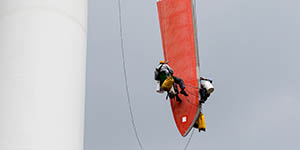
Wind turbine blade damage is on the rise — and it’s costing the global wind industry more by the minute. Recent failures include a 30-meter blade breaking off in Plymouth, Massachusetts, and a triple failure in Perth, Scotland, where not just one, but all three blades from a turbine detached. Just two brief examples in a catalog of thousands globally.
Recent research found that turbine blade repairs in the United States alone exceeded $1 billion this year. Considering the growing number of wind farms built during the last five to 10 years, plus the cost of blade repairs (approximately $30,000) and blade replacements (circa $500,000), the numbers quickly add up. However, costs — and their underlying causes — extend beyond blade repairs and replacements alone, reflecting a more intricate combination of factors.
Generally, the larger the turbine, the more expensive and difficult it is to maintain. (Courtesy: ONYX Insight)
As turbines grow, so do risks
The push toward bigger and more powerful machines is piling pressure on manufacturers and supply chains. Over the last few years, the majority of major OEMs have invested heavily in developing scaled-up versions of previous models, with machines exceeding 15 MW already being deployed on some projects.
This is particularly notable among Chinese manufacturers, who have been at the forefront of this push for magnitude. For instance, Guangdong-headquartered Ming Yang installed the largest offshore turbine in the world last year, with 128-meter blades. The company also announced a 50-MW ultra-large floating turbine, setting a new record for single-unit capacity in floating offshore wind.
Generally, the larger the turbine, the more expensive and difficult it is to maintain. Another problem with expedited innovation is that it frequently goes hand-in-hand with quality issues. Research in offshore wind has found that larger turbines — those over 8MW — face substantially higher instances of failure (55 percent) in the first two years of operation compared with those under 8 MW.
A growing number of owners and operators are introducing blade CMS into their wind portfolios. (Courtesy: ONYX Insight)
Increased pressure on supply chains
A potent combination of macroeconomic, resource, geopolitical, and logistical factors are continuing to put supply chains under immense pressure. When unforeseen circumstances lead to an urgent need for a blade to be swapped out, companies are frequently unable to source replacements fast enough. Those turbines can remain inactive for extended periods, ratcheting up costs and lost revenue for owners and operators.
In addition, the soaring number of blade failures — precipitated by the sector’s expansion, with more than 23,000 turbines installed last year — means trained engineering staff and specific machinery, such as cranes and large-scale transport vehicles, are either stretched or entirely unavailable, adding another layer of expense and headache.
The threat of reputational damage
Although difficult to quantify, and superficially non-financial, the reputational impact following a blade or full turbine failure is no less consequential for wind-project owners and operators. Asset managers know very well that one of the central aspects to a successful wind farm is ensuring the local community feels safe, informed, and respected. Negative media reporting, local community distress, and frayed relationships with local policymakers can be hard for a business to overcome.
Blade failures have encouraged regional authorities to shut down entire sites as a preventative measure while the root cause of the incident is being established and dealt with, and safety inspections are conducted across additional turbines to ensure no further risks of failure.
This was the case at Vineyard Wind in Nantucket in July 2024, when local authorities shut down the multi-billion-dollar project following a blade failure on one of the offshore wind turbines. The incident escalated from a local to a U.S.-wide story as the region’s beaches were closed to swimmers and parts of the turbine started floating ashore. Investigations into the incident and its potential long-term impacts are ongoing, with local communities still expressing anger and apprehension.
Using vibration and displacement technologies provides a granular level of real-time data that allows for an unprecedented degree of practical insight and cost-effective interventions. (Courtesy: ONYX Insight)
Prevention is better than a cure
Blade damage can be unpredictable and highly complex. While a small minority of blade failures might be impossible to prevent, the vast majority can be spotted and dealt with early, and before the problem spirals. The key is having a real-time understanding of a blade’s condition that enables asset managers to catch early-stage issues.
The current, and dominant, practice in the industry is to conduct intermittent (generally annual) drone inspections to check on a blade’s condition. While this approach can be effective at spotting pronounced external issues, it is not adequate on its own. Numerous issues, such as smaller or internal defects, remain undetected and are allowed to worsen, especially given the temporal gap between inspections.
With the proper blade condition monitoring system (CMS) technology, developers are able to identify a significantly higher number of precise blade issues and failure modes at a point where repairs are much more manageable and substantially cheaper.
Thankfully, a growing number of owners and operators are introducing blade CMS into their wind portfolios, enabling them to take a proactive stance on maintenance and performance analysis. Using vibration and displacement technologies provides a granular level of real-time data that allows for an unprecedented degree of practical insight and cost-effective interventions.
As turbines grow bigger and the stakes rise, proactive blade monitoring is no longer optional — it’s essential. Blade damage may be inevitable, but spiraling costs don’t have to be. By leveraging continuous monitoring and actionable insights, the wind industry can turn potential setbacks into opportunities to safeguard assets, communities, and the bottom line, creating a platform for safer, more efficient, and resilient energy generation.
PTG Holroyd Precision Rotors, the specialist helical component, screw and rotor manufacturing division of Precision Technologies Group (PTG), has significantly increased the capacity of its positive-displacement blower screw production line at its facility in Spartanburg, South Carolina.
This latest investment at Spartanburg by PTG is in response to a 30 percent increase in blower screw sales year on year. It will enable the Holroyd team to pursue additional new business opportunities and further satisfy the growing demand across the United States for the helical screws that are used in conventional straight-fluted, infinite lead Roots-type rotary lobe blowers, twin-screw blowers, and oil-free screw compressors.
Roots-type blower production on PTG Holroyd 4EX-R-BL machine. (Courtesy: PTG Holroyd)
“The increase in capability at Spartanburg means we are now able to manufacture an additional 25 percent volume precision screw sets per week on a single shift, with the option to operate multiple shifts 24/7 whenever customer requirements dictate,” said Colin Carr, PTG Holroyd Precision Rotors’ managing director. “This is an extremely exciting development for us and reflects the confidence that North American blower manufacturers place in our products.”
Opened in 2018 to provide North America’s leading manufacturers of industrial air equipment, air conditioning and refrigeration equipment with ultra-precise helical components, the Spartanburg site was the result of a significant investment by Precision Technologies Group.
Running alongside PTG Holroyd Precision Rotors’ conventional helical rotor and component manufacturing line, the company’s blower line is equipped to precision mill components of as little as 125 mm in diameter and 300 mm in length, right up to 300 mm in diameter and 1,000 mm in length.
Designated as the 4EX-R-BL (BL = blower), the new machine supersedes PTG Holroyd Precision’s original 4EX-R model and offers manufacturers the flexibility of dual-capability production.
Standard features include a newly designed machine bed and worktable to enable components of up to 500 mm in diameter to be milled, with both bed length and width increased to give greater support against the increased cutter forces associated with cutting blower screws. For enhanced milling capability (the original 4EX-R could produce parts of up to 420 mm in diameter), the 4EX-R-BL’s bed height is 150 mm lower than its predecessor, with additional buttress supports providing increased stability during flute milling. Additionally, the maximum cutter width has been increased from 320 mm to 400 mm to accommodate particularly large rotor profiles.
In the world of power cables, the choice of insulation material plays a critical role. It determines the cable’s long-term reliability, performance, and sustainability. While traditional materials such as XLPE and EPR have long been the industry standard, a new solution is gaining momentum. Polypropylene (PP) is not only a viable alternative but also a technology that redefines what insulation can achieve.
Polypropylene insulations solves many challenges from a thermoplastic approach. (Courtesy: Premix)
Cross-linked polyethylene (XLPE) has been the most used insulation material for decades. Its electrical properties are well established, but the production process brings significant limitations. Cross-linking requires energy-intensive curing, introduces byproducts, and results in long degassing times. Manufacturing can also suffer from scorching, leading to visible defects such as “ambers” in the insulation layer.
Even high-performing thermoset materials come with inherent complexity and cost.
Polypropylene insulation solves many of these challenges with a thermoplastic approach. It eliminates the need for cross-linking, enabling a simpler and cleaner production process. The benefits are both technical and operational:
Energy usage and faster production.
Cleaner processing without byproducts or scorching.
Stable and continuous single-step manufacturing.
Longer insulation runs and reduced scrap.
Higher operating temperature of 110°C.
Full recyclability, supporting circular economy goals.
Despite its simpler processing, PP offers excellent mechanical and thermal properties. Lack of need for degassing and high operating temperature makes it especially suitable for HVDC application.
PP insulation is not a new experiment. The first medium-voltage cable using this technology was installed in 2006 in Italy. That cable is still in operation today, nearly 20 years later. According to Prysmian’s 2020 data, more than 50,000 kilometers of PP-insulated cables have been deployed globally.
Some of the new major infrastructure projects include the SuedOstLink and A-Nord HVDC projects in Germany, as well as the land cable connection for the Sofia offshore wind farm. Leading European system operators, including TenneT, Terna, Amprion, and Enel, have either already integrated PP cables into their networks or in the process of installing them.
Industry standards are now adapting to support thermoplastic insulation. The Italian CEI 20-86 standard was the first to include PP. The broader European CENELEC HD 620 S3 standard now covers insulation types including PP (PP-TPE), XLPE, EPR, and HEPR.
It defines similar electrical testing across materials but reflects the unique properties of PP in its mechanical test criteria, including higher elongation at break and longer oven ageing duration.
Premix supports the transition to PP-based cable systems with its advanced semiconductive materials. The PRE-ELEC® PP18220 compound is designed for use in medium- and high-voltage cable conductor and insulation screen.
It offers conductivity and mechanical compatibility with PP insulation, while retaining all the benefits of a thermoplastic material.
Premix is also preparing to launch a strippable version for insulation shields, further enhancing installation efficiency. The company’s compounds are compatible with widely used PP insulation materials such as Hifax CA 7910 A (PP-TPO).
More than two years after the loss of a key piece of machinery, Meridian’s West Wind Farm is back to full health and once again making the most of Wellington, New Zealand’s wild wind.
In May 2023, West Wind Farm, on Wellington’s western hills, developed a problem with one of its two transformers that meant a replacement would be required.
“The transformers used on wind farms aren’t something you can just pick up at the local hardware store,” said Meridian GM Generation Tania Palmer. “They’re highly specialized pieces of equipment, and there’s an enormous amount of demand for them internationally.”
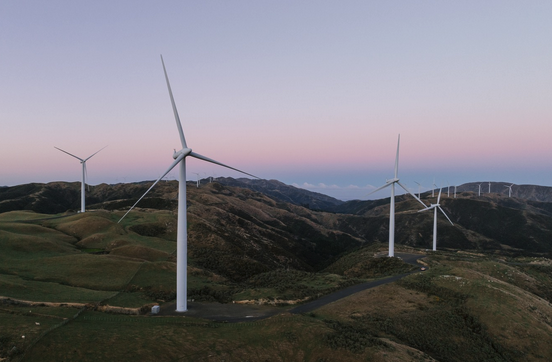
Meridian’s West Wind Farm is back to full functionality. (Courtesy: Meridian Energy Ltd.)
A new 90-ton transformer, a 110 MVA unit from Elsewedy Electric Indonesia, arrived in New Zealand in mid-2025. The project to then transport it to site was a complex undertaking that required months of planning, and almost a week of careful heavy vehicle movements. Once the new transformer was in place, a team of electricians and engineers then completed the installation and commissioning process late October 10.
“It was a slick operation from everyone involved,” Palmer said. “The planning, procurement, transportation, and commissioning, everything went beautifully.
This was a huge piece of work that’s delivered huge results for the country. Having this piece of kit in place means we can continue delivering a steady supply of clean, renewable electricity that Kiwi homes and businesses can rely on.”
Transpower Executive General Manager Grid Delivery Mark Ryall says winter is always a challenge in the electricity sector, with demand rising as temperatures fall.
“We knew that the additional 44 MW of power would make a real difference in helping us keep Kiwis warm through the colder months, so it was a no-brainer to help out,” he said. “While loaning an 81-ton transformer from our reserves wasn’t a simple task, we know how to pull together in this sector to keep the energy flowing.”
While the loss of the original transformer in May 2023 had left West Wind 44 MW short of its maximum capacity, Meridian was able to partner with Transpower to find an interim solution.
With low hydro lake levels and the scale of New Zealand’s gas supply shortage becoming evident over winter 2024, the loan in October 2024 of a temporary transformer from Transpower plugged the capacity gap throughout winter 2025 and restored West Wind’s capacity to 143MW. “We take our responsibility to New Zealand extremely seriously, and the outstanding collaboration with Transpower on this project meant we could continue to deliver on our commitment to provide Kiwis with the power they need,” Palmer said.
Renewables specialist FairWind is set to boost its Asia-Pacific (APAC) presence by reaching an agreement to acquire Cosmic Group, an Australian wind installation and maintenance provider.
This acquisition reinforces the company’s existing presence in Australia and expands its footprint into New Zealand and Japan. The transaction is expected to close in Q4 subject to customary regulatory approval, and will see the Brisbane-based business and its team of 100 technicians become part of FairWind.
Together with Cosmic, FairWind will be able to leverage local expertise while aligning the team with its global systems, standards, and strategic direction. The business will become the regional hub for FairWind’s APAC operations with one of its founders, Matt Crossan, appointed as regional director.
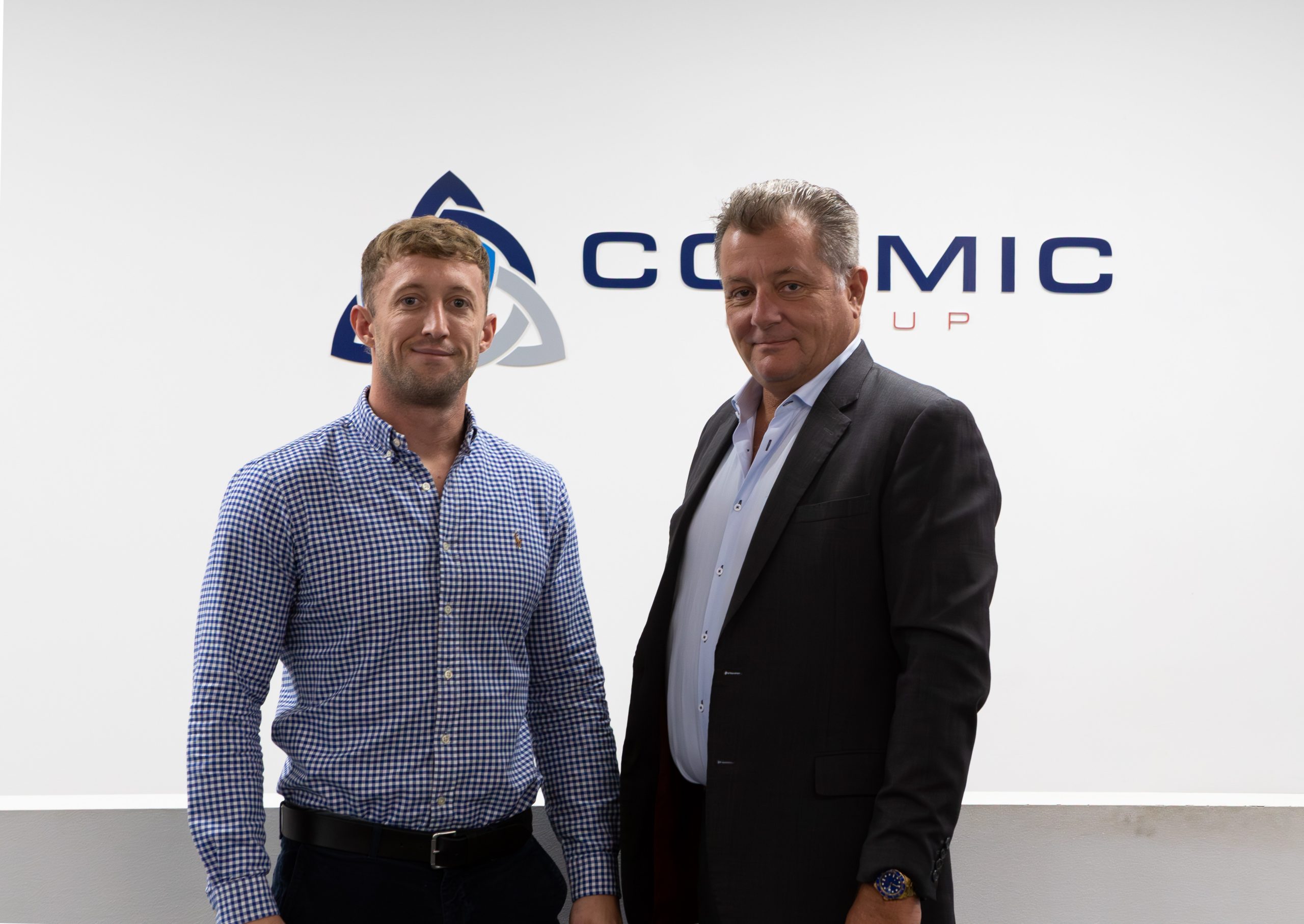
Left to right: Matt Crossan, FairWind regional director, and Stewart Mitchell, FairWind CEO. (Courtesy: FairWind)
Cosmic will continue to operate under the Cosmic name, ensuring continuity for its existing projects and clients.
“This collaboration with Cosmic is a significant step in our growth strategy,” said Stewart Mitchell, FairWind CEO. “There are great synergies between the two organizations, with shared values and unwavering commitment to safety. By joining forces with a team known for delivering to the highest standards, we’re extending our geographic reach while strengthening our capability to support customers wherever they operate.
Together, our deep technical expertise and track record in onshore and offshore wind create a powerful platform in our mission to help advance the global energy transition. We look forward to working closely together and unlocking new opportunities across the region’s renewables landscape.”
“With the installed turbine base set to continue to increase and the next generation of wind turbines being introduced to the region by our customers, there is significant potential for growth across Asia Pacific, said Matt Crosan, one of Cosmic’s founders and now FairWind regional director.
FairWind has a workforce of more than 2,000 people in more than 40 countries across Europe, North America, South America, Asia, and Oceania. The business provides complete lifecycle solutions for the installation and maintenance of onshore and offshore wind turbines around the world.
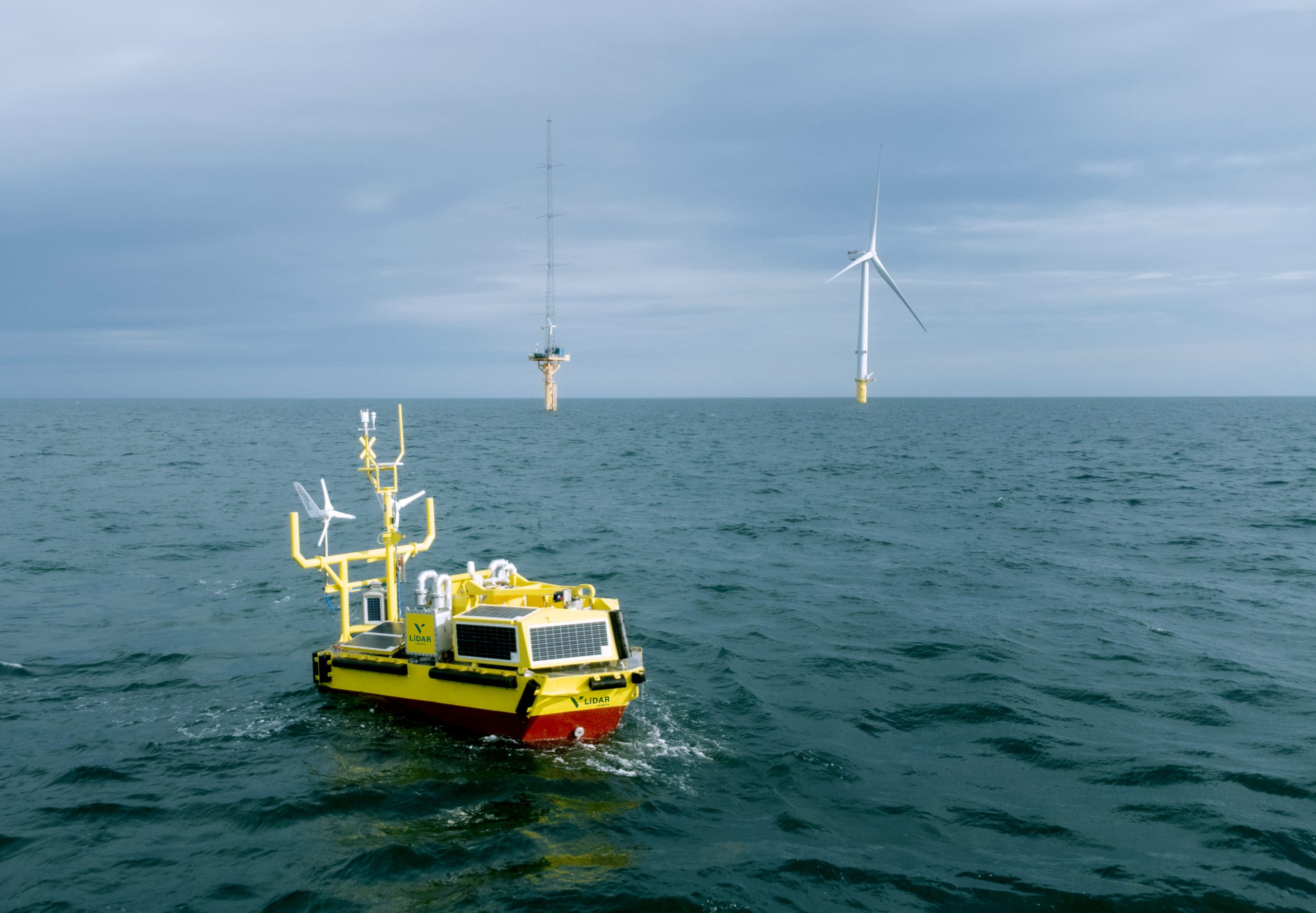
Venterra Group, the offshore wind services champion, has launched Venterra V-Lidar, a global fleet of dual Lidar buoys, a testament to the U.K.’s leadership in offshore wind measurement technology. The launch of this fleet, following a 10 million pound investment, represents the first of its kind to be designed and manufactured in the U.K.
Venterra has launched a fleet of dual Lidar buoys. (Courtesy: Venterra)
“As a company at the forefront of metocean expertise with extensive project experience, we have always understood what the most advanced Lidar buoy technology requires,” said Ed Daniels, Venterra Group CEO. “That means designing features to minimize health and safety risks, reduce deployment downtime, facilitate easy and safe transport, and guarantee real-time project data delivery. By integrating our insights and learnings from our deep experience, we have now launched the world’s most advanced Lidar buoy, combining innovation, practicality, and market understanding to offer real client value.”
Developed by Partrac and built by Osbit, Venterra’s specialist engineering and manufacturing company, at its new facility in the Port of Blyth, these advanced Lidar buoys represent the culmination of a two-year project that brings together expertise from across Venterra’s nine companies.
The Venterra V-Lidar fleet sets standards in offshore wind resource data, bringing the latest in marine electronics, comms and system design, lower HSE risk profile, deployment efficiency, increased operational windows and real-time high frequency analytics. As the first dual Lidar buoys manufactured in the U.K., these units will underpin critical wind-resource surveys, improve project viability, and unlock high-value export opportunities with world-leading developers.
“For many years, our survey team has been a trusted market leader in the largest offshore wind developments for the world’s energy clients,” Daniels said.
“The launch of our fleet of advanced Lidar buoys, designed and manufactured by our team in Blyth, is a direct and innovative response to our clients’ needs.”
Bluetech’s wind-optimized tanker design models demonstrate significant gains in propulsion power and fuel savings on representative trade routes, based on a joint research project with tanker owner International Seaways, Inc. (INSW).
Bluetech partnered with NYSE-listed INSW to explore a critical question: Can wind propulsion deliver more power in our ships of the future? Advanced simulations using Bluetech’s new SeaWasp vessel design showed the answer to be a resounding yes.
With the support of wind-propulsion specialist Norsepower, Bluetech modified its BT50 design to extract maximum forward thrust from two 35m rotor sails. This resulted in a total savings of up to 876 kW of propulsion power on one representative INSW MR tanker route from San Francisco to South Korea – equating to about 597.2 MT of fuel per annum. The design modifications alone are estimated to contribute 104 kW or 71.5 MT of the savings, effectively improving the vessel’s overall performance by about 13.5 percent in certain conditions.
Wind-assisted ship propulsion (WASP) technologies have traditionally been used to add propulsion power to existing ship types that were not originally designed to accommodate such forces. Even newbuild projects that integrate WASP from the planning phase make little or no changes to the ship’s overall design beyond what is necessary to install the units and comply with regulations. However, Bluetech’s designers went back to the drawing board with SeaWasp, creating a vessel that is purpose-designed for wind, but still practical for INSW MR fleet operations.
“We set out to develop a ship that is entirely WASP-optimized, but maintains every essential operational feature and meets all trade-specific terminal and port restrictions,” said Sam Robin, director of energy savings solutions at Bluetech.
“We focused on more than just energy savings and emissions reduction — our goal was a concept design that works in the real-world conditions of the MR trade,” said Michael LaGrassa, director of performance and new construction at INSW. “That meant ensuring reasonable build costs, equivalent cargo capacity, and a design fit for purpose. Our approach was to test a wide range of scenarios across the MR trade, rather than rely on selectively favorable assumptions.”
For this reason, the project also carefully examined the lower end of the savings potential. For example, on a route from South Korea to Singapore, the SeaWasp saves 185.9 MT or 275 kW per annum vs. a conventionally powered BT50, due to the prevailing wind directions. Keeping such a baseline allowed for a range in the data analysis and ensured that any commercial projections were realistic.
“The future certainly looks brighter for our next generation of tanker shipping,” said William Nugent, Chief Technical and Sustainability Officer at INSW. “Creative problem solving following a thorough design process will be one of the keys to success.”
Dynamic Load Monitoring Ltd. is providing a Stingray acoustic positioning grapnel to enable Leask Marine Ltd. to track a grapnel train within a narrow corridor at a North Sea wind farm.
DLM offers design, manufacture, repair, and calibration of load cells, load monitoring, and cable working equipment for the wind-energy, renewables, and telecommunications sectors. It has steadily grown its grapnel range, used for recovering lightweight, fiberoptic, or heavier-duty armored cables on the seabed.
The products are used by subsea cable lay companies and ship operators for pre-lay grapnel run (PLGR) and route clearance operations.
In this instance, Leask Marine Ltd, an international marine contractor, was conducting PLGR work ahead of installing two export cables and was seeking a solution that enabled accurate tracking of a grapnel train within a narrow corridor. Leask required a system that provided complete visibility of the grapnel train’s position at all times, enabling Leask to ensure it remained within the programmed route over an 80-kilometer run.
Technically, the Stingray is not a grapnel, as it doesn’t “grapple” for anything. However, the shape of it is based on the front skid of DLM’s wheeled detrenching grapnel. As a grapnel train is being towed, it is often assumed that it falls in line with the direction and movement of the vessel and follows the same path.
However, this is not necessarily the case due to the length of the tow line and also the length of the train; the whole assembly can wander, and in some cases, the grapnel train could be outside of the planned route.
Stingray, which gets its name from being relatively flat and moving along the seabed, can be connected in the grapnel train and uses acoustics to send a signal to a vessel towing the train to communicate where it is on the seabed. It is positioned at the rear of a train of multiple grapnels attached together and towed behind the vessel when a PLGR is being undertaken. It is the farthest away from the ship’s stern.
“Without clear visibility of the grapnel train’s position, PLGR operators cannot react immediately if it deviates from its pre-programmed route,” said Martin Halford, DLM managing director.
“This increases the risk of the train straying into no-go areas, which can lead to serious compliance issues — resulting in fines, equipment damage, and costly delays. Such delays can be significant, particularly when operators are required to repeat sections of the intended route. In offshore operations, where time is a major expense, unplanned re-runs can be the difference between a profitable and a loss-making project.”
The Stingray eliminated uncertainty around route deviations and reduced the likelihood of costly re-runs. By providing live data confirming that the grapnel assembly was progressing along its intended route, the client could act immediately if any deviations occurred.
“We approached DLM to enquire about the Stingray, as we were looking for a way to track our grapnel train,” said John F. Macleod, Leask Marine commercial director. “They were quick to react and fast-tracked the manufacture of the Stingray, delivering it on time for our project. We were impressed by how reliable and accurate it proved to be, protecting both our equipment and surrounding infrastructure.”
In addition to tracking and avoiding project delays, the Stingray ensured there was no damage to the grapnel train arrangement or any associated equipment.
The surrounding environment — wildlife, local pipelines, etc. — wasn’t affected, and regulatory requirements were met.
Vaisala, a global leader in measurement technology, has launched an innovative new instrumentation service, Vaisala Circular.
Developed for applications where measurement accuracy and uptime are important, Vaisala Circular is a comprehensive service platform designed to ensure that measurements are as accurate, uninterrupted, and reliable as possible.
Vaisala Circular is a comprehensive service platform designed to ensure that measurements are accurate, uninterrupted and reliable. (Courtesy: Vaisala)
Under Vaisala Circular, customers have a dedicated pool of measurement probes, securely stored and maintained at Vaisala’s service centers. When calibration is necessary, customers order replacement probes from Vaisala online and swap them in, thereby minimizing measurement downtime. Batches of used probes then circle back to Vaisala for recalibration, storage, and reuse.
These refurbished probes retain warranty for the full term of the circular agreement.
“As the designer, developer, and manufacturer of measurement probes, we are in the best position to maintain them and deliver long-term value for customers,” said Shan Gao, Vaisala’s global service line director. “Our testing, maintenance and calibration capabilities are so rigorous that probes are returned to operation with appropriate certification, and in ‘as-new’ condition. When Vaisala probes are used and maintained according to specifications, they can be expected to last for more than a decade.”
By assuming responsibility for probe management, Vaisala Circular delivers long-term, peace-of-mind to customers, providing reliable, accurate measurements and enabling process optimization and waste reduction to improve sustainability.
The range of measurement parameters included in the Circular service is the widest offered in its market and includes humidity, dew point, temperature, carbon dioxide, and hydrogen peroxide.
“Circular is a good example of Vaisala’s determination to develop life-long partnerships, offering customers increased operating uptime and reliable measurements, with predictable instrumentation and maintenance costs,” Gao said.
Liebherr USA, Co. recently named Simon Schuster as divisional director of mobile and crawler cranes. Schuster will be taking over the role previously by Pierre Bilgeri.
As divisional director, Schuster will be responsible for ensuring support for U.S. mobile and crawler crane customers in regards to new crane sales, used crane sales, customer service, and spare parts.
Simon Schuster is Liebherr’s new divisional director of mobile and crawler cranes. (Courtesy: Liebherr)
“I am honored to have been entrusted with the responsibility of managing the mobile and crawler crane division and look forward to the future with our U.S. customers and employees with a healthy dose of respect and an even greater dose of anticipation,” Schuster said.
Schuster brings a robust engineering and leadership background to his role as divisional director.He holds a Bachelor of Engineering in industrial engineering from Ravensburg-Weingarten University of Applied Sciences and a Master of Engineering in Leadership in Industrial Sales and Technology from Aalen University.
Schuster began his journey with Liebherr in 2018 as a sales trainee at Liebherr-Werk Ehingen GmbH, where he underwent on-the-job training across multiple business units and departments.
In 2020, he advanced to the role of area sales manager for the U.S. and Canada, serving as a liaison between these markets and Liebherr-Werk Ehingen. Schuster was responsible for aligning sales strategies, engineering coordination, and production planning.
“Simon brings extensive knowledge and experience of the U.S. market, having worked closely with both the U.S. team and customers over an extended period through his responsibilities in Ehingen,” said Kai Friedrich, managing director, Liebherr USA. “His expertise will continue to drive the sales growth of the mobile and crawler crane divisions product portfolio as well as the service organization in the USA.”
The Liebherr Group is one of the largest construction equipment manufacturers in the world. The Liebherr Group includes more than 150 companies across all continents. In 2024, it employed more than 50,000 staff and achieved combined revenues of over 14 billion euros.
Multisec, a provider of engineered lifting systems, has designed, manufactured, tested, and supplied a bespoke multi-point lifting beam system for Enshore Subsea, supporting the company’s offshore cable handling operations.
The project required a completely tailored Joint Over Boarding Beam, capable of managing complex subsea lifting arrangements and adaptable for future offshore campaigns. Working to Enshore’s specification, Multisec developed a solution that balanced strength, precision, and long-term versatility.
Multisec has designed, manufactured, tested, and supplied a bespoke multi-point lifting beam system for Enshore Subsea. (Courtesy: Multisec)
Engineered with a safe working load of 35 tons, a 15.5m span, and 16 lower lift points, the beam was designed to handle varied load configurations safely and efficiently in demanding marine environments. The system underwent full fabrication and proof load testing at Durham Lifting’s Britannia Testhouse in Middlesbrough, with certification to Eurocode, DNV-ST-0378, and BS EN 13155 standards.
Alongside the lifting beam, Multisec supplied a complete rigging package including Green Pin Tapered Pin ROV Shackles, wire ropes, polyester slings, chains, and cable grips, ensuring full compatibility and traceability from design through to offshore use.
Speaking about the collaboration, Henry Jemison, package manager at Enshore Subsea, said Enshore approached Multisec to produce an engineered Joint Over Boarding Beam “inclusive of all rigging arrangements, ROV shackles etc., completely bespoke for an upcoming project.”
“The requirements also included the additional challenge of ensuring the beam is ‘future proof’ for other upcoming projects,” he said. “The beam has already been used offshore operationally and worked as intended, first time. Multisec’s ability to own the scope has reduced the Enshore Project Team’s interface burden, and we look forward to working with them on our next projects.”
The beam was first deployed during Enshore’s work on the Inch Cape Offshore Wind Farm, one of Scotland’s largest offshore wind projects. Located 15 kilometers off the Angus coast, the development will have an installed capacity of 1.1 GW and, once operational, will generate enough to power the equivalent of half the homes in Scotland.
Reflecting on the project, Amanda Gardiner, managing director at Multisec, said the collaboration with Enshore highlighted the value of close technical partnership.
“Our engineers worked hand-in-hand with Enshore’s project team from the early design stage through to fabrication and testing,” she said. “Delivering a lifting beam that performed flawlessly on its first offshore use is always rewarding — it demonstrates what can be achieved when technical requirements are clearly understood, and engineering precision is maintained throughout the process.”
Multisec’s work with Enshore is part of a growing portfolio of bespoke offshore lifting projects, each designed and tested at its U.K. base. The company continues to support clients across the renewable and subsea sectors with engineered lifting systems tailored to specific operational challenges.
Multisec is a leading provider of engineered lifting systems, offering modular spreader beams, lifting frames, and comprehensive rigging solutions to the offshore, energy, and construction sectors. With decades of experience and a commitment to safety and innovation, Multisec delivers solutions that enable clients to lift, handle, and install even the largest and most complex loads with confidence.
What role does Ship & Shore Environmental play in customizing air pollution control equipment?
At Ship & Shore Environmental, we really focus on tailoring air pollution control systems to fit each client’s specific setup — it’s all about making sure they comply with regulations without slowing down their operations. Our engineers start with on-site evaluations and emission testing, then design solutions like regenerative thermal oxidizers or solvent recovery units that target things like VOCs and hazardous pollutants. This approach helps industries, including wind energy, keep things running smoothly while cutting energy costs and minimizing disruptions.
How do the products offered by Ship & Shore Environmental work with the wind-energy industry to achieve its environmental challenges?
Our lineup of thermal oxidizers, scrubbers, and VOC control systems works hand-in-hand with wind-energy manufacturing to tackle emissions from composite processes, such as styrene release during resin application or curing. In the wind sector, these tools help overcome issues like cutting greenhouse gases and maintaining clean air, all while meeting EPA standards and supporting the push for green energy. With destruction rates up to 99 percent and the ability to recover solvents, our equipment lets turbine makers reduce their environmental footprint without sacrificing productivity.
Why is the composites industry experiencing rapid expansion, particularly in the wind/renewables sector?
The composites world is booming in wind and renewables because these materials are lightweight yet incredibly strong, allowing for bigger turbine blades that make energy production more efficient and affordable. With global wind capacity expected to hit 1,000 GW by 2025, the need for fiberglass and carbon fiber composites is skyrocketing — they outperform traditional metals in strength-to-weight balance. Plus, the shift toward recyclable and bio-based options is drawing in more investment, as sustainability becomes a must.
What types of air pollution challenges are prevalent in manufacturing composites, and how is Ship & Shore Environmental addressing these challenges?
In composites manufacturing, the big headaches come from VOCs like styrene in resins, dust from cutting or sanding, and those lingering odors that can affect worker health and trigger compliance issues. These problems pop up in methods like resin transfer molding or filament winding, especially in confined spaces where ventilation isn’t always ideal. We’re addressing them at Ship & Shore with systems like catalytic oxidizers that handle VOCs efficiently at lower temps, plus dust collection tech, all customized to keep composite shops safe and up to code.
What types of composite manufacturing are used in the wind-energy sector?
For wind energy, the go-to methods for composites include vacuum infusion for those massive blades, where resin pulls into dry fibers under vacuum to avoid defects, prepreg layup with pre-soaked fabrics that cure in autoclaves for top-notch strength, and resin transfer molding for parts like nacelles. Pultrusion is popular too for continuous spars and beams, using epoxy or polyester with glass or carbon fibers to withstand harsh offshore or onshore conditions. These techniques ensure the durability needed for reliable turbine performance.
Seeing as one of the wind industry’s directives is environmentally safe energy production, do you see the wind sector being at the forefront of making sure environmental challenges used in the making of its composites are addressed? How so?
Absolutely. The wind industry is leading the charge on fixing environmental issues in composite production — it’s baked into their net-zero ambitions and things like the EU’s circular economy rules. Companies such as Vestas and Siemens Gamesa are pouring resources into low-emission resins and recycling programs, which could cut impacts by half, and they’re pushing suppliers to follow suit. Their high profile means they can’t afford slip-ups that might erode trust in renewables, so they’re driving industry-wide standards, like those from WindEurope, for greener manufacturing.
What kinds of innovative materials do you see aiding in reducing these environmental challenges, particularly in wind?
Materials like thermoplastic composites, which can be melted down and recycled easily, and plant-based resins are making a real difference in cutting emissions for wind applications. Then there are recyclable epoxies and hybrid glass-carbon mixes that reduce VOCs during curing, along with self-healing polymers that make blades last longer and generate less waste. Backed by research from places like the National Renewable Energy Lab, these could drop the sector’s environmental load by 30 to 40 percent in the coming years .
How does your company work with the wind sector (and other industries) to make the transition to more environmentally safe methods possible?
We team up with the wind industry and others by running pilot tests of our abatement tech right at their facilities, co-creating monitoring plans, and providing hands-on engineering support. For instance, we work with OEMs like GE Renewable to build controls into the design stage early on, helping shift to near-zero discharges through solvent recovery that reuses up to 95 percent of materials. Pair that with our training sessions, and we’re helping clients across the board meet regs and sustainability goals without the usual headaches.
Most of the pomp and circumstance surrounding a wind farm starts with construction, then it moves on to maintaining those spinning turbines as they create needed power for decades.
But there’s another aspect in the life of a wind farm that doesn’t always get the recognition it deserves, considering what an ultimate performance it serves: wind-farm decommission.
Since its inception in 2021, North Coast Enterprise has completed 61 unique major wind-turbine decommissioning projects across the United States and Canada, according to Tom Sheridan, one of the managing partners at North Coast Enterprise.
“We support utility scale owners of wind farms, the equipment manufacturers such as GE, Vestas, Nordex, Siemens Gamesa, and wind-specific EPC firms such as Mortenson, Blattner, White Construction, and Wanzek,” he said. “We handle the legacy components. When they are repowering or upgrading existing wind farms with new technologies, our job is to dispose of the legacy components. This could range from the proper disposal of gases and fluids to the metal recycling and fiberglass recycling of the wind-turbine blades.”
Since its inception in 2021, North Coast Enterprise has completed 61 unique major wind-turbine decommissioning projects across the United States and Canada. (Courtesy: North Coast Enterprise)
Decommissioning and repowering
Just the sheer increase of wind farms in the U.S. over the years has made Sheridan and his team’s expertise more needed, but he said it goes beyond that.
“Our wind infrastructure in the United States started becoming more popular about 20 years ago when some of the first utility scale units were installed,” he said. “Those units are nearing the end of useful life, but in many cases, the owners prefer to upgrade those units and extend their power purchase agreements and look to renew the useful life of that farm. That’s where repowering has become popular since about 2018. Rather than letting it go all the way to its end of life and taking it off the power grid, they’re finding ways to — whether that be through major component exchanges or full tear down of old components and building of new components — extend the life of that wind farm and interconnect to the power grid.”
The turbine replacement strategy could involve anything from one to two units to the entire farm, according to Sheridan, however, most projects of this scale involve the entire farm.
“Many times, if there are hundreds of units, they’re going to repower and upgrade the bulk of those units,” he said. “There are certainly times when they might have a maintenance issue and go in and upgrade a couple here or there, but largely our company is involved when they’re doing the major retrofits of the bulk, if not all of the wind farm.”
When North Coast Enterprise does deal with the decommissioning of only a few assets, it is typically a rare critical failure event, according to Sheridan.
“Where they’re going to take the entire infrastructure out of the old components and build a new, more efficient unit in its place, that’s a very widely used practice,” he said. “There are a lot of those projects that are happening today as we speak and continue to be explored for next year and beyond.”
North Coast Enterprise is a project management firm that focuses on safe and efficient services for North American utility scale wind. (Courtesy: North Coast Enterprise)
ISO certification
North Coast Enterprise is a project management firm that focuses on safe and efficient services for North American utility scale wind, according to Sheridan.
“Every employee is committed to delivering on our promise with a focus on communication, safety, and the professionalism to facilitate the completion of every project on time, on budget, and with zero safety incidents,” he said. “We’re an ISO certified company specific to wind turbine decommissioning, so one of the core principles of ISO is continual improvement.”
North Coast Enterprise’s ISO certification is a particular source of pride for Sheridan and his team.
“Our ISO certification is something that was a very large undertaking,” he said. “It’s something we’re very proud that we went through. It has really helped our business in many aspects operationally, but it also helped us to be able to grow as a company and be able to project out allocation of resources and to grow as the industry has needed us to.”
Diverse client base
Sheridan also gave a nod to North Coast Enterprise’s diverse client base that continues to provide positive feedback in the company’s ongoing projects.
North Coast Enterprise is an ISO certified company specific to wind turbine decommissioning. (Courtesy: North Coast Enterprise)
“We are the leader in this space, and we want to continue to be that leader and find innovative ways to continue to provide value for our customers,” he said. “That being said, probably one of the proudest achievements for our company happened at the most recent GE Vernova supplier award ceremony. Our company was named Supplier of the Year. We are very proud of that. GE has the largest market share in the United States, and it’s a very, very good client of ours. We are very proud of that, and we want to continue to strive and do that for other suppliers as well.”
This serious commitment has transformed North Coast Enterprise into a company that thrives on finding new solutions to challenges, according to Sheridan.
“We take new information and apply it to our processes and procedures so that we’re not having to learn the same mistake and not necessarily run into the same challenge,” he said. “We know that every project has its own nuances and things that we’re going to have to tackle. By building a knowledge base and sharing that knowledge base across our company, we’re able to find unique ways to tackle those problems.”
And tackling a customer’s problems is one of the most exciting things North Coast Enterprise does, according to Sheridan.
“There are constantly unique challenges on these project sites — ways that our company is able to help our customers find new solutions,” he said. “The goal is to make sure that things are happening safely on site, but efficiently. Then we take into account the project budget. If we’re able to find a unique solution to help the bottom line on a project, that’s important, because we’re always looking for ways to do that and to add value for our customers.”
Recycling
When decommissioning a wind farm, perhaps the first question asked is: Where do those decommissioned parts go? Sheridan said that recycling that material is a major priority.
“We provide a 100 percent recycled solution for the turbine, including the fiberglass, but it ultimately becomes a decision for the owner; however, many of them are going that direction,” he said. “But even with a landfill solution, there are much better ways as to how it was initially being performed with the disposal of these large components. We work very closely with landfills. They’re still active on these projects and finding ways to reduce the footprint and impact of those landfills is something that we also are very much at the forefront of.”
The current political landscape has been a challenge to some of what makes the wind industry flow, according to Sheridan, since many components that are imported are being subjected to higher tariffs than a year ago.
“So, manufacturers are looking for ways to do some component retention and use a legacy component and remanufacture it as a recertified manufactured part,” he said.
North Coast Enterprise provides a 100 percent recycled solution for a turbine, including the fiberglass. (Courtesy: North Coast Enterprise)
Optimistic path
With a footprint heavy in North America, Sheridan said the company has had opportunities to expand into Europe.
“We’re focused on North America — United States and Canada,” he said. “We have been approached about opportunities in Europe as they’re starting to look at repowering as a viable solution for their aging fleet, as well as some of the components that have reached end-of-life and what the next steps are for those projects. We certainly think that we could be a valuable resource that could bring our knowledge base and expertise. It’s something that we are at least discussing on a surface level and something we would be willing to explore.”
Being a leader in the space of wind-turbine decommissioning, Sheridan is optimistic about the path of wind.
“We’re very excited about the path of wind because energy demand continues to be driven by new data centers, industrial consumption, and increased residential use,” he said. “These demands keep growing. It’s our opinion that all available energy should be explored. Over the next 10 years, I think that’s just going to continue to become a topic: Wind does continue to evolve and to find ways to really meet that power curve and be a reliable energy source. We’re very excited about the strides that wind has made.”
There will, of course, be challenges dealing with regulatory agencies, as well as state, local, and federal government, that the industry will need to adapt to, according to Sheridan.
“We see wind as being a very strong supplier and growing energy source,” he said. “Our job at North Coast is going to continue to remain the leader in our space and find new ways to add value for these projects.”
The APAC region (excluding China) has circa 6 GW of offshore wind capacity installed, forecast to increase to 21 GW by 2030 and up to 220 GW by 2050, representing a CAGR of 16 percent out to 2050.
The region is expected to have a 12 percent market share by 2030, increasing to 19 percent by 2050 as more countries begin offshore wind developments over the next decade.
Taiwan dominates the APAC market, accounting for 4.25 GW (63 percent) of capacity. Other countries such as Vietnam, are second with 1.6 GW of installed capacity. South Korea and Japan have some ground to make up.
Asia has a lack of WTIVs capable of handling larger wind turbines, as well as a relatively small C/SOV fleet. (Courtesy: MSI)
It is South Korea that shows the largest potential for growth prior to 2030 with more than 10 GW of capacity approved following successful auction rounds in 2024 and H1 2025.
One common theme among all countries pushing offshore wind is they suffer from largely similar issues, both in Asia and worldwide. Those issues typically include supply chain constraints, policy and regulatory inconsistencies, and soaring pricing.
Asia also has a lack of WTIVs capable of handling larger wind turbines, as well as a relatively small C/SOV fleet. These factors will affect countries’ ability to reach 2030 capacity targets; Taiwan is expected to reach 91 percent of its target with 9.95 GW of installed capacity by 2030.
South Korea is expected to achieve just 36 percent of its ambitious 14.3 GW target; however, it has successfully restructured its auction round process, passing the Special Act on the Promotion of Offshore Wind Power (aka the Offshore Wind Promotion Act) in early 2025.
This means site selection is government-led, allowing a single point of contact for the permitting/licensing process, reducing regulatory steps and allowing more predictability and outlining clear targets and capacity ceilings.
Taiwan leads ex-China push to 20 GW by 2030
In 2025, turbine installations in the APAC-ex China are heavily concentrated in Taiwan, with the nation expected to contribute 139 turbine installations from the 165 planned in the region. Taiwan saw the 80-turbine Yunlin offshore wind project reach its full operational capacity in Q3 2025, contributing 640 MW capacity to the country as it looks to continue growing its offshore wind capacity in its next Round 3.3 auction.
It is not yet known when Round 3.3 will be launched or how much capacity will be offered, however, given that Taiwan is running low on available space for fixed bottom offshore wind farms within its territorial waters, Round 3.3 may be the last for fixed bottom projects under the current planning regime.
MSI forecasts turbine installations to increase significantly post-2025, reaching 410 in 2029, up from circa 160 in 2025. This upswing is driven by increasing activity in developing markets such as South Korea and Japan as well as continued activity within Taiwan.
In 2029 it’s forecasted that more than 4 GW of capacity is to be installed across South Korea (2.2 GW), Japan (0.75 GW), and Taiwan (1.5 GW). It is important to note that, post-2029, it is expected turbine installations will remain robust, with more projects due to be added to the project pipeline over the next year, adding to the construction outlook for this decade.
Annual capacity installations are forecast to increase toward the end of the decade with South Korea significantly increasing its rate of installation, with more than 2 GW forecast in 2029 and a further 1.75 GW in 2030 off the back of successful auction rounds in 2023 and 2024.
Japan is also forecast to see increasing installations toward the end of the decade, reaching more than 1 GW per annum by 2030. However, Japan’s success over the next five years will rely heavily on it having more successful auction rounds, following disappointing project cancellations throughout 2025.
MSI forecasts turbine installations to increase significantly post-2025. (Courtesy: MSI)
Vietnam made a promising start to its offshore wind market, but in recent years has stalled due to inconsistencies in regulations and politics within the country, leaving wind-farm developers wary of investing heavily in Vietnam’s offshore wind sector. Australia and the Philippines also have significant offshore wind potential, but this isn’t expected to materialize pre-2030.
Vessel demand set to grow
APAC ex. China WTIV demand is forecast to increase to five vessels by 2029, supported by the surge in turbine installations. A significant shift in the industry is the proportion of demand growth for vessels in the 14-20 MW category, which, by 2030, will represent 90 percent of demand compared to close to 56 percent in 2025.
SOV owners operating primarily in Europe will seek opportunities to market their vessels in the APAC ex. China region. (Courtesy: MSI)
This is due to the offshore wind market shifting to 14-plus MW turbines as turbine technology and design advancements continue to increase potential turbine size, with 26 MW turbines being tested in China. SOV demand is expected to grow from six vessels in 2025 to 36 vessels by 2030, this increase is driven not only by increased installation activity but also increased maintenance requirements of existing projects.
It is expected that a steady increase in C/SOV new building in Asia will aid supply in order to accommodate this demand increase, as has already been seen with companies such as Marco Polo, Dong Fang, and Ta San Shang Marine (TSSM) building C/SOVs for the Asia-ex China market.
It is also expected SOV owners operating primarily in Europe will seek opportunities to market their vessels in the APAC ex. China region as demand continues to climb. For example, ESVAGT, a leading European SOV operator of nine vessels, signed a joint venture with the Korean shipping company KMC Line to provide its expertise in the nation’s growing offshore wind market.
CTV demand is expected to continue its upward trajectory throughout the forecast period with a CAGR of 7 percent, rising from circa 43 vessels in 2025 to just more than 60 vessels by 2030. APAC ex. China CTV demand accounts for 11 percent of global demand and is expected to increase to 12 percent by 2030. This is a relatively small market share increase but also a reflection of strong growth given China and Europe are also investing heavily in their offshore wind sectors.







 Stillstrom by Maersk, a marine technology leader delivering offshore power and charging solutions, recently strengthened its leadership team with key senior appointments in Copenhagen and Aberdeen, laying the foundations for growth in the U.K., Germany, and The Netherlands. Nikolaj Stald has joined as chief commercial officer (CCO) at the company’s HQ in Copenhagen.