Home 2022

VelociWrapper awarded patent for cable-wrapping machine

0
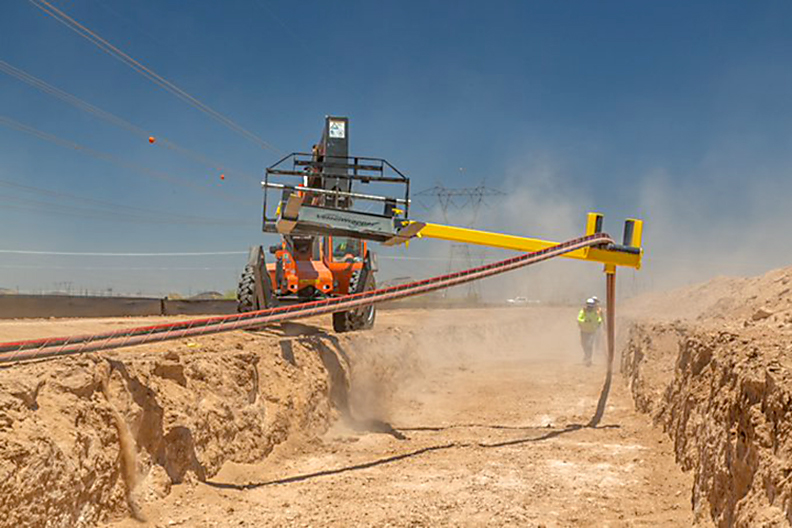
The VelociWrapper is a newly patented product that speeds up clean-energy installation. (Courtesy: VelociWrapper)

The VelociWrapperTM Company has been awarded a patent by the United States Patent and Trademark Office for its flagship product, the VelociWrapper, a cable-wrapping machine that increases speed and efficiency while reducing costs for wind and solar farm installations in the renewable energy construction sector.

The International Energy Agency (IEA) predicted in 2012 that global solar energy generation would reach 550 TW/h by 2030. That number was exceeded by 2018, illustrating that the growth of solar and wind energy has not been linear, but exponential.

“Due to the demand for our machine, we have already outgrown our first facility and are currently moving our manufacturing operations into a facility five times the size to accommodate the growth,” said Torrance Bistline, the founder and inventor of the VelociWrapper.. “We have more patents and innovations in the works as well, which we will be unveiling soon.”

The VelociWrapper requires no motorized power to run. Once the cables are laid in the ground using the system, it contributes 5 to 8 percent more efficiency in the transfer of energy through to its destination, which also reduces heat and extends the life of the cable.

The VelociWrapper Company is based in Hildale, Utah. Founded in 2021, its mission is to recognize and fulfill the need for high-quality custom equipment for the construction industry, focusing on the renewable energy sector. The name comes from its flagship product, the VelociWrapperTM, which is a patented triplexing machine that is the only machine of its kind that is 100 percent green, reduces installation time, and saves money for clean-energy installations.

MORE INFO  www.velociwrapper.com

Clean power industry celebrates diversity, inclusion with awards

0
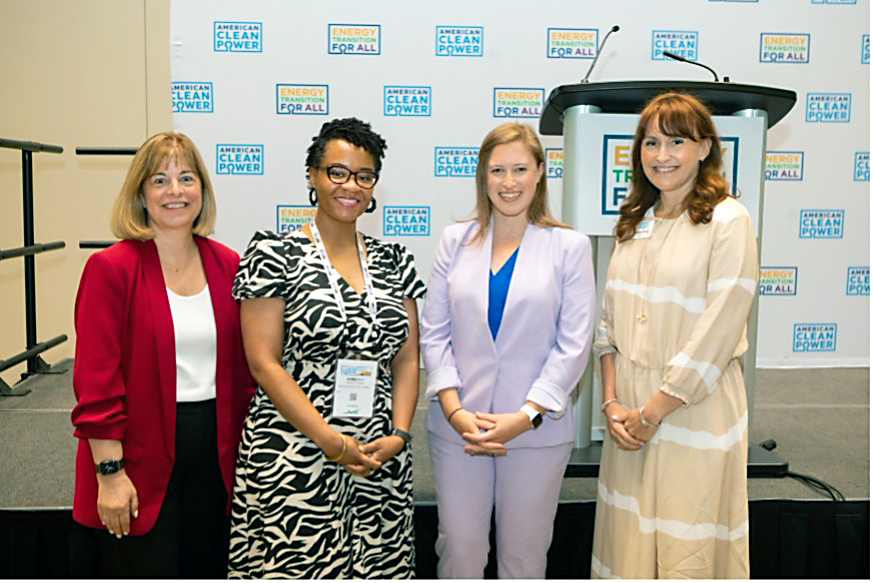
From left to right: Kathy Presperin (Blattner Company), Kim Hughes (American Electric Power), Rebecca Glazer (AES), Heather Zichal (ACP CEO). (Courtesy: ACP)

The American Clean Power Association (ACP) recently announced the winners of ACP’s new awards that recognize achievements in diversity, equity and inclusion during CLEANPOWER 2022.

The awards were announced as part of ACP’s Energy Transition for All initiative, an industry-wide program to ensure that workers, communities, and those historically left behind stand to benefit from the rapid growth of the clean-power sector in the United States.

The awards recognize companies and individuals that have committed to and have seen success in creating programs and cultures that support diversity and inclusion for all genders, ethnicities, sexual orientations, disability status, and veteran status.

The Breakout Woman+ of the Year award winners include:

• Rebecca Glazer, AES Clean Energy Senior Director of Growth Initiatives, who brought renewable energy projects online for Google, a leading AES customer. Those projects deliver greener, smarter energy, supplied by a fleet of renewables, including solar, wind, hydropower, and energy-storage assets. Based on the success of this project, Glazer now leads the evaluation of AES Clean Energy investments, supporting AES’ industry-changing clean energy solutions.

• Kathy Presperin, Blattner Company’s Chief Supply Chain Officer, is recognized for her leadership in supply chain planning, procurement, and strategy where it benefits not only the organization but also its customers, community, and suppliers. Presperin and her team have created a foundation that allowed Blattner to continue to build projects, even while the world experienced a supply-chain crisis.

American Electric Power (AEP) was awarded the Diversity, Equity, and Inclusion for its commitment to creating a diverse and inclusive environment that supports development and advancement for all.

“Coming together to celebrate these industry leaders who are the face of the energy transition was one of the highlights of CLEANPOWER 2022,” said Heather Zichal, ACP CEO. “Our Energy Transition for All initiative is more than just words in a report. These award winners demonstrate the commitment of the current leadership and of our industry toward the mission of creating an equitable transition for all.”

Today, utility-scale solar, wind, and battery storage represent roughly 13 percent of electricity generation in the U.S. By 2030, the clean-energy industry could account for as much as 50 percent of the electricity produced in the U.S. — creating 500,000 jobs, attracting $700 billion in new investment, and reimagining how power is generated and delivered across the United States.

American Clean Power’s Energy Transition for All initiative is a multi-year program designed to expand opportunities for workers and to help spur local economic development by promoting diversity, equity and inclusion across the clean power sector.

MORE INFO  cleanpower.org

Energy Department awards VinciVR $200,000 grant

0
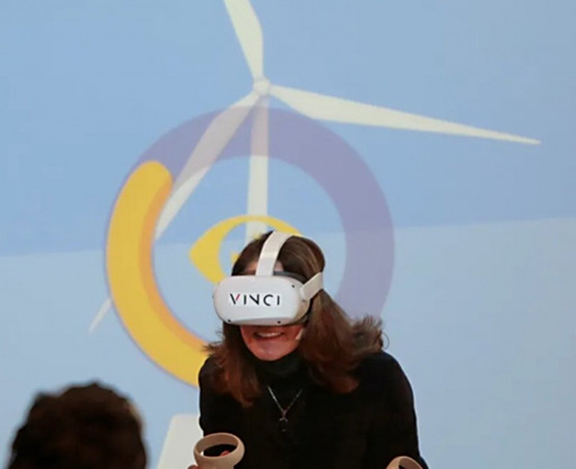
Massachusetts Lt. Gov. Karyn Polito experiences VinciVR’s offshore wind VR software. (Courtesy: VinciVR)

U.S. Energy Secretary Jennifer Granholm recently announced VinciVR Inc. will receive $200,000 as part of 259 Department of Energy grants totaling $53 million to 210 small businesses in 38 states.

“Supporting small businesses will ensure we are tapping into all of America’s talent to develop clean-energy technologies that will help us tackle the climate crisis,” said Steve Binkley, acting director of the DOE’s Office of Science. “DOE’s investments will enable these economic engines to optimize and commercialize their breakthroughs, while developing the next generation of science leaders and ensuring U.S. scientific and economic competitiveness that will benefit all Americans.”

Through the Small Business Innovation Research/Small Business Technology Transfer program across the federal government, small business powers the U.S. economy and generates thousands of jobs, both directly and indirectly. The awards aim at transforming DOE-supported science and technology breakthroughs into viable products and services.

VinciVR Inc. will receive $200,000 to work with offshore developers, disadvantaged communities, and training organizations to develop a portable virtual reality (VR) training tool for mariners that simulates offshore wind farms in various weather conditions. This will help mariners learn navigation/operations through a wind farm before construction begins.

“Offshore wind will create thousands of high paying jobs while fundamentally changing U.S. energy, but ensuring a prepared workforce will be a significant challenge,” says Eagle Wu, CEO of VinciVR. “We will make sure Americans are ready for this change through this DOE investment.”

“Promoting diversity within renewable energy is a core internal initiative,” said Dr. Cynthia Brown, Managing Partner of IWNL. “We are excited for this partnership in building a dynamic and operationally ready workforce to meet offshore wind energy industry’s needs,”

MORE INFO  www.vinci-vr.com

Oregon floating wind goals boosted by California gains

0
BOEM is at the early stages of offshore wind leasing in Oregon. (Courtesy: State of Oregon)

Oregon is assigning its first floating wind sites following progress in California, but power authorities must work with fishing groups and upgrade transmission to minimize costs.

In April, U.S. federal authorities launched a call for interest for two offshore wind areas off the coast of Oregon. The Bureau of Ocean Energy Management (BOEM) set out areas in the deep waters of Coos Bay and Brookings in southern Oregon, more than 12 nautical miles from the coast.

The calls form part of the Interior Department’s plan to hold up to seven offshore wind lease auctions by 2025 and follow similar calls in California that has led the state to announce the sale later this year of five offshore wind leases.

The Brookings area lies next to the California border while Coos Bay is situated 100 miles further north. Coos Bay offers some of the strongest offshore wind resources in Oregon and could supply power at $53/MWh, the U.S. National Renewable Energy Laboratory (NREL) said.

The Oregon state government is studying installing 3 GW of offshore wind by 2030, and this could reduce annual power generation costs by $86 million, according to NREL. Offshore wind developers in Oregon will be boosted by recent progress in California, but local opposition and a lack of grid and port infrastructure remain a risk.

“BOEM plans to lease the areas in late 2023. There will be calls to delay development, but the imperatives of addressing climate change and the obvious benefits of (shifting to) renewables will likely help keep us on track,” said Pacific Ocean Energy Trust executive director Jason Busch.

Earlier this year, developers bid a record $4.4 billion to secure six offshore wind leases in the New York Bight in the largest U.S. lease tender to date. The allocated leases require engagement with Tribes, fishermen, and other local stakeholders.

BOEM is at the early stages of offshore wind leasing in Oregon but is “committed to working with all ocean users, including the fishing community,” a BOEM spokesperson said.

Designated sites would undergo environmental review before leases are allocated under commercial tender.

Busch expects the environment assessments in Oregon to “read somewhat similarly.” Additional concerns in Oregon include migratory routes for whales and ocean birds and the preservation of the coast’s natural beauty.

The state of Oregon will support “responsible” offshore wind energy development that factors in the natural resources of the area and its existing uses, said Andy Lanier, Marine Affairs Coordinator at the Oregon Department of Land Conservation and Development.

Offshore wind deployment in Coos Bay and Brookings will require significant investment in grid transmission, including subsea cabling and shoreside structures. Now, the southern Oregon grid could absorb approximately 1 GW of new generation, according to Busch.

MORE INFO  www.reutersevents.com/renewables

Interior proposes first-ever California offshore wind sale set

0
The Department of the Interior announced the next steps for offshore wind lease sales in two regions on the Outer Continental Shelf offshore California. (Courtesy: U.S. Department of the Interior)

The Department of the Interior recently announced the next steps for and welcomed public comment on offshore wind lease sales in two regions on the Outer Continental Shelf offshore California. This is the first-ever offshore wind lease sale proposed on America’s West Coast.

“The demand and momentum around our work to build a clean-energy future is undeniable. The Biden-Harris administration is moving forward at the pace and scale required to help achieve the President’s goals to make offshore wind energy a reality for the United States,” said Secretary of the Interior Deb Haaland. “Today, we are taking another step toward unlocking the immense potential of offshore wind energy offshore our nation’s West Coast to help combat the effects of climate change while creating good-paying jobs.”

In May 2021, Haaland, White House National Climate Adviser Gina McCarthy, Under Secretary of Defense for Policy Dr. Colin Kahl, and California Gov. Gavin Newsom announced an agreement to advance areas for wind-energy development offshore the northern and central coasts of California. The proposed sale is part of the leasing path announced last year by Haaland to meet the Biden-Harris administration’s goal to deploy 30 GW of offshore wind energy by 2030.

The Proposed Sale Notice (PSN) includes three proposed lease areas in the Morro Bay Wind Energy Area off central California and two proposed lease areas in the Humboldt Wind Energy Area off northern California, totaling about 373,268 acres that have the potential to unlock more than 4.5 GW of offshore wind energy, power more than 1.5 million homes, and support thousands of new jobs.

“Today’s action represents tangible progress towards achieving the administration’s vision for a clean-energy future offshore California, while creating a domestic supply chain and good-paying union jobs,” said Bureau of Ocean Energy Management Director Amanda Lefton. “BOEM is committed to robust stakeholder engagement and ensuring any offshore wind leasing is done in a manner that avoids or minimizes potential impacts to the ocean and ocean users. The Proposed Sale Notice provides another opportunity for local communities, Tribes, ocean users, developers, and others to weigh in on potential wind energy activities offshore California.”

The PSN, which was published in the Federal Register May 31, 2022, opens a 60-day public comment period and provides detailed information about the proposed lease areas, proposed lease provisions and conditions, and auction details.

BOEM is seeking feedback on several lease stipulations that will reaffirm its commitment to create good-paying union jobs and engage with Tribal governments, underserved communities, ocean users, and other stakeholders.

Comments received by the end of the public comment period will be made available on the BOEM California website and considered before deciding whether to publish a final sale notice, which would then announce the time and date of the lease sale, as well as list the companies qualified to participate in it.

Prospective bidders not previously qualified for a California lease sale are required to submit mandatory qualification materials to BOEM. Qualification materials must be postmarked no later than August 1, 2022.

MORE INFO  www.doi.gov/pressreleases

Utility Scale Solar and Wind North America Conference and Exhibition to bring together major players in U.S. wind, solar on June 21-22

0

On June 21-22 in Dallas, Texas, Reuters Events will host the Utility Scale Solar and Wind North America Conference and Exhibition, connecting the whole value chain of leading asset managers, operators, developers, utilities, OEMs, and solution providers to optimize their commercial and technical portfolio management.

Solar and wind in North America are on an unstoppable trajectory, with more gigawatt-scale projects coming online this year than ever before.

However, new assets bring new challenges. To truly decarbonize the U.S. power grid, challenges in the supply chain, grid, battery storage, workforce shortages, aging existing assets, and tightening OPEX margins must be addressed now for solar and wind to continue transforming the energy landscape.

During the conference, 60-plus field-leading speakers representing the majority of the U.S.-installed solar and wind capacity and development pipeline will share their insights on how to address the challenges the wind and solar sectors face. These speakers include:

• Martin Mugica, President & CEO, Skyline Renewables.

• Mike Deggendorf, SVP, Regulated Infrastructure Development, American Electric Power.

• Valerie Barros, Director, Origination and Power Marketing, C&I, EDF Renewables North America.

• Scott Byer, Director, Business Development, Lightsource bp.

• Garrett Nilsen, Acting Director, Solar Energy Technologies Office at U.S. Department of Energy.

• Ron Grife, Director, Engineering, Leeward Renewable Energy.

• Yulia Lushnikova, Commercial Director, Operations & Maintenance/Asset Management, RES.

• Jared Kirk, VP, O&M Cypress Creek Renewables.

• Jacqueline DeRosa, VP, Energy Storage, Ameresco.

• Gabriel Yamal, Director of Development — Western Region (US) and Mexico, EDP Renewables.

• Dalen Copeland, VP, Strategic Initiatives, EDF Renewables.

• Elizabeth Laine, Head of DEI and Talent Development, Clearway Energy Group.

• Dana Herrera, General Manager, Asset Management, Renewables, Shell.

• Jorge Pedron, COO, Avangrid Renewables.

• Dan Summa, EVP, Asset Optimization, EDF Renewables.

• John Windsor, SVP, Renewable Generation, Liberty Power.

• Laura Caspari, VP, Head of Power Marketing and Commercial Strategy, ENGIE.

• Christopher Frantz, Managing Director — Operations, Excelsior Energy Capital.

• Meghan Semiao, Director, Asset Management, Longroad Energy.

• Anand Narayanan, VP, Asset Management, Arevon Energy.

• Leigh Zanone, Senior Director, Operation and Asset Management, 8minute Solar Energy.

• Shannon Streeter, Director of Supply Chain, Acciona Energy.

• Paul Zavesoff, Senior Director, Asset Management, Clearway Energy.

• Chris Frantz, Managing Director — Operations, Excelsior Energy Capital.

• Brad Purtell, VP, Services Business Development, Invenergy.

• Dylan Sontag, Director of Asset Operations and Performance Engineering, Silicon Ranch.

Key themes in the agenda to help streamline asset operation and management strategy and scale for success include:

• Optimize O&M Strategy for Maximum Performance and Minimum Costs: Understand the best practice in planning an O&M strategy with best O&M contracting and deployment to achieve long-term cost savings, extension of component life spans, and minimize asset downtime.

• Achieving Top Revenue from Assets: Learn how to plan for end-of-life asset management with repair, repower, and recycle. Get familiar with the latest financial requirements from dealing with PPA negotiation, merchant power, and storage-solution deployment to ensuring the maximum value is extracted from assets. Also, discover the latest in asset operation and management digitalization.

• Scale Portfolio with Success Despite Industry Bottlenecks: Thrive among the growing pains associated with scale. Adopt the best practices when dealing with interconnection challenges, meeting grid codes and triumph in portfolio expansion despite a bottlenecked supply chain and labor pool.

The plenary sessions will address cross-wind and solar challenges while two separate content streams for each sector will allow a deep dive into the technical aspects of solar and wind.

Join 400-plus senior solar and wind professionals to build the networks, collaborations, and learning that will scale your portfolio with success.

Sponsors and partners include Schneider Electric, Vinson & Elkins, ThoughtTrace, Solcast, Depcom Power, AlsoEnergy, WindESCo, SOLV Energy, Solis, Amerersco, Cypress Creek Renewables, Quadrical Ai, Cooke Power Services, Bazefield, Ardexa, Tech Wind Services, SenseHawk, UTD Wind, Raptor Maps, Skylark Control, BNSF Railway, Flender, DEHN, Renewable Parts, and Uptime Solar.

More info: https://events.reutersevents.com/renewable-energy/wind-solar-usa
 

Renewable Hydrogen Summit stresses need to accelerate renewable hydrogen and replace fossil fuels

0

Today, CEOs from leading companies across the value chain, top EU decision-makers, and hundreds of stakeholders gathered at the Renewable Hydrogen Summit organized by the Renewable Hydrogen Coalition (RHC) to discuss the necessary policies to accelerate the renewable hydrogen uptake in Europe and deliver the European Commission’s (EC) REPowerEU plan to reduce the continent’s dependence on fossil imports.

The European Commission estimates that upscaling renewable hydrogen and its derivatives would accelerate decarbonization and reduce the EU’s reliance on natural gas from Russia by approximately 27 bcm.

“We have to diversify away from Russian fossil fuels,” said Energy Commissioner K. Simson. “This means speeding up the green transition. Renewable hydrogen plays a crucial role to decarbonize hard-to-electrify industry and transport. We need it for the planet; we need it for our independence and security of energy supply. With RepowerEU, we plan to roll out this solution faster, taking our EU Green Deal ambitions to the next level and giving ourselves the tools to make it happen.”

“Renewable hydrogen is a solution for today and for tomorrow,” said RHC Chairman Ignacio Galán, chairman and CEO of Iberdrola. “It can significantly replace imported fossil fuels and polluting hydrogen made out of these fossil fuels. The Renewable Hydrogen Coalition members are helping to deliver EU climate and energy ambition, making our continent cleaner and stronger thanks to home-grown renewable hydrogen produced with technologies made in Europe. We congratulate the Commission’s strong leadership in REPowerEU. This should be followed by enabling and stable policies that spur a supply and demand shock and boost investments now.”

The RHC calls on policymakers to take the following measures with no delay:

  • Adopt an enabling definition of renewable hydrogen. RHC welcomes the draft Delegated Act proposed by the EC and recognizes the significant efforts made to better reflect the reality of projects: long and complex permitting procedures holding back the deployment of renewables Europe needs to meet its energy climate objectives. To meet the REPowerEU ambition, first movers should be enabled to ramp up renewable hydrogen supply and their business cases must be secured.
  • Streamline permitting of renewables but also renewable hydrogen installations in the public and industry’s interest. Faster permitting is crucial to build the necessary additional capacity for renewable hydrogen production.
  • Adopt the most ambitious binding targets for the uptake of renewable hydrogen and derived e-fuels in hard-to-electrify industry and transport, as proposed by the European Commission. The binding nature of the targets is essential to send a strong market signal, unlock existing demand, and drive major investments upstream in the value chain.
  • Ensure fast and simplified access to support and finance instruments. Offtakers still face high costs to shift to clean technologies. If properly designed and quickly accessible, carbon contracts for the difference could have a huge impact, accelerating the uptake by industrial offtakers.

“Scaling up production capacities in line with the REPowerEU ambition will create a new European industrial champion: electrolysis,” said RHC Vice-Chairman Nils Aldag. “Building 120 GW of electrolyzers in the EU in less than eight years calls for unprecedented efforts of manufacturers and unconventional policy instruments. Industry and policy makers share a responsibility to ramp up the market with the scale and speed required. We cannot get this wrong. Now is the time for decisive actions.”

More info: renewableh2.eu

Clean Power Market Report: Growth slows as policy headwinds hold back industry

0
The first quarter saw significant activity in the offshore development sector. To date, nine states have set offshore wind procurement targets totaling nearly 45 GW.

The American Clean Power Association recently released its Clean Power Market Report Q1 2022, which showed that wind, utility-scale solar, and battery storage sectors installed 6,619 MW of utility-scale clean power capacity — enough to power 1.4 million American homes.

The record capacity is largely due to gains in battery storage installation, with storage installations up 173 percent, solar installations up 11 percent, and wind installations down 3 percent, as compared to the first quarter of 2021.

While these gains contributed to a record first quarter for clean-power installations, the rate of growth slowed to 11 percent in the first quarter of 2022, compared to the 50 percent year-over-year growth rate reported between 2019 and 2021.

“The record-breaking quarter for clean power is encouraging, but the industry still faces many hurdles that are stalling growth,” said ACP CEO Heather Zichal. “Ongoing uncertainty from the Department of Commerce’s unwarranted solar tariff case, the unsettled fate of clean-energy tax credits, supply chain issues, and inflation are all making investment and planning decisions a difficult challenge. The industry needs resolution and policy clarity if we are to meet the Biden administration’s clean-power goals of reaching a net zero grid by 2035.”

Cumulatively, operating clean-power capacity in the country is now nearly 208 GW — enough to power 57 million homes in America. The 90 new projects added to the grid represent $9.3 billion in capital investments.

Storage responsible for record quarter

Growth in battery storage helped to propel the first quarter to record territory. Storage capacity additions grew 173 percent compared to the first quarter of 2021, while solar experienced more modest growth of 11 percent and wind declined 3 percent. The Q1 report shows 56 new utility-scale solar projects came online in 2021, for a total of 2,997 MW; 10 new wind projects came online, totaling 2,865 MW. Finally, the industry installed 24 new battery storage projects with a total capacity of 758 MW/2,537 MWh.

Solar project pipeline impacts from Department of Commerce inquiry

While solar installations slowed in the first quarter of 2021 due to pandemic-related challenges in the supply chain, inflation, trade risks, and lack of regulatory certainty, the industry is facing another significant obstacle as it looks beyond Q1 with the Department of Commerce’s inquiry into solar manufacturing in Southeast Asia.

This report provides an update on the Department of Commerce’s decision to initiate a review of a petition to apply anti-dumping and countervailing duties against solar module manufacturers in Southeast Asia. ACP finds the inquiry has had a chilling effect on the U.S. solar industry — both immediately and over the next two years. Prior to Commerce’s decision to initiate this inquiry, market researchers anticipated 17 GWdc of utility-scale solar capacity to be added to the grid in 2022 and nearly 20 GWdc in 2023. ACP’s market impact survey indicates at least 65 percent of the projected crystalline silicon (c-si) market across 2022-2023 is already at risk of cancellation or delay. The most common reason for delay or cancellation is lack of module availability.

Clean power pipeline slowing

While the industry currently sits on a record volume of clean-power capacity in the pipeline, the rate of growth of that pipeline is also slowing. The pipeline grew by just 4 percent during the first quarter — much lower than the 12 percent quarterly expansion experienced throughout 2021. There are almost 1,100 projects in the pipeline with a total operating capacity of 125,476 MW. This includes 40,522 MW of projects under construction and 84,953 MW in advanced development.

In total, 14.8 GW of capacity has been delayed as of the end of the quarter. At the end of 2021, 11.7 GW of clean-power projects experienced delays. Of that, 3,440 MW have since come online. However, an additional 6,576 MW of clean-power projects experienced delays during the first quarter, bringing the total delayed capacity to 14.8 GW. Based on ACP’s analysis, on average these projects have been delayed by seven months.

Solar projects are the most prone to delays, with 8.6 GW of solar projects currently delayed. Solar accounts for 58 percent of all projects delayed and 60 percent of projects delayed that were expected online this quarter. These project delays occurred before the Department of Commerce initiated their review at the end of Q1, and the inquiry is expected to affect solar deployment through 2023. Wind makes up 31 percent of total delays in the first quarter of 2022, and battery storage makes up 11 percent of delays.

Despite regulatory headwinds, solar continues to be the leading technology in the pipeline, accounting for 56 percent of all clean-power capacity in development. Land-based wind accounts for 19 percent of the pipeline; offshore wind represents 14 percent, and storage claims the remaining 12 percent.

  • Texas represents nearly a fifth of the total pipeline (21,974 MW).
  • California (14,114 MW).
  • New York (8,750 MW).
  • Virginia (6,439 MW).

The largest projects to come online in the first quarter include:

  • Traverse Wind Energy Center in Oklahoma owned by AEP and developed by Invenergy (998 MW).
  • Slate Solar + Storage in Kings County, California, was the largest hybrid project (300 MW of solar capacity and 140 MW/561 MWh of battery storage capacity).
  • Valley Center Battery Storage Project, owned and developed by Terra-Gen, in California (140 MW battery system with 560 MWh of energy storage capacity).

Clean power procurement activity slows, while utilities increase

Power purchase agreement (PPAs) announcements saw a significant decline, down 10 percent from last quarter and 15 percent from the first quarter of 2021. For the quarter, companies announced 6,339 MW of new power purchase agreements (PPAs). Corporate buyers were among those more hesitant to sign on to new clean-power PPAs. Commercial & Industrial (C&I) offtakers announced 3,309 MW of new PPAs this quarter, a notable 46 percent decline from the first quarter of last year. According to LevelTen, PPA prices rose across all regions and technologies this quarter due to supply chain disruptions and increasing prices of commodities and labor.

Top corporate purchasers in first quarter:

  • Verizon (859 MW of new PPAs).
  • The Markley Group (400 MW).
  • QTS Reality Trust (350 MW).

Utilities, on the other hand, increased PPA announcements by 53 percent compared to the first quarter of last year, with 2,513 MW announced. In total, 15 utilities announced PPAs this quarter.

  • Salt River Project (581 MW).
  • Great River Energy (400 MW).
  • Sacramento Municipal Utility District (SMDU) (350 MW).

Offshore targets grow and historic New York lease sale

The first quarter saw significant activity in the offshore development sector. Louisiana announced an offshore wind goal of 5 GW installed by 2035 as part of the state’s first ever Climate Action Plan. To date, nine states have set offshore wind procurement targets totaling nearly 45 GW.

In February, the Bureau of Ocean Energy Management held a lease sale for six commercial lease areas in the New York Bight with the potential to generate up to 7 GW of clean energy. The auction lasted three days and brought in $4.37 billion in federal revenue.

New York State broke ground on the 130-MW South Fork Wind Project as Ørsted and Eversource’s joint venture announced the approval of the final investment decision for the project, which is expected to be operational by the end of 2023.

At the end of March, the House of Representatives passed H.R. 6865, the Coast Guard Authorization Act. Among many provisions, this bill would impose citizenship-based restrictions for crews on foreign-flagged vessels operating in the U.S. Outer Continental Shelf. ACP is actively engaging with the Senate and White House to prevent this policy from becoming law as it would seriously impede offshore wind deployment and progress toward the U.S. goal of deploying 30 GW of offshore wind by 2030.

MORE INFO  www.cleanpower.org

EverWind to begin green hydrogen production in Nova Scotia

0
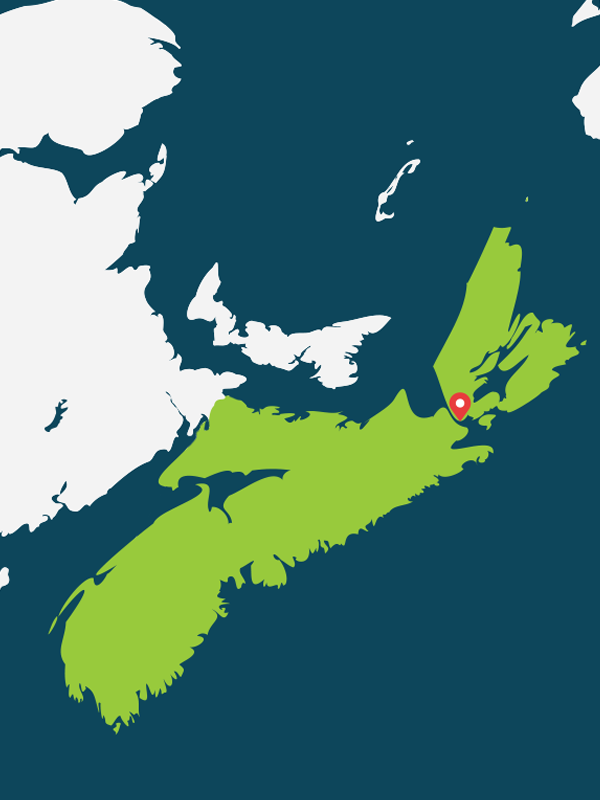
With the Point Tupper Clean Energy Project, EverWind Fuels is embarking on a journey that will create Nova Scotia’s first green hydrogen production facility and unlock the potential of Nova Scotia’s green economy. (Courtesy: EverWind)

EverWind Fuels LLC, a developer of green hydrogen and ammonia production, storage facilities and transportation assets, will begin production of green hydrogen in 2025 in Point Tupper, Nova Scotia.

EverWind has acquired the NuStar storage terminal in Point Tupper, and plans to expand and develop the Point Tupper site to be the location of a regional green hydrogen hub for eastern Canada, including new green hydrogen and ammonia production facilities. These facilities will create new clean energy jobs, support Nova Scotia’s carbon emissions reduction targets.

“As part of the clean energy transition, we are proud to invest in Nova Scotia and support the province in unlocking the immense opportunity presented by green hydrogen,” said Trent Vichie, CEO of EverWind Fuels.

“The development of green hydrogen is an essential tool in the fight against climate change. Expansion of the Point Tupper site will support significant economic development in the region that can attract billions of dollars in new investment, create new jobs, and help make Nova Scotia and Canada global leaders in this exciting industry,” Vichie said.

By 2030, the project could reduce domestic and international carbon emissions by more than four million tons a year through the production of green hydrogen.

The Point Tupper site is positioned to produce green hydrogen as early as 2025, supported by existing in-place infrastructure. Point Tupper has an ice-free, deep-water port with 27-meter depth and two berths that can accommodate large vessels. The port is the deepest in Nova Scotia and the surrounding region.

The site has rail loading facilities and is adjacent to pipeline networks to support domestic and regional markets. Electricity transmission is available at the site as well as 7.7 million barrels of liquids storage and abundant freshwater, which is adjacent to the site.

The site is operated by a 70-person team trained to protect the surrounding environment and deliver safe operations.

EverWind Fuels also intends to partner with offshore wind developers to expand production over time, which aligns with the joint announcement by the Canadian and Nova Scotia governments in April 2022 to expand the mandate of Nova Scotia’s offshore energy regime, to support the transition to a clean economy, and to create sustainable jobs.

“Onshore facilities, like Point Tupper, will be key to unlocking this important industry and we are excited to play our part,” said Vichie. “We are confident that this is both the right place and the right time to pursue this development,” said Vichie. “Governments across Canada are embracing green hydrogen and green ammonia as key parts of Canada’s clean energy future and, with this investment, we are excited to support the development of a regional hydrogen hub in Eastern Canada.”

EverWind Fuels is committed to engagement with Indigenous and local communities, governments and local business and planning organizations to ensure feedback is incorporated throughout the development of the project.

“We have been engaging with communities, businesses and local organizations, and governments at every level early on in this project because we know it is a critical part of the process,” said Vichie. “We are working with Indigenous-owned consulting firms to ensure our engagement with Mi’kmaq communities and organizations is done thoughtfully and in the spirit of listening. This engagement and consultation activities will increase in the coming months.”


MORE INFO 
www.everwindfuels.com

BladeBUG robot saves inspection time

0
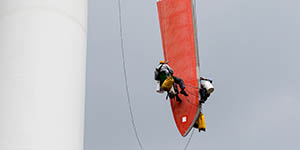
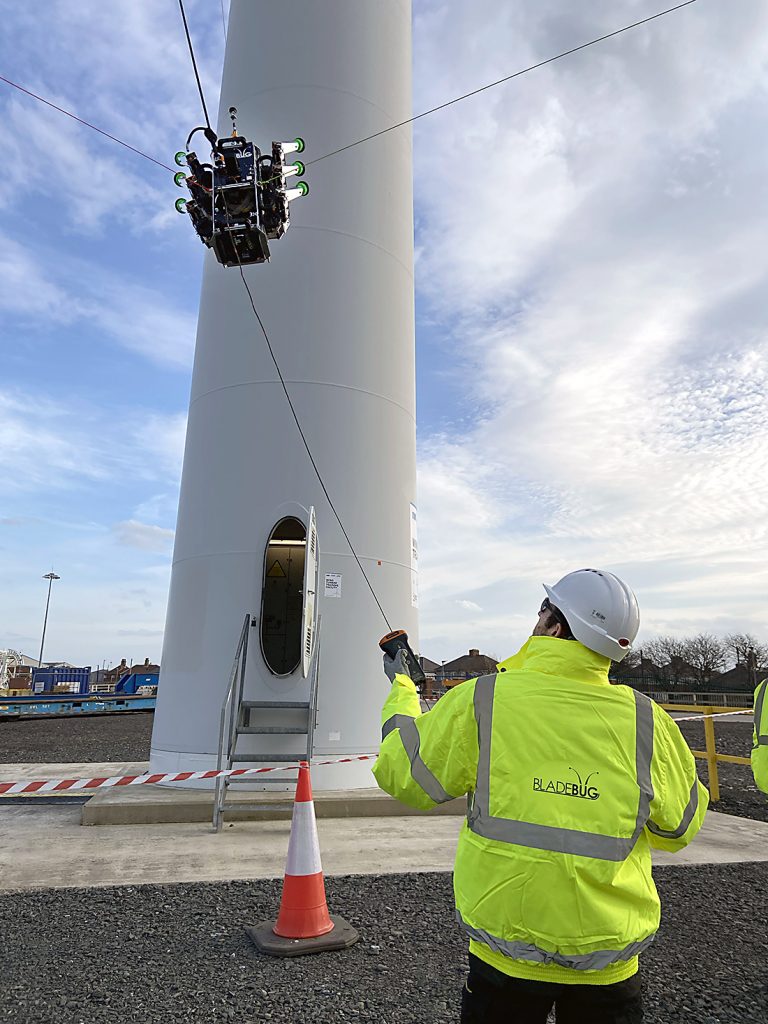
The processes required to rig and operate the BladeBUG can be managed by operations technicians with basic GWO Working at Height training. (Courtesy: BladeBug)

A robot called BladeBUG can be deployed to inspect areas of concern on a turbine blade, about half the time it would take to deploy a human rope access technician.

Rope access techs traditionally have the job of inspection and repair on wind turbine blades. However, prep time for a team is more than an hour, and the costly teams must manage safety risks at great height and sometimes in harsh weather.

“We designed the BladeBUG to reduce costly turbine shutdowns for our wind energy clients. As the UK focuses its energy supply on renewable sources such as wind farms, it is imperative these projects operate as efficiently as possible,” said Chris Cieslak, BladeBug director and founder.

“Once our team has arrived on site, unloaded the BladeBUG and carried out our safety checks, the robot will be attached to a blade and carrying out inspections in a little over half an hour. While vacuumed onto a turbine blade the BladeBUG is able to walk around to any areas of interest,” Cieslak said.

For onshore turbines, a ground-up approach for deployment is used. The robot is attached at ground level to a rope lowered by a technician from the top of the turbine, then hoisted into place to inspect the blade. One end of the rope is attached to a power descender on the ground, then goes up to the top to a pulley and back down to the robot. A top-down approach to deployment works best for offshore turbines.

The processes required to rig and operate the BladeBUG can be managed by operations technicians with basic GWO Working at Height training. The technicians on the tag lines communicate via radios with those operating the power descender to hoist the robot to the correct part of the blade.

The latest round of testing was successfully carried out at the Offshore Renewable Energy (ORE) Catapult’s National Renewable Energy Centre in Blyth.

“It has been a privilege to be a part of the BladeBUG journey and watch Chris and the team develop such a vital piece of technology for the industry. The BladeBUG continues to go from strength to strength, and this latest test in Blyth is another tick in the box for the future of innovative wind turbine inspections,” said Andrew Stormonth-Darling of ORE Catapult.

MORE INFO  https://www.bladebug.co.uk/

Snap-On reaction arms improve torque access

0
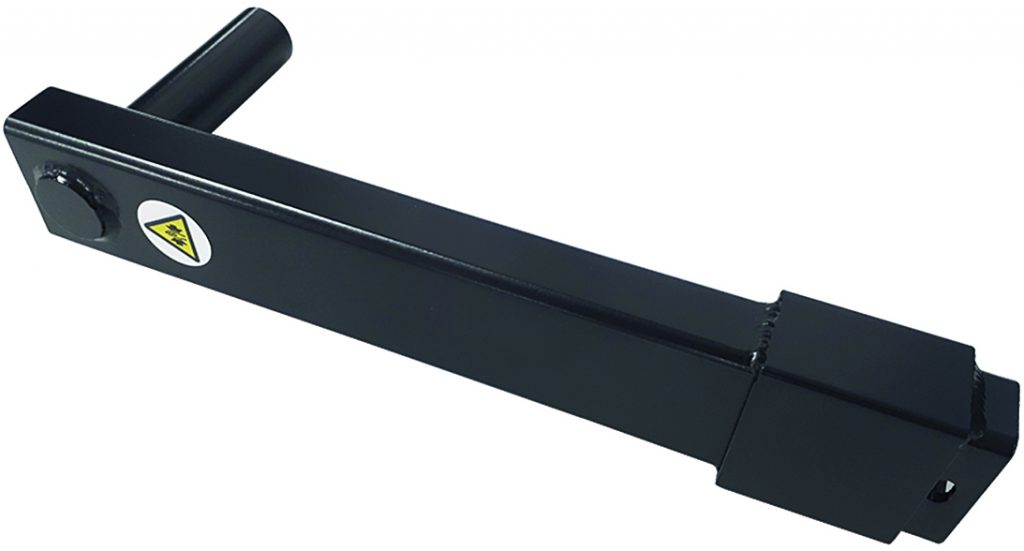
Snap-on Industrial offers a wide range of reaction arms, a key component of successful torque multiplier application. (Courtesy: Snap-On Industrial)

Torque multipliers are essential when high torque is needed in heavy duty applications including power generation, oil and natural gas, railroad and other critical industries. Snap-on Industrial offers a wide range of reaction arms, a key component of successful torque multiplier application.

Reaction arms improve torque access for applications involving heavy duty fleet maintenance, structural bolting, flange bolting, wind turbine erection, and general maintenance.

Reaction arms direct all torque forces back to the adjacent fasteners or structure, eliminating unintentional rotation of the torque multiplier during operation.

Popular styles of reaction arms include:

  • Straight reaction: 11.8-inch length; light-weight reaction; reduces tool weight
  • Straight reaction with peg: 1.8-inch length, 3 offset inches; light-weight reaction; reduces tool weight
  • Double-sided reaction fixture: 7.9-inch length; light-weight reaction; reduces tool weight
  • Short reaction foot: 2.55-inch length, 3 offset inches; light-weight reaction; reduces tool weight
  • Reaction adaptor: Light-weight reaction; reduces tool weight

Custom-built reaction arms and sets can also be designed for customers’ exact torque application.

MORE INFO  https://b2b.snapon.com/reactionarms

Collett completes Scotland wind farm phase 1

0
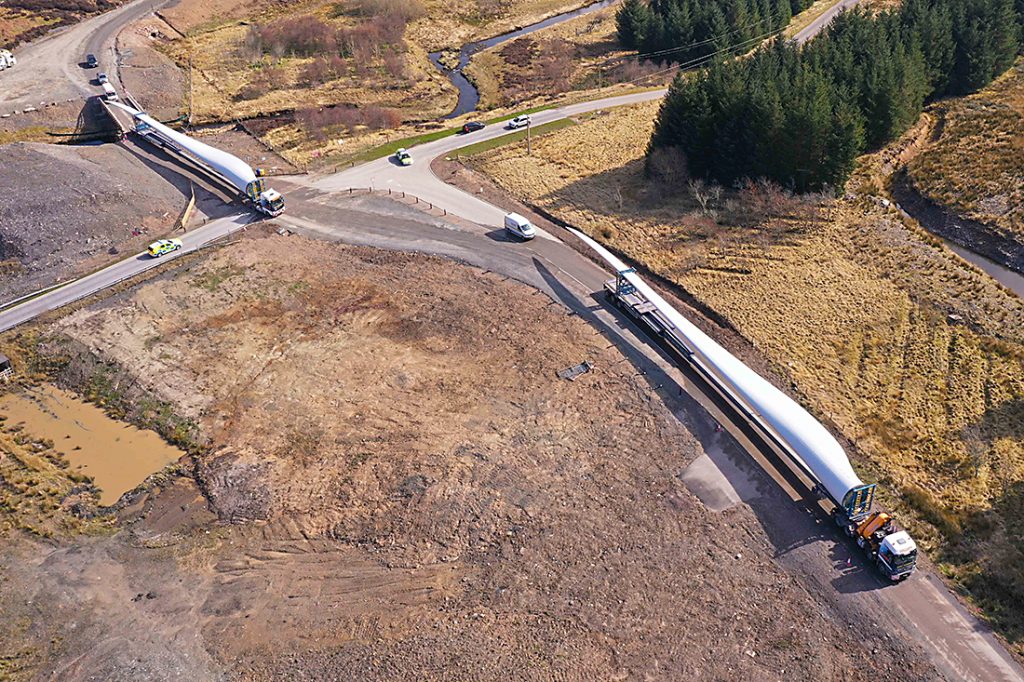
Phase one of the Kennoxhead Wind Farm is complete. (Courtesy: Collett)

Collett completed the delivery of thirteen Nordex N133 turbines to Kennoxhead Wind Farm in South Lanarkshire, Scotland.

Located south of the A70, near the village of Glespin on the Douglas Estate, the site features Nordex N133 onshore wind turbines with an individual blade length of 64 meters and a tip height of no more than 180 meters.

Phase one of the Kennoxhead Wind Farm is now completed with the 133.2-meter diameter turbines featuring a 13,935 sqm rotor sweep expected to enter commercial operation later in 2022.

Phase two of the project is still in development with 14 proposed additional turbines expected to enter commercial operation in 2024.

Beginning with a test drive of the 46-mile route from King George V Dock to South Lanarkshire, the Collett team simulated the 68-meter loaded vehicle to ensure that the 64-meter blades could safely traverse the route.  Data gathered during the test drive, coupled with preliminary planning reports, allowed the team to determine the suitability of the route, identifying any modifications ahead of the commencement of deliveries.  This included the removal of street furniture at King George V Dock and required civil work on site to prevent the loaded trailers grounding on the wind farm access roads.

Using King George V Dock’s 32.6 hectares of storage, all components were imported to the Glasgow facility for onward transport. The team used specialist wind turbine trailers for deliveries, including clamp trailers for the base and middle tower sections, six-axle step-frames for the top towers, nacelle, hubs and drive trains and Faymonville quadruple extendable wing max trailers for the 64-meter blades.

MORE INFO  https://collett.co.uk/

Avangrid Oregon wind farm begins operations

0
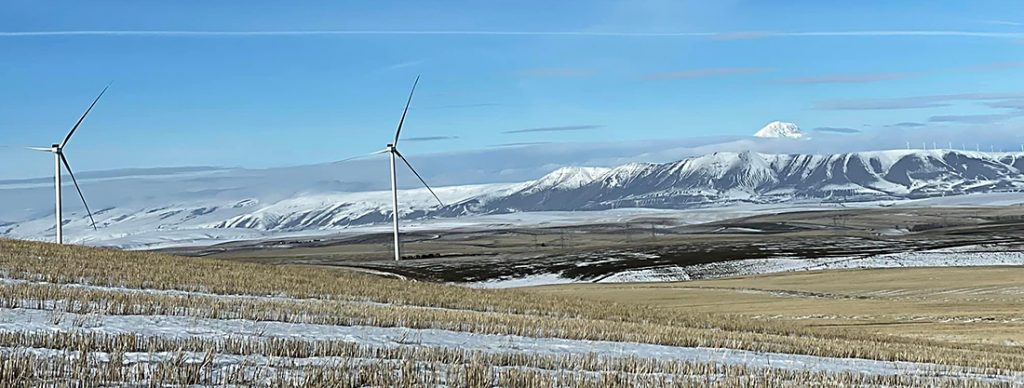
Avangrid’s 200 Golden Hills wind farm in Sherman County, Oregon, provides enough clean, renewable electricity to Puget Sound Energy to power more than 60,000 homes annually. (Courtesy: Avangrid Renewables )

Avangrid Renewables, LLC, a subsidiary of AVANGRID, Inc.  announced that it has begun operations at its 200-megawatt (MW) Golden Hills wind farm in Sherman County, Oregon. The facility provides enough clean, renewable electricity to Puget Sound Energy (PSE) to power more than 60,000 homes annually.

“Delivering on this project represents an important milestone for Avangrid Renewables as we continue to build on our robust portfolio of project in the Pacific Northwest region and advance our position as a leading renewable energy developer in the U.S.,” said Jose Antonio Miranda, Avangrid Renewables’ president and CEO, Onshore. “We are pleased to work with Puget Sound Energy to help it meet its ambitious goals to reduce emissions and provide clean, reliable power to its customers.”

The project will help PSE meet its goals to reduce carbon dioxide emissions while providing additional capacity to serve customers, particularly during winter periods of high electricity demand. The project is Avangrid Renewables’ seventh wind project in Sherman County, eleventh in Oregon, and fourteenth in the Pacific Northwest.

“We are excited for this next step and what this partnership with Avangrid Renewables means as we continue to build on our history of championing renewable energy in the Pacific Northwest,” said Ron Roberts, PSE vice president of energy supply. “This new wind project will enable us to expand our efforts toward providing clean, reliable electric service to all of our customers as we work together to create a clean energy future for all.”

The addition of the Golden Hills wind project increases PSE’s owned and contracted wind fleet to over 1,150 megawatts.

The Golden Hills Wind Farm is located near the town of Wasco, Oregon. The project includes 41 Vestas V150 4.3 MW turbines and 10 GE 116 2.5 MW turbines. The farm is spread across about 28,000 acres of grazing and dry-land wheat farmland held by 37 landowners. Avangrid Renewables started construction on the project in May 2020.

The project will employ around 13 full time employees and is expected to deliver more than $220 million in landowner payments and local taxes over the lifetime of the project.

MORE INFO  www.avangridrenewables.com

Tube and pipe bending solutions to be presented at Houston conference

0
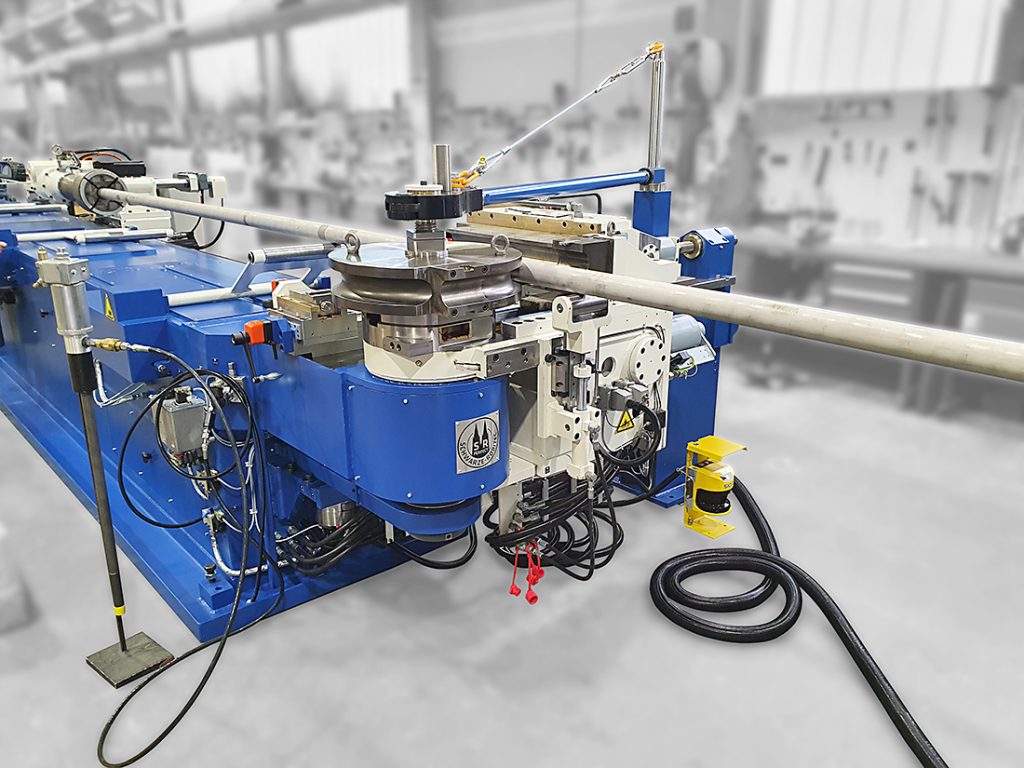
Schwarze-Robitec will be providing information about its high-quality tube and pipe cold bending machines for the offshore industry at the OTC in Houston. (Courtesy: Schwarze-Robitec)

Tube and pipe bending machine manufacturer Schwarze-Robitec will be presenting its high-performance technologies for the offshore industry May 2-5 at the Offshore Technology Conference (OTC) in Houston, Texas.

For many decades, prestigious companies from this industry have placed their faith in the “made in Germany” label. Schwarze-Robitec’s machines are designed to meet extreme demands in continuous use, producing customized tubes and pipes in a quick and precise manner.

For more than 50 years, energy professionals have met to exchange ideas and opinions at the OTC in an open format. Schwarze-Robitec will be taking part in this year’s event. The long-established Cologne-based company is one of the world’s leading manufacturers of tube and pipe cold bending machines for various industries and applications. In the offshore industry, Schwarze-Robitec’s robust CNC tube and pipe cold bending machines from the Heavy Duty series are particularly able to demonstrate their benefits. They can bend tubes and pipes of various dimensions — from 0.16 to 16.5 inches (4 to 420 mm) — in complex geometries with a high degree of repeatability and precision. Schwarze-Robitec is thus enabling users to produce tubes and pipes in a time- and cost-effective manner. The tailor-made tubes and pipes offer excellent durability and dimensional stability thanks to the high-quality machine work.

Schwarze-Robitec’s experts know the complex demands of the offshore industry inside out and are on hand to provide comprehensive advice, well-founded expertise and bending solutions precisely tailored to user requirements. Schwarze-Robitec is active in North America with its service and sales team based in Grand Rapids, Michigan.

The tube and pipe bending specialists will be stationed at exhibition booth 1258 at the OTC in Houston, where they will be available to answer all questions related to efficient and economical tube and pipe bending and look forward to speaking to industry professionals.

MORE INFO  www.schwarze-robitec.com

STLE welcomes return of in-person annual meeting May 15-19

0

The 76th STLE Annual Meeting and Exhibition will be held May 15-19, 2022, in Orlando, Florida, and include daily keynote talks, Q&A opportunities, presentations, discussions, and more.
The meeting is the lubricant industry’s most respected event for technical information, professional development, and international networking opportunities. The five-day event will be held entirely in person, complete with daily keynote and plenary talks, live Q&A opportunities with academic and industry leaders, 400 technical presentations, application-based case studies, 12 industry-specific education courses, best practice reports, discussion panels on technical and market trends, in-person networking and social events, and commercial exhibits and student posters.

“We’re excited to bring back our in-person presentation of STLE’s Annual Meeting & Exhibition in 2022, and we can’t think of a better place to do it than the award-winning Walt Disney World Swan and Dolphin Resort,” said Edward P. Salek, CAE, STLE executive director. “This year’s event will provide members and non-members with the long-awaited opportunity to connect, network and collaborate with other lubricant professionals face-to-face.”

Throughout the event, world-class visionaries will address key areas at the forefront of tribological science. Program features will include:

  • Electric Vehicle (EV) Track.
  • Biotribology at the Nanoscale Joint Session. 
  • Tribology of Biomaterials Special Session. 
  • Tribochemistry Joint Session. 
  • 2D Materials + Superlubricity Joint Session.
  • Special session on Artificial Intelligence in Tribology. 

Tribological advancements in transportation, driven by fuel efficiency, gasoline and emission requirements, evolving electric vehicle technologies, and applications performance, can lead to improved fuel efficiency, longevity, and power density. Darryl Stolarczyk, director of vehicle planning, body systems engineering and materials engineering for Nissan Technical Center North America (NTCNA) will open the meeting with a keynote address that focuses on how tribology is supporting Nissan Ambition 2030, the company’s vision for creating a cleaner, safer, and more inclusive society through initiatives that aim for zero emissions, zero fatalities, and zero inequality.

During the presentation, “Nissan — Powertrain Evolution Toward Carbon Neutrality,” Stolarczyk will discuss the integral role tribology and lubrication technologies have played in the development of more efficient internal combustion engine (ICE) powertrains and how they are helping Nissan to achieve its carbon neutrality goals — through the creation of lower-cost electric vehicle (EV) models designed to extend range and reduce charging times.

Commercial exhibits and student posters will be open to visitors from May 16-18. The exhibition will feature more than 100 booths showcasing the latest products and services of interest to lubrication professionals worldwide, representing a full range of the industry’s most prestigious corporate, government, and academic institutions.

STLE members and non-members who are unable to attend the meeting in person can purchase a collection of digital proceedings of the technical presentations after the event for a reduced fee.

MORE INFO  www.stle.org

Monopile upending complete for offshore wind project in Japan

0
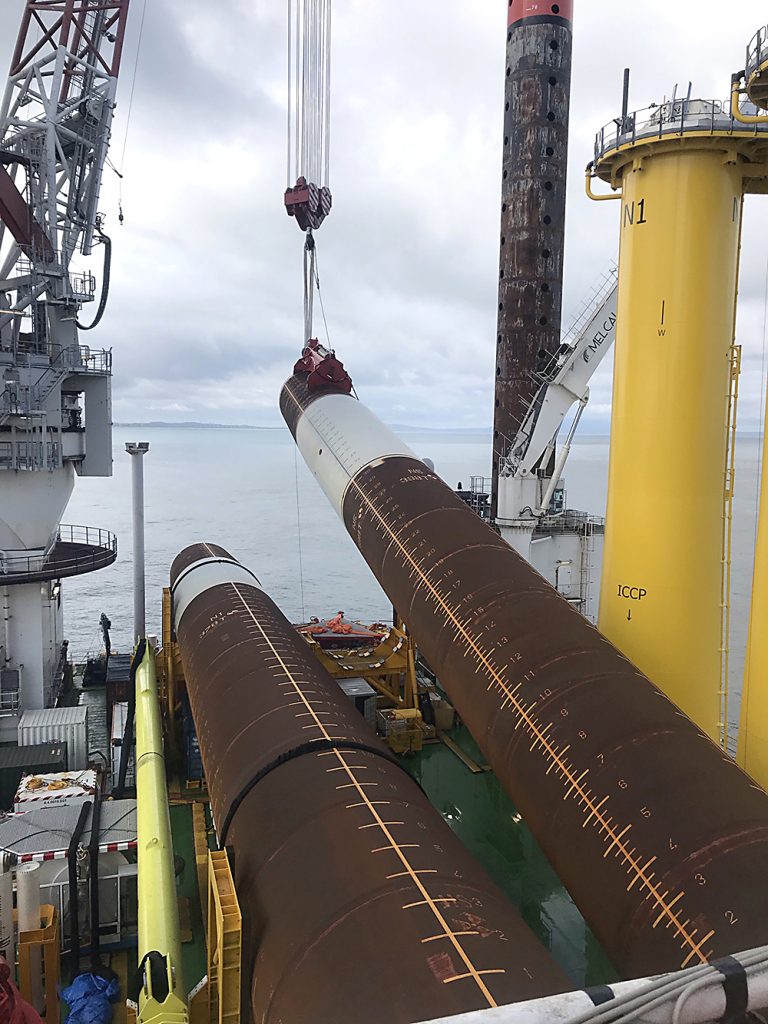
33 monopiles needed to be upended one by one from their horizontal orientation on the deck of the installation vessel so that they could be used for construction of Japan’s first large scale commercial wind farm project. (Courtesy: Akita Offshore Wind Corporation)

As part of the Akita Noshiro offshore wind farm project’s construction phase off the coast of Japan, Akita Offshore Wind Corporation required 33 monopiles to be upended on the deck of the offshore installation vessel so that they could be used for construction of Japan’s first large scale commercial wind farm project.

This was the first time SPMTs had been used for this type of operation in Japan, so strong engineering support from a global team experienced in offshore wind operations would be vital to ensure a safe operation. In particular, close monitoring of tolerances was required throughout, to ensure the SPMTs were not subjected to high levels of torsional load during these highly precise maneuvers.

The operations took place around 1km offshore between Ports of Akita and Noshiro, Japan with main marshalling station in Akita. The 33 monopiles needed to be upended one by one from their horizontal orientation on the deck of the installation vessel.

The monopiles were first loaded by a crane into a cradle and the upending frame, in horizontal orientation. Next, SPMTs connected to the upending frame and the crane hook to their other end. Then the SPMTs were driven forward as the crane hoisted up until safe operational limits were reached.

As each monopile was larger than the deck of the vessel, there was a need for the upending operation to stop and have the crane slew (rotate) 180 degrees. To ensure a safe maneuver, it was necessary to minimize the risk of torsion.

The Mammoet engineer team used steering modes that are not in everyday use, allowing the trailers to be put into carousel mode; free-wheeling to follow the motion of the crane above, to which the monopile was still attached. This phase was executed safely and successfully.

During this phase, surveyors monitored the position of the crane hook to reduce the risk of the crane hook being out of level. Each time, the SPMT was driven forward while the crane was hoisted up until each monopile was free from its upending bucket.

The operations were controlled in the final stages between crane and SPMT operators so that the monopile lifted out of the frame once it was almost vertical. Each monopile was then lowered via crane only into the water for sail-off to the installation site.

Mammoet’s global network provided the client with expertise and equipment from Japan, the wider APAC region, as well as the United Kingdom. This allowed the customer to benefit from the expertise behind some of the world’s most technically challenging offshore wind projects, but also a supplier that could mobilize resources locally.

The Akita Noshiro offshore wind farm project is expected to provide more than 140MW of energy a year. Its power will be supplied to approximately 130,000 homes, with commercial operation expected to start in 2022.

MORE INFO  www.mammoet.com

Siemens Gamesa starts manufacturing in France

0
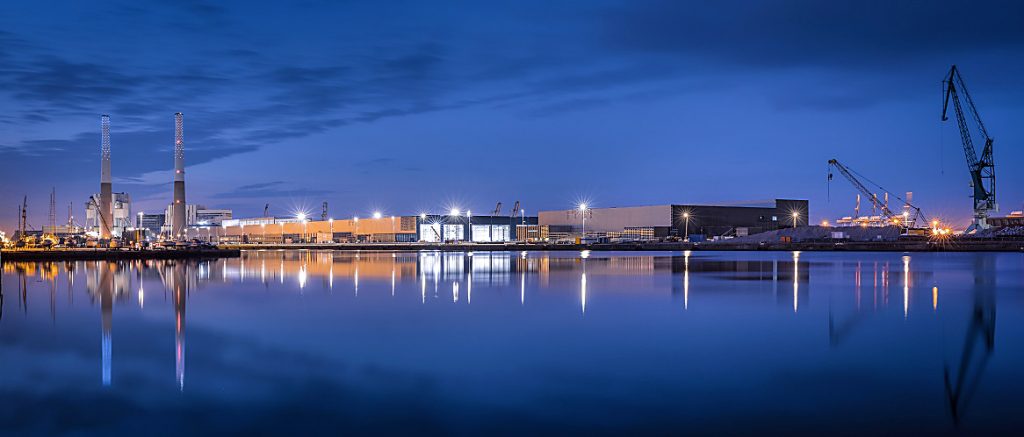
Siemens Gamesa has started manufacturing of both its patented offshore Direct Drive wind turbine nacelles and patented IntegralBlades at its new manufacturing facility in Le Havre, France. (Courtesy: VINCI Construction France)

Siemens Gamesa has started manufacturing of both its patented offshore Direct Drive wind turbine nacelles and IntegralBlades at its new manufacturing facility in Le Havre, France. The world’s first facility to encompass both offshore wind turbine nacelle and blade manufacturing under one roof, it is the largest industrial renewable energy project in France.

A dedicated installation hub is also under finalization on the same plot, allowing direct load out of wind turbine components to French offshore wind power plants. Locally in Le Havre, the first 500 positions out of the 750 total direct and indirect jobs to be created have been filled. The remaining 250 positions are expected to be filled between the end of calendar year 2022 and early 2023.

“Producing our first offshore wind power components in Le Havre is electrifying. This investment serves as a major driver of the economic growth story in Normandy and in the French offshore wind industry. With the world’s first offshore nacelle and blade factory under one roof, we can unlock the power of wind for our customers and the people of France. We are energized to lead the way, especially coupled with solid orders and the government’s recent French Offshore Sector Deal,” said Marc Becker, CEO of the Siemens Gamesa Offshore Business Unit.

Siemens Gamesa and local partners UIMM Le Havre, AFPI, and AFPA have created a dedicated training center for new employees and the new offshore wind specific competencies that are needed. This investment in people is the first training center in France solely dedicated to the production of wind turbine nacelles and blades.

“The first nacelles and blades headed for the Bay of Saint Brieuc and the Fecamp projects are tangible proof of the power of commitment to renewable energy in France. The French Offshore Sector Deal recently signed by the French government commits to 18 GW to be installed by 2035 and for awards growing from 2 GW per year from 2025 onwards. The growth path is crystal clear. We look very much forward to executing our strong French offshore order pipeline with components from the plant. The growing market opportunity and public commitments secure the long-term prospects for our new colleagues,” said Filippo Cimitan, managing director of Siemens Gamesa France.

Siemens Gamesa has approximately 2.5 GW of capacity announced in France. They include the firm orders for the 496 MW Bay of Saint Brieuc project, the 497 MW Fecamp project, the 448 MW Calvados (formerly Courseulles-sur-Mer) project, and the 24 MW Provence Grand Large floating offshore wind power project. Preferred supplier agreements include the 496 MW Yeu Noirmoutier project and the 496-MW Dieppe le Tréport project. The projects will in total use both Siemens Gamesa 7 MW and 8 MW offshore Direct Drive nacelles, as well as 75-meter long B75 blades and 81-meter long B81 blades.

MORE INFO  https://www.siemensgamesa.com/en-int

Lidar systems maker Leosphere is now Vaisala

0
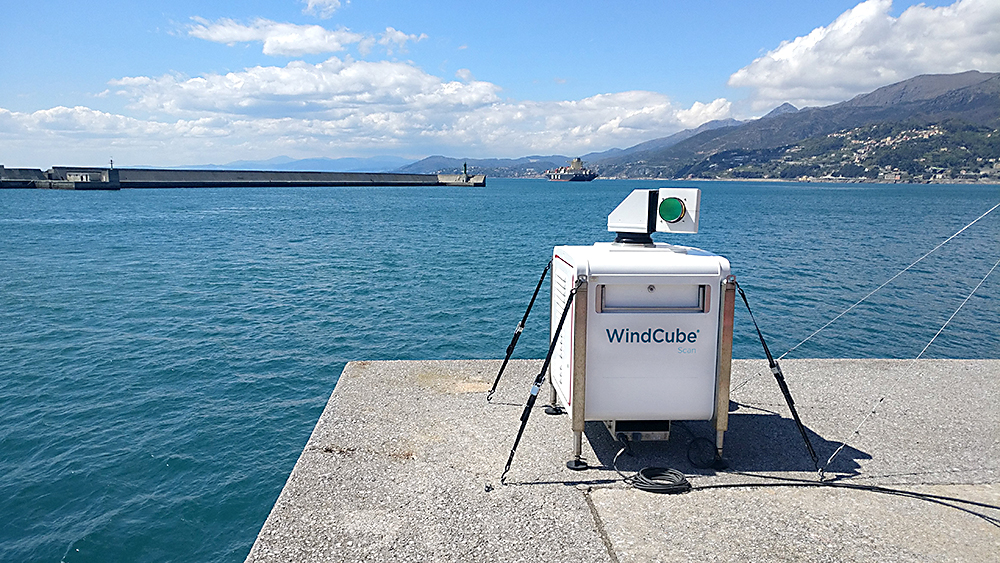
Developers around the globe are using WindCube to reduce risk, improve bankability and decision-making, and make better investments. (Courtesy: Vaisala)

Leosphere, maker of the WindCube lidar suite, is now Vaisala, as it completes integration with Vaisala, who purchased the company in 2018.

From lidars, sensors, and systems to digital services and actionable intelligence, Vaisala’s enhanced range of comprehensive offerings for wind and solar energy applications provides industry-leading integration, scalability, and data quality. The WindCube suite’s accurate and reliable intelligence arms decision-makers with the insights needed to innovate, evolve practices, improve accuracy and efficiency, and meet renewable energy challenges with confidence.

“Backed by its 85-plus-year proven track record and global leadership, Vaisala is a leading wind and solar technology partner, driving the successful evolution of renewable energy for a healthier, greener, and more innovative future,” the company said in a press release.

MORE INFO  https://www.vaisala.com/en

US Wind & UMCES launch major offshore wind research partnership

0
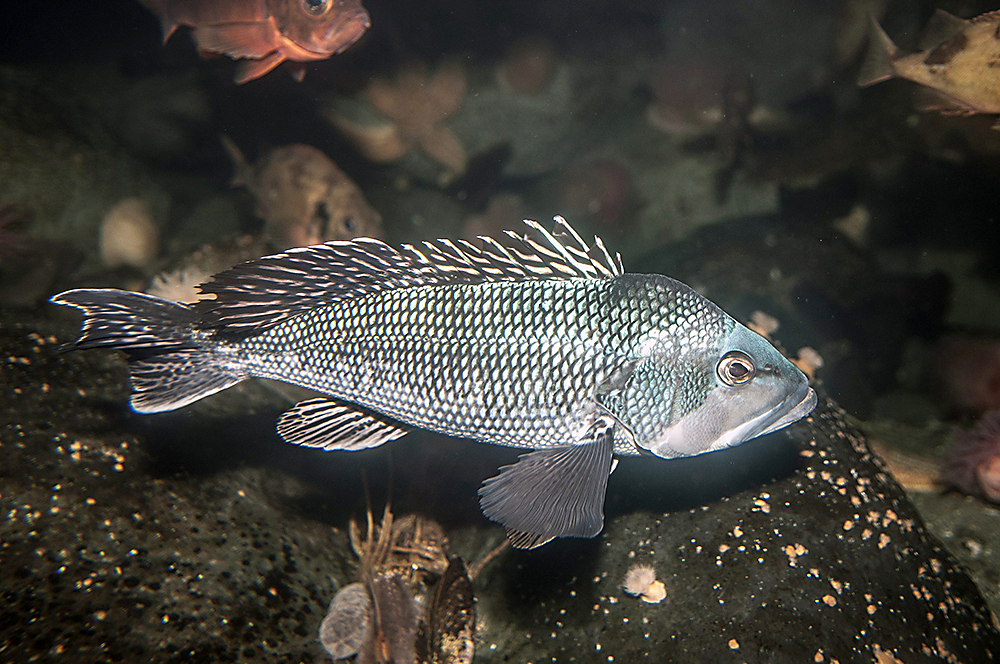
Black sea bass are structure-oriented with large aggregations occurring on artificial reefs and wrecks. (Courtesy: US Wind)

Baltimore-based US Wind, Inc. will partner with University of Maryland Center for Environmental Science (UMCES) for three research projects aimed at understanding the potential effects of offshore wind development on marine mammals, fish, and birds. US Wind pledged $11 million in funding over ten years, and the research will take place in US Wind’s 80,000-acre federal lease area off the coast of Ocean City, Maryland.

“As US Wind works to develop offshore wind off Maryland’s coast, it’s imperative that we do so responsibly,” said Jeff Grybowski, US Wind CEO. “We’re thrilled to be partnering with UMCES on industry-leading environmental research that will enhance protections for marine life as we develop this clean energy resource for the region.”

“Partnering with a leading environmental research institution like UMCES is an exciting building block in our efforts to collect much-needed biological information in our lease,” said Laurie Jodziewicz, US Wind Senior Director of Environmental Affairs. “The planned work will go a long way in filling knowledge gaps that still exist about offshore wind’s effects on the marine environment. We’re excited to get started.”

US Wind’s funding will support three projects, all planned to kick off this year, to understand the potential environmental effects of offshore wind development in the Mid-Atlantic.

“We’re really pleased with this continued partnership with US Wind on important questions related to the environmental impacts of offshore wind development,” said University of Maryland Center for Environmental Science President Peter Goodwin. “We look forward to working with them along with state and federal agencies to help make the best decisions to minimize impacts to the environment.”

The three UMCES research projects are:

Commercial and recreational fisheries monitoring: An eight-year program to evaluate the extent that black sea bass change their aggregation behaviors before, during, and after construction. Black sea bass are structure-oriented with large aggregations occurring on artificial reefs and wrecks. Turbine foundations will add three-dimensional structure within US Wind’s lease where very little exists. This research project will assess the benefits and potential fish aggregation effects. It will also test black sea bass fishing with ropeless gear, an important technology to reduce whale entanglements.

Near real-time whale detection: This initiative will continue the deployment of a near real-time whale detection system to provide timely alerts on the presence of baleen whales (North Atlantic right whales, and humpback, fin, and sei whales) for a 12-month period from 2022 to 2023. The project is a partnership between UMCES and Woods Hole Oceanographic Institution that uses quiet mooring technology, whale vocalization detection algorithms, and telecommunications to transmit frequent alerts on the presence of baleen whales. The initiative enables real-time data collection through the buoy system that was initially funded by the Maryland Energy Administration and deployed by the Maryland Department of Natural Resources.

Passive acoustic monitoring array: This long-term project will support passive acoustic monitoring to detect dolphins and large whales such as North Atlantic right whales to understand their presence and migration patterns in and around the lease area and the potential effects of construction. Working with Cornell University’s Center for Conservation Bioacoustics, two types of listening devices will be deployed to determine the occurrence and position of large whales and dolphins, and to detect the tonal echolocation clicks of small cetaceans including porpoises. Additionally, this project will deploy equipment to listen for passing fish, sharks, rays, and turtles that have been implanted with transponders for broader scientific research.

“The Department appreciates the coordinated research into safer equipment and marine wildlife monitoring,” said Catherine McCall, Director of the Maryland Department of Natural Resources Office of Ocean and Coastal Management. “The ongoing deployment of Maryland’s whale monitoring buoy provides daily detections and helps resource managers protect sensitive species.”

These UMCES-led research projects build on the environmental baseline work US Wind is doing to better understand the environment in and around its lease area and mitigate potential effects of offshore wind development on marine life and avian species. One such initiative includes aerial digital surveys to identify birds that may be displaced or avoid the wind farm once the turbines are installed. These research and monitoring programs also inform the comprehensive analyses the federal government must do to approve the construction and operation of offshore wind projects.

“The Maryland Energy Administration (MEA) is pleased that offshore wind developers are investing resources to support scientific understanding of the nexus between offshore wind development and the environment, wildlife, ecosystems, and habitats off the coast of Maryland,” said Mary Beth Tung, Ph.D., Esq., Director of MEA. “US Wind’s investment complements the research initiatives funded by MEA and administered by DNR, which total more than $15 million and have been carried out since 2014.”

Monitoring these populations is a critical step in conservation to measure changes, track threats, and evaluate the success of wildlife management. The projects were selected based on their efficacy and ability to complement existing research efforts in the scientific community. All data will be made available to government and academic researchers, and reports and information will be made publicly available to help protect these important species and ecosystems for generations to come.

MORE INFO  https://uswindinc.com/

Biden-Harris administration announces lease sale offshore of the Carolinas

0
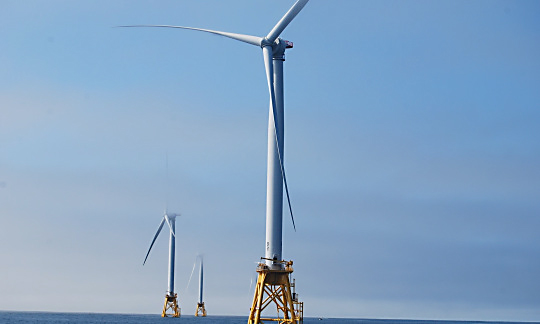
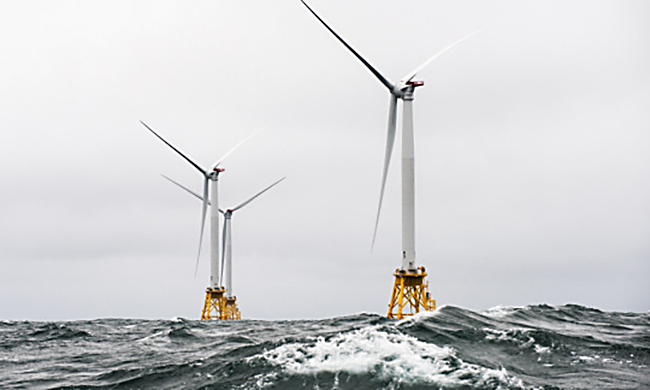
Block Island Wind Farm is the first commercial offshore wind farm in the United States. (Courtesy: DOE)

The Department of the Interior recently announced that the Bureau of Ocean Energy Management (BOEM) has completed its environmental review and will hold a wind-energy auction for two lease areas offshore of the Carolinas on May 11.

The lease areas cover 110,091 acres in the Carolina Long Bay area that, if developed, could result in at least 1.3 GW of offshore wind energy, enough to power nearly 500,000 homes. The announcement is part of President Biden’s agenda to grow a clean-energy economy that harnesses offshore wind projects to strengthen U.S. energy independence, create good-paying jobs, and lower energy bills for consumers.

“The Biden-Harris administration is committed to supporting a robust clean-energy economy, and the upcoming Carolina Long Bay offshore wind-energy auction provides yet another excellent opportunity to strengthen the clean energy industry while creating good-paying union jobs,” said Secretary Deb Haaland. “This is a historic time for domestic offshore wind-energy development. We will continue using every tool in our toolbox to tackle the climate crisis, reduce our emissions to reach the president’s bold goals, and advance environmental justice.”

President Biden catalyzed the offshore wind energy industry by announcing the first-ever national offshore wind energy goal, creating a clear vision for the future of this innovative industry. This goal is reinforced by President Biden’s Bipartisan Infrastructure Law, which will make historic investments to build a better America with clean energy, resilient infrastructure, and strong domestic manufacturing and supply chains.

The Carolina Long Bay offshore wind-energy auction will allow offshore wind developers to bid on one or both of the lease areas within the Wilmington East Wind Energy Area (WEA), as described in BOEM’s Final Sale Notice (FSN), which is available in the Federal Register Reading Room. The two lease areas include similar acreage, distance to shore, and wind-resource potential.

The FSN includes several lease stipulations designed to promote the development of a robust domestic U.S. supply chain, advance flexibility in transmission planning, and encourage project labor agreements. Among the stipulations announced, BOEM will offer a 20 percent credit to bidders if they commit to invest in programs that will advance U.S. offshore wind-energy workforce training or supply chain development.

To advance BOEM’s communication and environmental justice goals, the leases will also require lessees to identify Tribal Nations, underserved communities, agencies, ocean users and other interested stakeholders, and report on their communication and engagement activities with these parties. These stipulations are intended to promote offshore wind-energy development in a way that coexists with other ocean uses and protects the ocean environment, while also facilitating our nation’s energy future for generations to come. These innovative stipulations were embraced in the Department’s recent lease sale for the New York Bight, which set a record as the nation’s highest-grossing competitive offshore energy lease sale in history, including oil and gas lease sales.

“BOEM is focused on ensuring that any development offshore North Carolina is done responsibly, in a way that avoids or minimizes potential impacts to the ocean and ocean users in the region,” said BOEM Director Amanda Lefton. “The milestones announced … mark significant progress in achieving this administration’s goal for deploying 30 GW of offshore wind energy by 2030, while creating jobs and strengthening a sustainable domestic supply chain.”

In November 2021, BOEM published a proposed sale notice (PSN) and requested public comments on the proposed leasing of nearly 128,000 acres in the Wilmington East WEA. Based on the bureau’s review of scientific data and extensive input from the commercial fishing industry, tribes, partnering agencies, key stakeholders, and the public, BOEM reduced the acreage available for leasing in the FSN by 14 percent from the areas proposed in the PSN to avoid conflicts with ocean users and minimize environmental impacts. BOEM will continue to engage with its partners and stakeholders as the process unfolds.

In addition, this past fall the administration announced a new leasing path forward, which identified up to seven potential lease sales by 2025, including the upcoming Carolina Long Bay lease sale and last month’s New York Bight lease sale. Lease sales offshore California and Oregon, as well as in the Central Atlantic, Gulf of Maine, and the Gulf of Mexico are expected to follow.

A recent report indicates that the United States’ growing offshore wind-energy industry presents a $109 billion revenue opportunity to businesses in the supply chain over the next decade.

MORE INFO  www.boem.gov/renewable-energy/state-activities/carolina-long-bay