Home 2013

Power Service Company of Oklahoma to Purchase Nearly 600MW of Wind

0

PSO has signed agreements for the long-term purchase of nearly 600MW of wind energy from facilities currently under development in northwestern Oklahoma and the Oklahoma panhandle.

Long-term Renewable Energy Purchase Agreements (REPAs) totaling 598.7 megawatts will provide PSO customers with energy from wind farms near Seiling, Balko, and Goodwell beginning in 2016. The agreements are for 20 years and are subject to approval by the Oklahoma Corporation Commission.
 

The new REPAs are a result of a Request for Proposals (RFP) issued June 10, 2013, in which PSO sought long-term purchases of up to 200MW of new wind energy resources.
 

The decision to contract for an additional 400MW was based on pricing opportunities that are expected to lower costs for PSO’s customers by an estimated $53 million in the first year of the contracts. Annual savings are expected to grow each year over the lives of the contracts.
 

The new series of 20-year agreements includes: 199.8MW from Balko Wind, LLC, owned by Apex Clean Energy Holdings, LLC; 198.9MW from Seiling Wind, LLC, owned by NextEra Energy Resources, LLC; and 200MW from the Goodwell Wind Project, LLC, owned by TradeWind Energy.
 

For more information, visit www.psoklahoma.com.

Shermco’s Alewine Tapped for DOE Wind Vision Task Force

0

Kevin Alewine, director of Renewable Energy Services for Shermco Industries, has been appointed to the Operations, Performance and Reliability Task Force for U.S. Department of Energy Wind Vision Project.

The DOE Wind Program is working in close cooperation with the wind industry to revisit the findings of the 2008 DOE 20% Wind Energy by 2030 report, and to develop a renewed vision for U.S. wind power research, development, and deployment. The task force will be involved in examining industry progress and how recent developments and trends have impacted the 2008 conclusions. They will also facilitate discussion of the costs and benefits to the nation arising from more wind power, and will work to develop a road map addressing the challenges to achieving high levels of wind within a sustainable national energy mix.
 

In addition to documenting and analyzing the current status of wind technologies and the wind industry, the objectives of the initiative are to:

Provide leadership in development of a cohesive long-term vision for the benefit of the broad U.S. wind power community; Analyze a range of aggressive but attainable industry growth scenarios; Provide best available information to address stakeholder concerns; Provide objective and relevant information for use by policy and decision makers.
 

“I am honored to be appointed to this task force and look forward to representing the industry to the best of my abilities,” said Alewine.

Alewine is the Director of Renewable Energy Services for Shermco Industries with a focus on business development in the wind energy business sector including both maintenance services and community wind projects. He has extensive global experience with both the manufacture and repair of electrical machinery, including wind turbine generators.
 

Kevin is an active member of several IEEE and American Wind Energy Association working groups and is the Co-chair of the AWEA Operations and Maintenance Working Group responsible for developing and maintaining recommended practices for wind energy asset maintenance and operations management.
 

Kevin is also the Technical Program Chair of AWEA’s WINDPOWER 2014 Conference & Exposition to be held in Las Vegas on May 5-8, 2014.
 

For more information, visit www.shermco.com.

EverPower Selected as Finalist to Provide DoD with Renewable Energy

0

EverPower Wind Holdings, Inc. has been selected to compete for contracts to provide renewable energy to U.S. Army and potentially other Department of Defense facilities. The company has been deemed qualified to develop, finance, design, build and own wind energy plants that will power facilities with a clean, renewable source of domestic power. EverPower Wind Holdings partnered with GE’s wind turbine business and the Tennessee Valley Infrastructure Group (TVIG) to provide a strong team to develop, construct and operate best–in–class wind projects.

The largest single consumer of energy in the world, the Department of Defense is mandated to meet at least 25 percent of its facilities’ energy needs with renewable energy by 2025.
 

In total, the Department of Defense has committed to invest more than $7 billion to deploy three gigawatts of renewable energy in Army, Navy and Air Force installations by 2025, the equivalent of powering 583,000 homes.
 

“EverPower is pleased to have been chosen to support the Army Corp and the Department of Defense in their efforts to add renewable energy to their energy supply,” said Jim Spencer, EverPower Wind Holdings CEO. “We believe our company; along with our partners, is uniquely qualified to help the Army and DOD achieve their goal of energy security and long–term power savings from locally sited wind turbines.”
 

For more information, visit www.everpower.com.

GE and GDF SUEZ Energy Romania Fuel Wind Growth in Romania

0

GE finalized the installation and started the testing of 20 GE 2.5-103 wind turbines for a 50MW wind energy project under construction by GDF SUEZ Energy Romania in the town of Baleni, located in Romania’s southeastern Moldavian region. When it begins operating, the wind farm will generate enough renewable electricity to power the equivalent of 50,000 houses in Romania. GE will support the Baleni wind farm‚Äôs long-term availability through a 10-year, full-service maintenance agreement.

“We selected GE‚Äôs wind technology for its proven reliability, excellent references from the grid operator and high availability track record,” said Eric Stab, chairman and CEO of GDF SUEZ Energy Romania. “We are glad to power this wind energy project in Romania with GE turbines.”
 

In addition to supplying, erecting and commissioning the wind turbines, GE has signed a 10-year, full-service agreement to support the operation of the Baleni wind farm. The service contract includes GE’s condition monitoring system. GE will have permanent on-site support and work with local GE service and parts distribution centers to maximize availability and customer production.
 

Romania’s energy demand is expected to grow 400 MW annually until 2016, and the new wind farm could meet 12.5 percent of that anticipated growth. 
 

For more information, visit www.ge-energy.com

Toronto Welcomes CanWEA for 29th Annual Conference & Exhibition

0

The Canadian Wind Energy Association will hold its 29th Annual Conference and exhibition from October 7-10 at the Metro Toronto Convention Centre in Toronto, Ontario. CanWEA 2013 Conference & Exhibition is Canada’s largest wind energy conference. Organizers expect to attract nearly 200 exhibitors and 2,000 attendees from around the world to the four-day event. Participants can expect to see products and services, learn industry brand names, network with leading industry decision makers, and generate numerous high-quality business leads.

CanWEA 2013 exhibitors are leaders in the wind industry, and are dedicated to supporting CanWEA’s efforts to push forward wind energy industry policy, regulatory, and business development objectives.
Past attendees will notice a few changes and enhancements to the event over years past. Exhibition times have been condensed and scheduled as a two-day event on Tuesday and Wednesday. Additionally, the association has has added some service functions to exhibitors and attendees. CanWEA will have a theater set up on the show floor providing companies with the opportunity to showcase their products or services. CanWEA also recognizes the importance of having private spaces available for companies to hold meetings outside of their booth and off the show floor, while still staying within the walls of the show. CanWEA will have meeting rooms on the show floor this year. These rooms can be rented for the duration of the show, or can be rented by the hour.

In another first, CanWEA has added a job fair to the 2013 Conference and Exhibition. The Association has secured the participation of a number of exhibiting companies who have confirmed that they will have jobs available in the wind industry within the next year. Are you a graduating student, recent graduate, or an individual who is interested in exploring the opportunities available in the wind energy industry? If so, make plans to participate in the CanWEA 2013 Career Fair, which will be held on Wednesday, October 9 from 1 p.m. to 6 p.m. in Exhibit Hall D (an entrance fee of $50.00 will be charged).

CanWEA 2013 gets underway on Monday, October 7 with a one-hour exhibitors’ reception starting at 3:30 p.m., followed by the opening reception at 5 p.m.
The opening session on Tuesday borrows its topic from the host province, and is entitled: “The Wind Energy Experience in Ontario.” Ontario is the largest market for wind energy in Canada—currently with more than 2GW of wind power capacity. Presenters slated to speak are: CanWEA Board Chair Roby Roberts, Ontario Minister of Energy Bob Chiarelli, and CanWEA President Robert Hornung. Through these presentations and the acompanying roundtable discussion, participants will examine both successes and challenges for Ontario concerning wind energy, investigating how lessons learned can contribute to a long-term energy plan for the province.

The next day, the focus shifts back to Canada as a whole under the “Wind Energy Across Canada” theme. More than two-thirds of Canada’s installed wind energy capacity can be found outside Ontario. In British Columbia, Alberta and Quebec, formal processes are now underway that will determine the opportunities available for new wind energy development over the next 5-10 years. Each of these markets is unique and this plenary session will highlight wind energy’s successes in these markets to date and discuss the unique actions required in each market for wind energy to capture its full potential. This session features a procurement and opportunities update, as well as case studies and regional updates.

On the final day of the conference, the plenary session takes on “Renewable Energy Advocacy & Review of the Long Term Energy Plan.” This final half-day session shifts the topic of discussion beyond wind and into the energy renewables arena. CanWEA brings you a panel of energy association leaders and provocative key speakers including environmental activist, Ms. Tzeporah Berman, and journalist, Mr. Tyler Hamilton.

Educational sessions will be offered concurrently with the exhibition on Tuesday and Wednesday. These 90-minute sessions take a narrower focus on specific wind energy topics, such as: finance, wildlife and ecology, global markets, wind integration, operations and maintenance, siting, forecasting, and more.

More information about CanWEA’s 29th Annual Conference & Exhibition, including conference agenda, floor plan, and exhibitor directory can be found online at http://canwea2013.ca.

Energy Storage Summit Co-Located with Association Conference

0

The Renewable Energy Storage Summit—hosted by Canadian Clean Energy Conferences—will be co-located with CanWEA 2013 in Toronto on Monday, October 7. By solving key challenges around integration, curtailment and dispatchability, energy storage is set to shift the wind business landscape and open new project opportunities across Canada.

The Renewable Energy Storage Summit will bring together wind developers and suppliers, system operators, utilities, investors and regulators to discuss the economics, finance and practicalities of energy storage and give critical insight into how the structure of the wind sector will change as a result of energy storage.

The Summit will provide the complete picture of how storage is changing the wind business including:

• Changing procurement regimes
• Changing business models
• New market opportunities
• Operational challenges
• Investor insight and market development

The Summit will be held from 9 a.m. until 5 p.m.

For more information, including a list of speakers, and the summit agenda, visit www.ress2013.com.


Dominion Virginia Power Wins Federal Offshore Wind Auction

0

Dominion Virginia Power, a subsidiary of Dominion, on September 4 bid $1.6 million to win the lease for 112,800 acres of federal land approximately 23.5 nautical miles off the coast of Virginia to develop an offshore wind turbine farm capable of generating up to 2,000 megawatts of electricity, enough for 700,000 homes.

“Offshore wind has the potential to provide the largest, scalable renewable resource for Virginia if it can be achieved at reasonable cost to customers,” said Mary C. Doswell, senior vice president-Alternative Energy Solutions with Dominion Virginia Power. “We will now proceed with the BOEM timetable for development of the commercial wind energy area while advancing our research proposal and looking for ways to lower the cost of bringing offshore wind generation to customers.”

BOEM has several milestones that Dominion must meet to keep the lease. The lease will have a preliminary term of six months during which Dominion must submit a Site Assessment Plan to BOEM for approval. A Site Assessment Plan describes the activities (e.g., installation of meteorological towers and buoys) the lessee plans to perform for the assessment of the wind resources and ocean conditions of its commercial lease. After a Site Assessment Plan is approved, Dominion will have up to four and a half years in which to submit a Construction and Operations Plan (COP) for approval, which provides a detailed outline for the construction and operation of a wind energy project on the lease. If the COP is approved, the lessee will have an operations term of 33 years.

Dominion expects the first turbine to be installed in about 10 years pending project approval by state regulators.

The sale follows a July 31 auction of 164,750 acres offshore Rhode Island and Massachusetts for wind energy development that was provisionally won by Deepwater Wind New England, LLC, generating $3.8 million in high bids. 

“This year’s second offshore wind lease sale is another major milestone in the President’s all-of-the-above energy strategy and demonstrates continued momentum behind a robust renewable energy portfolio that will help to keep our nation competitive and expand domestic energy production while cutting carbon pollution,” said Secretary of the Interior Sally Jewell. “Today’s sale is the result of a great deal of collaboration and planning with the Commonwealth of Virginia, which has been a leader in advancing offshore renewable energy for the Atlantic coast and an enthusiastic partner in this effort.”

“Today’s renewable energy lease sale offshore Virginia is another significant step forward in the President’s call for action to address climate change and the Administration’s all-of-the-above energy strategy,” said Bureau of Ocean Energy Management (BOEM) Director Tommy Beaudreau. “I congratulate (Dominion Virginia Power) and we look forward to overseeing their development of the Virginia wind energy area, which will create jobs, increase our energy security and provide abundant sources of clean renewable power.” 

Eight companies, including Dominion, were approved to bid, but only two firms participated. The auction lasted six rounds.

Others that BOEM had approved to bid were Apex Virginia Offshore Wind LLC of Charlottesville, Va; Energy Management Inc. of Boston; EDF Renewable Development Inc. of San Diego; Fishermen’s Energy LLC of Cape May, N.J.; Iberdrola Renewables Inc. of Portland, Ore.; Sea Breeze Energy LLC of Philadelphia; and Orisol Energy U.S. Inc. of Ann Arbor, Mich.

Dominion is involved in other offshore wind research projects. Dominion and its team was one of seven projects selected to receive $4 million each in federal matching funds to undertake initial engineering, design, and permitting for a demonstration facility of two six-megawatt turbines with a goal of finding innovative ways to lower costs of offshore wind. The Department of Energy will select up to three of the projects for follow-on phases to move forward with the final design, permitting, and ultimate construction of these demonstration projects. The projects must be in operation by the end of 2017.

BOEM is expected to announce additional auctions for Wind Energy Areas offshore Maryland, New Jersey, and Massachusetts later this year and in 2014.

EDF EN Canada Commissions 150MW in Quebec

0

EDF EN Canada Inc., a subsidiary of EDF Energies Nouvelles, has announced that the second phase of the Lac-Alfred Wind Project (150MW) in Quebec was declared for commercial operation on August 31.
Lac-Alfred represents one of the seven wind energy projects in total awarded to the company in 2008 and 2010 through Hydro-Quebec Distribution calls for tenders. By the end of 2015, EDF EN Canada will have developed and built a total of 1,003.2 MW in the province.

The Lac-Alfred Wind Project is located in the municipalities of Saint-Cléophas, Sainte-Irène, Saint-Zénon-du-Lac-Humqui and the unorganized territory (UT) of Lac Alfred in the MRC de La Matapédia and in the municipality of La Rédemption and UT Lac-à-la-Croix in the MRC de La Mitis. The 300MW project was constructed in two phases, 150MW each, comprising of a total of 150 wind turbines supplied by REpower and made with regionally-manufactured blades, towers and converters. Lac-Alfred Phase 1 was commissioned in January 2013.

The project created more than 350 jobs during the construction phase, and will provide 15 permanent operations and maintenance jobs. Enbridge Inc., participates in Lac-Alfred (phase 1 and phase 2) as a co-owner through a 50 percent investment.

EDF EN Canada Inc.’s operation and maintenance affiliate, EDF Renewable Services Inc. will provide long-term operations and maintenance (O&M) services. Hydro-Quebec will buy the power under 20-year power purchase agreements (PPA).

For more information, visit www.edf-en.ca.

GE Expands Facility, Installs 500th Turbine in Brazil

0

GE announced the expansion of its Campinas, São Paulo, manufacturing facility and the creation of 35 new skilled jobs. Co-located with Brazilian machinery manufacturer and GE Group subsidiary GEVISA, the facility will produce machine heads, also known as nacelles, for GE 1.7-100 and 1.85-82.5 wind turbines. The machine head is a primary component of a wind turbine and houses the power generation equipment including the gearbox, generator and controls.

To quickly and efficiently respond to the rapidly growing demand for advanced wind energy services, GE has announced the opening of two wind services centers in Brazil. The first center will be located in Bahia and the second will open in Rio Grande do Norte. Together, they will employ more than 100 service technicians. Engineers at the new facilities will monitor wind operations and weather as well as dispatch local technicians to wind farms to perform maintenance.

The company recently announced its 500th wind turbine installation in Brazil. The 1.6MW turbine was installed at DESA’s 38MW Eurus project in João Camara in the state of Rio Grande do Norte.
GE has had a presence in Brazil since 1919 and today employs more than 8,500 people in the country. The company has operations throughout Brazil, including in Bahia, São Paulo, Minas Gerais and Rio de Janeiro. The local team leverages GE’s global expertise of engineers, field service technicians and logistics excellence to ensure the highest quality and strongest execution is on point for customers in Brazil.

The Campinas facility also is the production site for GE’s wind turbine hubs.
For more information, visit www.ge.com.

Siemens to Supply Direct-Drive Turbines to France

0

Siemens has received an order from France for the supply, installation and commissioning of a total of 24 direct-drive wind turbines for four French wind projects, located in the Nord Pas-de-Calais and Picardie regions in northern France. Project investors are Diamond Generating Europe Limited (DGE) and the French renewable energy company EDF Energies Nouvelles (EDF EN). The model SWT-3.0-101 wind turbines ordered for these projects each have a capacity of 3MW and a rotor diameter of 101 meters. This marks the first order for Siemens from France for gearless wind turbines. Erection and commissioning are scheduled for 2014. Siemens is also responsible for maintenance of the wind turbines over a period of 15 years.

“Compared to conventional wind turbine technology, our direct-drive wind turbine has half the components and substantially fewer rotating parts,” said Jan Kjaersgaard, CEO of Siemens Wind Power for the EMEA sales region. “This enhances reliability and reduces the maintenance scope for the plants. We are pleased to be installing this future-oriented technology for the first time onshore in France.”

The French government plans to install a total of 25GW of wind power by 2020, of which 7.5GW was already in place at the end of 2012.

For more information, visit www.siemens.com.

Penn State Offers Wind Energy Grad Degree Online

0

Penn State is now offering an Intercollege Master of Professional Studies in Renewable Energy and Sustainability Systems (iMPS-RESS), including a wind energy option.  This degree program is designed to prepare professionals to lead the transformation from an unsustainable, fossil-energy economy to a renewable, sustainable one.  The program is offered through Penn State’s World Campus, a worldwide leader in online education.  Designed in a strong partnership between four colleges and eight academic departments, the program draws on the expertise and unique perspectives of world-class faculty members with diverse backgrounds. 

This program focuses on helping students develop the technical expertise and project management skills they will need to effectively create or manage successful renewable and sustainable energy systems.  Options in bioenergy, sustainability management and policy, solar energy and wind energy allow students to tailor the degree to their career goals.  For those not interested in pursuit of the full degree program, certificates are also under development for each option.   

Projected growth in the global wind industry indicates an increasing need for professionals with advanced training in wind energy.  As wind projects are developed in increasingly challenging locations and wind regimes, companies will continue to seek professionals who have a broad understanding of the wind project development process, as well as technical depth in turbine technology and the science of siting wind turbines.  The iMPS-RESS Wind Energy Option aims to provide a balanced curriculum that will equip individuals to advance the wind energy industry as well as their own careers. 

Applications are now being accepted for Penn State’s online iMPS-RESS degree.  For more information, visit www.worldcampus.psu.edu/degrees-and-certificates/renewable-energy-sustainability-wind/overview or email info@ress.psu.edu.

NREL Study: Western Renewables Cost Gap Could Narrow

0

A new Energy Department study conducted by the National Renewable Energy Laboratory (NREL) indicates that by 2025 wind and solar power electricity generation could become cost-competitive without federal subsidies, if new renewable energy development occurs in the most productive locations.

The report, “Beyond Renewable Portfolio Standards: An Assessment of Regional Supply and Demand Conditions Affecting the Future of Renewable Energy in the West,” compares the cost of renewable electricity generation (without federal subsidy) from the West’s most productive renewable energy resource areas—including any needed transmission and integration costs—with the cost of energy from a new natural gas-fired generator built near the customers it serves.

“The electric generation portfolio of the future could be both cost effective and diverse,” said NREL Senior Analyst David Hurlbut, the report’s lead author. “If renewables and natural gas cost about the same per kilowatt-hour delivered, then value to customers becomes a matter of finding the right mix.
“Renewable energy development, to date, has mostly been in response to state mandates,” Hurlbut said. “What this study does is look at where the most cost-effective yet untapped resources are likely to be when the last of these mandates culminates in 2025, and what it might cost to connect them to the best-matched population centers.”

The study draws on an earlier analysis the lab conducted for the Western Governors’ Association to identify areas where renewable resources are the strongest, most consistent, and most concentrated, and where development would avoid protected areas and minimize the overall impact on wildlife habitat.

Among the study’s findings:
 
• Wyoming and New Mexico could be areas of robust competition among wind projects aiming to serve California and the Southwest.
• Montana and Wyoming could emerge as attractive areas for wind developers competing to meet demand in the Pacific Northwest.
• Wyoming wind power could also be a low-cost option for customers in Utah, which also has its own diverse portfolio of in-state resources.
•  Colorado is a major demand center in the Rockies and will likely have a surplus of prime-quality wind potential in 2025.

For more information, visit www.nrel.gov.  

PRODUCT SHOWCASE: SampleSafe Eliminates Entry into Wind Farm Transformer Cabinets for Oil Sampling

0

Recent studies on cabinet-style wind farm transformers show a high occurrence of elevated combustible gas levels, particularly hydrogen.

Tallmadge, Ohio-based SD Myers Inc. is not only leading in the research of the ever-growing problem of wind farm transformer gassing, but also recently introduced the SampleSafe™ system for installation on cabinet-style wind farm transformers. 

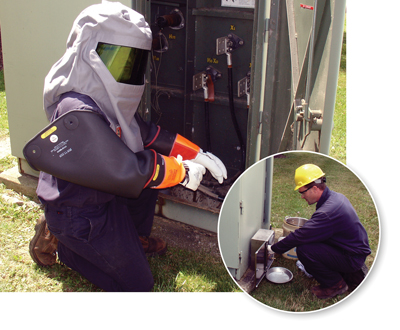
Designed to allow safe sampling of the dielectric fluids on energized wind farm electrical transformers, SampleSafe aids in detecting gas build-up.  The sample valves, pressure gauges and relief valves are located remote to the electrical hazards inside the cabinet to the outside of the cabinet in separate, isolated stainless steel weather-resistant enclosure.

Eliminating the need to enter the transformer cabinet for routine oil sampling or processing, SampleSafe allows technicians access to valves and instruments inside of the transformer without dangerous exposure to energized equipment.  A window kit may be installed in the cabinet door to allow the other important inspections that are a part of a responsible maintenance program, including liquid level, temperature and leaks.

Features:
Made of substation quality stainless steel
Locks with your own company padlock, keyed by you for your security program
NEC rated grounding lug
NEMA rated enclosure
High-quality hoses rated at 1,720 psi
Static ground
Bronze sample and vent valves
Qualitrol pressure-vacuum gauge
Optional viewing window

For more information, contact SD Myers at 330-630-7000 or go to sdmyers.com/EP-samplesafe.html.

PRODUCT SHOWCASE: MetalSCAN 3000 Boasts Reliability in a Wind Energy-Specific Design

0

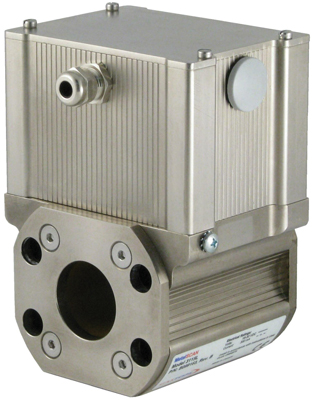
GasTOPS provides products and services to the wind industry to monitor gearbox health using its flagship MetalSCAN product. MetalSCAN is the leading sensor product available today for on-line detection and quantification of metallic debris in wind turbine gearboxes. MetalSCAN’s advanced in-line, full-flow technology detects both ferromagnetic and non-ferromagnetic metal particles and provides a reliable, early indication of impending failure.

MetalSCAN’s reliability lies in its simple, maintenance free design. The sensing element uses non-obtrusive magnetic coils, which surround the oil line and detect the passage of metallic debris. All of the particles above a minimum size threshold are detected and counted.

With thousands of installations worldwide on equipment ranging from advanced jet engines to industrial gearboxes, MetalSCAN has proven its effectiveness, meaning expensive failures can be avoided and maintenance personnel can plan repairs during convenient and cost-effective periods.

The newest member of the MetalSCAN product family, MetalSCAN Series 3000, was developed specifically for application to modern wind turbines and addresses an industry wide need for reliable, advanced warning of gearbox damage. Fitted directly into the gearbox lubrication system, MetalSCAN 3000 has demonstrated its ability to detect metallic debris generated by bearing and gear damage many months in advance of impending failure and to track the progression of damage so that turbine repairs can be performed before costly failure occurs.

The MetalSCAN 3000 sensor system provides a simple and reliable particle count output, which can be compared to pre-defined limits to provide:
•    On-line damage detection for gearbox bearings and gears;
•    Damage level quantification; and,
•    Automatic warning and alarm alerts.

MetalSCAN 3000 offers an effective solution to the unique condition monitoring needs of wind energy.

•    Improved turbine availability;
•    Reduced of unplanned downtime; and,
•    Reduced repair costs.

The product has already been applied to a wide range of turbine models from most major OEM’s.

For more information, visit www.gastops.com or call 800-363-8658.

Paldiski Onshore Wind Farm Officially Opened in Estonia

0

GE has announced the opening of the Paldiski Wind Farm on the Pakri peninsula in northwestern Estonia. With 18 GE 2.5-100 wind turbines, the Paldiski Wind Farm marks the commercial debut of the company’s wind turbine technology in Estonia, one of Europe’s most promising wind sectors. GE representatives were joined at the ceremony by officials from Eesti Energia AS and Nelja Energia AS , the owners of the wind farm, as well as President of Estonia Toomas Hendrik Ilves.

“I am glad that Paldiski wind farm has been completed. One more efficient power plant has been added to Eesti Energia’s generating portfolio, as wind conditions on Pakri peninsula are excellent,” said Sandor Liive, chairman of the Eesti Energia management board. Eesti Energia currently operates four wind farms: Paldiski, Aulepa, Narva and Virtsu, with a total capacity of 111 MW.

Thanks to strong winds coming off the Baltic Sea and the installation of the Paldiski Wind Farm, Estonia experienced a significant development for wind power last year. According to Martin Kruus, who is the chairman of the board of both Nelja Energia and the Estonian Wind Power Association, Estonia erected a record number of wind turbines last year with a total capacity of 86 MW that led to the overall capacity of 269 MW. “The amount of wind energy generated during 2012 grew by 23 percent,” said Kruus.

“Wind continues to play a significant role in powering communities, and GE’s wind turbines offer high efficiency and reliability for a broad range of wind conditions,” said Cliff Harris, general manager, GE Renewable Energy Europe. “Our 2.5-100 wind turbine is a product of GE’s evolution in the wind industry and is an excellent addition to the multi-megawatt wind sector. Advancements in serviceability and grid integration from earlier GE turbine models make it a great fit for Estonia’s robust wind conditions.”

To ensure successful operation and maintenance support, the wind farm is supported by a 10-year full service agreement from GE, which includes advanced anomaly detection, unplanned maintenance and an availability guarantee.

For more information, visit www.ge-energy.com.

EWEA Offshore 2013 will Address Finance Concerns

0

Offshore wind in Europe has now reached a capacity of 6,040 MW, from 58 wind farms in the waters off ten countries. 1,045 of those MW were installed in the first six months of 2013 alone, when 277 new turbines came online. Across the Atlantic, offshore wind projects are still in their infancy, but a new horizon for wind energy is starting to open up.  With construction on the much-debated Cape Wind project expected to begin later this year, and new offshore leases currently being awarded along the Atlantic coast, the opportunities for offshore wind in the U.S. have never been greater.

But is the technological know-how up to speed? Turbine size, foundation type and maintenance strategies are all crucial considerations for any project developer. Then there is the complexity of getting these projects online: convincing investors; negotiating permitting and logistics; training and recruiting staff; connecting to the grid. Here, the mature markets of Europe have much to offer in terms of best practice, shared experiences, and technical expertise. 

When Europeans wanted to know about computers in the 1990s, they didn’t stay in Europe; they went to Silicon Valley in California. Now the reverse is true for wind energy: while the U.S. wind industry already has several decades of onshore expertise, it’s their European neighbors who have the experience in offshore. And the European offshore wind industry will be gathering this November at EWEA OFFSHORE 2013—the world’s largest offshore wind energy conference and exhibition—to share its knowledge, display its products, and do business.  The event, held every two years, is a showcase for companies and a learning opportunity for thousands of professionals.  The 2011 edition attracted more than 480 exhibitors and over 8,200 participants, and exhibition space for this year’s event in Frankfurt, Germany in November is almost sold out.

But things in the offshore wind sector have changed since 2011, and the focus and location of the 2013 event have been chosen to reflect this. Given the massive requirements for investment in developing offshore wind, and the current economic crisis, finance is a major concern for the offshore wind industry—in the first half of 2013, despite strong growth in offshore installations, just one European project reached financial close.  The conference’s Financing Track will center on a major issue for investors: Risk—overcoming transmission risk; de-risking projects; and how new financing instruments can lower the cost of capital.

While wind energy in the U.S. has been given another breath of life thanks to the extended PTC, much investor uncertainty in Europe stems from the current lack of a stable EU regulatory framework for renewable energy beyond 2020. At the forefront of the political debate is the question of binding EU climate and energy targets for 2030, and in this context, EWEA’s OFFSHORE 2013 event will open with a high-level plenary session featuring European politicians debating their positions on 2030 targets, which has far-reaching implications for the entire wind industry.

Another important question for investors is the relatively high cost of offshore wind, and the maturity of an industry that has grown so quickly. Throughout the conference program, sessions have been designed to show how the sector is addressing the twin issues of reducing the cost of energy and moving towards full industrialization. The conference tracks ‘Markets, Strategies and Planning’, ‘Future Technologies,’ and ‘Industrializing the Supply Chain’ hold a wealth of information from people working in the offshore wind energy sector.

The opportunities for exchanges between the participants from different countries and regions will be key for many attendees. In 2011 in Amsterdam, 62 countries were represented among the participants, making it a truly international event. With companies exhibiting and presenting from the U.S., Asia and all across Europe, the 2013 event will certainly follow suit.

At an event with such a diverse mix of participants and activities, occasions for making new contacts are everywhere—including specific networking events such as the lively opening reception and the glamorous conference dinner. Of the previous EWEA OFFSHORE event, Jean Huby, CEO, Areva Wind said “If we want to succeed in offshore wind we need to build strategic partnerships. We need to know the people, we need to network with them and here we have the whole industry present.”

AWEA Report: Wind Demand High Despite Late PTC Renewal

0

After coming to a standstill in the first half of 2013 due to Congressional delay in extending the federal wind energy Production Tax Credit (PTC), activity in the U.S. wind industry is ramping back up as a strong wave of utilities sign up for more wind power, according to the American Wind Energy Association’s U.S. Wind Industry Second Quarter 2013 Market Report.

Throughout 2012, the industry awaited a policy signal from Congress via a PTC extension, but that extension didn’t come until New Year’s Day of this year. As the industry had previously warned, with wind energy project timelines spanning 18-24 months, the delay had serious consequences, and its impacts have continued to ripple through the industry well into 2013.

Only 1.6 megawatts (MW) of wind power were commissioned during the first half of the year and none at all during the second quarter, yet activity is now robust in areas that indicate impending project construction—namely, requests for proposals (RFPs) and power purchase agreements (PPAs). More than 20 RFPs have been issued, and extremely competitive prices for wind energy are spurring utilities to ink contracts for even more megawatts than their initial RFPs requested. Approximately 1,300 MW are now under construction, while more than 3,600 MW in PPAs are secured. In total, utility plans for more wind announced in the first six-plus months of the year total nearly 5,000 MW.

“The market pattern playing out in U.S. wind energy right now tracks exactly with warnings sounded by the industry a year ago, and with studies that examined the consequences of not extending the PTC,” said AWEA CEO Tom Kiernan. “No industry can contribute what it’s capable of giving America without stable policy, and wind energy is Exhibit A of that reality. The industry is hard at work getting geared up to meet the strong demand for more wind energy, but if it’s going to generate more jobs and clean energy for America in the future, it simply must have the same kind of policy certainty under which other industries operate.”

GL Garrad Hassan Continues to Help Unlock New Capital for Offshore Wind

0

With the support of technical due diligence advice from GL Garrad Hassan, Sumitomo Corporation and its subsidiary Sumitomo Corporation Europe have agreed to invest significant amount of equity in two Belgian offshore projects. The Belwind 1 operational wind farm and Northwind project together account for 127 wind turbines and 381 MW of generating capacity with total project cost of about €1,550 million. The investment by Sumitomo is further evidence that offshore wind is attracting new sources of equity capital. Sumitomo agreed to take 39 percent of Belwind 1 and 33 percent of Northwind.

Specialist engineering knowledge and skills from GL Garrad Hassan provided technical due diligence to Sumitomo Corp. The GL Garrad Hassan team examined the key areas of technical risk, including energy production, technology and design, asset status, contracts, grid and permitting.

The Sumitomo investment is the latest of a number of project finance deals involving alternative equity for European Offshore Wind Projects. This is seen as a healthy trend as it reduces the reliance on the already stretched balance sheets of European Utilities.

Jo de Montgros, Head of Independent Engineering at GL Garrad Hassan, commented:  “This deal is proof, if it were needed, that offshore wind is a proven asset class. We were delighted to be able to assist with the mobilisation of new capital in the offshore wind business by providing the required level of clarity and independence to our customer.”

For more information, visit www.gl-group.com.

Nordex’s First N117/2400 Wind Farm Installed in Finland

0

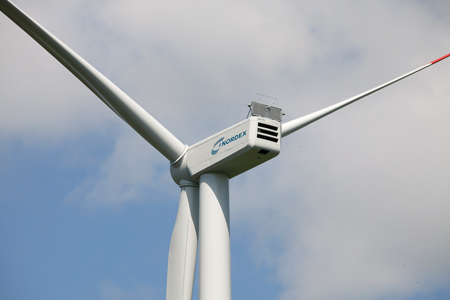
Nordex has installed its first N117/2400 wind farm in Finland, simultaneously passing an important milestone in this country. Comprising nine N117/2400 multi-megawatt turbines, the 21.6 MW Honkajoki wind farm has now been connected to the grid for Finnish wealth management company Taaleritehdas. Mounted on steel tube towers with a height of 120 metres, the turbines will yield of up to 75 GWh per year. Honkajoki is the first project under a frame contract signed with Taaleritehdas in June 2012 providing for the delivery of up to 111 turbines.

Nordex completed the Honkajoki wind farm ahead of schedule thus allowing Taaleritehdas to generate energy earlier than anticipated and tap into the “early bird premium” for wind power generated before 2016. “This marks a real success for our new activities in Finland and creates an excellent basis for future projects with Taaleritehdas,” said Lars Bondo Krogsgaard, a member of Nordex SE’s Management Board.

Honkajoki is located in a flat woodland region in the southwest of Finland. Thanks to the Nordex N117 wind turbine and its remarkable suitability for Finnish wind conditions, the wind farm achieves a high capacity factor around 40 percent.

For more information, visit www.nordex-online.com.

Broadwind Reports Q2 2013 Results

0

Broadwind Energy, Inc. has reported sales of $51.4 million for the second quarter of 2013, a 9 percent decrease compared to $56.3 million in the second quarter of 2012.

The decline reflected weaker activity in the Gearing and Services segments, partly offset by stronger revenue in the Towers and Weldments segment due in part to a 42 percent increase in industrial weldments revenue compared to the prior-year second quarter.

The company reported a net loss from continuing operations of $0.2 million or $.01 per share in the second quarter of 2013, compared to a loss of $4.2 million or $0.30 per share during the second quarter of 2012. The improvement was due to stronger operating results in the Towers and Weldments segment as well as the gain on the sale of the company’s idle tower facility during the current-year quarter. The company reported non-GAAP adjusted EBITDA (earnings before interest, taxes, depreciation, amortization, share-based payments, and restructuring costs) of $2.7 million during the second quarter of 2013, compared to $1.1 million during the second quarter of 2012.

Peter C. Duprey, president and chief executive officer, stated, “Our second-quarter results showed the strength of our Towers and Weldments segment in which we booked $52 million of new orders during the period, and announced another $70 million after quarter-end. We have sold out our 2013 capacity, and are now booking orders well into 2014. We expect 2014 production to reach or exceed our design capacity of 500 towers. During the second quarter, we demonstrated a dramatic improvement in productivity and tower through-put compared with last year when we were experiencing production issues associated with manufacturing multiple tower types at the same time. Process improvements that we initiated in 2012 and a generally better mix of towers resulted in strong EBITDA in the quarter.

“Finally we have strengthened our balance sheet by achieving some major milestones, including selling our idle Brandon, South Dakota tower facility for $12 million, paying down additional debt of $6 million and ending the quarter with $18 million of cash.”

The company booked $59 million in new orders during the second quarter of 2013. Additionally, a $35 million tower order from 2010 was removed from backlog due to a change in the customer’s U.S. wind requirements. As a result, net orders for the second quarter of 2013 were $25 million, a 17 percent decrease compared to the prior-year second quarter. Towers and Weldments orders, which vary considerably from quarter-to-quarter, totaled $18 million, net of the $35 million cancellation noted above. Second-quarter net Gearing orders totaled $5 million, a 70% decrease from the prior-year second quarter, reflecting continued weakness in orders from natural gas and other industrial customers as well as less demand for wind replacement gearing. Net orders for Services totaled $3 million compared to $5 million in the prior-year quarter, due to weaker demand for field services, as a number of customers have insourced work during a period of low turbine construction activity.

At June 30, 2013, backlog totaled $143 million, up from $137 million at June 30, 2012. Subsequent to quarter-end, the company announced new tower orders of $87 million, $17 million of which were included in backlog as of June 30, 2013.

Towers and Weldments segment sales totaled $37.5 million in the second quarter of 2013, compared to $37.0 million in the second quarter of 2012. Tower section volume in the second quarter of 2013 was down 12 percent compared to the prior year. The prior-year production consisted of a greater number of lighter, lower-value sections as compared to the current-year second quarter. Additionally, $4.4 million of completed tower sections remained in inventory at quarter-end because a customer first article qualification process was not completed as planned. Revenue for these sections will be included in the third-quarter results. Consistent with the Company’s strategic focus on diversifying end markets, industrial weldments sales of $3.2 million increased 42 percent compared to the prior-year period, more than offsetting the tower shortfall noted above. Non-GAAP adjusted EBITDA for the second quarter was $5.3 million; nearly triple the prior-year second quarter adjusted EBITDA of $1.8 million. The dramatic improvement was the result of improved operating efficiencies and a less variable and more profitable mix of towers. During the second quarter of 2012, productivity suffered due to the production of multiple tower types in that quarter. Towers and Weldments segment operating income for the second quarter of 2013 was $4.1 million, up $3.5 million from the second quarter of 2012 due to the factors described above.

Gearing segment sales totaled $10.4 million in the second quarter of 2013, compared to $14.1 million in the second quarter of 2012. The 26 percent decrease was due primarily to lower demand from mining and natural gas customers as well as protracted manufacturing issues with a new line of gearboxes for an industrial customer. Gearing segment non-GAAP adjusted EBITDA for the second quarter of 2013 was a loss of $0.1 million, decreasing from $1.3 million in the prior-year second quarter due in part to lower volumes and lower margins, partly offset by reductions in fixed costs and lower compensation, bad debt and other professional expenses. Gearing segment operating loss for the second quarter of 2013 increased to $3.9 million, from $1.6 million in the prior-year second quarter. The increased operating loss was partly attributable to $0.7 million of higher restructuring charges and $0.5 million of accelerated amortization as well as the factors described above.

Revenue from the Services segment was $4.1 million in the second quarter of 2013, compared with $5.7 million in the second quarter of 2012. The 29 percent decrease was due in large part to depressed field service activity as a result of very low wind turbine installations across the United States, reflecting the curtailment of development work in late 2012 in response to the uncertainty regarding the production tax credit as mentioned above. This has resulted in wind farm operators insourcing non-routine maintenance projects during this same period. Non-GAAP adjusted EBITDA loss for the second quarter of 2013 was $0.6 million, compared with $.5 million in the prior-year second quarter. As a result of the 29 percent drop in sales, the company reduced headcount during the quarter and reduced SGA costs compared to the prior-year second quarter. Services segment operating loss of $1.3 million in the second quarter of 2013, increased $0.2 million, from a loss of $1.1 million in the second quarter of 2012, reflecting $.1 million of additional restructuring charges in the current-year second quarter as well as the factors described above.

For more information, visit www.bwen.com.