







Home 2011

Vestas Urges Extension of U.S. Production Tax Credit

0

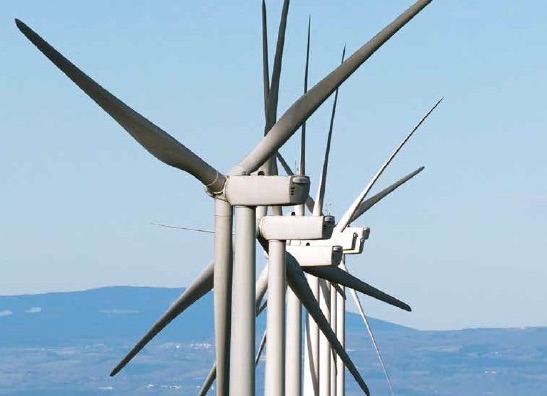
Martha Wyrsch, president of Vestas-American Wind Technology, Inc., gave testimony to the U.S. Senate Finance Subcommittee on Energy, Natural Resources and Infrastructure to urge an immediate extension of the Production Tax Credit (PTC), which is set to expire Dec. 31, 2012.

“An extension of the PTC is necessary for the continued employment of the 80,000 people working in the U.S. wind industry,” said Wyrsch, who leads the North American arm of Vestas Wind Systems, the world’s leading provider of wind turbines. “Wind energy has grown dramatically in the past several years, creating a manufacturing renaissance in the U.S., and the PTC has been a significant driver in that growth. The jobs at stake, which include 20,000 people in the U.S. wind industry’s manufacturing sector and technical jobs throughout rural America, are skilled-labor positions with competitive wages and medical and retirement benefits.”

Wyrsch said if the PTC is not extended, hundreds of U.S. wind-industry suppliers employing thousands of people also would be affected. Wyrsch addressed the bipartisan Senate subcommittee comprised of 13 senators, chaired by Sen. Jeff Bingaman (D-New Mexico).

The PTC, a credit of 2.1 cents per kilowatt-hour, is given to an owner of a wind-energy project once a wind turbine begins to produce electricity. Since 1999, the PTC has received short-term extensions seven times, and has lapsed three times. With the PTC in place, the U.S. wind energy industry has achieved impressive economic numbers, according to the American Wind Energy Association:

• More than 400 facilities across 43 states manufacture for the wind-power industry
• 60 percent of a wind turbine’s value is now produced here in America, compared to 25 percent prior to 2005
• A 90 percent drop in the price of wind power since 1980, benefiting utilities and consumers
• More than $60 billion invested since 2005
 
In the past, the wind industry has experienced a boom-and-bust development cycle, with significant drops in installations in years following PTC expiration. Each of these drops has had an impact on employment and capital investment. “The development cycle for wind power begins more than a year in advance of operation,” Wyrsch said. “Many of our customers have already announced they will not place orders for any new turbines until the PTC is extended. The industry needs predictable, long-term tax and energy policies to ensure continued investment.”

Navigant Consulting, a respected non-partisan consulting firm, reported on Dec. 12, 2011, that 37,000 American jobs could be lost if the PTC is not extended.

Vestas is the world leader in supplying high-tech wind power systems and a preferred provider of wind turbines, services and solutions in North America. Since 1979, Vestas has an industry-leading installed base of more than 44,000 wind turbines in 67 countries.

Vestas, which employs more than 3,000 people in the United States, sold its first wind turbine in North America in 1981 and since has supplied more than 12,000 in this market. Vestas’ North American manufacturing operations are located in Colorado while its technology research centers are in Texas, Massachusetts and Colorado. Vestas’ North American headquarters is in Portland, Ore., while its global headquarters is in Aarhus, Denmark. Go online to www.vestas.com.
Alstom Launches ECO 122 Turbine for Low Wind Sites

0

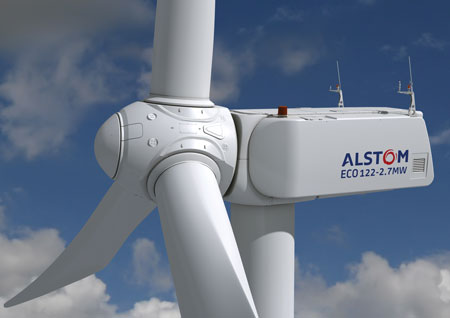
Alstom announces the launch of the ECO 122, a 2.7MW onshore wind turbine that combines high power and high capacity factor to boost energy yield in low wind regions worldwide. The ECO 122’s leading efficiency and high yield set a new benchmark for low wind sites. At a wind speed of 7.5 m/s the turbine delivers a net wind farm capacity factor of up to 42 percent, equivalent to 3,600 full-load hours each year. Its 122-metre rotor diameter and swept area of 11,700 m2—the largest in the 2-3MW turbine segment—maximize the harvest of energy and the return on investment to create new business opportunities for customers from low wind sites.

Alfonso Faubel, senior vice president of Alstom’s wind business, says “Research and innovation are at the heart of our business. With the ECO 122 and other turbines in our ECO 100 platform, we’re leading the development of the new generation of high power, high-efficiency turbines to increase value for our customers. Longer blades capture more power more effectively, and with its swept area much larger than current generation machines, the ECO 122 has set a new standard for low wind sites around the globe.”

The ECO 122 produces about 25 percent increased wind farm yield on a given piece of land compared with today’s 1.5-2MW turbines, and fewer turbines need to be installed. As an example, on a typical low wind site, six current generation 1.5 – 2 MW turbines will produce around 40 GWh/year, compared with more than 50 GWh/year with only five ECO 122 turbines. This yield advantage also means significant capital expenditure savings. An ECO 122 powered wind farm can reduce balance of plant costs by 10-15 percent, compared with a farm using typical 1.5-2MW machines, due to fewer foundations, platforms, roads, and less cabling.

The ECO 122 is the latest evolution of Alstom’s proven ECO 100 turbine platform, and the result of more than 30 years of experience in wind turbine design. The ECO 100 platform now has more than 350MW installed or under construction worldwide and over 200,000 cumulative operating hours since 2008. All Alstom wind turbines are based upon the unique and proven ALSTOM PURE TORQUE® rotor support concept that protects the drive train from deflection loads, ensuring higher reliability and lower maintenance costs. The first ECO 122 will be installed in mid 2012, with first commercial deliveries expected in early 2013. Learn more at www.alstom.com/wind.

NRG Systems Invests in Lattice Tower Manufacturer

0

NRG Systems, manufacturer of measurement systems for the renewable energy industry has agreed to invest in Oenko, a manufacturer and installer of lattice towers for wind resource assessment and wind farm monitoring. This investment pairs NRG Systems’ nearly 30 years in the wind energy industry and its complete system approach with Oenko’s cutting-edge lattice tower technology. “This line of lattice towers complements our existing tower offerings,” says Barton Merle-Smith. “Our investment enables us to offer customers greater choice in towers, booms, and mounting hardware, meeting the full range of customer needs anywhere in the world.”

Based in Thetford Mines, Quebec, Oenko designs and manufactures lattice towers from 30 to 120 meters for all types of project sizes and locations, specializing in extreme arctic conditions. NRG Systems, based in Vermont, pioneered complete measurement systems with tubular tilt-up towers in the 1980s. “I am pleased that Oenko has attracted the investment of NRG Systems,” says Guy Fortin, president of Oenko. “This will enable us to expand globally while continuing to grow jobs in Thetford Mines.”

As a result of the investment, NRG Systems will hold a majority interest in Oenko. Manufacturing will remain in its current location with Oenko’s existing workforce, while Fortin will continue on as president and key sales person for the company. For more information visit www.oenko.com.

NRG Systems is an independently owned company that has served the global renewable energy industry since 1982. Its wind measurement equipment can be found on every continent in more than 145 countries, serving electric utilities, wind farm developers, research institutes, and government agencies. The company has been nationally recognized for its LEED gold-certified manufacturing facility and its employee best practices. To learn more go to www.nrgsystems.com.

Wind Energy Manufacturing Lab at Iowa State

0

A laser in Iowa State University’s Wind Energy Manufacturing Laboratory scanned layer after layer of the flexible fiberglass fabric used to make wind turbine blades. A computer took the laser readings and calculated how dozens of the layers would fit and flow over the curves of a mold used to manufacture a blade. And if there was a wrinkle or wave in the fabric, any defect at all, the technology was designed to find it. That’s because the last thing you want is a defect in a 40-meter wind turbine blade when it’s spinning in the wind.

“Waves in the fabric are bad because they can’t take the load,” says Vinay Dayal, an Iowa State associate professor of aerospace engineering. “And if a blade can’t take the load, bad things happen to the turbine,” according to John Jackman, associate professor of industrial and manufacturing systems engineering.

The two are working with Frank Peters and Matt Frank, associate professors of industrial and manufacturing systems engineering, to operate and develop Iowa State’s Wind Energy Manufacturing Lab. The lab has been open for about a year and was built as part of a three-year, $6.3 million research project. The study is a joint effort of researchers from TPI Composites, a Scottsdale, Arizona-based company that operates a turbine blade factory in Newton, and the U.S. Department of Energy’s Sandia National Laboratories in Albuquerque, New Mexico. The researchers’ goal is to develop new, low-cost manufacturing systems that could improve the productivity of turbine blade factories by as much as 35 percent.

The lab in Iowa State’s Sweeney Hall provides researchers the facilities and equipment they need to study how lasers can analyze the fiberglass fabric that’s used to manufacture turbine blades; develop technology for the nondestructive evaluation of turbine blades; analyze and improve wind blade edges; make precise 3-D laser measurements of 40-meter wind turbine blades; and develop new fabric manipulation techniques for automated blade construction.

Researchers say the lab has already advanced their understanding of turbine blade manufacturing and is helping to develop automation technologies that could one day be used in manufacturing plants. “In the early stages of the research there were a lot of investigations to understand all the problems we’re addressing,” Frank said. “But now we’re at that phase where real intellectual property is coming out of the lab.” Learn more at www.iastate.edu.

Mortenson Builds Fifth Wind Facility In Illinois

0

Mortenson Construction has started construction of the Shady Oaks Wind Farm near Compton, Illinois, adding 109.5MW to the state’s wind energy capacity. The wind power facility will consist of 71 Goldwind turbines. Mortenson is responsible for the design and construction of access roads, collection system, foundations, and the erection of the turbines. The Shady Oaks project will be the fifth utility-scale wind facility that Mortenson has constructed in Illinois, bringing the total number of turbines erected in the state to 541 upon its completion. Construction started in late August and is expected to be complete in early 2012.

According to the Illinois Wind Energy Association, an average 100MW wind farm in Illinois creates 125 to 150 temporary construction jobs and 10 permanent maintenance jobs, which is consistent with the number of jobs that will be created with the Shady Oak Project. “The Shady Oaks project is the first partnership of Mortenson and Goldwind and the first major wind project in the U.S. to utilize the advanced Permanent Magnet Direct Drive Technology (PMDD),” according to Tim Maag, a vice president and general manager of Mortenson’s Renewable Energy Groups.

“We selected Mortenson as our construction partner for the Shady Oaks project because of their outstanding track record of success with wind farm construction and because of the commitment to on-site safety,” said Tim Rosenzweig, CEO of Goldwind USA.  “We are pleased to be working with Mortenson on this important project.”

The Goldwind portfolio of 1.5 and 2.5MW permanent magnet direct-drive wind turbines are designed for high power generating efficiency, superior power quality and grid code compliance, and significantly reduced maintenance and total operating expenditures. The simplistic permanent magnet direct-drive design reduces the number of high-speed rotational parts and avoids the sources of expensive faults that require crane mobilization.

Founded in 1954, Mortenson Construction is a U.S.-based, family-owned company that has constructed more than 100 wind projects generating more than 11,000MW of renewable power throughout the United States and Canada. Visit www.mortenson.com/wind. With offices and facilities throughout Asia, Europe, and the Americas, Xinjiang Goldwind Science & Technology Co, is ranked among the leading wind turbine manufacturers in the world. Learn more at www.goldwindamerica.com.

Second Wind System in Turbine Wake Effect Study

0

A Colorado-based research team recently completed a major wind study using Second Wind’s Triton® Sonic Wind Profiler to learn more about one of wind power’s biggest unknowns, the wake effect, and its impact on turbine productivity. Triton is one of several remote sensing technologies that TWICS (the Turbine Wake and Inflow Characterization Study) has used to create a detailed 3D model of the turbulence caused when wind passes over rotating turbine blades. Turbulence can damage turbines downstream and undermine productivity. The project’s goal is to understand how to enhance wind farms’ productivity. Turbine inflow and wake observations will be integrated into a wind energy forecasting model. Understanding how gusts and rapid changes in wind direction affect turbine operations will enable turbine manufacturers to improve design standards and increase efficiency, which will ultimately reduce the cost of energy.

The study is aimed at capturing turbulence and other wake effects in a broad wedge of air up to 7km (4.3 miles) long and 1km (3,280 feet) high in front of and behind a multi-MW wind turbine. Triton, along with tower-mounted sensors and other remote sensing systems, profiles the winds in front of and behind a 130-meter high wind turbine located at the National Renewable Energy Laboratory’s (NREL’s) National Wind Technology center near Boulder, Colorado. NREL, the University of Colorado at Boulder, the Cooperative Institute for Research in Environmental Sciences (CIRES), and the National Oceanic and Atmospheric Administration (NOAA) have teamed up to conduct the study.

“The NREL site is prone to complicated wind patterns, so we needed several remote sensing instruments. The site is flat, but it’s located just five kilometers from El Dorado Canyon on Colorado’s Front Range and the canyon funnels air into the site,” says Julie Lundquist, assistant professor of atmospheric and oceanic sciences at the University of Colorado at Boulder. “The Triton is a good instrument for this study. It will provide us with anchor points in the study by profiling selected slices of a larger wedge of the atmosphere over a long period of time.”

Triton is an advanced remote sensing system that uses sodar (sound detection and ranging) technology to measure wind in the areas that most affect a wind turbine’s performance. By measuring wind speeds at the turbine rotor’s hub height and beyond, Triton reduces uncertainty in annual energy production (AEP) forecasts. Easy to install and capable of autonomous operation, Tritons are being used throughout the wind industry, alone or in conjunction with met towers, to streamline the wind farm development process and to improve wind farm operations.

“Turbine wake effects are a huge unknown in the wind industry. To fully realize the potential of wind energy, with large-scale wind farms, we need to know how turbulence from one turbine affects those around it,” says Second Wind CEO Larry Letteney. “We’re confident that Triton will make a significant contribution to understanding wind farm conditions, which will lead to a more productive and efficient wind power industry.”

Second Wind provides the wind energy industry with the intelligence required to plan, finance and operate highly efficient, profitable wind generation facilities. Learn more at www.secondwind.com.

Capital Safety Introduces ExoFit NEX Arc Flash Harnesses

0

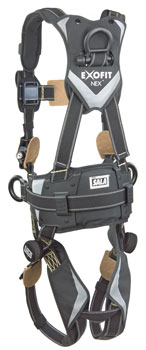
Capital Safety announces a new extension to its revolutionary DBI-SALA ExoFit NEX™ product line, the ExoFit NEX Arc Flash harnesses. The innovative harnesses incorporate Nomex/Kevlar technology into their design and feature flame-resistant and non-conductive properties, making them perfect for use in any industry that involves exposure to high-voltage electricity or hot work, such as welding.

The new harnesses are tested to perform in accordance with the recently updated ASTM F887-11 arc flash standard specification for personal climbing equipment, as well as ANSI Z359.1 and CSA requirements. The ExoFit NEX Arc Flash harnesses are a result of ongoing research and development within the ExoFit NEX line, and incorporate technical advancements in materials and features.
“When the ASTM standard was updated to include harnesses and shock absorbing lanyards, DBI-SALA was one of the first to introduce these products to the market,” says Nate Bohmbach, product manager for soft goods at Capital Safety. “We have worked closely with linemen, welders, and other members of the utility, construction, and mining industries to create the best arc flash harnesses in the world featuring flame and heat protection. These harnesses offer the same level of comfort and safety as the original models with the added arc flash protection and confidence needed in high-voltage or hot work environments.”

The ExoFit NEX Arc Flash harnesses are equipped with flame-resistant webbing; an exterior made with Nomex, featuring a Kevlar core and thread that provides 7,000 lb. strength and ultimate flame resistance. The built-in arc flash rated trauma straps provide an adjustable, continuous loop that minimizes suspension trauma. The integrated insulators behind exposed hardware prevent contact with the body ideal for use in utility industry applications. The non-conductive, extremely lightweight PVC-coated aluminum D-rings are another industry first from DBI-SALA. All featured hardware on the ExoFit NEX Arc Flash harness offers the highest level of comfort and security. Its superior design is equipped with i-Safe™ technology, which allows it to be tracked in inventory and tagged with usage data. These harnesses meet all applicable industry standards including OSHA, ANSI, CSA, and ASTM. Learn more at www.capitalsafety.com.

New Global President at Sandvik Coromant

0

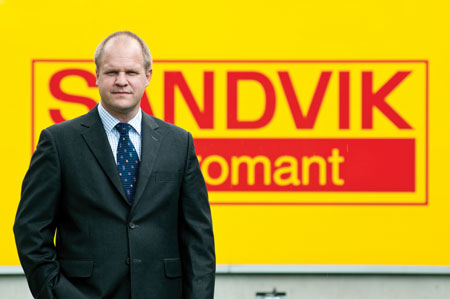
On September 1, 2011, Klas Forsström took over the position as global president of Sandvik Coromant, the world-leading supplier of cutting tools, tooling solutions, services, and know-how to the metalworking industry. Forsström has been with the Sandvik Group for about 17 years, mostly at Sandvik Coromant. His work has included leading positions in R&D, product development, marketing, business development, and sales. Most recently he held the position as president of Sandvik Hard Materials.

“It is really exciting and inspiring to be back with Sandvik Coromant. I am truly impressed by what the company has achieved in recent years. As the market leader we are perceptive and forward thinking,” he says.

His first task as president is to manage and further develop the ambitious strategy that Sandvik Coromant has set. This includes an even stronger customer focus through local presence and global knowledge sharing. “R&D is part of the very fabric that is Sandvik Coromant. We are always focused on product innovation, premium application knowledge and speed to market. Our ambition and motivation for the future is strong. I believe we will be successful in the further development of customer oriented solutions,” he explains. Short facts about Klas Forsström:

• Education: Klas Forsström holds a Master of Science in Materials Physics and a BMA from Uppsala University, Sweden.
• Born: 1967 in Gävle, Sweden.
• Family: Married to Marie Forsström; children: Matilda, Lovisa, Amanda and Erik.
• Lives: Sandviken, Sweden
• Interests: Family life, reading, fishing, and carpentry.

Sandvik Coromant is the world-leading supplier of cutting tools and tooling systems for the metalworking industry and is represented in 130 countries. Twenty-five state of the art Productivity Centers located around the world provide customers and staff with continuous training in tooling solutions and methods to increase productivity. Sandvik Coromant is part of the tooling business area of the Sandvik Group. Learn more at www.sandvik.coromant.com/us.

Seco Advances Milling Technology With Minimaster

0

Seco introduced its original Minimaster line of end mills with replaceable carbide inserts nearly 25 years ago. Today the company is presenting its new Minimaster Plus, with advanced features for tackling the most demanding of milling applications in steel, stainless steel, cast iron, aluminum and other difficult-to-machine materials.

The most notable new feature on the Minimaster Plus is the high-precision interface between the replaceable carbide insert and the steel shank. The insert has an internal thread and external taper, while the shank has an internal taper with a threaded center pin for added reliability and stability as well as minimized run-out. Additionally, a new axial stop on the shank increases repeatability and productivity by allowing end users to replace an insert without having to remove the tool from machine spindles. The new insert then repositions axially within 25 microns.

Intended for general machining in the aerospace, power generation, die and mold, automotive, and medical industries, the highly productive Minimaster Plus replaceable tip milling system makes tool-length re-measurement obsolete. The milling system offers a large selection of inserts and shanks for a multitude of tough milling applications. Twenty-four versions of the shank are available, along with square shoulder and ball nose inserts that have through-tool coolant on all two and three flute designs for excellent cooling and efficient chip removal. Inserts come in two grades for machining all types of materials and E- and Mgeometries for a smooth cutting design. Insert diameters range from 0.375” to 0.625” and corner radii are available from 0.0157” to 0.122” to match a variety of design requirements. For more information visit www.secotools.com/us.

Pacific Crest Announces Results of Seismic Testing

0

Pacific Crest Transformers (PCT), a leader in the design and construction of liquid-filled distribution transformers, announces that its transformer withstood rigorous seismic testing performed at one of the nation’s largest independent engineering testing laboratories. The testing showed that PCT’s transformer design and construction is suitable for mission critical applications, including hospitals, command centers, and generation stations.

The same transformer was subjected to tests simulating six violent earthquakes over two days, each equating to real potential events from different extreme seismic zones of the country. The transformer was energized during the tests. The final two tests were designed to simulate the worst potential earthquake in the Unites States, the New Madrid Fault, located under a four-state area that includes Arkansas, Missouri, Tennessee, and Kentucky, but with the potential to affect an even larger region. In each of the tests, the transformer continued to operate throughout and sustained no internal or external damage. The transformer passed Hi-Pot tests and IEEE Routine tests performed before and after the shake table testing, which showed it withstood the shake tests without diminishing its operational performance.

The testing program was conducted by Wyle, one of the world’s most experienced qualification testing operations, which provides services to a wide range of industries, as well as the aerospace and U.S. Department of Defense arenas. PCT conducted the testing at Wyle’s Huntsville, Alabama, laboratory, which specializes in testing and qualifying equipment for the energy and nuclear power industries, automotive companies, and other high-technology industries, as well as DoD missile, aviation, ground applications, and NASA.

“No one transformer would be expected to experience more than one of these events over its lifetime and PCT’s transformer survived the entire gamut of possible events,” says Curt Collins, Pacific Crest Transformer’s Vice President of Sales and Marketing. “This illustrates the rugged, robust construction and designed-to-task quality that customers can expect from PCT.” Learn more at www.pacificcresttrans.com.

Action Needed to Save American Wind Jobs

0

The U.S. Senate is currently working on tax legislation intended to pass before the end of this year, so we are asking you to contact your Senators right away to urge them to include the renewable energy production tax credit (PTC) extension in any tax bill that moves forward this month.

With the uncertainty of the future of the renewable energy production tax credit (PTC), businesses are hesitant to plan future U.S. wind projects, American manufacturers have seen a drop in orders, and layoffs have already started. For the purposes of the American wind industry manufacturing sector, the PTC effectively expires at the end of this year. To preserve tens of thousands of good-paying manufacturing jobs, we need to come together immediately to make our message crystal clear to the U.S. Senate: we urgently need Congress to take action to extend the renewable energy production tax credit (PTC) before the end of this calendar year.

Time is of the essence, so please take action today. Thank you very much for taking action on this crucial issue.


action.saveusawindjobs.com/page/speakout/saveusawindjobs

NAES to Show at Power Gen International

0

NAESsm Corporation will showcase its diverse services portfolio at the 2011 Power Gen International Conference & Exhibition being held December 13-15, 2011, at the Las Vegas Convention Center in Las Vegas, Nevada.
 
Through a disciplined approach that emphasizes safety, compliance, performance, and cost, NAES offers specifically customized services focused on improving performance of generation assets. NAES work is strikingly diverse: operations of 35,000 MW using the broadest range of technologies and fuels in the business; development of programs and procedures to improve personnel effectiveness such as operating procedures, operational diagrams, and maintenance management; development of programs to enhance compliance in diverse areas such as NERC, safety, and environment; assessments of operational effectiveness; conduct of annual and episodic maintenance at coal and hydro facilities; gas and steam turbine inspection and repair projects; air quality control construction services; specialized activities such as chimney inspection and repair, substation construction, and construction of concrete casks for nuclear facilities; and staffing support.

NAES vision is to be a company that strives for unparalleled excellence and with a purpose to deliver on our commitments to customers, employees and shareholders. NAES core values support that vision:

A commitment to safety and regulatory compliance
A culture of excellence
An environment of integrity and trust
An inspiring and desirable place to work
The delivery of exceptional services
A growing and sustainable return for our shareholders

Find out how NAES can assist you with your next project at booth 7008. Also go to www.naes.com.

Maxwell Technologies CEO to Present at Baird Clean Tech Conference

0

Maxwell Technologies’ Chief Executive Officer David Schramm, will make a presentation at 10:00 AM (PST), December 1, at the Robert W. Baird & Co. 2011 Clean Technology Conference at the Four Seasons Hotel in San Francisco.

The presentation will be webcast live and archived for subsequent Internet replay via the following link: http://investors.maxwell.com/phoenix.zhtml?c=94560&p=irol-calendar.

Maxwell is a leading developer and manufacturer of innovative, cost-effective energy storage and power delivery solutions. Our ultracapacitor products provide safe and reliable power solutions for applications in consumer and industrial electronics, transportation and telecommunications. Our high-voltage grading and coupling capacitors help to ensure the safety and reliability of electric utility infrastructure and other applications involving transport, distribution and measurement of high-voltage electrical energy. Our radiation-mitigated microelectronic products include power modules, memory modules and single board computers that incorporate powerful commercial silicon for superior performance and high reliability in aerospace applications.  For more information, please visit www.maxwell.com.

Sandvik Coromant Releases CoroKey for iPad

0

Sandvik Coromant has released a free catalog App for the iPad that is designed to offer you the best tools in your machining applications that are easy to choose and easy to use. This will provide engineers, programmers and machinists a convenient resource for finding the right inserts for your drilling, turning, threading and milling operations. CoroKey offers first choice recommendations for all material classifications in Steel, Stainless Steel, Iron, Nickel based alloys, Super alloys and hard materials. With CoroKey you get the safe, reliable cutting data right on the first cut. The CoroKey App considers the work piece material and the type of operation to be performed and will guide you to the correct grade and geometry for your specific material group.

The CoroKey insert guide is based on the principle “easy to choose, easy to use” and helps you to select the best insert for the job using this basic information. The App works with both metric and inch measurements. Users can get more information about the Sandvik Coromant CoroKey App at www.sandvik.coromant.com/us.

AMSC and The Switch Terminate Acquisition Agreement

0

AMSC, a global solutions provider serving wind and grid leaders, announces that its Share Purchase Agreement (“the Agreement”) with the shareholders of The Switch Engineering Oy (“The Switch”) dated March 12, 2011, as amended on June 29, 2011, has been terminated due to adverse market conditions for a financing required to fund the acquisition. Per the terms of the amended Agreement, The Switch shareholders will retain the €14.2 million (US$ 20.6 million) advance payment that was made by AMSC on June 29, 2011 as the break-up fee. The break-up fee will be recorded as an expense in AMSC’s second fiscal quarter, which ended on September 30, 2011.


“While AMSC and The Switch have mutually agreed to terminate our acquisition agreement, we continue to see strong synergies between our two companies and expect to continue to work collaboratively on drivetrain solutions that increase wind turbine reliability and lower the cost of energy,” said AMSC President and Chief Executive Officer Daniel P. McGahn.


AMSC (formerly American Superconductor) generates the ideas, technologies and solutions that meet the world’s demand for smarter, cleaner… better energy. Through its Windtec Solutions, AMSC enables manufacturers to launch best-in-class wind turbines quickly, effectively and profitably. Through its Gridtec Solutions, AMSC provides the engineering planning services and advanced grid systems that optimize network reliability, efficiency and performance. The company’s solutions are now powering gigawatts of renewable energy globally and enhancing the performance and reliability of power networks in more than a dozen countries. Founded in 1987, AMSC is headquartered near Boston, Massachusetts, with operations in Asia, Australia, Europe, and North America. For more information, please visit www.amsc.com.

AMSC Unveils New Corporate Identity

0

American Superconductor Corporation announces that it is now doing business as AMSC and introduced a new corporate identity in order to foster strong, sustainable growth. AMSC’s wind and grid offerings are now branded as Windtec Solutions and Gridtec Solutions to better reflect the company’s expertise across the power lifecycle. The value of AMSC’s solutions is described in the company’s new tagline: “Smarter, cleaner… better energy.”

“When we were founded nearly 25 years ago, we had operations only in the United States and our sole focus was on superconductors,” says AMSC President and Chief Executive Officer Daniel McGahn. “Today, we have operations throughout North America, Europe, and Asia. Meanwhile, our Windtec Solutions and Gridtec Solutions are powering gigawatts of renewable energy globally and enhancing the performance and reliability of power networks in more than a dozen countries. Our evolution from American Superconductor to AMSC better reflects who we are today and supports our continued diversification.”

“The new identity is just one of the changes that we are making to support a more diversified and sustainable company,” he says. “In recent months, AMSC has taken actions to streamline and strengthen its business. We have created a flatter, leaner organization that is more nimble and flexible to emerging opportunities; aligned our business to better serve the wind and grid markets; and refined our strategic priorities to capitalize on our near- and long-term opportunities.”

AMSC’s business formerly was structured around technologies. The company now has aligned its business by end market. Through its Windtec Solutions, AMSC enables manufacturers to launch best-in-class wind turbines quickly, effectively and profitably by providing designs, support services and power electronics and controls. AMSC’s Gridtec Solutions include engineering planning services and advanced grid systems that optimize network reliability, efficiency and performance from the point of generation through transmission and distribution.

“Each day at AMSC, we are driven by our vision to power the world with better energy,” McGahn says. “We have aligned our business to focus on our core competencies, and this strategic investment will help us to communicate the new AMSC more clearly and more effectively to our employees and all of our customers worldwide.” For more information visit www.amsc.com.

NAES Bolsters Turbine Services Division

0

NAESsm Corporation, a broad-based provider of services to the energy industry, announces new project services team members to the Turbine Services Division. NAES has incorporated new management, sales, proposal, and support personnel with a wide variety of backgrounds and experiences into its Turbine Services Division. Russell James, Rob Broglio, and Rick Stanford have joined NAES as project services manager and business development managers, respectively. In addition, Debi Patrick has joined NAES as proposal manager.

James brings nearly 30 years of field service experience in turbine overhaul and installation to the turbine field services management team. His diverse background in gas and steam turbines adds a key element to the estimating and field service departments. With extensive experience in scheduling, planning and project management of turbine outages for major IOU owned coal and gas fired plants, he brings the knowledge and background necessary for providing the quality of service expected by NAES customers.

Broglio has over 20 years’ experience in new installations, as well as retrofit of power generation facilities, both in field and design engineering, in addition to business development and EPC project negotiations. His diverse background, industry knowledge, and customer contacts are a key element to expanding NAES presence in the power generation market.

Stanford’s 25 years’ experience in the oil and gas and power industries, with emphasis on rotating equipment and upstream markets, brings broad managerial experience to NAES rotating equipment and repair services. His background enhances NAES ability to interface with plant personnel and management to ensure timely project completion across the markets NAES services.

Debi comes to NAES with 25 years of power industry experience with an emphasis on maintenance and construction projects.  Her broad experience in estimating and managing projects for power producers, contractors and engineering firms strengthens the relationships NAES has with its customers.

Headquartered in Issaquah, Washington, NAES is the world’s leading provider of comprehensive services to industries that generate or consume power. For over 30 years, NAES has specialized in providing services centered on safe, reliable, and cost-effective performance including operations and maintenance; retrofit and maintenance services; on-site turbine inspection/overhaul services; staffing solutions; and customized services designed to improve plant and personnel effectiveness. NAES is owned by ITOCHU International Inc., the U.S. affiliate of ITOCHU Corporation. With operations in over 80 countries covering a broad range of industries, ITOCHU is among the world’s largest corporations. Learn more at www.naes.com.

Webinar on Underwriting Renewable Energy Transactions

0

Attent the interactive Web conference “Underwriting Renewable Energy Transactions: 500kw – 8MW” Wednesday, November 2, 2011, 1:00-2:30 PM Eastern. This webinar will discuss the following specifics to underwriting renewable energy transactions.

Economic Viability / Financial Model:
Source & Use
Proforma
Tax Credits / ITC Grant

Developer:
Track record
Credibility
Credit / Risk profile

Sponsorship:
Structure/Commitments
Track record
Risk profile

Contracts:
PPA/Lease
Interconnection
EPC turnkey contract
O & M

Construction:
EPC Contractor experience
Permitting/Zoning
FAA Approval
Air Quality Permits

Renewable Energy Resources:
Data/Verification
Uncertainty
Location

Technology:
Suppliers/Track Record
Bankability
Warranty
Availability/Delivery timing

Revenue:
PPA structure (i.e., Security of revenue Stream)
Valuation: Appraisal/Cost Certification
Renewable Energy Certificate (RECs)

Loan Security Interests/Title:
Assignments
Ingress/Egress – Easements
ALTA Survey

O&M/Asset Management:
Contractor/Track Record
Spare parts
Transmission
Term

Faculty:
    * Chris Diaz, Senior Vice President, Seminole Financial Services
    * Tony Grappone, CPA, Partner, Boston Office, Novogradac & Company

Please register by midnight (Eastern) Tuesday, November 1, to receive webinar connection information in a timely manner. Go online to www.cvent.com/d/faiU2htXpk-D-NEzp-rh4g/c7xt/P1/1Q.

First High Altitude Wind Energy Report from GL Garrad Hassan

0

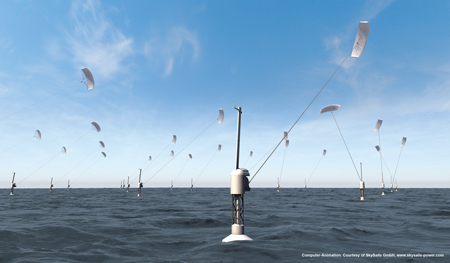
Clean energy continues to grow, with renewable sources playing an ever greater role. Wind power generation, having expanded offshore, is now not only looking out but up. International renewable energy consultancy GL Garrad Hassan has issued the first market report that analyzes the burgeoning new industry of High Altitude Wind Energy (HAWE). HAWE systems are designed to tap into the high velocity, stable air currents that exist at altitudes anywhere from 200m to 20km above the earth; a source for generating cheaper and more abundant electricity than current wind technology.

The report looks at the potential of high altitude winds as an energy source, the current technologies within the sector and their potential as mature systems. As well as assessing individual technologies and the companies developing them, the report addresses the technical and regulatory challenges faced by the industry and the likelihood of its success.

As this emerging industry has grown, a cottage-like mentality with small entrepreneurs and inventors has flourished with a diverse array of systems types at various stages of development. Small and real scale prototypes from many developers are currently in active development. The report identifies 22 companies that have already developed or have announced their intention to develop prototypes including kites, kytoons and aerostats, and gliders or sailplanes with turbines or airfoils attached. In Europe and America these developers are beginning to see an influx of investment from both private and governmental partners and the report looks at the potential for investor involvement at the nascent stages of this industry.

The basis for a HAWE system is relatively simple; a tethered object flying at altitude uses a mechanical system to harness the kinetic energy from the wind. The design of the object, the extraction mechanism and the tethering system, varies considerably among the many systems in development. The system might take the form of a kite, a parachute or rotating balloon, or a fixed wing, and be tethered in parallel on a floating platform offshore. GL Garrad Hassan’s report looks at the prototypes, the potential of the major players and the challenges that need to be met for the technology to flourish.

HAWE systems have the potential to take energy generation from wind into a new dimension, unlocking resources with far greater potential energy than so far realized. With investment bringing more visibility to the industry, and the first full scale systems soon on the horizon the GL Garrad Hassan report is a valuable tool for those seeking to gain an overview of this new market segment. It can be ordered online at www.gl-garradhassan.com.

Sealing Solutions from James Walker

0

Wind power can supply large amounts of clean electricity at a sensible cost, but there remains an acute need to iron out the hurdles the industry still faces. Downtime and unplanned maintenance is expensive, time-consuming, and prevents efficient wind power production. Few turbines reach the end of their life cycle without repairs, as such, operators need to anticipate problems to minimize costs. One way of preventing such problems arising is to use turbine components that are reliable, efficient, and cost effective.

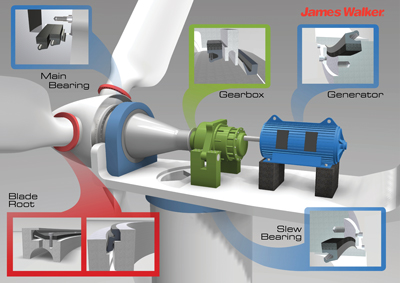
Small components such as seals are often overlooked to an OEM’s detriment. Ineffective seals in wind turbines fail to adequately protect the bearing. Lubricant leakages not only cause blade staining and cleaning to be required, but leakages inside the turbine can cause components to fail. Inadequate seals allowing the ingress of particles into the bearing compromises performance and accelerates equipment failure. Above all, a compromised seal is costly to replace. Not only is there the cost of a replacement seal to consider, but the question of labor costs and how to fit the new seal, and the loss of revenue for the period when the turbine is inoperative. Seal manufacturing specialists have developed designs to provide solutions to the problem. James Walker has a number of on-site joining solutions, such as the Walkersele OSJ-2, that offer the same integrity, life and performance as the seal fitted during manufacture by an OEM. Effective on-site joined sealing technology can be used on many of the bearings on a wind turbine and timely seal replacement reduces lubricant loss whilst maintaining low friction to extend component life and improve reliability.

James Walker engineers have a wealth of experience in on-site servicing and can replace a variety of seals on-site, with the minimum of disassembly to minimize the loss of energy production. “As a global sealing supplier we aim to deliver high value to customers by providing reliable products with an extended life expectancy that remove the problems faced by the industry,” says Barry Deeley, wind industry marketing manager. “The on-site joined technologies reduce maintenance costs and downtime that in turn increases the ability to generate electricity and lower lifetime costs for customers.”

The James Walker Group is a global manufacturing group operating through two strategic business units: Sealing Products & Services, and Rail Systems & Products. It has more than 50 production, engineering, distribution, and customer support sites worldwide and operates in over 100 countries. Learn more at www.jameswalker.biz/windenergy