













When observing a wind farm from a distance, it’s very easy to be lulled into the assumption that these gently spinning giants are part of a simple execution: wind to blade to generator to power.
However, these massive machines — along with other renewable energy systems — are anything but simple, and it takes innovative algorithms and software to handle the day-to-day complexities.
One company that understands these complexities and is helping operators of flexible clean-energy portfolios to manage and monetize their assets is Arenko.
“There’s so much complexity in the energy system in the way that markets have developed, especially as renewables and batteries have come on to market,” said Carly Wright, senior business development manager at Arenko. “You’re looking at new regulations, new laws, and new market opportunities. It’s Arenko’s responsibility as a solution provider and a partner to simplify that as much as we can — whether that’s with automation or with data insights that point to the real source of truth across a portfolio. That’s really where our philosophy is: ensuring that there’s resilience in the product that we provide to our customers and that it’s scalable across a portfolio.”

Along with wind assets, Arenko supports companies managing portfolios of solar and battery storage through its Nimbus software platform. By reducing complexity and delivering significant value from Day 1, Nimbus plays a key role in accelerating growth – whether for a standalone BESS or renewables project, a handful of assets or a multi-gigawatt portfolio. It has three core modules:
- Nimbus Asset simplifies the complexity of site integrations by providing asset control capabilities and delivers high-resolution data.
- Nimbus Trade is a fully automated trading platform that’s designed to maximize value.
- Nimbus Performance is an asset-management solution that provides whole site monitoring, making sure its operating and performing effectively and efficiently as well as its longevity.
“We’ve innovated and changed with the market,” Wright said. “Now, as a software and technology provider, we are working over a number of different asset types. We’re also expanding outside of our original market — which is the U.K. — and working in places like Germany, Ireland, and the U.S. as well.”
Co-located assets competing with standalone
One aspect of the growing world of renewables is the strategy of co-location — combining battery storage with wind or solar. Arenko has seen that by adding co-located BESS to wind and solar assets and using a fully automated trading strategy, these assets can match and, in some cases, even exceed revenue performance levels set by standalone BESS.
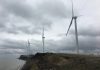
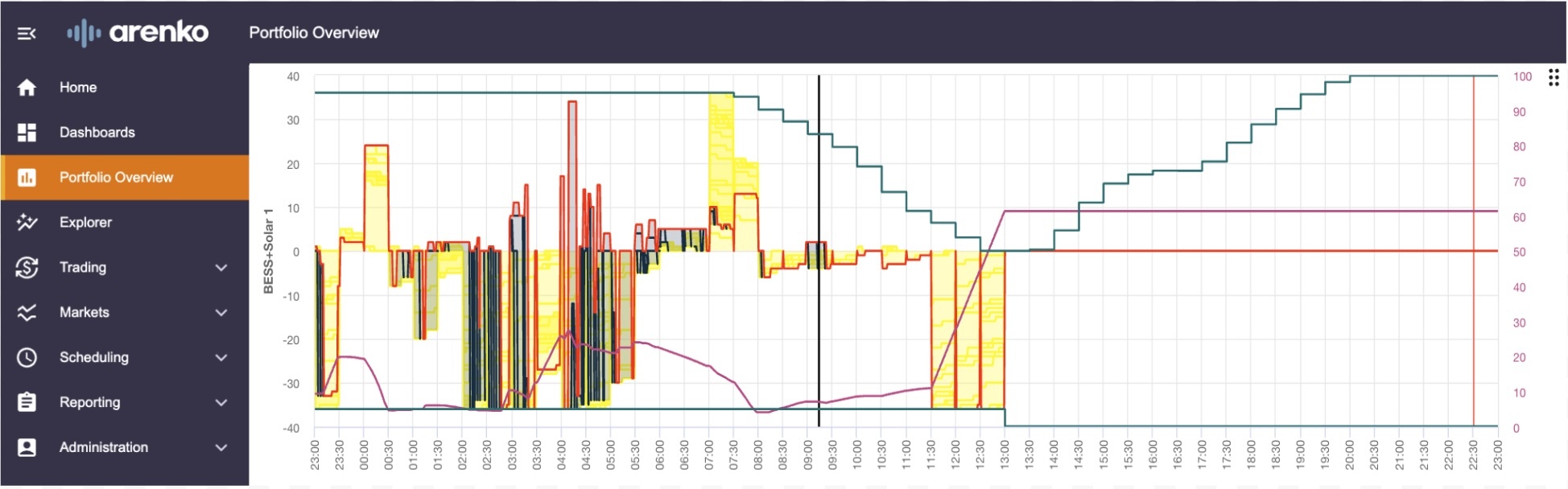
Arenko is helping transform how energy assets operate and the Nimbus platform has proved capable of adapting to very different renewable energy generation profiles. This is demonstrated through Arenko’s partnership with Vattenfall at the Battery@Ray project, co-located with the Ray Wind Farm in Northumberland. (Figure 1)
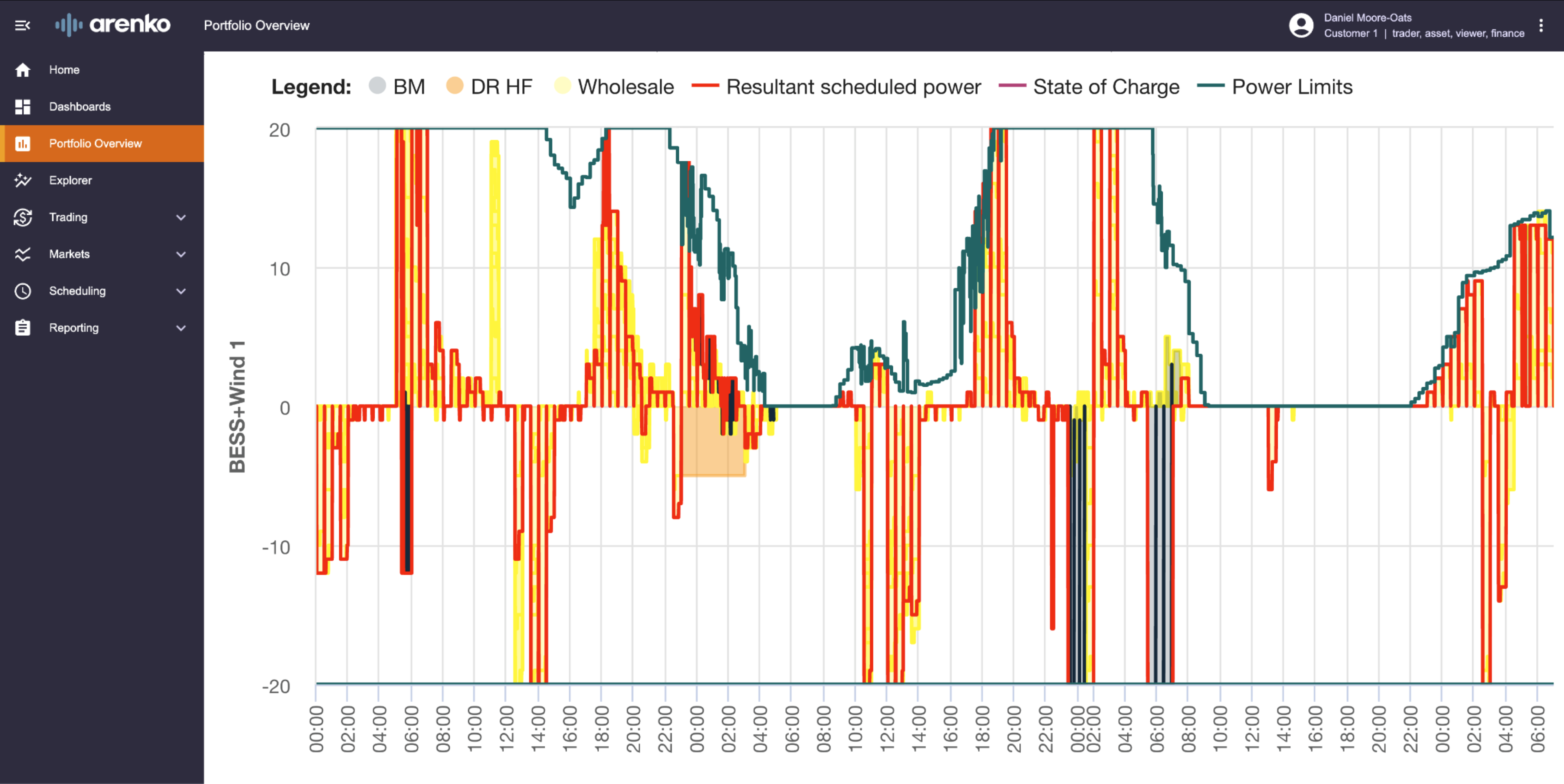
“We trade the BESS on site around the wind asset to maximize revenue and value of that asset, through a combination of automated trading algorithms and a flexible constraints engine” Wright said.
“This project highlights the significant value that can be unlocked by combining advanced optimization, machine learning, and real-time market integration, and, as a result, won the hybrid project of the year back in 2024 at the Energy Storage Summit. Having supported this asset for about three years now, what’s exciting is the development in the capabilities we’ve seen around wind and BESS working together really well.
We look at data and forecasts, and we use the core of the product we have, Nimbus, to ensure that any current obligations that the wind farm has — any PNs, etc. — are taken into account. We look at the weather, and we start to commit the BESS into the markets around those constraints.”
In essence, Arenko is using as much headroom as it can around the wind farm to create value from the BESS asset, according to Wright.
“There’s flexible intraday trading as well,” she said. “Every 15 minutes, we’re reforecasting the wind and adjusting our trading and what the assets are doing.”
In addition to working with the assets, Arenko also has a hand in maximizing grid connections, according to Wright.
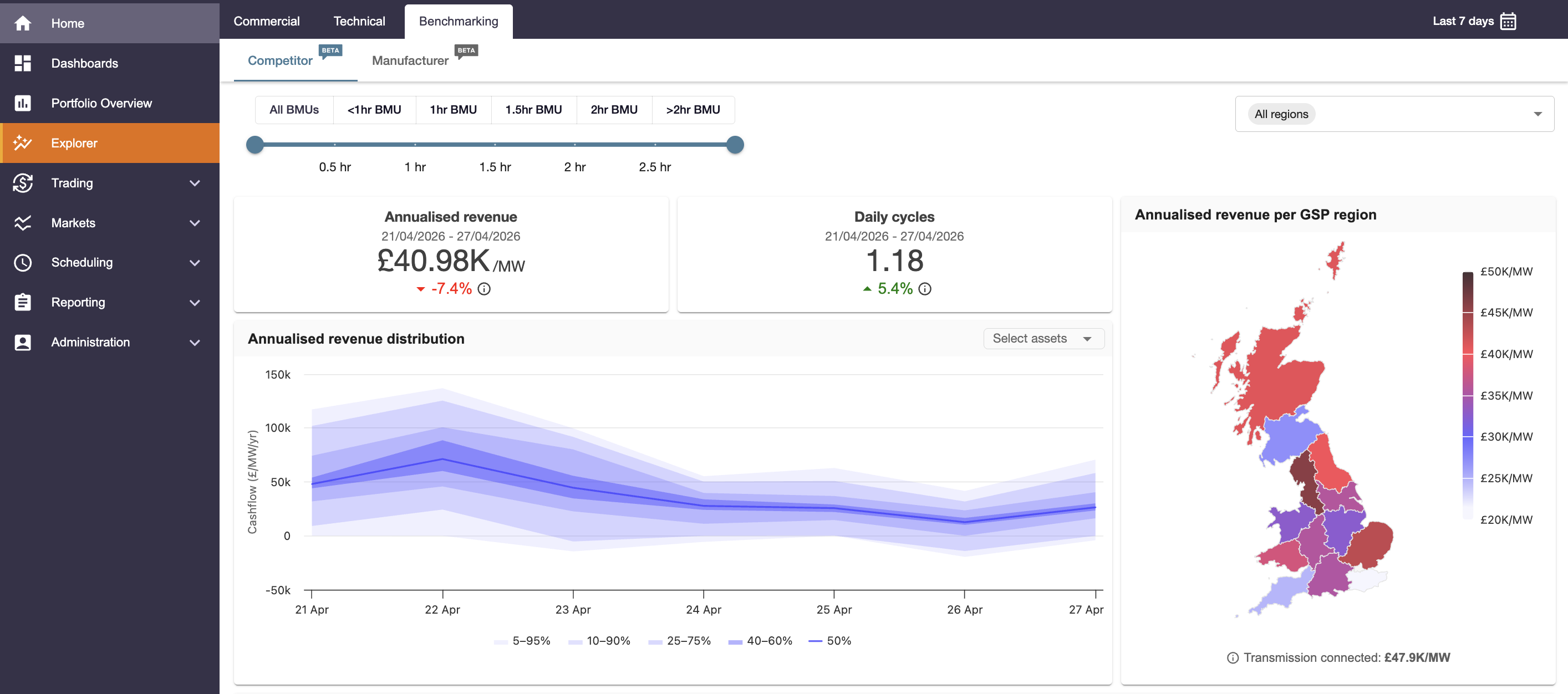
“That’s something that’s really topical for our customers around their co-located projects in renewables is ensuring those very valuable grid connections they have are maximized as much as possible,” she said. “A good example of this is at a separate site co-located with solar generation in the U.K. where the grid connection utilization has gone from 8 percent to 29 percent when we’re working with them – more than tripling the productive use of the connection and placing the asset among the top 10 percent of U.K. battery projects for annualized revenue performance year-to-date.” (Figures 2 and 3)
“We know there’s a huge bottleneck around the world with connections to the grid,” Wright said. “Utilizing these sites with retrofitting or just building new sites to take advantage of co-locating a battery with a wind or solar site is really important. That data we’re getting from the projects that we’re already working on is not just great for our customers and for the ROI for their projects, but also for them getting additional projects green lit. This is starting to bleed out into the rest of the industry as well. Putting these batteries on these sites and building them as part of new sites is real revenue return and a real uplift for companies that we work with.”
“That momentum for co-location looks set to be rolled out at pace,” she said. “You’re seeing countries start to loosen regulations. You’re starting to see investment come in where there wasn’t any before and that investment case is starting to build.”
“You’ve got sites that will have more revenue opportunities where they’re being built together — commercial models that are working across both the battery and the wind or both the battery and the solar,” Wright said. “That really will additionally maximize the revenue even more because you’ve got one strategy across platforms.”
Working with complex projects
Co-located renewable and storage projects are operationally complex, and solving those challenges is something that Nimbus excels at, according to Wright. These types of challenges arise when companies have portfolios that consist of new assets, old assets, or acquired assets where a lot of different data and technology types and commercial structures exist.
“That doesn’t go away for co-located projects, of course,” she said. “But one of the things that we’re seeing is if you are looking at a site and they’ve got different commercial structures on the renewable or maybe it’s got a PPA, you’re trying to align those incentives and the responsibility across those assets.
Teams are working in partnership because they can see the value of working together. Now, one of those big complexities is starting to fall away, which is great. Technical challenges are always going to be there, but we’re a really innovative industry. New technologies are going to continue to develop. We’re going to have problems around those supply chains as well for parts, and that’s something that people are working around.
They’re adept at it. They’re building that into their models for these sites and for these projects.”
Co-location success depends on real-time data
Clean-energy companies are also racing to enhance their in-house capabilities to process huge volumes of technical and commercial data, empower trading teams, and make the transition to real-time, automated operations, according to Wright. Nimbus accelerates and de-risks this journey to flexibility. It offers a secure and versatile digital backbone, designed to extract, standardize and action data from increasingly sophisticated generation and storage assets. What makes this data so unique is that it is gathered in real time, according to Wright.
“We use 20 Hertz data, so it gathers incredibly fast sets of data that we’re seeing because batteries need to react sub-second,” she said. “The real-time data is really, really important to ensure that we can react quickly and take advantage of any opportunities within a market that we can bid into.” In order to do that, Arenko needs to be flexible, according to Wright.
“We’re a bit of a Swiss Army knife when it comes to how we work with our customers because we have to be quite modular and flexible,” she said. “When you’re working with a big utility or a complex organization with lots of subdivisions and competing priorities, they might have a tech stack that we need to insert ourselves into in order to maximize revenue for one of their assets, for example.
We’re going to continue to take into account that this is a pretty rapidly evolving industry and innovate with our customers in order to get where we need to be. We’ve made sure that we’re pretty involved in the market — roundtables, consultations, staying inquisitive — and interested in what’s coming next.”
Continuing to grow
As innovation continues and co-location opportunities reveal themselves, Wright said that she sees Arenko being at the forefront of that growth.
“We’re adapted to it now,” she said. “I see us continuing to be part of that — increasing the capabilities that we have in automating new trading markets and decision making that needs to happen around these different asset types and combinations. We’ll continue to work on that. The future of the success of renewables and clean power is going to be to manage these complex markets and portfolios at scale. I see us being the digital backbone of enabling this transition with our customers and scaling into additional markets with them, for them, alongside them, and being that global single source of data standardization for them.”
More info: arenko.group