Home 2021

American Clean Power 2Q market report shows record installations

0


There are now more than 180,216 MW of clean-power capacity operating in the U.S, enough to power more than 50 million homes across the country and more than double the U.S. capacity just five years ago.

Clean Power Quarterly 2021 Q2 Market Report, recently released by the American Clean Power Association (ACP), shows that U.S. project developers commissioned 5,620 MW of clean power capacity in the second quarter of 2021, a 13 percent increase over 2020’s second quarter volume.

Additions for the first half of 2021 totaled 9,915 MW, the highest record for new clean-power installations, representing a 17 percent increase in the first six months of 2021 compared to the same period last year.

The industry installed 2,226 MW of solar capacity in the second quarter, a 73 percent increase compared to the first quarter, bringing total new annual operating solar capacity to 3,513 MW. The wind sector installed 2,824 MW of new capacity in the second quarter of 2021, a 10 percent increase compared to the same period last year. Battery energy storage experienced the most dramatic quarterly increase with new installations of 570 MW surging 439 percent, new energy storage capacity in 2021 now totals almost 665 MW, nearly the 2020-year-end total.

“This market report shows the record growth across the renewable energy sector. With a record pace of installations in the first half of 2021 our industry not only provides good-paying jobs but also is a key part of solving the climate crisis,” said Heather Zichal, ACP CEO. “This growth and expansion are expected to continue, but we need policymakers in Washington to make long term decisions to ensure we can continue to develop these critical projects.”

Project owners commissioned a total of 56 new projects across 27 states during the second quarter, this includes 16 new wind projects, 30 utility-scale solar projects, seven energy storage projects, and three solar-storage hybrid projects, enough to power nearly 1.3 million American homes. The top five states for second quarter additions include Texas (1,489 MW), California (585 MW), Michigan (424 MW), Florida (373 MW), and Kansas (301MW).

In total, there are now more than 180,216 MW of clean-power capacity operating in the U.S, enough to power more than 50 million homes across the country and more than double the U.S. capacity just five years ago. This growth will continue; at the end of the second quarter, there were 906 projects totaling more than 101,897 MW of clean-power capacity under construction (37,725 MW) or in advanced development (64,172 MW) across the U.S.

The sector also saw continued clean-power procurement activity with power purchasers and project developers reporting 4,218 MW of new power purchase (PPA) in the second quarter, bringing the first half-year totals up to 7,700 MW. The quarter saw a continued shift to solar PPAs with more than 20 solar projects securing PPAs.

MORE INFO  cleanpower.org

Next decade will see more demand for wind farms

0
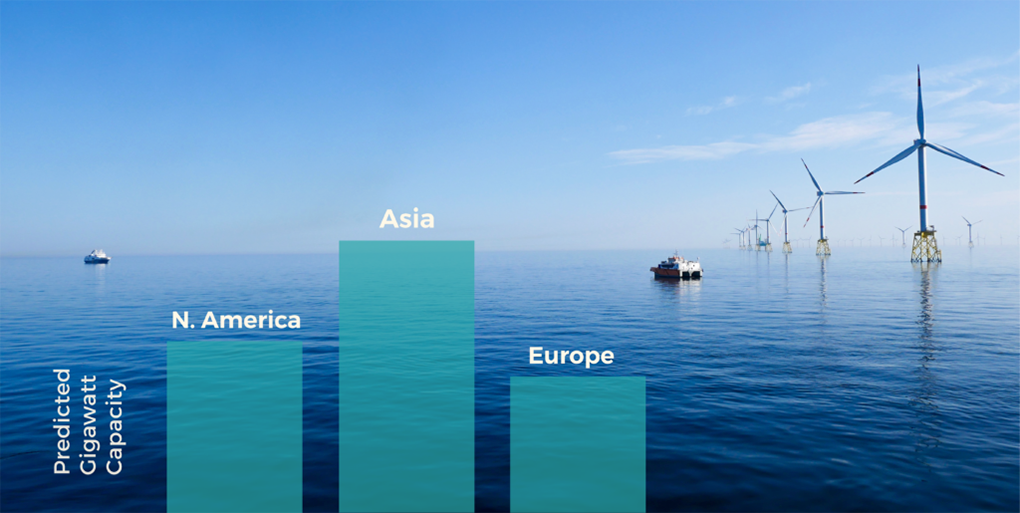
Asia is predicted to be the leader in gigawatt capacity in the next 10 years. (Courtesy: VesselsValue)

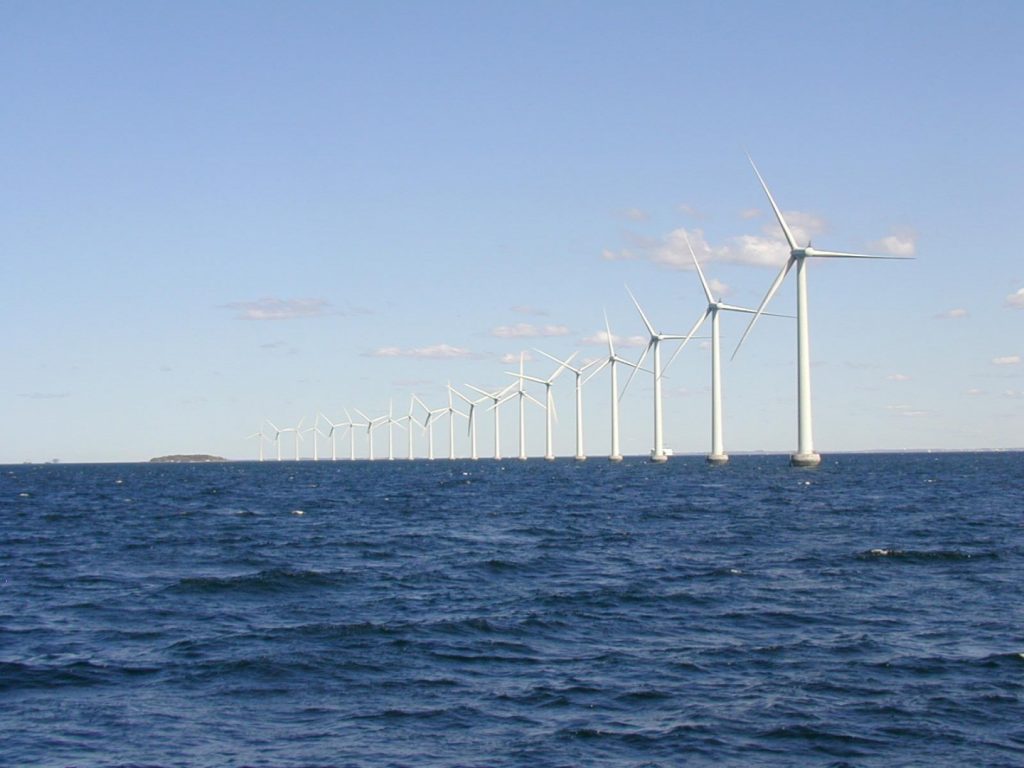
Demand for wind farms will increase over the next decade, according to offshore wind analyst Zac Ward.

In 2020, spending on offshore renewable projects was higher than that of offshore oil and gas spending, by an estimate of $12 billion, with $43 billion for oil and gas and $56 billion for renewable energy.

Newly built vehicles and repurposed or upgraded supply vessels will meet the demand for wind farm installation and maintenance vessels.

While the global capacity for offshore wind farms is now at 25GW, that number will rise to 235GW by 2030, estimates say.

VesselsValue’s Orderbook shows that out of the renewable energy still on order, about half are for Europe and half are for the Far East.

The United Kingdom has the most wind farms installed, followed by Germany, China, Denmark, Belgium, and the Netherlands. Asia, however, has the highest number of future plans for wind farms.

MORE INFO  https://blog.vesselsvalue.com/windfarm-vessels-in-increasing-demand/

Leosphere launches new tech for wind measurement

0
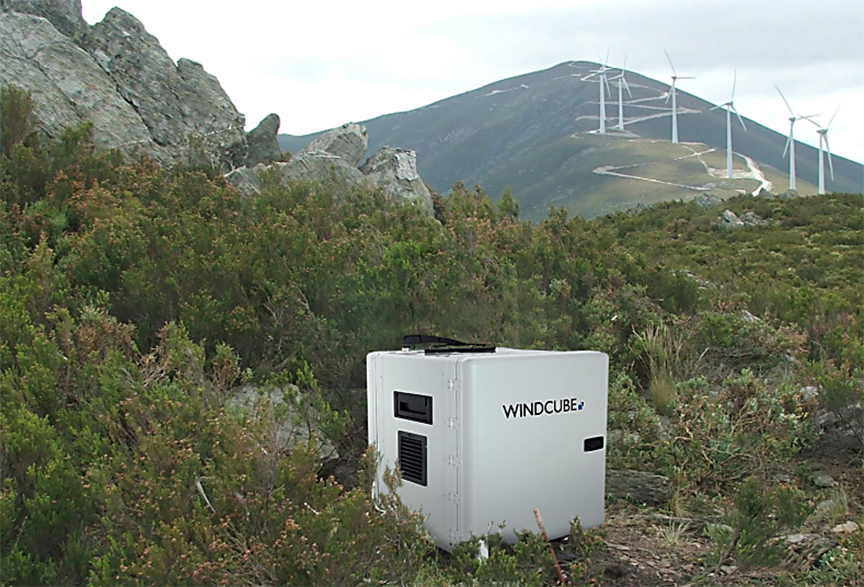
WindCube Complex Terrain Ready delivers wind measurement in terrains from moderate to complex. (Courtesy: Vaisala)

Leosphere has launched WindCube Complex Terrain Ready, to deliver wind measurement in terrains from moderate to the most complex.

The offering includes Leosphere’s patented Flow Complexity Recognition (FCR) software, and the Computational Fluid Dynamics correction method to deliver accurate and trusted measurement.

“With wind energy being one of the fastest-growing sources of sustainable energy production, the location of wind farm development and operations have expanded to new and challenging environments,” said David Pepy, Leosphere’s head of renewable energy.

“This expansion into hilly, mountainous and other areas with varying levels of terrain complexity, make it challenging to collect trusted and precise wind measurements that illustrate what the wind is doing in these increasingly complicated locations. That’s where our solutions come in to ensure project operators realize precise data in all types of complex terrain,” Pepy said.

With WindCube Complex Terrain Ready, companies have easy access to both FCR and CFD correction services, empowering wind farm developers with accurate, reliable, bankable, and widely accepted wind flow data. The integrated FCR solution is appropriate for moderately complex terrain while CFD post-processing, available as an option through partnerships with wind energy leaders and consultants, is leveraged for more complex terrain. In some cases, customers use both FCR and CFD data to ensure the highest possible wind measurement outcomes.

The company has partnered with proven CFD industry leaders, including Meteodyn and WindSim, and wind energy consultants such as ArcVera, Deutsche WindGuard, DNV, Fraunhofer IWES, and UL, to ensure WindCube customers have access to the right CFD solution and industry expert support to meet their specific needs.

MORE INFO  https://www.vaisala.com/en/lp/windcube-complex-terrain-ready

BOEM seeks input on California wind

0
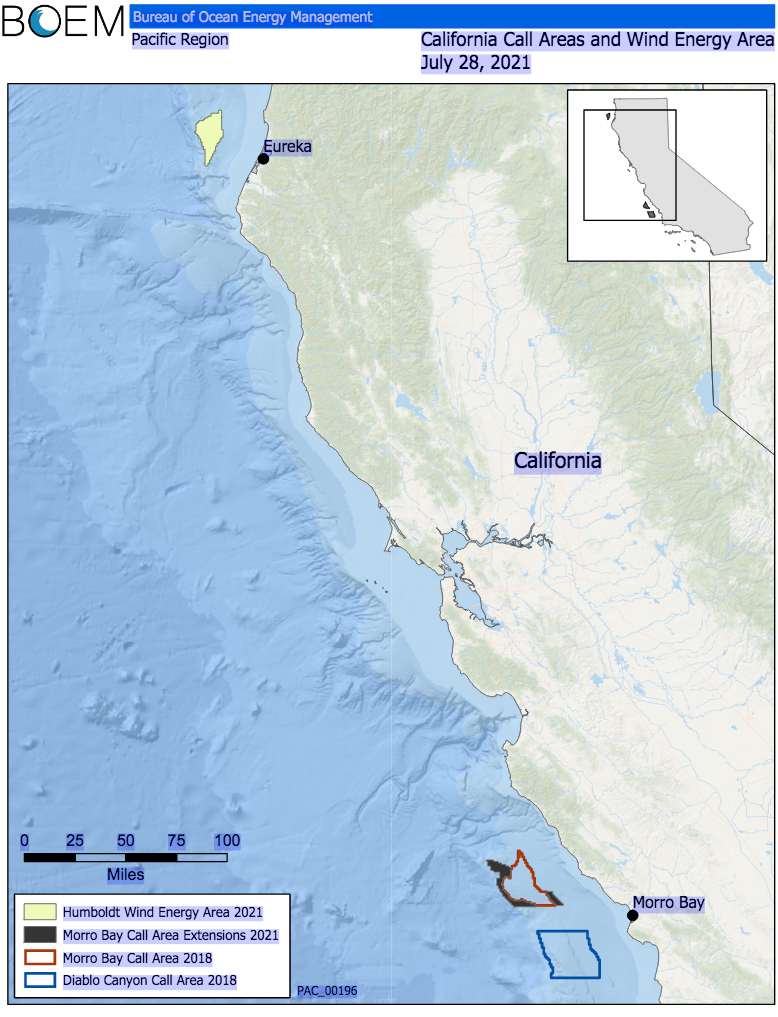
The Bureau of Ocean Energy Management seeks public input on offshore wind areas off of California’s north and central coasts. (Courtesy: BOEM)

The Department of the Interior’s Bureau of Ocean Energy Management (BOEM) has published a request for information from the public and to determine interest from industries in offshore wind energy development in central California.

The areas involved are within the Morro Bay Call Area East and West Extensions, a 399-square-mile area of central California.

BOEM has also formally designated the Humboldt Wind Energy Area in offshore northern California, and will proceed with an environmental review of that area.

“If approved for offshore wind energy development, these areas could bring us closer to reaching this administration’s goal of deploying 30 gigawatts of offshore wind by 2030,” said BOEM director Amanda Lefton.

“While we are still in the initial stages of BOEM’s leasing process, today’s announcement reflects years of working with ocean users, Tribal governments and local, state, and federal agencies to obtain the best available information to reduce potential conflicts,” said Thomas Liu, acting Pacific Region director of BOEM.

Offshore wind energy development can help California reach its goal of 100 percent carbon-free energy by 2045, as well as create good-paying union jobs, and foster investments in coastal communities. Offshore wind resources are typically stronger and more consistent than winds over land and are especially strong in the evening hours when solar energy production drops off, ensuring that offshore wind energy can make an important contribution to California’s electric grid.

The east and west extensions consist of about 141 square statute miles, or 90,025 acres.

BOEM published the call for information in the Federal Register on July 29, which started a 45-day public comment period.

The bureau also will use these comments as input for its consultation under section 106 of the National Historic Preservation Act. Additional information on how to comment can be found at https://www.boem.gov/renewable-energy/state-activities/humboldt-wind-energy-area.

MORE INFO  https://www.boem.gov/newsroom/press-releases/boem-advances-offshore-wind-leasing-process-california

X1 Wind expands team to ramp up commercial operations

0
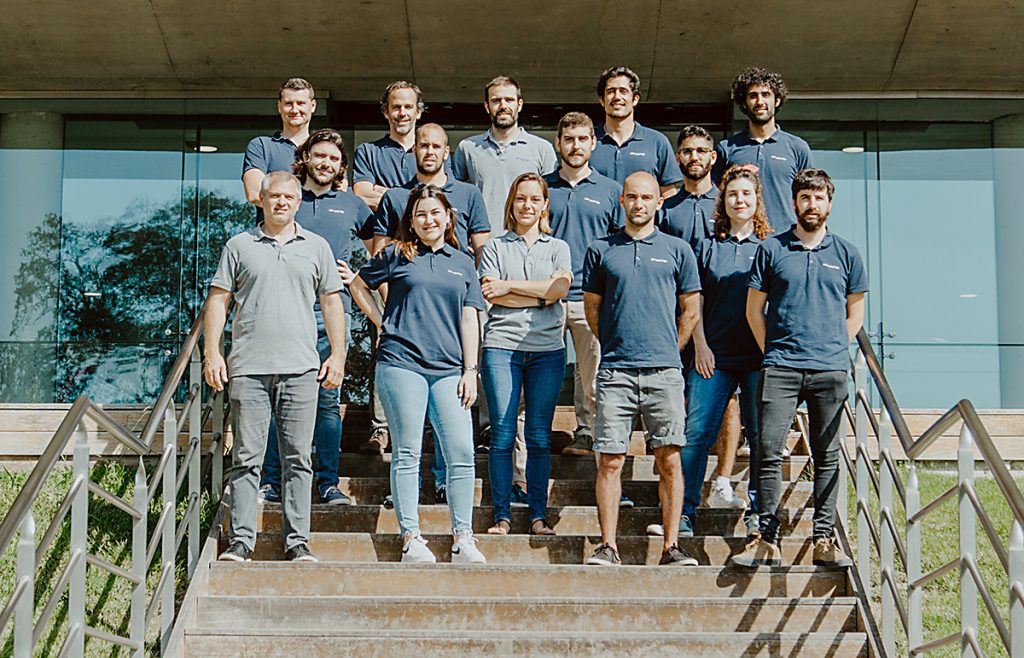
New additions to the X1 Wind team. (Courtesy: X1 Wind)

X1 Wind has made new appointments to help accelerate full-scale commercial operations.

New additions include Strategy and Business Development Director João Neves, Mechanical Engineer Javier G. Cervilla and Junior Structural Engineer Lucy Milde. The recruits come from a variety of backgrounds, including Boston Consulting Group, General Electric and Massachusetts Institute of Technology.

“Our new recruits will play an important role, helping to inform and accelerate our technical and commercial strategy,” said Alex Raventos, X1 Wind CEO and co-founder.

“Our overarching aim is to make a meaningful contribution to help combat climate change through large-scale decarbonization of the energy system. With this goal in mind, we have taken time to assemble a close-knit group of excellent engineers covering all core areas necessary to develop our innovative floating wind technology as well as experts on strategy and business development,” said Raventos.

X1 Wind’s technology is designed to reduce the current Levelized Cost Of Electricity (LCOE) of floating wind through reduced floater weight, a faster and cheaper installation process and a more reliable operation. The system is connected to a single point mooring system in a downwind configuration, which creates a “weather-vaning” solution that maximizes use of passive systems.

“I believe that we need to do everything we can to accelerate the energy transition, and floating wind has a massive potential to contribute to this goal. Nevertheless, it still requires innovation to become a competitive technology and that’s what we strive for at X1 Wind,” said Neves.

The team aims to be a world leader in floating wind, said Cervilla. “I couldn’t resist this rare opportunity to help redefine floating wind rules and indulge my passion for innovative solutions, which will underpin the future energy transition,” Cervilla said.

X1 Wind is a floating wind technology developer based in Barcelona, Spain. The company’s mission is to provide scalable solutions that deliver clean, affordable energy while reducing carbon emissions across the globe.

MORE INFO  www.x1wind.com

US Wind picks up speed in Maryland

0
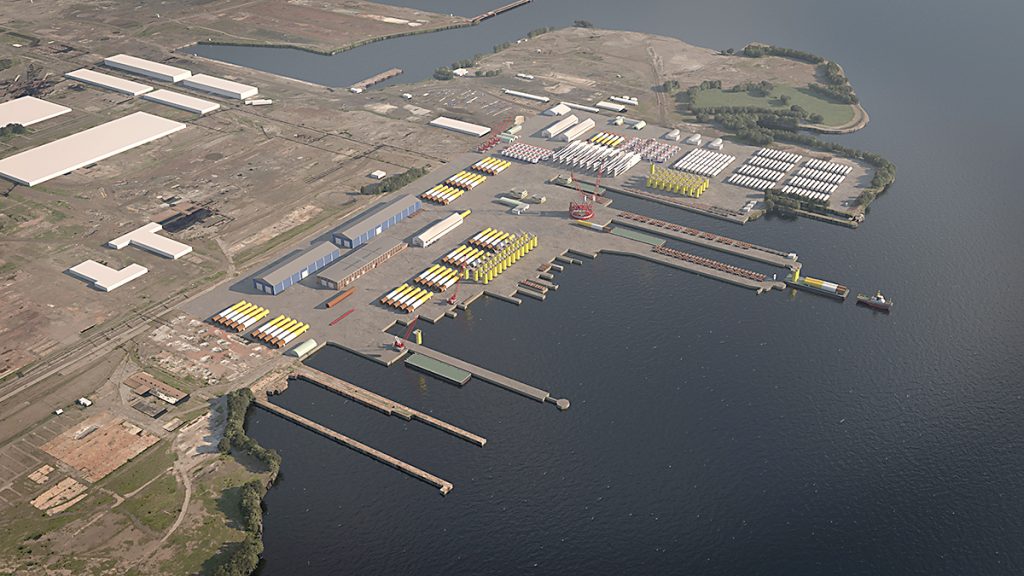
A rendering from a proposal for a new steel fabrication facility at Sparrows Point Steel. (Courtesy: US Wind)

US Wind, the only offshore wind company that focuses exclusively on developing clean energy for Maryland, announced progress for its offshore wind plans, including labor agreements and an agreement for a new port facility.

The labor agreements with the Baltimore-D.C. Building and Construction Trades and IBEW will support current and future projects, including the 22-turbine MarWin, the company’s first offshore wind project in Maryland.

MarWin is expected to begin generating clean power in 2025, and will support 1,300 direct construction jobs in the state. US Wind is committed to using union labor for many of those jobs.

The port facility agreement with Tradepoint Atlantic sets up development for 90 waterfront acres. US Wind will initially invest $77 million into an offshore wind development hub there.

US Wind also announced plans to develop up to 1,200 more MW of offshore wind energy in addition to Momentum Wind, a project that will consist of 82 turbines, with the first phase coming online in 2026, and subsequent phases online in 2028. About 3,500 direct construction jobs will be created.

In conjunction with Momentum Wind, the company announced a proposal to bring steel back to Baltimore, for a new steel fabrication facility in Baltimore County at Sparrows Point Steel.

MORE INFO  https://uswindinc.com/momentumwind/

American Clean Power Association, U.S. Energy Storage Association to merge

0

The boards of directors of the American Clean Power Association (ACP) and the U.S. Energy Storage Association (ESA) will merge the two trade associations to combine their staff, programs, and members.

The merger will bring together the diverse membership and talented team members of ESA with the resources and reach of ACP. Additionally, it will enhance the American Clean Power Association’s efforts to advocate for the economic and environmental advantages of the clean power economy and further position the renewable energy and storage industries for success as they move into a decade of transformative growth.

“Energy storage is foundational to a cleaner energy future for the country.” said Jim Murphy, president of Invenergy and the chairman of the board for ACP. “Joining together with ESA strengthens the unified voice of the clean power industry as we continue to transform the U.S. power grid to a low-cost, reliable and renewable power system.”

Launched at the start of 2021, the American Clean Power Association is a new trade association unifying the wind, solar, storage, and transmission companies driving jobs and investment in the U.S. economy and providing solutions to the climate crisis. The merger with ESA will be the second for ACP, following its merger with the American Wind Energy Association (AWEA) in January 2021.

“Our board sees the merger with ACP as a powerful new chapter for our industry and a pathway to achieving 100 GW of new energy storage by 2030,” said Kiran Kumaraswamy, vice president of Market Applications at Fluence and the chairman of the board for ESA. “The ESA board of directors is confident that a merger will elevate advocacy, research, and educational efforts on behalf of the energy storage industry, with significant benefits and expanded opportunities for ESA’s staff and membership.”

ESA represents a diverse group of more than 200 companies involved in manufacturing, deploying, and operating energy-storage systems in the U.S. and around the globe. ESA’s membership comprises the full diversity of energy storage technologies and business models needed for a more resilient, efficient, sustainable and affordable electricity grid.

The merger will take effect January 1, 2022, subject to final approval from ESA’s members.

Vestas wins 92-MW order in the U.S.

0
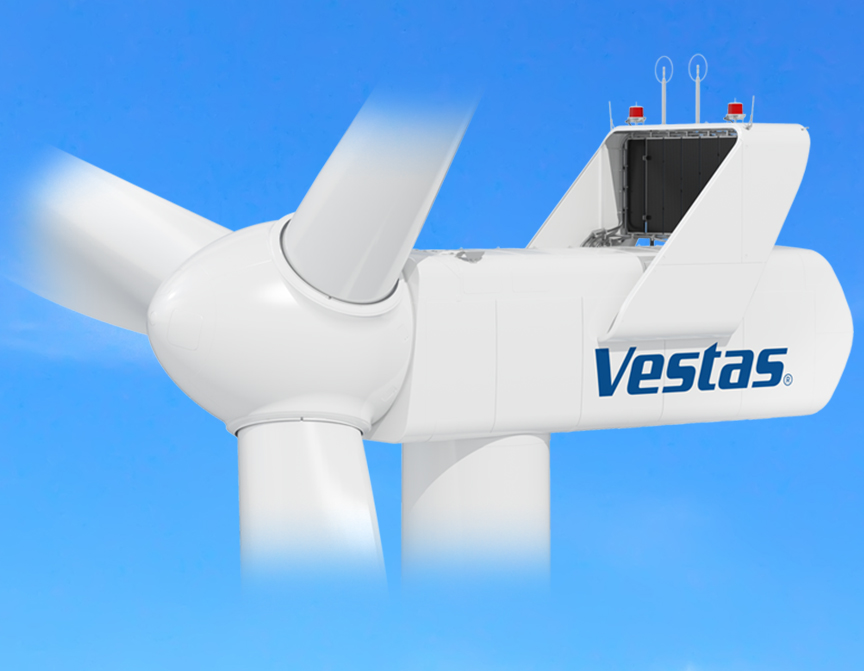
The Vestas V150-4.2 MW turbine. (Courtesy: Vestas)

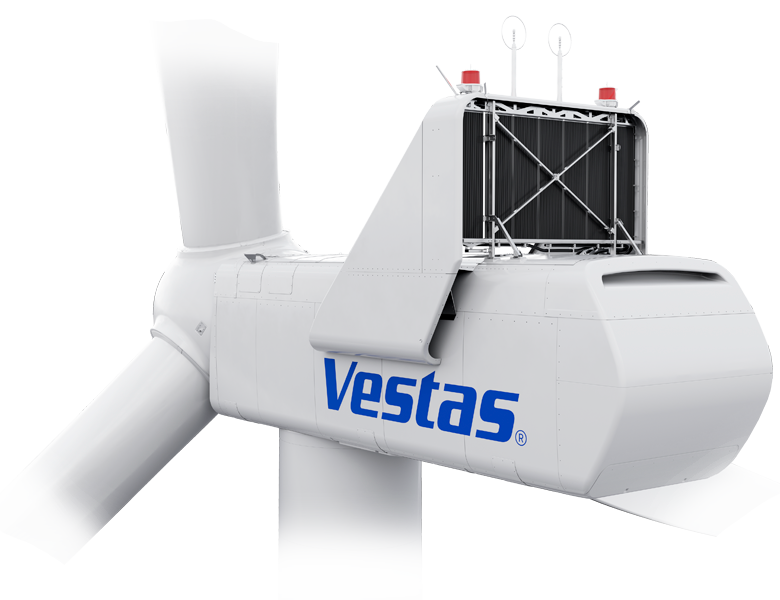
Vestas has received a 92 MW order to power an undisclosed wind project in the U.S. The project consists of 22 V150-4.2 MW turbines.

The order includes supply, transport, and commissioning of the turbines, as well as a multi-year Active Output Management 5000 (AOM 5000) service agreement, designed to ensure optimized performance of the asset.

Turbine delivery will begin in the second quarter of 2022 with commissioning scheduled for the fourth quarter of 2022. The customer and project are undisclosed.

Vestas is the energy industry’s global partner on sustainable energy solutions. The company designs, manufactures, installs, and services onshore and offshore wind turbines across the globe, and with more than 136 GW of wind turbines in 84 countries, it has installed more wind power than anyone else. Through its industry-leading smart data capabilities and unparalleled more than 117 GW of wind turbines under service, Vestas uses data to interpret, forecast, and exploit wind resources and deliver best-in-class wind-power solutions. Together with its customers, Vestas’ more than 29,000 employees are bringing the world sustainable energy solutions to power a bright future.

MORE INFO  www.vestas.com

DLM’s saddleback holdback tensioner used for subsea cable                            

0
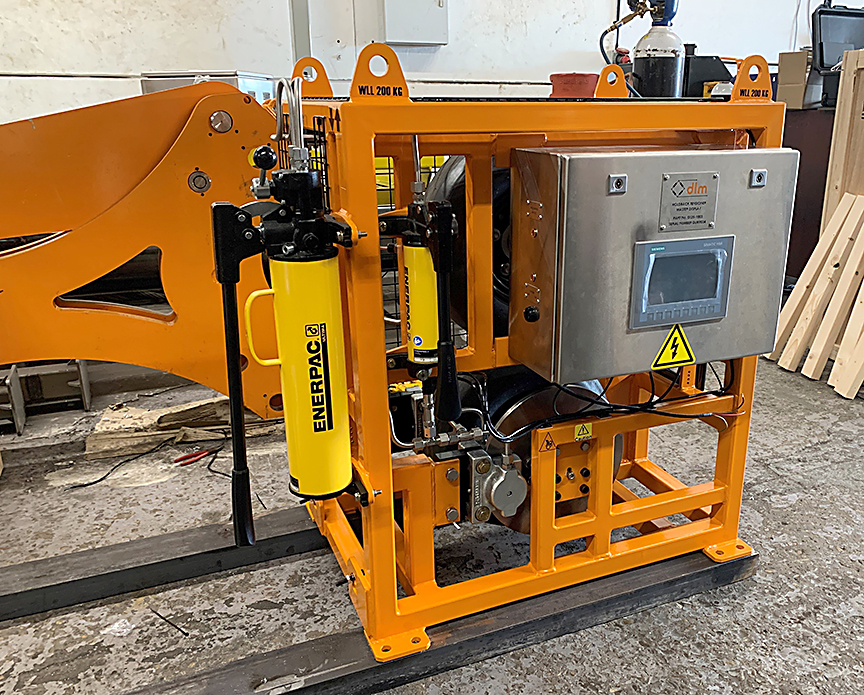
An Enerpac cylinder compresses the top and bottom wheels together. (Courtesy: DLM)

Dynamic Load Monitoring Ltd. of Southampton, U.K., has expanded its range of line tension measurement technology with a new device for measuring tension and creating holdback force on a single piece of subsea cable.

The product, which combines the established Saddleback product from DLM’s catalog with an additional hold back tension element, is being primarily used by the vessel NKT Victoria, with further devices in the pipeline for a number of customers.

When consulted about a solution for measuring line tension and creating a holdback force for a cable lay project, DLM, a specialist in the design, manufacture, repair, and calibration of load cells and load monitoring equipment, devised the saddleback holdback tensioner (SB-HBT).

The SB-HBT (450 kilograms) works by creating additional line tension on the subsea cable running through it, specifically for bundled cable lays. A saddleback can measure line tension from zero to 5,000 kilograms and is suited for more delicate cable, including telecommunication cables or large cable where a running line monitor is unsuitable. Moreover, a twin pair of Dunlop 18 x 7 SMO LCE tyres are connected to a hydraulic cylinder to clamp the two wheels together, and a disc braking system is used to control the rotational speed of the wheels on the SB-HBT. The device can create 750 kilograms of clamping force between the wheels and holdback 500 kilograms of line tension. On the top wheel there is an encoder to measure speed and distance.

“This is the first requirement we have had (for the SB-HBT), but we have discussed it with other potential customers; this seems to be a reoccurring problem aboard vessels,” said Chris Scrutton, technical manager at DLM. “It can be used when a cable-laying vessel is completing a new lay project and needs to control the departure speed to small diameter cables being bundled alongside larger cable diameters. The reason for doing this is that the small diameter cable often does not bundle tightly enough with the larger diameter cables and can run free of the bundle when departing off of the vessel.”

In this instance, NKT, a provider of turnkey cable solutions that meet the ever-growing demand for power, is using the SB-HBT on a 22-millimeter-diameter fiber optic cable. The “holdback” (holdback force is essentially a term for adding line tension to a cable) element of the device creates additional tension to control the departure speed of the cable for bundling with DC power cable prior to being laid subsea.

An Enerpac cylinder compresses the top and bottom wheel together to create grip pressure onto the cable before the brakes are employed to slowly rotate the wheels. Without clamping the two wheels together, the cable would simply run free. The (orange) HBT element houses all of the components, while the saddleback is the item bolted to the front of the frame.

“This was another project where we were approached by a client with a design brief to develop a product for their application,” Scrutton said. “NKT had a specific requirement for a device that could measure the line tension and create the holdback force. The concept went from a design discussion to a delivered product in less than six months.”

MORE INFO  www.dlm-uk.com

Cerulean Winds names NOV as delivery partner in offshore plan 

0
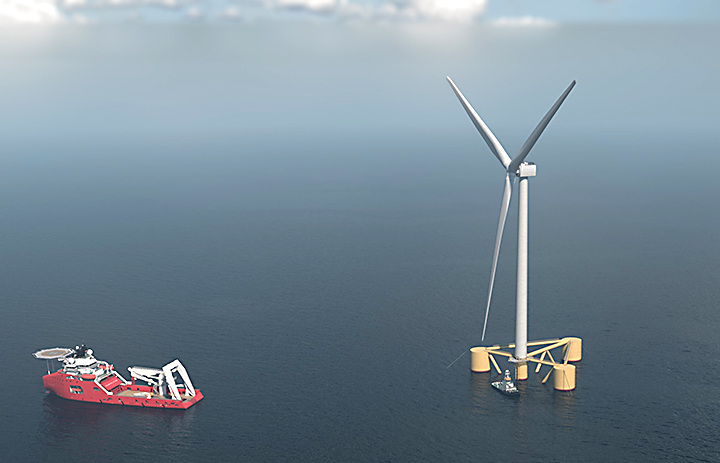
Illustration of a floating wind turbine. (Courtesy: Cerulean Winds)

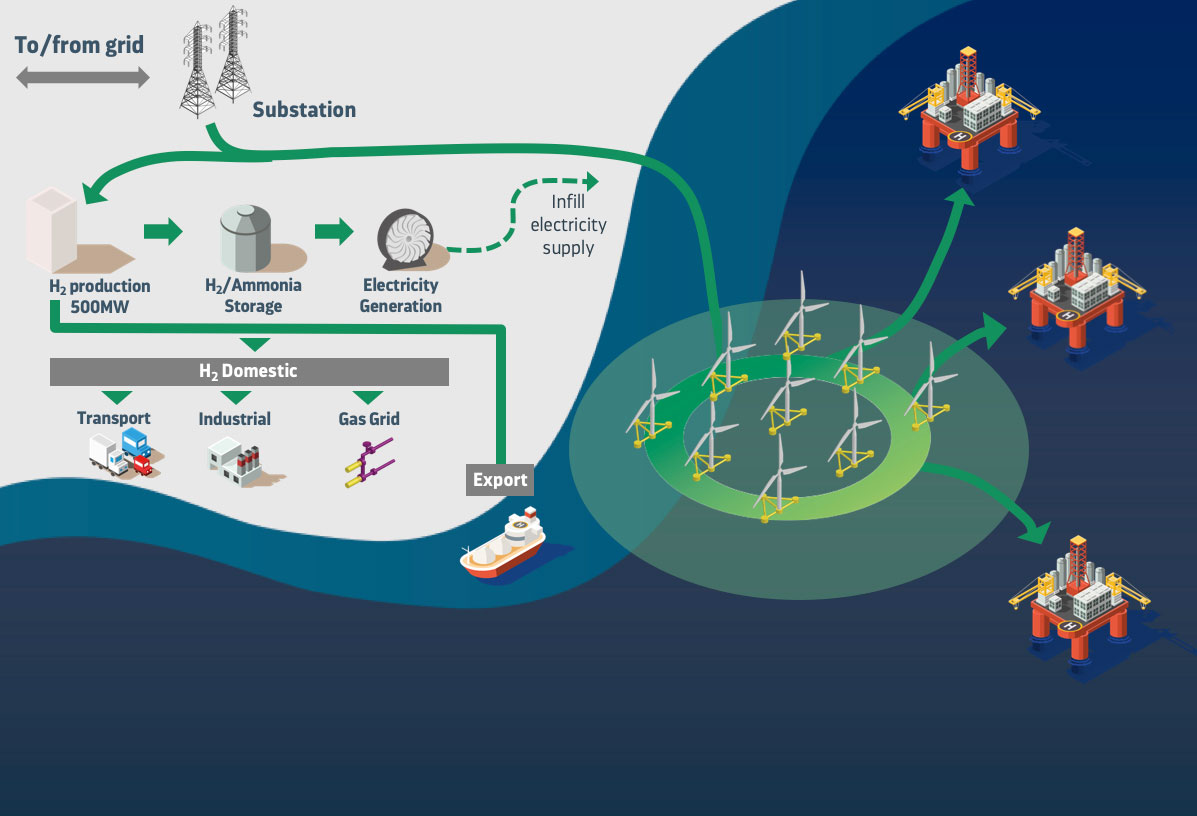
Green infrastructure developer Cerulean Winds has named NOV as the first of its delivery partners for the fabrication of its proposed integrated 200-turbine floating wind and hydrogen development off the coast of Scotland.

The arrangement would establish NOV as the exclusive provider of floating and mooring systems in support of the venture, which would have the capacity to accelerate the decarbonization of oil and gas assets in the UKCS by more than halving the 18 million metric tons of CO2 they currently produce by 2025.

NOV, one of the largest providers of marine equipment and wind-vessel designs in the world, has more than 20 years of experience in the offshore wind sector and unrivaled expertise in the installation and maintenance of floating structures in the energy space. Its participation as a delivery partner confirms the viability of Cerulean Winds’ trailblazing proposal.

Cerulean Winds is led by Dan Jackson and Mark Dixon, who have more than 25 years’ experience working together on large-scale offshore infrastructure developments in the oil and gas industry.

“We are very pleased to announce NOV’s involvement with the project,” Dixon said. “As the largest and most qualified provider of marine equipment and wind-vessel designs working in this space, the experience and knowledge they will bring to a project of this magnitude is second to none. Having them on board brings the scheme a step closer to reality. We have a number of Tier 1 delivery stakeholders signed up. We can’t disclose who they are at this stage, but they are some of the largest providers in the world, with the scale and capacity to deliver, and we look forward to making further announcements over the coming months.”

“We are very excited to partner with Cerulean on this groundbreaking proposal, which will leverage NOV’s core competencies as well as our U.K. and European infrastructure and personnel in a key energy transition project, which will drive major progress in the goal of decarbonizing the Offshore U.K. sector,” said Joe Rovig, president of NOV Rig Technologies. “NOV is eager to demonstrate our abilities as one of the key partners and household names in the global energy transition, just as it has been for decades in the traditional oil and gas industry.”

Targets set out in the recently published North Sea Transition Deal call for a reduction in offshore emissions by 10 percent by 2025 and 25 percent by 2027. To achieve that, preparatory work must begin now if those targets are to be met. Failure to do so undermines the objectives of the Deal.

If it gets the go-ahead, the £10 billion Cerulean Winds project has the capacity to generate enough power to electrify the majority of assets in the UKCS to meet and exceed those targets within the timescale.

However, the timing involved in gaining approvals for the project is critical. Cerulean Winds has submitted a formal request to Marine Scotland for seabed leases, and these must be granted by Q3 in 2021 to target financial close in Q1 2022 and to begin construction soon after so that the infrastructure is in place by 2024-2026.

To support this, the venture is calling on the Scottish and U.K. governments to make an “exceptional” case to deliver an “extraordinary” outcome for the economy and the environment.

“The U.K. has set world leading targets to progress energy transition, but to achieve them there must be a greater sense of urgency and joined up thinking,” Jackson said. “If assets don’t reduce their CO2 emissions by the mid-2020s, increased emissions penalties through carbon taxes will see many North Sea fields become uneconomical and move them toward decommissioning by the end of the decade at the cost of thousands of jobs. “That would seriously compromise the U.K. oil and gas industry’s role in homegrown energy security. It must remain a vital element in the transition journey for decades to come, but emissions have to be cut significantly to make the production greener.”

“This project will accelerate that process enabling assets to not only cut their emissions in line with targets but to greatly exceed them,” he said. “There are no other proposals currently in the pipeline with the scale and capacity to deliver that result, but to achieve it, the process must begin now, which is why a favorable decision on seabed leases by Q3 2021 is essential.”

The proposed development involves:

  • More than 200 of the largest floating turbines at sites West of Shetland and in the Central North Sea with 3GWh of capacity, feeding power to the offshore facilities and excess 1.5 GWh power to onshore green hydrogen plants.
  • Ability to electrify the majority of current UKCS assets as well as future production potential from 2024 to reduce emissions well ahead of abatement targets.
  • 100 percent availability of green power to offshore platforms at a price below current gas turbine generation through a self-sustained scheme with no upfront cost to operators.
  • The development of green hydrogen at scale and £1 billion hydrogen export potential.
  • No subsidies or CFD requirements and the generation of hundreds of millions of pounds in government revenue via leases and taxation through to 2030 and beyond.

Cerulean has undertaken the necessary infrastructure planning for the scheme to ensure the required level of project readiness, targeting financial close in Q1 2022. The company is being advised by Société Générale, one of the leading European financial services groups, and Piper Sandler, corporate finance advisors to the energy industry.

MORE INFO  ceruleanwinds.com

WRISE launches Speakers Bureau to support increased diversity

0
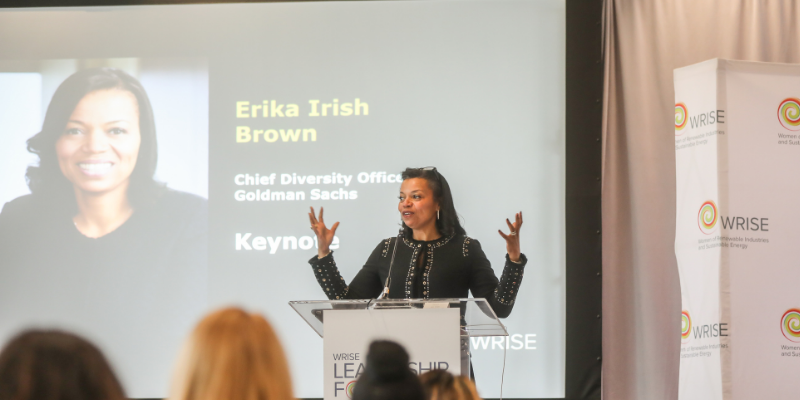
WRISE’s Speakers Bureau has more than 150 qualified individuals representing different technologies, markets, companies, and professional expertise and will be regularly updated with new speakers. (Courtesy: WRISE)

Women of Renewable Industries and Sustainability (WRISE) launched its new Speakers Bureau today. The Speakers Bureau is a public, searchable database of qualified speakers willing to speak, present, and engage on renewable-energy topics.

The database will be an invaluable resource for conference and event organizers seeking to bring more diverse perspectives into the public discourse on renewable energy.

“For over a decade, WRISE has received requests for speaker recommendations,” said Kristen Graf, WRISE executive director. “Recently, conversations around conference diversity have picked up, and those requests have increased exponentially. In order to continue to innovate and evolve, it remains critical that we hear different ideas and perspectives. Renewable-energy conference organizers need to lead by example and showcase all of the amazing thinkers across our community. There are no excuses for having an all-male or all-white lineup — we know better and we can do better. Representation matters in every aspect of our industry, and I hope the Speakers Bureau becomes a go-to resource for conference organizers looking for talented speakers to elevate their programs.”

The Speakers Bureau is launching with more than 150 qualified individuals representing different technologies, markets, companies, and professional expertise and will be regularly updated with new speakers. The database is searchable by expertise including technical and non-technical topics related to solar and wind energy, renewable-energy policy, and sustainability.

As part of this initiative, WRISE is expanding the pool of qualified speakers on renewable energy and sustainability topics through a speaker training program. Those who wish to advance and practice their public speaking skills can sign up through the Speakers Bureau platform.

MORE INFO  wrisenergy.org/programs/speakers-bureau

UAT announces vertical-helix wind-turbine testing

0
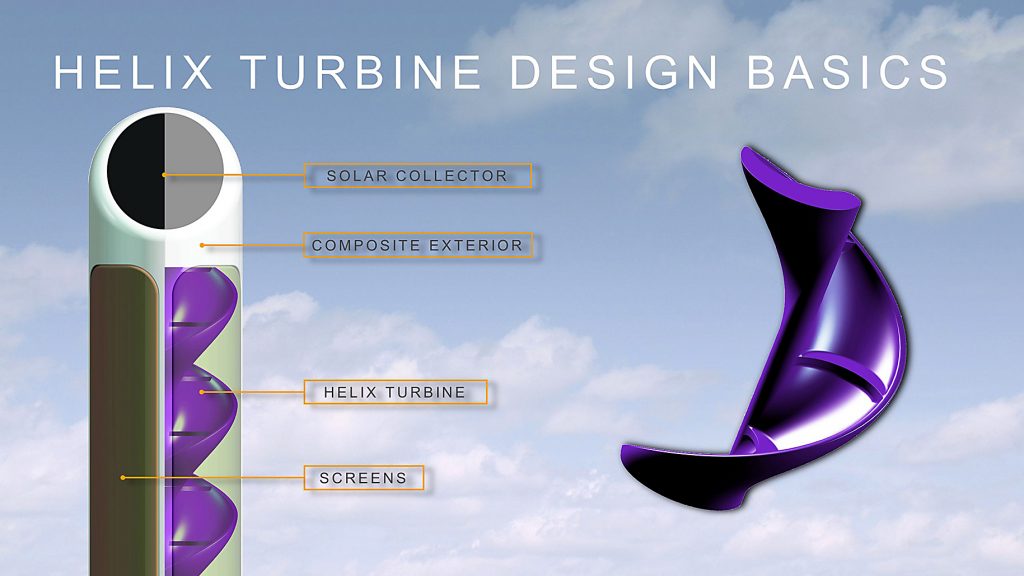
Dubbed the V-HET, Umbra Applied Technologies Group’s high-tech vertical helix turbine is constructed of aluminum, carbon fiber, additional composite materials, and steel, making each unit robust enough to withstand the elements but light enough to harness the maximum amount of wind power. (Courtesy: Umbra Applied Technologies Group, Inc.)

Umbra Applied Technologies Group, Inc., a subsidiary Umbra Applied Technologies, recently announced that its proprietary, advanced wind turbine will begin undergoing field testing within the next 90 to 120 days.

Dubbed the V-HET, the high-tech vertical helix turbine is constructed of aluminum, carbon fiber, additional composite materials, and steel, making each unit robust enough to withstand the elements but light enough to harness the maximum amount of wind power. The technology uses a modified helix-shaped, wind-capturing design that increases the unit’s ability to harness more of the wind’s energy. The helix blades use an electromagnetic field to “float” the blades to reduce mechanical resistance and the loss of energy associated with the friction that plagues many modern systems in use. This enables the unit to generate power at extremely low wind speeds typically only common of much smaller units, while producing exponentially more energy.

Testing will also include the V-HET variant, V-HETp. The V-HETp or vertical helix turbine power station, harnesses energy from wind, solar, ambient temperature differentiation, and in-ground telluric currents. This is a significant leap forward in producing true clean energy using more than 75 percent recycled materials to manufacture each unit. The company estimates the carbon cost of delivering each unit to be a fraction of existing platforms.

An array of 12 units is estimated to produce as much as 85,500 kW/h of energy annually — about what seven average American homes burn in a year. A building’s electrical system will take the energy when it is available and switch to power from the local utility when it is not. The V-Het will cost a fraction of what many wind turbines currently in use do and are targeted to deliver more electricity than units similar in size.

“Units have been under development for several years and represent a paradigm shift in current wind-harnessing technology,” said UAT’s CEO, Alex Umbra. “I am optimistic that once delivered, this platform will represent a significant leap forward in the clean-energy segment.”

The company estimates this technology can cut the carbon emissions of a 10-story commercial building by about 2 million pounds annually and saving the equivalent of 44,000 gallons of gasoline each year.

The units will be tested in varying environments across the United States in a partnership that includes business owners that have been long-time shareholders. These shareholders have volunteered to assist in the testing and development process onsite, at their places of business, to include several automotive dealerships.

“From the moment we launched Hygiea-related products, we have included shareholders in the testing and development process in a shareholder-centric partnership,” Umbra said. “This partnership affords the company an opportunity to include our shareholders in a way that most companies do not. Who better to get feedback from than those that have a vested interested in the company’s success? With Helix (V-HET), the goal is to test the unit’s ability to not only capture energy but determine its ability to deliver that energy for the purposes of charging EV’s. This will assist in further reducing the carbon footprint of such vehicles and deliver true clean energy to charge them.”

MORE INFO  umbraappliedtechnologies.com

US Wind deploys floating Lidar buoy in Maryland lease area

0

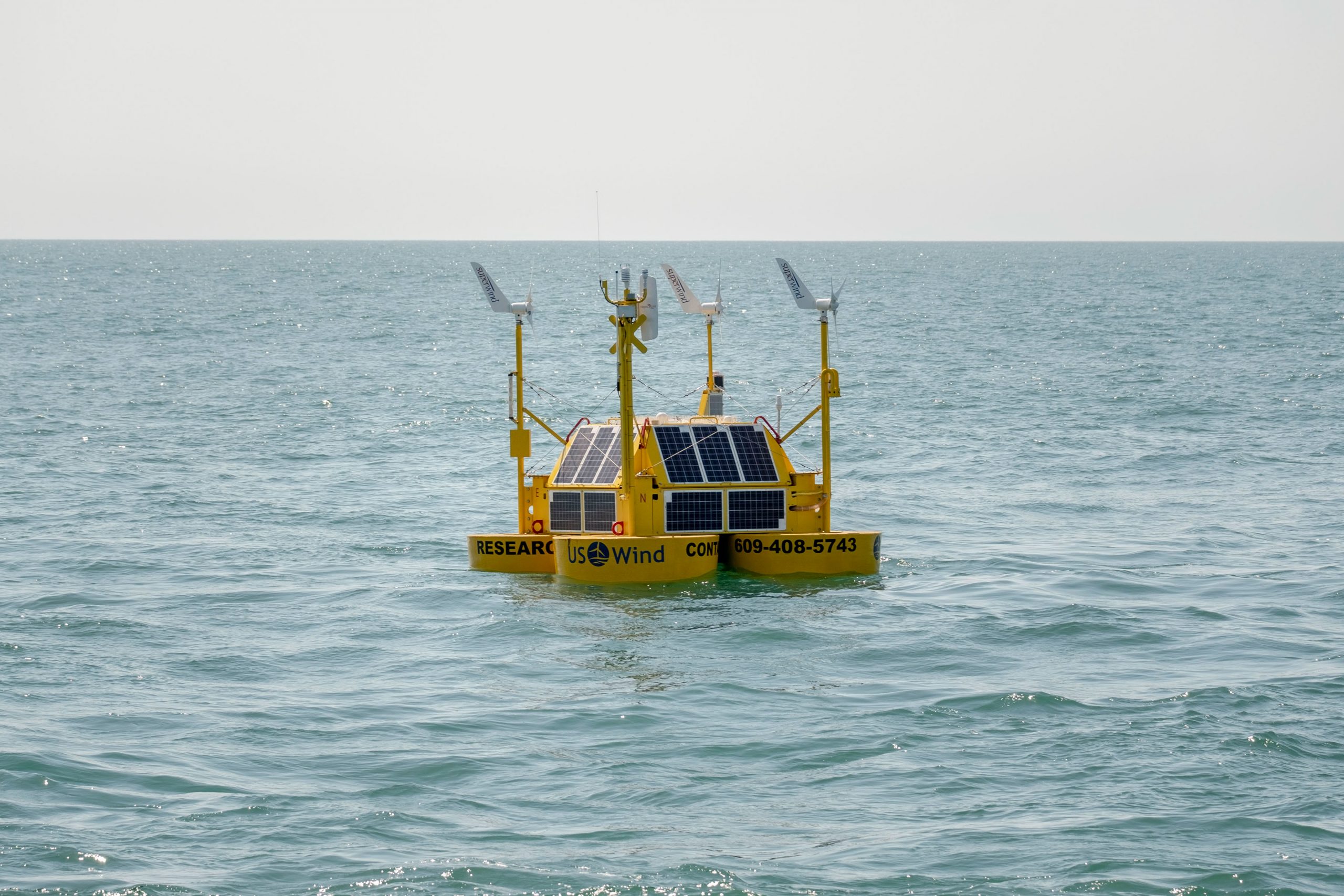
Maryland-based offshore wind developer US Wind, Inc. recently announced the deployment of a meteorological and oceanographic (metocean) buoy to collect wind and marine life data off the coast of Ocean City, Maryland.

Ocean Tech Services, LLC has been engaged to provide turn-key data services from the system, which include construction, testing, deployment, and operations of the buoy and associated sensors. The Floating Lidar buoy uses an eye-safe, continuous wave laser to measure wind speeds and direction across the turbine height. These measurements, along with surface meteorology and ocean condition observations, will help inform US Wind’s energy production estimates and overall project design. The buoy will also allow US Wind to collect an array of advanced environmental and wildlife data through sensors that enable the monitoring of bats, birds, fish, and other marine mammals to determine the presence, frequency, and distribution within the lease area. Subsets of the metocean observations will be posted publicly on US Wind’s website.

US Wind’s floating Lidar buoy uses an eye-safe, continuous wave laser to measure wind speeds and direction across the turbine height. (Courtesy: US Wind)

“The deployment of our metocean buoy is a critical milestone in our commitment to help meet Maryland’s renewable energy goals,” said Jeff Grybowski, US Wind CEO. “The data collected will advance our understanding of wind and wildlife patterns in our lease area to inform the most environmentally responsible and efficient design, project layout, and turbine siting.”

Cleanly powered by solar panels and wind turbines, along with an onboard fuel cell and battery back-up system, the buoy will be deployed within the lease area for two years.

“Ocean Tech Services is excited to work with US Wind during the site assessment phase of the Maryland wind energy area development,” said Stephen O’Malley, president of Ocean Tech Services. “As a locally-based service provider, OTS brings the experience, personnel, and equipment required to successfully complete the offshore data collection campaign.”

Baltimore City-based, family owned and operated, Moss Marine USA coordinated all local logistics for the work done at Tradepoint Atlantic, adding another layer of local content to the campaign. Chelsea Moss, founder of Moss Wind USA, a woman-owned Maryland business, served as on-site facilitator.

“I’ve been a long-time supporter of offshore wind development for several reasons, including the numerous business opportunities it provides to marine contractors like me,” said Michael Moss, owner-operator, Moss Marine USA. “We truly appreciate the opportunity to support US Wind on the metocean buoy campaign and look forward to providing assistance with US Wind’s efforts to build out their lease area in whatever way possible.”

“Having visited Denmark and witnessing the success of offshore wind overseas, I am extremely proud and inspired to be a member of the Lidar project team, helping US Wind gain the information they need to develop the MarWin project,” Chelsea Moss said. “This is a very exciting time to be working in offshore wind, especially for small, women- and minority-owned businesses in Maryland. I look forward to seeing turbines off Maryland’s coast upright and turning.”

The buoy deployment was staged out of Tradepoint Atlantic, one of the leading offshore wind ports on the east coast, located at Sparrows Point, Maryland. TPA’s facilities provided ideal accommodations for the safe and efficient assembly, port-side testing, and load-out of the buoy and associated equipment.

“The deployment of US Wind’s Lidar Bouy represents another step forward for offshore wind in Maryland, and further demonstrates that Baltimore and Tradepoint Atlantic continue to be the ideal hub for offshore wind in the Mid-Atlantic,” said Russell Williams, director of Offshore Wind Development for Tradepoint Atlantic.

US Wind acquired an 80,000-acre federal lease area off of the coast of Maryland in 2014. In 2017, the company was awarded offshore renewable energy credits (ORECs) from the State of Maryland for the first phase of its MarWin project. In total, the company’s lease area can support approximately 1.5 GW of offshore wind-energy capacity. In 2019, Maryland passed the Clean Energy Jobs Act, which increased the state’s offshore wind-energy requirements, calling for an additional 1.2 GW to be procured from developers with projects near the state’s coast.

More info: uswindinc.com

Mayflower Wind, Anbaric agree to bring offshore wind to Brayton Point

0

Mayflower Wind and Anbaric Development Partners recently announced they have signed an agreement for Mayflower Wind to use transmission assets developed by Anbaric to bring offshore wind to Brayton Point.

Mayflower Wind will bring clean offshore wind energy from its federal offshore energy lease area to Brayton Point, which will lay the foundation for the broad repowering of Brayton Point.

Brayton Point’s robust grid infrastructure and waterfront location make it an ideal interconnection location for offshore wind. The Mayflower Wind offshore wind-energy project will use state-of-the-art high voltage direct current technology that minimizes marine cabling, reduces energy losses, and strengthens the New England grid. Over the past three years, Anbaric has taken steps to develop the site as an optimal location to integrate offshore wind into the New England electric grid. Throughout that time, there have been many collaborative conversations between Anbaric and Mayflower about the electrical connection that would be a key element in the regeneration of Brayton Point.

Mayflower Wind, Anbaric agree to bring offshore wind to Brayton Point

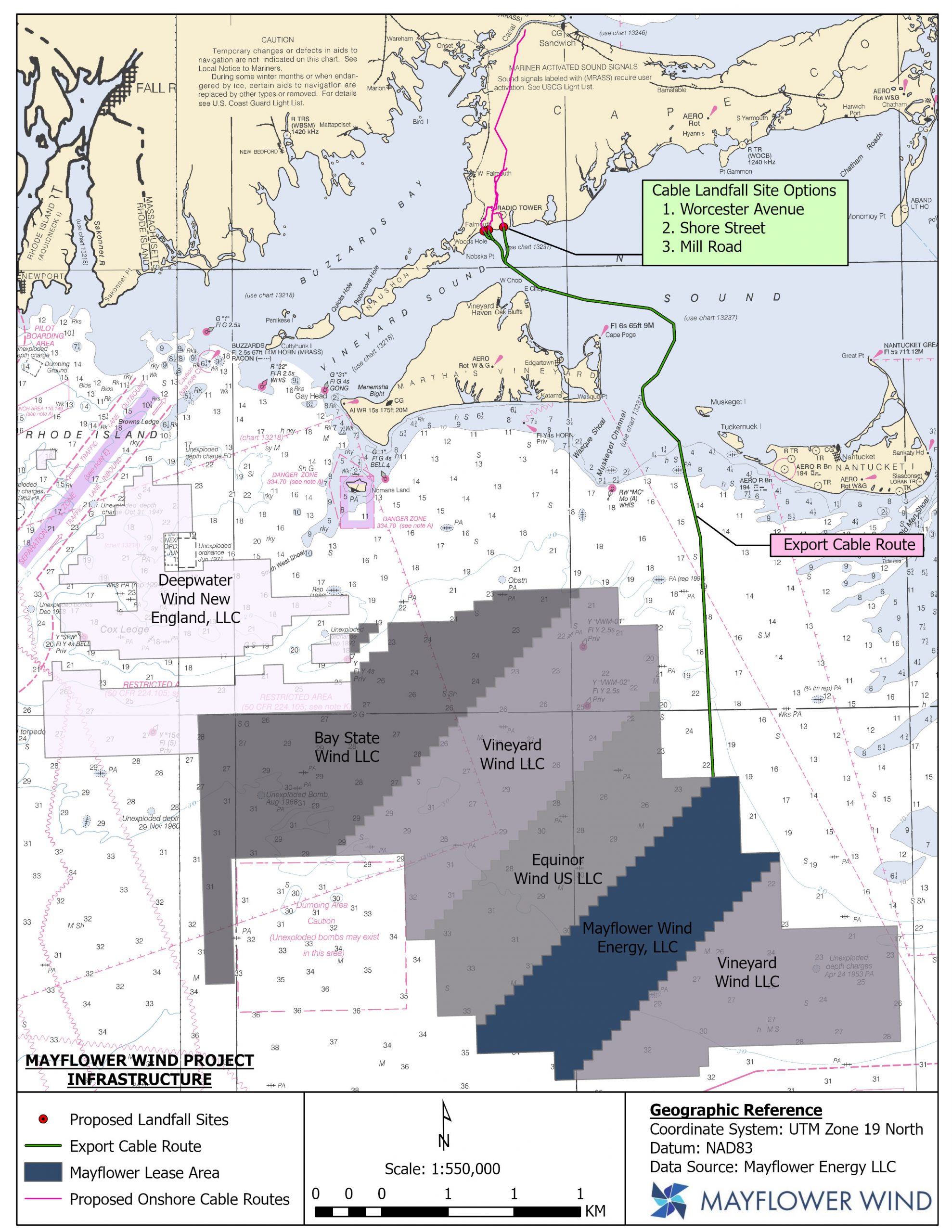
When fully built out, and with continuing advancements in wind technology, Mayflower Wind’s lease area will supply more than 2,000 MW of offshore wind, enough to power nearly a million homes. Mayflower Wind’s use of the existing grid connection will help set in motion the development of supporting infrastructure at Brayton Point needed to revitalize the former coal plant site and enable Somerset and the South Coast to benefit from the rapidly expanding offshore wind industry. This cable landing in Somerset will supplement Mayflower’s long-standing and continuing efforts in Falmouth on Cape Cod.

“Mayflower Wind is committed to helping Massachusetts and New England achieve their ambitious clean-energy goals,” said Mayflower Wind CEO Michael Brown. “The transmission infrastructure at Brayton Point initially developed by Anbaric, and now owned by Mayflower, will help us make those goals a reality. We look forward to collaborating with the community as we invest in and develop this project to bring clean energy to Brayton Point and beyond.”

“We are thrilled to be collaborating with Mayflower Wind to bring our unique expertise to scale offshore wind and achieve renewable energy goals,” said Anbaric CEO Clarke Bruno. “Brayton Point is a unique site to bring offshore wind to our shores while also bringing infrastructure investment and responsible development to the local community.”

For 50 years, Brayton Point was home to the 1,600-MW coal-fired Brayton Point Power Station, the largest coal-fired power plant in New England and the last in Massachusetts. The plant was closed in 2017, and in 2019, Anbaric presented a vision to create a Renewable Energy Center on the site of the shuttered plant. One aspect of that vision was bringing power ashore at Brayton Point — Mayflower Wind is now moving to translate that element into reality.

Mayflower Wind is continuing with its efforts in Falmouth, Massachusetts, to connect its first 804-MW project into the New England electric grid via the Cape Cod interconnection point.

“Massachusetts just issued its third solicitation to bring up to another 1,600 MW of offshore wind online,” Brown said. “Mayflower Wind looks forward to delivering on the Commonwealth’s commitments to achieve net zero carbon emissions by 2050. Our position at Brayton Point only strengthens our efforts to provide additional clean offshore wind energy to New England.”

More info: www.mayflowerwind.com

Caption:

Mayflower wind project infrastructure. (Courtesy: Mayflower Wind)

Crosby’s lifting clamps can provide safer, more efficient wind operations

0

The wind industry is one of the world’s most demanding industries with unique challenges for those involved with manufacturing and installing towers, monopiles and transition pieces.

However, there are common elements with many other end markets: heavy materials to lift from various angles, concern about equipment damage during handling, and a top focus on safe lifting and rigging operations.

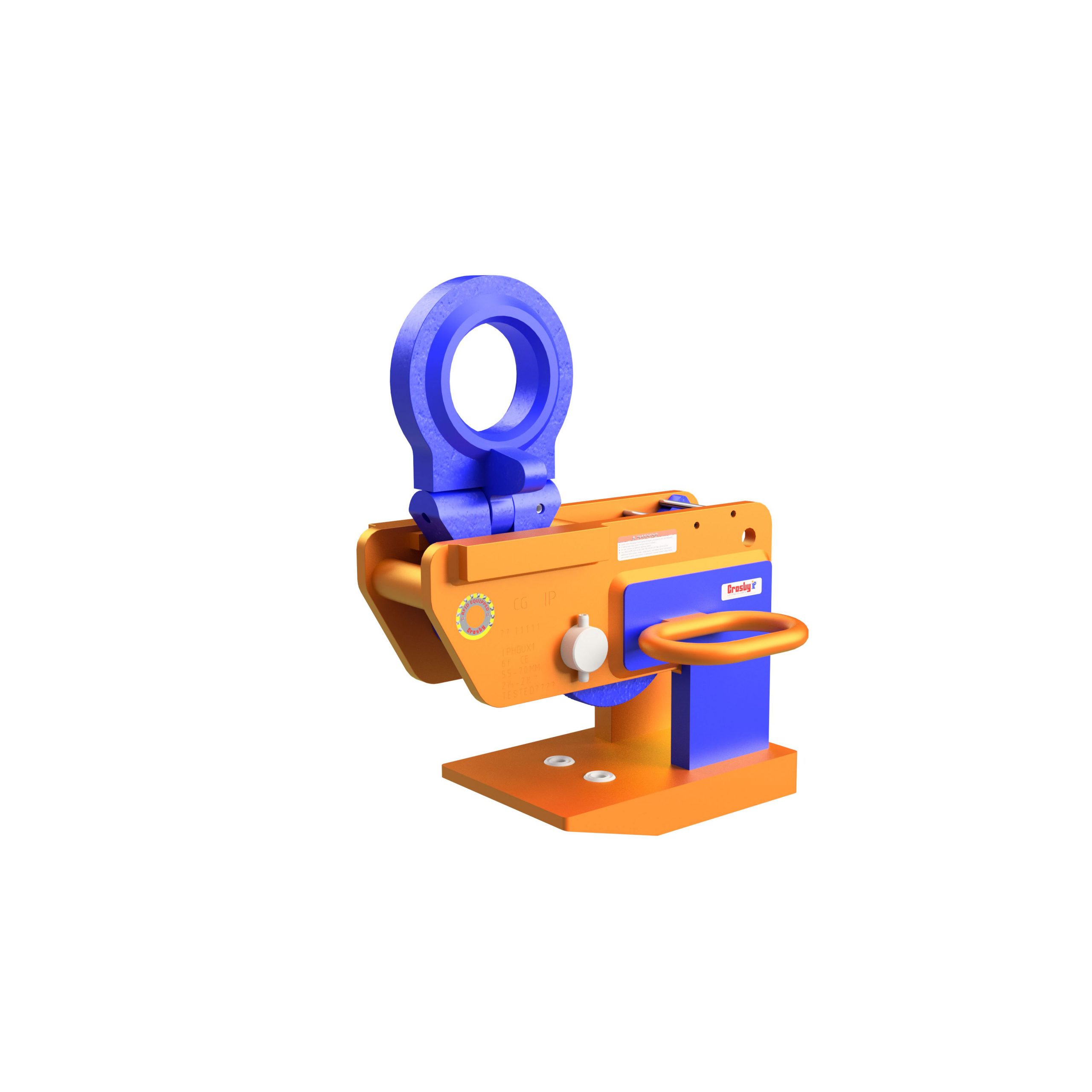
As a leading manufacturer of rigging, lifting, and load securement hardware, The Crosby Group works to provide solutions that directly address these concerns of the wind industry. Their extensive portfolio for the renewables market includes a range of vertical and horizontal lifting clamps and pipe hooks specifically designed for the demands of wind-energy applications. A standout special feature of CrosbyIP-branded standard and custom clamps is the availability of minimal-marring camsegments and pivots, the clamping pieces of a clamp.

The Crosby Group’s extensive portfolio for the renewables market includes a range of vertical and horizontal lifting clamps. (Courtesy: The Crosby Group)

“When handling steel plates with lifting clamps, the clamping camsegment and pivot usually leave an indentation in the material surface — known as marring,” said Kees Gillesse, product marketing manager at The Crosby Group. “Because of the high standards in the wind-energy industry, these indentations have to be ground away from the surface. This rework costs time and money. By reducing the height of the teeth of the camsegment and pivot, the pitch between the teeth can be decreased and more teeth can be in contact with the material surface, reducing the depth of the indentations.”

CrosbyIP vertical lifting clamps feature welded alloy steel bodies to minimize size but increase strength. Alloy components are forged, where required. The lock open, lock close function has a latch for pretension and release of material. Each product has its own serial number and proof load test (to two times working load limit), date stamped on the body, and user manual with test certificate included with each clamp. Manufactured at an ISO 9001 certified facility, all sizes are also RFID equipped.

CrosbyIP is also known for the manufacture of special clamps where there might be a requirement beyond the capabilities of the standard range.

“The Crosby Group develops practical solutions for specific problems,” Gillesse said. “Our mission is to be the innovative and quality leader in the field of lifting clamps by manufacturing products of uncompromising quality and providing solutions for specific lifting situations. If our standard product range may not meet the client’s specific needs, CrosbyIP-branded lifting clamps can offer an extensive range of custom or bespoke options.”

A recent example of custom manufacturing is the 22.5-ton capacity special universal vertical clamp (model IPU10X3). The clamp, which was designed for a German wind-energy manufacturer, features an extra-wide camsegment and three pivots for less surface pressure to further reduce indentations. A deep jaw, meanwhile, allows for lifting beveled plates and constructions. Lifting brackets make positioning easy when the lifting clamp is in the horizontal position. The universal lifting eye permits lifting from every direction.

Another special product is the 6-ton capacity universal horizontal clamp (model IPHGUX1), which presents many of the same benefits to the end user and is ideal for rolling larger plates. This is a new high-tonnage addition to the universal horizontal lifting clamp range. Finally, the 70-ton capacity pipe hook (model IPPH) has been designed for 5,700 mm to 7,000 mm diameter pipe, up to a thickness of 100 mm. It features soft steel replaceable inserts and is equipped with 40-ton capacity G-2140 shackles. With both the universal horizontal clamp and pipe hook, other capacities and jaw-openings are available on request.

“A common problem is that most of the standard pipe hooks can damage the pipe surface when lifting,” Gillesse said. “A general solution is to have aluminum inserts to prevent marring of the surface of the pipe. However, with aluminum, there can be contamination with the steel of the pipe, compromising quality of the weld when welding pipe sections together. The replaceable inserts of the CrosbyIP pipe hook are made from soft steel to prevent such contamination and marring.”

With vertical and horizontal lifting clamps and pipe hooks developed and manufactured specifically for key manufacturers of towers, monopiles, and transition pieces, The Crosby Group is eager to help solve problems for the wind industry and contribute to its continued growth.

More info: www.thecrosbygroup.com

Decarbonization development would cut emissions, safeguard jobs

0

Green infrastructure developer Cerulean Winds has revealed an ambitious plan to accelerate decarbonization of oil and gas assets through an integrated 200-turbine floating wind and hydrogen development that would shift the dial on emissions targets and create significant jobs.

The £10 billion proposed green infrastructure plan would have the capacity to abate 20 million metric tons of CO2 through simultaneous North Sea projects West of Shetland and in the Central North Sea.

The venture is now calling on U.K. and Scottish governments to make an exceptional case to deliver an extraordinary outcome for the economy and the environment. A formal request for seabed leases has been submitted to Marine Scotland.

Cerulean Winds is led by serial entrepreneurs Dan Jackson and Mark Dixon, who have more than 25 years’ experience working together on large-scale offshore infrastructure developments in the oil and gas industry. They believe the risk of not moving quickly on basin wide decarbonization would wholly undermine the objectives set out in the recent North Sea Transition Deal.

“The U.K. is progressing the energy transition, but a sense of urgency and joined-up approach is required to enable rapid decarbonization of oil and gas assets or there is a risk of earlier decommissioning and significant job losses,” said Jackson, founding director of Cerulean Winds. “Emissions are quite rightly no longer acceptable, but with emissions penalties and taxes coming, the U.K. oil and gas industry’s role in homegrown energy security during the transition could be threatened unless current decarbonization efforts can be greatly speeded up. The consequences of not moving quickly enough will be catastrophic for the economy and the environment.”

The Cerulean leadership has Tier 1 contractors in place to deliver the UKCS backbone development and has engaged the financial markets for a fully funded infrastructure construct.

The proposed development involves:
• More than 200 of the largest floating turbines at sites West of Shetland and in the Central North Sea with 3 GW per hour of capacity, feeding power to the offshore facilities and excess 1.5 GW per hour power to onshore green hydrogen plants.
• Ability to electrify the majority of current UKCS assets as well as future production potential from 2024 to reduce emissions well ahead of abatement targets.
• 100 percent availability of green power to offshore platforms at a price below current gas turbine generation through a self-sustained scheme with no upfront cost to operators.
• The development of green hydrogen at scale and £1 billion hydrogen export potential.
• No subsidies or CFD requirements and hundreds of millions of pounds to government revenue via leases and taxation through to 2030.

Cerulean has undertaken the necessary infrastructure planning for the project to ensure the required level of project readiness, targeting financial close in Q1 2022. Construction would start soon after with energization beginning in 2024. An infrastructure project finance model, commonly used for major capital projects is being adopted.

Société Générale, one of the leading European financial services groups, is advising Cerulean Winds.

“The Cerulean UKCS decarbonization project has the potential to meet all of the basin’s transition needs by reducing oil and gas emissions as quickly as possible whilst also introducing large scale green energy,” said Allan Baker, Global Head of Power Advisory and Project Finance. “We are pleased to be supporting the leadership on what is a transformational proposition for the U.K.”

Corporate finance advisers to the energy industry Piper Sandler are also advising.
“The Piper Sandler investment bankers in the U.K. and in the U.S. have partnered with Cerulean’s leadership over the last year to develop the UKCS decarbonization model, and we are pleased that it is now at the regulatory approval stage,” said Tim Hoover, managing director, Project Finance Investment Banking at Piper Sandler. “It is a scheme that understands the needs and requirements of the financial markets to make it bankable.”

Cerulean estimates the current 160,000 oil and gas jobs can be safeguarded, and 200,000 new roles within the floating wind and hydrogen sectors will be created within the next five years.

“We have a transformative development that will give the U.K. the opportunity to rapidly decarbonize oil and gas assets, safeguard many thousands of jobs, and support a new green hydrogen supply chain,” Jackson said. “The decision to proceed with the scheme will ultimately rest with the Scottish government and Marine Scotland and their enthusiasm for a streamlined regulatory approach. The ask is simply that an exceptional decision is made for an extraordinary outcome. We are ready to deliver a self-sustained development that will decarbonize the UKCS and be the single biggest emissions abatement project to date.”

More info: ceruleanwinds.com

Biden-Harris administration advances Pacific offshore wind

0
Pacific offshore wind development could bring up to 4.6 GW of clean energy to the grid, enough to power 1.6 million homes. (Courtesy: U.S. Department of the Interior)

Secretary of the Interior Deb Haaland, National Climate Adviser Gina McCarthy, Under Secretary of Defense for Policy Dr. Colin Kahl, and California Gov. Gavin Newsom recently announced an agreement to advance areas for offshore wind off the northern and central coasts of California.

This significant milestone is part of the Biden-Harris administration’s goal to create thousands of jobs through the deployment of 30 GW of offshore wind by 2030.

These initial areas for offshore wind development could bring up to 4.6 GW of clean energy to the grid, enough to power 1.6 million homes.

The Department of the Interior, in cooperation with the Department of Defense and the State of California, has identified an area (“the Morro Bay 399 Area“) that will support 3 GW of offshore wind on roughly 399 square miles off California’s central coast region, northwest of Morro Bay. The Department of the Interior is also advancing the Humboldt Call Area as a potential Wind Energy Area (WEA) off northern California. These identified areas will enable the build out of a significant new domestic clean-energy resource over the next decade or more.

“I believe that a clean-energy future is within our grasp in the United States, but it will take all of us and the best-available science to make it happen. (This) announcement reflects months of active engagement and dedication between partners who are committed to advancing a clean energy future,” Haaland said. “The offshore wind industry has the potential to create tens of thousands of good-paying union jobs across the nation, while combating the negative effects of climate change. Interior is proud to be part of an all-of-government approach toward the Biden-Harris administration’s ambitious renewable energy goals.”

The announcement comes after years of collaboration between the departments of the Interior and Defense to find areas off the central coast of California that are compatible with the Department of Defense’s training and testing operations. The Bureau of Ocean Energy Management (BOEM) issued a Call for Information and Nominations for offshore wind on October 19, 2018, for three areas off the central and northern coasts, including Humboldt and Morro Bay.

The Department of Defense engages in significant testing, training, and operations off the coast of California that are essential to national security. The Department of the Interior acknowledges the critical nature of current and future military testing, training, and operations and acknowledges that ensuring the operational integrity thereof is a national security imperative. Interior’s Bureau of Ocean Energy Management will work with the Department of Defense to ensure long-term protection of military testing, training, and operations, while pursuing new domestic clean energy resources.

“Tacking the climate crisis is a national security imperative, and the Defense Department is proud to have played a role in this important effort,” Kahl said. “The Defense Department is committed to working across the U.S. government to find solutions that support renewable energy in a manner compatible with essential military operations. Throughout this effort, the Defense Department has worked tirelessly with the White House, the Department of the Interior, and the State of California to find solutions that enable offshore wind development, while ensuring long-term protection for testing, training, and operations critical to our military readiness. The Defense Department applauds this step and looks forward to continued coordination to address the climate crisis.”

In addition to contributing to the goals of the Biden-Harris administration, the development of offshore wind can help California reach its goal of carbon free energy by 2045, create good-paying, union jobs, and foster investments in coastal communities. Offshore wind resources are typically stronger and more consistent than land-based wind and is especially strong in the evening hours when solar production drops off, ensuring it can make an important contribution to California’s electric grid.

“Developing offshore wind to produce clean, renewable energy could be a game changer to achieving California’s clean energy goals and addressing climate change — all while bolstering the economy and creating new jobs,” Newsom said. “This historic announcement, which could provide clean power for up to 1.6 million homes over the next decade, represents the innovative approach we need for a clean energy economy that protects the coasts, fisheries, marine life, and Tribal and cultural resources we value so much as Californians.”

BOEM, in partnership with California, will hold an Intergovernmental Renewable Energy Task Force meeting June 24 to discuss the identified areas off the north and central coasts as potential WEAs. Following the task force meeting, the WEAs can be finalized and will undergo environmental analysis; BOEM will also undertake government-to-government tribal consultation. The processes for the northern and central coasts will then be merged in a Proposed Sale Notice (PSN) for one lease sale auction, targeted for mid-2022.

MORE INFO  www.doi.gov/priorities/clean-energy-future

John Kerry, Gina McCarthy, Joni Ernst, Richard Glick, Andrew Steer confirmed for CLEANPOWER

0

ACP recently announced guests scheduled to address attendees at the 2021 CLEANPOWER Virtual event. Speakers include John Kerry, former Secretary of State and current Special Presidential Envoy for Climate; Gina McCarthy, White House National Climate Adviser and former head of the Environmental Protection Agency under the Obama administration; Sen. Joni Ernst (R-Iowa); Richard Glick, chairman of the Federal Energy Regulatory Commission; and Andrew Steer, president and CEO of the Bezos Earth Fund.

John Kerry, Special Presidential Envoy for Climate

John Kerry was sworn in this past January as our nation’s first Special Presidential Envoy for Climate and the first-ever principal to sit on the National Security Council entirely dedicated to climate change. President Joe Biden announced Kerry would have a seat at every table around the world as he combats the climate crisis to meet the existential threat that we face. Kerry has been advocating action on climate change for decades at state and federal levels. He has a real understanding of the science of climate change and a grasp of the economic costs and benefits of moving to clean energy.

Gina McCarthy, White House National Climate Adviser

Gina McCarthy was also sworn in earlier this year as the White House National Climate Adviser, where she advises President Biden on domestic climate change policy and leads the White House Office of Domestic Climate Policy. The former EPA administrator and member of President Obama’s cabinet has served as a career public servant in both Democratic and Republican administrations. She has been a leading advocate for common sense strategies to protect public health and the environment for more than 30 years, working at both the state and local levels on critical environmental issues and helped coordinate policies on economic growth, energy, transportation, and the environment.

Sen. Joni Ernst (R-Iowa)

Sen. Joni Ernst has dedicated her life to her state and country, having served in the military for more than 23 years and now in the U.S. Senate. Ernst was elected as the first woman to serve in federal elected office from Iowa and also became the first female combat veteran elected to serve in the Senate. In Washington, Ernst serves on four Senate committees of major importance to Iowans: Armed Services; Agriculture, Nutrition, and Forestry; Environment and Public Works; and Small Business and Entrepreneurship.

Richard Glick, FERC Chairman

In January, President Biden named Richard Glick as chair of the Federal Energy Regulatory Commission (FERC), an independent U.S. agency that regulates the interstate transmission of electricity, natural gas, and oil. Glick, a former government affairs director for Avangrid Renewables and Iberdrola and general counsel for the Democrats on the Senate Energy and Natural Resources Committee, previously served as a FERC Commissioner nominated by President Trump in August 2017 and confirmed by the Senate later that year. He also worked as an adviser to Bill Richardson when Richardson was serving as U.S. Secretary of Energy during Bill Clinton’s presidency.

Andrew Steer, President and CEO, Bezos Earth Fund

In March, Jeff Bezos announced Andrew Steer would lead the Bezos Earth Fund as president and CEO. Steer has decades of experience in environmental and climate science, as well as economic and social policy in the U.S., Europe, Asia, and Africa. Prior to the Bezos Earth Fund, he was president and CEO of World Resources Institute (WRI), where he led more than 1,400 experts working to alleviate poverty while protecting the natural world. He joined WRI from the World Bank, where he served as Special Envoy for Climate Change from 2010 to 2012. From 2007 to 2010, he served as director general at the U.K. Department of International Development (DFID) in London.

Registration is open for both the CLEANPOWER Virtual in June and CLEANPOWER Salt Lake City on December 7-8.

MORE INFO  cleanpower.org

Vineyard Wind receives record of decision for first commercial scale U.S. offshore wind project

0

Vineyard Wind, a joint venture between Avangrid Renewables, a subsidiary of AVANGRID, Inc., and Copenhagen Infrastructure Partners, received the Record of Decision (ROD) from the U.S. Department of the Interior Bureau of Ocean Energy Management (BOEM), the final major step in the federal review process for the first commercial scale offshore wind farm in the United States.

“Today’s Record of Decision is not about the start of a single project, but the launch of a new industry,” said Vineyard Wind CEO Lars T. Pedersen. “Receiving this final major federal approval means the jobs, economic benefits, and clean-energy revolution associated with the Vineyard Wind 1 project can finally come to fruition. It’s been a long road to get to this point, but ultimately, we are reaching the end of this process with the strongest possible project. I want to thank the Biden Administration, Secretaries Haaland and Raimondo, and BOEM for their efforts in finalizing the review of this project. I also want to thank Governor (Charlie) Baker, the Massachusetts federal delegation and State Legislature for their steadfast commitment to seeing this endeavor through to today. And of course, I want to extend my sincerest appreciation to all our supporters and stakeholders for all of their work, input, and dedication. We could not have reached this milestone without you.”

“We are very excited and proud to be part of the birth of an incredibly important new industry the U.S. Offshore wind is a key part of America’s clean energy future, and Vineyard Wind 1 is a major step forward to the clean and connected future we envision and work toward every day,” said AVANGRID CEO Dennis V. Arriola. “We appreciate the thorough review by BOEM as well as the considerable input from stakeholders. The broad engagement from many parties throughout this process has improved the project and positioned both Vineyard Wind 1 and the broader offshore wind industry for long-term success.”

“We are very proud to have been part of developing this landmark project,” said Christian T. Skakkebæk, a senior partner and co-founder of CIP. “Vineyard Wind 1 is slated to become one of the world’s largest offshore wind projects, creating significant investments and good paying jobs in the U.S. For many years we have been actively engaged in the development of the U.S. offshore wind market, and we are confident that Vineyard Wind will pave the way for a successful and growing wind industry in the country. This market will play an important role for CIP’s renewable investments for years to come, and we look forward to being an integral part in the transition to green energy in the U.S.”

“Massachusetts should be proud that this decision launches the nation’s first commercial-scale offshore wind project here on the Commonwealth’s shores,” said Gov. Charlie Baker. “This groundbreaking project will produce affordable, renewable energy, create jobs, and prove Massachusetts developed a successful model for developing offshore wind energy. We appreciate the federal government’s partnership to grant this approval and look forward to working with Vineyard Wind to create thousands of jobs and set the Commonwealth on a path to achieve Net Zero emissions.”

“Today’s approval of the Vineyard Wind offshore project is a key step toward achieving the Biden Administration’s goal of bringing 30 GW of offshore wind online by 2030, and GE is excited to support that goal by providing our Haliade-X turbines, the most powerful offshore wind turbine built to date, for this project,” said John Lavelle, president and CEO, Offshore Wind at GE Renewable Energy. “Today’s decision is one more reason to be optimistic about the potential of offshore wind in the US, an abundant source of clean, renewable energy that can help coastal communities address the threat of climate change and accelerate the energy transition.”

Since 2017, the Vineyard Wind 1 project has been through an unprecedented and exhaustive public review process that generated more than 30,000 public comments, more than 90 percent of which supported the project. The Construction and Operations Plan (COP) was reviewed by more than two dozen federal, state, and local agencies over the course of more than three and a half years.

The project design includes the world’s most powerful wind turbine, the GE Haliade-X, with a capacity of 13 MW. The larger turbine capacity has allowed the project to reduce the total number of turbines from 108 to 62 while still delivering a total capacity of 800 MW to Massachusetts ratepayers. The turbine layout, which features consistent spacing of one nautical mile between turbines, was endorsed by the United States Coast Guard for transit, fishing, and navigational safety.

“With this record of decision on Vineyard Wind on the books, the era of American offshore wind is no longer on the horizon — it’s here, now, off the coast of Massachusetts, and the answer to America’s energy future is blowing in the offshore wind,” said U.S. Sen. Edward Markey. “Vineyard Wind will be the first of many offshore wind projects to come, and we can use our Bay State know-how to show the rest of the country how to get steel in the water, zero-emission energy on the grid, and union jobs to American workers. I applaud Vineyard Wind, Massachusetts stakeholders, and the Biden administration for moving forward with this project and following through on their commitment to jobs, climate, and American innovation.”

“Today’s Record of Decision for Vineyard Wind is great news for Massachusetts and our country,” said U.S. Sen. Elizabeth Warren. “The Vineyard Wind project will generate clean energy for Massachusetts families and businesses, create thousands of good jobs, and is a bold step forward toward fighting the climate crisis. I will keep working with the Biden Administration, my delegation colleagues, local stakeholders, and Vineyard Wind to move this project forward and help make Massachusetts a leader in our clean energy future.”

In response to comments and direct engagement with neighboring communities, environmental organizations and advocates, fisheries organizations, and governmental and tribal entities, the project has incorporated significant mitigation measures, including:

Historic Protections for the North Atlantic Right Whale (NARW)

  • Commitment to invest millions of dollars to develop and deploy innovative technologies and undertake scientific research to further safeguard marine mammals. Last year, Vineyard Wind partnered with Greentown Labs to work with the startup community to innovative technologies to the forefront. To learn more about that initiative, click here.
  • Institute comprehensive monitoring protocols to ensure that construction doesn’t take place when NARWs are near the lease area. The project will use acoustic monitoring technology throughout construction including in transit corridors and will employ trained protective species observers to spot NARW visually during transits and foundation installation.
  • Deploy industry leading technology to dampen construction noise during installation in order to protect the NARW and all marine species.

Substantial Fisheries Investment and Mitigation Funding

  • Agreements with the states of Massachusetts and Rhode Island to provide millions to compensate fishermen for potential loss of revenue and gear and to enhance their ability to fish in and around the lease area.
  • Commitment to continue funding pre- and post-construction survey studies with both the University of Massachusetts Dartmouth School for Marine Science and Technology (SMAST) and the Massachusetts Lobstermen’s Association (MLA) to measure what impact, if any, the windfarm is having on the marine environment. To learn more about the fisheries studies, click here.

Cultural and Historical Protections

  • Project will use an aircraft detection lighting system (ALDS) to ensure that nighttime lights will only operate a few hours a year when aircrafts are present.
  • Turbines will be painted to reduce visual impacts to historical properties.
  • Funds will be allocated to conduct ethnographic studies for local Native American Tribes that will serve as the basis for submissions to the National Register of Historic Places to allow for greater recognition of tribal heritage sites.

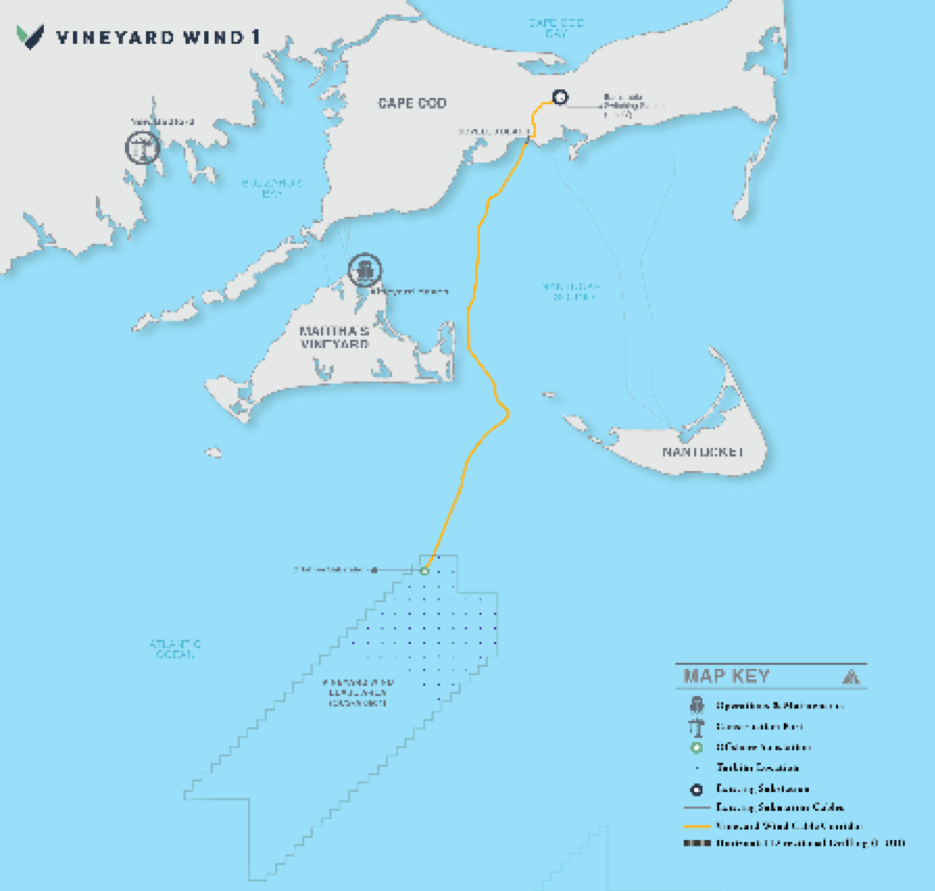
Vineyard Wind 1 is an 800 MW project 15 miles off the coast of Martha’s Vineyard and will be the first commercial scale offshore wind project in the United States. The project will generate electricity for more than 400,000 homes and businesses in the Commonwealth of Massachusetts, create 3,600 full-time equivalent (FTE) job years over the life of the project, save ratepayers $1.4 billion over the first 20 years of operation and is expected to reduce carbon emissions by more than 1.6 million tons per year.

Vineyard Wind will reach financial close in the second half of 2021 and begin delivering clean energy to Massachusetts in 2023.

More info: www.vineyardwind.com
Vestas enters Latvian market with 59 MW wind project

0
The Targale project is in Ventspils municipality in western Latvia, and will be powered by 14 V136-4.2 MW turbines. (Courtesy: Vestas)

Marking its entrance into the Latvian wind market, Vestas has secured a 59-MW order at the Targale wind project from a special purpose company majority owned by Utilitas, the Estonian utility provider.

The Targale project is in Ventspils municipality in western Latvia, and will be powered by 14 V136-4.2 MW turbines at a hub height of 82 meters.

With only 65 MW of wind capacity installed in Latvia, this project is due to nearly double the total installed capacity in the country, as Latvia makes progress toward its target to procure 50 percent of energy from renewable energy sources by 2030. To support the country’s wind-energy ambitions, Vestas opened its first office in Latvia in April 2021.

Vestas will supply and install turbines and will provide service for the project through a long-term 20-year Active Output Management 5000 (AOM 5000) service agreement, providing power performance certainty and Vestas’ industry-leading service expertise throughout the lifetime of the project.

“Our first project with Utilitas also marks Vestas’ arrival in Latvia,” said Nils de Baar, president of Vestas Northern & Central Europe. “We are positive about Latvia as a market and are delighted to be selected to provide turbines and long-term service at the Targale project. This project can be a bellwether for the Latvian wind industry, as the country advances its strong performance on clean energy toward 50 percent renewable energy penetration by 2030.”

“We are delighted to partner with Vestas, the largest manufacturer of wind-turbine generators, to build the wind park Targale together,” said Rene Tammist, development manager at Utilitas. “The explicit technological innovations in terms of efficient and environmentally friendly energy production that Vestas provide will contribute greatly to the renewable energy sector in Latvia. I am convinced that their presence in the Baltics will even more support the wind-energy development in the region.”

Turbine delivery to the Targale project will begin in the second quarter of 2022, and commissioning will begin in the third quarter of the same year.

To seal Vestas’ entry into Latvia and to service new wind projects such as Targale, plans are also underway to establish a local Vestas service hub in Latvia in 2022, near Ventspils port.

MORE INFO www.vestas.com