






Home 2020

Experts to discuss Canada’s energy transition at forum

0

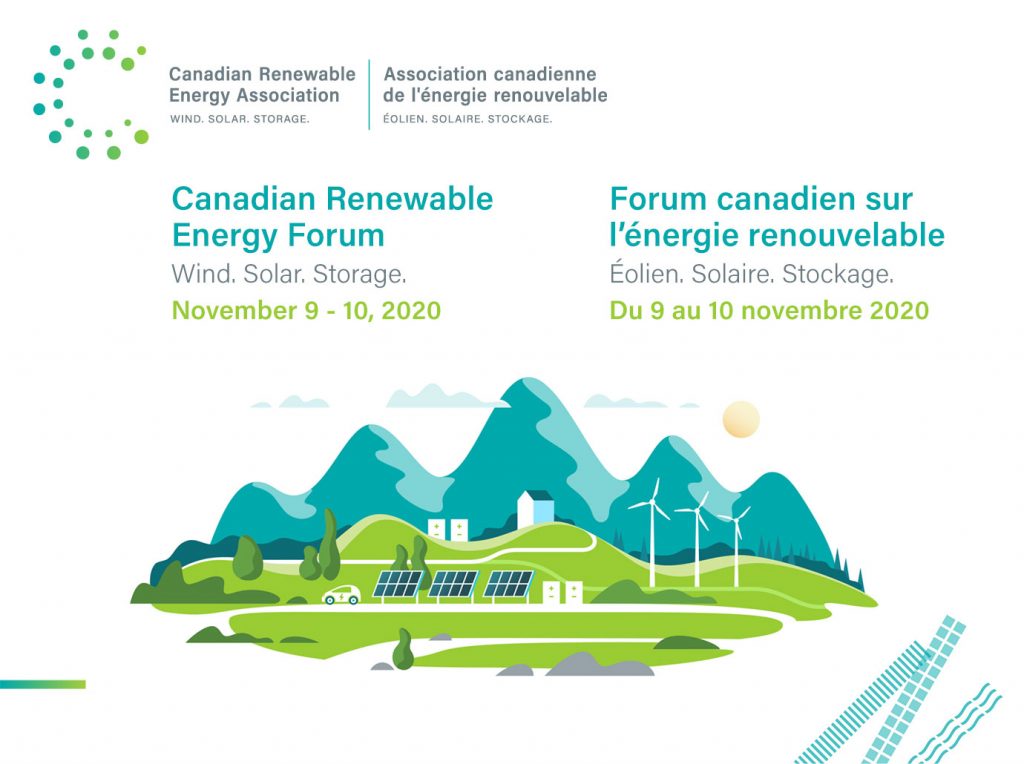
The Canadian Renewable Energy Association (CanREA) is excited to welcome wind energy, solar energy, and energy storage industry leaders and partners at the Canadian Renewable Energy Forum to be held virtually November 9-10, 2020.

The Canadian Renewable Energy Forum builds on the legacy of long-established annual wind and solar energy industry events in Canada and has been expanded to encompass issues and opportunities for the wind energy, solar energy, and energy-storage industries in Canada within a single program. The Forum’s 10 concurrent sessions will focus on key elements of Canada’s energy transition including electricity market reform, hybrid projects combining renewable energy and energy storage, rapidly growing corporate and customer demand for renewable energy, and more.

Of note, the Forum will open November 9 with a panel on Canada’s Energy Transition. Michelle Chislett (managing director, Canada and U.S. Development, Northland Power and CanREA Board chair) will moderate a discussion between Frank Davis (Country Head – Canada, Pattern Energy Group), Brian Douglas (VP – Sales, HES PV), Jeff Jenner (CEO, Potentia Renewables), and Annette Verschuren (Chair and CEO, NRStor).

On November 10, the Forum will open with the Innovation and Collaboration plenary that will bring together chief executives from regulated utilities and provincial system operators: Sophie Brochu (President & CEO, Hydro-Québec), Michael Law (President & CEO, Alberta Electric System Operator), Mike Marsh (President & CEO, SaskPower) and Terry Young (Interim President & CEO, Independent Electricity System Operator).

The day will close with the Canada’s Energy Future plenary, moderated by Chris Severson-Baker (Interim Director, Business Renewables Center Canada), where attendees will hear from sustainability leaders of companies such as Telus, RBC, and Oxford Properties, as well as the City of Edmonton on their interests in accessing renewable energy for their customers.  

CanREA is using a global virtual events platform to deliver a real forum experience in a virtual environment like no other. Attendees will be able to converge and connect with all participants, attend plenaries and education sessions, and come together in the designated “Power Together” networking sessions and showcase opportunities.

MORE INFO  renewablesassociation.ca/event/canadian-renewable-energy-forum-wind-solar-storage
WindEnergy Hamburg to go virtual December 1-4

0

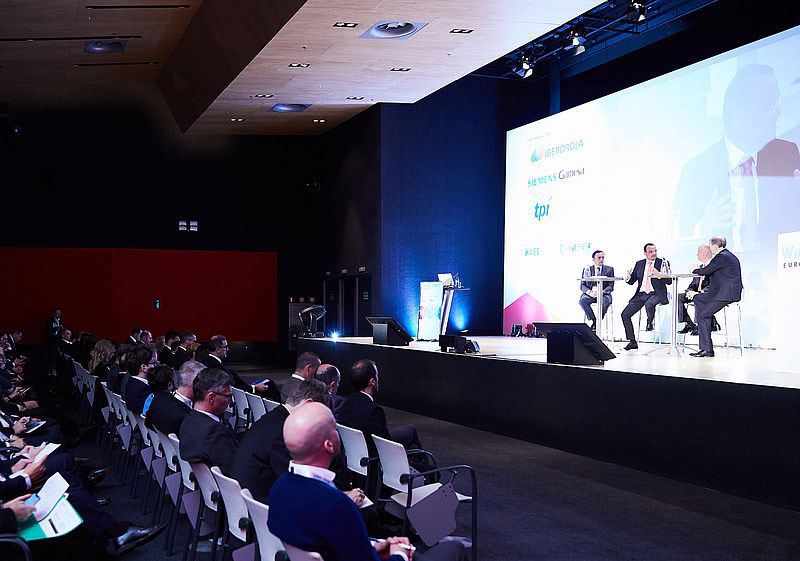
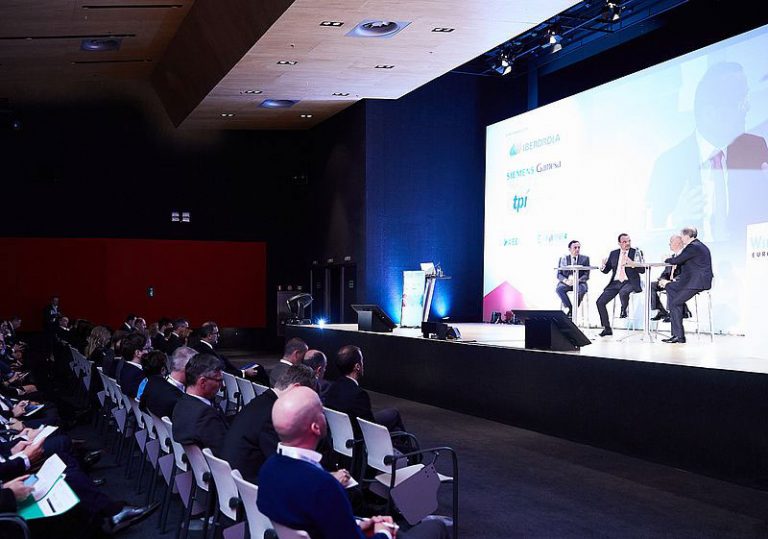
WindEnergy Hamburg will not be on the Hamburg exhibition campus this year. Instead, Hamburg Messe und Congress plans to host a fully digital event in response to the coronavirus pandemic and its global impact on trade fairs and international traveling.

“Following extensive consultations with our co-organizer, WindEurope, our partners VDMA, BWE and GWEC, and the exhibition committee, we have decided to host WindEnergy Hamburg 2020 as a new digital event,” said Bernd Aufderheide, president and CEO of Hamburg Messe und Congress GmbH. “In the face of growing infection rates in many countries and international travel restrictions, planning a physical trade fair with participants from all around the world is next to impossible. Our decision gives our exhibitors and visitors a reliable basis for planning and provides us with an opportunity to make the wind industry’s leading networking event a great success on the digital stage.”

Hamburg Messe und Congress is working vigorously on the development of digital formats that will allow all participants in WindEnergy Hamburg to have a successful trade fair experience in the present unusual situation.

“We are in the process of reinventing and expanding the trade fair concept,” Aufderheide said. “Through our digital program, we want to bring the industry together this year despite the difficult circumstances. When we meet again on the Hamburg Messe und Congress exhibition campus in 2022, some of these new services might turn out to be welcome additions to the proven trade fair concept.”


The digital program will include company and product profiles along with comprehensive, up-to-date background information, plus education, business, and networking opportunities. It will even be possible to make appointments for meetings in virtual meeting rooms, among other features.

“We are trying to replicate as many aspects of WindEnergy Hamburg in the digital space so that exhibitors in particular will have an opportunity to present themselves and interact with the global community,” Aufderheide said.

One of the highlights that had been planned for the event, the Premium Conference by WindEurope, will likewise be held digitally.

“This year’s WindEurope Conference comes in a new form,” said WindEurope CEO Giles Dickson. “For the first time, alongside the main conference program, there’ll be a ‘Wind TV’ channel, which will give access to exclusive live and on-demand content, so, you won’t just be tuning into Teams/Zoom panels.”

The high-level virtual conference will focus on how to unleash wind’s full potential. The coverage will include permitting, community engagement, electrification, renewable hydrogen, technology and innovation, and the wind-energy supply chain.

More info: www.windenergyhamburg.com

Industry veterans strengthen Avangrid’s wind leadership

0

Avangrid Renewables, a leading developer of utility-scale solar, onshore and offshore wind projects, recently announced the appointment of Bill White as head of U.S. offshore wind and Sy Oytan as deputy CEO of Vineyard Wind. Through its partnership with Copenhagen Infrastructure Partners, Avangrid Renewables is jointly developing Vineyard Wind, the nation’s first large-scale offshore wind farm off the coast of Massachusetts, and Park City Wind, which will supply Massachusetts and Connecticut, respectively, with clean renewable energy.

White will lead the development and implementation of Avangrid Renewables’ overall offshore wind strategy in the U.S. Oytan will be joining White’s team and will oversee business management, finance, development, and delivery for the Vineyard Wind and Park City projects.

“Throughout his career, Bill has helped lay the foundation for the U.S. offshore wind industry,” said president and CEO of Avangrid Renewables Alejandro de Hoz. “His experience, expertise, and relationships will further strengthen Avangrid Renewables’ position as an industry leader. Sy’s background in offshore wind-project development and delivery makes him a tremendous addition to our team. His expertise will facilitate the successful development of these two groundbreaking offshore wind projects for Massachusetts and Connecticut.”

Sy Oytan (Courtesy: Vineyard Wind)

In addition to the two southern New England projects, Avangrid Renewables is developing its wholly-owned Kitty Hawk Offshore Wind project, a proposed 2,500-MW offshore wind project off the coast of Virginia and North Carolina. In total, Avangrid Renewables has an offshore wind development pipeline of nearly 5 GW, enough to power approximately 2 million American homes.

“I’m proud to join the pioneers of the North American offshore wind industry,” White said. “Avangrid Renewables is leading a new American energy transition that will create thousands of jobs while producing clean, affordable energy to tackle our mounting climate emergency. I am thrilled to join such a strong team dedicated to launching the future of U.S. clean energy offshore.”

Prior to joining Avangrid Renewables, White served as president and CEO of EnBW North America, the U.S. offshore wind subsidiary of the German utility. He was previously the senior director of offshore wind sector development for the Massachusetts Clean Energy Center where he led the state’s offshore wind planning efforts and directed initiatives to support the responsible siting of offshore wind projects.

Additionally, White served in the White House as a special assistant to the president and as assistant secretary at the Massachusetts Executive Office of Energy and Environmental Affairs. He is a graduate of Boston College’s School of Management and the Harvard Kennedy School.

“Vineyard Wind is breaking new ground with the first large-scale offshore wind farms in the waters of the United States,” Oytan said. “Joining the team that’s helping make this project a reality and growing a new U.S. industry is a terrific opportunity.”

Oytan joins Avangrid Renewables from Arup, where he led offshore wind development efforts for the multinational engineering firm. Previously, he worked for the New Jersey Economic Development Authority where he spearheaded a range of offshore wind port and supply chain development initiatives for the State of New Jersey. During his career, he led the development, delivery, construction, and advisory on 6.5 GW of onshore and offshore wind-energy projects in the U.S., Europe, and Asia. He has also held a variety of leadership positions at Siemens Gamesa and Schlumberger. He is a mechanical engineer with a master’s degree in industrial management from Clemson University.

White and Oytan will be based, respectively, in Avangrid Renewables’ and Vineyard Wind’s offices in Boston, Massachusetts.

More info: www.avangridrenewables.com

GWO training increases by 56% in North America

0

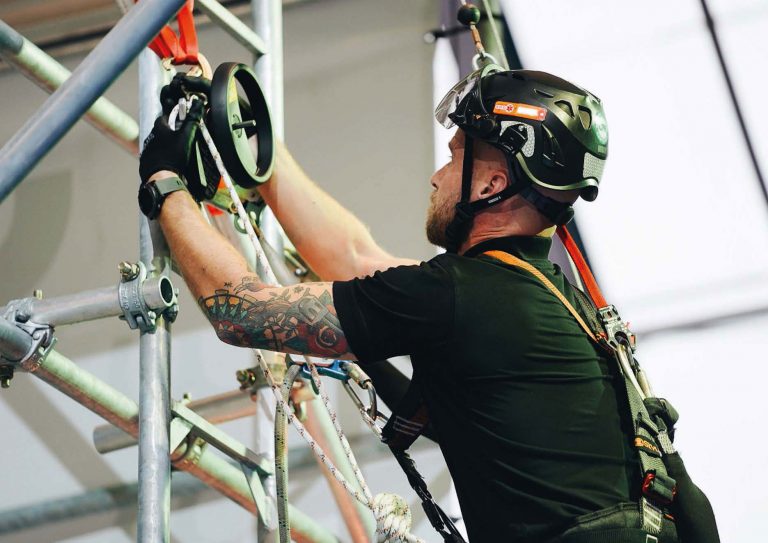
Global Wind Organisation (GWO) training providers in North America returned to action quickly after COVID-19 lockdown eased, with courses in the first six months of 2020 increasing by 56 percent compared to the same period in 2019.

The results are published in GWO’s Half Year Report, Training in the Pandemic, which reveals that while activity across the global network fell by as much as minus-86 percent during March, April, and May owing to COVID-19 lockdown, North American training centers were still able to train more people in 2020.

This growth was driven by several newly established training centers opening their doors and adding capacity to the network as wind-energy employers in North America increasingly request the standard for their workforces.

“Despite the pandemic, GWO remains on course to meet the annual target our members set last year to double the number of new training centers, courses completed, and certification bodies able to audit GWO training centers,” said Wesley Witt, head of Quality Management and Health, Safety, and Environment (HSE) for Siemens Gamesa Renewable Energy and chair of GWO North America Committee. “I thank all our GWO training providers across North America who have safely delivered training throughout the past several months by making modifications to facilities and classrooms, among other actions, while continuing to help achieve our vision of an injury free work environment.”


Global safety training volumes fell minus-15 percent in the first six months of 2020 compared with the same period one year earlier. While the total of courses declined in Europe, growth also continued in Asia/Pacific.

“It was encouraging to see how quickly GWO training providers returned following lockdown,” said Jakob Lau Holst, CEO of Global Wind Organisation. “In most cases, they have continued this increased activity into Q3. Our members are the world’s largest employers in wind power, and they have supported training providers during COVID-19 by developing standards and requirements for virtual classroom training and blended learning solutions with digital elements. There are now over 40 training providers around the world certified to provide digital or virtual courses. At the beginning of 2020, there was just one, so there are more options available should the worst effects of lockdown return.”

“The first half of 2020 was the most challenging period many of us has ever experienced, and, unfortunately, it appears, for a number of countries, the spread of the virus has increased again,” said Paul Robbins, chief health and safety specialist at Vestas and chair of GWO. “However, our commitment to safety is the priority. Technicians will be required to install and maintain our growing wind power infrastructure in spite of many risks posed by COVID-19, and I believe the GWO network is well prepared to support our workforce and ride out the worst effects of any repeat situation this winter.”

More info: www.globalwindsafety.org

Sentient Science, Croda partner for wind asset life extension

0

Croda International Plc, which uses smart science to create, make, and sell specialty chemicals that improve lives, recently announced a new partnership with Sentient Science for the recommended use of Croda’s Rewitec additives for wind-turbine gearboxes and main bearings.

In 2019, Croda acquired Rewitec GmbH and began to offer Energy Technologies customers nano- and micro-particle-based additives to increase the durability of machinery by lowering friction and reducing wear. Sentient Science validated Rewitec’s DuraGear gearbox oil additives for use in wind-turbine gearboxes in 2017.

This brand-new partnership will see Sentient apply physics and data science expertise, combined with Croda’s Rewitec additives, to calculate the lifetime extension of critical rotating components. It will also examine how Rewitec’s GR400 grease additive, developed specifically for main bearing durability improvements, can improve equipment lifetime.
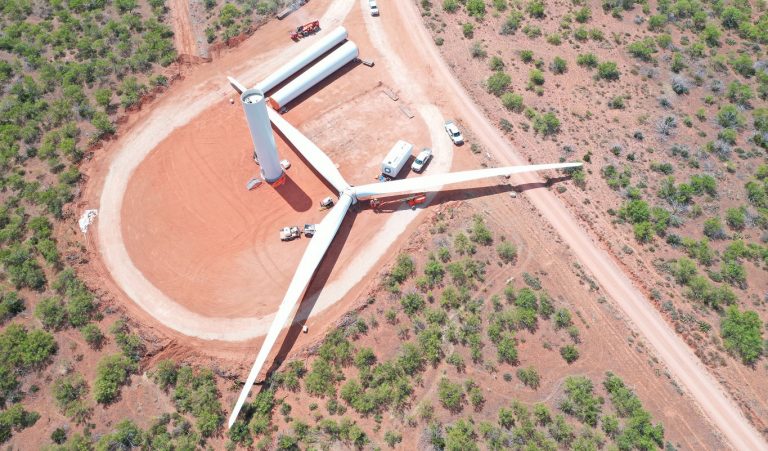
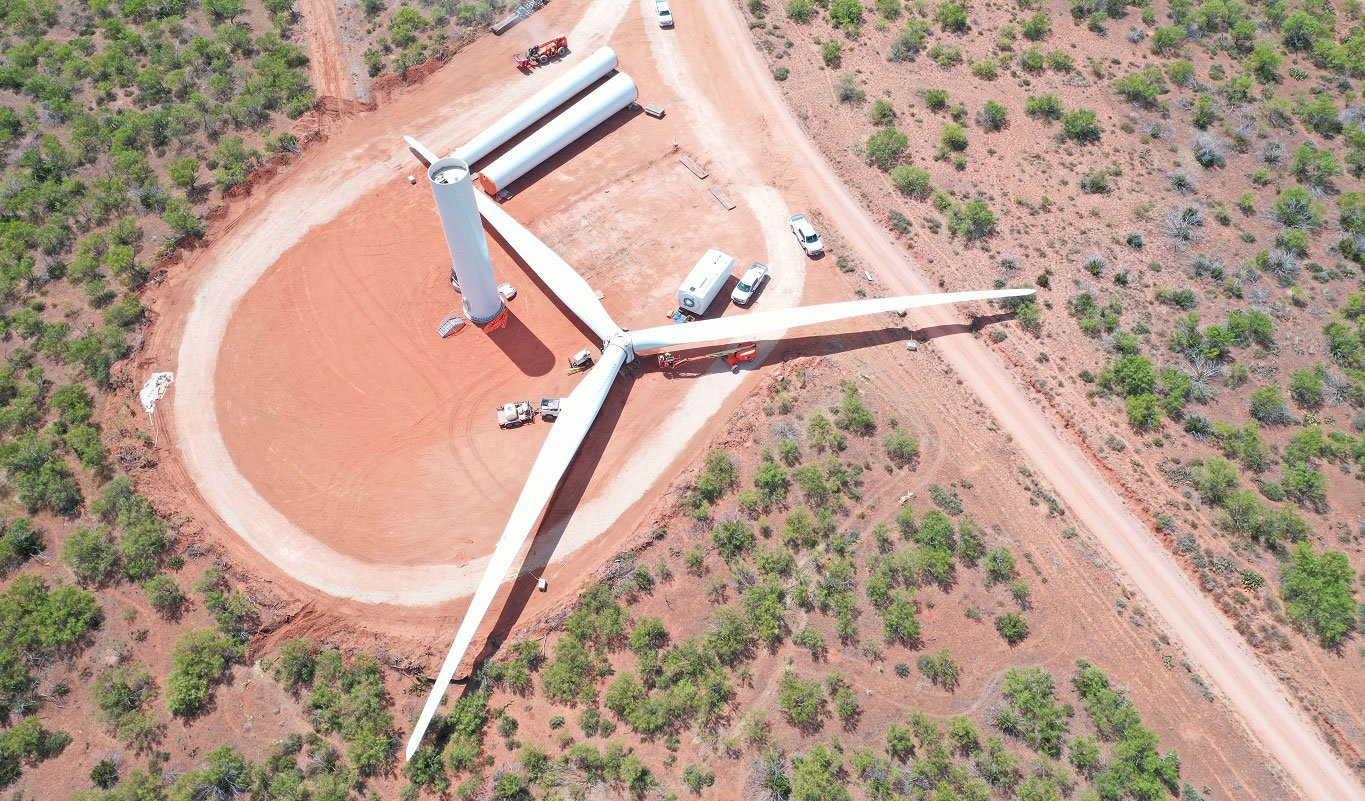
Sentient Science provides DigitalClone® for wind operations and maintenance, which uses a unique combination of physics and data science to give a holistic view of the health and remaining useful life of an asset’s critical systems and components. This information is used for predictive maintenance programs to reduce operations and maintenance costs and ultimately to prolong asset life. Sentient is able to calculate and demonstrate durability improvements imparted through using Croda’s Rewitec technology, which provides asset owners the option of extending the lifetime of their assets instead of costly part replacements.

“The competitive energy market is forcing energy producers to optimize maintenance practices and reduce operational expenses,” said Scott Gardiner, business development specialist for energy technologies at Croda. “Major correctives are the largest cost drivers in the wind-energy market, specifically gearbox or main-shaft replacement. The cost of this replacement can completely change the asset’s profitability during its lifetime. The Rewitec technology is currently helping customers reduce failure rates and extend the life of these critical assets. We are excited that customers can now utilize Sentient’s DigitalClone® to provide RUL projections in conjunction with our Rewitec technology.”

“As wind turbines age, operators are seeing a higher number of onshore and offshore wind assets running with damage, specifically in critical rotating components like gearboxes and main bearings,” said Ed Wagner, GM of wind operations at Sentient. “Our customers have been waiting for data to compare next generation additives, like Rewitec, against up-tower part replacements. And while this may not be a solution for every wind turbine, we do have data to substantiate improvements in gearbox life and expect to show the same in main bearing life.”

More info: sentientscience.com

Natural Power serves as Independent Engineer on Amadeus Wind Project

0

Leading renewable energy consultancy and service provider, Natural Power, was recently appointed by BayWa r.e. Wind LLC as Independent Engineer of Record for its 250-MW Amadeus Wind project north of Rotan, Texas, currently under construction.

“We appreciate the opportunity to serve as Independent Engineer on Amadeus in support of tax equity and construction debt financing,” said Chris Mertes, head of Advisory at Natural Power in North America. “Natural Power and BayWa r.e. take the role of Independent Engineer seriously, and the experience and results we provide will be of significant benefit to the wind project’s long-term success.”

The team undertook a full review of the project’s engineering designs, turbine technology, operating contracts, financial models, and permits prior to the start of construction. Beneficial aspects were highlighted, and areas of potential risk were flagged for further investigation and resolution. Natural Power will continue to support the project with construction monitoring through completion.
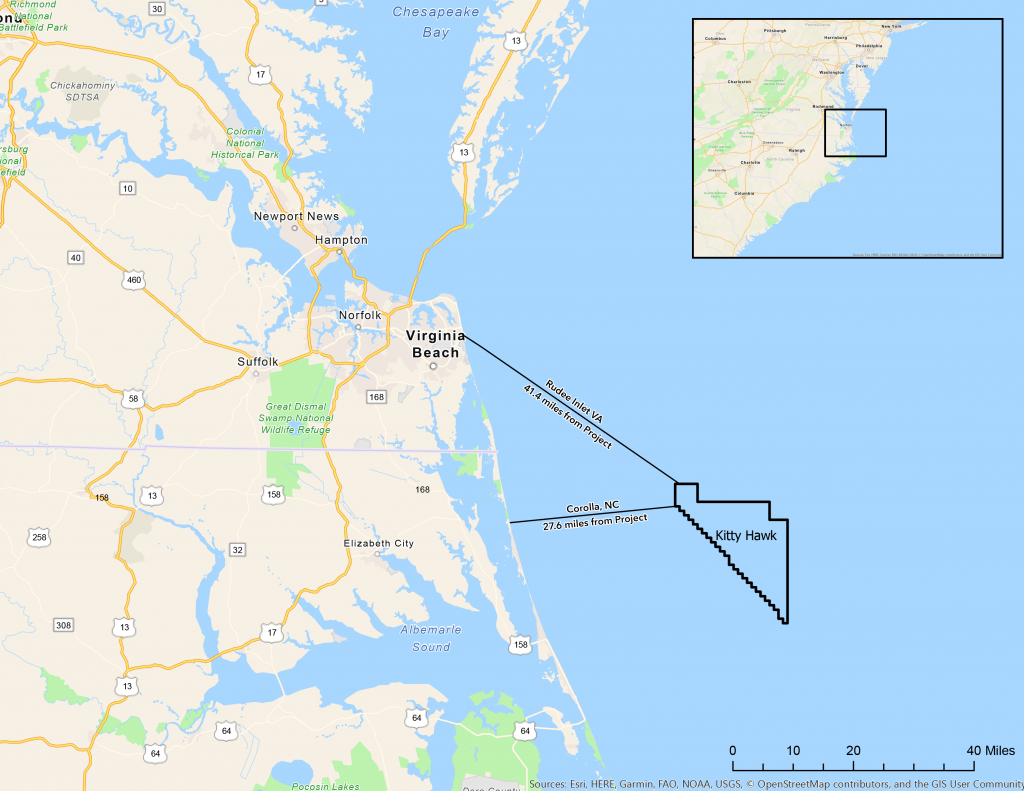
Once operational, the project will deploy GE wind turbines across nearly 25,000 acres of federal, state and privately held lands, and could generate enough clean, renewable energy to power more than 75,000 homes annually.

“BayWa r.e. selected Natural Power for this critical role based on its reputation for providing careful, actionable due diligence on wind projects, as well as the widespread acceptance of their work product by the tax equity community,” said Florian Zerhusen, CEO, BayWa r.e. Wind LLC.

Earlier this year, BayWa r.e. Wind announced it had secured a tax equity commitment from a consortium led by GE Energy Financial Services. The project has also executed a hedge agreement with Morgan Stanley and, in the most difficult market since the financial crisis of 2008, closed on a construction loan with Commerzbank. BayWa r.e. has used 5 percent safe harbor equipment to qualify the project for 100 percent PTCs.

In the past 12 months, Natural Power’s U.S.-based advisory team has provided technical due diligence on nearly 15 GW of renewable project capacity within North America, including 11.5 GW of late-stage, pre-construction wind projects, delivering work for major sponsors, and tax and equity investors.

More info: www.naturalpower.com/us

Avangrid expands presence in Virginia Beach for Kitty Hawk Project

0

Avangrid Renewables, LLC, a subsidiary of AVANGRID, Inc., developer of the Kitty Hawk Offshore Wind project, recently announced the opening of a new Virginia field office to support project development and help ignite a new industry off the coast of Virginia and North Carolina.
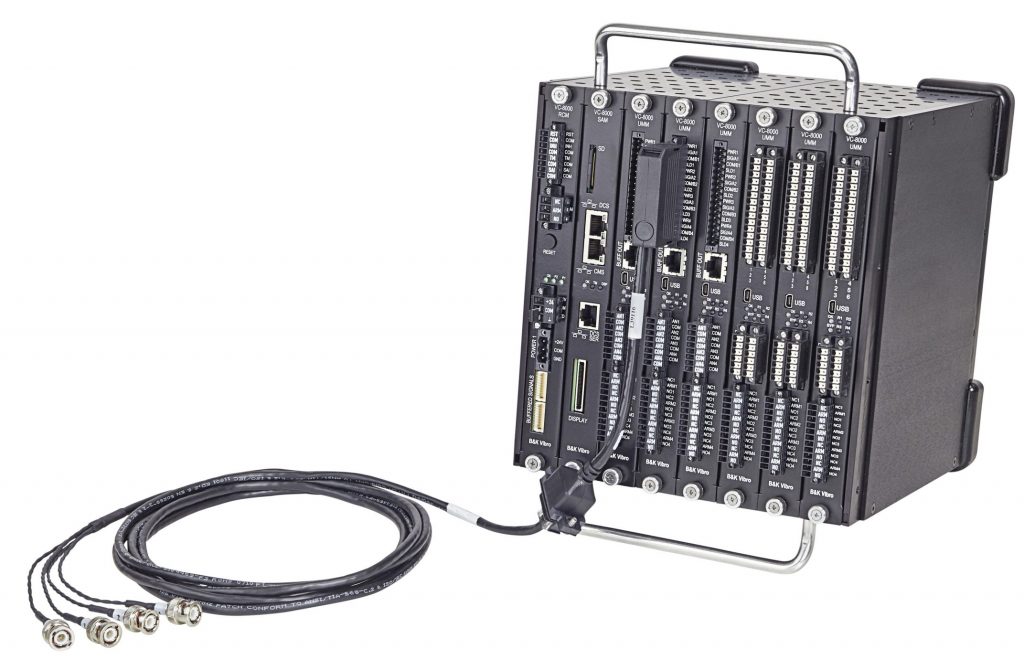

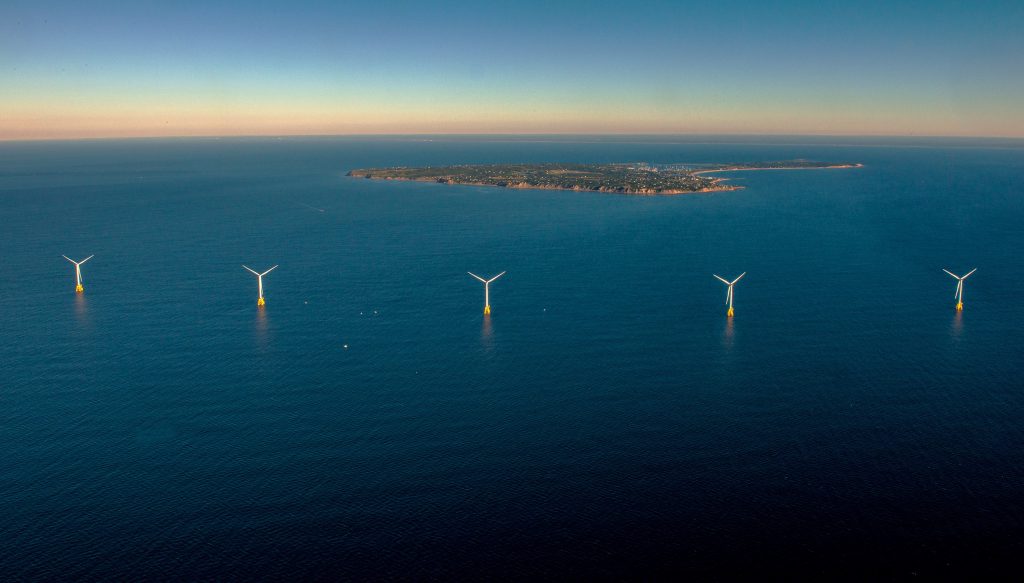
Kitty Hawk Offshore Wind is a proposed offshore wind-energy project to be built approximately 27 miles from the Outer Banks in the Kitty Hawk Wind Energy Area (WEA), designated by the U.S. Bureau of Ocean Energy Management (BOEM). The commercial lease for the 122,405-acre WEA was awarded to Avangrid Renewables by BOEM in 2017. Since then, the company has been studying the area in detail, most recently launching an advanced meteorological buoy in July 2020.

The new office at 249 Central Park Avenue in Virginia Beach will welcome members of the growing Kitty Hawk Offshore Wind project development team who have been working in the region to facilitate ongoing site assessment activity, local stakeholder meetings, and community outreach.

“Offshore wind will play a key role in Virginia’s clean-energy economy for decades to come,” said Bobby Dyer, mayor of Virginia Beach. “We are very excited to have Avangrid Renewables building that future here in Virginia Beach with the Kitty Hawk Offshore Wind project.”

Once complete, Kitty Hawk Offshore Wind is projected to have a generation capacity of up to 2,500 MW, or enough to power approximately 700,000 homes. The construction and operation of the project are expected to create hundreds of jobs and represent hundreds of millions of dollars of direct investment in Virginia and Hampton Roads.

MORE INFO  www.kittyhawkoffshore.com

Brüel & Kjær Vibro introduces new portable vibration analyzer

0
The VP-8000 connects to rotating machines and captures realtime vibration and process data for immediate monitoring and diagnosis of equipment health. (Courtesy: Brüel & Kjær Vibro)

Brüel & Kjær Vibro, one of the leading worldwide independent suppliers of condition monitoring solutions for rotating machinery, has launched the VIBROPORT 8000 (VP-8000) Portable Vibration Analyzer for rotating and reciprocating equipment.

The new VP-8000 is a specially configured and packaged version of Brüel & Kjær Vibro’s VC-8000, which is an internationally renowned machinery protection system. The VP-8000 features the same universal measurement modules (UMMs) and the rugged and field-proven design as the VC-8000, but it is optimized for portable dynamic data collection and diagnostics.

There is a wide range of applications for VP-8000 for both plant operators and service providers. It is ideal for verifying the condition of machines after a turnaround and those repaired prior to service start-up. It is also used for steady-state and transient condition monitoring (i.e. during a run up and coast down) for observation and trending of machines following an event (e.g. operational process changes or machine fault detection). VP-8000 can also be used as a mobile platform for monitoring a number of machines within the plant that are not instrumented or that only have protection. VP-8000 can be used both as a portable data collector and as an analyzer. Advanced diagnostics offered by Brüel & Kjær Vibro’s best-in-class SETPOINT® condition monitoring software (CMS) include:

  • Shaft/bearing: Orbits, full spectra, shaft centerline plots, Bode plots, polar plots, etc.
  • Reciprocating compressor: PV plots, rod load, rod reversal, impact monitoring, etc.
  • Two-plane balancing.

The VP-8000 connects to rotating machines and captures real-time vibration and process data for immediate monitoring and diagnosis of equipment health or via the VP-8000 flight recorder for storing data for remote analysis. The VP-8000 can be connected to the buffered outputs of most machine protection systems with BNC outputs, or it can be used with temporarily mounted sensors on machines where there is no monitoring system. Data can also be exported to the OSIsoft PI data historian.

“The VC-8000 is normally permanently installed and connected to one or several rotating or reciprocating machines, but customers found that the system’s ease of use, outstanding data acquisition capability, and robustness enabled use as a portable data acquisition system,” said Albert Vontz, head of business unit industrial, Brüel & Kjær Vibro. “In its portable form, the VP-8000 user enjoys multiple methods of data acquisition. They can connect to their existing machinery protection systems to immediately view, log, and share all data needed to understand machinery behaviors. The VP-8000 can be connected to machines for hours, days, or months and all the while it will collect valuable data — even without a computer connected to the rack. The system operates equally well in standalone modes, linked to a laptop, or to an OSIsoft PI historian.”

The VP-8000’s patented intelligent waveform capture ensures critical waveforms are never missed. It can rapidly capture and trend data at 80 ms and is versatile enough to scale from 1 hour to 1000-plus hours of data capture. With 24-channels, the VP-8000 features 32 GB removable SD storage, 256 GB internal SSD storage, resolution from 400 to 12,800 spectral lines, and sampling from 16 to 1,024 samples per second.

MORE INFO  www.bkvibro.com

HARTING celebrates 75 years of driving technologies

0
The manufacturer of everyday products such as waffle irons and irons has evolved into a
worldwide leading supplier of industrial connection technology for the three lifelines of data, signal, and power, a global player fielding innovative products and solutions focusing on Industry 4.0 and digitization.

For 75 years now, the HARTING Technology Group has been driving technological
change and providing decisive impetus for the future.

The vision formulated in 1996 by the owner family “We want to shape the future with technologies for people” remains the guiding star of our entrepreneurial activities. September 1 marked the 75th anniversary of the founding day of the family company.

The manufacturer of everyday products such as waffle irons and irons has evolved into a
worldwide leading supplier of industrial connection technology for the three lifelines of data, signal, and power, a global player fielding innovative products and solutions focusing on Industry 4.0 and digitization. HARTING has successfully opened up new markets with its technologies in the core business of connectivity, such as e-mobility and resource-saving power generation.

The HARTING Technology Group is a leading global supplier of industrial connection technology for the three lifelines data, signal, and power with 14 production facilities and 44 sales companies worldwide. In addition, the company also manufactures checkout zones for retail, electromagnetic actuators for automotive and industrial series production, charging equipment for electric vehicles, and hardware and software for customers and applications in automation technology, mechanical and plant engineering, robotics and transportation, and more. About 5, 300 employees generated sales of 750 million euros in 2018/19.

MORE INFO  www.harting.com

American wind power moves forward despite 2Q challenges

0
The American Wind Energy Association’s (AWEA) report reveals that many U.S. wind developers managed to get their projects over the finish line during the three-month period, despite the significant challenges associated with COVID-19.

The U.S. wind industry installed more than 2,500 MW of new wind power capacity in the second quarter of 2020, bringing total American capacity to nearly 110,000 MW, according to the newly released Wind Powers America Second Quarter Report 2020.

The American Wind Energy Association’s (AWEA) report reveals that many U.S. wind developers managed to get their projects over the finish line during the three-month period, despite the significant challenges associated with COVID-19.

“American wind power is immensely proud of its 120,000 workers who have fought to bring additional clean, reliable electricity to American citizens, even in the initial stages of the global pandemic,” said Tom Kiernan, AWEA CEO. “This work is more important than ever during these challenging times. America’s largest source of renewable energy remains committed to building on its 50-state footprint of investment and job creation and to continue adding affordable, clean power to local communities across the country.”

Fourteen new wind projects totaling 2,546 MW became operational across nine states during the second quarter, enough to power 860,000 American homes and setting a record for second quarter additions. Texas led the country with 810 MW of new wind projects installed, followed by Kansas, Colorado, Missouri, and Nebraska. Missouri passed 1,000 MW in total capacity in the second quarter, making it the 20th state to reach the gigawatt milestone. There are now 109,919 MW of operating wind power capacity in the United States, enough for more than 33 million American homes.

Wind-power development and construction activity also remained resilient in the face of the pandemic, partially thanks to additional flexibility from the U.S. Treasury and Internal Revenue Service (IRS) regarding tax credit qualification. Construction activity reached another new record in the second quarter, with 25,318 MW being built across the country. Another 18,310 MW are in advanced development. The combined 43,628 MW represents a four percent year-over-year increase from the second quarter of 2019.

Offshore wind also made significant strides in the second quarter. The country’s first wind project in federal waters — the 12 MW Coastal Virginia Offshore Wind project — completed installation of its two turbines in June. The project is now undergoing testing and will start commercial operations later this year. Elsewhere, Eversource Energy and United Illuminating signed contracts for the 804 MW Park City Wind offshore project during the second quarter. As a result of this activity, offshore wind now represents 21 percent of the wind power pipeline at 9,112 MW.

New wind projects installed in the second quarter were already nearing the end of the years-long development process and had the materials and components on hand to complete construction before the COVID-19 pandemic began to create supply chain disruptions for the broader American wind industry. New federal IRS guidance provides one additional year of safe harbor tax flexibility for near-term projects, but COVID-19 continues to present significant challenges for U.S. wind development. The American wind industry is working with Congress and other renewable energy leaders to address the impacts of the pandemic and to continue adding jobs and investments to the U.S. economy during this difficult time. U.S. wind power remains focused on protecting our workers and supporting local communities as we strive to deliver clean, safe, and affordable power to our country.

MORE INFO  www.awea.org

BAR, Chartwell vessels rubber stamped by ABS for U.S. operations

0
Vessels servicing the expanding East Coast offshore wind development areas will increasingly need to travel farther for longer, while navigating deeper waters and greater wave heights. The design and construction of the innovative new BAR 30-meter crew transfer vessel (CTV) is another step in that development.

World-leading naval architects, BAR Technologies, and Chartwell Marine, a pioneer in next-generation vessel design, have been awarded Approval in Principle (AiP) from the American Bureau of Shipping (ABS) for the design and construction of the innovative new BAR 30-meter crew transfer vessel (CTV).

This AiP is a further stepping-stone toward an advanced, class-certified, Jones Act compliant fleet of offshore wind support vessels for the U.S. market. Following on from the AiP awarded to the Chartwell 24 vessel design earlier this year, it expands the range of complementary options available to the industry for highly efficient and capable vessel support.

Vessels servicing the expanding East Coast offshore wind development areas will increasingly need to travel farther for longer, while navigating deeper waters and greater wave heights. This must be achieved without compromising on efficiency or environmental standards, in accordance with U.S. Coast Guard guidelines surrounding emissions and Right Whale compliance.

In response to this challenge, BAR, with the support of Chartwell, has developed a 30m CTV, making use of FOSS technology (foil optimized stability system) to enhance seakeeping and maneuverability, while reducing vertical acceleration by up to 70 percent in 2.5-meter wave heights. While offering greater levels of availability in rough seas, the BAR 30-meter CTV also demonstrates up to 50 percent fuel efficiency savings at 15 knots, keeping emissions at bay in line with stringent EPA Tier 4 guidelines.

This initial vessel will be closely followed by a 50-meter variant capable of 45 knots top speed and 30 knots in a 3-meter high sea without exceeding vertical acceleration limits. The 40-passenger boat with a similar hull form and FOSS technology is focused on the replacement of helicopter transfer for workers in the Gulf of Mexico.

This new design will work in partnership with the proven vessels in the Chartwell 24 range, including the Right Whale variant. Alterations to the hull form of the latter have been made to adhere to the legislation in place that protects the migration route of the Right Whale on the East Coast, along with optimized propulsion configurations to meet EPA Tier 4 emissions standards.

Securing AiP offers the highest level of assurance that these innovative vessel designs will be built in-line with specific U.S. requirements. As part of the AiP process, the vessel designs have met stringent criteria from the ABS Rules for Building and Classing High Speed Craft 2020. This provides validation that they are well-placed to meet the demands and regulatory requirements of U.S. operations.

“This ‘rubber stamp’ from ABS paves the way for these next generation vessels to fully integrate into East Coast operations,” said Andy Page, naval architect and managing director at Chartwell Marine. “The design of these boats has capitalized on operational experience in the global market, refining the formula for offshore wind support through ongoing research and discussion with stakeholders. With the first Chartwell 24 working in the U.K. and the first U.S. Chartwell 24 in build, we are excited to work with BAR to bring a further, highly versatile option to the U.S. market.”

“Approval in Principle for the BAR 30-meter CTV is an important development that broadens the opportunities for cross-market collaboration,” said John Cooper, CEO of BAR Technologies. “As we work toward the decarbonization of the workboat sector, this latest innovation represents new gains in efficiency, which have been achieved by placing the operational profile at the forefront of vessel design. In this way, we have been able to design a CTV that combines optimal performance in challenging conditions with a significantly reduced environmental impact.”

MORE INFO  www.chartwellmarine.com

Siemens Gamesa wins big in Texas with 325-MW project

0
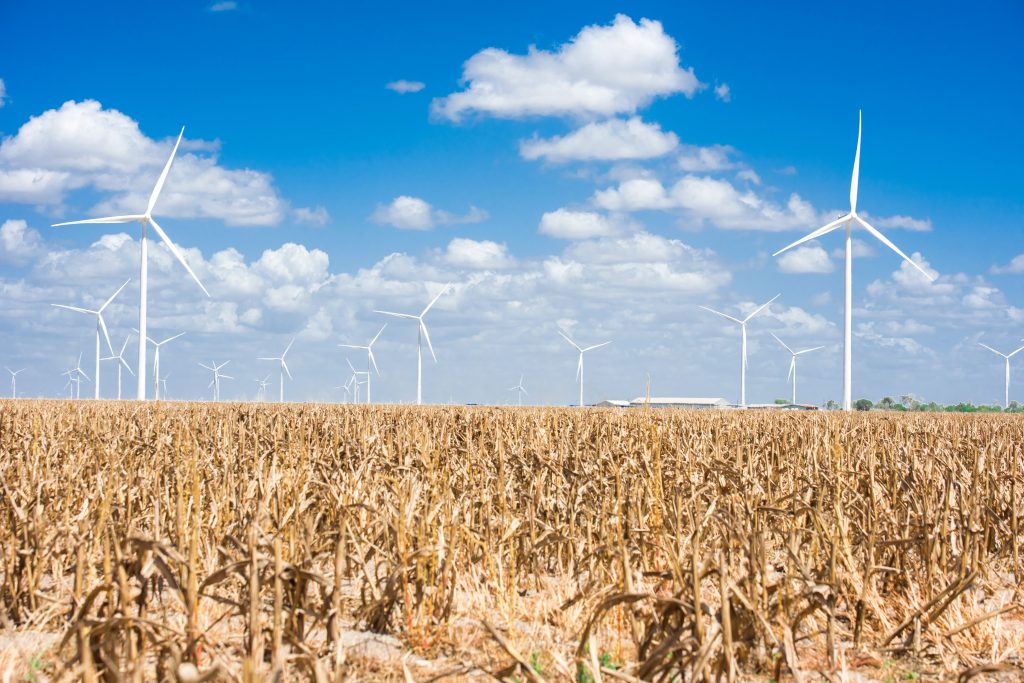
The 200MW Los Vientos 1 wind farm is spread over an area of approximately 30,000 acres of leased farmland. It consists of 87 Siemens SWT-2.3-108 turbines with a rotor diameter of 108m, which generate electricity sufficient to power approximately 60,000 homes.

Siemens Gamesa Renewable Energy (SGRE) has been awarded two new onshore wind project sites in Texas with a total installed capacity of 325 MW.

The projects include the supply of 65 SG 5.0-145 wind turbines and a multi-year service agreement.

Deliveries are expected to begin in the summer of 2021 with the two sites getting commissioned by end of that year. This win takes Siemens Gamesa’s total installed capacity close to 6 GW in Texas, strengthening its position as one of the top three OEMs in the state.

“An order of this size evidences the strong suitability and success of the SG 5.0-145 for the U.S. market,” said Shannon Sturgil, CEO of Onshore North America at Siemens Gamesa Renewable Energy. “We are proud to contribute enough low cost, clean energy for nearly 100,000 average U.S. households to Texas, a leading state in wind energy.”

The SG 5.0-145 wind turbine from Siemens Gamesa has proven to be a very successful product in the U.S. Its new state-of-the-art control system with enhanced blade aerodynamics optimizes power generation. It has a flexible power rating that ranges between a 4.0 to 5.0 rating, thereby providing a uniquely tailored solution that fits the specific site conditions. Its modular design allows for increased mechanical capacity and optimal adaptation to logistics and construction requirements, providing greater efficiency and a reduced levelized cost of energy (LCOE).

The U.S. is a key market for Siemens Gamesa with 22 GW installed across 34 states, providing enough energy for over 6.5 million average U.S. homes. The company has a strong footprint consisting of manufacturing, service, and offices.

MORE INFO  www.siemensgamesa.com

Siemens Gamesa to service two North American Senvion sites

0
With nearly 72 GW under service globally, including more than 10 GW of multi-brand turbines, Siemens Gamesa is a leading service provider in the industry.

Siemens Gamesa Renewable Energy recently announced it has signed 10-year service agreements with an undisclosed customer at two sites in North America featuring Senvion MM92-2.05 turbines for a total of 184 MW.

Both sites include service, maintenance, and warranty agreements with an availability guarantee.

As part of the deal, the company will provide remote monitoring, supply chain access and specialty tooling, design and engineering support, and software updates, while fully using the existing hardware and infrastructure on site to ensure the performance and reliability of the turbines throughout the product lifetime.

“We are pleased to bring our service expertise to these sites,” said Juan Gutierrez, Service CEO of Siemens Gamesa Renewable Energy. “This contract builds on the success we’ve seen outside the Senvion acquisition scope and owning the intellectual property makes SGRE a natural choice to extend the lifetime value of those wind projects and improve the customer’s original business case.”

Since the acquisition of Senvion’s Onshore European service assets and Intellectual Property (IP) in early January 2020, the company has secured almost 1 GW of service agreements outside of the transaction perimeter in the U.S., Canada, Australia, and Europe.

With nearly 72 GW under service globally, including more than 10 GW of multi-brand turbines, Siemens Gamesa is a leading service provider in the industry. In North America, Siemens Gamesa provides service and maintenance to wind projects with a total output capacity of 13 GW.

MORE INFO  www.siemensgamesa.com

IceWind launches residential, light commercial turbine sales in U.S.

0
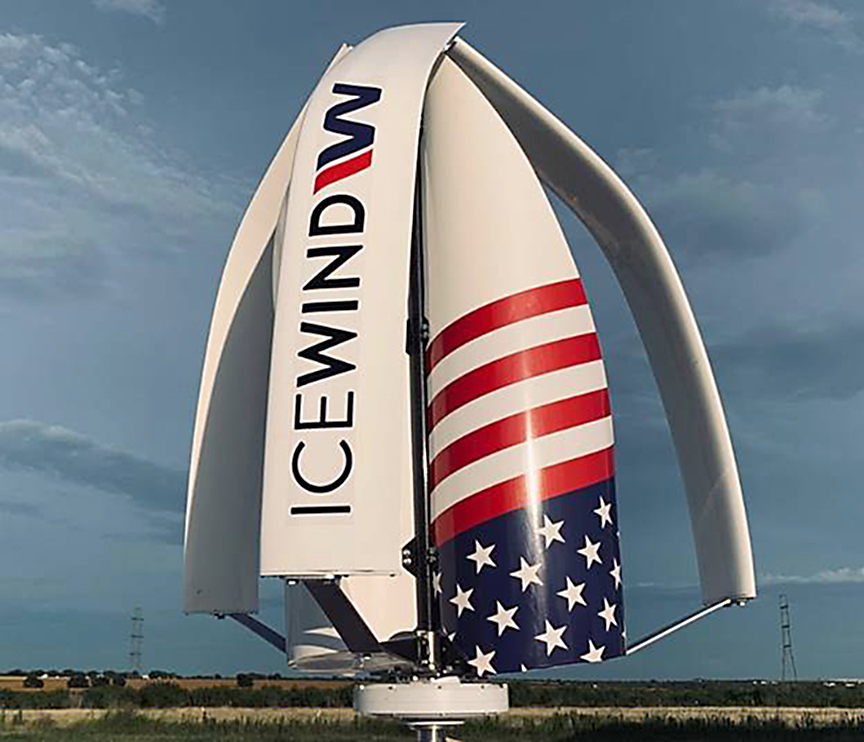
IceWind’s groundbreaking products provide wind turbines for residential and light commercial uses. The U.S. operation will be based out of San Marcos, Texas.

Noted Icelandic wind-based renewable energy company IceWind recently announced its launch in the United States. IceWind’s groundbreaking products, the Freya, is for residential uses, while their Njord line is available for commercial applications such as powering telecommunication towers, outdoor advertising, on-site office trailers, and more.

“We are excited to bring our turbines to America,” said IceWind’s CEO Sæþór Ásgeirsson. “With a blustery midsection, gusty extremities, and an overall interest in renewable energy, we are looking forward to America embracing our unique wind turbines for both residential and commercial applications. Our recent demo event on the Texas coast over the Independence Day weekend proved that there is great interest among Americans for a robust individual solution to renewable energy.”

The U.S. operation will be based out of San Marcos, Texas, and helmed by Daryl Losaw, a modular home builder, investor, consultant, and entrepreneur.

“When I first saw the IceWind turbines in Iceland, I knew I had to bring them to market in the U.S.,” Losaw said. “They are perfectly complementary with solar, a great stand-alone solution for very windy places, and a handy answer for small-energy outdoor applications that will cut down on carbon from generators, diesel engines, and maintenance calls.”

The current residential model, the Freya, is useful as a supplementary power source, so it will cut users’ power usage and costs, but not fully power the average home. Should customers want or require a complete wind solution, two to three Freyas will power most average small-scale residential power needs excepting central air conditioning for a price comparable to installing photovoltaics (solar). Other residential applications include powering small vacation cabins, separately metered home offices, and small additional dwelling units (ADUs), and backup emergency power when needed. IceWind’s Freya is an excellent solution for residential renewable power as they are silent, aesthetically pleasing, have a 25- to 30-year lifespan, can work both on- and off-grid, require negligible operation and maintenance costs, and can generate power at wind speeds as low as 7.8 mph, a gentle breeze.

The Njord commercial models are ideal for many applications: powering telecommunication towers, electricity for outdoor advertising (lighting, mechanical features), replacing generators used at construction sites and other remote offices, and more. The beauty of IceWind’s products is how sustainable and hardy they are in challenging conditions. Unlike the diesel generators used in these applications, they never need refueling and rarely need maintenance.

IceWind’s turbines are built to withstand blizzards, dust storms, hurricanes, sleet, heavy rain, and more. IceWind’s proprietary generator seal protects foreign particles such as dust, ice, water, or dirt from entering the generator and interfering with the gearbox. The generator seal also prevents water from entering the gearbox and freezing gears, a massive problem in cold climates. The turbine is coated with a hydrophobic de-icing agent to protect against ice, preventing freezing and ice buildup. IceWind turbines use excellent material selection, including heat-treated aluminum outer blades and stainless steel inner blades that provide a long material lifetime with superb strength and stress resistance. To compare, many commercial vertical axis wind turbines and horizontal axis wind turbines are made of nylon fiber, steel, plastic, and fiberglass, significantly inferior materials than those used by IceWind.

“We are so thrilled to bring the power, beauty, and reliability of IceWind’s turbines to the U.S., and know that this will be just the start of a new pillar of renewable energy in the U.S., home installed wind power,” said IceWind’s U.S. project manager Samuel Gerbus, who spent several months in Iceland with the IceWind team last year.

MORE INFO  www.icewindusa.com

Study: Federal offshore wind lease auctions could reap major benefits

0

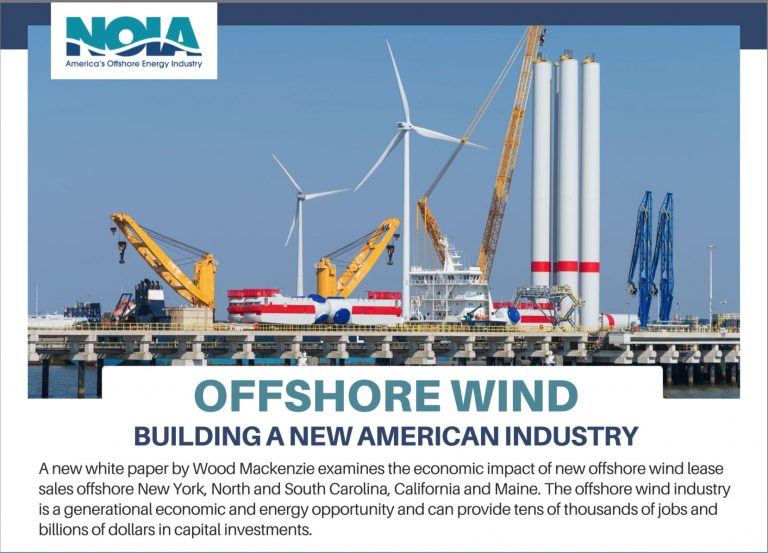
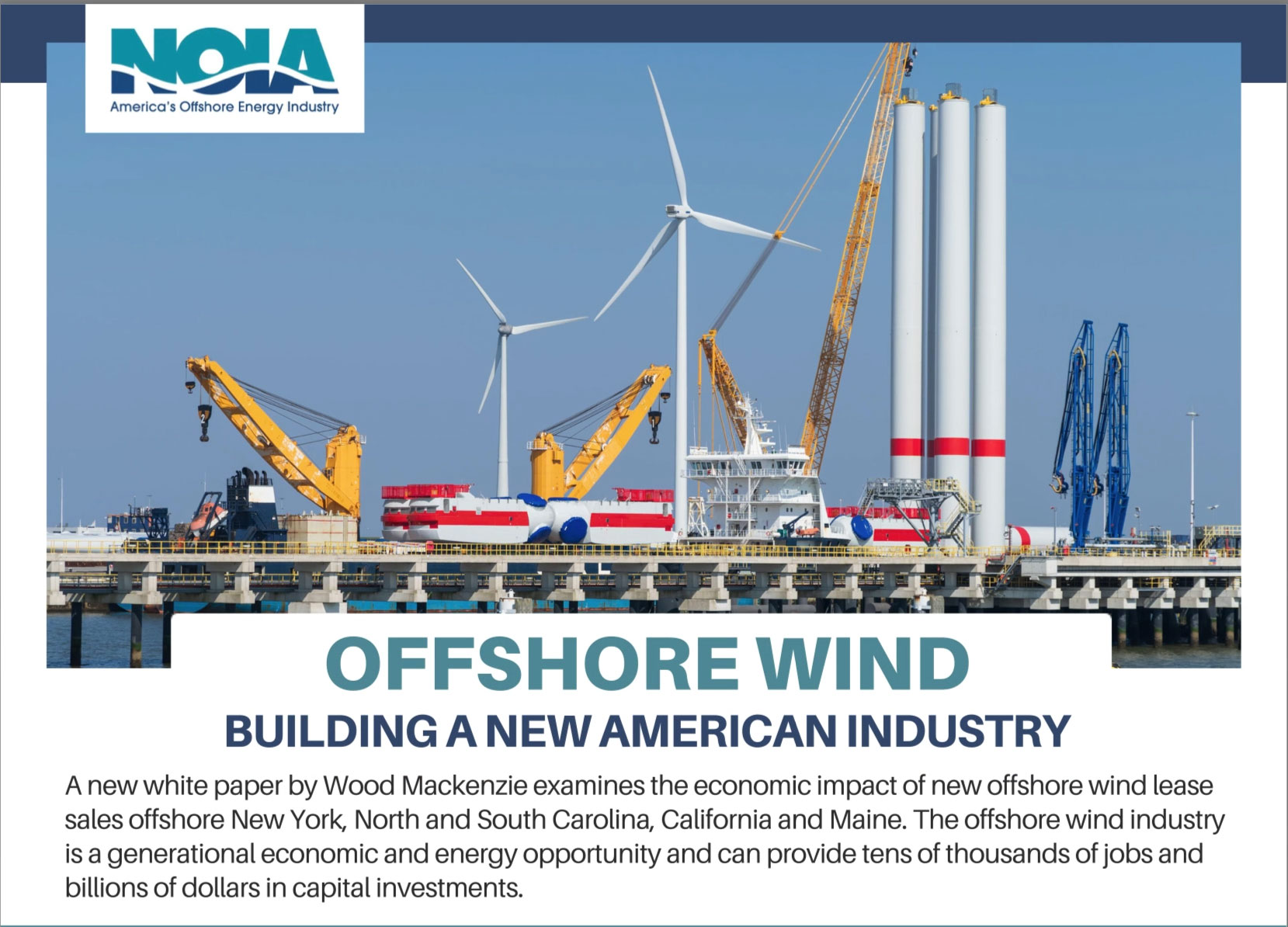
The United States has an opportunity to accelerate offshore wind energy growth and benefit from 28 new GW of clean energy and $1.7 billion in U.S. Treasury revenue by 2022, a recent study released from research group Wood Mackenzie finds.

Findings from this study confirm additional lease areas are needed to meet demand, reduce energy costs, increase competition, and ultimately generate thousands of jobs and billions in investment. Additionally, the findings offer guidance to decision-makers about new offshore wind leases, which can be a short-term solution to jump start recovery from a coronavirus pandemic-driven economic slowdown.

Commissioned by four energy industry groups, American Wind Energy Association (AWEA), National Ocean Industries Association (NOIA), New York Offshore Wind Alliance (NYOWA), and the Special Initiative on Offshore Wind (SIOW) at the University of Delaware, the study dives into the economic impact of offshore wind activities as a result of potential Bureau of Ocean Energy Management (BOEM) lease auctions in 2020, 2021, and 2022. Based on existing activities and policy assumptions for future offshore wind development, 2 million acres of federal waters in the New York Bight, which includes parts of New Jersey, as well as California and the Carolinas, could be auctioned for commercial leases as early as this year into 2021. Such leasing could support 28 GW of offshore wind development and generate $1.2 billion in U.S. Treasury revenue. Other auctions for lease areas in the Gulf of Maine and areas in California could happen in 2022 and would generate an additional $500 million in U.S. Treasury revenue.
“Policymakers at the Federal and State levels right now hold the key to unlocking the full potential of the offshore wind industry that will benefit all Americans,” said Laura Morton, AWEA senior director of Offshore Wind. “We’re on the cusp of a rare opportunity, but the U.S. remains far behind other countries in harnessing offshore wind technology. It’s time for us to unleash this abundant domestic energy source that will deliver tens of thousands of new jobs, revitalize coastal ports, and expand manufacturing opportunities, to reap major economic and environmental benefits.”

Significant capital investment will be put into the U.S. economy to support offshore wind activities. Total investment in the U.S. offshore wind industry will be $17 billion by 2025, $108 billion by 2030, and $166 billion by 2035. From 2022 to 2035, capital investment of $42 billion will go to turbine manufacturers and the supply chain, $107 billion will go to the construction industry, and $8 billion will go to the transportation industry and ports. Annual capital investment for O&M activities will increase to $2.4 billion in 2035.

In addition to delivering clean energy to millions of households, the offshore wind industry will also contribute a variety of economic benefits to the U.S. economy, including supporting thousands of jobs and billions of dollars in capital investment. If the assumed BOEM auctions in 2021 and 2022 happen, total full time equivalent (FTE) job creation from the resulting offshore wind activities, including development, construction, and operation will be approximately 80,000 jobs annually from 2025 to 2035.

“American offshore wind is a generational opportunity,” said Erik Milito, NOIA president. “Infrastructure spending, energy security, and shovel-ready jobs with good wages will be unleashed. Importantly, offshore wind development will support jobs throughout the entire U.S. The same shipbuilders, heavy lift vessel operators, steel fabricators, and countless other companies who built the Gulf of Mexico oil and gas sector stand ready to lend their expertise to the American offshore wind industry.”

More info  bit.ly/33qRcf6

Seacat Services expands offshore support fleet with Seacat Weatherly

0
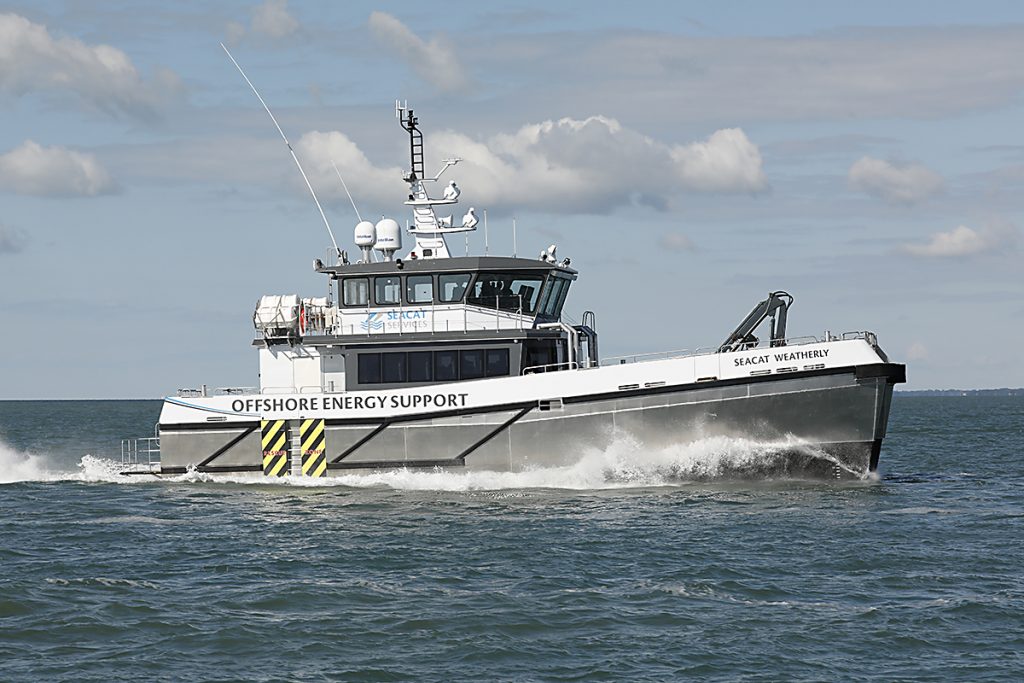
Following her completion at the Diverse Marine shipyard in Cowes and successful sea trials, Seacat Weatherly heads straight to her first charter contract at a major U.K. offshore wind project.

Class-leading offshore energy support vessel operator Seacat Services recently announced the acceptance of Seacat Weatherly, the first next-generation Chartwell 24 catamaran designed by pioneering naval architect Chartwell Marine to enter operational service.

Following her completion at the Diverse Marine shipyard in Cowes and successful sea trials, Seacat Weatherly heads straight to her first charter contract at a major U.K. offshore wind project.

Seacat Weatherly is the culmination of a long-term collaboration between South Coast businesses Seacat Services, Chartwell Marine, and shipyard Diverse Marine, and the product of an industry-wide drive to refine the formula for offshore-wind vessel support. As offshore-wind projects grow in scale, customers are placing increased emphasis on the core metrics that define effective vessel operation, including the safety and comfort of crew transfers, “time on turbine” for technicians, technical availability, and efficiency.

The first of a two-vessel order, Seacat Weatherly is designed to meet — and exceed — the operational standards expected by offshore wind project owners and contractors. She brings a number of key technical innovations to the market, including advanced engine and hull design, a large foredeck, and safety features such as step-free access, sliding handrails, and unrestricted visibility from the wheelhouse.

This has all been achieved while making use of many of the same components and equipment as her sister vessels in the 13-strong Seacat Services fleet, in order to maintain operational familiarity and ensure effective management of spares and inventory.

“Seacat Weatherly is a fine addition to the fleet, capitalizing on all of the core attributes that have defined the Seacat Services offering to date,” said Andrew Calderbank-Link, operations director at Seacat Services. “Refining vessel designs is vital to meeting the changing needs of the offshore wind sector, and Seacat Weatherly ensures that our crews can bring maximum operational value to our customers from day one.”

“It brings us great satisfaction to see Seacat Weatherly enter service, and we will be monitoring closely how she performs on site,” said Andy Page, naval architect and managing director at Chartwell Marine. “The Chartwell 24 design has been formulated for the industry by the industry to meet the specific requirements of offshore wind construction and operation, both in Europe and further afield.”

Seacat Weatherly has been successfully handed over despite the challenges and pressures created by the current lockdown. Her sister vessel, Seacat Rainbow, is under construction at the Diverse Marine yard in Cowes and is scheduled for acceptance in September.

“It is testament to the resolve and versatility of our team — and the strength of our ongoing collaboration with Seacat Services and Chartwell Marine — that we’ve successfully brought this vessel build to fruition despite current supply chain disruption and working restrictions,” said Ben Colman, director at Diverse Marine. “This is a huge collective achievement and bodes well for the future of British boatbuilding and naval architecture as we set a new standard for the global offshore wind market.”

MORE INFO  www.seacatservices.co.uk

Vestas to keep climate targets in line with 1.5°C scenario

0

As a leading renewable energy company, Vestas recently announced that the Science Based Targets Initiative (SBTi) has validated the company’s greenhouse gas reduction targets and confirmed them as in line with the levels required to keep global warming to 1.5°C above pre-industrial temperatures — the most ambitious goal of the Paris Agreement.

Vestas is the first renewable energy manufacturer to have its targets validated by the SBTi as consistent with a 1.5°C scenario. The target validation follows Vestas’ announcement in January 2020 to become carbon neutral, without the use of offsets, by 2030.

“At Vestas, we are proud to reach this milestone with SBTi; becoming carbon neutral by 2030 is a key element within Vestas’ goal of becoming the global leader in sustainable energy solutions, said Henrik Andersen, CEO and president of Vestas. “With several nations and global businesses outlining intentions for a green economic recovery from COVID-19, the renewables industry is set to become a more dominant resource in the global-energy mix. As the world’s leading supplier of wind energy, Vestas is determined to ensure that the industry continues to minimize environmental impacts as it scales.”

“Vestas’ science-based targets put the company on a pathway to reach zero emissions faster than what science tells us is needed,” said Cynthia Cummis, director of Private Sector Climate Mitigation at World Resources Institute, one of the Science Based Targets initiative partners. “By setting targets that are grounded in climate science, Vestas is positioning themselves as leaders in their sector and setting themselves up for success in the transition to a net-zero economy.”
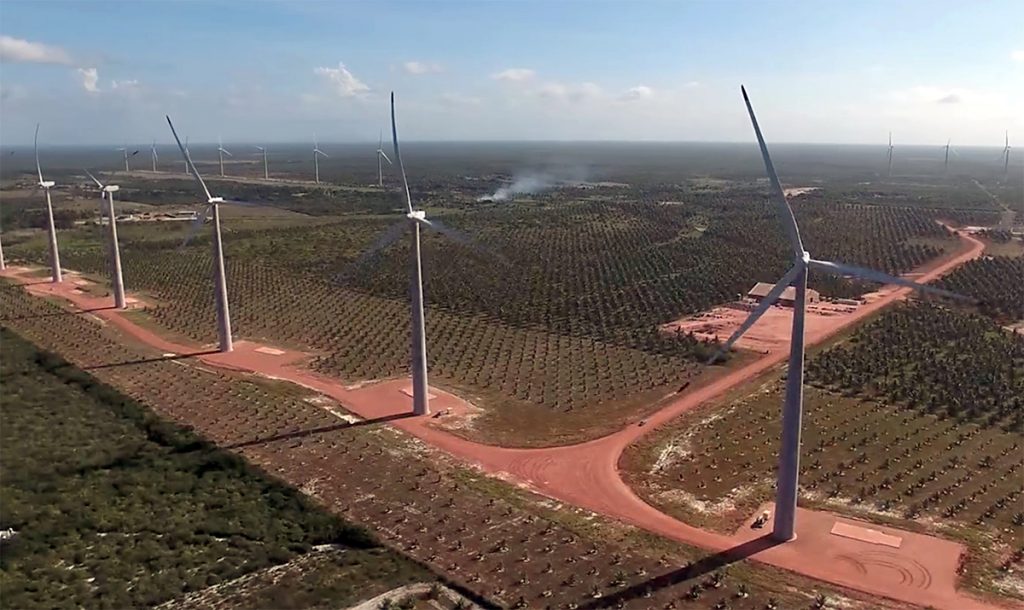
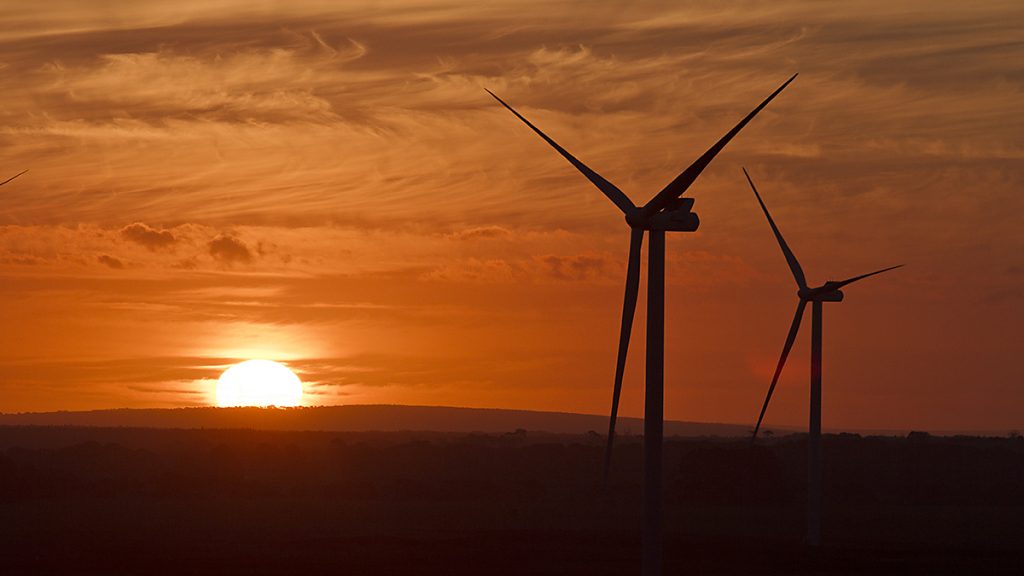
The 1.5°C target classification is the most ambitious designation available through the SBTi validation process and covers Vestas’ targets to reduce emissions from direct operations (scope 1 and 2 emissions) by 100 percent by 2030 from a 2019 base year. Separately, Vestas’ target for reducing emissions from its supply network (scope 3 emissions) by 45 percent per MWh generated by 2030 has also been validated as notably ambitious. In a recent report, the IPCC stipulates that limiting the rise in the global temperature to 1.5°C, as opposed to 2°C, will significantly reduce the risk of extreme impacts from climate change.

The 1.5°C scenario of the Paris Agreement outlines the measures required to limit the global temperature increase to 1.5°C above pre-industrial temperatures. Ensuring that all direct operations are closely aligned with the 1.5°C scenario is necessary for Vestas to ensure the company can remain sustainable as it scales its position within the energy sector’s supply chain. A recent report from the Carbon Disclosure Project (CDP) found company supply chains produce on average five times more emissions than direct operations. The research also found increasing the proportion of renewable energy within supply chains is an effective pathway to address emissions.

“Limiting global warming to 1.5°C above pre-industrial temperatures cannot be achieved if all global actors work in isolation; we must adopt a collaborative approach,” said Lisa Ekstrand, head of Sustainability at Vestas. “At Vestas, we recognize that, as a global leader within the renewable industry’s value chain, we have a responsibility to be ambitious in our approach to reducing greenhouse gas emissions. This has been the driving force behind devising our strategy for becoming carbon neutral, and for reducing emissions in our supply chain.”

Company cars are gradually being replaced across Vestas with more sustainable alternatives. Close to 100 green service vehicles are now in operation, signaling Vestas’ first step within direct operations toward its 2030 goal. Moving forward, Vestas will also be focusing on fulfilling its ambitions for reducing greenhouse gas emissions within its own supply chain, in line with its target of a 45-percent reduction. To support this goal, Vestas has already established partnerships with several suppliers, including DSV, to improve its emission reductions within transport and turbine manufacture.

More info www.vestas.com

Onyx Insight to bring advanced predictive maintenance to Brazil

0
By working with an innovative local partner in the Brazilian market, ONYX InSight has ensured smooth project delivery for Rio Energy, minimizing disruption with the support of expert local market knowledge.

ONYX InSight, a leading predictive analytics and engineering firm in the global wind-energy industry, is introducing advanced sensing technology and predictive maintenance solutions to the Brazilian market through a long-term monitoring deal with Rio Energy, one of the fastest growing energy producers in Brazil.

The predictive maintenance service, which will be delivered in partnership with innovative local operations partner, Filtralub, will be the first of its kind in Brazil and will enable Rio Energy to achieve savings of up to 30 percent on O&M costs by improving failure detection and optimizing operations, maintenance planning, and asset output. The deal covers predictive maintenance using both ONYX InSight’s ecoCMS technology and third-party hardware.

Installation of the advanced sensing technology began in the first quarter of 2020. ONYX InSight will provide an advanced combination of hardware, software, and monitoring services — powered by engineering expertise — and Filtralub operational and installation support to the customer.

By working with an innovative local partner in the Brazilian market, ONYX InSight has ensured smooth project delivery for Rio Energy, minimizing disruption with the support of expert local market knowledge.

The deal increases the share of Brazil’s wind-turbine fleet covered by advanced predictive maintenance. By helping to drive down the levelized cost of energy (LCOE), predictive maintenance can improve owner & operator profitability — ONYX InSight has achieved cuts in LCOE of up to 12 percent.

“Brazil’s wind industry is the one of the largest in the world and continues to grow quickly,” said Jose Morais, business development manager, Iberia and LatAm, ONYX InSight. “Within this significant installed wind-energy capacity, there is unrealized potential for efficiency savings delivered by predictive maintenance. The high capacity factor in Brazil means owners and operators cannot afford to neglect turbine health. The latest predictive maintenance technology delivering advanced data analytics and insight will help wind-farm owners and operators to protect their assets and ensure maximum energy production in a competitive market.”

Advanced predictive maintenance solutions collect data on multiple aspects of turbine operation and bring it all into one place, improving owners’ and operators’ understanding of their machinery health condition.

Research by ONYX InSight has found that combining data streams such as oil condition, SCADA, and vibration offers significant advantages for diagnostic accuracy, which translates into better decision-making support for wind farm owners and operators. The effective implementation of predictive maintenance can save 17 percent of OPEX costs, increasing profitability of fleets.

“We are proud to be at the cutting edge of wind energy in Brazil,” said Lucas Sanchez, engineering and O&M manager, Rio Energy. “ONYX InSight’s predictive maintenance service will help us to increase the reliability of our failure detection and extend lead times on component procurement and maintenance planning. ONYX InSight’s engineering-grounded solution will increase our confidence in the actionable insights drawn from our data.”

MORE INFO  www.onyxinsight.com

Study: Federal offshore wind lease auctions could reap major benefits

0

The United States has an opportunity to accelerate offshore wind energy growth and benefit from 28 new GW of clean energy and $1.7 billion in U.S. Treasury revenue by 2022, a recent study released from research group Wood Mackenzie finds.


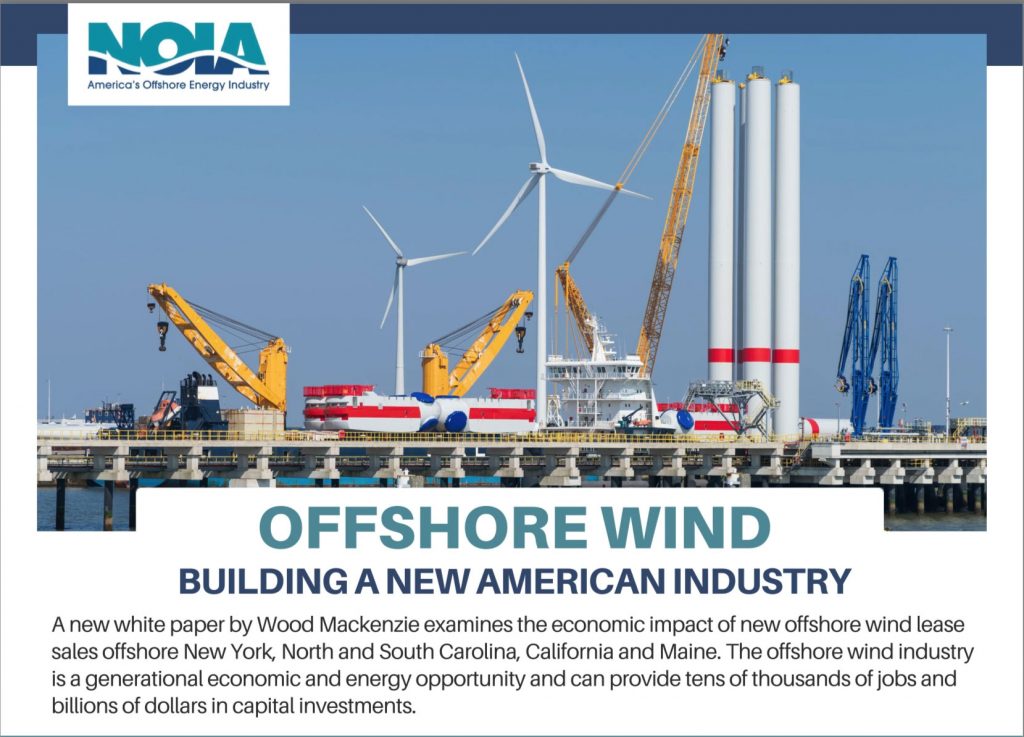
Findings from this study confirm additional lease areas are needed to meet demand, reduce energy costs, increase competition, and ultimately generate thousands of jobs and billions in investment. Additionally, the findings offer guidance to decision-makers about new offshore wind leases, which can be a short-term solution to jump start recovery from a coronavirus pandemic-driven economic slowdown.

Commissioned by four energy industry groups, American Wind Energy Association (AWEA), National Ocean Industries Association (NOIA), New York Offshore Wind Alliance (NYOWA), and the Special Initiative on Offshore Wind (SIOW) at the University of Delaware, the study dives into the economic impact of offshore wind activities as a result of potential Bureau of Ocean Energy Management (BOEM) lease auctions in 2020, 2021, and 2022. Based on existing activities and policy assumptions for future offshore wind development, 2 million acres of federal waters in the New York Bight, which includes parts of New Jersey, as well as California and the Carolinas, could be auctioned for commercial leases as early as this year into 2021. Such leasing could support 28 GW of offshore wind development and generate $1.2 billion in U.S. Treasury revenue. Other auctions for lease areas in the Gulf of Maine and areas in California could happen in 2022 and would generate an additional $500 million in U.S. Treasury revenue.

“Policymakers at the Federal and State levels right now hold the key to unlocking the full potential of the offshore wind industry that will benefit all Americans,” said Laura Morton, AWEA senior director of Offshore Wind. “We’re on the cusp of a rare opportunity, but the U.S. remains far behind other countries in harnessing offshore wind technology. It’s time for us to unleash this abundant domestic energy source that will deliver tens of thousands of new jobs, revitalize coastal ports, and expand manufacturing opportunities, to reap major economic and environmental benefits.”

Significant capital investment will be put into the U.S. economy to support offshore wind activities. Total investment in the U.S. offshore wind industry will be $17 billion by 2025, $108 billion by 2030, and $166 billion by 2035. From 2022 to 2035, capital investment of $42 billion will go to turbine manufacturers and the supply chain, $107 billion will go to the construction industry, and $8 billion will go to the transportation industry and ports. Annual capital investment for O&M activities will increase to $2.4 billion in 2035.

In addition to delivering clean energy to millions of households, the offshore wind industry will also contribute a variety of economic benefits to the U.S. economy, including supporting thousands of jobs and billions of dollars in capital investment. If the assumed BOEM auctions in 2021 and 2022 happen, total full time equivalent (FTE) job creation from the resulting offshore wind activities, including development, construction, and operation will be approximately 80,000 jobs annually from 2025 to 2035.

“American offshore wind is a generational opportunity,” said Erik Milito, NOIA president. “Infrastructure spending, energy security, and shovel-ready jobs with good wages will be unleashed. Importantly, offshore wind development will support jobs throughout the entire U.S. The same shipbuilders, heavy lift vessel operators, steel fabricators, and countless other companies who built the Gulf of Mexico oil and gas sector stand ready to lend their expertise to the American offshore wind industry.”

MORE INFO  bit.ly/33qRcf6

Vestas to keep climate targets in line with 1.5°C scenario

0
Vestas is the first renewable energy manufacturer to have its targets validated by the SBTi as consistent with a 1.5°C scenario. The target validation follows Vestas’ announcement in January 2020 to become carbon neutral, without the use of offsets, by 2030.

As a leading renewable energy company, Vestas recently announced that the Science Based Targets Initiative (SBTi) has validated the company’s greenhouse gas reduction targets and confirmed them as in line with the levels required to keep global warming to 1.5°C above pre-industrial temperatures — the most ambitious goal of the Paris Agreement.

Vestas is the first renewable energy manufacturer to have its targets validated by the SBTi as consistent with a 1.5°C scenario. The target validation follows Vestas’ announcement in January 2020 to become carbon neutral, without the use of offsets, by 2030.

“At Vestas, we are proud to reach this milestone with SBTi; becoming carbon neutral by 2030 is a key element within Vestas’ goal of becoming the global leader in sustainable energy solutions, said Henrik Andersen, CEO and president of Vestas. “With several nations and global businesses outlining intentions for a green economic recovery from COVID-19, the renewables industry is set to become a more dominant resource in the global-energy mix. As the world’s leading supplier of wind energy, Vestas is determined to ensure that the industry continues to minimize environmental impacts as it scales.”

“Vestas’ science-based targets put the company on a pathway to reach zero emissions faster than what science tells us is needed,” said Cynthia Cummis, director of Private Sector Climate Mitigation at World Resources Institute, one of the Science Based Targets initiative partners. “By setting targets that are grounded in climate science, Vestas is positioning themselves as leaders in their sector and setting themselves up for success in the transition to a net-zero economy.”

The 1.5°C target classification is the most ambitious designation available through the SBTi validation process and covers Vestas’ targets to reduce emissions from direct operations (scope 1 and 2 emissions) by 100 percent by 2030 from a 2019 base year. Separately, Vestas’ target for reducing emissions from its supply network (scope 3 emissions) by 45 percent per MWh generated by 2030 has also been validated as notably ambitious. In a recent report, the IPCC stipulates that limiting the rise in the global temperature to 1.5°C, as opposed to 2°C, will significantly reduce the risk of extreme impacts from climate change.

The 1.5°C scenario of the Paris Agreement outlines the measures required to limit the global temperature increase to 1.5°C above pre-industrial temperatures. Ensuring that all direct operations are closely aligned with the 1.5°C scenario is necessary for Vestas to ensure the company can remain sustainable as it scales its position within the energy sector’s supply chain. A recent report from the Carbon Disclosure Project (CDP) found company supply chains produce on average five times more emissions than direct operations. The research also found increasing the proportion of renewable energy within supply chains is an effective pathway to address emissions.

“Limiting global warming to 1.5°C above pre-industrial temperatures cannot be achieved if all global actors work in isolation; we must adopt a collaborative approach,” said Lisa Ekstrand, head of Sustainability at Vestas. “At Vestas, we recognize that, as a global leader within the renewable industry’s value chain, we have a responsibility to be ambitious in our approach to reducing greenhouse gas emissions. This has been the driving force behind devising our strategy for becoming carbon neutral, and for reducing emissions in our supply chain.”

Company cars are gradually being replaced across Vestas with more sustainable alternatives. Close to 100 green service vehicles are now in operation, signaling Vestas’ first step within direct operations toward its 2030 goal. Moving forward, Vestas will also be focusing on fulfilling its ambitions for reducing greenhouse gas emissions within its own supply chain, in line with its target of a 45-percent reduction. To support this goal, Vestas has already established partnerships with several suppliers, including DSV, to improve its emission reductions within transport and turbine manufacture.

MORE INFO  www.vestas.com