



Home 2018

E.ON and GE partner for Texas repowering project

0

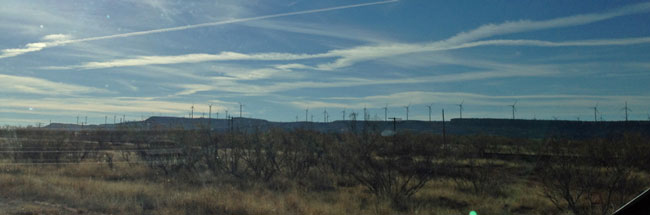
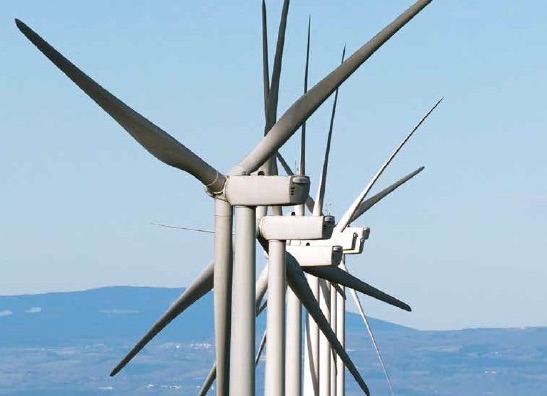
E.ON recently announced it is partnering with GE to repower its Panther Creek I and Panther Creek II wind farms in West Texas.

“We’re excited to embark on our first repowering project in the U.S.,” said Silvia Ortin, chief operating officer, North America and E.ON Climate & Renewables Board Member. “The repowering of our Panther Creek wind farms provides us with the opportunity to increase lifetime earnings from the sites. In addition, it allows us to capture up-to-date turbine efficiency improvements and a resulting increase in power generation.”

The repowering includes the replacement of a significant portion of the components, effectively increasing the annual production for all 172 wind turbine generators (WTGs) totaling 258 MW on the sites.

“This is the largest repowering project we’ve undertaken at E.ON, and we expect this trend to continue as we see our turbine fleet mature,” said Anja-Isabel Dotzenrath, CEO, E.ON Climate & Renewables. “While our Panther Creek wind farms have been excellent performers for us in the past, this project allows us to improve reliability while gaining valuable lessons learned for any future repowering activities.”

The erection and commissioning of the project will be conducted by GE as part of the equipment delivery contract and is expected to be complete in the third quarter of 2019.

“GE and E.ON worked collaboratively to develop a repower strategy for Panther Creek that will extend the life of the wind farms, and materially increase the AEP of the existing turbines,” said Vikas Anand, general manager of GE’s Onshore Wind business in the Americas. “The twofold benefit of repower will ensure that renewable energy is available to E.ON’s customers for years to come.”

Panther Creek I came online in September 2008 and consists of 95 GE 1.5 MW SLE turbines for a total of 142.5 MW. It is the first of a three-phase project in West Texas and is in Howard and Glasscock counties.

Panther Creek II came online in December 2008 and consists of 77 GE 1.5 MW SLE turbines for a total of 115.5 MW. Its footprint spans parts of Glasscock and Sterling counties.

More information: www.ge.com/renewableenergy
E.ON and GE partner for Texas repowering project

0

E.ON recently announced it is partnering with GE to repower its Panther Creek I and Panther Creek II wind farms in West Texas.

“We’re excited to embark on our first repowering project in the U.S.,” said Silvia Ortin, chief operating officer, North America and E.ON Climate & Renewables Board Member. “The repowering of our Panther Creek wind farms provides us with the opportunity to increase lifetime earnings from the sites. In addition, it allows us to capture up-to-date turbine efficiency improvements and a resulting increase in power generation.”

The repowering includes the replacement of a significant portion of the components, effectively increasing the annual production for all 172 wind turbine generators (WTGs) totaling 258 MW on the sites.

“This is the largest repowering project we’ve undertaken at E.ON, and we expect this trend to continue as we see our turbine fleet mature,” said Anja-Isabel Dotzenrath, CEO, E.ON Climate & Renewables. “While our Panther Creek wind farms have been excellent performers for us in the past, this project allows us to improve reliability while gaining valuable lessons learned for any future repowering activities.”

The erection and commissioning of the project will be conducted by GE as part of the equipment delivery contract and is expected to be complete in the third quarter of 2019.

“GE and E.ON worked collaboratively to develop a repower strategy for Panther Creek that will extend the life of the wind farms, and materially increase the AEP of the existing turbines,” said Vikas Anand, general manager of GE’s Onshore Wind business in the Americas. “The twofold benefit of repower will ensure that renewable energy is available to E.ON’s customers for years to come.”

Panther Creek I came online in September 2008 and consists of 95 GE 1.5 MW SLE turbines for a total of 142.5 MW. It is the first of a three-phase project in West Texas and is in Howard and Glasscock counties.

Panther Creek II came online in December 2008 and consists of 77 GE 1.5 MW SLE turbines for a total of 115.5 MW. Its footprint spans parts of Glasscock and Sterling counties.

More information: www.ge.com/renewableenergy
Royal Caribbean Cruises partners with Southern Power

0

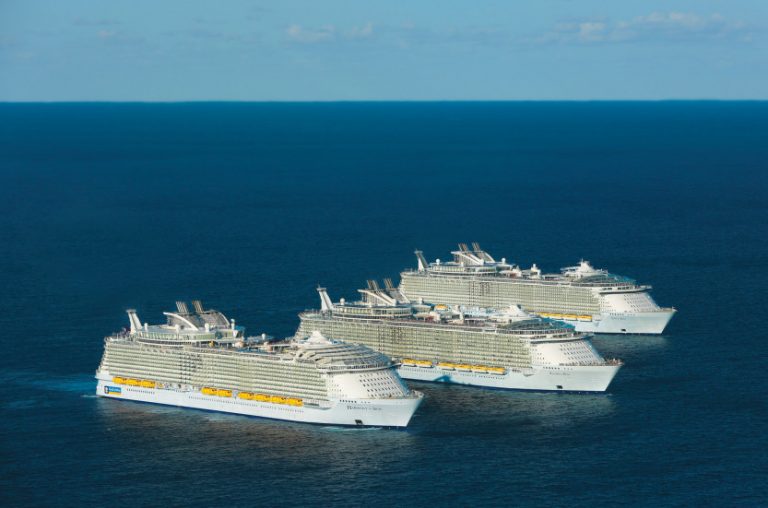
Royal Caribbean Cruises Ltd. announced it has signed an agreement with Southern Power, a leading U.S. wholesale energy provider and subsidiary of Southern Company, for Southern Power’s 200-MW Reading Wind Facility. This initiative, which will offset up to 12 percent of Royal Caribbean’s emissions beginning in 2020, is the latest addition to the company’s extensive sustainability efforts, which include programs to reduce greenhouse gas emissions through innovations at sea and in port.

This project, Southern Power’s 11th wind facility, is in Osage and Lyon counties, Kansas, and is Southern Power’s first to be validated as a carbon offset project under the Verified Carbon Standard. The agreement with Royal Caribbean provides Southern Power with the economic basis to construct the project. Royal Caribbean was advised on the execution of this agreement by Schneider Electric Energy & Sustainability Services.

“This agreement complements our longstanding strategic initiatives to reduce the company’s emissions and become a more sustainable operator,” said Richard D. Fain, chairman and CEO of Royal Caribbean Cruises Ltd. “We are constantly looking for new ways to reduce our environmental footprint, both in the short and long term, and thanks to our partnership with Southern Power this is the latest step in our journey.”

The facility is expected to generate roughly 760,000 MW/h per year over the duration of the 12-year agreement, which translates to enough clean energy to offset 10-12 percent of Royal Caribbean’s annual carbon emissions starting in 2020. With this innovative program, Royal Caribbean is able to apply a new approach while continuing its primary initiatives to advance sustainability efforts across the company’s fleet.

“Southern Power is thrilled to partner with Royal Caribbean to provide the company with a carbon offset project that will further complement Royal Caribbean’s expansive sustainability initiatives,” said Southern Power President and CEO Mark Lantrip. “Reading Wind celebrates the first project in our joint development agreement with RES America Developments Inc. (RES), qualifying for 100 percent production tax credits and is an important addition to Southern Power’s portfolio. We’re proud to support Royal Caribbean’s innovative approach toward advancing its sustainability through this project.”

The 200-MW project was originally developed by RES who will lead the construction of the project alongside Southern Power. Reading Wind is expected to consist of 62 wind turbines manufactured by Siemens Gamesa. The project is expected to break ground in the second quarter of 2019 and is expected to be complete by the second quarter of 2020. Southern Power will operate and maintain the facility upon completion.

Royal Caribbean’s Commitment to Sustainability

Royal Caribbean has a longstanding commitment to environmental stewardship, which the company expanded in 2016 to set ambitious and measurable goals to reduce the company’s environmental footprint. In addition to the agreement with Southern Power, Royal Caribbean is also employing several technologies and innovations to reduce greenhouse gas emissions and create more efficient vessels, including:

  • Advanced Emission Purification systems, which remove approximately 98 percent of sulfur dioxide emissions.
  • Air lubrication systems to reduce drag and increase fuel efficiency.
  • Energy management software, an industry first, to achieve top fuel efficiency.
  • The introduction of new fuels such as liquefied natural gas, in the near future.
  • Onboard the ship: the use of energy-efficient equipment in galleys and the replacement of incandescent bulbs with fluorescent and LED lighting, as well as the introduction of fuel cells.

Royal Caribbean also encourages guests to make a positive impact on the environment through Save the Waves, its onboard stewardship program focused on reducing waste; reusing and recycling; and properly disposing of remaining waste.

More information: www.rclcorporate.com.


Newer wind farms require more active monitoring and maintenance

0

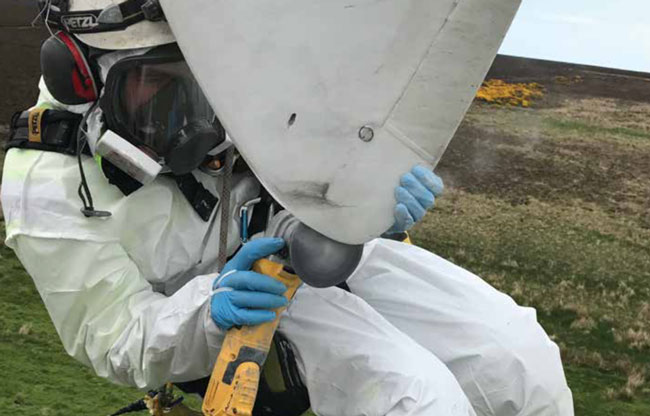
O&M managers need to more actively and closely monitor the health of turbine blades at newer wind farms under five years of age, with the average of seven repairs required per turbine significantly exceeding that of the 2.2 repairs for older wind farms.

This is according to leading blade repair and inspection specialist Altitec, which has recently launched its 2018 Blade Repair Atlas, which provides a detailed breakdown of its operations across the UK, Europe and further afield.

The global growth of the wind industry has seen continued innovation in turbine technologies, with ever larger capacity models coming online. This has also resulted in increased blade spans, leading to new O&M challenges and a need to ensure blades are serviced regularly and to a high standard.

Altitec’s Blade Repair Atlas indicates newer projects are likely to require more active monitoring and maintenance of the condition of turbine blades, even though owners and operators may expect to prioritise the needs of older wind farms.

“We recommend that all wind farms undergo regular blade inspections, no matter their age, to ensure they continue to perform at their optimal levels and that energy production remains as high as possible. But our records indicate that, during the first five years of a wind farm’s operational lifetime, O&M managers may be more prone to overlooking the need for blade maintenance,” said Tom Dyffort, managing director of Altitec Group. “Ultimately, this will only result in more serious faults developing, more repairs being required and longer periods of turbine downtime.”

The Atlas also provides in-depth analyses of the most frequently required internal and external blade repairs. Repairs to the internal blade structure, in particular, require close attention and intensive repair work by technicians.

In Altitec’s experience, retrofit lamination makes up some 60 percent of all internal damage repairs, requiring extensive preparation of and cleaning of the blade before the inner laminate can be treated. Additional leading causes of internal damage includes that to the bulkhead brackets (23 percent) and bulkhead sealing (17 percent) at the root end of the blade.

External repairs, however, constitute the vast majority of repairs to turbine rotor blades, and typically involve patching and replacement of areas of the blade’s surface layers. These can often become damaged and distorted due to the mechanical stresses placed upon them as the blades flex and twist under loading, as well as general wear from the effects of weather.

The Atlas records the leading causes of damage requiring external repairs as being a blade’s gelcoat (58 percent), top coat (20 percent) and leading edge (14 percent).

More information: www.altitec.co.uk

Wind growth: Texas, Oklahoma, and Iowa lead the nation

0

The U.S. Department of Energy (DOE) recently released three wind energy market reports demonstrating that as wind installations continue across the country and offshore wind projects move beyond the planning process, technology costs and wind energy prices continue to fall.

The reports cover three market sectors: land-based utility scale, distributed, and offshore wind.

Highlights from this past year include larger, more powerful wind turbines and lower technology costs and wind power prices for on land and offshore applications, as well as U.S. distributed wind capacity crossing the 1 GW threshold.

The 2017 Wind Technologies Market Report, prepared by DOE’s Lawrence Berkeley National Laboratory, found the following:

  • The U.S. wind industry installed 7,017 MW of capacity last year, bringing total utility-scale wind capacity to nearly 89 GW.
  • In total,41 states operated utility-scale wind projects. Texas leads the nation with more than 22 GW of wind capacity, while Oklahoma, Iowa, California, and Kansas have more than 5,000 MW.
  • Another 13 states have more than 1,000 MW.
  • In 2017, wind energy contributed 6.3 percent of the nation’s electricity supply, more than 10 percent of total generation in14 states, and more than 30 percent in four of those states: Iowa, Kansas, Oklahoma, and South Dakota.
  • Bigger turbines with longer blades are enhancing wind-plant performance. Wind projects built in the past few years have seencapacity factors increase by 79 percent compared to projects installed from 1998 to 2001.
  • The average installed cost of wind projects in 2017 was $1,611 per kW, down 33 percent from the peak in 2009-2010.
  • The U.S. wind industry supported more than 105,000 jobs and saw $11 billion invested in new wind plants in 2017.

The 2017 Distributed Wind Market Report, prepared by DOE’s Pacific Northwest National Laboratory, highlights the following:

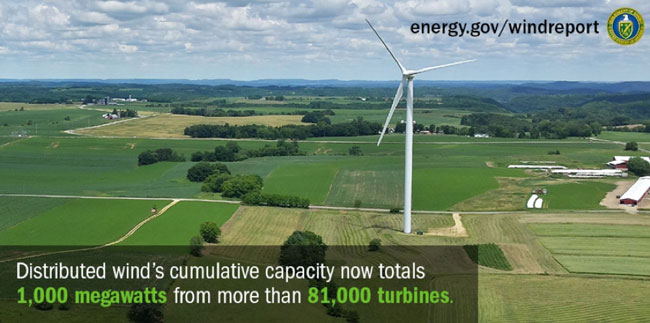
  • In total,S. wind turbines in distributed applications reached a cumulative installed capacity of 1,076 MW. This capacity comes from roughly 81,000 turbines installed across all 50 states, Puerto Rico, the U.S. Virgin Islands, and Guam.
  • In 2017, Iowa, Ohio, and California led the nation in new distributed wind capacity installed as a result of large-scale turbines installed by commercial and industrial facilities and electricity distribution utilities.
  • Thirty-five percent of distributed wind projects installed in 2017 were at homes, and 25 percent were agricultural installations.
  • S. manufacturers of small wind turbines and their supply chain vendors are located in 27 states.
  • Between 2015 and 2017, U.S.-based small wind turbine manufacturers accounted for more than $226 million in export sales.

The 2017 Offshore Wind Technologies Market Update, prepared by DOE’s National Renewable Energy Laboratory, found the following:

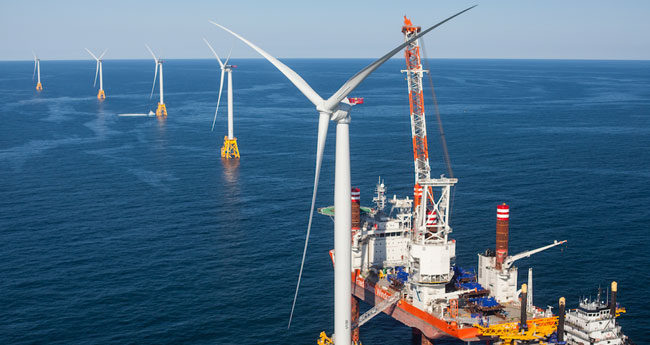
  • The U.S. offshore wind industry recently took a leap forward as commercial-scale projects were competitively selected in Massachusetts (800 MW), Rhode Island (400 MW), and Connecticut (200 MW).
  • New York, New Jersey, and Maryland also have offshore wind projects in the development pipeline.
  • The U.S. offshore wind project pipeline has reached a total of 25,464 MW of capacity across 13 states, including the 30 MW Block Island Wind Farm commissioned in 2016.
  • In Europe — where most offshore wind development has occurred to date — recent offshore wind project auctions have continued the trend of developers committing to lower electricity prices for projects that will be operating in the 2020s.
  • New offshore wind turbinesare being developed with 10 to 12 MW of capacity (compared to an average capacity of 2.3 MW for land-based turbines and 5.3 MW for offshore wind turbines installed in 2017). As a result, demand is increasing for specialized ships that will be able to install these very large turbines in U.S. waters.
  • About 60 percent of the U.S. offshore wind resource lies in deep waters. Developing a project in deep waters requires wind turbines onfloating foundations.
  • In the U.S., floating offshore wind projects have been proposed off the coasts of Maine, California, and Hawaii.

More information: https://www.energy.gov/eere/wind/2017-wind-market-reports

Chartwell Marine launches new CTV design

0

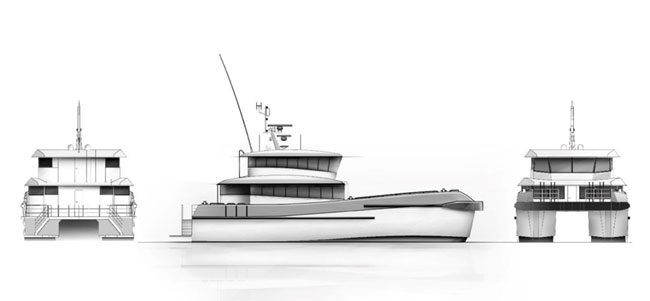
Chartwell Marine, a pioneer in next generation vessel design, has announced the launch of the Chartwell 24, a brand-new crew transfer vessel (CTV) design for the international offshore wind markets.

The catamaran design has been developed in conjunction with CTV operators, wind-farm owners, and turbine manufacturers, responding directly to lessons learned in the construction and long-term operations & maintenance (O&M) phases of European projects.

While the optimum composition of an offshore wind fleet remains a topic of debate, CTVs continue to play a critical role throughout development and operations. This role has evolved in line with the increasing demands of supporting large-scale deep-water wind farms, encompassing not only the safe, comfortable and expedient transfer of technicians to and from the turbines, but also a wide range of essential logistical support activities that keep a project running on schedule.

In this context, CTVs and their operators must offer considerable versatility, while maintaining the highest possible standards of safety and technical availability. As the industry looks to balance these objectives, vessel designs are becoming increasingly standardized — but there is still room to refine this formula. In turn, operators in new markets such as the U.S. and Taiwan have the opportunity to start on the front foot by taking advantage of the most advanced vessel technology available.

The Chartwell 24, developed off the back of 10 years of data and experience in offshore wind vessel design, aims to hit a ‘sweet spot’ in vessel size and capability that has been achieved by the most effective vessels currently operating in the European market. It aims to build on those proven capabilities, while responding to new requirements emerging as the offshore wind industry expands worldwide.

Specifically, the vessel, which is capable of carrying 24 industrial personnel alongside 3-6 crew, also boasts the largest CTV foredeck in the market, enhancing its cargo capacity. With four engines — and options for hybrid propulsion — the Chartwell 24 enables power sharing, enhancing efficiency and adding redundancy that maximizes vessel reliability and availability. As scrutiny grows on vessel emissions worldwide, this also means the vessel is well placed to meet international requirements, such as EPA Tier 4 and IMO Tier 3.

Crucially, the Chartwell 24 introduces a number of safety related innovations, including a step-free deck that almost entirely eliminates trip hazards, and purpose designed walkways with handrails and sliding safety rails positioned for safe, effective and repeatable crew transfer. From an operational perspective, skippers benefit from full all-round visibility, uncompromised by deck cargo.

“With the Chartwell 24, we’re responding directly to tried and tested vessel support approaches adopted throughout Europe, taking and building upon the best of proven designs and equipping international operators and wind farm owners with a boat that is built for purpose, and meets their needs from day one,” said Andy Page, managing director pf Chartwell Marine. “For crews and wind-farm technicians, that will translate into a high degree of safety, comfort, and operational familiarity. For CTV operators and project owners, that will result in incremental gains in efficiency, availability and reliability that ultimately improve the way offshore wind farms are constructed and operated.”

More information: www.chartwellmarine.com

Shell selects E.ON to operate Texas Wind Farm

0

Brazos Wind Ventures, LLC, a subsidiary of Shell Wind Energy, has signed an operations and maintenance contract with E.ON Energy Services LLC (EES) for its site near Fluvanna, Texas.

E.ON will perform scheduled maintenance services on the 160-MW site.

Shell owns and operates the Brazos Wind Farm, which uses Mitsubishi 1000A turbines. E.ON will perform scheduled maintenance and trouble-shooting for the site in daily coordination with Brazos.

“Shell is a responsible and experienced owner of wind farms with which E.ON is excited to forge a collaborative working relationship,” said John Franklin, senior vice president for E.ON’s North America Operations. “There is a new trend emerging with owners looking to actively manage their wind farms and still engage qualified contractors to help them meet their goals. This is a new approach where the owner and contractor work collaboratively regarding site maintenance.”

“We expect to see other owners follow Shell’s lead in exploring this approach,” he said. “As an owner ourselves, we understand how important it is to control costs and maintain production. We are confident this partnership will help Brazos accomplish both.”

E.ON operates more than 400 of its own Mitsubishi turbines and brings a wealth of experience to the site.

More information: www.eon.com

U.S. Secretary of the Interior Ryan Zinke to Speak at Offshore Conference

0

AWEA is excited to announce that U.S. Interior Secretary Ryan Zinke will speak at this year’s AWEA Offshore WINDPOWER Conference & Exhibition.

The Secretary is a vocal advocate for an energy-secure future and believes offshore wind will play a big role in that future. He joins other notable keynote speakers for the event including: the Norwegian Minister of Petroleum Kjell Børge Freiberg, Massachusetts Sen. Ed Markey, and Virginia Gov. Ralph Northam.

By investing in a sponsorship for this established event now, your business will be seen as a market leader in the future of the U.S. offshore segment. Secure a sponsorship opportunity while they’re still available.

Click here to register.

Spanish startup developing bladeless turbine

0

Vortex Bladeless, a Spanish R&D startup under a H2020 program of the European Commission is developing a new kind of wind turbine without blades nor gears that does not rotate but oscillates.

This new technology brings exciting advantages: harmless to birds, no mobile parts in contact, silent movement, low maintenance, no oil needed, no wastes produced, always oriented to wind direction with a quick response to changes, low manufacturing costs, etc. Vorticity wind turbines are a solution specially designed for residential usage and on-site generation, offering a perfect combination with solar energy installations.

Thanks to the funding from EU’s Horizon 2020 SME-Instrument, Vortex Bladeless has been able to take a big leap in the development of this new technology. On this journey, it has worked alongside many universities and top research centers such as Altair Hyperworks USA and Barcelona SuperComputing Center.

After the last optimization steps, Vortex has started to work in the certification of first products. Meanwhile, the company wants to launch a beta testing campaign in October. The goal with this campaign is to get real feedback of future clients with different profiles and environmental conditions, in order to improve the design and minimize risks before the commercial launch.
Since the central European market is one of the most important parts of the company’s plans, Vortex is growing its influence in Germany as participants of international events such as the “EIC Innovators’ Summit” (Berlin, September 10-11) and “Wind Energy Hamburg” (Hamburg, September 25-28). Here the company hopes to find new partnership agreements with companies and public administrations to face the mass manufacturing and commercialization of its revolutionary bladeless turbines.

More info

Offshore wind summit in Virginia

0

The Southeastern Wind Coalition is pleased to provide information about an exciting event in the offshore wind industry.

The one-day 2018 Virginia Offshore Wind Executive Summit brings together the supply-chain business community with federal and state government officials to accelerate Virginia’s inclusion of large-scale offshore wind within the state’s energy mix. 

Join Virginia Gov. Ralph Northam and Orsted North American President Thomas Brostrom, as well as representatives from Dominion Energy, Siemens Gamesa, U.S. Bureau of Ocean Energy and Management, and many others as they discuss port infrastructure, supply chain procurement, and market opportunities. 

More info

Ingeteam develops new offshore conversion architecture

0

Ingeteam, an independent global supplier of electrical conversion and turbine control equipment, recently announced an in-house R&D study that allowed them to work out the optimal electrical power conversion designs for offshore wind turbines up to 15 MW.

The research, taking into account the complex set of parameters at play in LCOE, enabled the company to develop a medium voltage power converter based on the parallelization of several conversion lines (core product) reaching up to the 15 MW power range. Ingeteam said its new design is the ideal solution for scaling up offshore turbine platforms and will present its converter and the associated research at the Global Wind Summit in Hamburg next month.

Ingeteam’s R&D study assessed the complex relationship between the cost of the power conversion stage and its reliability and maintainability metrics (MTBF and MTTR respectively[1]) to determine the lowest LCOE. Based on the study findings, Ingeteam found that the optimal solution for the offshore wind market is a medium voltage power converter based on the parallelization of several conversion lines (core product) reaching up to the 15 MW power range. The power conversion line designed by Ingeteam offers the best investment/availability ratio, with efficient operation, easy maintenance and improved reliability

“With current technologies, as well as the expected progress in materials and engineering integration, we think that offshore wind turbines will continue to rapidly increase their power capacity,” said commented Ana Goyen, director of Ingeteam Wind Energy. “Therefore, a robust medium voltage power converter has been developed focusing on a market that demands a low levelized cost of energy (LCOE) without compromising quality or performance in wind turbine platforms that are continuously scaling up.”

Ingeteam’s new core product is capable of reaching the 15 MW power range and has been conceived considering the modularity of the system as a key feature. It therefore allows multiple solutions depending on customer requirements regarding the integration in the wind turbine. The design of the converter offers maintenance friendly characteristics with front access and withdrawable main components that directly contribute to minimize the OPEX related to the service of the wind turbine.

This medium voltage converter has been specially designed for the offshore market with fully enclosed cabinet and a liquid cooling system that guarantees the safe operation of the converter even in harsh environments. With efficiencies higher than 98 percent at rated operating conditions, the proposed solution contributes significantly to minimize the production losses of the wind turbine.

Ingeteam has developed the control algorithms of its full power converters to guarantee the fulfillment of the most demanding grid codes, such as German EON-2006 and Indian CERC-CEA. Additionally, country-specific power quality requirements are fulfilled by applying advanced modulation strategies. Ingeteam’s medium voltage converter solution is able to control the torque of different types of generators (IG, PMG or EESG) with the highest performance dynamics but always remaining within winding and bearing limits. Finally, the control algorithms can be adapted to operate with single and multiphase stator generators in order to optimize the whole wind-turbine solution.

More info


DOE reports distributed wind has surpassed 1 GW

0

U.S. distributed wind market surpassed the 1 GW milestone with 81,000 turbines generating power across 50 states, according to the 2017 Distributed Wind Market Report released recently by the U.S. Department of Energy Office of Energy Efficiency and Renewable Energy.
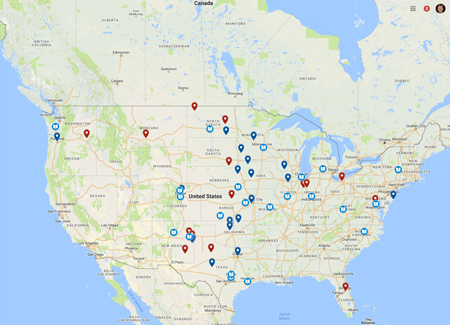
In 2017, 21 states added 83.7 MW of new distributed wind capacity. Iowa leads all states with 63.5 MW installed distributed capacity.

“Despite minimal policy support, the market is poised for further growth in response to the recent ITC extension,” said Jennifer Jenkins, AWEA’s Distributed Wind Program Director. “We are working with industry to leverage the ITC, its proven success in reaching this important milestone, and drive new markets like C&I and microgrids.”

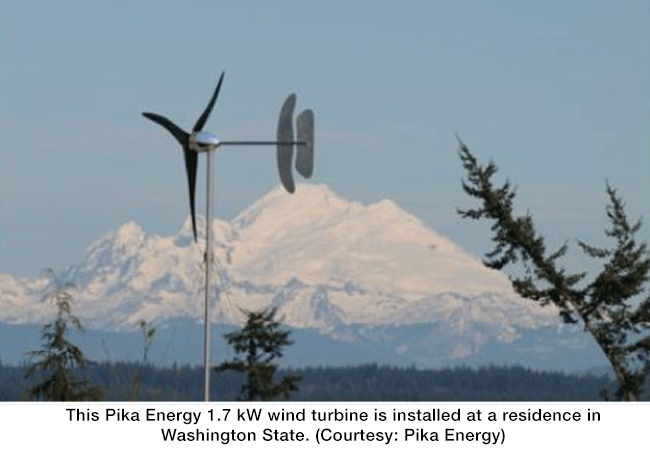
In contrast with utility-scale wind farms, which are larger with an average capacity of roughly 200 MW, distributed wind systems are generally connected behind the meter or to a local distribution grid. Distributed wind can range in size from a 1 kW or smaller off-grid wind turbine, to a 10kW turbine at a home or farm, to several multi-megawatt wind turbines at a university campus, manufacturing facility, or small community.

More info: https://www.awea.org/DistributedWind_Reaches1GW

Ecotech Institute to host special event

0

Renewable energy career-training college Ecotech Institute invites the community to attend its “Crash-A-Class” event Saturday, August 18, 2018.

Ecotech Institute is a college dedicated to preparing graduates for careers in the energy industry. Open to the community, this free event will feature complimentary lunch and offer visitors a unique opportunity to experience what it’s like to be an Ecotech Institute student.

WHAT: A special event providing visitors with an exclusive chance to experience the hands-on learning that Ecotech Institute offers and find out more about specific career-training programs available at the school.

WHEN: Saturday, August 18, 2018 from 11 a.m. to 2 p.m. MST.

WHERE: Ecotech Institute, 1400 South Abilene Street, Aurora, Colorado 80012.

RSVP: The event is free and open to the public.

More info: ecotechinstitute.com/rsvp


New Mexico one step closer to largest wind farm in the western hemisphere

0

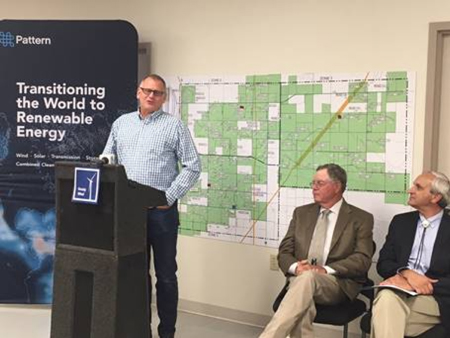
Pattern Development joined New Mexico officials to recognize the job creation and other economic benefits of the state’s growing wind energy industry.

Construction is mobilizing around the Grady Wind project, a 221-MW project in Curry County. Officials included State Senator Pat Woods, Cabinet Secretary of the State of New Mexico Energy Minerals Natural Resources Department Ken McQueen, Curry County Commissioner Robert Thornton, Pattern Energy Senior Director of Business Development Ward Marshall, CRELA Board Member Paul Stout, and Clovis Industrial Development Corporation Economic Development Director Chase Gentry.

Grady Wind, expected to create hundreds of jobs for New Mexicans during the construction phase, will also deliver other financial benefits such as land lease payments to local landowners and new tax base for the host communities of eastern New Mexico. Once placed into operation, Pattern Development’s affiliate Pattern Energy will own and operate the Grady Wind facility, along with the neighboring 324 MW Broadview Wind facilities.

“The Pattern Development team is excited to continue helping New Mexico become a western regional leader in the wind-energy industry,” said Adam Renz, External Affairs and Government Relations specialist. “The Grady Wind facility represents an important step in New Mexico’s evolution as a major renewable energy producer. As wind and solar energy development grows, New Mexicans will reap the economic benefits.”

Once in operation, the Grady Wind facility will provide enough clean energy to power nearly 90,000 homes each year. Currently, the solar and wind energy industries employ more than 5,500 in-state workers. Of these, between 3,000 and 4,000 are employed by the wind industry, either directly or indirectly.

More info: patternenergy.com

Vestas partners with gearbox manufacturer ZF

0

As part of Vestas’ Service strategy to optimize the performance of wind-energy assets, Vestas is expanding its partnership with leading gearbox provider ZF to offer global service solutions for customers’ gearboxes. By expanding the partnership with ZF, Vestas will offer customer solutions that can lower repair costs, decrease downtime, and limit additional future repairs.

Leveraging the companies’ complementary service capabilities and global footprint, the partnership also promotes mutual knowledge transfer, cooperation on training, and joint documentation development. Through the partnership, Vestas becomes ZF’s preferred supplier to perform uptower repair work, and ZF becomes Vestas’ preferred supplier for shop repairs and replacement units. Vestas has a long track record of efficiently repairing gearboxes on site without removing them from the turbine, saving significant time and reducing cost.

This expertise will result in unparalleled speed and efficiency offered to fleet owners worldwide. “By partnering with ZF, we can return the turbine to service faster than anyone in the market and leverage our extensive volume with ZF to have best-in-market pricing, terms, and lead times,” said Christian Venderby, GSVP, Service. “And depending on the customers’ asset management strategy, we can now deliver everything from a standalone uptower repair to a complete exchange and turnkey solution globally.

With this new partnership, we are expanding our gearbox capabilities and are, at the same time, lowering the total cost of ownership — all to the benefit of our customers.” ZF develops, manufactures and repairs gearboxes for the wind industry at plants and repair shops in Germany, Belgium, China, the US, and India. Going forward, Vestas and ZF will also collaborate on new repair and gearbox service products that can benefit the rest of the industry.

More info: www.vestas.com

American Wind Week 2018 kicks off

0

America celebrates U.S. leadership in wind energy production and the benefits it creates this week as American Wind Week 2018, August 5-11, officially kicks off.

Wind power is an affordable, reliable and rapidly growing segment of the U.S. electricity supply that supports jobs in all 50 states. Those benefits help drive broad popular support for wind power, on display this week at nearly 30 events in over 15 states, on social media, and through proclamations from governors and mayors from Washington to Kansas and North Carolina.

“This American Wind Week, we salute the more than 105,000 U.S. workers who make it possible to transform the power of wind into affordable electricity that our families and businesses rely on,” said Tom Kiernan, CEO of AWEA. “We’re building more U.S. wind power today than ever before. This is what leadership looks like — growing economic opportunity, homegrown energy, and cleaner air from sea to shining sea.”

Supporters of wind energy across the U.S. launched American Wind Week last year when wind power became the country’s largest source of renewable energy capacity. Today, that leadership is growing with a record amount of wind power under construction at wind farms across America. The U.S. possesses world-class wind resources, with some parts of the heartland and coasts known as the “Saudi Arabia of wind,” and U.S. wind farms are the most productive among countries with the highest levels of installed wind power such as China and Germany.

 The economic and environmental benefits of U.S. wind power are substantial. A record 105,000 Americans work in wind power across 50 states, affordably and reliably supplying more than 6 percent of U.S. electricity. In fact, wind-turbine technicians and solar installers are the nation’s two fastest growing jobs, according to the Bureau of Labor Statistics. And using wind energy created $8 billion in public health savings during 2017 alone by avoiding air pollution that creates smog and triggers asthma attacks.

The week’s events range from a community barbeque in New Mexico to a wind farm tour in North Dakota. If you can’t make it to a Wind Week event in your state, you can still participate by sharing why you’re proud of American leadership in wind power with #americanwindweek on social media.

More info: AmericanWindWeek.org

American wind industry companies pledge $1 million as keystone partners of Habitat for Humanity’s post-Harvey recovery work

0

Companies in the American wind energy industry recently announced they will donate $1 million to Hurricane Harvey repair and rebuilding as keystone partners of Habitat for Humanity’s Habitat Hammers Back initiative.

Participating companies include Apex Clean Energy, Blattner Energy, Duke Energy, EDF Renewable Energy, EDP Renewables, Enel Green Power North America, Inc., E.ON, Goldwind Americas, Hannon Armstrong, Invenergy, Leeward Renewable Energy, MAP Royalty, Pattern Energy, TPI Composites, and the American Wind Energy Association.

The money will support repairs and rebuilding efforts in areas affected by the storm, which first made landfall August 25 near Corpus Christi, Texas. The wind companies also plan to send volunteers to help with the rebuilding effort. Texas has a quarter of U.S. wind-power capacity and more than 22,000 Texans work in the industry, among 102,500 wind jobs nationwide. The state’s more than 12,000 wind turbines themselves emerged unscathed from the storm.

“The EDF group has 400 employees in Houston serving various sectors of the energy industry, including our regional wind-project development team,” said Tristan Grimbert, president and CEO of EDF Renewable Energy. “As Texas wind is an important contributor to our nation’s energy mix, and Houston in specific is the center of energy diversity, we are committed to the ambition to offer our resources in the recovery and rebuilding efforts.”

“Our thoughts and prayers continue to go out to everyone along the Texas Coastal Bend and in Houston who was impacted by this storm,” said Patrick Woodson, chairman of E.ON North America. “Several E.ON employees around our Papalote Creek Wind Farm lost their homes, and even more saw their communities devastated when the hurricane made landfall. Habitat for Humanity will play a critical role in helping people rebuild their homes and communities. With Texas as the nation’s leader in wind energy, it is only right that we and the wind industry be a leading force to help Texans rebuild and recover.”

“More than 22,000 wind workers are in the state of Texas, so this has hit very close to home for us,” said Steven C. Lockard, president and CEO of TPI Composites. “We all feel the need to help with this rebuilding effort. I am especially proud participating companies from across the United States and their associates are committed to volunteer their time in addition to financial resources.”

“Habitat for Humanity is committed to helping families recover from Hurricanes Harvey, and we wouldn’t be able to do it without the support of our partners like these American wind-energy companies,” said Habitat for Humanity International CEO Jonathan Reckford. “Their gift is an investment in the long-term recovery of these communities.”

Habitat is already at work responding to Hurricane Harvey, helping families to clean up and prepare for the rebuilding effort to come. Habitat will work with its local offices throughout the hurricane-affected regions to assess the shelter and housing needs and develop response options. In addition to long-term housing repair and construction, Habitat’s response includes organizing volunteers and resources to help with the cleanup of homes damaged by wind and flood waters.

Source: American Wind Energy Association

For more information on Habitat for Humanity and American Wind Rebuilding Texas hurricane response program, go to habitat.org/American-Wind-Energy/Harvey

Wind industry likely to be unaffected by Harvey

0

By Kenneth Carter

Hurricane Harvey may have been downgraded to a tropical storm, but it still is pummeling Texas’ Gulf Coast and dumping an unprecedented amount of rain on Houston and other cities in its path.

As of Sunday, about 22 percent of the U.S.’s oil production had been “shut in,” according to the Bureau of Safety and Environmental Enforcement.

In addition to oil production, Texas produces more than 21,000 MW of electricity a year from wind. Could Harvey have an impact on the wind industry?

If there is any good news coming from the storm, it’s that Harvey shouldn’t have much or any effect on the more than 40 wind projects that call Texas home, according to Edward Einowski, who is a partner at Stoel Rives LLP where he specializes in renewable energy project finance and development.

Einowski represents developers (including biomass, wind, solar, hydro, and geothermal), primary investors, tax-equity investors, biofuel producers, investment-banking firms, commercial banks, and other financial institutions. He has published articles on renewable energy and is a prominent speaker at renewable energy conferences in the U.S. and internationally.

“I’m not sure Harvey will have much of a direct impact on Texas’ wind-energy generation, as relatively few wind projects are located in the southern part of the state,” he said. “Most are in the central part near the panhandle where the wind regime is excellent.”

However, he did warn that since the wind that generates power is never constant, that it could have some impact on restoring electrical power.

“The intermittency of wind may provide some challenges in restoring service to those areas that got knocked out by Harvey,” Einowski said. “But other than the scale of the outages (which may end up being quite large), I am not sure there is much unusual in that regard.”

At one point over the weekend, more than 213,000 people along the Texas Gulf Coast were without power, according to Electric Reliability Council of Texas.

About The Author
Kenneth Carter 

is the editor of Wind Systems magazine. He can be reached at editor@windsystemsmag.com or (800) 366-2185, ext. 204.


Canada’€™s largest wind-energy event to explore energy transition

0

Wind energy’s pivotal role in Canada’s transition to a low-carbon future will be in the spotlight when industry leaders gather this fall for the Canadian Wind Energy Association’s (CanWEA) 2017 conference and exhibition.

CanWEA and its partner Hannover Fairs (Canada) have unveiled the program for this year’s event, set for October 3-5 at the Palais des congrès de Montréal.

The theme of the conference is Energy Transition, and over the course of 2 ½ days, a line-up of expert speakers will examine how the rise of low-cost renewable generation sources, the rapid pace of technological innovation, shifting consumer expectations, and the need to reduce greenhouse gas emissions are disrupting electricity business models and transforming the way we produce and use energy.

The event’s three plenary sessions will discuss emerging demand drivers for wind energy in Canada and explore how electricity infrastructure modernization, grid operational changes, and electricity market reforms can enable integration of the high penetrations of renewable energy required to meet Canada’s economic and environmental goals.

A series of eight concurrent educational sessions are also planned, providing insight on how forward-thinking wind-farm operators, project developers, and electricity system planners can turn change into opportunity, tackling the permitting, resource assessment, and health and safety challenges facing a growing industry, and delving into the operational improvements, technology advancements, and policy solutions that will contribute to the sector’s ongoing success.

“The world is in the midst of an unmistakable and unstoppable transition to a low-carbon future, and Canada is no exception,” said CanWEA President Robert Hornung. “The role the wind-energy industry will play in shaping that future is what CanWEA 2017 is all about. No other form of electricity generation is better positioned to provide the low-cost, reliable, and emissions-free energy that Canada needs to remain competitive in the next century of clean growth.”

“Finding ways to power our lives with non-emitting energy sources is top of mind around the globe, and Canada is a step ahead,” said Larry Turner, president and CEO of Hannover Fairs. “Canada’s grid already boasts more than 80 percent emissions-free electricity and is aiming for 90 percent by 2030. This conference is focused on providing delegates with critical policy, technology, and best-practice updates, as well access to the top organizations and companies moving wind energy forward in a cleaner economy.”

The CanWEA 2017 program is available on the conference website, windenergyevent.ca.

Online registration is now open, with early bird rates in effect until August 30.

CanWEA’s 33rd Annual Conference & Exhibition is Canada’s largest wind-energy event, attracting about 1,500 attendees and more than 100 exhibiting companies from around the world.

Bloomberg New Energy Finance’s New Energy Outlook 2017 predicts nearly three-quarters of the $10.2 trillion to be spent on new power generation worldwide to 2040 will be invested in wind and solar plants. Wind and solar will make up 48 percent of the world’s installed generating capacity and 34 percent of electricity generation by 2040, compared with just 12 percent and 5 percent now.

The International Energy Agency’s World Energy Investment 2017 report found spending in the electricity sector exceeded the combined spending on oil, gas, and coal supply for the first time ever last year, and the largest share of electricity investment was in renewables.

Canadian provinces are part of the global-energy transition. Alberta and Saskatchewan are moving aggressively to modernize their electricity systems and expand their energy economies; Ontario is building a clean and flexible grid to underpin its efforts to reduce greenhouse gas emissions 80 percent below 1990 levels by 2050; Quebec’s new 2030 energy policy accelerates its shift toward renewable energy sources and positions the province to become a provider of competitive clean power to neighboring markets, and the Maritimes is exploring the use of smart-grid technologies and regional dispatch to reliably integrate high levels of renewable generation. For more information, please visit the CanWEA Wind Markets web page.

Source: CanWEA

Invenergy and GE Renewable Energy announce America’s largest wind farm

0

Invenergy, North America’s largest independent, privately held renewable energy company, along with GE Renewable Energy, recently announced a 2,000-MW wind farm that will be the largest in the U.S. and second-largest in the world, once operational. The Wind Catcher facility is under construction in the Oklahoma panhandle and will generate wind electricity from 800 state-of-the-art GE 2.5 MW turbines.

The wind facility is part of the $4.5 billion Wind Catcher Energy Connection that also includes an approximately 350-mile dedicated, extra-high voltage power line. American Electric Power (AEP) utility subsidiaries Public Service Co. of Oklahoma (PSO) and Southwestern Electric Power Co. (SWEPCO) are asking utility regulators in Louisiana, Arkansas, Texas, and Oklahoma to approve plans to purchase the wind farm from Invenergy upon completion of construction and to build the power line to serve PSO and SWEPCO’s more than 1.1 million customers.

“Wind Catcher shows American leadership in bringing low-cost clean energy to market at giga scale,” said Invenergy’s Founder and CEO Michael Polsky. “This project reflects Invenergy’s innovative spirit and unparalleled execution ability, and we are proud to be working with forward-looking utilities like PSO and SWEPCO whose customers and communities will benefit from this project for decades to come.”

Wind Catcher Energy Connection is expected to save SWEPCO and PSO customers more than $7 billion, net of cost, over 25 years. AEP estimates the project will support approximately 4,000 direct and 4,400 indirect jobs annually during construction and 80 permanent jobs once operational. It also will contribute about $300 million in property taxes over the life of the project.

The 2.5-MW GE turbines that will power the project are GE’s latest model, designed to enhance siting efficiency, offer industry-leading reliability, and allow for higher energy production. GE also will implement its Digital Wind Farm solutions, providing software to support wind operations including asset performance management and operations optimization.

For more information, go to www.invenergyllc.com