Home 2013

Largest Federally-Owned Wind Farm Breaks Ground at U.S. Weapons Facility

0

Building on President Obama’s Climate Action Plan, which calls for steady, responsible steps to reduce carbon pollution, the Energy Department today broke ground on the nation’s largest federally-owned wind project at the Pantex Plant in Amarillo, Texas. Once completed, this five-turbine 11.5 MW project will power more than 60 percent of the plant with clean, renewable wind energy and reduce carbon emissions by over 35,000 metric tons per year—equivalent to taking 7,200 cars off the road. The Pantex Plant is the primary site for the assembly, disassembly, and maintenance of the United States’ nuclear weapons stockpile.

Under the Obama Administration, federal agencies have reduced greenhouse gas emissions by more than 15 percent—equivalent to permanently taking 1.5 million cars off the road. To build on this accomplishment, the Administration has established a new goal: the federal government will consume 20 percent of its electricity from renewable sources by 2020—more than double the current goal of 7.5 percent.

“As the largest energy user in the country, the federal government has a tremendous opportunity to lead by example in taking actions to improve energy efficiency and increase renewable energy usage to save taxpayers dollars and reduce greenhouse gas emissions,” said Deputy Secretary of Energy Daniel Poneman. “Responsible development of America’s wind energy resources is a critical part of our all-of-the-above energy strategy, and the Pantex wind project furthers our commitment to lead by example and to advance a cleaner, more sustainable energy future.” 

Located on 1,500 acres east of the Pantex Plant, the wind farm will generate approximately 47 million kilowatt-hours of electricity annually – more than 60 percent of the annual electricity used for Pantex, or enough electricity to power nearly 3,500 homes. The project is expected to complete construction and start generating electricity in summer 2014.

Siemens will construct the wind farm under a performance-based contract that uses long-term energy savings to pay for the project costs, avoiding upfront costs to taxpayers. In 2011, President Obama challenged federal agencies to enter into $2 billion worth of performance-based contracts within two years. Federal agencies have since committed to a pipeline of nearly $2.3 billion from over 300 reported projects, including the Pantex wind project.

Last week, the Energy Department released two new reports showcasing record growth across the U.S. wind market, increasing America’s share of clean, renewable energy, and for the first time representing the number one source of new U.S. electricity generation capacity. The 2012 Wind Technologies Market Report found that Texas is the country’s largest and fastest growing market. With 12,214 MW of total wind capacity installed at the end of last year, Texas has more than twice as much wind power capacity as the next highest state and more wind capacity than all but five countries worldwide.

The Energy Department and the National Nuclear Security Administration worked with interagency partners, including the Environmental Protection Agency and the Federal Aviation Administration, as well as Texas Tech University to launch this project.

Study Price of U.S. Wind Near an All-Time Low

0

Annual wind power additions in the United States achieved record levels in 2012, while wind energy pricing is near an all-time low, according to a new report released by the U.S. Department of Energy and prepared by Lawrence Berkeley National Laboratory (Berkeley Lab). Roughly 13.1 GW of new wind power capacity were connected to the U.S. grid in 2012, well above the previous high in 2009, and motivated by the scheduled expiration of federal tax incentives at the end of 2012.  The prices offered by wind projects to utility purchasers averaged $40/MWh for projects negotiating contracts 2011 and 2012, spurring demand for wind energy.  At the same time, even with a short-term extension of federal tax incentives now in place, the wind power industry is facing uncertain times, in part due to low natural gas prices and continued policy uncertainty.

“Wind energy prices—particularly in the central U.S.—­now rival the lows set back in 2003,” notes Berkeley Lab Staff Scientist Ryan Wiser. “This is especially notable because technology advancements have allowed wind projects to be built in lower quality wind resource areas.”

Key findings from the U.S. Department of Energy’s “2012 Wind Technologies Market Report” include:
 
• Wind is a credible source of new generation in the U.S.  Wind power comprised 43 percent of all new U.S. electric capacity additions in 2012 and represented $25 billion in new investment. Wind power currently contributes more than 12 percent of total electricity generation in nine states (with three of these states above 20 percent), and provides more than 4 percent of total U.S. electricity supply.
• Despite challenges, a growing percentage of the equipment used in U.S. wind power projects has been sourced domestically in recent years.  Wind turbine and component manufacturers met the challenge of supplying a 13 GW market in 2012, albeit with growing pains.  Seven of the ten wind turbine suppliers with the largest share of the U.S. market in 2012 had one or more operational manufacturing facility in the United States in 2012; in contrast, only eight years earlier, there was only one active utility-scale turbine manufacturer assembling turbines domestically. In part as a result, a growing percentage of the equipment used in wind projects has been sourced domestically.  Focusing on selected trade categories, the percentage of wind turbine costs attributable to imported equipment declined from 75 percent in 2006-2007 to 28 percent in 2012.  Conversely, if one assumes that no wind equipment imports occurred though other trade categories beyond those analyzed in the report, then domestic content increased from 25 percent in 2006-2007 to 72 percent in 2012.  Exports of wind-powered generating sets from the United States have also increased, rising from $16 million in 2007 to $388 million in 2012.
• Turbine scaling is boosting wind project performance. Since 1998-99, the average nameplate capacity of wind turbines installed in the U.S. has increased by 170 percent (to 1.94 MW in 2012), the average turbine hub height has increased by 50 percent (to 84 meters), and the average rotor diameter has increased by 96 percent (to 94 meters).  This substantial scaling has enabled wind project developers to economically build projects in lower wind-speed sites, and is driving capacity factors higher for projects located in fixed wind resource regimes. Wind power curtailment—disallowing the production of electricity from wind projects even when the wind resource would allow for such production, due to transmission or power system limitations—has recently declined in what have historically been the most problematic areas (e.g., West Texas) as a result of concrete steps taken to address the issue.
• Falling wind turbine prices are pushing installed project costs lower.  Wind turbine prices have fallen 20 to 35 percent from their highs back in 2008, and these declines are pushing project-level costs down.  Based on a large sample of wind projects, average project costs in 2012 were down almost $200/kW from the reported average cost in 2011, and down almost $300/kW from the reported average cost in both 2009 and 2010.  Among projects built in 2012, the windy Interior region of the country was the lowest-cost region, with average project costs of ~$1,760/kW.
• Wind energy prices have been falling since 2009, and now rival previous lows. Lower wind turbine prices and installed project costs, along with improved capacity factors, are enabling aggressive wind power pricing.  After topping out at nearly $70/MWh in 2009, the average levelized long-term price from wind power sales agreements signed in 2011/2012—many of which were for projects built in 2012—fell to around $40/MWh nationwide.  This level approaches previous lows set back in the 2000-2005 period, which is notable given that wind projects have increasingly been sited in lower quality wind resource areas.  Wind energy prices negotiated in 2011 and 2012 are generally lowest in the Interior region of the U.S., with prices averaging just above $30/MWh, and typically ranging from $20-40/MWh. Even with today’s very attractive wind energy prices, however, wind power sometimes struggles to compete with what are currently very low natural gas and wholesale power prices in many parts of the country.
• Looking ahead, projections are for slow growth in 2013, followed by a much stronger year in 2014.  Though federal tax incentives are now available for wind projects that initiate construction by the end of 2013, it will take time to recharge the project pipeline.  “As a result, 2013 is expected to be a slow year for new capacity additions, lowering not only U.S. but global growth forecasts,” says Mark Bolinger, Research Scientist at Berkeley Lab.  “The year 2014, on the other hand, is expected to be a strong year as developers commission projects that began construction in 2013.”  Projections for 2015 and beyond are much less certain: despite the improved cost, performance, and price of wind energy, policy uncertainty – in concert with continued low natural gas prices and modest electricity demand growth – may put a damper on medium-term growth expectations.

The full report, a presentation slide deck that summarizes the report, and an Excel workbook that contains much of the data presented in the report, can all be downloaded from: http://emp.lbl.gov/reports/re

PRODUCT SHOWCASE: Lightweight Dust Muzzle™ Works to Remove Fiberglass Dust During Maintenance

0

San Diego based-Dust Collection Products manufactures a complete line of dust collectors for the hand held tools used in the wind generator manufacturing trades.

The most popular dust collector is the Dust Muzzle. It is an efficient, lightweight and affordable ($24.95) dust shroud that adapts to all electric and pneumatic right angle grinders. It is made from durable high-density polypropylene. When used with a 2hp industrial vacuum, is capable of removing up to 99% of fiberglass and other toxic dusts at the point of origin.

The smallest Dust Muzzles are made for pneumatic right angle die grinders. They are available for 2” and 3” discs and are most commonly used with the 3M Roll Lock system.

The Dust Muzzle is also available for 4 1/2 – 8” right angle grinders. It can be used with rubber backed sanding discs, silica carbide wheels and soft pad sanders as well as many other abrasives. It will also fit onto all pneumatic RO/DA sanders and can be adapted for cutting with carbide and diamond blades with diameters of 4”–7”.

The Dust Muzzle can be used as a point of origin dust collector for hole saws and core bits with diameters between ¼” and 3”.

In addition to Dust Muzzles, Dust Collection Products makes point of origin dust collectors for Skil™ saws and needle guns.

All of the Dust Collection Products tools are made to be used with 2hp vacuum systems that have a minimum of 100 CFM, over 80” of static water lift and .5 micron or smaller disposable filter bags. Call for free, knowledgeable and experienced technical support to help design a complete custom system with HEPA vacuums.

For more information, call 619-223-2154, e-mail sales@dustmuzzle.com, or visit www.dustmuzzle.com.

PRODUCT SHOWCASE: New STAUFF Mini Water Vac Cleans Oil Continuously

0

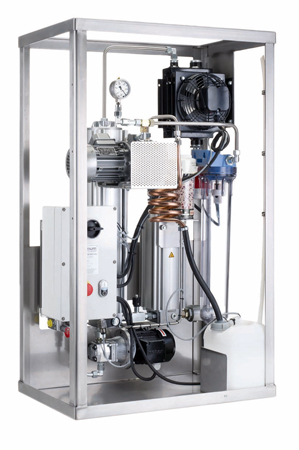
The STAUFF Mini Water Vac purifies hydraulic system oil, eliminating water, gas, and particulate matter. The purified oil satisfies the most stringent quality requirements.

The STAUFF Mini Water Vac dehydrates and cleans most types of oils such as lubricating, hydraulic, transformer, and switch oils while it neither removes nor alters oil additives.

The water removal process is based on pure vacuum evaporation inside a vacuum chamber at a maximum temperature of +65 °C / +149 °F.

Solid particle removal is achieved through a field-proven STAUFF Systems Micro Filter.

The oil temperature can be set using the integrated heater thermostat. The dehydration and filtering process is fully automatic and is controlled via the PLC.

Contaminated oil greatly increases maintenance costs and contributes to catastrophic machine breakdowns. The STAUFF Mini Water Vac offers protection against malfunctions, breakdowns and total system failures.

The STAUFF Mini Water Vac also protects the environment by reducing oil consumption and oil disposal.

For more information, call 201-444-7800 or e-mail filtration@stauffusa.com.

PRODUCT SHOWCASE: PSI Repair Services Introduces Cost-Effective Replacement for Obsolete Inverters

0

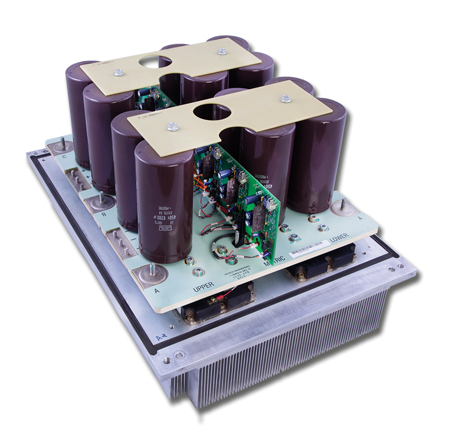
PSI Repair Services, Inc., a subsidiary of Phillips Service Industries, introduced a new, cost-effective replacement today for obsolete Xantrex™ Matrix Inverters found in GE 1.5 MW S Series wind turbines. PSI’s replacement inverter is a form, fit, and function solution with advanced fault detection and higher efficiency parts than the OEM design. The drop-in replacement inverter allows wind farms to supplement their inventory with more reliable, longer-lasting technology while keeping their turbines online. PSI also offers repair services for Xantrex Matrix Inverters from GE 1.5MW S Series wind turbines.  

PSI also repairs faulty Xantrex Matrix Inverters from GE 1.5MW S Series turbines with newer, more efficient parts, leading to improved performance and longer product life.

Xantrex Matrix Inverters repaired and replaced by PSI have been rigorously field tested with successful results. Plus, PSI provides custom crating for all inverters to secure them from damage during shipping. Our inverter crates are also perfect for long term storage and return shipments of damaged cores.

Benefits of selecting PSI to repair or replace your broken Xantrex Matrix inverter:

• Reduced repair/replacement cost
• Reduced turnaround time
• More reliable than OEM matrix inverter
• Runs cooler than OEM matrix inverter
• Improved, high-speed fault detection circuitry
• Designed for longer life—estimated to be twice the life of the original design
• Designed to work with newer generation IGBTs
• Upgraded matrix inverters have passed rigorous field testing
• Upgraded matrix inverters are corrosion protected
• PSI provides custom crating for our upgraded matrix

As a leading independent service provider in the wind energy industry, PSI Repair Services offers component repair and upgrade services for GE, Vestas, Siemens and Clipper wind turbines. PSI covers the critical electronic, hydraulic and precision mechanical components that drive the turbines’ pitch and yaw systems and down tower electronics. PSI uses the latest diagnostic tools to detect failures down to the microchip level. Solutions can range from minor repairs to full replacement of printed circuit boards, with enhanced designs to improve performance and reliability. In other cases, PSI can replace inefficient OEM components with newer, more reliable technology or make modification improvements to the original design. PSI also provides comprehensive remanufacturing services for unsalvageable, obsolete components.

For more information, visit www.psi-repair.com/repair-services/wind-turbine-parts-repair.

PRODUCT SHOWCASE: Wind Turbine Bolting Tool Solutions from RAD Torque Systems

0

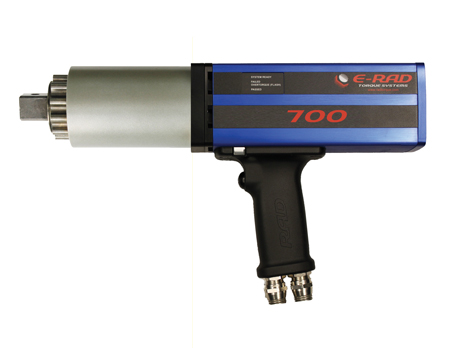
RAD® Torque Systems offers a fast, reliable and safe solution for the installation and removal of heavy-duty fasteners. All RAD torque guns have one thing in common; they use a patented planetary gear reduction technology which delivers one of the highest power-to-weight ratios of any controlled bolting system and never transmits working torque forces to the operator’s hands.

The E-RAD electronic torque system has quickly become a favourite in the wind energy industry because of its ability to meet each wind tower manufacturer’s specific standards for torqueing bolts. E-RAD’s precision is truly remarkable with +/- 3% accuracy, +/- 2% repeatability and digitally traceable torque sequences.

E-RAD® electronic torque wrenches are lighter, faster, stronger, and quieter than conventional means of bolting:

• Lighter—Combining the latest advancements in ergonomic design with an unsurpassed power-to-weight ratio, the E-RAD Series torque system is a lightweight alternative that eliminates the need to move heavy hydraulic pumps.
• Faster—Compared to hydraulic wrenches, E-RAD dramatically decreases tightening times through the delivery of smooth and continuous torque.
• Quieter—Operating at only 75db, E-RAD may be the world’s quietest torque gun and is ideal for sensitive environments.
• Stronger—E-RAD is specifically designed for heavy industrial usage where speed, accuracy and mobility are of key importance. The double cooling system allows for heavy duty continuous usage.

An advanced touch controller case provides the interface for all E-RAD® tools. The touch screen allows for fast and convenient error-free adjustments to both torque and angle. LED indicator lights indicate the status of torque procedure for maximum accuracy. Digital data collection allows for full traceability of each torque sequence performed to generate simple computer reports or view data logs directly on the tool.

The E-RAD series is available in seven models with torque power ranging from 100 to 6,000 Foot Pounds. An exciting new model, capable of over 8,000 Foot Pounds, is scheduled for release soon.

RAD Torque Systems product lines include pneumatic, electronic, digital, electric and battery powered torque tools. They are the 100% Canadian manufacturer responsible for DB-RAD, the world’s first digital, cordless lithium-ion torque wrench and Smart Socket, a revolutionary transducer socket for torque verification and calibration.

For more information, visit www.radtorque.com.

Winds of Change: Simplified Field Termination of Optical Fiber Cables

0

Normally, when asking people at trade shows if they know of fiber optic cables, I see hesitance accompanied by some shoulder shrugging, and eyes wandering, frantically trying to find the answers from my booth’s advertising banners.  When people think of fiber optics, they often associate it with the telecommunication industry, the Internet, or telephone cables.  What most people don’t know is that optical fiber’s wide range of applications extends to industrial networking, including controls systems for solar and wind power.  Industrialized fiber optics provide an effective means to transmit data in the harsh environments.  How can the wind industry benefit from using fiber optics technology?  Well, if we look back at history we can see how far fiber optics can take us.

Windmills, first developed in China and Persia, have been in use since 2000 B.C.   Used extensively in the Middle East for food production by the 11th century, they influenced merchants and crusaders to carry the idea back to Europe, primarily to the Netherlands.

The Dutch adapted a new method of the windmill and used it to drain lakes and marshes in the Rhine River Delta. In the late 19th century, this technology was brought to the New World by settlers who then pumped water to farms and ranches and later generated electricity for homes and industry.  In Europe and later in America, industrialization led a steady decline in the use of windmills. However, it also sparked the development of larger windmills in order to generate electricity. These windmills became known as wind turbines, which appeared in Denmark as early as 1890.

Early in the twentieth century, advanced scientific research and discovery led to an onslaught of development, production, and manufacturing, creating an enormous demand for electricity.  Seemingly in the blink of an eye, coal mining and crude oil production grew quickly to supply the natural resources necessary for electricity generation.  With an insatiable demand for industrial and consumer electricity, the nuclear age rose as an added source for the energy needs of the world.  In June of 1954, the first nuclear power plant began operation at Obninsk, Soviet Union.  With this event, the world of energy changed forever: generation of billions of megawatts brought power and light to the farthest reaches of economically advanced continents, and incredible cities’ infrastructures emerged around these powerful electrical stations.  Centralized power generation, once a rarity, has become ubiquitous, often taken for granted as we switch on lights, charge smartphones, and enjoy the comfort of environmentally conditioned buildings.

This energy boom, unfortunately, also introduces hazards for the population.  All too often, we witness scaled tragedies in far-away places as evidenced by refinery explosions, oil spills, and rare but far-reaching nuclear accidents.  Names like Chernobyl, Fukushima, and Macondo are etched into our collective memories as useful reminders that all forms of energy generation have inherent risk.
Seeking clean and environmentally friendly ways to produce electricity, many turn their attention to modernized wind power and other renewable energy sources.  “Wind energy became the number one source of new U.S. electricity-generating capacity for the first time in 2012, providing 42% of all new generating capacity,”.   In 2011, German chancellor Angela Merkel proposed a plan to replace all of German nuclear power plants by 2022 and triple the renewables share by 2050.  While these goals are ambitious, the larger picture presents a new era of innovation in alternative approaches to the energy generation.

Why fiber optic technology in the wind power industry?  The simple answer is that the combination of safety, efficiency, cost effectiveness, and reliable performance in harsh conditions makes fiber very attractive for use in these applications.  Fiber optic cable gear is commonly used in Supervisory Control and Data Acquisition (SCADA) systems within and between wind towers.  All dielectric fiber optic cables offer the added advantage of reducing ground potential to help protect critically important controls equipment in the event of lightning strikes.  Complex wind farms are commonly operated through fiber optic cables and switches to connect various servers to the turbines for monitoring and control of wind power plants.  Daily, millions of meters of these cables provide seamless wind farm communications and data integration from the wind towers through centralized control networks.

Known for its ability to transmit vast amounts of data over great distances, optical fiber products also offer these distinct advantages in the harsh environments of wind turbines and wind farms:

•    Immunity to Radiofrequency Interference (RFI)
•    Electromagnetic Interference (EMI) electrical isolation between the turbine and its controls
•    Stable performance of wide operating temperature range
•    Repeaterless links of several kilometers
•    Simplified field connectorization with advanced cable and connector solutions

A rapid advancement of Industrial Ethernet to the wind power networks communications led to the rapid changes in the enterprise automation world and the introduction of a different breed of communications cables.  Fast (100 Mb/sec) and Gigabit Ethernet (1000Mb/sec) data rates created demand for higher bandwidth, real- time communications.  Previously widespread plastic optical fiber (POF) and copper cables could not provide these capabilities over the long distances required.  Harsh and unpredictable wind farms weather conditions required an extra layer of protection for data communication transmission.

Graded-Index Polymer Clad Fiber (GI PCF) cables with Low Smoke Zero Halogen (LSZH) outer jackets were specifically designed for applications that require high mechanical reliability at the fiber level.  Polymer Clad Fiber not only offers a robust mechanical protection to a fiber core but also adds the important field termination capabilities to the product offering a reliable cable connectorization solution.

Naturally, power generation, transmission, and distribution create strong electrical noise.  Because using optical fiber inside wind turbines offers immunity to radiofrequency interference (RFI) in addition to electromagnetic Interference (EMI), data transmission is not affected by electrical noise. 
If optical fiber cable is the best choice, what prevents some manufacturers from using more of it in wind power applications?  Is field termination too difficult? Are technicians too hesitant to work with the fiber?

These questions present serious obstacles in choosing optical fiber; the reality is that some cable technicians are hesitant to work with glass fiber.  Some of the common misconceptions about optical fiber include that it is, “Too complicated, too fragile, too tiny to terminate, messy epoxies are used, tedious polishing processes are needed,” and my personal favorite, “you need special training and certification to work with it.” 

Historically, a common fear of the handling and long-term reliability of using glass optical fiber in such environments has hampered its adoption in wind power applications.  Through decades of development, companies like OFS have developed and proven the robustness and simplicity of using optical fibers in applications from subsea, to aerospace, medicine, factory automation, and oil and gas markets.  Recently, significant inroads have been made to both improve fiber handling and simplify field connectorization.  Today, companies like OFS, with GiHCS™ optical fiber cables, and Panduit offer a Graded Index Polymer Clad Fiber (GI PCF) fiber solution along with LSZH (Low Smoke Zero Halogen) cables and LC field-installable connectors interoperable with commonly used SFP modular transceivers on their switch lines for Fast and Gigabit Ethernet Uplinks and switch ports.

Such optical fiber cable solutions help ensure stable performance in:

•    widely fluctuating temperatures from -20 to +105˚C (-4 to + 221˚F)
•    high vibration
•    exposure to common industrial oils and chemicals
•    exposure to severe electrical noise
•    situations where time for connector training is minimal
•    installations where technicians are not expert in fiber optics

Maintenance and onsite cable repair in harsh, exposed conditions present other big issues for some installers.  In offshore applications where wind is stronger, towers are taller with larger wind turbines and longer blades than their onshore counterparts.  Recognizing these problems, fiber optic engineers have now designed and developed a simple crimp and cleave termination system that allows for connectorization of ruggedized fiber optic cable with no need for epoxies or polishing and simplified termination training.  Climbing the tower to repair or replace a data link is simplified with lightweight fiber optic cables and compact fiber optic tool kits that require no power during connector attachment.  Following the instruction manual is extremely important; not only does it save technicians effort to “crimp it right” the first time, with no consumables, the system also increases the number of terminations they can perform with one single kit.

The simple steps for the field termination of optical fiber breakout cables involve:  first, stripping the waterblocked outer jacket material; then, crimping the connector either directly onto the fiber optic coating (LC, SC, ST and SMA type) or  ETFE-based buffer material (V-pin and F07-type connectors), depending on the connector, for strong, solid connector retention. Strong connector to cable retention is crucial for connectorization in a turbine where strong mechanical vibration is a concern.  The third step is to create an optical finish on the fiber, using the special precision cleave tool with a diamond blade.  This crucial, but simple step creates a near perfect optical surface for low connector insertion loss.  The cleaving step eliminates the tedious need to polish the fiber end-face.  No messy adhesives or polishing equipment needed, your connectorized cable is ready to transmit at Fast and Gigabit Ethernet data rates.

At trade shows, we perform hundreds of connector termination demonstrations.  To prove the simplicity of this termination system, we ask our uninitiated customers to try the stystem for themselves through our “Crimpe, Cleave and Leave” competition.  Contestants are timed while they terminate fibers and often achieve times under 40 seconds per connector.

With only four or five steps depending on connector type, field technicians can perform thousands of terminations using tools they are familiar with.  Finally, a stress-free fiber optic zone, the holy grail of data communications, if you will.

Curiosity and genuine interest about fiber optics kept people in our booth longer and in just a few minutes, many change their perceptions toward optical fiber use in just a few minutes, following these new and simple steps.  No more shoulders shrugging or eyes wandering, previous hesitation and doubtfulness are swept away.  Our hope is that all of our contestants remember the benefits of fiber in the wind applications industry, the simplicity of learning and using the cable termination process, and the fun they had with our “Crimp, Cleave, and Leave” contest. 

In the early stages of our lives, we learn new things by exploring, studying, and trying them; each new skill with its own learning curve.  Similarly, adoption of renewable energy has its own learning curve and will take time, but the benefits for humankind are real.  Windmills, basically unchanged in design for many centuries, now harness the power of wind through technology advancements, with simplified fiber optics now contributing to safety, control, and efficiency.  We felt those winds of change, the change of people’s perceptions, and the change of their vision as they learned new things and new technologies.

Siemens Supplied Turbines, Connection for Largest Offshore Wind Farm

0

The world’s largest offshore wind power plant, London Array, has been inaugurated. Siemens supplied the 175 wind turbines and the grid connection for London Array. Together with Dong Energy, Siemens will also be responsible for the service of the wind turbines through a long-term agreement. The wind power plant owned, developed and built by a consortium consisting of Dong Energy, E.ON and Masdar has a total capacity of 630MW and will generate enough power to supply 500,000 British households with clean electricity. London Array will reduce annual CO2 emissions by approximately 900,000 tons, which equals the emissions of 300,000 passenger cars.

“London Array is the world’s largest offshore wind power plant and marks a milestone in the development of offshore wind power. This project underscores the leading position of Siemens in this attractive growth market,” said Peter Löscher, president and CEO of Siemens AG on the occasion of the opening ceremony in Margate, Great Britain.

The London Array offshore wind farm is located in the Thames estuary, approximately 20km off the Kent and Essex coast. Siemens supplied and installed the 175 wind turbines, each with a rotor diameter of 120 meters and a rating of 3.6MW. In addition, the company supplied the grid connection with one onshore and two offshore substations in the North Sea. The electricity generated by the wind turbines is bundled at sea and transported via high-voltage submarine cables to the coast. The wind farm will be operated and maintained from a purpose-built base at Ramsgate Port.

“Projects of this magnitude contribute to further industrialization of complex production and logistics processes for offshore wind power plants,” Löscher said. During the execution of the project, Siemens was able to further standardize offshore installation processes covering manufacturing, transport and logistics as well as installation of wind turbines offshore.

Offshore wind power is already playing an important role in the energy systems of Northern Europe. Its largest offshore markets, Great Britain and Germany, have ambitious development plans. Both countries are planning rapid and broad expansion of offshore energy generation. In Germany, a successful energy transition to meet future needs is only possible with the further increase of offshore wind power. The German government plans to have 10GW of offshore capacity installed by 2020. Great Britain is targeting up to 18GW of wind energy by 2020, enough to meet nearly one-fifth of Britain’s electricity demand.

Siemens is at the front of the market for offshore wind power plants, grid connections and offshore wind service. The company has already installed more than 1,100 wind turbines at sea with a total capacity of 3.4GW, more than two thirds of which are located in Great Britain. In total, it has 4.6GW of offshore capacity in its order books. Including London Array, Siemens has also implemented five grid connections in Great Britain.

For more information, visit www.siemens.com/wind.

Nordex to Close Arkansas Assembly Plant

0

Nordex SE has announced that the company will cease nacelle production at its Jonesboro, Arkansas, facility after it completes the orders in its current pipeline. The decision was driven by the wind industry’s global overcapacity and the continued uncertainty and instability of the U.S. market. The decision will not impact the current year’s business performance, as exceptional expenses were already accounted for in 2012 as previously reported.

“This was an extremely difficult decision for Nordex. We are reacting to the weakened demand from the U.S. market, brought on by the unpredictable extensions of the Production Tax Credit (PTC), and the resulting low utilization rate of our U.S. assembly plant,” Nordex SE CEO Dr. Jürgen Zeschky said. “We see great potential in the U.S. and Latin American markets and are committed to serving those markets and increasing our installed base. With this decision we also increase our flexibility to react to US demand for our turbines out of one single plant in Rostock, Germany. We will be maintaining the extensive expertise in sales, engineering, service, project management, training and support which we have built at our Chicago and Jonesboro locations to continue the growth we have achieved through these challenging times.”

“This is a sad day for all of us at Nordex USA,” Ralf Sigrist, president & CEO of Nordex USA, Inc. said. “We will lose valued colleagues, who have done their very best for us, but the decision was inevitable considering the underutilization of our plant.”

In the future, nacelles for the North and Latin American markets will be supplied from Nordex’ factory in Rostock, Germany, using the global supply chain and logistics support based there. Service activities for all existing U.S. wind farms are not affected by the closure of the U.S. production. The training academy, the central parts storage and the repair facility in Jonesboro will remain in operation to support service and operations in the Americas. Around 40 employees will be affected with layoffs beginning in October.

The restructuring of the company in the United States is in line with Nordex’ strategy to position its operations to maximize capacity utilization.

For more information, visit www.nordex-online.com.

Xcel Energy Plans Significant Increase in Wind Purchases

0

Xcel Energy’s Southwestern Public Service Company is seeking approval in New Mexico to purchase almost 700MW of additional wind energy through three purchase agreements, deals that will save Texas-New Mexico customers more than $590 million in fuel costs over 20 years.

The wind purchases will come from three facilities to be located in Oklahoma, Texas and New Mexico:

• 199MW from NextEra Energy Resources/Mammoth Plains Wind Energy Center, located in Dewey and Blaine counties, Okla.
• 249MW from NextEra Energy Resources/Palo Duro Wind Energy Center, located in Hansford and Ochiltree counties, Texas.
• 250MW from Infinity Wind Resources/Roosevelt Wind Ranch in Roosevelt County, N.M., between the towns of Dora and Elida.

The price per MWh of energy generated at these wind facilities will be less than the per-MWh price of most of the company’s natural gas-fueled generation, according to Riley Hill, president and CEO of Southwestern Public Service Company, an Xcel Energy company. Over the 20-year terms of these agreements, Xcel Energy expects to save $590.4 million in fuel costs, Hill said.

“We started shopping for more wind energy in March after seeing some very good prices on the market,” Hill said. “We are making these acquisitions purely on economics and the savings we can deliver to our customers.”

Hill pointed out that the favorable pricing is partly the result of a federal production tax credit that Congress extended for one year, applicable to facilities that begin construction before the end of 2013.

Xcel Energy currently has close to 1,500MW of wind energy capacity connected to its Texas-New Mexico transmission and distribution network, which spans the Panhandle and South Plains regions of Texas, six eastern and southeastern counties in New Mexico and portions of Oklahoma and Kansas. Xcel Energy purchases more than 600MW through long-term contracts.

The three additional contracts will more than double the company’s contract wind resources, and will push the total Texas-New Mexico wind capacity beyond 2,200MW.

The company solicited additional wind resources through a request for proposals process that opened in March. This process generated more than 75 proposals that included the winning bidders. The deals are for energy only, and do not include the purchase of renewable energy certificates (RECs).

For more information, visit www.xcelenergy.com.

DNV KEMA: Accuracy of Wind Farm Energy Assessments Improving

0

DNV KEMA Energy & Sustainability, a global energy consulting firm and authority in testing, inspection and certification, said a study it conducted found that performance predictions for large-scale North American wind energy projects placed in service between 2010 and 2012 were substantially more accurate than for wind farms placed in service between 2001 and 2009.

The firm recently published the 2013 update to its study “Actual versus Predicted Wind Power Project Performance.” The study indicates that wind energy projects entering service since 2010 have produced an average of 97 percent of the energy predicted, an improvement of six percentage points over wind farms that went on line between 2001 and 2009. According to DNV KEMA, “Additional improvement is anticipated when data is available from projects for which energy estimates include recent changes in energy assessment techniques.”

“To minimize the cost of energy from wind energy projects, investors need to have confidence in the energy production estimates made before the projects are built,” said Robert Poore, a senior advisor at DNV KEMA. “While DNV KEMA energy assessments have historically been more accurate than the industry average, we found that in the last three years improved methodologies for assessing project energy production have lowered the average variance between pre-construction energy estimates and actual plant performance for the entire industry. As confidence is gained in the improved methods, we expect to see less discounting of pre-construction estimates when investors evaluate wind projects. In the long run, this should help reduce the cost of energy from wind.”

According to the study, robust wind assessment campaigns, more comprehensive curtailment risk analysis and further research into wake and flow modeling are key elements in further reducing uncertainty in wind project energy assessments. “Our work with clients has demonstrated that an enhanced energy assessment program is one of the best investments a developer can make. When we plan and execute a better than average site measurement program, including the use of remote sensing, the reduced uncertainty in the energy assessment frequently results in more favorable financing terms, higher project value and higher confidence when bidding for power purchase agreements,” Poore said.

For more information, visit www.dnvkema.com.

Siemens Wind Power Division Selects CEO

0

Markus Tacke has been appointed CEO of Siemens Energy Sector’s Wind Power division. The forty-eight year old Tacke was scheduled to take the helm August 1. He succeeds Felix Ferlemann who, at 53, left the company by mutual agreement to pursue new career challenges.

Tacke studied mechanical engineering at the Technische Universität Darmstadt, where he completed his doctoral degree. He also earned a Master of Engineering degree from Cornell University in Ithaca, New York. Before joining Siemens AG in 1998, Tacke had been active for the construction firm Wayss & Freytag AG at their unit for commissioning of large-scale machinery. At Siemens, he has been serving as CEO of the Industrial Power Business Unit at the Energy Sector’s Oil & Gas Division since October 2009. Before that, he had been responsible for the worldwide business of Siemens in industrial steam turbines. Tacke is married and has four children.

“Felix Ferlemann provided essential stimuli, and we thank him for his commitment,” notes Michael Süß, member of the managing board of Siemens AG and CEO of Siemens’ Energy Sector. Ferlemann had been active at Siemens Wind Power since October 2011. Holder of a doctorate in mechanical engineering, he had previously been in charge of automotive chassis systems at Benteler-Automobiltechnik GmbH.

For more information, visit www.siemens.com/wind.

Avanti Achieves GWO Certificate

0

With a new certification from Lloyd’s, Avanti Wind Systems now meets the demands from the Global Wind Organisation to train and educate operators to work in wind turbines and other workplaces in similar heights.

Both the training personnel and the facilities at Avanti Wind Systems, headquartered in Hillerød, Denmark, are now certified after GWO standards to basic safety training for onshore and offshore activities covering “Working at Heights.” This is the first step for Avanti to follow the GWO standards for safe work in wind turbines. Other GWO-certifications are expected to follow later this year.

The object of Global Wind Organisation is to support an injury-free work environment for construction and operating of wind farms on- and offshore. To support this, GWO has developed a standard for basic safety training to provide personal working at wind farms with sufficient knowledge to obtain this target.

GWO is working together with most of the wind turbine manufacturers and larger wind farm owners in Europe and the U.S.

Safe work in wind turbines has always had first and top priority at Avanti Wind System. Therefore, Avanti follows the highest standards in the field irrespective of the country where Avanti Wind Systems is working. With this GWO certification, Avanti Wind Systems states that the company also will train and educate anyone working in wind turbines in the same high standards.

For more information, visit www.avanti-online.com.

Nordex Performs Extended Quality Testing

0

Turbine system performance, safety and service life are frequently determined solely by means of calculations, computer simulations or years of field testing. At its Rostock, Germany production site, Nordex is now employing additional test rigs to check numerous core components of the Generation Gamma and Generation Delta wind turbines under laboratory conditions as well. The Company scrutinizes the entire turbine systems right from the development phase at the Nordex technical center “Technikum,” the floor area of which has now been extended to 3,900 m2, plus the rotor blade testing facility with a floor area of an additional 2,400 m2.

Last year, Nordex invested 4,600,750 million in extensions to the modern “Technikum,” developing new testing facilities and now putting them into operation step-by-step. With these new test rigs, Nordex is testing the system functions under extreme climatic and mechanical conditions including in the form of long-term endurance tests. This way, the company is able to ensure that its developments satisfy strict quality criteria and that it is able to release a high-quality product for series production. A further goal is to increase the pace of development.

“In addition to larger rotors, a greater installed capacity and growing tower heights, real-life conditions at wind turbine sites, which can be quite harsh in some places, are increasingly playing a role in the development of our systems,” Nordex SE CEO Dr. Jürgen Zeschky said. “Our turbines must operate perfectly in extreme cold or heat, in icy or very humid conditions and under different grid conditions.”

Nordex uses a project validation plan to make sure that no critical components are neglected during testing and that everything proceeds in-sync with current development projects. This plan defines the components which must be tested, the target result, the type of test required and the testing interval.

15 different testing facilities, including an azimuth and motor/vibration test rig, have been installed for complete and thorough testing of the core components fitted to Nordex. In addition, various tests are performed on the blade adjustment system using three different pitch testing systems. The advantage of this is that Nordex is now able to perform advance tests of the turbine software, the pitch converter under load and the entire system comprising switching cabinets, drives and cable loops under normal and also extreme temperatures.

The most important new addition is the climate chamber, which has been expanded and is now more efficient. With a capacity of almost 150 m3 and a range from -40°F to +140°F, it submits the turbine systems to extreme climatic endurance testing. In addition, a relative ambient humidity of 95 percent can be simulated. A further five test benches are devoted solely to tests on slip rings. One of these is also fitted with a climate chamber with a capacity of 2m3.

A grid simulator with variable voltages and frequencies at the configuration limits is also available for testing the system capabilities even under difficult grid conditions. In addition, it is possible to generate dynamic grid errors and harmonics. To guarantee the best possible quality of electricity, Nordex also simulates the grid errors of a wind farm in a medium-voltage grid in the field. The fault ride-through capabilities for bridging any drops in voltage are checked on a continuous basis. This also aids the development of grid codes and helps to ensure that the necessary certificates are gained.

The testing system for the Company’s internally produced rotor blades with a length of up to 65 meters has been in operation since 2010 and allows static and dynamic stress tests to be performed. In addition, Nordex started up a cable loop test bench last year.

All tests form part of the standard inspection of the core components of the Generation Gamma and Generation Delta wind turbines. In addition to performing its own tests, Nordex imposes on its suppliers a duty to perform vibration, EMC and lightning protection testing on the components which they deliver. In this connection, Nordex has stipulated in its internal quality requirements that internally developed or externally sourced components must function perfectly in the entire range of different ambient conditions. The findings gained are continuously incorporated in the innovation process, with the results directly plugged into the turbine development process in order to additionally enhance their quality.

For more information, visit www.nordex-online.com.

Sky Harvest to Acquire Vertical Axis Wind Turbine Technology and Manufacturing Facilities

0

Sky Harvest Windpower Corp. announced that it has entered into an agreement to acquire a vertical axis wind turbine manufacturing and sales business from a private Canadian company in consideration of the issuance of 650,000 shares of its common stock, cash payments totaling $65,000, and the grant of an option to the vendor to acquire up to 550,000 shares of its common stock at a price of $0.10 for a period of five years. This grant is pursuant to the company’s previously announced 2011 stock option plan. In addition, Sky Harvest has agreed to pay the vendor a royalty of $200 for every vertical axis wind turbine that it sells for a period of ten years. The vendor will also receive 500,000 voting shares of the subsidiary company that holds the turbine assets if that company’s shares trade publicly on a recognized stock exchange or quotation system. As part of the agreement, Sky Harvest has acquired the intellectual property rights relating to the turbine design, and leasehold interests in both manufacturing facilities and equipment.

Sky Harvest has received written expressions of interest for the purchase of over 13,000 vertical axis turbines from parties in four different countries. The sale of such number of turbines would generate revenue of approximately $250 million. Sky Harvest has also entered into discussions with additional parties with compatible technology regarding the potential joint venture development of additional wind turbine products.

Unlike most wind turbines which have blades that rotate around a horizontal axis, a vertical axis wind turbine has blades that spin vertically around a horizontal mast. They are primarily used in remote areas to provide electricity to communication towers, mines, and communities that typically rely on diesel or propane for power generation, which results in reduced costs to the user, as well as a smaller environmental impact through the reduced use of fossil fuels and no risk of on-site diesel spills. These turbines are also suitable for rural areas of developing countries where grid infrastructure is minimal or non-existent. They can also be mounted near the upper portion of commercial smoke stacks and are powered by the updraft. The principal advantages of a vertical axis wind turbine include low noise levels, minimal vibrations due to low RPM, the ability to utilize wind from any direction, ease of installation and maintenance, durability, and very low impact to wildlife. In addition, the Sky Harvest turbine is self-starting and begins to move at wind speeds as low as two meters per second and commence generating power at wind speeds of three meters per second. The additional advantages of the Sky Harvest turbine when compared to its competitors are its ability to withstand temperatures well below freezing and to operate without a driveshaft or gearbox.

“We are excited about the potential market for our vertical axis wind turbine given that there are many areas of the world where horizontal turbines are not feasible due to a lack of infrastructure or public resistance to large-scale projects,” Sky Harvest’s President, William Iny, said. “The initial interest that we have received from prospective customers is overwhelming and not only reflects the features of our turbine, but also the potential market for this type of product. Our board believes that this manufacture-ready segment of our growing business will bring additional value to our shareholders. Through the development of highly engineered vertical turbines, our goal is to become the pre-eminent, reliable supplier to the telecommunications and remote community power generation sectors.”

For more information, visit www.skyharvestwind.com or call 877-700-7021.

EU Offshore Wind Grows, but Warning Signs Evident

0

277 new offshore wind turbines, totaling 1,045MW, were fully grid-connected in Europe during the first six months of 2013. This is double compared to the same period in 2012 when 523.2MW were installed. In addition, 268 foundations were installed and 254 turbines erected, all during the first 181 days of the year. “Offshore wind power installations were significantly higher than in the first six months of last year,” said Justin Wilkes, director of policy at the European Wind Energy Association. “But financing of new projects has slowed down with only one project reaching financial close so far this year. This, together with a lack of orders being placed for offshore wind turbines, substructures and components, reflects the regulatory uncertainty in key offshore markets including Germany and the UK. It highlights the significant challenges faced by the offshore wind sector.

“Offshore wind is a new industry that creates jobs, reduces fossil fuel imports and in which Europe is a world leader with huge export opportunities. The installation rate shows what the European offshore wind industry is now capable of. But to attract investment to the sector governments need to provide a stable regulatory framework and the EU should set a binding renewable target for 2030,” Wilkes said.

Total offshore capacity in Europe is now at 6,040MW in 58 wind farms across ten countries—up from 4,336MW in June 2012.

21 offshore wind farms are under construction or in preparation, with a total capacity of 5,694MW.

The 277 wind turbines fully grid-connected in  the first half of 2013 were in seven wind farms: Thornton Bank (BE), Gunfleet Sands 3 (UK), Lincs (UK), London Array (UK), Teesside (UK), Anholt (DK), BARD offshore 1 (DE).

For more information, visit www.ewea.org.

Vestas Secures Service Contract Renewals for 130MW GDF SUEZ Fleet

0

Vestas has secured 10-year advanced service contract renewals with GDF SUEZ Energia Italia, which heads the Italian-based energy business of the GDF SUEZ Group, for six wind power plants in Italy with a total capacity of 130 MW—comprising 31 units of V90-2.0 MW and 80 units of V52-850 kW wind turbines.

The service contract extensions include a 10-year service agreement with Vestas’ Active Output Management (AOM) 5000 service scope, a complete service package to ensure minimised lost production, including everything necessary to maximise output but with further aligned incentives. AOM 5000 offers an energy based availability guarantee that aligns service and maintenance execution with low wind periods.

Under the agreement, GDF SUEZ Energia Italia will also benefit, for the entire fleet, from the Vestas Weather & Power Forecast—a high-quality, site specific, continuous weather and production forecasting system. It enables the optimization of maintenance schedules by identifying low wind periods during which service is to be performed. It also improves customers’ business by delivering precise power forecasting, and it fulfils the grid requirements established.

“We decided to renew our 111 Vestas wind turbines’ service and maintenance agreement for another ten years on the basis of our long-lasting business relationship with Vestas and its ability to meet a number of specific requests—not least, maximizing our wind power plants’ value by increasing the turbines’ reliability and availability, reducing down time and improving lifetime performance of our wind turbines in the country,” said Pascal Renaud, generation director for GDF SUEZ Energia Italia.

“We are very proud that GDF SUEZ Energia Italia has chosen to sign 10-year advanced service renewal contracts for their entire Vestas installed fleet in Italy. The GDF SUEZ Group is one of the largest and most experienced utilities in the world that demands excellence within its organisation and from Vestas. Vestas is therefore very pleased to have been chosen by the customer on the basis of the confidence built over years and our ability to listen and act on their requests,” said Nicolas Wolff, general manager of Vestas France. “We are pleased with the trust GDF SUEZ shows in our organization as this is a huge recognition of our service performances.”

The six wind power plants produce approximately 250,000 MWh per year, which is enough to meet the residential electricity consumption of about 220,000 people in Italy and save the environment from almost 100,000 tons of CO2 emissions on an annual basis. Installed between 2006 and 2010, the power plants are located in the regions of Campania, Molise and Sicily.

For more information, visit www.vestas.com.

Repower Completes 325MW Offshore Installation

0

Suzlon Group subsidiary REpower Systems SE have installed the last of the 48 total REpower 6M turbines in the Belgian offshore wind farm Thornton Bank. The customer for this project is the Belgian offshore project development company C-Power, which was set up by four Belgian investors and counts REpower customers RWE Innogy and EDF EN amongst its shareholders.

“We are very proud to have installed the largest fleet of 6 megawatt turbines worldwide,” Andreas Nauen, CEO of REpower Systems SE, said. “Thornton Bank confirms the long-term potential of the market. We offer our customers the best technology combined with industry leading experience in building projects in complex and challenging environments.”

The 2013 construction phase covers all 18 REpower 6M turbines. Each of the turbines has a rated power of 6.15 megawatts. REpower completed Phase III successfully and on time: that proofs the company’s well-developed logistics concept and the good cooperation between the teams during the installation of the turbines. After the completion of all three construction phases, the wind farm has a total output of 325 megawatts —enough to supply 600,000 people or a city the size of Glasgow with electricity. In terms of investment volume, the contract marks the largest financing for a completed project to date in the offshore wind industry overall. Companies from Belgium, Germany, France, the Netherlands, Denmark and Sweden are involved in Thornton Bank, making the wind farm a showcase project for the European offshore wind industry.

For more information, visit www.repower.de

PRODUCT SHOWCASE: Slatercom Offers FAA-certified D1RW Obstruction Lighting System

0

Slatercom-WCD, located in Salem, Oregon, has announced the availability of the industry-standard Dialight D1RW Series- LED Medium Intensity FAA certified obstruction lighting system, designed to utilize existing xenon flash head cables. Existing xenon medium intensity lighting systems typically use either a five- or six-conductor flash head cable and are noted for being quite troublesome and expensive to repair. The new Dialight LED lighting system comes ready to install without changing the existing flash head cable thus saving considerable time replacing flash head cable. Systems are in stock for immediate delivery. The complete system is covered by a five-year warranty.

FAA rules require all obstruction lighting systems to be monitored and logged daily—either visually or electronically. Slatercom lighting systems are typically provided with alarm monitoring capability that can be connected into remote monitoring equipment. In remote locations such as wind farms, visually monitoring and logging of obstructions (as required by the FAA) is not convenient or even practical.  Slatercom-WCD offers several options for monitoring including the Slatercom Cellular Alert System, RMS Live Monitoring, WEB600 IP based monitoring system and the SAT4 satellite based system. These systems can provide cell phone, text or e-mail notification of lighting system problems and prevent heavy FAA fines for non-compliance. In addition, an automatic log of lighting system status done a daily basis can be downloaded to comply with FAA rules. These logs are typically kept on the server for at least one year.

Most wind farm met towers are installed prior to construction of the wind farm to facilitate data collection for wind farm design. These sites typically are located in areas that lack commercial power. Slatercom offers extremely efficient (less than 100 watts/ day) FAA “A” series lighting systems for these applications. The Slatercom Solar Harvester solar system utilized in these systems provide the seven-day autonomy as required by the FAA for solar powered systems. The solar systems are engineered site specific, guaranteeing a properly-sized system for the installation location. 

Interior wind turbine lighting is often provided by the manufacturer using florescent or incandescent lighting fixtures. Slatercom is one of the largest Dialight  LED “White Lighting” distributor. Slatercom stocks a large selection of linear (florescent replacement) fixtures, down lights, wall packs and many versions of high bay lighting fixtures. These long life, energy efficient fixtures can provide decades of trouble free performance. 

For more information, visit www.slatercom.com, call 503-581-5550 or e-mail info@slatercom.com.

PRODUCT SHOWCASE: Keen Tucson Brings Protection, Functionality to Jobsites This Fall

0

Founded on the idea of creating multi-purpose hybrid footwear that combines form and function, KEEN understands that life extends from work to play and everywhere in between. The KEEN Utility line was a natural extension of that idea, bringing versatile and progressive work footwear that stands on its own to men and women everywhere.

This fall, KEEN Utility takes this idea of hybrid footwear to the next level with the introduction of the Tucson. The outdoor-inspired silhouette is reminiscent of a much-loved hiking boot while blending all the innovative work boot performance features KEEN Utility has developed and incorporated into the entire collection.

“Each season we strive to innovate both within our product line as well as the industrial footwear industry,” said Mark Reilly, Division Director for KEEN Utility. “The love for outdoor adventure and active lifestyles runs deep in the KEEN DNA. The Tucson allows us to blend that outdoor look and comfort with the functionality of top-notch protective footwear.”

Hitting select retailers this month, the KEEN Utility Tucson work boot features an outdoor-inspired silhouette with all the technical features required for a hard day on the job site. Crafted with a waterproof, nubuck leather upper the boot features a sleek, low profile midsole and open mesh inserts to increase air circulation. A KEEN.Dry waterproof, breathable membrane lets moisture out but never in and a hydrophobic/hydropholic two-zone comfort technology lining helps to keep feet cool and dry.

The Tucson features KEEN Utility’s signature asymmetrical steel toes that are contoured to the natural shape of the left and right foot, providing ASTM-rated protection with a roomy toe box for maximum comfort without sacrificing safety. The oil- and slip-resistant non-marking rubber outsole exceeds ASTM Mark II non-slip testing standards, proving the Tucson is one boot ready for whatever the workday puts in its path. Available in mid and low heights with steel and soft toes.

For more information, or to find a KEEN Utility retailer near you, visit www.keenfootwear.com.