Home 2013

GE Expands Facility, Installs 500th Turbine in Brazil

0

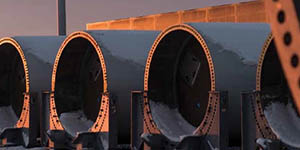
GE announced the expansion of its Campinas, São Paulo, manufacturing facility and the creation of 35 new skilled jobs. Co-located with Brazilian machinery manufacturer and GE Group subsidiary GEVISA, the facility will produce machine heads, also known as nacelles, for GE 1.7-100 and 1.85-82.5 wind turbines. The machine head is a primary component of a wind turbine and houses the power generation equipment including the gearbox, generator and controls.

To quickly and efficiently respond to the rapidly growing demand for advanced wind energy services, GE has announced the opening of two wind services centers in Brazil. The first center will be located in Bahia and the second will open in Rio Grande do Norte. Together, they will employ more than 100 service technicians. Engineers at the new facilities will monitor wind operations and weather as well as dispatch local technicians to wind farms to perform maintenance.

The company recently announced its 500th wind turbine installation in Brazil. The 1.6MW turbine was installed at DESA’s 38MW Eurus project in João Camara in the state of Rio Grande do Norte.
GE has had a presence in Brazil since 1919 and today employs more than 8,500 people in the country. The company has operations throughout Brazil, including in Bahia, São Paulo, Minas Gerais and Rio de Janeiro. The local team leverages GE’s global expertise of engineers, field service technicians and logistics excellence to ensure the highest quality and strongest execution is on point for customers in Brazil.

The Campinas facility also is the production site for GE’s wind turbine hubs.
For more information, visit www.ge.com.

Siemens to Supply Direct-Drive Turbines to France

0

Siemens has received an order from France for the supply, installation and commissioning of a total of 24 direct-drive wind turbines for four French wind projects, located in the Nord Pas-de-Calais and Picardie regions in northern France. Project investors are Diamond Generating Europe Limited (DGE) and the French renewable energy company EDF Energies Nouvelles (EDF EN). The model SWT-3.0-101 wind turbines ordered for these projects each have a capacity of 3MW and a rotor diameter of 101 meters. This marks the first order for Siemens from France for gearless wind turbines. Erection and commissioning are scheduled for 2014. Siemens is also responsible for maintenance of the wind turbines over a period of 15 years.

“Compared to conventional wind turbine technology, our direct-drive wind turbine has half the components and substantially fewer rotating parts,” said Jan Kjaersgaard, CEO of Siemens Wind Power for the EMEA sales region. “This enhances reliability and reduces the maintenance scope for the plants. We are pleased to be installing this future-oriented technology for the first time onshore in France.”

The French government plans to install a total of 25GW of wind power by 2020, of which 7.5GW was already in place at the end of 2012.

For more information, visit www.siemens.com.

Penn State Offers Wind Energy Grad Degree Online

0

Penn State is now offering an Intercollege Master of Professional Studies in Renewable Energy and Sustainability Systems (iMPS-RESS), including a wind energy option.  This degree program is designed to prepare professionals to lead the transformation from an unsustainable, fossil-energy economy to a renewable, sustainable one.  The program is offered through Penn State’s World Campus, a worldwide leader in online education.  Designed in a strong partnership between four colleges and eight academic departments, the program draws on the expertise and unique perspectives of world-class faculty members with diverse backgrounds. 

This program focuses on helping students develop the technical expertise and project management skills they will need to effectively create or manage successful renewable and sustainable energy systems.  Options in bioenergy, sustainability management and policy, solar energy and wind energy allow students to tailor the degree to their career goals.  For those not interested in pursuit of the full degree program, certificates are also under development for each option.   

Projected growth in the global wind industry indicates an increasing need for professionals with advanced training in wind energy.  As wind projects are developed in increasingly challenging locations and wind regimes, companies will continue to seek professionals who have a broad understanding of the wind project development process, as well as technical depth in turbine technology and the science of siting wind turbines.  The iMPS-RESS Wind Energy Option aims to provide a balanced curriculum that will equip individuals to advance the wind energy industry as well as their own careers. 

Applications are now being accepted for Penn State’s online iMPS-RESS degree.  For more information, visit www.worldcampus.psu.edu/degrees-and-certificates/renewable-energy-sustainability-wind/overview or email info@ress.psu.edu.

NREL Study: Western Renewables Cost Gap Could Narrow

0

A new Energy Department study conducted by the National Renewable Energy Laboratory (NREL) indicates that by 2025 wind and solar power electricity generation could become cost-competitive without federal subsidies, if new renewable energy development occurs in the most productive locations.

The report, “Beyond Renewable Portfolio Standards: An Assessment of Regional Supply and Demand Conditions Affecting the Future of Renewable Energy in the West,” compares the cost of renewable electricity generation (without federal subsidy) from the West’s most productive renewable energy resource areas—including any needed transmission and integration costs—with the cost of energy from a new natural gas-fired generator built near the customers it serves.

“The electric generation portfolio of the future could be both cost effective and diverse,” said NREL Senior Analyst David Hurlbut, the report’s lead author. “If renewables and natural gas cost about the same per kilowatt-hour delivered, then value to customers becomes a matter of finding the right mix.
“Renewable energy development, to date, has mostly been in response to state mandates,” Hurlbut said. “What this study does is look at where the most cost-effective yet untapped resources are likely to be when the last of these mandates culminates in 2025, and what it might cost to connect them to the best-matched population centers.”

The study draws on an earlier analysis the lab conducted for the Western Governors’ Association to identify areas where renewable resources are the strongest, most consistent, and most concentrated, and where development would avoid protected areas and minimize the overall impact on wildlife habitat.

Among the study’s findings:
 
• Wyoming and New Mexico could be areas of robust competition among wind projects aiming to serve California and the Southwest.
• Montana and Wyoming could emerge as attractive areas for wind developers competing to meet demand in the Pacific Northwest.
• Wyoming wind power could also be a low-cost option for customers in Utah, which also has its own diverse portfolio of in-state resources.
•  Colorado is a major demand center in the Rockies and will likely have a surplus of prime-quality wind potential in 2025.

For more information, visit www.nrel.gov.  

PRODUCT SHOWCASE: SampleSafe Eliminates Entry into Wind Farm Transformer Cabinets for Oil Sampling

0

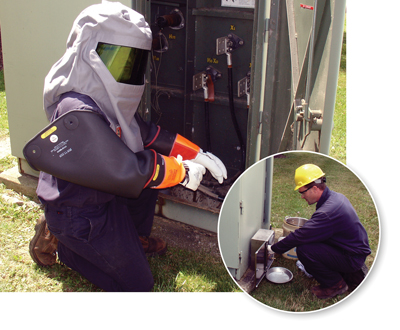
Recent studies on cabinet-style wind farm transformers show a high occurrence of elevated combustible gas levels, particularly hydrogen.

Tallmadge, Ohio-based SD Myers Inc. is not only leading in the research of the ever-growing problem of wind farm transformer gassing, but also recently introduced the SampleSafe™ system for installation on cabinet-style wind farm transformers. 

Designed to allow safe sampling of the dielectric fluids on energized wind farm electrical transformers, SampleSafe aids in detecting gas build-up.  The sample valves, pressure gauges and relief valves are located remote to the electrical hazards inside the cabinet to the outside of the cabinet in separate, isolated stainless steel weather-resistant enclosure.

Eliminating the need to enter the transformer cabinet for routine oil sampling or processing, SampleSafe allows technicians access to valves and instruments inside of the transformer without dangerous exposure to energized equipment.  A window kit may be installed in the cabinet door to allow the other important inspections that are a part of a responsible maintenance program, including liquid level, temperature and leaks.

Features:
Made of substation quality stainless steel
Locks with your own company padlock, keyed by you for your security program
NEC rated grounding lug
NEMA rated enclosure
High-quality hoses rated at 1,720 psi
Static ground
Bronze sample and vent valves
Qualitrol pressure-vacuum gauge
Optional viewing window

For more information, contact SD Myers at 330-630-7000 or go to sdmyers.com/EP-samplesafe.html.

PRODUCT SHOWCASE: MetalSCAN 3000 Boasts Reliability in a Wind Energy-Specific Design

0

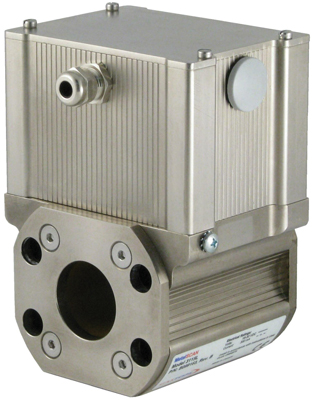
GasTOPS provides products and services to the wind industry to monitor gearbox health using its flagship MetalSCAN product. MetalSCAN is the leading sensor product available today for on-line detection and quantification of metallic debris in wind turbine gearboxes. MetalSCAN’s advanced in-line, full-flow technology detects both ferromagnetic and non-ferromagnetic metal particles and provides a reliable, early indication of impending failure.

MetalSCAN’s reliability lies in its simple, maintenance free design. The sensing element uses non-obtrusive magnetic coils, which surround the oil line and detect the passage of metallic debris. All of the particles above a minimum size threshold are detected and counted.

With thousands of installations worldwide on equipment ranging from advanced jet engines to industrial gearboxes, MetalSCAN has proven its effectiveness, meaning expensive failures can be avoided and maintenance personnel can plan repairs during convenient and cost-effective periods.

The newest member of the MetalSCAN product family, MetalSCAN Series 3000, was developed specifically for application to modern wind turbines and addresses an industry wide need for reliable, advanced warning of gearbox damage. Fitted directly into the gearbox lubrication system, MetalSCAN 3000 has demonstrated its ability to detect metallic debris generated by bearing and gear damage many months in advance of impending failure and to track the progression of damage so that turbine repairs can be performed before costly failure occurs.

The MetalSCAN 3000 sensor system provides a simple and reliable particle count output, which can be compared to pre-defined limits to provide:
•    On-line damage detection for gearbox bearings and gears;
•    Damage level quantification; and,
•    Automatic warning and alarm alerts.

MetalSCAN 3000 offers an effective solution to the unique condition monitoring needs of wind energy.

•    Improved turbine availability;
•    Reduced of unplanned downtime; and,
•    Reduced repair costs.

The product has already been applied to a wide range of turbine models from most major OEM’s.

For more information, visit www.gastops.com or call 800-363-8658.

Paldiski Onshore Wind Farm Officially Opened in Estonia

0

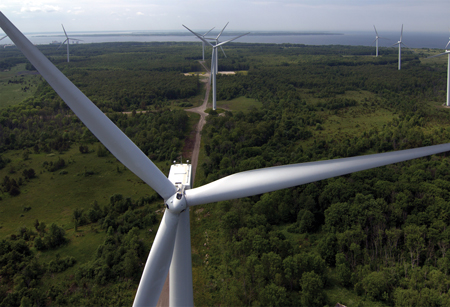
GE has announced the opening of the Paldiski Wind Farm on the Pakri peninsula in northwestern Estonia. With 18 GE 2.5-100 wind turbines, the Paldiski Wind Farm marks the commercial debut of the company’s wind turbine technology in Estonia, one of Europe’s most promising wind sectors. GE representatives were joined at the ceremony by officials from Eesti Energia AS and Nelja Energia AS , the owners of the wind farm, as well as President of Estonia Toomas Hendrik Ilves.

“I am glad that Paldiski wind farm has been completed. One more efficient power plant has been added to Eesti Energia’s generating portfolio, as wind conditions on Pakri peninsula are excellent,” said Sandor Liive, chairman of the Eesti Energia management board. Eesti Energia currently operates four wind farms: Paldiski, Aulepa, Narva and Virtsu, with a total capacity of 111 MW.

Thanks to strong winds coming off the Baltic Sea and the installation of the Paldiski Wind Farm, Estonia experienced a significant development for wind power last year. According to Martin Kruus, who is the chairman of the board of both Nelja Energia and the Estonian Wind Power Association, Estonia erected a record number of wind turbines last year with a total capacity of 86 MW that led to the overall capacity of 269 MW. “The amount of wind energy generated during 2012 grew by 23 percent,” said Kruus.

“Wind continues to play a significant role in powering communities, and GE’s wind turbines offer high efficiency and reliability for a broad range of wind conditions,” said Cliff Harris, general manager, GE Renewable Energy Europe. “Our 2.5-100 wind turbine is a product of GE’s evolution in the wind industry and is an excellent addition to the multi-megawatt wind sector. Advancements in serviceability and grid integration from earlier GE turbine models make it a great fit for Estonia’s robust wind conditions.”

To ensure successful operation and maintenance support, the wind farm is supported by a 10-year full service agreement from GE, which includes advanced anomaly detection, unplanned maintenance and an availability guarantee.

For more information, visit www.ge-energy.com.

EWEA Offshore 2013 will Address Finance Concerns

0

Offshore wind in Europe has now reached a capacity of 6,040 MW, from 58 wind farms in the waters off ten countries. 1,045 of those MW were installed in the first six months of 2013 alone, when 277 new turbines came online. Across the Atlantic, offshore wind projects are still in their infancy, but a new horizon for wind energy is starting to open up.  With construction on the much-debated Cape Wind project expected to begin later this year, and new offshore leases currently being awarded along the Atlantic coast, the opportunities for offshore wind in the U.S. have never been greater.

But is the technological know-how up to speed? Turbine size, foundation type and maintenance strategies are all crucial considerations for any project developer. Then there is the complexity of getting these projects online: convincing investors; negotiating permitting and logistics; training and recruiting staff; connecting to the grid. Here, the mature markets of Europe have much to offer in terms of best practice, shared experiences, and technical expertise. 

When Europeans wanted to know about computers in the 1990s, they didn’t stay in Europe; they went to Silicon Valley in California. Now the reverse is true for wind energy: while the U.S. wind industry already has several decades of onshore expertise, it’s their European neighbors who have the experience in offshore. And the European offshore wind industry will be gathering this November at EWEA OFFSHORE 2013—the world’s largest offshore wind energy conference and exhibition—to share its knowledge, display its products, and do business.  The event, held every two years, is a showcase for companies and a learning opportunity for thousands of professionals.  The 2011 edition attracted more than 480 exhibitors and over 8,200 participants, and exhibition space for this year’s event in Frankfurt, Germany in November is almost sold out.

But things in the offshore wind sector have changed since 2011, and the focus and location of the 2013 event have been chosen to reflect this. Given the massive requirements for investment in developing offshore wind, and the current economic crisis, finance is a major concern for the offshore wind industry—in the first half of 2013, despite strong growth in offshore installations, just one European project reached financial close.  The conference’s Financing Track will center on a major issue for investors: Risk—overcoming transmission risk; de-risking projects; and how new financing instruments can lower the cost of capital.

While wind energy in the U.S. has been given another breath of life thanks to the extended PTC, much investor uncertainty in Europe stems from the current lack of a stable EU regulatory framework for renewable energy beyond 2020. At the forefront of the political debate is the question of binding EU climate and energy targets for 2030, and in this context, EWEA’s OFFSHORE 2013 event will open with a high-level plenary session featuring European politicians debating their positions on 2030 targets, which has far-reaching implications for the entire wind industry.

Another important question for investors is the relatively high cost of offshore wind, and the maturity of an industry that has grown so quickly. Throughout the conference program, sessions have been designed to show how the sector is addressing the twin issues of reducing the cost of energy and moving towards full industrialization. The conference tracks ‘Markets, Strategies and Planning’, ‘Future Technologies,’ and ‘Industrializing the Supply Chain’ hold a wealth of information from people working in the offshore wind energy sector.

The opportunities for exchanges between the participants from different countries and regions will be key for many attendees. In 2011 in Amsterdam, 62 countries were represented among the participants, making it a truly international event. With companies exhibiting and presenting from the U.S., Asia and all across Europe, the 2013 event will certainly follow suit.

At an event with such a diverse mix of participants and activities, occasions for making new contacts are everywhere—including specific networking events such as the lively opening reception and the glamorous conference dinner. Of the previous EWEA OFFSHORE event, Jean Huby, CEO, Areva Wind said “If we want to succeed in offshore wind we need to build strategic partnerships. We need to know the people, we need to network with them and here we have the whole industry present.”

AWEA Report: Wind Demand High Despite Late PTC Renewal

0

After coming to a standstill in the first half of 2013 due to Congressional delay in extending the federal wind energy Production Tax Credit (PTC), activity in the U.S. wind industry is ramping back up as a strong wave of utilities sign up for more wind power, according to the American Wind Energy Association’s U.S. Wind Industry Second Quarter 2013 Market Report.

Throughout 2012, the industry awaited a policy signal from Congress via a PTC extension, but that extension didn’t come until New Year’s Day of this year. As the industry had previously warned, with wind energy project timelines spanning 18-24 months, the delay had serious consequences, and its impacts have continued to ripple through the industry well into 2013.

Only 1.6 megawatts (MW) of wind power were commissioned during the first half of the year and none at all during the second quarter, yet activity is now robust in areas that indicate impending project construction—namely, requests for proposals (RFPs) and power purchase agreements (PPAs). More than 20 RFPs have been issued, and extremely competitive prices for wind energy are spurring utilities to ink contracts for even more megawatts than their initial RFPs requested. Approximately 1,300 MW are now under construction, while more than 3,600 MW in PPAs are secured. In total, utility plans for more wind announced in the first six-plus months of the year total nearly 5,000 MW.

“The market pattern playing out in U.S. wind energy right now tracks exactly with warnings sounded by the industry a year ago, and with studies that examined the consequences of not extending the PTC,” said AWEA CEO Tom Kiernan. “No industry can contribute what it’s capable of giving America without stable policy, and wind energy is Exhibit A of that reality. The industry is hard at work getting geared up to meet the strong demand for more wind energy, but if it’s going to generate more jobs and clean energy for America in the future, it simply must have the same kind of policy certainty under which other industries operate.”

GL Garrad Hassan Continues to Help Unlock New Capital for Offshore Wind

0

With the support of technical due diligence advice from GL Garrad Hassan, Sumitomo Corporation and its subsidiary Sumitomo Corporation Europe have agreed to invest significant amount of equity in two Belgian offshore projects. The Belwind 1 operational wind farm and Northwind project together account for 127 wind turbines and 381 MW of generating capacity with total project cost of about €1,550 million. The investment by Sumitomo is further evidence that offshore wind is attracting new sources of equity capital. Sumitomo agreed to take 39 percent of Belwind 1 and 33 percent of Northwind.

Specialist engineering knowledge and skills from GL Garrad Hassan provided technical due diligence to Sumitomo Corp. The GL Garrad Hassan team examined the key areas of technical risk, including energy production, technology and design, asset status, contracts, grid and permitting.

The Sumitomo investment is the latest of a number of project finance deals involving alternative equity for European Offshore Wind Projects. This is seen as a healthy trend as it reduces the reliance on the already stretched balance sheets of European Utilities.

Jo de Montgros, Head of Independent Engineering at GL Garrad Hassan, commented:  “This deal is proof, if it were needed, that offshore wind is a proven asset class. We were delighted to be able to assist with the mobilisation of new capital in the offshore wind business by providing the required level of clarity and independence to our customer.”

For more information, visit www.gl-group.com.

Nordex’s First N117/2400 Wind Farm Installed in Finland

0

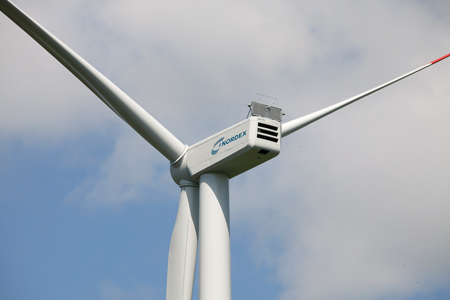
Nordex has installed its first N117/2400 wind farm in Finland, simultaneously passing an important milestone in this country. Comprising nine N117/2400 multi-megawatt turbines, the 21.6 MW Honkajoki wind farm has now been connected to the grid for Finnish wealth management company Taaleritehdas. Mounted on steel tube towers with a height of 120 metres, the turbines will yield of up to 75 GWh per year. Honkajoki is the first project under a frame contract signed with Taaleritehdas in June 2012 providing for the delivery of up to 111 turbines.

Nordex completed the Honkajoki wind farm ahead of schedule thus allowing Taaleritehdas to generate energy earlier than anticipated and tap into the “early bird premium” for wind power generated before 2016. “This marks a real success for our new activities in Finland and creates an excellent basis for future projects with Taaleritehdas,” said Lars Bondo Krogsgaard, a member of Nordex SE’s Management Board.

Honkajoki is located in a flat woodland region in the southwest of Finland. Thanks to the Nordex N117 wind turbine and its remarkable suitability for Finnish wind conditions, the wind farm achieves a high capacity factor around 40 percent.

For more information, visit www.nordex-online.com.

Broadwind Reports Q2 2013 Results

0

Broadwind Energy, Inc. has reported sales of $51.4 million for the second quarter of 2013, a 9 percent decrease compared to $56.3 million in the second quarter of 2012.

The decline reflected weaker activity in the Gearing and Services segments, partly offset by stronger revenue in the Towers and Weldments segment due in part to a 42 percent increase in industrial weldments revenue compared to the prior-year second quarter.

The company reported a net loss from continuing operations of $0.2 million or $.01 per share in the second quarter of 2013, compared to a loss of $4.2 million or $0.30 per share during the second quarter of 2012. The improvement was due to stronger operating results in the Towers and Weldments segment as well as the gain on the sale of the company’s idle tower facility during the current-year quarter. The company reported non-GAAP adjusted EBITDA (earnings before interest, taxes, depreciation, amortization, share-based payments, and restructuring costs) of $2.7 million during the second quarter of 2013, compared to $1.1 million during the second quarter of 2012.

Peter C. Duprey, president and chief executive officer, stated, “Our second-quarter results showed the strength of our Towers and Weldments segment in which we booked $52 million of new orders during the period, and announced another $70 million after quarter-end. We have sold out our 2013 capacity, and are now booking orders well into 2014. We expect 2014 production to reach or exceed our design capacity of 500 towers. During the second quarter, we demonstrated a dramatic improvement in productivity and tower through-put compared with last year when we were experiencing production issues associated with manufacturing multiple tower types at the same time. Process improvements that we initiated in 2012 and a generally better mix of towers resulted in strong EBITDA in the quarter.

“Finally we have strengthened our balance sheet by achieving some major milestones, including selling our idle Brandon, South Dakota tower facility for $12 million, paying down additional debt of $6 million and ending the quarter with $18 million of cash.”

The company booked $59 million in new orders during the second quarter of 2013. Additionally, a $35 million tower order from 2010 was removed from backlog due to a change in the customer’s U.S. wind requirements. As a result, net orders for the second quarter of 2013 were $25 million, a 17 percent decrease compared to the prior-year second quarter. Towers and Weldments orders, which vary considerably from quarter-to-quarter, totaled $18 million, net of the $35 million cancellation noted above. Second-quarter net Gearing orders totaled $5 million, a 70% decrease from the prior-year second quarter, reflecting continued weakness in orders from natural gas and other industrial customers as well as less demand for wind replacement gearing. Net orders for Services totaled $3 million compared to $5 million in the prior-year quarter, due to weaker demand for field services, as a number of customers have insourced work during a period of low turbine construction activity.

At June 30, 2013, backlog totaled $143 million, up from $137 million at June 30, 2012. Subsequent to quarter-end, the company announced new tower orders of $87 million, $17 million of which were included in backlog as of June 30, 2013.

Towers and Weldments segment sales totaled $37.5 million in the second quarter of 2013, compared to $37.0 million in the second quarter of 2012. Tower section volume in the second quarter of 2013 was down 12 percent compared to the prior year. The prior-year production consisted of a greater number of lighter, lower-value sections as compared to the current-year second quarter. Additionally, $4.4 million of completed tower sections remained in inventory at quarter-end because a customer first article qualification process was not completed as planned. Revenue for these sections will be included in the third-quarter results. Consistent with the Company’s strategic focus on diversifying end markets, industrial weldments sales of $3.2 million increased 42 percent compared to the prior-year period, more than offsetting the tower shortfall noted above. Non-GAAP adjusted EBITDA for the second quarter was $5.3 million; nearly triple the prior-year second quarter adjusted EBITDA of $1.8 million. The dramatic improvement was the result of improved operating efficiencies and a less variable and more profitable mix of towers. During the second quarter of 2012, productivity suffered due to the production of multiple tower types in that quarter. Towers and Weldments segment operating income for the second quarter of 2013 was $4.1 million, up $3.5 million from the second quarter of 2012 due to the factors described above.

Gearing segment sales totaled $10.4 million in the second quarter of 2013, compared to $14.1 million in the second quarter of 2012. The 26 percent decrease was due primarily to lower demand from mining and natural gas customers as well as protracted manufacturing issues with a new line of gearboxes for an industrial customer. Gearing segment non-GAAP adjusted EBITDA for the second quarter of 2013 was a loss of $0.1 million, decreasing from $1.3 million in the prior-year second quarter due in part to lower volumes and lower margins, partly offset by reductions in fixed costs and lower compensation, bad debt and other professional expenses. Gearing segment operating loss for the second quarter of 2013 increased to $3.9 million, from $1.6 million in the prior-year second quarter. The increased operating loss was partly attributable to $0.7 million of higher restructuring charges and $0.5 million of accelerated amortization as well as the factors described above.

Revenue from the Services segment was $4.1 million in the second quarter of 2013, compared with $5.7 million in the second quarter of 2012. The 29 percent decrease was due in large part to depressed field service activity as a result of very low wind turbine installations across the United States, reflecting the curtailment of development work in late 2012 in response to the uncertainty regarding the production tax credit as mentioned above. This has resulted in wind farm operators insourcing non-routine maintenance projects during this same period. Non-GAAP adjusted EBITDA loss for the second quarter of 2013 was $0.6 million, compared with $.5 million in the prior-year second quarter. As a result of the 29 percent drop in sales, the company reduced headcount during the quarter and reduced SGA costs compared to the prior-year second quarter. Services segment operating loss of $1.3 million in the second quarter of 2013, increased $0.2 million, from a loss of $1.1 million in the second quarter of 2012, reflecting $.1 million of additional restructuring charges in the current-year second quarter as well as the factors described above.

For more information, visit www.bwen.com.

Largest Federally-Owned Wind Farm Breaks Ground at U.S. Weapons Facility

0

Building on President Obama’s Climate Action Plan, which calls for steady, responsible steps to reduce carbon pollution, the Energy Department today broke ground on the nation’s largest federally-owned wind project at the Pantex Plant in Amarillo, Texas. Once completed, this five-turbine 11.5 MW project will power more than 60 percent of the plant with clean, renewable wind energy and reduce carbon emissions by over 35,000 metric tons per year—equivalent to taking 7,200 cars off the road. The Pantex Plant is the primary site for the assembly, disassembly, and maintenance of the United States’ nuclear weapons stockpile.

Under the Obama Administration, federal agencies have reduced greenhouse gas emissions by more than 15 percent—equivalent to permanently taking 1.5 million cars off the road. To build on this accomplishment, the Administration has established a new goal: the federal government will consume 20 percent of its electricity from renewable sources by 2020—more than double the current goal of 7.5 percent.

“As the largest energy user in the country, the federal government has a tremendous opportunity to lead by example in taking actions to improve energy efficiency and increase renewable energy usage to save taxpayers dollars and reduce greenhouse gas emissions,” said Deputy Secretary of Energy Daniel Poneman. “Responsible development of America’s wind energy resources is a critical part of our all-of-the-above energy strategy, and the Pantex wind project furthers our commitment to lead by example and to advance a cleaner, more sustainable energy future.” 

Located on 1,500 acres east of the Pantex Plant, the wind farm will generate approximately 47 million kilowatt-hours of electricity annually – more than 60 percent of the annual electricity used for Pantex, or enough electricity to power nearly 3,500 homes. The project is expected to complete construction and start generating electricity in summer 2014.

Siemens will construct the wind farm under a performance-based contract that uses long-term energy savings to pay for the project costs, avoiding upfront costs to taxpayers. In 2011, President Obama challenged federal agencies to enter into $2 billion worth of performance-based contracts within two years. Federal agencies have since committed to a pipeline of nearly $2.3 billion from over 300 reported projects, including the Pantex wind project.

Last week, the Energy Department released two new reports showcasing record growth across the U.S. wind market, increasing America’s share of clean, renewable energy, and for the first time representing the number one source of new U.S. electricity generation capacity. The 2012 Wind Technologies Market Report found that Texas is the country’s largest and fastest growing market. With 12,214 MW of total wind capacity installed at the end of last year, Texas has more than twice as much wind power capacity as the next highest state and more wind capacity than all but five countries worldwide.

The Energy Department and the National Nuclear Security Administration worked with interagency partners, including the Environmental Protection Agency and the Federal Aviation Administration, as well as Texas Tech University to launch this project.

Study Price of U.S. Wind Near an All-Time Low

0

Annual wind power additions in the United States achieved record levels in 2012, while wind energy pricing is near an all-time low, according to a new report released by the U.S. Department of Energy and prepared by Lawrence Berkeley National Laboratory (Berkeley Lab). Roughly 13.1 GW of new wind power capacity were connected to the U.S. grid in 2012, well above the previous high in 2009, and motivated by the scheduled expiration of federal tax incentives at the end of 2012.  The prices offered by wind projects to utility purchasers averaged $40/MWh for projects negotiating contracts 2011 and 2012, spurring demand for wind energy.  At the same time, even with a short-term extension of federal tax incentives now in place, the wind power industry is facing uncertain times, in part due to low natural gas prices and continued policy uncertainty.

“Wind energy prices—particularly in the central U.S.—­now rival the lows set back in 2003,” notes Berkeley Lab Staff Scientist Ryan Wiser. “This is especially notable because technology advancements have allowed wind projects to be built in lower quality wind resource areas.”

Key findings from the U.S. Department of Energy’s “2012 Wind Technologies Market Report” include:
 
• Wind is a credible source of new generation in the U.S.  Wind power comprised 43 percent of all new U.S. electric capacity additions in 2012 and represented $25 billion in new investment. Wind power currently contributes more than 12 percent of total electricity generation in nine states (with three of these states above 20 percent), and provides more than 4 percent of total U.S. electricity supply.
• Despite challenges, a growing percentage of the equipment used in U.S. wind power projects has been sourced domestically in recent years.  Wind turbine and component manufacturers met the challenge of supplying a 13 GW market in 2012, albeit with growing pains.  Seven of the ten wind turbine suppliers with the largest share of the U.S. market in 2012 had one or more operational manufacturing facility in the United States in 2012; in contrast, only eight years earlier, there was only one active utility-scale turbine manufacturer assembling turbines domestically. In part as a result, a growing percentage of the equipment used in wind projects has been sourced domestically.  Focusing on selected trade categories, the percentage of wind turbine costs attributable to imported equipment declined from 75 percent in 2006-2007 to 28 percent in 2012.  Conversely, if one assumes that no wind equipment imports occurred though other trade categories beyond those analyzed in the report, then domestic content increased from 25 percent in 2006-2007 to 72 percent in 2012.  Exports of wind-powered generating sets from the United States have also increased, rising from $16 million in 2007 to $388 million in 2012.
• Turbine scaling is boosting wind project performance. Since 1998-99, the average nameplate capacity of wind turbines installed in the U.S. has increased by 170 percent (to 1.94 MW in 2012), the average turbine hub height has increased by 50 percent (to 84 meters), and the average rotor diameter has increased by 96 percent (to 94 meters).  This substantial scaling has enabled wind project developers to economically build projects in lower wind-speed sites, and is driving capacity factors higher for projects located in fixed wind resource regimes. Wind power curtailment—disallowing the production of electricity from wind projects even when the wind resource would allow for such production, due to transmission or power system limitations—has recently declined in what have historically been the most problematic areas (e.g., West Texas) as a result of concrete steps taken to address the issue.
• Falling wind turbine prices are pushing installed project costs lower.  Wind turbine prices have fallen 20 to 35 percent from their highs back in 2008, and these declines are pushing project-level costs down.  Based on a large sample of wind projects, average project costs in 2012 were down almost $200/kW from the reported average cost in 2011, and down almost $300/kW from the reported average cost in both 2009 and 2010.  Among projects built in 2012, the windy Interior region of the country was the lowest-cost region, with average project costs of ~$1,760/kW.
• Wind energy prices have been falling since 2009, and now rival previous lows. Lower wind turbine prices and installed project costs, along with improved capacity factors, are enabling aggressive wind power pricing.  After topping out at nearly $70/MWh in 2009, the average levelized long-term price from wind power sales agreements signed in 2011/2012—many of which were for projects built in 2012—fell to around $40/MWh nationwide.  This level approaches previous lows set back in the 2000-2005 period, which is notable given that wind projects have increasingly been sited in lower quality wind resource areas.  Wind energy prices negotiated in 2011 and 2012 are generally lowest in the Interior region of the U.S., with prices averaging just above $30/MWh, and typically ranging from $20-40/MWh. Even with today’s very attractive wind energy prices, however, wind power sometimes struggles to compete with what are currently very low natural gas and wholesale power prices in many parts of the country.
• Looking ahead, projections are for slow growth in 2013, followed by a much stronger year in 2014.  Though federal tax incentives are now available for wind projects that initiate construction by the end of 2013, it will take time to recharge the project pipeline.  “As a result, 2013 is expected to be a slow year for new capacity additions, lowering not only U.S. but global growth forecasts,” says Mark Bolinger, Research Scientist at Berkeley Lab.  “The year 2014, on the other hand, is expected to be a strong year as developers commission projects that began construction in 2013.”  Projections for 2015 and beyond are much less certain: despite the improved cost, performance, and price of wind energy, policy uncertainty – in concert with continued low natural gas prices and modest electricity demand growth – may put a damper on medium-term growth expectations.

The full report, a presentation slide deck that summarizes the report, and an Excel workbook that contains much of the data presented in the report, can all be downloaded from: http://emp.lbl.gov/reports/re

PRODUCT SHOWCASE: Lightweight Dust Muzzle™ Works to Remove Fiberglass Dust During Maintenance

0

San Diego based-Dust Collection Products manufactures a complete line of dust collectors for the hand held tools used in the wind generator manufacturing trades.

The most popular dust collector is the Dust Muzzle. It is an efficient, lightweight and affordable ($24.95) dust shroud that adapts to all electric and pneumatic right angle grinders. It is made from durable high-density polypropylene. When used with a 2hp industrial vacuum, is capable of removing up to 99% of fiberglass and other toxic dusts at the point of origin.

The smallest Dust Muzzles are made for pneumatic right angle die grinders. They are available for 2” and 3” discs and are most commonly used with the 3M Roll Lock system.

The Dust Muzzle is also available for 4 1/2 – 8” right angle grinders. It can be used with rubber backed sanding discs, silica carbide wheels and soft pad sanders as well as many other abrasives. It will also fit onto all pneumatic RO/DA sanders and can be adapted for cutting with carbide and diamond blades with diameters of 4”–7”.

The Dust Muzzle can be used as a point of origin dust collector for hole saws and core bits with diameters between ¼” and 3”.

In addition to Dust Muzzles, Dust Collection Products makes point of origin dust collectors for Skil™ saws and needle guns.

All of the Dust Collection Products tools are made to be used with 2hp vacuum systems that have a minimum of 100 CFM, over 80” of static water lift and .5 micron or smaller disposable filter bags. Call for free, knowledgeable and experienced technical support to help design a complete custom system with HEPA vacuums.

For more information, call 619-223-2154, e-mail sales@dustmuzzle.com, or visit www.dustmuzzle.com.

PRODUCT SHOWCASE: New STAUFF Mini Water Vac Cleans Oil Continuously

0

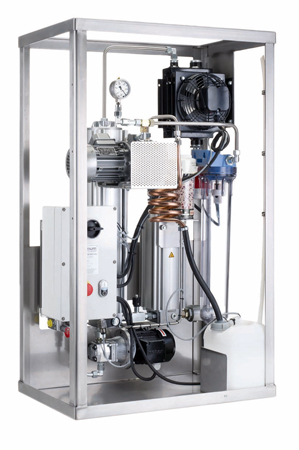
The STAUFF Mini Water Vac purifies hydraulic system oil, eliminating water, gas, and particulate matter. The purified oil satisfies the most stringent quality requirements.

The STAUFF Mini Water Vac dehydrates and cleans most types of oils such as lubricating, hydraulic, transformer, and switch oils while it neither removes nor alters oil additives.

The water removal process is based on pure vacuum evaporation inside a vacuum chamber at a maximum temperature of +65 °C / +149 °F.

Solid particle removal is achieved through a field-proven STAUFF Systems Micro Filter.

The oil temperature can be set using the integrated heater thermostat. The dehydration and filtering process is fully automatic and is controlled via the PLC.

Contaminated oil greatly increases maintenance costs and contributes to catastrophic machine breakdowns. The STAUFF Mini Water Vac offers protection against malfunctions, breakdowns and total system failures.

The STAUFF Mini Water Vac also protects the environment by reducing oil consumption and oil disposal.

For more information, call 201-444-7800 or e-mail filtration@stauffusa.com.

PRODUCT SHOWCASE: PSI Repair Services Introduces Cost-Effective Replacement for Obsolete Inverters

0

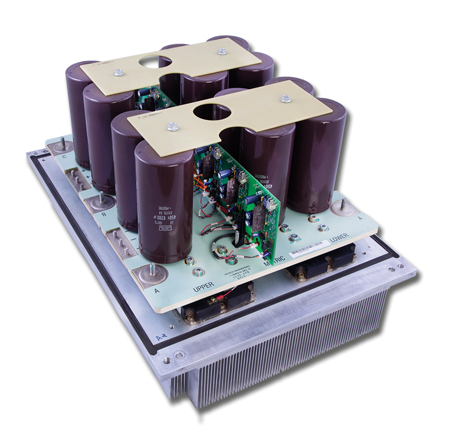
PSI Repair Services, Inc., a subsidiary of Phillips Service Industries, introduced a new, cost-effective replacement today for obsolete Xantrex™ Matrix Inverters found in GE 1.5 MW S Series wind turbines. PSI’s replacement inverter is a form, fit, and function solution with advanced fault detection and higher efficiency parts than the OEM design. The drop-in replacement inverter allows wind farms to supplement their inventory with more reliable, longer-lasting technology while keeping their turbines online. PSI also offers repair services for Xantrex Matrix Inverters from GE 1.5MW S Series wind turbines.  

PSI also repairs faulty Xantrex Matrix Inverters from GE 1.5MW S Series turbines with newer, more efficient parts, leading to improved performance and longer product life.

Xantrex Matrix Inverters repaired and replaced by PSI have been rigorously field tested with successful results. Plus, PSI provides custom crating for all inverters to secure them from damage during shipping. Our inverter crates are also perfect for long term storage and return shipments of damaged cores.

Benefits of selecting PSI to repair or replace your broken Xantrex Matrix inverter:

• Reduced repair/replacement cost
• Reduced turnaround time
• More reliable than OEM matrix inverter
• Runs cooler than OEM matrix inverter
• Improved, high-speed fault detection circuitry
• Designed for longer life—estimated to be twice the life of the original design
• Designed to work with newer generation IGBTs
• Upgraded matrix inverters have passed rigorous field testing
• Upgraded matrix inverters are corrosion protected
• PSI provides custom crating for our upgraded matrix

As a leading independent service provider in the wind energy industry, PSI Repair Services offers component repair and upgrade services for GE, Vestas, Siemens and Clipper wind turbines. PSI covers the critical electronic, hydraulic and precision mechanical components that drive the turbines’ pitch and yaw systems and down tower electronics. PSI uses the latest diagnostic tools to detect failures down to the microchip level. Solutions can range from minor repairs to full replacement of printed circuit boards, with enhanced designs to improve performance and reliability. In other cases, PSI can replace inefficient OEM components with newer, more reliable technology or make modification improvements to the original design. PSI also provides comprehensive remanufacturing services for unsalvageable, obsolete components.

For more information, visit www.psi-repair.com/repair-services/wind-turbine-parts-repair.

PRODUCT SHOWCASE: Wind Turbine Bolting Tool Solutions from RAD Torque Systems

0

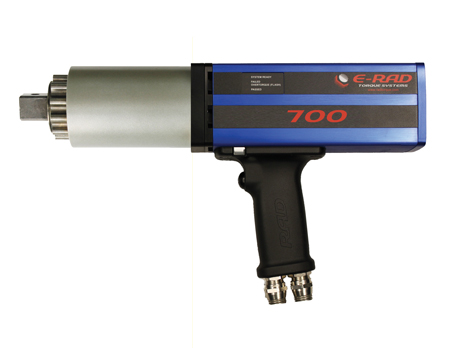
RAD® Torque Systems offers a fast, reliable and safe solution for the installation and removal of heavy-duty fasteners. All RAD torque guns have one thing in common; they use a patented planetary gear reduction technology which delivers one of the highest power-to-weight ratios of any controlled bolting system and never transmits working torque forces to the operator’s hands.

The E-RAD electronic torque system has quickly become a favourite in the wind energy industry because of its ability to meet each wind tower manufacturer’s specific standards for torqueing bolts. E-RAD’s precision is truly remarkable with +/- 3% accuracy, +/- 2% repeatability and digitally traceable torque sequences.

E-RAD® electronic torque wrenches are lighter, faster, stronger, and quieter than conventional means of bolting:

• Lighter—Combining the latest advancements in ergonomic design with an unsurpassed power-to-weight ratio, the E-RAD Series torque system is a lightweight alternative that eliminates the need to move heavy hydraulic pumps.
• Faster—Compared to hydraulic wrenches, E-RAD dramatically decreases tightening times through the delivery of smooth and continuous torque.
• Quieter—Operating at only 75db, E-RAD may be the world’s quietest torque gun and is ideal for sensitive environments.
• Stronger—E-RAD is specifically designed for heavy industrial usage where speed, accuracy and mobility are of key importance. The double cooling system allows for heavy duty continuous usage.

An advanced touch controller case provides the interface for all E-RAD® tools. The touch screen allows for fast and convenient error-free adjustments to both torque and angle. LED indicator lights indicate the status of torque procedure for maximum accuracy. Digital data collection allows for full traceability of each torque sequence performed to generate simple computer reports or view data logs directly on the tool.

The E-RAD series is available in seven models with torque power ranging from 100 to 6,000 Foot Pounds. An exciting new model, capable of over 8,000 Foot Pounds, is scheduled for release soon.

RAD Torque Systems product lines include pneumatic, electronic, digital, electric and battery powered torque tools. They are the 100% Canadian manufacturer responsible for DB-RAD, the world’s first digital, cordless lithium-ion torque wrench and Smart Socket, a revolutionary transducer socket for torque verification and calibration.

For more information, visit www.radtorque.com.

Winds of Change: Simplified Field Termination of Optical Fiber Cables

0

Normally, when asking people at trade shows if they know of fiber optic cables, I see hesitance accompanied by some shoulder shrugging, and eyes wandering, frantically trying to find the answers from my booth’s advertising banners.  When people think of fiber optics, they often associate it with the telecommunication industry, the Internet, or telephone cables.  What most people don’t know is that optical fiber’s wide range of applications extends to industrial networking, including controls systems for solar and wind power.  Industrialized fiber optics provide an effective means to transmit data in the harsh environments.  How can the wind industry benefit from using fiber optics technology?  Well, if we look back at history we can see how far fiber optics can take us.

Windmills, first developed in China and Persia, have been in use since 2000 B.C.   Used extensively in the Middle East for food production by the 11th century, they influenced merchants and crusaders to carry the idea back to Europe, primarily to the Netherlands.

The Dutch adapted a new method of the windmill and used it to drain lakes and marshes in the Rhine River Delta. In the late 19th century, this technology was brought to the New World by settlers who then pumped water to farms and ranches and later generated electricity for homes and industry.  In Europe and later in America, industrialization led a steady decline in the use of windmills. However, it also sparked the development of larger windmills in order to generate electricity. These windmills became known as wind turbines, which appeared in Denmark as early as 1890.

Early in the twentieth century, advanced scientific research and discovery led to an onslaught of development, production, and manufacturing, creating an enormous demand for electricity.  Seemingly in the blink of an eye, coal mining and crude oil production grew quickly to supply the natural resources necessary for electricity generation.  With an insatiable demand for industrial and consumer electricity, the nuclear age rose as an added source for the energy needs of the world.  In June of 1954, the first nuclear power plant began operation at Obninsk, Soviet Union.  With this event, the world of energy changed forever: generation of billions of megawatts brought power and light to the farthest reaches of economically advanced continents, and incredible cities’ infrastructures emerged around these powerful electrical stations.  Centralized power generation, once a rarity, has become ubiquitous, often taken for granted as we switch on lights, charge smartphones, and enjoy the comfort of environmentally conditioned buildings.

This energy boom, unfortunately, also introduces hazards for the population.  All too often, we witness scaled tragedies in far-away places as evidenced by refinery explosions, oil spills, and rare but far-reaching nuclear accidents.  Names like Chernobyl, Fukushima, and Macondo are etched into our collective memories as useful reminders that all forms of energy generation have inherent risk.
Seeking clean and environmentally friendly ways to produce electricity, many turn their attention to modernized wind power and other renewable energy sources.  “Wind energy became the number one source of new U.S. electricity-generating capacity for the first time in 2012, providing 42% of all new generating capacity,”.   In 2011, German chancellor Angela Merkel proposed a plan to replace all of German nuclear power plants by 2022 and triple the renewables share by 2050.  While these goals are ambitious, the larger picture presents a new era of innovation in alternative approaches to the energy generation.

Why fiber optic technology in the wind power industry?  The simple answer is that the combination of safety, efficiency, cost effectiveness, and reliable performance in harsh conditions makes fiber very attractive for use in these applications.  Fiber optic cable gear is commonly used in Supervisory Control and Data Acquisition (SCADA) systems within and between wind towers.  All dielectric fiber optic cables offer the added advantage of reducing ground potential to help protect critically important controls equipment in the event of lightning strikes.  Complex wind farms are commonly operated through fiber optic cables and switches to connect various servers to the turbines for monitoring and control of wind power plants.  Daily, millions of meters of these cables provide seamless wind farm communications and data integration from the wind towers through centralized control networks.

Known for its ability to transmit vast amounts of data over great distances, optical fiber products also offer these distinct advantages in the harsh environments of wind turbines and wind farms:

•    Immunity to Radiofrequency Interference (RFI)
•    Electromagnetic Interference (EMI) electrical isolation between the turbine and its controls
•    Stable performance of wide operating temperature range
•    Repeaterless links of several kilometers
•    Simplified field connectorization with advanced cable and connector solutions

A rapid advancement of Industrial Ethernet to the wind power networks communications led to the rapid changes in the enterprise automation world and the introduction of a different breed of communications cables.  Fast (100 Mb/sec) and Gigabit Ethernet (1000Mb/sec) data rates created demand for higher bandwidth, real- time communications.  Previously widespread plastic optical fiber (POF) and copper cables could not provide these capabilities over the long distances required.  Harsh and unpredictable wind farms weather conditions required an extra layer of protection for data communication transmission.

Graded-Index Polymer Clad Fiber (GI PCF) cables with Low Smoke Zero Halogen (LSZH) outer jackets were specifically designed for applications that require high mechanical reliability at the fiber level.  Polymer Clad Fiber not only offers a robust mechanical protection to a fiber core but also adds the important field termination capabilities to the product offering a reliable cable connectorization solution.

Naturally, power generation, transmission, and distribution create strong electrical noise.  Because using optical fiber inside wind turbines offers immunity to radiofrequency interference (RFI) in addition to electromagnetic Interference (EMI), data transmission is not affected by electrical noise. 
If optical fiber cable is the best choice, what prevents some manufacturers from using more of it in wind power applications?  Is field termination too difficult? Are technicians too hesitant to work with the fiber?

These questions present serious obstacles in choosing optical fiber; the reality is that some cable technicians are hesitant to work with glass fiber.  Some of the common misconceptions about optical fiber include that it is, “Too complicated, too fragile, too tiny to terminate, messy epoxies are used, tedious polishing processes are needed,” and my personal favorite, “you need special training and certification to work with it.” 

Historically, a common fear of the handling and long-term reliability of using glass optical fiber in such environments has hampered its adoption in wind power applications.  Through decades of development, companies like OFS have developed and proven the robustness and simplicity of using optical fibers in applications from subsea, to aerospace, medicine, factory automation, and oil and gas markets.  Recently, significant inroads have been made to both improve fiber handling and simplify field connectorization.  Today, companies like OFS, with GiHCS™ optical fiber cables, and Panduit offer a Graded Index Polymer Clad Fiber (GI PCF) fiber solution along with LSZH (Low Smoke Zero Halogen) cables and LC field-installable connectors interoperable with commonly used SFP modular transceivers on their switch lines for Fast and Gigabit Ethernet Uplinks and switch ports.

Such optical fiber cable solutions help ensure stable performance in:

•    widely fluctuating temperatures from -20 to +105˚C (-4 to + 221˚F)
•    high vibration
•    exposure to common industrial oils and chemicals
•    exposure to severe electrical noise
•    situations where time for connector training is minimal
•    installations where technicians are not expert in fiber optics

Maintenance and onsite cable repair in harsh, exposed conditions present other big issues for some installers.  In offshore applications where wind is stronger, towers are taller with larger wind turbines and longer blades than their onshore counterparts.  Recognizing these problems, fiber optic engineers have now designed and developed a simple crimp and cleave termination system that allows for connectorization of ruggedized fiber optic cable with no need for epoxies or polishing and simplified termination training.  Climbing the tower to repair or replace a data link is simplified with lightweight fiber optic cables and compact fiber optic tool kits that require no power during connector attachment.  Following the instruction manual is extremely important; not only does it save technicians effort to “crimp it right” the first time, with no consumables, the system also increases the number of terminations they can perform with one single kit.

The simple steps for the field termination of optical fiber breakout cables involve:  first, stripping the waterblocked outer jacket material; then, crimping the connector either directly onto the fiber optic coating (LC, SC, ST and SMA type) or  ETFE-based buffer material (V-pin and F07-type connectors), depending on the connector, for strong, solid connector retention. Strong connector to cable retention is crucial for connectorization in a turbine where strong mechanical vibration is a concern.  The third step is to create an optical finish on the fiber, using the special precision cleave tool with a diamond blade.  This crucial, but simple step creates a near perfect optical surface for low connector insertion loss.  The cleaving step eliminates the tedious need to polish the fiber end-face.  No messy adhesives or polishing equipment needed, your connectorized cable is ready to transmit at Fast and Gigabit Ethernet data rates.

At trade shows, we perform hundreds of connector termination demonstrations.  To prove the simplicity of this termination system, we ask our uninitiated customers to try the stystem for themselves through our “Crimpe, Cleave and Leave” competition.  Contestants are timed while they terminate fibers and often achieve times under 40 seconds per connector.

With only four or five steps depending on connector type, field technicians can perform thousands of terminations using tools they are familiar with.  Finally, a stress-free fiber optic zone, the holy grail of data communications, if you will.

Curiosity and genuine interest about fiber optics kept people in our booth longer and in just a few minutes, many change their perceptions toward optical fiber use in just a few minutes, following these new and simple steps.  No more shoulders shrugging or eyes wandering, previous hesitation and doubtfulness are swept away.  Our hope is that all of our contestants remember the benefits of fiber in the wind applications industry, the simplicity of learning and using the cable termination process, and the fun they had with our “Crimp, Cleave, and Leave” contest. 

In the early stages of our lives, we learn new things by exploring, studying, and trying them; each new skill with its own learning curve.  Similarly, adoption of renewable energy has its own learning curve and will take time, but the benefits for humankind are real.  Windmills, basically unchanged in design for many centuries, now harness the power of wind through technology advancements, with simplified fiber optics now contributing to safety, control, and efficiency.  We felt those winds of change, the change of people’s perceptions, and the change of their vision as they learned new things and new technologies.

Siemens Supplied Turbines, Connection for Largest Offshore Wind Farm

0

The world’s largest offshore wind power plant, London Array, has been inaugurated. Siemens supplied the 175 wind turbines and the grid connection for London Array. Together with Dong Energy, Siemens will also be responsible for the service of the wind turbines through a long-term agreement. The wind power plant owned, developed and built by a consortium consisting of Dong Energy, E.ON and Masdar has a total capacity of 630MW and will generate enough power to supply 500,000 British households with clean electricity. London Array will reduce annual CO2 emissions by approximately 900,000 tons, which equals the emissions of 300,000 passenger cars.

“London Array is the world’s largest offshore wind power plant and marks a milestone in the development of offshore wind power. This project underscores the leading position of Siemens in this attractive growth market,” said Peter Löscher, president and CEO of Siemens AG on the occasion of the opening ceremony in Margate, Great Britain.

The London Array offshore wind farm is located in the Thames estuary, approximately 20km off the Kent and Essex coast. Siemens supplied and installed the 175 wind turbines, each with a rotor diameter of 120 meters and a rating of 3.6MW. In addition, the company supplied the grid connection with one onshore and two offshore substations in the North Sea. The electricity generated by the wind turbines is bundled at sea and transported via high-voltage submarine cables to the coast. The wind farm will be operated and maintained from a purpose-built base at Ramsgate Port.

“Projects of this magnitude contribute to further industrialization of complex production and logistics processes for offshore wind power plants,” Löscher said. During the execution of the project, Siemens was able to further standardize offshore installation processes covering manufacturing, transport and logistics as well as installation of wind turbines offshore.

Offshore wind power is already playing an important role in the energy systems of Northern Europe. Its largest offshore markets, Great Britain and Germany, have ambitious development plans. Both countries are planning rapid and broad expansion of offshore energy generation. In Germany, a successful energy transition to meet future needs is only possible with the further increase of offshore wind power. The German government plans to have 10GW of offshore capacity installed by 2020. Great Britain is targeting up to 18GW of wind energy by 2020, enough to meet nearly one-fifth of Britain’s electricity demand.

Siemens is at the front of the market for offshore wind power plants, grid connections and offshore wind service. The company has already installed more than 1,100 wind turbines at sea with a total capacity of 3.4GW, more than two thirds of which are located in Great Britain. In total, it has 4.6GW of offshore capacity in its order books. Including London Array, Siemens has also implemented five grid connections in Great Britain.

For more information, visit www.siemens.com/wind.