







Home 2010

Gamesa and Northrop Grumman Join Forces in Offshore Wind

0

Gamesa and the Newport News Shipbuilding operations of Northrop Grumman Corporation have signed an agreement to work together on offshore wind technology. The agreement calls for the companies to cooperate on the launch of Gamesa’s first G11X-5.0 MW offshore prototype in the United States, using Gamesa’s multi-megawatt technology and Northrop Grumman Shipbuilding’s broad experience in challenging marine environments.

Gamesa is currently designing and developing a G11X-5.0 MW offshore Wind Turbine (WTG) specifically for the marine environment and built upon the technologies already extensively tested and validated in the G10X-4.5 MW platform. Gamesa is teaming with Northrop Grumman Shipbuilding-Newport News to utilize their proven expertise in heavy load logistics, systems performance and reliability, and the applications of such technologies in the marine environment.

To install in the G11X-5.0 MW offshore prototype Gamesa and Northrop Grumman Shipbuilding are setting up an initial team of as many as 40 engineers in the Hampton Roads area of Virginia. This highly skilled team will perform all of the preliminary work required to install the prototype by Q4-2012, including site selection, permitting, final construction and installation of the prototype, and testing.

“Gamesa has said before that it intends to play a significant role in the offshore market to ensure that it can tap the demand generated in the Northern European market, specifically the United Kingdom, starting in 2015, as well in the United States,” according to Dirk Matthys, CEO of Gamesa in the U.S. “Our alliance with Northrop Grumman Shipbuilding will give us the opportunity to test our technology on a short-term horizon, as well as to enhance and strengthen it, thanks to the skills and experience offered by a global leader in naval structures. This partnership further demonstrates Gamesa’s continuing commitment to and expansion in the North American market with both land and sea-based wind turbine technology.”

This announcement comes as federal and state governments intensify their focus on developing offshore wind energy. Offshore wind projects totaling more than 5,000 megawatts have been proposed and are in the planning or development stages in the United States. The turbine and foundation systems created by Gamesa and Northrop Grumman Shipbuilding address the market’s main concerns, namely efficiency of civil engineering infrastructures—the number-one investment expense in offshore wind—turbine reliability, low maintenance and servicing requirements, and minimizing the cost of generating electricity.

New generations of offshore turbine systems offering higher installed capacity will be required in order to meet the expected rising demand in the offshore wind energy market in the medium and long term. To this end Gamesa is already working on the rollout of another family of offshore turbines with a capacity of 6-7 MW, with a pre-series potentially available in 2014. More information is available by going to www.gamesacorp.com or www.northropgrumman.com.

Nordex Begins Production at New Arkansas Plant

0

Nordex has begun production at its newly built wind turbine manufacturing plant in Jonesboro, Arkansas. The plant’s first production crew recently began assembling a wind turbine nacelle, which houses the engine and other key components and sits high atop the turbine tower. “Two years ago we announced our intention to make Nordex wind turbines in the U.S., for the U.S.,” says Ralf Sigrist, president and CEO of Nordex USA, Inc. “Today we’re putting our hands to the metal and doing it. We hope Congress will do the same by finally passing meaningful renewable energy legislation.”

The first Jonesboro production crew completed a 10-week intensive training program at Nordex’s flagship plant in Rostock, Germany. Training will continue during the early phase of production, with the team’s German counterparts taking up residence in Jonesboro for several months to work alongside their new colleagues.

“There’s no way to do this without international exchange,” according to Joe Brenner, vice president of production. “Wind energy has tremendous potential in the U.S., but it’s about more than just creating green jobs. We have to transfer expertise in order to build a wind industry workforce. Nordex is investing in such a workforce and bringing the needed skills to America.”

Nordex broke ground on its manufacturing plant last September, pictured above, completing construction in July of this year. The company has hired 150 employees in the U.S. to date, including 42 in Jonesboro, and has plans to employ up to 1,000 nationally over four to five years. About 80 percent of the workforce in Jonesboro are locals. Construction on a second facility for assembling rotor blades is also planned for the future.

As a technological leader among suppliers of megawatt turbines, Nordex benefits particularly from the global trend towards large-scale wind turbines. The product range includes one of the largest series wind power systems in the world (N80/N90/N100, 2,500 kW) with more 1,300 of these turbines having been produced to date. This means that Nordex has a crucial edge in terms of experience in operating large turbines compared to most of its competitors in the sector. Overall, Nordex has installed a more than 4,200 turbines with a capacity in excess of 6,000 MW around the world. For more information visit www.nordex-online.com.

Korindo Wind Earns ISO 14001:2004 Certification

0

Korindo Wind, an ISO 9001:2008 certified wind tower and monopile manufacturer, has earned ISO 14001:2004 certification for its environmental management systems. The certification is the result of an audit completed in September 2010 by Geneva-based SGS, a world leader in inspection, verification, testing and certification for companies in a range of industries. Korindo Wind is one of the few wind tower manufacturers in the world to earn the ISO 14001 certification.

“This International Organization for Standardization certification further validates Korindo Wind’s dedication to the values of stewardship and responsibility,” according to Ricky Seung, president of Los Angeles-based Kousa International, exclusive agent for Korindo Wind. “It’s important that companies engaged in renewable industries demonstrate this kind of commitment to sustainability and the health of the planet. Korindo Wind customers now have even greater assurances that, as we continue to manufacture one of the primary components for wind energy, we are continuously seeking innovative ways to limit the environmental impacts of our operations.”

ISO 14001:2004 provides a framework for a holistic, strategic approach to an organization’s environmental policy, plans and actions. While the standard does not lay down specific levels of environmental performance, organizations must demonstrate a commitment to compliance with applicable environmental legislation and regulations, along with a commitment to continual improvement in their environmental management systems.

Korindo Wind, a division of The Korindo Group, has a technologically advanced plant in Ciwandan, Indonesia, that features a highly efficient linear production line with an annual capacity of 800 towers. The company also provides Precision LogisticsSM, a comprehensive, risk-free logistics solution based on Delivered Duty Paid (DDP) shipping. For more information go to www.korindowind.com.

New High-Torque Brake from Rexnord/Stearns

0

The Stearns® Division of Rexnord Industries, LLC, has launched a new high torque brake designed to easily fit into the drive system of any type of heavy industry equipment. The Series 7EC Electric Caliper brake is spring-set/electrically-released and is used for dynamic stopping, E-stop, and/or holding-only applications. The floating caliper design compliments a variety of tough industry equipment including material handling systems, commercial elevators, industrial lifts, wind turbines, hillside trams, and lock-gate hoists for hydro-electric dams.

“Stearns is the number one supplier of spring-set electrically-released motor brakes in North America,” says Gary Zwick, Stearns product manager. “The new electric caliper brake will continue to bring our customers a top of the line product with efficient technology that outlasts the competition, meaning lower maintenance costs and increased productivity.”

Part of that efficiency is the brake’s ability to easily adapt to drive systems. The disc can be mounted in several locations including directly to a drive shaft (i.e. the disc can incorporate a hub with a QD bushing), bolted to a coupling hub, or directly to large motors since manufacturers can fit the disc to an extended shaft on accessory end of motor. High capacities in torque (500-5,000 lb.-ft.) and speed (up to 10,000 surface feet per minute) are also part of the product’s easy to use design. A high thermal capacity provides additional user versatility through the ability to incorporate gradual stops for high inertia loads.

The brake’s electrical operation eliminates the need for hydraulic or pneumatic components or systems, bringing users a simple, clean and low-maintenance installation. An optional environmental/corrosion protection package that meets IEEE 45 requirements for marine/maritime applications is also available. For more information go online to www.stearns.rexnord.com.

Lufft Adds MODBUS to its Communication Standards

0

Lufft USA has announced the addition of MODBUS to its list of communication standards, making it one of the most flexible wind and weather assessment products on the market today. Lufft USA announced that its complete “WS” line of weather stations are now available with MODBUS data protocol in addition to SDI12, ASCII, UMB, NMEA, and analog.

MODBUS allows for communication between many devices connected to the same network, for example a system that measures temperature and humidity and communicates the results directly to a computer or programmable logic controller or PLC. MODBUS is often used to connect a supervisory computer, sensor, or group of sensors with a remote terminal unit (RTU) in supervisory control and data acquisition (SCADA) systems. Sensors that communicate via MODBUS are commonly used in renewable energy, building automation, and other industrial processes. Lufft USA believes that the addition of this common method of industrial communication to its list of digital protocols will allow its weather stations to measure climate parameters with nearly any industrial project. For more information call Ann Pattison at (805) 963-7547 or go to www.lufftusa.com.

Vestas Towers America Celebrates Grand Opening of New Facility

0

Vestas Towers America, Inc., announces the grand opening of the world’s largest wind tower manufacturing plant. The new Pueblo, Colorado, facility features nearly 13 million square feet of space and eight miles of on-site railway tracks for the transport of materials and finished tower components. The opening of Vestas Towers gives Vestas, a global leader in wind turbine production, a substantial capability to address growing needs among North American wind power plants for reliable, high performance wind turbines.

U.S. Secretary of the Interior Ken Salazar joined a host of regional and local Colorado dignitaries, as well as president of Vestas Towers A/S Knud Bjarne Hansen and president of Vestas Americas Martha Wyrsch, in making the announcement during a ribbon cutting ceremony. Participants at the grand opening ceremony recognized a factory that currently employs more than 400 workers and is capable, at peak production, of producing 1,090 towers per year.

Vestas Towers America, Inc., has the ability to process more than 200,000 tons of steel per year, which is enough to build two bridges the size of the Golden Gate every year, or the equivalent of 28 Eiffel Towers. Locating the factory along major highway and railroad lines provides Vestas with the ability to meet customers’ needs with locally managed logistical efficiencies, which translates directly to cost and environmental benefits.

“We are extremely pleased to simultaneously provide job opportunities for the local community and outstanding product for our customers made right here in Colorado,” Hansen said. “We have deliberately located our factories in a central region in the U.S.—including our towers, nacelles, and blades plants—because regional centralization allows Vestas to build and ship locally in any direction needed in North America, and that translated to a direct competitive advantage for all of our stakeholders.” Go to www.vestas.com.

3TIER Ranks Among Fastest Growing Companies

0

3TIER®, a global leader in renewable energy information services, announces its recognition by both Deloitte and the Puget Sound Business Journal in two separate lists that rank companies based on fiscal year revenue growth. This is the third consecutive year that the company has earned this distinction from the Puget Sound Business Journal, receiving a rank of 49th among the top “100 Fastest-Growing Private Companies” in Washington State. This is the first time 3TIER has been ranked on the Deloitte Technology Fast 500™.

“3TIER and the other 2010 Technology Fast 500 winners forged ahead in a challenging economic environment to realize exceptional growth,” says Phil Asmundson, vice chairman and Deloitte’s U.S. technology, media, and telecommunications leader. “Deloitte commends 3TIER for this impressive accomplishment.”

Both rankings are based on fiscal year revenue growth. The Puget Sound Business Journal ranks Washington companies over the last three years. The Deloitte Technology Fast 500 is an annual ranking of the fastest growing technology, media, telecommunications, life sciences, and clean technology companies in North America. This year’s award winners were selected based on percentage of fiscal year revenue growth from 2005 to 2009. During the period from 2005-2009, 3TIER grew 366 percent.

Kenneth Westrick, 3TIER’s founder and CEO (see Q&A in February 2010 issue of Wind Systems), credits successful international expansion and continued product innovation as the drivers behind the growth. “Our international offices have built a strong reputation for 3TIER outside the U.S., and they have developed many key relationships which have really established us in the marketplace,” he says. “This translates to increased sales revenue and market share. Our product development and delivery teams have also pushed forward aggressively to provide new offerings to serve the ever-changing renewable energy industry.”

For more than 10 years 3TIER has helped clients make better decisions about their renewable energy investments. 3TIER uses its expertise about weather and climate to determine how both impact wind, solar, and hydro energy resources at specific locations around the world. 3TIER’s suite of products work together to help clients pinpoint the best locations for renewable energy development, assess the long-term resource availability at a site to reduce risk, and forecast actual energy production over multiple time periods to promote efficient energy integration. Additionally, 3TIER’s critical resource data often inform regional planning and policy as renewable energy accounts for an ever-greater percentage of the world’s energy production portfolio.

“3TIER has proved itself to be one of the fastest growing tech companies in North America, and we are proud to honor them as one of the 2010 Technology Fast 500,” says Mark Jensen, managing partner, venture capital services, Deloitte & Touche LLP. To learn more about 3TIER products and services visit www.3tier.com.

FARO and Carl Zeiss Form Innovative Solutions Network

0

FARO Technologies, Inc., (see profile in this issue) and Carl Zeiss Industrial Metrology have launched the Innovative Solutions Network, a marketing, sales, and support collaboration in North America. Through the network these two leaders in metrology will provide a broader product solutions offering, including both traditional and portable CMMs. From the simplest to the most complex metrology measurements, the Innovative Solutions Network will offer customers access to more patented technologies, focused applications, and customer support programs and resources.

“The creation of the Innovative Solutions Network will allow us to better serve our customers by providing them with a total metrology solution,” says David Morse, SVP and managing director of the Americas for FARO. “The technologies offered by both companies are among the most advanced equipment available today, and I am excited to see two world class companies like FARO and Carl Zeiss create such a comprehensive metrology solution.”

For years customers have benefited from the world-class support and training programs offered by both companies, along with the extensive knowledge and experience that comes with over 120 combined years of metrology development. Through the Innovative Solutions Network individuals interested in implementing a metrology solution will now have access to expert resources from both FARO and Carl Zeiss. “We are pleased to work with FARO in the launch of the Innovative Solutions Network,” says Greg Lee, president of Carl Zeiss Industrial Metrology. “Like us, their strength is in developing the key technologies needed to give customers the best solution. We believe it to be a great benefit to our existing customer base as well as for those who are considering a full metrology solution.” To learn more go to www.faro.com or www.zeiss.com/imt.

GL Garrad Hassan Helps U.S. Wind Energy Project Net Billions

0

The Alta Wind Energy Center (AWEC) is located in the heart of one of the most proven wind resources in the United States—the Tehachapi-Mojave Wind Resource Area, in Kern County, California. To provide technical due diligence in support for the $1.2 billion financing of four wind energy projects, Terra-Gen Power, LLC turns to local experts from GL Garrad Hassan. GL Garrad Hassan will also provide inspection and monitoring services throughout project construction, and technical support to underpin the leveraged lease, to be provided by Citibank, N.A, when commercial operations commence.

The independent technical due diligence review conducted by GL Garrad Hassan includes an assessment of the energy production at the site, a review of the site suitability, and a technical assessment of the plant, the equipment, and all of the material procurement, construction, and operation contracts. In addition, the experts analyzed project costs and carried out a full financial model review. GL Garrad Hassan’s final independent engineering and wind resource assessment reports served as a foundation to inform the 10 financial institutions involved in the project financing. Stuart Murray, director of infrastructure and energy finance for Citigroup, says “We are very pleased with the quality of the technical due-diligence performed for us and the rest of the stakeholders on this project by the GL Garrad Hassan team. Their continued support will be instrumental in assuring construction quality and helping us to achieve a successful financial closing at commercial operation.”

The Alta Wind Energy Center is a 3,000 MW wind power development initiative. Construction commenced on the initial 150 MW Alta I project in March of this year and construction of the Alta II through V projects reviewed by GL Garrad Hassan (570 MW) started in July following financial closing. Commercial operation of the four phases is scheduled to occur in the first half of 2011. The term financing of Alta II-V is supported by a 144a bond issuance and structured as a leveraged lease whereby Citibank, N.A., will become the lessor to Terra-Gen at the start of commercial operations. Terra-Gen will manage and operate the wind projects under long-term agreements.

Phil Dutton, vice president of independent engineering at GL Garrad Hassan for the North American region, says “We are thrilled to be part of this groundbreaking project. Not only is its size significant both locally and nationally, it is also innovative in its use of the 144a bond issuance and leveraged lease type transaction, paving the way for similar financings for future renewable energy projects.”

GL Garrad Hassan is one of the world’s largest dedicated renewable energy consultancies and a recognized technical authority on the subject (see profile in September 2010 issue of Wind Systems). It offers independent technical and engineering services, products, and training courses to the onshore and offshore wind, wave, tidal, and solar sectors. Although the GL Garrad Hassan name is new, the company has a rich heritage. It is born of the integration of specialist companies that, united, form the renewable energy consulting division of the GL Group. GL Garrad Hassan is a consulting company; it has no equity stake in any device or project. This rule of operation is central to its philosophy, something which sets it apart from many of its competitors. For more information go to www.gl-garradhassan.com.

IBM Collaborates on New Wind Energy Technologies

0

IBM announces that energy system supplier Alstom and Ikerlan-IK4, an energy technology research and development organization, are using IBM software to develop wind turbine control systems that significantly improve the performance of sustainable power systems based on wind-generated energy. The new wind turbines leverage a sophisticated system of electronic sensors combined with software from IBM to gather input regarding wind direction, speed, temperature, and other factors to optimize performance and increase efficiency. A central control system collects and analyzes data from each turbine to remotely control individual turbine subsystems, perform diagnostics and manage wind farm power generation. Alstom and Ikerlan-IK4 are using IBM software to help develop and automate the “system of systems” that controls the turbines and their interconnected communications systems.

“Leveraging IBM software helps us apply an automated process to the design and development of Alstom Wind control systems,” says Alfonso Faubel, vice president of Alstom Wind. “This advantage definitely allows us to deliver tailored solutions that are fully adapted to new emerging standards, markets, and client needs.”

Alstom and Ikerlan-IK4 are also using the Gears Software Product Line Lifecycle Framework™, from IBM business Partner, BigLever Software™, to customize their designs to accommodate the varying climates and geographies where the wind turbines will operate.  Alstom and Ikerlan-IK4 estimate that their use of IBM and Big Lever Software reduces development costs by as much as 25 percent and decreases development time by a factor of 10 for each product variation.

“The fact that the wind turbines can be customized to accommodate geographic differences and also adjust to ambient environmental changes adds a layer of complexity to an already a complex software development process,” according to Dr. Salvador Trujillo, chief product line engineer at Ikerlan-IK4. “By using IBM Rational Software for model-driven development combined with BigLever Gears for product line engineering, we can reuse software assets and manage these variations at a pace that allows us to keep up with market requirements.” To learn more visit www.ibm.com.

Drexel University Commits to 100 Percent Wind Energy

0

In a new agreement between Drexel University and Community Energy, Inc., Drexel will purchase Renewable Energy Certificates equal to 100 percent of its energy use, making Drexel one of the top 50 purchasers of wind energy in the nation. This Renewable Energy Certificate purchase will ensure that 84,268 megawatt hours of electricity will be matched annually with wind energy entering the electricity grid. The Renewable Energy Credits will be supplied by renewable energy marketer and developer Community Energy. This purchase will place Drexel among the top five university purchasers in the nation, according to the current Environmental Protection Agency’s Green Power Partnership rankings.

“We are proud to be a leader among colleges and universities, and to do our part for the environment,” says James Tucker, Drexel senior vice president for Student Life and Administrative Services. “Having our electricity matched with clean, renewable energy is one piece of our larger commitment to sustainability. We hope other institutions will follow our lead and make the choice as well.”

Compared to the average generation mix in the national electric grid, the environmental benefit from this purchase is equal to offsetting approximately 60,518 metric tons of carbon dioxide per year, the annual impact of which is equivalent to the carbon sequestered by 12,904 acres of trees or removing 11,571 passenger vehicles from the road, according to the Environmental Protection Agency’s greenhouse gas equivalencies calculator.

“Drexel University realized the importance of renewable energy early on and Community Energy is proud of our long partnership,” according to Jay Carlis, Community Energy’s vice president. “The decision to substantially increase the university’s wind energy purchase to 100 percent of electricity usage establishes Drexel as a national leader in supporting environmental sustainability.”

Drexel was recently honored by PennFuture, a leading Pennsylvania environmental advocacy organization, with a Green Power Award for leadership in energy efficiency, including deploying an energy monitoring system at the main campus. Additional sustainability efforts include using biodiesel fuel for shuttle buses, purchasing hybrid and battery-powered vehicles, free bike share program, implementing a multitude of energy-saving controls and lighting efficiency measures, use of ice thermal energy for cooling, and wide-ranging recycling efforts. Learn more at www.drexel.edu.

WES Consolidates Operations in Texas

0

Wind Energy Services Company (WES) announces that the company’s base of operations has been relocated to Gainesville, Texas. Staff and equipment from the satellite operations in Sweetwater, Texas; Independence, Kansas; and Worthington, Minnesota moved to the new location.

WES is taking these necessary steps to position the company for long-term profitability in the current challenging economic environment. WES is a wholly owned entity of the Molded Fiber Glass Companies (MFG), a diversified manufacturer of composite components for wind energy equipment as well as products for the automotive, trucking, construction, and defense industries. Going forward, WES service centers will be strategically co-located with existing MFG manufacturing operations, resulting in cost reductions for facility maintenance and human resource administration.

The MFG facility in Gainesville, Texas, currently produces wind energy blades and a mix of other large composite products. The state of Texas has the highest concentration of wind energy farms in the U.S., and the proximity to this dense customer base will support the company’s mission to provide industry leading, rapid response, onsite repair and maintenance services for wind blades, nacelles, and spinners.

Molded Fiber Glass Companies is a leader in the field of reinforced plastics and composites, serving diverse markets with a variety of composite material systems. The company has 16 operating entities in the United States and Mexico, strategically focused to supply high value, high quality products and manufacturing services for applications such as wind energy, automotive, heavy truck, defense, construction, material handling, and water treatment. An entity of the Molded Fiber Glass Companies, WES provides fast response, onsite FRP composite repairs and maintenance for wind energy equipment including new sites, retrofits, and inspections. The company’s mobile response service teams are trained and equipped to quickly assess and make repairs from lightning strikes, shipping and installation damage, structural cracking, leading edge erosion and coating failure, blade balancing, and cosmetic/general warranty needs. Repairs can be handled prior to erection (shipping and handling damage), uptower, onsite with the blade removed, and offsite for more extensive factory repairs when necessary. WES employs 50-plus certified composite wind repair technicians who conduct approximately 90 percent of repairs onsite. Learn more at www.windenergyservicesusa.com.

Motion Solutions for Clean Energy Applications from Thomson

0

Thomson introduces the 2010 Guide to Motion Solutions for Clean Energy Applications. The guide reviews some of the most significant considerations that design engineers should take into account to maximize the reliability, accuracy and efficiency of their solar panel and wind energy machines, with specific information on the benefits that linear actuators, precision linear actuators, and screw jacks can bring to these challenging applications.

Robust linear actuators from Thomson are an easy to apply ‘green’ alternative to hydraulic or manual actuation,” according to Rob Gallagher, marketing communications manager, global. “Design engineers will benefit from a wide range of actuator platforms with flexible design and envelope possibilities to meet the diverse requirements for solar tracking systems and the key operating components of wind power, and this guide is designed to help them quickly and easily start to navigate the options.”

Thomson industrial linear actuators are engineered to deliver robust, reliable operation in the wide ranging outdoor conditions a clean energy facility is likely experience. Their industrial linear actuator products feature proven weather protection (ranging from IP56-67) to provide maintenance free 20-year life based on one complete cycle per day. Thomson’s proven power drive units can hold static loads of up to 4000lbs and provide superior resistance to back driving in high wind conditions. Temperature ratings cover significantly varied conditions, ranging from -40F to +185 F. The Thomson screw jack product line provides reliability and versatility in a variety of clean energy applications. Technically mature and with an easy-to-mount rectangular housing, they are easily extended to form wide-area jack systems with the aid of a wide range of accessories. Call (540) 633-3549, e-mail thomson@thomsonlinear.com, or go online to www.thomsonlinear.com.

Shaft Grounding Ring from Electro Static Technology

0

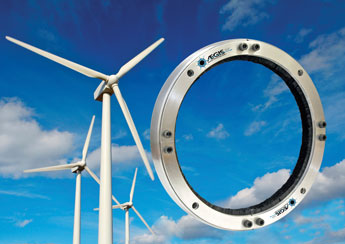
By safely channeling harmful shaft currents away from bearings to ground, Electro Static Technology’s new AEGIS™ WTG wind turbine grounding ring prevents bearing damage that could otherwise cause generator failure, unplanned downtime, costly repairs, and lost revenues. Maintenance-free, effective at any RPM, and available for any size wind turbine generator, the ring is designed for OEM installation or easy up-tower retrofit.

High-frequency currents induced on the shafts of wind turbine generators can reach levels of 60 amps and 1200 volts or greater. If not diverted these currents will discharge through the generator’s bearings, causing severe electrical damage that results in bearing failure and catastrophic turbine failure, sometimes in as little as six months or less.  The AEGIS WTG’s patented conductive microfiber technology effectively steers these currents away from the bearings and safely to ground.

The WTG is engineered to safely divert up to 120 amps of continuous shaft current at frequencies as high as 13.5 MHz and discharge up to 3000 volts (peak). Ideal for use as part of a preventive maintenance program to protect against premature bearing failures, it can be installed whenever bearings are replaced. For more information contact Adam Willwerth, sales and marketing manager, at (866) 738-1857 or sales@est-aegis.com. Go online to www.est-aegis.com.

Vestas to Move North American Headquarters

0

Vestas will move its North American sales and service headquarters into the historic Meier & Frank Depot Building in Portland’s Pearl District. Gerding Edlen Development, Inc., will transform the sturdy structure, vacant since Companies wishing to submit materials for inclusion in this section should contact Russ Willcutt at russ@windsystemsmag.com.

Releases accompanied by color images will be given first consideration. 2001, into one of Portland’s newest and most distinctive buildings. Construction is expected to begin in October 2010. Vestas plans to occupy the space in early 2012. The building will be designed with the intent to achieve LEED (Leadership in Energy and Environmental Design) Platinum certification. There are only 15 buildings in Portland designated as LEED Platinum, the highest rating given by the U.S. Green Building Council. Gerding Edlen, headquartered in Portland, is one of the nation’s largest developers of LEED-certified properties having developed more than 40 LEED projects since the inception of the U.S. Green Building Council. Built in 1928, the Meier & Frank Depot Building will undergo a complete historic renovation. When redeveloped the building will be 172,000 square feet that will include a 22,000 squarefoot addition on the fifth floor complete with an ecoroof terrace and gardens. Additionally, the building will have what is believed to be the largest roofmounted solar energy array in Portland’s central business district. The total project cost for the developer is estimated at $66 million. “We are making a long-term commitment to Portland,” says Martha Wyrsch, president of Vestas-American Wind Technology, Inc. “As a company devoted to wind power, it makes sense for us to be part of a community that so strongly supports clean energy.” “I am so pleased that Vestas is making a long-term commitment to grow their business here in Portland,” says Mayor Sam Adams. “This announcement shows the success of working strategically to grow quality jobs by building on our competitive advantage as a leader in clean technology and sustainable industries.

Moreover, our joint efforts mean that local architects, construction workers and engineers will get to work now converting a Portland landmark into one of the most energyefficient buildings in the United States.” Vestas’ Portland employees work in such fields as engineering, sales, project management, training, technology, accounting, human resources, legal services, and marketing, among others. Vestas, which employs about 2,400 people in the United States and Canada, also has 30 fulltime employees in central and eastern Oregon who maintain and service wind turbines. “This is a great day for Vestas, for the City of Portland, and for the state,” Oregon Gov. Ted Kulongoski says. “This building represents the very best in public and private partnerships. Our collective investments in this project will pay off now and in the future in the form of more green jobs in Portland. It also will establish a stronger renewable energy foundation for Oregon as a whole.”

Vestas, the world leader in producing high-tech wind power systems, has supplied more than 40,500 turbines globally since 1979. Vestas sold its first wind turbine in North America in 1981 and since has supplied more than 11,000 turbines to the United States and Canada. Learn more at www.vestas.com.

Finavera Renewables Signs Agreement for British Columbia Projects

0

Finavera Renewables, Inc., has signed a participation agreement with the McLeod Lake Indian Band for the Tumbler Ridge, Wildmare, Meikle, and Bullmoose Wind Energy Projects. The agreement was completed at a signing ceremony at the McLeod Lake Indian Band Annual General Assembly. The agreement sets out the guidelines for engagement between Finavera and the McLeod Lake Indian Band and represents a commitment by the parties to enter into discussions to develop further agreements.

“We support Finavera Renewables and others in the wind energy business as they represent the future for electric power generation. When done in a responsible way wind energy, unlike hydro dams, gives us power without destroying the land around us,” says Chief Derek Orr. “We are looking forward to being actively involved with Finavera Renewables.”

“I would like to thank Chief Derek Orr and the McLeod Lake Indian Band for their hospitality during their community’s Annual General Assembly,” says Finavera Renewables CEO Jason Bak. “The signing of this participation agreement illustrates our commitment to building a long term, mutually beneficial relationship with the McLeod Lake Indian Band.”

Under the terms of the agreement Finavera and the McLeod Lake Indian Band will address several key areas: training and employment opportunities, assessment of potential project impacts, and economic development opportunities. The agreement also sets out key principles that will guide future discussions between Finavera and the McLeod Lake Indian Band: respecting each other’s distinct identities, interests, and priorities while exploring common interests and opportunities, engagement, and consultation that are meaningful and results oriented, and a commitment to honest and open sharing of information and ideas and to joint problem solving.

McLeod Lake Indian Band has a membership of some 475 people and is part of the Tse’khene tribal group. The band owns several companies that are actively engaged in road and site construction, logging, and pipeline construction. The administrative center of the band is at McLeod Lake with a sub-office in Chetwynd, BC. For more information on Finavera Renewables contact Myke Clark, SVP Business Development, at (604) 288-9051 or mclark@finavera.com. Go online to www.finavera.com.

3M and Rope Partner Launch Study on Blade Edge Erosion

0

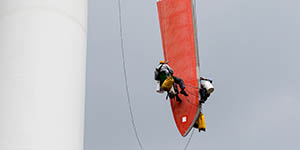
3M is partnering with Rope Partner to conduct an in-field study on the effects of leading edge wind turbine blade damage. The purpose of the yearlong study is to quantify the reduction in overall wind turbine output due to leading edge erosion. This data-driven study will be the first published work to put verifiable numbers behind this widespread issue for wind turbine blades.

As wind turbine blades rotate, reaching speeds of 180 miles per hour at the blade tips, they are constantly exposed to the elements and harsh outdoor conditions. Any airborne object such as sand, rain, and hail can lead to damage on the leading edge of the blade. This erosion negatively affects aerodynamics by causing turbulence that may reduce the overall turbine output.

“3M has been addressing the needs of the wind industry for more than 10 years. Our deep expertise and history with polyurethane tape technology has proven effective in tough environments. Similar polyurethane tape technology from 3M is also used in the aerospace industry to protect the leading edge of helicopter blades and aircraft radomes against erosion,” says Pam Kellenberger, global business manager for the 3M Wind Energy business. “Our best-in-class wind blade protection tapes can mitigate the output losses from leading edge erosion, and we are pleased to be on the forefront of quantifying and addressing such a widespread challenge for wind turbines.”

“Over the last decade at sites all across the globe we’ve seen firsthand the damage caused by leading edge erosion when conducting our inspections for wind turbine maintenance and repairs,” according to Chris Bley, director of business development at Rope Partner. “We’ve seen sites where significant erosion occurs in a little as two years after installation. Our customers are concerned about the effects this erosion will have on the performance of their turbines, and we are committed to finding answers for them through this important study.”

A recognized leader in research and development, 3M produces thousands of innovative products for dozens of diverse markets. 3M’s core strength is applying its more than 40 distinct technology platforms, often in combination, to a wide array of customer needs. Visit www.3m.com. Rope Partner is the premier provider of turbine maintenance, repair, and inspection services requiring specialized access approaches. Since 2001 in the U.S. and 1998 in Europe its rapid-response WindCorps™ technicians have partnered with clients to deliver cost effective, environmentally appropriate solutions, resulting in increased turbine availability and operational longevity. Go online to www.ropepartner.com.

Pressure Transmitters and Temperature Sensors from Danfoss

0

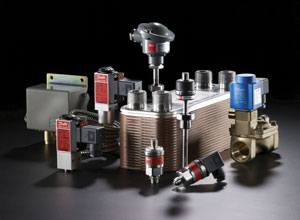
Located on top of towers that can extend 80 to 110 meters into the air, wind turbines are subjected to powerful operating forces. And because wind turbines are difficult to access for maintenance and repair, reliable monitoring and control components such as pressure and temperature sensors are vital for trouble-free operation.

Because they’re a critical link between control system fluids and components, choosing accurate, long-lasting pressure transmitters and temperature sensors is a must. Based on decades of experience with wind farms globally, Danfoss’ range of pressure transmitters and temperature sensors are ideal for demanding wind turbine applications. Monitoring and controlling hydraulic pressure and temperature in wind turbine equipment and subsystems is a complex process; at startup pressure rises and it’s released at shutdown, and for lubrication and rotation functions maintaining a minimum pressure level is crucial. To ensure smooth and safe operation the temperatures of the hydraulic unit, generator, drive shaft, gearbox, oil braking, and cooling systems have to be accurately monitored and controlled. That’s where Danfoss comes in.

Pressure and temperature signals are used by controllers to adjust valves, pumps, and other equipment to maintain stable operation and, increasingly, to control safety functions. Designed to handle over-pressure and pressure spikes, liquid cavitations, dirt contamination, intense operating cycles, and extreme temperatures, Danfoss pressure transmitters and temperature sensors have been keeping wind turbines rotating, and safe, for decades.

Two industry favorites are the MBS 3000 pressure transmitter and the MBT 5310 temperature sensor. Fitted with a pulse snubber, the MBS 3000 can withstand water hammer, liquid cavitation, and pressure peaks. Designed to handle the heavy vibrations in wind turbines, the MBT 5310 features a spring-loaded sensor to ensure close and reliable contact, and it can withstand temperatures up to 200°C. For more information please visit www.danfoss.us/ia.

Lincoln Electric Open Intermountain Training Center

0

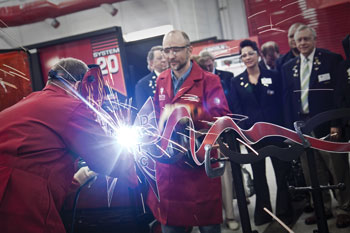
Lincoln Electric has partnered with Davis Applied Technology College (DATC) to open its new Intermountain Training Center in Kaysville, Utah. The 5,000 square-foot, world-class welding demonstration and training facility will serve a dual role. For Lincoln the center provides a venue for the manufacturer to conduct customer seminars and training for new products, cost reduction, productivity/process improvements, automation, and engineering design, as well as for continuing education for existing customers and distributors. For DATC this public/private partnership supports and enhances the college’s existing welding program and provides graduates with the welding skills for today’s job market requirements. Officially known as the Lincoln Electric Intermountain Training Center at Davis Applied Technology College, the center was completely revamped and outfitted with the latest Lincoln Electric welding equipment and technology.

“Partnering with DATC improves our operational efficiency, as well as enabling us to more effectively provide Lincoln Electric’s advanced welding technology knowledge through distributor training and customer seminars in a facility unmatched in the Intermountain area,” says Richard Peterson, district manager. “DATC is an industry-driven organization, which has several successful industry partnerships. Its close relationships with welding-related industries in the area will help improve opportunities for Lincoln.”

DATC welding instructor Nick Price is excited about this new partnership after taking over the instructor responsibility at the beginning of the year. “I don’t think we could have a stronger partner for the college,” he says. “Lincoln Electric is going to do really big things for us. Besides keeping up with the latest equipment, they will always make sure we have the newest, state of the art equipment available to students, who will benefit greatly from this partnership.

Michael Bouwhuis, DATC campus president, anticipates this partnership will provide a strong level of quality and value to the historically strong welding program. “The marriage created by this partnership links state-of-the-art equipment to newly renovated facilities, forming one of the finest welding facilities in Utah,” he says. “This will also enhance the quality of technicians in the manufacturing sector of the economy to new levels of performance.”

The Lincoln Electric Company is the world leader in the design, development, and manufacture of arc welding products, robotic arc welding systems, weld fume control equipment, and plasma and oxyfuel cutting equipment. The company holds a leading global position in the brazing and soldering alloys market. For more information go to www.lincolnelectric.com. Davis Applied Technology Center (DATC) is one of eight campuses of Utah College Applied Technology and is located just north of Salt Lake City. DATC provides training in an open-entry, open-exit environment that annually prepares more than 7,400 high school and adult students with career and technical skills. Learn more at www.datc.edu.

Trelleborg Supports World’s First Floating Wind Turbine

0

Statoil’s innovative new offshore floating Hywind wind turbine, now successfully moored in the North Sea off the Norwegian coast, is demonstrating how Trelleborg Offshore’s syntactic foam buoyancy technology is contributing to the future of offshore power generation. “It is subsea technology that has already been extensively proven,” says Gary Howland, renewables sales manager for Trelleborg Offshore. “Trelleborg Distributed Buoyancy Modules (DBMs) developed for deepwater support of umbilicals and risers in the oil and gas industry are ideal for this application, helping reduce project risk by using proven technology.

“People see the tower and turbine but forget that the expertise in designing the subsea portion is also critical,” he says, “as ultimately it keeps the whole turbine afloat. The dynamic floating structure weighs 5,300 tons and is 165 metres tall; with a total of 65 metres above sea surface. The 13km of power offtake and communications cabling attached to the structure further adds to its weight. It’s like the proverbial iceberg; the mass floating below the surface ensures stability. Unless the weight is supported by properly designed buoyancy the whole structure would be much less able to resist the extremes of the offshore environment and the cable could suffer premature damage.”

For Hywind, Trelleborg Offshore designed and supplied 45 off polymer-coated syntactic foam DBMs which supply buoyancy support for a 3 ton, 100 meter section of cable as it exits the turbine spar and descends to the sea bed at -220 meters. The buoyancy modules include an internal clamp for secure fastening and precise positioning on the cable. The cable is supported mid-water in what is known as a ‘Lazy Wave’ configuration, featuring gentle long radius curves that minimise stress on the cable while accommodating natural movement created by wind and waves.

“For optimum buoyancy under different sea conditions, the precise position of the buoyancy modules on the cable is pre-calculated,” Howland explains. “The positions must be maintained, despite stresses during launch and in operation. The clamp is crucial; the design, material selection and manufacturing technique are critical in ensuring the finished clamp maintains the buoyancy module position, during cable contraction and expansion, over the 20 year lifetime of the project.”

Using advanced polymer material technology, Trelleborg Offshore provides high integrity solutions for the harshest and most demanding offshore environments. As part of the Trelleborg Engineered Systems Business Area of Trelleborg Group, it specializes in the development and production of polymer and syntactic foam based seismic, marine, buoyancy, cable protection, and thermal insulation products, as well as rubber-based passive and active fire protection solutions for the offshore industry. Go online to www.trelleborg.com/offshore.