Home 2012

Sandia Announces Construction on Texas Wind Turbine Research Facility

0

Sandia National Laboratories and its academic and private partners expect to have a state-of-the art wind turbine research facility in operation in October in Lubbock, Texas.

The first phase of Scales Wind Farm Technology Facility (SWIFT) is being constructed in partnership with Texas Tech University in Lubbock, Vestas and Group NIRE, a renewable energy development company.

The US Energy Department’s Office of Energy Efficiency and Renewable Energy is funding Sandia’s work, which will allow the use of the site for research.

Studies at the facility will initially focus on turbine-to-turbine interactions and innovative rotor technologies. Other areas for investigation include aero-acoustics and structural health monitoring of turbines using embedded sensor systems.

The SWIFT concept reflects a shared emphasis among the partners on lowering the cost of wind energy by maximizing the output of a wind farm rather than a single turbine.

The site will initially use three Vestas 300kW V27 turbines, which are smaller than utility-scale turbines. Sandia worked with Vestas to develop the site plan, uniquely tailored to study turbine-to-turbine interactions.

The site might eventually expand to include nine or more wind turbines, allowing researchers to learn how individual turbines and wind farms can integrate better with the grid.

New HiPer-tex™ W3030 Roving Introduced

0

Engineered specifically for polyester or vinylester resin systems, HiPer-tex™ W3030 roving also allows for longer, lighter blades for both offshore and onshore wind turbines.

3B is launching HiPer-tex™ W3030 high performance roving – the third product in the company’s series of innovative solutions for wind turbine rotor blades.

Specifically developed and engineered for polyester and vinylester resin systems and for resin infusion processes, HiPer-tex™ W3030 roving provides yet another novel option which allows OEMs to manufacture longer and lighter blades for the larger multi-megawatt wind turbines located both onshore and offshore.

3B, HiPer-tex™ W3030 rovings combine high performance glass properties and enhanced sizing compatibility with unsaturated polyester and vinylester resin systems. This new roving provides optimum properties for rotor blades created with lower cost resin systems and therefore helps blade manufacturers narrow the gap with higher cost, alternative composite solutions.

The new roving offers up to 10% weight saving for the same design and length when comparing rotor blades manufactured with traditional E-glass. In addition, the turbine blade span can be lengthened by up to 6% while still maintaining the same weight though contributing up to 12% more energy output.

A more consistent laminate quality is achieved as HiPer-tex™ W3030 roving offers better wet-out. Higher shear strength and substantially greater interfibre strength and excellent fatigue performance is provided by the significantly improved resin matrix adhesion when compared with existing high modulus fiberglass in the market place.

3B’s technological expertise and manufacturing know-how delivers reliable, high performance, sustainable and cost-competitive solutions for wind energy applications especially designed for the challenging and bigger multi-megawatt turbine blades, according to the manufacturer.

Other recently launched products in 3B’s rovings products for wind turbine blades include HiPer-tex™ W2020 and SE2020 made with Advantex® glass, both specifically designed and engineered for epoxy resin systems used in resin infusion or prepreg processes.

Tests Confirm Increased Energy Generation

0

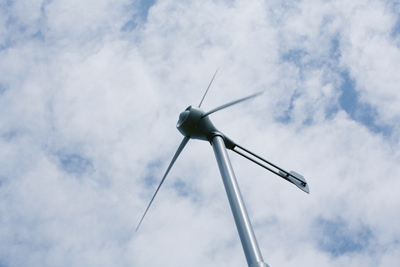
During the last few months the Evance R9000 small wind turbine has undergone further tests which have confirmed its energy generation has increased by over 4% to 9,167kWh at a wind speed of 5 metres per second.

The R9000 small wind turbine was one of the first small wind turbines to achieve SWCC conditional certification last year, and has received further improvements since.

Many Evance customers have already benefitted from higher than expected energy generation as the R9000 system improvements were implemented several months ago. For example, Clive Breeze was pleasantly surprised with the energy generated from his recent installation: “In the first three weeks alone, the R9000 turbines exceeded the predicted energy generation targets by 10 percent.” This reduced the customer’s first quarterly electricity bill by the equivalent of nearly $500.

“We’re delighted that our R9000 turbine is proving so efficient in energy production as this translates directly into a faster return on investment for our customers,” said Kevin Parslow, CEO of Evance Wind Turbines. “Our R9000 machine accounted for a third of all small wind turbines sold in the UK last year – making it the UK’s small wind turbine of choice. We look forward to accelerating our drive into the North American market though our network of installers in a bid to establish a similar market leadership position,” concludes Kevin. For more information, visit www.evancewind.com.

Placement System Specifically Designed For Installation of All-Dielectric/Self-Support Cable

0

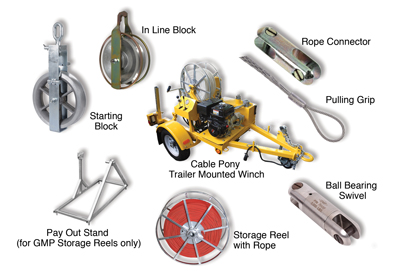
Known for rugged and dependable outside plant cable installation tools and equipment, the General Machine Products Company, Inc. (GMP), Trevose, PA, is pleased to introduce the All-Dielectric/Self-Support Cable Placement System to its line of aerial cable placement solutions. The All-Dielectric/Self-Support (ADSS) Cable Placement System provides specialized equipment necessary for aerial installation of nonconductive, high-strength fiber optic ADSS cable over short, medium and long span distances.

As its name indicates, All-Dielectric/Self-Supporting cable requires no messenger wire for support. Therefore, placement is achieved in a single pass, making ADSS cable an easy and economical way to install a fiber optic network. This type of installation can also be a solution in an aerial environment where power cables are close by, or where a lashing operation is impossible due to the proximity of other cables on the poles.

Because ADSS cable can be deployed in a variety of tough environmental and electrical conditions, components that make up the All-Dielectric/Self-Support Cable Placement System are specifically designed to meet the challenges work crews face.

The Cable Pony Trailer Mounted Winch uses grooved, double bull wheels to provide superior handling of the pulling rope, while providing a constant tension with a maximum capacity of up to 2,200 lbs. (1,000 kgs). The winch can offer line pulling speeds up to 130 ft. (40 M) per minute.

The ADSS Cable Placement System also includes a Payout Stand and Storage Reel. The Storage Reel has a capacity of 2,000 ft. (609.6 M) of 5/16 inch. (7.9 mm) diameter rope. It is uniquely designed to be compatible for mounting either on the Cable Pony Trailer Mounted Winch or the Payout Stand.

Two (2) sizes of In Line Blocks and three (3) sizes of Starter Blocks are also offered with our ADSS Cable Placement System. This variety of blocks will maintain the bending radius requirements for various cable diameters, load ratings, etc.

For more information, visit GMPtools.com/nf/adss.htm, or by contact Ted Clemens at 215-357-5500; info@GMPtools.com.

ACCUTETHER TM Fiber Performance Excels in Payout, Tether and Sensing

0

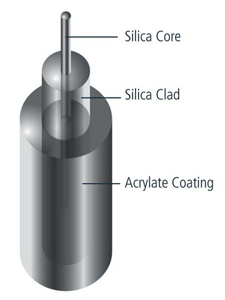
OFS and its Specialty Photonics Division, a leading designer, manufacturer and supplier of innovative fiber optic network products, is please to announce commercial availability of AccutetherTM fiber in both standard and reduced diameter sizes. This singlemode fiber features excellent bend performance and is ideal for defense applications where the fiber experiences tight bend, is permanently coiled or where a coil is designed to payout. Proof tested to 100 or 200 kpsi the fiber has high reliability and is available in long continuous lengths. The standard size fiber has a 245μm O.D. and the reduced diameter fiber features an 80 μm cladding and 160 μm O.D.

“A major advantage of this fiber is the excellent bend performance”, says Cathy Ciardiello, Market Manager for OFS defense related business. “Macrobend attenuation at 1550nm induced by 50 turns around a 4mm mandrel is < 0.01dB. The tight dimensional control of geometric parameters helps ensure stability for consistent winding/ payout of coils”, adds Ms. Ciardiello, and the dual acrylate coating system protects during deployment and lifetime. AccutetherTM coils can be ordered directly from the OFS Specialty Photonics site in Broendby, Denmark.

For more information, please visit www.ofsoptics.com or www.specialtyphotonics.com

Second Wind Launches Wind Energy Operations Services

0

Second Wind announces the introduction of a suite of wind farm operations services based on the company’s Triton® Sonic Wind Profiler and SkyServe® Wind Data Service. Triton, a remote sensing system using sodar technology to provide wind measurements across the turbine rotor sweep, and SkyServe, a cloud-based data delivery tool, have already been widely adopted by wind farm developers for use in wind resource assessment.

“2011 was a big year for Second Wind as Triton and SkyServe continued to lead the global wind power development market for remote sensing,” says Larry Letteney, CEO. “In addition, working in partnership with several large wind farm operators and utilities, we deployed a large number of Triton in support of wind farm operations.”

Wind farms have a number of operating issues that can be explained and resolved based on thorough understanding of the wind conditions onsite. With the rapid global growth of wind energy and improvements in turbine technology, advanced wind information systems are needed to provide more comprehensive information about wind conditions. The applications for Triton on operating wind farms include:

• Complementing or replacing expensive hub height reference towers for operational support, compliance, power marketing, and improved wind forecasting;
• Mobile applications providing turbine performance, wake, and sector analysis;
• Complete wind farm assessment for warranty and financial purposes.

Second Wind recently expanded into a new 25,000 square-foot manufacturing facility near Boston to support the wind industry’s growing demand for Triton.

Matt Hendrickson, senior director of energy assessment at 3TIER, says that “A well-qualified remote sensing system such as the Triton can be extremely valuable in assessing wind farm performance. Measuring the vertical structure of the wind profile and relating it to turbine efficiencies goes a long way in explaining varying production patterns. Used properly, this technology will ultimately increase the skill of one’s predictive models.”

Second Wind has been a global innovator in advanced technology for wind measurement since 1980. For more information visit www.secondwind.com.

IOSSO Metal Processes Extends Part Life

0

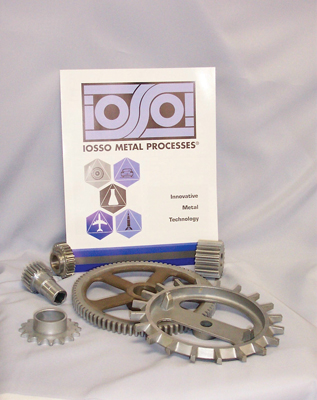
The patented chromium alloy treatments have characteristics far superior to conventional coatings in terms of extended life and cost efficiency. Equally important, the Iosso Metal Processes can be applied to all ferrous based alloys, referred to as the IOSSO-FE Process and most uniquely to zinc die castings, referred to as the IOSSO-ZN process.

The Iosso Metal Processes benefit manufacturers who require parts to have increased hardness, extended wear, lubricity and corrosion resistance. The product is heat resistant, non-magnetic and static free. The coating is uniform over complex shapes without build-up on sharp edges or corners, and the thin dense application allows for a new hard surface up to 72RC.

IOSSO services a wide spectrum of industries such as automotive, injection molders, fabricators of shafts, gears, cams, dies, rollers, valves, blades and slitters. Providing consistent quality, added value and superior delivery has resulted in the company being chosen as a single source ISO certified supplier by many customers.

For more information, contact Iosso Metal Processes, 1485 Lively Blvd., Elk Grove, IL 60007. Phone 847-437-8400, or visit www.iosso.net

Industry Veteran to Lead Next-Generation Wind Turbine Company

0

Northern Power Systems www.northernpower.com, a next-generation wind turbine company, announced today that Troy Patton has been elected President and Chief Executive Officer.  Mr. Patton previously served as President of the Utility Wind business at Northern Power Systems (NPS).

“We are very pleased to appoint Troy Patton as President and CEO of NPS,” said John Simon, Chairman of the Board. “Over the past few years Troy has led the successful development of the NPS 2.3MW permanent magnet direct drive wind turbine, and he is an industry veteran who has earned the respect of the Board, our employees and our customers.”

Since joining NPS in April 2009, Mr. Patton has served as President of both the Utility Wind and Distributed Wind businesses. He brings over 20 years of experience in the power generation industry. Prior to NPS, Troy was Senior Vice President of Engineering and Products for Vestas Wind Systems. Before Vestas, Patton served in numerous technical and leadership roles at General Electric’s Gas Turbine and Wind Turbine businesses.

“I am very excited to be stepping into my new role at NPS,” said Patton. “In addition to building our Utility Wind franchise, I look forward to managing the global expansion of our industry-leading Distributed Wind business.”

The Board of Directors also expresses its gratitude to John Danner, former President and CEO, and Parthiv Amin, former President, Distributed Wind, both of whom are leaving the Company. Mr. Danner and Mr. Amin were instrumental in leading the success of NPS since 2008 and 2010, respectively.

For more information visit www.northernpower.com.

Opening Day Near for Janneby Wind Testing Site

0

The only independent wind turbine-testing site in the German federal state of Schleswig-Holstein will soon be ready to accept its first wind turbines. The test field, which has been developed by GL Garrad Hassan, GEO (Gesellschaft für Energie und Oekologie mbH) and Bürgerwindpark Janneby e.G, received final building approval and will launch testing activities at the end of 2012. The opening of the Janneby site will mark the return of independent testing facilities for wind turbines in Schleswig-Holstein since the end of the 1990’s.

The test field is designed for the assessment of new onshore wind turbine prototypes, a crucial part of being able to obtain certification for a new product. The site comprises eight test beds and meets IEC Class II wind condition classification. The average annual wind speed is 7.1m/s at 100 meters high. The testing phase can run up to five years, for turbines of up to 150m in total height.

Manufacturers who choose to use the test field will be able to make use of the full range of GL Garrad Hassan services, including: wind measurements, acoustic, power performance, load, power quality and low voltage ride through (LVRT) measurements. A LiDAR test site is also planned for development.

“In the rapidly developing wind energy industry, extensive prototype testing is essential for manufacturers looking to bring new products to the market. Working with globally recognized independent consultants demonstrates to potential clients the verifiable technical quality of a product, which combined with certification, is essential in the industry today,” said Volker Koehne, Country Manager Germany, and GL Garrad Hassan.

Independent testing and measurement are keys in increasing the reliability, efficiency and performance of wind turbines, propelling the optimization of existing, and development of future designs to meet the challenges of this burgeoning industry.

For more information on GL Garrad Hassan, please visit www.gl-garradhassan.com.

GE Provides 38 Turbines to Polish Project

0

General Electric will supply 38 wind turbines for four wind projects in construction in Northern Poland. When operational, these projects referred to as Darlowo Wind Energy Center – Phase Two that mark the first use of GE’s 2.5-megawatt class wind turbines that feature 103-meter rotors for high productivity.

Invenergy Wind LLC and Polish development company, Enerco sp. Zo.o. (Enerco) are collaborating to develop nine wind energy generation projects in the region in and around Darlowo, near the Baltic Sea. GE provided 32 wind turbines for Darlowo – The first phase is fully commissioned and produces 80 megawatts of power.

 Darlowo – Phase Two is comprised of the Boryszewo, Krupy, Stary Jaroslaw and Nowy Jaroslaw facilities this will bring the total installed capacity of wind energy in the Darlowo area to 175 megawatts.

Darlowo  – Phase Three will consist of two additional projects, Gorzyca and Pekanino, which are currently under contract. These sites will boost the aggregate output of the nine Darlowo projects to 250 megawatts.

“The Darlowo Wind Energy Center is a wonderful example of Poland embracing the economic and environmental benefits of its wind energy resources,” said Michael Polsky, president and chief executive officer of Invenergy. “Wind energy is playing an increasingly important role in helping Poland meet its commitments to the European Union with regard to green energy generation.”

GE’s 2.5 series wind turbines offer high efficiency and reliability for a broad range of wind conditions. Built on the proven performance of GE’s 1.5-megawatt wind turbine, the world’s most widely deployed machine in the wind industry with more than 16,500 units installed worldwide, the 2.5-megawatt wind turbines with a 103-meter rotor will help the Darlowo projects provide increased energy capacity while maintaining required levels of efficiency, reliability and grid-connection capabilities.

“Darlowo is the result of outstanding regional collaboration between Invenergy and GE,” said Stephan Ritter, general manager of GE’s renewable energy business in Europe. “Due to the scale of the project, we are establishing a service center in Darlowo to ensure the long-term reliability and performance of our wind turbines.” The wind turbines for the Darlowo—Phase Two will be assembled at GE’s facility in Salzbergen, Germany. Commercial operation of the turbines is to commence in the fourth quarter 2012.

For more information, please visit www.invenergyllc.com. For more information about GE, visit www.GE.com.

National Security and Business Leaders Convene on Law of The Sea

0

U.S. national security and business leaders, including Secretary of Defense Leon Panetta and General Martin Dempsey, Chairman of the Joint Chiefs of Staff, called the Law of the Sea Convention essential to protect American security and economic interests, guarantee the global mobility of U.S. armed forces, and extend U.S. sovereignty.

“Frankly, this is not even a close call – ­ the Law of the Sea Convention is supported by major U.S. industries, the Chamber of Commerce, our energy, shipbuilding, shipping, and communications companies, and environmental organizations, along with past and present Republican and Democratic administrations and the entire national security leadership,” said Secretary Panetta. “Not since we acquired the lands of the American West and Alaska have we had such an opportunity to expand U.S. sovereignty.”

Secretary Panetta and Gen. Dempsey spoke to a gathering of U.S. national security and business leaders in Washington, D.C., convened by The Pew Charitable Trusts and the Atlantic Council. Numerous high-ranking former U.S. military officials and a diverse array of business representatives also participated in the forum to discuss the national security and economic merits of the treaty.

“The U.S. Chamber of Commerce strongly supports the Law of the Sea Treaty because it would provide clear legal rights and protections to American businesses to transit, lay undersea cables, and take advantage of the vast natural resources in and under the oceans off the U.S. coasts and around the world,” said Bruce Josten, executive vice president for Government Affairs at the U.S. Chamber of Commerce.

“The United States stands with Turkey as the only NATO members that have not ratified Law of the Sea, a U.S.-initiated treaty that protects American interests off U.S. shores and around the world,” said Chuck Hagel, a former senator from Nebraska and now chairman of the Atlantic Council. “Senate ratification this year would allow America to take its rightful place and enjoy the benefits and protections of this important treaty.”

The treaty would strengthen America’s claim to the full outer continental shelf. In the case of Alaska, this would extend U.S. sovereignty 600 miles offshore, instead of the current 200-mile limit. For more information visit www.pewtrusts.com.

PSI Repair Services to Showcase Off-Warranty Repair Support at WINDPOWER 2012 Conference & Exhibition

0

PSI Repair Services, Inc., a subsidiary of Phillips Service Industries, will showcase its off-warranty repair support for wind energy operations and maintenance (O&M) professionals at the AWEA Windpower 2012 Conference & Exhibition.

PSI Repair Services offers fast, affordable repairs, including upgraded/longer-life products, for out-of-warranty electronic, hydraulic and precision mechanical components that drive your turbines’ pitch and yaw systems and down tower electronics. Components repaired include printed circuit boards, PLCs, control cards, VRCC components, IGBTs, thyristors, converters, pitch motors, hydraulic pumps, servo motors, transducers and much more. All repairs come with a free evaluation and one-year warranty.

PSI uses the latest diagnostic tools to detect failures down to the microchip level. Solutions range from minor component changes to full replacement printed circuit boards, with enhanced designs to improve performance and reliability. These options allow you to significantly increase mean time between failures (MTBF) and prevent costly downtime and/or repeat repairs.

In addition, PSI provides comprehensive remanufacturing services for unsalvageable, obsolete components. Plus, PSI’s stocking programs provide fast turnaround to help reduce inventories.

“PSI Repair Services is a one-stop resource for wind farm O& M professionals,” said Mike Fitzpatrick, General Manager of PSI Repair Services. “No other repair service provider in the wind industry can match PSI’s breadth and depth of cost-saving services, or has a dynamic Engineering Services Department quite like PSI. The difference is clear for our customers.”

The AWEA Windpower 2012 Conference & Exhibition takes place June 3-6 at the Georgia World Congress Center in Atlanta, GA. PSI Repair Services will be exhibiting in Booth 1062. For more information visit www.windpowerexpo.com. For more information about PSI Repair Services, visit www.psi-repair.com.

AGY Expands S-2 Glass Manufacturing Capacity by 20 percent

0

AGY announced today that it has increased production output of its S-2 Glass® fiber reinforcements by twenty percent with the capability to further increase its output as market demands dictate. This expansion enables AGY to meet growth in both the aerospace and industrial markets for high-performance glass fibers used for composite reinforcement.

S-2 Glass fibers are made exclusively by AGY and are supplied to a wide variety of markets and end use applications around the world. In the aerospace industry, S-2 Glass fibers offer unique reinforcement properties that are critical to high performance aerospace applications such as helicopter blades, aircraft flooring, interiors, and structural parts.

AGY offers S-2 Glass fiber products that are designed to be compatible with phenolics, epoxies, polyesters, vinyl esters, rubber as well as many thermoplastic resins. S-2 Glass has tensile strength that exceeds that of standard-modulus carbon fiber as well as most grades of aramid fiber. Because S-2 Glass fiber has a high strain-to-failure of 5.7 percent (compared to aramid’s 2.8 percent and carbon’s 1.5 percent) it has an exceptional ability to withstand high impact events.

“With this significant increase in output, we are confident in AGY’s ability to stay ahead of the needs of the market for S-2 Glass reinforcements,” said Drew Walker, AGY President.

For more information about S-2 Glass fibers, please www.agy.com.

Power Grid ‘Friendships’ Help Avoid South Asian Power Deficits

0

Certain South Asian countries are due to benefit from resource sharing with neighboring nations, as power grids are planned to help spread the growing electricity demand in the region, according to energy expert GBI Research.

The new report states that the continuously increasing demand for power is stemming from rapid industrialization and commercialization in the South Asian region, with the resulting imbalance in the electrical demand and supply scenario representing the main driving force behind the growing power sector in South Asian Association for Regional Cooperation (SAARC) countries. The major SAARC countries in terms of power demand include India, Pakistan, Afghanistan, Bangladesh, Bhutan, Nepal and Sri Lanka.

SAARC member countries are also planning to trade electricity with one another, with plans underway to develop a robust cross-country power grid. Plans are also underway to set up 200km of submarine cables between India and Sri Lanka to deliver 1,000 megawatts (MW) of electricity. Import and export of power between SAARC countries at competitive rates will act to support the region, offering aid in cases of power deficits in any member country. Some cross-border trade is already in place, with Bhutan exporting around 1,200-1,400MW of electricity to India’s power grid.

The power markets of almost all SAARC member countries are regulated by state powers and, some private players are present in the generation and transmission segment, the sector is currently largely closed to competition. However, increasing electricity demands and a need to improve power infrastructure has led governments in SAARC countries to formulate lucrative policies offering incentives to private players for their investment.

The power market in many SAARC countries now invites Foreign Direct Investment (FDI), which will assist countries in developing better infrastructure, providing a more reliable power supply to its citizens and minimizing power shortages.

The cumulative installed capacity for power in the major SAARC countries is expected to grow at a compound annual growth rate (CAGR) of 8.6% to reach 505.7 gigawatts (GW) in 2020. Thermal resource based installed capacity is expected to grow at a CAGR of 5.8%, while renewable and hydro sources are expected to grow at respective CAGRs of 16.9% and 9.3% doing the next decade. Nuclear power installed capacity is also expected to grow at a CAGR of 17.6% throughout 2012-2020.

RWE Innogy to Build Fourth Wind Farm in Poland

0

In Nowy Staw, near the city of Gdansk, the first construction vehicles will soon arrive on site, marking the start of construction for Innogy’s fourth wind farm in Poland. Nineteen wind turbines manufactured by REpower Systems SE with an overall installed capacity of 39 megawatts (MW) will be built over an area of 15 square kilometers. If everything goes according to schedule, the wind farm will be commissioned as early as the beginning of 2013 and will supply an equivalent of more than 50,000 homes with green electricity every year. The investment volume amounts to more than 60 million Euros.

“With Nowy Staw we are expanding our wind portfolio in Poland by almost 40 MW. This will bring us a great step closer to our goal of adding 50 MW of wind capacity in Poland every year until 2015. Our Polish wind pipeline is well filled. All in all, Innogy plans to have around 300 MW in operation in Poland by 2015”, said Prof. Fritz Vahrenholt, CEO of RWE Innogy.

Andreas Nauen, CEO of REpower Systems SE, commented: “With Nowy Staw we are implementing our largest project in Poland so far. The site in the north of the country with its average wind velocities is optimally suited to accommodate the REpower MM92 turbines. To date, we have installed more than 2,000 plants of the MM series all over the world. We are delighted that RWE Innogy has put its trust in our proven technology and has once again chosen REpower as supplier.”

RWE Innogy is already operating three wind farms with a total capacity of approx. 108 MW in Poland: Suwalki, Tychowo and Piecki. Apart from the actual construction work on site, the company will also develop the local infrastructure around Nowy Staw. This includes repair and modernization work as well as the building of three kilometers of new roads, which becomes necessary due to the wind farm construction. The next development stage for the onshore wind farm Nowy Staw has already been planned for 2013.

Electricity generation from renewable sources is currently supported via a system of “green certificates“ in Poland. Electricity suppliers are obliged to offer a certain percentage of the energy fed into the grid from renewables. They can comply with this obligation by acquiring additional “green certificates.” For more information visit www.repower.de.

EIP Files FOIA Suit to Obtain Details on 65 Clean Air Act Meetings

0

The Environmental Integrity Project (EIP) filed suit late Tuesday under the Freedom of Information Act (FOIA) to obtain records of 65 meetings that the White House Office of Information and Regulatory Affairs (OIRA) held with interest groups to discuss four major Clean Air Act rules under consideration by the Environmental Protection Agency (EPA).

The scope of the EIP lawsuit includes 51 meetings with representatives of utilities and other industries, and 14 with public interest organizations.

The EPA rules in question are: the Mercury Air Toxics Rule; the Ozone Rule; the Boiler Rule; and the Cross-State Air Pollution Rule. OIRA’s website maintains a list of meetings and attendees for each pending rulemaking at http://www.whitehouse.gov/omb/oira_meetings.

EIP Attorney Alayne Gobeille said, “We are filing the suit because we have received no response from OIRA to our original FOIA request of January 24 2012, although the law requires to agency to respond within than 30 days.”  Executive Orders put in place by President Clinton and reaffirmed by President Obama require the records of any meetings that have a significant impact on regulations to be made publicly available as part of the rulemaking record.

OMB’s website identifies attendees and posts written materials presented at these meetings, but provides no information about the substance of the discussion.  No materials were provided at 16 of the meetings in question, including four attended by OIRA Administrator Cass Sunstein, leaving the public no clue about the content of those conversations.  “Industry lobbyists have every right to meet with the White House about EPA rules,” said Gobeille.  “But the public ought to know what was said at these meetings and whether it influenced decisions that are supposed to protect our health and the environment.”

Gobeille adds, “OIRA has clearly emerged as a major chokepoint when it comes to regulations that affect the public health, hosting no fewer than 123 meetings related to EPA regulations alone in 2011, including those pertaining to solid waste and the Clean Water Act.  Most of these regulations are required by statute and subject to court order requiring their completion.  Reasonable people may disagree about the role that OIRA should play in these reviews, but all parties should agree that meeting records that include a summary of discussion should be part of the public record to inform debate about proposals and final decisions.” For more information, visit www.environmentalintegrity.org

Energy Efficiency Design, Transportation and Human Systems Experts Featured at The 22nd Annual INCOSE International Symposium

0

Questions: How can top secret information be protected from hackers?

Questions: How does a nation prepare for a high-speed rail?

Questions: What does it take to manage and operate an eco-town?

These issues and more will be discussed at the International Council on Systems Engineering’s (INCOSE) 22nd Annual INCOSE International Symp osium in Rome, Italy from July 9 to 12, 2012 at the Rome Marriott Park Hotel.

Since 1990, the INCOSE symposium has been the largest annual gathering of the world’s leading systems engineering professionals, educators and researchers. Nearly
1,000 participants will attend the four-day event and have the opportunity to network, to share ideas, knowledge and practices and to learn more about recent innovations, trends and issues in systems engineering.

“This year’s event will feature a wealth of new information and help spark discussions to advance systems engineering,” said John Thomas, INCOSE president- elect and senior vice president/lead systems engineer at Booz Allen Hamilton. “We’re particularly excited about the issues represented, including transportation, high-speed rail systems, national security, cyber security and efficient energy design.”

Keynote topics and speakers scheduled this year include:

• Systems Engineering High Speed Rail

Andrew McNaughton FREng, High Speed Two Ltd. (United Kingdom)

• Human Systems

Terence Cooke-Davies, Ph.D., Human Systems International Ltd. (United
Kingdom)

• European Transport Systems

Giovanni Bertolone, Finmeccanica (Italy)

Additional topics covered by featured authors and panelists include: Energy Space and Satellite Systems; Biomedical Systems; Defense/Anti-Terrorism Systems; Systems Engineering’s Impact on the Workforce; Risk Management; and Systems Engineering Education and Certification. The international symposium also hosts a “Tool Vendor Challenge,” where vendors demonstrate how their software solutions
can help solve a real-world benchmark problem.

Symposium sponsors include Boeing, BAE Systems, Booz Allen Hamilton, Lockheed Martin, Aster Technology & Engineering, Cognition Corporation, Syntell and Project Performance International.

For the most up-to-date information on the 22nd Annual INCOSE International

Symposium, visit: http://incose.org/symp2012/.

About the International Council on Systems Engineering (INCOSE)

The International Council on Systems Engineering (INCOSE) is a not-for-profit membership organization that promotes international collaboration in systems engineering practice, education and research. INCOSE’s mission is to “share, promote and advance the best of systems engineering from across the globe for the benefit of humanity and the planet.” Founded in 1990, INCOSE now has 58 chapters and more than 7,000 members worldwide.

From getting a rocket ship to the moon and developing high-speed train systems, to establishing anti-terrorism measures and warding off cyber threats, systems engineers make, manage, operate and maintain the systems that impact the public’s everyday lives.

INCOSE acts as a source for systems engineering knowledge, helps establish professional standards, works to improve the professional status of systems engineers and offers a certification program to formally recognize the knowledge and experience of industry professionals. The organization also produces a range of products, publications and educational events, including the International Workshop and International Symposium.

For additional information on INCOSE or to contact one of its members, please call 1-858-541-1752 or visit http ://www.incose.org.
New MEGAFLEX for Wind Hub Production from MAG

0

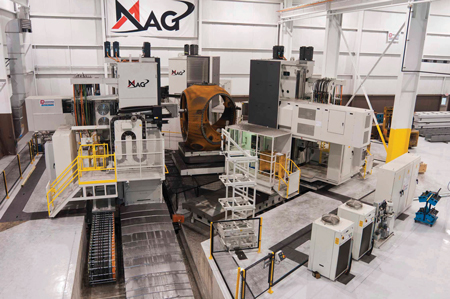
Astraeus Wind Energy’s MAG MEGAFLEX machining system has passed its initial supplier qualification by completing “Operation 20” metal cutting processes in record time on a Clipper Windpower C96 turbine hub, one of the industry’s largest. The unique system simultaneously machines all three blade faces, which enabled it to complete the qualification hub in less than one shift, a first in the industry. “Completing hundreds of features on this hub in such a short time, and meeting the extreme tolerances required, is a world first for U.S. manufacturing technology,” according to Astraeus President Jeff Metts. “We should be able to do the industry’s simpler hubs in even less time. This is, without a doubt, world-leading technology that no one else can compete with. The system is operational now and we are taking orders, forecasting a capacity of about 1800 hubs per year.”

The 18,144-kg (40,000-lb) spherical hub was approximately 3.6 x 3.6 m (12 ft x 12 ft) in size, with a blade bolt circle of about 2.5 m (8.2 ft). Operation 20 for this part included milling the blade faces, drilling and tapping or counter-boring more than 60 39-mm (1.5 in) holes per face, boring and drilling the blade-pitch gear mounting surfaces, and cutting various other features. Tolerances on the part, which was laser inspected after machining, include 0.05 mm (0.002 inch) true position on holes and ±1 degree on angles.

Conceived by MAG in 2009, the MEGAFLEX system’s development was funded in part with grants from the Michigan Economic Development Corporation (MEDC), which audited and approved the progress of Astraeus in meeting its performance requirements. MAG developed the entire system on a turnkey basis, including the process concept, programming, machine systems, and tooling package. The patent-pending MEGAFLEX design, which is based on three MAG FTR 5000 floor-type boring mills surrounding a B-axis rotary table, simultaneously machines all three blade faces on a wind turbine hub in one setup, a concept widely used in mass-production of automotive components and small parts. “This is automotive machining technology scaled up an order of magnitude,” says Pete Beyer, MAG director of product development. “We are using multiple spindles, specialized tools, and clever process technology to finish a part in one setup in the shortest time possible while maintaining the flexibility to process a family of different hubs.”

Concepts borrowed from the automotive industry include offline setup and quick part loading, using a fixture interface plate and a lifting bracket for the workpiece. The interface plate is bolted offline to a locating feature on one side of the casting; the plate then mates with a locating feature on the worktable for fast part setup. The lifting bracket attaches to the top of the part to allow a single crane to transfer the part in and out of the workzone safely and quickly. “These are classic part handling techniques on a gantry-type automotive line that we have adapted for very large parts,” Beyer says. “We can setup the next part offline on an interface plate, and quickly exchange a completed part to maximize utilization of the spindles.”

As part of the MEGAFLEX design, each machine has a latch-plate interface to accept attachments from a head changing rack. However, for cost economy, the system currently has only one attachment rack, which can be moved for use by any of the machines. Rotation of the worktable allows the machine using the attachments to access all three faces of the part. Synchronous/asynchronous processing is then used to balance out the cutting times and cutting forces of the three spindles when doing similar and dissimilar operations. For more information go to www.mag-ias.com.

New Regional Sales Manager at Wind Systems Magazine

0

Mike Barker has joined Wind Systems magazine as regional sales manager, responsible for covering states including North and South Dakota, Nebraska, Kansas, Oklahoma, Texas, Missouri, Arkansas, Louisiana, Mississippi, Tennessee, Kentucky, and Indiana.

A native of Tuscaloosa, Alabama, Barker began his career at Randall Publishing Company in 1988. On moving to Birmingham he joined Vulcan Publications in 1996, where he excelled quickly in management to become publisher of U.S. Sites & Development magazine. He has been instrumental in helping to launch industry-leading publications such as Top Bid, Expansion Solutions, and Sports Destination Management. He is conscientious about providing excellent customer service and takes great pride in developing close relationships with his clients.

“I look forward to getting to know the professionals in the wind energy market,” Barker says, “and it is my goal to always offer the very best in customer service to each and every advertiser we feature in the magazine and on our website. As a current or potential advertiser in Wind Systems magazine, rest assured that my client’s best interests will always be my top priority.”

Barker can be reached at (800) 366-2185 x203 or mike@windsystemsmag.com. Also go online to www.windsystemsmag.com.

GICON Successfully Tests Floating Foundation for Offshore Wind

0

Floating foundations for the offshore wind industry are increasingly gaining attention and interest within the industry, as well as among government and permitting institutions and also investors. This interest is driven by the conditions found in the U.S. and Japan where the vast majority of offshore wind resources is found in water depths of more than 100 meters. There are also areas in Europe where conventional foundations such as monopiles, tripods, gravity foundations, and jackets are not applicable, especially for planned installations further offshore.

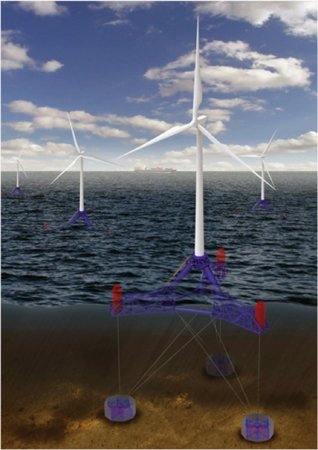
A consortium led by GICON Grossmann Ingenieur Consult GmbH has developed a floating platform solution that addresses the global offshore wind industry’s need for floating foundation technology. Unlike other technologies currently under development, the GICON Floating Offshore Foundation (FOF) is not only applicable in deep water but can also be deployed in shallow water depths of 25 meters and deeper. “This versatility addresses a number of key challenges,” according to Prof. Jochen Grossmann, owner and CEO of GICON GmbH. “The existing foundation technologies require suitable weather conditions as well as availability of installation vessels. Our FOF can be assembled at shore, including the turbine and then towed with standard tug boats to the deployment site. In addition, floating foundations have less impact on marine life due to reduced construction related noise such as pile driving.”

In February 2012 GICON tested the latest design at the Hamburg Ship Model Basin HSVA. A 1:25 scale model was exposed to various wind and wave conditions as well as tow trials to confirm functionality, usability and load capacity during operation as well as transport. The data acquired during the tank tests validated the various simulations. These tests included the equivalent of a 20-meter “rogue wave” which the structure weathered without any problems. The successful tests are another milestone towards the deployment of a full scale pilot in the German Baltic Sea in 2013.

The GICON FOF is based on the Tension Leg Platform (TLP) principle, which was originally developed for the oil and gas industry. GICON’s modular steel structure is equipped with buoyancy elements and moored utilizing vertical as well as diagonal bracing. Since ocean floor conditions vary, a number of different anchoring solutions have been developed as well.

The consortium under GICON’s leadership includes the Technical University and Mining Academy Freiberg (Prof. Frank Dahlhaus), Rostock University (Prof. Kaeding), Jaehnig GmbH, Fugro GmbH, Vermessungsbuero Weigt, GLC Gluecksburg Consulting, Institute for Applied Ecology, WPC Wind Power Construction, and wpd Offshore. The consortium’s work is also supported by various German Federal as well as German State  funding initiatives. Especially the modular construction of the FOF is going to have a very wide economic impact as the supply chain can be optimized for mass production and include medium size companies. A video showing impressions of the recent tank tests is available at www.gicon.de/en/home/sof-video.html.

GICON is an independent consulting and engineering firm with headquarters in Dresden, Germany and 10 regional offices throughout Germany. The company’s interdisciplinary, experienced engineers provide state of the art consulting and planning services for various industrial sectors such as wind power, bio energy and remediation. GICON also have representative and partner offices in Europe and Asia as well as North and South America. Learn more at www.gicon.com.