






Home 2011

Mortenson Canada Expands its Presence in Ontario

0

Delivering renewable energy projects throughout Canada, Mortenson Canada Corporation recently completed construction of the Gosfield Wind Farm near Kingsville, Ontario, adding 50 megawatts to the region’s wind generating capacity. An additional 166 megawatts are under construction at Comber Wind Project, the sister project to Gosfield. Located in agricultural land north of Lake Erie, the wind power facilities are developed and owned by Canadian-based developer Brookfield Renewable Power, Inc. Gosfield consists of 22-2.3 megawatt Siemens turbines with 101 meter rotors, currently the largest rotor available in the North American market. Mortenson was responsible for the engineering and construction of the access roads, foundations, collection system, substation, and erection of the turbines.

At the Comber project Mortenson will erect 72 Siemens 2.3-megawatt turbines for a total projected output of 166 megawatts of clean, renewable power that will provide electricity to more than 55,000 households annually. The Mortenson team is responsible for access roads, foundations, underground collection, overhead collection, substation, and erection. The groundbreaking for Comber was in October, and the project is expected to be completed in the fall of 2011.

As an industry expert, Mortenson coordinates the logistics of the construction efforts through hands-on and positive relationship development with town and county officials. “In an effort to ensure traffic safety we use temporary traffic signs, for example, adding stop signs to make a four-way stop, regulating the traffic leaving the project site,” says Mark Donahue, vice president and general manager. “Additional speed signs are also installed along some of the road ways reducing speed from 80 to 60 Km/Hour.”

The Gosfield project provided approximately 25 million dollars in economic support within a 75 kilometer region of the site. Resources such as labor, supplies, equipment rental, hotels, and food were all supplied through the local community. Comber is expected to bring an even greater economic impact to the area, as it is nearly three times the size of Gosfield. Many of the methods the Mortenson team used to make Gosfield a success will be used during the construction process at Comber since both projects have similar characteristics.

One of Canada’s largest construction firms dedicated to renewable energy, Mortenson Canada Corporation provides efficient, quality solutions to meet the demanding needs of its customers throughout Canada. Founded in 2004, Mortenson Canada Corporation—a sister company of M. A. Mortenson—leverages the collective experience and expertise of Mortenson’s Renewable Energy Groups, which has built nearly 100 wind power projects throughout North America since 1995. The company offers a complete range of services, including program management, preconstruction, engineering, EPC contracting, general contracting, and construction management. For more information visit www.mortenson.com/wind.
United Technologies Acquires Clipper Windpower

0

United Technologies Corp. announces that it has completed its purchase of Clipper Windpower Plc by acquiring all remaining shares, as previously announced. Clipper Windpower is a California-based company engaged in wind energy technology, turbine manufacturing, and wind project development. Its acquisition by UTC creates the long-term financial stability necessary for Clipper’s continued growth, while enabling Clipper to fully leverage UTC’s management capabilities, operational expertise, and world-class technology in blades, turbines, and gearbox design. The acquisition also builds on UTC’s existing portfolio of energy efficient products and power generation systems that respond to the world’s growing demand for cleaner, more-efficient products.

Based in Hartford, Connecticut, UTC is a diversified company that provides high technology products and services to the building systems and aerospace industries. For more information contact John Moran at (860) 728-7062. Go online to www.utc.com.

Capital Safety Creates Global Wind Energy Team

0

Capital Safety announces the creation of a global wind energy team to meet the growing demand in the renewable energies sector. The team consists of highly trained safety experts from the United States, Canada, Europe, Asia, and Australia who know the issues wind turbine manufacturers are facing in specific regions of the world.

“Over the past five years, we have been working with wind turbine manufacturers in the wind energy sector on a project by project basis, advising them on safety requirements,” say Oliver Hirschfelder, global wind energy director for Capital Safety. “Our focus in establishing the global wind energy team is to ensure key manufacturers, wind farms, and construction and service firms have this type of specialized advice for fall protection solutions and services for employees who work at height.”

Capital Safety offers a wide range of globally certified fall protection equipment, and plans to offer more products specifically for the wind energy sector in 2011, including the global launch of the ExoFit NEX Wind harness, which was recently released in the U.S. and Europe. As the wind energy sector continues to grow, Capital Safety is well placed to meet the increasing demand for safety products and training in the industry.

“There is real growth potential in the wind energy sector right now,” Hirschfelder says. “We are working hard to keep up with demand in China and India at present, as these countries become increasingly energy hungry. The drive toward more renewable energy sources is also expanding demand for our wind energy fall protection expertise significantly in Germany, Denmark, the United Kingdom, and Spain. The Canadian market is growing in megawatts and turbine capacity size and the United States expects long term growth in the wind energy industry.”

The team is experienced in working with both onshore and offshore wind farms, and the company offers a wide range of fall protection products available for use on both offshore and onshore wind turbines. Capital Safety—one of the world’s leading manufacturers of fall protection, confined space, and rescue equipment, with 12 operating sites worldwide and a passionate commitment to quality, innovation, and safety—is home of the DBI-SALA and PROTECTA brands. All of Capital Safety’s fall protection and rescue systems are backed by extensive training, knowledgeable technical assistance, and professional customer service. To learn more call (800) 328-6146 or visit www.capitalsafety.com.

FEELER Bridge Mills for Large Components from Methods

0

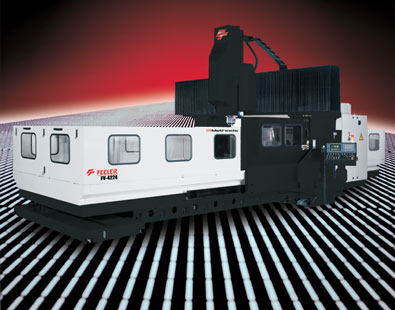
Methods Machine Tools, Inc., a leading supplier of innovative precision machine tools, has introduced high-performance FEELER FV-Series double column bridge mills featuring extensive design and engineering by Methods. FEELER bridge mills are designed to deliver unsurpassed performance and value and are backed by Methods’ application expertise, support, and extensive network of technology centers. “The main structural components of FEELER bridge mills are manufactured from heavily ribbed cast iron to ensure excellent surface finishes on large, complex parts,” says Paul Hurtig, FEELER product manager at Methods. “Examples of components include massive gearbox housings, nacelles on wind turbines and pumps, or valve housings for the oil and gas industry.”

FEELER bridge mills feature a stepped Y-Axis beam and weigh up to 82 tons, contributing significantly to rigidity. For maximum power and torque at low rpms they use a German ZF gearbox with a 1:4 gear ratio. Facilitating the production of large, high-quality components these bridge mills feature THK linear guideways on the X-axis, and Schneeberger roller linear guideways on the Y-Axis. X-axis travels range from 85” (2,160mm) to 284” (7,200mm), and Y-axis travels range from 55” (1,400mm) to 158” (4,000mm). The Z-axis uses boxway construction and travel is 35.4” (900mm) with 47.2” (1,200mm) of travel available as an option. The FV-Series includes 19 models available with either 40-taper 15,000 rpm, 30 HP spindles or 50-Taper 6,000 rpm, 35 HP spindles. Distance between columns ranges from 63” (1,600mm) to 138” (3,500mm). The standard automatic tool changer holds 32 tools. 60, 90 and 120 tool configurations are available as options. The FANUC18i-MB (B) with HPCC control is standard on the 40-taper FEELER bridge mills, and the 50-taper models use the FANUC 18i-MB (A) control.

FEELER machines are manufactured by Fair Friend Group (FFG). Established in 1979, FFG is one of the world’s largest machine tool builders and has major manufacturing operations in Taiwan, China, Japan, and the United States. FEELER is known for rigorous quality control and has invested significantly in highly advanced manufacturing equipment and research and development. Methods Machine Tools has been a leading supplier of precision machine tools, automation and accessories for over 50 years, providing extensive applications engineering support, installation, parts, service, and training through a network of large state-of-the-art technology centers and dealers throughout North America. For more information call (978) 443-5388, e-mail sales@methodsmachine.com, or visit online at www.methodsmachine.com.

Gamesa to Supply California Wind Farm

0

Western Wind Energy Corp has purchased 120 megawatts of Gamesa G8X Series wind turbines. Gamesa—a world-leading player in the design, manufacture and maintenance of wind turbines—has been awarded a contract to supply a total of 120 MW of capacity to the Windstar wind project, which is being developed by Western Wind Energy Corporation at the Tehachapi Pass in southern California. It will be the largest wind farm developed to date in the United States by Vancouver, Canada-based Western Wind Energy and also Gamesa’s first contract with this developer, which has wind power projects in California, Arizona and Ontario. The agreement also includes Gamesa providing operation and maintenance services for the next 10 years.

Gamesa is to supply Western Wind Energy with a total of 60 wind turbine generators from its G8X-2.0 MW platform with deliveries starting in April 2011. The two models from the G8X-2.0 MW platform supplied under this contract will be manufactured at their factory in Fairless Hills, Pennsylvania. All the turbines, which are specifically designed for high temperature, will be installed on 67-meter towers. Gamesa will also supervise construction of the wind farm, to commence immediately. Western Wind Energy has a 20-year agreement to supply electricity to Southern California Edison.

“This agreement is a first with an important new customer, Western Wind Energy, and will strengthen our footprint and leading position in the U.S. market,” says Dirk Matthys, CEO of Gamesa for North America. Jeffrey J. Ciachurski, CEO of Western Wind Energy, notes that “following a rigorous process of due diligence among the main manufacturers, we chose the Gamesa G8X-2.0 MW platform because of its robustness and excellent performance, considering also that there are over 9,200 MW installed worldwide.”

Gamesa has been operating in the U.S. since 2005. It has two manufacturing plants in Pennsylvania employing over 800 people and with production capacity of over 1,000 MW/year. The U.S. market, which Gamesa has designated as strategic, accounts for 22 percent of the company’s total worldwide wind turbine generator sales. To learn more visit www.gamesacorp.com.

Avanti Begins U.S. Ladder Production

0

The leading world market producer of work cages/service lifts, ladder systems, and other personal safety systems for wind turbine towers, Avanti Wind Systems (see article in this issue), is starting up production of ladder systems for wind turbine towers in the United States. Avanti Wind Systems has completed a factory for manufacturing of aluminium ladders at the company’s North American headquarters in New Berlin, which is close to Milwaukee, Wisconsin. The factory is intended to supply the North American wind market. Until now the company has manufactured its ladder systems in China and Germany. These factories will continue manufacturing for the rest of the world.

“The factory in Wisconsin will enable us to move employment to the U.S., while also allowing us to give faster and better service to our customers throughout North America,” says Kent Pedersen, general manager for Avanti Wind Systems in the U.S. The location also gives Avanti and its customers considerable advantages. Finished ladder systems take up a lot of space given the amount of raw aluminium involved. Moreover, the shorter transport times will reduce the amount of damage during transport, which typically occurs during the transport and handling of aluminium ladders, with the consequent major savings in transport costs. The new Wisconsin factory will manufacture ladder sections of up to six meters in length. The sections are subsequently assembled when they are installed in the towers.

“Avanti ladders are tested against North American requirements, which include ANSI 14.3,” Pederson says. “Physical tests are performed by Radco, an independent test institute. These show safety factor three for regular duty ladders and safety factor five for heavy duty ladders. This puts them among the best built ladders in the U.S.” For more information call (262) 641-9101 or visit www.avanti-online.com.

Broadwind Receives Grant for Drivetrain Service Center

0

Broadwind Energy, Inc., announces that the Development Corporation of Abilene awarded its Broadwind Services subsidiary Energy Maintenance Service, LLC, a financial assistance package of approximately $902,000, which will be applied to facility improvements and support equipment at the company’s drivetrain service center in Abilene, Texas. A portion of the assistance package will help enable the creation of jobs at the drivetrain service center. Broadwind is currently receiving gearboxes for remanufacturing and plans to hold the grand opening for its drivetrain service center in February 2011.

“Abilene is at the center of wind energy in Texas,” according to Peter C. Duprey, president and CEO of Broadwind. “This new drivetrain service center will harness Broadwind’s 85 years of gearing experience with our services expertise to offer turnkey gearbox remanufacturing. We appreciate the Development Corporation of Abilene’s financial support of this important renewable energy project. With approximately 160 employees in Texas, Broadwind is excited to continue to create jobs that contribute to clean energy across America.”

When online, Broadwind’s drivetrain service center will provide a comprehensive suite of multi-megawatt gearbox remanufacturing services, including failure analysis, engineering, disassembly, gear regrinding, clean assembly, and testing functions. Richard Burdine, CEO of the Development Corporation of Abilene, says that “on behalf of the DCOA Board, we are very pleased to help Broadwind Energy expand its wind service capabilities in West Texas with this state-of-the-art facility.”

Broadwind Energy, Inc., based in Naperville, Illinois, provides technologically advanced high-value products and services to the U.S. wind energy industry. Broadwind’s product and service portfolio provides customers, including wind turbine manufacturers, wind farm developers and wind farm operators, with access to a broad array of wind component and service offerings. These product and service offerings include wind turbine gearing systems, wind turbine structural towers, industrial products, technical services, precision repair and engineering services, and logistics. To learn more go to www.bwen.com.

ROTALIGN ULTRA Vibration Acceptance Check from Ludeca

0

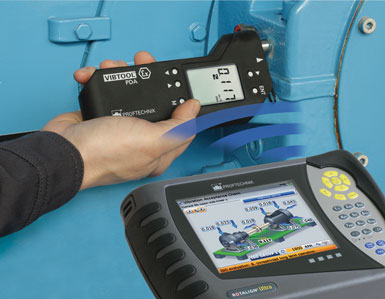
The ROTALIGN ULTRA vibration acceptance check works in combination with the VIBTOOL vibration meter to measure vibration level according to the ISO 10816-3 international standard. The RMS velocity value is wirelessly transferred and stored back onto ROTALIGN ULTRA computer where the result is instantly evaluated against the machine classification threshold. This fulfills the recommendation of the acceptance check after installation of rotating machinery or any alignment job, ensuring that machines run without restrictions. The VIBTOOL vibration meter can measure the following parameters: vibration severity; bearing condition; temperature; RPM; and pump cavitation.

LUDECA is a vendor of preventive, predictive, and corrective maintenance solutions including machinery laser alignment, vibration analysis, and balancing equipment, as well as software, rentals, services, and training. For more information visit www.ludeca.com.

New Sales Director for U.S. and Canada for Terex Cranes

0

Tony Marlin has joined Terex Cranes as director of sales for Eastern United States and Canada. He has been at Maxim Crane Works for the past 11 years, recently serving as senior vice president of sales and marketing and major accounts. He has over 20 years of experience in the crane industry, and he is a former owner of Newton Crane Service in Indianapolis.

“His ability to respond to the rapidly changing demands for the crane rental industry and contractors will enable him to help lead Terex toward even greater customer focused service,” says Frank Bardonaro, vice president and managing director for Terex Cranes in the Americas.

Terex Corporation is a diversified global manufacturer operating in four business segments: aerial work platforms; construction; cranes; and materials processing. Terex manufactures a broad range of equipment for use in various industries, including the construction, infrastructure, quarrying, mining, shipping, transportation, refining, energy and utility industries. Terex offers a complete line of financial products and services to assist in the acquisition of Terex equipment through Terex Financial Services. More information can be found at www.terex.com.

Windflow Marks Major Engineering Achievement

0

Windflow Technology has achieved a major engineering success with the news today that Lloyd’s Register has awarded its Type Approval Certificate to the Windflow 500 turbine. This confirms that the turbine meets Class 1A of the latest International Electrotechnical Commission (IEC) design standard IEC 61400-1 (edition 3). Class 1A certification attests that the Windflow 500 will operate for more than 20 years in the strongest, most turbulent wind regime in the IEC classification. The company reports that certification has required years of engineering horsepower and has set a new standard in wind turbine excellence in the medium size 500 kW category.

It gives interested parties and purchasers of the Windflow 500 turbine confidence that the turbine has been rigorously tested to operate in the highest strength winds. During the IEC process 2,800 pages of engineering calculations were scrutinized by Lloyd’s Register, along with more than 200 drawings and 37 specifications; the prototype turbine at Gebbies Pass (near Christchurch) was put through a regime of safety and mechanical load tests, as well as measuring its acoustics and power output. The blade was tested for its ultimate strength by the University of Canterbury and for its fatigue life at the IRL test hall in Auckland.

According to CEO Geoff Henderson the confirmation of IEC certification is the end of an engineering marathon and a strong kick-start to the international marketing drive that recently gained critical momentum through a policy change in the U.K. The company has assembled a team of 20 professional engineers in its Christchurch headquarters supported by the company’s commercial team, the skilled tradespeople in its nacelle assembly and blade factories, and the windsmiths in Palmerston North servicing its 66 operating turbines. The company, which is the only utility-scale wind turbine manufacturer in Australasia, currently employs more than 50 people directly and about 400 indirectly throughout New Zealand.

“We are immensely proud of our team’s work, and despite challenges along the way we always believed that our innovative Windflow 500 would speak for itself and affirm the confidence of our shareholders,” Henderson says. “Windflow Technology, and the Windflow 500, have set a new wind energy benchmark and one that our supporters can feel very excited about. The turbine is designed for New Zealand’s lean and mean economic environment as well as our turbulent high wind sites. Its fundamental economic advantage is that it uses fewer tonnes of materials, typically 50 percent, for the same output as competing three-bladers, large or midsize. The class 1A IEC Type Approval validates this lighter, smarter approach to operating at high wind sites.”

Wind turbine certification is an independent determination that provides assurance of a turbine performing for a minimum of 20 years in a specified environment. Because the IEC certification standard prescribes required safety margins for all engineering calculations, compliance provides the statistical backup sought by those who finance and insure wind farms.

Currently 66 Windflow 500 turbines are installed in New Zealand. A full-scale prototype has been operating since 2003 at Gebbies Pass near Christchurch. Five began operation at the Te Rere Hau wind farm on the outskirts of Palmerston North in 2006, with another 60 being installed at Te Rere Hau between November 2008 and October 2009. In addition 32 turbines are in production and are planned to be installed at Te Rere Hau by mid-2011. To learn more go to www.windflow.co.nz.

News From KMT Robotic Solutions

0

KMT Robotic Solutions, Inc., announces the sale of the first robotic root cut and drill system for utility-scale wind turbine blades produced in Europe. KMT-RS is the first and only company to supply a robotic root cut and drill solution, and currently has multiple systems in production throughout North America. This new order will be executed out of KMT-RS’s office in Ronneby, Sweden, in close cooperation with its offices in Auburn Hills, Michigan, and Wetzlar, Germany.

This new order builds off of KMT-RS’s success in the North American market. “Our North American customers have been pleased with the results they have achieved with their robotic root cut and drill systems,” says Mark Handelsman, wind turbine industry sales manager. “Only CNC based solutions were available prior to the introduction of the KMT-RS robotic system. Since we introduced our robotic solution, our customers have found that the KMT-RS root cut and drill systems overcome shortcomings of the CNC solutions and provide higher throughput, lower running costs, and far greater flexibility.”

“Penetrating the European Wind Turbine Blade market is an important milestone for KMT-RS,” according to Frank Thorn, vice president of European sales. “Europe remains the technology leader for the wind turbine industry with decisions impacting plants not only in Europe, but also in North America and Asia. We found that a key to our success in Europe has been our ability to transfer the technology developed in North America to our manufacturing facility in Ronneby, Sweden, and our technology and support center in Wetzlar, Germany. The efficiencies that we gain by manufacturing more closely to our customers and better meeting local market needs will be a key to our success in Europe.”

KMT-RS also continues to advance the state of the technology and is offering some new capabilities in this latest system order. “Using advanced vision technology along with KMT-RS’s patent-pending AccuFind technology to accurately locate blades is critical to our achieving the demanding tolerances of our customers” says Mike Aeschliman, wind turbine product manager. “Our customers can load blades in 10 to 15 minutes with a standard overhead crane, and within minutes of loading the blade start cutting the root end.”

KMT Robotic Solutions has more than 3,600 robots installed around the world and more than 25 years experience developing, designing, building, servicing, and supporting robotic cutting, trimming, and cleaning solutions for manufacturing customers. With direct and relationship partner locations in Europe, the Americas, China, and Japan, KMT is strategically positioned to serve the global market. KMT Robotic Solutions. Learn more by contacting Roberta Zald, director of business development, at (248) 829-2814 or roberta.zald@kmtrobotic.com. Go online to www.kmtrobotic.com

NRG Systems Introduces 80-meter XHD Tilt-up Tower

0

In response to industry demand to measure the wind at taller heights, NRG Systems now offers an 80-meter tilt-up tower. Built on the same reliable platform as the company’s 60-meter XHD system, the 80-meter tower incorporates bolted joints for a stiffer, stronger tower while offering familiar installation and performance.

The drive for data accuracy has led many developers and consultants to measure directly at turbine hub heights. “Incorporating one or several 80-meter systems into a wind resource assessment campaign has proven to reduce uncertainty and help developers negotiate more favorable financing and power purchase agreements,” says Barton Merle-Smith, director of marketing and sales for NRG Systems (see profile in this issue). “In the U.S. and particularly Europe, the best on-shore wind sites have already been developed. The industry has become more sophisticated and disciplined in its approach to resource assessment in an effort to minimize uncertainty. Measuring directly at 80 meters helps make this possible.”

The complete 80-meter XHD system includes a galvanized 10-inch diameter tilt-up tower with a steel baseplate, a SymphoniePLUS 15-channel data logger, NRG Systems sensors to measure wind speed and direction, side-mount booms, and other accessories. The high-visibility package, required by the FAA in the U.S., includes an orange-and-white painted tower, a compliant lighting system, and marker balls.

“Strength and ease-of-use were primary drivers for NRG Systems in developing the new system,” according to Owen Clay, director of engineering. “We took great care to meet the highest standards for strength and durability, while preserving the simplicity of installation and maintenance.”

NRG Systems is an independently-owned company that has served the global wind energy industry for 28 years. Its wind measurement systems and turbine control sensors can be found on every continent in more than 145 countries, serving electric utilities, wind farm developers, turbine manufacturers, research institutes, government agencies, and universities. The 80-meter XHD system will ship via surface freight free of charge in its efficient Enivocrate® packaging starting in February 2011. Information requests and orders can be placed by contacting (802) 482-2255 or sales@nrgsystems.com. Also go to www.nrgsystems.com.

New Manager of North American Accounts at Michels

0

Building on a stellar career, Dave Hart has been named Michels’ wind energy manager of North American accounts. “Dave is one of the most respected minds in the wind energy business,” according to Michels Wind Energy General Manager Pat Herzog, who leads a division with more than 3,600 MW of wind farm experience. “His knowledge and experience will continue to help us grow as the industry moves forward.”

Hart has directed more than 600 MW of wind farm construction for Michels since 2009, when he joined the company as operations manager. Most prominently he led the Michels team in constructing Shirley Wind Farm, a 20 MW farm with 100-meter towers. Michels executed an EPC contract and self-performed all collection system, substation, foundation, road, and erection work on the project. Throughout his 25-year career Hart has managed or directed the installation of more than 1,500 wind turbines across the United States and Canada. Before joining Michels he was most recently director of projects for Vestas American Wind Technology.

Michels Corporation—a leading utility contractor in North America and ranked No. 45 on ENR’s Top 400 Contractors list for 2010—offers construction, engineering, and procuring services to keep pace with the growing demand in the energy, transportation, telecommunications, and utility construction industries. For more information call (920) 583-3132 or go to www.michels.us.

Southwest Windpower’s Kruse Appointed to Federal Advisory Committee

0

Andy Kruse, co-founder and executive vice president of business development at Southwest Windpower, has been appointed to the Department of Commerce’s recently established Renewable Energy and Energy Efficiency Advisory Committee (RE&EEAC). Established on July 14, 2010, the RE&EEAC will advise the Secretary of Commerce on the development and administration of programs and policies to expand the competitiveness of the U.S. renewable energy and energy efficiency sectors. The committee’s 29 members represent U.S. companies, trade associations, and private sector organizations focused on the nation’s renewable energy goods and services.

“I’m extremely honored to be selected to sit on the Renewable Energy & Energy Efficiency Committee,” says Kruse. “I look forward to working with a group of such highly skilled individuals and lending my knowledge and expertise to help support the country’s renewable energy efforts and initiatives.” In his current capacity at Southwest Windpower, the world’s leading manufacturer of residential scale wind generators, Kruse oversees the company’s governmental affairs and certification efforts. During his more than 25 years experience in the renewable energy industry, Kruse has traveled to 70 countries promoting and developing distributors for small-scale renewables. In addition to his latest role serving the RE&EEAC, Kruse sits on several boards and organizations within the renewable energy industry and is also chair of the Small Wind Committee with the American Wind Energy Association (AWEA). Kruse has received numerous awards and recognitions throughout his career, most recently being named “National Exporter of the Year” by the Small Business Association (SBA) and “Small Wind Advocate of the Year” by AWEA.

Southwest Windpower has been designing and distributing small wind turbines for more than 22 years and is the recognized global leader in the design, manufacturing, and distribution of small wind systems (400-3000 watts). The company has been a pioneer in the development of wind technology and has built and shipped more than 170,000 wind turbines to over 120 countries worldwide and has sales representation in over 88 countries. Headquartered in Flagstaff Arizona, it also has operations in Cologne, Germany, and a joint venture in Ningbo, China. Applications for Southwest Windpower systems include residential homes, commercial properties, micro grids, remote cabins, telecom transmitters, offshore platforms, water pumping, and sailboats. Southwest Windpower is the manufacturer of Skystream, Whisper, and Air lines of distributed wind systems. Learn more at www.windenergy.com.

New Organizational Structure at NAES Corp.

0

NAES Corporation, a broad-based provider of services to the energy industry, announces that effective January 1, 2011, it has restructured in order to better serve its customers and to extend its maintenance and construction services into new markets. NAES will create a new division, to be called the NAES Engineering & Construction Group and led by Dale Withers, which will provide a variety of support services for two wholly-owned subsidiaries of NAES. In addition to NAES Power Contractors, Inc., which has long served the union maintenance and construction market, NAES is forming NAES Constructors, Inc., which will pursue projects in the open shop market. The mission of the NAES Engineering & Construction Group is to foster the continued growth of both subsidiaries, and to ensure that each delivers high value, cost-effective projects with uncompromising safety, quality, and timeliness.

NAES Constructors, Inc. will be co-located in Houston with the Turbine Services Division of NAES, with that division embracing the same rigorous standards. Headquartered in Issaquah, Washington, NAES is the energy industry’s largest independent provider of operations and maintenance services, also providing complementary and coordinated services through a tightly integrated family of subsidiaries and operating divisions. These services include construction, retrofit, and maintenance services under dedicated long-term maintenance or individual project contracts; on-site turbine inspection/overhaul services; parts refurbishments and equipment repair; staffing solutions; and customized services designed to improve plant and personnel effectiveness (see article in this issue). NAES is owned by ITOCHU International, Inc., the U.S. affiliate of ITOCHU Corporation. With operations in over 80 countries covering a broad range of industries, ITOCHU is among the world’s largest corporations. Go online to www.naes.com.

First Wind Adopts Sewall’s ATLAS System

0

National GIS firm James W. Sewall Company announces that First Wind has launched Sewall’s ATLAS Enterprise GIS Viewer and Publishing system. ATLAS, an innovative browser-based GIS solution, enables GIS staff to publish a wide variety of spatial data company-wide via a fast, intuitive, and interactive mapping application built on the Google Maps Enterprise API.

High-value environmental and ecospatial information for siting wind projects is now readily available to all staff through a self-service model, reducing the amount of time spent requesting, searching for, and handling data. Because the same information is available company-wide, ATLAS supports collaboration, decision making. and the strategic planning critical to wind energy siting and development.

“We are very excited about the release of the ATLAS system,” says Ryan Chaytors, First Wind’s director of development. “We worked with Sewall to design a solution that fits our unique business requirements, especially the fast pace of data-driven decision making. We were pleased with both the design and the execution. The new system has been received enthusiastically by users in a wide variety of roles within the company.”

ATLAS is based on the Google Maps platform, extended by unique Sewall technology that enables First Wind to publish proprietary GIS data from a variety of sources as either Microsoft SQL Server tables, or tiled images.

Founded in 1880, Sewall is an integrated team of geospatial, engineering, and natural resource consultants who partner with clients to create practical, sustainable solutions. The company’s diverse portfolio is based on 130 years’ experience in surveying and civil engineering; 60 years’ in aerial mapping; and 20 years’ in GIS and software application development. Sewall has nine offices in cities nationwide. To learn more go to www.sewall.com. First Wind is an independent North American wind energy company focused exclusively on the development, ownership, and operation of wind energy projects. First Wind is headquartered in Boston, Massachusetts. For more information visit www.firstwind.com.

Robotic Submerged Arc Technology Solutions from Lincoln

0

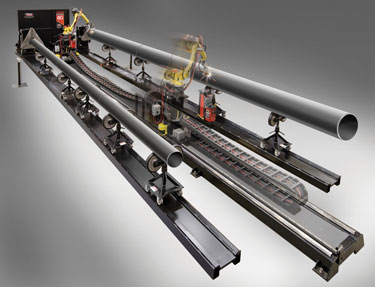
Lincoln Electric Automation has introduced a new robotic arc welding system embedded with advanced technology that redefines available solutions for submerged arc welding (SAW) with a robot. At the core of this next generation release, Lincoln Electric Automation has patented a wire and flux delivery system that expands the possible applications for robotic submerged arc beyond the normal restrictions of previous mechanized operation. The new, integrated torch design with streamlined flux delivery allows the user to incorporate robotic SAW solutions on corners and path variations, previously not possible with other mechanized gravity fed flux delivery systems.

The system integrates the industry leading Power Wave AC/DC 1000 SD welding power source to ensure superior weld quality results. The machine output is rated 1000 amps, 44 volts at 100 percent duty cycle. With 380-575 VAC, 50/60Hz input voltage capability, the Power Wave AC/DC 1000 SD can be connected anywhere in the world, making equipment deployment easier for global companies. The digital inverter-based power source features Lincoln Electric’s software-driven Waveform Control Technology, resulting in unprecedented control of DC positive, DC negative, balanced AC, and variable AC submerged arc processes without cumbersome mechanical cable swapping. Subtle waveform changes can be made for precise control of the submerged arc deposition rate and penetration. The result over conventional power sources is increased weld speeds, consistently higher quality welds and improved efficiencies in single or multi-arc environment. The new Power Wave machine features new iArc digital controls, delivering processing speeds up to 90 times faster than the previous generation. The result is faster arc response and greater arc stability.

Lincoln Electric Automation also integrated smart technology into solutions featuring remote weld process monitoring that allows welding operational efficiency analysis. Using Lincoln Electric’s Production Monitoring™ 2 Web-based software, managers can track equipment usage, gather and store data by weld, station, shift or date, configure welding process limits and generate e-mail alerts. The system also features Lincoln’s True Energy capability, which provides customers with an easy and accurate method for measuring and displaying energy for critical heat input calculations. Additional capabilities can be added to the robotic system, such as Touch Sensing, automated path follow and vision-based systems for tracking, guidance and error proofing.  When appropriate for the application, these technologies can extend the precision and quality of the robotic submerged arc welding supplied by Lincoln Electric Automation.

The Lincoln Electric Company, headquartered in Cleveland, Ohio, is the world leader in the design, development, and manufacture of arc welding products, robotic arc welding systems, fume extraction equipment, and plasma and oxyfuel cutting equipment. The company holds a leading global position in the brazing and soldering alloys market. For more information call (216) 383-2667 or e-mail automation@lincolnelectric.com. Also visit www.lincolnelectric.com/automated-solutions.

Electronic Fixed Ratcheting Head Torque Wrenches from Stanley Proto

0

Stanley Proto has added to its line of electronic torque wrenches three new fixed ratcheting head models. The new wrenches accept standard Proto sockets, and come in ¼”, 3/8”, and ½” drive versions with torque ranges from 25 in-lb  (2.8 Nm) to 250 ft-lb  (339 Nm).

Stanley Proto fixed ratcheting head torque wrenches are accurate to within +/- 2 percent of indicated value in BOTH directions (compared to 4 percent clockwise and 6 percent counter clockwise on mechanical models). This broad accuracy range extends from 10 percent to 100 percent of full scale. In addition, 99 “onboard” memory storage locations help improve efficiency when taking multiple torque readings. The fixed ratcheting head features a robust 24-tooth design with a 15° arc swing, an alloy steel drive gear for strength and durability, a low profile design for easy access, and a reversing lever design to ease one-handed operation. The torque wrenches come with many of the same features and benefits as Proto’s existing electronic torque wrenches. These include:

• An easy to read LCD Display with large digits;
• Three units of measure available (ft-lb, in-lb, and Nm);
• A rotating head for easy viewing of the LCD display from any position.
• A fast sampling rate that ensures the wrench will measure peak torque the moment it’s reached;
• Track and Peak Hold modes as a standard feature. (In Track Mode the wrench displays real-time torque; in Peak mode it holds the highest measured torque until released);
• Helpful visual and audible indicators: a green light appears and buzzer sounds when the target is reached—a red light appears with intermittent buzzer when it is over-torqued; an audible buzzer helps identify when desired torque target zones are approaching and met. These features are a benefit when working in low light conditions.

The new wrenches are ergonomically designed for user comfort and operate on standard nine-volt batteries. They are manufactured to meet or exceed ASME B107.28. Users also have the option of purchasing Proto Software that allows for full two-way communication between the torque wrench and a personal computer. The software lets users download all data captured by the torque wrench directly into a spreadsheet, either all at once from on-board memory. It also allows for users to control all settings on the torque wrench either from the wrench or computer. The software comes on a CD, and includes a cable for connecting the torque wrench to the computer’s USB port. To learn more visit www.stanleyproto.com.

Lutze LOCC-Box Intelligent Electronic Current Monitoring System

0

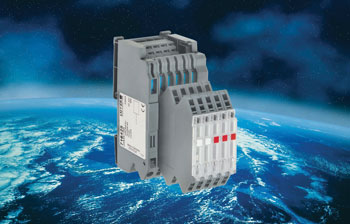
Lutze overload current control, Lutze LOCC-Box, provides reliable load monitoring and protection in 24V DC circuits. Innovative features include adjustable trip current range (1-10A), adjustable characteristics (fast, med, slow 1, slow 2, and slow 3), output alarm signal at 90 percent of the load setting, remote reset, and remote on/off functions. LOCC-Box serves very well in remote locations and hard to access applications, such as windmills. Narrow construction ensures compact design even with multi-channel configurations. No derating required as LOCC-Box functions independently of ambient temperature.

Additional features such as Gateway communication capabilities for remote monitoring and analysis are possible with the Lutze LOCC-Box Net. Optional LOCC-Pads software offers the possibility for custom parameter setting, analysis, and diagnostics. These are just some of the intelligent features of the Lutze LOCC-box.

Lutze, Inc., located in Charlotte, North Carolina, is part of the Lutze International Group. Founded in 1958, Lutze International Group has manufacturing and distributing operations in Germany, Austria, France, Switzerland, Great Britain, Czech Republic, China, and the United States. Lutze offers a full spectrum of automation components including a wide range of flexible industrial cable (Lutze Silflex, Superflex, Superflex Plus); plastic and metal fittings with metric, PG and NPT threads, a complete line of power supplies, industrial Ethernet switches, LSC-Wiring System, LOCC-box, and relays. More information is available at www.lutze.com.  

Converteam Delivers Direct Drive Electrical System

0

Power conversion specialist Converteam has recently delivered its innovative electrical power train solution, including its 900V converter and a direct drive permanent magnet generator, to Schuler Pressen for its new SDD 100 wind turbine. The 2.7 MW turbine will be installed in Germany and will go into operation in early 2011. The turbine design meets the stringent German 2009 “EEG” Renewable Energy Sources Act. It features a comprehensive grid fault ride through system and power factor control capability.

Converteam’s direct drive permanent magnet generator and its associated power converter are critical to the performance of the wind turbine and are based on the company’s proven designs enabling advanced power control, maximum resilience, and minimum maintenance. The latest 900V converter from Converteam, suitable for wind turbines up to 7 MW, presents numerous benefits:

• Best in class power density for a low voltage converter;
• Increases efficiency of the whole system compared to a 690V solution;
• Three level drive, optimises the wave form and dynamic control;
• Ability to keep low voltage while pushing the boundary of low voltage to its maximum capability.

The permanent magnet generator is an integral design including the mechanical drivetrain from Schuler. Converteam’s Technology Director Derek Grieve says “The direct drive technology removes the requirement for a gearbox, increasing overall reliability of the wind turbines, especially important for offshore installations. With this new drive train, we demonstrate again the benefits of our full system approach, which in this case has led us to the introduction of the 900V voltage level to the renewables industry.”

Converteam delivered its first permanent magnet generators for the Multibrid 5MW wind turbine, now the Areva M5000, in 2004. As a leading direct drive PMG manufacturer Converteam delivered one of the largest direct drive PMG ever built (3.7 MW) to Siemens Wind Power in 2008. With more than 20GW of wind power converters delivered so far, Converteam is the world leader amongst non vertically integrated manufacturers.

Building on over a century of experience, Converteam Group is firmly placed at the leading edge of technology and innovation with a global reputation for excellence in the conversion of electrical energy. Converteam develops and provides solutions built around three core components: rotating machines, drives, and process automation. As the technological and global market leader in metalforming, Schuler supplies machines, production lines, dies, process know-how, and services for the entire metal-working industry. For more information go to www.converteam.com.