










Home 2010

Portable Mechanics’ Service Sets From Snap-on Industrial

0

You can’t always bring the big job to the tool crib, so Snap-on Industrial is bringing the tool crib to the job. Portable mechanics’ service sets put large and small hand tools—including screw drivers, wrenches, and pliers, along with multimeters and other specialty equipment—at easy reach for professionals looking for maximum protection of their tools and equipment combined with great accessibility. A hard-sided Pelican™ 0450 case houses a choice of two comprehensive tool offerings. Everything starts with the mobile tool case that features rugged trolley wheels and handle for easy and secure mobility.  Each configuration comes with seven custom foam-equipped removable drawers, and an integrated top tray includes custom foam tool storage as well. Two automatic pressure equalization values keep water molecules out and ensure easy opening, whether you’re at 1,000 feet below the ocean’s surface or at 50,000 feet in the air. Cases are also water, temperature, drop, and impact resistant. Each unit meets DOD (Air Force) operation guidelines and complements existing safety programs. Tool coding etched into each tool with corresponding number laser printed into the tool’s individual storage space simplifies inventory control and maximizes overall accountability.

Snap-on Industrial is a division of Snap-on Incorporated, a leading global innovator, manufacturer, and marketer of tools, diagnostics, equipment, software, and service solutions for professional users. Products and services include hand and power tools, tool storage, diagnostics software, information and management systems, shop equipment and other solutions for vehicle dealerships and repair centers, as well as customers in industry, government, agriculture, aviation and natural resources. For more information call (877) 740-1900 or visit www.snapon.com/industrial.
AMSC Acquires Stake in Blade Dynamics Ltd.

0

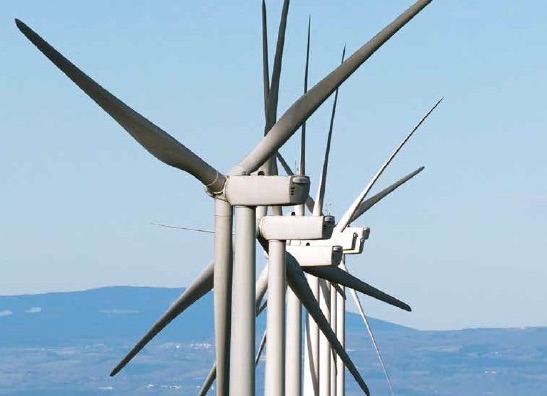
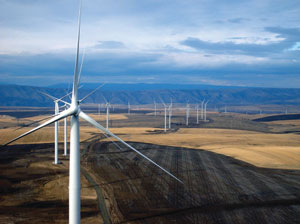
American Superconductor Corporation has acquired a 25 percent ownership position in Blade Dynamics Ltd., a designer and manufacturer of advanced wind turbine blades based on proprietary materials and structural technologies. Founded in the United Kingdom in 2007, Blade Dynamics has developed wind turbine blade technologies designed to increase the efficiency and performance of very high power (multi-megawatt) wind turbines while also reducing costs. The Dow Chemical Company, through its Venture Capital group, also made a minority equity investment in Blade Dynamics.

“Blade Dynamics has developed unique and proprietary structural designs and manufacturing methods aimed at overcoming critical barriers that are facing today’s wind industry,” says Blade Dynamics founder and CEO Paul Rudling. “Utilizing advanced manufacturing processes, innovative structural designs, proven composite materials, and our advanced Bladeskyn surface coatings, our wind turbine blades provide compelling performance and efficiency advantages for wind turbine manufacturers. We see tremendous potential for this technology and are delighted to work with AMSC and Dow. Blade Dynamics will now be able to utilize AMSC’s unique wind turbine design capabilities and business model as well as Dow’s global reach and composite materials to capitalize on the tremendous opportunities we see in front of us.”

Today’s 2 megawatt (MW) wind turbines require rotors that are more than 70 meters (230 feet) in diameter, and 5 MW wind turbines require rotors that are at least 120 meters (360 feet) in diameter. Rotor diameter is the diameter of the swept area of a wind turbine’s blades. Ideally, these wind turbines would be equipped with even larger-diameter rotors to maximize power output. Yet cost, weight, and transportation factors have historically limited the size of rotors, outweighing performance and efficiency benefits.

“The design and manufacturing processes for wind turbine blades have remained fundamentally unchanged for 20 years,” says AMSC founder and CEO Greg Yurek. “Today, however, the market is migrating to higher wind turbine power ratings. Onshore wind turbines now exceed 2 MW in many locations, and offshore wind farm developers are increasingly seeking wind turbines with power ratings exceeding 5 MW. Blade Dynamics presents us—and the entire wind industry—with a game-changing wind turbine blade technology that enhances performance and reduces weight and cost for high power wind turbines. We view this as a compelling investment and expect many wind turbine manufacturers, including our own AMSC Windtec™ licensees, to quickly migrate to the Blade Dynamics solution to avail themselves of these competitive advantages. In fact, AMSC Windtec and Blade Dynamics engineers have already been working in close collaboration to optimize blades for AMSC Windtec turbine designs.”

AMSC has acquired its 25 percent stake in Blade Dynamics for $8 million in cash and will have one seat on the Blade Dynamics Board of Directors. In addition to providing AMSC Windtec licensees with a differentiated blade offering, AMSC expects that its investment could expand the company’s sales opportunities with other wind turbine manufacturers around the world. AMSC also expects that Blade Dynamics technology will provide a compelling blade platform for the company’s 10 MW SeaTitan™ superconductor wind turbines. For more information go to www.amsc.com, www.bladedynamics.com, or www.dow.com.

Deere Reaches Agreement for Sale of Wind Energy Business

0

Deere & Company has announced that it has signed a definitive agreement to sell John Deere Renewables, LLC, its wind energy business, to Exelon Generation Company, LLC, a wholly-owned subsidiary of Exelon Corporation. “As Deere sharpens its own strategic focus, we have concluded that the company’s resources are best invested in growing our core equipment businesses around the world,” says Samuel R. Allen, Deere & Company chairman and chief executive officer. “We have chosen to place the wind portfolio with Exelon in part due to its demonstrated leadership in the energy industry.”

Deere said the $900 million sale, including earn-out provisions, will result in an after-tax charge of approximately $25 million in its fourth quarter results. The charge was not reflected in Deere’s fourth quarter earnings forecast of approximately $375 million that was announced August 18th.

John Deere Renewables includes 36 completed projects in eight states with an operational capacity of 735 megawatts. The definitive agreement includes the completed projects plus numerous others in development. Subject to regulatory approvals, Deere anticipates the transaction to close within the 2010 calendar year. For more information contact Ken Golden, director of strategic public relations at Deere & Company, at (309) 765-5678. Go online to www.deere.com.

Siemens and Samsung Enter Into Major Supply Agreement for Canada

0

Siemens Energy and Samsung C&T Corporation have signed an agreement for the supply of wind turbines with a total capacity of up to 600 megawatts (MW). The wind turbines to be delivered under this supply agreement will be deployed at selected wind projects in southern Ontario and will provide clean power to approximately 240,000 Canadian homes. Furthermore, Siemens will establish a blade manufacturing site in Canada that is set to create up to 300 jobs in the province.

“With this supply agreement we are strengthening our position in the rapidly growing wind power market in Canada,” says Jens-Peter Saul, CEO of the Siemens Wind Power Business Unit. “Furthermore, by investing in a new blade production facility in Canada, Siemens is pushing further ahead with the regionalization of its wind manufacturing network in important markets.”

Siemens also recently invested in a U.S. nacelle production facility in Hutchinson, Kansas, which will start producing nacelles in December 2010. Siemens has been working with Samsung C&T and its development partner Pattern Energy on this first phase of development under Ontario’s Feed-in Tariff (FIT) program where Samsung has committed to develop 2,000 MW of wind power over the next six years. The new wind turbine supply agreement is a significant step on the road to realizing this commitment.

The installed capacity of wind power in Canada is expected to increase from 3,400 MW today to more than 15,000 MW in 2020. Siemens already has a strong presence in Canada, so far the company has installed a total of 130 2.3-MW rated wind turbines at Kruger Energy’s 101.2-MW Port Alma wind farm and TransAlta’s 197.8-MW Wolfe Island wind farm in Ontario, and is supplying an additional 152 units of its 2.3-MW wind turbines to four recently announced projects, which will bring Siemens installed capacity to a total of 550 MW by the end of 2011.

Wind energy is part of Siemens’ Environmental Portfolio. In fiscal 2009 revenue from the portfolio totaled about EUR23 billion, making Siemens the world’s largest supplier of ecofriendly technologies. In the same period the company’s products and solutions enabled customers to reduce their CO2 emissions by 210 million tons. This amount equals the combined annual CO2 emissions of New York, Tokyo, London, and Berlin. Further information is available at www.siemens.com/energy.

AFC-Holcroft Supplies Gearbox Equipment to Brevini Wind

0

AFC-Holcroft is pleased to announce the receipt of a new furnace order for a sealed quench furnace line that will be used to process specialized components utilized in the wind energy market. The furnace line is based on AFC-Holcroft’s standard, modular UBQ (Universal Batch Quench) family of products, but was modified to optimize its efficiency for the mix of products required by this customer.

Brevini Wind, headquartered in Italy, is expanding their facility in Indiana, where the equipment will be installed. AFC-Holcroft is pleased to be part of the premium Brevini supplier base as they expand their business units around the world. AFC-Holcroft’s European branch office spearheaded this project, although equipment for the project will be built in North America. “We believe the time is right to invest in additional capacity, in North America specifically,” says Jacopo Tozzi, president and CEO of Brevini Wind. “The UBQ furnace fit our needs for today and allows the flexibility of future expansion as the wind energy sector continues to grow.”

“We are thrilled to add Brevini to the list of global manufacturing suppliers who have chosen AFC-Holcroft and our UBQ furnaces for their operations,” says Marc Ruetsch, director of european operations at AFC-Holcroft. “Our UBQ furnaces have gained global acceptance by several multinational companies, due not only to their adaptability to changes in capacity, part loads and temperature requirement but also to their modularity, which allows easier reconfiguration options within existing floorspace for future capacity.”

AFC-Holcroft is one of the world’s largest manufacturers of heat treating furnaces. The company has a global reach, with organizations in the United States, Argentina, Australia, Brazil, China, India, Korea, Mexico, Poland, Russia, Spain, and Turkey, including manufacturing means in many of these countries. For more information contact Ruetsch at europe@afcholcroft.com. Go online to www.afc-holcroft.com.

Natural Power to Establish North American Hub

0

Leading renewable energy consultancy Natural Power is to merge their U.S. and Canadian operations to provide seamless service offerings to clients active across North America’s national boundaries. Natural Power’s new North American hub will be a center of excellence for consultancy services and product support across the company’s range of offerings. CurrentPresident of U.S. Operations Jim Adams will take the helm as president of North American operations. Erin Harlos, currently the director at Natural Power’s Vancouver office, will support as vice president. Between them, Adams and Harlos have over 14 years of experience spanning the wind and marine renewable sector.

“There is huge potential for the North American renewables industry, particularly in onshore and offshore wind,” Adams says. “Natural Power has been active in North America for over five years and provides industry leading product innovations such as complex flow modeling to ensure new projects perform to expectations, due diligence to support project investment, and ZephIR lidar to efficiently validating models and provide bankable wind energy assessments. Additionally, drawing upon our extensive experience in providing full life-cycle services to Europe’s offshore wind, wave, and tidal industries, we have the unique ability to bring very applied and seasoned products and services to North America’s blossoming offshore renewables industry, leveraging many of the lessons learned in this rapidly growing market sector. With a dedicated North American hub we will better service both our consultancy customers but also our product customers who require local engineering, construction and operational support which we will now build at pace.”

This fall Natural Power will be presenting and exhibiting at the AWEA Wind Resource & Project Energy Assessment Workshop in Oklahoma and AWEA’s Offshore Wind Conference in Atlantic City), New Jersey, as well as at CanWEA’s annual conference in Montreal. The team will also be hosting several educational Complex Terrain Workshops in the U.S. and Canada. Details on upcoming workshops can be requested by e-mailing training@naturalpower.com or visiting www.naturalpower.com.

Smart Grid Cyber Security Guidelines From NIST

0

The National Institute of Standards and Technology (NIST) has finalized its initial set of Smart Grid cyber security guidelines. Guidelines for Smart Grid Cyber Security (NISTIR7628) include high-level security requirements, a framework for assessing risks, an evaluation of privacy issues in personal residences, and other information for organizations to use as they craft strategies to protect the modernizing power grid from attacks, malicious code, cascading errors, and other threats.

The product of two formal public reviews and the focus of numerous workshops and teleconferences over the past 17 months, the three-volume set of guidelines is intended to facilitate organization-specific smart grid cyber security strategies focused on prevention, detection, response, and recovery. “As we modernize the nation’s electric infrastructure to make it smarter, more efficient, and more capable, we need to we need to make it more secure from end to end,” according to U.S. Commerce Secretary Gary Locke. “These new cyber security guidelines will help government and industry meet this important responsibility.”

“The development of common smart grid standards is a national priority, and these cyber security guidelines are an important step toward that goal,” says U.S Energy Secretary Steven Chu. “If we are to truly modernize our electrical grid, we must have electricity producers, distributors and consumers all speaking the same language and all working together to make our grid more secure. Cyber security is an integral part of the grid.”

The new report was prepared by the Cyber Security Working Group (CSWG) of the Smart Grid Interoperability Panel, a public-private partnership launched by NIST with American Recovery and Reinvestment Act funding from the Department of Energy. To access Guidelines for Smart Grid Cyber Security (NISTIR 7628) go to www.csrc.nist.gov/publications/PubsNISTIRs.html#NIST-IR-7628. Also visit www.nist.gov.

Mortenson Construction Builds Its Fourth Wind Facility In Illinois

0

Mortenson Construction has started construction of White Oak Energy Center near Bloomington, Illinois, adding 150 megawatts to Illinois’ approximate 2,000-megawatt wind generating capacity. Located in agricultural terrain in central Illinois along the McLean and Woodford County lines, the wind power facility, developed by Chicago-based developer Invenergy Wind LLC, will consist of 100-1.5 megawatt GE turbines. Mortenson is responsible for the design and construction of access roads, foundations, and the erection of the turbines. Invenergy is the sixth largest owner of wind generation assets in the United States, according to the American Wind Energy Association.

According to the Illinois Wind Energy Association, an average 100-megawatt wind farm in Illinois creates 150 temporary construction jobs and 10 permanent maintenance jobs. “We are excited to be building another wind energy project in Illinois and look forward to partnering with the local community to safely deliver this project to our customer, Invenergy,” says Tim Maag, vice president and general manager of Mortenson’s Renewable Energy Groups. “The White Oak project will be our fourth wind project we have built in Illinois, which represents approximately 40 percent of the state’s total generating capacity.”

Since entering the renewable energy market in 1995, Mortenson Construction has become a leading building of wind power facilities in North America and has erected 5,000 wind turbines across the United States and Canada. With 100 percent of Mortenson’s business in the power sector coming from renewable energy, Engineering News-Record ranked Mortenson the 11th largest power contractor in the U.S. for 2009.  In addition to wind power, Mortenson’s Renewable Energy Groups also construct facilities that generate solar power, biofuels, and hydro-electric power.

The White Oak facility has been in the planning process for several years. With Illinois’ robust wind resources, evolved transmission system, and progressive public policy, the project marks another significant step for a state leading the way in renewable energy. Learn more by visiting www.mortenson.com/wind.

Final Phase of Biglow Canyon Wind Farm Online

0

Portland General Electric Company announces the first turbines assembled for Phase 3 of its Biglow Canyon Wind Farm have begun generating electricity and supplying power to the Pacific Northwest’s electricity grid. Twenty-four turbines are currently generating power, with all 76 turbines in Phase 3 expected to be completed by the end of the third quarter of 2010. “Bringing the first turbines of the final phase of Biglow Canyon Wind Farm online represents a big step in developing more renewable energy resources for our customers and for the growing wind energy development in the region,” says Jim Piro, PGE president and CEO. “We expect to have the entire 450-megawatt wind farm online on time and on budget.”

The $1 billion Biglow Canyon Wind Farm is PGE’s first fully owned wind power facility. Phase 1 of the project began producing power in December 2007 with 76 turbines and Phase 2 in August 2009 with 65 turbines, with a combined generating capacity of 275 megawatts. The addition of the final phase will bring the total installed capacity to 450 megawatts. Given the variability of wind power the plant is expected to produce an average of around 150 megawatts, enough to power the homes of about 125,000 average PGE residential customers.

Trucks carrying wind-turbine parts for the final phase began arriving at Biglow Canyon in April 2010, with about 10 truckloads required to assemble a single wind turbine. Each of the 415-foot-tall turbines, from base to tip of blade, has a generating capacity of 2.3 megawatts. Phase 3 is providing jobs for about 150 employees and contractors during construction.

The Biglow Canyon Wind Farm is located near Wasco in Sherman County, Oregon. It is PGE’s largest renewable energy project. When complete it is also expected to be one of the largest wind power facilities in the Pacific Northwest. In addition to providing carbon-free and emissions-free generation of electric power the wind farm is creating jobs, providing income for local businesses, generating tax revenues for local government, and providing easement payments to landowners. The Biglow Canyon project was developed by Orion Energy LLC. It is being built by PGE, which also owns and operates it. Headquartered in Portland, PGE is a fully integrated electric utility that serves approximately 817,000 residential, commercial, and industrial customers in Oregon. Visit online at www.portlandgeneral.com.

WindPower Innovations Launches Energetic Drives

0

WindPower Innovations, Inc., announces that its wholly owned subsidiary Energetic Drives, LLC, has been unveiled as its “innovation division.” According to John E. Myers, president of WindPower Innovations, “We welcome president and CEO of Energetic Drives, Ian K. Griffiths, to our management team. With background spanning multiple disciplines, Mr. Griffiths and his team of engineers and Ph.D.s complete the foundation for positioning us as a leading wind power infrastructure and smart grid solutions company, able to cater to every aspect of the wind power industry.”

Energetic Drives’ Grid Tie Inverter software, the subsidiary’s flagship technology, utilizes proprietary algorithms that dramatically increase the range in which sustainable energy sources can deliver a useable 60 Hz AC to the power grid. “We estimate an increase in efficiency of up to 25 percent,” says Griffiths. “For example, a traditional wind turbine has to be turning at a sustained rate, generating 1,200 to 1,800 RPMs, depending on the number of poles per generator, in order to produce useable electricity. Outside of that range, the power is referred to as ‘dirty’ as it is inconsistent and unusable. Our technology allows the wind turbine to be utilized at a constant 120 percent of the generator rating with our cooling system employed. This proprietary innovation allows ‘clean’ power to be produced over a much wider range of wind speeds throughout, from 30 to 120 percent of the generator’s rating.
The technology also provides for a consistent flow of clean, synchronized, unity power energy to the grid, compatible with IEEE 519 and 1547 certifications. Not only does it result in greater profitability for the operator, it is a dynamic tool for smart grid compatibility.”

WindPower Innovations—along with its subsidiaries Energetic Drives and XH Industries—is on course to become a leading energy innovation company, featuring new and more efficient proprietary gearbox designs, grid tie components and electronics, and improvements of existing equipment to higher than industry standards at lower than industry rates. For more information go to www.windpowerinnovationsinc.com.

NAG Expands Algorithm Library for Designers

0

The largest commercially available collection of numerical algorithms for C and C++, the NAG C Library—widely used for alternative energy research application development—has now been expanded by the Numerical Algorithms Group (NAG) with the addition of over 150 functions for a total of well over 1,300 user-callable functions. The release includes two new chapters on wavelet transforms and global optimization, and a new sub-chapter has also been introduced on option pricing. Enhancements have been made in the areas of statistics, optimization, linear algebra, ordinary differential equations, regression, random numbers, sorting, and special functions.

“We are looking forward to this release because we have found that the NAG Library is very reliable and is easy to work with, through its extensive documentation and very knowledgeable support team,” says Bo Yuan, chief technology officer of Ibbotson Associates, a registered investment advisor and wholly owned subsidiary of Morningstar, Inc., a leading provider of independent investment research. “NAG offers us powerful optimization techniques and broad environment support. NAG also enables the use of both serial and parallel processor based numerical computation.”

With origins at several UK universities, NAG is a not-for-profit numerical software development organization that collaborates with world-leading researchers and practitioners in academia and industry. NAG serves its customers from offices in Oxford, Manchester, Chicago, Tokyo, and Taipei; through field sales staff in France and Germany; and via a global network of distributors. The mathematical and statistical functions of the NAG Library are widely regarded as the most rigorously tested and extensively documented numerical programming components available. Visit the organization’s Web site at www.nag.com.

ICF Study Sees Significant Shift in Energy Sources

0

ICF International’s newly released second-quarter Integrated Energy Outlook projects a significant shift to renewable, gas, and nuclear sources of energy should new carbon legislation be passed by the U.S. Congress. Energy experts at ICF International, a leading provider of consulting services and technology solutions to government and commercial clients, foresee the retirement of a substantial number of coal-fired electric generation facilities because Hazardous Air Pollution (HAPS) regulations will require large capital outlays for pollution control equipment.

“Uncertainty has become a constant in the energy industry in the wake of unstable commodity prices, price volatility, and looming environmental regulations,” says John Blaney, senior vice president. “The ICF Integrated Energy Outlook provides thorough analysis by energy experts and gives guidance that makes sense of the complicated energy landscape.”

The latest version of ICF’s quarterly Integrated Energy Outlook seeks to answer the key industry questions of whether energy market prices will continue to recover or slip back to 2009 levels, and how energy prices and new regulations will influence power markets. Using a suite of proprietary analytical tools, ICF has worked to integrate the areas of wholesale power, transmission, fuel, and emissions markets in order to offer the most complete picture of the energy industry. By incorporating expertise from all areas of the industry the Outlook is able to provide big picture guidance, as well as market-specific projections and forecasts. For more information visit www.icfi.com/energyoutlook.

3TIER Q2 Performance Map Shows Wind Increases Across U.S.

0

3TIER, the global leader in renewable energy information services, has released its Quarterly Wind Performance Map showing that the intensity of the wind in the second quarter of 2010 has increased significantly in large portions of the United States. This upswing in wind is in marked contrast to the depressed average wind speeds experienced during the last quarter of 2009 and extending into the first quarter of 2010. These abnormally low wind speed conditions were the result of a long-lasting El Niño effect coupled with a strong, negative North Atlantic Oscillation (NAO) event.

“Swings in wind performance are common and part of the inherent nature of the resource,” says Scott Eichelberger, Ph.D., 3TIER director of advanced applications. “It’s clear that both the El Niño and NAO phenomena have weakened significantly and continue to wane. As a result above-average wind speeds have been experienced in the majority of the western U.S., extending from Washington State to Texas. Wind speeds in other areas of the U.S. were much closer to their long-term average.”

3TIER generated the Q2 Wind Performance Map using observational data and numerical weather prediction modeling. The map illustrates departures from the long-term mean that range from -10 percent to +10 percent, showing a pattern that is indicative of the climate state during the quarter. It provides an indication of how wind farms should have performed relative to their long-term production average based on their location. As a result of the weakening El Niño and NAO effects, the second quarter saw significant storm activity off the Pacific Coast, which helped drive the overall increase in wind performance in the western U.S. Texas, the country’s largest producer of wind energy, rebounded particularly well from the first quarter. Wind speeds over Texas were elevated enough to make up for the first quarter lull and push the state to above average for the year.

“Texas is a good example for how quickly wind resource strength can change,” Eichelberger says. “Our data showed below average values during January and February of 2010, the height of the recent El Niño, with a rapid shift to above average values during March and April as it weakened. While our clients are observing these variations at individual wind farms, our global wind resource data allows us to understand these patterns over broad geographic regions. The good news is that wind is predictable. Our computer modeling technologies are able to both quantify and anticipate these shifts, and in the short term, even predict the impacts on wind speed with a high degree of accuracy.”

As the wind industry continues to mature and the financial markets remain constrained, 3TIER believes project siting will demand a higher level of rigor when performing due diligence and accounting for long-term historical wind performance. To learn more go online to www.3tier.com.

GE and SynapSense Expand Relationship

0

SynapSense Corporation, whose technology improves energy efficiency and cuts power and cooling costs in data centers, is deepening its relationship with GE by securing an investment and commercial partnership as part of a focus on digital energy services, the Smart Grid, and ecomagination. GE Energy Financial Services is joining SynapSense’s investors Emerald Technology Ventures, Sequoia Capital, Robert Bosch Venture Capital, American River Ventures, Nth Power, and DFJ Frontier in a combined $5 million investment for the development and market expansion of SynapSense’s data center monitoring, adaptive control, and energy management technology. Additional financial details of the investment were not disclosed.

“Deepening our relationship with GE through this investment and commercial collaboration will play a major role in helping SynapSense deliver digital energy services that extend wireless control and resource management to the entire IT facility infrastructure,” says Peter Van Deventer, CEO of SynapSense.

GE, which has used SynapSense technology in many of its data centers including GE Corporate and NBC Universal since 2008, will now collaborate with SynapSense on digital energy through a commercial partnership with GE Intelligent Platforms, a high-performance technology business that provides software, hardware, services, and expertise in automation and embedded computing. The partnership will combine SynapSense’s technology with GE Intelligent Platform’s Proficy software and control platform. This combined offering will enable data center operators to optimize energy use by continuously aligning cooling capacity with changes in IT load, saving up to 35 percent of cooling costs while ensuring security, redundancy and resiliency. GE’s Proficy software provides real-time insight on data center and other operational performance metrics to give customers information to make better business decisions.

“SynapSense is a strong addition to GE’s digital energy, Smart Grid, and ecomagination-related investments, offering multiple commercial and development collaboration opportunities in a data center equipment market estimated at $40 billion a year, with annual electricity consumption costing $7 billion,” says Kevin Skillern, head of venture capital investing at GE Energy Financial Services.

Ecomagination is GE’s commitment to imagine and build innovative solutions to environmental challenges while driving economic growth. It is designed to help meet customers’ demand for more energy-efficient products and drive GE’s reliable growth. GE Energy Financial Services has been an active investor in emerging, market-leading ecomagination-, Smart Grid- and digital energy services-related technology companies. SynapSense’s data center monitoring and energy management solutions have been deployed in data centers operated by Fortune 500 companies from Wall Street to Silicon Valley. For more information visit www.SynapSense.com. To learn more about GE Financial Services go to www.geenergyfinancialservices.com.

Offshore Inductive Inverter Components from SMP

0

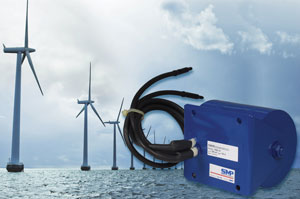
SMP’s chokes for inverters in wind turbines are now also approved for use in offshore installations. These inductive components feature low losses, very low stray fields, and a highly compact design. The chokes’ cores consist of powder composites, which SMP has specifically engineered for this application.

The direct current from the wind turbines must be converted into a sinusoidal waveform with the values required by the grid. The converter’s filters, which consist of capacitors and filter chokes, ensure that the current being fed into the grid exhibits a near sinusoidal waveform. To maximize the inverter’s efficiency, its components must exhibit low losses. The materials that SMP developed especially for use in its energy-efficient, high-performance chokes have low magnetostriction and exceptionally low eddy current and hysteresis losses. Their encapsulated design ensures that the power converters emit only low-intensity stray fields, so that they do not affect other components. The chokes have a space-saving compact design, are maintenance-free, and have a long lifespan—a significant contribution to cutting the maintenance costs for offshore wind turbines.

Offshore wind turbines are prone to corrosion. To protect them from the corrosive action of the seawater, special salt-resistant materials, additional corrosion protection, and a complete encapsulation of certain subassemblies are necessary. SMP’s inductive components for wind turbine inverters are now certified IP66 and approved for use in offshore installations. Because of their high protection class of IP66, these chokes can be fitted outside the inverters, which means that the heat generated by the choke is not discharged inside the inverter. This results in a lower internal inverter temperature, which removes the need for cooling fans, saving both energy and installation space.
Placing the choke outside the inverter has the further advantage of reducing the inverter’s overall dimensions, which further cuts space and energy demand. To simplify mounting outside the inverters, SMP provides the chokes with special mounting fixtures. The choke and the mounting plate are fitted on the device’s outside and the connecting cables pass through a sealed opening.

SMP’s product range includes low-loss inductive custom components based on in-house-developed powder composites, such as filter, commutating, step-up converter, power recovery and single-conductor chokes. Many of its products are used in the railway industry. The market for inverters for photovoltaic systems that feed solar energy into the electricity grid and for converters for wind turbines is also experiencing strong growth. In the United States contact Keith Westendorf, Westendorf Associates, Inc., at (414) 380-9730, kwestendorf@westendorfassoc.com, or www.westendorfassoc.com. Also go to www.smp.de.

CH2M HILL to Manage Tres Amigas SuperStation Construction

0

Tres Amigas, LLC, a merchant transmission company, and CH2M HILL—a global full-service consulting, design, construction, and operations firm—announce that CH2M HILL has received a contract to provide program management services for building the Tres Amigas SuperStation in Clovis, New Mexico. Once completed it will tie together America’s three power grids for the first time. Construction is projected to commence in 2012 and be completed in 2014. Under the terms of the contract CH2M HILL will provide overall program management services and logistical support to ensure that the project remains on schedule.

“CH2M HILL is pleased to assist Tres Amigas with this landmark project,” says Don Zabilansky, president of CH2M HILL’s Power Group. “The Tres Amigas SuperStation will enable cross-regional marketing of clean electricity, enhance power grid reliability and security, and provide new opportunities for renewable energy producers. This strategic infrastructure program will transform the way electricity is delivered to customers across the United States utilizing the most advanced technology.”

Phil Harris—the former CEO of the world’s largest transmission balancing area (PJM Interconnection) and CEO and founder of Tres Amigas—says that “The Tres Amigas SuperStation will offer multiple benefits to power consumers and energy producers across North America, including savings projected in the hundreds of millions of dollars due to the more economic dispatch of electric power. Tres Amigas will also increase the value of several large transmission projects planned for the Southwest and will support the expansion of a reliable national corridor system. Tres Amigas is committed to completing the SuperStation in its projected timeline, and CH2M HILL has the expertise and experience needed to ensure that happens. We’re pleased that this leading firm will provide Tres Amigas with planning, organization, and logistical support throughout the construction of the project.”

The SuperStation project site is at the intersection of the nation’s three grids: the Eastern Interconnection, Western Interconnection, and the Texas Interconnection. It will serve as a market hub and balancing authority, enabling the economic transfer of thousands of megawatts of power among the three interconnections. Headquartered in Denver, Colorado, employee-owned CH2M HILL is a global leader in consulting, design, design-build, operations, and program management for government, civil, industrial, and energy clients. Go to www.ch2m.com. Tres Amigas, LLC, headquartered in Santa Fe, New Mexico, is uniting the nation’s electric grid as a merchant transmission entity composed of electric utility industry operational, technology, and thought leaders. More information is available at www.tresamigasllc.com.

MobileCal Accredited Through A2LA

0

MobileCal, Inc., has been certified by A2LA (The American Association for Laboratory Accreditation) of Maryland as accredited by certificate number 3040.01 which assures customers that its quality system meets the requirements of ISO 17025 proficiency testing and proves the validity of its documentation and test results. As this scope of accreditation had never been granted previously, MobileCal had to establish new standards before the process of certification could begin. This process delivers heavy industry a new level of quality and process documentation not available before which will improve process resulting in the prevention of large scale industrial accidents and other injuries. The process took about three years to complete, mainly due to the fact there exists no published standards for the calibration of hydraulic and pneumatic torque wrenches of high capacities. Process has been established for decades for the calibration of small sized torque wrenches used in manufacturing and assembly, such as those below 1,000 ft/lbs.

MobileCal’s target market is heavy industry, with the majority of their customer’s tools being larger in capacity. By adapting established procedures to the larger sized equipment the company was able to bring a higher level of quality and process documentation to the heavy industrial marketplace. Because of their work establishing the new procedures, MobileCal was able to become the world’s first accredited organization for mobile calibration of hydraulic and pneumatic wrenches.

MobileCal is the world’s oldest and largest provider of on-site calibrations for high capacity torque wrenches. In their five service vans and in-house laboratory they provide calibrations of hydraulic, pneumatic, and manual torque wrenches up to 20,000 ft/lbs for industries such as natural gas pipelines, power generation, wind turbine construction and maintenance, and petrochemical facilities. For more information contact Thomas Smith at (316) 686-3010, or go to www.mobilecal.net.

Siemens Receives Major Order for Oklahoma Wind Farm

0

Siemens Energy has secured an order for the supply of 98 wind turbines for the Crossroads wind power plant in Oklahoma. The owner of the project is OG&E (Oklahoma Gas & Electric). Siemens will supply 95 units of the SWT-2.3-101 to the Crossroads project. Furthermore, the contract includes three units of the new SWT-3.0-101, Siemens’ new gearless direct drive wind turbine. The SWT-3.0-101 was launched for sale in America just a few months ago.

Construction of the 227.5 MW wind power project will begin in late August, with the first wind turbines being delivered in April, 2011. The Crossroads project will be built in Dewey County in northwest Oklahoma, approximately 160 km (100 miles) from Oklahoma City. The scope of supply for the Crossroads wind farm includes the delivery, installation, and commissioning of all turbines. Siemens will also provide services for turbine service and maintenance for an initial period of three and one-half years. Upon completion in the second half of 2011, Crossroads will be able to meet the electrical needs of more than 68,000 average U.S. homes. This is already the third Siemens wind power plant that will provide clean energy to OG&E, following the OU Spirit and Keenan II wind farms, built in 2009 and 2010, respectively.

“We are proud that OG&E has chosen Siemens again as the supplier to their wind power projects,” says Jens-Peter Saul, CEO of the Siemens Wind Power Business Unit. “This is the first time that the new SWT-3.0-101 direct drive turbine has been sold in the U.S. Bringing our new generation of direct drive wind turbines to Oklahoma is the first step in establishing this game-changing technology in North America.”

“We are excited to move forward this project, which we have negotiated on very favorable terms for OG&E’s customers,” says Jesse Langston, vice president of utility commercial operations. “By its third year in operation we expect Crossroads to be delivering net savings to our customers for the balance of the projects’ 25-year life. This is possible because of the excellent business partnerships we have formed with Siemens, and also due to the constructive regulatory environment we have in Oklahoma.”

Wind turbines are part of Siemens’ Environmental Portfolio. In fiscal 2009 revenue from the portfolio totaled about EUR23 billion, making Siemens the world’s largest supplier of ecofriendly technologies. In the same period the company’s products and solutions enabled customers to reduce their CO2 emissions by 210 million tons. This amount equals the combined annual CO2 emissions of New York, Tokyo, London, and Berlin. More information is available at: www.siemens.com/energy.

Smart Grid Spending to Top $45 Billion by 2015

0

Cumulative global investment in smart grids—including smart meter implementations, as well as upgrades to the transmission and distribution infrastructure—will approach $46 billion by 2015 according to the latest forecasts from ABI Research. A smart grid is an energy generation, transmission, and distribution system equipped with an advanced two-way communications system that allows for greater visibility, control, and automation over the system for the utility operator. Simultaneously, it provides a greater level of energy usage choice and automation for customers. It’s that communications system that makes a grid truly “smart” because it allows for the real-time monitoring of the current operational state of the network, as well as the ability to respond to those conditions automatically, as quickly as possible.

Larry Fisher, research director of NextGen, the ABI Research unit that published this study, says “Most of the electric utility infrastructure deployed in the industrialized world was built between 60 and 80 years ago. Much of this infrastructure is outdated, and with the continuing increase in demand for power year after year the grid cannot safely and reliably manage the loads of today and tomorrow without significant upgrades.”

The groundwork for smart grids has been laid in a number of countries over the past several years, but the pace of investment and implementation is increasing. “Transmission and distribution (T&D) investments will account for the lion’s share of smart grid investments through 2015,” Fisher says. “On a cumulative basis, a total of almost $41 billion will be invested globally in the electrical transmission and distribution infrastructure through 2015, compared to $4.8 billion for the purchase and installation of smart meters. This infrastructure spending will focus on grid automation and control, distribution automation, distributed generation and demand response programs.”

ABI Research’s new study “Smart Grid Applications: Smart Meters, Demand Response, and Distributed Generation” forecasts the market for smart grid equipment and services for the 2010-2015 period covering North America, Europe, the Asia-Pacific region, and selected other countries. For more information call (516) 624-2500 or visit www.abiresearch.com.

GroundSmart Products from CommScope

0

CommScope introduces  GroundSmart grounding products into its BiMetals family of wire and cable solutions. These products help reduce the costs of managing and maintaining electricity transmission and distribution networks by deterring theft and vandalism. CommScope’s use of copper-clad steel in its GroundSmart products provides a safe, highly reliable alternative to the use of solid and stranded copper for grounding applications. These products are specifically designed to disperse fault currents and lightning strikes at a lower total cost of ownership compared to pure copper. GroundSmart products offer proven performance for optimizing grounding design in substation, distribution and transmission systems, as well as in wind and solar farms.

“A survey published last year estimated that theft of copper wiring from electrical utility sites creates more than 7,500 hours of downtime and costs the industry more than $60 million annually,” says Paul Bedder, vice president. “Copper-clad steel wire and cable products provide the same reliability, performance, and durability as solid copper but are unattractive to would-be thieves and vandals.

“These facts alone make copper-clad steel the smart alternative to solid copper in most grounding applications,” he continues. “The advantages of this solution increase when combined with CommScope’s reputation for service and reliability. GroundSmart users realize long-term benefits when repairing their current systems damaged by theft and vandalism or when bringing online new systems such as wind and solar farms.”

CommScope’s copper-clad steel wire and cable products meet the relevant National Electric Code (NEC) and ASTM wire and cable standards and are approved by the Rural Utilities Service (RUS). They are engineered and manufactured at CommScope’s ISO 9001 and ISO 14001 registered facility in Statesville, North Carolina.

CommScope, Inc., is a world leader in infrastructure solutions for communication networks. Through its Andrew Solutions brand it is a global leader in radio frequency subsystem solutions for wireless networks. Through its SYSTIMAX® and Uniprise® brands, CommScope is a world leader in network infrastructure solutions, delivering a complete end-to-end physical layer solution, including cables and connectivity, enclosures, intelligent software, and network design services for business enterprise applications. CommScope also is the premier manufacturer of coaxial cable for broadband cable television networks and one of the leading North American providers of environmentally secure cabinets for DSL and FTTN applications. Backed by strong research and development, CommScope combines technical expertise and proprietary technology with global manufacturing capability to provide customers with infrastructure solutions for evolving global communications networks in more than 100 countries around the world. More information is available at www.commscope.com.