Home 2010

Trans-United Wins Trucking Safety Award

0

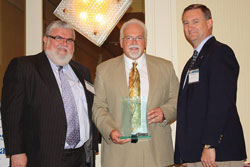
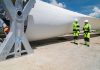
Trans-United, Inc., of Burns Harbor, Indiana, was named the Overall Grand Safety Winner during the IMTA’s (Indiana Motor Truck Association) annual spring council conference held in May. As seen in the accompanying photo the award was presented (from left) to Tom Boo, director of safety, and Jeff Fleming, president. They were joined by L. Cook of the company’s sponsor, Volvo North America. The trucking company qualified for this award by entering in IMTA’s 2009 Fleet Safety Contest and winning in the “Over the Road” zero to 1,000,000 miles category and the Local Division,” also ranging from zero to 1,000,000 miles.

Established in 1964, Trans-United is a specialized carrier and serves 48 states in the U.S., in addition to Canada and overseeing other international moves. Typical loads are components for wind, transformers, construction equipment, and the military. Trans-United is a C-TPAT (Customs-Trade Partnership Against Terrorism) partner and has taken its experience in hauling oversize loads to the benefit of the wind energy market. The company’s permitting department works closely with the states and communities along the route to ensure safe passage to destination. As a Smartway-certified company, Trans-United is excited to do its part in the creation of green energy resources. Learn more by calling (877) 762-3111 or visiting www.transunited.com.
Expanded Capabilities, Promotions at Gear Technology

0

Gear Technology—a leading international precision gear manufacturer and related services provider—has recently announced the promotion of two senior-level managers. Joe Campa, formerly quality assurance manager, has been promoted to director of engineering.  A 10-year veteran of the company, he was previously employed with Boeing Space and Communications Group as a procurement quality specialist and has held quality management positions with Kosmo Gears and Newman Machine Works. In his new position he will be responsible for the company’s integrated engineering department. Jerry Flores has been elevated from quality assurance representative to quality manager. His new management responsibilities will include the implementation and maintenance of the company’s ISO9001:2008/AS9100 AMS quality standards, inspection, employee training, safety, internal and external audits, performance monitoring, and lean manufacturing.

“We are pleased to recognize the dedication and performance of these two long-term employees who have demonstrated their commitment to the company’s business goals and customer service value standards,” according to Tom Marino, president. “Our integrated manufacturing processes, including sophisticated job tracking systems, ensures products are produced with careful attention to the most intricate engineering detail and product specifications. The company also offers gear blanking, engineering consultation, and sophisticated inventory management services.”

The company has also acquired a new Zeiss Prismo Navigator Coordinate Measuring Machine; the most advanced measurement technology available that provides highly accurate, complete, and precise gear measuring and analysis. “It’s a versatile system that can handle a large range of gear configurations, including spiral bevel gears, Gleason bevel straights, internal and external spur gears, worm gears, helical gears, and internal and external splines up to 25.50 inches in diameter,” Flores explains.

In addition to the Prismo Navigator CMM, Gear Technology has purchased a new Fellows CNC Gear Shaper to break into the green energy market. “This advanced gear shaper will allow us to cut gears up to 20 inches in diameter so we can expand our customer base with companies in the clean and wind energy industries,” says Tom Cruse, director of operations. “We will now be able to fabricate larger gears, and full gearbox designs and assemblies.”

The company has been manufacturing quality precision gears for some of the world’s largest and most widely recognized aerospace, military, and commercial manufacturers since 1986. Today the company occupies over 16,320 square feet of modern manufacturing space with state-of-the-art, computer-controlled equipment. Contact Marino at (909) 476-0343 or tmarino@gear-tech.com. Visit online at www.gear-tech.com.

Largest MMZ G Gantry Measuring Machine from Carl Zeiss

0

Carl Zeiss Industrial Metrology recently set up the largest MMZ G gantry measuring machine. This highly accurate coordinate measuring machine has a measuring range of 5 x 11 x 3.5 meters which is excellent for the measurements of wind turbine components.

Gearboxes are a major part of all wind turbines, and the quality requirements are high. The industry has to meet these requirements, despite the fact that not many manufacturers have been able to produce such large gearboxes. Also, with the prospect that the new offshore systems being created, the size of the units will have to increase further. All this means that manufacturers have been faced with the problem of going into large-scale production not knowing the quality requirements for such large pieces of machinery. Gears—ring gear, sun gear, and planets—bearings, and housings have to be produced with tolerances down to 1/100mm on components with 4m and more in diameter. It is no longer possible to machine these parts without specific measures to ensure the quality: The parts are too expensive to produce rejects. So a reliable control of the manufacturing process has to be installed, in real time to the machining. Finally, there is the MMZ G for really large, precision-engineered components. The flexible modular system of the MMZ G line enables full customization. Currently, measuring ranges of up to 5 meters in X, 11 meters in Y and 3.5 meters in Z are available. Additional dimensions are available upon request. On the largest model, the linear measuring uncertainty MPEE is no more than 7+L/250 µm. Combined with proven ZEISS measuring technology, the gantry design ensures the reliability of the results.

MMZ G coordinate measuring machines can accommodate parts on the ground or on a clamping plate. Special loading systems considerably reduce downtimes. For example, a pneumatic pallet system was developed for a manufacturer of printing machines to keep set-up times short and optimally utilize the capacity of the measuring machine. Together with CAD-based CALYPSO® measuring software, VAST® technology from Carl Zeiss optimizes measuring processes. It can deliver form, size, and position information, and also determine the roundness of parts in a single measuring run. Make inquiries by calling (800) 327-9735, e-mailing imt@zeiss.com, or visiting www.zeiss.com/imt.

Parker Piston Accumulators for Critical Wind Turbine Applications

0

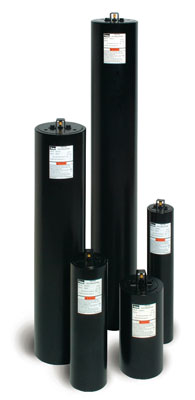
Hydro-pneumatic piston accumulators from Parker Hannifin Corporation, the global leader in motion and control technologies, provide long-term effectiveness in critical wind turbine applications through significantly lower maintenance and servicing costs. Piston, bladder, and diaphragm hydro-pneumatic accumulators are used in a variety of wind turbine applications, including use with a power unit and pitch cylinder to feather blade pitch that enables the turbine to continually extract maximum power during fluctuating wind speeds. In addition, during excessive wind conditions or power failures an accumulator acts as an auxiliary power storage device to quickly and safely rotate the blade to a null position. Both the high speed shaft brake and yaw brake systems also employ accumulators as a fail-safe source of auxiliary power.

“While all three types of accumulators are used in wind turbine applications,” says Mike Schubert, marketing manager. “Piston accumulators, because they have less frequent service intervals and maintenance requirements compared to bladder or diaphragm units, will provide a lower total cost of ownership, saving substantial operating costs over the life of the turbine. As a general rule of thumb maintenance and service requirements for piston accumulators are 1/4 of that for the other two types.”

Bladder and diaphragm accumulator operation depends on molded flexible rubber bladders or diaphragms. Should there be a failure, it is sudden and allows the stored nitrogen gas to enter the system. Because of their small seal piston accumulators fail gradually and allow plenty of time for scheduled maintenance. “What most designers don’t account for in bladder and diaphragm accumulators is the inherent loss of pre-charge that occurs over time due to gas permeation through the flexible rubber compounds,” according to Chuck Taylor, project engineer. “And if a low temperature compound is used because of the wind turbine site location, the tradeoff to its use is higher gas permeation rates through the compound at working temperature, hence more frequent service checks are required to ensure that the proper pre-charge is maintained.”

Parker’s piston accumulator capability includes 1.5- to 20-inch bore sizes with capacities up to 200 gallons. All are designed to fit specific wind turbine applications utilizing a total custom-based systems approach that includes application engineering and worldwide support. To learn more contact an applications engineer at the Parker Global Accumulator Division at (815) 636-4100. Also visit www.parker.com/accumulator.

ZF to Supply Gearboxes to Vestas

0

ZF has signed a contract with global wind energy market leader Vestas to supply wind turbine gearboxes. Production is scheduled to begin in early 2012 at the new U.S. facility under construction in Gainesville, Georgia, with the goal of eventually producing 2,000 gearboxes per year for the growing wind power industry. In addition, ZF will add manufacturing test stands for the wind gearbox industry to its substantial experience in providing engineered end-of-line and development test benches.

ZF has been providing service for the wind power industry since 2007, and is currently investing in service centers for wind turbines in Dortmund, Germany and in the United States. “We will leverage our expertise and leadership in designing and building world-class drivelines for the transportation sector to enter the growing and exciting field of alternative energy,” says ZF Group CEO Hans-Georg Härter. “This will diversify our core business and expand our product portfolio.”

ZF aims to achieve annual gearbox sales of more than $200 million. With more than 40,000 turbines in 63 countries, Vestas is the world leader in wind power. The Danish company has been in the wind turbine business since 1979. ZF is investing about $90 million to build the new Gainesville facility, which will employ about 200 workers. “We are delighted that ZF has chosen to enter the wind industry and work with Vestas as gear box supplier,” according to Soren Husted, president of Vestas Nacelles. “ZF’s global position as transmission supplier in the automotive industry and its high quality and productivity standards are fully in line with our manufacturing and sourcing strategy and the cooperation with ZF will strengthen our supply base of gearboxes.”

Last year at its Dortmund/Holzwickede site in Germany, ZF invested $9 million euros establishing a service competence center for wind power. By 2012 various brands and models of wind turbine gearboxes will be serviced and overhauled there. By 2014 ZF Services aims for its worldwide wind energy sales to rise to $50 million euros. ZF is also constructing a loading test rig with a four-megawatt performance capacity. More information is available at www.zf.com.

Bearing Systems for Planetary Wind Turbine Gearboxes from NKE

0

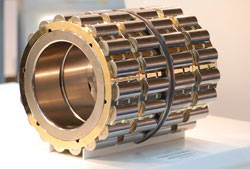
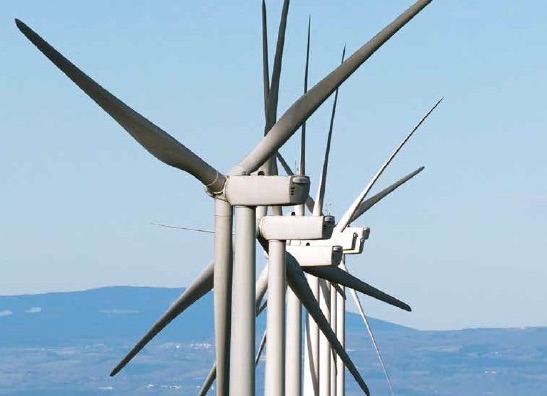
Austrian bearing specialist NKE introduces modular bearing systems for planetary gears in wind turbine gearboxes. The new bearing assemblies offer the advantages of a standardization of the bearings used in this application, a reduced diversity of parts and simplified logistics. Many wind turbines are equipped with single- or two-stage planetary gearboxes. Because the bearings of the planetary gears are among the highest-loaded in this specific application, integrated bearing assemblies have decisive advantages. NKE’s bearing systems consist of cylindrical roller bearings that are fitted directly into the planetary gear. The bore of the gear acts as the outer raceway, so that the bearings themselves do not have an outer ring.

The bearing systems are developed to customer specifications. For gearboxes rated 1.5 MW, 2 MW and 2.5 MW NKE has already realised projects with such modular systems consisting of single-row cylindrical roller bearings without outer race. The bearings have bore diameters of 160, 190 and 200 mm, with versions up to 220 mm currently being developed. The choice of bearing depends on the available space—in particular when replacing existing bearings—as well as customer requirements. To further boost their load capacity, the cylindrical roller bearings feature an improved internal design that is even stronger than that of the standard types. These bearings are fitted with an inner race-guided, one-piece brass cage, which contains inspection grooves for endoscopic condition assessment of the inner race surface as standard. For higher loads and wider gears, the bearings can be assembled to sets of two, three, or four bearings.

Beside modular planetary gear bearings, NKE also supplies all other bearings for use in wind turbine gearboxes, main shafts, and generators. These include full complement cylindrical roller bearings as well as cylindrical roller bearings with cage, taper roller bearings, spherical roller bearings, and four-point contact and deep groove ball bearings. For more information call Dick Scott, U.S. representative for NKE AUSTRIA GmbH, at (518) 371-5759 or visit www.nke.at.

New CEO at REpower Systems

0

The supervisory board of REpower Systems AG has agreed upon the appointment of Andreas Nauen as member and chairman of the executive board as chief executive officer in its meeting in June. Nauen took office on 1 July 2010. His contract provides for an appointment term of three years as from 1 July 2010 and includes an optional extension for another term of two years. As planned, the current chairman of the executive board, Per Hornung Pedersen, has resigned from his office as chairman and will remain on the board as chief market officer.

REpower Systems AG, a Suzlon group company, is one of the leading manufacturers of onshore and offshore wind turbines. The international mechanical engineering company develops, produces, and markets wind turbines with rated outputs of 2.05 MW to 6.15 MW and rotor diameters of 82 meters to 126 meters for almost any location. The company also offers a comprehensive portfolio of service and maintenance packages. The profitable and reliable systems are designed at the REpower TechCenter in Osterrönfeld and manufactured at its plants in Husum (North Friesland), Trampe (Brandenburg) and Bremerhaven, as well as Portugal and China. With about 2,000 employees worldwide, the Hamburg-headquartered company can make use of the experience gained from the manufacture and installation of over 2,000 wind turbines around the world. REpower is represented by distribution partners, subsidiaries, and participations in European markets such as France, Belgium, the UK, Italy, Portugal, and Spain as well as on a global level in the United States, Japan, China, Australia, and Canada. Learn more at www.repower.de.

High-Speed Transfer Vessels for Offshore Wind from Austal

0

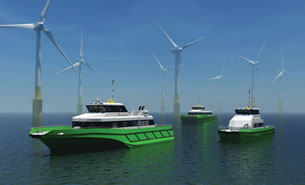
Austal’s Wind Express series of vessels combine fuel efficiency with advanced sea keeping characteristics to deliver a premier transportation solution for offshore wind farm operators. By utilizing Austal’s world-renowned advanced hull design and engineering capabilities, each vessel is purpose-built to deliver a rugged, reliable, multipurpose workboat platform. Among the many significant features of the Wind Express series is the option to install Austal’s patented Ride Control System (RCS)—a first for offshore wind farm vessels—to ensure a safer, more-productive platform, even in rough seas.

Austal Chief Operating Officer Andrew Bellamy says the vessels would introduce new levels of productivity and safety to the growing offshore wind farm industry. “In this industry reliability is paramount; not only in terms of machinery but also in the ability of the vessels to transfer personnel to and from wind turbines in comfort and safety,” he says. “With our Wind Express series we have introduced platforms that not only deliver reliability, but also have the capacity to operate in rougher waters at higher speeds and greater efficiency. These are important characteristics as wind farms are constructed further offshore.”

Characterized by their optimum passenger comfort and safety, each vessel in the Wind Express series can be further customized to suit specific sea conditions, routes, work space, and payload requirements. The series incorporates four vessels: Wind Express 17, Wind Express 19, Wind Express 28, and Wind Express 28-Tri SWATH. These vessels feature a selection of hull forms ranging from a refined catamaran design for added stability and efficiency to the Austal-developed tri-SWATH hull form delivering unparalleled sea keeping and onboard comfort in up to sea state 6. Like all Austal vessels, the Wind Express series offers the peace-of-mind that comes from dealing with an ISO 9001:2008 quality certified shipbuilder with an established network of vessel support and maintenance centres worldwide.

As the largest aluminium shipbuilder in the world, Austal also has the unrivalled production capacity to facilitate fast, cost-effective delivery of multi-vessel fleets.

Austal has delivered more than 220 vessels to over 36 different countries over two decades. To learn more call 61 8 9410 1111, e-mail sales@austal.com, or go to www.austal.com.

Liebherr Launches Production Facility in Mexico

0

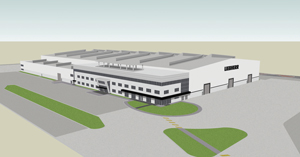
Liebherr is building a new production facility for drive components in Mexican Monterrey, Nuevo León. The company—Liebherr Monterrey, S. de R.L. de C.V., founded in 2009—will produce large diameter bearings at this site in a wide range of diameters starting from mid 2010. These products are used in wind turbines for the pitch and yaw adjustment.

The new plant will supplement the existing production facility in Biberach an der Riss, Germany, where up to now all the components for the wind industry have been manufactured. The high quality level, based upon decades of experience, will be contained in the products manufactured at the newly founded production plant. By providing additional capacities Liebherr is preparing for the forthcoming growth anticipated for the North American wind-power market. With the new location Liebherr is going to strengthen its competitive capacity still further, and bolster its position as a strategic supplier to the wind industry.

Liebherr is the only manufacturer in the world which, as a systems supplier, can offer bearings and drive units as well as hydraulic cylinders and control technology all from its own development and production resources. In the sector of large diameter bearings for pitch and yaw adjustment in wind-power systems, single-row and double-row four-point bearings are offered that feature particularly high quality and long service life. The product range in drive systems includes multi-stage coaxial planetary gears that can be adapted to suit a customer’s particular needs. Liebherr drive systems are especially famous for their reliability, compact design, and best possible weight-performance ratio. Electric motors for supplementing the gearboxes likewise come from the company’s own development and manufacturing resources.

There are hardly any limits to the size of the drive components the company can provide, with a product range including parts for supply to 750 kW systems as well as large turbines with rated capacities of 7.5 MW for operation both onshore and offshore. To learn more contact Douglas Cross, sales manager, Liebherr Components North America Co., at (734) 944-6334 or douglas.cross@liebherr.com. Visit online at www.liebherr.com.

Gexpro Convenes Energy Efficiency Summits

0

Gexpro is holding “Energy Summits” across the United States to educate electrical contractors, facility managers, commercial building owners, and government buyers on how best to achieve lower energy costs with green technologies. The sessions focus on the latest advancements in energy efficiencies, new green product solutions and services, and ways to benefit from the government stimulus plan (the American Recovery & Reinvestment Act), utility rebates, and state government programs. The Gexpro summits have been held so far in San Diego, upstate New York, and Atlanta, with plans for additional sessions in Dallas and Chicago.

The one-and-a-half day summits cover a wide range of topics: energy efficient lighting installations and retrofits, solar energy design and applications, ECM motors for commercial refrigeration and HVAC, and specific power quality solutions that can increase the performance, lifespan, and efficiency of all electrical products in a commercial or institutional application. Speakers come from both Gexpro and leading manufacturers, as well as other energy and environmental specialists.


Besides concentrating on product technologies and solutions, each summit includes vital information on maximizing the available benefits of the U.S. stimulus plan, explaining how the stimulus works, its funding requirements, and how Gexpro can act as a resource in helping attendees take advantage of the plan’s rebates and tax incentives.

“The Energy Summit is a natural outgrowth of Gexpro’s resource-rich experience in energy-efficient solutions and our dedication to comprehensive customer service in providing those solutions,” says Jeff Pecoroni, director if energy solutions. “These events are designed to inform participants in practical ways to reduce energy consumption and to educate them on the economic benefits of energy-saving solutions and their relationship to new government funding opportunities. The summits are unique in that they present a forum where contractors, facility managers, and building owners can dialogue with manufacturers and electrical suppliers on the synergies of green technology and economic incentives.” Learn more at www.gexpro.com.

Transport Services from DMI Industries

0

DMI Industries, a recognized leader in wind tower manufacturing, has expanded its offerings to the wind energy industry with the addition of transport services for large-scale components. The announcement was made during the American Wind Energy Association annual conference. The new service is now available from DMI through a partnership with E.W. Wylie Corporation, a fellow Otter Tail Corporation company and experienced heavy haul provider to the industry.

“Providing greater value for our customers continues to drive our business strategy,” says Stefan Nilsson, president of DMI. “Hauling large-scale components to project sites safely, timely, and cost-effectively remains a challenge for our customers. We believe this new service from DMI addresses these challenges.”

In the partnership DMI takes the lead on all aspects of sales and account management for wind-related hauling of components such as tower sections, blades, nacelles, transformers, and other large-scale components. Deliveries are executed by E.W. Wylie and their modern tractor-trailer fleet capable of loads up to 120 tons and 185 feet long. The fleet includes specialized equipment like schnables and blade trailers.

“It is a relationship that makes sense for our customers and for the industry,” says Brian Gast, president of E.W. Wylie. “Both of our companies are well respected in the wind business and are supporting the efforts of the same organizations to get project sites up and running. By joining forces we are offering a single point of contact to ease the effort of getting components to the site, and giving confidence in safe and timely deliveries.”

DMI is a heavy steel wind tower manufacturer with facilities located in North Dakota and Oklahoma in the United States and Ontario, Canada (see profile in the January 2010 issue of Wind Systems magazine, www.windsystemsmag.com). DMI offers transport services for large-scale wind energy components such as tower sections, blades, nacelles, transformers, and other components. The company also has capabilities to produce equipment for a wide variety of industries including agricultural processing, ethanol production, oil and gas extraction and processing, and water and wastewater processing. For more information, visit www.dmiindustries.com.

SKINTOP CLICK from Lapp USA

0

The new SKINTOP® CLICK represents the most innovative cable entry system in today’s market. With its unique latching design, cable mounting can now be accomplished up to 70 percent faster. With no threads to cut or locknuts to screw in place, installation time is greatly reduced and is possible without ever opening an enclosure. Simply click the gland in and it is fixed, centered, strain relieved to EN 50262, and sealed to the protection class IP68.


The SKINTOP CLICK offers the same proven reliability, performance, and anti-vibration protection of the original SKINTOP cable gland, with the added benefit of the quick-click design for quick and easy mounting of the gland in any position. No special mounting tools, additional clamping rings, or locknuts are needed, resulting in greatly simplified installation. This fast and flexible cable entry system can save valuable installation time on a wide range of applications, including switch cabinets, automation systems, and plant construction. It provides the perfect solution for hard to reach dual wall enclosures and limited space applications where locknut installation is difficult. In addition, large panel jobs that previously required two installers can now be completed with just one person.

The new cable gland range also includes the SKINTOP CLICK-R with a reducing seal insert for tightening of smaller clamping ranges, as well as the flexing, SKINTOP CLICK FLEX version for additional safety against overstress and conductor breakage in applications such as hand held equipment, moving machinery, and robotics. For more information call (800) 774-3539 or visit www.lappusa.com.

New Junction Barrier Schottky Diode Series from Cree

0

Cree, Inc., a market leader in silicon carbide power devices, announces the industry’s first commercially available Z-Rectm 1700-V Junction Barrier Schottky (JBS) diode products. Leveraging silicon carbide’s unique advantages over silicon to virtually eliminate diode switching losses, these diodes are targeted at high-voltage power conversion applications in motor drive, wind energy, and traction systems. Initial products in the 1700-V series include 10-A and 25-A JBS diodes in die form, ready for integration into 1700-V power modules ranging from 50 to 600-A. The new 1700-V JBS series can increase the efficiency, reliability and longevity of power systems while also reducing the overall system size, weight and cost.

“The 1700-V diodes extend our leadership in energy-efficient power systems for data center and solar power markets to new markets such as wind energy, train, tram, and electric vehicle power converters,” says Cengiz Balkas, vice president and general manager, power and RF. “Cree has the diodes of choice when high-efficiency power systems are a must. The advantages of silicon carbide are clear, and for high-voltage, high-frequency systems you can’t afford not to use SiC.”

“ABB has been closely involved with the development of SiC technology for many years,” according to Francisco Canales, senior principal scientist, ABB Corporate Research. “SiC diodes and switches provide an important step forward in technology that allows the increase of operation frequency, reduced size and weight while providing state of the art efficiency in applications such as motor drives and solar inverters. The 1700-V devices now being launched by Cree are an important step in the development of this technology.” For more information go to www.cree.com/power.

Intertek Opens Test Center for Small Wind Turbines

0

Intertek—a global leader in testing, inspection and certification services—has announced the opening of an open-air test site for small wind turbines. The test site in Otisco, New York, together with the company’s nearby Cortland lab, is the only wind testing facility in North America that is operated by an OSHA-acknowledged NRTL (Nationally Recognized Testing Laboratory) capable of providing small wind turbine system and electrical component certifications. Third party certification—including Intertek’s ETL Mark for the U.S., Canada, and Europe—demonstrates the compliance to national and international safety standards.

Government incentive programs for clean and renewable energy are a key driver in the rapidly growing international wind power market. Intertek tests wind turbines and provides data for program managers to determine product eligibility for incentive programs. As a recognized third party testing company Intertek increases sales opportunities for manufacturers by providing verification of compliance with national and international wind turbine efficiency, performance, and safety requirements.

“Intertek’s new small wind test center is significant to both buyers and sellers of small wind turbines,” says Brian Kramak, director of energy services. “Buyers of wind turbines have reliable third-party verification of important safety, acoustic, and performance data. Sellers of wind turbines are able to demonstrate compliance to regulatory requirements and incentive program requirements.”

Intertek will test and certify small wind turbines for durability and performance according to the new AWEA 9.1 Small Wind Turbine Safety and Performance standard, and also the newly released Canadian standards such as CAN/CSA C61400-2, creating a one-stop shop for complete U.S. and Canadian wind turbine testing and certification requirements. Intertek will also test for manufacturers that wish to use other certification bodies, such as the Small Wind Certification Council (SWCC).

The facility will support testing of several small wind turbines at the same time, from the smaller micro-turbines of a few hundred watts up to the “largest” small wind turbine of 200m2 swept blade area—about 50-60kw. Using remote access monitoring, Intertek will generate 24/7 data to evaluate a range of real world environmental conditions, as required by the AWEA, Canadian, and international wind turbine standards. The test center complements Intertek’s existing market-leading capabilities for testing and certification of electrical components and systems including generators, inverters and controls among others. Learn more at www.intertek.com/wind.

North America’s First Freshwater Offshore Wind Farm Announced

0

Ohio Governor Ted Strickland announced a partnership between GE and the Lake Erie Energy Development Corporation to harness the wind power of Lake Erie and develop the first freshwater offshore wind farm in North America. Strickland made the announcement at the American Wind Energy Association’s annual WINDPOWER Conference in Dallas.

“Ohio’s greatest potential for creating wind energy is offshore in Lake Erie, and this partnership marks a significant step forward,” Strickland said. “In Ohio we have all the right assets to make offshore wind energy successful, including an innovative workforce and the manufacturing strengths that would allow us to build all the component parts for wind turbines. This partnership will not only advance offshore wind technologies, it will also advance Ohio’s economy. We are eager to continue the state’s strong collaboration with GE and LEEDCo as we pursue this exciting, first of its kind initiative for Lake Erie.”

The partnership and project is a significant step towards accelerating the deployment of offshore wind in the Great Lakes. GE has committed to providing offshore wind turbines and maintenance services for an initial 20-megawatt wind farm. Upon its completion, targeted for late 2012, this project would be located off the shores of Lake Erie near Cleveland. This would be followed by subsequent projects with a long-term goal of 1,000 megawatts in the Ohio waters of Lake Erie by 2020. These activities will support a shared vision of making the Great Lakes a major economic engine for Northern Ohio, capitalizing on the region’s skilled workforce and expertise in advanced manufacturing. The LEEDCo-GE partnership builds on the momentum of a four-year effort by The Great Lakes Energy Development Task Force and other Ohio partners to establish an offshore wind industry on Lake Erie, leveraging the region’s strong manufacturing base.

In addition to collaborating on the initial 20-megawatt project, GE and LEEDCo will create a strategic plan to identify opportunities to make offshore wind energy in the Great Lakes economically viable, and also work jointly on advocacy and public policy issues to increase support for offshore wind energy. For more information go to www.ge.com/energy or www.leedco.org.

Romax Opens Wind Energy Technical Center in Colorado

0

Romax Technology is opening a new technical center in Colorado in response to the growing demand for their technical consultancy services from the U.S. wind energy industry. Located in Boulder—a nationally recognized hub for wind energy technical excellence and innovation—the facility will provide a center for Romax’s wind engineering excellence, enabling the delivery of key projects with local wind energy clients and partners. Adding to the company’s 10 worldwide offices, and complimenting an established technical and sales team in Troy, Michigan, the facility will focus solely on the delivery of products and services for wind energy.

Recent growth in the U.S. wind industry has created strong demand for Romax’s wind energy products and services, which include component and system level drivetrain design and simulation as well as manufacturing, testing, and certification support. “Over the past four years, the U.S. wind energy market has earned its position as one of the largest in the world,” according to Dr. Ashley Crowther, U.S. engineering director for wind energy at Romax, “with domestic and foreign manufacturers all aspiring to meet the needs of this fast growing market.”

The technical center will initially provide support to important American wind initiatives such as NREL’s Gearbox Reliability Collaborative as well as assisting wind turbine and component manufacturers to supply exceptional products to the U.S. market. The first long-term technical partner to be supported by the new center is Boulder Wind Power (BWP). Identifying Romax as a key technical partner, BWP intend to design, develop, and eventually manufacture large multi-megawatt, direct drive wind turbines. Romax will lend their expertise to achieve a reduction in development time, providing BWP with design, analysis, dynamics, and instrumentation experience for the whole direct drive turbine drivetrain.

“This new facility strengthens Romax’s ability to deliver local development programs and provide mission-critical technical support on drivetrain issues to the wider U.S. wind industry,” says Andy Poon, director of wind energy at Romax. “In addition it will enable Romax to work more closely with research partners to advance wind turbine technology, ensuring we play a dedicated and active role within the U.S. wind industry.” Visit www.romaxtech.com for more information.

Second-Generation Lidar from NRG Systems and Leosphere

0

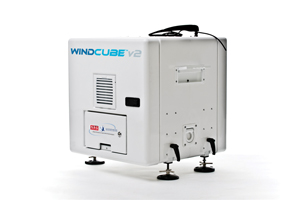
NRG Systems, manufacturer of wind measurement equipment, and Leosphere, a specialist in lidar for atmospheric observations, announces the introduction of the WINDCUBE® v2, the lightest, most compact lidar remote sensor available. Used in site assessment and wind farm performance monitoring, it collects actual measurements at heights up to 200 meters, mapping the vertical wind component, wind speed, and direction, turbulence, and wind shear.

“Lidar has quickly become the must-have tool in resource assessment,” says Alex Sauvage, president and CEO of Leosphere. “Over the past year our two companies have worked tirelessly to enhance the portability and durability of our lidar remote sensor, making it ideal for complex terrain, remote locations, and offshore.”

Weighing 45 kg and measuring approximately 55 cm square, the WINDCUBE v2 features no internal moving parts, multiple communications options (including satellite), low power requirements (45 watts), and an all-weather enclosure. The quiet, ultra portable 200m wind profiler includes 10 programmable measurement heights, providing ready to use data.

“By collecting actual measurements of the entire swept area of the wind turbine, the WINDCUBE v2 improves data accuracy and reduces overall uncertainty of the wind farm design,” says John Norton, COO for NRG Systems. “Improved certainty can make the difference between project success or failure.”

The WINDCUBE v2 is an active remote sensor that operates by emitting a laser pulse through the atmosphere. Along its path the laser light is backscattered by aerosols in the air and received by an optical sensor in the lidar unit. These signals capture the shift in atmospheric particles, or the absolute wind speed in the lidar line of sight. For more information visit www.lidarwindtechnologies.com. Also go to www.leosphere.com or www.nrgsystems.com.

Second Wind Sails Toward Wind Data Collection Landmark

0

Confirming that wind power companies are using its Triton Wind Profiler systems widely and relying on them heavily, Second Wind announces that Triton has amassed more than 900,000 hours of global wind data and will hit the one-million-hour mark soon. “At the rate Triton units all over the world are now collecting data, we easily surpassed the one million hour mark in June,” says CEO Larry Letteney. “Seeing such a large data set accumulate after just two years in the field tells us that customers are using their Tritons aggressively to gather diverse data sets to make the best decisions for locating wind turbines.”

Triton is a ground-based profiling unit that employs SODAR—SOund Detection and Ranging, a variation on radar but with sound instead of radio waves—to measure wind speed, direction, and other data. Reports issued by the U.S. National Renewable Energy Laboratory and ECN Wind Energy Research Center of the Netherlands in 2010 and 2009, respectively, credit Triton with accuracy comparable to that of meteorological towers, which are the current standard for wind data collection.

Triton remote sensing systems give wind power companies a mobile, ground-based complement to tower-based data collection. It broadens the range of data wind companies have for siting turbines in the most productive locations possible, profiling winds as high as 200 meters off the ground. There are 125 Triton units deployed in 15 countries across the globe.

“I think there is a great future for remote sensing,” according to Andrew Garrad, president of GL Garrad Hassan, one of the world’s top renewable energy consultancies. “The combination of SODAR devices and traditional anemometry is a very good one, and GL Garrad Hassan is already using remote sensing data in combination with conventional methods and data.”

Triton’s data collection landmark is among several important milestones Second Wind has passed recently. The company is celebrating its 30th anniversary this year. It recently sold its 10,000th Nomad wind resource data logger, which is destined for a prospective wind farm site in Texas, the nation’s largest wind power producer. Nomad units are deployed on seven continents, from the Arctic to Antarctica, with each unit compiling data from as many as 20 weather sensors. Second Wind ranked on the Inc. 500 list of fastest-growing privately held companies for the past three years, and was named a finalist in the “Excellence in Renewable Energy Awards” competition for Triton, which was commercially introduced in 2008.

“The real satisfaction in being around a long time, as we have, is getting to see what you’ve worked for pay off in a big way,” says Chief Technical Officer and Co-founder Walter Sass. “The company has learned a lot and done a lot over the last 30 years as wind power technology has developed. Now that wind power is a serious item on the national agenda, we’re in a great position to take those 30 years of experience and turn them into 30 more years of success.” Learn more at www.secondwind.com.

Yaw Position Sensor for Wind Turbines from Micronor

0

MR200W series yaw position transducers monitor yaw position, direction, speed, and cable twist while providing proper feedback to the wind turbine’s yaw directional motor drive and brake control systems. A unit can be multifunctional and integrate any combination of electromechanical limit switches, rotary encoder, resolver, or potentiometer. Anti-backlash POM (polymer) pinion gear optimizes coupling to the turbine’s large yaw bull gear for long term reliability, accuracy, and repeatability.

Specially engineered for wind turbine applications, MR200W series yaw position transducers monitor position, direction, speed, and cable twist while providing the necessary feedback to the yaw directional motor drive and brake control system. These products are based on Micronor’s proven modular sensor and control technology developed and refined over 40-plus years of industrial product experience. An MR200W series position transducer can be multifunctional and integrate any combination of geared limit switches, rotary encoders, resolvers, or potentiometers. For increased accuracy and repeatability the unit can be supplied with an external anti-backlash POM (polymer) pinion gear that optimizes coupling to the wind turbine’s large yaw bull gear.

Micronor is a leading supplier of rugged and reliable components for industrial automation and process control industries.  Motion control products include encoders, resolvers, fiber optic position sensors, rotary limit switches, geared feedback transducers, cam timers, motorized potentiometers, manual pulse generators and handheld teach pendants. Micronor was founded in 1968 and has regional headquarters in both the United States and Europe. Contact Dennis Horwitz, VP of sales and marketing, at (805) 499-0114, sales@micronor.com, or www.micronor.com.

Mainstream Chooses ZephIR Lidar from Natural Power

0

One of the leading developers of renewable energy, Mainstream Renewable Power, has completed the first extensive wind assessment campaign in Latin America using Natural Power’s ZephIR lidar which, based at ground level, provides remote wind measurements from 10-200 meters to aid in the development of new wind farm sites.

The deployment was in the challenging terrain of the Atacama Desert, II Region, a virtually rainless plateau covering a 600 mile strip of land on the Pacific Coast of South America. Temperatures can rise to an extreme of over 40 °C during the day and drop to -10 °C after sunset. It is these thermal effects that are of interest to Mainstream due to the effect on wind shear in the area, provoked through Katabatic winds at night, while the hot desert ground during the day leads to convectional forced vertical wind components and turbulence. Traditional anemometry such as tall masts and cup anemometers, providing wind data up to 80m above ground, were not appropriate as the sole measurements in this case due to their limited height. Mainstream looked at a range of remote sensing technologies before selecting Natural Power’s ZephIR lidar.

“We were very interested in exploring the impact of these thermal effects on wind shear but were unable to use tall met masts to see the effects above hub height,” according to Shane Martin, senior wind analyst at Mainstream. “Natural Power’s team in Valparaiso were able to assist us in providing a ZephIR lidar for the campaign and the system was on site within a matter of days, measuring wind characteristics from ground level through to turbine tip height, and above. The campaign was completed successfully and the ZephIR lidar allowed Mainstream to gather all quantitative data necessary for the evaluation of the project.”

Natural Power established its Chile office based in Valparaíso during 2009, serving the South American market. Projects to date have ranged from advanced resource analysis to construction services for a range of international clients, including this latest lidar campaign for Mainstream. “It was a very positive experience to work closely with the Mainstream team on this project,” says Alexander von Pescatore, head of development in Chile. “Our ZephIR lidar system operated with 100-percent system availability and 100-percent data availability in some challenging terrain and environmental conditions. There are many more sites in South America which will benefit from the use of ZephIR over more traditional anemometry due to site conditions and thermal effects.”

Natural Power is a leading renewable energy consultancy that specializes in progressing sites onshore and offshore for clients, from proof of concept through project development, construction, asset management, and onward to repowering or decommissioning. Natural Power have worked on more than 15,000 MW of wind, wave, and tidal sites across Europe, the U.S., and Canada, while also providing 360° due diligence on a range of portfolios and projects. The company delivers both technical and management services, as well as industry-leading products from offices across the UK, France, Chile, Canada, and the U.S. Send e-mail to sayhello@naturalpower.com or visit online at www.naturalpower.com/zephir.