






With a significant proportion of the European offshore wind support vessel fleet entering the latter phases of its operational lifetime or no longer able to meet changing industry demands, there is a growing emphasis on the vessel market to refit or repurpose these boats.
In doing so, vessel owners and shipyards can seize a commercial opportunity to maximize the value of these assets and support the overall sustainability of the offshore wind sector.
That, at least, is according to Chartwell Marine, a pioneer in next-generation vessel design that has supported a number of offshore wind vessel refit projects in recent months. Chartwell Marine has substantial expertise in vessel repurposing, including re-flagging, re-coding, and complete vessel conversion – such as from crew transfer vessel (CTV) to ferry, or leisure fishing boat to workboat.
While offshore wind is a young sector, with the majority of large-scale European projects no more than 10 years old – and expected to continue operating for 25 years in total – vessel lifetimes do not match those of offshore wind turbines. Furthermore, rapidly evolving construction and operational standards mean that many of the CTVs originally commissioned to service these projects may no longer meet the requirements of offshore wind developers and operators.
This is not to say, however, that these vessels are no longer fit for purpose. Indeed, for vessel owners, there are two main options on the table: One is to repurpose these catamarans for operation in other sectors, or for different functions within offshore wind. Offshore wind CTVs have been redeployed effectively for purposes including survey, dive support and security.
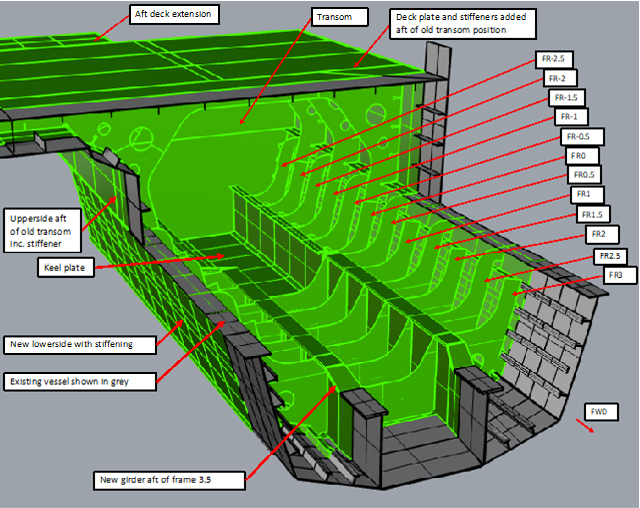
The other option is to conduct refits that extend the operational lifetime of the vessels in offshore wind. This often involves upgrades to propulsion systems, increasing the number of people who can be carried onboard, and lengthening of the hull to enhance deck space and potentially seakeeping. Chartwell Marine has provided design consultancy services to shipyards and vessel owners on a number of these refit projects.
Recent contracts have included supporting shipyard Diverse Marine in full refits of CTVs Maestro and Don Quixote, both of which were acquired by Turner Iceni in early 2019. Maestro, an 18-meter catamaran, has been refitted with Volvo IPS propulsion system, while Don Quixote has been refitted with 1,400 horsepower MAN engines and Hamilton 651 waterjets, and lengthened from 20 to 23 meters. Both are set to re-enter service later this year.
“For a sector like offshore wind, which is founded on principles of sustainability, vessel support is one area where substantial efficiencies can be realized,” said Andy Page, managing director at Chartwell Marine. “With robust design support, vessels that are starting to reach the end of their utility for offshore wind operators can either be upgraded in a cost-effective manner to re-enter service or set to work in other maritime sectors.”
“This creates plenty of opportunity for U.K. shipyards to carve out a niche in vessel refits – particularly during the winter months when demand drops off a little,” he said. “Furthermore, given an overall shortfall of new builds currently in build, and demand for offshore wind crew transfer vessels ramping up considerably, these vessel refits may well help to plug a gap until the next generation of offshore wind CTVs starts to enter operation.”
More info: www.chartwellmarine.com






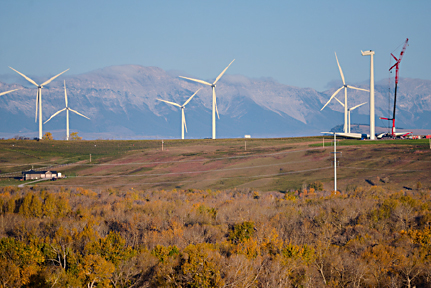
 “We’re pleased to see the exceptional level of support for wind energy in Saskatchewan,” said Robert Hornung, president, CanWEA. “The wind-energy industry is continuously looking to improve and strengthen the ways it consults and engages with residents, local businesses, municipalities, and indigenous communities. Additionally, the province has put in place wind-energy-specific and results-based standards to ensure developments are located and operated with low environmental impacts. This combination ensures the groundwork is in place for the best possible projects as the government moves forward with its ambitious plans for renewable power.”
 Industry leaders were briefed on progress in creating the Fund during the American Wind Energy Association’s
 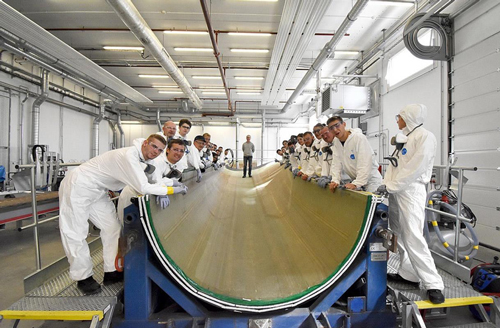 “The Cherbourg site is a great location to support the development of the offshore wind industry in Europe and beyond, with a positive impact on the jobs and the ecosystem in the surrounding region,” said Alexis Crama, LM Wind Power Offshore Wind vice president. “We are investing in building a strong and sustainable value chain and are happy to welcome the first hundred recruits.”
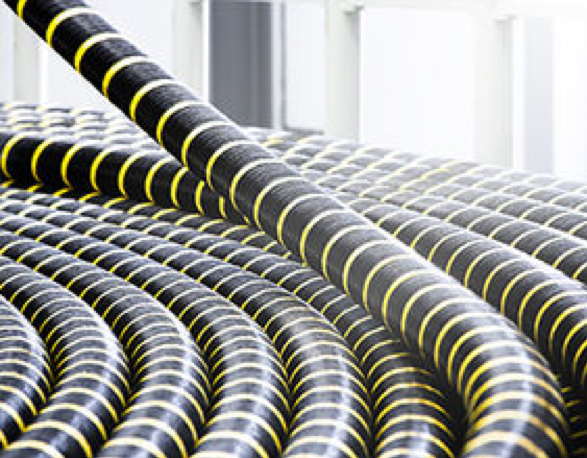 Boskalis will execute this contract in consortium with its partner NKT that will supply the high-voltage cable system. For this project, Boskalis will deliver an integrated solution of in-house services including supporting UXO survey, geotechnical, and geophysical surveys (through Boskalis subsidiary Gardline), seabed preparation works, pre-lay run, transport, and installation of the 220kV export cables and seabed reinstatement.
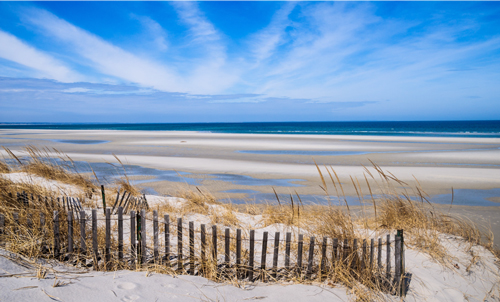 The DEIS analyzes the potential environmental impacts of the proposed action described in the Vineyard Wind COP and reasonable alternatives to the proposed action. The publication of the NOA opens a 45-day public comment period. During this time, BOEM will conduct five public meetings and accept comments. The input received via this process will inform preparation of the Final Environmental Impact Statement. Comments on the DEIS should be submitted or postmarked no later than January 21, 2019.
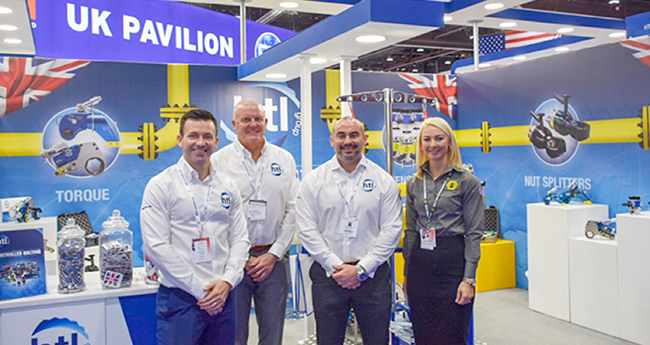 Whilst meeting and networking with clients and overseas Distribution Partners, HTL’s on-stand team presented their full range of tools designed for controlled bolting applications on a fully equipped demonstration rig, allowing delegates to view the equipment on application including many unique safety features.